Graphic Novel Review Bites: Cover Ladies
Posted on December 3, 2015 2 Comments
Not all of these graphic novels worked out for me, but I definitely love to see powerful ladies on the cover, who aren’t there *just* to be ogled for their assets.
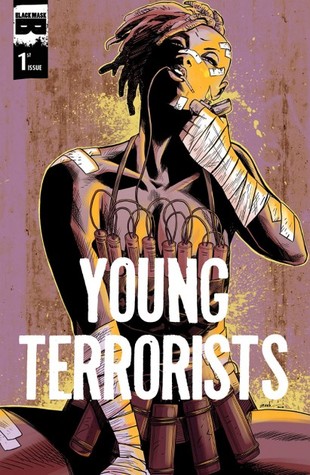
Young Terrorists, Volume 1: Pierce The Veil by Matt Pizzolo and Amancay Nahuelpan
With thanks to NetGalley and the publisher for the opportunity to read an advanced copy of this book in exchange for an honest review.
This is the story of a group of young terrorists, as the title indicates, intent on overthrowing the current questionable political world order. The description is enticing, as is the provocative cover image, but the first volume does not quite offer the promised pay off. Instead, it focuses on a long building up on the characters, with a slowburn of the plot occurring in the background. This isn’t necessary a bad thing, however the execution simply did not work well for me in this case. The book is unapologetically filled with sex and violence, with great emphasis on the latter, especially with the focus being on a young woman who has had to claw her way out of prison and now is involved with some kind of fight club. Other young people join the fray through various means. Each of their stories is, superficially, unique and filled with potential, but despite the length of this first volume, we don’t get to see enough of them and their purpose within the greater whole. Plus, as mentioned, we don’t really get to see much of the greater whole, either. Presumably that will come in the next volume, but I don’t care enough about the characters this book tried so hard to build for me to continue on.

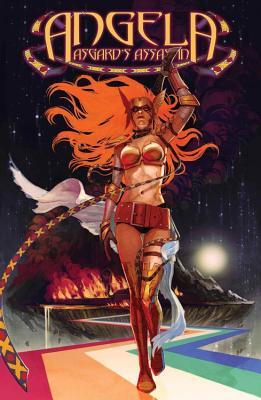 Angela: Asgard’s Assassin, Vol. 1: Priceless by Kieron Gillen and Marguerite Bennett
An Angela figurine sits on my bookshelf since the days when I used to collect just about everything Image. I never cared for the Spawn comics that Angela spawned from, but I did read her miniseries and was very excited to learn that she’d become a part of the Marvel universe. I did not read her introduction via the Guardians of the Galaxy, but that group does play a part here and reveals a slightly less steely but no less deadly side to Angela, injecting just the right amount of humour into an otherwise dark and focused story of a woman with a very significant mission that puts her at odds with both of the worlds that have rejected her. Initially, the story starts out a bit confusing, though as her friend Sera weaves the angel’s tale, things become a bit clearer and the twists and turns the story takes as Angela forges her path become easier to follow. The panel art is very good, but I was far more interested in the various artist interpretations and painted covers that peppered the pages. Angela is one of the many scantily clad warrior women that permeate the comic industry, but, unlike other such characters, I found that every artist here captured the essence of her undaunted spirit, rather than waste time simply and uncreatively objectifying her.
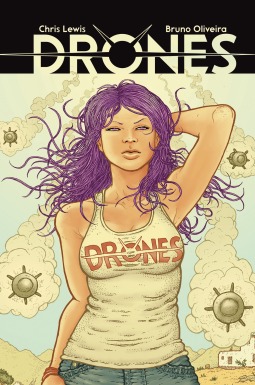 *Drones by Chris Lewis and Bruno Oliveira
With thanks to NetGalley and the publisher for the opportunity to read an advanced copy of this book in exchange for an honest review.
This book is trying to be a satirical look at terrorism in the Middle East and the drone technology used to target it, through the spectrum of western society’s penchant for turning anything into gross entertainment. An interesting, thought-provoking, and challenging approach to a serious topic, but the execution is an utterly confusing failure. I spent a good chunk of my time trying to tell the characters apart, and ultimately failed to find the humour in the terrorist-themed hotel and the various antics that go on within it.
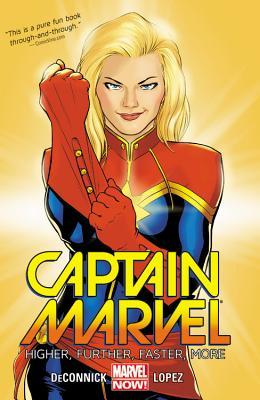 Captain Marvel, Vol. 1: Higher, Further, Faster, More by Kelly Sue DeConnick and David López
I really don’t know Captain Marvel save from her days bound unwillingly to Rogue. She was, at the time, very angry, but also extremely competent. Now, meeting her again for the first time, I love the impetuous soldier who strongly believes in doing the right thing, but doesn’t always realize that her help is not necessarily wanted when she just walks all up in the house like she owns it. But Captain Marvel is not without humility and she *is* still a soldier who knows when to take orders. The Guardians of the Galaxy make an appearance in this series, as seems to be the in thing these days, cashing in on the movie’s popularity. Though Marvel has, disappointingly but unsurprisingly, pushed back the date of the Captain Marvel movie, it’s never too early to get to know this incredible and inspiring hero.
 Witchblade Rebirth Volume 1 by Tim Seeley and Diego Bernard, Fred Benes
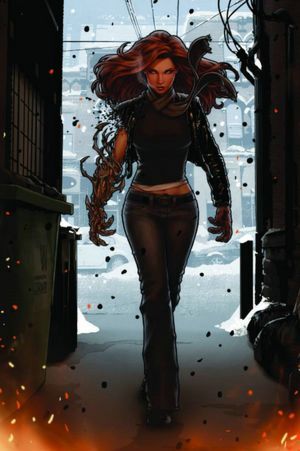
Witchblade is soon coming to a close. I have a lot of fond memories of this series for many reasons, but I probably should have kept them as that, instead of trying to pick it up again now. Following the events of Artifacts, Top Cow’s universe has undergone a big shake up and many of its cast members are starting their lives over. Sara Pezzini, wield of the mystical Witchblade, is among them. Now a Chicago private detective, she struggles with her new role and the annoying beat cop who always wants to bust her chops. An investigation leads to Pez being accused of murder, but of course, there’s more to the story. By that, I mean a group of people seeking immortality through an alien symbiote, and a coven of witches who want all the power. Interesting things are happening in this story, but not interesting enough to impress me. It’s a whole lot of ghastly bad guy of the week after phenomenal cosmic powers, with little depth to their purpose, and lots of extra skin. Pez is still her badass self, and it’s great to see her in better control of the Witchblade, but like I said, I’ll just stick with my nostalgia instead of joining Sara Pezzini on her rebirth.

Orbit’s Call to Adventure with Battlemage Excerpt & Giveaway!
Posted on December 2, 2015 9 Comments

***The giveaway is now over, thanks to everyone who entered!***
Looking for a good book to read? This winter Orbit Books wants to help you find your perfect fantasy adventure novel! Whether your tastes run to intricate magic systems, bloody battles or exciting swashbuckling action, there’s something for every fantasy reader. Just click the link below to check out this nifty site, and answer the questions to find out which of the seven Orbit titles in this quiz will be the perfect one for you! Let me know which book(s) you got 🙂
But that’s not all! To celebrate the launch of the website, The BiblioSanctum has also been invited to feature one of the books on the list. Today, we’re honored to be hosting an excerpt and a giveaway of Battlemage by Stephen Aryan! I had an awesome time with this book, so it is with great pleasure that I present this exclusive look at Chapter 2 (you can read Chapter 1 at the Orbit site!) and read on for the giveaway details. Enjoy!
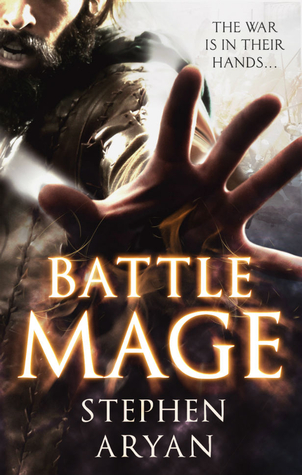
Excerpt from Battlemage by Stephen Aryan, published September 22, 2015 by Orbit.
CHAPTER 2
It felt good to be home. The air was damp and it smelled clean and familiar. Beyond the thick city walls, Balfruss could see endless fields of green, yellow and brown, hemmed in on all sides by dry stone walls. There was so much colour here. It had taken him years of being abroad to realise.
In the far east the changing of the seasons made little difference to the weather. The wind blew a little colder, the sun was a little warmer, but the land didn’t change colour as it did here in Seveldrom. After being away for so long Balfruss no longer kept track of time in days or weeks. There was little point when he wasn’t racing home to the loving arms of a wife and family. Before his thoughts became even more melancholy he focused on the city.
From his position at the top of the palace, Charas, the capital of Seveldrom was spread out before him. The city was a fortress with crenelated walls more than a hundred feet high. At the heart of Charas were ancient buildings steeped in history that were centuries old. Towering over them all was the cathedral devoted to the Great Maker. Its vast spire was slightly askew and its metal roof turning green in places, but it was still a remarkable sight. Stained-glass windows depicting former kings, queens and warriors twinkled in the sunlight in a myriad of bright colours.
Despite the cathedral’s prominence it was hard to ignore the domed temple of the Blessed Mother and the shining spire devoted to the church of the Holy Light. Both were clamouring for attention in the New City, a recent addition from five centuries previous. The New City spread out on all sides from the Old, more than tripling the population. The outer wall was as high as the inner, protecting its people from the worst of the weather and potential threats, although there’d not been a siege for centuries.
Peering down at the streets from such a great height, Balfruss could see a riot of colour, from painted shop signs and striped vendor awnings in the markets, to flowers in the Queen’s memorial park. Coloured glass filled the windows on the top floor in most houses in the Old City, a leftover fashion from the days when everyone had sung hymns to the Maker. In the New City it had never caught on, although the newer temples copied the stained glass with varied success.
Compared to other cities he’d visited, the architecture in Charas was simple, but there was a certain beauty in the uniform two- and three-storey buildings of the Old City. All the straight lines, blue slate roofs and lack of ascetic decoration spoke to him of strength and reliability, attributes commonly associated with the Seve people. It galled Balfruss when he heard jokes about Seves being a race of cow-breeding dullards.
It was hard to believe he’d been away for five years. If Balfruss were to look in a mirror he knew his reflection would show a man who looked much older than his thirty-seven years. Already there were spots of white in his hair and beard, and the purple shadows under his eyes had become a permanent fixture, as if he’d been born with them. There was also the unfortunate fact that he felt the wind more keenly on the back of his head. At least his beard kept his neck warm when it was cold.
“Glad to be home, Lan?” said Vannok Lore, coming up the stairs.
It was good to see that some things hadn’t changed in his time away. Vannok was exactly as before, a massive man dressed in moulded leather armour with a sword at his side.
Having grown up together they had no secrets between them. No one else called him Lan, the name he’d been given at birth before his eleventh naming day. It was a leftover custom from a time when six out of every ten children died from the red pox before their tenth birthday. There hadn’t been a new case in four hundred years, but the tradition continued.
Despite their years apart, when Balfruss had been studying at the Red Tower, they could still read the other with ease.
“I never thought I’d say it, Vann, but I’m happy to be home.” Balfruss took a deep breath and then another. “Do you smell it? The green.”
Vannok sniffed the air. “Was it so different in the east?”
“The desert is dry, spicy and hot. You can feel the air inside when you breathe. There are plants and trees, but nothing like this,” he said, gesturing at the land. “I missed the colour, and Maker forgive me, the cold. The rain and the wind too.”
Vannok laughed. “You weren’t tempted to stay?”
“No. It wasn’t home.”
“Are you going to stay home this time?”
Balfruss smiled up at his tall friend. “Ask me again when it’s done.”
“We should go. The King will be arriving shortly to greet you and the others.”
Balfruss followed him down several flights of worn stairs and along wide corridors towards the throne room.
“Have the others been here long?”
“Three were local,” said Vannok over his shoulder, “but a couple arrived in the last day. Some have travelled a long way to help us.”
“How many are there?”
“Eight, including you.”
Balfruss was so shocked he stumbled and Vannok caught him by the elbow before he fell. “Eight? Eight Battlemages?”
It was Vannok’s turn to smile. “Just wait.”
Nowadays Battlemages were rare, but at one time they had been reasonably common. Seekers had combed every town and village for children born with the ability, but that was before the Grey Council had abandoned their posts at the Red Tower fifteen years ago. The tower still took in those who turned up at its doors, but every year only a small number of students were trained by a shrinking group of ageing volunteers. Most of the staff had drifted away once they realised the Grey Council were not coming back. Those trained after the Council left were shown just enough to stop them from killing themselves, or anyone else, before they were sent home.
When he and Vannok entered the throne room the other Battlemages were already waiting for the King. Balfruss immediately recognised two of them and the ache in his chest returned. As soon as they saw him they approached with warm smiles and open arms. Both were dressed in loose yellow robes, but that was where the similarity between the two ended. Darius was dark skinned with a rangy build, black hair and dark eyes, while his wife Eloise was pale and blonde. The only commonality was the mark of Ayilah, a red glyph tattooed on their faces, running in a vertical line from hairline to jaw across the right eye. It signified their status as a wielder of magic in the desert kingdoms.
“What are you doing here? I only left you a few weeks ago,” said Balfruss.
“My wife is not one to be argued with,” said Darius, shaking both of Balfruss’s hands with an iron grip. Balfruss wanted to embrace his friend, but knew Darius’s customs frowned on public displays of affection. “She told me what was happening. After all that you did for my country, how could I not come?”
Balfruss offered his hand to Eloise, but instead she kissed him on both cheeks and hugged him tightly. “Stop scowling, Darius,” she said without looking around. “We’re in my country now. It’s not unseemly to show affection in public.”
Vannok cleared his throat and Balfruss took the hint.
“Sorry, Vann. Let me introduce you.”
“It’ll have to wait.” The King was entering the throne room, followed closely by his advisors.
Balfruss had never met the King before, but he could see why some called him the Grey Bear. Every hair on his bare arms and head was the colour of old ashes. Although nearly in his sixty-fifth year he was still a solid man in good physical shape. Stood behind him on one side were his three adult children, two broad and bearded sons and their slender and elegant sister. On the other side were two grizzled warriors who he guessed were Generals. One of them had to be Graegor, the mad one-eyed bastard they called the Foul, although never to his face. Much to Balfruss’s surprise Vannok took his place beside the other Generals and they greeted him as an equal. It seemed as if some things had changed in his time away.
The King sat down, but it was clear he wasn’t comfortable staring down at people from on high. The throne itself was basic, made only of wood with a gold lacquered crown painted on the headrest. The throne, like the other plain furnishings in the room, reflected what Balfruss knew about King Matthias’s approach to the trappings of his station. He understood their necessity, but preferred that the money be spent on his people rather than garish decoration for pomp and ceremony. The noticeable lack of colour also spoke of the Queen’s prolonged absence. It had been more than twenty years since her death.
Balfruss approached the bench and the other Battlemages made room for him to sit down.
“Thank you all for coming,” said the King. “I didn’t expect such generosity from my friends in the east,” he said, gesturing at Darius and Eloise who approached and bowed to the throne. As the King offered more lengthy thanks to King Usermeses IV, Balfruss glanced at those beside him.
The golden-skinned man must have come from the south-western kingdom of Shael, recently invaded and conquered by the Mad King. It looked as if the journey had almost killed the Battlemage from Shael. His face was haggard, his clothes dusty and torn, and even sitting down he leaned heavily on a tall staff. A pale headscarf sat about his neck, covering the bottom half of his face, and his shaven head was covered with fresh bruises, scars and scabs. As if he knew he was being watched, violet eyes turned to calmly regard Balfruss. He smiled and the man inclined his head.
The others were an odd group, two dressed in brightly coloured clothing like jesters, and a thick-shouldered man who looked more like a blacksmith. The smith was uneasy, constantly fidgeting and clenching his fists.
The last Battlemage was a small man with jet-black skin and a wide face who Balfruss recognised as one of the First People, the tribes who lived on the coast, north of Seveldrom.
King Matthias drew his welcome to a close, and from the broad smile on Darius’s face, Balfruss knew it had been the right length to satisfy desert customs. After giving their names his friends resumed their seats and the King’s expression turned grim.
“The King of Zecorria is dead,” said the King, his voice echoing around the room. “His son, Taikon, now sits on the throne and he’s declared war on Seveldrom under false pretences. He’s accused me of committing heinous religious crimes and with this he was able to form a pact with Morrinow. The other nations in the west were coerced or crushed to form an alliance. An army unlike any we’ve seen before marches towards my border. Our intelligence suggests that with them comes a man known as the Warlock, a powerful Battlemage with several apprentices. I have asked you here today because of him. We’ll speak again shortly, but for now, please introduce yourselves.”
Taking the initiative two brightly dressed men stepped forward to greet the King. Balfruss noticed both were sweating despite the room being pleasantly cool. It was also unusual to approach the throne without being asked. A couple of royal guards drew their swords and stepped forward but the King waved them back.
“Greetings your Majesty,” said one of the men with a florid bow. “I am the Great Samkin. Thank you for your seeing us. We hope to serve you well.”
The King pursed his lips and one eyebrow quirked slightly. Balfruss started to laugh, but Vannok gave him a vicious glare and he turned it into a cough. Darius was frowning and seemed on the cusp of action, but his rigid traditions would not allow him to interfere.
There was a long pause before the King spoke again. “And how many years did you train at the Red Tower?”
“Seven,” squeaked one of the men, nervously wiping sweat from his eyes.
“And what did you learn?”
“I can control storms, unmake stone, summon fire and see the future,” said one of the men, his robe covered with sun and moon symbols that had been sewn on.
“I can talk to animals,” blurted the other.
Balfruss laughed and this time he couldn’t contain it. A few of the others were smiling, except Darius and the smith.
“Perhaps a demonstration?” enquired the King.
“I’m very tired from my journey,” said Samkin, ignoring the laughter echoing around the room. “But my strength will soon return.”
As Samkin tried to step back all eyes fell on Balfruss, who was still laughing. Despite the frowns he struggled to regain his composure.
“My apologies, your Majesty,” said Balfruss, standing up and bowing deeply to the throne, “but these two men are charlatans. I assume that if pressed, they planned to trick you with sleight of hand. They don’t have the ability to touch the Source.”
“You can tell just by looking at them?”
“Yes, your Majesty. I can feel a kinship with my brethren,” he said, gesturing at those beside him. “There is a pulse. An echo between us.”
“He’s lying,” said one of the jesters. His bravado was spoiled by the tremor in his voice.
“A demonstration then,” said Balfruss. He waited until the King gave permission before walking forward. Balfruss positioned himself opposite the two men who suddenly looked very pale. “As I’m sure you know, one of the first lessons is the physical manifestation of your will. Combine your strength and push me across the room.”
“We don’t want to hurt you.”
Balfruss showed his teeth. “Try.”
Both men began by waving their arms and then one made strange whooping noises. The other chanted disjointed words, but nothing happened.
“Is that it?”
The two men looked at each other and then nodded.
Balfruss clapped his hands together and the charlatans were lifted into the air and thrown backwards. They slammed into the wall and hung off the ground as he stalked towards them. Their clothing was pressed flat against their bodies and they struggled to breathe as he leaned towards them.
“I can command storms, summon fire and unmake stone. Animals have nothing interesting to say and no one can see the future, because it has not been written,” growled Balfruss. “It’s dangerous to meddle with things you don’t understand.”
“Enough,” said the King, moving to stand beside Balfruss. “Let them down.”
Balfruss released the two men and they dropped to the floor in heaps. One was on the verge of tears and the other unable to look him or the King in the eye.
“What are your names?” asked the King.
“Sam.”
“Paedr.”
“Where are you from?”
“It’s a tiny village, Sire, right on the border with the west. Hasn’t got no name.” The speech of both men had suddenly become less formal.
“We came here ’cos everyone left. Emptied out their homes and come east.”
“We knew the war was coming,” said Paedr, “and needed work. Didn’t mean to upset no one. Pretending to be a Battlemage seemed like the best way to get fed. We went two weeks without, besides what we could forage.”
“We didn’t want to starve,” said Sam, glancing briefly at the King. “We’re sorry we lied, Sire.”
“And what did you do before coming here?” asked the King.
“Worked the land for a local farmer. But Paedr’s good with numbers. Kept the books straight for everyone when taxes was due. Not many in our village can write or do their numbers.”
The King gestured at his daughter, who stepped forward.
“I think they will be able to help Jonkravish,” said Talandra. This was the first time Balfruss had seen the Princess and it was obvious she took after her mother. She was tall with a willowy build, whereas her brothers were big men with broad shoulders like their father. Her hair was long and blonde, held back in a simple plait, whereas their dark hair was cut short. Unusually she was dressed in trousers and a long shirt that concealed much of her shape, but no one would mistake her for a man.
“Who’s Jonkravish?” asked Sam.
“Our quartermaster,” said Talandra, turning towards the two men. She gestured to someone at the back of the room, who stepped forward out of the shadows.
“This is Jonkravish,” said Talandra, nodding towards the Morrin. Like all of his people the quartermaster had a slightly wedge-shaped face, pointed ears, horns and yellow eyes. The two charlatans were visibly unsettled by him and were unable to meet his unwavering stare.
“He will give you a bed, meals and a job.”
“We’re not getting the lash? Or killed?” said Sam.
Talandra’s smile was warm and generous. “No, but your jobs will not be easy. He is not an easy man to please.”
“We can do it,” said Paedr, a second ahead of Sam.
Balfruss approached the two charlatans as they turned to leave.
“I’m sorry, Sir,” said Sam. “We didn’t mean no upset.”
“I am sorry,” said Balfruss, offering his hand. “I lost my temper and I shouldn’t have.”
They looked at his hand as if it were a poisonous snake, but eventually both shook it before following the quartermaster out of the room.
“Perhaps you could introduce the others,” suggested the King as he resumed his seat on the throne. “And yourself.”
“I am Balfruss, Majesty. I know you’ve already met Darius, and his wife Eloise, but he’s also my Blood Brother.” The King and his Generals looked nonplussed, but Talandra nodded, familiar with the title and honour bestowed on him. As a reward for his efforts in the desert kingdoms the King had allowed Darius to make Balfruss family, even though they were not related. It made Balfruss part of one of the most powerful families in the desert, and part of their line of inheritance.
“The others I don’t know by name,” apologised Balfruss, “but I recognise a Kálfe of the First People.”
The little tribesman stepped forward with a nod towards Balfruss. His flat face was ritually scarred and his forearms were covered with faded red and blue tattoos that were almost black with age. Bone ornaments pierced his ears, and a necklace of reflective yellow stones was his only piece of jewellery. His feet were bare but after a lifetime without shoes the skin looked as tough as old leather. He wore a vest and a loose pair of breeches cut off at the knee to be polite, but normally his people went naked except for a scrap of cloth to cover their genitals.
“I am Ecko Snapping Turtle,” he said, touching two fingers to his heart and then his forehead. “I came to help because you have always been good to my people. We still speak of your great king, Kiele, and we remember him in our prayers. He was the one who watched over us when we first came to your shores. I come from my people to honour him. I hope your Great Maker will watch over me while I am on his soil.”
“Thank you, Ecko,” said the King.
The big plain-faced man stepped forward as Ecko sat down. Balfruss was surprised to see how tall he was, managing to tower over Vann, the biggest in the room. “I’m Finn Smith,” he rumbled and that seemed to be all of it. His face was boyish, but Balfruss saw a terrible sadness in his blue eyes. “I was trained after the Grey Council left. Do you want me to show you?”
The King glanced at Balfruss who shook his head very slightly. He could feel more than an echo of power coming from Finn, and he knew the others felt it too. Finn’s ability was wild and untamed. An immense force barely held in check by a thread of control. His training would have been rushed and it was possible Finn could prove to be as dangerous as the enemy.
“There’s no need. Welcome Master Smith,” said the King.
The last Battlemage, the weary man from Shael, stepped forward and bowed deeply to the throne.
“I’m surprised and pleased to see you,” said the King. “The news we’ve received from your country has been limited but very worrying. Can you tell us what’s been happening?”
The golden-skinned man shook his head and then looked at Balfruss. His purple eyes bored into Balfruss’s skull and for a moment he felt dizzy. A rushing sound filled his ears and somewhere in the distance he could hear the murmur of voices. Balfruss stumbled, but caught himself before he fell over.
“Are you all right?” someone asked, but Balfruss was listening to the other voice in his head, the one that wasn’t his own. In his mind’s eye he saw golden-skinned people, a distant land of tall trees, and cities dotted with elegant spires.
“His name is Sandan Thule,” said Balfruss, as he came out of his reverie. “And the news from his homeland is grave.”
The King raised an eyebrow, but said nothing. Before Balfruss could explain, the voice came again more quickly, and with it more horrific visions. A tide of blood flowed along streets and the screams of agony were so high pitched they barely seemed human. Balfruss cried out and fell to his knees as he was exposed to images worse than any nightmare. Somewhere in the distance someone was talking, asking him if he was all right, but they seemed so far away. Slowly the tide of memories receded and the intense emotions that came with them eased. After wiping his face Balfruss managed to stand up with help from Thule but his knees still felt weak.
“I’m sorry. It was the only way,” came the echo of Thule’s voice in his mind.
“Are you all right?” asked the King.
“I will be,” replied Balfruss, swallowing the lump in his throat. “I’ve seen what’s happened to his people. The Mad King, Taikon, had already united the other nations in the west when his army came to Shael,” said Balfruss, relaying the words for Thule. “When diplomacy and bribery failed, he invaded Shael. They fought, but it only delayed the inevitable. There were too many. They tried to smuggle out the Queen and a few others, but all of them were caught, tortured and imprisoned. When the people heard about the Queen there was an uprising. A few escaped in the process, but not many.”
“How did he escape?”
As Balfruss turned to face the throne Thule pulled down the scarf covering the bottom half of his face. “He didn’t.”
A fresh purple scar ran across Thule’s throat from where it had been cut. The wound was jagged, which was the only thing that had saved his life. It had stopped bleeding, but was still swollen.
“He was beaten, tortured and then they slit his throat,” Balfruss explained. “It was badly done, so he lost his voice, but not his life. He woke in a mass grave on top of the bodies of his countrymen. This was only a few days ago.”
The King came towards Thule with Talandra on one side and Graegor, the grizzled one-eyed General on the other. If Thule was intimidated he didn’t show it and stood his ground.
“There are no words,” said the King, clasping Thule by the forearms.
“He asks that you do not give up on them,” said Balfruss. “A resistance is forming, but it will not be enough to free Shael unless the alliance in the west is broken. He is here to help you win this war because it’s the best way to free his people.”
“I will do all that I can to help your people. On my life, on my honour, I swear it,” said the King. “By the throne of Seveldrom and the iron in my blood, I swear it.”
Such promises were not made lightly, and once given so publicly the King was bound by ritual and custom to see it through. Even if he died before fulfilling it, his successor was duty bound to uphold the promise. Thule bowed his head and gratefully returned to his seat.
“I’m sure you’re all tired from your journey. I offer you my hospitality and suggest you all get some rest while you still can. The war is almost here and when it arrives, it could be a long time before any of us have a full night’s sleep again.”
They all stood as the King left the room, followed closely by his children and Generals. The one-eyed General paused on his way out and looked across at Balfruss. For a moment Balfruss thought the General was going to approach, but something made him change his mind as he hurried away after the other warriors.
The joy of being reunited with his friends faded quickly as the stark reality of what they were facing loomed in Balfruss’s mind. A war against an army of unprecedented size, led by a Mad King, a rogue Battlemage and his apprentices. Balfruss had come home to Seveldrom because his King had asked for aid, but now there were many reasons to fight and they were all standing in the room with him. They were his only family and he would do anything to protect them.
Despite the threat, surrounded by more Battlemages than he’d seen in many years, Balfruss felt excitement mixed with his fear at the thought of what they could accomplish by working together. They could change the world.
*
BATTLEMAGE GIVEAWAY
We hope you have enjoyed this exclusive excerpt of Chapter Two from Battlemage! Interested in winning a copy for yourself? Thanks to the wonderful folks at Orbit, The BiblioSanctum has one print copy of Battlemage up for grabs in our Call to Adventure Giveaway. This giveaway is open to the US and Canada. To enter, all you have to do is send an email to bibliosanctum@gmail.com with your Name and valid Mailing Address using the subject line “BATTLEMAGE” by 11:59pm Eastern time on Saturday, December 12, 2015.
Only one entry per household, please. Entrants must be 18 or older. The winner will be randomly selected when the giveaway ends and then be notified by email. All information will only be used for the purposes of contacting the winner and sending them their prize. Once the giveaway ends all entry emails will be deleted.
So what are you waiting for? Enter to win! Good luck!
Waiting on Wednesday 12/02/15
Posted on December 2, 2015 19 Comments

“Waiting On Wednesday” is a weekly meme hosted by Breaking the Spine that lets us feature upcoming releases that we can’t wait to get our hands on!
Mogsy’s Pick:
The Dragon Round by Stephen S. Power: July 5, 2016 (Simon451/Simon & Schuster)
While browsing the net one day, I stumbled across a snippet of a book blurb with the description: “swashbuckling adventure of The Count of Monte Cristo, but with dragons!” Of course, that immediately piqued my interest. So I read some more and that was how I discovered The Dragon Round. Throw in a maritime setting and a deserted island and I knew right then and there I had to check this out. I had debated including this one in my “Top Ten Tuesday” list of debuts I’m looking forward to in 2016 yesterday, but my excitement for this is so great that I decided I had to feature it by itself for a Waiting on Wednesday.
And will you look at that gorgeous cover? It’s almost like the Jaws poster, except mirrored. That and sharks have got nothing on dragons.
 “For fans of Scott Lynch and Naomi Novik comes a high fantasy epic that blends swashbuckling adventure with a dark tale of vengeance–when a ship captain is stranded on a deserted island by his mutinous crew, he finds a rare dragon egg that just might be the key to his salvation and his revenge.
He only wanted justice. Instead he got revenge.
Jeryon has been the captain of the Comber for over a decade. He knows the rules. He follows the rules. He likes the rules. But not everyone on his ship agrees. When a monstrous dragon attacks the Comber, his surviving crew, vengeful and battle-worn, decide to take the ship for themselves and give Jeryon and his self-righteous apothecary “the captain’s chance:” a small boat with no rudder, no sails, and nothing but the shirts on their backs to survive.
Marooned and fighting for their lives against the elements, Jeryon and his companion discover that the island they’ve landed on isn’t quite as deserted as they originally thought. They find a rare baby dragon that, if trained, just might be their ticket off the island. But as Jeryon and the dragon grow closer, he begins to realize that even if he makes it off the island, his life will never be the same again. In order for justice to be served, he’ll have to take it for himself.”
Top Ten Tuesday: Top Ten 2016 Debut Novels We Are Looking Forward To
Posted on December 1, 2015 31 Comments

Top Ten Tuesday is an original feature/weekly meme created by The Broke and the Bookish. They created the meme because they love lists. Who doesn’t love lists? They wanted to share these list with fellow book lovers and ask that we share in return to connect with our fellow book lovers. To learn more about participating in the challenge, stop by their page dedicated to it and dive in!
This week’s topic: Top Ten 2016 Debuts Novels We Are Looking Forward To
Mogsy’s Picks:
I’ll admit, this was a pretty tough one — I have a ton of books I’m looking forward to in 2016, but the trick was finding out whether it was an author’s debut or not. I did my best to research each book to make sure but it was pretty touch and go, so apologies if I am in error for any of these. Regardless, these are all books I’m very excited about, so without further ado let’s get on to them!
 Rebel of the Sands by Alwyn Hamilton
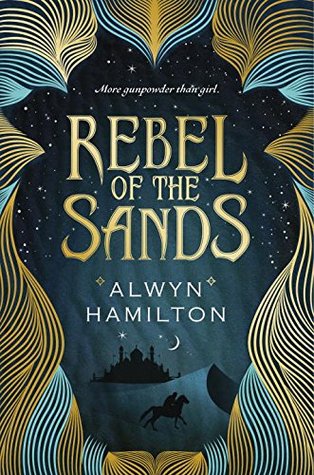
I’m usually very wary about YA titles that get lots of hype before release, but I have a pretty good feeling about Rebel of the Sands. For one thing, this book is already out in Italy months in advance of the US release and I hear it’s been getting some rave reviews, so I’m going to trust the Italians on this. In all seriousness, the book also sounds fascinating, with a story that takes place in a desert kingdom with a Middle Eastern vibe, and the description also teases a bit of that gunpowder/flintlock flavor.
 The Last Days of Magic by Mark Tompkins
I am so intrigued by this book! Mark Tompkins has written a lot of short stories, but as far as I know, The Last Days of Magic will be his first novel. Druids and faeries? Kings and goddesses? Wow, this story sounds like a great mix of historical fiction meets magic, which is how I like it. And I also like the hints that this story will bring together the past and present.
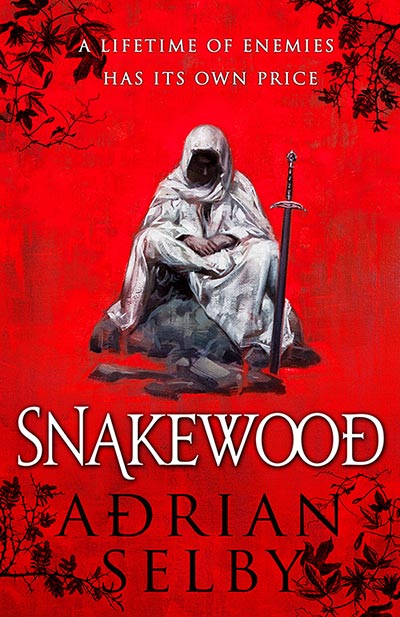
I can always use more dark, grim fantasy in my life and I’m so glad there’s a debut in 2016 that will fit the bill. In Snakewood, a band of mercenaries are on the run from a killer hunting them, and they will use everything at their disposal to escape, including poisons and alchemical potions (that they call “Fightbrews”) to enhance their physical and mental abilities.
 Revenge and the Wild by Michelle Modesto
When I saw this book up at Edelweiss, I had no idea that it was a debut; all I knew was that I just had to request it! You know how much I love fantasy-western settings. I’m all about the lawless places, wagon trails, smoky saloons, gold rushes and quick-draw gunslingers. Throw in dark magic and a revenge story, and I just cannot resist.

I don’t know what it is, but 2016 also appears to be bursting with fantastic looking YA titles. And as you can see from this list, a bunch of those that caught my eye are debuts, which is great. I love to read books that are about books and reading–even when the story is set in a world where both are forbidden. Can you imagine a world where everyone is illiterate because they are forced to be, and people can’t even recognize a book when they see one? The description also mentions swashbuckling pirates and assassins, which just makes me want to read this even more.

I’m very predictable. If you have a book related to video games or virtual reality gaming, you can pretty much guarantee I’ll want to check it out. Competitive gaming is some intense stuff too, so I hope this story will capture some of that atmosphere. I also recall reading somewhere that the author is an avid player of World of Warcraft and Call of Duty, which is awesome! I love reading books about gaming from authors who game, especially when they love the same games I do.
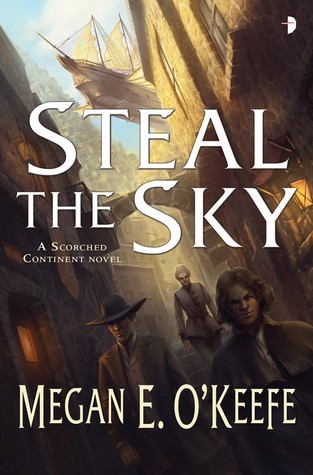 Steal the Sky by Megan E. O’Keefe
I am so curious about this, and can you blame me? First of all, the cover is gorgeous, evoking such a great vibe and ambiance. And there are airships! And conmen! And helloooo heist! Have you heard? Heist stories are my guilty pleasure! Come to think of it, it’s a little amazing how many debuts will be featuring one or more of my favorite subjects/themes next year.
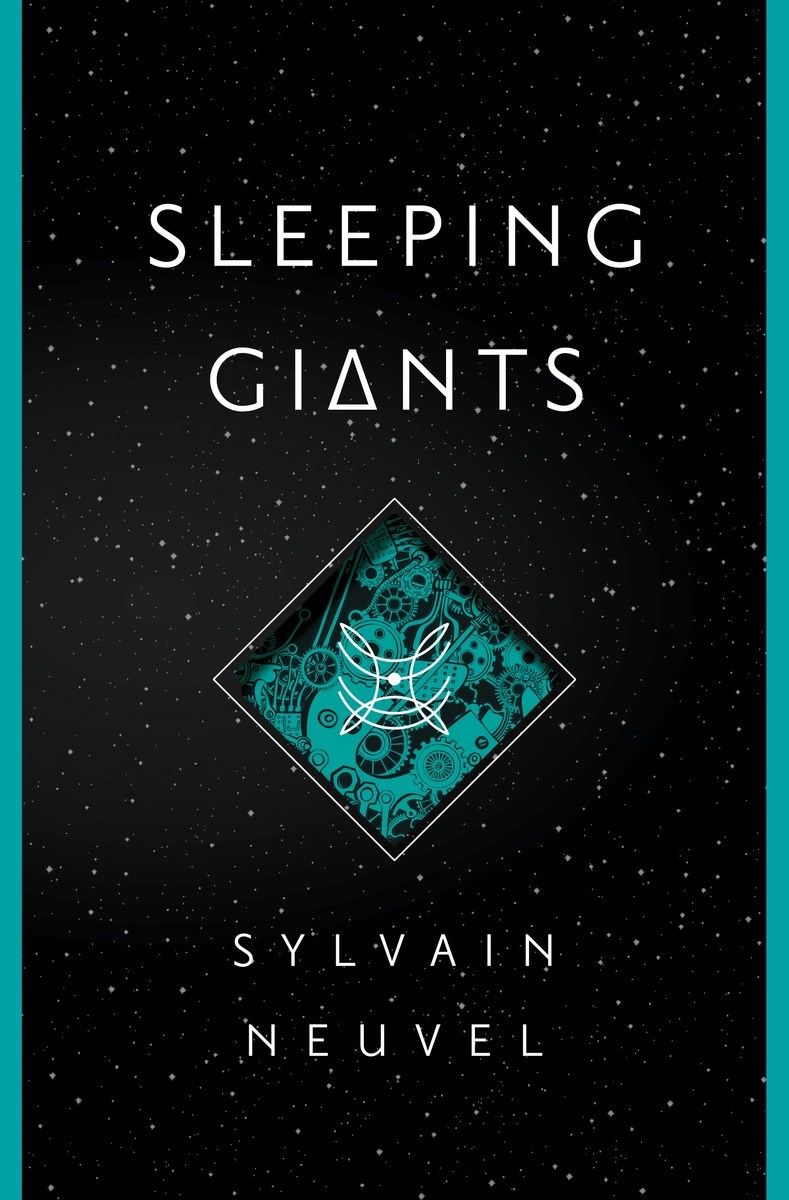 Sleeping Giants by Sylvain Neuvel
I got this one from NetGalley earlier this year, since it was on my watch list. From its description, it appears that the book is written in an epistolary format, which would explain the blurb comparing the style to World War Z. It sounds like a delightful mystery, uncovering the secrets of a giant hand found deep in the earth. I’m really looking forward to this one.
 The Immortals by Jordanna Max Brodsky
Mythology meets modern times. The blurb had this to say about this book: “Much like Lev Grossman’s The Magicians spoke to a generation of adults who grew up with Harry Potter, The Immortals will enchant anyone who loved American Gods or Percy Jackson.” That’s some praise right there. I am excited about diving into my ARC of this, and I hope it’ll be as good as it sounds!
And how can I end things without mentioning at least one Horror novel? A rare mental disorder spreads through a small town, and the protagonist’s daughter is diagnosed with Cotard Delusion, sometimes referred to as “walking corpse syndrome”, a condition that makes the patient think they’re dead. Sounds like it could be a supernatural twist on zombies, but something also tells me there’s more to it, and I can’t wait to find out.
#RRSciFiMonth: Mogsy’s Top 10 Sci-Fi Reads of 2015
Posted on November 30, 2015 23 Comments

As Sci-Fi November comes to a close, I hope everyone has enjoyed the science fiction related goodies we’ve featured at The BiblioSanctum this month. I also want to take this opportunity to thank Rinn Reads and Over The Effing Rainbow for running such a successful event this year, and we hope to keep participating in this annual tradition.
Anyway, since this is my last post, I thought, what better way to wrap things up than with a Top 10 list of the best Science Fiction novels I’ve read in 2015? It was certainly a tough choice narrowing it down, since I read a lot of books this year, but these are the sci-fi books that really stood out for me and I hope you’ll check them out.
* * *
 Nemesis Games by James S.A. Corey
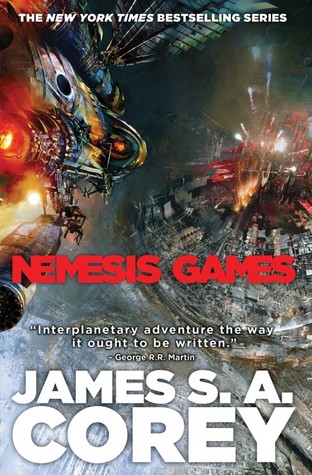
The Expanse is my favorite space opera series right now, and amazingly, not only are things still going strong, the books just keep getting better and better. Nemesis Games is an important turning point, and for the first time ever we get perspective chapters for every member of the Rocinante crew. It ends with a promise of much more to come and the series is showing no sign of slowing down. With the TV adaptation coming to Syfy, now there’s yet another reason to get excited these books! (Read my full review…)
 Touch by Claire North
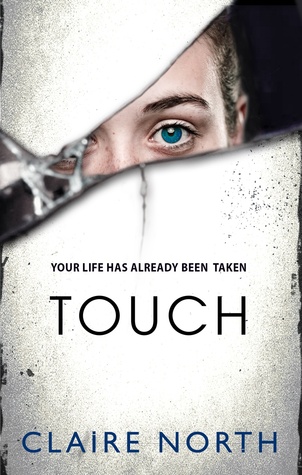
Does the idea of a unique, sc-fi thriller excite you? Read this book. Love wild, mind-trip movies like Inception? Read this book. If you’re looking for a smart, entertaining, and psychologically hard-hitting novel, READ THIS BOOK. Imagine, if you will, a group of near-immortal people who can jump from body to body, taking their hosts over and seeing through their eyes, feeling what they feel. They can choose to be anyone they want, live any life they want…and all it takes is a single touch. “Have you been losing time?” After this book, I’ll never look at this phrase the same way again. (Read my full review…)
 Star Wars: Lost Stars by Claudia Gray
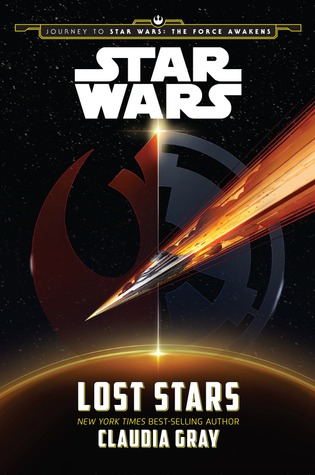
I know what you’re thinking: “Whoa, a media tie-in novel made it onto your top 10 list?” Yep, that’s because I really enjoyed Lost Stars. Ever since I read this I’ve been jumping up and down telling anyone I know who’s interested in Star Wars novels to consider giving this book a shot. Please don’t let the fact that it’s YA put you off! I think of all the SW books that have come out in the new canon so far, this one isn’t getting nearly the attention it deserves! And it’s killing me! So you can be sure, I’ll be pimping this book til the banthas come home. (Read my full review…)
 Zero World by Jason M. Hough
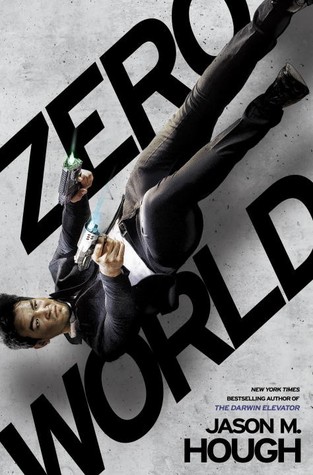
This book is like James Bond meets Memento meets an episode of Star Trek. Let’s just say the tagline of Zero World– “This will be the most interesting mission you’ll ever forget” – serves its story well, a promise of adventure and thrilling action packed into those ten simple words. This is without a doubt Jason M. Hough’s most exciting and ambitious work yet. His penchant for rich world building and writing innovative tech has always impressed me, but what I love about his sci-fi is the fact that it’s also so accessible. Zero World blends spy thriller elements with futuristic goodness, capturing my attention from the get go. (Read my full review…)
 Earth Flight by Janet Edwards
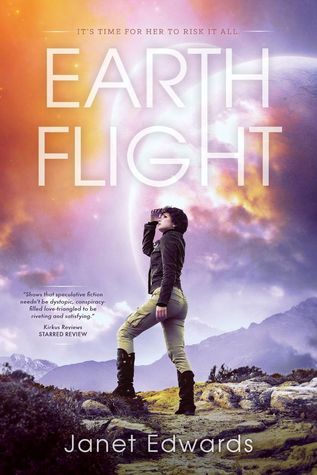
In the Earth Girl trilogy, Janet Edwards has created a stunning futuristic world with realistic and lovable characters. I absolutely adore it. I’m sad that it has come to an end with Earth Flight, but this book was a beautiful and heartwarming conclusion that ended the series perfectly. I enjoy science fiction with powerful social messages, and if the premise sounds interesting to you, be sure to check it out. All three books are fantastic, and hope they will enthrall and move you as much as it did me. (Read my full review…)
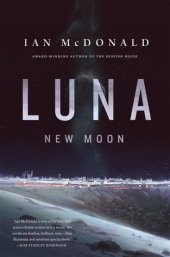 Luna: New Moon by Ian McDonald

If you can imagine the Starks and Lannisters as two rival families with competing mining operations on the moon, I daresay the situation might look a lot like the plot of Luna: New Moon. I can’t remember the last time I read a sci-fi novel featuring a richer and more compelling premise. The sheer scope of it is astounding, with a multi-perspective narrative following more than half a dozen characters from three generations of the powerful Corta dynasty. If you’re a sci-fi fan looking for a character-driven story with complexity, scope and depth, then do yourself a favor and check this one out! (Read my full review…)
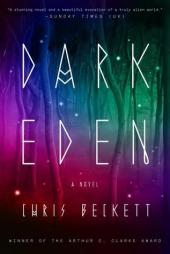 Dark Eden by Chris Beckett

This was a book first published before this year, but I finally got to read it in 2015. I love books like Dark Eden, which I have the feeling isn’t the kind of book you can take at face value. So many questions. So much material for discussion. In some ways, the story is almost like a hypothetical social experiment, exploring the possible outcomes if a society were to emerge on its own, completely cut off and free of influences from the rest of humankind. (Read my full review…)
 Illuminae by Amie Kaufman and Jay Kristoff
I went into Illuminae with no small amount of skepticism, as I do with most books that get this much hype before release. In spite of myself though, I found myself hooked. Basically I chewed through it like its pages were made of sweet, sweet candy. It is as much a book as it is a work of art, presented in an epistolary format but with a heavy visual component, filled with illustrations and charts, etc. You don’t so much as read it as experience it. There’s always something different on the next page so the story never lets you fall into a rut, and both the writing and pretty visuals contributed to my enjoyment in equal parts. (Read my full review…)
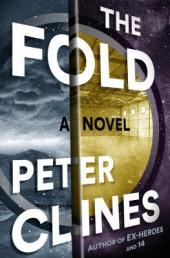 The Fold by Peter Clines
I’m a big fan of Peter Clines and his genre-mashing stories and writing style, so needless to say I was beyond excited about The Fold. It was surprisingly easy to enjoy without the reader feeling inundated with heavy science and tech terms – an impressive feat, considering how so much of the premise deals with topics like quantum physics or cosmological theory. It’s got everything – mystery and suspense, humor and horror, science fiction and the paranormal – all perfectly blended together with a bizarre twisty ending that will keep you saying, “Just one more page…” I couldn’t put this book down. (Read my full review…)
 The Rebirths of Tao by Wesley Chu
Hands down, The Rebirths of Tao is my favorite book of this trilogy. What a way to end things! The book has everything that made the first two books such a joy to read, but on steroids. The stakes are higher, and the action is more intense. The humor is laugh-out-loud funny, the character relationships much more emotional. It’s got love and betrayal, smiles and tears, politics and espionage, sword fights, kung-fu, unlikely heroes, dastardly villains, aliens, starry-eyed teenagers, Brits who love bacon, and much, much more. This third book was everything I’d hoped for; I highly recommend the trilogy if you like sci-fi thrillers and comedy. (Read my full review…)
#RRSciFiMonth: Star Wars: The Old Republic: Fatal Alliance by Sean Williams
Posted on November 29, 2015 3 Comments
Sci-Fi November is a month-long blog event hosted by Rinn Reads and Over The Effing Rainbow this year, created to celebrate everything amazing about science fiction! From TV shows to movies, books to comics, and everything else in between, it is intended to help science fiction lovers share their love and passion for this genre and its many, many fandoms.
 Genre: Science Fiction, Gaming
Series: Star Wars: The Old Republic
Publisher: LucasBooks (July 2010 )
Author Information: Twitter | Website
Goodreads | Amazon | Barnes & Noble
Narrator: Marc Thompson | Length: 13 hrs and 48 mins | Audiobook Publisher: Random House Audio (July 20, 2010) | Whispersync Ready: No
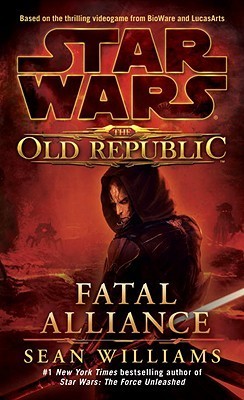
Fatal Alliance is a tie-in/lore novel based mainly on Bioware’s MMO Star Wars: The Old Republic (SWTOR). This is also the first Star Wars novel that I have read. I consider myself more of a casual fan who mainly enjoys the movies, comics, and games, but I wanted to give the novels a try. As I said on my review of Patrick Weekes’ The Masked Empire, I refuse to let books based on video games off the hook simply for the fact that they’re based on a such a visual medium. There’s an idea that I shouldn’t expect much out of them, but I don’t accept that. I don’t think it’s unreasonable to expect tie-ins to be more than just a thinly written book meant to make a cash grab, especially considering how thoughtful many games. Why shouldn’t they have book counterparts on equal footing?
This book follows a group of characters from both the Republic and the Empire as they seek to gain control of the remains of a mysterious ship that has the coordinates to resources that could greatly aid either side, or at least, they assume that’s what’s in store for them. They’re unable to verify this before purchase due to the Hutts having control of the remains. However, neither side actually intends to purchase the prize, which results in a mini-heist of sorts. Unlikely alliances are formed as they try to get to the bottom of the mystery surrounding the destroyed ship.
Williams went out of his way to make sure you knew this was a gaming novel. This book is written with slant toward people familiar with the games or Star Wars in general as most tie-in media is. There’s not much description of the characters or surroundings because the book assumes most readers have played the game and can picture the setting and characters based on what they know about the settings and how the various races typically look, which can be a turn off for someone who may be only slightly familiar with the Star Wars universe. Williams also managed to fit in a shout out to all the classes you can play in SWTOR in this book in the most obvious of ways. There’s not anything wrong with that, but the execution felt cheesy. If you’ve ever played SWTOR, you could easily pick up on the classes these characters represented, but Williams took it a step further by stating outright what classes these characters represent. Example: Moxla was a trooper, and that was easy enough to understand from what we learned about her. There wasn’t really any need to spell it out to the readers, even those who may only be familiar with the movies and/or other Star Wars media. However, we had to have a Captain Obvious moment where another character makes sure to point out that she’s a trooper. We understand she’s a trooper, really. That happened with many characters. I found myself thinking, “I understand he’s a smuggler. I understand he’s a Jedi knight. Why are you stating such obvious facts?”
I’d like to talk about a narration well done. Marc Thompson does an exceptional job narrating this story, giving all the characters such distinct voices. And trust me, this book has many characters who speak, so to be able to nail different voices for all of them takes talent. I might have enjoyed his narration more than I enjoyed the story. A few caveats on this audiobook. It is full production, which means there is music and sound effects. From time to time, and this is a complaint I have for most full production audiobooks, the din in the background can drown out the narrator’s voice. Ifound it particularly distracting when Thompson was speaking over a character that was speaking Huttese to simulate translating. That was distracting. Another thing is that the quality was inconsistent. I don’t know if this was an issue with my player or if it’s an issue with the audiobook, but there were parts that were just weak quality.
This book asked me to suspend much of my beliefs as far as the plot was concerned. I never really felt the basis of the plot was a strong one. Plots like these stand up in video games because players have to infer much of the details or what’s going on in the background. Often the players are much more imaginative than the writers in this respect. It gets trickier ro explain this plot “on paper” because then the writers are tasked with fleshing out the story with more detail, and sometimes, that can leave readers thinking that maybe they didn’t think through this plot enough, which is partly the case here. There were many ways that a plot like this could’ve gone that would’ve made it more believable, but it wasn’t so bad that I gave up on it. As far as stories go, this one did keep me engaged. It actually turned out better than I was expecting. And admittedly, I did get a kick out of characters from the game being introduced into the story, such as Satele Shan and Watcher Three. The new characters Williams’ introduced weren’t terribly rounded, but they were likable enough that I cared about what happened to them… well, most of them. Also, I enjoyed most of the action sequences and could see them playing out epically in my head.
This was an interesting trek through the Star Wars universe, and despite some complaints mainly with the weak (very weak and also partially stupid) plot, I’m actually looking forward to reading more novels to fill in the gaps of this universe because it’s all in good fun. Also, Jet Nebula and Clunker are the MVPs of this novel.
Story:  | Performance:
  | Overall:
#RRSciFiMonth: The Descender by Jeff Lemire and Dustin Nguyen
Posted on November 29, 2015 6 Comments
Sci-Fi November is a month-long blog event hosted by Rinn Reads and Over The Effing Rainbow this year, created to celebrate everything amazing about science fiction! From TV shows to movies, books to comics, and everything else in between, it is intended to help science fiction lovers share their love and passion for this genre and its many, many fandoms.
 Descender, Vol. 1: Tin Stars by Jeff Lemire and Dustin Nguyen
Genre: Science fiction
Publisher: Image Comics (September 2015)
With thanks to Netgalley and the publisher for the opportunity to read an advanced copy of this graphic novel in exchange for an honest review.
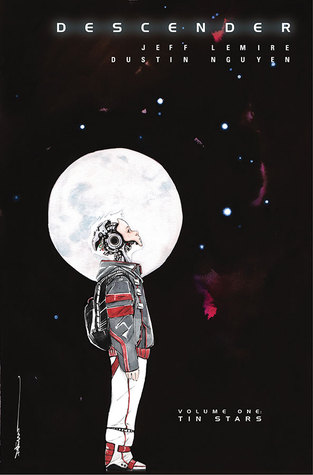
A sudden attack by giant robots and their equally sudden disappearances leaves humanity with only one decision: all robots must be destroyed. On a remote mining planet, one robot survives the culling. His name is Tim-21 and he was designed to be a companion for a young boy. As it turns out, Tim is not alone in his robotic status, but more importantly, his programming is very similar to the harvesters that attacked a decade earlier. This makes Dr. Quon, his designer, a very wanted man.
A robot boy who wants to be real. Robot genocide at the hands of humans who fear them. Rebel factions. Bounty hunters. Political intrigue and betrayal. All of these things are fairly common stories in the realm of robot science fiction, but Lemire’s writing and Nguyen’s stark yet powerful art breathe new life into this tale and leave me wanting more as Tim tries to understand who he is and how he fits into the puzzle.

But most of all, Tim just wants to find his family and, though he knows he is a robot, he displays all of the emotional moments needed to endear him to us.
The mystery behind the harvesters looms over the story, but so too does a strange dream that Tim has when he is momentarily deactivated, revealing him to be the potential saviour of all of the robots who have perished before him. But Philip K. Dick has already asked the question of whether or not androids dream, so what is it that Tim truly experienced?
#RRSciFiMonth Book Review: Starhawk by Jack McDevitt
Posted on November 28, 2015 3 Comments
 Sci-Fi November is a month-long blog event hosted by Rinn Reads and Over The Effing Rainbow this year, created to celebrate everything amazing about science fiction! From TV shows to movies, books to comics, and everything else in between, it is intended to help science fiction lovers share their love and passion for this genre and its many, many fandoms.
 Starhawk
Genre: Science Fiction
Series: The Academy #7
Publisher: Ace (November 2013)
Author Info: jackmcdevitt.com
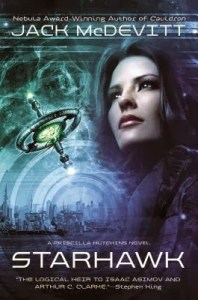
I have never read a Jack McDevitt novel before, much less the Academy series where I would have met Priscilla “Hutch” Hutchins, the main character of said series. This is a prequel to that series and thereby a good jumping point to get into the series. Unfortunately, it’s not a particularly compelling one, though there are many things that the book does right.
First off, it should be noted that Priscilla shares the spotlight in this book, with her mentor, Jake Loomis, getting point of view chapters of his own and he struggles with the tragedy of the book’s opening mission, and his future with space flight. The future of spaceflight itself is a prominent theme, as there is very little funding available to maintain the level of exploration needed, much less to rescue those who get stranded out there. The latter is another prominent theme as it becomes the only way for Hutch, a fresh off of certification pilot, to get out into space in this cash strapped industry.
This is not a high action book. In fact, it feels very realistic to me, offering us lots of solitude and boredom on the space flights. Even during the tense situations of the rescues, there’s a sense of “hurry up and wait” because not all space travel is about laser battles and explosions. We’re also just on the cusp of FTL travel here, with humanity only just poking its nose into the universe and hoping for a response. There is evidence of Something Out There, with repeated mention of the monument on Iapetus, which I assume is important to future novels. But there’s also the underlying concern of what we are doing in our attempt to reach further into space and colonize other worlds. Are we destroying life elsewhere for the sake of our own expansion? But this too is an issue that burns slowly in the story, even with occasional moments of opposition. Some protestors take to terrorism, while others simply choose to bite their tongues to avoid the hassle, and ultimately, the answer to the question of “is terraforming destroying life on other planets” is “maybe, but probably not for a long time.” This pedantic approach to the storytelling might bore some, but I found it appealing in its realism.
I assume that a lot of the relationships and even names, such as “Starhawk” and “Hutch” are common in the future books. Here we learn their lackluster origins and slag through the tepid friendships and romances that occur separately between Jake and Priscilla. Priscilla’s relationship with Cal in particular is poorly written. I hope that he plays a significant role in her future life but for now, I am as uninterested in their romance as she seemed to be at first, and am even more disappointed in the inexplicable switch in her approval of him, which went from “meh” to a lazily written “I’m not sure when I started to care blah blah blah…” While I can appreciate the slowness of the rest of the storytelling, the characters themselves, as well as their relationships, are utterly dull and unappealing. This is where the book ultimately fails to make me want to know more.
And finally, a pet peeve: It’s 200 years in the future, but of course the cast is default white and they get descriptions about flowing hair and sparkling eyes etc. Then McDevitt tosses in some background people of colour who get descriptions like “African-American” or “Asian.” This is level one diversity Jack. Thanks for trying, but can you please refer to GRRM’s handy chart of shades for describing PoC characters.

Be sure to check out Mogsy’s far more positive review of the book here!
#RRSciFiMonth Invasive Species by Joseph Wallace + Giveaway!
Posted on November 27, 2015 13 Comments
Sci-Fi November is a month-long blog event hosted by Rinn Reads and Over The Effing Rainbow this year, created to celebrate everything amazing about science fiction! From TV shows to movies, books to comics, and everything else in between, it is intended to help science fiction lovers share their love and passion for this genre and its many, many fandoms.
***The giveaway is now over, thanks to everyone who entered!***
A review copy was provided by the publisher in exchange for an honest review. All opinions are my own.
 Invasive Species by Joseph Wallace
Genre: Science Fiction, Suspense, Horror
Series: Book 1
Publisher: Berkley (12/3/13)
Author Information: Website | Twitter
Mogsy’s Rating: 4 of 5 stars
Nature is scary. Books that remind us of this fact are always enlightening, and that’s what I loved about Invasive Species. When your story involves science and ecological elements—and especially when your focus is on nasty, icky bugs—even a novel in the Suspense/Thriller category can easily read like a Horror.
From the book’s description alone though, it was hard to tell what it would be about. All we know is that an unknown breed of predator has emerged, and humans are its favorite prey. This new enemy is faster, stronger, and far deadlier than anything we’ve seen before. Right away, my brain started working on constructing this hypothetical creature, and I couldn’t help it—films like Predator, Alien, and other movies featuring science fiction’s most terrifying killing machines immediately sprang to mind. After all, we’ve seen these types of plots so many times before; it’s difficult to imagine that a threat of this nature could be anything other than a malevolent, extraterrestrial monster.
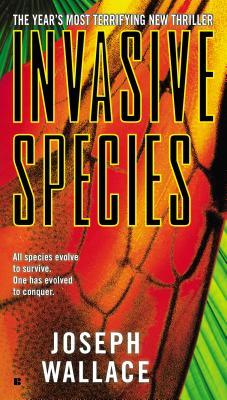
Turns out, I was totally wrong. The “monsters” in Invasive Species turn out to be wasps. Sure, they may be wasps on steroids, having evolved to be become larger, smarter, and more poisonous than the norm. But still…just wasps. Does it make this book any less scary, though? Nope. Actually, it just made me feel even more creeped out and unsettled. If you’ve ever been stung by a wasp, you know what I’m talking about. Wasps are pure evil.
Certainly, if you’re an entomophobe, you’re going to have a really tough time with this book. While it’s a science fiction story that also gets a bit far-fetched here and there, the premise has just enough science in it to make you squirm. Our protagonist Trey Gilliard is a modern explorer of sorts, literally taking the road less traveled. His life’s work is all about heading into the least known regions of the planet. There are still areas on earth relatively untouched by humanity, and some of these are in the deep jungles of Africa. You don’t have to suspend reality too much to believe that a new species could evolve separate in such a place, unknown to the rest of the world. It’s here where Trey first encounters his first “thief”, a new kind of parasitoid wasp. The locals call them that because of the way they steal your mind, your body, and your life. They’re also referred to as “slavemakers” because of the way adult wasps can attach their stingers to hosts and take over their bodies.
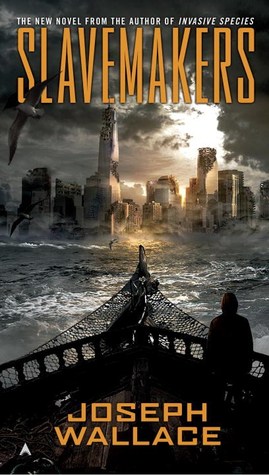
The thieves are deadlier than regular wasps for many reasons, but first and foremost it is because they have developed an intricate hive mind, allowing them to communicate long distances and also to recognize and “remember” those who have done them harm. Primates are also their preferred host, including human beings. They breed by injecting their larvae into the abdomens of their unsuspecting prey, and neurotoxins in their venom also scramble and befuddle their victims’ minds, making them unaware that they are pregnant with a baby wasp until it is too late. That’s some messed up, creepy stuff.
The thieves are also great at survival. Deforestation and hunting practices have diminished their natural habitat and available hosts, but instead of dying out, they’ve become even more opportunistic, hitching rides on cars, boats, and planes in order to spread to the rest of the world. In the United States where it’s an election year, their presence eventually sparks a political storm.
Remember my review earlier this year of Bat out of Hell, a so-called “eco-thriller”? That one didn’t work out so well for me. And well, after reading Invasive Species, I realized this is how I wished that book had turned out! Invasive Species is a far better book because author Joseph Wallace did the right thing and focused on the disaster at multiple levels. He focused on the individual victims. He also focused on the threat of the thieves themselves. He emphasized the way these insect invaders fueled the fear and panic, ratcheting up the suspense to a fever pitch. The book is also a frightening reminder of just how fragile we are when science and technology fails us, and how quickly a civilization can come apart at the seams without the proper infrastructure and resources to maintain it.
I won’t spoil the ending, because you’ll just have to read this for yourself to see how the conflict resolves. However, I will say Invasive Species finishes on a bittersweet, melancholy note. After the roller coaster ride this story gave me, I thought it was ominously appropriate. For a book I knew next to nothing about when I first started it, I ended up really enjoying myself. Gripping, suspenseful, and delightfully chilling, this is a novel that will really get under your skin! A fine blend of drama and action for fans of sci-fi thrillers and horror. The follow-up titled Slavemakers is actually on the horizon, due out later this winter, and I’m looking forward to picking it up now more than ever.

* * *
INVASIVE SPECIES GIVEAWAY
With Slavemakers due out next week, there’s no better time than the present to check out Invasive Species to see how it all began. The publisher has very generously offered The BiblioSanctum an opportunity to host a giveaway for one print copy of Invasive Species. This giveaway is open to US addresses only. To enter, all you have to do is send an email to bibliosanctum@gmail.com with your Name and valid Mailing Address using the subject line “INVASIVE SPECIES” by 11:59pm Eastern time on Sunday, December 6, 2015.
Only one entry per household, please. Entrants must be 18 or older. The winner will be randomly selected when the giveaway ends and then be notified by email. All information will only be used for the purposes of contacting the winner and sending them their prize. Once the giveaway ends all entry emails will be deleted.
So what are you waiting for? Enter to win! Good luck!
#RRSciFiMonth 5 Books I Read in 2015 That Deserve More Attention
Posted on November 26, 2015 15 Comments
2015 saw a number of big science fiction releases, but here are five books that might have flown under radars!
Edge of Dark by Brenda Cooper (Pyr: March 3, 2015)
The first book of a planned duology, Edge of Dark also takes place in the future of the same timeline as Brenda Cooper’s Ruby’s Song series, which made me very happy because I loved The Diamond Deep when I read it a couple years ago. I certainly didn’t expect to like it so much, but was surprised at how addictive the story was. (Read my full review…)

What if a society banished its worst nightmare to the far edge of the solar system, destined to sip only dregs of light and struggle for the barest living. And yet, that life thrived? It grew and learned and became far more than you ever expected, and it wanted to return to the sun. What if it didn’t share your moral compass in any way?
The Glittering Edge duology describes the clash of forces when an advanced society that has filled a solar system with flesh and blood life meets the near-AI’s that it banished long ago. This is a story of love for the wild and natural life on a colony planet, complex adventure set in powerful space stations, and the desire to live completely whether you are made of flesh and bone or silicon and carbon fiber.
In Edge of Dark, meet ranger Charlie Windar and his adopted wild predator, and explore their home on a planet that has been raped and restored more than once. Meet Nona Hall, child of power and privilege from the greatest station in the system, the Diamond Deep. Meet Nona’s best friend, a young woman named Chrystal who awakens in a robotic body….
Evensong by John Love (Night Shade Books: January 6, 2015)
I’ll admit, at first I didn’t think this would be my type of book, but after I finished Evensong, the emotional impact it had on me was something I just couldn’t ignore. The ending touched something deep inside me, and as the dust settled, I was left with a numbness, a melancholy that even now I find hard to explain. (Read my full review…)
 The future is a dangerous place. Keeping the world stable and peaceful when competing corporate interests and nation-states battle for power, wealth, and prestige has only gotten harder over the years. But that’s the United Nations’ job. So the UN has changed along with the rest of the world. When the UN’s “soft” diplomacy fails, it has harder options. Quiet, scalpel-like options: The Dead—biologically enhanced secret operatives created by the UN to solve the problems no one else can.
Anwar Abbas is one of The Dead. When the Controller-General of the UN asks him to perform a simple bodyguard mission, he’s insulted and resentful: mere bodyguard work is a waste of his unique abilities. But he takes the job, because to refuse it would be unthinkable.
Anwar is asked to protect Olivia del Sarto, the host of an important upcoming UN conference. Olivia is head of the world’s fastest-growing church, but in her rise to power she has made enemies: shadowy enemies with apparently limitless resources.
Anwar is one of the deadliest people on earth, but her enemies have something which kills people like him. And they’ve sent it for her. It’s out there, unstoppable and untraceable, getting closer as the conference approaches.
As he and Olivia ignite a torrid affair, Anwar must uncover the conspiracy that threatens to destroy her, the UN, and even The Dead.
Our Lady of the Ice by Cassandra Rose Clarke (Saga Press: October 27, 2015)
Frankly, I’m surprised this book hasn’t gotten more attention, since the author has written several well-received books before this one. Our Lady of the Ice is a very different kind of sci-fi novel. Infused with hard-boiled noir vibes, it features wonderful characters and takes place in one of the most mind-blowingly unique settings I’ve ever seen. I found this book simply irresistible. (Read my full review…)
 Hope City, Antarctica. The southernmost city in the world, with only a glass dome and a faltering infrastructure to protect its citizens from the freezing, ceaseless winds of the Antarctic wilderness. Within this bell jar four people–some human, some not–will shape the future of the city forever:
Eliana Gomez, a female PI looking for a way to the mainland.
Diego Amitrano, the right-hand man to the gangster who controls the city’s food come winter.
Marianella Luna, an aristocrat with a dangerous secret.
Sofia, an android who has begun to evolve.
But the city is evolving too, and in the heart of the perilous Antarctic winter, factions will clash, dreams will shatter, and that frozen metropolis just might boil over…
Cash Crash Jubilee by Eli K. P. William (Talos: May 5, 2015)
Cash Crash Jubilee is utterly fascinating, from cover to cover. The premise is disconcerting, with details that sometimes bordered on the absurd, but it did make me think. I love a book that gets my brain juices flowing, and I found myself so completely absorbed in the sights and sounds of William’s dystopic Tokyo. It’s a trove of insanity and wonder, all in one place. (Read my full review…)
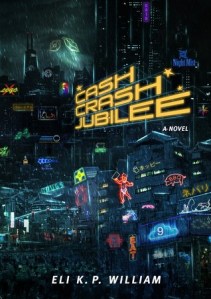 In a near future Tokyo, every action—from blinking to sexual intercourse—is intellectual property owned by corporations that charge licensing fees. A BodyBank computer system implanted in each citizen records their movements from moment to moment, and connects them to the audio-visual overlay of the ImmaNet, so that every inch of this cyber-dystopian metropolis crawls with information and shifting cinematic promotainment.
Amon Kenzaki works as a Liquidator for the Global Action Transaction Authority. His job is to capture bankrupt citizens, remove their BodyBank, and banish them to BankDeath Camps where they are forever cut off from the action-transaction economy. Amon always plays by the rules and is steadily climbing the Liquidation Ministry ladder.
With his savings accumulating and another promotion coming, everything seems to be going well, until he is asked to cash crash a charismatic politician and model citizen, and soon after is charged for an incredibly expensive action called “jubilee” that he is sure he never performed. To restore balance to his account, Amon must unravel the secret of jubilee, but quickly finds himself asking dangerous questions about the system to which he’s devoted his life, and the costly investigation only drags him closer and closer to the pit of bankruptcy.
In book one of the Jubilee Cycle, Cash Crash Jubilee, debut novelist Eli K. P. William wields the incisive power of speculative fiction to show how, in a world of corporate finance run amok, one man will do everything for the sake of truth and justice
First Light by Linda Nagata (Saga Press: June 30, 2015)
First Light is the excellent, smart, and action-packed introduction to The Red series, originally indie-published but then re-released by a major publisher – because it is JUST. THAT. GOOD. This book gets my recommendation, especially for fans of military science fiction. It’s been getting all kinds of attention lately, but I say it could always use more! (Read my full review…)

Reality TV and advanced technology make for high drama in this political thriller that combines the military action of Zero Dark Thirty with the classic science fiction of The Forever War.
Lieutenant James Shelley, who has an uncanny knack for premeditating danger, leads a squad of advanced US Army military tasked with enforcing the peace around a conflict in sub-Saharan Africa. The squad members are linked wirelessly 24/7 to themselves and a central intelligence that guides them via drone relay—and unbeknownst to Shelley and his team, they are being recorded for a reality TV show.
When an airstrike almost destroys their outpost, a plot begins to unravel that’s worthy of Crichton and Clancy’s best. The conflict soon involves rogue defense contractors, corrupt US politicians, and homegrown terrorists who possess nuclear bombs. Soon Shelley must accept that the helpful warnings in his head could be AI. But what is the cost of serving its agenda?


 The BiblioSanctum