Audiobook Review: Watcher in the Woods by Kelley Armstrong
Posted on February 7, 2019 23 Comments
I received a review copy from the publisher. This does not affect the contents of my review and all opinions are my own.
 Watcher in the Woods by Kelley Armstrong
Mogsy’s Rating (Overall): 4.5 of 5 stars
Genre: Mystery, Thriller
Series: Book 4 of Rockton
Publisher: Macmillan Audio (February 5, 2019)
Length: 11 hrs and 30 mins
Author Information: Website | Twitter
Narrator: Therese Plummer
I don’t read as much mystery-thriller as I do sci-fi & fantasy, but this is one series I have been following religiously, and every book that comes out just makes me love it even more. Watcher in the Woods is the fourth installment that returns readers to Rockton, a secret town hidden in the wilds of the Yukon. Ex-homicide detective Casey Duncan and her boyfriend Sheriff Eric Dalton are doing their best to police this community of eclectic residents who share only one commonality—they’ve all come here to escape their pasts.
But somehow, despite repeated assurances from the council that everyone in town has been vetted and deemed not a threat, dangerous criminals seem to keep cropping up in their midst. Rockton has only just gotten rid of their last serial killer when it turns out there may be another high-risk fugitive hiding in town. Worse, a US Marshall has come a-knocking, demanding Eric and Casey release this individual, whom he won’t name, into his custody. But how did this US Marshall—if he is who he claims he is—manage to find Rockton, when all the security measures and precautions put in place were supposed to keep them off the grid? And who is he looking for?
Meanwhile, Casey also has her own secret she is trying to keep under wraps. Her good friend Kenny has been grievously wounded, and unfortunately, their town doesn’t have much in the way of medical care. Taking a great risk, Casey calls up her estranged sister April, who is a surgeon, and convinces her to fly in to operate on Kenny. But smuggling April into Rockton is sure to invoke the wrath of the council if they find out, and relations between the sisters aren’t exactly amicable after years of bitter resentment.
There was a lot going on in this book, and I loved it. Having found some of the plot twists in the previous volumes to be a tad on the predictable side, I was glad to see Kelley Armstrong back on form with her terrific plotting and strong sense of timing. It’s a testament to her skills that this is the fourth novel in a series that takes place in the middle of nowhere and features only a limited number of characters, yet she still manages to fill each book with enough suspects and motives to keep her readers on edge and guessing at every turn. With Watcher in the Wood, I felt like I was constantly being hit with new developments and surprises from all sides, but in the best way possible. Even more amazing was how it all came together so marvelously.
And speaking of the new elements introduced, I think my favorite one was the storyline involving April. Casey’s strained relationship with her sister has been a strong theme running through the series since the beginning, but only now are we seeing it so directly addressed and explored. While I thought it was a little unrealistic that it took only a town full of strangers a few days to diagnose and theorize a possible cause for the emotional conflict that has plagued the sisters all their lives, the whole episode still revealed an interesting side to Casey that we’ve never seen before. Of all the new characters Armstrong has brought in so far, April is the one I’m most excited about.
I also like that this series continues to focus its attention on the mystery and thrills, with the romance being served like a delicious sauce on the side. The author hasn’t stopped developing the relationship between Casey and Dalton, but they’ve settled into a comfortable and loving place for now, and I enjoy reading about them even more for it. I feel much the same way about the setting, which Armstrong also continues to build and expand. In this book, we get to learn more about life in the Yukon, and that includes a quick trip to the town of Dawson City. We also get more information about the inner workings of the council and glean clues that support the possibility of them being compromised, setting up potential storylines for future books.
In conclusion, Watcher in the Woods was another fantastic sequel in a series that has captured my attention in so many ways. Mystery, action, romance, and suspense—Rockton has it all. Once more, Kelley Armstrong has me waiting on pins and needles for the next book.
Audiobook Comments: This is a series I adore in audio, and the main reason for that is Therese Plummer, a narrator extraordinaire who has proven herself to be the perfect voice for Casey Duncan. She delivered an awesome performance as always, and I look forward to listening to her read again for the next book.


More on The BiblioSanctum:
Review of City of the Lost (Book 1)
Review of A Darkness Absolute (Book 2)
Review of This Fallen Prey (Book 3)
Waiting on Wednesday 02/06/19
Posted on February 6, 2019 27 Comments

Waiting On Wednesday” is a weekly meme that first originated at Breaking the Spine but has since linked up with “Can’t Wait Wednesday” at Wishful Endings now that the original creator is unable to host it anymore. Either way, this fun feature is a chance to showcase the upcoming releases that we can’t wait to get our hands on!
Mogsy’s Pick
The Twisted Ones by T. Kingfisher (October 1, 2019 by Saga Press)
I love the sound of this creepy horror, releasing this fall just in time for Halloween.
 When Mouse’s dad asks her to clean out her dead grandmother’s house, she says yes. After all, how bad could it be?
Answer: pretty bad. Grandma was a hoarder, and her house is stuffed with useless rubbish. That would be horrific enough, but there’s more—Mouse stumbles across her step-grandfather’s journal, which at first seems to be filled with nonsensical rants…until Mouse encounters some of the terrifying things he described for herself.
Alone in the woods with her dog, Mouse finds herself face to face with a series of impossible terrors—because sometimes the things that go bump in the night are real, and they’re looking for you. And if she doesn’t face them head on, she might not survive to tell the tale.
From Hugo Award–winning author Ursula Vernon, writing as T. Kingfisher, The Twisted Ones is a gripping, terrifying tale bound to keep you up all night—from both fear and anticipation of what happens next.
Top Ten Tuesday: Top Ten Early 2019 Releases in the “Maybe” Pile
Posted on February 5, 2019 42 Comments

Top Ten Tuesday was created by The Broke and the Bookish, a weekly meme that now resides at That Artsy Reader Girl. The meme first came about because of a love of lists. Who doesn’t love lists? The original creators also wanted their lists to be shared with fellow book lovers and to ask that we in turn share ours with them and connect with other book bloggers. To learn more about participating, stop by their page dedicated to it and dive in!
This week’s topic: Top Ten Upcoming Releases I’m On the Fence About
Mogsy’s Picks
At the beginning of the year, I made a list of my most anticipated books for early 2019, or what I call my “must-reads”. But then, what about the books I’m curious about but still not quite sure I’m ready to make a final decision on yet? Today, I feature some of the titles I’ve been hemming and hawing over for a while now, but if you think there are any that I should change from a “maybe” to a “must”, please let me know!
 Dark of the West by Joanna Hathaway

Aurelia Isendare is a princess of a small kingdom in the North, raised in privilege but shielded from politics as her brother prepares to step up to the throne. Halfway around the world, Athan Dakar, the youngest son of a ruthless general, is a fighter pilot longing for a life away from the front lines. When Athan’s mother is shot and killed, his father is convinced it’s the work of his old rival, the Queen of Etania—Aurelia’s mother. Determined to avenge his wife’s murder, he devises a plot to overthrow the Queen, a plot which sends Athan undercover to Etania to gain intel from her children.
Athan’s mission becomes complicated when he finds himself falling for the girl he’s been tasked with spying upon. Aurelia feels the same attraction, all the while desperately seeking to stop the war threatening to break between the Southern territory and the old Northern kingdoms that control it—a war in which Athan’s father is determined to play a role. As diplomatic ties manage to just barely hold, the two teens struggle to remain loyal to their families and each other as they learn that war is not as black and white as they’ve been raised to believe.
 The Lonely Dead by April Henry
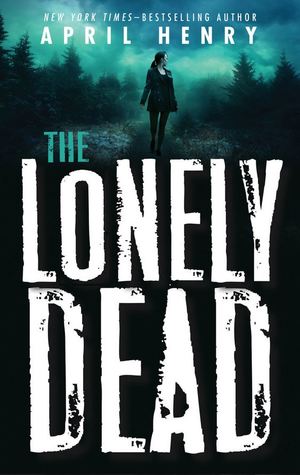
A killer is on the loose, and only one girl has the power to find him. But in this genre-bending YA thriller, she must first manage to avoid becoming a target herself.
For Adele, the dead aren’t really dead. She can see them and even talk to them. But she’s spent years denying her gift. When she encounters her ex best friend Tori in a shallow grave in the woods and realizes that Tori is actually dead — that gift turns into a curse. Without an alibi, Adele becomes the prime suspect in Tori’s murder. She must work with Tori’s ghost to find the real killer. But what if the killer finds Adele first?
Master mystery-write April Henry adds a chilling paranormal twist to this incredibly suspenseful young adult novel.
 Sisters of the Fire by Kim Wilkins

In the next chapter of a fantasy series featuring five unforgettable sisters—the warrior, the magician, the lover, the zealot, and the gossip—an insidious threat jeopardizes a fragile peace.
Four years have passed since the five royal sisters—daughters of the king—worked together to restore their father to health and to the throne while fracturing the bonds among themselves almost irreparably. Only Bluebell remains at home, dutifully serving as heir to her father’s kingdom. Rose has been cast aside by her former husband and hides in exile with her aunt, separated forever from her beloved daughter, Rowan. Ash wanders the distant wastes with her teacher, learning magic and hunting dragons, determined that the dread fate she has foreseen for herself and her loved ones never comes to pass. Ivy rules over a prosperous seaport, married to an aged husband she hates yet finding delight in her two young sons and a handsome captain of the guard. And as for Willow, she hides the most dangerous secret of all—one that could destroy all that the sisters once sought to save.
 A Memory Called Empire by Arkady Martine
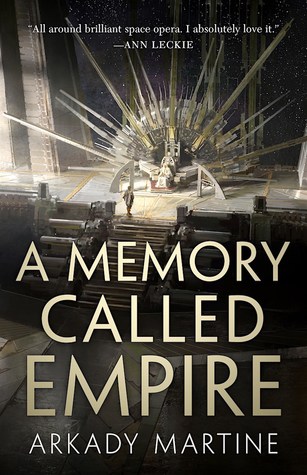
Ambassador Mahit Dzmare arrives in the center of the multi-system Teixcalaanli Empire only to discover that her predecessor, the previous ambassador from their small but fiercely independent mining Station, has died. But no one will admit that his death wasn’t an accident–or that Mahit might be next to die, during a time of political instability in the highest echelons of the imperial court.
Now, Mahit must discover who is behind the murder, rescue herself, and save her Station from Teixcalaan’s unceasing expansion–all while navigating an alien culture that is all too seductive, engaging in intrigues of her own, and hiding a deadly technological secret–one that might spell the end of her Station and her way of life–or rescue it from annihilation.
 The Witch’s Kind by Louisa Morgan
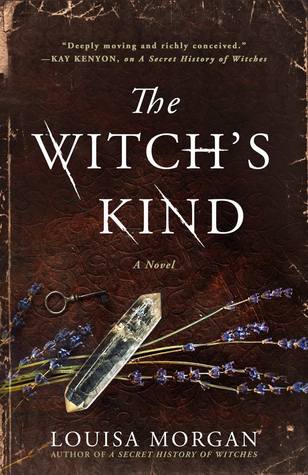
Barrie Anne Blythe and her aunt Charlotte have always known that the other residents of their small coastal community find them peculiar — two women living alone on the outskirts of town. It is the price of concealing their strange and dangerous family secret.
But two events threaten to upend their lives forever. The first is the arrival of a mysterious abandoned baby with a hint of power like their own. The second is the sudden reappearance of Barrie Anne’s long-lost husband — who is not quite the man she thought she married.
Together, Barrie Anne and Charlotte must decide how far they are willing to go to protect themselves — and the child they think of as their own — from suspicious neighbors, the government, and even their own family…
 The Perfect Assassin by K.A. Doore

Divine justice is written in blood.
Or so Amastan has been taught. As a new assassin in the Basbowen family, he’s already having second thoughts about taking a life. A scarcity of contracts ends up being just what he needs.
Until, unexpectedly, Amastan finds the body of a very important drum chief. Until, impossibly, Basbowen’s finest start showing up dead, with their murderous jaan running wild in the dusty streets of Ghadid. Until, inevitably, Amastan is ordered to solve these murders, before the family gets blamed.
Every life has its price, but when the tables are turned, Amastan must find this perfect assassin or be their next target.
 Never-Contented Things by Sarah Porter
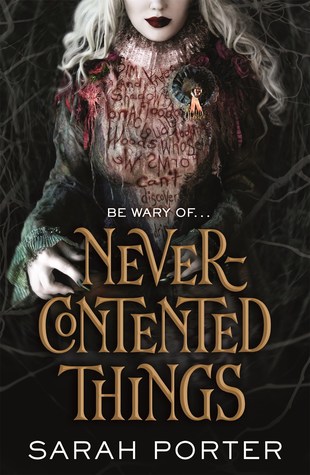
Prince and his fairy courtiers are staggeringly beautiful, unrelentingly cruel, and exhausted by the tedium of the centuries―until they meet foster-siblings Josh and Ksenia. Drawn in by their vivid emotions, undying love for each other, and passion for life, Prince will stop at nothing to possess them.
First seduced and then entrapped by the fairies, Josh and Ksenia learn that the fairies’ otherworldly gifts come at a terrible price―and they must risk everything in order to reclaim their freedom.
 Seven Blades in Black by Sam Sykes
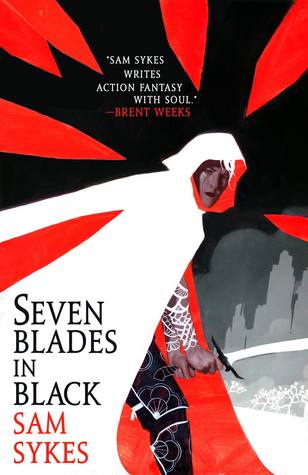
Among humans, none have power like mages. And among mages, none have will like Sal the Cacophony. Once revered, now vagrant, she walks a wasteland scarred by generations of magical warfare.
The Scar, a land torn between powerful empires, is where rogue mages go to disappear, disgraced soldiers go to die and Sal went with a blade, a gun and a list of names she intended to use both on.
But vengeance is a flame swift extinguished. Betrayed by those she trusted most, her magic torn from her and awaiting execution, Sal the Cacophony has one last tale to tell before they take her head.
All she has left is her name, her story and the weapon she used to carved both.
 Finder by Suzanne Palmer

Fergus Ferguson has been called a lot of names: thief, con artist, repo man. He prefers the term finder.
His latest job should be simple. Find the spacecraft Venetia’s Sword and steal it back from Arum Gilger, ex-nobleman turned power-hungry trade boss. He’ll slip in, decode the ship’s compromised AI security, and get out of town, Sword in hand.
Fergus locates both Gilger and the ship in the farthest corner of human-inhabited space, a gas-giant-harvesting colony called Cernee. But Fergus’ arrival at the colony is anything but simple. A cable car explosion launches Cernee into civil war, and Fergus must ally with Gilger’s enemies to navigate a field of space mines and a small army of hostile mercenaries. What was supposed to be a routine job evolves into negotiating a power struggle between factions. Even worse, Fergus has become increasingly–and inconveniently–invested in the lives of the locals.
It doesn’t help that a dangerous alien species thought mythical prove unsettlingly real, and their ominous triangle ships keep following Fergus around.
Foolhardy. Eccentric. Reckless. Whatever he’s called, Fergus will need all the help he can get to take back the Sword and maybe save Cernee from destruction in the process.
 The Pandora Room by Christopher Golden
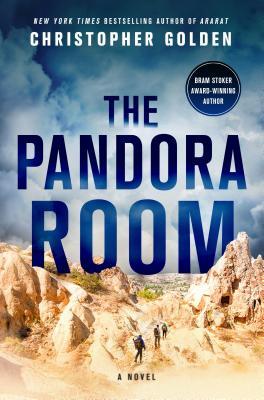
The Pandora Room is New York Times bestselling author Christopher Golden’s chilling exploration of what happens when the original Pandora’s Box is discovered in an ancient subterranean city, stirring international conflict and exposing the archaeological team to curses, whispers, and the terror of a legendary plague.
In one ancient variation on the myth of Pandora’s Box, there were two jars, one for Pandora and one for her sister, Anesidora. One contained all the blessings of the gods, the other all the world’s curses. Now, in a subterranean city in Northern Iraq, archaeologist Sophie Durand has discovered a secret chamber covered in writing that confirms that version of the tale—a chamber which contains a single jar. “Weird shit” expert Ben Walker joins Sophie’s team just as the mystery deepens and grows ugly. Those who believe the myth want to know which jar has been found in the Pandora Room, the one containing blessings, or the one full of curses. Governments rush to lay claim, but jihadi forces aren’t waiting for the dust to settle. Whatever the jar contains, they want it, no matter who they have to kill…or what will emerge when they open it. For Sophie, Walker, and the others, the Pandora Room may soon become their tomb.
Book Review: Polaris Rising by Jessie Mihalik
Posted on February 4, 2019 23 Comments
I received a review copy from the publisher. This does not affect the contents of my review and all opinions are my own.
 Polaris Rising by Jessie Mihalik
Mogsy’s Rating: 4 of 5 stars
Genre: Romance, Science Fiction
Series: Book 1 of Consortium Rebellion
Publisher: Harper Voyager (February 5, 2019)
Length: 448 pages
Author Information: Website | Twitter
Not gonna lie, I’ve always been hard on the romances in my fiction. While I have nothing against romance, I’ve always said that if there’s going to be a romance arc in any book, it needs to be convincing—not to mention I also want the characters, plot and other story elements to be strong. It also helps when a novel is upfront with the reader on what to expect. In the case of Polaris Rising by Jessie Mihalik, it is an example of a sci-fi romance mashup that handles all these points very well.
The protagonist of this tale is Lady Ada of High House von Hasenberg. As the fifth of six children, her usefulness to her family only extends to her marriageability into one of the other High Houses, and only so that her father can have a spy in a rival’s house. To avoid that fate, Ada ran away years ago and has since survived on her own by living under the radar on space stations and mercenary ships. But unfortunately, her luck has just run out. As our story begins, Ada finds herself in a holding cell with another high-profile prisoner named Marcus Loch aboard a bounty hunter’s ship, soon to be handed off to Richard of High House Rockhurst, the man she was supposed to marry. Though Ada knows better than to trust Loch, a known dangerous criminal, she’s also aware he’s her only chance to escape. And so, the two of them strike up a tenuous alliance, agreeing to work together until they make it some place safe. Of course, it doesn’t hurt that Loch is hot as hell and has the body of a Greek god.
However, Richard is not about to give up so easily. For some reason, House Rockhurst is really keen on having his and Ada’s arranged marriage go forward, presumably to get their hands on her dowry. But what exactly is it that they want? And why does Richard also seem to want to capture Loch as badly as he wants Ada? As our two fugitives go on the run together, they end up finding the answers to all these questions and more. In order to protect her house and prevent war, Ada will need to recruit more help and put a stop to Rockhursts’ plans. Meanwhile, she’s also realizing that Loch is more than he seems. He’s certainly not the heartless mercenary she had expected him to be, and as the two of them grow closer, Ada must also admit to herself that Loch has become more to her than just an escape plan.
In case it’s not glaringly obvious, Polaris Rising is mostly a romance first, and a genre novel second. By that, I mean it can be awfully self-indulgent at times, being predominantly interested in focusing the attention on the romance arc between Ada and Loch, and it does that boldly with no apology. For one, the plot is light and leaky and doesn’t stand up to much scrutiny. World-building elements are plentiful but just robust enough to get by. Characters are also on the conventional side, with Ada being your typical heroine with a fierce personality and a strong independent streak, while Loch is even more clichéd as the tall, dark, brooding and possessive alpha male whose sculpted face and abs appear to be his main appeal. As they’re both archetypal to an extent, neither instilled much likeability at the beginning, though credit where credit’s due: both scored high on the believability meter. Ada and Loch are flawed characters each dealing with a painful event in their past. Ada’s prevents her from letting anyone get close, while Loch has done some terrible things that he’d rather forget. Again, it’s not the most original setup, resulting in drama that could have been predicted from miles away. And yet, the emotional growth they each experienced was convincingly written and fun to watch, and in the end, isn’t that why we read such stories?
Another point for this book: the supporting cast. Characters like Veronica, Rhys, and Bianca are fully-fleshed individuals in their own right, adding much flavor to the story (not to mention a nice break from the smoldering gazes our two protagonists are constantly throwing at each other). Even if romance isn’t your thing, you’ll love the meaningful relationships that these other characters add to the equation. And ultimately, that’s what I enjoyed most about Polaris Rising—the fact that there’s so much else to like beyond the main romantic arc. In spite of the light world-building, there is also a clear and strong effort to make the sci-fi setting as authentic and full-bodied as possible. It feels developed from the ground up along with the story, and not as though it was slapped on as an afterthought. And of course, if you’re here for the romance you’ll leave very happy, but those of us who require an actual plot with some action too will certainly not be disappointed either. Mihalik manages to balance the sexy times with enough suspense and thrills so that neither aspect overshadows the other, leaving both coming through very naturally.
Overall, I had a really good time with Polaris Rising. Admittedly, the romance genre is still not something I can take in large doses, but I love throwing a book like this into my reading repertoire whenever I feel like I need a change. Like a rich, fluffy, decadent dessert, I can only read these types of novels once in a while, but whenever I do, it’s always oh so satisfying and delicious.

Review: The Hiding Place by C.J. Tudor
Posted on February 3, 2019 28 Comments
I received a review copy from the publisher. This does not affect the contents of my review and all opinions are my own.
 The Hiding Place by C.J. Tudor
Mogsy’s Rating: 4 of 5 stars
Genre: Mystery, Thriller
Series: Stand Alone
Publisher: Hardcover: Crown | Audiobook: Random House Audio (February 5, 2019)
Length: Hardcover: 288 pages | Audiobook: 10 hrs and 43 mins
Author Information: Website | Twitter
Narrator: Richard Armitage
As much as I loved The Chalk Man, I’m quite pleased to say that The Hiding Place was a bit of a departure from the author’s debut, in a couple of amazing ways. First, I felt that it was much darker and creepier (always a plus), and second, I also greatly enjoyed the touch of the supernatural. Since C.J. Tudor’s previous novel was a straight-up suspense-thriller, this fantastical element might turn out to be a deal breaker for some, but as a speculative fiction reader by nature and habit, I welcomed it with open arms.
The story follows Joe Thorne, a middle-aged school teacher who returns to his home town of Arnhill in order to settle an old score. It’s not what he wants—but it is what he must do. After hearing about a shocking murder-suicide involving a mother who brutally killed her teenage son before shooting herself, Joe fears what happened to him all those years ago is happening again. So he gets a job at the high school he used to attend, replacing the very same woman who committed the crime, and also starts renting an abandoned and dilapidated cottage in town, living in the very same house where the horror took place. All these decisions are calculated moves on Joe’s part. He has a plan, and it requires integrating himself back into the community so that he can track down a few old “friends” still living in Arnhill—those who were there on that day so long ago, when something terrible and strange happened to Joe’s beloved younger sister Annie.
But Joe has plenty of secrets he’s hiding too. His gambling problems have made him some dangerous enemies since leaving Arnhill, and they’ve followed him home to join the ghosts of his past in haunting him. As expected, his return has not been met with overwhelming enthusiasm either. Joe hung out with the wrong crowd as a youth and did some pretty bad things. Being in Arnhill again means reconciling himself with the wretched teenager he once was, as well as confronting the truth of what happened to his little sister in that abandoned old mine where he and his gang discovered the real meaning of terror.
In a way, The Hiding Place can be seen as a redemption story for our protagonist Joe, who finally realizes he’s run from his past long enough. Sure, there are selfish reasons for returning to Arnhill, but he’s also ready to face up to the things he’s done wrong and to try to right them. Something is rotting at the heart of his home town, which could be a combination of corruption and something more uncanny or preternatural—whatever it is, it’s a vicious cycle that needs to be stopped, even if it’s already too late for Joe and his family.
Admittedly, it wasn’t until the story was well underway that I felt fully invested in it. But that’s not to say the introductory parts of this novel were slow or uninteresting, because quite the opposite is true. In fact, the opening scene is gripping both in its disturbing imagery and mysterious intensity, which sets the tone for the rest of the novel. Instead, the reason for the plot’s delayed takeoff has everything to do with how carefully and deliberately information is doled out. Joe plays all his cards close to his chest unless he absolutely has to share the details, so at the beginning, most of the story’s intrigue was driven by simply the desire to know more about him: Why is he really back in Arnhill? Why do all his old friends seem displeased with him showing up again, and what happened to cause this falling out? Why is he so evasive when it comes to certain topics in his past like his sister Annie, or the baffling circumstances behind the car accident that he was involved in when he was younger? What does any of this have to do with the gruesome murder-suicide? And what was the meaning of the puzzling message written in blood at the scene? So many questions were teased, and while they certainly kept me reading to find out more, it wasn’t until the answers started coming that I finally found myself completely drawn in.
I also continue to be impressed with C.J. Tudor’s writing. While her setup may require a bit of patience, she is a natural storyteller, with an incredible way with words. I loved the measured pacing with which she revealed information, and the way she described certain things. Ultimately, I found some of the more mundane (as in earthly) character-related drama to be less interesting than the supernatural elements (others are correct in that some of them are quite reminiscent of classic Stephen King) but in the end, that’s due to the kind of reader I am and the stories I prefer. I understand some might not like the vagueness of the details, but in this particular case, I was happy that we were left with a bit of ambiguity.
Overall, I liked The Hiding Place just as much—and in some respects, a little bit more—than The Chalk Man. I can see Tudor becoming my new go-to author for thriller-suspense mysteries, especially if I’m looking for something with a good dose of creep factor.
Audiobook Comments: In addition to the eARC, I was lucky enough to receive a listening copy of The Hiding Place audiobook narrated by award-winning voice and screen actor Richard Armitage, probably best known for his role The Hobbit. I really enjoyed this listen; I mean, if having Thorin Oakenshield read to you still isn’t enough of an appeal, his smooth mellow voice was also perfect for the role of Joe. His performance was simply captivating, an added bonus to an already engaging story. Highly recommended.
Mogsy’s Bookshelf Roundup: Stacking the Shelves & Recent Reads
Posted on February 2, 2019 35 Comments
Bookshelf Roundup is a feature I do every other weekend which fills the role of several blog memes, like Stacking the Shelves where I talk about the new books I’ve added to my library or received for review, as well as It’s Monday! What Are You Reading? where I round up what I’ve read since the last update and what I’m planning to read soon. Mostly it also serves as a recap post, so sometimes I’ll throw in stuff like reading challenge progress reports, book lists, and other random bookish thoughts or announcements.

Received for Review
My thanks to the publishers and authors for the following review copies received, and be sure to click the links to their Goodreads pages for more details and full descriptions!

Thank you to the HarperCollins team for sending me a couple of great titles to review! From William Morrow, Crucible by James Rollins is a mystery/thriller described as a mind-expanding adventure that blends science, historical fiction and action. It’s book 14 in the Sigma Force series, but I’ve been assured this can be read as a standalone, so I’m going to go for it. And from HarperVoyager came this exciting ARC of The Luminous Dead by Caitlin Starling which I’m looking forward to reading because you all know how much I enjoy sci-fi horror!
Thanks also to Subterranean Press for sending me an ARC of Outside the Gates of Eden by Lewis Shiner, a novel that the author calls his magnum opus. Several of his SFF novels have featured rock music as a theme, and likewise I’ve heard that this one will also feature rock and roll in the 60’s as a main focus.

Also thanks to Del Rey for sending along a couple of cool surprises this month. I received a copy of The Memory of Fire by Callie Bates which is about to be released as a paperback, as well as an ARC of The Soul of Power which is its sequel and the third book in the Waking Land series. I wasn’t crazy about book two because of the change in protagonist, but it seems like there will be a shift again in book three and maybe I’ll take take better to it now that I know what to expect. There’s a good chance I’ll read it, because I do want to finish the trilogy.
Courtesy of the kind folks at Aladdin/Simon & Schuster, I also received Dragon Ghosts by Lisa McMann, the third book in the Unwanteds Quests children’s series. Come to think of it, they might have sent me the first book a couple years ago too! I haven’t started it yet, so if I want to read this one, I will need to do some crazy catching up.

Thanks also to Orbit Books for sending me a finished copy of No Way by S.J. Morden, the sequel to One Way. This book continues the journeys of Frank Kitteridge, our protagonist who escaped death on Mars and now must figure out a way to get home. I really enjoyed the first book, so I definitely want to know what happens next.
And a big thank you to Tor Books for sending along these lovelies: A Labyrinth of Scions and Sorcery by Curtis Craddock is the sequel to the brilliant Alchemy of Masques and Mirrors, a genre bending fantasy novel that I loved to bits. I’ve been crossing my fingers for a finished copy of this to arrive, so now that it has, I’m ecstatic! And from the publisher’s young adult imprint Tor Teen, a finished copy of Ship of Smoke and Steel by Django Wexler also showed up last week. I’m a huge fan of the author and I can’t wait to check out his debut into the YA genre!

And that’s not all! As thanks for being a part of their #FearlessWomen campaign last summer, Tor also sent along this care package containing a signed copy of Vengeful by V.E. Schwab as well as these neat little character pins and a pretty tote bag. Needless to say, all this was an awesome surprise!


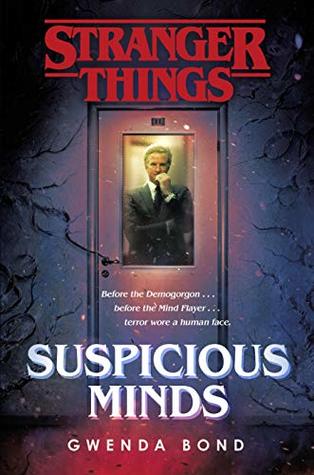
Again, my digital haul is made up of mostly audiobooks this week. With thanks to Audible Studios for a review copy of King of Scars by Leigh Bardugo which I’m excited to listen to because they always do an excellent job on her books and choose the best narrators (in this case, Lauren Fortgang, a favorite!) From Macmillan Audio, I received Watcher in the Woods by Kelley Armstrong, the fourth Rockton mystery (which I’ve already listened to, and it was amazing), as well as The Night Tiger by Yangsze Choo, which I’m looking forward to because she’s an author I’ve always wanted to try. And with thanks to Random House Audio, I also received a listening copy of Suspicious Minds by Gwenda Bond, the first official Stranger Things novel and a prequel to the show which will delve into the truth behind Eleven’s mother.
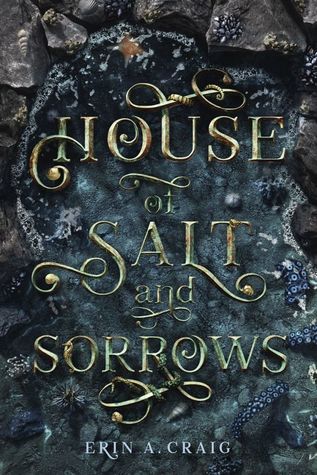
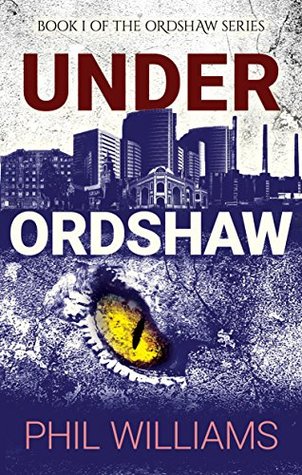
And I knew I was going to cave on this, and yep, I caved hard: House of Salt and Sorrows by Erin A. Craig is a book I’ve been hemming and hawing over for a while, but after hearing that it’s supposed to be a retelling of the Twelve Dancing Princesses fairy tale, that finally did it. The publisher has also auto-approved me on NetGalley, so with that, my last line of resistance was broken. With thanks to Delacorte Press. And finally, if you’ve been paying attention to the coverage of this year’s SPFBO, you might have heard of Under Ordshaw by Phil Williams, most notably from Lynn’s Book Blog where it was one of the books she considered when it came to choosing her finalist. Shortly after reading her high praise and recommendation for the novel, I actually received an email from the author who contacted me to to see if I would be interested in a review copy, so of course I said yes! Stay tuned for more in the coming weeks, as there may be more coverage including a guest post. Thank you, Phil
Reviews
A quick summary of my reviews posted since the last update:
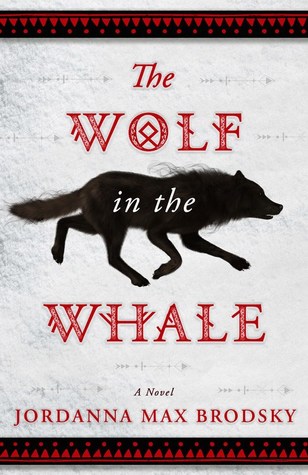
The Wolf in the Whale by Jordanna Max Brodsky (5 of 5 stars)
Lipstick Voodoo by Kristi Charish (4 of 5 stars)
The Lost Prince by Edward Lazellari (3.5 of 5 stars)
The Au Pair by Emma Rous (3.5 of 5 stars)
Vultures by Chuck Wendig (3.5 of 5 stars)
A Big Ship at the Edge of the Universe by Alex White (3 of 5 stars)
The Gilded Wolves by Roshani Chokshi (3 of 5 stars)
The Monster Baru Cormorant by Seth Dickinson (2 of 5 stars)
Roundup Highlights:
What I’ve Read Since the Last Update
Here’s what I’ve managed to “unstack” from the TBR since the last update. More reviews coming soon!


Have you heard of or read any of the books featured this week? What caught your eye? Any new discoveries? I hope you found something interesting for a future read! Let me know what you plan on checking out. Until next time, see you next Roundup!
Friday Face-Off: Comedy
Posted on February 1, 2019 21 Comments
Welcome to The Friday Face-Off, a weekly meme created by Books by Proxy! Each Friday, we will pit cover against cover while also taking the opportunity to showcase gorgeous artwork and feature some of our favorite book covers. If you want to join the fun, simply choose a book each Friday that fits that week’s predetermined theme, post and compare two or more different covers available for that book, then name your favorite. A list of future weeks’ themes are available at Lynn’s Book Blog.
This week’s theme is:
~ a COMEDY cover
Mogsy’s Pick:
The Last Adventure of Constance Verity by A. Lee Martinez
Ah, Constance Verity. This was such a funny book. Going incognito as “Connie Smythe”, our protagonist begins this tale by attempting to kick off her “ordinary” life by getting an “ordinary” job. However, the moment her would-be employers discover her true identity, the seemingly everyday interview takes a turn for the bizarre as they try to dispose of Connie by sacrificing her to the Hungry Earth monster. Trouble just seems to follow Constance everywhere, much to her annoyance. All she wants to do is live a normal existence, but just how is she to do that when disasters like alien invasions, time traveling supervillains, or space pirates just keep falling into her lap?
The truth though, is that this has been the case for most of Connie’s life. Whether she likes it or not, she is destined for heroism and adventure, thanks to a gift granted to her at birth by her fairy godmother. But now Connie has had enough, and just wants to settle down. Unfortunately, her blessing (or curse?) isn’t going to let that happen, so she’ll have to do something extreme: Constance Verity is going to kill her fairy godmother and take back control of her life.
Let’s take a look at the covers:
From left to right:
Saga Press (2016) – Sci-Fi Audio (2016) – German Edition (2017)

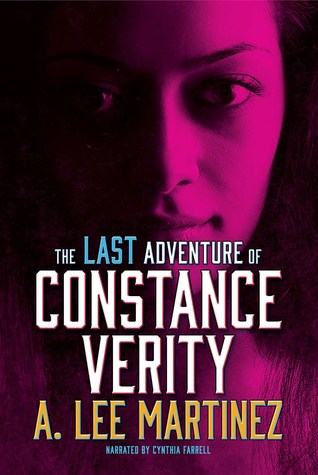
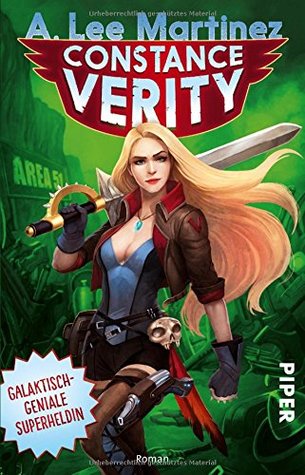
Winner:
The cover image of the Saga Press edition was what first drew me to this book. The moment I saw it, I could not help but be intrigued. Why is this badass-looking woman smiling so smugly at the viewer, surrounded by a bunch of unconscious cultists? I just want to know, DAMMIT. The German edition is another strong contender, and the “comic” style of it might actually be a better fit for the story’s tone. In contrast, the one cover that I felt was all wrong for this book is the Sci-Fi Audio edition. The only thing I like about it is the color, otherwise it’s boring as hell and tells me nothing about the novel’s humorous and comedic nature.
So, the choice for me was easy this week. But what do you think? Which one is your favorite?
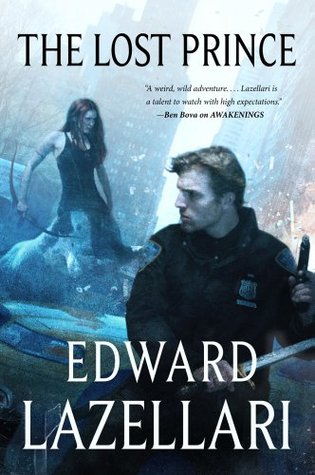
Book Review: The Lost Prince by Edward Lazellari
Posted on January 31, 2019 18 Comments
I received a review copy from the author. This does not affect the contents of my review and all opinions are my own.
The Lost Prince by Edward Lazellari
Mogsy’s Rating: 3.5 of 5 stars
Genre: Fantasy
Series: Book 2 of Guardians of Aandor
Publisher: Tor (April 2, 2013)
Length: 352 pages
Author Information: Website | Twitter
Back when I reviewed the first Guardians of Aandor novel, I recall that one of my biggest concerns with the story was that the eclectic mashup of high fantasy and contemporary urban elements would play havoc with reader expectations. However, with this sequel, the series may have finally found its feet, thanks to clever storytelling by author Edward Lazellari.
The Lost Prince picks up immediately after the events of Awakenings. Thirteen years ago, a group of unrelated individuals found themselves waking up with no memory of who they were or where they came from, but in the time since, they have each made a new life for themselves. Granted, some of them were more successful at it than others. A few of them got married and started families. A couple of them even became leaders in their respective communities, or found fame and fortune. And somewhere, a thirteen-year-old boy is on the run, unaware of his connection to all these individuals and to the fact that their lost memories have everything to do with him.
But now the dam has broken. Everywhere, our characters are remembering the past and their true purpose: to find and return a lost prince to the alternate dimension they all came from, a feudal medieval realm called Aandor. Thirteen years ago, they were transported to our world in order to escape invading forces from the rival kingdom of Farrenheil, but due to a botched magical spell by the group’s wizard, they all ended up with amnesia. The prince, an infant at the time, was lost in the confusion and was thus raised by a foster family with no knowledge of his real identity or the fact he is the heir to an entire kingdom. Now the boy has grown into a young teen named Daniel, running from the law after killing his abusive stepdad in self-defense. But unbeknownst to him, the police are the least of his worries, for enemies from Farrenheil have recently broken through to this world and will stop at nothing to see the prince dead.
Thankfully though, Daniel’s guardians are also on the move. New York City cop Cal MacDonnell was a Knight Captain in his life before, sworn to protect the prince. Together with his wife Cat and wizards Seth Raincrest and Lelani the centaur, they’re following a trail of clues trying to find Daniel first. Around the country, Cal’s allies are also being gathered by his second-in-command Malcolm, a dwarven metalsmith who has considerable pull in this world as CEO of a major defense company. Among the awakened guardians are some of the new key characters like Allyn, a cleric from Aandor who has found a similar calling in this new life as a reverend; Tim, a bard who has also put his past skills to good use by becoming a famous rock musician; and Balzac, a court jester who has come to pursue a less ostentatious career in this world as a college professor. And so, with the party assembled, they all must come up with a plan to rescue Daniel and complete their mission.
As you can probably tell from the story’s description, this sequel greatly expands the world of the series, adding more characters, more background lore, and even more incredible new developments in this already complex plot. This book hits the ground running, now that the board has been set and all the pieces are in place. With all the confusion of the previous foundation-establishing novel behind us now, there is a strong sense that we are ready to roll, and the atmosphere of urgency and desperation in the first few chapters seem to back this up. And indeed, having all these characters running around doing their own thing means that we get to cover a lot of ground in this book, zipping from one place to the next before events culminate in New York City for the final showdown. As a result, scene transitions and perspective switches were frequent and plentiful, especially since the author also gave the villains of this story a larger focus in this sequel.
The main issue I found with this framework is the same one I commonly have with stories that are told through multiple POVs—that is, inevitably I found some characters more likeable and interesting to follow than others. Surprisingly, Cal, Cat, and Daniel were not among my favorites this time around, given how I’ve spent the most time with them so far, but I just found them very judgey and annoying in this sequel, from Cal’s mean-spirited treatment of Seth (even if the wizard did kind of deserve it) to Cat and Daniel’s snide uppity comments towards non-city folk. Instead, the chapters from supporting characters like Lelani continued to dominate my enjoyment, and I also loved Malcolm and Allyn. It seemed to me that the “new Aandorians” stole the show in this second round, perhaps overshadowing more prominent POVs like Cal, Seth, and Daniel with the novelty of their personalities and backgrounds. As such, the overall reading experience probably did not go as smoothly for me as it could have.
I also occasionally felt jarred by the writing, which felt awkward and strained in some sections. The term “more showing, less telling” came to mind often when it came to a few of the characters’ motivations, especially the main baddie Dorn, whose villainy was described to such a degree that it felt almost over-the-top and cartoonish. There were also a couple instances where the descriptions of graphic violence and sexual content became unexpectedly detailed, and while I took no issue with the content itself, I felt that the writing in these sections didn’t quite mesh with the rest of the book in terms of tone and style. There seemed to be more info-dumping this time too, though I wonder if that might be the result of having so many more characters in this book and the need to cover all their backstories briskly and efficiently.
In any case, I did have a good time with this sequel, and I continue to be impressed by the mix of epic and urban fantasy ideas found here. To keep things running smoothly, Lazellari has adopted a lot of simple and familiar genre tropes, relying on readers’ familiarity with them to generate interest. His true triumph and this series’ crowning achievement, however, is the blending of all these different and contrasting elements to create a cohesive, imaginative and engaging premise. I couldn’t help but be drawn into this saga, especially with all the human drama. Will the triangle of Cat, Cal, and his relationship with his betrothed Chryslantha somehow sort itself out? Will Daniel fulfill his destiny and be a worthy prince? Will we ever get to see Aandor? All these questions and more need answering, and I look forward to finding out how everything will play out in the last book of the trilogy.

More on The BiblioSanctum:
Review of Awakenings (Book 1)
Waiting on Wednesday 01/30/19
Posted on January 30, 2019 12 Comments
Waiting On Wednesday” is a weekly meme that first originated at Breaking the Spine but has since linked up with “Can’t Wait Wednesday” at Wishful Endings now that the original creator is unable to host it anymore. Either way, this fun feature is a chance to showcase the upcoming releases that we can’t wait to get our hands on!
Mogsy’s Pick
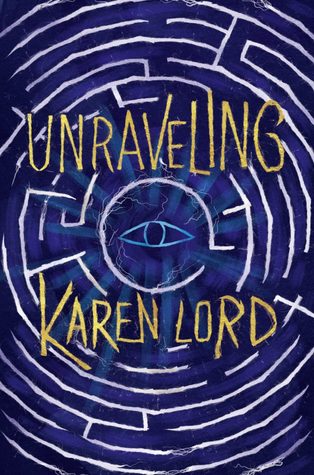
Unraveling by Karen Lord (June 4, 2019 by DAW)
I’ve been waiting years for Karen Lord to write another novel, after reading The Galaxy Game and wanting to check out more of her work. So I was thrilled when I found out she will have a new book coming out this summer, a fantasy mystery involving solving puzzles and a Trickster. I also love this cover.
 “In this standalone fantasy novel by an award-winning author, the dark truth behind a string of unusual murders leads to an otherworldly exploration of spirits, myth, and memory, steeped in Caribbean storytelling.
Dr. Miranda Ecouvo, forensic therapist of the City, just helped put a serial killer behind bars. But she soon discovers that her investigation into seven unusual murders is not yet complete. A near-death experience throws her out of time and into a realm of labyrinths and spirits. There, she encounters brothers Chance and the Trickster, who have an otherworldly interest in the seemingly mundane crimes from her files.
It appears the true mastermind behind the murders is still on the loose, chasing a myth to achieve immortality. Together, Miranda, Chance, and the Trickster must travel through conjured mazes, following threads of memory to locate the shadowy killer. As they journey deeper, they discover even more questions that will take pain and patience to answer. What is the price of power? Where is the path to redemption? And how can they stop the man–or monster–who would kill the innocent to live forever?”
Book Review: The Wolf in the Whale by Jordanna Max Brodsky
Posted on January 29, 2019 40 Comments
I received a review copy from the publisher. This does not affect the contents of my review and all opinions are my own.
The Wolf in the Whale by Jordanna Max Brodsky
Mogsy’s Rating: 5 of 5 stars
Genre: Fantasy, Historical Fiction
Series: Stand Alone
Publisher: Redhook (January 29, 2019)
Length: 544 pages
Author Information: Website | Twitter
I expected to enjoy The Wolf and the Whale, but what I was not prepared for was how completely it swept me off my feet. In this stunning masterpiece, Jordanna Max Brodsky weaves a cinematic tale of adventure and survival, blending history, mythology and timeless romance. All of this is set to the epic backdrop of the Arctic wilderness at a time of great change towards the end of the first millennium.
Our story follows Omat, a young Inuit girl born into her tribe during a time of tragedy. But in death, her father gave his daughter his strong hunter’s soul, and the spirits sent the Wolf to watch over the child so that she would survive. Omat’s grandfather, a wise shaman, recognized the gift in her and believed that she was meant to follow in his footsteps, so he raises her as a boy to hunt and protect her people, while also teaching her the ways to commune with the spirits.
However, as Omat grew, some in her group began to question her role, concerned that the spirits are angered by the taboo of a woman hunting. Their people are starving, and with no new children being born, they are slowly dying out. So, when their group happened to come across another Inuit band on the ice one day, Omat and her grandfather thought for certain that their prayers have been answered.
Sadly, they could not have been more wrong. As Omat finds her entire sense of identity unraveling, her life is also now in danger because of the newcomers. But an even greater threat looms on the horizon, in the form of a group of Norse explorers bringing only violence and death. As the gods and spirits of multiple pantheons look on, Omat must find common ground with an unlikely ally and embark on a perilous journey together that will determine the fate of both their peoples.
The Wolf in the Whale is a coming-of-age story unlike any other. It is also about a meeting of two cultures. Told in gorgeously lush prose, this tale unfolds over a number of years, though most of it follows Omat’s life through her young adulthood. Painstakingly researched, as evidenced by the author’s extensive notes on the historical period, the setting was brought to life with incredible attention to detail. Like her first trilogy, Olympus Bound, Brodsky’s new novel perfectly balances myth and reality in an exquisite cocktail of facts and fantastical elements, creating a world infused with magic and folklore. Here you can read about the Norse gods, as well as Inuit traditions of animism and shamanism.
There is also much I would like to say about Omat. This is the story of her struggle to overcome many hardships, some horrific, but she manages to emerge a stronger and more determined person each time. Though her lessons in loss have been huge, they have also shaped her in ways that were fascinating to watch. Readers get to witness her transformation from an overconfident and short-sighted youth to a more levelheaded adult who has come to realize that no fate is set in stone—and one should never take anything, or anyone, for granted.
Omat’s journey was also an exploration into gender roles that I found unexpectedly well-balanced and insightful. Our protagonist begins this tale as a proud, almost arrogant shaman-in-training who revels in her special place in the group, disdaining women’s work and the female body because she believes them to be weak. Raised as a boy in a girl’s body, all Omat wanted was to become a man—until the spirits turned on her and took away her magic, leaving her untethered and her future in doubt. Over the course of this novel, Omat gradually reconciles herself to her new path, learning to appreciate the strength and skills of a woman, ultimately embracing both the masculine and the feminine, because as in all things, life requires balance.
Speaking of which, one of the most significant events in this book is Omat’s meeting with Brandr, a Viking warrior with whom she develops a complex relationship that teaches her more about that balance, as well as how to trust and love. I’m a sucker for stories about disparate strangers from worlds apart who come together and form a deep bond, so it was no wonder that I found myself completely enthralled by these two. Plus, what a delightfully interesting little family they made along with Omat’s three companion wolves; I simply could not get enough of their interactions together.
In short, I think I have my first real contender for my list of best books of 2019. No surprise that it came from the imaginative mind of Jordanna Max Brodsky, who has impressed me before with her stunning prose and expert storytelling. With the courageous Omat at the story’s heart and a beautifully rendered world filled with magic, myth and history, The Wolf in the Whale is a novel that will enchant and captivate fantasy and historical fiction fans alike.