Book Review: The Dinosaur Knights by Victor Milán
Posted on August 18, 2016 24 Comments
A review copy was provided by the publisher in exchange for an honest review. All opinions are my own.
 The Dinosaur Knights by Victor Milán
Mogsy’s Rating: 3 of 5 stars
Genre: Fantasy
Series: Book 2 of The Dinosaur Lords
Publisher: Tor (July 5, 2016)
Length: 448 pages
Author Information: Website | Twitter
After my wonderful time with Victor Milán’s The Dinosaur Lords last year, I was understandably quite anxious to take on the sequel The Dinosaur Knights. However, there were some aspects with this follow-up that made me think the honeymoon period might be coming to an end. While I still love the epic-fantasy-meets-dinosaurs premise behind this series, admittedly the magic has faded somewhat due to this book’s uneven pacing and my growing dissatisfaction with a couple key characters.
The Dinosaur Knights continues the narrative from the first novel, following more or less the same handful of characters. In the Empire of Neuvaropa, a fictional land reminiscent of 14th century Europe, everything is in turmoil as rumors of a Grey Angel Crusade lead desperate men to form the most unlikely of alliances. We pick up Rob Korrigan’s story in the pacifist town of Providence, where the dinosaur master and his friend the famed noble captain Karyl Bogomirskiy are on trial for their perceived crimes against the adherents of the Garden of Truth and Beauty. At the same time, Princess Melodía and her maidservant Pilar are on the run after escaping imprisonment in the palace from the traitor Duke Falk von Hornberg. Eventually, their search for a safe haven leads them to Providence, where the fates of our major characters finally converge.
Meanwhile, Melodía’s lover and Karyl’s rival the Count Jaume dels Flors has joined forces with Emperor Felipe, hatching up an insane plan in the hopes of stopping the Creators’ Grey Angels from returning to Paradise. As war erupts across Neuvaropa, even those who just want to withdraw into peace and isolation are swept up in the rising wave of fear and madness. Worst of all, despite the extreme efforts by the Empire, there’s no telling whether the weapons of the Gods can even be stopped.
First, the good news: All this will ultimately culminate into one hell of a climax and ending. The bad news? I felt like I had to plod through more than 200 pages just to reach the point where things start getting interesting. I experienced little to no emotional engagement or suspense for the first half of the book, because it was impossible to shake the pesky feeling that the author was simply biding his time until he could maneuver all his characters into place, after which he can finally usher in the real action.
I was also disappointed with the characters, especially Princess Melodía, the only female POV in a cast dominated by men. She was my favorite from The Dinosaur Lords, and my one regret was not seeing her play a more significant role compared to Rob or Jaume. In a way, I got my wish granted, since Melodía received a lot more page time in The Dinosaur Knights, though I remain unconvinced this was actually an improvement. I didn’t like the way her character was repeatedly set up to be duped or to make mind-bogglingly bad decisions, undermining the hard won admiration she earned from the previous book. Then there was Rob, who frequently displays more respect and compassion towards his dinosaurs than his fellow human beings, which is especially apparent when it comes to his sexual objectification of women. I don’t usually let this kind of stuff get to me, but there were so many unnecessary allusions in this vein that even I couldn’t help but notice. With Melodía being almost useless for the first half of this novel, and Rob going from passably charming to downright insufferable, it was harder to engage with the characters this time around.
Happily, the dinosaurs are still amazing. For one thing, I just love the smattering of chapters we get from Shiraa the Allosaurus’ point of view. These brief glimpses into the dinosaur’s head can be a bit incongruous, but I can’t help but appreciate them for being one of the series’ cooler idiosyncrasies. Furthermore, Milán continues to excel at writing fantastic dino-battle scenes. They’re the real highlights of this novel, with the largescale combat sequences in the final section going a long way in making up for a humdrum first half.
This sequel also delves deeper into the lore of the Creators and their Grey Angels. With dinosaurs and angels, this series is really starting to build into something a lot more complex than I had anticipated when I first picked up The Dinosaur Lords. And while world-building continues to be a work-in-progress and we still don’t have all the answers, I admit I’m curious to see how all the puzzle pieces will fall into place.
It should come as no surprise then, that I still have plans on continuing this series. It’s true that I felt the second book slump with this one, but several promising developments in the last half of the book also give me hope that the third installment will pick things up again. Plus, there’s no dismissing those final climactic chapters, and with the book ending with the Empire of Neuvaropa in even more of a mess than when we started, I’m definitely keen on finding out where our characters will go from here.


More on The BiblioSanctum:
Review of The Dinosaur Lords (Book 1)
#SPFBO Book Review: Beyond the Starline by Austin Hackney
Posted on August 17, 2016 6 Comments

After selecting our shortlist, the Bibliosanctum team is taking a closer look at our potential finalists. We are busy reading the six books left on our original list of thirty and then each of us will review two of them. Stay tuned for our follow up discussion on all of our picks to see who we choose to go on to the next round!

 Beyond the Starline by Austin Hackney
Genre: Steampunk, Adventure, Children/Tweens
Series: The Dark Sea Trilogy #1
Publisher: Clockwork Press (February 2014)
Author Info: austinhackney.co.uk
“Life is important, mademoiselle. But if we are to avoid despair, it is wise not to take it too seriously, n’est-ce pas?”
This is the story of Harriet, a young girl whose life is turned upside down in a single night when pirates attack, killing the woman she thought was her mother in their search for a device Harriet never knew she had. Her foster mother’s dying command sends Harriet and her friend Sibellius, the charming French-speaking monkey, on a non-stop adventure to find the father Harriet thought was dead, and the mythical land he was searching for.
Did I say non-stop? Because I mean it. Harriet’s adventures literally take her high and low like a rollercoaster as she races from the pirates and to her destiny in the skies above, as well as the streets below which she has never been to before. Indeed, this is a high-flying adventure, taking Harriet from Sibellius’ balloon to sky ships sailing among the stars as the friends journey to the moon with pirates and giant space squid ever on their tails. It moves along very quickly, but also sets up quite a bit, introducing the main character and the coveted treasure that will likely play a big role in the rest of the series.
This is intended for a younger audience but is just as enjoyable for adults looking for a fun read. Despite this, the story isn’t always light-hearted, as Harriet struggles with the secrets she unravels and finds that the truths are not at all pleasant. There are some hard lessons taught and learned by Harriet.
One of the elements that really captured my attention at the start was Harriet’s inner monologue. The story is told from her point of view, but it goes one step further into her perspective because she actually does talk to herself in a charming, but still easily understandable, brogue.
The steampunk elements are worked in seamlessly, making them seem as natural and accessible to the reader as regular cars and boats.
But really, what really got me was Sibellius. That’s right. You had me at French-speaking sky monkey.

Waiting on Wednesday 08/17/16
Posted on August 17, 2016 18 Comments

“Waiting On Wednesday” is a weekly meme hosted by Breaking the Spine that lets us feature upcoming releases that we can’t wait to get our hands on!
Mogsy’s Pick
Silence Fallen by Patricia Briggs (March 7, 2017 by Ace Books)
Behold, the tenth book in the Mercy Thompson series. Give me. Now.
 “Attacked and abducted in her home territory, Mercy finds herself in the clutches of the most powerful vampire in the world, taken as a weapon to use against alpha werewolf Adam and the ruler of the Tri-Cities vampires. In coyote form, Mercy escapes only to find herself without money, without clothing, and alone in the heart of Europe…
Unable to contact Adam and the rest of the pack, Mercy has allies to find and enemies to fight, and she needs to figure out which is which. Ancient powers stir, and Mercy must be her agile best to avoid causing a war between vampires and werewolves, and between werewolves and werewolves. And in the heart of the ancient city of Prague, old ghosts rise…”
Book Review: It Happened One Doomsday by Laurence MacNaughton
Posted on August 16, 2016 21 Comments
A review copy was provided by the publisher in exchange for an honest review. All opinions are my own.
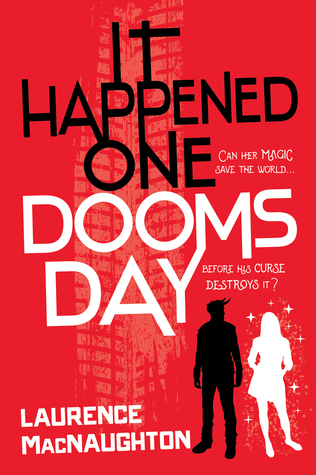 It Happened One Doomsday by Laurence MacNaughton
Mogsy’s Rating: 4 of 5 stars
Genre: Urban Fantasy
Series: Book 1 of Dru Jasper
Publisher: Pyr (July 12, 2016)
Length: 280 pages
Author Information: Website | Twitter
I knew I was going to have fun with this book, but I ended up liking it even more than I expected. I’ve reached the point in my reading where I already have several go-to authors or series I seek out whenever I want my routine Urban Fantasy fix, so for me to jump into a new UF, something has to be unique or special about it to catch my interest. I’m happy to say that It Happened One Doomsday was just that—fresh, original, and extremely entertaining. It’s not every day you come across a magic system based on crystals, minerals and gems, or a version of the Four Horsemen of the Apocalypse who herald in the end of the world driving fast classic cars.
Our protagonist is also not your typical sorceress. In fact, by her own admission, Dru Jasper is barely a sorceress at all. She knows her own magical potential is weak, but she tells herself she’s fine with that. Most folks in the magical community aren’t the most stable, anyway. All Dru wants now is to be a “normal” person, to settle down with her “normal” successful dentist boyfriend Nate, and start a “normal” life together with him. In the meantime, she’s happy enough supporting other more talented sorcerers with her store, The Crystal Connection, supplying them with powerful potions and magical crystals. Every once in a while, a regular customer will also come in asking for some relaxation incense or crystal healing.
Then one day, a hunky mechanic named Greyson rolls up to her store in a black muscle car and walks in with complaints of nightmares keeping him awake. Right away, Dru feels a connection with him. Just being near him seems to amplify her powers, so that she can achieve more magical healing with her crystals than she’s ever managed before. However, despite Dru’s best efforts, Greyson’s symptoms don’t seem to be getting any better. Her worst fears are confirmed when horns start sprouting from his head and his eyes start glowing red: Greyson is turning into a demon. Turns out, an order called the Harbingers are bent on bringing about doomsday and for some reason Greyson has been targeted to be one of their Four Horsemen of the Apocalypse. To stop the end of the world, Dru and her friends must recover an artifact known as the Apocalypse Scroll, but first they’ll have to survive long enough to find a way to reverse Greyson’s terrible transformation.
I had a wonderful time with this fast-paced and entertaining story. Laurence MacNaughton’s writing is very engaging and readable, and he has a great touch with dialogue, especially when it comes to snappy back-and-forth interplay between characters. However, for this review, I want to focus on what I thought were the book’s main standout features.
To start things off, Dru’s use of crystal magic is something I don’t think I’ve ever seen before. The author recently wrote a guest post for The BiblioSanctum which talked about the magic system in It Happened One Doomsday and it is clear he knows a lot about the history and properties of crystals and gems. The main focus of the post was on galena, which Dru uses in the book to fight demons, but there are so many more types of rocks, minerals, and even metals that are featured in this story. Our protagonist’s touch can activate the magical potential in the crystals, which she can then use or channel to so some pretty amazing things. It’s a simple idea, but the possibilities are virtually limitless.
Second, the characters are what makes this book shine. Dru is headstrong and isn’t afraid to step up to do what needs doing, but she’s also far from being the perfect heroine archetype. MacNaughton paints her as something closer to an underdog, someone who doubts her own powers and worth. She’s reluctant to reach for what she really wants, fearing failure and disappointment, so she decides to settle for what she thinks is good enough. Fortunately for Dru, she has good friends who provide her with a daily dose of reality check. Enter Rane, a six-foot-tall Amazonian sorceress who can turn her body into whatever substance she is in contact with, which makes Dru and her extensive inventory of metal and rock jewelry a good ally for her to have. Rane is proof that sometimes you can like a supporting character even more than the main protagonist; I just loved her and her friendship with Dru, and I was happy that she had a big role in this story.
Third, I liked the idea of possessed cars. While I’m not a fan of muscles cars or hot rods, the concept of demons riding them seemed like an apropos, modern-day equivalent of the Four Horsemen of the Apocalypse. Greyson’s car, dubbed Hellbringer, was a delight, and much credit goes to MacNaughton for giving an inanimate object such a convincing personality and for making it seem so alive.
The ending ties things up nicely, but also sets the stage for more. Bottom line, even though I’m following way too many urban fantasy series these days, I’ll never say no to entertaining stories and great characters. It Happened One Doomsday definitely sold me, and I know I’ll be waiting on pins and needles until the sequel.

More on The BiblioSanctum
Guest Post: “Creating Crystal Magic” by Laurence MacNaughton
Book Review: The Last One by Alexandra Oliva
Posted on August 15, 2016 20 Comments
A review copy was provided by the publisher in exchange for an honest review. All opinions are my own.
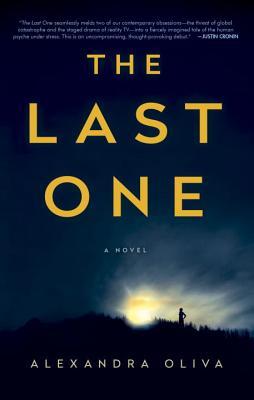 The Last One by Alexandra Oliva
Mogsy’s Rating: 4 of 5 stars
Genre: Science Fiction
Series: Stand Alone
Publisher: Ballantine (July 12, 2016)
Length: 304 pages
Author Information: Website | Twitter
The Last One is a post-apocalyptic dystopian thriller about the world in shambles. There’s also a big-budget nationally televised survival reality show, with almost no lead time between filming and airing, starring twelve competitors. Only one of them can win.
Some elements of this story may sound familiar to the avid sci-fi and fantasy reader, but debut Alexandra Oliva offers a fresh twist on the end-of-the-world scenario which immediately drew me to her novel. Imagine being a contestant on a Survivor-type reality show, in a remote part of the country with no communication with the rest of the world when a very real disaster strikes. As a devastating outbreak wipes out a large chunk of the planet in just a matter of days, you’re still currently trekking through the woods by yourself on a Solo Challenge, unaware that all your friends and family back home are probably dead. Instead, your full attention is fixated on trying to survive and outlast your fellow contestants, because that’s the only way you’ll win the one million dollars. Even now, you think, hidden cameras are probably everywhere capturing your every move. And the wily show producers have already proven they would do anything for ratings, using cheap tricks and props in an attempt to throw the competitors off their game. You can’t trust anything you see, anything you hear—not when anything can be a hidden challenge or scripted part of the show.
All this is going through Zoo’s mind as she stumbles out of the woods upon car wrecks, abandoned stores, and empty towns. As she tries to make sense of the horror and ruin she sees, the lines between reality and reality TV are blurred beyond recognition. For all she knows, the game is still on.
Zoo is not her real name, of course. She and the other eleven contestants are given nicknames by the show creators and viewers, all based on their professions and stereotypes. For example, our protagonist was designated “Zoo” because of her love of animals and her teaching job at a nature and science center. Her main competition is a man dubbed “Tracker”, a survival expert whose work gives him a clear advantage on this show. The rest of the cast include “Engineer”, “Carpenter Chick”, “Waitress”, “Air Force”, “Black Doctor”, “Rancher”, “Cheerleader Boy”, “Biology”, “Exorcist”, and “Banker”. No real names are given in the chapters that serve as an overview of the show, describing the production process with an almost cold, detached attitude. These sections follow the contestants on their team challenges, but also include behind-the-scenes looks at how the episodes are filmed and put together. We come to realize that all the contestants have their own reasons for being on the show, but the editors try to twist and frame each situation so that they become less like real people and more like “characters”—fabricated personalities to fit the narrative they want shown on television.
But in between these chapters, we also get a more up-close-and-personal perspective. These sections are narrated by Zoo, bringing the only part of this reality TV show that feels REAL. True names are used, humanizing the cast once again. We can finally make the connections and discover who everyone is, such as, Tracker is actually Cooper, who wants to win the money to pay for healthcare for his sick mother, or that Waitress is actually Heather, a recruited actress who secretly hopes this stint will be her big break.
Zoo’s own reasons for applying to be on the show in the first place are more complicated. There’s always more to the truth, which we discover as we follow her on her struggles through the wilderness. There’s definitely an element of the unreliable narrator here as well, as we recall Zoo’s memories and live through her fears, and all the while her resolve (and sanity) continues to break down. As such, Zoo’s willful denial of the true reality was probably my biggest issue with the story. I could appreciate what Oliva was trying to accomplish with this, but I also must have lost count of the number of times I wanted to shout “STOP BEING SO STUPID!” at the pages of this book. Zoo’s tunnel vision was overplayed to the extent that it damaged my esteem for her character, and ultimately kept this from being a perfect novel.
Still, there’s no denying that its premise is unbelievably clever and well thought out. I’m no fan of reality TV myself, but I’ve seen my fair share of them in the early 2000s spending summers with my cousin who was a real Survivor, Big Brother, and Amazing Race junkie. For The Last One, Oliva nails the “Reality TV” angle right down to the tiny little nuances, making it all seem so scarily convincing, capturing that kind of atmosphere so perfectly that it’s uncanny. This juxtaposition between carefully crafted illusion and true reality is also a theme present throughout the novel, as Zoo tries to come to terms with what she sees in the real world. I was so wracked with suspense over what might happen to her once she figures out the truth, several times I almost caved to the temptation of flipping to the last page just to see how it all ends (but I am glad I didn’t).
All told, I can’t tell you how impressed I am that this is Oliva’s debut effort. She’s taken an incredibly unique idea and executed it in a very ingenious and ambitious way—and I think that boldness paid off in spades. I would definitely recommend The Last One to readers looking for a thought-provoking and eye-opening novel, especially if you like the idea of a very different kind of apocalyptic dystopian story.
Book Review: The Prisoner of Hell Gate by Dana I. Wolff
Posted on August 14, 2016 11 Comments
A review copy was provided by the publisher in exchange for an honest review. All opinions are my own.
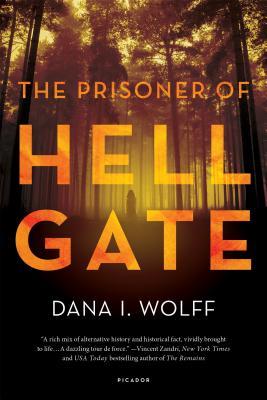 The Prisoner of Hell Gate by Dana I. Wolff
Mogsy’s Rating: 3.5 of 5 stars
Genre: Horror
Series: Stand Alone
Publisher: Picador (July 5, 2016)
Length: 224 pages
Author Information: Website | Twitter
What would you do if you and your friends were trapped on a wooded island with no way to get off? It is the early 80s, so there are no cellphones to call for help even though civilization is just hops away. The only inhabitant on the island appears to be a homeless woman who is creepy as hell, but she offers you shelter and food and is an excellent cook.
It’s an unsettling situation for sure, but manageable if everyone keeps just calm and waits for rescue. For public health graduate student Karalee and her four companions though, the island may be their last resting place. They are on one of the lonely islands in the Hell Gate section of New York’s East River, where for centuries civilization locked away those they feared the most. The shelter the five friends find is an abandoned old hospital, once used for quarantining victims of infectious diseases. One of its most famous patients was a woman named Mary Mallon—the Irish cook better known as Typhoid Mary.
Karalee didn’t end up at the island by accident. Her great-grandfather was George A. Soper, the sanitation engineer who was the one who discovered Typhoid Mary and finally captured her after she infected and killed people with her cooking. Karalee and her friends were out boating on a beautiful summer day when she spies North Brother Island, and immediately feels drawn to the place because of her family’s history. But when their boat becomes damaged by the unyielding currents of the river, the youths are marooned and are forced to spend the night with the old homeless woman to provide for them. The woman, grimy as she is, proves to be a wizard when it comes to whipping up meals for her stranded guests. She tells Karalee and her friends that her name is Mary, and a slight Irish accent marks her speech. Coincidence? Or is there something more sinister at play here?
Dana I. Wolff’s The Prisoner of Hell Gate is set up like your classic slasher horror scenario: a group of twenty-somethings find themselves trapped in an isolated place with a crazy killer on the loose determined to pick them off one by one. But there’s a twist here. Instead of relying on a copious amount of blood and gore to scare her readers, the author uses our deep-seated fear of germs and gruesome infectious diseases to create horror. And rather than a knife-wielding psychopath, the villain in this tale is a madwoman whose weapon is much more nefarious and repulsive.
Who was Mary Mallon, exactly? The media of the early twentieth century dubbed her Typhoid Mary, for being identified as an asymptomatic carrier of typhoid fever. Working as a cook, she managed to infect dozens of people and was isolated not once but twice by public health workers, after she changed her name and returned to being a cook even though she was ordered not to upon her first release. I’d heard of her before reading this book, but wasn’t aware of the specifics of her life or the circumstances around her arrest and quarantine. On that front, this book was very informational. I learned about the cat-and-mouse game between Mallon and Soper as the latter traced the trail of infection all across the city in order to finally apprehend her. The story contains many flashbacks to the past, including a recounting of the General Slocum disaster of 1904, when the steamship caught fire and sank in the East River taking with it the lives of more than a thousand men, women and children. The Prisoner of Hell Gate is not a historical novel per se, but those who have an interest in these history subjects will probably find its premise intriguing.
The plot, however, is pretty textbook. The cast is gradually whittled down as one by one they fall prey to the killer. It’s a timeworn device, but to Wolff’s credit she manages to apply it in a quick and suspenseful fashion, even though none of her hopped up, foolish and arrogant characters are all that likeable, which robs their deaths of the desired effect. Karalee is especially annoying with her stubborn defense of Mary Mallon, even though she knew full well all the people Mallon infected and her subsequent lack of cooperation with the authorities. There’s a personal reason for Karalee’s strange sympathies, but they weren’t very well developed. The best character was probably the mysterious Mary. Her narrative is disturbing, but the complexity with which she is written is utterly fascinating.
For my review, I left parts of the story deliberately vague, because I think some of the most unexpected surprises are best left for readers to discover on their own. I wouldn’t go into this book expecting it to shake up the genre, but it had its moments, not to mention some cool twists. It probably could have been scarier it weren’t for the man missed opportunities to play up the terrors of infectious diseases and outbreaks, but there is a supernatural aspect here that I thought was well incorporated. All in all, The Prisoner of Hell Gate was an entertaining read. I would recommend it if you’re looking for a fast-paced, mainstream-type horror read, especially if you have an interest in the history of Typhoid Mary.

Mogsy’s Bookshelf Roundup: Stacking The Shelves & Recent Reads
Posted on August 13, 2016 40 Comments
Bookshelf Roundup is a feature I do every other weekend which fills the role of several blog memes, like Stacking the Shelves where I talk about the new books I’ve added to my library or received for review, as well as It’s Monday! What Are You Reading? where I round up what I’ve read since the last update and what I’m planning to read soon. Mostly it also serves as a recap post, so sometimes I’ll throw in stuff like reading challenge progress reports, book lists, and other random bookish thoughts or announcements.

Received for Review
My thanks to the publishers and authors for the following review copies received. For more details and full descriptions of the books, be sure to click the links to their Goodreads pages!

The Obelisk Gate by N.K. Jemisin – August is release month for book two of N.K. Jemisin’s The Broken Earth series, which I’m really looking forward to. I loved The Fifth Season last year, which puts this sequel pretty high on my anticipated list. My thanks to Orbit for the finished copy.
The Last Adventure of Constance Verity by A. Lee Martinez – This was a Saga Press title that caught my eye earlier this summer, but I didn’t get a chance to really look at what it’s all about. Thanks to the kind folks at Wunderkind though, I was offered a chance to review this book. The more I learn about it the more intriguing it sounds, so stay tuned because I’ve made plans to read it later this month.
The Facefaker’s Game by Chandler Birch – Pitched as perfect for fans of Patrick Rothfuss and Scott Lynch, this fantasy adventure certainly has some pretty high expectations to live up to! No matter what, I look forward to all that it has to offer. With thanks to Simon & Schuster for the ARC.
Orbs, Orbs II: Stranded, Orbs III: Redemption by Nicholas Sansbury Smith – Also from Simon & Schuster/Simon451 comes this trio of books in the sci-fi thriller/horror Orbs series set in a post-apocalyptic world after a devastating alien invasion. What’s funny is that the books came to me separately, with the third novel arriving first. My interest was immediately piqued upon receiving a surprise package with Redemption in it, and then the disappointment hit when I realized that it was a book three. As it turned out, another surprise package arrived the next day and inside it contained books 1 and 2! Much thanks to the publisher!

Caraval by Stephanie Garber – This was an amazing surprise I don’t know what I did to deserve, but I was really excited because I’ve been curious about Caraval for a long time. The ARC came from the publisher with a note congratulating me for winning a giveaway I can’t remember ever entering, but whether I did and just completely forgot, or if my name was on a reviewer list from Macmillan’s databases, I just want to say a huge THANK YOU to Flatiron Books! I’m definitely going to be reading this one and reviewing it come the new year, which is when the book is due to come out.
The Apothecary’s Curse by Barbara Barnett – This book isn’t out until October, but I’m seeing some awesome reviews for it already. I can’t wait to read this one; thanks, Pyr Books! The publisher seems to be really rocking it this year with some highly original and unique urban fantasy releases.
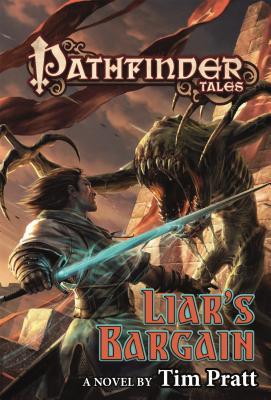
From Tor Books, I also received the following finished copies: Eterna and Omega by Leanna Renee Hieber is the sequel to The Eterna Files, which I had the pleasure of reading last year. If I have time, I definitely want to continue with this follow-up. Pathfinder Tales: Starspawn by Wendy N. Wagner is the latest installment in the Pathfinder Tales series of books based on the popular roleplaying game. I still have the previous PT book to read, which I better get cracking on if I’m to have any hope of catching up with these books! Ghost Talkers by Mary Robinette Kowal is pretty high on my list of books to read this summer, so hopefully I’ll be able to fit it in later in the month. Finally, The Sword of Midras by Tracy Hickman and Richard Garriott is the prequel novel to the Shroud of the Avatar video game. I’ve already listened to and reviewed the audiobook edition (in case you missed it, the link is below in the “Reviews” section) but it’s pretty awesome to have a print copy! Thank you to the publisher for all these great books.



Ibenus by Seth Skorkowsky – I’ve been waiting for this one for a while! Ibenus is the third book in a gritty urban fantasy series called Valducan, which deserves a hell of a lot more attention in my opinion. I’ve been hooked on its world of magic, demons, and sentient spirit-imbued weapons ever since I read the first book, Dämoren. I can’t tell you how excited I am to read this. My thanks to Ragnarok Publications and NetGalley,
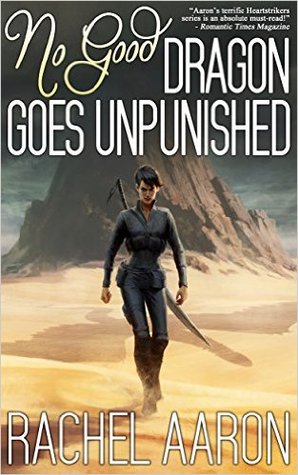
No Good Dragon Goes Unpunished by Rachel Aaron – And speaking of deserving of a hell lot more attention, I just love Heartstrikers! I’m actually in the middle of reading this one right now, and by the time this post goes live I should be finished. It’s very enjoyable so far and I’m just chomping right through the pages. I’d like to thank the author for providing a review copy.
Women in Practical Armor edited by Ed Greenwood & Gabrielle Harbowy – Much thanks to Evil Girlfriend Media for giving me a chance to check out this anthology, which was successfully funded through Kickstarter last year. Our female warrior avatars clad in skimpy metal bikinis that barely cover anything is somewhat of a running joke between me and my gamer friends, which is why I just love the title of this collection. Looking forward to checking out some of these stories, especially those by authors I’ve been wanting to read for a long time.
Like A River Glorious by Rae Carson – YEEEESSSS. This one is easily in the top three of my list of most anticipated releases of 2016. The first book Walk on Earth a Stranger was one of my favorite books last year. I was so excited when I saw the DRC appear on Edelweiss, if I’d mashed my cursor any harder on the “Request” button I think I would have broken my finger. Yes, my enthusiasm is really THAT. EPIC. Thank you so much to Greenwillow Books/Harper Collins for approving me so quickly.
The Rains by Gregg Hurwitz and Stranded by Bracken MacLeod – Also, I might have went a little nuts with Horror on Netgalley this week. The Rains is a YA thriller whose synopsis makes me think it might be a zombie novel or something similar. Stranded has been compared to John Carpenter’s The Thing meets Jacob’s Ladder, and I won’t deny that my attention was drawn to the description, which reminded me a lot of Dan Simmons’ The Terror. Here’s hoping both these will be awesome! My thanks to Tor for approving my requests.
Reviews
Here is a roundup of my reviews since the last update. The two books I’m featuring as highlights are I Am Providence and This Savage Song. I thought both were really unique, which made them stand out for me.
I Am Providence by Nick Mamatas (4 of 5 stars)
Star Wars: Aftermath: Life Debt by Chuck Wendig (4 of 5 stars)
The Language of Dying by Sarah Pinborough (4 of 5 stars)
This Savage Song by Victoria Schwab (4 of 5 stars)
All Is Fair by Emma Newman (3.5 of 5 stars)
The Dragon Lords: Fool’s Gold by Jon Hollins (3.5 of 5 stars)
City of Wolves by Willow Palecek (3.5 of 5 stars)
The Sword of Midras by Tracy Hickman & Richard Garriott (3.5 of 5 stars)
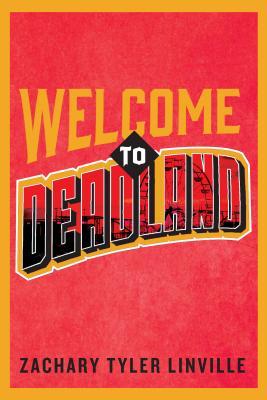
Welcome to Deadland by Zachary Tyler Linville (3 of 5 stars)
Roundup Highlights:
What I’ve Read Since the Last Update
Here’s some of what I’ll be reviewing at the BiblioSanctum in the next few weeks, minus the reviews that are already up. I’ve been falling behind in my reading, so the last fortnight was mostly me playing catch-up with what I missed in July.

Have you heard of or read any of the books featured this week? What caught your eye? Any new discoveries? Nothing makes me happier than sharing my love for books, so let me know what you plan on checking out. I hope you found something interesting for a future read! Until next time, see you next Roundup!
Book Review: Star Wars: Aftermath: Life Debt by Chuck Wendig
Posted on August 12, 2016 23 Comments
A review copy was provided by the publisher in exchange for an honest review. All opinions are my own.
Star Wars: Aftermath: Life Debt by Chuck Wendig
Mogsy’s Rating: 4 stars
Genre: Science Fiction, Media Tie-In
Series: Book 2 of Star Wars: Aftermath
Publisher: Del Rey (July 19, 2016)
Length: 430 pages
Author Information: Website | Twitter
To kick off this review, I just want to say that I actually didn’t think the first Aftermath was all that bad. As you’d recall all the hubbub, the criticism over that book was harsh, perhaps more so than I thought was warranted. That said, for a Star Wars novel I also thought this book’s predecessor was mediocre to okay at best—especially when compared to such gems in the new canon like Lost Stars by Claudia Gray or Dark Disciple by Christie Golden. While flavorful and entertaining, the story of Aftermath and its characters were completely forgettable. This was evidenced by my chagrin when, as I started reading the first few pages of Life Debt, I realized I could barely recall anything that happened in the first book, or remember any of the main characters’ names.
The good news though, is that Life Debt is a much better book. In my opinion, this sequel improves upon many of the problems that plagued the first novel, giving me a lot more reasons to care about the story and what happens to these characters.
Taking place in the “aftermath” of Aftermath, Life Debt follows the adventures of Norra Wexley and her band of mercenaries across the galaxy, as they continue to doggedly hunt down the remnants of Imperial leadership. The main prize is Grand Admiral Rae Sloane, with whom the team has had run-ins with before. Sloane, however, is trying to hatch up a plan of her own, keeping a low profile as she tries to rally the remaining Imperial forces who regard her as the new de facto leader of the Empire. But behind the scenes, there is another shadowy operator pulling the strings, manipulating both the Imperials and the fledgling New Republic, and his agenda is a lot less clear.
Meanwhile, Princess Leia receives a disturbing message from Han Solo before the transmission was cut off, making her fear the worst for her husband. She beseeches Norra and her crew to track him down, which leads them to a prison complex on Kashyyyk where the Wookiees are currently locked in conflict with the Empire over their home world.
I’ve long been a fan of Chuck Wendig’s urban fantasy, a genre which perfectly suits his raw, gritty writing style. But when it came to Star Wars, the fit did not seem quite right. This was made obvious in Aftermath with his use of short, bursty sentences and tendency to include many modern colloquialisms and awkward terms that jolted me right out of the immersion. Thankfully, he’s a lot more sparing with these in Life Debt, which was only the first of many other steps in the right direction. When Wendig isn’t trying so hard to force Star Wars to match his style, instead making it the other way around so that he adapts his writing to the Star Wars universe, the results are actually much, much better.
Another issue I had with the first book was how far removed it felt from the events of Return of the Jedi and The Force Awakens, especially when the publisher was pushing it as the “bridge novel” between the two movies. To be fair, I don’t really fault the book for the hype created by marketing, but I was a little disappointed by the bare-bones structure of Aftermath, with its fluffy story and what felt like throwaway characters that had no impact on the universe whatsoever. Going into Life Debt, I didn’t have that many expectations, and I ended up being pleasantly surprised. We no longer have to sit through any more origin stories for the characters, so we’re diving straight into the action and getting more opportunities to learn about their personalities and relationships.
The inclusion of original trilogy characters, both major and minor, also helped. For example, Leia and Han were only bit players in this book, but their presence created a palpable connection between Norra Wexley, Temmin Wexley, Jas Emari, Sinjir Rath Velus, Jom Barell, and Mr. Bones with the rest of the Star Wars universe. Watching Wedge Antilles try to romance Norra was also hilarious. The point is, the Aftermath team has finally made their mark on the New Republic through their actions, and it’ll be harder to forget them now. The story on the Empire side was also a lot more interesting this time around, with Admiral Rae Sloane fighting her own secret war within the Imperial ranks. She is the sole beacon of competence amidst the remains of a weakened and crumbling Empire, but she probably has less authority than anyone, including herself, realizes. Her character has come a long way for me since she was first introduced in A New Dawn, and now she’s one of my favorites.
There were some lingering issues, of course. These pesky interludes continue to vex me, packing on a lot more bulk than was necessary without really adding much substance. Clearly, they’re meant to be a defining feature of this trilogy though, so I had suspected that they weren’t going to go away. Certain characters are also very derivative of other Star Wars personalities we’ve seen before. The villain revealed here feels like a new Thrawn, for instance, and reading parts of this book gave me flashbacks to certain episodes of Star Wars Rebels, with their team dynamics being somewhat similar, right down to the mother figure, bounty hunter, a boy and his crazy droid, etc. Not all of these parallels were necessarily bad though, especially when they actually helped me get into the story.
All told, I’m glad I gave this trilogy another chance, though in truth, I probably would have read it anyway, considering my ongoing quest to read and review all the adult novels in the new Star Wars canon. No surprise then that I would recommend this to other Star Wars completionists. But now, I would say even if you don’t consider yourself a hardcore Star Wars fan, but maybe you’re still interested in checking out some the tie-in fiction, then you might wish to take a look at this series. I don’t think I would have said the same after reading just Aftermath, but Life Debt has shown me there is going to be more to this trilogy, and I find myself looking forward to see how everything will play out in book three, Empire’s End.
More on The BiblioSanctum:
Review of Star Wars: Aftermath (Book 1)
Book Review: All Is Fair by Emma Newman
Posted on August 11, 2016 9 Comments
A review copy was provided by the publisher in exchange for an honest review. All opinions are my own.

Mogsy’s Rating: 3.5 of 5 stars
Genre: Fantasy
Series: Book 3 of The Split Worlds
Publisher: Diversion Books (August 2, 2016)
Length: 350 pages
Author Information: Website | Twitter
All is Fair is the third installment of Emma Newman’s The Split World series. After two books of introducing multiple threads and building everything, we’re finally starting to see it all come together.
As this is an ongoing series, spoilers for Between Two Thorns and Any Other Name are entirely possible, so beware if you haven’t read the first two books yet. We’re picking things up right where they left off, following Will’s violent ascent to the Londinium throne. Now the consequences of his actions have caught up with him, and there is no telling how far his adversaries will go to see him pay. Meanwhile, Cathy is determined to bring change in the Nether, even as she faces obstacles at every turn. Between the threat of the Fae lords and the Agency, no one wants to stick their necks out for her cause.
In Mundanus, Sam is coming to grips with his grief and dealing with a new reality. In the course of his investigations, he has caught the attention of Lord Iron and the Elemental Court, and what Sam finds out from them turns his world upside down. Max and the gargoyle have gone on to pursue their own case, trying to find out the truth behind all the chapter murders. These efforts lead them to uncover even more disturbing questions about the Agency.
While reading the last book together with the SF/F Read Along group, I likened this series to a soap opera, and more and more I’m finding that to be an apt comparison. There are plenty of twists and turns and more than a few shocks, giving these books the addictive quality that keeps me coming back for more. Things slow down a bit in All Is Fair, but that is more than made up for by the last quarter of the book. There’s a real sense of thread-tying and trying to bring everything together, perhaps in an attempt to streamline the plot for the next installment. If you’ve been crying for answers like I have, then the revelations in this book should make you very happy.
That said, I have some issues with the hasty way things wrapped up, almost like Newman was in a rush to finish the book. After spending two and a half books on all these plot threads, it was disappointing to watch some of them resolve with what effectively feels like a snap of the fingers. Cathy’s solution to her problems with the Agency seemed way too convenient, considering all that she went through. The same goes for Sam’s storyline, where the Fae-related conflicts that have been plaguing him for so long are suddenly made trivial. As for Max and the gargoyle, I wasn’t too crazy about the curveball we were thrown at the end either. I enjoy plot twists when they make sense, but not when there’s absolutely no setup for them, like the one we had here.
Still, it’s good to know that there’s more to come. I hear that the plan is for five books in the series, though in many ways All Is Fair feels like the end of an era for a lot of the characters. Cathy has grown so much from when we first met her in book one, and now she is prepared to take on the next challenge to bring change to the Nether. Sam has gone through a huge transformation as well, discovering his new potential. His story has been up and down for me, but there’s a distinct feeling of peace and closure when we last leave him at the end of this book, so I’m hoping that Sam can start afresh now that his past is behind him. For Max and the gargoyle, the future is perhaps the most uncertain, but they too will have to walk a new path given the way things went down. They may have solved the mystery, but left without a clear direction, where will they go next?
I’m really looking forward to finding out what’s next for everyone, despite some of my misgivings here. I have a strong feeling that book four, A Little Knowledge, will be a new chapter in all their lives and I think it would be a refreshing change of pace to explore some new directions. Can’t wait to dive right in.

More on The BiblioSanctum:
Review of Between Two Thorns (Book 1)
Review of Any Other Name (Book 2)
Waiting on Wednesday 08/10/16
Posted on August 10, 2016 17 Comments
“Waiting On Wednesday” is a weekly meme hosted by Breaking the Spine that lets us feature upcoming releases that we can’t wait to get our hands on!
Mogsy’s Pick
Heartstone by Elle Katharine White (January 17, 2017 by Harper Voyager)
In general Pride & Prejudice retellings and other Austen-esque type fiction can be hit-or-miss with me, but just take a look at the description of this one and you can probably see why it caught my interest.
 “A debut historical fantasy that recasts Jane Austen’s beloved Pride & Prejudice in an imaginative world of wyverns, dragons, and the warriors who fight alongside them against the monsters that threaten the kingdom: gryphons, direwolves, lamias, banshees, and lindworms.
They say a Rider in possession of a good blade must be in want of a monster to slay—and Merybourne Manor has plenty of monsters.
Passionate, headstrong Aliza Bentaine knows this all too well; she’s already lost one sister to the invading gryphons. So when Lord Merybourne hires a band of Riders to hunt down the horde, Aliza is relieved her home will soon be safe again.
Her relief is short-lived. With the arrival of the haughty and handsome dragonrider, Alastair Daired, Aliza expects a battle; what she doesn’t expect is a romantic clash of wills, pitting words and wit against the pride of an ancient house. Nor does she anticipate the mystery that follows them from Merybourne Manor, its roots running deep as the foundations of the kingdom itself, where something old and dreadful slumbers . . . something far more sinister than gryphons.
It’s a war Aliza is ill-prepared to wage, on a battlefield she’s never known before: one spanning kingdoms, class lines, and the curious nature of her own heart.
Elle Katharine White infuses elements of Austen’s beloved novel with her own brand of magic, crafting a modern epic fantasy that conjures a familiar yet wondrously unique new world.”


 The BiblioSanctum