Book Review: The Collapsing Empire by John Scalzi
Posted on April 6, 2017 26 Comments
I received a review copy from the publisher. This does not affect the contents of my review and all opinions are my own.
 The Collapsing Empire by John Scalzi
Mogsy’s Rating: 4 of 5 stars
Genre: Science Fiction
Series: Book 1 of The Interdependency
Publisher: Tor (March 21, 2017)
Length: 333 pages
Author Information: Website | Twitter
Let me start by saying I’m a huge fan of John Scalzi’s Old Man’s War series. Years ago when I was still mostly reading fantasy and wanted to get into science fiction, I’d made the initial mistake of starting my journey with a couple of “classic” titles that nonetheless made me feel like I was in way over my head. It wasn’t until the moment I picked up the first Old Man’s War book that I realized the element I’d been missing: FUN. Turned out, Scalzi’s storytelling was exactly what I needed at the time—the riveting drama of interplanetary politics combined with the violent thrills and action in space, presented alongside a sense of casual, easy humor. His writing was completely accessible, yet there was still enough “hard science” in the story to make a newcomer like me feel like I was immersed in a bonafide space opera. I guess you could even say it was one of my gateway book into genre, since it helped open my eyes to many more possibilities and directly resulted in me trying more sci-fi.
So why am I telling you all this, you say? Well, it’s because Scalzi has done it again. The Collapsing Empire marks his strong return to space opera with a fresh start in this series opener, introducing readers to a new universe, new characters, and a whole new set of rules. At first, I was a little apprehensive about whether I would take to it as fondly as the books in the Old Man’s War sequence, but all my skepticism went out the window as soon as I finished the book and found myself once more filled with that familiar sense of marvel and excitement.
To understand what The Collapsing Empire is about, one must also have to understand one of the key concepts behind the book’s universe, that of The Flow. For almost as long as the space opera genre has existed, science fiction authors have been coming up with creative and practical ways for their characters to travel the vast distances between stars. In this book though, the catch is that the universe is still bound by the rules of physics, so no faster-than-light travel is possible. However, humanity has also discovered an extra-dimensional network of pathways that can be accessed at certain spatial-temporal points, drastically decreasing the travel time between star systems that are connected. This is what is known as The Flow. While its nature limits the options in terms of which systems can be colonized, humanity has nonetheless built a vast empire using this network called the Interdependency, so named because the first emperox decreed that all human settlements connected by The Flow need each other to flourish and survive.
But just like a river, The Flow is dynamic, always moving and changing course. It might happen over hundreds or thousands of years, but sooner or later The Flow is bound to shift, potentially cutting off worlds from the rest of humanity. It has already happened to Earth, a long time go in the past. More recently, a few hundred years ago, it also happened to a world belonging to the Interdependency. But now, the empire is about to discover that—again, like a river—The Flow also has the potential to dry up completely. Already, parts of The Flow are starting to destabilize, and Flow physicists are estimating that a complete collapse will happen within ten years, which would inevitably lead to the destruction of the entire Interdependency.
True to form, Scalzi knows how exactly how to hook the reader. By introducing the concept of The Flow and its impending collapse, he has killed two birds with one stone—first by setting up an extremely cool premise, and next establishing an intense and nail-bitingly riveting scenario. As you would imagine, this story has a love of moving parts. Like any empire, there are many dukedoms in the Interdependency, and among them the usual alliances and secret backstabbing. A certain House is seeing this instability as a power grab opportunity, while others are more concerned with preparing for the eventual collapse and saving lives. Because of the distance between the colonies, up-to-date information also takes a long time to communicate, resulting in widespread misinformation, rumors, and star systems only getting bits and pieces of the whole picture. And if that wasn’t enough, the old emperox has just died, passing on his rule to an untrained and inexperienced daughter. Yep, queue the utter chaos.
That said, it would be a mistake to sell the new emperox short. Cardenia Wu-Patrick is a wonderful new protagonist, and while she may lack the raw strength and power of a character like Jane Sagan from the Old Man’s War series, her admirable traits lie more in compassion for her people and her willingness to learn. As unprepared as she is to lead the Ascendency (especially in the confusion and mayhem of its final days), she still manages to handle the politics of it rather well. Certainly she stood out more to me than the rather undistinguished Marce or the brash Lady Kiva Lagos—the latter of whom was only remarkable for her talent to throw the word “fuck” into every other sentence, but otherwise I thought she was pretty bland. Admittedly, character development is not an area I would say the author is strongest, but it is my hope still that the main players will grow in depth as the series continues.
As I’ve alluded to before though, what I believe Scalzi excels in is the writing of massively entertaining and addictive stories—and The Collapsing Empire is no exception. There’s nothing elegant about the writing, but it is so easy to get into thanks to Scalzi’s minimalist and in-your-face style, which is often tinged with a healthy dose of snark. I also read his books for the cool ideas—and “cool” most definitely describes the concept of The Flow. Apart from that, I also really liked the idea of the Memory Room where an emperox can seek advice directly from their predecessors by accessing their stored memories and personality patterns.
All this simply drives home the fact that we’re now in brand new territory. And I’m loving what I see. I never really expect a series to knock me off my feet right out of the gate, and in truth, The Collapsing Empire does have the feel of a “book one” whose main job is to set the stage for bigger things to come in the sequel or beyond, but I am not displeased in any way. Far from it, in fact—I am practically ecstatic with the potential I’ve seen, and I can hardly wait to see what will happen next.


Waiting on Wednesday 04/05/17
Posted on April 5, 2017 14 Comments

“Waiting On Wednesday” is a weekly meme hosted by Breaking the Spine that lets us feature upcoming releases that we can’t wait to get our hands on!
Mogsy’s Pick
Blackwing by Ed McDonald (October 3, 2017 by Ace Books)
A debut dark fantasy set in a post-apocalyptic frontier with shades of horror? This sounds like it has some serious potential.
 “Nothing in the Misery lasts…
Under a cracked and wailing sky, the Misery is a vast and blighted expanse, created when the Engine, the most powerful weapon in the world, was unleashed against the immortal Deep Kings. Across the wasteland, teeming with corrupted magic and malevolent wraiths, the Deep Kings and their armies are still watching—and still waiting.
Ryhalt Galharrow is no stranger to the Misery. The bounty hunter journeys to a remote outpost, armed for killing both men and monsters, and searching for a mysterious noblewoman. He finds himself in the middle of a shocking attack by the Deep Kings, one that should not be possible. Only a fearsome show of power from the very woman he is seeking saves him.
Once, long ago, he knew the woman well, and together they stumble onto a web of conspiracy that threatens to unmake everything they hold dear and end the fragile peace the Engine has provided. Galharrow is not ready for the truth about the blood he’s spilled and the gods he’s supposed to serve…”
Book Review: Red Sister by Mark Lawrence
Posted on April 4, 2017 37 Comments
A review copy was provided by the publisher in exchange for an honest review. All opinions are my own.

Mogsy’s Rating: 4 of 5 stars
Genre: Fantasy
Series: Book 1 of Book of the Ancestor
Publisher: Ace (April 4, 2017)
Length: 432 pages
Author Information: Website | Twitter
Readers coming from Mark Lawrence’s The Broken Empire and The Red Queen’s War will find that his new novel Red Sister is a wholly different beast—and not just because we are now venturing into an entirely new universe, completely unrelated to those trilogies. There are other differences as well, like the fact the story is told in the third person, follows a protagonist who is a young girl, and—at least to my eye—does not feel as dark as Lawrence’s previous works.
The book introduces us to the icebound world of Abeth, populated by people who descend from four main “tribes”: the Gerant, distinguished by their great size and strength; the Hunska, dark-eyed and dark haired, capable of great speed; the Marjal, who possess the ability to tap into the lesser magics; and finally the Quantal, who are gifted with the ability to work greater magics and enter a state known as “walking the Path”. Children who manifest even a single talent characterized by any of these four tribes are highly sought after by various institutions from churches to academies, and those who display two or three can even be worth more than their weight in gold. Across the land, children are given away or sold if they show potential, which is how protagonist Nona Grey ends up traveling in a cage along with a dozen other boys and girls her age, being carted off to a prospective buyer.
But things don’t exactly work out for Nona. At the age of eight, she finds herself facing the hangman’s noose for committing savage attack on a member of a noble family. However, just before her execution can take place, she is rescued by the abbess of Sweet Mercy, who whisks Nona away to her convent where young girls are trained to be fighters. There, Nona flourishes as a novice and learns the ways of the sisters, becoming especially adept in the arts of combat because of her Hunska blood. She also makes a lot of friends, though she still guards her secrets closely, unable to fully come clean to anyone about why she was sold away from her village—and why her mother allowed that to happen. Eventually though, Nona learns the hard way that the past always has a way of catching up with her, and unfortunately, her old enemies have not forgotten what she did to them either.
At first glance, Red Sister may seem to lack the complexity of Lawrence’s previous novels. I might even have felt an inkling of “Young Adult vibes” coming off at some points, and not just because of the age of our protagonist. After all, many of the genre’s tropes also hold true in the first half of the book, not the least of them being the beloved “magic school” motif, following Nona as goes through the motions of attending her various classes, making new friends and enemies along the way. Dare I say, at times these themes are almost Harry Potter-like in their style and treatment, despite the school here being a convent, Nona and her friends are all training to be killers, and the teachers are nuns who have a disturbing tendency to poison their students for fun or punish misdemeanors with a good old head-shaving. There’s even the trope of the “hated professor”, inevitably the sister Nona manages to piss off on the very first day, who then winds up holding a grudge against our protagonist for the next two years. To my bewilderment, the familiar concepts didn’t stop there either. Throw in the idea of prophecies and the foretold coming of a literal “Chosen One”, and I was starting to wonder how this could be written by the same author who never ceased to surprise me with his inventiveness and imagination from his previous trilogies.
Which just goes to show, I really should have reserved my judgment for until I reached the second half of this book. Not that I didn’t enjoy myself in the first half, mind you, namely because I actually have fondness for training school stories no matter how common they have become. I also adored Nona’s camaraderie with her fellow novices, despite or perhaps because of the long time those friendships took to build. This book places a huge emphasis on the bonds of trust, and I appreciated how much attention was spent on relationship-building in the first two hundred pages or so. Still—and I think most readers who have read the book will agree—the real fun doesn’t begin in Red Sister until Grey Class, after Nona has spent two years at the Sweet Mercy convent, or roughly around the halfway mark. This is where all the game changers are. The big threat is introduced. Secrets are revealed. Nona and her friends take action.
Furthermore, even while the plot employs a number of coming-of-age tropes, the overall story is compelling and the characters are irresistible, making it very easy to be swept up in the action and excitement. Mark Lawrence is a great writer, which is no secret to me of course, his skills on full display here as he experiments with new spins on old ideas, perhaps trying to push the boundaries of his own comfort zone. And yet, in spite of how different Red Sister feels compared to his previous books, fortunately a number of strengths remain the same. For one thing, you can be sure this novel will include a meticulously constructed world full of various intrigues, as well as Lawrence’s in-depth characterizations. Compared to the first person narrative used to his previous trilogies, the third person mode in Red Sister may feel a little less nuanced, but the genuine emotions and personalities involved are still right there.
Still, I wouldn’t be surprised if this book ends up being polarizing among the author’s fans, simply because he has indeed shaken things up quite a bit. That said, on the flip of the coin this could also mean that readers who couldn’t get into either The Broken Empire or The Red Queen’s War trilogies might find themselves taking to this novel instead. So if you found those books to be too grim (or Jorg from The Prince of Thorns too unpleasant), it may be worth a shot to revisit Mark Lawrence again, since Red Sister is a whole new ballgame. As someone who has enjoyed all his previous novels, I must say reading this new series opener was a little jarring at first, but by the end I was enjoying myself immensely and now I am looking forward to the next installment.
#SPFBO Review: The Path of Flames by Phil Tucker
Posted on April 3, 2017 16 Comments

Phase 2 of The Self-Published Fantasy Blog-Off 2016 is officially underway! For the six-month period from November 1, 2016 to the end of April 2017, we will be reviewing the ten finalists chosen by the blogger judges from the first phase of the competition. For full details and the list of books, see our SPFBO 2016 page.
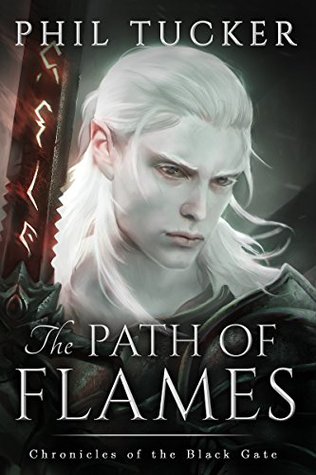 The Path of Flames by Phil Tucker
Mogsy’s Rating: 4 of 5 stars
Genre: Fantasy
Series: Book 1 of Chronicles of the Black Gate
Publisher: Phil Tucker (May 11, 2016)
Length: 501 pages
Author Information: Website | Twitter
If you’ve been following along with the progress of this year’s SPFBO competition, then I don’t have to tell you, 2016’s crop of finalists all look incredible, and of the top ten books remaining in this second phase, one of the ones I’ve looked forward to reading a lot is Phil Tucker’s The Path of Flames. From its description, I had a feeling this would be a novel right up my alley—epic fantasy with a bit of an old-school feel, featuring a standard secondary world wracked with war and dark sorcery while courageous heroes go head-to-head with dastardly villains. There’s a certain kind of comfort and pleasure I take from reading stories like these, mainly because I know that at the end of the day, I’ll enjoy myself no matter what happens. And sure enough, I had a blast with this book.
In typical fashion though, The Path of Flames opens with a battle scene. Still, what a battle! This first chapter also introduces us to one of our main characters, a young Bythian squire named Asho fighting on the side of Lord Kyferin and his famous Black Wolves. However, the enemy’s unexpected use of foul magic leads to tragedy, and Asho is knighted in a twist of fate, tasked to return home alone to tell his Lady Iskra Kyferin that her husband and all his men have all been slaughtered on the battlefield.
Upon receiving the news, Iskra reacts solemnly but is secretly pleased; her husband had not been a good man in life, having abused Iskra and Asho both. But Lord Kyferin’s daughter Kethe is heartbroken, having idolized her father, even going as far as to train secretly as a knight in order to follow in his footsteps. With Lord Kyferin now dead though, this does spell trouble for everyone. Almost all the Black Wolves have perished, leaving the castle defenseless and Iskra no choice but to shore up her remaining forces and seek out new allies. Unfortunately, news of her husband’s death has spread and the vultures are already circling. Despite Iskra’s efforts to protect her people, a sudden betrayal ends up destroying her carefully laid plans, plunging her and all those loyal to her into danger.
As you can see, the story encompasses many of the traditional elements and conventional tropes found in fantasy, though to leave it at that would also be simplifying things and not giving this book the credit it deserves. While I can see the influence of genre classics and fantasy role-playings games on the author’s writing, Phil Tucker does have a few surprises up his sleeve, putting some fresh spins on familiar ideas.
He’s done a phenomenal job on his characters, for instance, creating fully developed backstories for them. Take Asho, whose Bythian heritage makes him the target of scorn in this society that worships the Ascendancy, a religion that divides humanity into a caste system. Lord Kyferin may have plucked him from his homeland as a child, raising him in his own household and even making him a squire, but everyone can see these acts for the empty gestures that they are and still look upon Asho with distaste for being in the lowest “tier” of the Ascendancy. Then there’s Kethe, a young noblewoman who prefers sword fighting to needlework. Again, this is in no way a new idea in fantasy, but Kethe’s complicated history with her father and another character named Ser Tiron puts her decision to become a knight into a more compelling context. In this way, Tucker weaves characterization together with world-building, so that everything is presented to us as a full package. While information might be revealed in tiny chunks and pieces at first, the reader will soon realize that everything is connected. Even Tharok, the kragh whose storyline confounded me for much of the novel became a puzzle piece that fell into place by the end.
It also helped that I loved the writing. Tucker’s style is very descriptive without being weighed down by wordiness, which I think is why his battle scenes come across so well. A good thing too, because there’s a lot of action in this book, ranging from one-on-one duels to sweeping epic battles—and at one point, there’s even a gladiatorial style tournament thrown into the mix. The book’s plot might be your standard fantasy fare, but the story’s pacing never slows down simply because something interesting is always happening on the page. The author’s excellent prose and the novel’s unflagging momentum meant that I finished this sizeable book in a little more than two days—a clear sign of an addictive read.
All told, The Path of Flames was a great series opener, establishing plenty of potential for the later books. It’s a solid gem of an indie epic fantasy novel, which I would highly recommend if you ever feel the hankering for something fascinating and fun, with that traditional yet timeless feel. I’ve already added the next book to my reading list.
Rating: 8/10
YA Weekend: The Sin Eater’s Daughter by Melinda Salisbury
Posted on April 2, 2017 17 Comments
“I’ve learned that being alone and being lonely are not the same thing. Once I was surrounded by people and lonely for it, but now I’m alone and I’ve never been so content.”

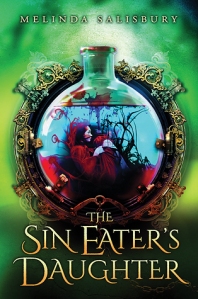 The Sin Eater’s Daughter by Melinda Salisbury
Genre: Fantasy, Young Adult
Series: The Sin Eater’s Daughter #1
Publisher: Scholastic Press (February 2015)
Author Info: www.melindasalisbury.com
Wendy’s Rating: 3 of 5 stars
The Sin Eater eats the sins of the dead. At a funeral, the loved ones set out a meal, with each dish representing the sins of the one that was lost. The Sin Eater, with painstaking grace and care, eats those sins that the dead may rest. It was Twylla’s fate to take her mother’s place in the future, but the queen stepped in to change all that. Instead she becomes the embodiment of a goddess and her very touch means death. She becomes a weapon that the queen wields with no mercy, and Twylla meekly fulfills her role, never once questioning it.
I’ve spoken before about seemingly weak characters and the animosity that is often thrown at them by readers. It is understandable to dislike a character that seems to refuse to take her fate into her own hands and instead lets her own fear and ignorance hold her down. Such characters aren’t easy to empathize with — either because we refuse to believe we could ever be so weak, or because we have such moments of vulnerability and dislike ourselves for it. But a “strong female character” does not mean one that always overcomes everything. Sometimes, a strong female character is the one that overcomes herself. By the end of this book, I can assure you that Twylla comes to realize where she has failed herself and how she can learn to take her fate into her own hands. And, to my pleasant surprise, finding herself does not come “complete” with the involvement of any of the two love interests.
A lot of time is spent in the confines of Twylla’s mind and her chambers. Her world is a small one, but the implication by the end of the book is that it will expand — and that the magic and stories that the people believe are indeed real.
I read this shortly after reading The Shadow Queen, which similarly featured an evil queen intent on power for the sake of power, who has no qualms about hurting anyone who crossed her in even the slightest way. But unlike The Shadow Queen, here, the queen is given no depth. As the story is only told through Twylla’s point of view, there is no opportunity to see the queen as anything more than a two dimensional villain. The prince does get some air time, but it’s always nice to see more of the supporting characters fleshed out in such stories, particularly the female ones.
To be honest, this did not truly grab me — until the end when Twylla showed what she was made of and what she could be, if given time. As such, I am curious to see what will become of her and her kingdom.


Tough Traveling: Beginnings
Posted on April 1, 2017 31 Comments
No, you’re not seeing things, it’s actually true — the Tough Traveling feature is back, with huge thanks to Laura from Fantasy Faction who is reviving this meme! Back in 2014, the idea first started with Nathan of Fantasy Review Barn who came up with the excellent idea of making a new list each week based on the most common tropes in fantasy, as seen in (and inspired by) The Tough Guide to Fantasyland by Diana Wynn Jones — a tongue-in-cheek parody of the fantasy genre. Tough Traveling was widely successful, with over fifty bloggers participating at one point before the feature went on hiatus.
Starting this month though, the Tough Traveling tradition is making a comeback – with some changes. It will now be a monthly feature instead of a weekly one, though the idea remains the same. If anyone is interested in participating, we invite you to come play along!
This month’s topic:
Beginnings
The Tough Guide states that you will begin in rather poor circumstances in an unimportant corner of the continent; a kitchen menial, perhaps, or a blacksmith’s apprentice. From there, the Guide advises that you will be contacted by your TOUR MENTOR (normally an elderly male MAGIC USER with much experience) who will tell you what to do, which is almost certainly to discover you are a MISSING HEIR.
What better way to kick things off (again!) with a topic that celebrates the memorable openings to the speculative fiction books and series we like best?
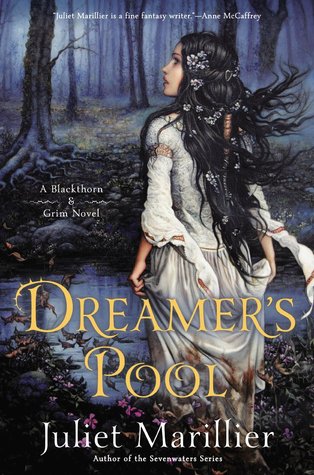 Dreamer’s Pool by Juliet Marillier
Not only is Dreamer’s Pool one of my favorite fantasy novels of all time, it also fits this week’s theme to a tee. When the book opens, we are introduced to the series protagonists Blackthorn and Grim, who are a pair of prisoners rotting in the dungeon of a wicked and corrupt lord. Poor circumstances? Check! A rather unimportant corner of the continent? Check! Hours before she is to be executed though, Blackthorn is visited by a fey named Conmael, who offers her chance to escape in exchange for her promise to set aside her desire for vengeance on the man who destroyed her life. Our Tour Mentor here might not be your conventional magic user, but I would that say a faerie who can get you out of prison with the snap of his fingers comes close enough. Reluctantly, Blackthorn agrees to Conmael’s deal and makes her way north to Dalriada to start her new life, followed by fellow escapee Grim who later on becomes her most steadfast and loyal companion.
 Alcatraz vs. the Evil Librarians by Brandon Sanderson
I’ve only just caught up with this middle grade series by Brandon Sanderson, and I’m glad I did because it’s hilarious. It stars a young boy named Alcatraz Smedry, who lives with his ordinary foster parents in an ordinary house in an ordinary neighborhood. On the day of his thirteenth birthday though, he receives an old bag of sand in the mail – apparently the only inheritance left to him by his birth parents. But before you can even say “Gee, thanks mom and dad!” the bag is stolen by a member of an evil cult known as the Librarians. Fortunately though, a wise Tour Mentor in the form of our protagonist’s long lost elderly male Magic User grandpa show ups (late!) to save the day, revealing to Alcatraz the truth of his birthright – Alcatraz is, in fact, literally the lost heir to the Smedry line. Together, Alcatraz and his new allies must stop the Librarians by carrying out a daring mission into the heart of enemy territory – also known as the central downtown library.
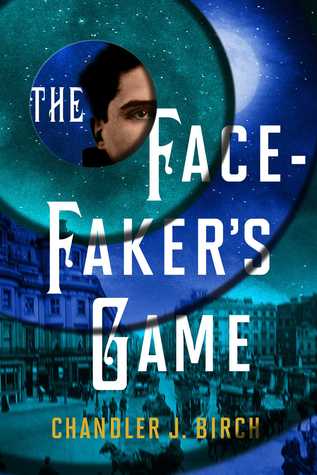 The Facefaker’s Game by Chandler J. Birch
Talk about beginning in poor circumstances. The main character of The Facefaker’s Game is a fourteen-year-old boy with no past. One day, he simply became aware of himself, standing in the middle of the street with no memory of where he came from or even what his name is. Covered in soot, the boy decides to give himself the name of Ashes. By begging, stealing, and cheating at cards, he’s able to scrape together just enough money to get by, but then one day he gets on the wrong side of a crime lord. Instead of meeting his end though, Ashes is unexpectedly rescued by an Artificer named Candlestick Jack. Like any good Tour Mentor, Jack decides to take the boy on as an apprentice, teaching him the mysterious magical art of light manipulation and illusion.

Instead of just one humble beginning, in this book we have two! Meet Hope, who at the age of eight became the lone survivor of a massacre on her small fishing village. Rescued by a merchant ship, she was then taken in by the ancient order of Vinchen warriors and taught their ways by their grand master Hurlo, who went against his order’s rules to train the girl in secret. Next meet Red, who was captured by slavers not long after he was orphaned and left alone to fend for himself in the slums. Lucky for him, the infamous rogue known as Sadie the Goat was captured alongside with him, and after the two of them made their daring escape, Sadie was so impressed with the boy’s talents that she made him her protege on the spot. Two tour beginnings, two Tour Mentors – all for the price of one.
 Twelve Kings in Sharakhai by Bradley P. Beaulieu
Not every beginning I’m featuring today fits the description of the theme. After all, the overarching idea is really just to list the fantasy books or series we’ve read that have memorable intros, and in my opinion, few intros are more memorable than the one in Twelve Kings in Sharakhai. The novel’s main character is Çeda, who’s probably one of the best female protagonists I have encountered in years. We open the novel with a scene from the fighting pits, where she is a competitor in the tourney. Right after a phenomenal combat sequence which ends with Çeda serving her opponent his ass on a platter, she then goes on to engage in an intensely passionate tryst with the fighting pit’s owner. If all this was part of Beaulieu’s attempt to capture the reader’s attention right off the bat, well, it certainly worked on me!
In the beginning, there were… beginnings. There are some wonderful, memorable beginnings to many books, but I decided to narrow my list down a bit to my three very favourite series. Their beginnings led me on incredible journeys with characters I have grown to love and return to every few years. What And what better way to start a memorable tale than the good old fashioned…
 The Winter King by Bernard Cornwell
“Once upon a time, in a land that was called Britain, these things happened.”
I am not really a King Arthur fan. Oh sure I’ll watch a good King Arthur movie, and I’m quite fond of the 2004 film directed by Antoine Fuqua for reasons.
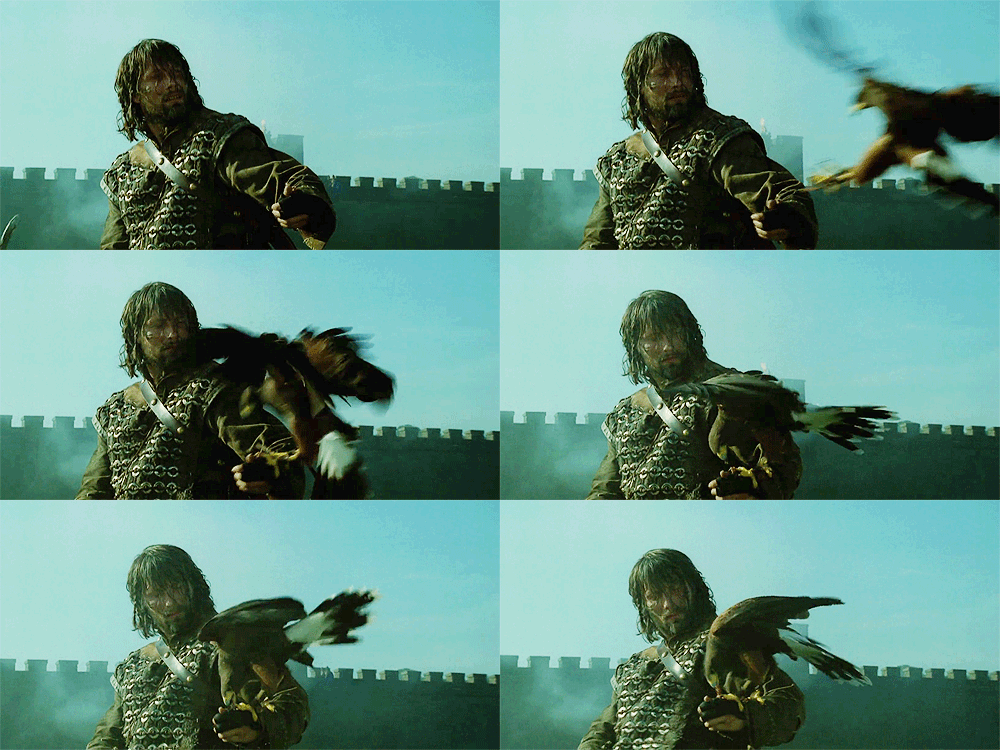
But I will always compare any Arthur story I watch or read to Bernard Cornwall’s Warlord Chronicles. They introduced me to Arthur through the eyes of a man who loved and served him beyond all measure. A greater friend, no being could ever have than Derfel. And seeing Arthur and his story told in this way forever changed my views on the once and future king.
“These are the tales of Arthur, the Warlord, the King that Never Was, the Enemy of God and, may the living Christ and Bishop Sansum forgive me, the best man I ever knew.”
 Kushiel’s Dart by Jacqueline Carey
“Lest anyone should suppose that I am a cuckoo’s child, got on the wrong side of the blanket by lusty peasant stock and sold into indenture in a short-fallen season, I may say I am House-born and reared in the Night Court proper, for all the good it did me.”
This was how I met Phèdre nó Delaunay, a child seemingly cursed with a mark of the gods. This was my first introduction to erotica. Or rather, erotica that was not part of my sister’s romance novels that I used to sneak around to read when I was younger. This was a book steeped in beautiful prose and beautiful people, and an entirely new and eye opening perspective on sexuality.
 The Hundred Thousand Kingdoms by N.K. Jemisin
“I am not as I once was. They have done this to me, broken me open and torn out my heart. I do not know who I am anymore. I must try to remember.”
And this was the series that broke me open and tore out my heart, so much so that it took me three years to get through this trilogy, simply because that’s how much time I needed between each book to settle my emotions. This was the first book I read by N.K. Jemisin, and like Octavia E. Butler before her, I am in awe of her imagination and her vision, and the opportunity to see characters like myself in the stories I read.
Join us, or better yet, come participate with us for Tough Traveling next month! The theme will be:
Assassins
Assassins are ubiquitous throughout fantasyland. Sharp-eyed readers (or even dull-eyed ones) will notice that their hooded forms often adorn book covers, and that they frequently appear – rather improbably – not to mind being the sole focus of our attention. Whether they’re spotlight hogs or camera-shy and brooding, most assassins will have trained for years and are very, VERY good at their job (i.e. killing people for money).
1st Quarter Audiobook Challenge Update
Posted on March 31, 2017 4 Comments

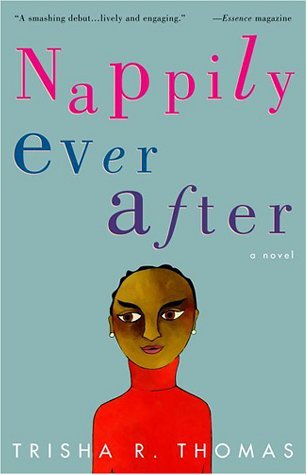
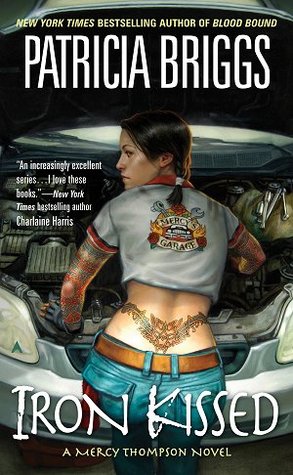
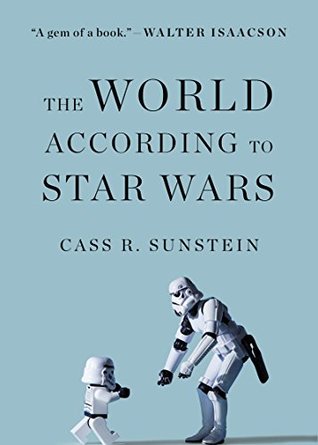
Spring is upon us once again, and with it our quarterly update on what we’ve consumed in the last three months in audiobook format. Spring presents many opportunities for us to enjoy audiobooks more (not that we needed a reason!) as we spend time spring cleaning, enjoying the outdoors more, and various other audiobook friendly situations. Here’s a quick look at our first three months.
Reading Challenge Details:
- Runs January 1, 2017 – December 31, 2017. You can join at any time.
- The goal is to find a new love for audios or to outdo yourself by listening to more audios in 2017 than you did in 2016.
- Books must be in audio format (CD, MP3, etc.)
- ANY genres count.
- Re-reads and crossovers from other reading challenges are allowed.
- You do not have to be a book blogger to participate; you can track your progress on Goodreads, Booklikes, Facebook, LibraryThing, etc.
- If you’re a blogger grab the button and do a quick post about the challenge to help spread the word. If you’re not a blogger you can help by posting on Facebook or Tweeting about the challenge.
Levels:
- Newbie (I’ll give it a try) 1-5
- Weekend Warrior (I’m getting the hang of this) 5-10
- Stenographer (can listen while multi-tasking) 10-15
- Socially Awkward (Don’t talk to me) 15-20
- Binge Listener (Why read when someone can do it for you) 20-30
- My Precious (I had my earbuds surgically implanted) 30-50
- Marathoner (Look Ma no hands) 50+
I know I’ve been doing a lot of audio listening lately…but even I’m surprised at how much progress I’ve made. Initially I had intended to play it safe and aim for My Precious, but at this rate if I keep up the pace I should just barely cross the finishing line into Marathoner by the end of the year.


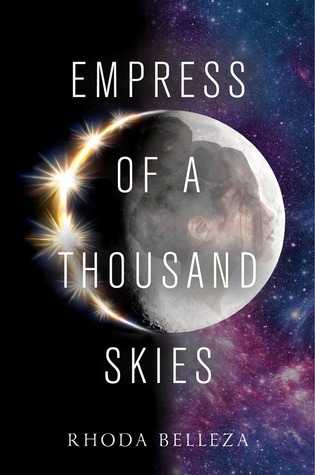

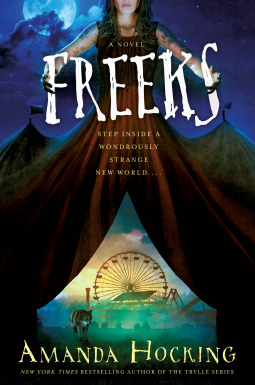


As always, audiobooks help me get through long drives and through some of the more tedious tasks at the office. I am super excited to report that my office — a school board — actually supports that, more or less, after the recent introduction of Overdrive for staff, students, and their families. We’re fresh into our first month and there have been a few glitches, as is to be expected, but the uptake on the endeavour has been so amazing. I love to see people enjoying a good book, as does the superintendent in charge of the project, who has been happily adding all the books I recommend to our library. So I’m well on my way to my Binge Listener goal, and looking forward to lots more reads!







This year has already started out super busy for me, busier than I normally am this time of the year, so audiobooks have been a big factor in helping me stay sane all these months. I’m getting into a groove now with things and hoping to cover more ground with audiobooks in the coming months, but I am happy with what I have been able to listen to all things considered.



Friday Face-Off: Casino
Posted on March 31, 2017 14 Comments

Welcome to The Friday Face-Off, a weekly meme created by Books by Proxy! Each Friday, we will pit cover against cover while also taking the opportunity to showcase gorgeous artwork and feature some of our favorite book covers. If you want to join the fun, simply choose a book each Friday that fits that week’s predetermined theme, post and compare two or more different covers available for that book, then name your favorite. A list of future weeks’ themes are available at Lynn’s Book Blog.
This week’s theme is:
“Whisky, gambling and Ferraris are better than housework”
~ a cover featuring a CASINO
Mogsy’s Pick:
The Incrementalists by Steven Brust and Skyler White
When I think of casinos, I immediately also think of Las Vegas. Ah, one of my favorite cities in the world! Unfortunately, while I’ve certainly read plenty of books set in Vegas, I find that not too many of them actually show casinos on their covers, and finding books with multiple editions for me to feature in this meme makes things even tougher.
Which is why this week we’re going to keep things simple with a head-to-head between only two covers. The Incrementalists is a book I read several years ago when it first came out in 2013 so admittedly my memory’s a bit hazy on the details, but from what I recall, the story follows a secret society whose members cheat death by sharing lives and memories going back tens of thousands of years. Their ongoing mission: to make the world a better place, a little bit at a time through a process called “meddlework”, which they achieve through influencing others by nudging them gently towards a certain inclination. And yes, the story takes place in Las Vegas. I haven’t thought about this book in a while, but lately it’s been on my radar again, due to the recent release of the sequel The Skill of Our Hands which came out earlier in January.
Now let’s check out these two covers:
2013 Tor Hardcover (left) vs. 2014 Tor Fantasy Paperback (right)


Winner:
At first glance, it’s easy to think that this contest just might end up in a tie, since the two covers share so many similarities. For one thing, they both have the same color scheme, and two, both of them depict the ubiquitous casinos of the Las Vegas Strip in their backgrounds. Push comes to shove though, I’m going to have to go with the original hardback cover. The abstractness of it is more interesting to me, versus the paperback cover which looks like the movie poster for some teen dystopian movie. I blame the apocalyptic orange.
What do you think? Which one is your favorite?
Exclusive Cover Reveal & Teaser: The Nine by Tracy Townsend
Posted on March 30, 2017 7 Comments
Today I am thrilled to present to you an exclusive cover reveal and teaser for this exciting epic fantasy, to be released from Pyr Books later this Fall on November 14, 2017! Say hello to The Nine by Tracy Townsend, a debut about a self-scribing book that might be the key to the universe and the dangerous price people are willing to pay to learn its secrets. It is described as a dark heist story, and I also have it on good authority that it is perfect for fans of novels in the same vein as A Darker Shade of Magic and The Lies of Locke Lamora!
Gah, I want it! Heist stories are totally up my alley, as you know. But all right, enough gushing from me, here is the cover in all its glory:


A book that some would kill for…
Black market courier Rowena Downshire is doing everything she can to stay off the streets and earn enough to pay her mother’s way to freedom. But an urgent and unexpected delivery leads her face to face with a creature out of nightmares.
The Alchemist knows things few men have lived to tell about, but when a frightened and empty-handed courier shows up on his doorstep he knows better than to turn her away. What he discovers leads him to ask for help from the last man he wants to see–the former mercenary, Anselm Meteron.
Reverend Phillip Chalmers awakes in a cell, bloodied and bruised, facing a creature twice his size. Translating a stolen book that writes itself may be his only hope for survival; however, he soon learns the text may have been written by the Creator himself, tracking the nine human subjects of his Grand Experiment. In the wrong hands, it could mean the end of humanity.
This unlikely team must try to keep the book from those who would misuse it. But how can they be sure who the enemy is when they can barely trust each other? And what will happen to them when it reveals a secret no human was meant to know?
Seven times in seven years of courier work, Rowena Downshire had been robbed. With each experience she’d learned a little more about how to sense the next coming.
Rowena looked to her right and saw a hulking shape slip free of an alley’s shadows, not far from the lowstreet path. There was no mistaking its hunched shoulders, or its curious, high-stepping gait.
The aigamuxa raised its left leg and held it aloft. The pink eye on its heel seemed to stare right through Rowena, slicing skin and muscle, bone and sinew.
Rowena closed both hands around the satchel’s straps. She tightened them slowly.
And then she turned heel toward the north-east, taking the stairs to the highstreets three at a time, scrabbling with her fingers as her feet slipped.
She was at the first summit and running. From somewhere below, she could hear the aigamuxa’s furious bellow.
The fear left Rowena almost as quickly as it had come. She had her wind and felt good. The aigamuxa were worse than bad runners, all but blind with both feet on the ground. They were confined to a plodding pace to keep from careening into walls or stamping through some debris that would grind into their eyes.
The alchemical lampposts flashed by Rowena’s head, one after another. When she passed the sixth, she realized the flashing movement in the corner of her eye wasn’t from her own passage into and out of pools of light.
It was from the aigamuxa swinging in the upper reaches of the street above her.
November can’t come soon enough. Happily, The Nine is now available to preorder on Amazon, and don’t forget to also add the book on Goodreads! What do you think of the cover and description? Tell me your thoughts!
Book Review: Winter of the Gods by Jordanna Max Brodsky
Posted on March 30, 2017 22 Comments
I received a review copy from the publisher. This does not affect the contents of my review and all opinions are my own.
 Winter of the Gods by Jordanna Max Brodsky
Mogsy’s Rating: 4 of 5 stars
Genre: Urban Fantasy
Series: Book 2 of Olympus Bound
Publisher: Orbit (February 16, 2017)
Length: 447 pages
Author Information: Website | Twitter
As The Immortals was one of my top reads from last year, I couldn’t wait to dive into its sequel, Winter of the Gods. And while I didn’t feel this sequel was as good as its predecessor, I wasn’t disappointed either—returning to Jordanna Max Brodsky’s extraordinary vision of New York City, where Greek gods walk the earth in human guises, was once again a pleasure to experience.
Our story opens several months after the end of the first book. With the weather getting colder and Christmas fast approaching, Selene DiSilva’s antipathy for the holiday spirit is enough to make Ebenezer Scrooge look like a paragon of cheer. On the bright side though, as Artemis, goddess of the moon and the hunt, defender of women and girls, Selene has also been keeping her spirits up with her vigilantism to bring justice to the abusers of those she has taken under her protection. And trust me, Selene DiSilva is not someone you’d want as an enemy.
However, Theo and Selene’s lives are soon turned upside down by a body found on top of the iconic Wall Street Charging Bull statue, surrounded by evidence pointing to a ritual performed by a sacrificial cult. The identity of the dead man comes as a shock as Selene realizes that she and the other gods are still in danger. Someone out there is hunting her and her brethren, and once again there’s a possibility that the culprit may be one of their own. Now she must reach out to the other immortals for help while Theo scours his knowledge of mythology and his field of classical studies to make sense of the mysterious clues left at the murder scene, all in the hopes they’ll catch the killer before it is too late.
There are many reasons why Winter of the Gods is a strong sequel. Those who enjoyed The Immortals will be pleased to find it continuing central themes from the first book, including the fresh perspective on popular Greek myths and the premise that the Old Gods live among us in secret. And like the first book, this sequel also reads like a mystery thriller, taking the reader on a Dan Brown-esque race around New York City to locate certain landmarks by solving problems and symbolic clues related to classical mythology. It’s a modern day murder mystery with a fantastical twist, and you’re definitely going to want to keep reading (or start this series) if you enjoy your urban fantasy spiced up with a touch of myth and magic.
However, there were a few disappointments as well. Selene DiSilva has always been a dangerous woman, but there’s no denying that the events from the first book have transformed her into an even more ornery and aggressive character. While I admired her as a powerful and strong-willed protagonist in The Immortals, in Winter of the Gods I confess I found her a lot harder to like, not to mention her behavior also cast an unhealthy shadow on her relationship with Theo. Selene is may be the protector of women and girls, but that doesn’t stop her from frequently extending that protection to all the needy and vulnerable of New York, which she sees as “her” city. Knowing this while reading about how she abuses Theo—emotionally and, at one point, physically—was a little hard to swallow. Let’s just say the following interactions between Theo and his friend Ruth gave me a real eye-opener on the nature of his relationship with Selene:
“Theo forgot how much he liked spending time with someone who always laughed at his jokes—someone whose emotions he could not only predict but, to some extent, influence. When Ruth was sad, he could cheer her up. When she was happy, he knew why.”
“Theo was a little taken aback by her alacrity. He was used to bargaining, cajoling, convincing. It felt odd to have someone so willing to help.”
Wait, so someone being pleasant towards him is actually something he finds surprising? What does that say about Selene? And Theo’s acquiescence and excuses for her, argh! The whole thing left me with a bad taste in my mouth which slightly affected my enjoyment of this novel, and it didn’t help that the romantic drama—like all the bickering and the jealousies—often caused pacing issues and distracted attention from the main mystery. When all is said and done, I was glad that the story ultimately had Theo and Selene looking more introspectively at their relationship to see if it was really the best for them or not (it’s an important conversation and kudos to the author for addressing the issues). For me though, all the chemistry had already been leeched out of their romance by then, and unfortunately I think that might have dampened the emotional impact of the ending.
Still, despite my complaints, they didn’t take too much away from my overall enjoyment of the novel. While a few minor flaws give Winter of the Gods less of an edge compared to the first book, I still highly recommend this sequel especially if you liked the ideas from The Immortals and wanted to see them expanded and explored. I can’t wait for the final book of this trilogy to see how the remaining conflicts and questions will resolve themselves.
More on The BiblioSanctum:
Review of The Immortals (Book 1)


 The BiblioSanctum