Book Review: The Whispering Swarm by Michael Moorcock
Posted on January 13, 2015 10 Comments
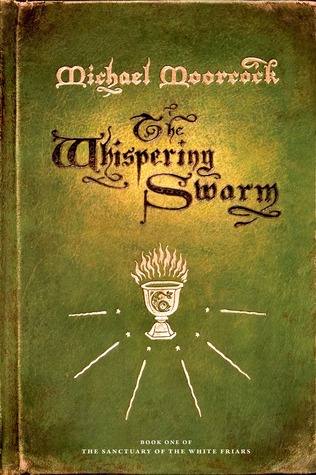 The Whispering Swarm by Michael Moorcock
Genre: Fantasy
Series: Book 1 of Sanctuary of the White Friars
Publisher: Tor (January 13, 2015)
Author Information: Website
Mogsy’s Rating: 3 of 5 stars
Michael Moorcock’s The Whispering Swarm is certainly a strange book and not what I expected at all. My first venture into this renowned author’s work notwithstanding, even I could tell this was quite a departure from his older work, involving no small amount of literary experimentation – and not least because of the novel’s semi-autobiographical nature in which Moorcock chronicles the shift of his craft from sci-fi fantasy pulp fiction towards a “new wave” and more modernist tradition.
The first book of a new trilogy, Moorcock’s latest novel presents to readers a semi-factual, semi-fictitious version of the author’s younger self growing up in post-World War II London. We follow Michael Moorcock as he navigates the world of science fiction and fantasy publishing, starting out as editor of his Tarzan Adventures fanzine at the age of 17 and eventually moving on to bigger and more prominent roles in the industry – including his controversial position as the editor of British science fiction magazine New Worlds during the 60s and 70s.
While the character talks about much of his writing, the narrative is also laced with a heavy dose of fantastical elements. Between sections detailing Michael’s personal and professional life, the book slips in and out of reality to feature an alternate world called Alsacia, a hidden sanctuary and home to both historical and legendary figures like Prince Rupert of the Rhine or Dumas’ musketeers. It’s a place where death does not exist and time flows differently, where heroes from different centuries can share a pint and rub elbows down at the tavern and no one will bat an eye. The first time young Michael accidentally stumbles into Alsacia, he meets the beautiful Mol Midnight, literally the girl of his dreams who later on becomes his muse for a number books and stories. And so begins his long relationship with this mystical place and the denizens within. Thus Michael finds himself torn between two worlds, the real London where his career and family reside, and Alsacia where he can indulge in wild romances and adventures. Before long, he can hardly ignore the whispers of what he calls the Swarm, always calling him, tempting him back into the sanctuary where he can find solace from the pressures of the world.
As someone previously unfamiliar with Moorcock’s work, I found myself intrigued by the premise of the book. Unfortunately, I was also frequently frustrated with the seemingly disorganized and irregular pacing of what at times barely passes for a plot. As previously mentioned, a huge chunk of the novel is written in a semi-autobiographical style, where readers are swept along on lengthy descriptions of young Michael’s professional and social life, which include his experimentations with sex, drugs and music. I wasn’t so fond of the explanatory narrative and found myself less interested in the nitty-gritty details of his editing and writing, but when it came to the character’s internal insights into the evolution of his style, I was perhaps more enthusiastic.
As a character, Michael’s motivations were hard to grasp. He’s an unsettled and indecisive narrator, not to mention frequently unreliable which made it more difficult to find him sympathetic. He would alternate between being selfless and self-pitying, especially where the needs of his young family are concerned. The times he steps through the veil into Alsacia are the highlights, however. Regrettably I found these to be too few and far between especially in the first half, or else I might have had an easier time getting into the book; instead, I had to push myself through most of the beginning.
On the other hand, I didn’t expect to enjoy the blurring of reality and fantasy as much as I did; there was always that uncertainty lingering in the background, mixing in that element of the unknown which made the situation more compelling as Michael became more entrenched in the business of Alsacia. This novel is definitely the first of its kind that I have read, and even knowing that most of Michael’s personal details had to be completely fabricated, the questions it made me ask were the sort that were entirely different and unique.
I have a feeling this is a very special trilogy in the making, but the ultimate payoff may require too much investment for some readers, including myself. Michael’s exploits with the various adventurers from Alsacia were exciting towards the end, but I wish more of the book had been dedicated to that aspect of the story. There are some great ideas in here, if somewhat radical and on the experimental side, but my experience was mainly dampened by the slow pacing of the plot as well as a lack of direction for most of it. An interesting novel overall, and in the end I’m not sorry I read it. The style is not exactly to my tastes, but it’s broadened my horizons.

A review copy of this book was provided to me by the publisher in exchange for an honest review. My thanks to Tor Books!
Guest Post: “One RPG at a Time” by Kristi Charish + GIVEAWAY of Owl and the Japanese Circus
Posted on January 12, 2015 25 Comments
*** The giveaway is now over, thank you to everyone who entered! ***
Today, we’re very excited to welcome author Kristi Charish to talk about a topic that all of us at the BiblioSanctum happen to be quite passionate about too — VIDEO GAMES! Kristi’s book, Owl and the Japanese Circus will be available on January 13, 2015 from Simon & Schuster Canada and Pocket Star. If you haven’t already, be sure to check out our review! Now on to the fun!
ONE RPG AT A TIME: VIDEO GAMES AS MY WRITING INFLUENCE
by Kristi Charish
 I love video games. Especially RPGs. Ever since a roommate way back in my undergrad days introduced me to Baldur’s Gate and Neverwinter Nights I’ve been a hooked, loyal RPG convert. Sci-Fi, Adventure, Fantasy- doesn’t really matter what genre, if there’s a story to be had I’m in.
A lot of different pieces of media influence my writing (Indiana Jones and the Mummy are two of my biggest) but in a lot of ways my venture into those first RPG video games set me on the writing path in a way movies, traditional video games, and table top role playing games never could. To this day when I need a quick kick in the proverbial writing ass to get back on track, my first go to isn’t a book or movie; it’s an RPG video game. Video games have the ability to immerse me in a story the way no other medium out there can and it’s a shame they don’t get enough credit for it.
Credit where Credit is Due
I’m not going to mince words here. I feel very strongly that some of the best Sci-Fi and Fantasy produced over the past decade has come from the video game corner, though you’ll be hard pressed to get many writers to admit that. The Mass Effect series (Bioware) is arguably one of the best pieces of science fiction writing and storytelling around, yet if you look at the Hugo awards there are slots for movies, TV, fiction, Fanzines, even art, but no videogames. To me that says a lot about the reception video games have gotten from the writing community as a valid storytelling medium, and in my humble opinion it’s a massive oversight. Though video games are still the relatively new kid on the storytelling block, they’ve fast become one of the most influential mediums out there. Blockbuster video game audiences (Call of Duty and Halo anyone?) are reaching the levels of blockbuster movies. Over the years the storytelling has evolved by leaps and along with the voice acting and animated cut scenes. The games that result are that much more immersive and engaging and in ways movies and books can’t come close to.
Video games, particularly some of the RPGs (like some of the Dragon Age and the Final Fantasy entries to name a few), are fast becoming one of the most emotionally engaging interactive experiences on the planet. And they’re just getting started. With the oculus rift looming on the horizon video games promise to become that much more immersive.
It’s a Brave new Storytelling Medium Out There
There are things you can do with story in video games that can’t be done in other mediums. The visual and audio component allows for a greater immersive experience as well as cold drops into the story, delivering information about the environment and setting without the use of text. And while film accomplishes a similar effect, movies and TV have a defined narrative time length and pace that can’t be altered. Video games veer from that script by giving the player flexibility to immerse them in the set story narrative or take their time and look around. There’s more you can communicate to the viewer in those breaks and they have control over what they decide to spend their time on, changing the equation and giving we, the audience, more options then ever before as to how we take our story.
Then there’s the vested interest. Whether the character is fully realized (DA 2 Hawke) or a cipher (DAI) I’m more emotionally involved with the character I play than in any movie or book. I can’t help it; I’m playing through their eyes. And then there’s the romance. Dragon Age Origins was the first time I sat up and paid attention to a romance line in a game. Sure there’d been attempts at romance in games before (NWN2, BG2) but they’d universally felt forced, just another way to gain a few XP points and pass the time in between quests with somewhat interesting story filler. That changed when Dragon Age Origins came on the scene. All of a sudden I cared where the romance was going. With streamlined dialogue, believable story arcs, and character development, for the first time ever I believed the in game romance sub plots. Not interested in Romance? No problem, you can choose not to participate or just skip the cut scenes. Again, that choice and personalization thing.
Games aren’t perfect and they’re certainly not a replacement for books and movies, but make no doubt about it. They’re a powerful storytelling tool we’ve just seen the start of…which reminds me, I’ve got a writing inspiration session scheduled with Final Fantasy XII 🙂
* * *
ABOUT THE AUTHOR
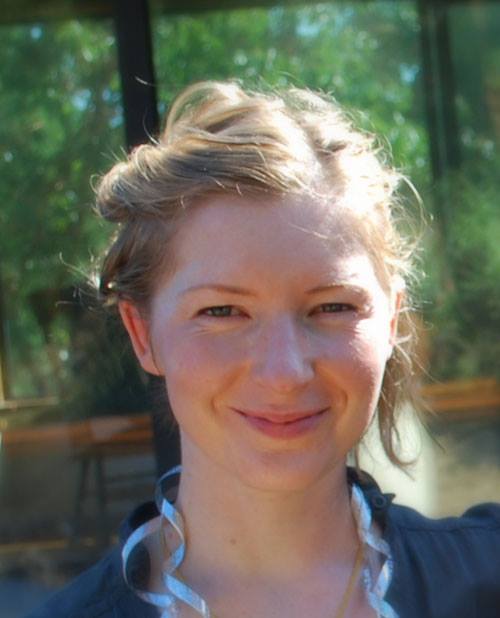 Kristi is the author of OWL AND THE JAPANESE CIRCUS (Jan 13th, 2015, Simon and Schuster Canada/Pocket Books), an urban fantasy about a modern-day “Indiana Jane” who reluctantly navigates the hidden supernatural world. She writes what she loves; adventure heavy stories featuring strong, savvy female protagonists, pop culture, and the occasional RPG fantasy game thrown in the mix. The second installment, OWL AND THE CITY OF ANGELS, is scheduled for release Jan 2016. Her second urban fantasy series, KINCAID STRANGE (Random House Canada), about a voodoo practioner living in Seattle, is scheduled for release mid 2016.
Kristi is also a scientist with a BSc and MSc from Simon Fraser University in Molecular Biology and Biochemistry and a PhD in Zoology from the University of British Columbia. Her specialties are genetics, cell biology, and molecular biology, all of which she draws upon in her writing. She is represented by Carolyn Forde at Westwood Creative Artists.
* * *
OWL AND THE JAPANESE CIRCUS GIVEAWAY
Here’s what you’ve been waiting for! The BiblioSanctum is pleased to host a giveaway for Owl and the Japanese Circus. Up for grabs is one print copy of the book for residents of the US/Canada, OR a digital copy for International entrants. To enter, all you have to do is send an email to bibliosanctum@gmail.com using the subject line “OWL AND THE JAPANESE CIRCUS” with your Name and valid Mailing Address (for US/Canada) or Email Address (for International) by 11:59pm Eastern time on Tuesday, January 20, 2015.
Only one entry per household, please. The winner will be randomly selected when the giveaway ends and then be notified by email. All information will only be used for the purposes of contacting the winner and sending them their prize. Once the giveaway ends all entry emails will be deleted.
So what are you waiting for? Enter now for your chance to win! Good luck!
Sunday Musings: Guilty Pleasures
Posted on January 11, 2015 14 Comments
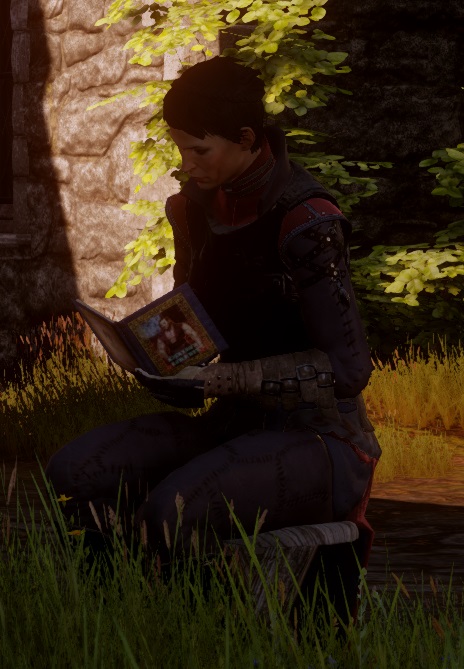 My recent gaming adventures have involve many hours invested in Dragon Age Inquisition. One of my favourite moments features a companion character named Cassandra Pentaghast, whom the main character catches during a moment of downtime. Cassandra happens to be reading a copy of Swords and Shields, a romance serial, and talking to her about it leads into the sidequest, “Guilty Pleasures.” Cassandra reacts with guilt at being caught, mainly because she’s indulging in something so selfish and frivolous when there’s an apocalypse to stop. But, as other characters pop by to express their opinion, she finds it necessary to defend her choice of literature as well.
It’s a pretty common reaction.
“Not many folks are willing to publicly admit they love romance novels. Meanwhile, romance continues to be the bestselling fiction genre. Ever. So what’s with all the shame?”
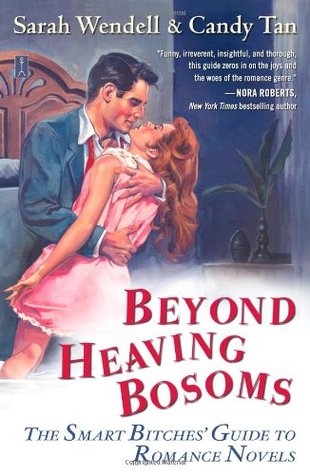
This is what authors Sarah Wendell and Candy Tan explore in their book, Beyond Heaving Bosoms: The Smart Bitches’ Guide to Romance Novels. It is an extension of the website, Smart Bitches; Trashy Books, and sets out to prove “…that while some romance novels are silly — maybe even tawdry — they can also be intelligent, savvy, feminist, and fabulous, just like their readers!”
My first foray into romance was at a very young age. My siblings were over a decade older than me, and my brother had the greatest influence, introducing me to Star Wars, comics, cyborgs, dinosaurs, and more. But I was still curious about my sister’s interests even if she and I did not have much of a sisterly relationship to speak of back then. So I snuck into her box full of books and found this:
CAPTIVE TO HIS SAVAGE PASSION…
A moan escaped Jana Greyson as this strong, handsome stranger invaded her lips with his demanding kisses. He had stolen her from her world, made her his prisoner, and now enslaved her with the trembling rapture of his hunger… igniting a white-heat that melted her will to resist.SLAVE TO HER OWN DESIRE
Commander Varian Saar had come from a place beyond imagining and claimed Jana for his own. His powerful hand left a fiery trail across her ivory skin, his cobalt eyes possessed her with their unrestrained longing…and now her fate rested in his quicksilver grasp. Forbidden partners …forbidden love…and soon their mad, tumultuous union became a pledge as boundless as the universe itself, a promise to seek their future among the glittering stars.THEIR LOVE BURNED BRIGHTER THAN THE STARS

Trust me to pick up what was probably the only science fiction novel within the collection. At that age, I might not have understood everything that was going on (he put his what in her where??), but I could totally understand spaceships and aliens and treachery.
I don’t actively seek out romance novels, and prefer the erotica that one might find in Jacqueline Carey’s epic fantasy series that begins with Kushiel’s Dart.

Jacqueline Carey’s heroic courtesan Phèdre nó Delaunay, art by Lee Moyer
 But sometimes I just want a lighter, “trashier” read to appease my bibliophilic needs.
In the case of Cassandra Pentaghast, she is a woman of nobility, of honour, strength, and perseverance. She is a woman of passion when it comes to her beliefs and her duties. For her, Swords and Shields represents the passionate pursuit of an ideal and she asks, “What’s not to admire in that?”
There are many reasons why people choose to read this kind of literature, and considering how popular the genre is, there are many people reading — and writing — this kind of literature. Period. So why are we hiding?
I’ll blame the Victorians for our ruin.
But times, they are a’ changin’. For better or for worse, books like Fifty Shades of Gray have made erotica a little more mainstream, and I’m sure the movie will spike that interest. But people have been reading erotica and romance long before that. It’s just another form of entertainment among many. So it’s about time we get over our shame and judgment and just enjoy a good read.
YA Weekend: Shutter by Courtney Alameda
Posted on January 10, 2015 14 Comments

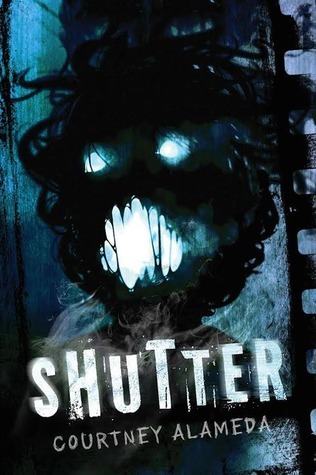
Genre: Young Adult, Horror
Series: Book 1
Publisher: Feiwel & Friends (February 3, 2015)
Author Information: Website | Twitter
Mogsy’s Rating: 4 of 5 stars
Horror in Young Adult fiction is tricky territory, so whenever I see a novel getting some buzz, I can’t help but take notice. Shutter ended up surprising me. While it probably wasn’t the book I was expecting, there’s absolutely no denying that Courtney Alameda has delivered a high-octane read that’s at once superbly written and full of interesting new ideas. This is the first YA novel in months to stand out for me. That’s not to say there weren’t a few areas that I thought could have used improvement, but I’m impressed especially given how this is the author’s debut.
Shutter introduces us to Micheline Helsing – yes, she is indeed a descendent of that Helsing – a tetrachromat girl whose ability allows her to identify different types of undead by the color of their auras they give off. Her family along with other such illustrious lineages like the Stokers and Drakes have always sworn to hunt and destroy monsters, and in time their organization has grown to occupy an entire island off the coast of San Francisco, complete with its own medical and research buildings, training yards, and other such facilities. This means that besides her powers, Micheline and her pals are also armed with state-of-the-art monster hunting tech and equipment, all the better to do their jobs. Mundane firearms are usually enough to bring down the corporeal baddies, but dealing with the spiritual undead sometimes requires a bit more finesse.
As such, Micheline never goes anywhere without her camera, her weapon of choice when it comes to fighting ghosts. By capturing their “ghostlight” on film, she can steal their energy bit by bit until they are gone for good. Until now, her trusty SLR has never failed her. But then a run-in with a particularly nasty entity leaves her and her team cursed and marked by soulchains, and Micheline has seven days to figure out how to exorcise the entity or else they will all die. With her relationship with her father already on the rocks since the deaths of her mother and brothers, Micheline is forced to go on the run in order to save herself and her friends.
One of the favorite aspects about this book is how seamlessly Alameda has managed to incorporate the Reapers into the modern world. With the Helsings being in the open and publicly known as the go-to guys for all your ghost and monster problems, we avoid the kinds of pesky problems that arise when authors try to construct a believable scenario around a secret society. But while I am sold on the Reapers and their place in the world, I also thought the book stumbled on providing some of the finer details. Take the mechanics behind the use of mirrors and camera lenses to exorcise ghosts, for example. It scores major points with me for being a new and innovative idea, but at the same time the explanation behind the process is rather touch-and-go. To be fair, I do tend to feel this way about a lot of concepts in YA novels, and I can be excessively critical when it comes to world-building elements. I wish the camera-as-a-weapon idea had been more robust and better developed (no pun intended), especially since it so central to the book, but I was also fine for the most part just going along with it.
However, when it comes to the writing, I have nothing but good things to say. It’s hard to believe this is Courtney Alameda’s first novel. Her writing style is wonderful and easy on the eyes, and she keeps such a fine consistency on her character’s voice as well as pacing behind her storytelling, it honestly led me to believe she’s been doing this for ages. Another observation is that despite its categorization, I wouldn’t exactly describe Shutter as horror. Generous amounts of blood, gore and guts aside, there’s simply none of that atmosphere behind it, though I don’t doubt Alameda could have managed it if she wanted to. There are definitely traces of Horror elements in the plot, but quite simply, I got the feeling she was more interested in telling an action-thriller, and she certainly succeeded in that. Sure, there are parts that are predictable (mainly who the big bad entity was, as well as the identity of the mastermind pulling the strings behind the scenes), but I could not spot any lulls or breaks that hindered the flow of the story.
There are things I wish could have been different – Micheline’s character, for example, is the typical YA heroine ruled by emotional impulses, who leaps into dangerous situations without thinking about the consequences and insists on taking matters into her own hands even though she makes a bigger mess of things in the end. Not long ago, I also read an insightful guest post by another author about friendships between strong female characters, and ever since then I have become more aware of how many YA female protagonists are kickass, smart-talking girls who are inevitably surrounded by only male companions, with other girls in the story only serving as rivals or someone getting in the way and/or someone for the heroine to protect. I really think this trend has to change. To its credit, at least this book had a romantic side plot that was not convoluted or poisoned by a love triangle or any such nonsense, and the relationships between the characters, particularly the one between Micheline and her father, reached me on a deeper level.
The strengths, most notably the strong writing and the fast-paced, action-oriented plot, overcame all the minor weaknesses and made reading this novel worth it, though. Sure to appeal to fans of supernatural/horror themed TV shows and books, you won’t regret picking this one up.

A review copy of this book was provided to me by the publisher via NetGalley in exchange for an honest review. My thanks to Feiwel & Friends (Macmillan Children’s Publishing Group)!
Book Review: Owl and the Japanese Circus by Kristi Charish
Posted on January 9, 2015 26 Comments
Owl and the Japanese Circus by Kristi Charish
Genre: Urban Fantasy
Series: Book 1 of The Adventures of Owl
Publisher: Pocket Star (January 13, 2015)
Author Information: Website | Twitter
Mogsy’s Rating: 4 of 5 stars
Kristi Charish is an author after my own heart. First, her book Owl and the Japanese Circus stars Alix “Owl” Hiboux, a former archaeologist turned international antiquities thief. Having been an Archaeology student myself, I can’t in good conscience say I endorse the character’s tomb raiding and thieving ways, but heck, anything to do with archaeology will inevitably will catch my attention – and consider me on board with Owl’s whole “Indiana Jane” persona! Second, much of the novel takes place in fabulous Las Vegas, one of my favorite cities in the world. And third, Owl is a hardcore gamer and lover of RPGs, and it greatly intrigues me that her favorite online game World Quest might be more than it seems…
It doesn’t end there. There’s a lot more here that urban fantasy readers will really get a kick out of, from vampires and naga and nympths to more exotic supernaturals like Kami spirits. Mr. Kurosawa, a red dragon masquerading as a human that first summons Owl to his lavish Japanese Circus Casino in Vegas to make her an offer she can’t refuse – retrieve a priceless artifact for him, and in return he’ll help Owl take care of a pack of vampires that have been dogging her steps for months and making her life a living hell.
Of course, things are never so simple. And this is why Owl hates working supernatural jobs. Together with her best friend Nadya and the charismatic and hunky ex-mercenary Rynn, Owl stumbles into one disastrous problem after another in the course of her world-wide treasure hunt, and it’s going to take all her wits to simply stay alive.
Thing is, Owl may have the brains, but her problem solving abilities are often hindered by her temper, impatience, and a trigger-happy mouth that has the unfortunate tendency to spout foul insults at anyone – friends and enemies alike – when she feels they have her up against a wall. As a result, Owl feels a lot less idealized when compared to a lot of her urban fantasy heroine counterparts, making her come across more flawed, real and human. That said, I doubt it’ll be easy to get through the book without feeling multiple urges to throttle her for being so foolhardy and bullheaded, or for not thinking things through and always charging head-first into danger without a plan. Still, while it might take a while for Owl to grow on you, her spunky personality also makes this one a fast-paced, energizing read.
The story is also a lot of fun. It doesn’t take itself too seriously, the plot constantly moving from one action scene to the next, thundering along like a runaway freight train. There are a lot of moments where you have to suspend your disbelief, but nothing so extreme that it prevented me from enjoying myself. Also, as is the case with a lot of debut novels, there’s a rawness to the storytelling, some plot inconsistencies that cropped up every now and then (like, given the dangerous nature of the scroll Owl was tasked to find and the fact Mr. Kurasawa knew all about it, why would he even seek to find a translation?) and some minor contradictions (early on in the novel, Owl mentions looking forward about getting plenty of time to sleep on the plane, but later when on board, admits that she can’t ever sleep on planes) but since I read the advanced copy, I imagine many of these hiccups will be ironed out in the final.
All told, this is a great start to what looks to be a very different kind of urban fantasy. I’d like to see more of the archaeology and gaming angle, and I’m definitely interested in continuing Owl’s future adventures if the books keep up with the heavy action and fun.
A review copy of this book was provided to me by the publisher via NetGalley in exchange for an honest review. My thanks to Pocket Star!
Tough Traveling: Snarky Sidekicks
Posted on January 8, 2015 20 Comments


The Thursday feature “Tough Traveling” is the brainchild of Nathan of Review Barn, who has come up with the excellent idea of making a new list each week based on the most common tropes in fantasy, as seen in The Tough Guide to Fantasyland by Diana Wynn Jones. Nathan has invited anyone who is interested to come play along, so be sure to check out the first link for more information.
This week’s tour topic is: Snarky Sidekicks
Why is everyone so serious all the time? Perhaps they need a friend that is there with a quick bit of wit to liven the day; even if the day is looking to quickly turn to blood. (Not actually found in the Tough Guide)
Mogsy’s Picks:
I thought this one would be easy, but I really had to scour my shelves! Maybe it’s not too surprising, but it’s almost all urban fantasy for me this week:
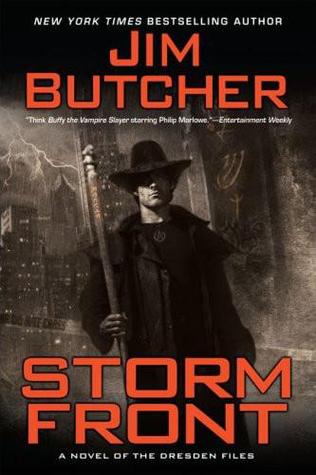
Bob the skull is a spirit of intellect, acting as Harry’s assistant and store of knowledge for magic. He has the tendency to take on the personalities of his masters, so under Harry, Bob can be a little bit of a wiseass.
Suzume Hollis, is Fort’s kitsune sidekick. She’s a faithful friend and ally, but like the shapeshifting fox spirits in Japanese mythology, she is also a wily trickster, always playing pranks on Fort and others around her.
 John Golden series by Django Wexler
John Golden is a “debugger”, a professional you call when you need someone to get the gremlins and other fae out of your computers and networks. John’s assistant is his sister Sarah whose personality resides in a Dell Inspiron. She’s delightfully hilarious in her remarks in the form of footnotes, always poking fun at her brother endearingly.
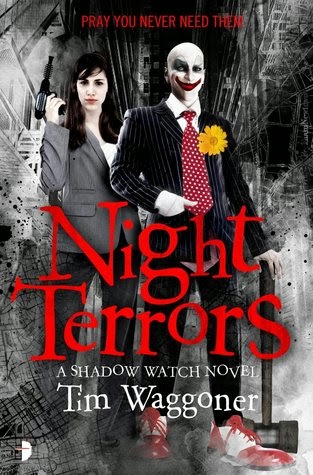
Ever since she was a child, Audra has been terrorized by nightmares of the psychotic clown Jinx. But now they are partners working together in the Shadow Watch, a supernatural agency dedicated to patrolling the border between our world and realm of dreams. Jinx isn’t so much snarky than he is totally insane.
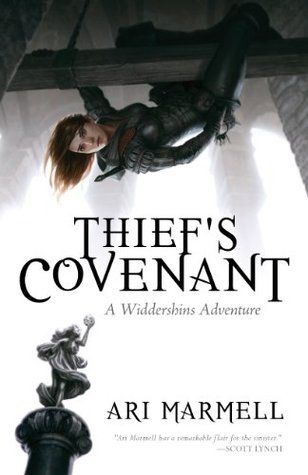 Widdershins Adventures by Ari Marmell
Widdershins is a follower of the almost-forgotten minor god Olgun — his only follower, actually. Now he’s hitching a ride in her head, and the playful banter between the two of them comes across only as one-sided to the reader, ensuring plenty of humor to break up the tension.
Wendy’s Picks
 The Lives of Tao by Wesley Chu
Between Roan and Tao, I’m not exactly sure which one can be considered the sidekick, but both of them are free with the snark and sarcasm, whether or not the moment requires it.
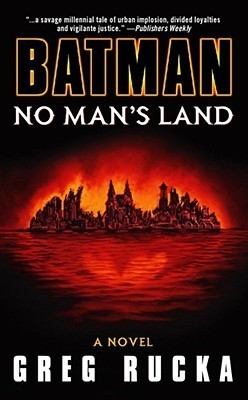 Batman: No Man’s Land by Greg Rucka
How can I talk about snarky sidekicks without including the ultimate sidekick of all sidekicks: Dick Grayson. He may no longer sport the mantle of Robin, but he’s always available to put the Dark Knight in his place with a well-timed quip.
 The Genome by Serge Lukyanenko
Alex’s tattoo is an unusual sidekick. The Demon changes according to Alex’s mood, thereby revealing what he’s really thinking. Not too convenient when he’s in the middle of a conversation, but sometimes, even Alex doesn’t quite know his own thoughts. Good things the Demon is there to help him out.
Posted on January 7, 2015 2 Comments
“Once there was a city of women.
Its rulers were women, as were its judges and advisors. Female architects had laid out its streets and houses, and female masons had raised them. Its army was well provided and well trained, for though the city was isolated, in a remote desert region, it had had enemies in its time. And its arts and sciences flourished. Though there were few reports of anyone having visited the city—few, indeed, who could say in what direction it lay—its productions were well-known. From where else could they have come, the scrolls of poetry, the calligraphy and silk paintings, that circulated among the wealthy and earned exorbitant prices for any merchant lucky enough to get hold of one? Words and images to equal those of the masters, but no master laid claim to them, and where the master’s imprint should be there would appear a woman’s name: Soraya, Noor, Farhat; or an unfamiliar symbol of feather, leaf or flower.”
The Steel Seraglio by Mike Carey, Linda Carey, and Louise Carey
Book Review: The Stolen Throne by David Gaider
Posted on January 7, 2015 4 Comments
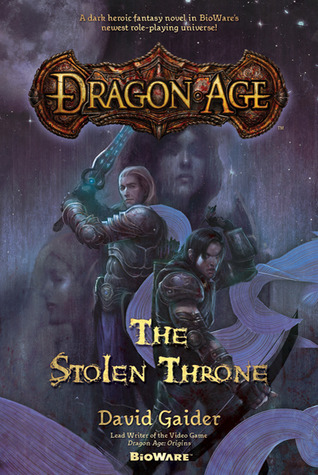 The Stolen Throne by David Gaider
Genre: Fantasy, Gaming
Series: Dragon Age
Publisher: Tor Books (April 1, 2010)
Author Information: Twitter
Tiara’s Rating: 2.5 of 5 stars
Admittedly, I gave into Dragon Age mania as the release of Dragon Age: Inquisition neared after swearing that I wouldn’t buy another BioWare game before getting some solid opinions after playing Dragon Age 2 and Mass Effect 3. I lied. Everyone knew I was lying. However, I held out on Dragon Age: Inquisition until they started releasing all the details. Well, that and a thoughtful preorder from a husband who knew I’d never quit BioWare helped. BioWare and I are going to be in a rivalmance until the end of days. This is how it’s been since I played my first Bioware game (Baldur’s Gate), and this is how it will always be.
I’d purposely avoided reading the Dragon Age books and comics. If I went into the reasons why, I’d probably be here all day, so that’s a road we won’t travel. With the nearing of the latest game in the series, though, I decided to take the plunge because I wanted to know more about the world as seen by its creator(s). It has been a bit of an ambivalent journey for me at this point, but I can say that I appreciate what it has added in terms of lore and how I think of my own characters in this world.
The Stolen Throne chronicles Maric’s bid to overthrow the Orlesians who have occupied Ferelden and subjugated its people to their harsh rule. After the death of his mother, the much loved Rebel Queen, Maric finds himself the leader of a rebellion that he was part of but never fully grasped the full scope of due in part to trailing a mother who seemed larger than life. Maric is that ham-fisted son who has to find the greatness inside of him and lead his people into the promised land.
Early in his adventures, Maric befriends the young, taciturn Loghain Mac Tir who comes from humble origins and has felt the brutal sting of the Orlesian occupation firsthand. Loghain reluctantly helps Maric at first, feeling that survival is more important than any rebellion, but soon finds himself committed to the rebel cause. Despite his youth and origins, Loghain proves to be an adept leader and tactician. He’s doubly more capable than Maric, but his glories are Maric’s glories. Loghain is respected for his military prowess, though.
I didn’t care much for the “hero” of the story much. Maric was a bit too golden for my tastes, even when he still seemed uninspired. Too many scenes had him reducing people to patriotic tears and wanting to abandon hearth and home to follow him to doom. Meanwhile, I’m sitting here asking, “Why?” For me, there was nothing spectacular about him or these speeches he had to dredge from the bottom of his heart. At the very best he was mediocre, and at the worst comically inept. Yet, the minute he opened his mouth and said, “Get in, losers,” everyone was running to his side.
On the other hand, we have Loghain. Loghain has always been a character that I’ve had issues with in Dragon Age: Origins to the point that I really didn’t care what insight a book might give me on the character. I always felt like Loghain was wasted potential in the game for various reasons. With that being said, he’s really just about the only thing that makes this book worth picking up because it does give you more introspective on the character, adding many nuances to a character that I was tepid toward.
Overall, the story was just all right. While it was certainly very well written, it was a bit too formulaic and clichéd for my tastes. Not that there’s anything wrong with formulaic or clichéd when presented in just the right way, but this book felt a little too much like I could throw in any generic character in a generic rebel prince story. There wasn’t much that was truly special for me as a fan of the games aside from seeing small things such as where Alistair got his award winning sense of humor. I did enjoy the description of the settings. Reading about places such as the Hinterlands and having the beautiful visuals from Dragon Age: Inquisition in my head was a real treat. The fight scenes were engaging, easy to envision, and had me thoroughly engrossed.
While this wasn’t everything I wanted it to be, I can appreciate it for what it is and what it added to the lore of one of my favorite gaming series.
Side note: Be sure to check out Wendy’s review of The Stolen Throne!

Waiting on Wednesday 01/07/15
Posted on January 7, 2015 14 Comments

“Waiting On Wednesday” is a weekly meme hosted by Breaking the Spine that lets us feature upcoming releases that we can’t wait to get our hands on!
Mogsy’s Pick:
Queen of Fire by Anthony Ryan: July 7, 2015 (Ace)
2015 looks to be a great year for epic fantasy readers, not least because we’ll be seeing some hopefully stunning conclusions to a lot of the big series out there. I’m not about to miss out on the third and final book of the Raven’s Shadow trilogy! Looking forward to see how it all plays out for Vaelin al Sorna.
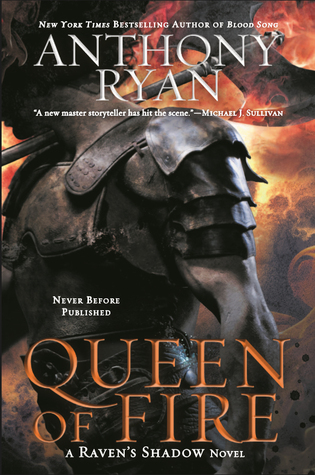 “In the thrilling conclusion to the “deftly and originally executed” (Booklist) New York Times bestselling trilogy, Vaelin Al Sorna must help his Queen reclaim her Realm. Only his enemy has a dangerous new collaborator, one with powers darker than Vaelin has ever encountered…
“The Ally is there, but only ever as a shadow, unexplained catastrophe or murder committed at the behest of a dark vengeful spirit. Sorting truth from myth is often a fruitless task.”
After fighting back from the brink of death, Queen Lyrna is determined to repel the invading Volarian army and regain the independence of the Unified Realm. Except, to accomplish her goals, she must do more than rally her loyal supporters. She must align herself with forces she once found repugnant—those who possess the strange and varied gifts of the Dark—and take the war to her enemy’s doorstep.
Victory rests on the shoulders of Vaelin Al Sorna, now named Battle Lord of the Realm. However, his path is riddled with difficulties. For the Volarian enemy has a new weapon on their side, one that Vaelin must destroy if the Realm is to prevail—a mysterious Ally with the ability to grant unnaturally long life to her servants. And defeating one who cannot be killed is a nearly impossible feat, especially when Vaelin’s blood-song, the mystical power which has made him the epic fighter he is, has gone ominously silent…”
Book Review: The Providence of Fire by Brian Staveley
Posted on January 6, 2015 21 Comments
 The Providence of Fire by Brian Staveley
Genre: Epic Fantasy
Series: Book 2 of Chronicle of the Unhewn Throne
Publisher: Tor (January 13, 2015)
Author Information: Website | Twitter
Mogsy’s Rating: 5 of 5 stars
You can always tell when I really like a book by how fast I devour it. I gave myself plenty of time to read Brian Staveley’s The Providence of Fire, anticipating it would take me at least a week or more to finish this huge honking tome of a novel, but it turned out I made short work of it, chomping through 600+ pages of this in a little more than three days.
I just loved this book, couldn’t put it down. This incredible sequel to The Emperor’s Blades was everything I hoped for – bigger and better in every way. In fact, I went back to my review of the first book and practically everything I had an issue with there was amended in this second installment. As a reader, you just can’t ask for more than that.
The Providence of Fire picks up where The Emperor’s Blades left off, following the diverging paths of the slain Emperor Sanlitun’s three surviving children. After spending many years training with the empire’s elite Kettral forces, youngest brother Valyn is in the position to safeguard his older brother Kaden’s succession to the Unhewn Throne – though now he and his wing members are labeled renegades and traitors. Kaden himself has his own destiny to follow. He has spent the last eight years sequestered in a remote monastery in the mountains, learning the mysteries of the monks who live there. With the help of his mentor Tan, Kaden is now ready to use all that knowledge to uncover the truth of those behind Sanlitun’s murder, but being his father’s rightful heir makes him the target of those who want to overthrow the Malkeenian line.
However, oldest sister Adare, whom as you may recall spent most of the last book languishing in the capital being manipulated and treated with disdain by palace flunkies, is probably the one to see the greatest change to her character and storyline out of all of them. Having learned the identity of her father’s assassin, Adare formulates a plan to escape the city in the hopes of removing herself from the enemy’s grasp. Not knowing what has become of her brothers, she is also determined to find allies to secure the throne and keep Sanlitun’s killer from ever taking it.
Adare was my absolute favorite in this book, and I enjoyed her chapters the most. This young woman who has spent her whole life within the walls of the Dawn Palace is not as helpless as you would think she’d be. She may be ignorant of much of the world, but her quick thinking allows her to get quite far in her quest, and I always love to see a female character with brains and ambition. I also have to say, she has the most entertaining companions – just wait until you meet Lehav, Oshi, and the indomitable Nira. In this sequel, Adare is a far cry from who she was back in The Emperor’s Blades, and as one of my biggest criticism in that book was the underrepresentation of her character, I am happy and amazed at how far she has come now. I like Adare’s character very much, not only because I think she’s the strongest and most level-headed of Sanlitun’s children, but also because I had a feeling deep down that Staveley would have great things in store for her. I’m thrilled to see she’s finally getting her moment in the spotlight.
The other gripe I had about the first book was that for an epic fantasy, the story just didn’t feel quite big enough. Kaden’s everyday life seemed to revolve being beaten silly by the monks, and for Valyn it was being beaten silly by his trainers and other rival wings. Adare hardly appeared at all. Well, no problems with any of that here. Whereas in The Emperor’s Blades our settings were mostly restricted to the mountain monastery for Kaden, the Kettral training island for Valyn, and the Dawn Palace for Adare, The Providence of Fire opens the world right up as all three royal siblings travel far and wide on their quests. And rather than dealing with their immediate personal problems, the conflicts they face in this novel are far more urgent and significant as well, with far-reaching consequences for the whole empire and not just our three main protagonists.
With a major war against a new threat on the horizon, the siblings’ roles in it make for a much more dynamic, fast-paced and action-filled plot. It is also worth noting that Staveley adds another point-of-view character partway through the novel, giving us insight into the motivations and actions of Gwenna, the demolitions specialist in Valyn’s wing. With the boys sent off on a wild goose chase and Valyn losing control of his team, it is up to the female Kettrals (and a Skullsworn assassin who is practically an honorary member) to take care of things. Though Gwenna’s chapters came in later in the second half of the novel, they were one of the highlights of this book for me and there were some very memorable scenes in them.
I’m now more intrigued than ever about where this series will go. I admit the plot became more addicting when Adare, Kaden and Valyn were all unaware of the fates of the others, so each sibling had to act on their own using what information they had available. As a result, Adare, Kaden and Valyn now each have their own individual goals. None of them are all that noble or perfect when it comes to making the tough decisions; I found myself dismayed as often as I was proud of some of their choices, but that is to be expected given the circumstances. I’m actually glad that they each have their strengths and shortcomings.
As such, the relationship between the three siblings also fascinates me. Sanlitun was no doubt a great emperor and a wise leader, setting his children off on very different paths for them to experience new things and widen their worldview. But doing so also left huge gaps in their knowledge. Adare knows very little about the outside world but understands politics and the ways of the palace, and yet she was never meant to sit upon the Unhewn Throne. Kaden’s eight years in isolation with the monks taught him the specialized mystical abilities that every emperor needs to know, but that also left him woefully ignorant of the ways of his future empire, including the laws of the land and cultures of his people – that and he has no idea at all how to fight and protect himself. In contrast, Valyn’s time with the Kettral taught him how to fight, survive, and form battle strategies, but unfortunately not much else. When it comes to what makes a great leader, it seems that each sibling has only a piece of the whole. But their years spent away from each other doing their different things also made them drift apart, leading to mistrust and suspicion. Whether they will end up working together or be divided remains to be seen, and that’s one of the main things I’m looking forward to finding out in the future of this series.
While The Emperor’s Blades was a pretty good book, like I said, everything about The Providence of Fire just feels even bigger, deeper and more improved. It’s almost like Brian Staveley took the doors to the series and flung them wide open, vastly expanding upon the world, the story and all the characters. In my review of the first book, I summed it up by saying that it was a promising start and in the sequel I would like a deeper look into the history and magic of the Annurian Empire, as well as a larger role for Adare. Well, you can bet I got everything I wanted and more in The Providence of Fire. The fate of the empire hangs in the balance, not to mention the futures of Adare, Kaden, and especially Valyn. Once again, the author ties everything up while teasing a lot more to come in the next installment, except now I’m even more excited for the next book.

A review copy of this book was provided to me by the publisher in exchange for an honest review. My thanks to Tor Books!


 The BiblioSanctum