Book Review: Witches Be Crazy by Logan J. Hunder
Posted on July 5, 2015 15 Comments
A review copy was provided by the publisher in exchange for an honest review. All opinions are my own. Any quotes contained in this review are from the advance copy of the book and are subject to change.
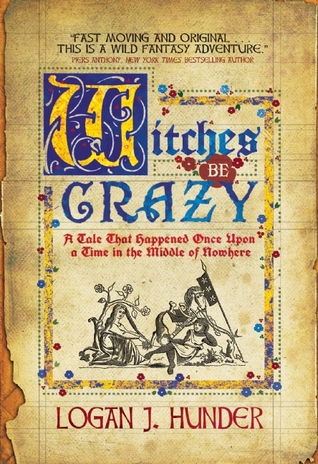 Witches Be Crazy: A Tale that Happened Once Upon a Time in the Middle of Nowhere by Logan J. Hunder
Genre: Fantasy, Humor
Series: Stand Alone
Publisher: Night Shade (July 14, 2015)
Author Information: Website | Twitter
Humor, as we all know, is subjective. Especially satire and parody. Case in point, the man I married can watch Monty Python and the Holy Grail for the nine hundredth time and still bust a gut laughing, while I’m sitting there beside him on the couch rolling my eyes because the movie stopped being funny after the first time (and I expect I will catch a lot of grief for that blasphemous confession). What I find funny/not funny might not be the same as others, which is why I feel it is necessary to preface this review with a big YOUR MILEAGE MAY VARY. There are many great things about this novel: it’s clever, it’s entertaining, and it has its uproariously funny moments. On the other hand, there are parts where the humor simply did not work for me. But that doesn’t mean that it wouldn’t work for you! Because it is so difficult to put a score on books like this, I’m actually going to leave my rating off for the blog.
The hilariously titled Witches Be Crazy pokes fun at one of my favorite fantasy themes – the epic quest. The story begins “once upon a time in the middle of nowhere” – in this case a desert oasis village, home to an unassuming blacksmith-turned-innkeeper named Dungar Loloth who hears tell of strange happenings in Jenair, the kingdom’s capital. The ruler King Ik is dying, if not already dead, with only his long-lost-but-now-only-just-found daughter to succeed him.
No, as a matter of fact, Dungar doesn’t think that sounds very legit either. Convinced of witchcraft, Dungar sets off on a journey to expose the princess for what she really is, and plans to kill her before she can set her evil plans in motion. Along for the ride is Jimminy, an insane hobo who loves to sing off-tune and drive Dungar (and me) crazy. Surviving each other is just the beginning, though. Together on their way to Jenair, the two companions get to come face-to-face with many more dangers, meet other questing adventurers, and run afoul of plenty more beloved genre tropes.
If you’ve followed this blog for a while, you might have noticed we participate in a weekly meme called “Tough Traveling”, a feature inspired by The Tough Guide to Fantasyland by Diana Wynne Jones, a parody tourist guidebook that uses humor to examine the common themes in fantasy fiction. Tropes are popular for a reason – they’re tried and true and entertaining to boot, but it’s also very fun to recognize and affectionately make light of them, which is why I was drawn to the description of Witches be Crazy in the first place. Logan J. Hunder’s debut succeeds at lampooning many of the genre’s most established and cherished clichés, starting with character archetypes. I loved this book’s introduction, which featured many quotable gems such as this one about the ridiculously beautiful Princess Koey:
“She was known to have left the castle and made a public appearance only once. It is said that during this appearance her skin, which was oddly tanned for someone who had apparently never been outside, emitted a light more radiant than that of the sun and her smile was so alluring that a flock of birds splattered themselves all over a tower because they were physically unable to watch where they were going.”
The book is full of moments like this that will make you chuckle – because they reveal the illogical nature behind so many of our favorite tropes. The prologue made me optimistic for the rest of the book, though as I read on, I realized that I prefer a subtler kind of comedy. After the first handful of chapters, it’s clear that there was not going to be much variation to style of humor employed by the author, which consists of mostly punny wordplay and slapstick. If you enjoy that, then you are sure to be in for a real treat. For me, however, there was just not enough variation to the repertoire. While I had an excellent time with the beginning of this book, I have to admit the novelty gradually lost its appeal.
The story read like a series of skits – Dungar and Jimminy are plunged into one situation after another, some of which will be immediately familiar to avid readers of fantasy. You have the gladiatorial arena. A stint on a ship with a fearsome band of pirates. A magical tree with malicious nymphs. This random assortment of events made for an outrageous yet amusing plotline, though ultimately they featured a similar routine played out over and over. By the time Dungar and Jimminy got to the village populated by bigoted Amazons, I was just worn down and ready for this story to end. It might have been oversaturation for me at that point, but I really could have done without that entire section with the all-women village, which I did not enjoy or find funny at all. But like I said, to each their own.
In the end, I think a novella of this type of story would have been perfect for me, but a full length novel was perhaps more than I could manage. It was a fun book, but simply featured too much of the same kind of humor and ran too long for my tastes. I have no doubt that Witches Be Crazy will garner a lot of fans though; to me this is the kind of book with “dedicated cult following” written all over it, much like other parodic classics like Monty Python and the Holy Grail or The Princess Bride. If the novel’s description sounds like something that would interest you, it might be worth giving it a shot.
Book Review: The Library at Mount Char by Scott Hawkins
Posted on July 5, 2015 18 Comments
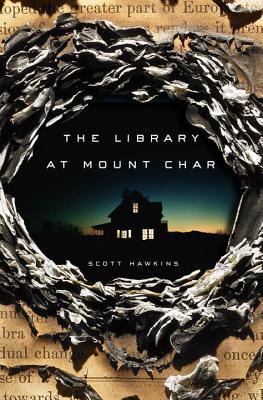 Genre: Fantasy, Horror
Publisher: Crown Books (June 16, 2015)
Author Information: Website | Twitter
Tiara’s Rating: 4.5 of 5 stars
Goodreads | Amazon | Barnes & Noble
Full Disclosure: A review copy of this book was provided to me by Crown Books via Netgalley. I would like to thank the author, the publisher, and Netgalley for providing me this opportunity. All opinions expressed from here forward are my own.
First a brief warning. This book is violent, including some violence against children, and has many gross depictions that some people might not be able to stomach. I wanted to acknowledge that before I attempted to talk about this story. Your mileage may vary.
I wish I could say this was an easy book to sum up, but it’s not at all. I’ll try my best, but I fear what I have to say about this book won’t be adequate enough in capturing the imagination and ingenuity that went into creating this story. As a long time fan of horror (for a good number of years I exclusively read only horror books, even forsaking my beloved science fiction), you often see me say in my horror reviews that nothing scares me much anymore. I’m too desensitized to most things that appear in horror stories. However, there are stories that can still leave me unsettled, and any horror story that can leave me with that disturbed, bothered feeling, that feeling that makes me turn the story over and over in my mind, that feeling that keeps me up at night pondering the story, is a success. This book left me unsettled. This book is a success. I haven’t had a story that’s made me feel that in a long time. The closest story that has made me feel that way recently was PKD’s Ubik, and it’s not necessarily a horror story and it didn’t make me ponder it anywhere on the level that I’ve pondered this one.
This story follows a woman, Carolyn. Many years ago, when she was still a child, Carolyn and her “siblings” were adopted by a man named Father during a moment they call Adoption Day. It was the day all their parents died, and they became his. Afterwards, each child is tasked with learning to master a catalog. These catalogs have information ranging from languages to advanced husbandry to the art of war. They aren’t allowed to share the contents of their catalog with one another, except where practical application allows it. Carolyn is a linguist who has mastered over fifty languages. Father is believed to be the master of all the catalogs. Father is powerful and cruel, but now he has gone missing. They are far removed from society, and while they live in the United States, they see themselves as being different from “Americans” once Father’s disappearance forces them back into society to find answers. While Father’s children certainly want to know what happened to him, more out of fear than true devotion it seems, a bigger opportunity presents itself. Who will take over the library? Who will step up and become essentially a god?
This is a dark book peppered with moments of comedic situations often juxtaposed side by side with its savagery. There is one character known for his immense cruelty, and often his scenes are filled with brutality, but despite the carnage he orchestrates, there’s always one moment where someone still has time to think about the absurdity of the purple tutu he wears without realizing these men and women are so far out of touch with society they don’t realize they’re not actually blending in. Their ignorance of how the world works, a world they’ve long stopped understanding, often makes for these “haha” moments, but you’re quickly reminded that these women and men are dangerous, predatory even, as this is how they’ve been raised by Father. This book largely follows Carolyn and her exploits, and Carolyn proves to be naive and calculating all in the same breath. One moment you’re pulled toward her, and the next you’re pushed away. As compelling as Carolyn is, though, she couldn’t have carried this story alone. She’s supported by a bizarre menagerie of characters that really help to make this story engrossing.
This story has flowing, lyrical passages that are downright beautiful, and then can suddenly flip the script and give you such ugly, visceral words. And this works for this story. That’s part of what makes the story fascinating. This is one of those books that will have you flipping back in the story reevaluating what you previously learned as more and more of the picture is painted for you. It’s strange, weird, barbaric while being a parable of sorts that echoes the sentiment that “absolute power corrupts absolutely.” In fact, there are probably hundreds of overarching themes you could pull from this story. It may even leave you with an overall feeling of “What the fuck did I just read?” I’m still analyzing this book and the ending, and I feel like I’ll eventually end up rating this higher after I’m able to make sense of some things. This will probably be a book I pick up again and again, a book I’ll pluck something new from every time I read it. Well played, Mr. Hawkins.

Audiobook Review: The Book of Speculation by Erika Swyler
Posted on July 4, 2015 12 Comments
 Genre: Fantasy, Magical Realism, Mythology
Publisher: St. Martin’s Press (June 23, 2015)
Author Information: Twitter | Website
Tiara’s Rating: 3.5 of 5 stars
Goodreads | Amazon | Barnes & Noble
Narrator: Ari Fliakos | Length: 11 hrs and 42 mins | Audiobook Publisher: Macmillan Audio (June 23, 2015) | Whispersync Ready: Yes
Full Disclosure: A review copy of this book and audiobook was provided to me by the publishers. I would like to thank the author and the publishers for providing me this opportunity. All opinions expressed from here forward are my own.
Simon Watson is a librarian living in a house on the edge of a cliff over the sea, a cliff that is crumbling into the waters threatening to take the house with it. On top of that, the house is structurally unsound after years of neglect partly due to his father never keeping up the house even before his mother’s death and partly by Simon’s own willful ignorance of the upkeep needed to maintain a house in that situation even after his father died. Simon receives a book in the mail from an antiquarian named Martin Churchwarry who tracked Simon down after reading his grandmother’s name in an old carnival ledger he acquired. Simon learns that a strange, tragic trend occurs with the women of his family. They all commit suicide by drowning before the age of thirty on July 24th including his own mother. When Enola, Simon’s estranged sister and tarot reader for a traveling circus comes home, Simon has ten days to solve the mystery surrounding the deaths of the women in his family and break the curse that surrounds them.
This book plays around with the Slavic myth of the Rusalka, a type of water nymph. At one point, the Rusalka was a symbol of fertility, but in later years, they became malevolent in stories. They’re believed to be the result of a woman committing suicide by drowning or being violently murdered by drowning. Since their life was fated to be a full one, they continue their lives as Rusalka, luring men to their deaths. However, this is not their sole way of being created. I did a Google search to get all this information since I love learning about new mythology, but the book does a fair job of painting a portrait of the tragic story of the Rusalka. I would call this fantasy, but it is very light fantasy with the magic realism being much more pronounced throughout the story. Much like Mandel’s Station Eleven, this is one of those books that defies it genre by being moving and poetically written. There’s so much going on with family secrets, betrayals, old pains, and how one’s past can come together to be an almost self-fulfilling prophecy. It’s a painful read with so many wins being punctuated by devastating defeats that shapes the history of not only the Watson family but the families that are interconnected with the Watsons.
I probably would’ve rated this book much higher, but I did find it a little hard to connect with the characters, and while this book worked largely on the idea of a thread weaving together many lives, it still felt too coincidental rather than feeling like it smoothly pieced together the many puzzles making up a history that was larger than any of the characters could imagine. I cared more about the story being told about their ancestors than the modern day tale that was unfolding. However, Ari Fliakos was simply amazing. At first, I didn’t know if I was going to like the tone he used for Enola, but as I continued to listen and learned more about the character, that clipped, sarcastic tone he used for her fit the eccentricity of her character well. In fact, he did a wonderful job of making all the characters feel so distinct from Churchwarry’s jolliness to Peabody’s larger than life magnetism to Evangeline’s pensive wistfulness to Frank’s simple straightforwardness. I even loved his southern accents which sounded mostly right and used that softened twang just the way it’s supposed to be. Where I might’ve just rated this 3 stars, Fliakos’ narration was beautiful and swayed some of my opinion on its rating.
The Book of Speculation is a haunting, poetic story that shows how wants, heartache, and wishes can breathe intent into actions that were done simply out of love, how generations can fall into those same cycles until someone tries to break the “curse.” This book has just the right amount amount of myth, magic, and realism that can cause its readers to ponder the ideas presented, and if I’d had the chance to care a little more about the characters that Swyler introduced me to, this book would’ve definitely been a home-run for me.
Story:  | Performance: | Overall:
Mogsy’s Bookshelf Roundup: New Books & What I’ve Read
Posted on July 4, 2015 26 Comments
Bookshelf Roundup is a feature I do every two weeks where I talk about the new books I’ve added to my library or received for review, what I plan to read soon, and what I’ve finished reading since the last update. Sometimes I throw in stuff like reading challenge updates, book lists, and other random bookish things.
Received for Review

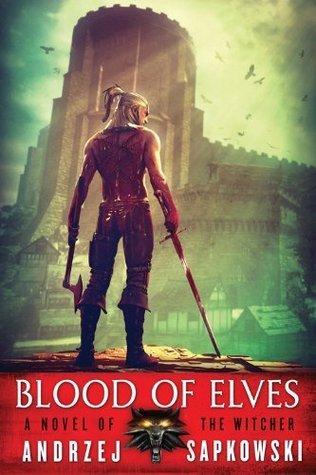
Blood of Elves by Andrzej Sapkowski – Audiobook CDs, with thanks to Hachette Audio. I love “The Witcher” so I was thrilled to get this from the publisher. What made me gawk was that the box contained 9 discs! Yikes!
Long Black Curl by Alex Bledsoe – Hardcover, with thanks to Tor. The publicist who contacted me about this book had such awesome things to say about it, I just had to check it out. I’ve never read anything by Bledsoe either, so I’m looking forward to it.
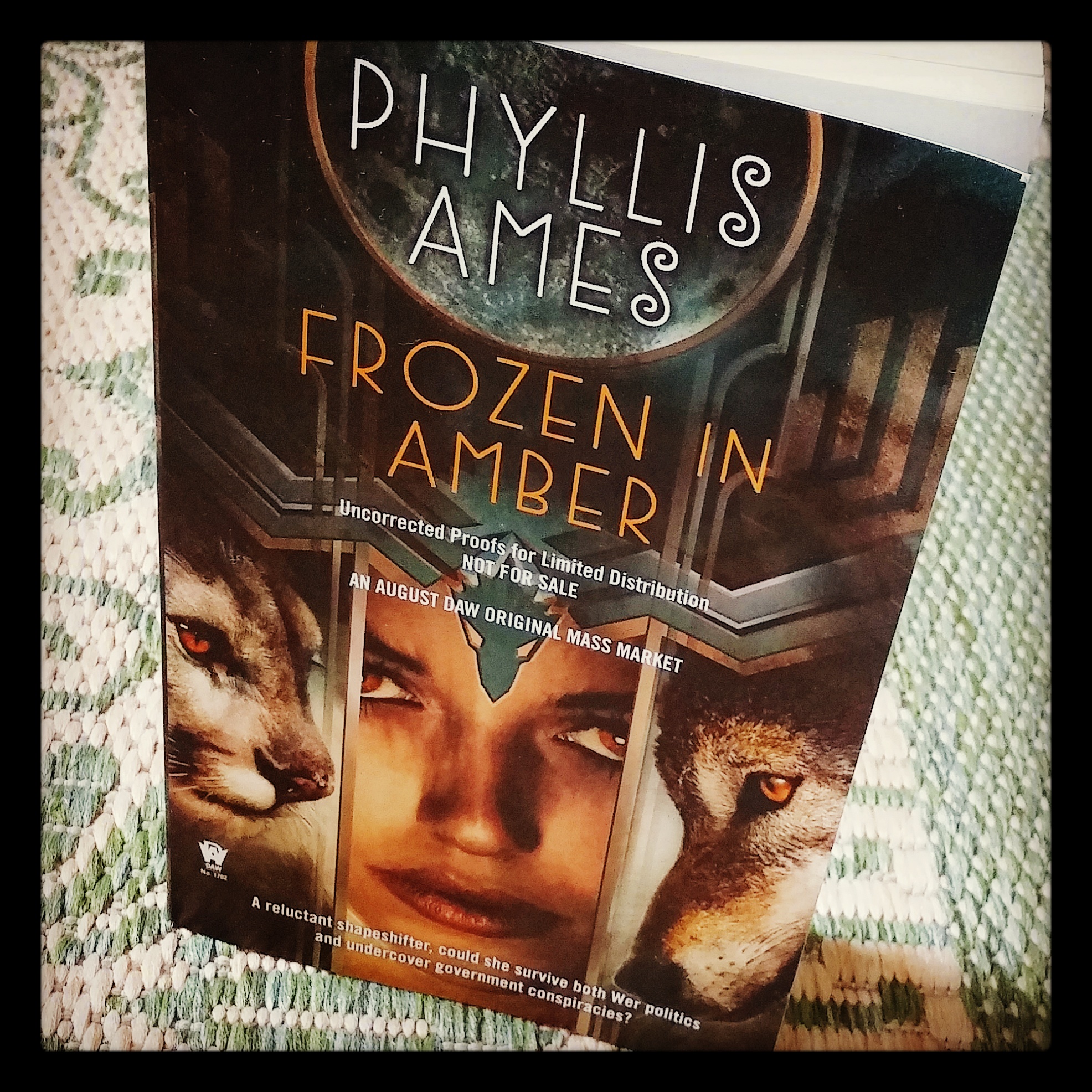
Frozen in Amber by Phyllis Ames – Print ARC, with thanks to DAW. An unsolicited copy of this arrived a couple weeks ago, back when I still could not find a description for it anywhere online. But now there’s more information and I think it sounds fascinating. It had me at shapeshifting “WerCougars”.
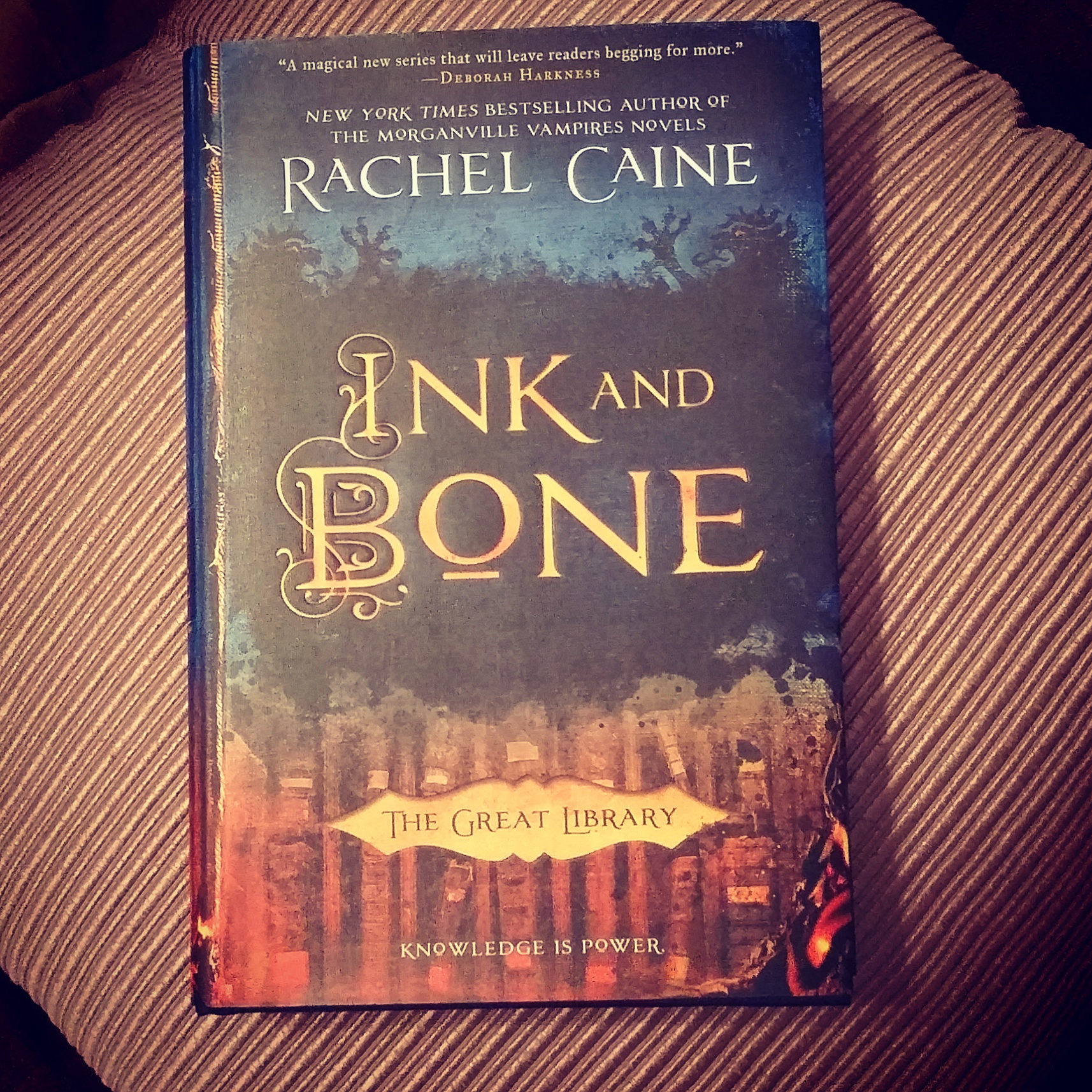
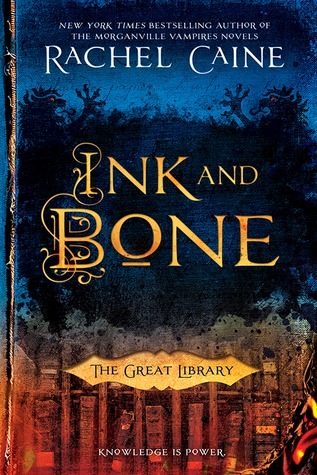
Ink and Bone by Rachel Caine – Hardcover, with thanks to NAL. I’d heard fantastic things about this book from two bloggers whose opinion I really respect; Lisa @ Tenacious Reader and Tammy @ Books, Bones & Buffy both gave it high marks, so I jumped on the opportunity when the publisher contacted me about it.
The Child Eater by Rachel Pollack – Paperback, with thanks to Jo Fletcher Books. A care package from the UK came last week containing this little gem. I think this is the upcoming paperback edition from JFB, and I’ve already heard some good things about the book from folks who read it when it was first published last year. Definitely looks interesting.


Half a War by Joe Abercrombie – eARC with thanks to Del Rey. The third book of the Shattered Sea trilogy! I can’t wait to get to this one!
The House of Shattered Wings by Aliette de Bodard – eARC via NetGalley, with thanks to Roc. A very unique looking fantasy, this one sounded intriguing enough that I decided to give it a shot.
Nightlife: As The Worm Turns by Matthew Quinn Martin – eARC via NetGalley, with thanks to Pocket Star. This is the sequel to Night Life, though the edition I got is actually an omnibus containing both books plus a novella. Thanks to the wonderful interview Wendy did with Matthew earlier this week, I’m even more excited about this.
Press Start to Play edited by Daniel H. Wilson and John Joseph Adams – eARC via NetGalley, with thanks to Vintage. This book was featured for my Waiting on Wednesday this week so you already know why I want to read it. Very happy my request was approved!
The Red: First Light by Linda Nagata – Audiobook, with thanks to Audible Studios. Saga Press is re-issuing Nagata’s The Red books this year and looks like it’s getting the audio treatment at the same time! I requested the audiobook because the story seems like it would be great to experience in this format.
Purchased Audiobooks:
I’ve been pretty good with reining in my book buying habits so far in 2015, but I just can’t resist audiobooks. They are so easy to slip into my schedule when I’m otherwise unable to sit down to read print books, so I don’t mind splurging on them once in a while. Plus, WhisperSync deals make it so worth it.
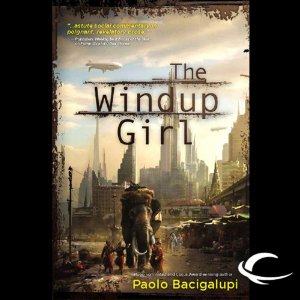
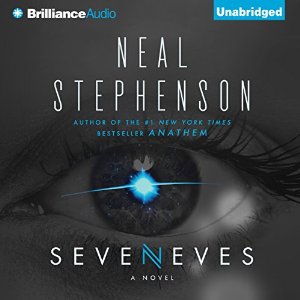
Nova by Margaret Fortune – I regretfully had to pass this book up for review when I got an email about it, since my June was just too busy. But based on some of the good things I’ve heard about it, now I wish I’d made the time. Gonna have to listen to this one soon.
The Windup Girl by Paolo Bacigalupi – Ever since I read The Water Knife, I’ve taken a new interest in everything Bacigalupi has written. I am especially curious about The Windup Girl.
Seveneves by Neal Stephenson – Neal Stephenson’s books can be a challenge, and indeed that has been my experience so I didn’t really have much interest in this one when it came out. However, a friend of mine loved it and insisted that I absolutely must pick it up. At 800+ pages, I figured the only way I could ever get to this one in good time is via audio – and even that one runs almost 32 hours.
What I’ve Read Since the Last Update
This past fortnight has been quite productive in terms of reading and reviews. Keep an eye out for my reviews of these books in the coming weeks, though a bunch are up already: Alive, The Galaxy Game, Blood of Elves and The Price of Valor.
Highlighted Reads:
Holy crap, you guys. Ink and Bone is AMAZING. That one’s definitely going to find a top place on my end-of-the-year list.
Time Salvager was a blast too, a great action-filled time travel book for the summer. Review coming in a few days.

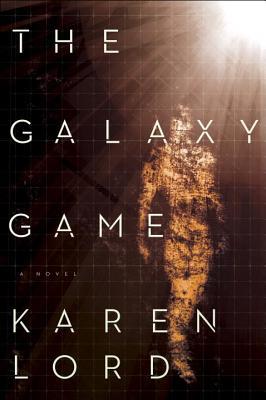

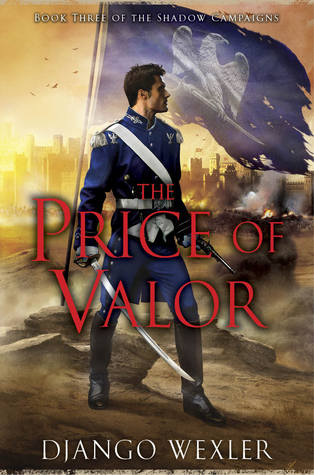
Have you heard of or read any of the books featured in this week? What looks interesting to you?
Book Review: The Price of Valor by Django Wexler
Posted on July 3, 2015 13 Comments
A review copy was provided by the publisher in exchange for an honest review. All opinions are my own.
The Price of Valor by Django Wexler
Genre: Epic Fantasy
Series: Book 3 of The Shadow Campaigns
Publisher: Roc (July 7, 2015)
Author Information: Website | Twitter
Mogsy’s Rating: 4.5 of 5 stars
The Price of Valor is the third book of The Shadow Campaigns, of which five books have been planned so we are officially now past the half-way point. An epic fantasy series is often at its most precarious when we get to this tricky place between the introduction and the ending, where arguably the best action and excitement is usually packed. However, it appears Django Wexler is not content to slow things down or let his story languish. Not only does he succeed in carrying through the momentum for the rest of the series, he’s also transformed this middle book into an important turning point.
So far, each installment of the series has given readers something different. Book one The Thousand Names threw us into the middle of a war and treated us to many scenes of large-scale conflict and sweeping battles. Book two The Shadow Throne reined in the scope, concentrating instead on the politics and subsequent revolution in the capital of Vordan. Now book three The Price of Valor is like an amalgamation of both, so that half the narrative remains in the city in the wake of the successful uprising, while the other half takes us back onto the bloody battlefields.
In the wake of her father’s death, Princess Raesenia is now the queen. After an attempt is made on her life, she suspects that the new leader of the Deputies-General is responsible, and goes undercover to search for evidence. Remaining behind in the capital as the representative of the army, Colonel Marcus d’Ivoire finds himself teaming up with the young queen, tasked to protect her and to help her root out those who want her dead. Little does he know though, Raesenia might have a secret or two up her sleeve which would actually make her rather hard to kill…
Meanwhile, Winter Ihernglass is back out in the east, trying to win the war for General Janus bet Vhalnich. She has been promoted and given her own regiment to command, including the new all-women company called the Girl’s Own, though ironically Winter’s own gender still remains a secret to the army, save for a few individuals who are in the know. Among those who are aware of Winter’s secret is her lover Jane, whose hatred for the contingent of Royals in the regiment is making Winter’s job very difficult. Lurking behind the scenes are also the agents of an ancient order called the Priests of the Black, whose Penitent Damned will harness the power of their demons to do whatever it takes to stop the Vordanai army and retrieve the priceless magical artifact known as The Thousand Names.
I was so pleased to see that the military action is back in full force for this sequel. Taking a break to delve into political intrigue and rebellion in book two was a nice change of pace, but I admit my interest mostly lies in the war campaign and the huge battles. Wexler doesn’t disappoint, throwing in plenty of heart-racing encounters with the enemy. Reading some of Winter’s chapters was a little like watching a session of wargames play out across a vast gameboard, with troop actions directed by a shrewd chessmaster who is aware of every piece’s location at all times. In point of fact, these qualities closely describe Janus bet Vhalnich, the military genius whose presence is actually quite limited in the first half of the novel, which made the wargames analogy that much more apt in my mind.
The general’s craftiness is not lost on Jane either, and Winter’s storyline is also made more interesting by the increasingly strained relationship between the two women. Winter’s loyalties are put to the test when she is made to choose between the two things she holds most dear, and I have to hand it to the author for not making that choice trivial. There’s a lot of development to Winter’s character in this book, and I respect her all the more for the difficult decisions she’s had to make about her lover, whom I’ve taken to calling “Insufferable Jane” due to all the problems she’s caused (and that’s already one of my more polite names for her). The road to the eventual camaraderie between the Girl’s Own and the Royals was also fun to read, and made for a good side plot to lighten up the otherwise heavy narrative focused on intense fighting and the resulting casualties.
Still, I was wrong when I thought the best part about this book would be the military action, because what surprised me was how much I enjoyed Marcus and Raesenia’s storyline back in the city of Vordan. Raesenia really grew on me back when she was introduced in The Shadow Throne and I was happy to see her return as a POV character in this one. To see her partner up with Marcus – who has always been my favorite character in these novels – was a real treat. Together they make a great team (and dare I hope, could Wexler be planting the seeds of something more happening between them in the future?) and their investigations into the corrupt government saw their Vordan chapters culminate into one hell of an epic showdown with the Patriot Guards and the Penitent Damned.
Speaking of which, we’re definitely making some real headway into the overall story. I’ve been wondering since the end of the first book when we’ll see some major advancement into the conflict caused by the discovery of The Thousand Names, and when the Black Priests will show their hand. Looks like this book is where it all happens. I did say The Price of Valor is a turning point, and you’ll see why. Even after three books, the impact of the stories have not dulled a single bit.
Needless to say, I’m very excited for the next installment. It’s easy to get caught up in The Shadow Campaigns. Django Wexler’s riveting world of dark magic and martial action featuring strong characters – and especially strong women – is one I’ll want to visit again and again. Military fantasy at its finest.

More on The BiblioSanctum:
Review of The Thousand Names (Book 1) | Review of The Shadow Throne (Book 2) | Review of The Shadow of Elysium (Book 2.5) | Guest Post by Django Wexler
Audiobook Review: Nine Princes in Amber by Roger Zelazny
Posted on July 3, 2015 7 Comments
 Genre: Fantasy
Series: Book #1 of The Chronicles of Amber
Publisher: Avon Books (April 1970)
Author Information: Goodreads
Tiara’s Rating: 3 of 5 stars
Goodreads | Amazon | Barnes & Noble
Narrator: Alessandro Juliani | Length: 5 hrs and 31 mins | Audiobook Publisher: Audible Studios (July 31, 2013) | Whispersync Ready: No
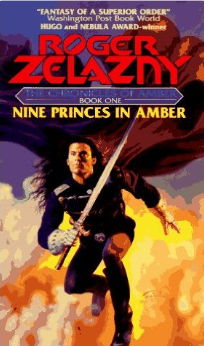
That cover. The 70s and 80s must’ve been a time to be alive if you were SFF author. Despite how I may feel about the books that came from that era, a unique crop of stories emerged from that time. Thanks to a recent Audible sale I was able to snag the first book in Roger Zelazny’s The Chronicles of Amber series, which came recommended, from some people. I figured this could serve as my cautious first step into the series without committing to the omnibus.
A man, Corwin, wakes in a hospital with no recollection of his memories. He knows that he’s been in a car accident that should’ve been lethal. However, he doesn’t know why or how the accident occurred. He knows that the medical staff in the facility he’d been confined to had been using too much sedative to keep him under for some reason. He learns that his sister has been paying for his stay, so it’s with this knowledge his adventure begins as he tries to remember who he is and complete the path to power that he’s begun. Corwin is an exiled prince vying for control over his homeland Amber, a version of earth from which all other earthly realities are imperfectly copied. Their father has been missing for years and thought dead. Only a few brothers are believed to have a reasonable chance of claiming the throne, including Corwin. The other siblings act as pawns in the game, changing alliances as needed, giving support to one brother over another as it suits them.
When I started reading this, I wasn’t sure if I subscribed to the reasoning behind all this infighting between the siblings. On one hand, having the king’s children fighting over his throne is to be expected, but on the other hand, after a few revelations, I started asking, “To what end?” After about midway through the book, it started to feel like the real reason they’re fighting over the throne is because of the status symbol it’ll give them. I’m not sure if I even believe it’s worth all the effort they’re expending on it and each other. It’s petty and immature, and maybe that’s what Zelzany was going for–to show the fickle nature of these characters more than trying to get me invested in this story about a king’s abdicated throne and his warring children. People have fought for much less than a throne.
I don’t think I ever became too attached to any character, least of all Corwin. Okay, maybe that’s not completely true. I do think the ending did wonders in making me feel like I could like Corwin more if I kept reading. Most of Corwin’s siblings, aside from a few, aren’t in the story long enough for them to matter to me. I found elements of the story more interesting than the struggle between the characters such as the explanation of the Pattern, learning more about the trumps (playing cards), the shadows, etc. Zelazny really excelled there with his take on the magic of this world. Most of my rating comes from the fact that I liked the ideas he used in the story, and I can actually see why writers are inspired by his work in that sense.
The narration. Let’s see how I can condense this without falling into giggles. I’d read that these audiobooks are an improvement over Zelazny’s own self-narration of the story that existed for years. While I certainly have no quarrel with Alessandro Juliani, I can’t say that I cared for his narration of this book. It wasn’t terrible exactly. It just seemed strange, and it didn’t do the story any favors either. Some of the dated language sounded so stilted and silly coming from Juliani. His narration made it hard for me to take this story seriously, and that peppered my overall view of this book.
I’m still on the fence about this one. Admittedly, I probably should’ve gotten the omnibus and just read the whole thing rather than taking it bit by bit like this. While I spent much of this book with one skeptical eyebrow raised, I did like the ending considerably. It felt like the book had finally reached a comfortable stride and I was just beginning to really get lost in the story when this first book ended, which means I’ll probably be reading the next book soon.
Story: | Performance:  | Overall:
Book Review: Splintered by Jamie Schultz
Posted on July 2, 2015 12 Comments
A review copy was provided to me by the author in exchange for an honest review. All opinions are my own.
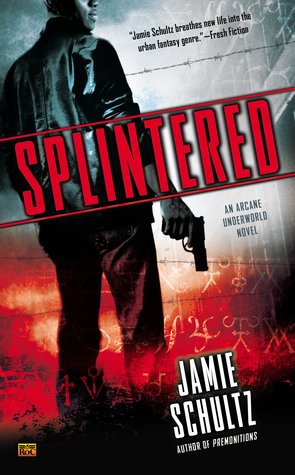
Genre: Urban Fantasy
Series: Book 2 of Arcane Underworld
Publisher: Roc (July 7, 2015)
Author Information: Website | Twitter
Mogsy’s Rating: 3.5 of 5 stars
The Arcane Underworld series has it all. Demons. Fanatical cultists. Dark magic. Now throw in a group of down-on-their-luck thieves working for one Enoch Sobell, possibly the scariest and most powerful crime lord that ever lived. So what does it tell you when even the big boss man is rattled by a new threat entering the playing field?
If you like your urban fantasy dark with a touch of horror, Splintered and its predecessor Premonitions will be perfect for you. This sequel picks up shortly after the events of the first book, following the lives of Karyn Ames’ crew in the wake of their big heist to steal an ancient occult artifact. Ever since Karyn’s affliction has taken her out of the picture though, Anna Ruiz has stepped up to lead the gang, hoping to help her friend break free of the debilitating visions that have cut her off from reality.
Enoch Sobell, however, has further plans for the crew. No longer are Anna and her friends carrying out mere thefts for the crime lord. His demands have gotten more disturbing and extreme in recent weeks, as evidenced by their latest job, which involves shadier deals like kidnapping. But what they didn’t count on is that their target has a loyal following of acolyte mages who will stop at nothing to get him back. Now Anna, Genevieve and Nail find themselves in way over their heads, tangled in a web of violence and blood magic.
Like the first book, this one also features a great mix of urban fantasy, mystery and psychological thrills, but it takes off in some new directions as well. I love heist books, which is why I enjoyed Premonitions so much, but as it turned out, there’s a lot less thieving action this time around in Splintered. Still, the story makes up for this by being much darker, which suited me just fine. Many parts of the book even bordered on horror, including a bunch of messy scenes that featured demonic possession, the summoning of nightmarish monsters, as well as the brutal consequence of black magic.
Also, now that Karyn has gotten lost in her hallucinations, Anna has taken over as the head of the crew as well as de facto main protagonist. As a result we see a lot less of Karyn, which was slight disappointment since she was my favorite character in book one, as well as the member of the crew that I found most interesting. Because of the frightening and unpredictable nature of Karyn’s visions, Premonitions was a real head-trip, and I thought Jamie Schultz did a really good job giving readers a glimpse into the scary world that is her mind. Sadly, we lose much of that in this book.
The bright side though? This development gives us the opportunity to know the other crew members better. And what fascinating characters they are. Anna is doing her best to lead the group, but is finding that hard to do with Sobell breathing down her neck. Karyn’s plight is also always on the back of Anna’s mind, quite possibly affecting her job as well as her relationship with fellow thief and girlfriend Genevieve, whose loyalties are still on the fence. As the newest member of the crew, Gen is still a big question mark for me. I’m not willing to trust her fully just yet, and after this book things should get even more interesting.
But perhaps the biggest star of the story for me is Nail, the crew’s muscle and the guy who brings the big guns. In spite of this, he clearly has a soft side. Nail is the kind of man who would do anything for family – in this case, that’s his crew as well as his older brother DeWayne, whose gambling problem has gotten him in debt with the wrong people. For such a minor character, DeWayne stole the show for the brief moments he appeared, and I loved his interactions with Nail. I really hope we’ll see more of him in future books.
Now, here’s the deal: Splintered was a great sequel. But as much as I enjoyed it, I think I still have to give the edge to the first book. I love the darker, grittier feel of this book but I just have to confess, I simply love heist stories way too much, so Premonitions will always have a special place in my heart. I also thought Splintered faltered with a plot that was difficult to follow at times, especially when I was trying to figure out how all the different plot threads – the search for Karyn’s cure, Van Horn’s kidnapping, and Sobell’s job on Mona Gorow’s house, etc. – were supposed to fit together. In the long run though, I suppose it mattered little because the conclusion tied it all up, not to mention the final show down was all kinds of awesome.
With the stakes remaining this high, you can count me in for book three – especially if it means getting to find out whether or not Karyn gets back in the game. I’m burning for more dark urban fantasy in my reading, and Jamie Schultz definitely knows how to bring it.

More of Arcane Underworld on The BiblioSanctum:
Review of Premonitions (Book 1) | Guest post by Jamie Schultz
Tough Traveling: Independence Battles
Posted on July 2, 2015 9 Comments


The Thursday feature “Tough Traveling” is the brainchild of Nathan ofReview Barn, who has come up with the excellent idea of making a new list each week based on the most common tropes in fantasy, as seen in (and inspired by) The Tough Guide to Fantasyland by Diana Wynn Jones. Nathan has invited anyone who is interested to come play along, so be sure to check out the first link for more information.
This week’s tour topic is: Independence Battles
The good fight. Casting of the chains of tyranny! No one in fantasyland refuses the call of the good fight. And what fight is more important in fantasyland than FREEDOM?
Mogsy’s Picks:
Tough topic this week, but I managed to find a few perfect fantasy picks (and one sci-fi) that feature significant battles between freedom-seekers and the powerful empires/outside forces that want to occupy, oppress and conquer them. For extra credit, all of these are in some way inspired by real-life historical events or famous figures, which I found interesting.

A warlord and a bandit join forces to overthrow an emperor. Based on the historical events of the Chu-Han Contention, the interregnum between the fall of the Qin Dynasty and the rise of the Han Dynasty, The Grace of Kings retells how a tyrant unified a land by conquering all the major states and established an empire, but his oppressive rule led to an uprising and the subsequent splitting of the territory into many free kingdoms again.
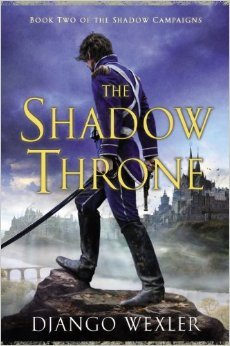 The Shadow Throne by Django Wexler
This book two of The Shadow Campaigns series is all about the fight for independence. Inspired by the events of the French Revolution, the story features a city on the edge of rebellion, as those who want to see Vordan free from the clutches of Borel and Duke Orlanko clash with the Borelgai supporters. Bloody battles are waged on the streets, though a lot of the fighting is also done verbally in places like palace chambers, university classrooms, common taprooms and other places where dissidents gather.

Clash of Iron is about war. Lots and lots of war. Lowa has just taken over as Queen of Maidun, unfortunately just in time to meet a massive invading Roman army coming from Gaul! The British tribes are thrown into disarray as Julius Caesar, the Roman’s military genius, sets his sights on the Isles. Instead of banding together to fight for their freedom and independence from Rome, the tribes end up battling against each other. How will they manage to form a united front against the conquerors?
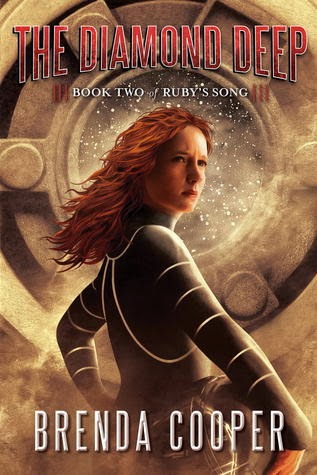 The Diamond Deep by Brenda Cooper
Ruby Martin sought freedom for herself and those she loved in The Creative Fire, and she continues fighting the good fight in The Diamond Deep. Her enemies are more numerous, better armed and possess greater resources, but her passion for freedom and equality burns hot and she will not stop until she succeeds. Brenda Cooper has stated that Evita, the musical about Eva Perón, was the main inspiration for the book’s character and story.

Loosely based on Renaissance Italy and the era of its warring city-states, Tigana takes place in an area known as the Peninsula of the Palm, a landmass made up of nine provinces led by rival noble families. They squabbled and fought so much that two conquerors from larger kingdoms were able to swoop in and subjugate them in their weakened state, splitting the peninsula down the middle. Characters in the novel fight to restore freedom to the Palm.
Tiara’s Picks:

I have been waiting to use this Independence Day image for a year now. 😛 Since I’ve consumed a tremendous amount of military science fiction media, my list this week is all military science-fiction with a focus on independence battles. That means I get to use two of my favorites (listed in the first two positions) for this week’s topic.
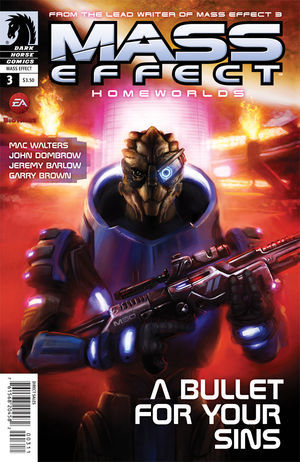
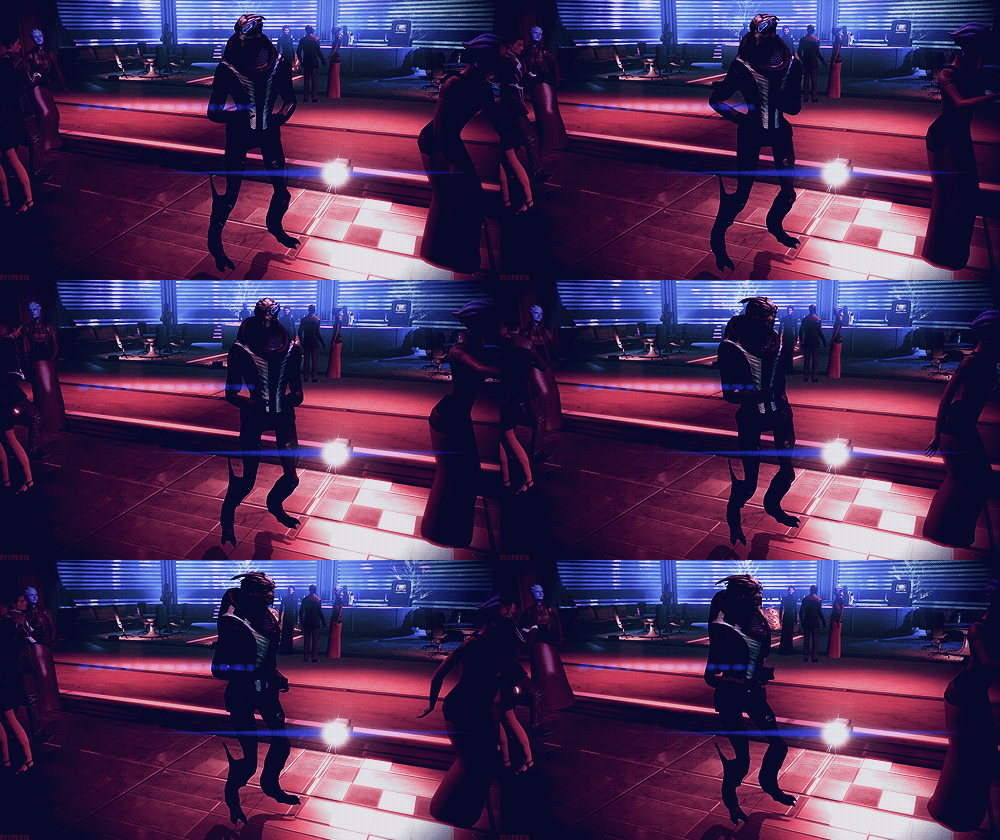
You think I was going to let this topic pass me by without using Mass Effect for it? This also gave me an excuse to use this picture of Garrus from one of the comics. When the galaxy is invaded, there’s only one person that stands between the galaxy and total annihilation, Commander Shepard. There’s destruction, chaos, mayhem… Also, dancing Turians. If I have to play a dating sim, I want my dating sim to have some military science fiction in it.

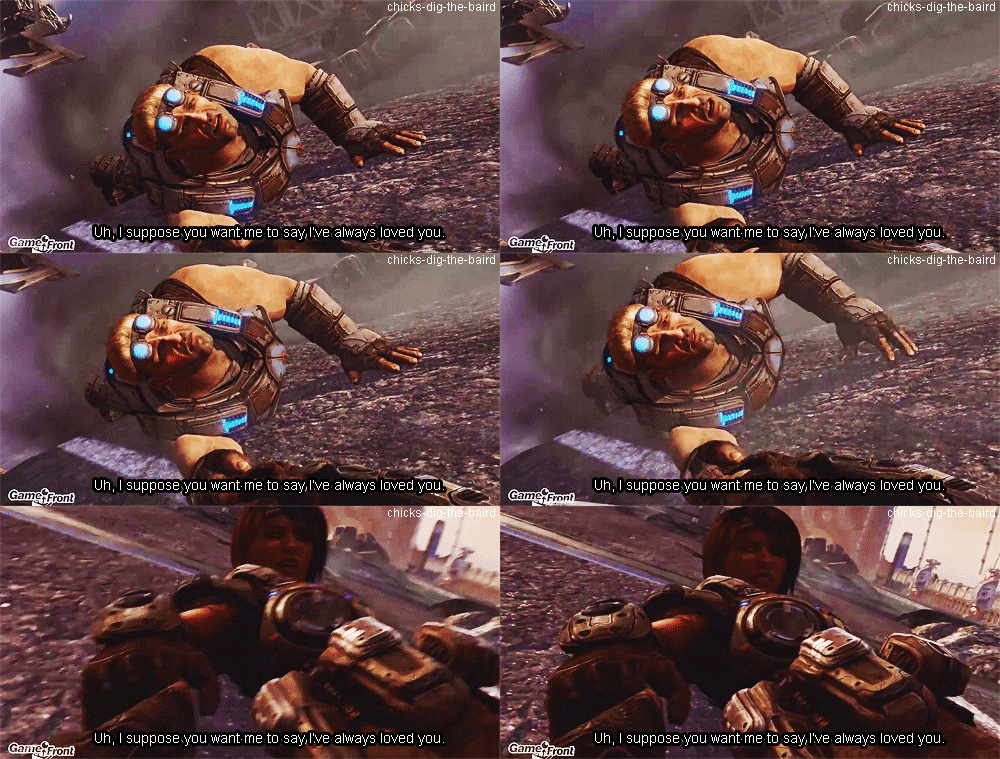
On a more serious note, I have Gears of War to fill in the part of me that wants a hard-broiled military science fiction game, and I’ve been enjoying how the novels have been filling in the blanks of the story. Humanity faces a subterranean reptilian species that decides to come out of hiding and claim their rightful place on the surface. They wipe out much of humanity, but the Gears dig in and give them hell for all their effort. Okay, there are some chuckles in it, too, but it’s a much more serious endeavor than Mass Effect. Also, have a gif of my OTP (one true pairing)… one of my any OTPs…
 The Legend of Zero by Sara King
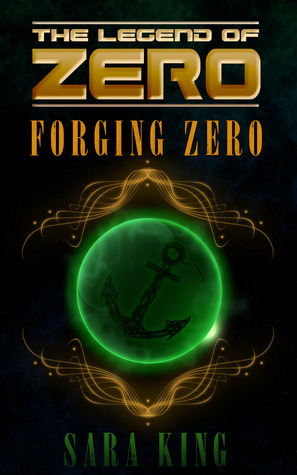
Earth has been invaded and is now subjugated to alien rule. The older children are sent to serve in a military force maintained by the aliens. 14-year-old Joe is drafted and receives a prophecy. He’ll be the one who will finally lead humanity back to its independence as long as he survives bootcamp.
 Legacy of the Aldenata by John Ringo
This is a large series of books with various miniseries type stories contained within it. It starts with the book A Hymn Before Battle and takes off from there. When humanity is contacted by a seemingly friendly race of aliens seeking their aid against their enemy, how can humans say no (after accepting gifts, of course)? Soon humanity finds itself in the fight of their life.
 All You Need Is Kill by Hiroshi Sakurazaka
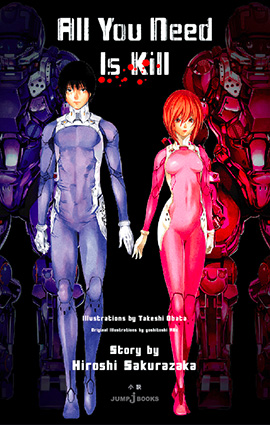
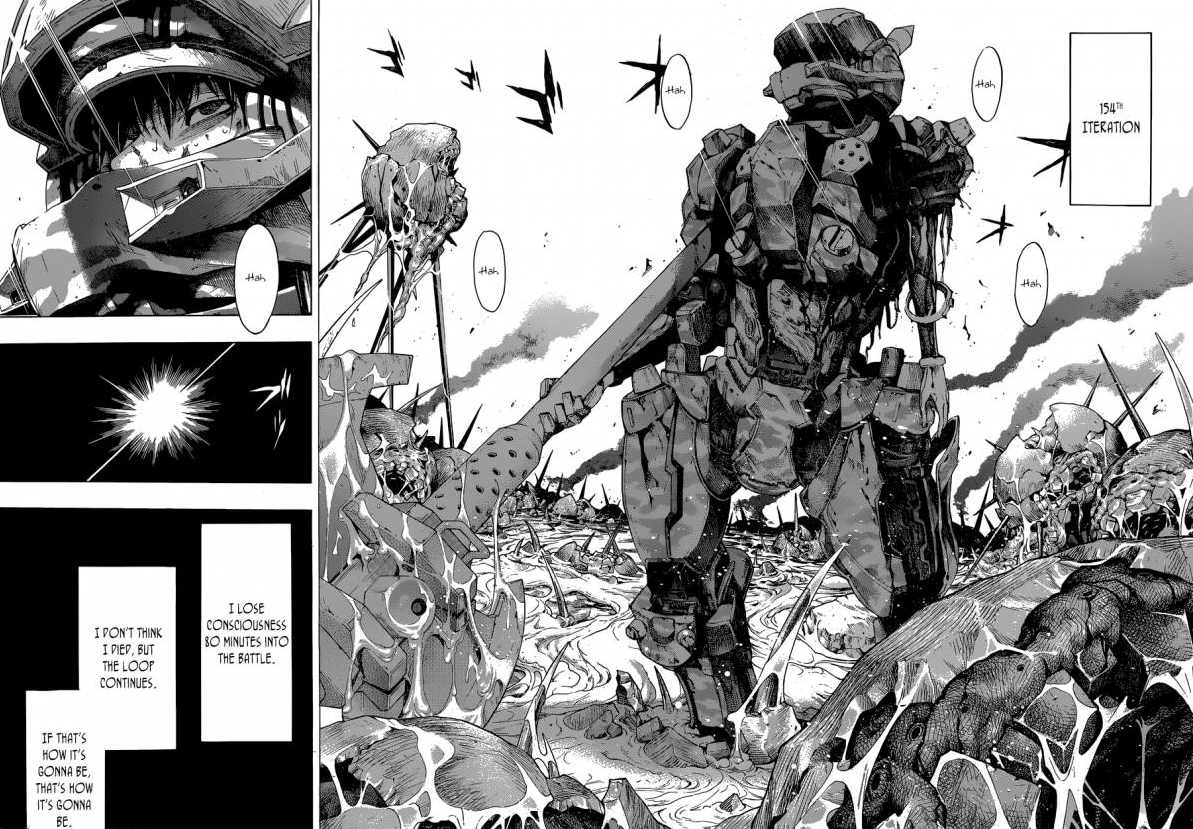
You can call this a more depressing Groundhog Day. Keiji Kiriya is a new UDF recruit sent to fight against a race of aliens called Mimics. However, he dies on the battlefield while fighting a variant species. Instead of moving on to the afterlife of choice, Keiji begins to relive that fight over and over again, dying each time. Each time, though, he comes back stronger, faster, smarter until he eventually learns what needs to be done to stop this loop and win the ultimate fight.
 The Lost Fleet by Jack Campbell
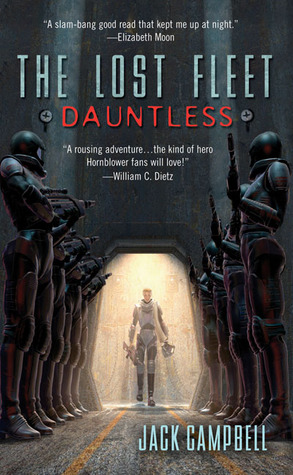
This is another large science fiction series starting with the book Dauntless. Two factions of humans. the Alliance and the Syndics, are at war with each other and have been for the last hundred or so years. An Alliance war hero is found in stasis from one hundred years earlier where he made a last stand against their enemies. Now, it’s time for him to wake up , live up to the stories, and stop a war once and for all.
 Attack on Titan by Hajime Isayama
Humanity is attacked by large, mindless humanoid creatures called titans. They range in size from 3 to 15 meters. While they look male and female, they lack reproductive organs. Their sole tasks seem to be to graze on humans. Hunted nearly to extinction, humans built walls to keep the titans out, and that worked for nearly a century, until one day…
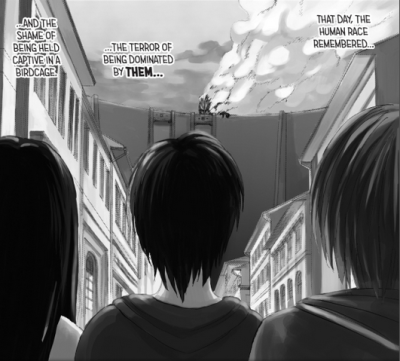
… the walls are breached by an aberrant titan. A group of young kids grow up to become soldiers tasked with fighting titans, the most dangerous job of anyone in the city. I usually don’t jump on hype trains, but this one I actually enjoy.
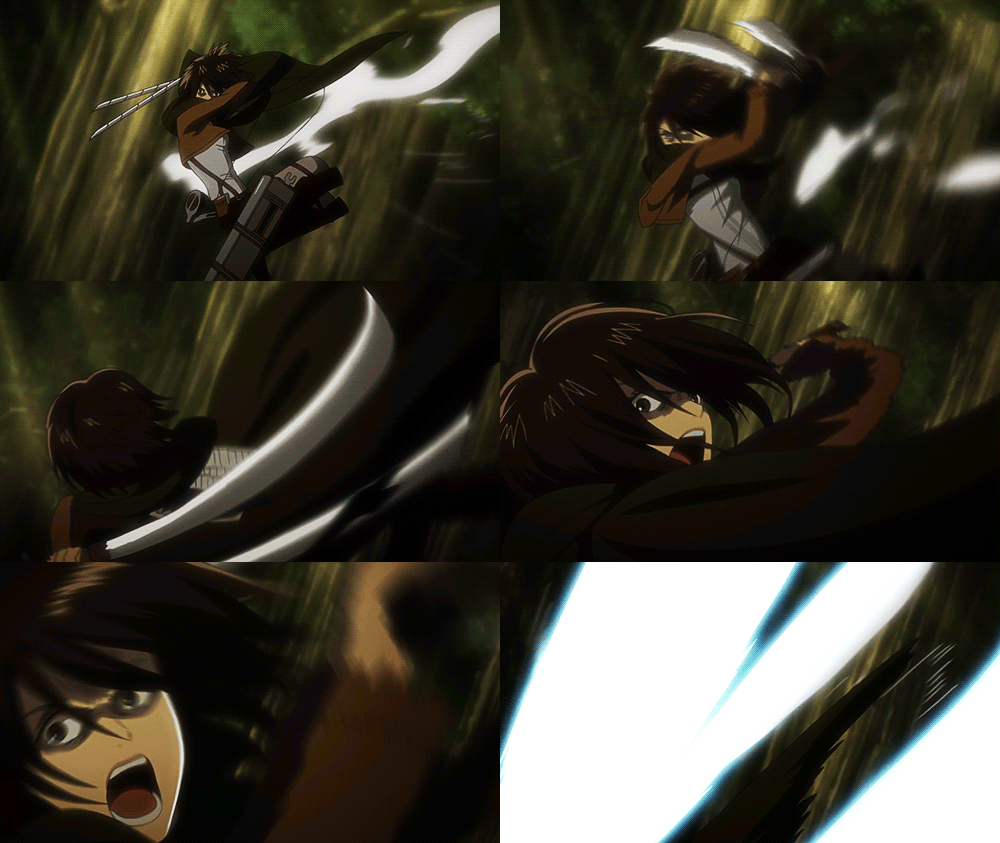
Now, here, have a gif of Mikasa, queen of everything.
Audiobook Review: Blood of Elves by Andrzej Sapkowski
Posted on July 1, 2015 18 Comments
A review copy was provided by the publisher in exchange for an honest review. All opinions are my own.
Blood of Elves by Andrzej Sapkowski
Genre: Fantasy
Series: Book 1 of The Witcher
Publisher: Hachette Audio (June 2, 2015)
Author Information: Website
Mogsy’s Rating (Overall): 4 of 5 stars
Narrator: Peter Kenny | Length: 10 hrs 55 min
I remember being thrilled when I discovered that The Witcher saga by Andrzej Sapkowski was available in audio format. As a big fan of the video games which were adapted from this series, I was of course interested in reading the books, but as waiting for the English translation from its original Polish already required a bit of patience, I never really dared hope that the audiobooks would be coming too.
As of this writing though, English versions of The Last Wish, Blood of Elves are now available in audio with The Time of Contempt coming very soon. In time it would be amazing to see the entire saga get the same treatment, and not least because I think the books stand up quite well in this format. They’ve chosen a very good narrator in Peter Kenny, whose voice lends itself perfectly to telling this type of story. His performance style can be described as almost “bard-like”, which really highlights the book’s opening scene in which the charming minstrel Dandelion holds a crowd rapt by reciting the heroic exploits of the legendary Witcher, Geralt of Rivia.
As a Witcher, Geralt is part of a society of enhanced fighters and monster-slayers. Taken as children, they are subjected to intensive training and a ruthless regimen of alchemical and mutagenic compounds intended to alter their physiology and prepare them to hunt their prey. Although Witchers are meant to remain neutral in matters of politics, Geralt has taken an orphan princess named Ciri into his protection, hiding her from spies and assassins sent to find her. He believes that she is the prophesied child meant to bring great change to the world, not only because of her royal heritage but also because of the magic that flows in her veins – the blood of elves.
The narrative follows Geralt and Ciri on various adventures. The young princess, taught sword fighting and other martial arts by Geralt and other Witchers, learns about supernatural monsters and how to kill them. She also begins training in magic with the sorceress Triss Merigold. But on the way to a school were Ciri will receive a more normal education, the party encounters all kinds of obstacles, including illness, encounters with monsters, Scoia’tael ambushes, and attacks from Nilfgaardian agents. As Ciri’s magical potential becomes more powerful, Geralt realizes he will need the aid of some friends and unexpected allies in order to continue protecting and training her.
It’s important to note that while Blood of Elves is advertised as the first of the series, it is technically preceded by two short story collections in terms of chronology: The Last Wish and Sword of Destiny. It’s not really necessary to read either before tackling Blood of Elves, though it would probably help fill in a lot of the background information. The book is very heavy on world-building elements, and while Geralt is arguably the star of the series, he doesn’t appear as much as you would expect. His character is often seen through the eyes of others, or is talked about in others’ perspectives. On top of this, the switching points-of-view and various flashbacks may make this story feel confusing and disjointed. Having read The Last Wish as well as played The Witcher video games might have familiarized me with a lot of the characters and the setting because I managed to follow without getting too lost, but it might pose a challenge for readers going in blind. It’s probably worth considering The Last Wish as a starting point instead.
In spite of this, the plot was wildly entertaining. One can never be sure how much is lost in translation, but there is some humor that managed to come through. Also, the author sometimes employs an interesting storytelling style where entire scenes are almost completely made up of dialogue, and it often amazed me how much of the atmosphere and plot came through via conversation alone. Again, this is where Peter Kenny’s narration shines, because someone less skilled with differentiating voices would probably have a lot of trouble pulling off these scenes.
Sapkowski definitely has a flare for writing adventure and action, even experienced through the lens of translation. The pacing is strong, despite various breaks in the plot to focus on character development or to explain the political situation. The highlights were of course the scenes of Geralt fighting off enemies and monsters. The book does leave us hanging a bit, but this is after all the first full-length novel in the series and does spend a lot time establishing the premise and setting things up nicely for the next one, The Time of Contempt. I’ll have to seek that out very soon.
If you’re a fan of the games and can’t get enough of Geralt of Rivia, I highly recommend these books. They could also be good for fantasy readers looking for a somewhat different kind of sword and sorcery. The translation is decent, but what I was really impressed with was the way the narrator read for this audiobook. Can’t wait to experience the rest of the series.
Story:  | Performance:
  | Overall:
Waiting on Wednesday 07/01/15
Posted on July 1, 2015 8 Comments

“Waiting On Wednesday” is a weekly meme hosted by Breaking the Spine that lets us feature upcoming releases that we can’t wait to get our hands on!
Mogsy’s Pick:
Press Start to Play edited by Daniel H. Wilson and John Joseph Adams: August 18, 2015 (Vintage)
Me, anticipate an anthology? I know, I couldn’t really believe it either. The short fiction format isn’t typically my thing but when I saw this collection of stories inspired by video games I just couldn’t resist. Not only am I a gaming addict, just take gander at that author line-up. We have talents like Andy Weir, Austin Grossman, Seanan McGuire, Holly Black and Hugh Howey featured on the cover, but inside there are even more names like Django Wexler, Ken Liu, Catherynne M. Valente, Cory Doctorow and much much more, plus a foreword by Ernest Cline. Yeah, I don’t often pick up anthologies but for this one I’d certainly make the exception.
“Video games are a multi-billion dollar a year industry that has outpaced movies and books combined. The humble, pixelated games of the ‘70s and ‘80s have evolved into the vivid, realistic, and immersive form of entertainment that now rivals all other forms of media for dominance in the consumer marketplace. For many, video games have become the cultural icons around which pop culture revolves.
PRESS START TO PLAY is an anthology of stories inspired by video games: stories that attempt to recreate the feel of a video game in prose form; stories that play with the concepts common (or exclusive) to video games; and stories about the creation of video games and/or about the video games—or the gamers—themselves.
These stories will appeal to anyone who has interacted with games, from hardcore teenaged fanatics, to men and women who game after their children have gone to bed, to your well-meaning aunt who won’t stop inviting you to join her farm-based Facebook games.
At the helm of this project are Daniel H. Wilson—bestselling novelist and expert in artificial intelligence—and John Joseph Adams—bestselling, Hugo Award-nominated editor of more than a dozen science fiction/fantasy anthologies and series editor of Best American Science Fiction & Fantasy(volume one forthcoming from Houghton Mifflin in 2015). Together, they have drawn on their wide-ranging contacts to assemble an incredibly talented group of authors who are eager to attack the topic of video games from startling and fascinating angles.
Under the direction of an A.I. specialist and a veteran editor, the anthology will expose readers to a strategically chosen mix of stories that explore novel video game concepts in prose narratives, such as save points, kill screens, gold-farming, respawning, first-person shooters, unlocking achievements, and getting “pwned.” Likewise, each of our authors is an accomplished specialist in areas such as science fiction, fantasy, and techno-thrillers, and many have experience writing for video games professionally.
Combining unique viewpoints and exacting realism, this anthology promises to thrill generations of readers, from those who grew up with Atari 2600s to the console and PC gamers of today.”


