Novella Reviews: Of Sorrow and Such & Lustlocked
Posted on March 20, 2016 17 Comments
Review copies were provided by the publisher in exchange for an honest review. All opinions are my own.
 Of Sorrow and Such by Angela Slatter
Mogsy’s Rating: 4 of 5 stars
Genre: Fantasy
Series: Stand Alone
Publisher: Tor.com (October 13, 2016)
Length: 149 pages
Author Information: Website | Twitter
This is the first time I’ve read Angela Slatter, and now she’s gained herself another fan. Of Sorrow and Such is probably my favorite Tor.com novella of the ones I’ve read so far, a compact little tale that packs no small amount of emotional punch in spite of its length.
In a small fictional village in a world reminiscent of Europe in the Middle Ages lives a witch called Mistress Patience Gideon. Ostensibly, she’s just a local healer eking out a simple yet comfortable life taking care of the village’s sick and injured, but in truth Patience possesses power magic that she must keep hidden lest her secrets are discovered by the church and she is burned at the stake.
On the surface, this story might strike a familiar chord, but in time a rich complexity emerges. Of Sorrow and Such is beautifully told, with an attention to detail that often get overlooked in shorter works. I was really impressed with the depth of feeling and the intense atmosphere that came through in Slatter’s simple but elegant writing, which has this way of stripping away all the chaff to get to the raw core of what really matters. As a result, there’s almost no slowing down in Patience Gideon’s tale. We have plenty of suspense, though perhaps not in a traditional sense; rather, Slatter’s plotting is just so tight that almost every scene is charged with a strong feeling of involvement and agency.
That said, there’s also just the right amount of emotion to give this story a life of its own. I adored its themes of love and hatred, loyalty and betrayal, and of the deep yearning for things that can destroy you. It’s about the sacrificing something important to you for a cause greater for yourself, and it’s about the courage and the strength of a woman who will not be cowed. The characters in this novella are vividly drawn, showing the multi-faceted nature of both protagonists and villains. Patience feels genuine to the reader, the kind of person who is capable of great kindness, but within her also lies a terrible wrath one would do well not to underestimate.
This is just overall a wonderful story featuring great female characters and some very interesting relationships between them. Throw in Slatter’s delectable writing and a setting permeated with atmosphere and magic, and you have yourself a winner in your hands. I’m really pleased with how well it all came together. Highly recommended.



Mogsy’s Rating: 3 of 5 stars
Genre: Urban Fantasy
Series: Book 2 of Sin du Jour
Publisher: Tor.com (January 26, 2016)
Length: 224 pages
Author Information: Website | Twitter
After the rip-roaring fun of Envy of Angels, I just couldn’t wait to be back in Bronko’s kitchen with all the gang. This time, things are really heating up as Matt Wallace serves up another course of humor-laden fare in Lustlocked, the second novella in the Sin du Jour series.
Having proved themselves on their first job, Lena and Darren are subsequently offered full-time employment by executive chef Byron “Bronko” Luck. Now all they have to do is survive the probationary period, which isn’t as easy as it sounds, given the unusual nature of the catering company at which they work. Sure enough, no sooner have the junior chefs signed their names to the contract than Sin du Jour receives their next big gig—a goblin royal wedding.
Unlike the mischievous, ugly and stooped creatures of folklore, Matt Wallace’s goblins are actually beautiful and talented beings, which explains why so many of them have found success in Hollywood and the music industry. It’s a star-studded night as all the goblin guests show up to the celebrations, excited to see their prince tie the knot with a human woman. As usual though, nothing at Sin du Jour ever goes as planned, and before long, giant lusty lizards are running amok through the wedding party, trying to have sex with everyone and everything. Let this one be a cautionary tale for us all: magic and love don’t always mix.
Like the previous book, Lustlocked is another rollicking romp into the culinary world, urban fantasy style. Once again, our characters are thrown into the zaniest and most absurd situations you can think of, playing up the action and the laughs. Compared to the Envy of Angels though, the plot feels much simpler and less adroit, giving this sequel novella a throw-away vibe which leads me to believe that it won’t stay with me as long. That said, I still had a great time with the story, which is no less entertaining for being shorter and less complex.
In fact, pacing is helped by the narrower focus, and we also don’t jump around as much following multiple groups of characters in different places. While Envy of Angels featured several side plots starring the Sin du Jour’s stocking and receiving department, the adventures of Ritter, Cindy, Hara and Moon are more integrated in Lustlocked. Fans of this unforgettable foursome need not fret though, for Matt Wallace makes it up to us by including a bonus story called Small Wars at the end of this novella. This was a free short published at the Tor.com website, revealing the origins of the team by explaining how they were all recruited and brought together by Ritter.
If a couple hours with a bite-sized, light-hearted urban fantasy novella sounds like a good time to you, then you need to check out the Sin du Jour series. Already I am excited for the next book Pride’s Spell, which promises to be even more wild and bizarre. At this point, anything can happen…and you can bet I’m looking forward to the insanity.


More on The BiblioSanctum:
Review of Envy of Angels (Book 1)
Audiobook Review: Written in Red by Anne Bishop
Posted on March 20, 2016 11 Comments
 Genre: Urban Fantasy, Shifters
Series: The Others #1
Publisher: ROC (January 3, 2012)
Information: Website | Goodreads
Tiara’s Rating: 4 of 5 stars
Narrator: Alexandra Harris | Length: 18 hrs and 32 mins | Audiobook Publisher: Penguin Audio (March 5, 2013) |Whispersync Ready: Yes
Written in Red takes the traditional shifter story and turns it on its head a bit. It starts with a brief history of the world. The goddess-like Namid created humans, gave them a fertile piece of herself, and kept them isolated from her other children. However, her human children became smarter. They began to innovate and spread until they pushed into the wild regions and encountered Namid’s other children. The Others, as these non-humans came to be known, didn’t accept humanity with open arms. They saw food, and they had the strength to enforce their dominance. This is the point where typically the humans would prevail over all odds in most stories, but instead, Bishop decides to take the alternative path. The Others have a strong hold on humanity. Humanity created things that could aid their fight and advance civilization, but the Others ruled over the resources they needed to create. Humans are only as useful as the things they create, making them “useful meat.” Larger cities have Courtyards, which are fenced communities where the Others live to make sure that humans keep agreements made between the two groups.
Fast forward to the present day, sweet, unassuming Meg Corbyn is a cassandra sangue (blood prophet) escaping the compound where women and girls like her are held. They have the unique ability to see prophesies if their skin is precisely cut. They live a sterile life inside a compound. They know things, but those things are disconnected from what use they could be to them. It isn’t until Meg endures a punishment for deceiving one of the compound’s clients that she’s able to use the images in her visions to make an escape. She finds refuge in the Lakeside Courtyard run by Simon Wolfgard, an Other with the ability to shift between wolf and human. He’s confused by her because she doesn’t hold the prey scent. This bothers him, as well as the fact that he knows she’s hiding something, but he still allows her to become the Human Liaison for the Courtyard. Meg knows it’s only a matter of time before her Controller finds her and tries to take her back to the compound. Her safest option is staying with the Others who cow before no human.

“… a cancer of this planet,” said the Others.
The Lakeside Courtyard is more progressive with how it interacts with humans, but Meg’s presence allows for a stronger trust to form between the humans and the Others. While the Others are certainly imposing, they’re not nearly as cunning as humans who have perfected lying and betrayal, something that doesn’t come easily for the Others (aside from maybe a group of them) who are mostly upfront. This may be because they are the apex predators in the story and have no need to for that type of dishonesty. The Others who choose to interact with humans are only slowly coming to realize that humans do share some of their base level emotions when confronted with things such as triumphs and injustices. Despite taking human forms, they’re only simulating humanity to the best of their abilities. They don’t understand many aspects of human life, and tidbits of useful wisdom about humans are imparted on them throughout the story, which in turns makes them begin to see them as more than just prey.
The story of how humans and the Other co-exist is a fascinating one, and while there isn’t a ton of back to back action in this like you might find in most urban fantasy, there’s plenty of delicious world-building as you get a feel for this. I found the various types of shifters fascinating, especially the avian shifters (Crowgard, Hawkgard, Owlgard). The narrator used a distinct speaking rhythm for them that made them instantly likable, especially the Crowgard who are as impish and intelligent as their animal counterparts. Even though the crows’ obsession with shiny things is a myth, I still couldn’t help being entertained by it being used in throughout the story. The vampires in the story are a mash-up of dated B-movie tropes, but they still add to the story in their own kitschy way, even if I did keep imagining Nyx (one of the vampires) as Morticia Addams.

Completely accurate representation of Nyx.
I thought it was great storytelling to have the shifters proud and in control. They’re not hiding who they are. They’re not holding control by working behind the scenes while humans remain oblivious. They’re not ruled by human laws and integrated into human society because they have to be. It was heartening to see humans and the Lakeside Courtyard accomplishing so much together as they learned to trust each other more, even if the catalyst is Meg’s sweetness. They’re not giving up control, but choosing to explore ways that humans and Others can continue to live together with more mutual trust and respect. Trust and respect are hard for both sides given their histories.
Having Meg squeak and stumble around while everyone felt the need to baby her was disappointing, though. I’m not saying that I needed her to be some superwoman who could handle anything because rounded female characters aren’t just the ones who can hang with the big boys, but it’s unfortunate when a character like Meg, a character that I could like wholeheartedly, isn’t allowed much agency. Instead, she has all these supposedly intimidating, scary shifters deciding that she’s too precious for this world and they have to protect her at all costs. That’s all fine and good, but where is her growth as a character around all this white knighting? Then, there’s the whole “sweet blood” thing and the changing so many aspects of their life to accommodate her. That’s why I preferred the character Monty in this case of showing how both humans and Others could actually have some sort of relationship. He’s a human in the story who smells like prey unlike Meg. For that reason, he’s not given automatic trust as Meg is, but because of his positive interactions with the Others, concessions and considerations are made for him, as well, because they start to see him as more than prey and even “useful meat.” That felt more believable considering the circumstances. That brings me to my next point.
The Others aren’t as scary as I think Bishop intended them to be (at least, not to me, YMMV). Yes, they’re intimidating. However, they’re not out of control. They’re not unreasonable. There’s talk of killing and eating people, but how often does that happen to someone who hasn’t threatened them in some way? Any other threat to people who do something minor that might offend them isn’t followed through with in this story, even if it’s mentioned things happened in the past. They make noise and scare the humans who interact with them away when riled up, but most of those humans come right back when they’ve settled down and it’s business as usual. Hell, even in the more secluded places where humans and the Others have to live without the separation and relative safety of a Courtyard, I didn’t get the impression they’re just gobbling down humans because they’re prey, except for maybe the wild ones. In any event, I’m not really afraid for the humans whose intentions aren’t ill, even with these parameters in place. The book tries to make me feel a dread that I just can’t dredge up because I don’t feel like there will be any follow-through with the threats for the humans who aren’t trash.

Not scary much like the Others.
Also, For the Others to be so fiercely independent and in control, some of them sure accepted the idea of having human law enforcement around and involved in certain incidents very quickly. Not only that, but once Meg was around, it seemed that they, even some of the Others who didn’t seem like they interacted with humans much if at all, were more accepting of other humans even humans they interacted with outside of the Courtyard’s regulars. I would’ve expected much more resistance. I understand that the Courtyard is trying to be more tolerant of humans, but given their history and how the book presented relations, that still seems like a bit of a stretch. I guess that HLDNA (Human Law Does Not Apply) sign amounts to about a hill of beans in most scenarios.
However, those aren’t things that hampered my enjoyment of the story. It was just a few things I noted while reading. Those things are not necessarily deal breakers, and they certainly won’t make me hesitate when picking up the next book. I just wanted to expound on the reason why they made me quirk my eyebrow a bit. Other than that, I thought this story was excellent.The narration for this book really added to my enjoyment. Alexandra Harris’ is exceptional. She captured the innocent vulnerability of Meg well, and I enjoyed the voices she used for the different animal gards and the Sanguinati. She does have a voice that can come off very young sounding, which can make the story feel a bit juvenile in places, but I still would highly recommend this audiobook for readers who enjoy audiobooks.
I’m anxious to find out what happens next. This makes it hard to stick to my reading plans, and I think I might have to make an exception for this series. I’m almost sad it took me this long to start this series.
Story:

Performance:

Overall:
Other reviews of this series:
Written in Red (Mogsy’s review)
Murder of Crows (Book #2, Mogsy’s review)
Visions in Silver (Book #3, Mogsy’s review)
A Local Habitation Read-Along Week No.3
Posted on March 19, 2016 12 Comments

We take a trip back to October Daye’s world of mystery and magic in the second book of Seanan McGuire’s October Daye series. If you’re interested in joining this Read-Along, visit the SF/F Read-Along group for more information and to join the discussion.




Week 1: Saturday 5th March, Chapters 1-8 hosted by Over The Effing Rainbow
Week 2: Saturday 12th March, Chapters 9-16 – hosted by Lynn’s Book Blog
Week 3: Saturday 19th March, Chapters 17-25 – hosted by Books By Proxy
Week 4: Saturday 26th March, Chapters 26-end – hosted by The Bibliosanctum

1. First things first, Toby braved the likelihood of being eaten alive by summoning the night-haunts! What are your impressions of this strange race of fae? And how do you think Toby’s relationship with the Luidaeg will change now that her final question has been asked?
Interesting lore, and it makes so much sense. Things like these can sometimes get muddied, but I like where this went with the night-haunts. I feel like this new knowledge Toby has about them will come again in the future. I don’t think that Toby’s relationship with the Luidaeg will actually change. I think pestering Toby to use her last question was just a way of keeping up pretense when she knew she was starting to like Toby. I’m not going to say that she won’t eventually attempt to kill Toby, but I think that, without this façade, the relationship will be seen for what it is, an honest friendship between two women who are an anomaly in the fae world.
2. The storyline has really kicked off with another death to add to the body count and yet another attempt on Toby’s life. How did you feel about this latest murder? Are you suspicious of anyone in particular or seeing any patterns regarding motivations?
I was actually not surprised. It seemed a little inevitable after harebrained theory, but it was sad, especially when thinking of April who doesn’t seem to understand death. This really just makes me dig in more to the fact that Jan, Gordan, and April were likely the guilty parties, especially since Jan was about to spill the beans with the comment she made about want October to come find her so she could explain a thing to her about what’s been going on. After this section, I think April’s part is more guilty by association and omission more than anything, and I am 99.9% certain that Gordan killed Jan, probably to cover up her part in all this, which means she may or may not need to do something about April, too. But I guess I can’t rule out the others also being involved.
3. Before her untimely demise, January was on the verge of revealing a secret regarding ALH and a mysterious project it was running. Do you have any suspicions on what this might be?
Again, I am 99.9% sure that she was going to tell October that she’d been attempting upload her own people to the servers, Gordan had to fabricate the systems making her an accessory, and April was doing whatever it is April does, which is probably just conveniently not knowing certain information to protect Jan. Then again, maybe all her programmers were aware of what was going on. That might’ve been a big undertaking for just three people. So much would need to be done. However, after the first death, I couldn’t see anyone being willing to continue to move forward, so maybe they were forced?
4. April is a fascinating and amusing character to read about, how do you think she’ll cope now she no longer has her adoptive mother? Can you see her becoming part of another court or as an addition to Toby’s life?
In the event she isn’t directly involved in what happened, ALH’s survivors are going to need someone to rally around and rebuild if that’s the route they decide to go. April would know enough about the operations to be that someone with Elliot’s help. She could hold on to Tamed Lightning, and I feel like she would, if she can, for her mother. I think that’s a big possibility especially since this section made such a big point of her being able to handle physical objects–both animate and inanimate–despite her state. That’s if they all don’t turn out to be guilty and aren’t sentenced to like eternity in whatever equates to Hell. I think she’ll mourn, but I think April is logical enough to do what needs to be done and not get caught in her own grief to honor her mother’s memory.
5. In this section of the novel a little more is revealed about one half of our suspicious siblings, Alex and Terrie. Whilst Alex gets very handsy and a bit hypnocreep with Toby, Terrie is almost non-existent! What are your thoughts on this pair? Was Toby’s reaction justified? And are you as suspicious of at least one half of this pairing as Toby?!
I was suspicious of them being the same person early in the story. I got doubly suspicious with Alex seeming to forget he had a “sibling” and then not even offering to call her or something when they have cellphones. Right. People are being murdered and you want me to sit here and believe he wouldn’t attempt to call his sister like immediately. This part pretty much only confirmed that with Elliot saying it was implausible and being on the cusp of the reveal. However, going on the fact that Alex was nowhere near one of the murders, it’s doubtful Alex/Terrie was involved. There might be one wrinkle in time where they’re two people like at dawn or something, but mostly… yeah… Alex seems like the sun and Terrie seems like the moon. I think Toby’s reaction to Alex was justified. I mean no means no. It does’t matter how scared you are. No.
6. Alex might not be able to turn off the seduction but in this section we see the return of both Connor and Tybalt. What do you think of Connor and his obviously complicated relationship with both Toby and Raysel? Do you think they have a future? Or is Tybalt too much of an infuriating temptation? Or more to the point, will either of them be of any use during the investigation? Thoughts please!

The Manicorn as Connor O’Dell. I have rainbows in my heart from looking at this.
I started laughing the minute Connor showed up. I wasn’t really expecting him. Connor is such a manicorn. I need him to go fall out of chairs and bark like a seal somewhere else while my OTP works itself into being. Sheesh. I don’t see Toby and Connor really moving forward. I think there’s familiarity there, and whether they want to admit it or not, Selkie men do have a low-level charm over human women, which Toby is half-human. It may not be as intense as what Alex has going on, and I’m not going to say there whole relationship was probably a lie… but he presses in his own way and she allows it because she used to date him. They could end up together again at the risk of the wrath of Ray, but I kind of doubt it. If it does, it’ll probably go in the “I made a mistake” direction. Been there, done that. I don’t really want to rehash their relationship at this point. I want to see her move forward, but I’m only the reader.
I guess both of guys could be helpful in some way. Tybalt’s already trying to be helpful. He’s already made the cats feel better at least and been relegated to bloodhound. Connor is on babysitting and “Be Mean to Alex” duty, so there’s that.

All the best rituals include blood, amirite? I’ll admit I might got a little misty-eyed when the night-haunt who took Dare’s face said that Toby was her hero. She died still believing in Toby. My emotions.
A manicorn seal, a capricious kitty, and a Quentin puppy walk into a bar…

Repetition is sometimes the best way to deal with the Luidaeg: just keep saying the same thing over and over until she gets fed up and gives you what you want. All preschoolers have an instinctive grasp of this concept, but most don’t practice it on immortal water demons. That’s probably why there are so few disembowelments in your average preschool.
* *
“Stop it!” I snapped, before I could stop myself. “That isn’t fair!”
“Since when has death been fair?” The innocence faded from her face, replaced by calm. “Death is how I know you. How we all do.”
* *
“Quentin, get something nutritious to go with your soda. A Snickers bar or something.” Peanuts have protein, right? Topping off my coffee, I walked over to the pay phone.
* *
A Local Habitation by Seanan McGuire (October Daye #2)
A Local Habitation Read-Along Week No.1
A Local Habitation Read-Along Week No.2
Rosemary and Rue by Seanan McGuire (October Daye #1)
Rosemary and Rue Read-Along Week No.1
Rosemary and Rue Read-Along Week No.2
Rosemary and Rue Read-Along Week No.3
Rosemary and Rue Read-Along Week No.4
YA Weekend Audio: Into The Dim by Janet B. Taylor
Posted on March 19, 2016 17 Comments
A review copy was provided by the publisher in exchange for an honest review. All opinions are my own.
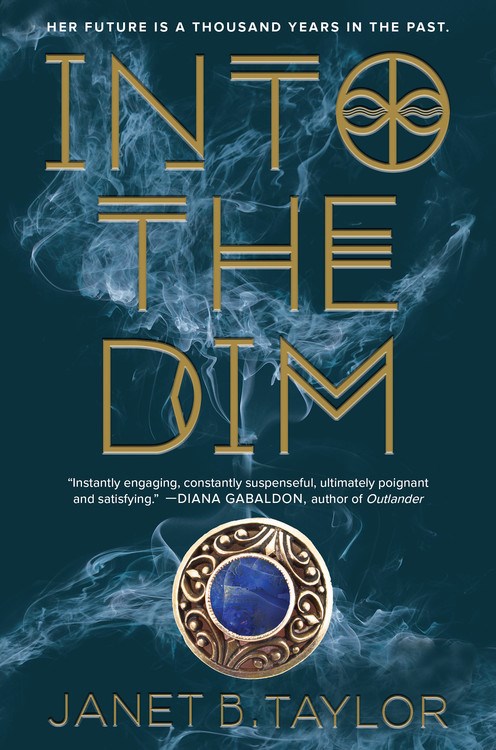 Into the Dim by Janet B. Taylor
Mogsy’s Rating (Overall): 4 of 5 stars
Genre: Young Adult, Science Fiction
Series: Book 1 of Into the Dim
Publisher: Audible Studios (March 1, 2016)
Length: 11 hrs and 12 mins
Author Information: Website | Twitter
Narrator: Amanda Ronconi
While Into the Dim is not without its flaws (like calling it “an Outlander for teens” might be a bit of a stretch), there’s still no denying this book has its charms. The story is impressively robust for a YA time traveling book, and what it lacks in world-building and logistical explanations, it makes up for with pure entertainment and plenty of fun twists along the way. I was pleasantly surprised at how much I enjoyed myself.
Most of this story actually takes place in the twelfth century, but first there’s a considerable introduction to establish our main protagonist and her circumstances. We begin with sixteen-year-old Hope Walton at the funeral for her mother Sarah, an academic who was lecturing overseas when an earthquake struck and brought the building down around her. Eight months later, her family has finally given up the search for her body and accepted that she is gone. To help deal with the grief, Sarah’s sister has invited Hope to spend the summer with her in Scotland, and after much reluctance, Hope eventually realizes she has nowhere else to go and accepts.
Now this is where the adventure truly begins. Hope arrives in Scotland and learns more about her family than she’d ever bargained for. Turns out, her aunt is a leader of a group of time traveling agents who are battling another group of rival time travelers to locate a powerful gem lost somewhere in history. That, and Hope finds out that her mother Sarah might be still alive, but trapped in the past. There may be a way to bring her back, but only a small window of opportunity to make that happen, and Hope will need all the training she can get to prepare her for the mission of her life.
Hope and her new friends, fellow time travelers Collum and Phoebe, end up journeying back almost a thousand years to 1154, the year of Eleanor of Aquitaine’s coronation as queen consort of England. As the focal historical figure for this novel, I thought she was a most fascinating choice. One of the most powerful women of her age, Eleanor led an incredible life and was appropriately portrayed as an important character in Into the Dim. Also, the High Middle Ages was a period of much significance and change in Western Europe, creating an intriguing backdrop for the novel. We’re plunged into this world to experience the social, political and religious climate of the times, and author Janet B. Taylor certainly does not skimp on details of the sights, sounds, and–unfortunately—the smells.
For me, there were only two major weaknesses, and they kind of go hand-in-hand with each other. The first is Hope herself. A poster child for “book smart, street stupid” if I ever saw one, our protagonist was born was a photographic memory, but her brilliance is also offset by her staggering social ineptitude. Kept out of “that inbred travesty they call an education system” by her snobby and overprotective mother, Hope grew up completely clueless, which would perfectly explain the scene where she meets Bran Cameron for the first time. This segues into my second gripe: the romance. I’m still appalled by Hope’s reaction to Bran at their first meeting, where she catches him taking stalkerish photos of her with his camera without her knowledge. But instead of running for the hills to the closest police station, what does Hope do? She flirts with the creepy creeperish creeper, and finds his behavior totally adorable and flattering. Ew, no. Sadly, this soured the rest of the relationship for me.
While engaging, the plot is also nothing too deep. The historical aspects and “science” behind the time traveling will not hold up to heavy scrutiny, though to be fair, that’s not really what this book is about. Yes, you’ll definitely have to roll with some punches, but the story is entertaining and holds up well. I liked the fast-pacing, as well as the no-nonsense way Hope and her friends come up with creative ways to solve problems.
It’s worth mentioning too that I listened to the audiobook version, which was amazing. Before this, I had never listened to anything read by Amanda Ronconi, but her performance for Into the Dim made me an instant fan. They couldn’t have chosen a better narrator. With her wide range of accents, she was perfect for a book like this, which features characters from the US and from Scotland. Then, there are those characters from the past. Ronconi’s Olde English accents are convincing, as is the slight French lilt she gives Eleanor of Aquitaine when she reads her lines. I can see how listening to this book might be more immersive experience, compared to reading the dialogue as it is written.
All in all, Into the Dim is quite a lovely novel, even with its flaws. It’s a simple, straightforward book, which serves its purposes to be fun and light-hearted, but that’s not to say there aren’t a couple of unexpected surprises thrown in as well. I found it very refreshing, given the string of bad luck I’ve had with the YA genre lately, and I ended up enjoying this a lot more than I expected.
Story:  | Performance:
  | Overall:
Book Review: The Chronicles of Riddick by Alan Dean Foster
Posted on March 18, 2016 4 Comments
 The Chronicles of Riddick by Alan Dean Foster
Genre: Science fiction, space opera, dystopia
Publisher: Del Rey Books (December 2007)
Author Info: alandeanfoster.com
Wendy’s rating: 3 of 5 stars
“You’re not afraid of the dark are you?”
In my quest to read more movie novelizations this year, it’s unsurprising that Foster’s name would pop up on the list. In fact, in searching my library for more novelizations by him, this one popped up. Pitch Black and subsequently The Chronicles of Riddick are favourite films in my household and I am quite fond of the character of Riddick. I suspect Vin Diesel, the actor who plays him, is quite fond of Riddick too, and it shows with Chronicles. I could have done with a little less of Riddick being Riddick in what was perhaps Diesel’s attempt to bring back the macho tough guy of the 80s, but with less campiness, and more attempted intellectual and occasionally gross sexist comments and actions (I’ll never watch the third movie, Riddick, again for the latter reason).
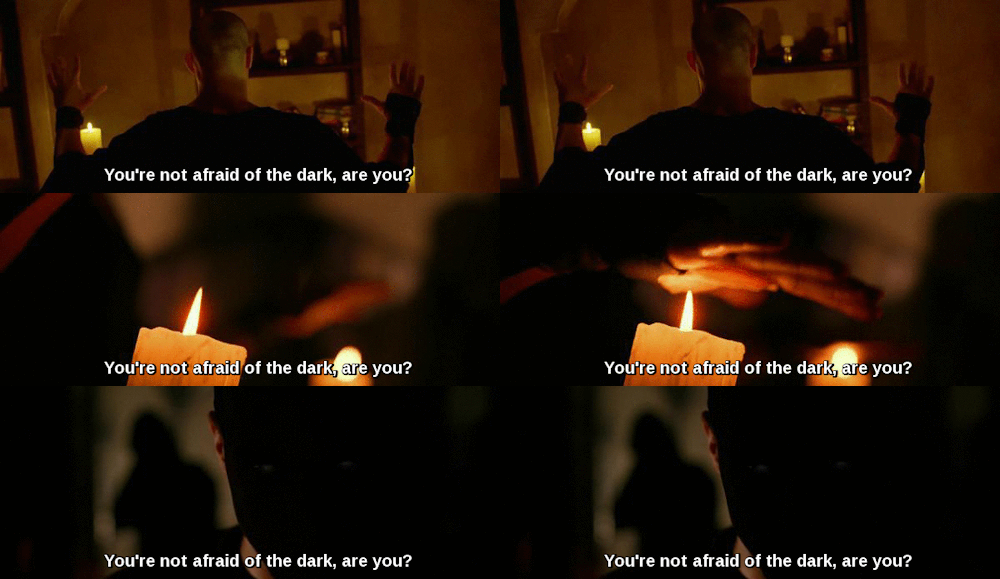
Anyway, after surviving the monster infested planet in Pitch Black, Riddick has sequestered himself away from humanity, but is dragged back in thanks to the arrival of the Necromongers, a powerful race of beings bent on purifying the galaxy and preparing everyone for the great beyond. As with all fanatics, they believe they are doing their lord’s work. Alas, the Lord Marshal is going to have to deal with Mary Sue–I mean–Richard B. Riddick, who has now been imbued with magical Furyan powers thanks to a prophecy and upgraded backstory. Not that these new elements don’t work for the story. They do make sense, but it’s how Riddick is now portrayed that has me rolling my eyes. And yet, it’s for this very thing that I give Foster credit. Part of writing a novelization is being able to capture the feel of the film, right down to Riddick’s new found ability to be faster than fastness and more quiet than silence as he skillfully outsmarts and murderdeathkills vast hordes of bad guys.
“Riddick moved forward, seeming to cross the intervening space between the clerics and himself with barely a step. One by one, he pushed back hoods and examined faces. He had no divining equipment with him, needed none. He knew men better than any machine.”
Foster’s words drip with the sense that someone thought more of Riddick’s status than they should have, and I get the impression that, as he wrote, Foster was frequently peppered with phone calls and emails from Diesel with suggestions on how to improve scenes. So I feel like I should give Foster credit for capturing both the vibe of the film and showing such patience with our illustrious star.
 Fortunately, this book was not just about Riddick and the perspective quite often changed. Kyra in particular is a character of interest, as is the Lord Marshall in his unwavering beliefs, but really, I am here for the Vaakos. Foster did not let me down with the sultry blade that is Dame Vaako.
I read novelizations with the hope that I’ll get a few new insights into the characters and events, and maybe a deleted scene or two. This honestly didn’t add much save for amusement in reading the Riddick loves Riddick story. I was disappointed though — or perhaps pleased with the final movie version of the parting between Riddick and Kyra. The movie moment is powerful and the line “Are you with me Kyra?” is a much stronger connection to the running theme of his abandonment of her in the first place. In the book, he demands to know “what side” she is on, which holds less emotional stakes. I’m guessing that was a last minute script change that made it into the movie, much like Leia and Han’s “I love you” “I know,” which was not in the original script, or the novelization of The Empire Strikes Back.
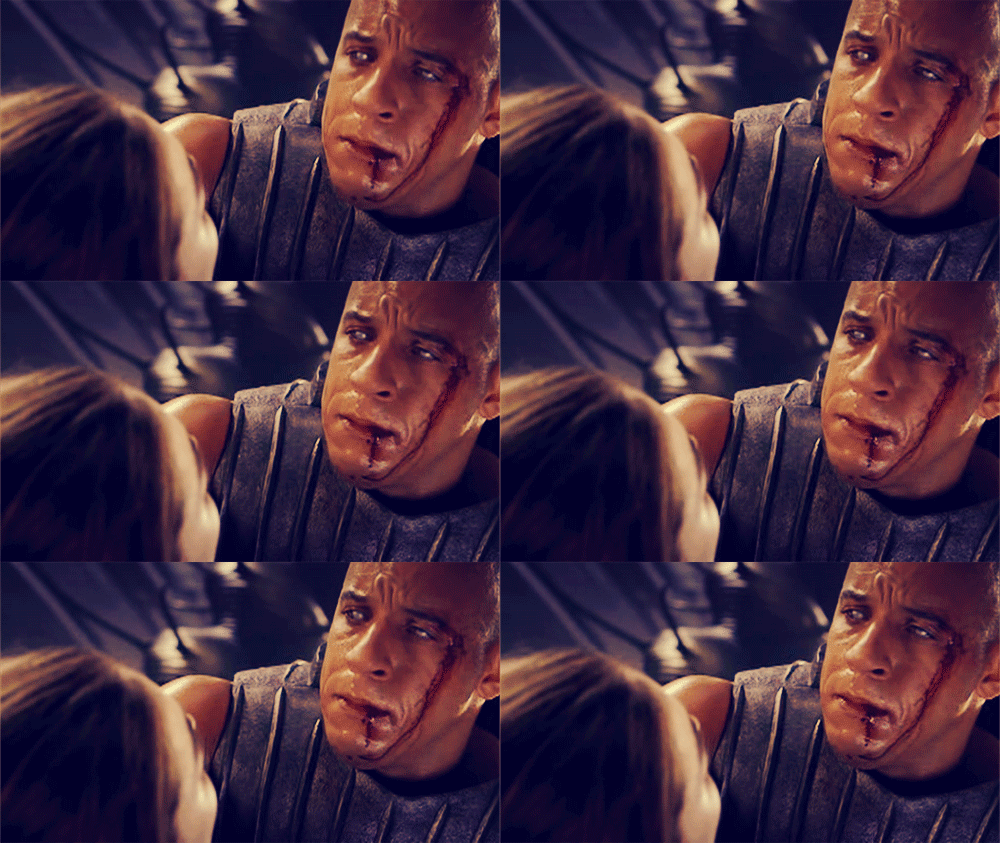
“I was always with you.”
Where the book did give me something more was the epilogue that detailed the history of the Necromongers and the chain of Lord Marshall’s leading up to Riddick’s eventual taking of the throne.
“You keep what you kill.”

Audiobook Review: United States of Japan by Peter Tieryas
Posted on March 18, 2016 20 Comments
A review copy was provided by the publisher in exchange for an honest review. All opinions are my own.
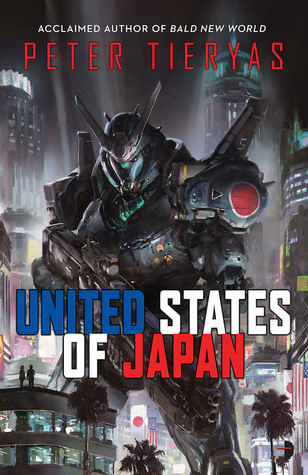 United States of Japan by Peter Tieryas
Mogsy’s Rating (Overall): 4 of 5 stars
Genre: Science Fiction, Alternate History
Series: Stand Alone
Publisher: Audible Studios (March 3, 2016)
Length: 9 hrs and 53 mins
Author Information: Website | Twitter
Narrator: Adam Sims
I’ll admit, as cool as its cover looked, Peter Tieryas’ United States of Japan did not initially grab my interest. Mind you, it’s not that I’m averse to the prospect of a 150-foot-tall Mecha wreaking havoc in my science fiction, but at the time I just wasn’t sure if I was in the mood for that sort of bombast and action. Thing is though, it turned out I was completely wrong, both on the nature of this book and on my early skepticism that the story might not be for me – because, as you’ll see, it absolutely was. There’s a depth to USJ that I did not expect, and it was this mix of profundity and thrilling suspense that made the book such a great read and audio listen.
Described as a spiritual successor to The Man in the High Castle, even if you have not read the Philip K. Dick classic, one can immediately surmise a certain set of expectations from United States of Japan. Yes, it is an alternate history novel, and it takes place approximately four decades after World War II in a world where Japan won the conflict and conquered America. History has been rewritten to praise Japan’s exemplary conduct in the war and most Americans now also worship the Emperor as a god. Anyone who disagrees or does otherwise is looked upon with suspicion, or disappeared altogether. Resistance has been reduced to a small group of rebels called the “George Washingtons”, freedom fighters who are continuing to find new ways to subvert the Japanese rule. Their latest tactic is a video game called “USA” that depicts what the world might be like if the Allied forces had won the war instead.
Eventually, the illegal game reaches to the attention of Captain Beniko Ishimura, the son of two refugees who were freed from the Japanese American internment camps at the end of the war. Ben’s role to censor video games ultimately leads him on a journey to investigate USA’s origins, putting him on a path of secrets, dangers and lies. Together with Agent Akiko Tsukino of the secret police, Ben goes looking for the rebels and discovers a whole lot more than he bargained for.
What I found most interesting about this book is its protagonist, a 39-year-old underachiever who has hit a dead end in his military career. He’s also indolent, cowardly, the worst kind of womanizer, and not even those closest to him will trust Ben as far as they can throw him. After all, this is a man who turned in his own parents for being traitors to the Japanese Empire. What kind of heartless monster does that?
But of course, there’s always more to the story. As events unfold, and we get to know Ben better, it becomes clear he is not the cold-blooded and deceitful snake his actions paint him out to be. In fact, he feels downright human, living an unambitious life and preferring to stay under the radar. In this world where the secret police can come knocking at your door anytime, when even the slightest or non-existent hint of dissension is suspected, Ben’s approach might in truth be the safest, smartest way to live. And after a while, our protagonist doesn’t actually seem like such a bad guy. Sure, Ben might be apathetic and faint-hearted, but he doesn’t seem capable of directly harming anyone. In time though, his character will develop further and make great strides, especially after he starts teaming up with Akiko. I was impressed at how both of them felt genuinely fleshed-out with complex, believable personalities. What’s on the surface is not always indicative of what’s on the inside.
At its heart, United States of Japan is also a political mystery-thriller. I enjoyed how the world was gradually revealed to us in all its horror and unpleasantness. It’s a dark tale, but fast-paced because of the perfect balance of action and suspense. The story holds an incredibly ambitious blend of concepts and themes, but never once did I feel that it was too much, or that any one element overshadowed another. I liked how the towering robots came into play and how video games had a significant role. Simply put, the plot came together like a well-oiled machine. Once you’re drawn into the intrigue, it’s hard to pull yourself out again.
My experience with the audiobook was interesting as well. This is the first time I’ve listened to a book read by Adam Sims, and I admit my first impression was not very favorable. However, either I got used to the narration or the performance eventually improved, because by the end, Sims’ reading didn’t feel as flat and there were more variations in the rhythm and inflection of his voices. It’s not the best performance I’ve ever heard in an audiobook, but it was more than satisfactory and I also thought Sims also did a good job with his accents and acting.
All told, United States of Japan is a fascinating venture into alternate history, and it is not to be underestimated. Highly recommended.
Story:  | Performance: | Overall:
*** Originally reviewed at The Speculative Herald ***
Guest Post: “The Unforgiving Net; the Horror of Publication” by Brian Staveley + GIVEAWAY!
Posted on March 17, 2016 6 Comments
***The giveaway is now over, thanks to everyone who entered!***
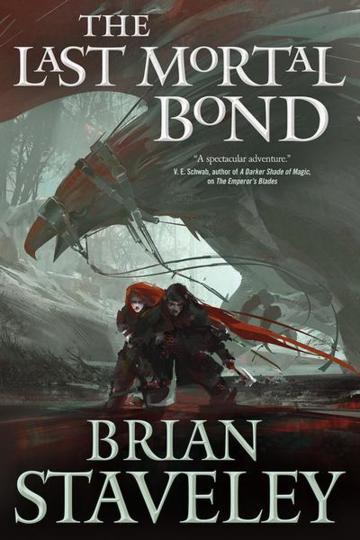 Today, the BiblioSanctum is pleased and excited to welcome back Brian Staveley, author of the epic fantasy series The Chronicle of the Unhewn Throne! The eagerly anticipated third and final book The Last Mortal Bond is out this week from Tor Books, and in case you missed my review, the ending was everything I wanted and more. Now that the series has concluded, we’ve invite Brian over to talk a little about the constantly evolving process behind writing a trilogy, as well as the overall changes in his creative journey which first began with the publication of The Emperor’s Blades. It’s a fascinating read and I hope you’ll enjoy!
THE UNFORGIVING NET; THE HORROR OF PUBLICATION
by Brian Staveley
When I was teaching creative writing, I used to require my students to write their first stories of the year longhand. Then, when they handed them in, I would bring the entire class outside, gather us around a 50-gallon steel trash drum, rip up the stories—still unread—then burn them.
My point was that, although everyone talks about the creative part of writing, destruction is just as important. Effective writing requires the constant burning of crappy sentences and paragraphs, the razing of false starts, the ruthless abandonment of dead ends. It took me years to really get the hang of this, to happily consign entire chapters to the dust bin. I ended up throwing out a whole book worth of material—100,000 words—about a character who never appears in the trilogy; and I was ok with that. Then, just when I’d started to master this sort of artistic detachment, a cruel thing happened: Tor published my first book.
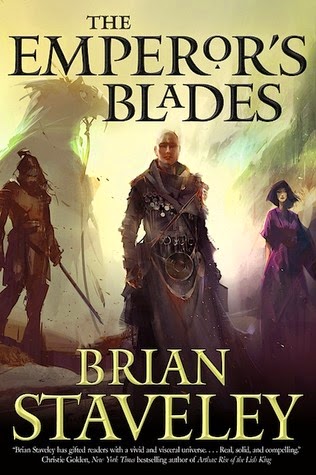 Cause for celebration, of course, but also for a kind of slow, creeping horror. Until the moment The Emperor’s Blades went into print, the story was absolutely and entirely my own. If I wanted to change a name, I could change it. If I had an idea five hundred pages in, I could go back and retrofit the first four hundred ninety-nine. I made full use of this freedom right up until publication, changing the gender of a major character at the last moment, rewriting a full plot line, adding fantastical elements I planned to use later.
And then the book was finished, ineluctably and forever fixed.
The publication of the first book in a trilogy changes the game. Every act of writing becomes a negotiation between the story that already exists, bound between the covers, and the unwritten story still gestating in the brain. When you publish that first book, you sacrifice, at least in part, the ability to change your mind. You are tied, for the rest of the series, to a set of decisions made months or years earlier. It’s like getting married and finding yourself required to live by the letter and spirit of love letters penned a decade earlier. On the one hand, how lovely; on the other, how terrifying!
Writing the third book in the series with the brute fact of the first two looming over me like ill-humored jailors proved an unexpected challenge. I can’t count the number of times I wanted to go back, make a change, set things up differently, but no dice… Burning your own work is all well and good, but I’d have to do some pretty extensive travelling to hunt down all the copies of Blades and Providence scattered over fifty states and a dozen countries. I needed to develop a different set of emotional skills. To my surprise, I found myself looking back to the years I spent writing poetry.
 As an undergrad and in graduate school, I was always attracted by formal constraint. I liked writing sonnets and couplets. I wrote a long poem in Dante’s terza rima. I spent ages translating Francois Villon, whose ballades are among the most fiendish forms imaginable. The joy of working inside established form springs, of course, not from the rules themselves so much as the ingenuity those rules require of a writer. Robert Frost thought writing free verse was like playing tennis with no net; the limitations are the very occasion for the player’s genius. No net, no Federer.
Of course, there are no sestinas or villanelles in epic fantasy, but I found myself looking at the constraints posed by my first two published books in the same way a tennis player looks as the unalterable lines painted on the clay court, that unforgiving net; they became opportunities. In fact, they were the very definition of the game itself. And it worked. I found myself—as I worked through The Last Mortal Bond—reaching for approaches, developing skills, finding solutions that I would never have otherwise considered. Burning one’s work is crucial, but when any significant obstacle or mistake can be simply burned or erased, it’s easy to get complacent. My own earlier books were significant foes, but grappling with them made me stronger.
The inescapable presence of those first two books had me smashing my head against the table most days, but the fact that I couldn’t get free of them made me a better writer. I suppose I ought to thank Tor for publishing that first book after all, something I plan to do just as soon as I get done cursing and hyperventilating. It may take some time…
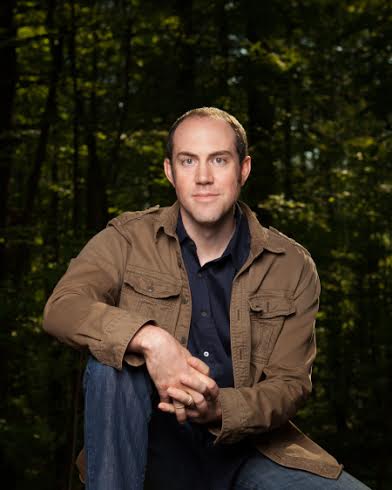 ABOUT THE AUTHOR
After teaching literature, philosophy, history, and religion for more than a decade, Brian began writing epic fantasy. His first book, The Emperor’s Blades, the start of his series, Chronicle of the Unhewn Throne, won the David Gemmell Morningstar Award, the Reddit Stabby for best debut, and scored semi-finalist spots in the Goodreads Choice Awards in two categories: epic fantasy and debut. The first seven chapters can be had for free here: http://www.tor.com/blogs/2013/11/read-the-emperors-blades-by-brian-staveley. The second book in the trilogy, The Providence of Fire, was also a Goodreads Choice semi-finalist. The concluding volume of the trilogy, The Last Mortal Bond, is available for preorder now.
Brian lives on a steep dirt road in the mountains of southern Vermont, where he divides his time between fathering, writing, husbanding, splitting wood, skiing, and adventuring, not necessarily in that order. He can be found on twitter at @brianstaveley, facebook as brianstaveley, and Google+ as Brian Staveley. His blog, On the Writing of Epic Fantasy, can be found at: bstaveley.wordpress.com.
The Last Mortal Bond Giveaway
Because I am such a fan of this series, I would like to share the love, and I have a copy of The Last Mortal Bond that I would love to send to you! Due to high shipping costs, I can only open this giveaway to residents in the US, with sincere apologies to our international readers. To enter, all you have to do is send an email to bibliosanctum@gmail.com with your Name and valid Mailing Address using the subject line “THE LAST MORTAL BOND” by 11:59pm Eastern time on Sunday, March 27, 2016.
Only one entry per household, please. The winner will be randomly selected when the giveaway ends and then be notified by email. All information will only be used for the purposes of contacting the winner and sending them their prize. Once the giveaway ends all entry emails will be deleted.
So what are you waiting for? Enter to win! Good luck!
Waiting on Wednesday 03/16/16
Posted on March 16, 2016 12 Comments

“Waiting On Wednesday” is a weekly meme hosted by Breaking the Spine that lets us feature upcoming releases that we can’t wait to get our hands on!
Wendy’s Pick
The Edge of Worlds by Martha Wells (Nightshade Books: April 5, 2016)
Much like I feel about Maggie Stiefvater’s Raven Cycle, I don’t really care what actually happens in the Raksura series plotwise. I just want to spend as much time as I can with Moon and company. I love Wells’ worldbuilding and nowhere is it stronger than this series of books.
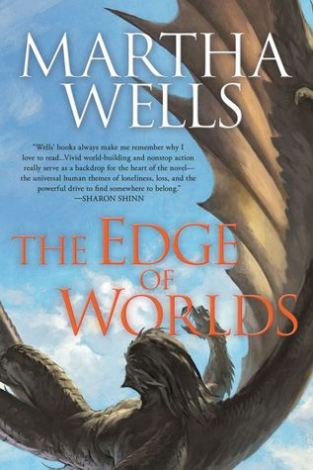 An expedition of groundlings from the Empire of Kish have traveled through the Three Worlds to the Indigo Cloud court of the Raksura, shape-shifting creatures of flight that live in large family groups. The groundlings have found a sealed ancient city at the edge of the shallow seas, near the deeps of the impassable Ocean. They believe it to be the last home of their ancestors and ask for help getting inside. But the Raksura fear it was built by their own distant ancestors, the Forerunners, and the last sealed Forerunner city they encountered was a prison for an unstoppable evil.
Prior to the groundlings’ arrival, the Indigo Cloud court had been plagued by visions of a disaster that could destroy all the courts in the Reaches. Now, the court’s mentors believe the ancient city is connected to the foretold danger. A small group of warriors, including consort Moon, an orphan new to the colony and the Raksura’s idea of family, and sister queen Jade, agree to go with the groundling expedition to investigate. But the predatory Fell have found the city too, and in the race to keep the danger contained, the Raksura may be the ones who inadvertently release it.
The Edge of Worlds, from celebrated fantasy author Martha Wells, returns to the fascinating world of The Cloud Roads for the first book in a new series of strange lands, uncanny beings, dead cities, and ancient danger.
Mogsy’s Pick
Fix by Ferrett Steinmetz: September 6, 2016 (Angry Robot)
The third book in the ‘Mancer series, which features one of the most unique magic systems I’ve ever seen in urban fantasy!
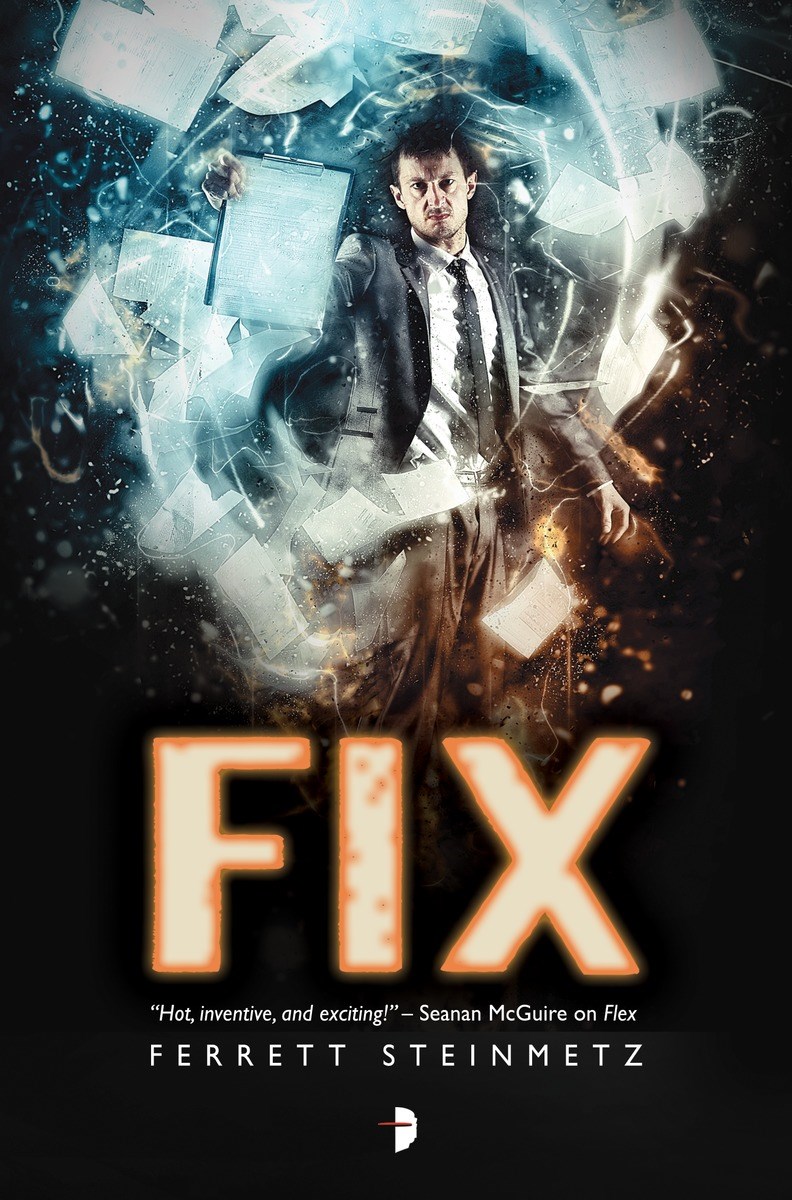 “America’s long sent its best SMASH agents overseas to deal with the European crisis. As of today, they decided dismantling your operation was more important than containing the Bastogne Broach. Now you’re dealing with the real professionals.
Paul Tsabo: Bureaucromancer. Political activist. Loving father. His efforts to decriminalize magic have made him the government’s #1 enemy – and his fugitive existence has robbed his daughter of a normal life.
Aliyah Tsabo-Dawson: Videogamemancer. Gifted unearthly powers by a terrorist’s magic. Raised by a family of magicians, she’s the world’s loneliest teenager – because her powers might kill anyone she befriends.
The Unimancers: Brain-burned zombies. Former ‘mancers, tortured into becoming agents of the government’s anti-‘mancer squad. An unstoppable hive-mind.
When Paul accidentally opens up the first unsealed dimensional broach on American soil, the Unimancers lead his family in a cat-and-mouse pursuit all the way to the demon-haunted ruins of Europe – where Aliyah is slowly corrupted by the siren call of the Unimancers…”
Book Review: The Last Mortal Bond by Brian Staveley
Posted on March 15, 2016 10 Comments
A review copy was provided by the publisher in exchange for an honest review. All opinions are my own.
The Last Mortal Bond by Brian Staveley
Mogsy’s Rating: 4 of 5 stars
Genre: Fantasy
Series: Book 3 of Chronicle of the Unhewn Throne
Publisher: Tor (March 15, 2016)
Length: 640 pages
Author Information: Website | Twitter
Wow! What a long way these characters have come since The Emperor’s Blades, and also what great strides Brian Staveley has made as a writer and storyteller. Epic does not even begin to describe this dramatic third and final installment in the Chronicle of the Unhewn Throne trilogy, which brings everyone back together for one explosive finale.
Things sure weren’t looking too good for the three imperial siblings, last we left them at the end of The Providence of Fire. (Warning! Possible spoilers ahead for the first two books if you haven’t read them yet!) Kaden, the heir who was set to inherit the throne after the assassination of his father Emperor Sanlitun, has decided instead to dissolve his rule, creating a republic instead. The problem? None of his counselors can set their ambitions and differences aside to work together. Meanwhile, the empire is crumbling at the edges and hordes of invaders are marching their way towards the capital. Adare has no choice but to rely on her former-lover-turned-nemesis General Ran il Tornja to hold off the Urghul, who are now being led by a powerful and cruel leach. And finally, there’s Valyn, who probably has it worst of all. Betrayed, blinded, and thrown from a tower, he was left for dead to fend for himself in the Urghul-infested wilderness.
I was also happy to see Gwenna return with her own POV chapters. She was one of the best surprises in the previous book, and she’s back now to show the Malkeenians how to get shit done. If you love what you see on this book’s insanely gorgeous cover, then you most definitely will not be disappointed. There is plenty of Kettral action in here, and with Valyn lost to the wing, things have gotten even more intense now that Gwenna has assumed the leadership. She more than proves her strength and capability in this novel, taking back the order and rebuilding its ranks with only a group of washouts and rejects at her command.
Indeed, without Gwenna, this book would have been darker and even more despairing. “Broken” is the theme for The Last Mortal Bond, with the three royal children floundering in their own respective ocean of problems. Talk about your dysfunctional family. Ever since the first book, I’ve been intrigued by the dynamics between Adare, Kaden and Valyn, and even though Emperor Sanlitun is dead and barely appears in this series except in memories and flashbacks, it’s still stunning to see how his choices for his children have had such profound effects on their lives and on their relationships with each other. With each of them heading in their own direction—and with barely a shred of trust between them—anything could happen at all. And while things did not go the way I expected, the siblings’ long awaited reunion in this final novel is surely not to be missed.
It’s also very interesting when I reflect upon how my feelings for these characters have changed over the course of the trilogy. Brian Staveley has pushed them all to their limits, forcing them into difficult situations where they have to make some tough decisions, and not all of them lead to positive results. Adare really stepped up in the last book, and I was glad to see her carry her role into the events of this one. However, a sheltered lifetime within the palace walls has certainly put her at a disadvantage, and it shows. At times, she frustrated me with her naiveté, but I also felt a deeper sympathy for her when it came to the matter of her infant son. Being a new mother is terrifying enough, but she also had to do it in the middle of a war with a target on her back.
At the very least though, I found Adare’s chapters to be a lot more compelling than her brothers’. As a character, Kaden has always felt distant to me because of his tendency to push aside all emotion, but this book saw him slipping even further away. Meanwhile, Valyn had retreated into the darkness to wallow in his self-pity, yet somehow still managed to emerge as a kind of tortured hero. Clearly, Sanlitun’s children have not benefited too much from the paths he has chosen for them. Hands down, the indisputable winner here was Gwenna, who ended up stealing the show with her brilliant side plot and incredible character growth. Please, Mr. Staveley, if you ever decide to revisit this world, a series or even a one-off tale about Gwenna and the Kettral would make my dream come true!
As for the story itself, we all know what a tricky thing it is to wrap up an epic fantasy series, but Staveley takes to it so naturally that it’s hard to believe this is his debut trilogy. He never once loses sight of his goals and is always in control, driving the plot forward so that the pacing never falters even through the frequent perspective changes. Amazingly, each character arc has its own rising action and climax, and yet all four POVs end up come together for a seamless, spectacular conclusion in the final pages.
For readers of epic fantasy and fans of complex worlds and characters, I highly recommend checking out this series. Reading these books and discovering Brian Staveley’s talent has been an immense pleasure and delight; I am only sad that the trilogy is over now.
Review of The Emperor’s Blades (Book 1)
Review of The Providence of Fire (Book 2)
Guest Post: “The Limits of Empathy; or Macbeth is an Asshole” by Brian Staveley

 16%: “He made the Meg cry. I’m going over to the store to see if I can find a sparkly that will make her smile again.”







 The BiblioSanctum