#SPFBO: Cover Lover
Posted on May 27, 2016 9 Comments

The great 2016 Self-Published Fantasy Blog-Off is underway! We here at the BiblioSanctum are currently as busy as bees reading through the first five chapters of each book and comparing notes, and every day that goes by we’re getting closer to narrowing down the field to the handful we’ll be selecting for fuller reads.
In the meantime though, we and our other fellow bloggers involved in SPFBO2 have noticed some beautiful covers among this year’s contestants. Inspired, Mark Lawrence has put together a cover contest, asking each blog site to select the top three covers from our batches. The final 30 from the 10 blogs will be voted on by all the bloggers to award gold, silver, and bronze medalists. There’s also an open poll open to the public.
To see all the entries of the SPFBO Favorite Covers contest, check out this post and vote!
It was a very tough choice for us, but in the end these are the three covers we’ve chosen to put forth into Mark’s cover contest. Today, we want to take this opportunity to feature them along with a few others that we considered, including their book descriptions. Keep in mind, we’re not actually going to be commenting on the content in any of these books at this point, since the reviewing process is still going on, but we did want to bring some attention to them since because we love pretty covers! An aesthetically pleasing, professional looking cover will go a long way in drawing readers in, leaving them with the impression that what’s inside is worth checking out. Your cover is your book’s chance to make a good first impression, so make it a good one!
BiblioSanctum’s Favorite Cover Selections
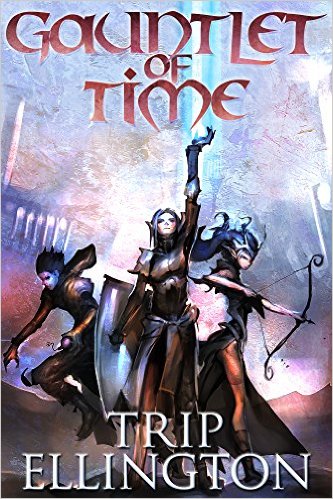
Gauntlet of Time by Trip Ellington
“Xalo believes that he and his best friend, Jirnik, are destined to spend the rest of their days barely eking out a living as poor scavengers—until a lost princess reveals his destiny as a Wielder.
Wielding his newly bonded magical gauntlet, Xalo and Jirnik are soon pulled into a perilous quest to reunite the lost princess with her family, all while being chased by the corrupted emperor and his minions…”
WHY WE LOVE THIS COVER
Wendy: This was the cover that inspired me to contact my co-bloggers and say “Hey wanna do a cover lover feature on our favourite SPFBO covers?” shortly before Mark Lawrence ended up doing that very thing. The image and pose itself isn’t particularly unique when it comes to fantasy and the font could be more interesting, but the artistic style and the subdued, pastel colours are what grabbed my eye. The artwork is probably more conducive to a comic book cover, or perhaps an RPG guide book, though not quite either of those either. Perhaps more of a hybrid of all three. Plus it reminded me of the unfinished sketchiness of one of my favourite games, Valkyria Chronicles.

“He’s killed three men in the few days she’s known him. Yes, it’s self-defense. But when he tried to kill her, it wasn’t. Her peaceful mountain refuge has been invaded, her inexplicable nausea linked to his physical presence. She’s captive in his house for her “protection,” with a churning stomach, his bad attitude, and no safe way home.
All that changed the night the stars aligned.
Now he’s talking about ancient bloodlines and celestial alignments…and other things she only believes because of what she’s seen him do. He’s heading out for revenge against the family who wronged him, and he needs her help. All she has to do is ingest one homemade dissolving tablet to allow him into her mind–to train her to be just like him.
The answer would be a definite no if she had anything of her world left. If she hadn’t fallen in love with him.
Book One of THE ALIGNMENT SERIES, a blend of modern fantasy, action, and romance.”
WHY WE LOVE THIS COVER
Tiara: I’m going to be my mother’s child and wax purple about my choice. This is a cover for the dreamers who look up at the sky and lose themselves in the night sky, for the dreamers who dream in luminous golds, ethereal blues, and wraith-like greens. This cover asks you step into a fictional land, to leave the world behind and live somewhere fantastic and unknowable, to use your imagination to be the master of the stars for just a little while. This cover ask the dreamers to find their wings and fly, to dance freely on the starlight, and revel in the beauty of their imaginations. Dream on, dreamers.
 The Dragon’s Blade: The Reborn King by Michael R. Miller
“Dragons once soared in the skies, but that was before the Transformation, before they took human form. Now, demonic forces stand to obliterate them. When left mortally wounded, Darnuir, the Prince of Dragons, can only be saved through a dangerous rebirthing spell. He is left as a babe in human hands.
Twenty years later, Darnuir is of age to wield the Dragon’s Blade. As the last member of his bloodline, he is the only one who can. He is plunged into a role he is not prepared for, to lead a people he does not know. Shadowy demons ravage his new home and the alliance between humans, dragons and fairies has fractured.
Time is short, for new threats and deadlier enemies are emerging…”
WHY WE LOVE THIS COVER
Mogsy: Seeing weapons on fantasy covers is nothing new, but I really appreciate the art style on this one and the gorgeous draconic design of the hilt and cross-guard. The red and black swirling patterns exude a atmosphere of dark magic, and I love the symmetry. It’s a very eye-catching cover, and it grabbed my attention right away.
Runners-Up
There was a lot of prettiness in our batch this year. These are the other beautiful covers that caught our eye, but alas we could only choose three for Mark’s cover contest!
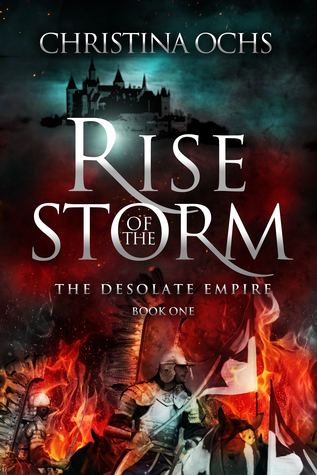
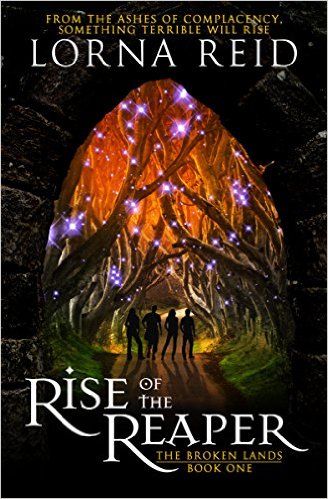
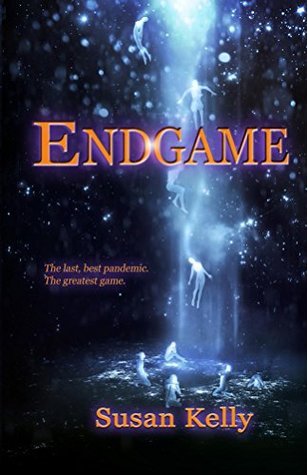
Wendy: Rise of the Storm and Endgame were my runners up. I liked the colours of the former and, having read the first few chapters already, I felt the fiery imagery really captured the urgency that those initial pages bring about. I also like the title text and placement. Endgame’s not perfect–it is a bit rough around the photoshopped edges upon closer inspection–but I liked the ethereal nature of the ghostly bodies rising into the light. Without reading the blurb, I could infer so many different things from this image. Is it an ascension? An alien invasion? Hmmm…
Mogsy: My runner up cover was Rise of the Reaper because of the spine-tingling feeling I get when I look at it. I love that effect of of stepping through a dark tunnel into a world of blazing color and shining magic. I also really like the cover for Rise of the Storm for a lot of the same reasons as Wendy. The layout and typography is very pleasing, and that’s a fantastically bold combination of colors.



Backlist Burndown: The Rook by Daniel O’Malley
Posted on May 27, 2016 33 Comments

As book bloggers, sometimes we get so caught up reading review titles and new releases that we end up missing out on a lot previously published books. As a result, one of my goals this year is to take more time to catch up with my backlist, especially in my personal reading pile. And it seems I’m not the only one. Backlist Burndown is a new meme started by Lisa of Tenacious Reader. Every last Friday of the month, she’ll be posting a review of a backlist book and is inviting anyone interested to do the same. Of course, you can also review backlist books any day you want, as often you want, but be sure to watch for her post at the end of the month to link up!
This month, I’m busting the backlist with…
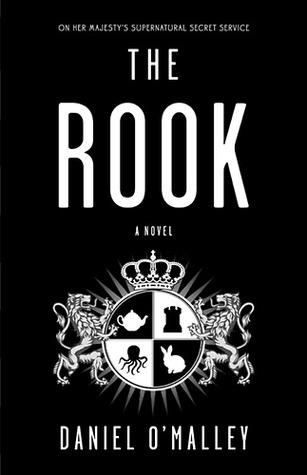
Mogsy’s Rating: 4.5 of 5 stars
Genre: Fantasy, Paranormal
Series: Book 1 of The Checquy Files
Publisher: Little, Brown and Company (January 11, 2012)
Length: 486 pages
Author Information: Website | Twitter
The Rook was a novel that had been sitting on my shelf for years, lying forgotten in spite of the repeated calls from my friends urging me to pick it up and read it. It finally took the arrival of a review copy of Stiletto to spur me into action, because nothing lights a fire under my butt quite like the news of an impending sequel. And in reading The Rook, I learned a couple of important lessons: first, I should always listen to my friends because when they tell me that a book is awesome, they are usually right; and second, sometimes it’s perfectly okay to procrastinate because at least now I don’t have wait as long to jump into book two. So there.
Seriously though, The Rook was a bucketload of fun. I was initially a little worried when the book opened and immediately I was plunged into an amnesia-type story, as I’ve had enough experience with those over the years to know they can be hit or miss. However, the writing was clever and tantalizing, encouraging me along despite my misgivings until other elements in the story kicked in and my doubts were dispelled altogether. The intro features our protagonist Myfanwy Thomas (rhymes with “Tiffany”) coming to in the middle of a London park surrounded by bodies all wearing latex gloves. Clutched in her hand is a letter addressed to her, apparently written by herself.
Myfanwy has no memory of who she is, but thanks to the letter she is able to piece together enough of her identity to work out what to do next. Thomas (the name she has taken to calling her pre-amnesic self) was something called a Rook, a high-ranking member of a clandestine government organization known as the Checquy—kind of like MI5 except they are charged with protecting the United Kingdom against all kinds of supernatural threats. Many of the Checquy’s agents are super-powered as well, including Myfanwy, who discovers from Thomas’ letters that she is endowed with a rare but potentially dangerous talent of her own. She soon learns that someone in the Checquy had betrayed her, and in order to find out who it is she must reintegrate herself in the organization and hope that no one would suspect her memory loss while also hiding the fact she knows more than she lets on as not to alert the traitor.
As I said, amnesia stories can either work really well for me or they can fall flat on their face, and happily this was a case of the former. Although the idea of a character working backwards to recover her lost memories is nothing new, the way it is done in The Rook feels very natural and creative, making this novel feel refreshingly original. Thomas’ letters to Myfanwy go beyond simply filling her in on who she is and what she does for a living; they also expand the world-building by providing a background to the Checquy and the other people who work there. Luckily for us, before her amnesia Thomas appears to have been something of an organizational wizard, putting together a binder of information about anything and everything about the Checquy, from employee profiles to the way the agency is structured. Myfanwy gets to find out more about her colleagues than she’d ever want to know, though as the reader I was completely fascinated by some of the details about those she works with, such as Rook Gestalt (a single mind who inhabits the bodies of quadruplets), Bishop Grantchester (who can expel chemical gases from his pores), Alrich (a vampire), Eckhart (who can manipulate metal with his bare hands), Lady Farrier (a leader of the Checquy who can enter dreams), Shantay (an American Bishop from the US version of the Checquy who can turn her body into metal), and many, many more.
In addition, some of Thomas’ anecdotes about her past experiences can almost be considered short stories themselves, and while I can understand how some readers might find such chapters superfluous and distracting, I personally adored them. A few of the stories, like the one about ill-fated dragon hatching or the incident with the fortune telling duck were downright hilarious in dark, morbid ways that meshed well with my sense of humor. As well, the various letters written by Thomas often contain hints or reference overlying themes that tie into the ultimate conclusion, letting the reader play detective along with Myfanwy as she pieces together her life and try to find clues to catch the traitor.
Best of all are the differences between Thomas and Myfanwy. Even though deep down Myfanwy knows they are the same person, her pre-amnesic self might as well be a complete stranger, which is why she gave her past self a separate identification in the first place. The Thomas she knows from the letters was a talented Rook but also painfully shy, which held her back from her full potential and made her fellow Court members look up on her with pity or scorn. However, the post-amnesic Myfanwy is more outspoken and confident with her supernatural abilities, making it extremely satisfying to watch her co-workers react to her new personality and stronger grasp of her powers.
It’s true that I didn’t know a whole lot about The Rook before I started it, but still, I hadn’t expected to be so thoroughly entertained. Now I can’t wait to dive into the next book! In the end Myfanwy accomplishes what she set out to do, but over the course of the novel she also mixes herself into a greater conspiracy involving the Grafters, a group that poses the greatest threat ever known to the Checquy. This larger storyline promises a lot more to come, and I’m really looking forward to continuing the series.

GIVEAWAY! The Greatcoats Series by Sebastien de Castell
Posted on May 26, 2016 5 Comments
***The giveaway is now over, thanks to everyone who entered!***
If you’re in the US, we have a huge giveaway to share with you today! To celebrate the upcoming JUNE 7th US publication of Sebastien de Castell’s Saint’s Blood, Quercus has very generously offered The BiblioSanctum the opportunity to host this giveaway for all three books in the Greatcoats series so far–yep, you heard right, that’s Traitor’s Blade, Knight’s Shadow AND Saint’s Blood–up for grabs to one lucky winner. Please see the end of this post for more details.
BOOK 1: TRAITOR’S BLADE
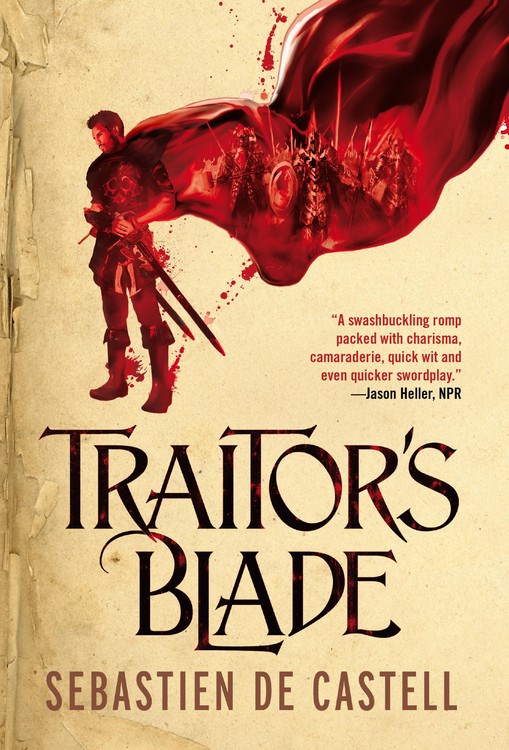 “The King is dead, the Greatcoats have been disbanded, and Falcio Val Mond and his fellow magistrates Kest and Brasti have been reduced to working as bodyguards for a nobleman who refuses to pay them. Things could be worse, of course. Their employer could be lying dead on the floor while they are forced to watch the killer plant evidence framing them for the murder. Oh wait, that’s exactly what’s happening.
Now a royal conspiracy is about to unfold in the most corrupt city in the world. A carefully orchestrated series of murders that began with the overthrow of an idealistic young king will end with the death of an orphaned girl and the ruin of everything that Falcio, Kest, and Brasti have fought for. But if the trio want to foil the conspiracy, save the girl, and reunite the Greatcoats, they’ll have to do it with nothing but the tattered coats on their backs and the swords in their hands, because these days every noble is a tyrant, every knight is a thug, and the only thing you can really trust is a traitor’s blade.”
BiblioSanctum Review: Traitor’s Blade by Sebastien de Castell
BOOK 2: KNIGHT’S SHADOW
 “Following his beloved debut, Traitor’s Blade, Sebastien de Castell returns with volume two of his fast-paced fantasy adventure series, inspired by the swashbuckling action and witty banter of The Three Musketeers.Knight’s Shadow continues the series with a thrilling and dark tale of heroism and betrayal in a country crushed under the weight of its rulers’ corruption.
A few days after the horrifying murder of a duke and his family, Falcio val Mond, swordsman and First Cantor of the Greatcoats, begins a deadly pursuit to capture the killer. But Falcio soon discovers his own life is in mortal danger from a poison administered as a final act of revenge by one of his deadliest enemies. As chaos and civil war begin to overtake the country, Falcio has precious little time left to stop those determined to destroy his homeland.”
BiblioSanctum Review: Knight’s Shadow by Sebastien de Castell
BOOK 3: SAINT’S BLOOD
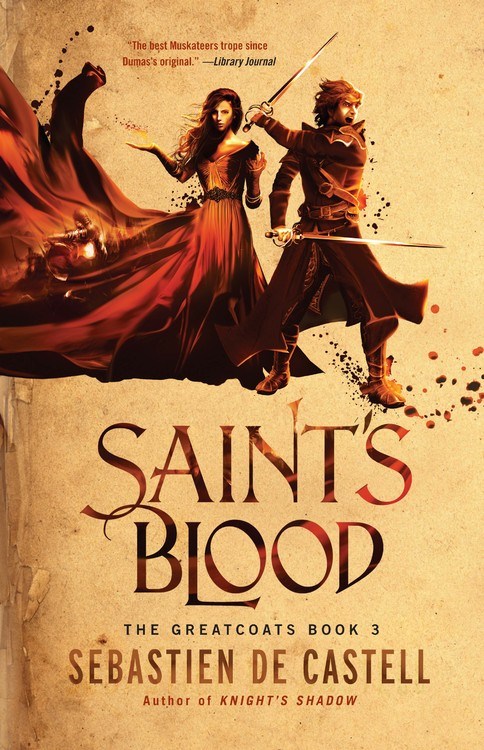 “How do you kill a Saint? Falcio, Kest, and Brasti are about to find out, because someone has figured out a way to do it and they’ve started with a friend.
The Dukes were already looking for ways out of their agreement to put Aline on the throne, but with the Saints turning up dead, rumours are spreading that the Gods themselves oppose her ascension. Now churches are looking to protect themselves by bringing back the military orders of religious soldiers, assassins, and (especially) Inquisitors – a move that could turn the country into a theocracy. The only way Falcio can put a stop to it is by finding the murderer. He has only one clue: a terrifying iron mask which makes the Saints vulnerable by driving them mad. But even if he can find the killer, he’ll still have to face him in battle.
And that may be a duel that no swordsman, no matter how skilled, can hope to win.”
BiblioSanctum Review: Saint’s Blood by Sebastien de Castell
In addition, Sebastien de Castell and the good folks at Quercus/Jo Fletcher Books are also running a fun quiz where you can learn what your Greatcoats name is and also get a coat of arms. Here’s how to work out your very own Greatcoats name and seal:

The Greatcoats Series Giveaway

Here’s what you’ve been waiting for! Now is the best time to catch up with this awesome series. The winner of this giveaway will receive one set of the books in the Greatcoats series (1 paperback copy of Traitor’s Blade, 1 paperback copy of Knight’s Shadow, and 1 hardcover copy of Saint’s Blood). With apologies to our international readers, this giveaway is open to residents of the US only due to publisher copyright reasons. To enter, all you have to do is send an email to bibliosanctum@gmail.com with your Name and valid Mailing Address using the subject line “THE GREATCOATS” by 11:59pm Eastern time on Sunday, June 5, 2016.
Only one entry per household, please. The winner will be randomly selected when the giveaway ends and then be notified by email. All information will only be used for the purposes of contacting the winner and sending them their prize. Once the giveaway ends all entry emails will be deleted.
So what are you waiting for? Enter to win! Good luck!
Book Review: Company Town by Madeline Ashby
Posted on May 25, 2016 22 Comments
A review copy was provided by the publisher in exchange for an honest review. All opinions are my own.
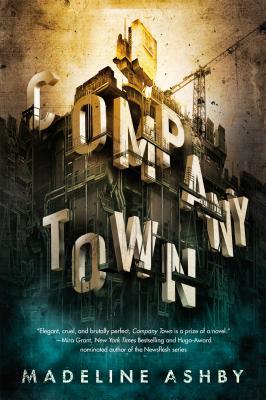 Company Town by Madeline Ashby
Mogsy’s Rating: 4 of 5 stars
Genre: Science Fiction
Series: Stand Alone
Publisher: Tor (May 17, 2016)
Length: 288 pages
Author Information: Website | Twitter
I was so excited to finally get my hands on Company Town, a book which had been on my to-read list for years going back to the days since it was first announced by Angry Robot. While the original publisher’s sale followed by the novel’s move to Tor resulted in a significant delay for its release, I have to say the wait was absolutely worth it. I was already a fan of the author, having read her seriously imaginative and seriously twisted novel vN set in an age of self-replicating synthetic humans, but with Company Town Madeline Ashby delivers a whole other level of storytelling genius.
The book takes place in New Arcadia, a city of floating towers surrounding a dilapidated oil rig in the North Atlantic just off the east coast of Canada. Three years after a major accident shook up its residents, new life has returned to town in the form of Zachariah Lynch, patriarch of a wealthy family of energy barons who buys up the place and begins development of an alternative reactor under the waves.
Our protagonist Go Jung-Hwa works as a bodyguard for the United Sex Workers of Canada, accompanying her charges to appointments with their clients. The sex trade may be a highly regulated industry in New Arcadia, but that doesn’t mean the girls don’t need protection. Because Hwa was born with Sturge-Weber Syndrome, her mother deemed it “a waste” to invest in any augmentations for her daughter, so as a result, Hwa is one of the few people in the city completely free of bio-engineered enhancements. In spite of this, she is adept at self-defense and is no stranger to getting into scraps, making her very good at her job.
Eventually, her talents come to the attention of Zachariah Lynch himself, whose fifteen-year-old heir Joel has been receiving death threats. Taking an immediate liking to the kid, Hwa agrees to work for the Lynches, becoming Joel’s personal bodyguard. However, her sudden career change could not have come at a worse time. Women from around town, all sex workers and Hwa’s old friends, are turning up murdered. The timing of these incidences are just way too uncanny to be coincidental, making Hwa wonder if the killings and the threats against Joel might be all related.
This was a highly addictive read, literally a book I couldn’t put down. I kept making excuses for myself not to stop reading (“Sleep? Who needs sleep?”), and as a result I ended up finishing this over two or three sessions in a little more than a day. I enjoyed everything about this novel, from the phenomenal world-building to the irresistible mystery surrounding the story. I also found the characters likeable, especially the protagonist Hwa, whose personality was positively magnetic. She’s definitely not one to hide her feelings about her condition and the associated port-wine stain on her face, wearing her fears and insecurity on her sleeve. However, she is also emotionally and physically strong, having weathered all kinds of challenges on her own without any help. Knowing that she’s different and living with a disorder that could incapacitate her anytime has not slowed her down. She’s a character you can sympathize with but not pity, someone whose self-doubt does not inhibit her from doing what she knows is best for herself. Despite having a rough life, she can still see the humor in things, as well as the good in people. It is this that ultimately leads her to accept the job protecting Joel Lynch, who is nothing like the “rich kid” stereotype. His personality appealed to me immediately as well, winning me over with earnest charm and innocence.
Then there was Daniel Síofra. Mere words cannot describe how much I love this character! As head of Joel’s security detail, he’s also Hwa’s boss. There’s actually a thread of romance here that took me by surprise; it is not strong nor is it a big part of the story, but nevertheless it’s one of the most satisfying romance arcs I have ever read. That incredibly intense moment where Hwa finally opens up emotionally to Síofra, the first time she has ever done that with anybody, practically had me melting into a puddle on the floor.
But while characterization was by far the strongest point, the story didn’t disappoint either. Sure, at times there was a bit too much going on, and I’m still trying to sort out my feelings about the ending (which had a mind-blowing twist!), but overall there’s no denying the allure of this mystery. The suspense was what kept me reading long into the night.
All told, I loved this book and wouldn’t hesitate to recommend this to fans of futuristic sci-fi and mystery. Hwa’s not your typical sleuth but she’s brilliant and accomplished in her own way, protecting those who can’t defend themselves. A fascinating setting along with an amazing cast of characters made Company Town an unforgettable read.

Waiting on Wednesday 05/25/16
Posted on May 25, 2016 20 Comments

“Waiting On Wednesday” is a weekly meme hosted by Breaking the Spine that lets us feature upcoming releases that we can’t wait to get our hands on!
Mogsy’s Pick
The Bear and the Nightingale by Katherine Arden (January 17. 2017 by Del Rey)
I love everything about this one: the title, the cover, the description. I am always up for folklore-and-fairy-tale-type novels, and I’m especially intrigued by the Russian inspiration. January 2017 might sound very far away right now, but hard to believe we’re actually almost halfway through the year already, so it’s not going to be that long to wait.
 “A young woman’s family is threatened by forces both real and fantastical in this debut novel inspired by Russian fairy tales.
In a village at the edge of the wilderness of northern Russia, where the winds blow cold and the snow falls many months of the year, a stranger with piercing blue eyes presents a new father with a gift – a precious jewel on a delicate chain, intended for his young daughter. Uncertain of its meaning, Pytor hides the gift away and Vasya grows up a wild, willful girl, to the chagrin of her family. But when mysterious forces threaten the happiness of their village, Vasya discovers that, armed only with the necklace, she may be the only one who can keep the darkness at bay.”
Audiobook Review: The Tower of Swallows by Andrzej Sapkowski
Posted on May 24, 2016 10 Comments
A review copy was provided by the publisher in exchange for an honest review. All opinions are my own.
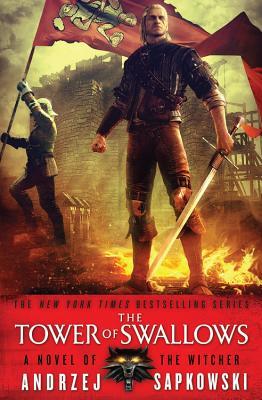 The Tower of Swallows by Andrzej Sapkowski
Mogsy’s Rating (Overall): 3.5 of 5 stars
Genre: Fantasy
Series: Book 4 of The Witcher (Novels)
Publisher: Hachette Audio
Length: 16 hrs and 25 mins
Author Information: Website
Narrator: Peter Kenny
I am so in love with these audiobooks. Peter Kenny is the incontrovertible voice of this series, making all my favorite characters come to life with his authentic reading style and superb acting. Fan translations of these books have been around for a while, but I don’t mind waiting longer if it means I can enjoy the audio editions; every time I jump into a new book, it’s like coming home to old friends.
The Tower of Swallows picks up from the end of Baptism of Fire, where the search for Ciri continues. The story begins by mirroring the intro of the previous book with a long convalescence of one of our characters, this time Ciri instead of Geralt. The young princess-turned-Witcher has adopted a new identity and settled into life with a party of young rebels who call themselves the Rats. Something happens, however, leading to her being found unconscious and gravely injured in the middle of a swamp by an old hermit named Vysogota. The old man nurses her back to health, and during her recovery Ciri tells him what happened.
Meanwhile, Geralt and his companions are still traveling together trying to find Ciri, but their precarious alliance keeps coming under fire from distrust and infighting, not to mention plenty of bad decisions. There’s also a lot of political intrigue happening in the background as their enemies keep plotting against them, and a new face of evil enters the field.
While I really enjoyed The Tower of Swallows, I have to confess it wasn’t my favorite. In fact, this was the first full-length Witcher novel in which I felt the pacing stumbled a little. After an incredibly strong beginning, the story loses steam around the halfway point when it takes a very sudden turn in a new direction. We go abruptly from fast-paced action and adventure to convoluted politics, which made the end of the book tedious and hard to understand when compared to the first half.
Still, this is a book you won’t want to miss, especially if you’ve been following along with the series, and the good parts made it all worth it. One of the things I admire most about Andrzej Sapkowski’s storytelling is the way he experiments with different narrative styles, which sometimes involve sudden jumps in the timeline and frequent switches in points-of-view. Normally I am not a fan of this; however, I love the interesting and engaging way Sapkowski does it, as illustrated at the beginning of the novel, where the events that befell Ciri are unraveled by having her share her story with Vysogota. Narrative threads are picked up, dropped, picked up again by different characters, but done in a seamless way that flows well and is easy to follow, even in the audio format.
The characters are also evolving nicely with each installment. Notably, Ciri has come of age and she is settling in as one of the series’ major characters. She’s still finding her way in this book, both literally and figuratively. Torn between her old life as a princess and her new one as a rogue Witcher, she’s frequently waffling on what she wants, and like many troubled teens she is quick to anger especially when confronted with hard truths. She may be an expert fighter, but at the end of the day she’s still just a lost young girl. Geralt is of course the other central figure, and here he suffers his own crisis of confidence, beating himself up for not doing all he can to find Ciri, at some points even convincing himself that she is dead and that his quest is futile. He also clashes with his companions, in particular with Cahir the Nilfgaardian, whom Geralt does not trust. Overall, lack of success has demoralized the party, causing rising tensions and fraying nerves. It almost makes you want to break out the popcorn and watch the fur fly.
Even though the second half is slow, the book does ends with a bang, making me excited for what’s coming next. In total, there are currently six books translated into English and produced in audio, including two that are story collections. I have a feeling all the questions will be answered and everything will come together as the series heads towards its conclusion.
Narration-wise, I really have no complaints. Peter Kenny has already won me over, and he’s probably the biggest reason why I’m such a diehard fan of the Witcher audiobooks, to the extent now where no other format will do. I’m just sad knowing that the next book will be the final entry in the saga. Regardless, I’m looking forward to seeing how it’s all going to end.
Story:  | Performance:
  | Overall:
More on The BiblioSanctum:
Wendy’s review The Last Wish (Anthology 1)
Mogsy’s Audiobook review of Sword of Destiny (Anthology 2)
Mogsy’s Audiobook review of Blood of Elves (Book 1)
Wendy’s Audiobook review of Blood of Elves (Book 1)
Mogsy’s Audiobook review of The Time of Contempt (Book 2)
Mogsy’s Audiobook review of Baptism of Fire (Book 3)
Week 3: Between Two Thorns Read-Along
Posted on May 23, 2016 11 Comments

We’re continuing with The Split Worlds read-along this week, starting with the first book Between Two Thorns! If you’re interested in joining this Read-Along, visit the SF/F Read-Along group for more information and to join the discussion.


The new season is starting and the Master of Ceremonies is missing. Max, an Arbiter of the Split Worlds Treaty, is assigned with the task of finding him with no one to help but a dislocated soul and a mad sorcerer.
There is a witness but his memories have been bound by magical chains only the enemy can break. A rebellious woman trying to escape her family may prove to be the ally Max needs.
But can she be trusted? And why does she want to give up eternal youth and the life of privilege she’s been born into?



Part 1 – Monday 9th May: Chapters 1-9, hosted by Over The Effing Rainbow
Part 2 – Monday 16th May: Chapters 10-18, hosted by On Starships and Dragonwings
Part 3 – Monday 23rd May: Chapters 19-25, hosted by OneMore.org (Imyril)
Part 4 – Monday 30th May: Chapters 26-End, hosted by Lynn’s Books

1. Sam is our fish out of water – any sympathy for his predicament?
Mogsy: Yeah, I feel pretty bad for him. Not just for the trouble he’s in with the fae realm either; it seems things are pretty crappy for him at home too, even if he did have a hand in creating that mess himself. I’m so glad Sam is playing a bigger part in the story again though, because while I have sympathy for his predicament, I also had a few laughs at his expense. The scene at the Sorcerer’s house and Sam’s ensuing confusion was hilarious.
Tiara: Everything that he’s going through from his home life to this business with the fae certainly makes me sympathize with him. I think I’m saving my sympathy to see what is going to happen with Sam’s memory because I feel like it’s probably going to all tie-in to his wife, which I have some thoughts about because of her job. Also, I don’t feel like this is Sam’s last brush with Lord Poppy, and I might have to save all my sympathy for their encounters going forward. Lord Poppy strikes me as the type of fae who will continue to be a thorn (no pun intended) and a blessing in the sides of the people he’s interested in.
2. Horatio Gallica-Rosa is claiming property to try to weasel his way into Aquae Sulis; and the Alba-Rosas are trying to weasel their way into Will’s good graces to stop him. Given what we know about Lady Rose, do we believe in the inter-Rosa feud, or is this all part of a plan? (if so, what do you think it is?)
Mogsy: Currently I have no reason to think that the feud is anything more than it seems, but the lords and ladies of these houses are all so mercurial, who knows what might happen? It could go either way at this point, I’m just along for the ride.
Tiara: I think it’s all part of the plan. Supposedly, they don’t get along, but all their actions are pointing toward something to gain by playing a sort of good cop/bad cop routine as it were. Will and Cathy’s families are both very powerful, and now, there’s this talk of property. It seems like one side of the family is set up to offend everyone and the other is set to get in their good graces and likely infiltrate the society since NEITHER set of Rosas are accepted right now, but they seem to want to be part of it for some reason that I can’t really discern at this moment. Being part of society and being admired by all seems to be more important any feud. It’s all too easy to connect. There’s no real mystery there with their actions. I’ll be more surprised if they’re in fact not working together.
3. We get to see a lot more of Will this week. What do you make of him now we’ve got to know him better? Do you think Cathy should give him a chance?
Mogsy: I think this section actually paints Will in a more positive light, and his character is starting to grow on me. He’s clearly trying to make the best out of their situation, and honestly, Cathy is responding to his olive branch by being such a spoiled little brat. I can appreciate the fact she’s angry, but it’s not like lashing out will do any good. I think Will said it the best when he effectively told her that she doesn’t have to be happy with their impending nuptials, but at least she could be civil.
He also seemed genuinely concerned and angered she he saw the bruises Cathy’s father left on her arm. There may be hope for Will yet.
Tiara: Well, this certainly makes Will seem a bit better since he does seem to care about Cathy’s well-being. I thought his suggestion that Cathy meet him halfway was a good one, but it still seems to be to his benefit mostly. Meet him halfway on his terms. I don’t necessarily fault Cathy for not giving him that much. However, constantly heaping anger on him for something that neither of them can really prevent isn’t exactly helping either. Giving him some understanding of why she feels the way she does would be a step up into making an ally of him. Honestly, this section really reminded me why fantasy of manners stories can make my head hurt. Also, I’m going to take the side of anyone who just wants to eat chocolate and play Mass Effect.
4. No sooner has Cathy survived Society – after a fashion – than she’s back in deep water with the Sorcerer and sent to Exilium. How well do you think she handled Lord Poppy?
Mogsy: I think she handled herself well, and did what she could to keep herself and Sam safe. Although, maybe I was just feeling the residual annoyance from Cathy’s behavior with Will, but I was pretty irritated by the way she just bargained away Sam’s memory without a moment’s thought. I get that they were desperate to get what they need and then get the hell out of Exilium, but technically it wasn’t hers to give and I can’t help but feel a bit indignant on Sam’s behalf. Cathy should know better than most how Lord Poppy operates, and I have an unsettling feeling this encounter is going to come back later and bite them in the ass.
Tiara: Well… it was what it was. I’m surprised it didn’t turn out much worse than it actually did.
Book Review: The Fifth Season by N.K. Jemisin
Posted on May 23, 2016 12 Comments
“Tell them they can be great someday, like us. Tell them they belong among us, no matter how we treat them. Tell them they must earn the respect which everyone else receives by default. Them them there is a standard for acceptance; that standard is simply perfection. Kill those who scoff at those contradictions, and tell the rest that the dead deserved annihilation for their weakness and doubt. Then they’ll break themselves trying for what they’ll never achieve”
 The Fifth Season by N.K. Jemisin
Genre: Fantasy, Dystopia, Apocalyptic
Series: The Broken Earth #1
Publisher: Orbit (August 2015)
Author Info: nkjemisin.com
Wendy’s Rating: 4.5 of 5 stars
There is so much to say about Jemisin’s work, which I have avidly added to my bookshelf since falling in love with The Hundred Thousand Kingdoms. That’s not to say I have enjoyed every aspect of her storytelling–The Dreamblood Duology let me down in some ways–but I do love that the stories she tells are so unique. In a genre filled with the same old same old, it’s such a delight to read worlds that are so different from our own–and yet not so different after all.
In The Fifth Season, Jemisin introduces us to the Stillness, where every few years or decades or centuries, a great seismic event ushers in a new Season, destroying life before it. But not all life. While the events are apocalyptic in scale, humanity still finds a way to survive and rebuild and prepare for the next occurrence. There is stonelore that speaks of these events, but as with all history, there are pieces missing–whether through genuine loss, or deliberate removal or alteration–and at the heart of everything are the orogenes–people born with the biological ability to “sess” the power of the Earth and shape it to their will. Such power is dangerous for obvious reasons, but it can also be used to the benefit of those around them. Orogenes ought to be revered for their abilities, if not at least respected, but of course, they are not.
The story is told through the eyes of three orogones: Damaya, a young girl taken by a Guardian to learn the ways of the Fulcrum in order to become an instrument–a weapon–of those in command, Essun, a mother whose abilities are revealed when her child is murdered by his father for being an orogene, and Syenite, a four-ring Fulcrum adept tasked with a mission she could care less for save that it is a way for her to advance in her ranks.
Essun’s chapters are the most compelling to me because they are told through second person–a very unique perspective that I can’t recall coming across before. Jemisin plunges you into her mind, forcing you to empathize with a woman who must pick up the pieces of her life in the aftermath of her son’s brutal death. Perhaps it was easy for me to identify with her, being a mother myself, but perhaps it does not take much to understand the pain such a loss would cause. I have reason to suspect the entire book was intended to be told in this perspective, but I’m glad that was changed.
None of the characters in this book are likable. That is not to say they are not written well. Rather, for various reasons you discover as you go along, they are not the kind of people that you’d actively seek to befriend–and they have no interest in befriending you, which, once again, is unusual in writing. Usually readers are presented with a protagonist that you want to love and respect and cheer for, but can that be said of the irascible Syenite? This is a far cry from my reading experience with Jemisin’s Inheritance Trilogy where I continue to want to cuddle all of these characters for days (and even named my cat after Nahadoth). But this is by no means a criticism of this book. Syenite, Damaya, and Essun may not have endeared themselves to me, but that did not make their journeys any less compelling as Jemisin weaves the plot around them and reveals little by little (or a lot in a particular chapter where that last tidbits of info pour out all at once in what felt like a bit of a rush).
The Hundred Thousand Kingdoms remains my favourite of Jemisin’s work because it hit me so hard emotionally and has stayed with me since, but The Fifth Season is no less powerful, albeit in a different way. Like a slow rumbling beneath the surface that threatens to swallow me whole…

YA Weekend: The 100 by Kass Morgan
Posted on May 22, 2016 13 Comments

 The 100 by Kass Morgan
“Although the astronomical event of a lifetime was playing out right before his eyes, he was looking only at her.”
Genre: Science fiction, post-apocalyptic, young adult, romance
Series: The 100 #1
Publisher: Little, Brown and Company (September 2013)
Wendy’s Rating: 2 of 5 stars
I didn’t bother with CW’s The 100 because I am a YA snob and didn’t want to watch a show that reduced young adults to the sum of their private parts with a dash of Lord of the Flies drama, but reviews from reliable sources prompted me to change my mind. It started out proving my fears to be reasonably well founded, but, as the story of 100 young adults sent to a ruined earth to see if it was survivable progressed, the kids started to put their big boy and girl pants on. Moreover, it wasn’t just about the kids on the ground. It also focused prominently on the adults above, and later below, and how they all deal with this new world together–or apart.
Lost meets Battlestar Galactica is the easiest way to describe the show (it even features actors from both, which made me overlook my initial frustrations), with an excellent concept at its base: three generations after a nuclear winter, the survivors of the cataclysm have found that their orbital home, the Ark, is dying. Air is precious, which is why criminals over the after of 18 are punished with immediate death by “floating” out into the cold, cold vacuum of space. 100 juvenile delinquents are sent to earth wearing life monitoring bracelets to determine if the earth is ready for its spacebound children to return. The 100 are canaries in the mine.
I learned that the show was based on three books. I also learned that the books weren’t that great. Not surprising. Sometimes poorly written books with a great idea behind them make for the best kind of viewing entertainment. But then I learned that there was more to it. The concept, starting with the title, was brewed up in a think tank at Alloy Entertainment. A manuscript by Morgan was set in play and eventually a publishing deal with reached for two books. Meanwhile, the idea was also pitched to Warner Bros as a pilot that was immediately snapped up even before the books were done.
“In the beginning the novel informed the TV writers about the world, the characters, and the story. But they are full steam ahead in the writers’ room for the show. I’ll continue to work with Kass on our stories, and details will be threaded into the show, but there will be differences; we’ll see how much it parallels.” [X]
To me, having watched the show and now read this book, it feels like the two groups were given point form notes on major plot points surrounding the characters Morgan created, and then went their separate ways. In my mind, the result goes something like this:
Script writers: In this scene, we can use this, this, and this to build various societies on the earth and deal with the issues on the Ark and bring that down to the earth, oh and maybe we can get rid of these characters here but expand on these characters and make this one way more useful and…


Morgan: In this scene, I can make people kiss, kiss some more, or at least think about kissing.

The latter seems to be all well and good for some people who like the book, most of whom are deeply invested in the show’s various romances. And certainly, there are romances, and many of them are great. But that’s not what the show is about. The book on the other hand, centres every scene around romance, with one character actually risking everyone’s lives to do a thing for the girl he loves. And it makes that particular character and his utter lack of development beyond this plot point just… ugh. Not that any of the other characters develop much either — “Except, unless of course, you consider falling in love a character development,” writes one reviewer, which seems to be the consensus for those of us who dislike the book, whether or not reviewers have seen the show. The book takes such a superficial run at this amazing concept, focusing instead on scenes that rarely stray away from who wants to make heart eyes at whom, jealousy, and occasionally applying bandaids to wounds or going hunting in order to actually achieve that survival thing they were sent to earth to do.
I almost feel bad for Morgan and the apparent fact that she had no contact with the script writers to compare notes, leaving this all to the gods of “We’ll See” to see how things match up. Understandably, the show has to pad things out to fill a 13-16 season ark based on just a concept, but the book ought to have done the same. Instead, there was no world building, no character development for the four protagonists it follows, no dramatic conflict, sparse descriptions…
But hey. Ballarke fans can rest happy on their ship. Who cares about plot and purpose.

Mogsy’s Bookshelf Roundup: Stacking the Shelves & Recent Reads
Posted on May 21, 2016 33 Comments
Bookshelf Roundup is a feature I do every other weekend which fills the role of several blog memes, like Stacking the Shelves where I talk about the new books I’ve added to my library or received for review, as well as It’s Monday! What Are You Reading? where I round up what I’ve read since the last update and what I’m planning to read soon. Mostly it also serves as a recap post, so sometimes I’ll throw in stuff like reading challenge progress reports, book lists, and other random bookish thoughts or announcements.

Received for Review
Some really exciting new arrivals this week, my thanks to all the publishers for the review copies received! For more details and full descriptions of the books, be sure to click the links to their Goodreads pages!

Age of Myth by Michael J. Sullivan – This wonderful surprise came earlier in the week, courtesy of the kind folks at Del Rey. I had already requested an e-galley, but receiving this beautiful bound book was no less exciting. I can’t wait to visit Michael J. Sullivan’s world again, even though this story will take place thousands of years before his Riyria novels.
Welcome to Deadland by Zachary Tyler Linville – My thanks to Inkshares for sending me an ARC of this book, the winner of Nerdist’s first publishing contest last summer. A coming-of-age, coming out story set in post-zombocalypse Florida, look out because this is not going to be your average zombie story!
The Big Sheep by Robert Kroese – My thanks to the author and Thomas Dunne Books for sending me an ARC of this sci-fi novel described as perfect for fans of perfect of Philip Dick’s Do Androids Dream of Electric Sheep, Terry Pratchett’s Guards! Guards! and Scalzi’s Old Man’s War. Sounds right up my alley!
The Order of the Eternal Sun by Jessica Leake – Surprise arrival from Night Shade Books, but this historical fantasy debut set in the opulence of Edwardian London society actually caught my eye earlier in the year, so I’m definitely going to try and give this one a read later this summer. With thanks to the publisher.
Ghost Talkers by Mary Robinette Kowal – Speaking of catching my eye, this next book, described as a historical fantasy set in World War I about military intelligence and spiritual mediums, has been blipping all over my radar recently. I was psyched when a copy showed up one day on my doorstep. My thanks to Tor Books.
Nebula Awards Showcase 2016 edited by Mercedes Lackey – My thanks to Pyr Books for this finished copy! I know I’m terrible when it comes to anthologies, but one day soon I’d love to check out these fantastic Nebula Awards Showcase collections.
The Sight by Chloe Neill – Book two of the Devil’s Isle series and sequel to The Veil. I’ll have to make some room for this one in August, since I had fun with the first book last year. My thanks to NAL!
Ornamental Mandalas by Jennifer Lankenau – A slim package arrived from Diversion Books last week, making me puzzle for a bit about what it could contain. It turned out to be this coloring book filled with gorgeous mandala designs! I’m actually really excited, since at the moment I don’t own any mandala themed coloring books and I’ve been poking around the net lately trying to find a good one. Flipping through this, I could tell it was exactly what I was looking for. I’m sure it’ll take me a while to color up some of these gorgeous mandalas, but once I get a few pages done I’ll be sure to review it for my Color Magic adult coloring book feature. Huge thanks to the publisher!
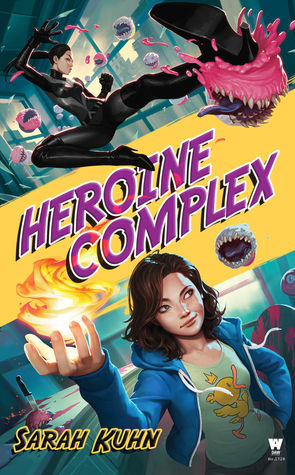
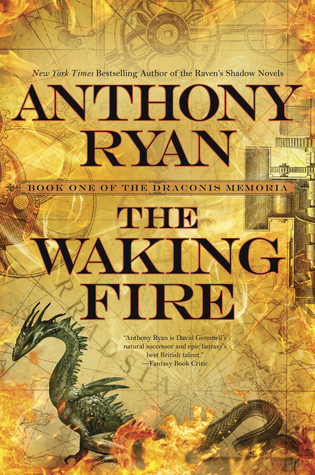


Heroine Complex by Sarah Kuhn and The Waking Fire by Anthony Ryan – I spoiled myself a bit on NetGalley this week, since I’ve been doing pretty well keeping up with the feedback. Both these books are on my highly anticipated list for this summer. My thanks to Ace/Roc/DAW!
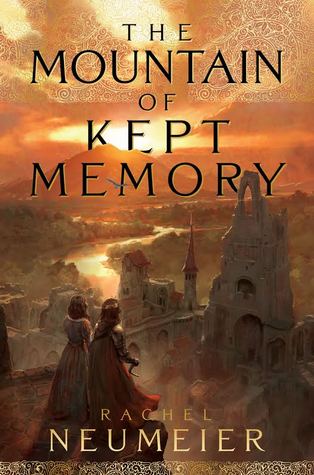
The Mountain of Kept Memory by Rachel Neumeier – I also one-clicked this beauty because I could not resist the following blurb in its description: “gorgeous fantasy in the spirit of Guy Gavriel Kay and Robin McKinley.” I’ve wanted to read this author for a long time. Thank you, Saga Press!
The Apartment by S.L. Grey – I’m a huge fan of Sarah Lotz, who writes with Louis Greenberg under the pseudonym of S.L. Grey. As soon as I saw this, I put in a request. Sounds like one creeptastic psychological horror/thriller! My thanks to Anchor Books via Edelweiss.
The Sudden Appearance of Hope by Claire North and The Tower of Swallows by Andrzej Sapkowski – This is a fantastic month for audio listening, and I would like to thank Hachette Audio for sending me these two audiobooks for review. After the mind-blowing ride that was Claire North’s Touch, I am hoping her latest novel will be another winner. And The Tower of Swallows is of course the next installment of the hit Witcher series. Feels like I’ve waited forever for this to come out.
Reviews
Here are all my reviews since the last update, gathered together and listed here for your convenience and viewing pleasure. These last couple of weeks were simply stellar, with everything coming in north of three stars.
Star Wars: Bloodline by Claudia Gray (4.5 of 5 stars)
The Voodoo Killings by Kristi Charish (4.5 of 5 stars)
Admiral by Sean Danker (4 of 5 stars)
Roses and Rot by Kat Howard (4 of 5 stars)
Warcraft: Durotan by Christie Golden (4 of 5 stars)
The Star-Touched Queen by Roshani Chokshi (4 of 5 stars)
Lovecraft Country by Matt Ruff (4 of 5 stars)
The Summer Dragon by Todd Lockwood (4 of 5 stars)
The Children of Earth and Sky by Guy Gavriel Kay (3.5 of 5 stars)
Too Like the Lightning by Ada Palmer (3.5 of 5 stars)
Roundup Highlights:


What I’ve Read Since the Last Update
Here’s what I’ve been reading lately. It’s been another somewhat light roundup, since I’m still in the middle of reading the first five or so chapters of all our SPFBO entries. Right now I’m about a third of the way through our batch of 30 books, so I’m feeling comfortably on track (and I’m chuckling to myself here, since I often find myself using my workout time on the treadmill to review SPFBO books – yes, I can read and run!) However, I’ve managed to chisel down my review pile some more with the following completed books. Those that haven’t been reviewed already will be coming up soon, so stay tuned.
(Also, I swear that I did not color coordinate; all my books this week coincidentally just happened to fall into one of two color schemes. Though fine, I did fudge it a little by using the old cover of Last Call at the Nightshade Lounge, because you know, the green kinda ruins the effect.)


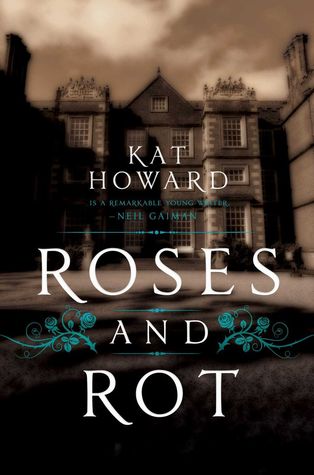
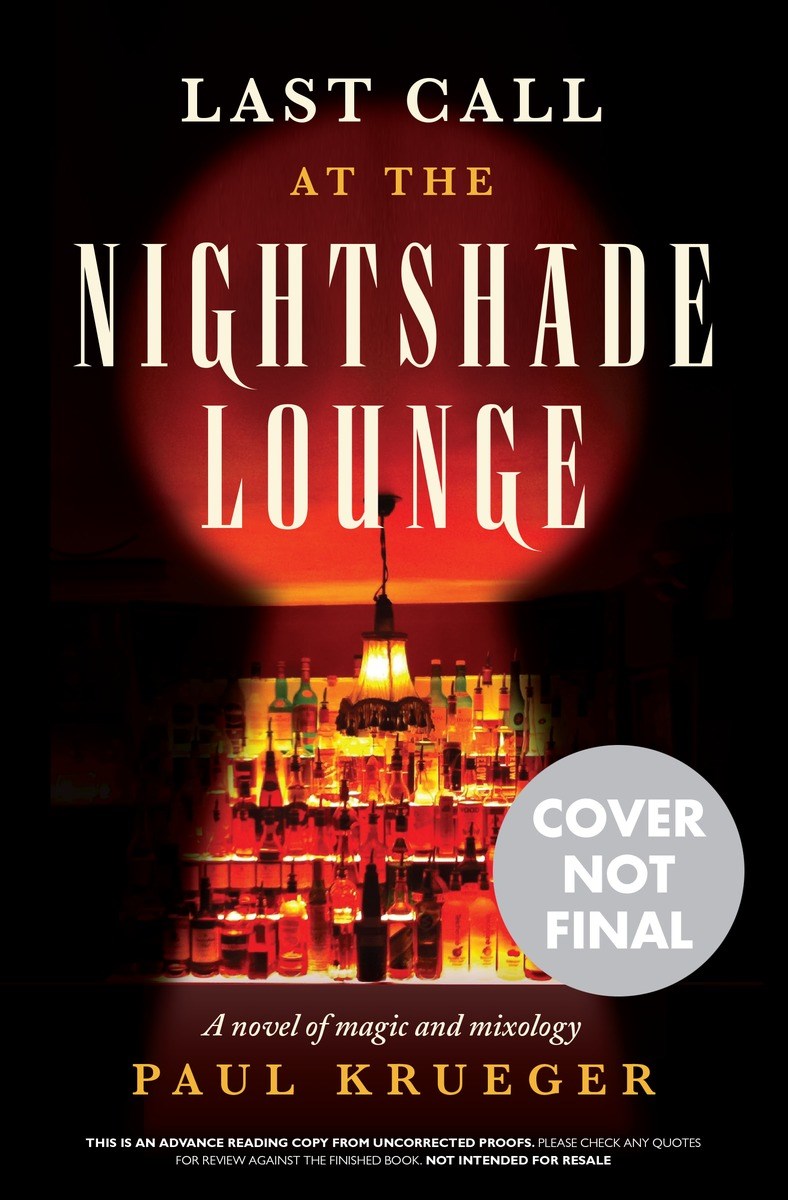
Have you heard of or read any of the books featured this week? What caught your eye? Any new discoveries? Nothing makes me happier than sharing my love for books, so let me know what you plan on checking out. I hope you found something interesting for a future read! Until next time, see you next Roundup!


 The BiblioSanctum