Book Review: False Hearts by Laura Lam
Posted on July 17, 2016 17 Comments
A review copy was provided by the publisher in exchange for an honest review. All opinions are my own.
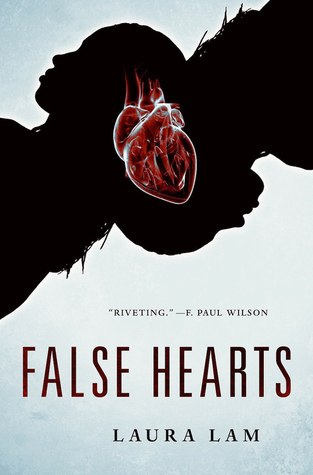
Mogsy’s Rating: 4 of 5 stars
Genre: Science Fiction
Series: Book 1 of False Hearts
Publisher: Tor (June 14, 2016)
Length: 384 pages
Author Information: Website | Twitter
I really enjoyed this book. Clearly author Laura Lam has been busy honing her craft in the years since her debut Pantomime, the novel that first introduced me to her wonderful writing and storytelling. She’s taken those skills to a whole other level with False Hearts–a very different novel from her previous work to be sure, but it’s no less gripping and emotionally impactful.
Taema and Tila are two of the most amazing characters you’ll ever meet. For one thing, for the first sixteen years of their lives the sisters shared one heart. Even though this book takes place in a high-tech future where most medical conditions have been eradicated or can be cured, the conjoined twins were born to parents who were members of a cult that rejects any kind of advanced technology and medical treatments. In the closed compound of Mana’s Hearth where access to the outside world is limited, the girls grew up under the tutelage of a cult leader called Mana-ma, participating in the kind of mind exercises that keep all the Hearth’s members happily brainwashed. However, knowing that their shared heart will fail one day, worn down by the strain of supporting two bodies, the girls manage to escape Mana’s Hearth to San Francisco where they are surgically separated and given new mechanical hearts.
The main story of False Hearts actually starts ten years later, after Taema and Tila have both pursued their own lives separately but still remained close. One night, Taema is preparing dinner when Tila suddenly bursts into her apartment, terrified and covered in blood. The police arrive to arrest Tila, claiming that she killed someone, but Tila insists that she didn’t do it and Taema wants badly to believe her. After all, separated or not, after everything they’ve gone through together in their first sixteen years, she thinks she knows her sister better than anyone. Tila couldn’t have done it, she isn’t capable of being a murderer…is she? Just how much does Taema know about Tila now that they’ve been living their own lives for the past decade? As Taema embarks on a mission to save her twin, she begins to wonder if perhaps she has been wrong about everything. It turns out that Tila has been involved in some very dark and dangerous activities, and now her secrets are the only hope for Taema’s own survival.
While Taema is working undercover for the police to try to clear her sister’s name, Tila starts writing about her past in a journal as she waits in a holding cell for her upcoming trial. In this way, two stories are woven together, the past and the present unfolding side by side. This duality is further emphasized by the differences in the twins’ personalities. Tila is the more open and outgoing sister who pursued a career in art before getting hired to work at one of the city’s hottest nightclubs. There she works as a hostess to clients who come to the club to experience Zeal, a drug that allows its users to live out their deepest darkest fantasies in a dreamscape. In contrast, Taema is the more reserved, quiet and introspective one with few close friends. The differences between the two women can be seen in the way they speak, think, and act, and I thought Lam did an incredible job giving each twin a unique voice.
I also really enjoyed the book’s atmosphere. The dual themes continue, as beneath the bright and shiny surface of this futuristic version of San Francisco (where crime is supposedly non-existent) there actually lurks a dark and violent side of the city, where a criminal organization called the Ratel holds all the power. And while the use of Zeal has helped many people live happier and healthier lives, for those who become physically and mentally dependent on it, it can also lead to the exact opposite. I was as shocked as Taema to go from the safe, clean environment she knows into this gritty world of treacherous gang bosses and seedy drug dens. And as if that’s not enough, the twins’ past also comes back to haunt them. There was always this air of tension that kept me on my toes, bracing for the other shoe to drop. This part-thriller, part-mystery story is addictive as hell.
Of course, sisterhood also plays a huge part in all of this. There’s a larger message in here about growing up and realizing that everyone must follow their own path. Taema’s loyalty to Tila certainly moved me, but it also felt so innocent and naïve at the end of the day, when it was clear that their lives were already diverging even when the two of them still shared a heart. Of course, the irony is that the more one tried to protect the other from change, the more they actually put them in danger, and the secrets just hurt all the more in the end. Taema and Tila both attempt to hold on to the past in their own individual ways, and it’s just one wild ride as difficult truths emerge to turn everything upside down.
I was overjoyed when I found out that Lam is planning a follow-up to this. False Hearts works perfectly fine as a self-contained standalone, but believe me when I say that I wouldn’t mind revisiting these characters or even this world if Taema and Tila’s tale is done for now. Yes, I definitely want more after this one. Highly recommended.


Mogsy’s Bookshelf Roundup: Stacking the Shelves & Recent Reads
Posted on July 16, 2016 31 Comments
Bookshelf Roundup is a feature I do every other weekend which fills the role of several blog memes, like Stacking the Shelves where I talk about the new books I’ve added to my library or received for review, as well as It’s Monday! What Are You Reading? where I round up what I’ve read since the last update and what I’m planning to read soon. Mostly it also serves as a recap post, so sometimes I’ll throw in stuff like reading challenge progress reports, book lists, and other random bookish thoughts or announcements.

Received for Review
My thanks to all the publishers for the review copies received! For more details and full descriptions of the books, be sure to click the links to their Goodreads pages.

Imprudence by Gail Carriger – For some reason I was unable to get into Carriger’s Parasol Protectorate series, but then last year I picked up Prudence, the new series starring the daughter of Alexia Tarabotti, and I loved it. I was really excited to receive this sequel, which is my current read right now and I’m really digging it. My thanks to Orbit Books for the ARC.
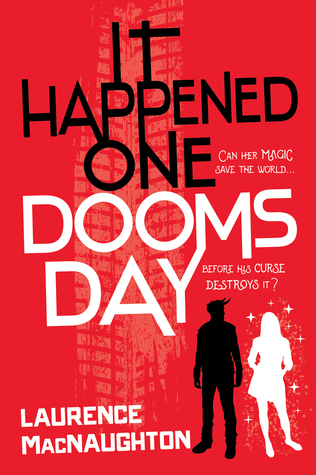
It Happened One Doomsday by Laurence MacNaughton – A finished copy courtesy of the kind folks at Pyr. I’m hoping to dive into this one later this month, and I’m really looking forward to it. In case you missed it, be sure to also check out this nifty guest post by Laurence, and you have until Friday to enter our international giveaway for a chance to win a copy for yourself, as well as a galena crystal!
Flying by Carrie Jones – This one’s new to me, but apparently it’s about aliens! I wouldn’t have guessed that from the cover, and it definitely sounds like a different kind of YA novel. I’m definitely interested in trying it. My thanks to Tor Teen!
Arabella of Mars by David D. Levine – This sci-fi novel has been on my radar for a while, but I admit I didn’t really know much about it until a copy showed up one day. The book’s description as well as a few early reviews I’ve read have really piqued my interest, so I’m going to have to make some time for it this summer. With thanks to Tor.
Red Tide by Marc Turner – Thank you Tor for also sending me book three in Marc Turner’s Chronicle of the Exile. I’m really starting to dig this series, and I can’t wait to continue!
Deadlands: Thunder Moon Rising by Jeffrey J. Mariotte – More awesomeness from Tor! Deadlands is based off the Weird West RPG of the same name. Even though I’ve never played the game, I love checking out all kinds of tie-ins and novelizations, so I’ll most likely give this one a shot. Plus, Westerns! This book is actually the second novel in the sequence, but I hope I can just jump right in. My thanks to the publisher.
Ghostbusters by Nancy Holder – Speaking of novelizations, I was delighted by this surprise arrival! I didn’t even know there was a book based off the new movie. If I don’t get the chance to see it for myself in theaters this summer, I’ll probably read this. Thank you, Tor!
Scary Out There edited by Jonathan Maberry – My thanks to Simon and Schuster for this horror anthology. It was an unsolicited ARC, but I know I’ll definitely read this! While I’m not a big reader of anthologies, its hook–a collection of short stories by authors of the Horror Writers Association writing about what they fear most–is just too good to resist.

Wolf’s Empire: Gladiator by Claudia Christian and Morgan Grant Buchanan – I’ve heard some wonderful things about this fun adventurous sci-fi romp, and I couldn’t be more excited when this finished copy showed up in the mail. Thanks Tor Books, I can’t wait to read it!
Dark Matter by Blake Crouch and The Wolf Road by Beth Lewis – Finished copies, with thanks to Crown Publishing. I’ve been wanting to read Blake Crouch for a while, ever since his Wayward Pines series took off. Dark Matter is all set to be my next read, so by the time this post goes live hopefully I should be well into it. I’ve also been hearing some great things about The Wolf Road and I’ve got it on tap for later this summer, so hopefully I can get to it soon.
Dracula vs. Hitler by Patrick Sheane Duncan – What if Dracula were brought back to life to fight the Nazis? When I saw this book, I was like, is this for real? Yes! And it’s even written in an epistolary format like Stoker’s original Dracula. I don’t have much experience with the “horror mash-up” genre, but I’m really hoping this one will work for me. With thanks to Inkshares, I’m really looking forward to trying it out.
The Devil’s Evidence by Simon Kurt Unsworth – This surprise arrival was new to me, until I did some research and realized it’s the sequel to The Devil’s Detective, which I’m familiar with but have not read. I’ve had my eye on it for a while though, so maybe this is just the motivation I need to pick up the first book. My thanks to Doubleday!
The Dragon Round by Stephen S. Power – Finished copy, with thanks to Simon & Schuster! Last week I posted my review, so in case you missed it, see the link in my review roundup section below!
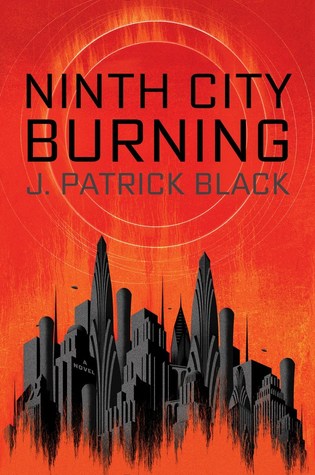

Ninth City Burning by J. Patrick Black – Alien invasions and post-apocalyptic dystopia! I’ve had my eye on this book for a while, and now into my e-reader it goes with thanks to Ace and NetGalley.
The Sword of Midras by Tracy Hickman and Richard Garriott – Audiobook, with thanks to Audible Studios. I’ve been following The Shroud of the Avatar game for years now, since its successful campaign on Kickstarter which I also backed. I was intrigued when I heard that game developer Richard Garriott was teaming up with Tracy Hickman to write a SotA novel, and I think it’ll be a really good book to listen to!
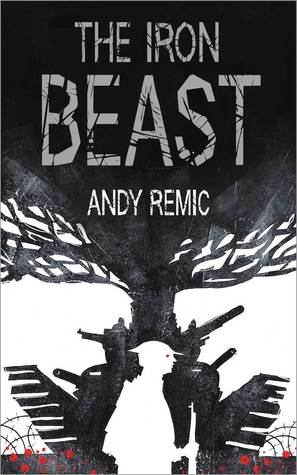
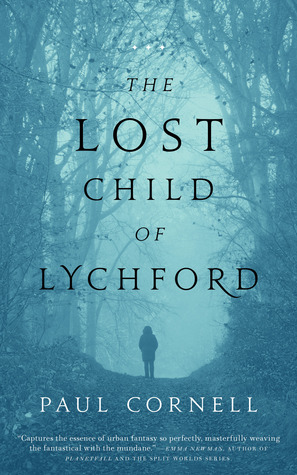
The Iron Beast by Andy Remic and The Lost Child of Lychford by Paul Cornell – My thanks to Tor.com for also sending over two more e-galleys this week. Both are sequels to novellas I still need to read, so looks like I need to get moving!
Reviews
Here is a roundup of my reviews since the last update. So. Many. Great. Books. I couldn’t choose just one to highlight this week, so I picked the three that really stood out for me.
Red Queen by Christina Henry (4 of 5 stars)
The Edge of Worlds by Martha Wells (4 of 5 stars)
Hope and Red by Jon Skovron (4 of 5 stars)
Borderline by Mishell Baker (4 of 5 stars)
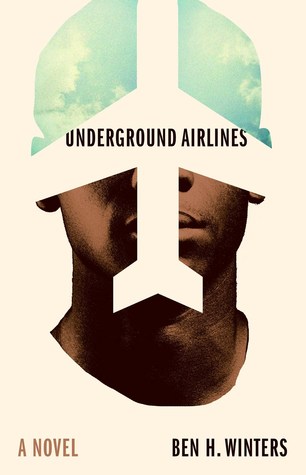
Underground Airlines by Ben H. Winters (4 of 5 stars)
Tracer by Rob Boffard (3.5 of 5 stars)
The Dragon Round by Stephen S. Power (3 of 5 stars)
The Transference Engine by Julia Verne St. John (3 of 5 stars)
Heroine Complex by Sarah Kuhn (2 of 5 stars)
Roundup Highlights:


Author Spotlights
My thanks to Laurence MacNaughton who stopped by The BiblioSanctum with a guest post last week!
Guest Post: “Creating Crystal Magic” by Laurence MacNaughton

What I’ve Read Since the Last Update
Here’s some of what I’ll be reviewing at the BiblioSanctum in the next few weeks, minus the reviews that are already up, so stay tuned!

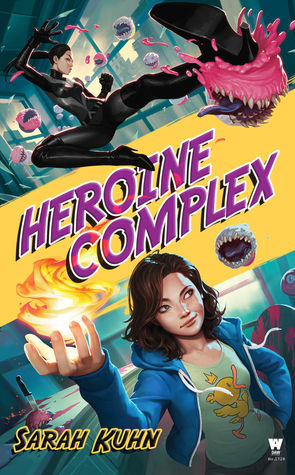
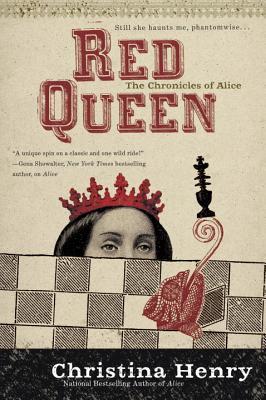
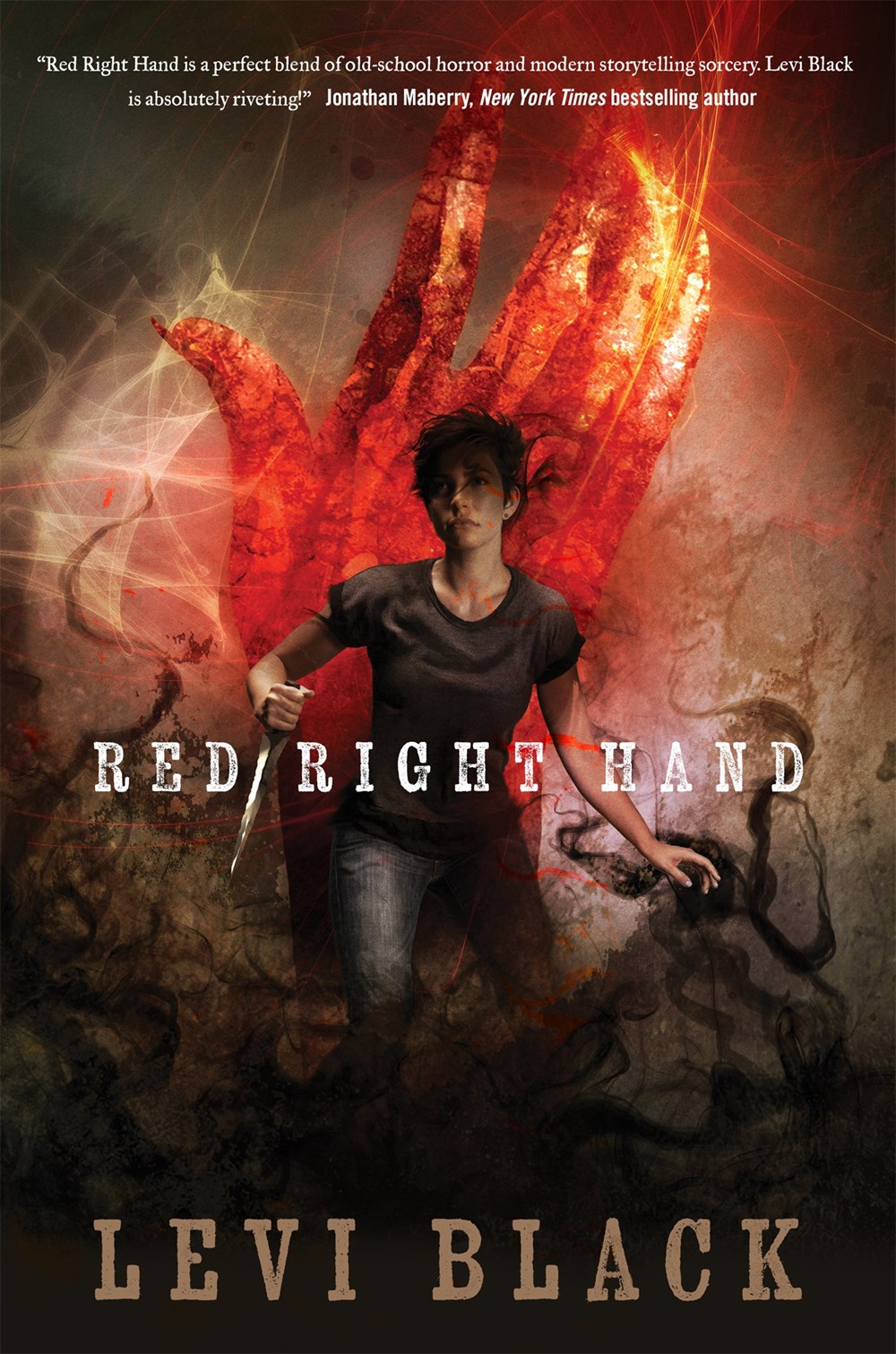
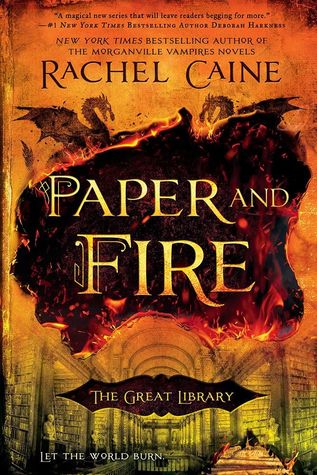
Have you heard of or read any of the books featured this week? What caught your eye? Any new discoveries? Nothing makes me happier than sharing my love for books, so let me know what you plan on checking out. I hope you found something interesting for a future read! Until next time, see you next Roundup!
#SPFBO2: Our Shortlist!
Posted on July 15, 2016 21 Comments

As we continue on into the third month of the great Self-Published Fantasy Blog-off 2, we’d like to thank everyone for their patience. Things have been definitely happening behind the scenes here! For the past 10 weeks or so, the reviewers of The BiblioSanctum have been busy poring through pages, scrutinizing details, taking copious amounts of notes, guzzling gallons of caffeinated beverages, comparing our results, arguing our cases, hammering out the specifics, all to finally bring you this huge announcement…
WE HAVE OUR SHORTLIST!
What that means is, we have now completed our read-through of the first five chapters (or approximately 20-25%) of every book in our batch of 30. After thorough discussion, the three of us have decided on the handful of books which will carry on to the next stage of our reviewing process. These are the titles that we will 1) read from cover to cover, and 2) provide with full reviews. This means that eventually, one of these will go on to the finals to compete with the picks from the nine other blogs participating in SPFBO2.
Things are heating up, and we’re very excited. Without further ado, here are the books The BiblioSanctum team has chosen to feature for a closer look. We look forward to reading these and bringing you their reviews:


![Pageflex Persona [document: PRS0000037_00035]](https://bibliosanctum.com/wp-content/uploads/2016/07/the-warlock-and-the-wolf-spfbo.jpg)


Assassin’s Charge by Claire Frank
The Alignment by Kay Camden
Beyond the Starline by Austin Hackney
The Warlock and the Wolf by Delfy Hall
Anathema: Transition by O. Rising
The Dragon’s Blade: The Reborn King by Michael R. Miller
Congratulations to the authors who have made our shortlist! We received a very strong batch of books this year, which made it extremely difficult to narrow down the field. So for those who did not make the next stage, please don’t let this discourage you. Having to choose only one book out of 30 at the end of this phase of SPFBO regrettably meant that we could only move forward with a very few, even though there were many that caught our attention. We definitely had to adopt some different, unconventional strategies for this part of the competition, which sometimes meant that we had to compromise or be extra critical–and yes, even ruthless–in our selection process. No matter what though, we just want to say it was an absolute pleasure and delight to have had a chance to read your writing, and we would like to thank everyone for all your hard work and wish you all the best for the future.
The following are some of our feedback and mini-reviews of the books that unfortunately didn’t make the cut, but we’d like to feature them and talk about them all the same. Keep in mind, our thoughts here are based only on the first five chapters/20-25% of each book. In some cases, while these books did not make our short list, they still caught our interest enough to read on outside of the SPFBO–so watch out for future reviews! If any of these titles interest you, we strongly encourage you to check them out.
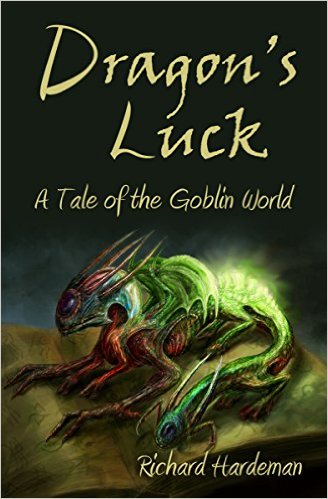 Dragon’s Luck by Richard Hardeman
Fantasy adventure, with some touches of sci-fi. The story begins with our characters somehow finding themselves on a Goblin planet. Very soon, they encounter its inhabitants and become entangled in the dangerous and unpredictable politics of this world. A winsome tale with a fun, adventurous premise and endearing characters like Dobbins who is always getting into more trouble than he can manage. There are some intriguing cross-genre elements in here like goblins and spaceships, along with other unique alien creatures with creatively quirky-sounding names. Some jokes and humorous moments provide some much welcome comic relief. The book is quite dialogue-heavy, which sets a very snappy and quick pace, but some polish is required to smooth out the conversations to make them easier to follow. This quick back-and-forth style also sacrifices development in other areas like characters and world-building, and the story needs to be fleshed out more, but there are a lot of very interesting ideas here.
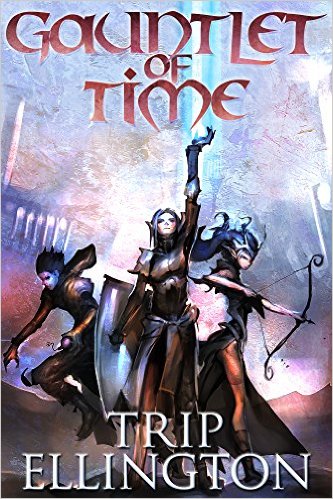 Gauntlet of Time by Trip Ellington
Fantasy, with Young Adult vibes. Xalo and his best friend Jirnik are scavengers, collecting and selling valuable things they find in order to eke out a living. One day, while out exploring a forbidden site, they encounter a desperate princess trying to escape a group of strange creatures. In her possession is a magical gauntlet, which calls to Xalo. This story feels fairly typical, and predictable. The writing is oddly extravagant in some places while sparse in others, but the descriptions of people and places are nicely done. Definitely has potential if the audience is Middle Grade to YA, and we think this cute and fun book would be an absolute delight for younger readers.
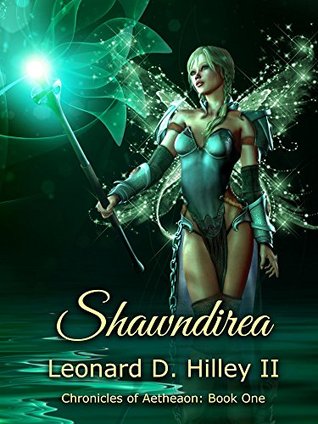 Shawndirea by Leonard D. Hilley II
Fantasy. One day while out netting butterflies to add to his collection, entomologist Ben Whytten accidentally captures a tiny faery. Feeling remorseful about shredding her wings, Ben vows to take the faery, Shawndirea, back to her realm of Aetheon. A very lovely, sweet story. Editing is required to fix some minor errors, but on the whole the writing is nice. Character emotions however are somewhat perplexing, e.g. everyone is suddenly overwhelmed with strong emotions, but those not apparently influenced by fae magic seem to act rather calm in the face of alarming circumstances. More character development would have been preferred because none of the characters here really connected with us, but this isn’t a bad start.
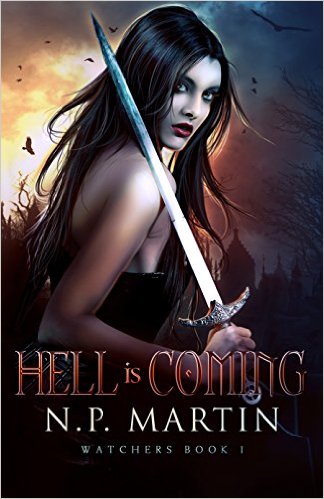
Urban fantasy, about a young woman named Leia Swanson who is just getting her life back together after addiction. All of a sudden though, she is starting to see demons all around her. Beyond the prologue and the first chapter, the storytelling became less polished and needed some tightening up and editing, but we felt the writing was decent and loved the set-up and the opening. It would have been nice if there was more build-up to Leia’s problems, and the character of her drug-dealing brother felt somewhat insensitive given Leia’s history, and he seemed only concerned with her on a superficial level without attempting to dig deeper into the cause of her troubles. Good premise overall, if a bit conventional.
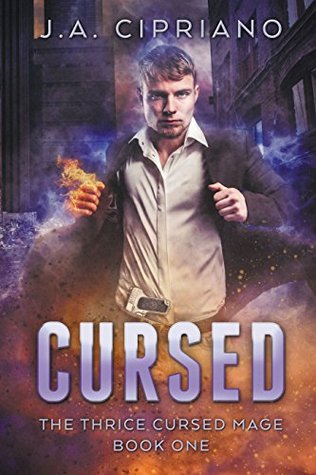
Urban fantasy. Mac Brennan can’t remember anything about himself–not who he is, not why his right arm is blackened and covered with glowing red tattoos, and certainly not why he woke up in a dumpster tonight. All he knows is he saved a young woman, and now a death cult is coming after him. Very cool and intriguing premise, though there were mixed feelings about the main character’s voice and narrative, citing awkward snarkiness and pop culture references with some wordy internal monologuing that doesn’t add much to the story. The plot also felt too convenient, and along with strained dialogue/action choices, it felt very much like events were being deliberately pushed in one direction without letting them unfold more organically and consistently.
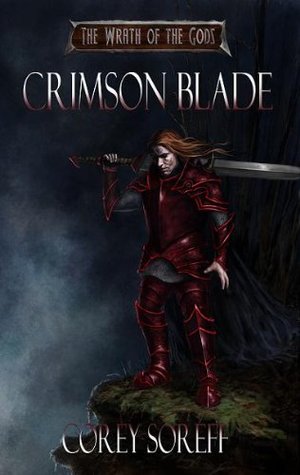
Epic fantasy about a mercenary who oversteps his bounds and offends a pantheon of gods. The angered gods then proceed to throw everything they have at him and his Crimson Blade guild in order to see them all destroyed, but the hero manages to face down all the obstacles one by one. There’s a strong RPG vibe with this one. The different gods at the beginning were compelling, though later on there are a lot of characters and elements introduced in a very short time, so there were also some issues with info dumping. Action scenes are plentiful, but some of the fight sequences are confusing and awkward due to too many things going on and the injection of multiple different PoVs to portray everything that happens. Not too terribly deep, with basic fantasy tropes, but a fun story regardless.
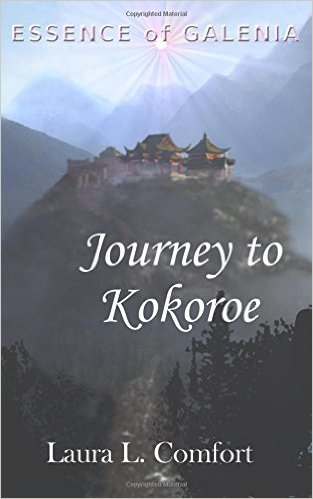 Journey to Kokoroe by Laura L. Comfort
Fantasy. A young outsider stumbles upon a small village, frightened and injured. The townspeople rush to help her, but they are also wary. The land of Galenia has been unstable as of late, as discontent between the races grow. As Hanna learns of Galenia’s destructive history from her caregivers, she resolves to help them in any way she can. Some polishing is needed to improve the flow of the writing, as the prose right now feels like a report of events, with dialogue feeling forced like the speaking is reciting world-building elements to the reader. There is a good story shaping up here, and we think it can be improved with further editing.
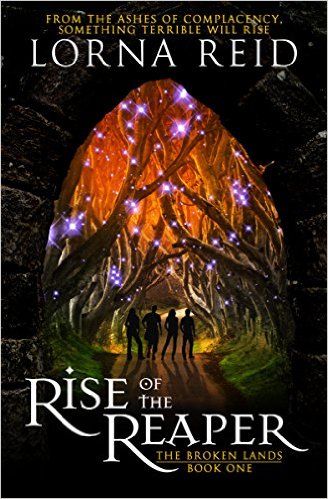 Rise of the Reaper by Lorna Reid
Fantasy, paranormal. Four teenage misfits’ lives are changed when they discover another world full of magic and darkness. The beginning introduces a lot of characters with a lot of POV switching, but generally good characterization of the four main characters Danny, Katrina, Poppy, and Russell. The writing is great, flows well, but there needs to be a better balance and spread in doling out the details and the world-building elements. For instance, when the kids pass through into the new world, readers are hit with an overwhelming amount of information in one go; things became problematic when the narrative tried to develop the story and divide attention between too many characters at all once. On the whole we thought this one had a fantastic introduction and presents a very original premise, but the first handful of chapters could have been pared down a little and tightened up.
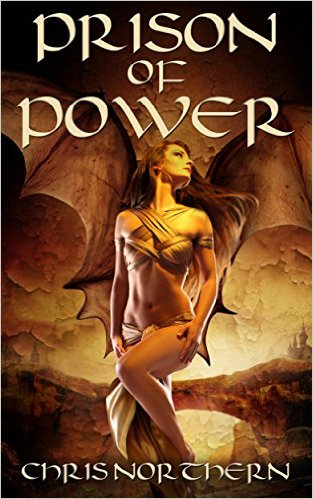 Prison of Power by Chris Northern
Epic fantasy. The Crimson Throne needs an heir, and all the powers of the world are seeking the one remaining hope for restoration. The story’s style is slightly reminiscent of Steven Erikson’s Malazan or George R.R. Martin’s A Song of Ice and Fire; however, the prose also stumbles a little from wordiness (e.g. lots of repeated words and phrases for emphasis, when brevity would have been more effective and impactful). The book starts with a big battle to draw readers in, but after that the pacing slows way down. Giving more context in the first five chapters as well as more reasons to care about the characters would be ways to improve this intro and make it more attention grabbing.
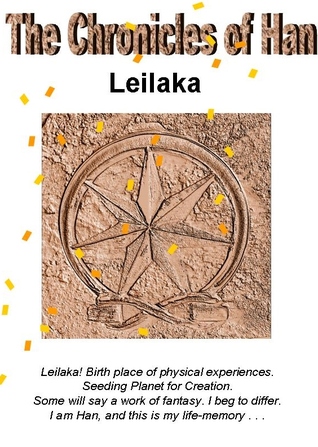
A blend of some fantasy and science fiction. 400 years after his experiences in the Creata Adventures, the protagonist Han Storm starts a new journey on a faraway planet in another universe after transforming his consciousness into a new, donated mortal body of a teenager. Upon awakening, Han turns out to have no memory of who he is, which made understanding this story difficult at the beginning. Information is related in an almost “stream of consciousness” type narrative as our main character absorbs everything that is around him while leaving readers without much background information to any element. There’s potential for this story to become more, but the first few chapters were too confusing due to the lack of follow through on any of the thoughts presented to capture us right away.
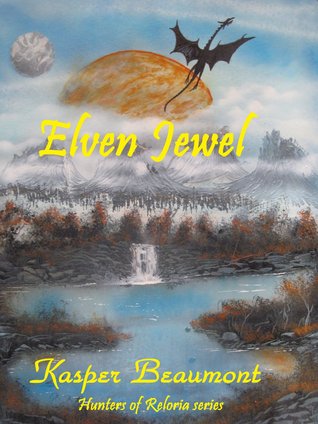 Elven Jewel by Kasper Beaumont
Fantasy. Halfling friends Randir and Fendi are playing not far from their peaceful farm village when they suddenly stumble upon an invading force of Vergai emerging through a portal. They discover the invaders’ plan to steal something called the Elven Jewel, an powerful object that sustains Reloria’s defense system. The two halflings then embark on a journey to warn the elves about the Vergai, teaming up with the other races of the land to protect their home. At the heart of this story is a standard quest narrative, with fairly common tropes. Seemingly aimed towards younger readers and feels heavily influenced by The Hobbit and The Lord of the Rings. The writing is weighed down by some info dumping here and there, and some oddly injected descriptions/exposition. Dialogue is awkward in places, like trying to fit as much information into conversations as possible, e.g. when the Vergai leader spells out his entire plan to capture the jewel in full detail, conveniently within earshot of the halflings. Some of the world-building elements are wonderful though, like the fascinating connection between the halflings and their fairies. Cute and adventurous story, but we were looking for something more unique.
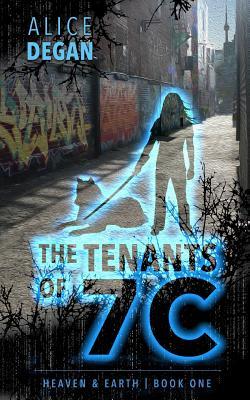 The Tenants of 7C by Alice Degan
Urban fantasy, paranormal. Welcome to 7C, an apartment with a room for rent tucked above the Heaven & Earth Bakery in Toronto’s Kensington Market. If you can’t find it, you need not apply; they’re looking for a very special kind of tenant. However, protagonist Clare is not looking for a new place to live, she has something else in mind. A short, quick read with a wonderful concept of “Others” living in secret among humans. There are some unique twists to the creatures, and interesting world-building elements. Quality of prose is high, with the writing being very smooth. Awesome character development and fascinating story with an intriguing conflict. A very strong book that almost made it onto our shortlist, so this is one we may revisit outside SPFBO and you should definitely check it out too.
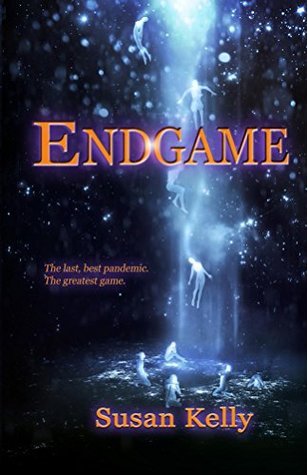
Science fiction, with dystopian elements. When the Rapture Virus came, it killed almost everyone. The book’s protagonist, video game entrepreneur Ben Gardiner has just lost his work and everyone close to him, and he’s on the verge of also losing his sanity. He decides to go looking for survivors, and ends up finding a small mysterious group of them in Montana. There are some fascinating things going on here, with the virus, the E*, the video gaming angle, etc. The large amounts of information to take in was overwhelming though, especially when delivered by characters that amount to talking heads with little more than a name to differentiate between them. Details are vague and confusing with little explanation, or, in some cases, explanations that seem to rely on a relation to gaming, but as gamers, we found the connections unclear or superfluous. We felt there could be something here, and things are certainly shaping up to be interesting, but the beginning felt like we were dropped into the middle of a story already in progress and we wanted a more immediate hook.
 Rise of the Storm by Christina Ochs
Fantasy. Religion and politics threaten to tear a realm apart in the face of a prophesied apocalypse, forcing Prince Kendryk into a decision that could be worse than war for his kingdom. The story switches frequently between several points of view, including Kendryk’s, allowing for various perspectives on the conflict from very different angles. However, there is a lack of world building within these views, resulting in some confusing elements. The aspects of religion and politics–heretical views versus practiced dogma–and the ambitions and motivations of the various characters are appealing. The simmering plot shows promise that could be better served by deeper prose and world building, as well as a bit more character development beyond the descriptions provided in the blurb to allow for more empathy for the various perspectives.
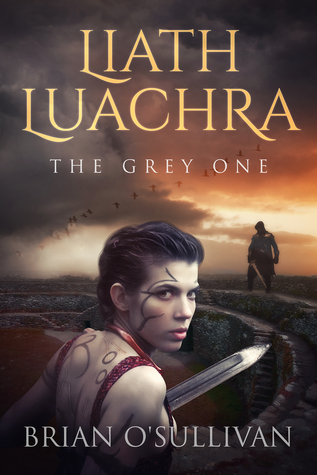 Liath Luachra: The Grey One by Brian O’Sullivan
Dark historical fantasy. It is 188 A.D in Ireland, a land of tribal conflict. The book starts with a young warrior woman called Liath Luachra (the Gray One) fighting a battle with her fellow band of mercenaries. Pleased by her prowess and potential, her battle leader offers her a mission that she cannot refuse. Writing is good, though there’re a lot of straight-up translations for the large number of Celtic terms used, which can be very distracting. Despite the battle at the beginning, the story is also slow to take off, though soon enough an interesting conflict presents itself and the character finds herself in a bit of a bind. This book was a strong contender, but it didn’t hook us as quickly as a few others did. Still, we loved the atmosphere, and there are some very strong grimdark fantasy vibes here, so it’s worth checking out if you are a fan of this sub-genre.
 An Heir to Thorns and Steel by M.C.A Hogarth
Fantasy. A young university student struggles to hide his debilitating illness from his friends and all those around him until he learns that he may actually be the heir to a magical realm where he could find healing for what ails him. Characters and their relationships are well established in the beginning, but for some of us, the conversations that dominated the first few chapters offered little progression, and the narrative and inner monologue of the main protagonist in particular tended to bog the story down. We have had some experience with this author before and appreciate their conscientious handling of elements such as religion, sexuality, and politics and hope the protagonist’s disability will be handled with similar respect.
 Descended from Dragons by Tricia Owens
Urban fantasy, paranormal. Anne Moody is a dragon sorceress running a cursed pawn shop in Las Vegas, selling anything you can imagine to the desperate and curious people of Sin City. Not much happens at the store usually, but one day a handsome young man comes in hoping to sell a gargoyle statue that is more than it appears. Reads like your typical urban fantasy, nothing too different, but regardless this feels like light, fun fare. The Vegas setting is delightful, as is Anne’s secret life as a sorceress with a familiar-like dragon companion. We enjoyed the casual dialogue and sense of humor, and the way supernatural details are tossed in almost nonchalantly at first, and then get more complex as Anne’s secrets are revealed. Another strong entry that almost made it onto our shortlist, and we’re curious to see where the story could lead, with hopes that the more unique angles will be explored. Recommended for fans of UF.
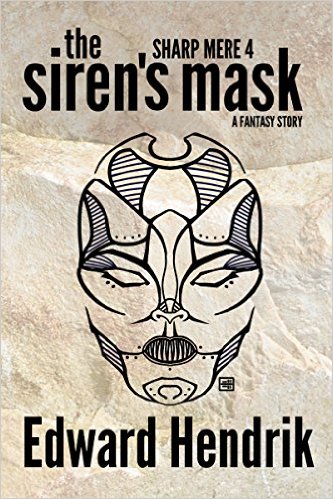 The Siren’s Mask by Edward Hendrik
Fantasy, paranormal. A story about a siren prisoner who just wants to escape her cruel captors. Her only hope is a brusque eunuch, but what are the chances that he’ll help her? This is a strange story with a bit of enticing mystery. The introduction was well done, and the siren’s transformation is curious. However, when the narrative changes course to describe the happenings of the here and now, the story loses a bit of its magic. There are extensive paragraphs about seemingly trivial matters, as well as a bulk of one chapter taken up to describe privy duty, when more focus could have been on more “big picture” world-building. The book is also in need of some editing work with grammar and punctuation issues. An interesting beginning, but plot needs a little more polishing and streamlining if it’s to really grab the reader.
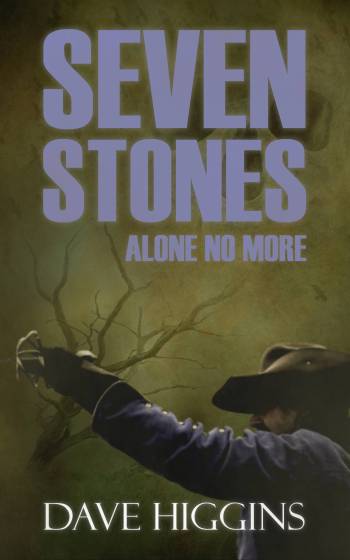
A short work that collects the first nine parts of “Seven Stones”. Traveling preacher Absolution Kobb arrives in the village of Morth to disdain and suspicion, and it doesn’t take long before a misunderstanding leads the townsfolk to accuse him of grievous assault. However, a powerful evil also stalks this land, and before long everyone in the village is under attack. Unfortunately this one may be too short for SPFBO consideration, and its bite-sized format also greatly limits plot and character development. The rough, gritty atmosphere is excellent though, and there’s even some dark humor. If you enjoy fantasy with strong western vibes, and don’t mind the short length, this is worth checking out.
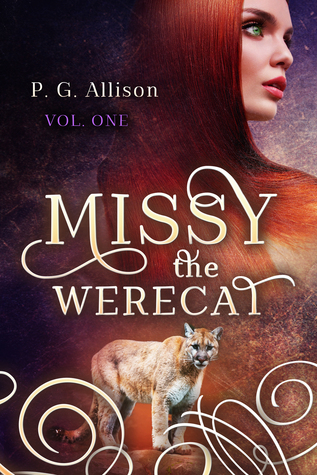 Missy the Werecat by P.G. Allison
Urban fantasy, paranormal. Missy is a werecat. Puberty first brought on her shift, and she goes into the mountains where she spends for the next two years trying to learn how to master her abilities and change back. Her disappearance leads everyone to believe that she was kidnapped. The story might have had some potential, but none of us were able to get very far into this book, with the writing being cited as the main issue.
![Pageflex Persona [document: PRS0000026_00036]](https://bibliosanctum.com/wp-content/uploads/2016/07/malediction.jpg?w=94&h=150) Malediction by Hans Cummings
Malediction by Hans CummingsFantasy. Pancras, a mage who has left necromancy behind, is drawn away from his usual dealings with demons by the petty demands of the Mage’s Guild. Setting out on a journey with his friends, he expects the trouble to be at the end of his journey, but that’s not usually how these things work out. Nice to see a book that embraces fantasy by offering readers a world from the perspective of a minotaur, lizard creatures, and fae, instead of the typical humans. The journey Pancras is set to take promises an interesting adventure, as do the cryptic words of a dragon, but the story could benefit from a bit more world building. Descriptions are grandiose in some places, but then sparse in others. The physicality of the main characters in particular could use some polish as they often come across as far too human in their actions, despite their fantastical nature.
 Frontier World by Jedediah Kurth
Science fiction with some urban fantasy elements. Rick Anderson is just your average high school student with a crush on Mara Friti, a girl from his history class. But Mara turns out to be no ordinary girl. Just when Rick finally scores a date with her, he finds out she’s not even human. And not only is Mara actually from another world, she’s already betrothed. A short novel with a funny premise, and while the plot succeeds at being humorous and absurd, the writing needs improvement and the story is not well developed.
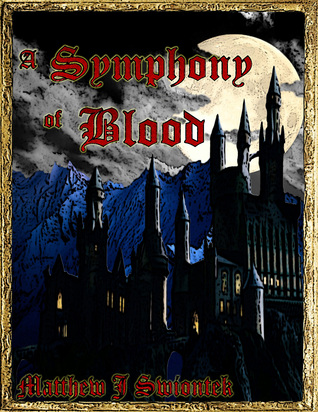 A Symphony of Blood by Matthew Swiontek
A novella-length dark fantasy, adventure. A talented young scribe recounts the adventures of the famous monster slayer, Gerhold of Vilheim. In one of his quests, Gerhold is hired to kill a vampire after the creature had kidnapped the wife of a lord and taken her hostage. In the first stage of our reading, one of the factors we kept in mind while choosing which books to go forward with is its uniqueness, or inventiveness. This book was fun, but the main character and story bore too many resemblances to Geralt of Rivia of The Witcher novels and games for us.
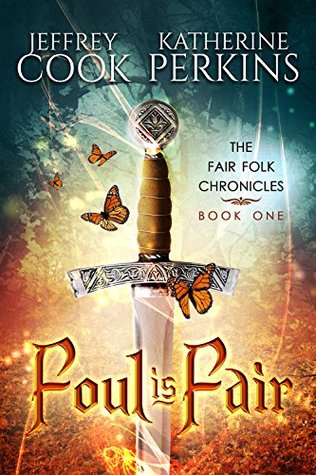 Foul is Fair by Jeffrey Cook & Katherine Perkins
Paranormal fantasy, with strong YA elements. Megan O’Reilly thought she was just your average teenager, even though she’s had some occasional issues in school and she also has to take medication for her ADHD. But then she finds out there’s a lot more to her life. She finds out she’s not even entirely human. Somewhere beyond this world is also another realm, where a Fae conflict rages. Megan learns that her father is over there and he needs her help. While the insight into the main character’s ADHD was appreciated, it also felt like her experience wasn’t woven into the story deeply enough to give the situation more depth. Megan’s friend Lani’s actions were not only very dangerous and alarming, they also changed the emphasis on Megan’s challenges. The characters and story could have used more feeling, which could be related to the writing style. The prose was weighed down by some oddly worded phrases, trivial details, and stiff sentence structure. However, we did like the major plot ideas here, but felt perhaps they needed to be presented a little sooner.


Book Review: Red Queen by Christina Henry + Alice Giveaway
Posted on July 14, 2016 10 Comments
***The giveaway is now over, thank you to everyone who entered!***
A review copy was provided by the publisher in exchange for an honest review. All opinions are my own.
Mogsy’s Rating: 4 of 5 stars
Genre: Fantasy, Retellings
Series: Book 2 of The Chronicles of Alice
Publisher: Ace (July 12, 2016)
Length: 304 pages
Author Information: Website | Twitter
Red Queen is the sequel to Alice, Christina Henry’s dark and twisted novel reimagining of the characters and worlds of Alice’s Adventures in Wonderland. Considered to be both a retelling as well as a continuation, the first book impressed me with its portrayal of a whole different side of Lewis Carroll’s classic, and I’m pleased to report this follow-up is a very worthy conclusion to The Chronicles of Alice duology.
After spending ten years in a hospital ward for the insane, Alice is finally free. Alongside her fellow prisoner Hatcher, they’d made their way through the Old City, escaping the evil clutches of the Magician crime lords. But now they’ve come to the outskirts, a land that is supposed to be full of lushness and beauty, only to find that everything—including their hopes—has been burned to ash. But Hatcher still has to find his daughter Jenny, so the two of them decide to press on towards the mountains.
Passing through the forest though, Alice and Hatcher are waylaid by many obstacles—from a murderous goblin to a trio of monstrous giants. Worse, they eventually become separated, and Alice stumbles alone upon a village full of terrified townsfolk, who tell her about the evil queen responsible for all the bad things in this part of the land. Determined to help the villagers and save her beloved Hatcher, Alice decides to harness her newfound magic and head up the mountain, where she will confront this mysterious queen and break her wicked hold on the forest.
While darkness still permeates everything about Red Queen, the book also departs quite a bit from Alice. In spite of this, certain factors actually made me enjoy this sequel slightly more than its predecessor. First of all, it’s clear from the start that Red Queen lacks some of the in-your-face horror which was right at the surface of Alice, and overall the story is also less emotionally traumatic and disturbing. Don’t get me wrong, for I love the horror genre and all its elements, but one of my chief complaints about the first book was its extreme brutal nature and the hollowing effect it had on the characters and story. I likened this to a massive black hole sucking the life out of everything, leaving me feeling ambivalent and distant towards Alice and Hatcher. Red Queen, on the other hand, is still plenty grim and dreadful, but at least there’s room enough to let me care about the protagonists and their predicaments.
Another major difference is that Red Queen is a book mainly about Alice. Contrast that to book one, which featured a lot more of Hatcher, who played the role of her protector and was always there by her side offering his physical and mental support. However, the two of them spend much of the time apart in this sequel, and it’s Alice who does most of the rescuing, rather than the other way around. I truly enjoyed the way she stepped up in this story, taking the lead on facing off against the villain, never letting her doubts get in the way of what is right. Even after all the terrible things that have been done to her, Alice still sees the good in the world, and it’s this goodness in her that ultimately saves her life. On the whole, I also gained a better understanding of Alice and Hatcher’s relationship. It’s not romance, exactly. The two of them care for each other deeply, there’s no doubt about that. But their love is one born of pain and suffering, of surviving through terrors together. The bond between them is complex, and—paradoxically and ironically, perhaps—their separation in this book is what finally allows this intimacy to be explored.
Recent years have seen a marked increase in number of classics and fairy tale retellings, but I believe the uniqueness of Alice and now its sequel Red Queen means that these books will always stand out among the rest. This duology is certainly not for the faint of heart, but if you’re inclined towards the dark fantasy or horror genres I would definitely recommend The Chronicles of Alice, and even more so if you enjoy bleak and darkly imaginative retellings. Christina Henry has transformed this world and reshaped it to her own bold and unflinching vision. I’m really glad to have gone down this wonderfully strange and fantastic rabbit hole.
More on The BiblioSanctum:
Review of Alice (Book 1)

Alice Giveaway

Did you miss Alice? Well, not to worry, because this could be your chance to win the first book of The Chronicles of Alice duology! Now that Red Queen is out, there’s no better time to catch up. With thanks to the publisher, The BiblioSanctum has one print copy of Alice up for grabs. With apologies to international readers, due to publisher copy right reasons this giveaway is US only. To enter, all you have to do is send an email to bibliosanctum@gmail.com with your Name and valid Mailing Address using the subject line “ALICE” by 11:59pm Eastern time on Sunday, July 24, 2016.
Only one entry per household, please. Must be at least 18 years old to enter. The winner will be randomly selected when the giveaway ends and then be notified by email. All information will only be used for the purposes of contacting the winner and sending them their prize. Once the giveaway ends all entry emails will be deleted.
So what are you waiting for? Enter to win! Good luck!
Waiting on Wednesday 07/13/16
Posted on July 13, 2016 10 Comments

“Waiting On Wednesday” is a weekly meme hosted by Breaking the Spine that lets us feature upcoming releases that we can’t wait to get our hands on!
Mogsy’s Pick
Congress of Secrets by Stephanie Burgis (November 1, 2016 by Pyr)
From the author of Masks and Shadows comes this new historical fantasy set to the backdrop of the 1814-1815 Congress of Vienna. From the description, the two books don’t appear to be related, other than the history-meets-fantasy aspect, and the fact that the covers are thematically similar. Speaking of which, good lord that cover is marvelous.
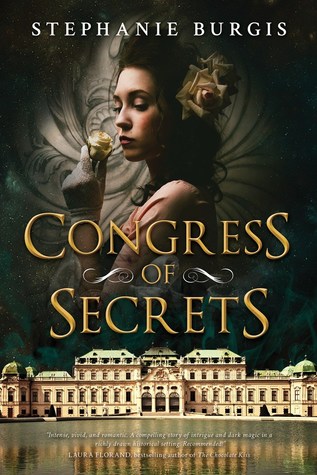 “In 1814, the Congress of Vienna has just begun. Diplomats battle over a new map of Europe, actors vie for a chance at glory, and aristocrats and royals from across the continent come together to celebrate the downfall of Napoleon…among them Lady Caroline Wyndham, a wealthy English widow. But Caroline has a secret: she was born Karolina Vogl, daughter of a radical Viennese printer. When her father was arrested by the secret police, Caroline’s childhood was stolen from her by dark alchemy.
Under a new name and nationality, she returns to Vienna determined to save her father even if she has to resort to the same alchemy that nearly broke her before. But she isn’t expecting to meet her father’s old apprentice, Michael Steinhüller, now a charming con man in the middle of his riskiest scheme ever.
The sinister forces that shattered Caroline’s childhood still rule Vienna behind a glittering façade of balls and salons, Michael’s plan is fraught with danger, and both of their disguises are more fragile than they realize. What price will they pay to the darkness if either of them is to survive?”
Guest Post: “Creating Crystal Magic” by Laurence MacNaughton + Book & Crystal Giveaway (INT)!
Posted on July 12, 2016 19 Comments
***The giveaway is now over, thanks to everyone who entered!***
Magic. Demons. Impending apocalypse. All this and more can be found in Laurence MacNaughton’s new urban fantasy novel It Happened One Doomsday, which is out now from Pyr Books! Dru, the story’s heroine is hardly one of the best sorcerers in the world, but she sure can do some impressive things with her nifty crystal magic. Sound like a fun ride? I thought so too. Today I am thrilled to welcome the author himself to The BiblioSanctum to tell us a bit about the inspiration behind the fascinating magic system in his book, and I hope you will enjoy Laurence’s post as much as I did! We’re also very excited about this cool giveaway opportunity, so be sure to check it all out!
CREATING CRYSTAL MAGIC FOR IT HAPPENED ONE DOOMSDAY
by Laurence MacNaughton
In my new book, IT HAPPENED ONE DOOMSDAY, I wanted to create an utterly unique system of magic. Something you’ve never seen before in an Urban Fantasy novel. But hasn’t it all been done?
Maybe not. By chance, I had a brief (and rather odd) conversation with Dan Aykroyd from Ghostbusters, who’s a big believer in the metaphysical properties of crystals. He uses Herkimer diamonds to filter impurities out of his private-label brand of vodka.
Weird. But weird stuff inspires me, so I decided to explore the idea of crystal magic. That’s something I haven’t seen anyone do before.
As it turns out, some people believe that a pure quartz crystal can cleanse your soul.
Or that amethyst protects you against psychic attack.
Citrine supposedly brings wealth, when you place it in the back left corner of your house.
Halite (rock salt) dissolves negative energy.
Interesting, I thought. What would happen if I dialed these properties up to a super-power level?
What if a sorcerer could use crystals to cast powerful spells: levitation, invisibility, and so on?
I decided to go out and do some research. And what I discovered was fascinating.
The towns in the Rocky Mountains where I live are rife with rock shops and lapidaries, some of them little more than a room in someone’s house. If you know where to look, you can find some pretty cool stuff.
Take galena, for example. It’s a blocky crystal that shines like chrome. Scientifically speaking, it’s a lead ore with a low melting point. It also contains up to 2% silver.


But from a spiritual standpoint, it was used in ancient Egypt to line the eyes of the pharaohs. It may have been intended to give them second sight, possibly to protect against evil curses.
The heroine in my book, Dru, can use galena to fight demons.
At one rock shop, I talked to a guy who had found some impressive galena crystals in a mine in Missouri. There was so much groundwater in the rock over that mine that it dripped everywhere, constantly. They had to rig up corrugated steel on scaffolding inside the mine shaft to shield the workers and digging equipment from the underground rain.
Weird. But as you know, weird stuff inspires me.
In my book, Dru Jasper is the bookish owner of The Crystal Connection, a shop that sells potions, charms, and enchanted crystals to the powerful sorcerers who fight against evil. The “real” sorcerers don’t give Dru any respect – but what happens when her crystal powers become the key to saving the world?
Here’s an excerpt from the book:
After a moment’s consideration, Dru picked up a shiny chunk of galena. Like most galena crystals, it looked like it had been formed from a half-dozen different little cubes all fused together, and it had a dark mirror-like sheen, like a highway patrolman’s sunglasses.
She took a moment to weigh the crystal in her hand, until she could feel the faint whispers of its energy synchronizing with hers. “Here. Let me have your hand.”
Greyson put his arm on the counter, and she pushed back the sleeve of his leather jacket. When she touched the galena to his wrist, the crystal popped with a cold blue flare of light, like an old-fashioned photo flash, accompanied by a sinister sizzling sound.
Greyson yanked his arm off the counter and sucked his breath in through his teeth.
“Wow,” Dru said, with a little thrill of triumph, mixed with a tinge of surprised fear. She’d never seen galena react so spectacularly before. “Bingo. Looks like we have a demon.”
ABOUT THE AUTHOR
I grew up in a creaky old colonial house in Connecticut that I was pretty sure was haunted. As a kid, I was a choirboy in a church that was built in 1754. I also pounded out stories on a black manual typewriter until I sold my first magazine article at age 19. Over the years, I’ve been a bookseller, typesetter, printer, copywriter and (somewhat randomly) a prototype vehicle test driver. When I’m not writing, I bike and hike the Colorado Rockies, explore ghost towns and wrench on old cars. But the whole time, I’m usually thinking about the book I’m going to write next. I love connecting with readers, so click here to contact me.
Laurence MacNaughton is the author of It Happened One Doomsday, The Spider Thief, and Conspiracy of Angels. Also find him at https://laurencemacnaughton.com and on Twitter @LMacNaughton!
It Happened One Doomsday + Galena Crystal Giveaway
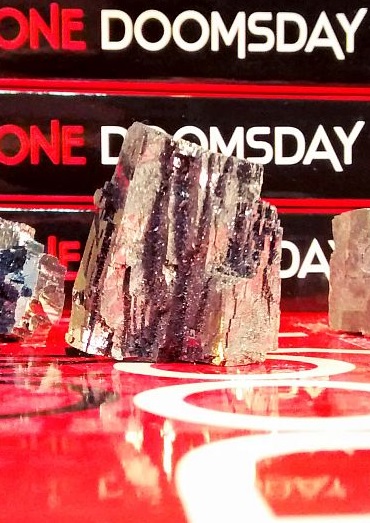
Interested in checking out It Happened One Doomsday? Well, you’re in luck! With thanks to the author and the publisher, the BiblioSanctum is pleased to be hosting this amazing giveaway for a chance to win one print copy of the book plus a genuine galena crystal like the one you see in the image above! This giveaway is open internationally, so come one come all! To enter, all you have to do is send an email to bibliosanctum@gmail.com with your Name and valid Mailing Address using the subject line “IT HAPPENED ONE DOOMSDAY” by 11:59pm Eastern time on Friday, July 22, 2016.
Only one entry per household, please. The winner will be randomly selected when the giveaway ends and then be notified by email. All information will only be used for the purposes of contacting the winner and sending them their prizes. Once the giveaway ends all entry emails will be deleted.
So what are you waiting for? Enter to win! Good luck!
***And there’s more! You can also visit Laurence’s website for details on an extra chance to win a demon-fighting galena crystal of your very own! To enter, just visit this page and subscribe to his author newsletter.***
Week 2: All is Fair Read-Along
Posted on July 11, 2016 1 Comment
Our read-along of The Split Worlds series continues, and this month we’re diving into the third book All Is Fair! If you’re interested in joining this Read-Along, visit the SF/F Read-Along group for more information and to join the discussion.
With thanks to Coolcurry for the read-along banner!

Caught in the insidious designs of powerful puppet-masters and playing a life-or-death game for control, Cathy and her comrades face their greatest challenge yet: changing the balance of power in the Split Worlds.
Now at the heart of the Londinium Court, deceit and murder track Will’s steps as he assumes his new role as Duke. Faced with threats to his throne and his life, the consequences of his bloody actions are already coming back to haunt him…
Meanwhile, Cathy, wrestling with the constraints of the Agency and Dame Iris, comes to terms with her new status in Fae-touched society and seeks others who feel just as restricted by its outdated social rules. As Max works with Cathy to uncover the horrors that underpin Fae-touched society, he bears witness as the final blow is struck against the last Sorcerers in Albion…



Week 1: Monday 4th July, Chapters 1-6, hosted by Over The Effing Rainbow
Week 2: Monday 11th July, Chapters 7-14, hosted by Hisham El-Far
Week 3: Monday 18th July, Chapters 15-22, hosted by The Illustrated Page
Week 4: Monday 25th July, Chapters 23-End, hosted by x + 1

1. We finally meet the Sorcerer of Mercia (Rupert?) – He is VERY different to Ekstrand. Not only does he seem younger and more adaptable to the modern world, he seems comfortable working with scholars from and In the Nether! As we compare and contrast the two Sorcerers, what does this say about Ekstrand – and does it change our views of his actions, behavior and decisions? Is he completely bonkers?
Mogsy: So I was pretty intrigued by the theories I saw last week that Ekstrand might be behind all the murders, and the thought had crossed my mind as well, though the whys and the hows remained elusive. I have to say the evidence is pretty damning against him right now, especially laid out like that by Margritte. Still, I have my doubts that it’s that simple.
For one, I am skeptical of the Ekstrand-Iris conspiracy theory; I think there’s a better chance of him simply being bonkers and paranoid. Meeting the Sorcerer of Mercia has shown us that not all of them are like Ekstrand. While Rupert’s certainly eccentric, he’s no more unusual than anyone who has become taken with Mundanus society, much like Cathy. According to Max, however, Ekstrand has been progressively becoming more unhinged, and after this week I think he may have really lost it.
2. Cornelius and Amelia have been well and truly rumbled – Will knows how badly he’s been manipulated by the siblings, and exactly how! Do you think that either or both of the siblings might bounce back somehow? What about Will and Amelia’s baby? Did Amelia benefit inadvertently from the “help” Will received from Lord Iris’s faerie? If Amelia benefited, Why didn’t Cathy?
Mogsy: I can’t tell you how much I abhor the Rosa siblings, I sincerely hope they don’t bounce back! But knowing Amelia and the way she operates, she probably has an ace up her sleeve. She’ll probably end up blackmailing Will or something, by threatening to tell Cathy everything or worse, knowing that a bombshell like her pregnancy would destroy whatever fragile trust the couple has built so far.
As for the baby, I’m not sure. I do anticipate that the Lords Iris and Poppy would be very angry if they ever find out, especially since it is speculated that their grand plan revolves around a son conceived by Will and Cathy (perhaps Amelia might find some way to use that against Will?) I have no idea why the faerie’s “help” benefited Amelia and not Cathy, maybe it was a “one-time” use charm and Will blew it on Amelia? Er, no pun intended…
3. Skullduggery and Subterfuge! Sam has uncovered Leanne’s secrets and mission – Cathy is unearthing the secrets and like minded thinkers that Miss Rainer has kept hidden. Margritte and Bartholomew seem to have been likely allies to Cathy’s cause – is it possible Lord Iris/Poppy and the other Fae are Intentionally manipulating events to keep the current status quo/gender in-equality in Londinium? If So, to what end? As for Sam – what is he going to do with his new knowledge about Leanne or her findings?
Mogsy: Bartholomew’s death was unfortunate, but I don’t think he and Margritte were intentionally removed because they were too progressive for Nether society; it’s more likely that they were just collateral damage of whatever machinations Lord Iris and Poppy have planned for Will and Cathy. I have a feeling the fae are far too complacent to worry about the status quo in society; instead I think this has everything to do with the son they so desperately want Will and Cathy to conceive. Is this child some kind of “chosen one” or something? Seriously, this thread is what’s bothering me the most.
As for Sam, I know I didn’t have much sympathy for him in the first book, but I’m slowly coming around. I have to wonder though, why in the hell didn’t Leeane tell Sam what she was up to? It’s one thing to want to protect your husband from the dangerous things you have going on, but as far as we know this as been going on for years and years, almost right after they got married. She knew her secrets were chiseling away at their marriage and yet continued on with her subterfuge? I’m sorry, but the right thing to do would have been to either trust Sam and come clean with him, or end things with him the moment she realized she was deliberately driving a wedge between them. But she let it go on, and Sam had to go through all the worries and heartbreak. I feel bad for ranting, since Leeane did end up paying the ultimate price, but I just couldn’t help feeling rattled when I got to the part with the warehouse and her letters. All those years of writing to Sam and pouring her heart out, and for what?
4. Where do you think the main characters are going to go now? Will Cathy meet Rupert? Will Rupert destroy Ekstrand? Will any more/new hidden players in this drama come into the center stage?
Mogsy: I don’t think this peace between Cathy and Will is going to last. Will seemed pretty dismissive of Cathy’s dreams when she told him her plans to bring gender equality to Nether society, but I think that’s just one of many things that could drive them apart. There’s also the silencing spell the Agency cast on Cathy, and the matter of Amelia and the baby. Plus, we mustn’t forget when Will drugged Cathy. I still think that’s going to come out someday and be the ultimate powder keg, because it’s going to make Cathy realize that Will’s no different than her parents.
I also think Cathy will meet Rupert (or they should anyway, if for no other reason than the fact they’re such kindred spirits) but I have my doubts that it’ll happen quickly. No idea what’s going to happen to Ekstrand and Max and the gargoyle at this point. I imagine Max will keep working for the sorcerer; until he realizes Ekstrand has gone off the deep end, I doubt he’ll suspect anything. As for Sam, I think he’s going to find out that Lord Iron has been yanking his chain. I really don’t trust that guy, he’s probably got his eye on Sam as his next victim.
And who knows which other characters will come out of the woodwork at this point?! Things are getting so twisty. I did enjoy Margritte as a new POV though, and her interactions with Rupert.
5. So much happened in this weeks chapters It was hard just limiting my questions to the above – What did you find to be the most interesting event/revelation? Or is there anything else you want to talk about?
Mogsy: Yes, SO much has happened in this section, I wish I’d thought to take notes on everything I wanted to talk about. But, considering how much I wrote this week, I think I got most of my questions/speculations down. Like I said, for me the most interesting revelation was Cathy and Will’s talk about why they think Lord Iris and Lord Poppy paired them together. Cathy brings up a good point: the two of them have centuries to settle down and start a family, so why are the fae rushing them to have a child like RIGHT THIS INSTANT? What’s so special about the two of them, and what will be so special about their son?
I’m also glad that Cathy found Miss Rainer’s secret group. She now has a time and a place to show up to and meet like-minded women like her, and I can’t wait to see how that turns out. Also, as much as I can’t stand Will, I cheered for him this week when he chewed out Amelia. There’s been a complete turnaround on my interests this week; it used to be that I couldn’t care less about the drama in Nether society, but things have gotten really crazy these last couple of weeks and now I’m more hooked on Cathy and Will’s story lines than I am on Max’s or Sam’s.
Audiobook Review: Underground Airlines by Ben H. Winters
Posted on July 11, 2016 15 Comments
A review copy was provided by the publisher in exchange for an honest review. All opinions are my own.
Underground Airlines by Ben H. Winters
Mogsy’s Rating (Overall): 4 of 5 stars
Genre: Alternate History, Mystery
Series: Stand Alone
Publisher: Audiobook: Hachette Audio; Hardcover: Mulholland Books (July 5, 2016)
Length: 9 hrs and 28 mins; 336 pages
Author Information: Website | Twitter
Narrator: William DeMeritt
I became a fan of Ben H. Winters back in 2012 when I first picked up his novel The Last Policeman. Since then, I’ve been following his work, subsequently reading Countdown City as well as World of Trouble as they were released. Together, those three books make up what I think is one of the most tragically underrated series I’ve ever read. So of course when I heard about Underground Airlines, I just knew I had to read it.
And wow, what an incredible book this was. If you haven’t read Winters yet, Underground Airlines is why you really need to. It’s very different from the past stuff I’ve read by him, but the writing and the storytelling both help cement in my mind that this author is entirely deserving of more attention.
His hard-hitting new book imagines what the world would look like today, if the Civil War never happened. In this alternate reality, slavery became protected in the Constitution and still exists in America in the “Hard Four” states, but even the northern parts of the country are deeply steeped in racism.
The story’s protagonist is a young black man called Victor, but that is merely one of his identities. A former slave who escaped only to be captured again, Victor was forced to make a deal with the federal government and to work as a kind of bounty hunter for the US Marshals. His handlers would set him on the trail of other runaway slaves, and then order him to track them down and bring them back to their masters. It’s a job that requires taking on a lot of aliases and putting on lots of different faces, but Victor is very good at playing whatever role is required of him. And whenever the work bothers him, he simply convinces himself that he’s just a man doing what he needs to do to survive, and that this is the price of his freedom.
But then Victor gets a new assignment to locate a runaway slave known as Jackdaw. It’s a particularly troublesome case, and from the very beginning Victor gets the sense that everything feels off. For one thing, he suspects that his boss is hiding information from him, and he doesn’t know why. As he traces the clues to find Jackdaw, he also uncovers disturbing secrets related to the Hard Four and their relationships with the government. Amidst all the pieces of this puzzle, an abolitionist movement called the Underground Airlines might be the key to solving the mystery, but Victor will need to figure out how to infiltrate them first.
The world of Underground Airlines will shake you to your core. You read about the horrific conditions in the Hard Four and the racist attitudes that are so imbedded in the culture, and sometimes it’s difficult to reconcile that with the modern setting of smartphones, laptops and GPS. At the same time though, perhaps our reality has more in common with this one than we’d like to believe. The issues in the novel may be magnified, but sadly they still exist in our world today.
Like many books in its genre, this one also made me ponder a lot about history. Namely, how fragile it is, in the sense how close events can come to turning out very differently. One change, one death, one missed opportunity, and everything can fall another way. Winters set out to explore this idea from top to bottom, working around the central premise: What if the Civil War never occurred? The America in his book is very different of course, but so is the entire world. No country exists in a vacuum, and America’s altered history not only influences its own politics, but it makes international governments perceive Americans differently as well. Within America, the culture is transformed, divided, and ailing badly; even though there are individuals, groups, government organizations, corporations, etc. standing in apparent solidarity against the evils of slavery, institutional racism is still alive and well.
Victor is an enlightening figure as well, a complicated protagonist to lead us through this story. It is clear that he recognizes the truth from the start: that he is free but not free, not a slave but still chained to the machine that keeps states like the Hard Four running. As hard as he tries to let go of his past, it comes back to haunt him every time he goes on a new assignment. A part of him hates what he does and what he has become, but denial is a powerful thing, burying the guilt most days. Little by little though, the cracks form in his armor, and he begins to question who he really is under all those different identities. He’s had to put on an act for so long, the past that he has tried so hard to escape will ultimately be the thing which helps Victor find his way back.
At the heart of it, Underground Airlines is a mystery and suspense novel, but it is still nonetheless oh so powerful. Ben H. Winters continues to impress me, going above and beyond all my expectations.
Audiobook Comments: I was also fortunate enough to review an audio copy of this book. I simply cannot praise the narration enough. William DeMeritt is a completely new narrator to me, but his performance immediately won me over. The main character Victor in the novel, who describes himself as a con man, has to juggle many identities and has to leap in and out of different roles depending on the situation. DeMeritt performs these parts wonderfully, lending authenticity to all of Victor’s various personas especially when he does the different accents and inflections in the dialogue. His narration made this story great, and I highly recommend this book in both print and audio.
Sunday Musings: Worlds Without End Update
Posted on July 10, 2016 10 Comments
School’s out, which means life can settle down to a more reasonable pace. At least for a little while! Despite the crazy over the past few months, I have managed to tuck away several entries for the various challenges that keep me focused on my annual reading goals. There’s the standard Goodreads challenge, where I am 64% into my goal of reading 100 books and graphic novels this year, as well the Audiobook Challenge that we’ve regularly been reporting on as a group. But my favourite challenge is the Roll-Your-Own-Reading Challenge at Worlds Without End. What started as one challenge each year has expanded into as many challenges as you can handle. I often bite off more than I can chew because, well, I love challenges and love the visual effect of seeing all those books lined up all pretty like, but this year, I’m not doing too badly with my nine challenges.
I Just Have to Read More of That Author
 Most of these challenges are self-explanatory, such as this one. I mostly keep this list for authors that I absolutely love reading, and authors that I want to get to know better.
Women of Genre Fiction
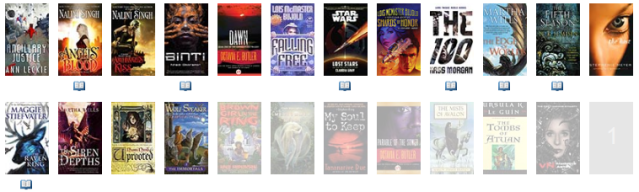 It ought to be easy to fill this list, and yet, I’m still missing one. There are many women writing genre fiction out there and I’m sure I’ll fill that last spot soon enough, but this serves as a reminder that the industry’s dominating force is still men for various reasons. Too many marginalized voices fall through the cracks or are silenced all together, so it’s important to keep promoting work that goes beyond the usual perspective.
Apocalypse Now
 The criteria for this challenge is any genre fiction that focuses on the end of the world as we know it. I initially started off small, but my entries have grown as I’ve combed through my to-read list for apocalyptic fiction. We do so love our end of the world stories.
Audiobook Reading Challenge
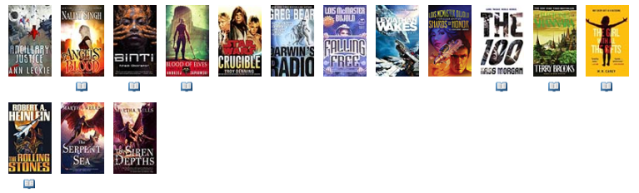 Taking on this challenge is a freebie since audiobooks are such a prominent part of my reading experience. The WWE challenge stops at a mere 15 books, but I’m already double that, with many more to go. But it’s nice to see a completed challenge under my belt.
Read the Sequel
 Far too many books on my shelf are sequels that I intend to get to after loving the first book so much, but those pesky new books always weasel their way in.
Space Opera
 I took up this challenge as part of my quest to venture off into the stars more often. Fantasy is fun, but sometimes, you need some good old spaceships and aliens.
The (Mostly) 2016 Star Wars Reading Challenge

With Star Wars movies scheduled every year now for the foreseeable future, of course I’m going to be jumping back into the galaxy far, far away. I still love the original expanded universe, but the new stuff is certainly proving its worth too.
Pick & Mix
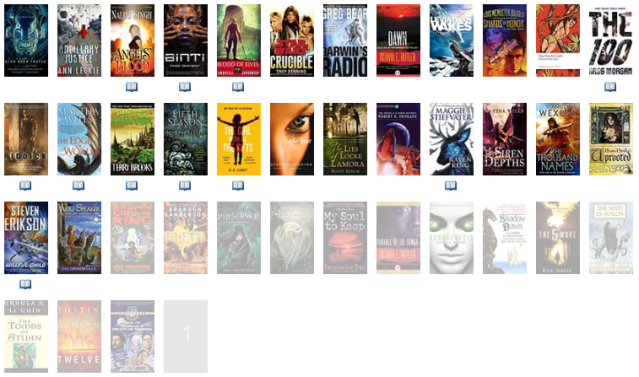 Another freebie that lets me feel good about completing a challenge by dumping everything I’ve read into one convenient place.
Tie-In Fighter

This goes along with my personal goals to read more novelizations. I already love reading auxiliary lore for games and for the Star Wars universe. It’s time to broaden my scope to other mediums.
Book Review: Heroine Complex by Sarah Kuhn
Posted on July 10, 2016 17 Comments
A review copy was provided by the publisher in exchange for an honest review. All opinions are my own.
Mogsy’s Rating: 2 of 5 stars
Genre: Urban Fantasy, Superpowers
Series: Book 1 of Heroine Complex
Publisher: DAW (July 5, 2016)
Length: 368 pages
Author Information: Website | Twitter
I badly wanted to like this book, but its style was just completely wrong for my tastes, a model example of the classic “It’s not you, book–it’s me.” In these cases I always struggle to write my reviews, because I know what I perceive as flaws are in fact really selling points that will be very attractive to others. They say good content will always have an audience though, which is why I’m not too concerned about this book’s chances of finding success with readers everywhere, but I confess it didn’t really work as well for me, in spite of its huge charisma.
First, a little bit about Heroine Complex: The book tells the story of two best friends—one is a flashy superheroine, and the other is her quiet personal assistant. Ever since they were five years old, our protagonist Evelyn Tanaka has always found herself in Annie Chang’s shadow, and that’s become especially true now that Annie has become Aveda Jupiter, savior of San Francisco. It isn’t easy keeping up with a superheroine, or putting up with her epic tantrums whenever things don’t go her way, but Evie always tells herself she doesn’t mind the work. After all, Annie-now-Aveda is her oldest, most loyal friend. She’s been there for Evie through all the bad times, rescuing her whenever she needed the help and emotional support. Evie figures the least she can do to repay Aveda is to give her boss anything she wants, and do whatever she commands.
But then one day, Aveda injures herself while fighting cupcake demons, suffering a sprain which would put her out of commission for at least four to six weeks. Refusing to accept being out of the spotlight for that long, Aveda convinces Evie to act as her double and make public appearances in her stead. True to form, Evie caves spectacularly to her friend’s demands, never mind that she has no experience schmoozing at glitzy events, or fighting portal demons for that matter. In fact, Evie has spent most of her adult life actually trying to hide her own superpower, which she fears would be dangerous if she ever let it out.
What can I say? The whole superheroes meets The Devil Wears Prada premise wrapped up in an urban fantasy package was certainly irresistible to me, and at first I genuinely thought Heroine Complex would be right up my alley. And indeed, I would have loved it, I think, if some of the elements which first attracted me to this book–the humor, the action, the snark, etc.–hadn’t been so exaggerated and over-the-top. Another key problem I had with this book was how cartoonish the setting felt. UF has always been one of my favorite genres because I love the way it reimagines our world with supernatural aspects in it, while still maintaining the realism and believability of the setting. In contrast, Sarah Kuhn’s San Francisco and all the characters populating it are more like comic caricatures, and her writing style also reflects this general vibe.
By the way, I use descriptions like “cartoonish” and “comic” because I believe none of this is by accident. I get the feeling that this is exactly what the author is aiming for, but I really have to be in the right mood for this tongue-in-cheek style, and I guess I just wasn’t.
Not surprisingly then, story and characters are also ultra-predictable. Again, I know all that is part and parcel of this particular narrative style, but it still nettled. Evie, despite her quirkiness and ebullience, comes across too bland and two-dimensional. She and her friends are like walking clichés playing their assigned roles and speaking their hammy lines. The romance also felt a bit tacked on and flat, since whenever Evie and her love interest Nate shared a scene, their relationship only seemed to have two settings: sniping-at-each-other mode, or can’t-keep-our-hands-off-each-other mode. I did think the story was fast-paced and fun though, and the plot had its flashes of brilliance every now and then, but it simply wasn’t enough to keep me energized for nearly 400 pages.
Major kudos for the Asian American superheroine protagonists though, even if I could have done without a couple of the stereotypes, like how Asian parents only care about their kids’ grades and would disavow us if we didn’t get into med school, and my eyes just about bugged out of my head when I read that part where Evie said she was used to not letting herself feel because she’s Asian and knows all about emotional repression. Yes, I realize there’s usually a nugget of truth to stereotypes and I’m aware this is all done in the spirit of good fun, but seeing them propagate even for the sake of humor still makes me a tad uncomfortable especially since I’ve had to face many of these same misconceptions in my life (“You’ll want your daughters to be doctors, right?” Even when said in jest, this one is my own personal bane.)
Overall, I know I’m in the minority with my lukewarm reaction, so if you think you’ll enjoy the story’s style or the type of humor I described, then you should definitely give this book a try. Heroine Complex accomplishes what it sets out to do, and it does all of it very well, even if it did turn out not to be the kind of book for me.



 The BiblioSanctum