Mogsy’s Bookshelf Roundup: Stacking the Shelves & Recent Reads
Posted on September 10, 2016 30 Comments
Bookshelf Roundup is a feature I do every other weekend which fills the role of several blog memes, like Stacking the Shelves where I talk about the new books I’ve added to my library or received for review, as well as It’s Monday! What Are You Reading? where I round up what I’ve read since the last update and what I’m planning to read soon. Mostly it also serves as a recap post, so sometimes I’ll throw in stuff like reading challenge progress reports, book lists, and other random bookish thoughts or announcements.

Received for Review
Huge thanks to the publishers and authors for the following review copies received, and for more details and full descriptions of the books, be sure to click the links to their Goodreads pages!

Winter Halo by Keri Arthur – The second book of the Outcast series, and sequel to City of Light which was my first ever book by Keri Arthur. I loved it, which is why I’m really looking forward to reading more. My thanks to Signet for the surprise ARC.
An Import of Intrigue by Marshall Ryan Maresca – And speaking of exciting sequels, this second book of the Maradaine Constabulary series is pretty high on my list of anticipated titles this fall. In October, Marshall Ryan Maresca will also be stopping by The BblioSanctum on his blog tour, so stay tuned for that and a giveaway! Thank you to DAW books for the opportunity.
Confluence by S.K. Dunstall – This was a surprise arrival, but it reminded me that I really should get cracking on starting the Linesman series. It’s already the third book! Maybe I’ll binge all three this November during Sci-Fi Month. With thanks to Ace Books!
The Rift Uprising by Amy S. Foster – More sci-fi goodness! Thanks to the kind folks at Wunderkind, I was offered a chance to check out famed songwriter and lyricist Amy S. Foster’s first book in her Rift Uprising trilogy, out from Harper Voyager this October. It looks to be a great one, and has crossover appeal for both YA and adult readers as well. Can’t wait to read it.
Gods of Nabban by K.V. Johansen – Thank you Pyr Books for this finished copy of book three in K.V. Johansen’s Marakand sequence. I’m told it can be read as a standalone without reading the previous two books, but since I’ve already read The Leopard, I probably should catch up with The Lady before diving into this one, just for completion’s sake!
Zero G by William Shatner and Jeff Rovin – Everyone’s heard of William Shatner, though most probably have not read his books. I haven’t either, but color me intrigued when this book showed up on my porch last week. I’m really curious about the premise, and definitely wouldn’t mind giving this a try. My thanks to Simon & Schuster.

A Shadow Bright and Burning by Jessica Cluess – A surprise package arrived from Random House a few days ago and this was inside, which was pretty exciting! I’ve been hearing buzz about this YA fantasy for quite some time now, and I’m actually pumped about checking it out. Thank you to Random House Books for Young Readers for the ARC.
A huge thanks to Tor Books for the following awesome review copies received: first up, a surprise package was delivered a couple weeks ago containing not one but two upcoming titles for early 2017, Crossroads of Canopy by Thoraiya Dyer and Game of Shadows by Erika Lewis. These books have been peripherally on my radar for a while, but their arrival prompted me to do some further research and I really like the sound of them. Needless to say, they’re now both considerably higher on my to-read list! Also received were several finished copies. Red Tide by Marc Turner is on tap for later this month, since I enjoyed the first two books of The Chronicle of the Exile and there’s no way I’m missing out on the third installment. Everfair by Nisi Shawl is also one of my most anticipated titles for this fall, so I hope to get to that as soon as possible. Finally, The Dark Talent by Brandon Sanderson has already been read and reviewed, and you can find the link below (my review was also updated, as there have been some interesting developments since the post originally went up)!


Empire of Storms by Sarah J. Maas – Audiobook, with thanks to Audible. I listened to the audio editions for books one through four as well, so naturally I have to to carry on that tradition with book five. It’s true I’ve had my ups and downs with the Throne of Glass series, but there’s just something about these books that make them so hard to quit!
Prince Lestat and the Realms of Atlantis by Anne Rice – That’s right, another Anne Rice book is coming out soon. I was thrilled to be approved for the eARC of this follow-up to her 2014 novel Prince Lestat. You could say I’m an on-again-off-again fan of Rice, since she’s gone through so many different styles in her celebrated career, but I’ll never say no to an opportunity to read her books since you just know anything she writes is going to be pretty interesting. My thanks to Knopf via Edelweiss.
Children of the Different by S.C. Flynn – My thanks to the author for providing me with the audiobook for review. I hadn’t known that an audio edition for this book even existed until a few days ago. Life has been crazy lately, so I have a lot less time to actually sit down and read. On the other hand, I can always find opportunities to listen to books while running around, so I was really glad!

Now for something totally different. Thanks to Sterling Publishing, this is now the coolest coloring book I own! Edgar Allan Poe: An Adult Coloring Book by Odessa Begay is full of line drawings inspired by the macabre and mysterious worlds of the famous 19th century American writer and poet. Later this fall when life calms down a little, I’ll be giving my coloring books a lot more attention and will be reviewing them again, and this one will likely be at the top of the pile. Next time I go to the art store, something tells me I’ll need to stock up on plenty of “Blood Reds” and “Raven Blacks.”
Reviews
Review roundup time! Here are the books I reviewed since the last update. The coveted feature spot goes to none other than The Empty Ones, which was such an awesome read!
The Empty Ones by Robert Brockway (4.5 of 5 stars)
The Dark Talent by Brandon Sanderson (4 of 5 stars)
The Obelisk Gate by N.K. Jemisin (4 of 5 stars)
Assassin’s Charge by Claire Frank (SPFBO)
The Masked City by Genevieve Cogman (3.5 of 5 stars)
Behind the Throne by K.B. Wagers (3.5 of 5 stars)
And the Trees Crept In by Dawn Kurtagich (3 of 5 stars)
Curioddity by Paul Jenkins (3 of 5 stars)
Roundup Highlights:

Interviews & Guest Posts
Big thanks to the special guests who stopped by The BiblioSanctum these last two weeks!
Behind the Voice: An Interview with Audiobook Narrator Peter Kenny
Guest Post: “Die, Punk Rock, Die” by Robert Brockway


What I’ve Read Since the Last Update
Here’s some of what I’ll be reviewing at the BiblioSanctum in the next few weeks (minus the reviews that are already up). By the end of the month I also plan to have read all six potential finalists in The BiblioSanctum’s original list of thirty entries for SPFBO, and as you can see I’ve already started. We’ve also made a page for SPFBO 2016 where we’ll be keeping track of all the info and updates, so if you want to know what the competition is all about, that should help catch you up!


Have you heard of or read any of the books featured this week? What caught your eye? Any new discoveries? I hope you found something interesting for a future read! Let me know what you plan on checking out. Until next time, see you next Roundup!
Book Review: The Empty Ones by Robert Brockway
Posted on September 9, 2016 19 Comments
A review copy was provided by the publisher in exchange for an honest review. All opinions are my own.
The Empty Ones by Robert Brockway
Mogsy’s Rating: 4.5 of 5 stars
Genre: Horror, Urban Fantasy
Series: Book 2 of The Vicious Circuit
Publisher: Tor (August 30, 2015)
Length: 288 pages
Author Information: Website | Twitter
I think it’s incredibly awesome that The Empty Ones is a lot like punk rock but in book form—loud, fast-moving, aggressive. It does its own thing, all the while being shamelessly, wickedly unapologetic about it. Better yet, I loved that this sequel was even better, funnier, and more entertaining than the first book!
The story picks up again not long after the events of The Unnoticeables, for both timelines—because as you’d recall, we follow two major points of view in the previous volume—one in 1977 featuring a young New York punk named Carey and a second one in 2013 featuring Kaitlyn, a stuntwoman in Los Angeles. The Empty Ones is once again using this structure of going back and forth between these two points-of-view, using the battle against the monsters to link up past and present.
For Carey, 1978 has become all about seeking revenge. He and his friend Randall survived last year’s secret war against the savage cult of Unnoticeables, Empty Ones, angels and tar men, but many more of their fellow punks weren’t so lucky. Carey is determined to hunt down the immortal Empty One who killed several of his friends, tracking him all the way to London, England where the punk scene is really rockin’. As it happens, it’s also crawling with Faceless, the British punks’ own term for the strange kids with unnoticeable, forgettable faces. Carey and Randall end up meeting Meryll, a one-woman wrecking crew who is also part of an underground London punk resistance group against the monsters.
In 2013, the situation is a lot different, though the plot also revolves around the hunt for an Empty One, a B-list actor and former teen heartthrob named Marco Luis. The first book saw Carey (now an aging hobo) team up with Kaitlyn and her friend Jackie to thwart an angel, sending Marco packing. However, the monsters still won’t leave Kaitlyn alone, forcing the trio to go on the run, eating at cheap diners and staying in sleazy motels in order to keep a low profile. Finally, Kaitlyn can’t take it anymore, and decides to take the fight straight to Marco, hoping that killing him will end this once and for all. Last she heard, the psychopathic actor was filming a new show in Mexico, which means time for a road trip!
I really can’t stress how much of a blast I had with this book. It’s gory, gross and just damn great. It’s also very funny, much more so than the first book. The type of humor in this is dark and cutting, but in spite of that, I laughed out loud more times than I could count.
In my review of The Unnoticeables, I also mentioned how much I enjoyed the characters, especially Kaitlyn, but in The Empty Ones it was definitely Carey who stole the show. I just adore this nutty young punk turned nutty old hobo, whose brain is permanently tuned to sex, beer, and punk rock whether he’s 20-something or 50-something. Still, as vulgar as he is, I couldn’t help but find the guy compelling. His propensity to think with what’s between his legs rather than what’s in his head is somewhat redeemed by all the times he reacts to situations with his heart—which proves he’s really just a big ol’ softie. Brockway has created characters who aren’t just one-trick ponies, and Kaitlyn is proof of that as well, showing lots of growth in this sequel. No longer content with running and hiding, this badass stuntwoman has taken it upon herself to face her fears head-on, so that no one else would ever have to live through her terror.
Furthermore, The Empty Ones introduces a ton of new elements to the mix. The trilogy surely would not be complete without a visit to the British punk scene, and we get to check that one off with style as Carey and Randall rock and drink their way across London, fighting Faceless at a Ramones concert and evading tar men in the Underground. Meryll is also an interesting wildcard, the addition of her character changing the game completely, so there’s really no telling where things will go from here. Finally, this book expands the lore of the monsters, building upon what we know about the angels, Empty Ones, Faceless, and tar people, and how their roles are all connected. Brockway even offers us a glimpse into the horrifying, inhuman existence of an Empty One by giving us a few chapters written in the perspective of Marco, or “this thing” as he calls himself, and it is truly some downright fucked up disturbing shit.
Technically, new readers can start here since Robert Brockway does a fine job catching us up, but I do strongly recommend starting with The Unnoticeables. I’m pleased at how much I’m enjoying this series. It has a little bit of everything, a mishmash of elements from urban fantasy, metaphysical science fiction and cosmic horror. The tone can be describe as vulgar, violent, fast-paced and hilarious. Bottom line though, The Empty Ones was simply incredible, just one hell of a great read. It takes everything from the first book to a new level, and assuming things keep going this way, the third book promises to be amazing and I cannot wait to get my hands on it.


More on The BiblioSanctum:
Review of The Unnoticeables (Book 1)
Guest Post: “Die, Punk Rock, Die” by Robert Brockway
Book Review: The Masked City by Genevieve Cogman
Posted on September 8, 2016 16 Comments
A review copy was provided by the publisher in exchange for an honest review. All opinions are my own.
The Masked City by Genevieve Cogman
Mogsy’s Rating: 3.5 of 5 stars
Genre: Fantasy
Series: Book 2 of The Invisible Library
Publisher: Roc (September 6, 2016)
Length: 336 pages
Author Information: Website | Twitter
The Masked City is another fantastic adventure chronicling the exploits of Irene Winters, a secret agent for an interdimensional library. I literally cannot find anything to dislike about the last part of that sentence. In fact, the only reason I’m not rating this higher is because of the reduced time we get to spend within the said interdimensional library, as well as some of the supporting characters (and if you recall, those were the elements I had wanted get more of out of the previous volume as well). Still, it meant we got to see our protagonist grow into her role and develop further as a character, and I was happy to see this sequel tap into the same fun adventurous vein which provided the drive for The Invisible Library.
When the story begins, Irene is a Librarian-in-Residence, having earned her position as an agent in the alternate version of London that we saw from the first book. She is in the middle of working on an assignment when all of a sudden, her apprentice Kai is kidnapped. With the help of her detective friend Vale, Irene is determined to uncover the mystery of who took Kai and why, unaware of the dangerous path this will set them on.
For time immemorial, forces of Order and Chaos have remained locked in conflict. The mighty dragons representing the former are always at odds with the Fae which represent the latter, fighting for control over the many worlds that exist in the multiverse. However, some worlds are inherently high in Order or Chaos, naturally predisposing them to one faction or the other. Irene has reason to suspect that Kai has been taken by Fae to one of their worlds, which would mean disastrous consequences for her apprentice if he is not recovered soon. To save Kai, she’ll have to go undercover and infiltrate an alternate Venice, reputed to be the masked city because every day is the Carnival there and the party never ends.
Deep in the heart of Fae territory where Chaos is so thick that even the great Library cannot help her, Irene has only her own skills to rely on to find and rescue Kai. In The Masked City, our heroine goes full-on secret Library spy, using all her knowledge of Language and subterfuge to survive a cutthroat world where the Fae are manipulative and merciless. We get to see her gain confidence and set aside the doubts that plagued her in the first book, where she constantly worried about her competition or questioned whether she deserved such a high profile assignment when she was only a junior Libarian. For one thing, this is Irene’s mission and her mission alone; Kai is not only her apprentice but her responsibility, and that’s not something she takes lightly—even if it means she will receive no help, and failure could cost her everything.
The story continues to be fast-paced and entertaining. The books in this series make for light, fun popcorn reads, and this sequel once again delivered exactly what was promised. Cogman further develops the world, expanding upon the role of the Library. She also fleshes out the conflict between the Dragons and Fae, and delves deeper into the lore of both sides. More importantly, we get to learn more about the motivations of these factions, whereas we only got to scratch the surface in the first book. Some questions are answered, and more mysteries are also introduced. I love how this series is full of potential, and we’re just starting to explore the many possibilities. Our characters’ journey to this book’s astonishing version of Venice is a prime example.
That said, my only regret is that we didn’t get to see much of the Library itself. Also, Kai spends the bulk of this book kidnapped and imprisoned, so we didn’t get to see much of him in action at all, which is a shame because he was my favorite character from the first book (for reasons I can’t go into in this review, because if you haven’t read The Invisible Library yet, it would be a spoiler!) However, these are just minor issues based on my personal preferences; beyond them, it was difficult to find much fault with this sequel.
Once more, I am happy to recommend this series to all bibliophiles and fans of “books about books”. As a book lover, I also saw a lot of myself in Irene, who just can’t help but feel an affinity to all things literary and bookish! I really enjoy the characters, the story, and the concepts. I’m really looking forward to the next book, The Burning Page.

More on The BiblioSanctum:
Review of The Invisible Library (Book 1)
#SPFBO Book Review: The Alignment by Kay Camden
Posted on September 8, 2016 4 Comments

After selecting our shortlist, the Bibliosanctum team is taking a closer look at our potential finalists. We are busy reading the six books left on our original list of thirty and then each of us will review two of them. Stay tuned for our follow up discussion on all of our picks to see who we choose to go on to the next round!

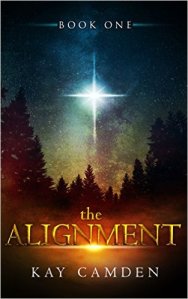 The Alignment by Kay Camden
Genre: Urban Fantasy
Series: The Alignment #1
Publisher: Kay Camden (November 2013)
Author Info: kaycamden.com
“I pause to stare at his closed eyelids, his lips inches from mine, and wonder how long I have until he wakes up and I have to pretend I still hate him.”Liv and Trey are both running away from dark pasts and when their lives literally collide in the small town Liv has just moved to, the wrong kind of fireworks go off. They find that they can’t stand each other. Being around Trey even makes Liv physically ill. But because of Trey’s family issues, Liv has now been linked to him and those that want him dead, want the same for her, forcing her to stay with him for protection.
The first few chapters of this book immediately hooked me. I loved the writing–the descriptions and the dialogue lured me in with their deliciousness, along with the way the supernatural elements are quietly, subtly teased out. It was a sexy reading experience–like plot foreplay–even before the stars aligned and Trey and Liv’s relationship changed, and it all left me craving more as I turned each page.
But alas, it would not be for some time that this more would come to pass, no matter how many pages I flipped through. “Now he’s talking about ancient bloodlines and celestial alignments…” reads the blurb, only, the “now” doesn’t happen very nowish, I soon realized, and so all that lovely foreplay started to get very tedious. All of the events described in the book do occur just as the blurb promises, but with so much padding in between. I’m all for tantalizing delayed gratification–which is exactly what Trey and Liv have to struggle with once the stars align, but the book could have done with far less of the descriptions of the day-to-day activities that Liv and Trey have to deal with to finally get where they are going.
And where is that, exactly? What is it we’re dealing with here? Trey’s explanations are vague at best, with a lot of wait and see that Liv has to accept at face value. Fortunately, their new found supernatural connection allows her to deal with and accept what ought to be giant red flags. The process of the two falling in love, while it is a sudden and overwhelming switch from despising each other so thoroughly, isn’t an entirely painful process for the reader. Liv’s fawning over Trey isn’t simply the cloying action of a lovestruck girl, even if that love seems to have magical origins. She still maintains a rational mind that we get to see much of in their altering POV chapters. As this is considered an urban fantasy, hot sex between the hot main characters is to be expected, but, even though it, like everything else, is dragged out, I do appreciate Camden’s skills with writing scenes that focus on the sexy and the seduction, rather than just the sex.
But, as it turns out, I am an instant gratification kind of girl, so the long drawn out plot didn’t work for me. I am all for character and relationship building, but I don’t need the added details of what’s for dinner.

Week 1: The Cloud Roads Read-Along
Posted on September 7, 2016 4 Comments
We’re starting a new Read-Along this week, with The Cloud Roads by Martha Wells! If you’re interested in participating, visit the SF/F Read-Along group for more information and to join the discussion.
With thanks to Anya for the read-along banner!

Moon has spent his life hiding what he is — a shape-shifter able to transform himself into a winged creature of flight. An orphan with only vague memories of his own kind, Moon tries to fit in among the tribes of his river valley, with mixed success. Just as Moon is once again cast out by his adopted tribe, he discovers a shape-shifter like himself… someone who seems to know exactly what he is, who promises that Moon will be welcomed into his community. What this stranger doesn’t tell Moon is that his presence will tip the balance of power… that his extraordinary lineage is crucial to the colony’s survival… and that his people face extinction at the hands of the dreaded Fell! Now Moon must overcome a lifetime of conditioning in order to save and himself… and his newfound kin.



Week 1 – Wednesday September 7th: Chapters 1-5 – hosted by CoolCurry (Sarah)
Week 2 – Wednesday September 14th: Chapters 6-10 – hosted by Lisa
Week 3 – Wednesday September 21st: Chapters 11-15 – hosted by Anya
Week 4 – Wednesday September 28th: Chapters 16-20 – hosted by Imyril

1. What do you think of the world Martha Wells has created? First time readers, do you find it more difficult to get a handle on than fantasy worlds more closely tied to Earth?
Mogsy: This is my first time reading The Cloud Roads, but it isn’t my first venture into this world. Before this, I’ve read one volume of the short stories as well as The Edge of Worlds, so technically I’ve encountered the Raksura before and met some of these characters. I think I would have been more confused otherwise. The first time I read about Raksuran biology and how their society worked, I remember feeling sooooo overwhelmed! These days it’s still rare to find a novel, even a fantasy title, that stars non-humans. Everything about the Raksura is just so “alien” and I’m sure that has a huge impact on how quickly or easily a reader can get a handle on things.
2. From Moon’s internal narration, it can be clear that his experience with the Cordans has not been uncommon. Do you agree with Moon’s decision to try and make a life among them? What about the Cordans’s ousting of him?
Mogsy: I suppose for someone who knows he does not belong anywhere, but still yearns for the comfort and safety of being a part of a community, Moon’s decisions make sense. He’s doing it because there’s no other alternative. And yes, I did get the feeling that deep down, he knows that each time he stays with a settlement of groundlings, it would be a temporary solution. The circumstances around the Cordan’s ousting of him are a bit extreme, but it didn’t seem like Moon was all that surprised it happened.
3. What are your initial impressions of Indigo Cloud? Do you think Moon made the right choice in coming along with Stone?
Mogsy: My current impression of Indigo Cloud right now is that they are one hot mess, led by a queen who knows she’s losing her grip on power and the truth of it is freaking her out. As for Moon, considering how Stone got him to come along with him under false pretenses, I’m not sure I could say one way or another whether Moon made the right choice. However, given how little he knew at the time, I guess the temptation to go with Stone would have won out on matter what, since finding others like himself was something Moon always wanted.
4. We’ve had only a glimpse of the Fell, but they’re clearly bad news. What do you think is going on with the Fell’s offer of a treaty?
Mogsy: I’m going to guess trickery is afoot! Granted, I don’t have much to back up my prediction, only that I’ve read a later book in the sequence and know that the Fell and the Raksura are still enemies of each other, which makes me think that any peace treaty or such here will come to naught. I’m very curious to see what will happen though!
Waiting on Wednesday 09/0716
Posted on September 7, 2016 11 Comments

“Waiting On Wednesday” is a weekly meme hosted by Breaking the Spine that lets us feature upcoming releases that we can’t wait to get our hands on!
Mogsy’s Pick
An Import of Intrigue by Marshall Ryan Maresca (November 1, 2016 by DAW)
Marshall Ryan Maresca has been a busy author keeping up with two series set in his world of Maradaine. Although I’ve enjoyed both, I have to give a slight edge to the Maradaine Constabulary novels because I’ve always been a sucker for stories starring lady detectives!
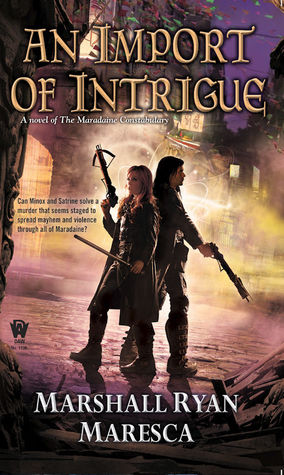 “Mixing high fantasy and mystery, this is Marshall Ryan Maresca’s second novel in the Maradaine Constabulary series, companion to DAW’s Maradaine Novels.
The neighborhood of the Little East is a collision of cultures, languages, and traditions, hidden away in the city of Maradaine. A set of streets to be avoided or ignored. When a foreign dignitary is murdered, solving the crime falls to the most unpopular inspectors in the Maradaine Constabulary: exposed fraud Satrine Rainey, and uncircled mage Minox Welling.
With a murder scene deliberately constructed to point blame toward the Little East, Rainey is forced to confront her former life, while Welling’s ignorance of his own power threatens to consume him. And these few city blocks threaten to erupt into citywide war unless the constabulary solves the case.”
Behind the Voice: An Interview with Audiobook Narrator Peter Kenny
Posted on September 6, 2016 11 Comments
It’s no secret that we at The BiblioSanctum are fond of audiobooks and the many narrators who work on them. We have talked about our favorite narrators in past years, again and again, and we’ve also had the great honor of interviewing some of these amazing individuals. Today, we’re thrilled to bring you a conversation with none other than Peter Kenny, whose work in the world of audiobooks has achieved great critical acclaim in recent years. Sci-fi & Fantasy fans and audiophiles should be no stranger to Mr. Kenny; his voice has brought to life stories written by authors including Iain M. Banks, Claire North, Neil Gaiman, and of course Andrezj Sapkowski, author of The Witcher novels (the audiobooks for the series are a favorite around here!) I hope you’ll enjoy our Q&A!

Hi Peter, welcome to the BiblioSanctum! Thanks for letting us pick your brain today and grill you about the audiobook narrating process!
Hello BiblioSanctum-a-philes! A pleasure to be here, I hope I have something interesting to offer your followers.
To kick things off, can you tell us a little about yourself? Your profile says you first got started in theater and acting, how did that journey ultimately lead you to audiobook narrating?
After working for many theatre groups including the Royal Shakespeare Company, I was invited to join the BBC Radio Drama Co. This is a dedicated repertory company run by the BBC, with a mix of Drama graduates and experienced actors. We recorded mostly radio dramas but also abridged books or short stories for radio broadcast.
I recorded my first short story, Ansell, by E.M. Forster in December 1993; bizarrely it was recently re-broadcast on BBC I-player… I didn’t recognise myself! Boy! How voices change!
A year later, I ran into a BBC producer Matthew Walters, who had moved into the charity sector and he invited me to record unabridged audiobooks for the charity Listening Books. My first unabridged book, was Junk by Melvyn Burgess… my fifteen year-old niece thought I was SOOO cool! Thereafter I recorded a large range of books in the charity sector including for the RNIB for whom I still record, before being approached by commercial studios in 2003 when I started recording books for Libraries and Audible upload.
Are you a listener of audiobooks yourself?
Absolutely! They make car journeys fly by! Sean Barrett, Martin Jarvis and Scott Brick are among my Audio Gods. All of whom, I can personally vouch, are totally delightful and inspirational human beings, as well as being brilliant readers and teachers.
 How do you prep for each narrating project? Do you often read the book in advance, or work with the author before recording?
If I have the time (I don’t always have the luxury) I like to read the book at least three times first, so that I am as familiar as I can be, plus I’m as sure as I can be that I understand what is actually going on. Some of the sci-fi’s and fantasies are incredibly complex and it can take a while to get inside the story. Contacting an author is unusual. Most authors are very busy folks and almost none write a story with an audiobook in mind. Occasionally if I’m really stuck I’ll email the publisher and they will relay messages to the author. I have been fortunate that many of the authors I work with have been happy to initiate contact directly, which is rare, and that can sometimes throw up real surprises. One of Iain M Banks’ characters in Feersum Endjinn, is written almost phonetically in text speak; I had always assumed (as had many readers) he must have a Scots accent, however, Iain was adamant he should not and so we settled on a south east UK “Essex” kind of accent, whilst preserving the word pronunciations as written in the txt speak Iain had created.
Can you describe for us a day in your life as Peter Kenny, Audiobook Narrator?
I have to admit first off I’m a bit of a Luddite! I still prefer to work with a paper script. I will usually sit in a cafe or some other public space to work on a script, as I find working at home too distracting, and the white noise of a cafe with conversation buzzing around that doesn’t involve me is less intrusive than the silence filled with thoughts about business email or gardening that I would face at home. Also sometimes if I’m struggling to nail the voice for a character, I get inspiration from the voices I can overhear around me. If the book is say perhaps a three day record I will spend (again time permitting) three days prepping. I have a special notebook into which I jot down all the character notes and place or name pronunciations I have to research, as I prepare the script. Once in studio, we usually record from 9.30 for an hour and a half then take a short break, another 90mins, then lunch, and the same for the afternoon. That’s roughly six hours a day in an enclosed space, speaking aloud! Try it sometime… it’s tougher than it sounds! 🙂
In your opinion, what makes a good narrator? And what advice would you give to narrator-hopefuls?
The best narrator’s all share the same three qualities: Passion, Empathy and Generosity… I would also add Stamina. With regards advice to anyone interested in becoming a narrator, see the previous answer: If you think this may be something you are interested in doing. Try shutting yourself in a cupboard or small room and reading ALOUD, non-stop, some of your favourite books. Record as you go and listen back, if you haven’t gone insane after an hour and a half, then this may be for you!
 As you know, we here at The BiblioSanctum are very big fans of your work on the English translation audiobooks for The Witcher novels by Andrzej Sapkowski. The popular series has spawned a ton of other media, including movies, shows, and games. When you found out you were going to be narrating the books, did you reference any of those at all, or did you prefer to approach the process with a blank slate?

Thank you, I’m seriously delighted you are enjoying them. When I was first approached it was a two book deal, starting with The Last Wish and Blood of Elves, however, I was unaware of the following the Witcher had as a game. The publisher was keen that the books should stand alone, as although newly translated into English they pre-dated the games, so I was given a free hand along with the fantastic Producer, Kate Jones. My journey with any book I record is to just read it first so I experience it like any reader, my job then is to interpret it as best I can, remaining as faithful to the text and the author’s vision as I can. All decisions made about characterisations are pulled from clues within the text itself.
As an extension to the last question, how do you go about “casting” the voices you use for the characters? Do you draw inspiration from anywhere for certain characters, or to determine what cadence, accent, tone, or any defining mannerisms and traits etc. to use for each voice?
To answer your question I’ll use The Witcher as an example. After I’d read The Last Wish, I had to make decisions about vocal qualities for each of the races/species and after discussion with Kate, we chose the regional differences based upon references in the books themselves. So the dwarves: short doughty miners, fond of beer and song? That fitted the Welsh, thus they have Welsh accents in my recordings. The Elves an exotic “elder race” are described as sometimes having a strong wild-elf accent or neutral, I made connections between them and the Dryads as spiritual creatures with strong earth connections, almost cousins; the Dryads are described as having voices like the wind rustling through trees so I made them breathy with a similar “exotic” vaguely central European accent as the Elves. I’m often asked, “Why does Ciri have a Scottish accent?” My answer: In The Last Wish, where I/we first encountered Ciri’s family, they are introduced through Calanthe, her grandmother “The Lioness of Cintra” as the ruler of a proud warlike coastal race controlled by the Chieftans of feudal clans, with a scatter of Islands off to the west, and they wore kilts and plaid! …I suppose I could have gone Irish!
Aside from The Witcher audiobooks, you’ve also narrated a number of other titles, including novels by Iain M. Banks and Claire North. Which were some of your favorite books to narrate and why?

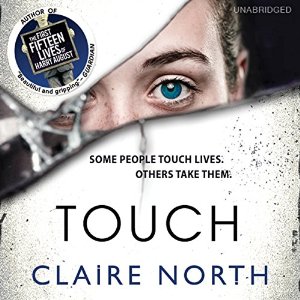


Of the twenty-nine books Iain (M) Banks published, I was privileged to record twenty-three, Iain’s writing is phenomenal and will always hold a very special place in my heart. We largely owe the vastness of concept in contemporary sci-fi to his influence; a genius taken out at the top of his game… I miss him terribly. Claire North is a very exciting new voice; edgy, emotional, personal… her writing gets right under your skin… you feel her characters’ journeys. Fantastic. From Banks, perhaps start with The Player of Games. However, the first book of the “Culture” series, which is mind blowing, is Consider Phlebas, this lays out the concept of The Culture and the universe they inhabit. Each of the books are standalone and have only one instance of character crossover, so they can be read in any order, though Consider Phlebas is the earliest in the timeline of the series and sets out important cultural references, which help with understanding later books.
Claire North’s first sci-fi The First Fifteen Lives of Harry August, is an extraordinary take on time-travel/multiple lives, a real thriller too. Her second novel, Touch, is, however, my favourite of her stories. I wept a lot! It’s hard to pick out a stand-out favourite as all the writers have such different voices, bringing their own sensitivities and sensibilities out for us to share. I have huge respect and admiration for them all.
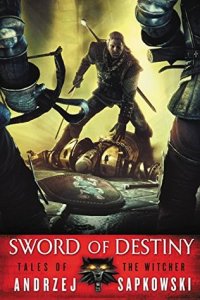 Yeah, I had a really great time with Touch too! To my great shame though, I still haven’t yet read anything by Banks, but both A Player of Games and Consider Phlebas are on my TBR. Speaking of favorites, I think my favorite book narrated by you was Sword of Destiny by Andrzej Sapkowski, especially for the story “A Little Sacrifice” where Geralt and a mermaid converse in the Mer “language”, which has to be spoken entirely in singsong. I just have to ask! What was your thought process when you read that scene?
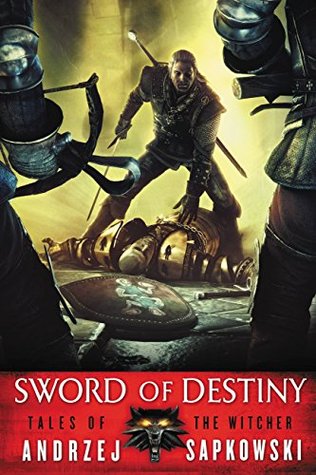
Thank you! I’m delighted you enjoyed it. Ahhh yes the Mermaid! Well, the producer and I debated long and hard about that one, we tried it with me just speaking the lines but it wasn’t clear in audio when she and Geralt were speaking ordinary speech, and when they were using the “Mer-tongue”. As I used to be a singer, and more specifically a counter-tenor/mezzo-soprano, we decided to just go for it! One reviewer described it as Sean Bean out on a drunken night of Karaoke! However, I’m a great believer that if the writing is gutsy, I, as a reader have to be… apologies to those who hated it!
Great, now you’ve gotten this image in my head of a drunken Boromir singing Karaoke and I can’t stop laughing! What, if any, are some of the challenges you’ve had to face so far in audiobook narrating, and are there any interesting moments or stories you’d like to share from your experiences?
The toughest of challenges I have faced? I have hinted at one earlier; sometimes if a book has a huge emotional arc for a character, it is very hard to step back as a narrator and not be too emotionally drawn in. It is not for me to be moved it is for me to read the words aloud and let the listener follow their own journey… there are sometimes many long silences in the studio as I struggle to regain my own composure. This is doubly so if the story is based in truth. There is a powerful book in my audible list by St John Green, called, “Mum’s List” a true story about a family struggling with their Mum’s breast cancer… the most difficult book I ever had to record, but actually despite the subject matter, extremely uplifting. The only other difficulty, which seems to be more frequent since the release of Fifty Shades, is the now almost inevitable sex scenes… Yuk! Not fun to record at all! But hey! I’m just the voice; I don’t write them! 🙂
Wrapping up, are there any projects you’re working on currently or in the near future that you can talk about?
 I have just finished recording a first novel by a very exciting new writer, Robert Dickinson; The Tourist is a speculative present/near-future/far-future sci-fi. Very deep and complex; I had to read it at least twice to get what was going on… well worth it; due out in October. I have also just picked up the script for Part 2 of Ken MacLeod’s series The Corporation Wars: Insurgence… I start prepping that tomorrow… (rubs hands with glee!). 🙂
Oh cool, I’m actually really excited for The Tourist because of how totally wild it sounds. Now you’ve given me another reason to look forward to the audio.
On behalf of the BiblioSanctum, I’d like to thank you again for stopping by! It was nice chatting with you, Peter! Where can folks go to find out more about you and your work?
Visit www.peterkenny.com or visit my FB Wall page: https://www.facebook.com/peterkennyvoice/
I’m always happy to answer questions about the work. And of course my twitter feed: @PeterKennyVoice
Thanks for the great questions! 🙂
Book Review: The Dark Talent by Brandon Sanderson
Posted on September 5, 2016 11 Comments
I received a review copy from the publisher. This does not affect the contents of my review and all opinions are my own.
The Dark Talent by Brandon Sanderson
Mogsy’s Rating: 4 of 5 stars
Genre: Fantasy, Middle Grade
Series: Book 5 of Alcatraz
Publisher: Starscape (September 6, 2016)
Length: 304 pages
Author Information: Website | Twitter
Edit: Holy crap. HOLEEE CRAP. The following review was based on the ARC, but I just got my finished copy from the publisher, and I just saw the little “note” that was added at the end of the final hardcover. My original rating stands because I still feel the same way for the most part, but I’m not going to lie, this does change things somewhat. I’m feeling a lot more positive about the ending now. Read it, and you will see.
Well, I’ve just finished this book, and now I have to ask, what is up with all your evil series endings, Mr. Sanderson?! This isn’t the first time I’ve had mixed feelings about the way one of his series ended; first it was the original Mistborn trilogy and earlier this year it was the Reckoners. To be fair, the difference is that Alcatraz has been warning about this moment for years—the books have repeatedly told us what a liar, a coward, and all around bad person Alcatraz is, and he’s no hero—so don’t be surprised if he leaves you with an ending that makes you want to SCREAM!
Ahem, my point is, this was still a great book, but hopefully you have been heeding our protagonist’s foreshadowing. You have been warned…
The Dark Talent picks up where things left off in book four, The Shattered Lens, which was originally published almost six years ago, so this concluding volume was a long time coming. Alcatraz Smedry and the gang have just fought off a whole army of Evil Librarians and saved the Free Kingdom nation of Mokia. However, that victory came at a very high price. Mokia now lies in ruins, with many of its warriors in a coma after falling victim to a chemical weapon developed by the Librarians. Among them is Alcatraz’s good friend Bastille, the young knight of Crystallia who pledged to protect him. Even worse, at the end of the last book, Alcatraz did something that left all of his family members’ talents inactive. Yes, he actually managed to break all the Smedry talents with his Smedry breaking talent.
Meanwhile, they still have to track down Alcatraz’s father who is determined to carry out a brilliant plan that, while good intentioned, could still have the potential to ruin the world. They know that he has gone to Washington DC, home of the Library of Congress—or the “Highbrary”, which is what Librarians call their main headquarters. Once again, Alcatraz and his family and friends find themselves preparing to infiltrate a library, but this time the stakes are much, much higher.
On the whole, this book was fantastic, following in the same footsteps as the previous volumes when it comes to the off-the-wall humor and wackiness. Sanderson falls effortlessly back into the tone of this series, and the snark is stronger than ever! Another development is that Alcatraz has discovered footnotes, and has been using (abusing?) them like it’s going out of style, the little scamp. The action is also alive and well as our heroes venture into the great labyrinthine Highbrary to retrieve Alcatraz’s father, and the many twists and turns—both figurative and literal—will keep you on the edge of your seat.
However, I also feel this is the darkest book of the series. The last few chapters or so really drove it home for me, though I suppose looking back, the darkness might have been building up for a while already, as Alcatraz gradually matured and grew as a character. He’s still the boy we first met in Alcatraz vs. the Evil Librarians, but in many ways he’s also…not. I’ve written in my reviews for the previous books that beneath all the humor and quirkiness, there’s a deeper level to this series. I guess in The Dark Talent, some of that is finally coming to the surface.
Which brings me to the ending. I didn’t really like it, as painful as it is for me to admit. But I had known something like it might be coming, and if you’ve also read all the books, you might be expecting it as well. It was all very sudden, brutally candid and to-the-point, and even a little unpleasant, almost like Sanderson wasn’t sure how to end the book so he just wanted to get it over with as quickly as possible. That’s the best way I can describe it. I still love this series to bits, but ugh, that ending still makes me feel like someone hit me over the head with a frying pan.
It’s all done now, though; the Alcatraz series has come to an end. I’m really glad I got to read all of the books this year, as they’ve been on my reading list for a long time. The re-issues of books 1-4 by Starscape finally presented me with the perfect opportunity to catch up, and I’m already looking forward to rereading them with my kids once they’re old enough to appreciate the stories. Until then, I’m going to miss this series, and all the wonderful characters—Alcatraz, Bastille, Draulin, Kaz, Australia, Folsom, Himalaya, even Shasta, and most of all, Grandpa Smedry. What a wild ride it has been. Highly recommended.

More on The BiblioSanctum:
Review of Alcatraz vs. The Evil Librarians (Book 1)
Review of The Scrivener’s Bones (Book 2)
Review of The Knights of Crystallia (Book 3)
Review of The Shattered Lens (Book 4)
YA Weekend: And The Trees Crept In by Dawn Kurtagich
Posted on September 4, 2016 11 Comments

A review copy was provided by the publisher in exchange for an honest review. All opinions are my own.
 And the Trees Crept In by Dawn Kurtagich
Mogsy’s Rating: 3 of 5 stars
Genre: Horror, Young Adult
Series: Stand Alone
Publisher: Little, Brown Books for Young Readers (September 6, 2016)
Length: 352 pages
Author Information: Website | Twitter
After chilling readers with her debut YA novel The Dead House last year, Dawn Kurtagich is back with another horror tale about two sisters trapped in a house surrounded by a haunted wood…and is it just their imagination or are the trees slowly closing in? Since I had such a good time with The Dead House, when the publisher sent me an ARC of And the Trees Crept In, I just knew I had to give this one a try.
As a girl growing up in London, Silla Daniels had always heard stories about La Baume, the blood red manor that was her mother’s childhood home. It sounded like the perfect place, like a peaceful haven nestled safely in an enchanted forest. So one night, after their abusive and alcoholic father goes a step too far, Silla decides to pack up and escape with her younger sister Nori. Their destination: La Baume, where Silla knows that Aunt Cath, Mam’s older sister, still lives.
When the two girls arrive, Cath welcomes them in with open arms. And for a while, things are wonderful. Things are safe. But then they hear whisperings that a war is coming. The women hunker down at La Baume, where the surrounding woods keep them pretty isolated so they’re used to living off the grid. Not too long afterwards though, a madness seems to come over Cath. One day, the older woman retreats to the attic and never comes down again. Even though Silla still leaves plates of food at the attic door and can hear the constant creaking of Cath’s footsteps overhead, she knows she has lost her beloved aunt forever. Three years pass with only Silla taking care of Nori and Cath, all alone and struggling to survive. La Baume is not the magical place Silla imagined; now she knows it’s cursed. The woods won’t let them leave, and she thinks she can sense someone (or something?) out there, just waiting to take Nori the moment she lets her guard down.
Honestly, I thought The Dead House was pretty weird when I read it last year, but I have to say this one is even weirder. And it’s not just the story; it’s the entire structure and style of the novel. Whereas The Dead House was written entirely in the epistolary format, And the Trees Crept In only has random sections where it tries to include snippets of notes and journal entries, and sad as I am to admit this, it didn’t work nearly as well here. I was frequently bothered by the “creative” formatting and use of font sizes and styles, and together with the disjointed prose, at times it almost felt like reading bad poetry. The only positive I can think to this is the way it shows Silla’s state of mind her slow journey to becoming completely unhinged (unreliable narrator alert!) but on the whole I thought it was needlessly showy and a little gimmicky.
Not gonna lie, but that had an extremely negative impact on my overall experience. As a character, Silla was…problematic. The writing made it very hard for me to understand her, and that also made it very hard to like her. It’s one thing to be unable to connect with your main protagonist, but because most of the book is written in Silla’s rambling narrative, it was impossible to get a good sense of any of the characters either—Nori, Cath, or Gowan, the mysterious handsome boy who just appears out of the woods one day. And speaking of Gowan, there’s also a romance arc that will feel very strange at first. Not long after he and Silla meet, the word “love” gets tossed around like candy, and it just made me want to scream because not once did this book make me feel there was anything between them.
This could have gone very badly indeed, but ultimately I think what saved this book for me was the ending. I admit that for most of the story I was confused, frustrated, and I didn’t even feel it was all that creepy. But the final reveal at the end made everything make sense! In fact, I’m still a little shocked at how well everything tied together. I can’t go into any more detail without revealing spoilers, so I’ll just say that pretty much everything I had an issue with had some sort of resolution and that went a long way in salvaging the overall experience. So much so that I thought this book deserved three stars rather than the two I was prepared to give. I still have major issues with the writing style, and my feelings about that haven’t changed. Story-wise, however, things actually turned out really interesting.
So would I recommend this book? That would depend on a few factors, I guess. Personally, the choppy writing and the style of the novel made my head hurt, but if you’re okay with the wonky use of font design, font size, “sliding text”, and other such formatting devices to portray a character’s descent into madness (after a few chapters of this, I felt pretty insane myself) it probably wouldn’t be an issue. Otherwise, choosing the audio version could be a good alternative, and I can’t help thinking I might have enjoyed this book a lot more had I done the same. In the end, I thought the story outcome made everything worth it though, even if it does take a bit of patience to see it all come together. I think readers who are fans of YA and horror will get a kick out of this, so go ahead and give And the Trees Crept In a shot if you think it sounds like something you’ll enjoy.

Graphic Novel Review Bites
Posted on September 3, 2016 9 Comments
I’m at Fan Expo Canada this weekend, Canada’s largest pop culture event. While the event now covers everything from spaceships to monsters and all the magical girls and clockworks in between, at its roots, it remains a comic book event, therefore it’s fitting that I drop in with some long overdue comic book reviews.
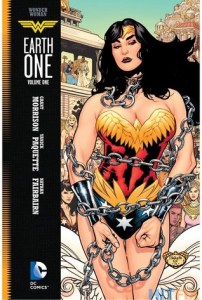 Wonder Woman: Earth One, Vol. 1
Sooo Wonder Woman is going to reshape man’s world by waltzing in in her vulva jet and body shaming all the women? Let’s not forget to have a lesbian orgy in the middle of all this! I can’t tell if Grant Morrison is honestly trying to misrepresent the feminist concepts from which Wonder Woman was born, or just… ugh what is this book even trying to be?
Oh right. It’s an origin story. Because if there’s one thing superhero stories–especially DC Comics superhero stories need to do, it’s remind you of where said superheroes came from. Because it’s so easy to forget that Kal’El crashed on the Kent’s farm and that Bruce’s parents are dead. DEAD I TELL YOU! Oh but wait. Those are the boys. The women of DC, well their origins aren’t quite so set in stone–or clay as Wonder Woman’s once was. Gone is the origin story of Hippolyta shaping a babe from the earth and the gods granting her wish to make it real. Nope. We gotta stick some penis in there! Otherwise, how can men relate to the man-hating world of Themiscrya!? Previously, the penis belonged to Zeus (because Zeus gets all the babies). This time, it’s Hercules.
Then toss in a black Steve Trevor, apparently for the sole purpose of having him make a speech about slavery so that we can see how he and Diana are so alike.
The only good thing about this book is the smug look a chained Diana wears on the cover, but now, having read it, I have to wonder what she’s really being smug about.

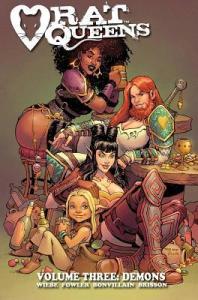 Rat Queens, Vol. 3: Demons
This series has taken a disappointing turn, both internally and externally. The situation surrounding the original artist, Roc Upchurch, remains ugly, despite his supposed attrition, and the recent uproar around current artist, Tess Fowler’s place on the book just makes things worse. I can’t imagine working on a book with all this hanging over it makes for much fun, and that’s most certainly showing in the pages. The humour and snark and adventure that once made the series so great is still coming hard and fast, but now feels forced.
In previous issues, Hannah has revealed a very dark past and now we get to learn her secrets and her plans to avenge the wrongs that have been done to her and her family by the mages. While I do want to know more about Hannah’s past, I did not want to do so at the expense of all the other characters. There are some peeks into dangers that Dee and Betty face as their past catches up with them, but these are minor side stories with no resolution on the horizon with Hannah’s story overshadowing them. The other Queens have very little to do around Hannah’s story since the majority of it is handled by Hannah herself, which goes against much of what the Queens are.
It’s unsurprising that the book has gone on hiatus and frankly, I’m not sure I want it to come back, even if it would answer some of the questions and hopefully bring some payoff for the other characters. I’d rather just cling to my fond memories from the first two volumes and leave it at that.
I’ll miss you, Gary.

 Two Brothers
Two Brothers did not take me through as personal of a journey as Daytripper did, but it remains a powerful example of how creators can truly engage the reader and push comics well beyond the panels on each page.
This is an adaptation of Milton Hatoum’s Dois irmãos, a project that, Fábio Moon and Gabriel Bá explained to me in an interview, was a difficult one, even though the black and white art and story seem simplistic. This is the story of Lebonese immigrants who settled in Brazil and stared t a family against the wishes of the husband. The twins that are born become the centre of everything, with every character spiraling into misery around the relationships that the twins are expected to have versus the reality of their very divergent personalities and the unbalanced love that separated them at a young age.
A lot of assumptions are made about twins, such as the belief that they ought to get along, but this story defies that. It is not a happy story, which may make it a very difficult read for some, but I do not shy away from bittersweet endings and difficult emotional reads.

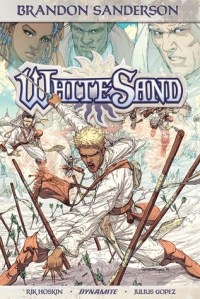 White Sand, Volume 1
It’s no secret that Brandon Sanders writes a lot. A. Lot. His new Stormlight Archives are monsters and, while I have enjoyed them, I don’t deny that there are a couple hundred thousand words too many in there because Sanderson loves to describe eeeeverything, including all the bits and pieces that make up his overarching Cosmere universe. So when I had the opportunity to check out a comic book by him, my first thought was, “How is he going to limit his wordiness in order to let the medium do its job?”
Welp. Turns out scenery full of white sands and white guys in white robes doesn’t really allow the imagery to do much more than confuse me. Thankfully, Kenton stands out a bit thanks to his half-Darksider heritage, though the mingling of Darksider blood is suspected to be the cause of his lack of Sand Mastery. Thankfully, after some verbose dialogue that spells out both Kenton’s plight as a crappy Sand Master as well as how Sand Mastery works in typical Sanderson elaborate magic system fashion, the story moves on fairly quickly from whiteness of being and we get to meet several other characters that prove to be far more interesting than Kenton and his basic story of bloody betrayal and ambition. Khriss’s story is of particular interest, but ultimately, falls flat along with the others because Sanderson just doesn’t work as a comics author. He has too much to say and doesn’t know how to let the images show what he wants to tell, and the art lacks expression beyond ‘angry’ to convey much. The characters are missing the focus on establishing individual POVs that allow the reader to get to know and empathize with them, and the dialogue remains forced as each character is relegated to spelling out the details that have nowhere else to go.
This is an older story that is just now seeing the light. You can see some basic tropes happening, particularly in the cultures that are revealed. I do appreciate where things are turned around though, particularly in the costume design of the Darksiders, who, thankfully, did not turn out to be as cringe-worthy as the initial description of the Darksiders implied.



 The BiblioSanctum