Top Ten Tuesday: Favorite Fantasy Books With “Blood” in the Title
Posted on April 24, 2018 31 Comments

Top Ten Tuesday was created by The Broke and the Bookish, a weekly meme that now resides at That Artsy Reader Girl. The meme first came about because of a love of lists. Who doesn’t love lists? The original creators also wanted their lists to be shared with fellow book lovers and to ask that we in turn share ours with them and connect with other book bloggers. To learn more about participating, stop by their page dedicated to it and dive in!
This week’s topic: Frequently Used Words In [Insert Genre/Age Group] Titles
Mogsy’s Picks
I always try to use these lists to feature great reads if I can, which is why for this week’s topic, I’ve adapted the theme to showcase some of my favorite books in Fantasy. And just because I’m feeling a bit macabre, the frequently used word I’ve chosen is “Blood”.
 Blood for Blood by Ryan Graudin
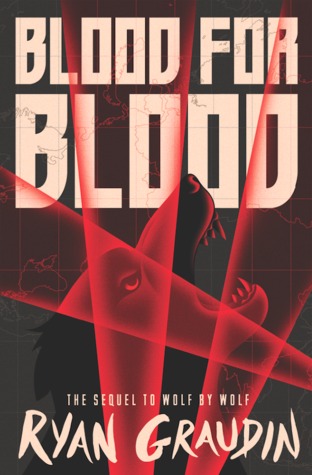
Blood for Blood is the second book of a fantastic duology, picking right up from where the first one ended. The series takes place in 1956, in an alternate history where the Third Reich and Imperial Japan rule the world. The story follows Yael, a teenager who had escaped from a Nazi death camp where she was subjected to horrific human experimentation, and the side effects of those experiments left her with an uncanny ability to skinshift. With just one thought, she can take on the appearance of anyone else. This has made her central to the Resistance’s plans. Yael’s mission: to win the Axis Tour, the annual intercontinental motorcycle race, by impersonating Adele Wolfe, the only female to have ever entered. As last year’s winner, Adele was granted an audience with the highly reclusive Adolf Hitler at the Victor’s Ball. But this year when she wins and dances with Hitler again, Yael plans to be the one behind Adele’s face instead, ready with a blade to sink between his ribs. If you haven’t started the first book, I don’t want to spoil anything for prospective readers, so just trust me when I say you don’t want to miss this series. (Read the full review…)
 The Queen of Blood by Sarah Beth Durst

The Queen of Blood introduces readers to the world of Aratay, a place where humans and nature spirits coexist in a state of precarious equilibrium. Spirits see humans as invaders in their domain, and given the opportunity they would gladly see us all dead. But while the spirits are destructive forces, they are also one with the natural world, and without them there would be no life. So humans have learned to adapt. A Queen holds control over all the spirits in the area and protects her people from harm. To choose a Queen, girls with an affinity to sense and manipulate the spirits are identified and invited to an academy to learn how to use their powers. The most promising students are chosen by champions to be further trained to become potential heirs, so that in the event that the Queen dies there will always be a successor to take her place and keep the spirits in line. Sometimes though, there are accidents. The book begins with a spirit attack on a village, which leaves many dead. Our protagonist, a young girl named Daleina, was only able to save herself and her family when her powers manifested during the massacre, and since that day has vowed to do all she can to prevent something like this from ever happening again. (Read the full review…)
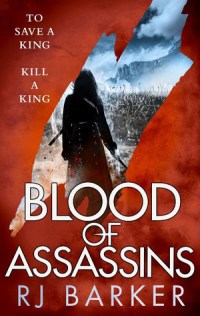 Blood of Assassins by RJ Barker

Generally, I find that most second books of a trilogy rarely live up to the first one, but this was so not the case here. RJ Barker has topped his first book with a spectacular sequel containing even more intrigue, more action, and more heart. A handful of years have passed since the end of the previous volume, and our protagonist, the assassin-in-training Girton Clubfoot, as well as his master Merela have been traveling with a band of mercenaries, trying to keep a low profile amidst the conflict in order to escape the bounty hunters on their trail. But despite their best efforts, disaster finds them in the end, and with Merela incapacitated by a deadly poison, Girton has no choice but to return to Castle Maniyadoc at the behest of an old foe. Still, coming back to Maniyadoc has its upsides. Girton is reunited with his friend Rufra, who has not forgotten our protagonist’s role in helping him become king. The problem now is keeping things that way, as rumors abound that Rufra has a spy among his inner circle, and Girton has been tasked to root the traitor out. (Read the full review…)
 Mage’s Blood by David Hair
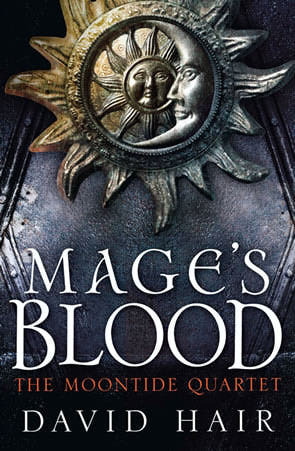
One of the most under-rated and under-read books I can think of, Mage’s Blood is a sprawling epic that has it all: nations at war, clashing religions, political intrigue, mages and sorcery, and the list goes on and on. Every Moontide, an event that occurs ever twelve years, the seas part to reveal the magnificent mage-crafted Leviathan Bridge, allowing trade and communication between the world’s two great continents. Unfortunately, the passage is also a source of much bitterness and conflict. Now another Moontide is at hand, and as the time draws nearer, the people on both sides prepare for war. Antonin Meiros, a mage of great renown now seeks a new wife, traveling to Lahk to wed Ramita. Ramita, however, is already betrothed to the hotheaded Kazim. In another part of the world, Elena Anborn has pledged her life to protect the royal family of Javon, fighting off assassination attempts masterminded by her former lover Gurvon Gyle, who works for powerful political entities. Meanwhile, Elena’s nephew Alaron prepares for his mage finals, but during the presentation of his thesis, he unwittingly proposes a dangerous topic that could mean the end to his hopes and dreams. (Read the full review…)
 Saint’s Blood by Sebastien de Castell
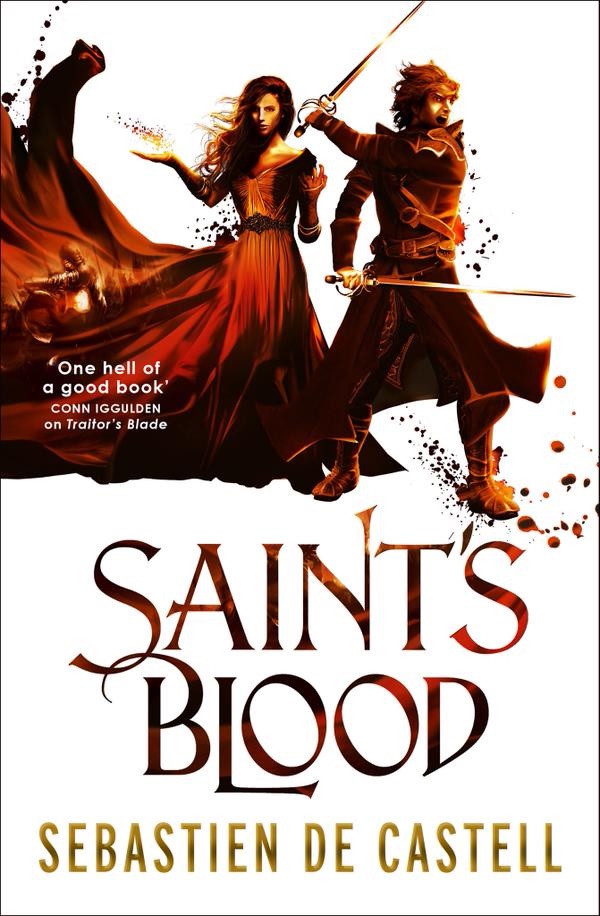
Just when you think things can’t get any worse for our series protagonists Falcio, Kest, and Brasti, Saint’s Blood pulls out all the stops in this third installment of the Greatcoats sequence, bringing everyone back for another round of epic excitement and adventure. The kingdom of Tristia was already on the verge of tearing itself apart, with its people close to revolt and the dukes still looking for ways to depose their young queen, and nothing the Greatcoats have been doing for the last six months seems to have made any difference. Now a new threat has emerged, and whoever this shadowy enemy is, they’re targeting the Saints of Tristia. On top of that, rumors are also spreading through the countryside that the Gods themselves are displeased with the way things are going in Tristia, further undermining Queen Aline’s claim to the throne. Churches and religious sanctuaries are being desecrated everywhere and thousands of pilgrims are pouring into the capital campaigning for their faith, leading to the return of the Inquisitors, who unfortunately don’t see eye-to-eye with the Greatcoats on a lot of matters. Whoever is orchestrating all these events seems bent on undoing everything the late King Paelis had worked so hard to accomplish, and well, you can bet Falcio’s not about to let that happen. (Read the full review…)
 Promise of Blood by Brian McClellan
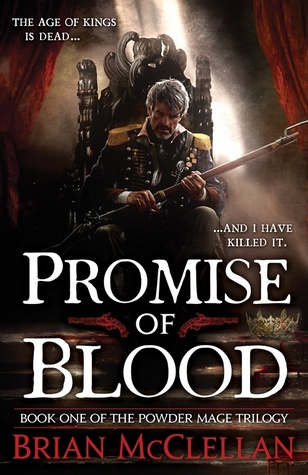
Promise of Blood is aptly named, because it begins with blood, and lots of it. The kingdom of Adro has been badly run for years, and the king has decided to settle its debts by practically selling his people’s freedom to the neighboring nation of Kez. Furious with the decision, Field Marshal Tamas leads a coup to take the throne, rounding up the king and all the influential nobles of the land for the guillotine. The mass executions that follow last for days, but no revolution happens without serious repercussions. During his takeover, Tamas also wipes out the king’s entire royal cabal of Privileged, a group of sorcerers who are loyal to the monarchy. To a one, the words on the dying lips of every Privileged was the same, invoking the name of the one god: “You can’t break Kresmir’s Promise.” Though not a superstitious or overly religious man, Tamas nonetheless hires the services of retired police inspector Adamat to investigate these mysterious words. Tamas’ estranged son Taniel, a powerful powder mage in his own right, is also disturbed when he discovers Kez’s army at their door, preparing for war. The question is, are they simply taking advantage of the political turmoil in Adro to invade, or is this a sign of something bigger and more sinister? (Read the full review…)
 Blood of Elves by Andrzej Sapkowski
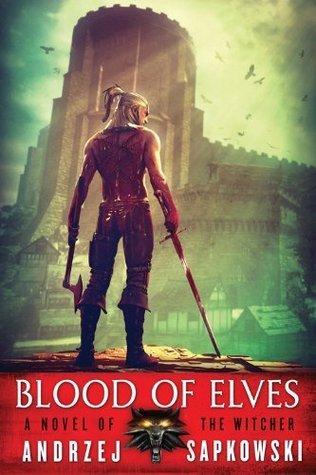
Blood of Elves is part of The Witcher sequence, a series of short stories and novels following the heroic exploits of the legendary Geralt of Rivia. As a Witcher, Geralt is part of a society of enhanced fighters and monster-slayers. Taken as children, they are subjected to intensive training and a ruthless regimen of alchemical and mutagenic compounds intended to alter their physiology and prepare them to hunt their prey. Although Witchers are meant to remain neutral in matters of politics, Geralt has taken an orphan princess named Ciri into his protection, hiding her from spies and assassins sent to find her. He believes that she is the prophesied child meant to bring great change to the world, not only because of her royal heritage but also because of the magic that flows in her veins – the blood of elves. The young princess, taught sword fighting and other martial arts by Geralt, learns about supernatural monsters and how to kill them. But as Ciri’s magical potential becomes more powerful, Geralt realizes he will need the aid of some friends and unexpected allies in order to continue protecting her. (Read the full review…)
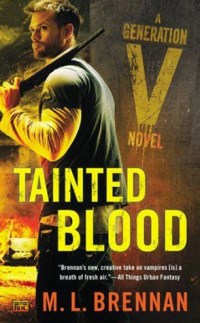 Tainted Blood by M.L. Brennan
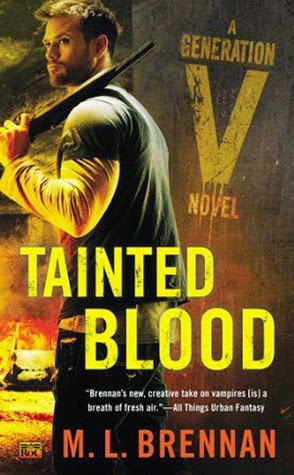
Tainted Blood is the third book of amazing urban fantasy series Generation V, starring protagonist Fortitude Scott on his first solo mission for his vampire family. Unlike the first two books which both started off with a healthy dose of humor, a dark shroud of sadness hangs over book three’s introduction, because it begins with a death that has shaken up the Scott’s business operations. The loss means more work for Fort, keeping checks on all the supernatural denizens living in his mother’s territory, but he manages with some help from his kitsune friend Suzume. Then everything goes to hell when the leader of a faction of bear shapeshifters turns up brutally murdered. It’s our protagonist’s first time handling an investigation, and of course his family is no help. Still, Fort is determined to bring the true killer to justice. He just hopes he’s not in way over his head on this one. (Read the full review…)
 Blood Song by Anthony Ryan
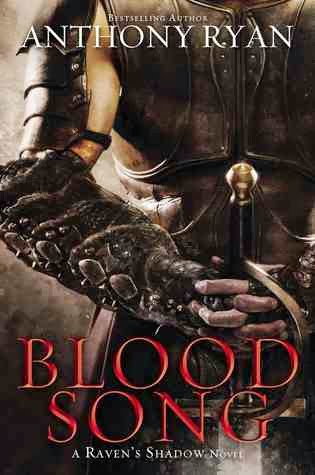
The story of Blood Song is about a young boy who trains and grows up to become a leader and one of the greatest warriors in the kingdom. Opening on an encounter between a scribe and a prisoner who is being transported across the sea to answer for his crimes, this first volume of the Raven’s Shadow trilogy introduces readers to Vaelin al Sorna, also known as “Hope Killer”. Vaelin’s history is recounted by the scribe, who recorded how, as a child, our protagonist was sent to the Sixth Order to train in the martial ways of the Faith. It’s a harsh life fraught with peril, as Vaelin and his peers are driven relentlessly by their instructors to learn everything from doctrine and history, to survival methods or ways to wield a sword. Later, he and some of the lifelong friends he has made will go off to face even greater challenges and become embroiled in political plots and magic that would decide the fate of the kingdom. (Read the full review…)
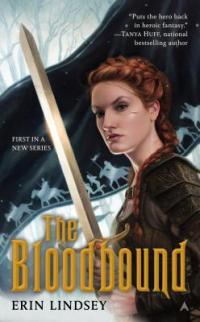 The Bloodbound by Erin Lindsey
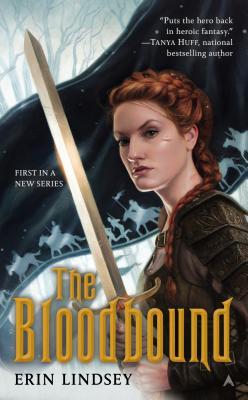
The Bloodbound is the first book of a fantasy romance trilogy following Alix Black, a soldier and scout in the royal army. She is also a noblewoman of a sort, being a daughter of one of the Greater Houses, but the power and influence of the Blacks have waned over the years, leaving only Alix and her older brother Rig. Alix has left the life of luxury behind, trading in her gowns and lavish balls for leathers and her blood blade, swearing her service to King Erik. But what she didn’t expect was actually becoming Erik’s bodyguard. When the king is betrayed on the battlefield by his own brother Prince Tomald, Alix rescues Erik and is named his protector. However, as the two of them grow closer over time, she also becomes his most trusted confidante. Complicating matters is Alix’s relationship with her former fellow scout and more-than-just-a-friend Liam, but what is a loyal soldier to do when her sovereign ruler requires her protection and the fate of their entire kingdom rests on the outcome of a brutal war? (Read the full review…)
Book Review: Head On by John Scalzi
Posted on April 23, 2018 24 Comments
I received a review copy from the publisher. This does not affect the contents of my review and all opinions are my own.
Mogsy’s Rating: 4.5 of 5 stars
Genre: Science Fiction
Series: Book 2 of Lock In
Publisher: Tor (April 17, 2018)
Length: 336 pages
Author Information: Website | Twitter
I’m a huge fan of John Scalzi, having read almost all his novels, and when Lock In came out a few years ago it quickly became one of my favorite books by the author. It was therefore with great excitement that I picked up Head On, which is described as its standalone sequel. And indeed, you may choose to read this without having read the first book, but personally I feel you will be missing out on the subtler nuances of the series if you skipped right to this one. The world of Lock In and Head On is a very complex place and, as I will explain later in my review, reading both books will give you a fuller view of the picture.
Once more, readers follow Chris Shane, the series’ rookie FBI agent protagonist. Chris is also a Haden, the name given to those individuals whose minds are “locked in” as the result of a devastating flu that swept across the globe several decades ago. This disease killed many in the first stage of the infection, but a percentage went on to survive only to suffer acute meningitis, which affected the victim’s brain and caused them to become trapped in a state of being fully awake and aware but having no control over their voluntary nervous systems. A cure for this condition (dubbed Haden’s Syndrome after the then president’s wife who was the most famous person to be affected at the time) was given the highest priority, though none was ever found. Instead, scientists created humanoid personal transports called “Threeps” into which locked in individuals were able to link their minds remotely, allowing them to interact with their world even as their physical bodies remained immobile.
By the time this series takes place, personal transport technology has become much more developed and advanced. It has even permeated into the world of professional sports, in which Hadens pilot specialized Threeps in a fast and furious game known as Hilketa. Though the sport itself is extremely violent, involving the lopping off of heads with swords and war hammers, no one technically gets hurt because the only “bodies” getting battered and broken on the field are the robot-like Threeps. However, during a high-profile special exhibition game, an up-and-coming player named Duane Chapman suddenly dies in the middle of a match meant to attract new investors to the North American Hilketa League, his vitals disappearing off the boards for all to see. NAHL officials are quick to cover up the incident, leading Chris, who was present in the skybox during the fatal match, to suspect there’s more to Chapman’s death than meets the eye.
Like its predecessor, Head On reads like a sci-fi mystery thriller, following FBI agents Chris Shane and Leslie Vann as they sniff out clues and hunt down the perpetrators in Haden-related crimes. But unlike the previous installment, it dispenses with much of the social commentary and focus on topical themes, putting the emphasis on investigative procedures the actual crime solving. Happily, the culprit also wasn’t as obvious this time compared to Lock In. As a result, I felt that this sequel was more exciting in terms of pacing and levels of suspense, especially since the trail to find Duane Chapman’s murderer subsequently leads Chris to all kinds of strange personalities and bizarre happenings related to the dark underbelly of the Hilketa industry. Uncovering everything from backroom deals to sordid affairs, our protagonist winds up being caught up in series of harrowing events that include arson, assassination, and a whole pile of destroyed Threeps. Needless to say, this novel ended up being a very quick read, since all that intensity and action made it hard to put down.
That said, the book also lost much of its cerebral and philosophical bite due to the diminished exploration into social themes like disability, ethics in medicine, and other discussion-worthy subjects related to a world in which a significant percentage of the population suffer from an expensive and life-altering condition. While Head On lightly touches upon some of these issues, such as government funding for individuals with Haden Syndrome or the social perceptions of them in public, in this particular arena, Lock In still holds the edge. This isn’t really a dig at Head On, however; after all, you can only expound upon these themes beyond the first book to a certain extent before it starts becoming repetitive. As such, this is why I think it would be a good idea to read the two books in order; you’ll get the insightful commentary in the first one and the action and suspense in the second—the best of both worlds.
Head On, though, is still in every sense a Scalzi novel. It has his signature style all over it: in the clever premise, the slick sense of humor, the quippy lines of dialogue. It’s also interesting to note, while the author is careful not to reveal the gender of the series protagonist, in my mind I still picture Chris Shane as male because Scalzi can’t ever seem to write a convincing enough female POV (see examples Zoe’s Tale or The Sagan Diary). However, that’s just my personal opinion and ultimately a non-issue, since it didn’t distract or take away from my overall enjoyment of this particular novel, whose pages I devoured while loving every moment of the story.
In the end, I think I enjoyed this book just as much as Lock In, even though its tone may have shifted slightly more to a traditional mystery thriller narrative—which can be a good thing, depending on the type of reader you are. For me, Scalzi’s stories are always a delight because of how clever, witty, and approachable they are, and this one was no exception. I had a smashing good time with Head On, and whether you are new to the author or a long-time fan, I think you will too.


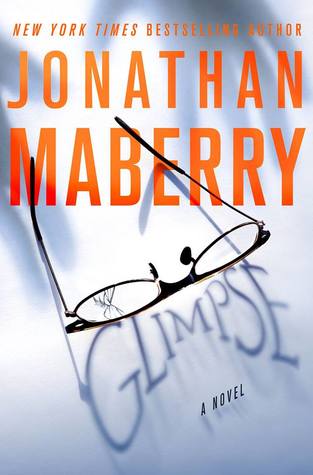
Book Review: Glimpse by Jonathan Maberry
Posted on April 22, 2018 17 Comments
I received a review copy from the publisher. This does not affect the contents of my review and all opinions are my own.
Mogsy’s Rating: 4 of 5 stars
Genre: Horror, Paranormal
Series: Stand Alone
Publisher: St. Martin’s Press (March 27, 2018)
Length: 352 pages
Author Information: Website | Twitter
Glimpse is my second book by Jonathan Maberry, and I felt like I was taking a little bit of a chance because several years ago my attempt to read his book Patient Zero did not go so well. However, the premise simply sounded too good, and in the end I’m glad I overcame my hesitation to give this one a try because I really enjoyed it. In addition to being a blend of horror and the paranormal, this chilling story also has an element of otherworldly suspense that I think will make it appeal to fans of Joe Hill or Dean Koontz.
Glimpse follows recovering junkie Rain Thomas, a twenty-something young woman who has struggled to overcome tragedy and loss to build a life for herself in New York City. At age sixteen, she became pregnant and was forced to give her child up for adoption after Noah, her first love, was deployed to Iraq and killed in an IED attack before he even found out about the baby. An embarrassment to her upper crust family, Rain was essentially left to fend for herself after she succumbed to her grief and fell into of life of drug addiction.
Now three years clean, Rain is trying her best to stay that way, attending her support group meetings and trying to find steady employment. However, on the day of a big job interview, strange and disturbing things start happening around her. First, it was the malevolent presence she felt in the bathroom as she was getting ready that morning, then on the train heading into Brooklyn, an old woman gives Rain a pair of broken reading glasses before vanishing like she was never there. But what shakes Rain to her core is the sight of a little boy she catches through the cracked lens of the borrowed glasses, a boy who looks so much like her dead boyfriend Noah that she can’t help but think she is seeing a vision of the child she gave up almost ten years ago. With terror, Rain also believes she can sometimes recognize another figure in these creepy glimpses through the lens. Known only to her as “Doctor Nine”, he is a cruel and evil man who has been haunting her dreams, and now Rain fears that this creature out of nightmare may have her son.
Hands down, my favorite thing about this book was Rain, who was in every way my kind of protagonist—a tragic heroine, to be sure, but also a fighter and a survivor who has managed to pick herself up and out of the darkest time of her life. Maberry did a great job exploring and developing her personality because I found her to be very convincing; she’s just so genuine, so flawed, and so undeniably and deeply human that my heart really went out to her. There’s also a charm about her that I found strangely endearing, an almost protective feeling I developed for her character even though Rain has proven time and time again that she is strong enough to hold her own in the face of the most difficult or terrifying situations.
Rain’s past is also complex and well developed, revealed mostly through her intimate confessions at group therapy. These moments were woven seamlessly into the narrative, helping readers grow closer to the protagonist without resorting to awkward and sterile flashbacks to her childhood or teenage years. In fact, these interludes quickly became some of my favorite sections of the novel because of the way they made the story feel much more immediate, even if many of them were heartbreaking to read. I was affected in a way I rarely feel with a lot of horror fiction, and certainly, I felt much more here than I did with the author’s first Joe Ledger book, which mostly just left me feeling disconnected and bored.
Glimpse, on the other hand, is a much more elaborate and elegant novel. It’s incredibly atmospheric, for a start, dialing up the creep factor to 11. We also have a fantastic villain in Doctor Nine, who reminds me very much of a Charles Manx-like creature from Joe Hill’s N0S4R2, a predator who is able to slip in and out of a secret world that exists alongside ours in order to stalk his young victims. As well, Glimpse is made up many different components, including the POVs of a handful of other characters besides Rain, plus plenty of snippets from the past that are integrated into the present. There’s also an abstract element involving the bending and twisting of time and reality, which might not come across too clearly at first, but in the end, I was quite happy with how it all came together.
On the surface, Glimpse may be billed as a novel of paranormal horror and suspense. But dig a little deeper, and you will also find a tale of redemption and recovery, a story about confronting the demons of the past—both the figurative and literal ones. Simply put, it was a great read, with the plot holding my attention captive from beginning to end. I would love to read more like this from Jonathan Maberry.

Mogsy’s Bookshelf Roundup: Stacking the Shelves & Recent Reads
Posted on April 21, 2018 23 Comments
Bookshelf Roundup is a feature I do every other weekend which fills the role of several blog memes, like Stacking the Shelves where I talk about the new books I’ve added to my library or received for review, as well as It’s Monday! What Are You Reading? where I round up what I’ve read since the last update and what I’m planning to read soon. Mostly it also serves as a recap post, so sometimes I’ll throw in stuff like reading challenge progress reports, book lists, and other random bookish thoughts or announcements.

Received for Review
My thanks to the publishers and authors for the following review copies received! For more details and full descriptions of the books, be sure to click the links to their Goodreads pages.

Thank you Clarion Books and the kind folks at Wunderkind for sending me Hiding by Henry Turner, which according to Goodreads is a Young Adult psychological thriller about a teenager who breaks into his ex-girlfriend’s house and apparently discovers more about her than he bargained for. This one was new to me, but I’m curious.
I was also surprised this week with a finished copy of Only Human by Sylvain Neuvel. This is the third (and I think final) book of the Themis Files series, a journey that first began when a piece of a giant robot was discovered in the ground just outside Deadwood, South Dakota. I’ve been following the story since book one, so I’m excited to see what will happen next. With thanks to Del Rey!
And courtesy of Subterranean Press, who are always keeping me supplied with fascinating new finds, I received two more amazing ARCs: A Voice in the Night by Jack McDevitt is a collection of stories described as a mysterious ride into “odd places”, and it even includes a couple episodes starring Priscilla Hutchins from the author’s Academy series. And next up, Rock Manning Goes for Broke by Charlie Jane Anders is a quirky looking novella which I still know very little about at this point, but the first line of the book’s blurb is “Viking vs. Steampunks!” so at least I know it’s going to be interesting.
I was also super excited with the arrival of this ARC of Devil Sharks by Chris Jameson. This book is pretty high up my list of most anticipated releases for the summer, and I already know I’m going to get a good read since I enjoyed the author’s Shark Island last year. That’s some perfect beach reading right there, with thanks to St. Martin’s Press.
We have a smaller batch of new arrivals this week, so rounding things up today is this finished copy of Verdict on Crimson Fields by M.C. Planck, with thanks to the awesome team at Pyr Books. I am so behind on this series, which is already on its fourth installment, but that cover is seriously to die for. I really wish I knew what was going on there! Maybe one day I’ll finally catch up.
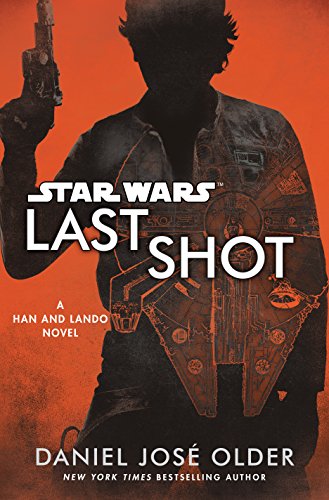

I’m really trying to cut down on all requests, so I only have three digital acquisitions this week. In the audiobook pile is Star Wars: Last Shot by Daniel José Older, a story of Han Solo and Lando Calrissian from their younger days. I’m really excited for this one in anticipation for the Solo movie next month. With thanks to Random House Audio for the listening copy.
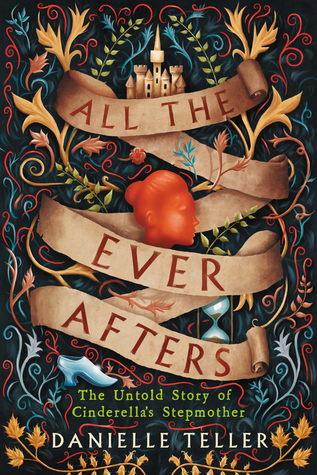
With thanks also to William Morrow for these e-galleys: All the Ever Afters by Danielle Teller is being touted as the untold story of Cinderella’s stepmother, and you all know how I’m a sucker for fairy tale retellings especially from the villain’s point of view. And finally, I was thrilled when my request was approved for Cross Her Heart by Sarah Pinborough. I’m a huge fan of the author and was glad to see the US release date (September) isn’t going to be too far behind the UK (May) and that I won’t have to wait at all now to read it.
Reviews
A summary of my reviews since the last update:
Dread Nation by Justina Ireland (5 of 5 stars)
Grey Sister by Mark Lawrence (4 of 5 stars)
The Oracle Year by Charles Soule (4 of 5 stars)
Noir by Christopher Moore (3.5 of 5 stars)
One Way by S.J. Morden (3.5 of 5 stars)
Impostor Syndrome by Mishell Baker (3.5 of 5 stars)
Unbury Carol by Josh Malerman (3.5 of 5 stars)
Blood of the Four by Christopher Golden and Tim Lebbon (3 of 5 stars)
Roundup Highlights:

What I’ve Read Since the Last Update
Here’s what I’ve managed to “unstack” from the TBR in the last two weeks. I’m actually behind on reviews! I’ve gotten about half of these posted already, and more are incoming, so be sure to stay tuned.

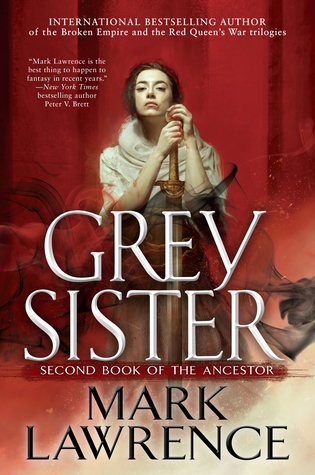



Have you heard of or read any of the books featured this week? What caught your eye? Any new discoveries? I hope you found something interesting for a future read! Let me know what you plan on checking out. Until next time, see you next Roundup!
Friday Face-Off: Smoke
Posted on April 20, 2018 26 Comments
Welcome to The Friday Face-Off, a weekly meme created by Books by Proxy! Each Friday, we will pit cover against cover while also taking the opportunity to showcase gorgeous artwork and feature some of our favorite book covers. If you want to join the fun, simply choose a book each Friday that fits that week’s predetermined theme, post and compare two or more different covers available for that book, then name your favorite. A list of future weeks’ themes are available at Lynn’s Book Blog.
This week’s theme is:
“Where there’s fire there’s…”
~ a cover featuring SMOKE
Mogsy’s Pick:
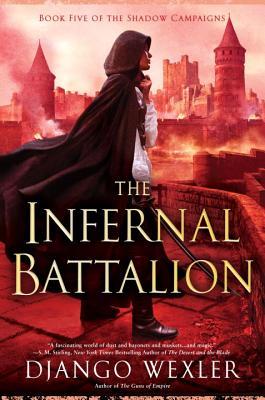
The Infernal Battalion by Django Wexler
This week, I thought I would keep things simple with an old-fashioned head to head. The Infernal Battalion is the final book of The Shadow Campaigns series. Wexler is in his element as this novel shifts the focus back to the chaos and violence of the frontlines, making this one an action-packed (and yes, smoke-filled) installment.
Our contenders:
Ace Books (2018) vs. Head of Zeus (2018)

Winner:
This week’s a tough one. Even though I’ve always been quite partial to the US (Ace Books) covers, the UK (Head of Zeus) edition for this particular volume is gorgeous, with the castle in the background and the bright flames jumping out from the smokey grey. As a bonus, we even have the heavy artillery. On the other hand, I tend to prefer covers that feature central characters, and I also love the rich red tones of the Ace edition. At the end of the day, loyalty wins out, but both choices are so strong this week that it really could have come down to a coin toss.
But what do you think? Which one is your favorite?
Review: Noir by Christopher Moore
Posted on April 19, 2018 27 Comments
I received a review copy from the publisher. This does not affect the contents of my review and all opinions are my own.
Mogsy’s Rating (Overall): 3.5 of 5 stars
Genre: Humor, Historical Fiction
Series: Stand Alone
Publisher: Hardcover: William Morrow | Audiobook: HarperAudio (April 17, 2018)
Length: Hardcover: 352 pages | Audiobook: 9 hrs and 3 mins
Author Information: Website | Twitter
Narrator: Johnny Heller
Noir was my first experience with the writing of humorist Christopher Moore, and I was not disappointed. In fact, it’s been a few days since I finished reading the book, and every now and then I still catch myself chuckling at the memory of some of the wild and whacky things that happened in it. Although I’m unable to comment on the way this novel compares with the author’s other work (I’ve come across some reviews from longtime fans that mention that it feels different), l can nonetheless understand why many readers find his stories entertaining.
The book opens in San Francisco, 1947. Protagonist Sammy “Two Toes” Tiffin is working as a bartender at Sal’s Saloon, when a beautiful blonde named Stilton (like “the Cheese”, which is henceforth how she will be known to Sammy) breezes in through the door and captures his heart. However, the romance will have to wait, because soon afterwards, Sammy’s boss puts him in contact with an Air Force general who desperately needs his help. Certain “goods and services” are required at an upcoming function being held at the Bohemian Club, and Sammy, with his street smarts and connections, is in the perfect position to make it all happen.
But then, the Cheese disappears, and Sammy grows worried. More troubles also begin mounting as some of his other harebrained schemes proceed to spiral out of control, resulting in poisonous vipers, dead bodies, and the arrival of black-suited government men bedecked in dark sunglasses. Subsequently, when Sammy sets out on his search for the Cheese, he inadvertently stumbles into a loony conspiracy involving a mysterious flying object spotted over Mount Rainer, topped off by an unexplained plane crash in the desert near a town called Roswell, New Mexico.
Part satire and part homage, this novel feels like a zany, breathless love letter to the noir genre. Its influence can be seen everything, from the cover to the dialogue, attitudes, and mannerisms of the characters. It’s a bit like being transported straight into a 1950s classic noir film, with the tone and style of the writing giving the story’s post-war San Francisco an authentic flavor. Moore also provides fascinating commentary on the inspiration for his setting, as well as some of his experiences and the research he did into the culture, history, and environment of the city’s vibrant Chinatown.
That being said, Noir also has the feel of a tongue-in-cheek satire, which apparently is something of a specialty for the author. Certain elements are done in an over-the-top way to emphasize or poke fun at some of the genre’s more distinctive features, including larger-than-life heroes and coquettish femme fatales. As a result, rather than dark and tense, the atmosphere has been replaced by an eccentric, madcap energy that pervades the whole book, so that you have whacky things like chapters written from the perspective of an all-knowing snake, space aliens being smuggled away in rumble seats in the dead of night, and sexy beautiful women with nicknames like “the Cheese”. Noir is not really “noir” as such, in that it doesn’t really fit the style or the tone of the genre, and yet, the overall mood is still very much there, featuring a strong undercurrent of conflict and despondency in spite of some of the sillier themes.
At the end of the day, I suppose what really matters is that I enjoyed it. I enjoyed it a lot. Humor being such a subjective beast, I wasn’t sure if my tastes would mesh well with Christopher Moore’s style, but it appears I no longer have to be concerned on that front. If it means getting more of the same laughs and cleverness I found in Noir, I’m definitely on board to read more of the author’s work.
Audiobook Comments: Johnny Heller has a voice well-suited to a book like this. The gruff raspiness of it might be jarring in any other story, but it turned out to be a good match for a lot of the characters in Noir, especially for Sammy, a slick and somewhat jaded protagonist with a lot of shady connections. More importantly, the humor also comes out in Heller’s performance, as he delivers the satire and lines of snappy dialogue with instinctual timing and flair.

Waiting on Wednesday 04/18/18
Posted on April 18, 2018 16 Comments

“Waiting On Wednesday” is a weekly meme that first originated at Breaking the Spine but has since linked up with “Can’t Wait Wednesday” at Wishful Endings now that the original creator is unable to host it anymore. Either way, this fun feature is a chance to showcase the upcoming releases that we can’t wait to get our hands on!
Mogsy’s Pick
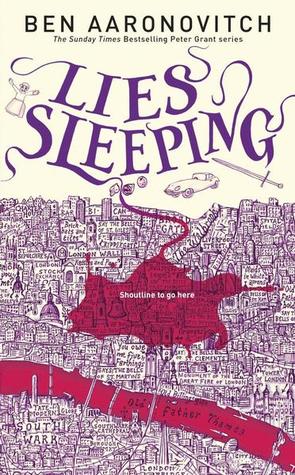
Lies Sleeping by Ben Aaronovitch (November 2018 by DAW and Gollancz)
When I saw that book 7 of the Peter Grant/Rivers of London series finally had a title, cover, and description, I could have wept tears of sweet sweet joy. No, for real, I was excited. Crossing my fingers that its release won’t be pushed back multiple times like the last one.
 “Join Peter Grant, detective and apprentice wizard, for a brand new case…
Martin Chorley, aka the Faceless Man, wanted for multiple counts of murder, fraud, and crimes against humanity, has been unmasked and is on the run. Peter Grant, Detective Constable and apprentice wizard, now plays a key role in an unprecedented joint operation to bring Chorley to justice.
But even as the unwieldy might of the Metropolitan Police bears down on its foe, Peter uncovers clues that Chorley, far from being finished, is executing the final stages of a long term plan. A plan that has its roots in London’s two thousand bloody years of history, and could literally bring the city to its knees.
To save his beloved city Peter’s going to need help from his former best friend and colleague–Lesley May–who brutally betrayed him and everything he thought she believed in. And, far worse, he might even have to come to terms with the malevolent supernatural killer and agent of chaos known as Mr Punch…”
Top Ten Tuesday: Horror, Fantasy, and Science Fiction Books Featuring Killer Plants & Fungi
Posted on April 17, 2018 41 Comments
Top Ten Tuesday was created by The Broke and the Bookish, a weekly meme that now resides at That Artsy Reader Girl. The meme first came about because of a love of lists. Who doesn’t love lists? The original creators also wanted their lists to be shared with fellow book lovers and to ask that we in turn share ours with them and connect with other book bloggers. To learn more about participating, stop by their page dedicated to it and dive in!
This week’s topic: Freebie!
Mogsy’s Picks
Spring finally feels like it’s here, so in honor of the beautiful plants and flowers that are blooming all around us, I’ve decided to celebrate by using this freebie week to showcase a list of books featuring my favorite and most interesting (or scariest) deadly botanicals. Hopefully everyone’s enjoying the warmer weather and having fun spending more time outdoors. Try not to worry about that innocent little shrub growing in the corner, it’s not going to sneak up on you or anything.
 Day of the Triffids by John Wyndham

Probably the most well known sci-fi novel about killer plants, this classic features the Triffids, a tall and mobile poisonous plant species whose origins are never fully revealed, but speculation has ranged from bioengineering to extraterrestrials. Whatever the case, I think everyone can agree they’re nasty creatures. Towering at over seven feet tall, they move by propelling themselves on three blunt leg-like appendages, using their venom-filled stinger to attack and subdue its prey. Their poison kills on contact, after which the Triffid can root itself on the corpse to feed at its leisure, drawing nutrients as from the body as it decomposes. Yuck.
 Harry Potter series by J.K. Rowling
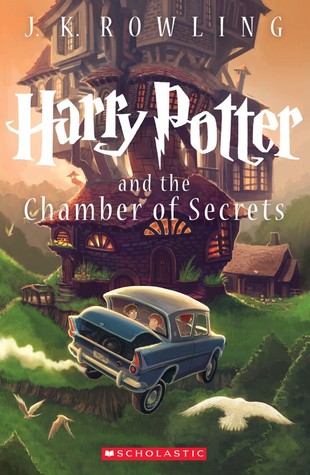
Fans of fantastical plants and fungi will find a treasure trove of them in the Harry Potter series, from the Mandrake, a plant with a root that looks disturbingly like a human and whose cry can be fatal to anyone who hears it, to the Whomping Willing, a violent tree that will attempt to pummel anyone or anything that comes near its branches. Other plants with dangerous or unpleasant effects include the Mimbulus mimbletonia, a cactus-like plant with boils instead of spines that when burst will spray stinking goo all over anyone unfortunate enough to be nearby; the Snargaluff, a carnivous plant which will disguise itself as a dead tree stump in order to lure out its unsuspecting prey; as well as the Devil’s Snare, a constricting vine that will strangle anyone caught among its tendrils and will only squeeze tighter the more its victim tries to struggle.
 The Girl with All the Gifts by M.R. Carey
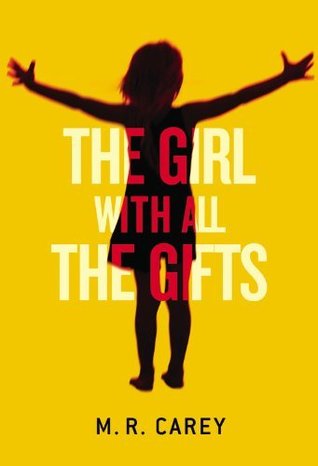
The Girl with All the Gifts is a zombie book, featuring a world that has been infected by a variant of the Ophiocordyceps unilateralis fungus. Originally known to parasitize only insects, somehow a strain of this fungus has evolved to attack humans, making those it infects lose their mental powers and develop a taste for human flesh. The disease spreads through bodily fluids including saliva and blood, hence a person can be infected by a single bite. Over time, the fungus will also take over the host from within and sprout a fruiting body which will release its spores into the atmosphere, spreading the infection to more healthy humans thus creating more “hungries”.
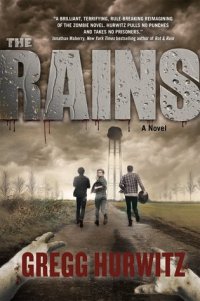 The Rains by Gregg Hurwitz

Another book that plays on the Ophiocordyceps unilateralis idea, The Rains begins with an introduction to the quiet and rural community of Creek’s Cause, where the peace is shattered one evening by a meteor strike. Not long afterwards, our fifteen-year-old protagonist Chance and his older brother are awakened in the middle of the night by a commotion at their neighbors’ house, leading the two of them to sneak out and investigate. They arrive just in time to stop an attack on some kids by their stepmother, who appears to have been transformed into mindless raving husk by a mysterious and unknown parasite. After saving the children, Chance finds his neighbor on top of a water tower where millions of alien spores look to have exploded from out of his bloated corpse. Funny thing about the Cordyceps fungus in this book though, is that they only infect adults, sparing the young. But as soon as you turn 18, watch out! Yeah, that doesn’t make a lot of sense to me either, but since when do killer fungi follow the rules of logic?
 Semiosis by Sue Burke

Semiosis is a multi-generational story that takes place over the course of many years, following a group of human colonists who have traveled light years from Earth to settle on a planet they dubbed Pax. However, they were wholly unprepared for the alien environment that awaited them, nor did they anticipate Pax’s bizarre plant life and the surprising ways it interacted with the surroundings. Many of the original settlers died within a matter of weeks, some because they ate fruits that they previously thought were safe. But through hard work and perseverance, the colony managed to survive, giving rise to the next generation. Still, certain sentient plants on Pax continued to behave in dangerous and unpredictable ways, manipulating the animal life around them to challenge the humans.
 Uprooted by Naomi Novik
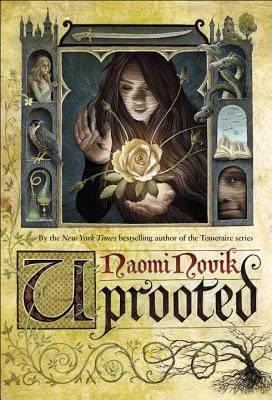
The protagonist of Uprooted is Agnieszka, just another simple girl from yet another simple village, but the bucolic setting belies something more sinister lurking beneath the surface. Surrounding Agnieszka’s valley home is the ever encroaching Wood, a forest filled with dark energies and spirits, whose corrupting force has trapped and stolen the lives and minds of many. Author Naomi Novik uses vivid imagery and “traditional” magic (the kind you would find in classic fairy tales) to create the idea of the spiteful and malignant living forest, so that the entire Wood itself becomes a formidable and terrifying villain.
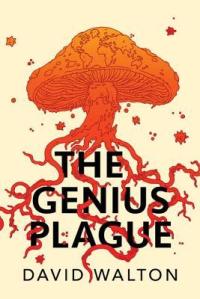 The Genius Plague by David Walton

This is another book about a fungal plague, but unlike the examples above, it has a twist. Let’s face it; in most stories, being infected by a fungus is usually bad—like you can be turned into a mindless zombie, for example. Yet in this case, the fungus actually makes you smarter, though things don’t turn out so well for the humans in the end either. While conducting research deep in the Amazon rainforest, our protagonist Paul Johns picks up a lung infection from breathing in the spores of an unknown species of fungus. Back in the United States, he is treated for his pneumonia and recovers, though afterwards, it appears that the fungus had altered his brain functioning as well, improving memory centers and enhancing pattern recognition and communication skills. Excited about what this could mean for the human race, Paul believes that a symbiotic relationship with the fungus is the next step in human evolution, but his brother Neil, a little more circumspect, is not entirely convinced that joining with an unknown organism would be in humanity’s best interest.
 The Tangled Lands by Paolo Bacigalupi and Tobias S. Buckell
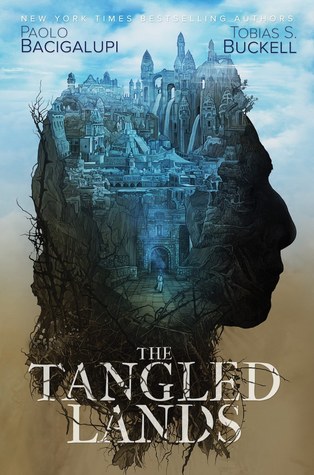
This collection of four novellas take place in a shared world taken over by a fast-growing kind of bramble that feeds on magic. It also poisons the soil so that nothing can grow without making people very sick. As a result, the once great city of Khaim has turned into a crumbling ruin, and any kind of magic has been outlawed to prevent the bramble from encroaching any further. The stories here all feature characters who have been affected by the bramble in some way, like the alchemist whose daughter has a fatal lung disease from being infected with the bramble’s seeds, or the young man whose sister has succumbed to “bramble sleep”, a type of coma caused by the deadly plant.
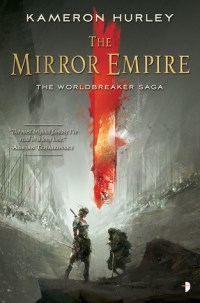 The Mirror Empire by Kameron Hurley
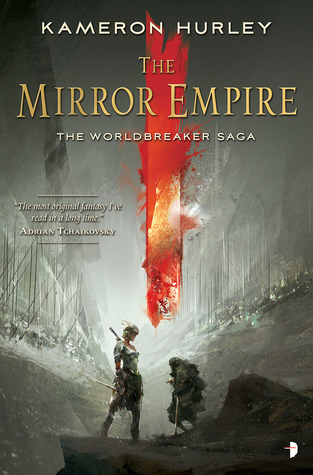
I wasn’t a big fan of this book and can’t say I remember much from it, though I have to admit the world-building was pretty cool. We have everything from magic linked to satellites to female warriors who ride bears and dogs, but the thing that has stuck with me the most are the murderous trees. If you ever find yourself in the world of The Mirror Empire, best watch your step because you never know when you might run afoul of the semi-sentient trees and another carnivorous plants that won’t hesitate to gobble you right up.
 The Ruins by Scott B. Smith
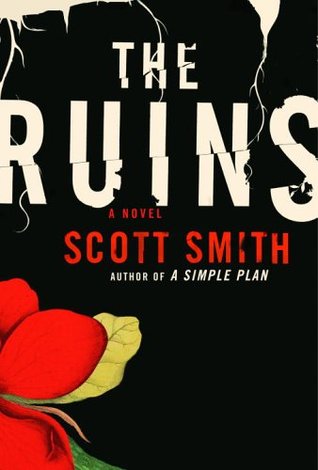
I might be fudging it a bit here, since I can’t recall if I really read this book or what I’m remembering is from the film adaptation (both came out a while ago). The story follows a group friends vacationing in Mexico, and they become trapped in the jungle after one of their group goes missing and the others decide to go look for him. Our hapless characters then come upon some ancient ruins, covered in what appears to be a bunch of your run-of-the-mill jungle vines – except they’re very wrong about that. In fact, these vines are deadly and feed on human flesh. Worse, if one of their tendrils come in contact with an open wound, they can infect their victim and germinate their spores from within the host’s body. I’m shuddering just thinking about it.
Book Review: Grey Sister by Mark Lawrence
Posted on April 16, 2018 27 Comments
I received a review copy from the publisher. This does not affect the contents of my review and all opinions are my own.
Mogsy’s Rating: 4 of 5 stars
Genre: Fantasy
Series: Book 2 of Book of the Ancestor
Publisher: Ace (April 3, 2018)
Length: 432 pages
Author Information: Website | Twitter
The saga of Nona Grey continues in the second novel of the Book of the Ancestor series, Grey Sister. A couple of years have passed since the end of the first novel, and our protagonist finds herself advancing through the ranks at the Convent of Sweet Mercy, which has been her home since she was eight years old after being rescued from the hangman’s noose by Abbess Glass. It’s now time for Nona to choose a path—but so much has changed since her arrival at the convent, it is quite unclear where the future will take her anymore. Her talents make her perfect for the next stage of her studies, Mystic Class, in which she and her fellow classmates will learn to unlock the secrets of the universe. Nona, however, has made as many enemies as friends over the years at Sweet Mercy—powerful ones who will not be content until she is completely destroyed. She has already been targeted for death several times, and worse, she has also earned the ire of Joeli Namsis, whose family has close ties with the nobleman who seeks revenge on Nona for what she did to his son.
And as if that weren’t enough, the Convent of Sweet Mercy also finds itself targeted by the Inquisition, who arrives on Abbess Glass’s doorstep claiming to be on the hunt for heretics. Their presence is an invasion, their watchful gazes permeating every nook and cranny of the convent. The situation quickly devolves, until it is no longer safe for Nona to remain at Sweet Mercy. Meanwhile, Abbess Glass is also facing her own problems as the Inquisition’s attention turns her way, hauling her off for imprisonment and further interrogation.
In many ways, Grey Sister feels like a “bridge” book, and I mean that in the best sense of the term. Many changes and story developments are brought about in this installment, while the story also expands upon our knowledge of Abeth. Not only have our characters matured, the world-building has also become to feel a lot more robust and fleshed out—which is really saying something, since this aspect was already top-notch in book one. I continue to be fascinated by the supernatural aspects of this world of shiphearts, demons, and magic. Mark Lawrence’s books always feature incredible settings, characterized by a wondrous mishmash of elements from many different genres.
Then, there are the characters. In Abeth, there exists four main “tribes” of people, each distinguished by special powers that their bloodlines possess. As someone who has proven to be a “triple-blood”—having Hunska, Marja, and Quantal skills—our protagonist Nona Grey is an extremely rare case, and I really appreciated how Grey Sister gave readers a chance to explore her past and background during her forced exile from Sweet Mercy. We are shown just how much her character has evolved, with each victory and tragedy having etched their mark upon her soul. Some of her teachers think she needs to learn humility, but in truth, Nona is her own worst critic. There are a number of emotional and heartbreaking moments in this book, as we gain more insight into Nona’s thoughts. She’ll go to the ends of the earth to seek vengeance against those who have harmed her or her friends, but she’ll also never forgive herself for her own failures.
I also liked how Grey Sister included several new POVs. Here, I just want to say how much I loved, loved, loved Abbess Glass. I already had a soft spot for her character in Red Sister, but this sequel quickly rocketed her up to my all-time favorites. Glass is hard, principled, and wise, but neither does she fall into the archetype of the strict and stuffy old matron. In my head, I picture this badass old lady, and everything I read here only confirmed my image of her. Her chapters were wonderful to read, and every time they gave about, I gave a little inward cheer. As well, I welcomed the return of amazing characters like Zole and Ara, and of course Sister Kettle, who also gets her chance to really shine in this sequel. Things are made more interesting too with the addition of Keot, who is a bit of a strange entity, but since his role in this tale is probably best experienced firsthand rather than explained, I’ll just leave it at that.
And finally, like any good sequel, Grey Sister carries the story forward. While there were a few lows to go with the highs, the plot was fast-paced for the most part, grabbing my attention from the get-go and not releasing it until it was over. Also, Nona and her friends may be older in this volume, yet the story still retains some of those “Young Adult vibes” I first felt in Red Sister, which probably helped make this one feel like a lighter, faster read than a lot of Lawrence’s other books. This means that if you’ve never read the author but would like to give his work a try, Book of the Ancestor might make for the perfect jumping on point. It’s very different from his Broken Empire and Red Queen’s War trilogies, but as some of those books can be quite heavy and dark, some readers might see that as a good thing.
Bottom line, I think it’s safe to say if you enjoyed Red Sister then you will enjoy Grey Sister as well. Mark Lawrence has written another brilliant novel, as rich and complex as ever.
More on The BiblioSanctum:
Review of Red Sister (Book 1)
Book Review: Impostor Syndrome by Mishell Baker
Posted on April 15, 2018 11 Comments
I received a review copy from the publisher. This does not affect the contents of my review and all opinions are my own.
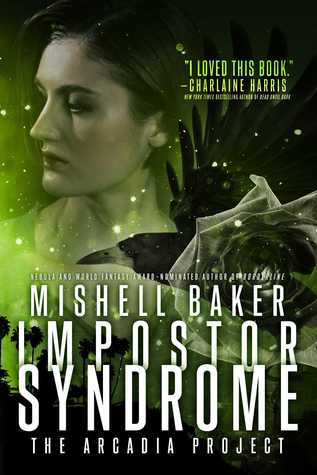 Impostor Syndrome by Mishell Baker
Mogsy’s Rating: 3.5 of 5 stars
Genre: Urban Fantasy
Series: Book 3 of The Arcadia Project
Publisher: Saga Press (March 13, 2018)
Length: 480 pages
Author Information: Website | Twitter
While I will always continue to recommend and cheer on The Arcadia Project series, this third and I think final installment was probably my least favorite. Having said that, it was well written, as the two previous books had been. Plus, we get to see the return of many of our favorite characters, both good and bad. Whether you love them or hate them, the unique and fascinating personalities that you find in these books are the key to making this series so vibrant and enjoyable to read.
Impostor Syndrome once again stars Millie Roper, a young woman with borderline personality disorder who is still trying to get a handle on all her mental health issues. She’s also a suicide survivor, who had to have her lower legs amputated following her disastrous attempt to take her own life. After joining the secret organization known as the Arcadia Project, keeping tabs on the Seelie and Unseelie denizens of fey realm was able to keep Millie on a new track, but recent events have not helped her already fragile state of mind. A rift has formed in the Arcadia Project, and as a result the fey are at war, with half the Court backing the Los Angeles branch while the other half has thrown in their lot with London. This leaves Millie and her boss Caryl scrambling to find allies for LA, hoping to head off the conflict before things can get too far out of hand.
But then, London decides to play dirty. In an underhanded attempt to sabotage LA, they arrange to have Millie’s partner Tjuan framed for a crime he didn’t commit. As a result, one of LA’s most senior agents is forced into hiding, and it’s up to Millie to find the real culprit and clear Tjuan’s name. Following the clues across the Atlantic and beyond, our protagonist finds herself entangled in web of secrets and lies that go much deeper than anything she could have imagined. With the fates of the mundane realm and Arcadia hanging in the balance, Millie must pull off the greatest heist that both worlds have ever seen by cracking the fae Queen’s impenetrable vault to get at the answers that lie within.
Impostor Syndrome may be the series’ most ambitious book yet. Unfortunately, it also felt like it contained the least amount of development. In preparation for this review, I went back to see what I had written for the first two books, Borderline and Phantom Pains, to see if I could spot what might have been lacking from this third installment. In the end, I determined that the missing ingredient is none other than that sense of wonder and awe which comes with being surprised by something unexpected. With Borderline, I was impressed because what started as a rather conventional urban fantasy quickly morphed into a kind of story I’d never seen before. Mishell Baker portrayed the fey and their realm in refreshingly new and interesting ways, introducing concepts like the Arcadia Project, Echoes, and a whole bevy of other neat ideas. Against all odds, Millie also won me over despite being the kind of protagonist many would find difficult to like. The sequel Phantom Pains developed these elements, patiently planting the seeds in a carefully constructed plot which ultimately led to shocking revelations.
In contrast, Impostor Syndrome felt less well put together, at least when compared to its predecessors. The first quarter of the book was also sluggish and boring (two words I never thought I’d have to use to describe this series) as we followed Millie and the gang around for several chapters while they played at faerie politics, which is quite possibly the most overused trope in stories about the Fey. This unfortunately set the tone for most of what came after, as the characters were shuttled from one disjointed scene to the next, and it took way too long for the main conflict to reveal itself and for the real story to start.
Then, there was Millie. I loved her character unequivocally in the first two books, but something about her just rubbed me the wrong way in this one. I’ve never minded her personality, even though it can be extremely unpleasant and exasperating at times, because up to this point, Millie has been portrayed as a dynamic individual who is constantly growing and adapting. However, in Impostor Syndrome, her character felt stagnant. For the most the book, the narrative merely rehashed the same old patterns of Millie’s self-conflict as well as her conflict with others that we’ve seen before. By the time her epiphany came around at the end, it was a little too late and she was already on my last nerve.
Needless to say, this wasn’t the feeling I’d hoped for when it comes to the conclusion of one of the best urban fantasy series I’ve come across in years. And yet, I’ll always love these books, because nothing can change the fact that Mishell Baker has created something very special in The Arcadia Project. While Impostor Syndrome may have been a bit lackluster when compared to the previous novel, I would still highly recommend this trilogy to anyone looking for a refreshingly imaginative and unique urban fantasy series.
More on The BiblioSanctum:
Review of Borderline (Book 1)
Review of Phantom Pains (Book 2)


 The BiblioSanctum