Novella Review: Dead Weight by Hildur Knútsdóttir
I received a review copy from the publisher. This does not affect the contents of my review and all opinions are my own.
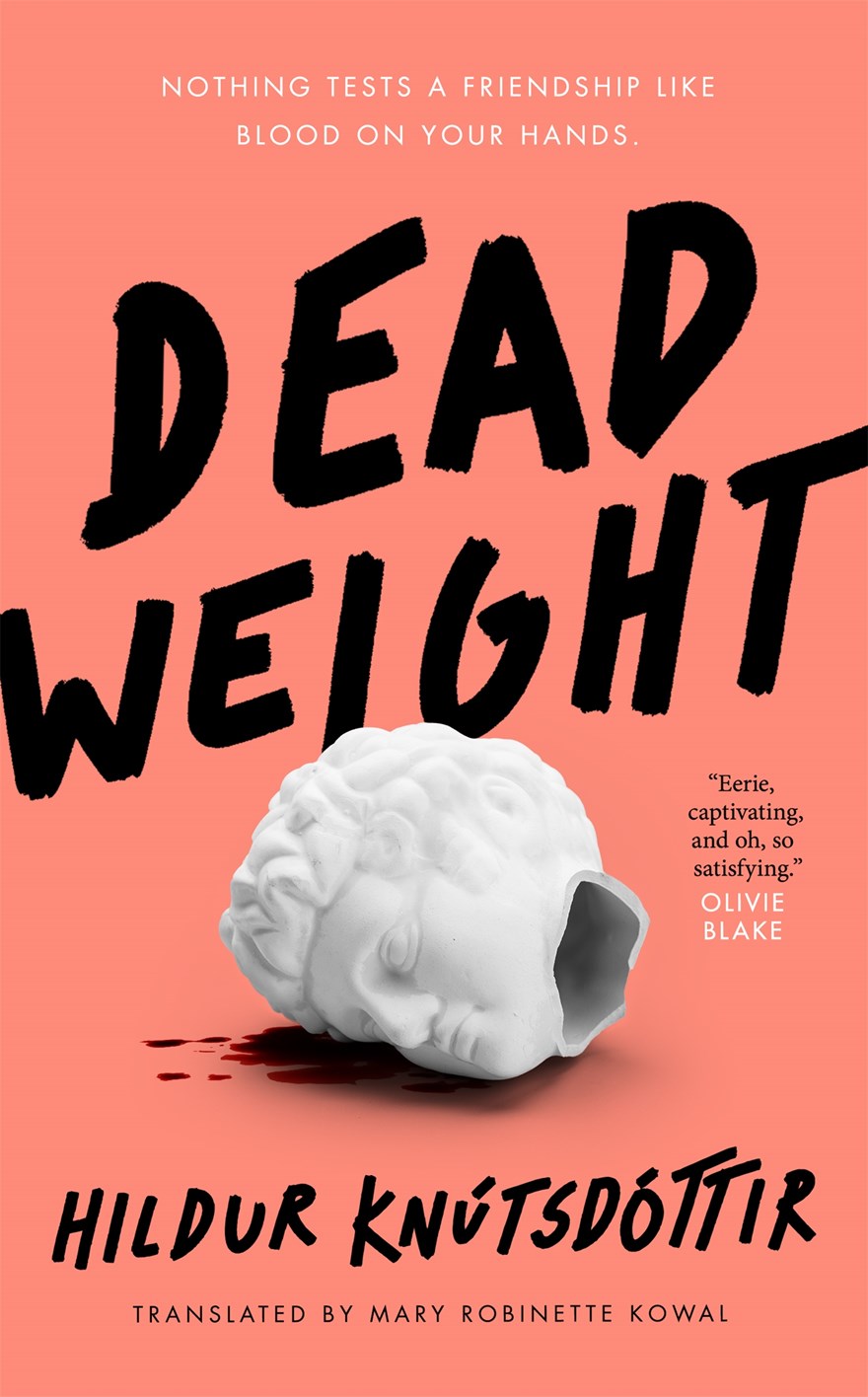 Dead Weight by Hildur Knútsdóttir
Mogsy’s Rating: 3 of 5 stars
Genre: Horror
Series: Stand Alone
Publisher: Nightfire (May 26, 2026)
Length: 160 pages
Author Information: Website
After enjoying The Night Guest, I was pretty curious to see what Hildur Knútsdóttir would do next, especially since her style seems tailor-made for weird little psychological horror novellas. Unfortunately, Dead Weight ended up being a bit of a letdown. First off, I don’t think it was marketed correctly. While it’s pubbed by a horror imprint, I agree with a lot of other reviewers who felt this didn’t feel like horror. For me, it was barely even a thriller. Maybe a low-key suspense story would be more accurate? And yet, the tension hardly builds. Instead, the book mostly drifted along in a kind of muted haze before arriving at a strangely underwhelming ending.
The story follows Unnur, a lonely and emotionally detached woman living a quiet, isolated life in Reykjavík, when a black cat suddenly begins showing up in her apartment uninvited. Trying to do the responsible thing, she tracks down the cat’s owner, a young woman named Ásta, who arrives looking visibly flustered and more than a little unsettled when she comes to collect her pet. It quickly becomes clear that Ásta is dealing with serious problems of her own, though Unnur initially wants no part in getting involved. Still, the cat, Io, keeps returning to her apartment, almost as if it has chosen Unnur for itself. Before long, the situation becomes even harder to ignore when Io unexpectedly gives birth to a kitten in Unnur’s bed.
Distraught over moving the mother and newborn, Ásta convinces Unnur to let Io stay temporarily so that the kitten can be raised in a safe and stable environment. Ásta admits that her own home doesn’t have that kind of security right now, though she promises to stop by regularly to help care for the cats. Reluctantly, Unnur agrees, and what begins as an awkward arrangement slowly develops into an uneasy friendship between the two women. As they spend more time together, the story begins exploring their personal lives, their loneliness, their unhealthy relationships, and the things they’ve quietly convinced themselves to tolerate. Beneath the surface, a growing unhappiness hangs over both women, tied up in the emotional weight of the choices they keep making.
To be fair, the setup itself isn’t bad at all. I did find myself drawn to the atmosphere and to Unnur’s character at first. While Knútsdóttir’s writing style is admittedly a little rigid and aloof, I can’t help but wonder if some of the original prose’s texture and nuance might have been lost in translation. Regardless, it works surprisingly well for a story built around people navigating emotional scars or dealing with hardship. There’s a quiet strangeness to the novella that kept me reading, especially in the opening chapters, where just enough intrigue is established to hold your attention and carry you forward.
But the further I got, the more I found myself wanting from the story, which became a problem when the book never really delivered what I hoped it would. Despite delving quite intimately into both Unnur and Ásta’s lives, Dead Weight never quite develops the momentum or depth required to make their relationship feel fully realized, which made the ensuring crux of the novella feel less significant than it should have. I didn’t feel much urgency or escalation, even when darker elements started unfolding. Everything felt oddly distant and rote. Quite honestly, the cats ended up being the most compelling part of the whole book. Between Io and her kitten, there were genuinely more cute moments than tense ones (which isn’t necessarily a bad thing, I guess).
The biggest issue for me, though, was the lack of payoff. The novella spends its entire runtime hinting at something more, but when it finally arrives, it barely feels like a climax at all. To be fair, I might just be used to reading more intense horror and thriller, thus making this feel way more subtle and tame. Even so, I had expected more impact to justify all the buildup. I don’t think the short length was the issue either, because the ending itself feels abrupt in a way that doesn’t make the book feel complete. It just kind of stops, and I was left wondering, beyond the obvious metaphor of ridding yourself of life’s burdensome liabilities, what was the point?
Still, I can’t say I disliked Dead Weight. A bite-sized novella, it’s an easy enough read and it worked perfectly well as a palate cleanser for me between heavier books. Although it was mildly frustrating because I wanted more, it still works as a decent diversion for an afternoon.


When we as readers end a book and have to ask ourselves, “what was the point?”, for me, that’s a total failure on the writer’s part.
I am glad you got 3stars worth of enjoyment out of it though.
LikeLike
Hmm, sounds pretty disappointing, unfortunately. I’d been curious about it! Thanks for the review.
LikeLike
I just finished this too and feel the same. That last scene was such a head scratcher! It made no sense, unless I totally missed something😂
LikeLike
Pingback: Novella Overview: Useless Weight by Hildur Knútsdóttir - The Home of WEBFILMBOOKS
A palate cleanser is never wrong 🙂
LikeLike
It sounds the sort of read that would’ve had me flinging the book across the room in the good old days when I was reading actual books! I take better care of my kindle. I LOATHE stories where I reach the end and wonder what exactly the point was… And I’m impressed at your patience and good nature in taking it all in your stride:)).
LikeLike
Its so frustrating when a book is advertised as something it clearly isn’t. And its definitely annoying to finish a read and find yourself wandering what the point of it was. I don’t think I’ll bother with this one. But I may well still check out the authors previous book sometime
LikeLike
Another book that didn’t deliver – how frustrating. And the ending sounds really quite annoying! Not for me. Sorry it didn’t work out better for you.
Lynn 😀
LikeLike