Book Review: Warbreaker by Brandon Sanderson
Posted on August 19, 2012 1 Comment
Warbreaker by Brandon Sanderson
The idea alone of using colour as a source of power made me very curious about this book. The details Sanderson puts into the use of colour and Breath is very intricate, yet surprisingly not overwhelming. The obvious religious comparisons are not overwhelming either. I was concerned for a moment when Austre, the one god, unseen, was introduced, but, despite the comparisons, the book wasn’t preachy, even as it admonished the hypocritical views of some of its characters. The other gods, the Returned, are a cross between a resurrected Jesus and the petty Greek gods – but with far less potency.
I loved that all the main characters started as one thing, but were thrown into situations that forced them to almost wipe their slates clean and grow into another. I’m a big fan of inconclusive endings, and I appreciated this one even more because it actually played off of the changes these characters went through, allowing you to assume the outcome.
The supporting cast of characters was very supportive, and served as distraction from all the plotting going on on all sides. Oh goodness, the plotting. I admit to skimming through some of these parts. I got the point without it needing to go on quite so much with the details.
The end felt a bit rushed and incomplete. Or rather, I accept that it was meant to be inconclusive and love inconclusive endings, but because it seemed to rush to that point in those last few pages, I felt a bit let down.
Overall, loved the book, loved the concepts presented. My favourite character would definitely have to be Denth, the mercenary happily complaining about how mercenaries are so unloved for obvious reasons…

Book Review: Ready Player One by Ernest Cline
Posted on June 19, 2012 3 Comments
 Ready Player One by Ernest Cline
I recall a complaint somewhere or other claiming this book to be just an excuse to spout off ample ’80s trivia. I’m guessing that complaint came from someone who has no appreciation for that incredible decade – no, dare I say … dynasty!
Movies, television and music are already happily tapping into the ’80s and have been for some time, so I don’t see an issue with a book doing so. I am certainly not one to argue, considering I am happily indoctrinating my kids with the things that I loved growing up. It warms my heart to hear them fighting for the honor of Greyskull.
This is also a book that any geek can appreciate because it’s all about us. No, not true, the major focus is on video gaming, but there is more than enough for any comic book, sci fi and fantasy, D&D nerd to appreciate.
The book mainly takes place in and around the OASIS, which is a virtual world of massive proportions that no one would ever leave — particularly because reality has become so desolate. It’s a world where both the social networker and the gamer have a place. (Literally. You can purchase your own planet.)
Ready Player One fortunately does not simply toss out the ’80s nostalgia in random intervals without context. Everything is sewn together coherently, and when it does get carried away with the trivia, it’s usually in the form of the main character, a teenaged boy, doing what teenaged boys do best when surrounded by friends: showing off.
While I’m sure this book was conceived well before #Nymwars, there is a strikingly familiar concept at play within the OASIS, where its creative company, GSS, firmly respects users’ right to privacy and anonymity, while a rival corporation, bent on taking over GSS and turning OASIS into a massive billboard, would ensure that anonymity be a thing of the past. All the better to market to you, my dear.
Anonimity is a prevailing theme, where OASIS users vehemently hold on to theirs, no matter how close they become. I relate to almost everything in this book save for this. I’m sure it is true of some, but I have made and even lost some wonderful friends online and once those friendships have been solidified, of course we’ve taken off the pseudonym veil.
I wrote the above after a mere 100 pages into the book, with the intent to give it at least four stars. Shortly after writing it, the plot (hunting for the OASIS creator’s easter egg which will grant the ultimate fortune – his billions and ownership of the OASIS) suddenly picks up.
Or so I thought.
After the momentary action, the book takes a complete turn into ‘a few months in a life of an MMOer’ where everything is a looooong draaaawn out quest, complete with a full chapter on an awkward teen online romance that is ended climactically with a fight scene that could have been written by an awkward online teen.
There is also a pause to remove the stereotype of a fat pasty unwashed kid sitting in his [mom’s] basement all day long. Realizing how unhealthy his lifestyle is, Wade, the main character, forces himself into an exercise and healthy eating routine that does everything but get rid of the pastiness (but he does at least get some vitamin D). There is also brief mention of him actually working 10 hours a day, though that inconvenience never seems to come up again. A few moments spent providing the morals of the story which are not getting too lost online, no matter how much reality sucks, and don’t judge people by appearances.
The plot then plods along like a never ending RPG quest, with enough deux ex machinas to make a Gameshark proud. I hear there’s a movie deal already in the works. Not surprising considering the popularity of the book and of Cline’s previous screenplay, Fanboys.
Still, a fun read, but don’t believe the hype. It’s a lovely walk down memory lane and convenient to have it all condensed into a handy book, but, strip out the simplistic plot and it just becomes a grandiose wiki entry about the ’80s.

Book Review: Clay’s Ark by Octavia E. Butler
Posted on June 19, 2012 1 Comment
 Clay’s Ark by Octavia E. Butler
This was the most disturbing books by Octavia E. Butler that I have read yet, further inspiring my desire to have a conversation with her to find out just how that brain worked. Her concepts are fascinating, even when as disturbing as this one.
Perhaps it was the violence and rape of young children that has me troubled. The ending, certainly, is not for the faint of heart. However, I did not dislike this book because of this. My dislike comes, perhaps from a bias regarding its place as part of the Seed to Harvest collection.
Clay’s Ark carries the similar theme of a community of humans, mutated both physically and psychologically, who must fight against outward and inward forces to maintain their humanity — a theme that dominates just about every book I’ve read from this author. Beyond that and the name, there is very little that relates it to the Patternists created by Mary in Mind of My Mind or the superhumans created by Doro, beginning in Wild Seed. In fact, Clay Dana’s involvement is not mentioned until more than half way through the book.
I took a quick peek at the first few pages of Patternmaster and I see the results of Clay’s Ark may play a part in that story, but for now, it is an odd addition to the series that perhaps was not intended to be part of the series at all (considering it was created several years after Patternmaster.)

Book Review: Patternmaster by Octavia E. Butler
Posted on April 19, 2012 Leave a Comment
 Patternmaster by Octavia E. Butler
After Clay’s Ark, I had no idea what to expect with The Patternmaster. What I did not expect was that the Clayark evolution would basically turn those people into animals – albeit really smart human-like animals – and that they would have no real purpose to their existence save to
be obstacles for the protagonists. Their humanity was almost completely stripped away, despite them fighting so hard to maintain what they could of it in Clay’s Ark.
This book focused otherwise entirely on the Patternists. Two brothers, in particular. All of the Patternists of the past books are gone, including Mary, who created the Pattern and there is little spoken of them beyond what purpose they served in history. Not even their names are mentioned. I did appreciate the intricacies detailing how the Pattern and the Patternist society worked and the descriptions of the mental processes and battles.
Other than the Patternists and Clayarks, there are still humans about. “Mutes,” to the Patternists, who consider them little more than smart animals that can be easily manipulated to serve any purpose, from domestic, to brutal, to sexual. The evolution of slavery, where those
who have not evolved, can serve no other purpose.
A few interesting themes show up. One being that society has reverted to a sub-technological level. Apparently, the Clay’s Ark spaceship was the pinnacle of human technology, and, also served as the downfall of the species. No real reason is given as to why the Patternists no longer have use for technology. Certainly communications isn’t necessary. But … air conditioning? Cars? Netflix?
The most interesting thing about this book as the conclusion to the Seed to Harvest series, is that it is rather anti-climactic. With all the build up regarding the Clayarks and the Patternists, I assumed there would be more to it, but as I read on, I kept looking at the number of pages left and realized that the book would remain focused on a small pocket of the greater world. These books aren’t to be viewed as an epic series, connected through characters and adventures. Instead, it is four different stages in the human evolution Butler has imagined. Apparently, no matter how far the human race evolves, men will always compete against men and women will always be treated as inferior. I had hoped for greater juxtaposition with the Clayarks regarding this, but ultimately, this story was simply about two men and their battle for succession.
I don’t want to say that the final book, or the series itself, was disappointing. It simply wasn’t what I expected – and that’s not a bad thing. Butler is proving to me that she is a master of telling a story so far outside the box. Science fiction and fantasy so often follow the same tropes, with a few twists here and there, but Butler completely ignores it all and forces you to think on so many different angles, all while forcing you to question the rules and morals that society sets upon us.

Graphic Novel Review: Kingdom Come by Mark Waid
Posted on March 19, 2012 Leave a Comment

I should have read this a long time ago, but I’ve always had issue with DC comics. Their heroes have always been untouchable gods. Sure they have their flaws, but even Batman seemed to be above humanity thanks to his money and abilities. In comparison, X-Men, my biased favourites, were far more human, even with their more elaborate powers. They were character you could imagine yourself being, if something happened to mutate your genes.
Kingdom Come acknowledges the god-status of DC’s heroes, and then brings them down several notches because of it. X-Men choose to defend mutant kind and humanity, but anyone who wishes not to be a part of the men in tights brigade is free to try to live a normal life. Kingdom Come infers that it is the absolute obligation of superhuman beings to use their powers to this purpose. Furthermore, it is their responsibility to inspire us regular folk to do better.
And so, it begins with none of this happening because Superman has selfishly abandoned humanity after another superbeing, Magog, took justice into his own hands, killing the Joker, and being acquitted of it.
I’ve never liked Superman. Just too boyscout for my liking. But this series acknowledges that and calls him out on it. In fact, his own peers, particularly Wonder Woman, forces him to see the reality of his actions – and more importantly, the reality of his inaction.
Meanwhile, humans, some led by Lex Luthor and some our own world leaders, seek to take matters into their own hands, with plans to take back the world from superbeings. I have some issue with the fact that even the world leaders were willing to go to such major steps to stop the superbeings, but this was the only flaw in the story and it was not even enough to drop my opinion of the story.
Towards the end, there was a moment that surprised me. Surprised me because I actually cared about, or at least felt sorry for Superman in that moment – something I never thought I’d be able to say.

Book Review: His Majesty’s Dragon by Naomi Novik
Posted on February 19, 2012 2 Comments
 His Majesty’s Dragon by Naomi Novik
If you’re looking for an action read involving war dragons, this isn’t it. There are a few skirmishes, but they are far between. Instead, this is a book about the relationship between a very unique dragon and a naval officer snatched out of the life he was used to when chosen by the dragon to become his master and friend.
The book takes place over a year, during which time, Temeraire grows and learns, while Laurence grows and unlearns. Their relationship is endearing and drives the story wonderfully. The descriptions of the various dragons and the processes and people involved with making them part of the various aerial forces is very interesting.
I love the unusually treatment of dragons in this book. They aren’t the typical force of darkness or mysterious wisdom. They are feared by those who don’t understand them but utterly loved and respected by those that do.
Side note: Weight is certainly an issue, but you’d think more would be done to armour the dragons to better protect them against each other.
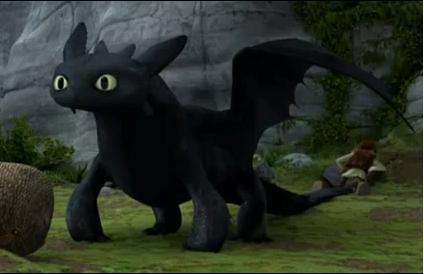
Side note2: Head canon says that Temeraire looks exactly like this.

Book Review: Bloodshot by Cherie Priest
Posted on December 15, 2011 Leave a Comment

Aside from the overindulgence in semi-colons and “And” at the beginning of sentences, this was a fun read. The plot is a bit predictable and leaping from time to time, but the main character is interesting enough to keep me reading. Her neurosis goes overboard from time to time, but usually within context. She’s not a perfect character and her issues aren’t contrived.
I very much appreciated the fact that this was, I believe, the first urban fantasy with a female lead that did NOT spend ridiculous amounts of time describing the rippling hotness of the potential love interests in the books (bonus points for one of them being a “kick ass drag queen”). Not that Raylene was immune to this. It just wasn’t dwelt on with ridiculous detail and when a romantic moment came, it was tender and, well, romantic, instead of just hawt dirteh sex. That can come later.

Book Review: Mortal Engines by Philip Reeve
Posted on November 15, 2011 Leave a Comment
 Mortal Engines by Philip Reeve
A friend introduced me to this book and its opening line:
It was a dark, blustery afternoon in spring, and the city of London was chasing a small mining town across the dried-out bed of the old North Sea.
I loved the concept of this book – mobile cities hunting each other like animals, trying to survive in a post one-minute war future. London is one of the greater cities, but even it will falter if it does not find better hunting grounds.
The first protagonist we meet is Tom, a friendless orphan, who soon becomes wrapped up in the espionage brought on board London by Hester Shaw – a once pretty girl, hideously scarred by Tom’s hero, Valentine, against whom Hester seeks revenge. Valentine is also the father of Katherine, who in turn meets shy engineer, Pod, as she searches for the truth about her dad. The four of them are, typically,very unlikely heroes and, what I appreciated more, unlikely couples. I was pleasantly surprised by their ultimate fates and the fate of those they meet along their journeys. Not everything needs a Hollywood ending.
The book fails slightly on delivery. Some things feel a bit rushed, and I was frustrated by the change of tense that usually came when dealing with an ‘evil’ character. Initially the change to present tense is bound within the respective chapters, but when everything and everyone comes together in the end, it becomes an annoyance.
This isn’t enough of an issue to prevent the book from being enjoyable. It is part of a series based on an interesting concept, so I am curious to learn more about this future.

Book Review: Sorrow’s of Adoration by Kimberly Chapman
Posted on November 15, 2011 Leave a Comment
Sorrows Of Adoration by Kimberly Chapman
This is not a book I would have picked up of my own volition, but since it was written by a friend and lent to me by another , I initially started reading it out of that “obligation” of friendship.
At 2:00 Wednesday morning, I finally decided I needed to get to bed. And then I spent all of Wednesday in a melancholy book funk because I was so smitten with the characters and the what will happen next. That night, I was up until the wee hours again to finish it.
Sorrows of Adoration starts out in, what I assume, is a typical romance novel manner. (I say “what I assume,” because I don’t read that stuff. The only romance novel I’ve ever read is the one I snuck from my sister’s collection… the one about sexy aliens…). I didn’t mind the overindulgence of lovicuddles and kisses and proclamations of love, partially because I am a closet romantic, but mostly because I knew, based on the title and the blurb, that this wasn’t going to last.
Plus I know Kimberly Chapman. There is no way she was going to give me a squishy romance novel!
Soon enough, the Big Bad ThingTM happens, and the results of that event is where this book takes a dynamic twist that removes it from the ranks of silly romance. It delves deep into the darkness of emotion and relationships, proving the phrase “you always hurt the ones you love.” It even goes well beyond the feminist twist trope of a strong female who doesn’t need a man to save her.

Book Review: Wild Seed by Octavia E. Butler
Posted on November 12, 2011 2 Comments
 Wild Seed by Octavia E. Butler
What a fascinating book. I read Mind of My Mind first, where I met the main characters here, but as that was not their story, they did not have much depth. Reading Wild Seed, it made me somewhat disappointed that they did not have as much to do in the sequel, but as the book progressed, I came to appreciate their diminished roles in Mind of My Mind since their story was told so completely here.
The first striking thing about this book is that it takes place during the time of slave ships where tribes were kidnapping and selling their neighbours. Doro took many of these slaves for his little breeding project, but never treated them as other slaves were treated. But they were no less slaves. Through fear and/or reverence he controlled them. More often than not, his people loved him for what remains almost inexplicable reasons.
Meanwhile, Anyanwu, semi-immortal like Doro, becomes one of his people – as much as it is possible for Doro to tame the “wild seed” that she is.
Again, there is an all-mother/father theme, but one that is far different from what Mary creates in Mind of My Mind. Again, too, the notion of good and evil is forced on you. Is Doro evil for what he does? Is Anyanwu evil for allowing it?
In the end, I came to the realization that this book was, in fact a love story. A strange and twisted romance that crosses every taboo subject regarding sexuality, humanity, loyalty, propriety, marriage…


 The BiblioSanctum