YA Weekend: Ruin and Rising by Leigh Bardugo
Posted on July 19, 2014 14 Comments
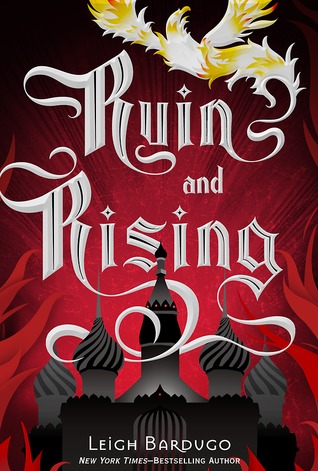 Ruin and Rising by Leigh Bardugo
Genre: Young Adult, Fantasy
Series: Book 3 of The Grisha
Publisher: Henry Holt & Co. (June 17, 2014)
Author Information: Website | Twitter
Mogsy’s Rating: 3 of 5 stars
Ruin and Rising was good, but perhaps it was just good…enough? I sat on this review for several weeks trying to gather my thoughts about this book hoping to figure out exactly how I feel about it. And in the end, I finally realized why I was so conflicted. I liked this book – and heck, up to now this series has been one of my YA favorites – but as badly was I wanted this to be the grand finale, I just couldn’t convince myself to love it.
As you would recall, Siege and Storm had the unmistakable feel of a second installment within a trilogy, with our protagonists experiencing a momentary setback. Last we saw Alina, she was in pretty bad shape, having lost her powers as the Sun Summoner. She and Mal have retreated underground with their allies, surrendering themselves to the power of the Apparat and his band of zealots who worship Alina as a Saint. But while Alina may be weakened, she is far from broken. Her mission remains the same: to capture and secure the third amplifier, the elusive firebird that would be her key to defeating the Darkling thus freeing Ravka from his iron grasp.
In truth, I had my reservations from the very beginning. The first couple of chapters almost drove me to return the book. Looking back, these were so clearly “transition” scenes that served no other purpose than to link book two with book three. As an antagonist, the Apparat was almost a non-entity, used to accomplish what was required, and then quickly forgotten. I just wanted this obligatory intro done and over with as quickly and painlessly as possible, and fortunately and unfortunately, it seemed Leigh Bardugo had the same idea. We always knew Alina’s goal was to hunt the firebird, and this brief little romp through the tunnels and caves felt like nothing more than a throwaway distraction.
Thankfully, we soon get back on the right track. We meet up with Nikolai, the outlaw prince of lovable arrogance and smart-assery, and now we can finally ask the really important questions. How are they going to go up against the Darkling? And what would a future Ravka look like if they succeed? Alina has some difficult decisions before her. What is she going to choose? Or rather, ugh, WHO is she going to choose?
In some ways, I feel validated. I still love YA, but not long ago, I told myself I can’t read them for their romances anymore. And I’m a much happier person for it. Enjoying a novel mainly for its story and characters is how I’ve come to approach YA, because if you rely on the outcome of a relationship to satisfy you, you’re bound to be disappointed. Time after time after time, predictability and tired clichés have ruined YA romances for me, and I’ve found it much easier now to just NOT CARE. It also helps that I’ve never really felt much connection to the men in Alina’s life. I’ve failed for three books to see the Darkling’s appeal. And Mal was ruined for me in Siege and Storm (you can’t get stinking drunk and kiss another girl and expect bygones to be bygones, Mal – you only get one chance with me). Nikolai was perhaps the most interesting and had the best personality out of everyone, and that told me right there he was obviously all wrong for Alina, so I never took his role as a suitor seriously.
I’m not going to say what happens, naturally. But I will say Bardugo took the “safe” route. Which was pretty much what I expected, so I’m actually not too upset with the ending. I’ve come to accept the status quo in YA fiction, and it hadn’t even occurred to me that this series could end any other way. It’s entirely possible I would have rated this book higher if it had been a bit bolder and strayed from conventions, but I’m also satisfied if not entirely blown away. And if this had been the author’s plan from the start, I applaud her for sticking to her guns and telling the story she wanted to tell. Everyone deserves their happily-ever-after, and Alina got the one perfect for her which is all that matters.
I’d still recommend this series. It became increasing more predictable as the story progressed with each installment, to the point where there were really no surprises left for me by book three, but it’s an entertaining trilogy as a whole. I wish it had ended with less tepidness considering the incredibly strong start that was Shadow and Bone, but I have to say it’s worth experiencing from beginning to end.

Posted on July 18, 2014 Leave a Comment
“I like libraries. It makes me feel comfortable and secure to have walls of words, beautiful and wise, all around me. I always feel better when I can see that there is something to hold back the shadows.”
~ Roger Zelazny, Nine Princes in Amber
Graphic Novel Review: Glory – The Complete Saga
Posted on July 18, 2014 3 Comments
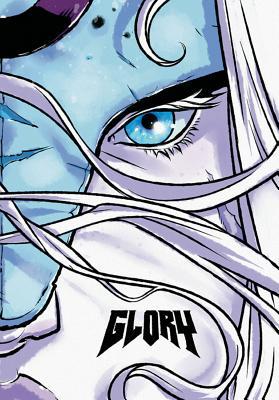 Glory: The Complete Saga Hc by Joe Keatinge and Ross Campbell
Genre: Apocalyptic Superheroing
Series: Collects Glory volumes #1 and 2
Publisher: Image Comics (July 2014)
Wendy’s Rating – 2.5 of 5 stars
Glory, through art, plot and character development, has become far more than the sum of her breasts.
A lot of not-so-wonderful things can be said about Rob Liefield and/or his art, but the characters he’s created, such as Deadpool, have definitely been memorable, including ones he created for Image Comics.
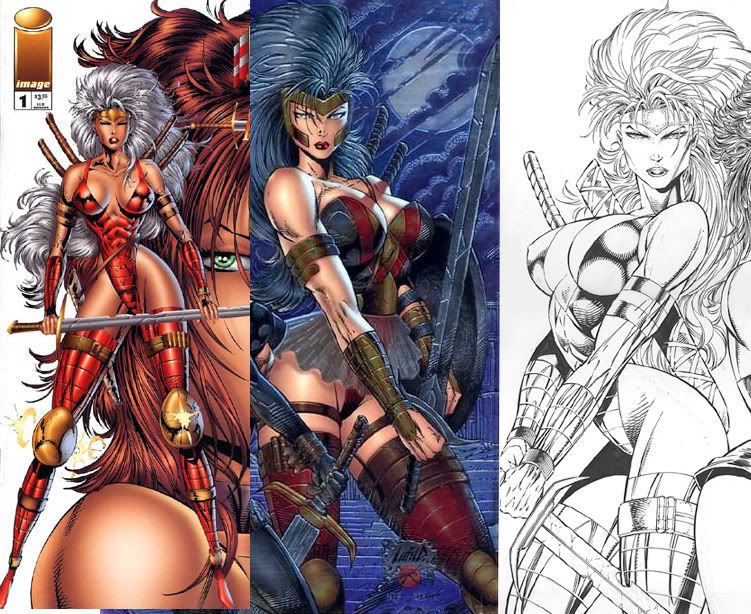
Recently, Image has been rebooting some of the titles that made them famous in the shiny ’90s. Among the reboots have been a few of Liefield’s characters, including Gloriana Demeter, who’s gone from Image’s buxom ’90s bad girl answer to Wonder Woman:
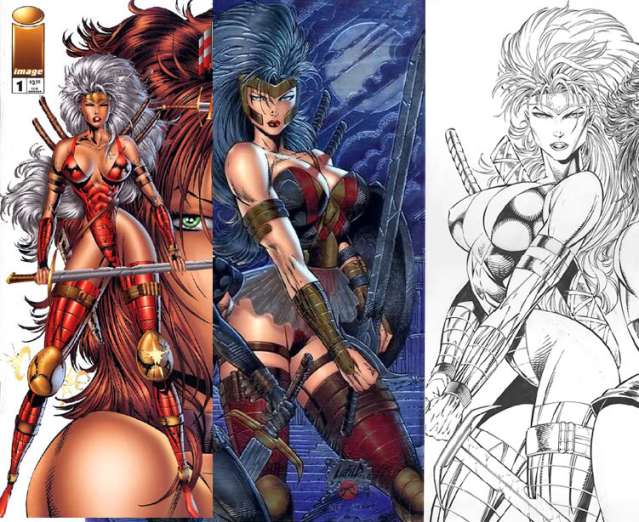
to this, an image that more readily reflects the character and her alien origins.
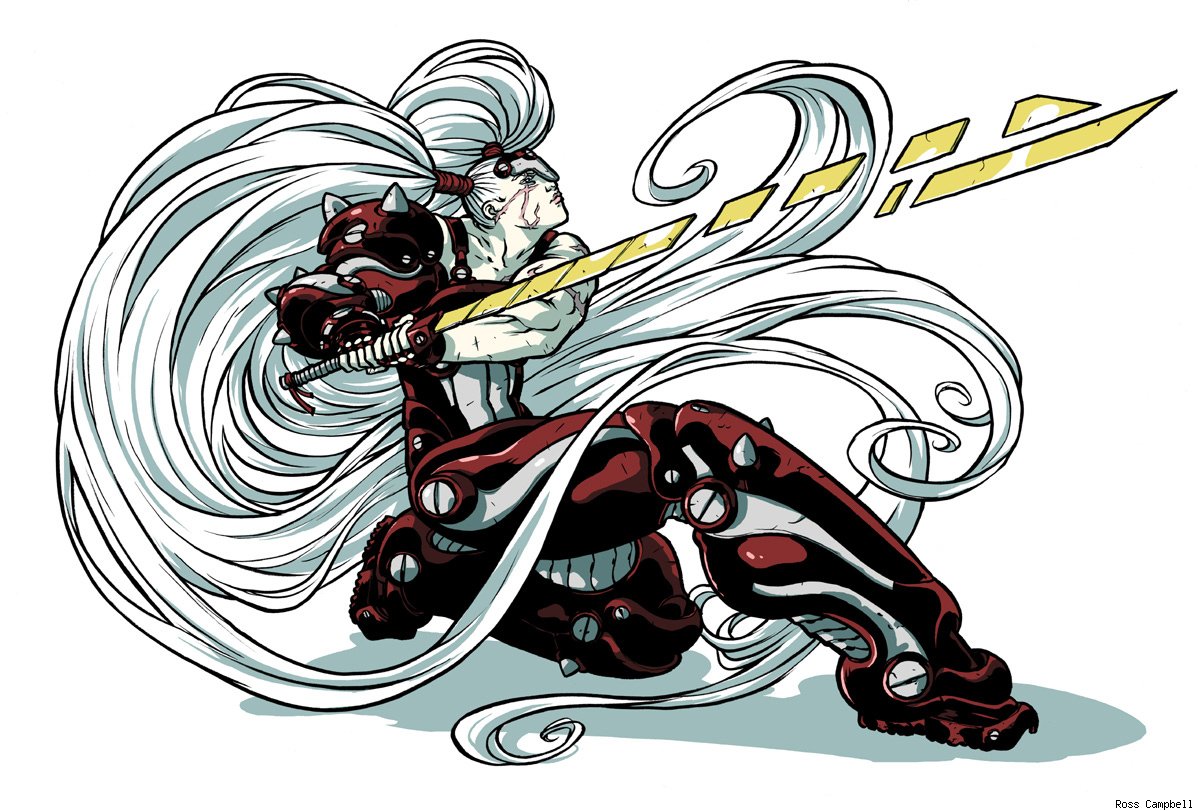
I didn’t really read Glory back in my Image days since I cared nothing for Liefeld’s work, but now that others have taken over the helm on his characters, I’m intrigued. Unfortunately, despite a lot of interesting ideas, this story didn’t really work for me.
Glory is the child of a woman from a race we consider gods, and father we would consider to be a demon. Her birth was meant to be a symbol of either peace or destruction for one side or the other, but after 500 years of training for her destiny, Glory has grown impatient. Moreover, she’s become obsessed with earth and heads over to our little planet to be a hero. While she certainly helps out here and there with wars and such, the book focuses more on her interpersonal relationships, particularly with a young girl named Riley Barnes, who shares some sort of psychic connection with Glory and is able to see her in her dreams.
Beyond this, the story is somewhat muddled. Glory is not entirely loved by the other superheroes of earth due to her unpredictability. She also has rage issues that put everyone, including her friends at risk, especially when the intergalactic war makes its way to earth and Glory’s little posse has to battle her father’s minions.
The highlight of the book were the Riley/Glory moments, and a very unusual family reunion. I also like that Glory, through art, plot and character development, has become far more than the sum of her breasts. But otherwise, the story was poorly paced, unfocused, and not particularly memorable.

With thanks to NetGalley and Image Comics for the opportunity to read an advanced copy of this graphic novel in exchange for an honest review.
Tough Traveling: Pirates!
Posted on July 17, 2014 20 Comments


The Thursday feature “Tough Traveling” is the brainchild of Nathan of Review Barn, who has come up with the excellent idea of making a new list each week based on the most common tropes in fantasy, as seen in The Tough Guide to Fantasyland by Diana Wynn Jones. Nathan has invited anyone who is interested to come play along, so be sure to check out the first link for more information. Compulsive list-maker that I am, I’m very excited to take part!
This week’s tour topic is: Pirates
PIRATES range the seas in force, though most of them operate individually…The sole qualifications are that they must be rough and ruthless, which a penchant for dressing gaudily.
Believe it or not, I actually have a “Pirates” shelf in Goodreads, so this is a pretty easy week and I’m featuring a handful of the books on there. I’ve also come to learn that pretty much every fantasy novel that takes place for any significant amount of time on the high seas will inevitably have pirates.
 Red Seas Under Red Skies by Scott Lynch
Locke and his partner Jean flee the Bondsmagi by taking a ship to the city state of Tal Verrar, and are soon back to doing what they do best: planning a spectacular heist. They soon find themselves unwittingly sidetracked, joining the pirate crew of the notorious Zamira Drakasha, who dresses gaudily indeed but has a heart of gold rather than a rough and ruthless personality.
 The House of the Four Winds by Mercedes Lackey and James Mallory
This maritime fantasy takes place mainly on a ship and on the ocean, and so naturally…pirates. The crew of the Asesino rise up against their corrupt captain only to find out he was in league with pirates, and a secret map discovered on his body leads to a mysterious hidden island run by — you guess it — more pirates and an evil enchantress. I recently finished this book, and hope to have the review up next week.
 The Red Wolf Conspiracy by Robert V.S. Redick
It’s been a while since I read this one, but it might possibly have been the first maritime/nautical fantasy I’ve ever read. I could barely remember the plot but I know it’s got a little bit of everything: magic, mermaids, romance, mystery, legends, sorcerers, sword fights, political machinations, talking animals, and YARRRGGGHH of course, pirates.
 The Daedalus Incident by Michael J. Martinez
Speaking of books with a little bit of everything in it…this one’s an interesting and rather uniquely different novel. It has a nice blend of science fiction and fantasy, as well as the historical with the futuristic. It has two timelines, one that takes place 2132 and another in an alternate 18th century. The latter is the fun one, featuring a world with alchemical-powered ships, alien races on faraway planets, and explosive clashes against space pirates!
 Silver Mirrors by A.A. Aguirre
This second book of the Apparatus Infernum series expands the world by having the main characters Janus Mikani and Celeste Ritsuko travel afar on a ship to the far north to investigate strange happenings in the mines. And yes, while on their journey they run afoul of vicious raiding pirates (but you probably guessed that already)!
Book Review: Tower Lord by Anthony Ryan
Posted on July 16, 2014 19 Comments
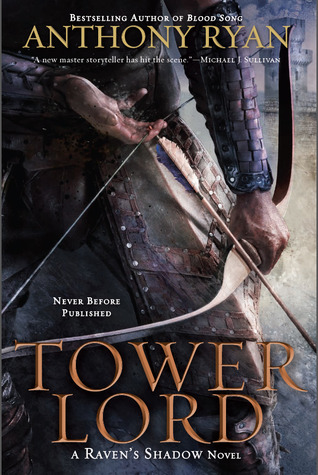
Genre: Fantasy
Series: Book 2 of Raven’s Shadow
Publisher: Ace (July 1, 2014)
Author Information: Website | Twitter
Mogsy’s Rating: 4 of 5 stars
There are a number of sequels coming out this year with big shoes to fill, and not the least of them is Tower Lord which is the follow up to the sensation that was Anthony Ryan’s Blood Song. While this second installment might not pack the kind of punch its predecessor did, I nonetheless enjoyed the book immensely. It’s a very different novel than the first book, with a shift in style, focus, and character perspectives, and yet it still has all the elements that we epic fantasy fans live for.
In book one, we met Vaelin Al Sorna, a brother of the Sixth Order and one of the greatest warriors the world has ever known. Coming home from a bloody war, he has sworn to fight no more, instead focusing his efforts on seeking any of his relatives that still might live. Named Tower Lord of the Northern Reaches by the new monarch, Vaelin has the noble yet perhaps naïve dream of living out his life in peace and quiet, for news of his exploits (and his crimes) have spread far and wide and those who know of his mysterious gift that guides him will not let him rest.
Anthony Ryan also adds several more point-of-view characters to the mix in Tower Lord, which I was glad to have been prepared for, as Vaelin no longer takes center stage. Instead, he shares the book with mainly three others: Reva, a young woman who begins this journey with hate for Vaelin in her heart and an unquenchable thirst for revenge; Princess Lyrna, sister to the new king and who possesses more strength and resolve than her brother ever would; and finally, Frentis, a familiar face from Blood Song, though he has been changed from his years of being held captive by the Untesh and being forced to fight in the slave pits.
Having been aware of this new format, with the chapters cycling through the character viewpoints, I had expected and prepared myself for the slower start. Indeed, with more characters to follow this time around, the author takes much more time to set the stage for the events in this book. And I have to confess it didn’t quite grab my attention right away. It was a pleasant journey through the first half of the novel to meet new faces or to catch up with old friends, but on the whole Tower Lord lacked a certain quality that made Blood Song the dangerously addictive and immersive read it was right off the bat.
However, I don’t think this makes Tower Lord a weak sequel. On the contrary, in fact. This second book is stronger than book one in many ways, not only because it expands the scope of the series by giving us multiple character perspectives and opening up the wider world, but it also showcases Ryan’s talents as a storyteller. He’s proven himself as an author who can write a very diverse and convincing cast of characters while maintaining a steady level of suspense and interest in all spheres of action, building intensity as he moves all the pieces into place for when things really start rolling.
Quite simply, Tower Lord is a totally different beast. And it’s just hard not to compare a sequel to what came before. It comes down to personal taste, and admittedly, Blood Song and I hit it off much faster. I had myself this experience with a couple other sequels this year; they were all excellent novels, but thematically they just worked slightly less for me. In this case, it’s hardly a surprise. Blood Song began with Vaelin Al Sorna as a young boy, entering the Sixth Order and a huge chunk of the book was dedicated to his training, the relationships he forged with his brothers, and his eventual rise to greatness. It was my favorite part of the novel. And come on, we all know how tough it is beat a good coming-of-age story.
The first book was absolutely a tough act to follow, I know. But all things considered, Tower Lord is a wonderful follow-up that might even appeal more to other readers, especially those who preferred the parts with “grown-up” Vaelin from the first book. I mentioned one of the things I liked about the “young” Vaelin’s chapters was his relationship with his fellow Sixth Order brothers, and it’s incredibly fascinating to see how those dynamics have changed over time. Brother Frentis was a huge surprise for me in this one. Thinking about all the terrible things that has been through and how they’ve affected him, it almost makes his story more interesting to me than Vaelin’s. I’m also impressed by Ryan’s female characters, and the energy and conviction he was able to put behind Reva and Lyrna, two women who are not afraid of setbacks and will fight for what they believe in.
In the end, it’s definitely the characters who made this such a great read. I absolutely adore the new additions. The characters make things happen, set things in motion, and while the first half of this book might have lagged a little, the same cannot be said about the second half, and the final quarter was pure action bliss. Does it take a bit of investment to get to this point? Yes. But totally worth it. Love the intricate magical elements and political entanglements that made the finale such an edge-of-your-seat ride. Anthony Ryan really tied things together and delivered.
I hope when we next meet Vaelin and whoever Ryan decides to let us be acquainted with next time (assuming he once again chooses this multiple POV character format) in the third book Queen of Fire, we’ll be able to jump right into the action. The slower build-up at the beginning held this book back a little, in my opinion, so I can’t say I enjoyed this book more or even as much as Blood Song, but the difference is very close. And I’m not disappointed at all. If you enjoyed the first book, there’s absolutely no reason at all not to pick this up and continue the epic journey.

A review copy of this book was provided to me by the publisher in exchange for an honest review. My thanks to Ace Books!
Waiting on Wednesday 07/16/14
Posted on July 16, 2014 14 Comments
“Waiting On Wednesday” is a weekly meme hosted by Breaking the Spine that lets us feature upcoming releases that we can’t wait to get our hands on!
Mogsy’s Pick:
The Shotgun Arcana by R.S. Belcher: October 7, 2014 (Tor)
I’d almost forgotten how much I enjoyed The Six-Gun Tarot until back in the spring I saw this amazing cover for the sequel, The Shotgun Arcana. The writing in the first book had a sort of raw quality which was actually quite perfect for the themes in the novel, a dark western with traces of horror and steampunk and other fantasy elements thrown in, and I remember thinking given time there’s lots of places this author and series can go.
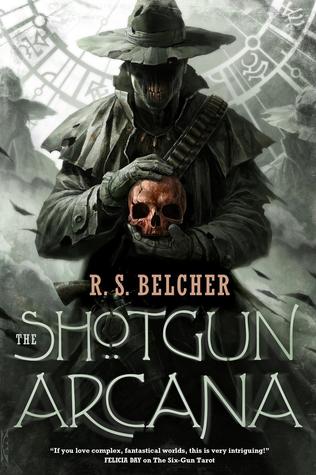 “R. S. Belcher’s debut novel, The Six-Gun Tarot, was enthusiastically greeted by critics and readers, who praised its wildly inventive mixture of dark fantasy, steampunk, and the Wild West. Now Belcher returns to Golgotha, Nevada, a bustling frontier town that hides more than its fair share of unnatural secrets.
1870. A haven for the blessed and the damned, including a fallen angel, a mad scientist, a pirate queen, and a deputy who is kin to coyotes, Golgotha has come through many nightmarish trials, but now an army of thirty-two outlaws, lunatics, serial killers, and cannibals are converging on the town, drawn by a grisly relic that dates back to the Donner Party…and the dawn of humanity.
Sheriff Jon Highfather and his deputies already have their hands full dealing with train robbers, a mysterious series of brutal murders, and the usual outbreaks of weirdness. But with thirty-two of the most vicious killers on Earth riding into Golgotha in just a few day’s time, the town and its people will be tested as never before—and some of them will never be the same.
The Shotgun Arcana is even more spectacularly ambitious and imaginative than The Six-Gun Tarot, and confirms R. S. Belcher’s status as a rising star.”
Book Review: Unwept by Tracy Hickman and Laura Hickman
Posted on July 15, 2014 17 Comments
 Unwept by Tracy Hickman and Laura Hickman
Genre: Fantasy, Paranormal
Series: Book 1 of The Nightbirds
Publisher: Tor (July 1, 2014)
Author Information: Website | Twitter
Mogsy’s Rating: 3 of 5 stars
Some books start off with a shaky opening but then end up getting better as the story gains momentum, but other times there are books like Unwept that go the opposite way. These books manage to capture my attention right off the bat and get me invested with an interesting premise, but then they stumble and lose me about halfway through. The magic fizzles out and I can’t get it back.
I have my inklings as to why this might have been the case with Unwept. Thing is, I love being teased with a bit of mystery. And this book did that very well, starting off by painting a baffling yet very intriguing picture. A girl named Ellis Harkington comes to herself in the middle of a train ride accompanied by a nurse and baby, but has no memory of how she got there or any of her life before this moment. She arrives at a remote seaside town named Gamin where everyone seems to know her better than she knows herself, but she can’t even recognize any of their faces. A group of young men and women called the Nightbirds — who claims to be a literary society – welcome her back into the fold with open arms, and yet for a literary society they don’t seem all that interested in books…
Then there are the nightmares. Ellis dreams of clouds of moths and visitations from a strange soldier with a paisley-shaped mark on his face. There’s also talk of terrible things happening all over town, like a devastating fire, missing people, and the discovery of mutilated bodies pointing to a ruthless killer on the loose. And why are there no children in town? There this real sense of unease and foreboding. The atmosphere is practically humming with anticipation. The stage is set for something great, and you know deep down in your gut that this book has got to be building up to something huge.
Well. It didn’t really happen. At least, not for me. You must understand, this book had me wrapped around its finger and I was completely under its control and prepared to fall head over heels in love with it. I cannot give enough praise to the first half of this novel; it was fantastically well written and constructed to give the reader a perfect foundation. I simply adored the first 150 pages or so. But not long after that, the plot started fraying at the edges.
Unfortunately, being plied with all that escalation with ultimately not much payoff has a way of making me feel a bit grumpy. I’m also disheartened by the lost potential of this story. The book could only maintain the suspense for so long before I started questioning where it was trying to go and what it was trying to say. I had the sneaking suspicion that I was being led on a wild goose chase. Not long after that, I finally had to admit to myself that I really had no idea what was going on. By the time some answers were forthcoming, I don’t know if I felt as invested or engaged in the outcome anymore. The revelations were certainly eye-opening, but it’s a classic case of “too little too late.” I just can’t decide if the disappointment hurt more or less because the story had such a strong and promising start.
Unwept is also the first book of a series, and – unsurprisingly, perhaps – it has the stamp of a “Book One” all over it. Don’t expect any satisfying or clear-cut answers. Instead of growing and expanding, the story seemed to shrink back in on itself. There is mystery at the beginning, and there will still be mystery at the end, and probably more blanks and question marks than you started out with. It’s hard to tell now, but I think I might have had a more positive reaction to the book if I had known to rein in my expectations a little.
In the end, I don’t think Unwept is a bad book. The sheer enjoyment I got out of the first part of it is a testament to that. It’s also such a quick read that if you’re even remotely interested in the description, I would say it is well worth your time, as the average reader can probably knock it out in one or two sittings. It has a fascinating premise, and I have no doubt it’ll work for a lot of readers. I just personally wish I been better prepared for its peculiar pacing.
A review copy of this book was provided to me by the publisher in exchange for an honest review. My thanks to Tor Books!
PANELS: X-Men: Regenesis #1
Posted on July 14, 2014 1 Comment
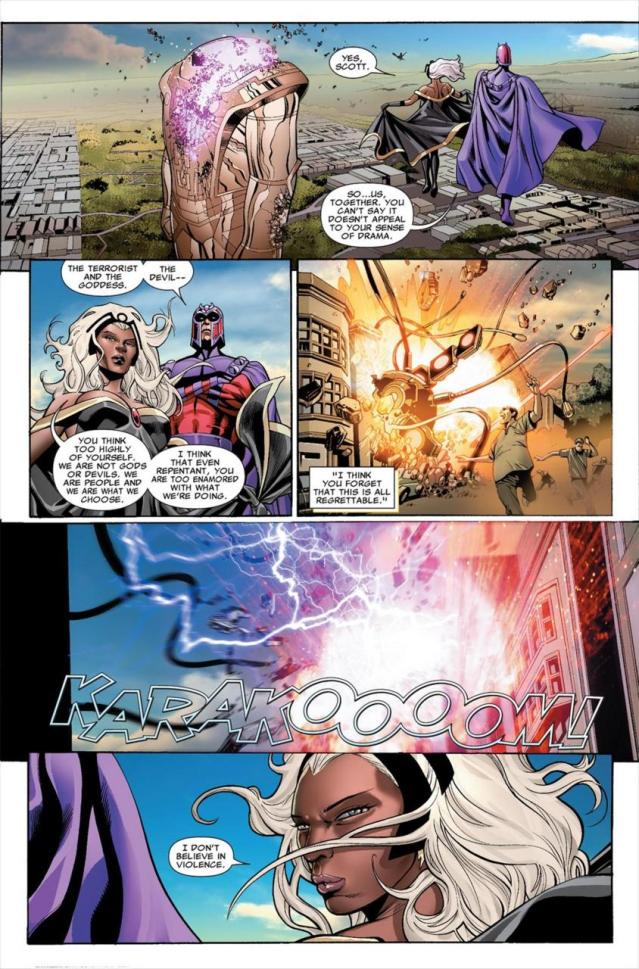 Magneto: “So, us… together. You can’t say it doesn’t appeal to your sense of drama. The terrorist and the goddess. The devil–”
X-Men: Regenesis #1
Book Review: Tomorrow and Tomorrow by Thomas Sweterlitsch
Posted on July 14, 2014 24 Comments
 Tomorrow and Tomorrow by Thomas Sweterlitsch
Genre: Science Fiction
Series: Stand Alone
Publisher: Putnam (July 10, 2014)
Author Information: Website | Twitter
Mogsy’s Rating: 3.5 of 5 stars
Cyberpunk is another one of those science fiction subgenres that have been more miss than hit with me in the past, but that hasn’t stopped me from giving more of it a try, hoping to find something that’s more my liking. So even after my inability to get into William Gibson’s Neuromancer – a book considered a seminal work in the cyberpunk field – I still decided to check out Tomorrow and Tomorrow, which has been described as leading in the next wave following in the footsteps of Gibson.
Indeed, in the classic cyberpunk tradition, the book has its setting in a near-future dystopian with elements of hard-boiled detective film noir and overall a very bleak worldview. The city of Pittsburgh is a pile of rubble and ash after its destruction by terrorists in a nuclear blast. Ten years later, survivor John Dominic Blaxton still mourns his wife and unborn child while most of the world has moved on. Our protagonist is a marginalized loner, addicted to drugs as much as he is addicted to his memories of his lost life by immersing himself in the Archive where he can relive moments with his wife in a fully interactive digital reconstruction of Pittsburgh.
Dominic’s work also involves investigating deaths recorded in the Archive for insurance companies. One day, while pursuing a claim, he becomes obsessed with the apparent murder of a young woman when he discovers that her records have been tampered with, evidence that someone is trying to cover up the circumstances of her death. His digging around doesn’t go unnoticed. Like many cyberpunk protagonists, John finds himself manipulated by higher forces and trapped into a situation where he has little control.
Thomas Sweterlitsch has created a future where technology runs rampant. Everyone has an adware implant in their head and access to information is near ubiquitous. People have become wholly dependent on the computer chips in their brains, and the result is a dehumanized society with a strong sense of disenchantment and nihilism. Feeds run continuously in an endless stream, with up-to-the-second news updates. Grisly details of accidents or crime scenes are made public at the speed of an eye blink, along with the darker secrets of the victims’ lives. The society eats up their sex tapes as voraciously as they revel in the graphic violence.
It’s this brutal, emotionally numbing aspect of cyberpunk that makes it so hard for me to click with this genre. Strangely enough, I can handle most kinds of gritty, dark fantasy without issue, but these near-futures and the negative effect of technology on human society have a way of cutting too close for comfort. All everyone seems to care about anymore is pornography and violence, and it is so off-putting not to mention mentally draining. The themes of grief and loss are also at the forefront of this novel, which makes reading it a real struggle if you’re not feeling in the mood for something so despairing. It’s hard to watch Dominic go through life relying so heavily on the Archive; instead of helping, the technology has pretty much halted his healing all together, and he hangs on to his grief like his wife died yesterday instead of a decade ago.
This wasn’t a bad novel, however. I thought the world-building was fantastic and the mystery, hardboiled noir and crime thriller elements were done very well. This is a story about a man destroyed by tragedy and the events that ultimately pulled him out of his funk and allowed him to move on, but it is for the most part a very stark, very depressing and sometimes disturbing book. I don’t regret reading it and I would recommend this to cyberpunk fans, but consider holding off if you’re in the mood for something lighter.

A review copy of this book was provided to me by the publisher via First to Read in exchange for an honest review. My thanks to Putnam Books!
Posted on July 13, 2014 Leave a Comment
“When your rage is choking you, it is best to say nothing.”
― Octavia E. Butler, Fledgling


 The BiblioSanctum