Graphic Novel Review: Guardians of the Galaxy Vol. 1: Cosmic Avengers by Brian Michael Bendis
Posted on August 1, 2014 8 Comments

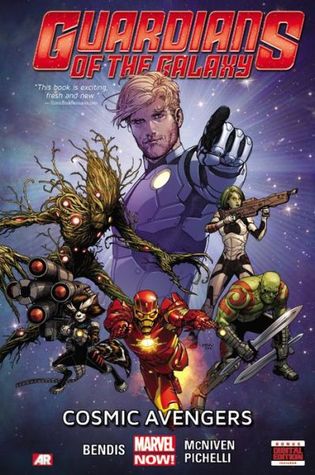 Guardians of the Galaxy, Vol. 1: Cosmic Avengers by Brian Michael Bendis
Series: Collects Guardians of the Galaxy #1-3 and #0.1 and Infinite #1
Publisher: Marvel (August 2013)
Author Info: www.jinxworld.com
Wendy’s Rating: 2 of 5 stars
Prior to the announcement of the movie, I did not even know the Guardians of the Galaxy existed, but the previews have been amusing enough to pique my interest. Too bad the source material isn’t nearly as impressive.
Volume one serves as an introduction to Marvel’s “cosmic Avengers,” opening with the crash landing of an alien vessel in the backyard of a lovely young lady, who nurses the occupant back to health. They fall in love and make Peter Quill, but before he’s actually born, daddy heads back to space and goes on to become the King of Spartax, making Peter the Star-Lord.
This ought to be an interesting plot twist, save for the fact that the King turns out to be a pretty shady character–which in itself is fine, but we don’t get to find out how or why that is. We just have to accept that, after completely different aliens show up to kill Peter and his mom while he’s still a boy, presumably because they know of his Spartax blood, that this leads Peter to find his way into space, perhaps looking for his dad? But I guess when Peter finds his dad stuff happens and Peter gets mad and runs off to form his own team of avengers to keep earth safe from um… his dad and anyone his dad hangs out with?
Forgive the vagueness and confusion, but that’s more or less how I felt when we skipped from happy couple to “My dad’s an evil dictator.” There’s a big section where dad gathers the various alien leaders, such as the Brood Queen and informs them that Earth shouldn’t be attacked, but apparently, that is all just a ruse and what he’s actually doing is manipulating them into doing what he says they shouldn’t. But then while that meeting is going on, bad guys are already attacking earth. But the Guardians, along with a really dull Iron Man, are able to fight them off, only to be captured by the Spartax army to be punished for defending the planet dad said no one should attack.
Anyway. At least the main story art was kind of cool, if somewhat Jim Lee clone-ish.
The rest of the book is comprised of character stories introducing the other Guardians. The format for each is pretty standard: character does something unique to their character, battles their way through respective bad guys to show us what kind of person and fighter they are, wins battle, Star-Lord shows up to ask them to help him defend earth. There is little learned about the characters through this process, and there’s an even bigger gap in understanding why they are willing to fight alongside Quill to defend a planet that is not their own.
 Here the art changed for each character, with the Gamora story being my favourite. Michael del Mundo captures the aloof and deadly nature of Thanos’ daughter perfectly.
So as far as introductions and origins go, this one is very disappointing, which can often be the case with origin stories. I’d much rather see the movie in hopes of finding a plot and character reasoning that actually makes sense. That’s not to say I’ll never read another Guardians of the Galaxy comic, though. I’d like to think that, with these pesky origin stories out of the way, the actual comic will get going in volume 2.

Book Review: The Magician King by Lev Grossman
Posted on July 31, 2014 15 Comments
 The Magician King by Lev Grossman
Genre: Fantasy
Series: Book 2 of The Magicians
Publisher: Viking (August 9, 2011)
Author Information: Website | Twitter
Mogsy’s Rating: 4 of 5 stars
Back in my review of The Magicians, I wrote that you could have a miserably unlikeable character for the sake of writing a miserably unlikeable character and that I wouldn’t mind, just as long as you could give me a reason to care about him or her. While that’s still true, it does really help if your protagonist isn’t a whiny little ingrate and actually shows growth over the course of the novel. I really think that’s why The Magician King worked better for me than its predecessor. Like, a lot better. The ending of the first book gave me hope that I would enjoy the sequel more, and I did.
Things were looking up right from the start, with our story opening with a return to Fillory, the otherworldly realm from Quentin’s beloved childhood fantasy series that turned out to be a real place. He and his friends are now the kings and queens of this magical kingdom, but after a routine morning hunt goes wrong, Quentin and Julia decide to set off across the seas to the far reaches of Fillory to take care of certain matters. But their journey is interrupted by an unceremonious ejection from Fillory back to Earth and the mundane world. Thus begins an epic quest to find their way back, with the fate of all magic hanging in the balance.
I’ll admit it, the first book had its high points, but on the whole I wasn’t too enamored. The wonderful sections featuring Quentin at Brakebills aside, I thought most of the book was directionless and tedious, and I wasn’t impressed with the characters and their attitudes until almost the very end when they discover Fillory and set out to explore it. The thing is, I loved the spellbinding world of Fillory and its amazing denizens, as well as the incredible sights and sounds. When the final pages of The Magicians teased that we may be going back, I was very pleased. That’s one reason why The Magician King worked better for me; the fact that we got to be in Fillory right away was a huge plus.
The second reason is something I’ve already alluded to, that being Quentin has come a long way from the moody, self-absorbed and aimless young man he was in book one. He has grown up a lot between the two novels in my eyes, no doubt in part due to the traumatic events he experienced at the end of The Magicians. His concern for a young crew member and the neglected daughter of a diplomat really touched me; it’s not something I would have expected in a million years from the old Quentin. In this book, he is driven and finds it possible to become excited about the prospects of adventure again, and – shocker! – in the process he became someone I wanted to read more about.
The same could not be said for Julia, however. My one gripe about this novel are her chapters, which more or less alternated with the chapters focusing on the main story. Julia’s tale encompasses her own rise to the world of magic after failing her Brakebills entrance exam, which couldn’t have been more different than Quentin’s academically formal training. Her journey through the underground magical scene is actually quite interesting, though I was initially unsure how it all related to the book’s central premise. What bothered me wasn’t so much her story, but the fact that the role of annoyingly maudlin and dissatisfied character seemed to have been passed from Quentin to Julia, though we do see that she has had to go through a lot of suffering and very difficult times. I could also appreciate how the two lines of thought eventually came together, but felt that her “backstory” was a bit distracting at first.
All in all, however, I was pleasantly surprised by my positive reactions to this book. On the whole, this was a much deeper and complex novel, but also much more entertaining and engaging on multiple levels. I liked how a lot of the world was expanded, as well as the answers to a lot questions brought up by the first book. And that ending! I can’t believe my heart is actually aching for Quentin. It’s very rare for a sequel to grab me, especially since book one failed to do so, and it’s great whenever that happens. I’m really starting to see the appeal behind this series, and this second installment has really made it grow on me.

Tough Traveling: Princesses
Posted on July 31, 2014 18 Comments


The Thursday feature “Tough Traveling” is the brainchild of Nathan of Review Barn, who has come up with the excellent idea of making a new list each week based on the most common tropes in fantasy, as seen in The Tough Guide to Fantasyland by Diana Wynn Jones. Nathan has invited anyone who is interested to come play along, so be sure to check out the first link for more information. Compulsive list-maker that I am, I’m very excited to take part!
This week’s tour topic is: Princesses
RINCESSES come in two main kinds:
1. Wimps.
2 Spirited and wilful. Spirited Princesses often disguise themselves as boys and invariably marry commoners of sterling worth.
Certainly no shortages of princesses in fantasy! Though actually, I think you’d be hard pressed to find a wimpy princess these days. Fragile and helpless damsels in distress are so passe! My favorite princesses are most definitely of the spirited and willful kind.
 The Riyria Revelations series by Michael J. Sullivan
Arista Essendon is the princess of Melengar and sister of Alric the heir, though I think she is more clever and competent than her brother by far. She’s a bit iffy when she’s first introduced; we’re led to wonder about her character and whether she’s a friend or foe, working with or against Hadrian and Royce. Later on, she actually has a much larger role to play, and her abilities with magic make her a worthy ally.
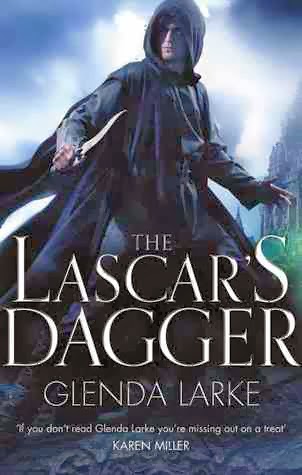 The Lascar’s Dagger by Glenda Larke
Speaking of iffy…Princess Mathilda has a lot to offer as a character, but she can also be a self-absorbed brat or even an airheaded ninny sometimes. Her actions in the book have some rather serious ramifications, especially for the protagonist Saker rampion, a priest and a spy. Mathilda might not make the best choices, but she was by far the most interesting character.
 Vampire Empire series by Clay Griffith and Susan Griffith
I love this series. I honestly don’t know why I still haven’t finished up the last book in the trilogy, but I really should. This is an alternate history-ish steampunk adventure, set in the year 1870 when vampires have taken over large swathes of the world. Princess Adele, heir to the Equatorian empire, and the mysterious vampire hunter known as Greyfriar work together to drive the plague of vampires back.
 The House of the Four Winds by Mercedes Lackey and James Mallory
I just had to go with Princess Clarice for this one. Spirited? Check. Willful? Check. Disguising herself as a boy and invariably marrying a commoner of sterling worth? Check! Clarice masquerades as a young lord “Clarence” traveling on a ship to the new world, befriending the handsome navigator Dominick and eventually falling in love with him.
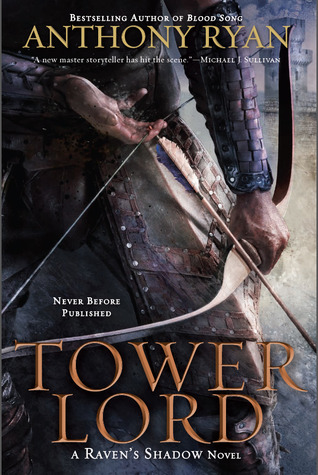 The Tower Lord by Anthony Ryan
Princess Lyrna, another princess who is arguably stronger and more capable than her royal brother the king. She is also smart, independent, and possesses a powerful presence. Lyrna was introduced in Blood Song but gets a much larger role in this second book, and is a point-of-view character as readers follow her on her own journey.
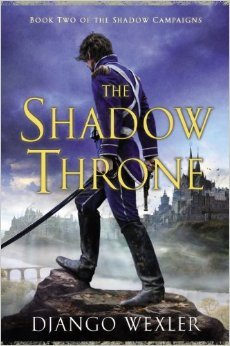 The Shadow Throne by Django Wexler
Princess Raesenia may seem small, frail and weak in appearance, but she is anything but. In truth, she’s a lot more than she appears, harboring a huge secret. Disguising herself as a commoner, Raesenia gets involved with young revolutionaries, hoping to oust the power-hungry Duke Orlanko in order to protect the future of her rule.
 Falling Kingdoms by Morgan Rhodes
After learning of her sister’s fatal illness, Princess Cleo embarks on a rough and perilous journey to find a cure. Raised in pampered luxury, it’s a quest that will test the limits of her will and strength as she must venture into enemy territory with her hopes riding on the rumor of powerful magics long thought extinct.
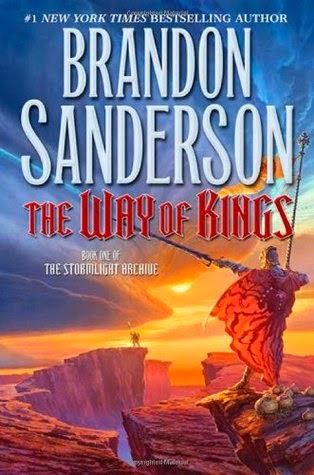 The Way of Kings by Brandon Sanderson
I’ve featured The Stormlight Archive a lot, but no list of princesses would be complete without Jasnah Kholin, sister of King Elhokar, daughter of the late King Gavilar, and niece of Highprince Dalinar. She’s also a powerful surgebinder and a brilliant scholar, training Shallan Davar as her ward.
 Razor’s Edge by Martha Wells
Princess Leia…because Princess Leia.
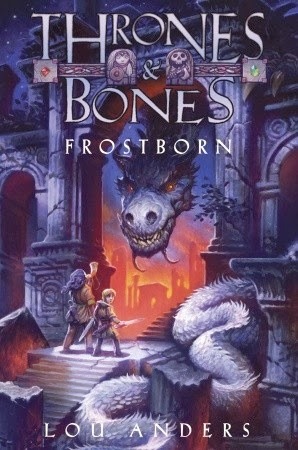
Book Review: Frostborn by Lou Anders
Posted on July 30, 2014 7 Comments
Genre: Fantasy, Young Readers (age 8-12)
Series: www.thronesandbones.com #1
Publisher: Crown Books for Young Readers (August 5, 2014)
Author Info: www.louanders.com
Wendy’s Rating: 4 of 5 stars:
I am a firm believer in learning something new every day, and this is one of the many places where Frostborn really shines.
Karn is a young Norrønir boy who shuns his father’s farm life and his responsibilities. He’d rather be playing his favourite strategy game, Thrones and Bones, than wielding a sword or haggling for food and supplies. Meanwhile, further north, Thianna is determined to prove herself every bit a giant, while hating the half-human part of her that makes her so obviously different. At the seasonal gathering where Norrønir and giants come together to trade, the two young ones meet and discover that they really don’t have anything in common except what makes them different. When circumstances later exile them from their respective worlds, they are forced to trust in each other, and in their own uniqueness to get themselves out of some pretty big trouble.
Right from the prologue, I was sucked in as Anders weaves a thrilling escape for a mysterious woman and the beast she rides, culminating in a very moving climax that promised that the rest of the book could only get better. While this is most certainly a children’s book, I really enjoyed Anders’ approach to its serious, painful and sometimes frightening elements. Anders, who has a young son and a daughter, is clearly writing for his children (and later realized he was writing about them), but the storytelling holds a sense of maturity that I think is sometimes lacking in books aimed at this age group (8-12). That’s not to say that the book is too “grown up.” The language is fun mix of classical and colloquial, there’s a sharp sense of wit and humour on display, and Thianna and Karn are definitely the kinds of kids a young reader can relate to. Anders eloquently balances the fun side of childhood, while respecting that quite often, kids know and understand quite a lot more than adults give them credit for.
I also loved the casual little interjections of trivia. I learned a few things from Anders’s little tidbits of information, and I know young readers would be just as fascinated by the knowledge. I am a firm believer in learning something new every day, and this is one of the many places where Frostborn really shines.
I expected Frostborn to end up being a typical buddy quest adventure, and while there were elements of that involved and implied for future books, I really loved the way Anders focuses on the kids separately as much as they are together. They each come to terms with their situations and its often after the moments of self-discovery that they are able to be of stronger aid to their friend. Together, they both remain unique and probably don’t agree on a lot of things, but there is a healthy level of respect for each other and their differences as they work toward resolving their problems.
Overall, a really impressive entry into the young readers fantasy genre that both kids and parents can have fun with and learn from. And then follow up family reading night with a game of Thrones and Bones!

With thanks to Crown Books and the author for providing an advanced reader copy of this book in exchange for an honest review.
Waiting on Wednesday 07/30/14
Posted on July 30, 2014 17 Comments

“Waiting On Wednesday” is a weekly meme hosted by Breaking the Spine that lets us feature upcoming releases that we can’t wait to get our hands on!
Mogsy’s Pick:
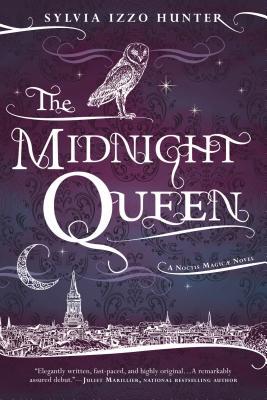
The Midnight Queen by Sylvia Izzo Hunter: September 2, 2014 (Ace)
The Midnight Queen didn’t make itself known on my radar until fairly recently, but it sounds so magical, beautiful, and just…special. Maybe a touch of romance? Maybe a bit of mystery?
“In the hallowed halls of Oxford’s Merlin College, the most talented—and highest born—sons of the Kingdom of Britain are taught the intricacies of magickal theory. But what dazzles can also destroy, as Gray Marshall is about to discover…
Gray’s deep talent for magick has won him a place at Merlin College. But when he accompanies four fellow students on a mysterious midnight errand that ends in disaster and death, he is sent away in disgrace—and without a trace of his power. He must spend the summer under the watchful eye of his domineering professor, Appius Callender, working in the gardens of Callender’s country estate and hoping to recover his abilities. And it is there, toiling away on a summer afternoon, that he meets the professor’s daughter.
Even though she has no talent of her own, Sophie Callender longs to be educated in the lore of magick. Her father has kept her isolated at the estate and forbidden her interest; everyone knows that teaching arcane magickal theory to women is the height of impropriety. But against her father’s wishes, Sophie has studied his ancient volumes on the subject. And in the tall, stammering, yet oddly charming Gray, she finally finds someone who encourages her interest and awakens new ideas and feelings.
Sophie and Gray’s meeting touches off a series of events that begins to unravel secrets about each of them. And after the king’s closest advisor pays the professor a closed-door visit, they begin to wonder if what Gray witnessed in Oxford might be even more sinister than it seemed. They are determined to find out, no matter the cost…”
Posted on July 29, 2014 Leave a Comment
“That which yields is not always weak.”
― Jacqueline Carey, Kushiel’s Dart
Comic Review: Storm #1 by Greg Pak and Victor Ibanez
Posted on July 29, 2014 6 Comments

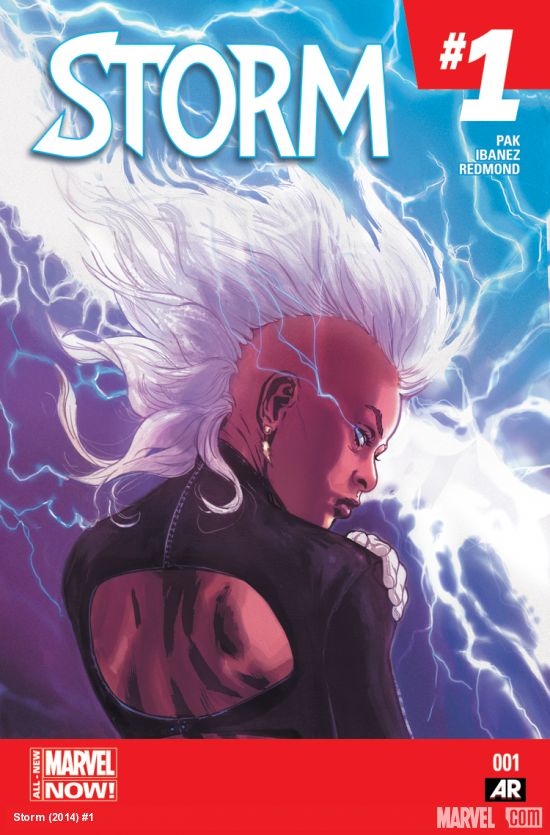 Storm #1 by Greg Pak and Victor Ibanez
Affiliation: X-Men
Publisher: Marvel Comics (July 24, 2014)
Wendy’s Rating – 5 of 5 stars
The fact that this Storm solo series exists at all is enough for me to give it an automatic five stars the moment it was announced, but of course, I don’t want my long time favourite character to be poorly written. Thankfully, once I learned that Greg Pak would be writing the long awaited series, my doubts were removed, especially when he took to the internet to share #WhyILoveStorm with her many fans. Pak has a way of getting to the heart of a character. For me, there is no character that this could be more important to. Because, while Storm is an alpha mutant, powerful enough to wield Thor’s hammer, and worshipped as a goddess, Storm is and always has been Ororo Munroe first. She has never been defined solely by her powers, even though they are a reflection of her and her very moods. For me, the moments when I love Storm most are when she’s being utterly human. And Greg Pak gets that.
Storm has gone through many changes since her introduction in Giant Size X-Men #1 in 1975. She’s lived through her trials and tribulations and come out stronger each time, and she’s come a long, long way from the naïve young woman she once was. This Storm is angry and jaded. Perhaps even a little tired of her responsibilities as a leader of the X-Men and headmistress of the Jean Grey Academy for Gifted Students.
Ibanez’s art is sharp and expressive, which is so important to such a strongly character driven book. His lines sharpen and soften as needed with her changing moods, and he maintains a dynamic feel that really comes to life when Storm uses her formidable powers.

The issue opens with her saving villagers from a tsunami. In the aftermath, Henry McCoy, aka Beast, practically has to beg her to stand down when the military steps in and demands she leave. Back at the Jean Grey Academy, a surprisingly inept Henry asks her to deal with a troublesome student whose issues Storm has no patience for, especially when the student accuses Storm of “selling out.” The problem with Storm is that her emotions are intrinsically tied to her powers, so it’s not wise to make her angry, even if you might be right.
But the beauty of Storm is that she has always been such a self-aware character. She knows when she’s wrong and will do her penance. She’s not afraid or ashamed to apologize for her actions and make amends. And she knows when she needs to reset the dials and find and/or redefine herself again.
From the first issue, this promises to be an exploration of the woman as she does just that.
Plus Greg Pak promised me Forge. I am so here for this.

Book Review: The Martian by Andy Weir
Posted on July 28, 2014 24 Comments

Genre: Science Fiction
Series: Stand Alone
Publisher: Crown Publishing (February 11, 2014)
Author Information: Website
Mogsy’s Rating: 4.5 of 5 stars
One of my greatest fears is being lost in space, helplessly drifting forever in the endless dark until you either die of thirst or starvation or run out of air, and it’s this idea of dying so utterly alone and far from home that gives me the major heebie-jeebies. Those scenes in movies like Deep Impact or Armageddon where those poor bastards get blasted off the asteroid or get their tethers cut loose and they go flying off into the abyss? Sandra Bullock and George Clooney in Gravity? OH MY GOD.
No, you couldn’t pay me enough to go into space. Obviously, I’ve never had any designs to be an astronaut. Being caught at the center of a space disaster would be like my worst nightmare. But for some reason, I sure as hell love reading about them. And as space disaster/survival tales go, I gotta say The Martian is one of the best I’ve ever read.
So, rule number one of space disaster story: Nothing ever goes as planned. NASA’s latest Mars exploration mission is over before it even began, when a dust storm and a terrible accident forces the crew to head home and leave their presumed dead friend and colleague Mark Watney behind. But Watney, being ever resourceful, actually manages to survive. Now he’s stranded on the red planet with no way to contact Earth and NASA to tell them he’s alive, but even if he manages that, the next mission to Mars isn’t for another four years and he’ll run out of food long before then.
What follows is an incredible tale of Watney’s survival, using only his wits and astounding ingenuity to problem solve his way out of this mess, one life-threatening catastrophe at a time. Heck, this whole book is an engineer’s wet dream. I’m no rocket scientist, but author Andy Weir knows what he’s talking about, and even if he doesn’t, it sure sounds pretty convincing. The book gets technical at times, yes; Mark Watney’s character, being an engineer and a botanist, puts his knowledge of his fields to good use, making the most of what he has (mainly a habitat, rover, and other limited supplies) to find a way to contact earth and stay alive. He’s a man with a plan and it involves growing a crap ton of Martian potatoes. We’re kept up with all the procedures and calculations of making this possible, from Point A to Point B, so there’s a lot of scientific details and explanations. I don’t know how I would have received this book if I’d been reading the physical copy. Maybe I would have been tempted to skim, but because I listened to the audiobook, all the techno-jargon didn’t bother me too much.
The big surprise? This book was actually funny. I don’t know if I could have taken all the science and technical bits without the laughs. If I’m going to read about a person stranded on Mars for years with no one but his lonesome, I’m glad it was someone like Mark Watney. He’s so down-to-earth (in a manner of speaking) and so human. One of my favorite lines in the book was his self-deprecating observation that it wasn’t so much Mars trying to kill him but his own stupidity (but of course he’s far from stupid!) It’s hard to keep things light in a survival story, but as it was explained in the novel, Watney was partly chosen for the crew for his amicable nature. Without a doubt, this book wouldn’t have been the same with another personality in his place. I love his sense of humor and the random smartass quips about Aquaman, 70s disco, duct tape and whatever thoughts a person entertains himself with when he’s stuck by himself on Mars. You can’t help but root for the guy. I also don’t usually comment on audiobook narration, but I have to make an exception here and praise R.C. Bray’s performance. You can tell sometimes when a narrator is having fun and actually enjoying the book they’re reading; Bray’s enthusiasm comes through when he’s speaking in Watney’s voice, and he brings the character to life.
For a book of its type, The Martian is gripping, tension-filled but also unexpectedly feel-good, nowhere near as dry as it could have been. Interspersed between Watney’s scenes on Mars and his mission logs are also scenes on earth where NASA is going apeshit since finding out Watney’s still alive and that he’s stranded. The idea of a whole country’s eyes on one man, holding their collective breaths and cheering for the best outcome, and even another nation stepping in to help bring him home…well, it’s stirring and heartwarming.
This is one smart book, complete with cool premise and engaging characters. And you don’t have to have a degree in astrophysics to enjoy it, just a pulse. Check out this book and let take you on a rollercoaster ride of emotions; it’s well worth it. It definitely satisfied my love of space disaster stories without being too grim, and offered just enough tension to make me squirm.

Sunday Musings: To grok is divine
Posted on July 27, 2014 13 Comments
Sundays are my reading and writing days (but no ‘rithmatic, because I just don’t math, okay?). If I’m really lucky, hubby will bring me breakfast in bed, or at least a cup of tea, while I snuggle up in my PJs, reading, writing, or musing about both. How do you spend your (lazy) Sundays?
CURRENTLY READING
Naomi Foyle’s Astra has such a wonderfully vivid style, and I love the time she spends painting her world—especially since she’s doing so through the eyes of a very young child. Still, I’m looking forward to the story moving on from this point, as I don’t yet know what the purpose of all this is; what is the conflict/drama?
I’m taking a break from Mark Lawrence’s King of Thorns audiobook to grok… well… “grok,” which was Dictionary.com’s July 10th Word of the Day.

Meaning “to understand,” I learned of the word from a friend, but hadn’t put much thought into reading the source material. After sharing it on Google+, I was pleasantly surprised to find that a lot of people were familiar with the term, as well as the book, Stranger in a Strange Land by Robert A. Heinlein, while others simply liked the word, like I did, and incorporated it into their vocabulary. Now that I’m listening to the audiobook, I am amused to find that “grok” is used constantly—initially by the main character, the man from Mars—but its use is not annoying. As Valentine Michael Smith attempts to grok all the different and difficult aspects of earth life, it’s fun and fascinating to grok humanity, in the process.
I’m also reading Stranger in a Strange Land as part of my newest Worlds Without End reading challenge, My Bucket List. As if I didn’t have enough reading challenges at WWE, but I’m still working through all those books beside my bed, including the ones I’ve added to this list, which focuses on older, influential writers in the speculative fiction genre.
BOOKISH NEWS
Oh I’ve seen the announcement for Amazon’s new Kindle Unlimited. Lots of authors and readers are sounding off for better or worse, but I’ve mostly been ignoring the chatter. Why? Well because (A) $9.99 per month for a not so unlimited selection doesn’t sound like much of a deal to me. (B) I have more than enough books on my library wish list, and, between that and the books I already own, I am happily supplied for a long time. And (C) I’m Canadian. The deal doesn’t work for me anyway.
WRITERY THINGS
I’m working on a few stories, editing a few others, distracted by a few more. Maybe one day I will actually focus on one of these things and get them published. In the mean time, I will amuse myself with my newest writer distraction, The Worst Muse:
Corgis are hot these days, right? What about, like, werecorgis? Edgy, urban werecorgis looking for love in all the wrong places.
— The Worst Muse (@WorstMuse) July 7, 201
FINAL THOUGHTS

Lootz: Mogsy’s Book Haul
Posted on July 26, 2014 22 Comments
I’m still a bit behind on featuring books from my mailbox, but better late than never! These are some new additions to my library earlier this month:

All Those Vanished Engines – courtesy of Tor, this one looks interesting but I’ll admit I’m a bit intimidated about giving it a go. Still, I’m willing to try anything!
Unwept – like I said, I’m a bit behind on my mailbox posts, this one actually arrived a while ago, and you can see my review here!
The Wurms of Blearmouth – A surprise arrival, I had no idea if I was going to be able to into this fifth book of Malazan novellas, since I’ve read like a grand total of one Malazan book — the first one, in fact. But I hear it’s pretty straightforward and easy to pick up, and it looks like a quick read so I may check it out if I have time.
Storm Siren – as you know, I’m getting a lot more picky with my YA reads these days, but I thought this one sounded really interesting. Very excited to be reading and reviewing this one for next month, along with a giveaway!
Shadows – from DAW, this is the sequel to last year’s Masks, which I really enjoyed. Can’t wait to read it.
Dust and Light – this has been on my wishlist for a while, so it was a really cool surprise to see it show up! Never read anything by Carol Berg and I’m looking forward to it.
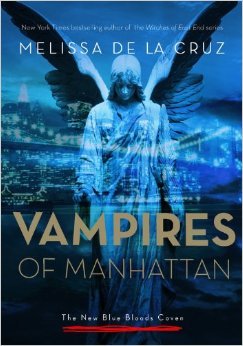

Vampires of Manhattan – my NetGalley stats were sitting at close to 90% so I figured requesting a couple more couldn’t hurt. I was invited to review this and couldn’t resist the “hipster horror” description, and it looks like a quick read so I went for it.
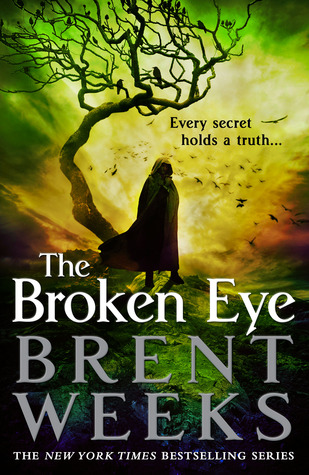
The Broken Eye – I was debating whether or not to continue the Lightbringer series, having enjoyed but not been blown away with the first two installments, but this third book has been getting some major praise from early reviewers, so I figured why not? Third time’s the charm and I went ahead with the eARC.
Magic Bites – I’ve never read anything by Ilona Andrews and I’ve heard so many positive things about this series. I’ve always wanted to give these books a go, and when the first six books went on sale in a recent Kindle Daily Deal, I saw my chance and picked up a bunch!


 The BiblioSanctum