Giveaway: Echo 8 by Sharon Lynn Fisher
Posted on February 2, 2015 4 Comments
*** The giveaway is now over, thanks to everyone who entered! ***
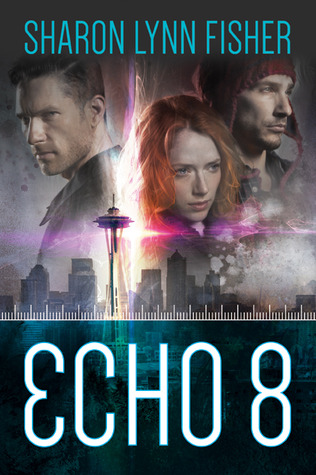
Craving some romance with your sci-fi? Then you definitely should check out Echo 8. Romance Writers of America RITA Award-nominated author Sharon Lynn Fisher burns up the pages with a fast-paced love story that is sure to appeal to readers who enjoy a very healthy dose of passion in their genre fiction. Interested in finding out more? In case you missed it, be sure to check our full review! And here’s the novel’s synopsis:
Three lives. Two worlds. One chance to save them all.
As a parapsychologist working for Seattle Psi, Tess has devoted her life to studying psychic phenomena. But when doppelgangers begin appearing from a parallel world that’s been struck by an asteroid, nothing in her training will help her survive what’s to come.
After dislocating to Seattle Psi from the other Earth, Jake is confined by a special task force for study. But when he drains life energy from Tess, almost killing her, it causes a ripple effect across two worlds — and creates a bond neither of them expected.
Ross is an FBI agent ordered to protect Tess while she studies Jake. His assignment is not random — he and Tess have a history, and a connection the Bureau hopes to use to its own advantage. By the time Ross realizes his mission could be compromised, it’s already too late — he’ll have to choose between his love for Tess and his duty to protect the people of his own Earth.
* * *
ECHO 8 GIVEAWAY
Tor Books has very generously offered The BiblioSanctum an opportunity to host a giveaway for three print copies of Echo This giveaway is open to residents of US/Canada. To enter, all you have to do is send an email to bibliosanctum@gmail.com with your Name and valid Mailing Address using the subject line “ECHO 8” by 11:59pm Eastern time on Wednesday, February 11, 2015.
Only one entry per household, please. Three winners will be randomly selected when the giveaway ends and then be notified by email. All information will only be used for the purposes of contacting the winners and sending them their prize. Once the giveaway ends all entry emails will be deleted.
So what are you waiting for? Enter to win! Good luck!
Sunday Musings: The Return of the Checkerboard Challenge
Posted on February 1, 2015 6 Comments

I didn’t complete last year’s checkerboard, but it looked so damn cool that I’m going to try again with World Without End’s 2015 Roll-Your-Own Reading Challenge.
This year, along with my co-blogger Mogsy, and Lisa at Tenacious Reader, we’ll be working on that backlog of books bibliophiles all seem to amass. Reading challenges are always useful for maintaining focus, especially when one of them is all about clearing that bookshelf. I’ll also be working on:
- 2015 Women of Genre Fiction Reading Challenge
- The Pick and Mix Challenge in 2015
- 2015 I Just HAVE to Read More of That Author Challenge
- Read the Sequel 2015

In my overzealous clicking, I’ve also joined the Somewhere Out There science fiction challenge, and the Fantasy series Mini-challenge, for which I hope to continue with Ursula K. Le Guin’s Earthsea saga.
Well, now that I’ve got my 2015 reading plans all settled, I better stop dawdling around on the internet and get to it!
Mogsy’s Bookshelf Roundup: New Arrivals, Backlist, What I’ve Read
Posted on January 31, 2015 41 Comments
Starting things off with a non-bookish announcement, but it’s certainly the most exciting and significant new arrival I’d like to talk about this week:

Yes, the biggest news is that we welcomed baby #2 to our family last week. Say hello to Adalyn, my little future girl gamer and bookworm! Needless to say, things have been a bit hectic around here as I adjust to life with an infant again, while also now juggling a toddler at the same time. For the last month and a half I’ve been scheduling posts ahead of time like a mad woman though, so you’ll probably still see plenty of my reviews here at the BiblioSanctum.
Still, my social presence around the interwebz is likely going to take a dip, but I’m definitely going to be around! In fact, I’m counting on having all your awesome blogs and reviews to read during those late night 3am feedings.
Received for Review:
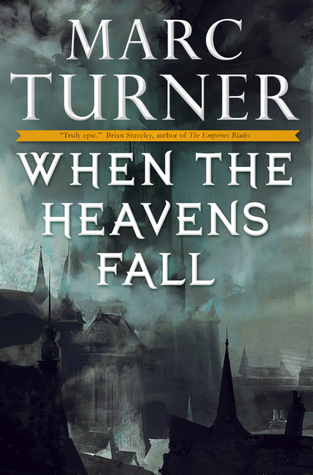


When the Heavens Fall by Marc Turner – Physical ARC, with thanks to Tor. This was a surprise arrival, though when I looked it up on Goodreads I had actually marked it last year as a book to watch. Described as “the first of an epic swords & sorcery fantasy series”, I’m definitely on board.
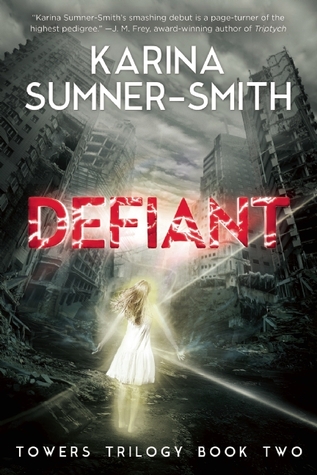
Defiant by Karina Sumner-Smith – Physical ARC, with thanks to Talos Press. The sequel to Radiant, which I really enjoyed, I didn’t even know ARCs were out already for this so I was psyched when it showed up early last week!
Cherry Bomb by Kathleen Tierney/Caitlín R. Kiernan – Review copy, with thanks to Roc. One of the few books I actually requested this month, because there’s just no way I could pass up reading the next installment of the Siobhan Quinn series.
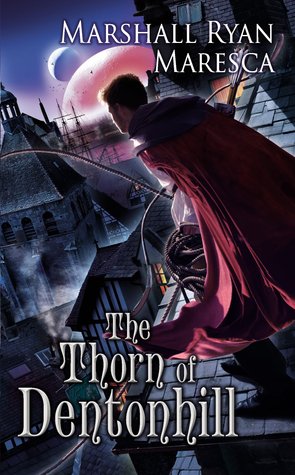
The Thorn of Dentonhill by Marshall Ryan Maresca – Review copy, with thanks to DAW. Requested as well because the book has been on my radar for a while now, and I’m really looking forward to it because seems like it’s been getting some great reviews.
Rook Song by Naomi Foyle – Review copy, with thanks to Jo Fletcher Books. The sequel to Astra, I’m really curious about what this book will have in store for the characters.
Evensong by John Love – Review copy, with thanks to Night Shade Books. This and the next book were surprise arrivals, but even though I hadn’t heard of either book before now, the description of Evensong makes it sound pretty amazing. I’ll definitely be making an effort to fit this one into my reading schedule.
King of the Cracksmen by Dennis O’Flaherty – Review copy, with thanks to Night Shade Books. Again, hadn’t heard of this one before it arrived, but it looks like it could be a lot of fun. Anyone know more information about it?
Purchased:
I told myself I wasn’t going to buy any more books until I’ve read the huge pile I already have — or you know, at least after I’ve made a good dent in my backlist. Looks like I’m already failing spectacularly. To be fair to myself, most of these are ebooks picked up at superb prices as Kindle Daily Deals, and they’re all sequels I need to read. Digital books are dangerous though; when you don’t actually get to see a physical pile, it feels like you didn’t buy much at all.


The Void by J.D. Horn – Ebook. It’s the third installment of the Witching Savannah series, but I’ve read the first book (which was quite enjoyable) already and own book two which I’m hoping to get to soon.
Authority by Jeff Vandermeer – Ebook. Loved the first book Annihilation and I just had to grab book two when I saw the sale on the series last week.
The Merchant of Dreams by Anne Lyle – Ebook. I’m hoping to read the first book The Alchemist of Souls this year towards Worlds Without End’s Women of Genre Fiction challenge, so I definitely wanted to have the second book on hand!
Burned by Karen Marie Moning – Audiobook. Grabbed Burned with an Audible credit. Feels like I’ve been waiting forever for this. Paranormal Romance isn’t my usual genre, but I really enjoyed the Fever series and from there I just continued reading.
Back to the Backlist:
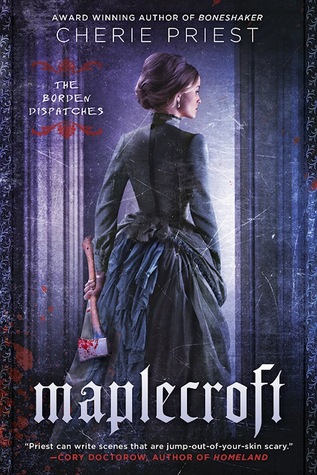
Maplecroft by Cherie Priest – Library Audiobook. This one actually hasn’t been on my to-read list for that long (since November 24, 2014, according to Goodreads) but since it was a release last year that I was interested in picking up but never got around to it, it certainly counts as backlist.
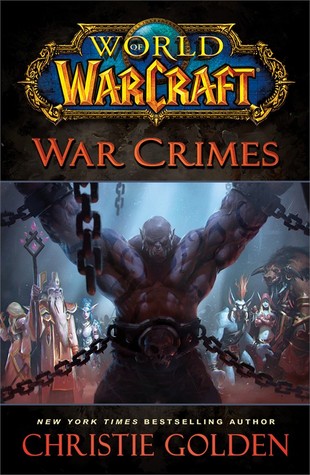
War Crimes by Christie Golden – Library Audiobook. On my to-read list since May 1, 2014. My MMORPG of choice at the moment is World of Warcraft, but of course with the new baby I haven’t had a chance to log in for more than a week. If I’m not playing the game, I might as well be reading about it!
What I’ve Read Since the Last Update:
Keep an eye out for my reviews of these books in the coming weeks!





Backlist Burndown: Sevenwaters 1 & 2 by Juliet Marillier
Posted on January 30, 2015 31 Comments
As a book blogger, sometimes I get so busy reading review titles and new releases that I end up missing out on a lot previously published books, so one of my goals for this year is to take more time to catch up with the backlist, especially in my personal reading pile. And it seems I’m not the only one! Backlist Burndown is a new meme started by Lisa of Tenacious Reader. Every last Friday of the month, she’ll be posting a review of a backlist book and is inviting anyone interested to do the same. Of course, you can also review backlist books any day you want, as often you want, but be sure to watch for her post at the end of the month to link up!
And since this is the inaugural Backlist Burndown post, I figured I’d do something a little special for it. You all get a treat — a twofer!
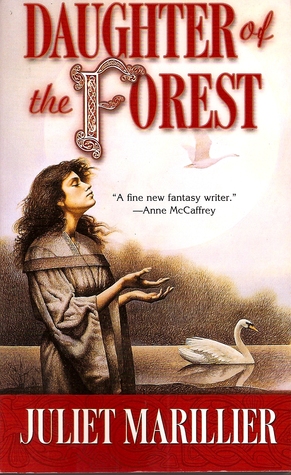 Daughter of the Forest by Juliet Marillier
Genre: Fantasy
Series: Book 1 of Sevenwaters
Publisher: Tor (May 5, 2000)
Author Information: Website
Mogsy’s Rating: 5 of 5 stars
In the second half of 2014, I read Juliet Marillier for the first time. The book was Dreamer’s Pool and as soon as I closed the cover on the last page, I asked myself the question most readers ask themselves right after they finish an amazing read: Why have I waited so long to read this author? And inevitably, the next thought is: I must read more!
I know I say that a lot and I don’t always follow through, at least not right away. But something about Marillier’s writing struck me in a way that I knew I didn’t want to wait. So I decided to jump into her Sevenwaters trilogy, and not least because the first book Daughter of the Forest has been sitting in my to-read list for years – for shame! – and it’s time to remedy that.
The book introduces us to Sorcha, who should have been the seventh son of a seventh son, but she is loved no less for being a girl, the only daughter of Lord Colum in the kingdom of Sevenwaters. She grew up with her six doting older brothers, and the siblings could not have been closer despite their different personalities and walks of life. However, peace at Sevenwaters is shattered when their widower father is seduced into marriage by an evil enchantress. To stop the siblings from meddling, the witch curses them all, turning Sorcha’s brothers into swans. It’s up to Sorcha to lift the spell, but she has to undertake a long and difficult quest thrust upon her by the Fae to do so, all the while remaining silent until she completes it.
To those familiar with their fairy tales, this is of course a retelling of The Six Swans, one of the stories collected by the Brothers Grimm. It’s a pretty close adaptation, actually, though Marillier fleshes it out a lot more and sets her version in the medieval Celtic era. She does not stray too far from the source material, which ended up being perfect for someone like myself, who adores fairy tales but at times wishes someone to come along and give them the deeper, more detailed treatment. I was delighted to find the same sort of subtle vibe here that I experienced in Dreamer’s Pool, a heady mixture of magic and realism in a world where myths can come to life and yet remain grounded at the same time.
This is simply a gorgeous book, filled with pain and sadness but also hope, healing and love. There is a heavy element of romance in here, but it is so well embedded in the overall story that it hardly distracts, despite being so intensely passionate. It’s been a while since I found myself so moved by a relationship between two people. Daughter of the Forest, a fantasy novel at its heart, does a love story even better than some Romance novels out there, without even seeming to try.
There aren’t too many faults I can pick out here, other than some minor issues I had with the overprotectiveness of Sorcha’s brothers, especially towards the end. I think by then she has earned the right to speak for herself and tell her family what it is she wants, but she too remained meek and silent until things ended up resolving for her. But a gripe like this feels so minor when the rest of the novel was near-perfect, as well as in light of how much I loved the book overall.
Two books by Juliet Marillier under my belt, and now she is one of my favorite authors. This is a must read for her fans, new and old. I really can’t recommend this one highly enough, especially if you love fairy tales, mythology and legends.

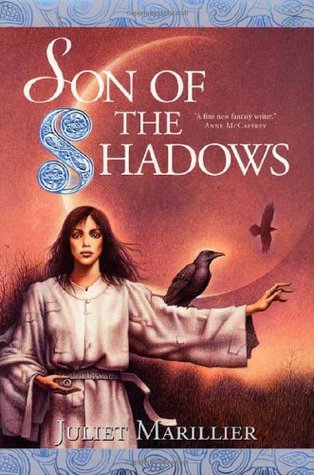 Son of the Shadows by Juliet Marillier
Genre: Fantasy
Series: Book 2 of Sevenwaters
Publisher: Tor (May 18, 2001)
Author Information: Website
Mogsy’s Rating: 4 of 5 stars
Son of the Shadows may be the second book of the Sevenwaters series, but it is not a direct sequel. Instead, the story follows the youngest daughter of Sorcha, the brave young woman in Daughter of the Forest who was set upon a quest to save her six older brothers from a terrible curse – and succeeded. Liadan proves to be just as resourceful as her mother when she is abducted by outlaws on the road, managing to maneuver her way out of the dilemma by offering her healing services to an injured member of the group. This is also how she meets the Painted Man, the leader of the band known to be a cold and heartless killer.
Despite it not being a direct sequel, it is still perhaps necessary to read Daughter of the Forest first before tackling Son of the Shadows. Threads from the first book’s story carry over to this one, and if you aren’t familiar with them it is easy to become confused or lost. In fact, as someone who jumped into this book right after reading the first one, I still feel like I’m missing something. The meddling Fae are back, reminding us that there is still a prophecy to be fulfilled and a darkness to vanquish. Sorcha may have set Sevenwaters on the right path, but it is up to Liadan to take up the mantle now and continue what her mother started. However, nothing really develops in the grander scheme of things; we don’t get to see the great evil rear its ugly head even once in this novel, and I’m not sure if the Fair Folk’s prophecy progresses that much at all.
For all that, Son of the Shadows was an enjoyable read, almost as much as Daughter of the Forest. It does lack a bit of the cohesion I found in the first book, which had a clear direction given how it was a very faithful retelling of a well-known fairy tale. Marillier plays around more with her characters and plot with this one, having freer reign to do as she pleases with the story. For one thing, the romance here is much heavier and more in the forefront. Liadan and the Painted Man fall swiftly for each other, whereas Sorcha’s relationship in the previous book was a much slower burn. The love story elements are more overt and in your face this time around and doesn’t come across as naturally, but it’s still very deep and full of passion.
Still, it’s an excellent follow up and a worthy addition to the saga of Sevenwaters, which looks to have more in store. It’s clear now that there’s a lot more to the narrative, and the effects aren’t going to be limited to just a few characters. Instead, multiple generations in the same bloodline will be touched forever. Son of the Shadows is different from the first book, but in a good way. And it doesn’t stray too far from the overall themes that I’ve come to appreciate about this series, mainly the fairy tale and mythological undertones to the setting and story. And of course, Marillier’s writing is beautiful as always.
This book is put together slightly less elegantly and doesn’t tread as lightly as its predecessor, but I still loved it.

Book Review: Echo 8 by Sharon Lynn Fisher
Posted on January 29, 2015 14 Comments
Genre: Romance, Science Fiction
Series: Stand Alone
Publisher: Tor (February 3, 2015)
Author Information: Website | Twitter
Mogsy’s Rating: 3 of 5 stars
Echo 8 is the first novel I’ve read by Sharon Lynn Fisher, but I’d known from before that her work is usually characterized by mixture of Science Fiction and Romance elements. That sounded just fabulous to me, and well, ultimately I believe one’s overall enjoyment of this book will entirely depend on how much you prefer in your balance of each genre!
With themes like alternate worlds and parapsychology at its core, Echo 8 follows a brilliant young researcher named Tess Caufield in a near-future where doppelgangers have begun appearing mysteriously and randomly from a parallel universe. As far as Tess and her team could tell, these shadowy “Echoes” are from an alternate earth that has been struck by an asteroid, but how these hapless individuals ended up being here, and how to keep them alive on this world after they have teleported are questions scientists are still trying desperately to work out.
However, Echoes also have the unfortunate tendency to drain the life energy from people they come in physical contact with. This consequently led to the assignment of FBI special agent Ross McGinnis to Tess’s security detail, much to her chagrin. This arrangement is further strained when Jake, the latest Echo to dislocate to Seattle Psi from the other earth touches Tess and almost kills her, setting off a chain reaction that will have profound significance for all three lives.
Remember what I said earlier about how you like your balance of sci-fi and romance? After finishing Echo 8, I’ve determined that this book is without question heavier on the latter. The scientific theory and technology involved in here is sufficiently explained but clearly written in a way so that the reader can enjoy the story without having to look beyond the surface details. Those used to harder sci-fi with a stronger emphasis and comprehensive look at the technical aspects won’t really find it here. On the other hand, if you’re fancying yourself a good romance, then you definitely won’t be disappointed.
No question about it, Fisher has a real talent for writing hot, sweaty, passionate lurrrrrve. Perhaps a bit too fast and intense for me, if I’m to tell the truth. Heck, I’m all for scorching love scenes, and I’m not exactly a fan of crawling slow burn romances either, but I’d prefer to see a relationship proceed at more of a simmer. In Echo 8 we’re thrust into a complicated love triangle almost right away, and the first time two characters get together it happened very quickly, too quickly for me to be truly convinced of their feelings for each other.
In general, the weight of the romance also came at the expense of story and character development. Often I could tell that the plot yearned to be something bigger, something more, but all told it ended up being rather straightforward and predictable. There’s not much depth to Tess beyond her obsession to help Echoes and her complete lack of concern over whether or not she gets killed trying to do it. This drives Ross crazy of course, but his soft spot for Tess means it never takes much to talk him into letting her do anything she wants. We go through this cycle repeatedly with these two characters, while Jake pines for Tess and struggles with his feelings for someone he knows he can never have…or can he? Like the science fiction aspects, we’re given just enough information about the three main characters to appreciate the twisty relationship dynamics behind their…unique situation. The level of romantic drama here is extremely satisfying, but once again, some readers might find themselves wishing for more out of the plot and characters.
In sum, Echo 8 has a very interesting and ambitious premise, even if it doesn’t quite reach its full potential. It is first and foremost a Romance, and in this area the book indubitably excels, practically burning up the pages with its fast-paced love story and red-hot desires flying all over the place. It’s perhaps too strong on the romantic side of things for my tastes, but I suspect those readers who are more inclined towards that will enjoy this novel very much. Everything about it is designed to appeal to genre fiction readers who enjoy a very healthy dose of romance, and without a doubt it is successful in this endeavor. And I have to say, even with the issues I mentioned above, I liked this book and found it to be a fun read.

A review copy of this book was provided to me by the publisher in exchange for an honest review. My thanks to Tor Books!
Tough Traveling: Law Enforcement
Posted on January 29, 2015 21 Comments

The Thursday feature “Tough Traveling” is the brainchild of Nathan of Review Barn, who has come up with the excellent idea of making a new list each week based on the most common tropes in fantasy, as seen in The Tough Guide to Fantasyland by Diana Wynn Jones. Nathan has invited anyone who is interested to come play along, so be sure to check out the first link for more information.
This week’s tour topic is: Law Enforcement
Seems odd to think that in fantasy cities in which entire economies revolve around crime there is room for the men in blue (or crimson, or whatever). But the law does the best it can, even when faced with magic, mystical creatures, or rogue deities.
Wendy’s Picks
 Three Parts Dead by Max Gladstone
Shove over Judge Dredd, when Justice calls her Judges to order, they are unstoppable, bound wholly and unquestioningly to the will of a goddess who sees only black and white.

Mages are a danger to themselves and to the people, which is why the Chantry has placed them in the care of the Templars, though many of those abuse their power out of fear and hatred. Above the Templars stand the Seekers of Truth. But who seeks the Seekers?
 Museum of Thieves by Lian Tanner
To Goldie Roth and the other children of Jewel, the Blessed Guardians are anything but blessed, and Guardians Comfort and Hope offer anything but.
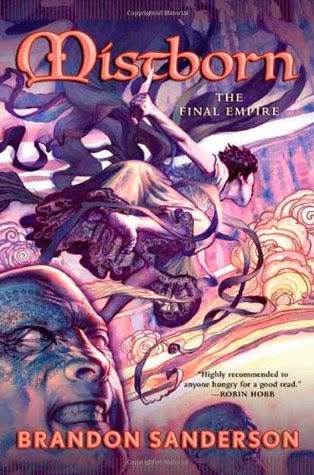
The Lord Ruler’s order is kept by the Steel Ministry, a priesthood that is less about the spiritual matters than it is about the policing. At the forefront of their enforcement are the fearsome Steel Inquisitors.
Comic Review: The Unbeatable Squirrel Girl #1
Posted on January 28, 2015 6 Comments
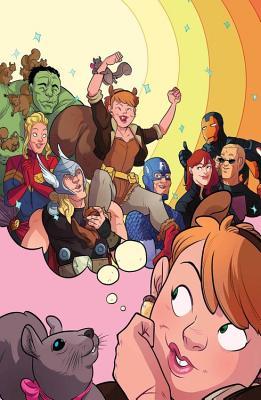 The Unbeatable Squirrel Girl #1 by Ryan North
Genre: Superhero, Leading Ladies
Publisher: Marvel Comics (January 7, 2015)
Author Information: Website | Twitter
Tiara’s Rating: 4.5 of 5
Doreen Green, better known to readers as Squirrel Girl, has decided that it’s time for her to stop living in the Avengers’ attic and forge her own identity in the world as a person and a superhero. This starts creating her own theme song, which she’s sure will catch on eventually, and enrolling in Empire State University where she’ll build on her awesome by amassing more knowledge. This also means learning to balance her crime fighting with her new life on the outside.
The readers are given a general overview to Squirrel Girl and her powers through the aforementioned introductory theme song performed by Squirrel Girl herself as she wrecks a group of muggers. This is great for old fans and new readers alike. It doesn’t require that readers be well-versed on her history and gives people who are reading about Squirrel Girl for the first time a quick foundation to build on without being overwhelming.
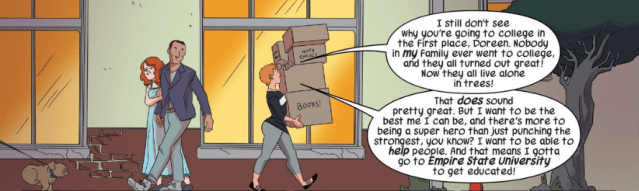
Initially, when I heard there was going to be a book about Doreen, I was excited and a little apprehensive. I was all in for a book featuring the little known, plucky heroine whose claim to fame is beating some of Marvel’s toughest heroes and villains. Apprehension stemmed from the fact that I was afraid that they might not capture the spirit of what was endearing about Doreen. I set my bar for this book low just in case it did turn out to be a disaster. However, it was far from that.
This turned out to be exactly the kind of book that I’d expect for Squirrel Girl. North’s writing is light, fast-paced, and largely tongue-in-cheek–perfect for a story of this nature. Henderson’s art punctuates the fun vibe by being cartoony, animated, and bright. Squirrel Girl is a “glass half full” kind of girl. This is shown well through her interactions with the world as both Doreen Green and Squirrel Girl. Everything is a learning experience for Doreen, and no matter how the situation may seem, Doreen looks at the it with the thinking that there’s something positive to be gained and learned from it.
As an added bonus, this is a comic I’d be very comfortable with my son and daughter, aged 9 and 5 respectively, reading. It has the kind of youthful appeal that younger readers will appreciate and relate to, but it doesn’t alienate its older readers. It’s not just the fun tone that makes me say that. This book is positive and bubbly, extolling the things that make people different. It doesn’t ridicule eccentricities, but instead has its characters own their quirks and not allow anyone to give them hell for it. It shows that, sometimes, there are different ways of viewing and solving problems that work for everyone if you only take time to asses the situation. It reinforces the idea that first solution might not always be the best solution more so than being the easiest. These are important lessons for kids.
 If you’re one of those comic book readers who think all comics should be serious business, this is the last book you should pick up. You can’t help but smile while reading about Doreen’s antics. The Unbeatable Squirrel Girl never takes itself seriously, and it does so without insulting its readers. It celebrates quirkiness and asks its readers to join it in this celebration.

Waiting on Wednesday 01/28/15
Posted on January 28, 2015 14 Comments

“Waiting On Wednesday” is a weekly meme hosted by Breaking the Spine that lets us feature upcoming releases that we can’t wait to get our hands on!
Mogsy’s Pick:
Cold Iron by Stina Leicht: June 23, 2015 (Saga Press)
As you may recall, a couple weeks ago we posted a list of our 2015 Most Anticipated Science Fiction & Fantasy Books Written by Women. Cold Iron really should have been on there too, but I found out about the book only a short time before the post went live and didn’t get the chance to update the list! That just won’t do, so I’m featuring it today as my WoW because this great looking book certainly deserves some attention. Stina Leicht is an author who has been on my to-read list for a while. And flintlock epic fantasy? Sounds right up my alley.
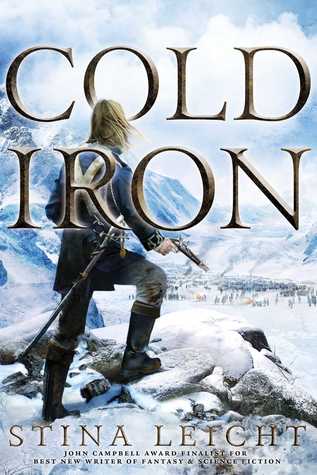 “Fraternal twins Nels and Suvi move beyond their royal heritage and into military and magical dominion in this flintlock epic fantasy debut from a two-time Campbell Award finalist.
Prince Nels is the scholarly runt of the ancient Kainen royal family of Eledore, disregarded as flawed by the king and many others. Only Suvi, his fraternal twin sister, supports him. When Nels is ambushed by an Acrasian scouting party, he does the forbidden for a member of the ruling family: He picks up a fallen sword and defends himself.
Disowned and dismissed to the military, Nels establishes himself as a leader as Eledore begins to shatter under the attack of the Acrasians, who the Kainen had previously dismissed as barbarians. But Nels knows differently, and with the aid of Suvi, who has allied with pirates, he mounts a military offensive with sword, canon, and what little magic is left in the world.”
Tour Review and GIVEAWAY! Master of Plagues by E.L. Tettensor
Posted on January 27, 2015 14 Comments
*** The giveaway is now over, thanks to everyone who entered! ***
 Master of Plagues by E.L. Tettensor
Genre: Fantasy, Mystery
Series: Book 2 of Nicolas Lenoir
Publisher: Roc (February 3, 2015)
Author Information: Website | Twitter
Mogsy’s Rating: 5 of 5 stars
Author E.L. Tettensor has been on my radar ever since reading her excellent debut Darkwalker and I couldn’t have been more thrilled to find out in the summer of 2014 that she will be returning to the world of Nicolas Lenoir with a fresh new sequel featuring the eponymous detective.
Having been given a new lease on life following his harrowing encounter with the grim spirit Darkwalker, Lenoir is back to work with a renewed energy. But his resolve is tested almost right away when a disturbing new case sets the entire Kennian police force on alert. A deadly new disease is ravaging the city, inflicting fever, vomiting, and massive internal and external hemorrhaging on its victims. The symptoms and mortality rates are bad enough, but then comes irrefutable evidence that the plague was ruthlessly unleashed on purpose. But by whom?
In this incredible follow-up, Lenoir and his partner Sergeant Bran Kody are racing against time on the trail to find a mass murderer in the midst of widespread fear and panic. City resources are stretched to the limits and still more people are dying by the day, and it’s a whirlwind of suspense as all those trying to hold things together find themselves torn between finding the culprit, or finding a cure.
I can’t tell you what a joy it is to be back in this world reading about these characters, especially since they’ve grown so much since the first book. Inspector Lenoir is a no longer the jaded curmudgeon he once was, and now that his apathy has lifted we can finally see his brilliance shine. That’s not to say his personality has done a complete one-eighty; he is still the fastidious detective with a tongue as sharp as his mind. And as Sergeant Kody is so often reminded, the inspector is not given to coddling himself or anyone else. However, that has not stopped the two men from becoming closer as a unique working relationship develops between them. Kody’s character is also explored a lot more in this installment, with his perspective given plenty of page time. The sergeant starts coming into his own, taking the lead on some parts of the investigation and standing up to Lenoir he feels are important. It’s good to see these two evolve together, as it’s clear they can learn so much from each other.
The world of this series is as rich and evocative as ever, even in the grip of a deadly disease. It’s interesting to note that the fantasy elements are not as strong in this book as it was in the first. Aside from the involvement of Adali healing, Master of Plagues is relatively light on magic and the paranormal. In spite of this, I think this makes the novel even more engaging. For one thing, it would be impossible to read this story without pondering its parallels to current events, in light of the Ebola outbreak in Africa and the fear that it sparked across the globe in 2014. Not only are the symptoms of Kennian’s plague disconcertingly similar to those of Ebola, social effects like mass hysteria and the discrimination against a specific group of people are also themes that will ring all too familiar. It’s not surprising, since Tettensor has stated that she draws a lot of her inspiration from the real world and her own experiences living and working in Burundi. The basis for the fictional Adali culture, for example, has some of its roots in the pastorialist societies of northeast Africa and elsewhere on the continent.
All told, Master of Plagues is another deftly written novel, a worthy sequel that is every bit as good as its predecessor. Both books have gotten 5 stars from me, and I don’t have to tell you how rare that is. But that’s what I like to see! Like Darkwalker, this book takes the reader on a delectable journey to get to bottom of a grand mystery, and there are plenty of plot twists and surprises along the way to keep you on your toes. Nicolas Lenoir is a character that has quickly grown on me, and I can’t wait to see what he’ll get up to next.
A review copy of this book was provided to me by the publisher in exchange for an honest review. My thanks to Roc Books!
* * *
MASTER OF PLAGUES GIVEAWAY
The publisher has very generously offered The BiblioSanctum an opportunity to host a giveaway for one print copy of Master of Plagues! With apologies to international readers, this giveaway is US only. To enter, all you have to do is send an email to bibliosanctum@gmail.com with your Name and valid Mailing Address using the subject line “MASTER OF PLAGUES” by 11:59pm Eastern time on Tuesday, February 3, 2015.
Only one entry per household, please. The winner will be randomly selected when the giveaway ends and then be notified by email. All information will only be used for the purposes of contacting the winner and sending them their prize. Once the giveaway ends all entry emails will be deleted.
So what are you waiting for? Enter to win! Good luck!
Book Review: Dragon Age: The Last Flight
Posted on January 26, 2015 12 Comments
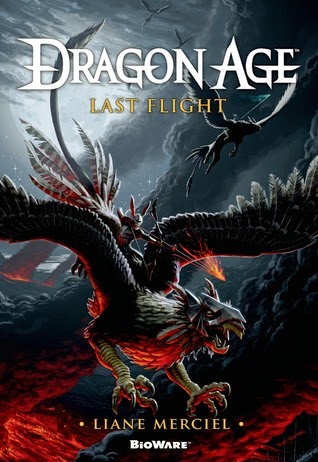
Genre: Dark Fantasy, Gaming
Series: Dragon Age #5
Publisher: BioWare (August 2014)
Wendy’s Rating: 4 of 5 stars
In 9:41 Dragon, the continent of Thedas is in turmoil, with the templars waging war against the mages who have rebelled against their oppressive guardians. A small group of mages has sought refuge at Wiesshaupt, hoping the Grey Warden’s neutrality will protect them from the templars, even though becoming a Grey Warden is a deadly risk in itself.
This is as close as Dragon Age fans will get elements of the game they are most familiar with. Unlike its predecessors, Last Flight steps away from the immediate lore of the game by having Valya, a young elf mage, research historical records. That seems like a pretty dull concept, but at the crypt of Garahel, the elven hero of the Fourth Blight, Valya finds clues that lead her to the diary of his sister, Isseya, which goes into great detail about the struggles of the Fourth Blight.
Wiesshaupt has been mentioned constantly throughout Dragon Age games, but players have yet to see the fabled Grey Warden headquarters. This book provides that opportunity, and more importantly, lets readers see the griffons that Wynne so cruelly denied us in her storytelling.
Isseya’s journal tells of the many years of hardship that the continent of Thedas suffered as the Darkspawn ravaged the land with their poisonous existence. The Fifth Blight, as experienced by players during Dragon Age: Origins, was nothing compared to this, having lasted only a year. Last Flight shows us the true hardships of war, and the horrible decisions that its leaders and heroes have to make. While players — unless they wanted to be jerks — could mostly play their game with minimal losses, making more friends than enemies, Field Commander Garahel and his sister had to make choices that often meant sacrificing the few to save the many. And some of those choices involved the dreaded blood magic.
As enjoyable as it is to see all of our friends and experience the events of Thedas as players currently know it, the step into the past was a welcome change. With all the different choices available to players, current stories might not reflect our expectations and experiences. Last Flight is freed from these trappings, and is able to present us with all new and interesting characters upon whom we have no expectations, much less background information.
I really liked the fact that, while her brother is the famed hero that has gone down in history, the story is told entirely through Isseya’s eyes. That’s not unusual in itself, but Garahel actually isn’t involved much in her storytelling, save where necessary. His charm and bravery are evident through her words, and we already know that he is the one to defeat the Archdemon that controls the Darkspawn, thus making him the Hero of the Fourth Blight, but seeing the Blight through Isseya’s eyes was very interesting, and at times, heartbreaking, especially when it comes to the now extinct griffons.
The action and emotion ranges all over the place, as is to be expected in such a long, seemingly hopeless war. Merciel is merciless in her battle scenes, wasting few words on the fallen. This is a harrowing book, and perhaps a difficult read for those who enjoy happy endings. While it does offer a significant amount of hope at the end, a victory during a Blight can only ever be Phyrric, at best.


 The BiblioSanctum