Book Review: The Dinosaur Lords by Victor Milán
Posted on July 27, 2015 36 Comments
A review copy was provided by the publisher in exchange for an honest review. All opinions are my own.
 The Dinosaur Lords by Victor Milán
Genre: Fantasy
Series: Book 1 of The Dinosaur Lords
Publisher: Tor (7/28/15)
Author Information: Website | Twitter
Mogsy’s Rating: 4 of 5 stars
Ever wondered what a tournament joust would look like, if both opponents were charging full-tilt towards each other while mounted on three tons of bellowing hadrosaurus? Honestly, I can’t say I have. But Victor Milán has shown me the light, and it is glorious.
Knights and dinosaurs. Tell me you can resist that, because I know I couldn’t.
The Dinosaur Lords takes place in the Empire of Neuvaropa, a fictional land reminiscent of 14th century Europe. The story opens with a great battle. Famed noble captain Karyl Bogomirskiy and his mercenary Triceratops army (though Karyl himself rides Shiraa the magnificent matador, an Allosaurus) are betrayed and then promptly crushed by the forces of Count Jaume Llobregat and Duke Falk von Hornberg. Karyl dies and is resurrected — twice, actually – and eventually joins up with dinosaur master Rob Korrigan to travel to Providence, where they are recruited by the adherents of the Garden of Truth and Beauty to defend their lands and train their troops.
Meanwhile in the capital, the princess Melodía awaits the return of her lover Jaume from his campaign. She becomes increasingly concerned over the war, as well as the rivalries and intrigues within her father’s court. It is especially troubling, given how easily influenced the emperor can be without the presence of his right hand man. Furthermore, unbeknownst to all, the Eight Creator’s mysterious cadre of Grey Angels stand witness to the games of power playing out before them – watching…and waiting.
This is a fantastic introduction to a new series featuring engaging characters and a fun and addictive story. But let’s first talk about the dinosaurs, and about how they make everything better. If that’s what initially drew you to The Dinosaur Lords, you’re probably not alone; I myself confess that they were the huge driving force behind me finally breaking down and requesting a copy of this for review. And yet, the presence of dinos is far from being just a shtick to draw attention. Milán has deftly integrated them fully into the fantasy world of his novel, portraying his vision of a human culture that evolved side-by-side with these creatures.
Not surprisingly, a myriad species of dinosaurs in this story have been domesticated by people for different uses, including but not limited to food, beasts of burden, beloved companions, and of course, prized mounts. Ultimately, dinosaurs are undeniably an integral part the characters’ everyday lives – their folklore, their traditions and even their metaphors. They’re so ubiquitous that a lot of the time, you forget they’re even there, so seamlessly are they incorporated into the world-building. As you can imagine, there are endless possibilities when it comes to the role of dinosaurs in a medieval-like setting. The author explores many of them, and as a result, we readers win. I was especially impressed and thrilled by the battle scenes involving the mounted cavalr—er, dinosaurry. To paraphrase Jaume, a knight’s greatest weapon is his war-dinosaur, and vice versa.
By the way, have I mentioned the beautiful flavor artwork that adorns the first page of each chapter?
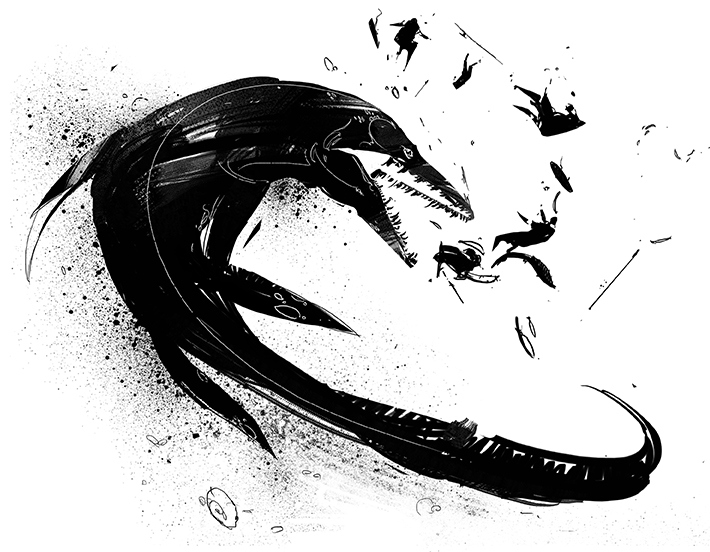
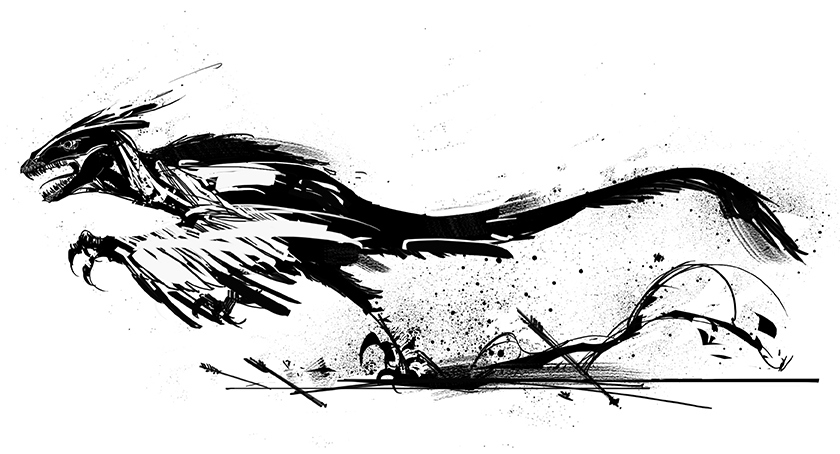
Interior art by Richard Anderson, these and more originally featured at tor.com
Featuring a huge variety of species, this book will be a real treat for any dinosaur lover. And you can imagine my relief to have my kid’s Big Book of Dinosaurs on hand to look up the “true names” of all those described in these pages.
I could probably go on at length about the dinosaurs, but of course this isn’t just all about them. For once a cover blurb actually rings true for me after I read the book. Within the first handful of chapters, the story’s “Game of Thrones vibe” made itself apparent with a focus on courtly politics and the fates of kings, princesses, and nobles on the line. Probably not surprising that The Dinosaur Lords is just as much about lords is it is about dinosaurs. Leaving all the things like dinosaurs and the gigantic insects of this world aside though, there’s actually little in the way of fantasy elements apart from a very subtle thread of magic woven in. Thus even though this world is not our own, it’s easier to imagine this book as a historical fantasy rather than a general epic.
Story-wise, with the exception of a couple instances in the middle where I thought the quick bouncing back and forth of POVs was erratic and perplexing, the narrative was generally well-structured and the pacing was spot on. My only other regret was not seeing Melodía, who was my favorite, in a more significant role relative to Rob’s or Jaume’s. This isn’t the first time I’ve read a series-starter feeling that the main female character was underused compared to other perspective characters, and I hope she’ll feature more prominently in the sequel and have a stronger effect on the story.
I guess that addresses the question of whether or not I’ll continue with the series. My answer is absolutely, yes, sign me up for the next book! Fan of dinosaurs? Then you’ve got to read this novel. Even if you do pick this up for love of dinosaurs alone, you’re guaranteed to leave with a lot more than just that, no matter what. Totally worth it.

Book Review: Queen of Fire by Anthony Ryan
Posted on July 26, 2015 12 Comments
A review copy was provided to me by the publisher in exchange for an honest review. All opinions are my own.
Genre: Epic Fantasy
Series: Book 3 of Raven’s Shadow
Publisher: Ace (7/7/15)
Author Information: Website | Twitter
Mogsy’s Rating: 3.5 of 5 stars
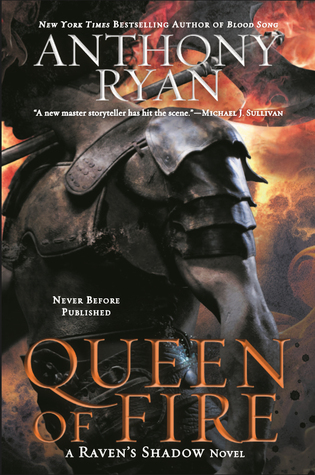
This highly anticipated novel is the final volume of Anthony Ryan’s epic Raven’s Shadow trilogy, so be aware this review may contain spoilers for the first two books of the series if you have not caught up yet. It would be impossible to talk about Queen of Fire without at least referencing some of the events in the previous book, and not just because it picks up directly where Tower Lord left off (and follows in the same vein). The truth is, so much of what stood out were the characters and their growth over the course of the trilogy; to praise (and critique) this book I would have to give the nod to Blood Song and Tower Lord as well.
We learn at the beginning of Queen of Fire that Queen Lyrna, who was brutally attacked and burned at the end of Tower Lord has been healed by the very same forces she used to mistrust, and now seeks to ally with them to meet the invading Volarian army head on. She is determined to fight for the independence of the Unified Realm, but to do so she must first raise an army. Meanwhile, the Tower Lord Vaelin Al Sorna, now also called Battle Lord of the Realm, is taking it upon himself to confront the mysterious Ally and an enemy who must be defeated if the Queen’s efforts are to have a chance. On the way, Vaelin rallies other factions to their side, their support invaluable now that the power of his bloodsong seems to have abandoned him.
Other prominent characters include Frentis, whose traumatizing plight in the last novel made me wonder how he would come back from the consequences of his actions, even though so many of them were not his own while his mind was being controlled. Reva also starts her climb to the top by demonstrating her strength and incredible battle prowess. And finally, an unexpected perspective comes in the form of Alucius Al Hestian who adds tension to the overall arc by having to make some very difficult decisions.
First, the good: Like I said, this is a fitting end for a lot of characters who joined in for this epic journey. Characters like Lyrna, Frentis and Reva have all seen tremendous development since they made their respective appearances, and each had their personal obstacles to overcome. It fills me with much satisfaction to see everything come together in this concluding volume.
I also liked the many new places Anthony Ryan took us in Queen of Fire, as well as the fascinating new people we get to meet. The wolf people were especially great, since I always find it a treat to read about fictional cultures inspired by shamanistic traditions. There were also some amazing moments of characters doing battle on the high seas, which wasn’t a surprise given my fondness for maritime fantasy. In addition, there was the minor element of invention and the enthusiasm of a particular character for tinkering, creating new and improved machines of war – this I loved, even if it did only make up a relatively small part of the story. This is a huge tome of a novel after all, and there is a lot packed in it, much of which I thoroughly enjoyed.
There were some stumbling blocks, however. The first is that the story is admittedly on the slow side to take off, with a significant portion of “critical” scenes happening in the second half of the novel. That means I felt that the first 300 or so pages were mostly given to establishing the basis for the finale at the end, which is a bit much (it’s such a lengthy book, after all). Fortunately, the pacing improves by leaps and bounds after the story finds its stride.
I also think that those who were disappointed with certain aspects of Tower Lord might experience the same snags in Queen of Fire. The two books are stylistically similar, both featuring multiple POVs and readers who had wanted more Vaelin in book two will probably not see a marked change here. Vaelin Al Sorna, who won me over in Blood Song, does not really feel like the main protagonist to me anymore, but I find myself okay with that because he is still an important presence. I’m actually regretting more the fact that folks like Caenis and Nortah didn’t show up as much. Clearly, the story’s scope has become much bigger (a good thing) so the result is plenty of other characters sharing the pages with him now that I’ve come to connect with.
But basically, if you were expecting Vaelin to dominate his share of screentime in this book again, I’m afraid you just won’t get that. I do understand the sentiment, though. Speaking for myself, Blood Song still remains my favorite of the trilogy, because it was such a detailed exploration into Vaelin’s character. Of course, it certainly helped that I’m such a huge fan of the warrior school trope chronicling a boy’s rise to become the greatest fighter the world has ever known, complete with a relentless training regime and harsh instructors.
But while Queen of Fire didn’t quite reach the heights that Blood Song or even Tower Lord did for me, it’s nevertheless a good book with undeniably awesome conclusion. I would recommend the series as a whole and if you’ve been following along with the trilogy as the books come out, this is an ending you probably wouldn’t want to miss.

More on The BiblioSanctum:
Review of Blood Song (Book 1) | Review of Tower Lord (Book 2)
YA Weekend: Daughter of Dusk by Livia Blackburne
Posted on July 25, 2015 5 Comments
A review copy was provided by the publisher in exchange for an honest review. All opinions are my own.
 Daughter of Dusk by Livia Blackburne
Genre: Young Adult, Fantasy
Series: Book 2 of Midnight Thief
Publisher: Disney Hyperion (8/4/15)
Author Information: Website | Twitter
Mogsy’s Rating: 4 of 5 stars
Full disclosure: I was a beta reader for an earlier draft of Daughter of Dusk last fall. This is my review of the ARC which has changed so much since then; it always amazes and thrills me to no end to see the process of a book coming together, so I would like to thank author Livia Blackburne for the opportunity.
Daughter of Dusk is the sequel to Midnight Thief, the novel that first introduced us to the protagonist Kyra of Forge and her world of assassins, thieves and shapeshifting Demon Riders. Since the events of the last novel, Kyra has learned the truth of her heritage. Only those closest to her know her secret, including her close ally Tristam Brancel the former Palace Knight. But there is another who knows, one who Kyra fears she cannot trust. James, the ex-leader of the Assassins Guild is now in custody and behind bars, but what’s stopping him from selling out Kyra to buy his own freedom?
Meanwhile, Demon Riders continue to raid the surrounding villages of Forge, and suddenly Kyra finds herself in the unique position to do something about it. Angered by the ineffectual methods of the city’s council to protect their own people and the corruption in its ranks, she is driven to do something desperate and extreme. Torn between two worlds, Kyra now must decide how far she is willing to go to save Forge and prepare for the biggest battle of her life.
Daughter of Dusk is the next big step for Kyra. In the first book she was the young and naïve thief who simply looked after herself and her own, without much care for matters outside her own sphere of existence. In this sequel, however, her eyes have been opened. No longer is she ignorant of her own identity and power, and she’s discovered herself and what matters to her. The difference is very noticeable; Kyra takes initiative and makes a lot of her own decisions in this book, a far cry from the girl in Midnight Thief who was manipulated and led around by the older, craftier and more experienced James.
Even though not all her decisions are the best, there’s no doubt Kyra is the one calling a lot of the shots in this book. As a result, I think Daughter of Dusk has a more mature and overall darker vibe, especially when the plot drives Kyra to do some rather unsavory things. I mentioned in my review of Midnight Thief that it felt like that book was skewed towards younger audiences, specifically the upper Middle Grade range. In contrast, I don’t think I can say the same for this second book, which is more suitably Young Adult. There was a huge change in the story here from when I did the beta read, a choice that I think makes a lot more sense given how it better explains the motivation behind some of Kyra’s more drastic, brutal actions. There were also some twists that surprised me just as much as they did the first time around.
In addition, I liked that there was no true romance arc, so if that’s what you’re looking for in your YA, you’ll probably end up disappointed. In this case, I personally felt the understated love story elements actually helped rather than hindered the story. One of the reasons I enjoyed Tristam’s character so much is because of his down-to-earth nature and the fact neither he nor Kyra sidetracked the events of the novel (too much) with needless dramatics, though there was still the requisite arranged marriage plot point to throw a wrench in the works. Nevertheless, the absence of a full-blown love triangle makes me breathe a sigh of relief.
Overall, I found this sequel just as enjoyable as book one. There were some predictable parts, but in general there were more unexpected twists in book two. Compared to the earlier version I saw of this novel, the author has also really polished up the story, even if the ending remained slightly rushed and tied up a little too neatly. Despite these minor flaws though, this second volume did a great job developing its protagonist. Kyra truly came into her own in Daughter of Dusk, and it was a pleasure to experience her story. All told, Daughter of Dusk combined a good balance of action and fantasy to deliver a worthy conclusion.

More on The BiblioSanctum:
Review of Poison Dance (Midnight Thief novella) | Review of Midnight Thief (Book 1)
Book Review: Half a War by Joe Abercrombie
Posted on July 24, 2015 17 Comments
A review copy was provided to me by the publisher in exchange for an honest review. All opinions are my own.

Genre: Young Adult, Fantasy
Series: Book 3 of The Shattered Sea
Publisher: Del Rey (7/28/2015)
Author Information: Website | Twitter
Mogsy’s Rating: 3.5 of 5 stars
Joe Abercrombie’s Young Adult series comes to a close in this final book of The Shattered Sea trilogy. A fine ending if there ever was, though I’m afraid I will sound a lot more negative than I mean to be in this review. It’s just that compared to the incredible showing of the two preceding novels, Half a War may just trail just a tad behind in awesomeness. Still, you can be sure this third book is not to be missed.
Once again, the torch has been passed on to a group of new point-of-view characters. Koll will be no stranger to readers who have been following the series; the boy with a talent for woodcarving who journeyed with Father Yarvi in Half the World is now serving as an apprentice to Gettland’s minister. Princess Skara is a new character, the lone royal survivor of Throvenland after a new foe named Bright Yilling came in the night to kill and burn everything she ever loved. Raith is the sword-bearer of the king of Vansterland, who arrived with his lord to a meeting between the three nations to discuss plans to topple the High King and his ruthless advisor, Grandmother Wexen.
The stage is set for a war to end all wars, and Joe Abercrombie does not disappoint. Still, I couldn’t help but feel something was missing as I was reading this, and it took me a while, but I think I finally figured out what it was: the characters. Protagonists Koll, Skara and Raith were all great, but they paled in comparison to the personalities that came before them. Yarvi charmed us in Half a King while Thorn and Brand won us over in Half the World, but they’ve had their turns as lead characters and are now returning to Half a War as supporting cast only. Or, that is how it should have played out.
What actually happened was this: Koll, Skara and Raith may be the three POV characters in this book, but they really don’t feel like the stars. Almost all of the major outcomes were shaped by the main protagonists from the previous books, like Yarvi and Thorn. Furthermore, it’s the power-players like Father Yarvi, King Uthil, Grom-il-Gorm and Mother Scaer who seem to make all the decisions and influence the course of this story, leaving Koll, Skara and Raith outclassed, outgunned, and outnumbered. Simply put, the three young ‘uns feel a bit like interlopers at the adults’ table, sitting in as mere guests for the finale of this epic tale.
Though I was initially ecstatic to discover Koll would be a point-of-view character, I wasn’t prepared for his limited role in the greater scope of events. Reporting on everything Father Yarvi does seems to be his major purpose, because the author couldn’t use Yarvi as a POV character himself. Skara had more initiative, but as a main protagonist, she still felt pretty shallow and unimportant until the very end. Finally, there’s Raith, who still feels like a big question mark. Rough, tough, and a fighter to the core, he was like the male version of Thorn’s character from Half the World but without her complexity.
Three perspective characters also felt like a bit much, compared to the relative simplicity of Half a King where we only had Yarvi’s POV to follow, and in Half the World where the chapters alternated between Thorn and Brand. In Half a War, Koll, Skara and Raith felt like they were constantly jostling each other for more page time, and poor Raith typically lost out with very short chapters, which probably explains why he is the least developed of the three. In addition, when the three characters are separated, we bounce around the world a lot, making it very easy to confuse where we’re supposed to be, since no time is really taken to establish context. The result is that the book felt a tad rushed, with a couple of the characters’ storylines lacking closure. I’m also a little skeptical of the ending, which felt a little deus ex machina, and I say this as someone who usually doesn’t notice these things.
Still, if you ask me whether or not Half a War is worth reading, my answer would be ABSOLUTELY. It’s just hard not to focus on the negatives in this book when the previous two were close to perfection, but that doesn’t mean I didn’t have a blast with the story. Compared to its predecessors, this book felt a bit rushed with characters that aren’t Abercrombie’s best, but the overall arc finishes with a bang and I wouldn’t hesitate to recommend the trilogy. Half a War might not be my favorite of the series, but it was worth getting to that epic conclusion, so fans of the first two books will definitely want to pick this up. It might just might surprise you in a big way.
More on The BiblioSanctum:
Review of Half a King (Book 1) | Review of Half the World (Book 2)
Book Review: Faces by E.C. Blake
Posted on July 23, 2015 5 Comments
A review copy was provided by the publisher in exchange for an honest review. All opinions are my own.
 Faces by E.C. Blake
Genre: Fantasy
Series: Book 3 of Masks of Aygrima
Publisher: DAW (7/7/2015)
Author Information: Website | Twitter
Mogsy’s Rating: 3.5 of 5 stars
Faces is book three of the Masks of Aygrima, a series about a magically gifted young woman living in a land ruled by the all-powerful Autarch who controls his empire by requiring all its citizens to wear special, magic-infused masks. I talked about this in my review of the last book, but I think it bears mentioning again that this series reads like Young Adult, even though the covers, description or imprint may not strongly indicate that. I just hope this is helpful information for others to know what to expect.
This third and I think final book picks up right from the end of book two, Shadows. Mara Holdfast and the survivors of the now broken unMasked army have been saved the Lady of Pain and Fire, the legendary sorceress who is said to be the only person ever to have challenged the Autarch. And now she has been found.
The Lady takes Mara under her wing, and Mara immediately feels a kindred toward her, since both of them possess the rare gift of being able to see all colors of magic. The Lady offers to train her so that the two of them can work together to bring down the Autarch, but Mara spending all her time with the Lady also means being cut off from her friends Keltan, the boy she has started to grow close to, and Chell, the prince from across the seas. As time goes on, Mara starts to suspect that not all is right. The Lady is driven by revenge, and some her methods start to seem as bad as the Autarch’s. Mara herself also grows increasingly troubled by her own feelings of anger, which seem to get stronger and more uncontrollable each day.
In fact, Faces features Mara at her most angsty. Regrettably, even though her emotions are not entirely her fault, this makes her very exasperating for the first half of the novel. That said though, Mara is also a fascinating character because of all the changes she has gone through over the course of this series: first naïve and idealistic in Masks, then imprudent and foolish in Shadows, and now finally frustrated and angry in Faces. The evolution of her personality has been shaped by the events in her life since the day her mask shattered and she went on the run, and many are experiences that were harsh, brutal and traumatic. In this book, she is also facing hostility from all sides, and while it may be obvious to the reader who is friend and who is foe, to Mara it feels like everyone is out to use her or harm her.
In many ways though, Faces feels like a book with two story arcs. After all, there are two obstacles Mara has to overcome, first the Lady of Pain and Fire and then the Autarch. With so much that needs to happen in this concluding volume, the pacing feels a bit rushed in certain sections. Still, I was impressed with how the plot was able to link both conflicts, and make them play off each other so that I was never sure of how all the problems will resolve. The final results were unpredictable and more than once I was surprised at how things concluded.
That brings me to the ending – which I did not expect at all. It’s a bittersweet one, which are the toughest for me to handle; sometimes they’re great and sometimes I’m left wanting. I’m still unsure how to feel about the one in Faces, because at once I am satisfied but also feeling a little indignant for the fate of our protagonist. Even though I know in my heart that it makes sense, some part of me still wishes for something else.
However, I will say that it is a good lead-in for a sequel series. This chapter of Mara Holdfast’s life has ended, but will there be more adventures for her in the future? The ending of Faces strongly hints that her story is not over, that there are those who still need her help which only her powers can provide. Who knows what new places Mara will visit next, or the new characters she will meet if a new series is on the horizon? I’m definitely open to finding out, if that happens.

More on The BiblioSanctum:
Review of Masks (Book 1) | Review of Shadows (Book 2)
Tough Traveling: Middle-Aged Heroes
Posted on July 23, 2015 14 Comments


The Thursday feature “Tough Traveling” is the brainchild of Nathan ofReview Barn, who has come up with the excellent idea of making a new list each week based on the most common tropes in fantasy, as seen in (and inspired by) The Tough Guide to Fantasyland by Diana Wynn Jones. Nathan has invited anyone who is interested to come play along, so be sure to check out the first link for more information.
This week’s tour topic is: Middle-Aged Heroes
This hero stuff is usually a young person’s game. And, occasionally, a grizzled old veteran can get involved. It is a true rarity for someone to join the good fight for Fantasyland living in that in between ground.
Tiara’s Picks:
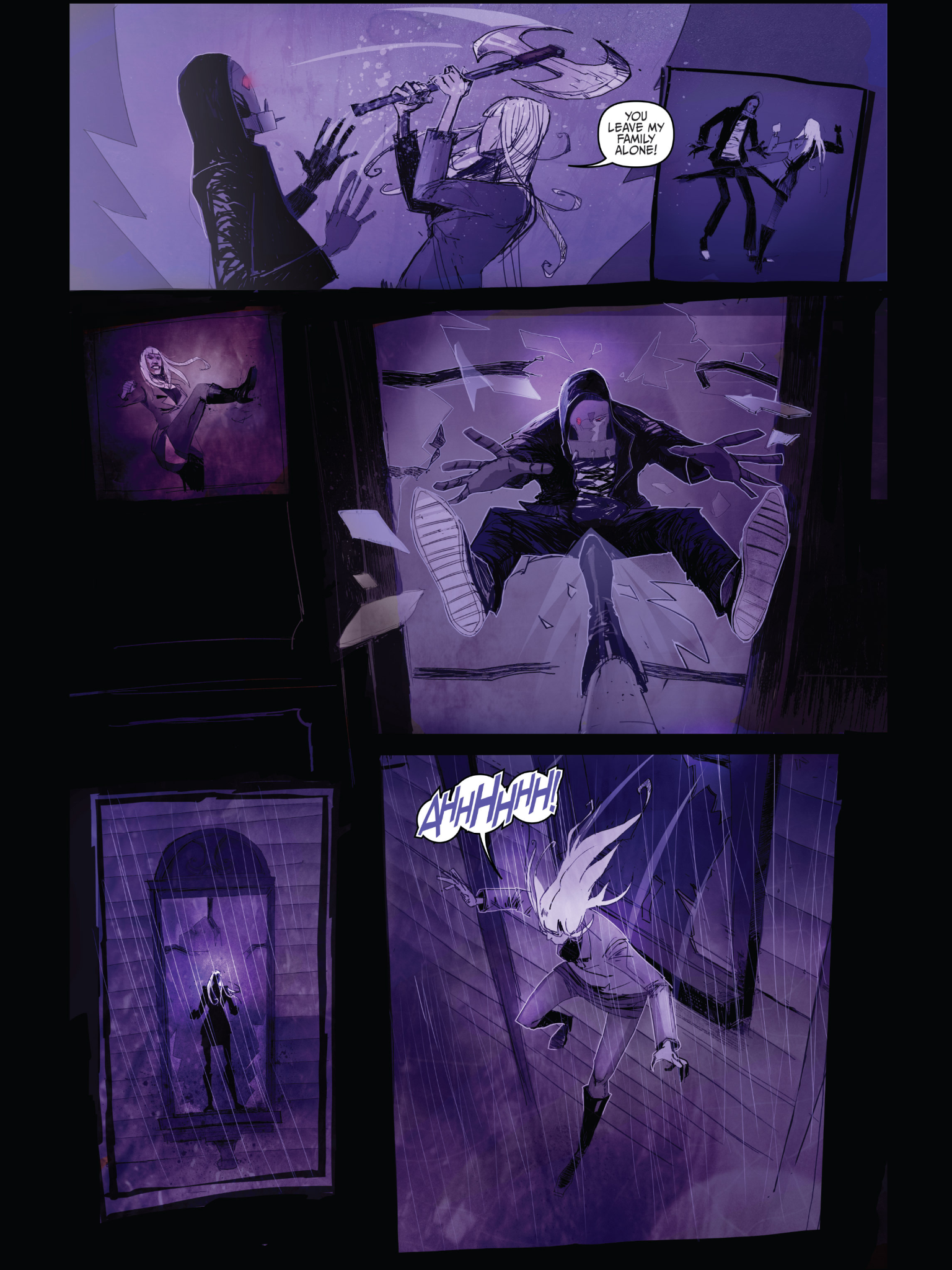
“YOU LEAVE MY FAMILY ALONE!”
I tried to make most of my picks with two exceptions all women because it’s so rare to see women older than their 30s in many books these days, but fortunately, I have met some excellent female characters who may not be as young as they used to be, but they’re still capable, compelling, and–even sometimes–ladies who will kick your ass with their bare knuckles as demonstrated by the matriarch of the Allan family.
 The Executioness (The Executioness by Tobias S. Buckell)
The Executioness is a short story set in the same world as as short story by Paolo Bacigalupi where magic is outlawed because of the consequences of using it being detrimental to everyone. They show sort of opposite sides of the same narrative. In The Executioness, a mother has taken up the mantle of her father as an executioner (often of magic practitioners) for the crown in order to provide for herself and her children. When her children are taken, mom takes a journey to save her family. The Executioness was created for the purpose of answering the question: “What about middle-aged women in SFF?”
 Bernadette Mataki (Gears of War by Epic Games)
Benadette Mataki wasn’t very young when she first met and trained some of the Gears (soldiers) she would come to know as her family, and 14 years after Emergence Day, she’s pushing into her 60s. Age doesn’t slow Bernie down, though. She walked 14 years across a dangerous land to find her family again–the Gears, and she can still snipe and fight like a boss.

Credit: Gearspedia
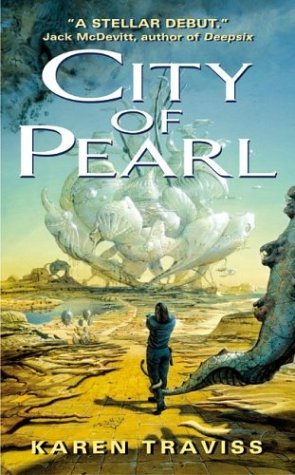 Shan Frankland (City of Pearl by Karen Traviss)
Shan Frankland is an officer leading an expedition to another planet in hopes of the planet being somewhere humans can live. She knows that undertaking this expedition could take 150 years. What she didn’t expect when she gets to the new planet is there would be a godlike entity whose purpose is to decimate those who might endanger the native population, and that they might inadvertently cause a war on the planet. The ideas in this book makes me think of Varley’s Titan in a way, and I loved that book. (Side note: Traviss also wrote the Gears of War novel series, and the first book was excellent.)
 Dave Hooper (Dave vs the Monsters: Emergence by John Birmingham)
I can’t explain Dave better than his description, so let’s go with that:
When an oil rig drills too deep, it unleashes a torrent of nightmares—the creatures of legend, always thought to be figments of our imagination, are now a very real threat to the survival of humankind. But when he kills a seven-foot-tall demon with an axe to the skull, Dave Hooper—a booze-soaked, middle-aged oil-rig safety manager—is transformed into an honest-to-god monster slayer.
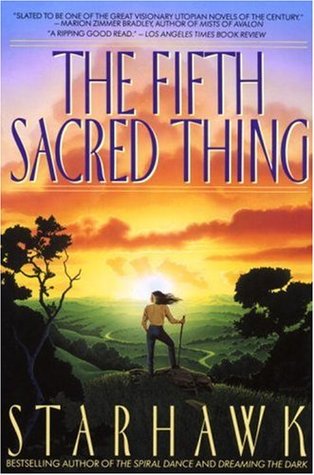 Maya Greenwood (The Fifth Sacred Thing by Starhawk)
Maya has moved beyond middle-aged to old age as she’s ninety-eight years old. Chew on that, and she’s the main protagonist (one of the main protagonists) of the series. However, the second book of her series, Walking to Mercury, takes readers back to when she was middle-aged and struggling to find herself. Maya reshapes her lands through her wisdom and power gained from the earth into something more beautiful, but finds it all about to come crumbling down as a threat looms. The second book focuses on what led to shaping her into the power she becomes in the first book.
 The Cellist and death (Death with Interruptions by José Saramago)
Death with Interruptions held many interesting concepts including the idea that death might be (or might’ve been) an actual person people can track down. While the concept of death being a maiden is not new, through some magic science in the book, they were able to conclude what she she may look like. Later in the book, death (with a lowercase D; death with a capital D she calls unfathomable and truly final) falls in love and takes the form of a woman who’s either middle-aged or just a bit shy of middle-age as this magic science has concluded. The Cellist, who moves past mediocrity into brilliance when she appears, is middle-aged.
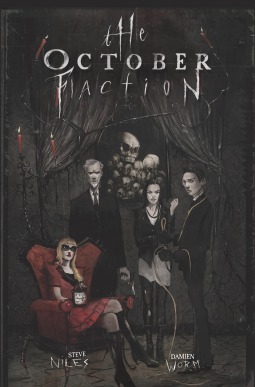 Deloris Allan (The October Faction by Steve Niles)
Even though she’s married to a retired monster hunter, Deloris was a badass before she met Frederick and now, having a husband and kids, she feels she has to keep safe makes her even more of a mama bear even if she’s not young anymore. You never come between a mom and her cubs. Never. She’s not afraid to brawl for what’s hers, and she will win.
Mogsy’s Picks:
I’m really digging Tiara’s idea of featuring middle-aged women heroes, so I’m going to continue in that vein.
 City of Stairs by Robert Jackson Bennett
Not only one but TWO strong, spirited middle-aged women are the stars of this superb novel, just a taste of the many great characters in this refreshingly diverse cast. Seriously, move over Sigrud, because it’s all about Shara Komayd and — my personal favorite — Turyin Mulaghesh.
 The Fifth Season by N.K. Jemisin
Essun is the newest middle-aged heroine to join my favorites. Being a rogue Orogene (an individual who has powers to manipulate earth energies), she’s lived an interesting life, to say the least. Eventually she settled down in a quiet community, got married and had children, making her living masquerading as an ordinary school teacher. It all changes one day when she comes home to find her young son murdered and her daughter kidnapped by their father. Essun goes after them, with the feelings of love, fear and revenge like a stone in her heart. A mother’s wrath is a powerful thing.
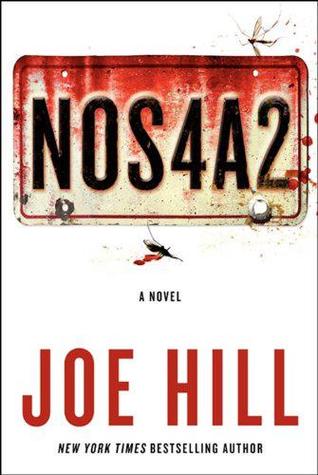
Speaking of moms, you don’t want to mess with Victoria “Vic” McQueen. Vic was only 8 years old when she discovered that she has a special power. By riding her bike, she can conjure up a rickety old covered bridge that always seems to lead her to exactly what she’s looking for. Until one day that bridge leads her to Charles Manx, a predator who snatches children from his vintage Rolls-Royce and brings him to his creepy fun-park-of-the-damned called Christmasland. Vic escapes the encounter but she is left traumatized. As she grows into adulthood (middle-aged hood) the memories start to fade away, but Charles Manx does not forget. He’s on the hunt for children for his Christmasland again, but this time he’s got his eye on Vic’s own son.
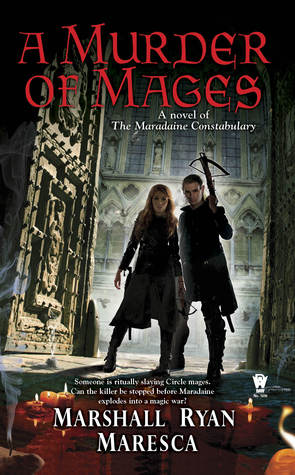 A Murder of Mages by Marshall Ryan Maresca
I have a soft spot for lady detectives, and Satrine Rainey is one of the best. A former street urchin who spent her childhood fighting to survive, Satrine also worked as a spy before eventually settling down to a quieter, calmer life in her middle aged years. But after disaster strikes, Satrine is back in the game, using all her wits and her skills to con her way into a position with the Maradaine Constabulary so that she can support her disabled husband and two young daughters.
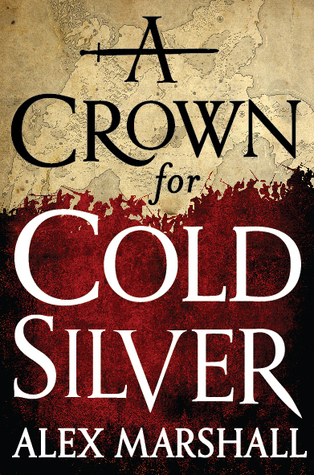 A Crown for Cold Silver by Alex Marshall
Confession: I’ve not actually finished this novel yet (been stalled on it for the longest time) but it’s worth mentioning nonetheless. Two decades have passed since the great general Cobalt Zosia led her mercenary army into battle, overthrowing a mighty empire. What does a legendary heroine do after that? Retire quietly to the countryside, of course. But after a massacre in her village, Zosia is back on the battlefield once more, seeking vengeance for the murdered. She may be twenty years older, but once a warrior, always a warrior.

This book takes place in a dystopian future where old people are seen as useless and nothing more than takers and freeloaders, so along with all the “undesireables” of society, those past their prime are cast out to live on a trash island where they will be detained and out of sight. This means that ALL the main characters in this series — Clancy, Lena, Jimmy and Delilah — are elderly, none of them under the age of 63, well beyond middle-aged.
Wendy’s Picks
Judging by our lists, it seems there are quite a few older ladies out there, but just because they are all here for you to add these books to you to-read lists, doesn’t mean this is common. As a woman approaching 40 myself, it’s nice to see stories featuring older women and to show that they are just as capable–if not more so, thanks to their earned wisdom and experience–as their younger counterparts.
 Paladin of Souls by Louise McMaster Bujold
Ista is so done with the gods and their shit. She’s spent much of her adult years trapped in the shrouded mist of sainthood, with everyone around her believing she was insane. In truth, she was touched by the gods and the only person who could recognize this in The Curse of Chalion was Cazaril, another older protagonist. In Paladin of Souls, Ista has been freed from her cursed sainthood as well as her royal duties–if not the royal entourage.
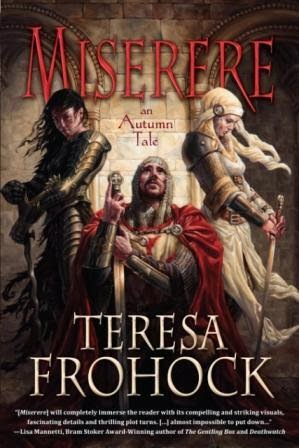 Miserere: An Autumn Tale by T. Frohock
The main character of this story is an older man, crippled by guilt and the scars of battle. But Lucian is not alone in his journey to save a a young child pulled through the Veil to his world. He struggles against his twin sister, Catarina, who has succumbed to her demons. And he is hunted by his former lover, Rachel, he fights to maintain control over the demons that writhe within her.
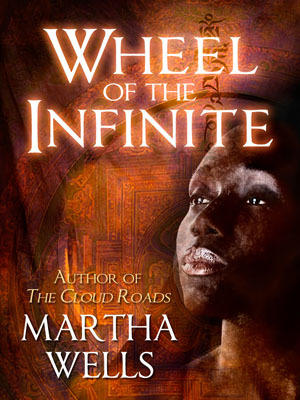 Wheel of the Infinite by Martha Wells
Traitor, murderer, exile. Yet Maskelle still commands respect wherever she goes once people recognize her power. As I wrote in my original review: “She is a middle-aged woman of colour coming to terms with the creaks and groans that come with her age. She is a bit bitter, but not without reason. She is proud. She is powerful. And she knows how to laugh at herself and with those around her.” Maskelle even gets a fit young lover to take her pleasure in, something that our current society tends to frown upon thanks to the wonders of sexism.
 Throne of the Crescent Moon by Saladin Ahmed
Adoulla is a much older protagonist who knows he is beyond his prime and is already considering retirement when a grave threat comes against his home. He is joined by his assistant and a young tribeswoman to fight it, but also enlists the help of his friends, Litaz and Dawoud, a healer and a sorcerer whose loving relationship Adoulla envies from time to time. Litaz, a healer and alchemist, is a pinnacle of strength and confidence for both her husband and the rest of the members of this motley posse.
Comic Stack 07/22/2015 – Graphic Novel Review: The October Faction Volume 1 by Steve Niles (Writer), Damien Worm (Illustrator)
Posted on July 22, 2015 5 Comments
Genre: Horror, Supernatural
Publisher: IDW Publishing (July 21, 2015)
Author Information: Website
Tiara’s Rating: 4 of 5 stars
Full Disclosure: A review copy of this book was provided to me by the publisher. I would like to thank the author and the publishers for providing me this opportunity. All opinions expressed from here forward are my own.
 If The Addam’s Family, Batman: Arkham Asylum, and Locke & Key had a devil’s threesome, the result would be this book. If you don’t know what a devil’s threesome is, it might be best to Google that when you’re not around other people. You’ve been warned. I will not be responsible for traumatized children, surprised significant others, or alarmed strangers. The October Faction is a dark, horror-filled comic about the things that go bump in the night, and the family acquainted with them. We meet the Allan family who even come with their own Lurch/Alfred in the form of their female butler, Saunders. The family is headed by Frederick Allan, a former monster hunter turned college professor who teachers a course on–what else?–monsters, where their origins rest and whether they exist.
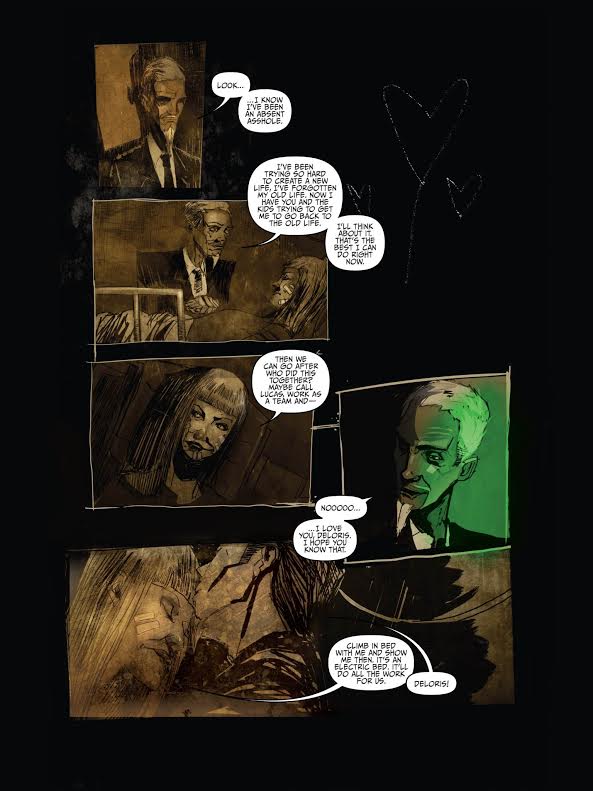 Next, we have Deloris Allan, matriarch of the household, who seems to be estranged from her husband and possibly having an affair. She only sees her husband during mealtimes at the beginning of this book, but we find out her true motives quickly. Right now, it doesn’t look like Deloris started her life as a monster hunter, but after meeting her husband, she became one. She may have had some limited contact with monsters before him, but she became something of a team with him and his true partner, a man named Lucas. Even though, she’s middle-aged now, mom is no slouch in the combat department as we learn later in the book.

Last, we have the Allan children–Geoff and Vivian. Geoff has been out of high school for about a year or a bit longer it seems, and Vivian is just graduating. All the clues point to both children being outcasts in high school, and despite their dad being a professor, neither child has a desire to go to college. Instead, they’ve been trying to convince their dad they want to become hunters, and they have the abilities to do so. Not only do they want to become hunters, as he once was, they want to be hunters with him, which naturally their father has been trying to dissuade them from that for years.

Dad explaining there is no point in waiting to kill someone who pretty much just threatened to kill you.

The art is amazing in this book. It fits the gruesome story, even punctuating the dark humor of the book. I took so many screenshots, And I wasn’t sure which pages to use and which not to use because Damien Worm’s art for this book is darkly beautiful, a seeming mix of the two other comics I mentioned earlier.
I love the dark and macabre, and this book doesn’t fail on either account. If you’re a fan of books like Locke & Key, you likely enjoy The October Faction. It still needs to get its timing right in some scenes, but The book was largely satisfying for me as a horror fan. Despite how dark this book is, it had funny and even touching moments interspersed throughout at just the right moments, though. I look forward to continuing this series.
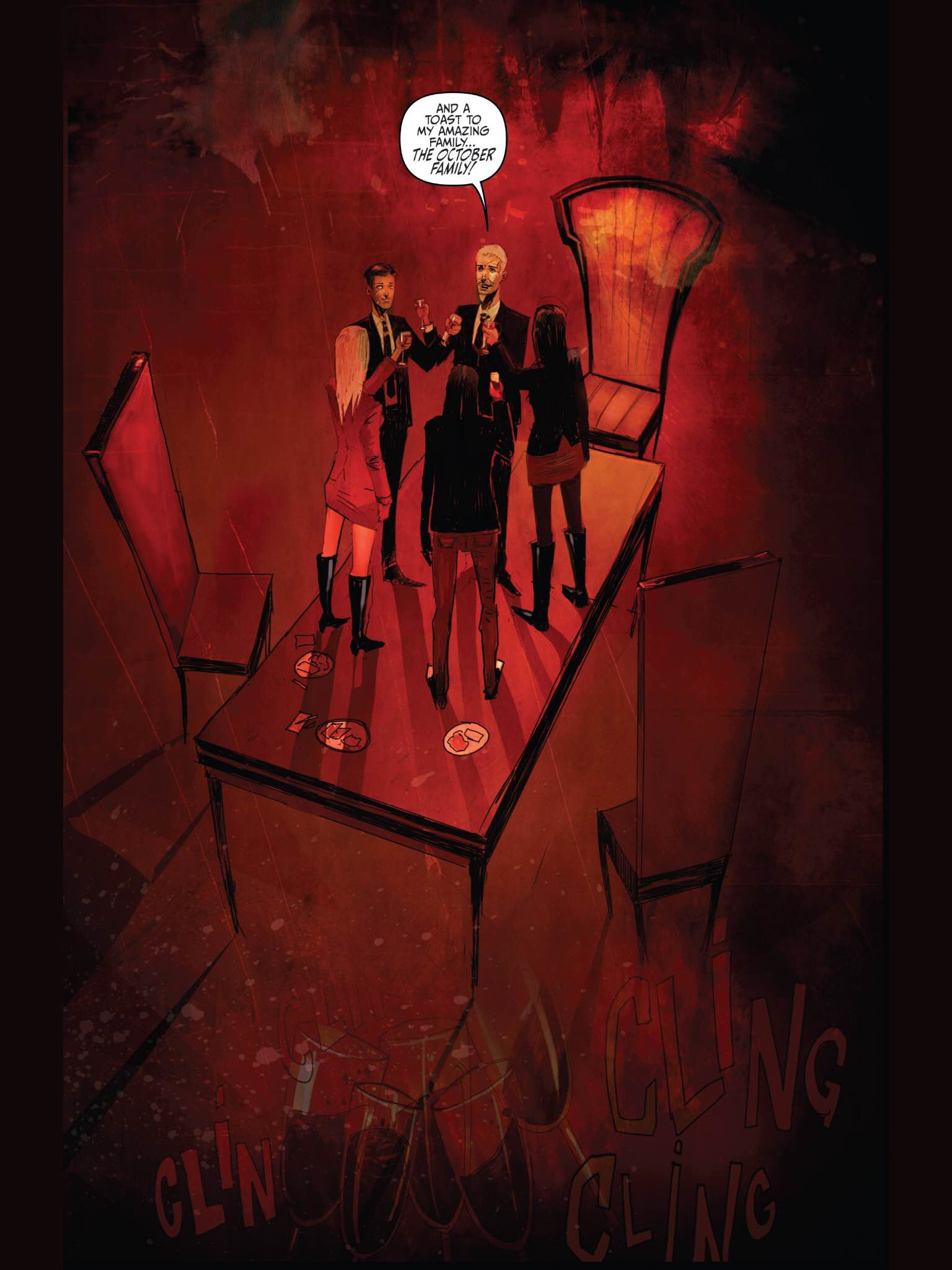
“Because sometimes crazy is the glue that binds a family together…”

Waiting on Wednesday 07/22/15
Posted on July 22, 2015 11 Comments

“Waiting On Wednesday” is a weekly meme hosted by Breaking the Spine that lets us feature upcoming releases that we can’t wait to get our hands on!
Mogsy’s Pick:
Children of Earth and Sky by Guy Gavriel Kay: May 16, 2015 (NAL)
I have a feeling we will see this book featured on many epic fantasy readers’ WoWs today as well as in future weeks. Guy Gavriel Kay is one of the most preeminent voices in Canadian speculative literature, and I was so excited when the cover and description was revealed last week for his upcoming new book, his thirteenth novel Children of Earth and Sky. I am really looking forward to this. I’m a big fan of GGK’s work, which usually uses fantasy elements to explore themes in history, as well as his gorgeous, sweeping prose. If you haven’t read him yet, you absolutely must!
 “The bestselling author of the groundbreaking novels Under Heaven and River of Stars, Guy Gavriel Kay is back with a new novel, Children of Earth and Sky, set in a world inspired by the conflicts and dramas of Renaissance Europe. Against this tumultuous backdrop the lives of men and women unfold on the borderlands—where empires and faiths collide.
From the small coastal town of Senjan, notorious for its pirates, a young woman sets out to find vengeance for her lost family. That same spring, from the wealthy city-state of Seressa, famous for its canals and lagoon, come two very different people: a young artist traveling to the dangerous east to paint the grand khalif at his request—and possibly to do more—and a fiercely intelligent, angry woman, posing as a doctor’s wife, but sent by Seressa as a spy.
The trading ship that carries them is commanded by the accomplished younger son of a merchant family, ambivalent about the life he’s been born to live. And farther east a boy trains to become a soldier in the elite infantry of the khalif—to win glory in the war everyone knows is coming.
As these lives entwine, their fates—and those of many others—will hang in the balance, when the khalif sends out his massive army to take the great fortress that is the gateway to the western world…”
Audiobook Review: When We Were Animals by Joshua Gaylord
Posted on July 21, 2015 14 Comments
A review copy was provided by the publisher in exchange for an honest review. All opinions are my own.
 When We Were Animals by Joshua Gaylord
Genre: Coming-of-Age, Horror
Series: Stand Alone
Publisher: Hachette Audio (4-21-2015)
Author Information: Website
Mogsy’s Rating: 4.5 of 5 stars
Narrator: Suehyla El Attar | Length: 9 hrs 50 min
After hearing about this book from so many people, I just knew I had to experience it for myself. And now that I’ve read it, When We Were Animals may well be the most interesting book to hit my shelves this year. I’m still finding it difficult to categorize this unconventional coming-of-age tale, which combines elements from a variety of genres including mystery, paranormal and horror.
Most of the story is told in retrospect, as protagonist Lumen Fowler looks back on her childhood growing up in a small, quiet Midwestern town with a big, dark secret. For a few nights every month during the full moon, the town’s teenagers run naked and free through the streets like animals, seized by a mysterious and uncontrollable urge known as “breaching”. Every resident of this town has gone through it and know to also expect it in their children, which typically coincides with puberty and lasts about a year. Breaching is just something everybody goes through, an unavoidable and natural fact of life about growing up in this town.
But is it really inevitable? Lumen hardly remembers her mother, who died when she was very little, but she is intrigued by the stories her father tells, about how Lumen’s mother never went breach. Always the good girl, the high achiever who never gets in trouble or gives cause for worry, Lumen makes a promise to her father that she will never breach either, determined not to succumb to the call of her baser instincts and join her peers in the unrestrained orgies of sex, violence and wild abandon during the full moons.
It doesn’t take much reading between the lines to figure out When We Were Animals is an allegory for growing up, specifically for the tumultuous period when a young person transitions from adolescence to adulthood. What fascinated me is the story’s ability to illustrate a range of perceptions towards the concept of breaching. Residents seem both proud and ashamed that such a phenomenon is unique to their town, and parents of breaching teenagers treat it with a mixture reverence and trepidation while children both dread and look forward to the day when they too will be called. It is beautiful and magical, but also messy and frightening. What everyone in Lumen’s hometown can agree on though, is that breaching is an important rite of passage – once you enter and emerge from the other side, childhood ends and the journey to adulthood begins.
What singlehandedly made this book so great was the character of Lumen, whose personality gives this coming-of-age story an even more unique spin. Small and unassuming, our protagonist isn’t someone who would stand out in a crowd. At school, she would be the one hanging out on the edges of a group, the girl you don’t really notice is there. Ironically, the fact that she’s different from the other kids just makes her even more invisible, and being a late bloomer doesn’t help either, widening the divide between her and her peers.
Lumen’s introspective nature means that this is a very personal narrative, light on plot but heavy on character. She loves to read and learn, and her very unusual way of looking at things made it so that I hung on her every word. This story isn’t the kind where a lot of things happen, and instead emphasizes internal dialogue over action. But I was captivated by it nonetheless. In Lumen, I saw not only a teenager struggling to find her identity, but also a girl trying to reconcile her desires to fit in and yet still stand out from the rest. It’s a motivating factor in all that she does, whether it’s asking her dad for stories about her mom or looking up definitions of her peculiar name. It shines a new light on her determination not to go breach, which becomes more than just a way to connect to the mother she never knew. Not breaching ultimately becomes something she hopes can define her, an achievement she can call her own and make a part of herself.
I was completely charmed by Lumen, who is now an adult in a new town with a new name with her own family, telling us about her past. This is what made the audiobook such a pleasure to listen to. The only downside was sometimes not knowing whether we’re in the past or present, since the transitions weren’t always obvious in the audio, but the narration was simply fantastic. My praise goes to narrator Suehyla El Attar bringing Lumen to life. Her voice became the character’s voice, and after that it was just a matter of letting go and allowing the story to transport you to another time, another place.
At times eerie and unsettling, at others powerful and heartwarming, When We Were Animals has a lot to say about topics like independence and teenage rebellion and peer pressure. There are the moments that disturbed and horrified me, many of which are related to the descriptions of what goes on when the teenagers were breaching, but there were also scenes that touched me, especially those featuring the closeness between Lumen and her father. This an absolutely fantastic and well executed story about the stark realities of human nature and growing up. I’m still reeling from the rollercoaster of emotions.
Story:  | Performance: | Overall:




 The BiblioSanctum