Audiobook Review: Six of Crows by Leigh Bardugo
Posted on October 17, 2015 23 Comments

A review copy was provided by the publisher in exchange for an honest review. All opinions are my own.

Genre: Young Adult, Fantasy
Series: Book 1 of Six of Crows
Publisher: Audible Studios (9/29/15)
Author Information: Website | Twitter
Mogsy’s Rating (Overall): 4 of 5 stars
Narrator: Jay Snyder, David Ledoux, Lauren Fortgang, Roger Clark, Elizabeth Evans, Tristan Morris, Brandon Rubin | Length: 15 hrs and 20 mins
Okay, I’m intrigued. Very intrigued. Leigh Bardugo’s Six of Crows may have fallen slightly short of my expectations, but it’s still great. And honestly, it was going up against a super high bar, considering the ridiculous number of good books I’ve read this year so far and the fact that I can be very finicky about my heist stories.
First though, let’s get something out of the way, since I’ve gotten asked this question a bunch of times: You don’t need to read or even be familiar with the Grisha trilogy before starting this book. It is set in the same world, but other than a few references to events and people from the other series, Six of Crows features an all new story and an all new cast of characters. Personally, that made me very happy. As much as I enjoyed the Grisha trilogy, it didn’t end as strongly as it started, and I was definitely ready for something fresh.
So here we find ourselves in the new setting of Ketterdam, a bustling trade city and home to a gang of thieves calling themselves the Dregs. Kaz “Dirty Hands” Brekker is their fearless leader and mastermind, willing to take on any job for the right price. When tasked by a powerful crime lord to rescue a scientist with a secret formula from the impenetrable walls of the Ice Court, Kaz goes forth and gathers his crew in preparation for the heist of a lifetime.
For better or worse, the heist itself actually takes a backseat to the amount of attention given to the members of the Dregs. This also means the plot is decidedly uncomplicated once you pare it all down, because the complexity is all in the characters. Probably a good thing too, when you have as many as six crew members to follow.
Kaz is the clever one, the one who makes the plans and takes care of the boys and girls in his crew. A child of the streets, Kaz’s background is one huge sob story, which lends sympathy to his thirst for revenge against the man he blames for his brother’s death. Reserved and coolheaded, Kaz also wears fancy-pants clothes and walks around with an ostentatiously well-fashioned cane due to a “childhood” injury to his leg (in quotes because right now he’s still all of what, 17?) Kaz is interesting, though whenever I think of him I picture a kid trying to play at being an adult, and unfortunately that whole persona tends to drive me crazy.
Then there’s Inej, also known as the Wraith. Her talents lie in being able to melt into the shadows. She has a pretty sad story too (okay, I’m just going to say right now, ALL of them have pretty sad stories. Seems like that’s Bardugo’s go-to approach for every single one of her characters) but out of everyone, Inej was my favorite.
Jesper is the sharpshooter, and he’s also the joker of the group. I don’t think he got near enough the attention he deserved, which is a shame because I really liked him. There was also this great dynamic between him and Wylan, the Dreg’s “outsider” who nonetheless found his way to a special place in my heart. Seriously, the two most interesting members of the crew with the best banter got shafted here, because the story decided instead to shine all the attention on…
Nina and Matthias. The Grisha and the Witch Hunter. Nina brings the magic and Matthias brings the insider knowledge of the Ice Court and its security systems. Together they bring enough YA clichés to fill an ocean. Normally, I am all for forbidden love and a romance between characters who start off hating each other’s guts, but these two were downright insufferable. Just shut up and make with the kissy-face already. Plus, Matthias was distractingly perfect. And Nina was distractingly awkward whenever she attempted her sexy act. Every time they interacted, I had to fight the urge to cringe because it all just felt so damn scripted.
Personally, I would have been happier with less drama, more action (more heist!) The story was also a little slow to take off, with a long and drawn out intro. Most heist stories typically use this time to focus on the planning and preparation, but Bardugo has opted for a different strategy, giving us background information on the characters in the form of flashbacks and memories instead. I really enjoyed some of these flashbacks (Inej and Kaz had great backstories) while others felt more like a distraction (Nina and Matthias), which makes me think your mileage may vary depending on how you feel about the various members of the Dregs. This is very much a character-focused story, which is great, but when you have such a big cast, I will invariably connect with some more than others.
And speaking of a big cast, the audiobook is also a fantastic format to enjoy Six of Crows. I simply adore huge productions that involve multiple narrators because each perspective character gets to have their own unique “voice”. Six of Crows features a whopping seven narrators, many of whom are big names in the world of YA audiobooks. Several of them I’ve had the pleasure of listening to their work in the past, like Elizabeth Evans (she’s great on the Throne of Glass series), Lauren Fortgang (from the Grisha trilogy audiobooks), David LeDoux (who narrated Sam’s chapters in Maggie Stiefvater’s Shiver) and Jay Snyder (from Peter Clines’ Ex-Heroes). Everyone delivered fantastic performances, including the narrators who were new to me.
Bottom line, this is a great start to a series with some serious potential. It wasn’t exactly the type of heist story I expected, though it just as well Leigh Bardugo made it all about her characters because characters are what makes a good book. Even though I despised the corny romance, there are some wonderfully unique and memorable personalities here, and I’d like to see more of some of them in the next installment.

Guest Post: “Girls & Dragons” by Katherine Harbour
Posted on October 16, 2015 7 Comments
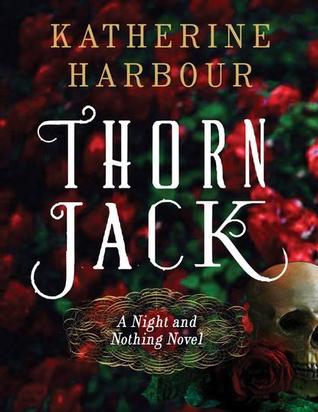
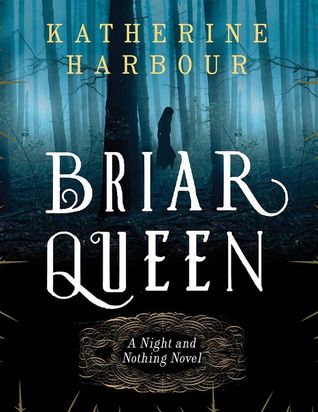
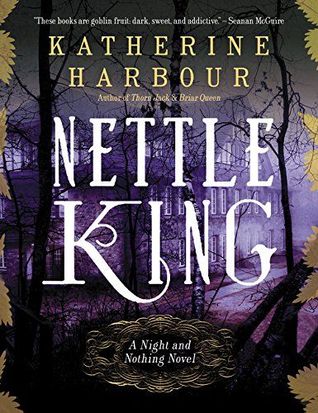
Today I’m excited to welcome Katherine Harbour to The BiblioSanctum to talk about an awesome topic! Katherine is the author of Thorn Jack, which I reviewed earlier this week. It is the first book of the Night and Nothing series which also includes the sequel Briar Queen and the upcoming Nettle King, due out next spring from Harper Voyager.
* * *
GIRLS & DRAGONS
by Katherine Harbour
Once upon a time, it was girls and unicorns. Unicorns adorned stickers, school binders, and posters on bedroom walls. The unicorn was mysterious, noble, and pure. The unicorn was the good boy.
Then along came dragons.
Dragons have evolved from monsters that devour virgins and terrorize villages, into beings with personalities and agendas. Dragons didn’t even need to change their shape to become rock star. There’s no better example than Smaug in The Hobbit films; Smaug, the result of some gorgeous CGI artistry, is imbued with the sexy, British baritone of Benedict Cumberbatch.
And girls went from being devoured by dragons, to slaying them (The Hero and the Crown by Robin McKinley), to eventually befriending them.
 The shift in attitude toward dragons perhaps began with Anne McCaffrey’s Pern novels, where the dragons are sentient beings who share a telekinetic bond with their human riders, a bond that sometimes results in tragedy. In the YA version of her Dragonrider novels, Dragonsong, a young musician, a girl named Menolly, discovers a group of little fire lizards, cousins to the great dragons, and teaches these wild creatures to sing.
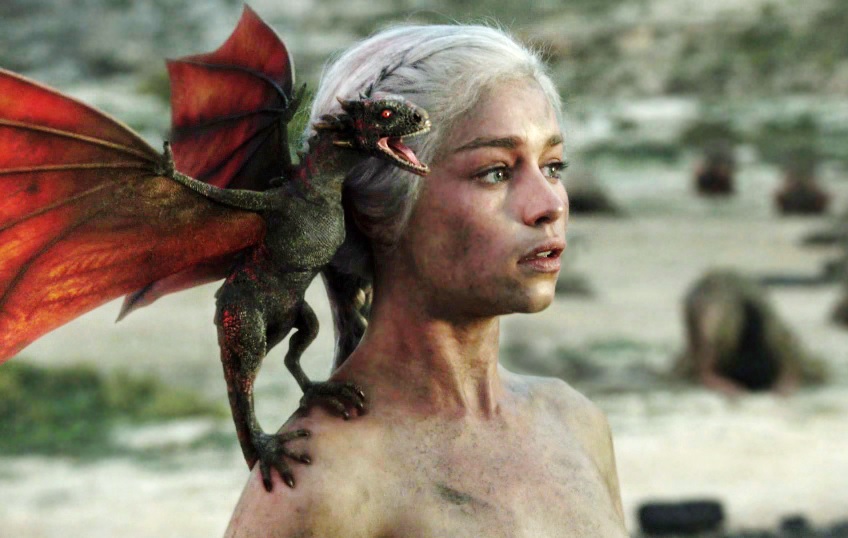
Mothering dragons is Daenerys Targaryen’s thing in The Game of Thrones, a privilege that becomes more of a burden when the dragons reach adolescence and begin to do what dragons traditionally do. This proud mama soon has to choose between her savage children and the people she protects, and it’s a poignant moment.
Then there are the girls who befriend their dragons. In Patricia McKillip’s short story ‘The Harrowing of the Dragon of Hoarsbreath,’ instead of harrowing the dragon, the heroine sets it free. In Carrie Vaughn’s Voices of Dragons, a young woman’s friendship with a dragon may avert a war.
 Dragons began to shapeshift. Talon, by Julie Kagawa, features a dragon named Ember who has taken a girl’s form in order to walk among the enemy—mankind. The heroine of Sophie Jordan’s Firelight is a dragon girl who transforms into a human after she falls in love with a dragonslayer. In Vivian Vande Velde’s Dragon’s Bait, a young woman is accused of being a witch and left for the dragon terrorizing her village. The dragon, Selendrile, takes her away, but, in his lair, he shapeshifts into a golden-haired young man. As they’re both outcasts, they bond. But Alys wants revenge on her village.
A shapechanging dragon extraordinaire called Morkeleb the Black is featured in Barbara Hambly’s Dragonsbane. Jenny Waynest, a mother, and a wizard wed to a scholarly dragonslayer, learns that some of the venomous and beautiful dragons that sometimes terrorize the world might actually be sentient. Morkeleb, a wizard dragon, takes a human shape to convince Jenny to stay with him. When he transforms Jenny into a dragon, she is tempted to remain that way . . .
In Thorn Jack, I’ve hidden my dragon, who is hinted at but not revealed until the third book, sort of.
So why is it that girls and women no longer seek the pretty nobility of the unicorn, but the wild power of a dragon? (That says something, doesn’t it?) Dragons can be villains, heroes, or tricksters. The bond between a girl and her dragon involves a lot of reasoning, taming, and a fascination with danger—the perfect dark romantic formula. Spiky and predatory, wealthy and erudite, arrogant and wise, dragons are the ultimate magical creature. They were bound to become the bad boys at some point.
I hope we’ll be seeing more of them in the future.
* * *
 ABOUT THE AUTHOR
I was born in Albany, NY (upstate NY is where Thorn Jack takes place) and now live in Sarasota, FL. I briefly attended college in Minneapolis, Minnesota, before attempting life as a painter (the artsy kind). I’ve been writing since I was seventeen and juggling a few jobs while doing it. I wrote Thorn Jack when I was seventeen—as well as many, many other things over the years—and I took it out of the trunk (a literal trunk) two years ago, dusted it off, and began revising it…
Visit Katherine at www.katherineharbour.com or follower her on Twitter.
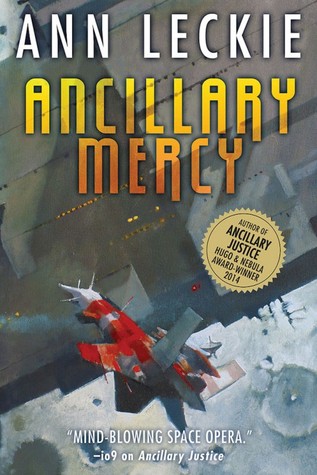
Audiobook Review: Ancillary Mercy by Ann Leckie
Posted on October 15, 2015 7 Comments
A review copy was provided by the publisher in exchange for an honest review. All opinions are my own.
Genre: Science Fiction
Series: Book 3 of Imperial Radch
Publisher: Hachette Audio, Orbit (10/6/15)
Author Information: Website | Twitter
Mogsy’s Rating: 4 of 5 stars
Narrator: Adjoa Andoh | Length: 10 hrs and 54 mins
Breq used to be part of a whole, one of the many connected ancillaries linked up with the artificial intelligence aboard the Justice of Toren. But when the great starship was destroyed, Breq suddenly became one. All alone. The last fragment of the AI still living on in a human body. Ever since then, she has been trying to get revenge on the one responsible: Anaander Mianaai, Lord of the Radch and supreme leader of the Radchaai Empire.
But the quite possibly insane Anaander Mianaai, divided across a multitude of bodies, is at war with itself. The conflict is fast spreading through the empire and Breq must now prepare the Athoek space station against invading factions. Meanwhile, someone who shouldn’t exist shows up in this book and causes some complications, not to mention the mysterious translator who had arrived as a messenger from the alien Presger Empire. Breq is awash in a sea of divided loyalties, hidden truths and unknown factors. However, leaving everyone at Athoek to fend for themselves is not an option. Breq and her allies are going to do whatever they can to confront the new threat and bring back peace.
Ancillary Mercy is, hands down, my favorite book of the trilogy. I make it no secret my feelings for the first two novels, which I enjoyed well enough, but they probably didn’t work as well for me as they could have or should have. Each installment has piqued my interest, spurring me on to continue reading, but I know I’ve never truly embraced these books as wholeheartedly as some of my fellow bloggers. Still, that’s not to say I did not appreciate their many merits, because I did; I was very happy to see Ancillary Justice sweep up all the awards because I felt it was very much deserved. I might not have connected as well with it, but I nevertheless the book was innovative, clever, hard-hitting, and had everything to make it a modern sci-fi classic. And after reading the sequel Ancillary Sword, I just knew I had to see Breq’s story through.
I did do something different with this third book, though. I switched to the audiobook. And I think that might have made a positive difference. This actually doesn’t come as much of a surprise, since I’ve said it many times and I’ll say it again: some books simply work better for me when I’m listening to the words rather than reading them off a page, especially when it comes to science fiction. Whenever I read sci-fi novels and I come across a new elaborate concept, I slow down because I have this tendency to get hung up on the details. And as you know, with this series, it’s all about the elaborate concepts! It would be so much better to just give in to the flow of the narrative, and that’s just much easier to do while listening to an audiobook because I’m less likely to get distracted and dwell on every word. It also made me appreciate the little things, like just how humorous this series can be. I’ve noticed the subtle jokes in the dialogue before, those little quips traded back and forth between characters, but they were definitely more effective being delivered by a narrator versus just me reading it in my head, especially by a reader as talented as actress Adjoa Andoh.
That might be why I finished Ancillary Mercy over the course of two evenings. I could hardly bring myself to stop. It’s not just because I was listening to the audiobook either, because of course the story itself was brilliant too. This was the grand finish I’ve been waiting for, and for this I am so very glad that I decided to complete this trilogy.
Without a doubt, the most rewarding aspect for me was finally being seeing the groundwork from the first two books come to fruition. This here is the defining moment of Breq’s epic journey to personhood. She began as one of many. Then she became separate. She came to understand what being an individual really means. What relationships mean. What personal freedom means. And she also came to learn and appreciate the value of other individuals. Everyone on the station has an identity and purpose, so no, Breq isn’t about to leave them all in terrible danger, even if she could have easily packed up and left. Her motivations have evolved throughout the course of this trilogy, and that process itself is a very personal and touching tale that stands out in amidst all these other conflicts.
I was also happy that we got to see a lot more of Seivarden! There was definitely not enough Seivarden in the last book, especially since this character’s presence in Ancillary Justice has always struck me as a plot device for Leckie to highlight the differences between humanity and an ancillary. By the end of this book, however, if there was one character I cared for as much as Breq, it would be Seivarden. The dynamics between the two of them is another testament to just how much things have changed for the Breq, an ex-ancillary on the path to embracing her own personhood and recognizing the individuality of others.
No question about it, I had a lot more fun this time around. I also find it kind of interesting that all three books follow a similar pacing pattern, building momentum slowly before letting go of all that pent up energy to deliver a sensational ending. That the series as a whole should also follow this pattern is quite fitting, actually. It means a bit of investment is required, but it’s well worth it in the end.
More on The BiblioSanctum:
Review of Ancillary Justice (Book 1)
Review of Ancillary Sword (Book 2)
Tough Traveling: Pure Good
Posted on October 15, 2015 12 Comments


The Thursday feature “Tough Traveling” is the brainchild of Nathan of Review Barn, who has come up with the excellent idea of making a new list each week based on the most common tropes in fantasy, as seen in (and inspired by) The Tough Guide to Fantasyland by Diana Wynn Jones. Nathan has invited anyone who is interested to come play along, so be sure to check out the first link for more information.
This week’s tour topic is: Pure Good
No middle ground, no moral middle, no grey area at all. Some people are pure avatars of goodness. Fantasyland seems to be full of them.
Wendy’s Pick

Honestly, I am at an utter loss over pure good characters. Why? Because I dislike them so much. Pure good is booooring. And sometimes pretty damn annoying too. Give me a Prince Jorg any day.
Comic Stack 10/14/15 – 5 Horror Manga Recommendations
Posted on October 14, 2015 4 Comments

Following on the heels of my 5 Horror Graphic Novel Recommendations, I give you my manga recommendations. I know what you’re thinking. You’re going to see my usual suspects, but I can assure you that I read so much more manga than Attack on Titans, okay. I just have my books I love and can’t get over ever. I really, really wanted to put Battle Royale in this lineup, but since it’s like one of my favorite books/manga/movie ever, I use it for everything.

I can still leave you with smiling Mitsuko, though. Anyhow, here are 5 picks, many of which have left me in a state of “Please, God, Japan, no!”
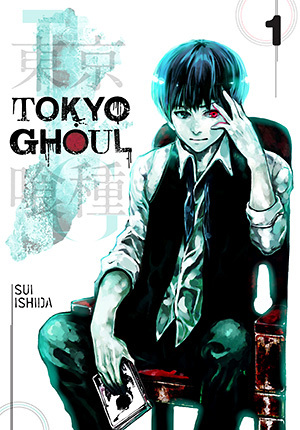
I found this manga much like I find most of my manga by watching the anime first and then having to hunt down the manga:
Shy Ken Kaneki is thrilled to go on a date with the beautiful Rize. But it turns out that she’s only interested in his body—eating it, that is. When a morally questionable rescue transforms him into the first half-human half-Ghoul hybrid, Ken is drawn into the dark and violent world of Ghouls, which exists alongside our own.
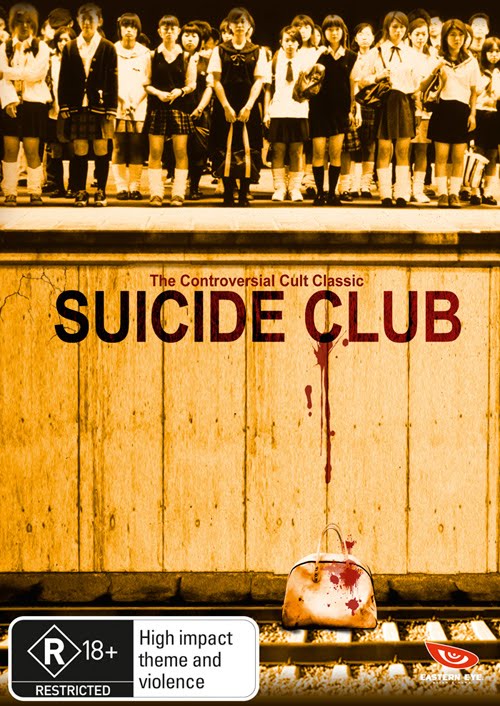 Jisatsu Circle (Suicide Club) by Usamaru Furuya
This actually isn’t an anime that tempted me to its manga. This was a movie I watched many years ago. It was one of those movies much like Battle Royale that was just horrifically creepy. Unfortunately, this manga is very hard to find, and obviously, there’s a huge trigger warning on this one.
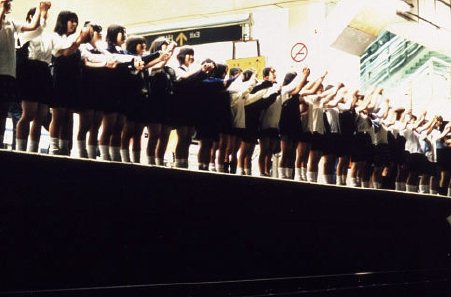
54 girls jump off a platform in front of an on coming train. However, one girl survives and starts up another suicide club as more copycat clubs pop up around the city. The police begin a frantic race to figure out what is triggering these events that seem unrelated… at first…

Yuu, Mitsuki, Rei, Hajime, Eiji, and Haruka have entered the game called ‘Rabbit Doubt’, where all of the players are ‘rabbits’ in a group, and one of the players among them is randomly chosen to be a ‘wolf’ in the group of rabbits. Each round, the wolf kills a rabbit. Each round, the rabbit group tries to figure out which of the rabbits is actually the wolf in disguise and kill it. If a rabbit kills the real wolf, the rabbits win. If they’re wrong, all of the rabbits will be killed. Who is the real wolf? And can they stopped it before the game is over…

All the best creepy Japanese manga seem to involve high school kids which has probably given me an irrational fear of all high school kids probably being evil entities. I’m a mom. I’m preparing the salt for my kids’ high school years.
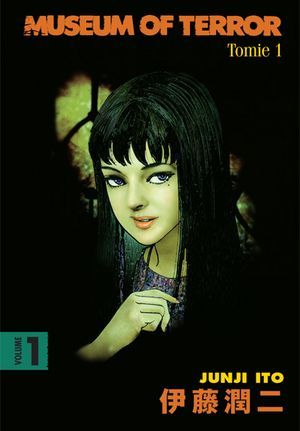
These terse tales of terror tell the story of a high-school girl named Tomie, who can be seen as a living embodiment of lust and all the negative emotions that go along with it, such as jealousy. Tomie is the ultimate self-destructive entity, yet ironically she survives anything. She is identified by a mole under her left eye.
She possesses an undisclosed power to make anyone fall in love with her. Through sleight of hand, or emotional manipulation, she drives these men into jealous rages that inevitably lead to brutal acts of violence. Men kill each other over her; and girls are sometimes driven to jealous rages as well. Tomie is inevitably killed time and again, only to regenerate. Tomie is bound to go on forever in this way.
In the first story “Tomie”, she returns to school after an announcement that she had died, much to the horror of her friends and teachers. It transpires that during a school trip, her fellow students and favorite teacher murder her and dismember her body.
Each story tells a different viewpoint of how she lived and died, with some recurring characters. (wiki)
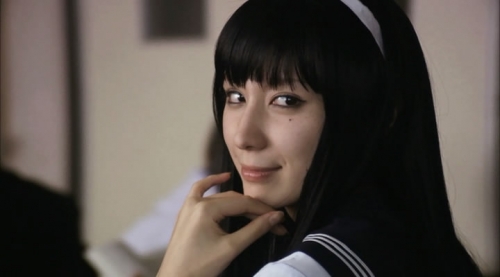
 Fuan No Tane (Seeds of Anxiety) by Nakayama Masaaki
There are four volumes of these books which are basically just short stories that revolve around urban legends and myths and revolve a recurring theme. Most of them are terrifically creepy.

Waiting on Wednesday 10/14/15
Posted on October 14, 2015 19 Comments

“Waiting On Wednesday” is a weekly meme hosted by Breaking the Spine that lets us feature upcoming releases that we can’t wait to get our hands on!
Mogsy’s Pick:
False Hearts by Laura Lam: June 14, 2016 (Tor)
Ever since Pantomime I’ve wanted to read more by Laura Lam, so it was exciting to hear that next summer Tor will be releasing her new book called False Hearts that’s being pitched as “Orphan Black meets Inception.” Sounds awesome!
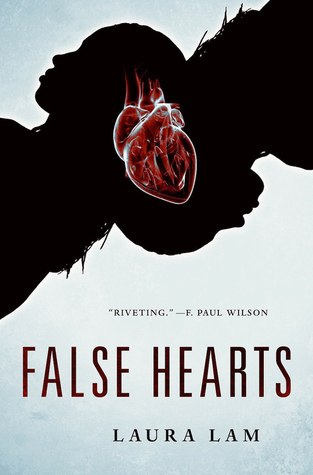 “Raised in the closed cult of Mana’s Hearth and denied access to modern technology, conjoined sisters Taema and Tila dream of a life beyond the walls of the compound. When the heart they share begins to fail, the twins escape to San Francisco, where they are surgically separated and given new artificial hearts. From then on they pursue lives beyond anything they could have previously imagined.
Ten years later, Tila returns one night to the twins’ home in the city, terrified and covered in blood, just before the police arrive and arrest her for murder—the first homicide by a civilian in decades. Tila is suspected of involvement with the Ratel, a powerful crime syndicate that deals in the flow of Zeal, a drug that allows violent minds to enact their darkest desires in a terrifying dreamscape. Taema is given a proposition: go undercover as her sister and perhaps save her twin’s life. But during her investigation Taema discovers disturbing links between the twins’ past and their present. Once unable to keep anything from each other, the sisters now discover the true cost of secrets.”
Book Review: The Kingmakers by Clay Griffith and Susan Griffith
Posted on October 13, 2015 10 Comments
A review copy was provided by the publisher in exchange for an honest review. All opinions are my own.
 The Kingmakers by Clay Griffith and Susan Griffith
Genre: Fantasy
Series: Book 3 of Vampire Empire
Publisher: Pyr (9/4/12)
Author Information: Website | Twitter
Mogsy’s Rating: 4 of 5 stars
I was so happy when I found out that Clay Griffith and Susan Griffith were returning to the world of Vampire Empire this fall with another Adele and Gareth book. Even though you can read the upcoming novel as a stand-alone without reading this trilogy first, I still wanted to find out how things will end in the third book before tackling The Geomancer. Plus, I am a completionist at heart.
It’s actually been quite a while since I read the first two books in this series, but this is a very special world full of very special characters, the kind that stay with you for a long time. I jumped right back in with no problems, and it was like I never left. War between humans and vampire is at full tilt, with Empress Adele of Equatoria launching a campaign to take back the lands of the north. Fighting at her side is her consort, the vampire Prince Gareth who is helping the human cause in his guise as the legendary Greyfriar.
The Equatorians also have a secret weapon – Adele herself. A talented geomancer, she has the ability to use the powers of the earth to burn away vampires in vast numbers. But geomancy has its costs. As surely as it kills vampires, the power also poses a danger to her beloved Gareth, not to mention every time she uses geomancy it drains her energy and threatens her own life. After a huge attack on the heart of vampire territory, Adele sees the destruction she has wrought and starts to wonder if there is another way to wage this war. Gareth seeks a chance to do affect change as well, using his influence to undermine the efforts of his brother Cesare, who has become the new king of the vampire clans.
This book is full of bloody battles, hidden alliances, and betrayals. It’s a lot to fit into the concluding volume of a trilogy, but in spite of this, the novel is well balanced and pulls everything together in a spectacular finish. Of all three books, The Kingmakers is probably the most action-packed and fast-paced, building up to the climax of the war.
And yet, there’s also plenty of what first drew me to this series: the romance! In between all the intense fighting and war planning, it’s good to see that Adele and Gareth are still able to find ways to spend quality time together. When it comes to forbidden love, theirs is one of my favorites. So many tales involving star-crossed lovers rely on unnecessary drama and emotional manipulation to keep things “interesting”, but there’s no need for that nonsense when it comes to Adele and Gareth. Throughout the trilogy, their romance has never once felt contrived to me, with their relationship rising above all those cloying clichés. It’s always good to see them as a team, with the Greyfriar’s resolve complementing the Empress’s indomitable spirit.
The Kingmakers is an emotional finale, filled with difficult choices and dark twists. You might be surprised at how things end. For me, it was a satisfying conclusion to the trilogy, and that’s what mattered. Clay and Susan Griffith did something very amazing here, taking a tired old trope like vampires but still somehow managed to make it interesting and unique. Throwing in the alternate history and steampunk setting was a stroke of genius as well.
This book has only cemented my love for this world and the characters. Thinking about the sweet moments like the scenes of Gareth and Adele together at the opera house or at the Great Library of Alexandria still makes me smile. It has also made me realize that it’s probably a good thing that I read this only after I found out there’s another Vampire Empire book on the horizon. Clearly, I’m not ready to say good bye just yet! Now onwards to The Geomancer!

More on The BiblioSanctum:
Review of The Greyfriar (Book 1) | Review of The Rift Walker (Book 2)
Novella Review: Tales of the Captain Duke by Rebecca Diem
Posted on October 12, 2015 5 Comments
Tales of the Captain Duke by Rebecca Diem
Genre: Steampunk, pirates
Publisher: Woolf Like Me Publishing (2014, 2015)
Author Info: www.rebeccadiem.com
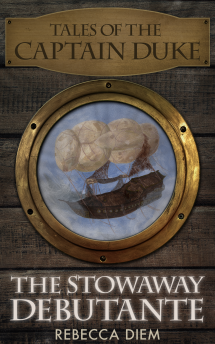
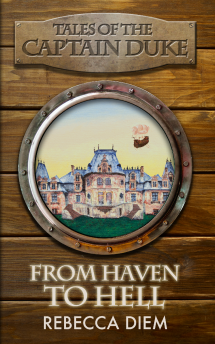
I had the good fortune of meeting Rebecca Diem by chance at Fan Expo Canada this past summer, and I’m so glad I did! I picked up a copy of her book and quickly fell in love with the characters and the story, prompting me to grab the next in the series. I’m now impatiently clamouring for the third book. Why do I love them so much? Well, the this is where I compare Tales of the Captain Duke to the Fast and Furious movie series. No wait! Hear me out! No, Captain Duke does not feature car chases, NOS, ridiculous fist fights, and lots of explosions (well, there are a few explosions), but it does feature a very amazing family. The FF movies are pretty silly, but I love them because, far more than fast cars, the story has always been about the bonds of family that go far deeper than blood. That is the kind of bond the Captain’s crew share in these stories and what a young woman named Clara finds most endearing when faced with the choice of joining the crew of airship pilots.
In the first book, our titular stowaway debutante winds up saving the crew (and herself) from an unfortunate event. Despite the secrets she is determined to cling to, Captain Duke tentatively accepts her as a member of his crew. She is immediately drawn to the various pilots, whom Diem brings to life most endearingly, and to the Captain Duke himself, who also keeps his secrets–including the very name of his airship–close. Diem carefully parcels out the pieces of their mysteries through chapters that alternate between their points of view, and expertly teases the growing spark between the two enigmatic characters. Whatever Clara is running from is bound to catch up with her, as we find out in the second book in the series where the loyalty of the crew is severely tested.
I am very new to, but utterly intrigued by steampunk. This series is a great place for anyone to start as Diem charmingly reinvents piratical history with airships, and challenges gender roles and diversity. This is a lighthearted adventure that isn’t afraid to get serious from time to time. A welcome change from my usual reads.
 |
| 
Book Review: Thorn Jack by Katherine Harbour
Posted on October 12, 2015 11 Comments
A review copy was provided by the author in exchange for an honest review. All opinions are my own.
Thorn Jack by Katherine Harbour
Genre: Fantasy
Series: Book 1 of Night and Nothing
Publisher: Harper Voyager (6/24/14)
Author Information: Website | Twitter
Mogsy’s Rating: 4 of 5 stars
Thorn Jack has been on my to-read list for a while, but nothing could have prepared me for magical story I found when I cracked open its pages. I was also delighted to find out that it’s a modern retelling inspired by “Tam Lin”.
First of all, I love creative reimaginings of all sorts; myths, folklore, fairytales – you name it, I want it. Second, if it’s a retelling of a story I’m not as familiar with…well, that actually just makes me even more interested. Needless to say, I had to go and brush up on the old Scottish legendary ballad while reading this book. There are many versions, but most variants of “Tam Lin” involve a mortal woman rescuing her true love held captive by the Queen of the Fairies, and like most old stories involving the Fae, it encompasses some pretty dark themes. Thorn Jack may be a modern retelling, but it likewise features some of the same themes, including those surrounding the power of young woman’s determination and courage.
So if you enjoy reading about strong, dedicated and genuine female protagonists, you’ll definitely like Finn Sullivan. We come upon her at a very dark time of her life, though. The recent suicide of her sister Lily Rose is an open wound on her heart as Finn and her father move from San Diego to a small town called Fair Hollow in upstate New York. While unpacking, Finn finds Lily Rose’s journal, filled with mad ramblings about strange occurrences and dark creatures that have preyed on humanity for hundreds of years. Dismissing these as her sister’s fanciful stories, Finn puts this aside and goes back to her grieving.
However, it soon becomes clear that things in Fair Hollow are not as they seem. Something feels wrong, and it all seems to revolve around the town’s most wealthiest and notorious family, the Fatas. When Finn and her new college friends are invited to a lakeside party, she immediately becomes drawn to one of the Fatas, a mysterious young man named Jack. But as they grow closer, the more unsettled Finn feels in spite of herself. So much about Jack and his family reminds her of Lily Rose’s journal and her sister’s descriptions of the “Children of Night and Nothing”. There’s an enigmatic, sinister air around the Fatas, but are they really dangerous? And what have they got to do with Lily Rose’s suicide?
Walking into Katherine Harbour’s world of Thorn Jack is like walking into a modern fairytale, a little bit of Buffy the Vampire Slayer meets Once Upon a Time. Also, you know you’re in for a good time whenever there are Fae involved, though these Fae are unlike any I’ve ever seen. Their characteristics make me think they are an amalgamation of many different kinds of monsters and creatures, with traits that bring to mind vampires, shapeshifters, ghostly spirits and more. There’s some excellent world-building going on here; I sensed the dark wonder and otherworldliness of Fair Hollow as soon as Finn and her father arrived at their new home. Harbour has created an almost palpable atmosphere, the kind that slowly seeps off the page to send tingles up your arms.
There’s also a heavy element of romance. After all, the story is based on a legend about a man rescued by his true love, so I went into Thorn Jack expecting the plot to center on a romantic relationship. My only issue with it is that it was a bit slow to take off. Part of the reason for this is because the narrative meanders quite a bit, occasionally branching out into small side threads and different POVs. Fortunately, in many cases the characters make up for much of it. While the story might not be constantly moving forward, I loved getting to know Christie and Sylvie (whom I pictured in my mind as Finn’s Xander and Willow) and I got to enjoy reading about the different members of the extended Fata family in all their creepy and dangerous glory. Even the various townies and seemingly innocuous professors at Finn’s college have hidden secrets. Part of the fun was discovering the mysteries of Fair Hollow and its people.
This book also turned out to be a wonderful read for October especially as we approach Halloween (which plays a significant role in this book, much like it did in the ballad of Tam Lin). It’s the time of the year when the leaves are starting to turn and the days are getting colder and shorter, and I found Thorn Jack and its mystical and eerie vibes to be incredibly immersive even though it’s not a horror novel and there’s nothing overtly frightening about the story. What Katherine Harbour has done here is really cool; she has reinvented a legend and put it into a modern package while making sure to preserve all the beauty and magic and seduction.
YA Weekend: Walk on Earth a Stranger by Rae Carson
Posted on October 11, 2015 17 Comments
A review copy was provided by the publisher in exchange for an honest review. All opinions are my own.
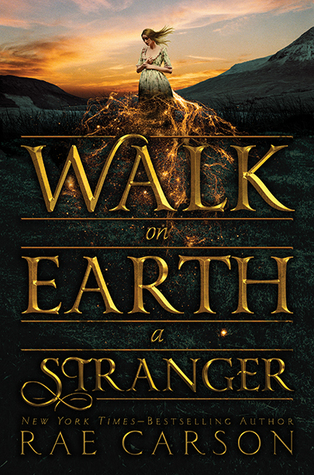 Walk on Earth a Stranger by Rae Carson
Genre: Young Adult, Fantasy
Series: Book 1 of The Gold Seer Trilogy
Publisher: Greenwillow (9/22/15)
Author Information: Website | Twitter
Mogsy’s Rating: 5 of 5 stars
From the very start, I had a feeling that Walk on Earth a Stranger would be just the book for me. I have a huge weakness for fantasy western settings and themes exploring wild frontiers, so a story set in Gold Rush-era America about a young woman trying to make her way to California sounded exactly like something I would enjoy.
Ahem. Then came several of my Goodreads friends’ reviews comparing it to The Oregon Trail.
Okay, hold up a second. The Oregon Trail? THE OREGON TRAIL?!! I loved that game growing up. I’m not ashamed to admit that I still dig it up to play every few years, just to relive the nostalgia. If this book lives up to even just a fraction of those descriptions, it was going to be awesome.
But the best has yet to come. Not long after I started this book, I was delighted to discover that In Walk on Earth a Stranger, the protagonist is a girl named Leah Westfall who has to take on the guise of a boy, becoming Lee McCauley in order to strike it out on her own cross-country.
Why, yes, the girl-disguised-as-boy trope happens to be one of my favorites, actually.
Perhaps my love for this book was a forgone conclusion, perhaps not. Regardless, I don’t hand out full marks lightly, especially when it comes to Young Adult fiction. Folks know I’m super picky about my YA. As I was reading, I was looking for other things to fall into place, because nothing frustrates me more than a great idea undermined by shoddy execution. This being my first book by Rae Carson, her writing and storytelling was also a big question mark to me so I had no idea what to expect.
As you can see though, I ended up enjoying every moment! I was also very impressed with Carson’s writing, so much so that I want to rush to add her other books to my TBR, post-haste.
Still, I’m not sure that I would enjoy anything as much as I did Walk on Earth a Stranger. True, this book features several themes I like, but it also deviates from a lot of YA conventions, which is probably another reason why I took to it so completely.
First of all, if you like a lot of magic in your fantasy, you’re not going to find much of it here. The only fantasy element in this book is Lee’s special power, her ability to sense gold around her. A most handy talent for someone with plans to head out west during the Gold Rush hoping to make their fortune, but it doesn’t come into play throughout much of the story, which mostly involves a lot of traveling. And traveling. And more traveling.
Which brings me to my second caveat. If you’re seeking action and excitement, a fast-paced plot to get your blood pumping in your veins, Walk on Earth a Stranger is not really that kind of story. It is a tale of survival, with as much focus on the emotional journey as the physical one. Let’s go back to The Oregon Trail comparison. You remember all the horrible things that could befall your company, right? You had everything from buffalo stampedes to little Mary has the measles. The point is, not every danger or threat is immediate; some, in truth, are pretty boring and routine. Doesn’t mean they still can’t kill you though, if you don’t have help. Thus, while brute force and personal determination might help get you to California, so too does the power of cooperation and forging lasting friendships. No, this book isn’t exactly a page-turner, but what you do get is your character development and meaningful relationships in spades. The people you meet in this book will become your family. Whenever good things happened to the characters, I couldn’t help but feel giddy with joy. And when they experienced tragedy, my heart ached along with theirs.
Third caveat: If you need a love story, you can forget it. While the slightest hint of lovey-dovey feelings are ever present between Lee and her best friend Jefferson, the romance is so slow-burning that it is virtually non-existent. Wait, you mean, there’s no unnecessary romantic drama to get in the way of the story? Perfect! Lee does end up feeling jealous towards another girl in their wagon train, but eventually the two of them actually become friends. I can’t tell you how refreshing that is, especially these days when it feels like every four out of five YA novels I read that has a female character who’s not the main protagonist, they inevitably become bitter enemies. It’s nice to see a potential rival end up an ally for a change.
Another nice thing about this book is that it can be read as a self-contained story. Of course, Rae Carson leaves plenty of breadcrumbs along this journey to pick up for the later books, but she’s not leaving us with any burning questions or an infuriating cliffhanger. Honestly, I don’t need any of those to want to read the sequel; a chance to spend more time with the wonderful characters I met in this book is already incentive enough for me. This is YA fiction done right, in my opinion, with a charming approach to history and just a light brush of fantasy. I loved it, and I want more like this.


 The BiblioSanctum