#RRSciFiMonth YA Weekend: Excerpt of Infinity Lost by S. Harrison + Giveaway!
Posted on November 15, 2015 1 Comment


*** The giveaway is now over, thanks to everyone who entered! ***
To celebrate Sci-fi Month, today we have a giveaway and excerpt to share with you from Infinity Lost, a Young Adult science fiction thriller by S. Harrison! The book was released November 1, 2015 by Skyscape/Amazon Publishing and is available now. First, let’s check out the synopsis:
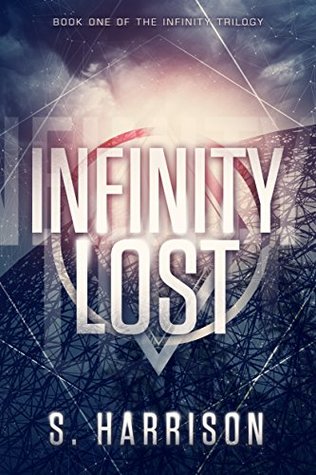
“In the near future, one corporation, Blackstone Technologies, has changed the world: no disasters, no poverty, and life-altering technology. Blackstone has the impunity to destroy—or create—as it sees fit.
Infinity “Finn” Blackstone is the seventeen-year-old daughter of Blackstone’s reclusive CEO—but she’s never even met him. When disturbing dreams about a past she doesn’t remember begin to torment her, Finn knows there’s only one person who can provide answers: her father.
After Finn and an elite group of peers are invited to Blackstone’s top-secret HQ, Finn realizes she may have a chance to confront her father. But when a highly sophisticated company AI morphs into a killing machine, the trip descends into chaos. Trapped inside shape-shifting walls, Finn and her friends are at the mercy of an all-seeing intelligence that will destroy everything to get to her.
With no hope of help, Finn’s dream-memories may be the only chance of survival. But will she remember in time to save her own life and the lives of those around her?”
Sound like fun? Read on for the excerpt and our giveaway!
* * *
Excerpt from Infinity Lost by S. Harrison, on-sale November 1, 2015. Published by Skyscape, an imprint of Amazon Publishing. Copyright © 2015 S. Harrison.
I’m far too excited and way too nervous to let Nanny scare me today. If Father is the king of this castle, then surely that makes me a princess, and a princess needs a proper dress to wear when she stands before the king for the first time—not this worn-out t-shirt and jeans. Mariele, one of our maids, said Father would be here in an hour, so there’s no time to waste. I run down the hall back to my room.
Mariele is there, laying out my dress for me. It’s all frills and lace and beautiful. I’m so bouncy and fidgety with bottled-up energy that it takes ten minutes for Mariele to get me sitting still, let alone clean and ready. When I’m finally dressed, she brushes my long black hair and puts it in red ribbons. Nanny Theresa appears at the door.
“Ready the child for presentation, Mariele.”
Father is early. I’m hastily ushered down the hallway and jostled into position in the marble foyer at the bottom of the main stairs. The servants have gathered, standing side by side in a line like soldiers. I stand nervously at the far end, tightly squeezing Mariele’s hand.
Even though the front door is still a distance away, I can hear the faint crunch of car tires on the gravel in the driveway. Car doors open and close, and my heart jumps into my throat. Through the door, I hear the muffled voice of Nanny Theresa greeting someone important. No. Not just one someone. Lots of people. There are muffled voices everywhere. My stomach is so full of butterflies, I’m afraid that if I sneeze one will fly out of my nose.
Time seems to stand still.
This is worse than waiting up all night to see if Santa Claus will really come down the chimney. Sometimes, being a day away from six years old and having never met your own father makes him seem like he is a magical imaginary creature, like an elf or the bogeyman or, I sud- denly decide, just like Santa, except brave and heroic like Superman. Super Santa!
The voices are coming closer and closer. They’ve been out there for- ever. My heart is beating a million times a second. I feel like I’m going to blast off like a rocket and zoom around the room, my little shoes left sitting smoldering in the exact spot where I was standing.
I look over at the servants, and their eyes are transfixed on the long golden door handles. A second later, so are mine. Finally the handles dip, and the doors swing open.
The first man I see from my child-sized view is Reynolds, the but- ler. I see the familiar pinstripe fabric of his trousers and his cavernous nostrils. A wave of his hand is followed by the deep slow tones of his refined bass voice.
“Right this way, gentlemen.”
There’s a bustle of shoes and legs and ties and beards and nos- trils. Hands clutch briefcases and folders and documents, fat cigars puff thick plumes of smoke, booming voices and laughter echo off the marble of the foyer.
I stare into the group, searching faces, waiting for the moment when they all stand aside and the man from the photograph rushes forward and scoops me up into his arms. He’ll swing me around, kiss me on the cheek, and tell me how wonderful it is that we are finally together. He’ll be so sorry that we’ve been apart for so long. He’ll tell me that he loves me and that he thinks about me all the time, like I do about him. I’m so excited that my nerves get the better of me and I hide behind the safety of Mariele’s skirt.
I spot Jonah out of the corner of my eye. He’s behind us, heading into the hallway under the stairs that lead to the southern wing. He gives me an uncharacteristic look of concern that worsens my nerves, before smiling and disappearing down the darkened passage.
“Welcome, gentlemen,” Reynolds announces to the visitors. “Dr. Blackstone sends his most heartfelt apologies that he is not here to greet you in person, but I assure you that he will address you all via video conference later this evening.”
A few disgruntled grumblings issue from the group. A pang of sor- row grips my little heart and it sinks right through the floor, through the ground, out the other side of the world and into the cold, lonely darkness of space.
“May I present the staff,” Reynolds says, motioning toward the twenty footmen, maids, and servers. They all bow and curtsy accordingly.
The men walk down the line behind Reynolds until eventually they reach the end. “And this is Dr. Blackstone’s daughter.”
I peek out from behind Mariele, tears beginning to pool in my eyes.
All of the men lean in, their eyes glaring scarily at me like I’m an animal at the zoo. They whisper and nudge each other. The ones behind peer over the others’ shoulders. They gawk down at me like they’ve never seen a little girl before.
“There she is,” says one.
“Incredible,” whispers another.
They’re so taken with me that Reynolds has to clear his throat and step in between us to get their attention.
“Gentlemen, the chef is preparing a wonderful, ten-course, gourmet meal for you this evening, but for now, if you would please follow me into the red drawing room, refreshments are being served.”
They all follow Reynolds through the archway like a gaggle of suited geese, muttering and whispering and glaring back at me as they go.
I feel extremely uneasy and, for the first time in my life . . . abandoned. Unsure of what to do, I stand with the servants as Nanny gives them detailed, last-minute reminders of what will be expected of them tonight. She talks about how important our guests are, how their every whim must be catered to. She drones on and on, and before long her voice becomes nothing but a dull warbling in my ears. I stare at the door, broken-hearted. I feel so stupid to have expected so much from a man who has promised me nothing.
“Dismissed,” commands Nanny Theresa. She nods to the servants and they quickly disperse back to their duties. Father is not here. Just like every other day. I decide to slink away to my room. “Come child,” Nanny Theresa barks as her knobbly fingers reach toward my little wrist like five gnarled twigs on a withered old tree.
“The men would like to see you properly.”
* * *
INFINITY LOST GIVEAWAY
We hope you have enjoyed this very special look at an excerpt for Infinity Lost! Interested in winning a copy for yourself? Thanks to the generosity of Skyscape and the wonderful folks at Wunderkind PR, the BiblioSanctum has one print copy of Infinity Lost up for grabs in this Sci-fi Month Giveaway! This giveaway is open to residents of the US only. To enter, all you have to do is send an email to bibliosanctum@gmail.com with your Name and valid Mailing Address using the subject line “INFINITY LOST” by 11:59pm Eastern time on Wednesday, November 25, 2015.
Only one entry per household, please. Entrants must be 18 or older. The winner will be randomly selected when the giveaway ends and then be notified by email. All information will only be used for the purposes of contacting the winner and sending them their prize. Once the giveaway ends all entry emails will be deleted.
So what are you waiting for? Enter to win! Good luck!
#RRSciFiMonth Novella Review: Binti by Nnedi Okorafor
Posted on November 14, 2015 16 Comments
Sci-Fi November is a month-long blog event hosted by Rinn Reads and Over The Effing Rainbow this year, created to celebrate everything amazing about science fiction! From TV shows to movies, books to comics, and everything else in between, it is intended to help science fiction lovers share their love and passion for this genre and its many, many fandoms.
A review copy was provided by the publisher in exchange for an honest review. All opinions are my own.

Genre: Science Fiction
Series: Stand Alone
Publisher: Tor.com (9/22/15)
Author Information: Website | Twitter
Mogsy’s Rating: 3 of 5 stars
When Tor.com first announced their line-up of novellas for 2015, Binti was probably one of the top three I was most excited about. Now I have to wonder if I went overboard and hyped myself up too much, because it turned out that I did not fall in love with this book like I had hoped I would. Now don’t get me wrong, because I enjoyed Binti. It’s a sweet little novella that captivated me and left me wanting more. Still, why it left me wanting more is the key matter I want to discuss in my review.
At its heart, Binti is a very human story about self-discovery and self-acceptance. It follows the eponymous protagonist, a young woman who is leaving home for the very first time. Her people the Himba are a very private society with a deep respect for tradition and culture, preferring to keep to themselves. Binti, however, has bigger plans. She applies for Oomza University and is accepted, becoming the first ever Himba to be offered a place at the school. Binti’s family and friends laughed at her, ridiculed her, cried and begged her not to go, but Binti would not be dissuaded. She secretly books passage for a space flight that would take her to the university, where she would embark on a journey to higher learning.
On the way, however, her ship is attacked by members of an alien race called the Meduse. The Meduse hate humans, and they also hate the University for committing a grave crime against their chief. Binti is forced to watch in horror as all the new friends she made are ruthlessly slaughtered. Somehow, Binti herself manages to escape the massacre. She doesn’t know why she was spared, though she suspects the answer to that question and her only chance to survive might be found within her. She must stay alive until help can be reached, and to do that, she will have to open herself to an unlikely ally.
As a protagonist, Binti is delightfully complex, being a heroine who straddles two worlds. Unlike the other members of her family, Binti has the desire to travel beyond the stars, and the moment she found out about Oomza University, it became her dream to one day study there. That said, she also has deep ties to the Himba, adhering to their many customs, like using the clay of her land on her skin and hair as part of a cleansing ritual, or following in her father’s footsteps to study and develop technology. Leaving home is never easy, and I admired Binti’s courage to face down the new and the unknown, even when she is met with ignorance from other travelers who have never encountered a Himba before and treat her differently—at best, like an oddity; at worst, like a savage.
What’s interesting is that Binti’s own experience with the Meduse teaches her something about the way people view the world, revealing how one can become prejudiced when faced with prejudice against themselves. The theme of the story is about acceptance, of embracing your own identity and being proud of who you are, but also learning to respect others and sympathize with different points of view.
If that sounds like a very straightforward message, that’s because it is. It’s a beautiful message, one I really liked, but at times I felt it was presented a bit too cleanly. And while I have nothing but good things to say about the world building and the establishment of the premise, when it came to the narrative itself, I felt the plot lacked substance. It’s fine, perhaps, if you view this as Binti’s personal journey. But as much as I enjoy a story with a message, I also prefer it when the latter is balanced with the former to make the experience more meaningful and convincing. I was fully engaged for most of this book, but felt the resolution was too rushed and roughly sketched, like the story just couldn’t wait to make its point.
Like I said, I wanted more—mainly more meat on the bones of this story, and to a lesser extent, more emphasis given to Binti’s own skills and intelligence, because I also felt the ending was weak due to the heavy reliance on factors outside the protagonist’s sphere of control. Still, all in all I am glad I read this novella. It was a thought-provoking tale, and I’m blown away by Nnedi Okorafor’s talent for world building. I think it’s high time I picked up one of her novels because I think a fuller story would work better for me.

Book Review: The Shards of Heaven by Michael Livingston
Posted on November 13, 2015 19 Comments
A review copy was provided by the publisher in exchange for an honest review. All opinions are my own.
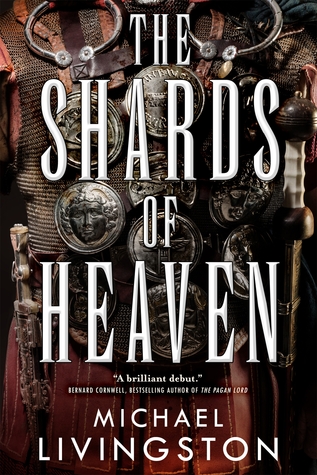 The Shards of Heaven by Michael Livingston
Genre: Fantasy
Series: Book 1 of The Shards of Heaven
Publisher: Tor (11/24/15)
Author Information: Website | Twitter
Mogsy’s Rating: 4 of 5 stars
I first became aware of The Shards of Heaven earlier this year and knew right then and there I had to read it. Two major reasons for that, really. First is the mention of Cleopatra’s daughter in the book’s description. Despite always being overshadowed by her famous mother, Cleopatra Selene II happens to be one of my favorite historical figures, and I never pass up a chance to read historical fiction in which she appears. The second reason is a more general one, which is my interest in this particular time period featuring the Final War of the Roman Republic, in which Antony fought a civil war against Octavian to fill the power vacuum left behind by the death of Julius Caesar.
I do so love stories set in this time period, because for starters there’s certainly more than enough history to go around, and often the facts are as captivating and irresistible as fiction. Even better is when a historical novel is laced with strong threads of fantasy as with the case of The Shards of Heaven. Author Michael Livingston writes in the preface that one world’s history is another’s fantasy, a sentiment I agree with wholeheartedly. After all, historical fantasy has always appealed to me, and a major part of that enjoyment comes from seeing the ways a writer can blend real historical elements with the fantastical.
This is done wonderfully in The Shards of Heaven, a book which takes us back to the final years of the Roman Republic. The great Julius Caesar has just been assassinated on the senate floor, leaving the future of Rome in doubt. On the one hand we have Octavian, Caesar’s nephew and adopted son, who claims to be his rightful heir. On the other we have Caesarion, the only known biological son of Julius Caesar, backed by his mother the Egyptian pharaoh Cleopatra and her lover and ally Marc Antony, former Triumvir of Rome.
As the civil war rages on, Prince Juba of Numidia, another adopted son of Caesar, steps into the ring seeking revenge for his father who was defeated by Julius Caesar’s forces in the battle of Thapsus. Through his journeys and research, Juba has learned of the Shards of Heaven, artifacts said to have the ability to grant godlike powers to the mortals who wield them. However, he is not the only one with a vested interest in these Shards. Octavian means to use one of these artifacts, the Trident of Poseidon, to his advantage in the war, and meanwhile in Alexandria, there are hidden factions and unexpected guardians determined to protect the Shards and keep them out of enemy hands.
What I loved most about this book is the faithful homage paid to the fascinating historical figures and ancient locales, though it’s certainly not the point of this story. The characters are amazingly written, coming across very genuine and fully well-rounded, which I would suggest is the true point. The majority of the people in this book were real, and Livingston has taken what we know of them and breathed new life into their characters. Of course I adored Selene, which admittedly could be my own bias showing, but you can also argue that I’ve set a high bar for this book and it exceeded all my expectations. The way Selene was written made me care about her a great deal, and it was not just her either; Caesarion, Vorenus, Juba, Didymus and others with POV chapters were all enjoyable characters with real depth. When compared to the major powerhouses like Octavian, Antony, or Cleopatra, history may remember the protagonists of this book as “bit players”, but in this story they were the ones who knew all the secrets and held the power to change the world.
I’m also impressed with the way the writing evoked the time period without over-complicating the language or burying the narrative in needless detail. Livingston lays out all the complex political alliances so that the reader has a good grasp of what’s going on without feeling overwhelmed. My only concern is that you do need to know the basics of the civil war conflict, or at least have a general knowledge of the history behind it, to fully understand the background of the novel and some of the characters’ motivations. Fortunately, the mystery of the Shards is the central focus of the story rather than the specific details of the war, and the back of the book also has a helpful glossary of characters to catch readers up.
The Shards of Heaven is a dazzling introduction to a new historical fantasy series. Livingston clearly knows his Ancient Rome, and he also has a real talent for plotting and writing compelling characters, as evidenced by the effortless way he navigates the genre. He even finds ways to throw in some unexpected curve balls, paying respect to real history while injecting an imaginative and magical twist. I highly recommend this book for both its entertainment value and for its depiction of historical events. I can hardly wait for the sequel!

#RRSciFiMonth The Long Way to A Small Angry Planet Read-Along Week No.2
Posted on November 13, 2015 9 Comments
For SciFi Month I’m participating in a special Read-ALong of The Long Way to a Small Angry Planet by Becky Chambers. If you’re interested in joining in, visit the SF/F Read-ALong group for more information.

Banner by Anya @ On Starships and Dragonwings
Week 1 (Friday, November 6th): “Transit” to “The Job” – hosted by Over The Effing Rainbow
Week 2 (Friday, November 13th): “Port Coriol” to “Cricket” – hosted by Chris @ Galleywampus
Week 3 (Friday, November 20th): “The Last War” to “October 25” – hosted by Claire Rousseau
Week 4 (Friday, November 27th): “Heresy” to end – hosted by Over The Effing Rainbow

***Warning: there may be spoilers contained in the questions and answers.***
1. There has been significant conversation about AI, what it means to be alive, whether or not AI should have rights, whether or not a person can fall in love with a specific instance of AI, etc. This is a bit of a sticky situation. After the discussion between Pepper and Jenks, how do you feel about Lovey’s and Jenks’ relationship? Should they move forward with their plan?
If Jenks’ plan was to stick Lovey in a body kit, and the two of them were to ride off into the sunset (so to speak) to live the rest of their lives alone far away from civilization, for always and happily ever after, I would totally say go for it. Things get complicated once you get into discussions of AIs and personhood, or whether or not sentient machines should have rights and whatnot, so for this situation I’m tempted to just say “Love as thou wilt.” They should be able to do whatever they want, as long as their decision will not be harmful to anyone else.
But it’s not that simple, isn’t it? If their plan involves staying on The Wayfarer, I think I’d be much more against it because of all the other lives they would affect. Ashby in particular would have a lot to lose if someone ever found out what Jenks and Lovey did, and it could destroy the rest of the crew’s careers. Even if the rest of them are totally cool with the idea, it’s not fair to make them choose between their livelihoods and their friendship with Jenks. But seeing as Jenks is open to leaving The Wayfarer to be with Lovey if it comes down to that, it might not be a problem, but it would still suck to split up the crew. Somehow I doubt that would happen, though.
So, short answer, I think what Jenks and Lovey have between them is really sweet. They should go forward with the plan if that’s what they both want, but Lovey is right in that they should hope for–but not completely count on–their captain’s support.
2. In the chapter “Intro to Harmagian Colonial History,” we see Dr. Chef’s perspective of having been a mother, though he is currently male, and Sissix’s perspective that children aren’t people yet. Ohan is referred to as they/them. The Akarak are referred to as xyr/xe. These perspectives and preferences are perspectives actually held by different groups of humans in our own world. Do you think assigning these perspectives to aliens rather than humans make them easier or harder to sympathize with?
Well, even on Earth now there are no universal truths, so it is unrealistic to expect any different when we widen the scope and look at the entire galaxy. And in this book, it’s not just the aliens who have cultures and physiologies that are vastly different from humans. Even among humans themselves, you get very different ways of looking at things. Take Jenks and Pepper, for example, and look at their disparate origins. To someone from an Enhancement colony, a Survivalist might seem as strange as any alien–and vice versa. Generally, emphasizing the differences isn’t going to make sympathizing with someone easier, whether they are an alien or another human. Rather, I believe looking for the similarities and a shared experience is the key.
3. How might the ship robbery have been different if the Wayfarer were armed?
I might be alone on this, but I honestly don’t think it would have played out any differently. From the conversation between Ashby and Pei, and from the scene of the crew after they landed on Cricket, we find out that most of the humans in the GC are pacifists, and like Ashby, they aren’t comfortable with the idea of being armed. Even they had weapons on The Wayfarer, there probably wouldn’t have been any initiative to use them, especially with Ashby in charge. Jenks and Kizzy might have a fascination with things that go boom, but that’s still a huge difference between actually being able to point a gun at someone’s face and threaten to shoot them, even in self-defense. With this crew, using weapons would be the last resort, and at no point did the robbery escalate that far, once Rosemary was able to communicate with the pirates.
4. As I finished the fourth chapter in my section, “Cricket,” I thought it might be a good place to stop and talk about some of our favorite humorous moments so far. What scenes really tickled your funny bone? Who makes you laugh the most and why?
This is actually a really tough question, because looking back, there really hasn’t been that many funny ha-ha moments to me. Sure, there were plenty of scenes with humor and levity, but if I actually think about it, many of those close in solemnity or end with a point — the scene on Port Coriol with Kizzy and the soap is a perfect example. I still find this story fun though, even if it hasn’t made me laugh out loud. I love scenes that show friends enjoying each other’s company, like Rosemary’s first dinner with the crew, the girls’ shopping trip at Port Coriol, Dr. Chef and Sissix smack talking humans for fun, Jenks and Kizzy reuniting with the friends on Cricket, etc. Scenes like that always make me smile!
#RRSciFiMonth Book Review: Luna: New Moon by Ian McDonald
Posted on November 12, 2015 20 Comments
Sci-Fi November is a month-long blog event hosted by Rinn Reads and Over The Effing Rainbow this year, created to celebrate everything amazing about science fiction! From TV shows to movies, books to comics, and everything else in between, it is intended to help science fiction lovers share their love and passion for this genre and its many, many fandoms.
A review copy was provided by the publisher in exchange for an honest review. All opinions are my own.
 Luna: New Moon by Ian McDonald
Genre: Science Fiction
Series: Book 1
Publisher: Tor (9/22/15)
Author Information: Website | Twitter
Mogsy’s Rating: 4.5 of 5 stars
If you can imagine the Starks and Lannisters as two rival families with competing mining operations on the moon, I daresay the situation might look a lot like the plot of Luna: New Moon. I can’t remember the last time I read a sci-fi novel featuring a richer and more compelling premise, and I am also amazed that the characters are all so developed and well-defined. Where do I even begin when it comes to the many things I loved about this book?
First, the story. The sheer scope of it is simply ridiculous, with a multi-perspective narrative following more than half a dozen characters from three generations of a powerful family. At the center of it all is the matriarch Adriana Corta, who arrived on the moon many years ago and built Corta Hélio, a company and a dynasty. Through her successes, the Cortas became the fifth “Dragon”, joining four other lunar families in the control of the moon’s trade—the Mackenzies, the Vorontsovs, the Suns, and the Asamoahs.
Of course, not all were happy with the Cortas’ rise to power. It’s like the mafia, and everyone knows what happens when a new player enters the fold. As expected, several rivalries immediately developed but none were as bitter as the one that sprung up between the Cortas and the Mackenzies. Cortas cut—hard, sharp and fast. But the Mackenzies will always pay back three times. No peace has ever existed between the two families, despite all the political marriages and attempts to reconcile.
Next, you have the setting. You’re as likely to die from the harsh conditions of the moon as you are from a rival assassin’s blade. On the moon, the Four Elementals are king: Air, Water, Carbon and Data. Without these basic commodities of lunar existence, you are nothing. If you run low on funds to pay for them, then you’d better learn to breathe less.
The only law on the moon is that there is no law—everything is negotiable. For the families of the five Dragons, this means a lot of power…and a lot of danger. However, the Cortas have another saying: Family first, family always. No matter what, Corta Hélio takes care of its own. And since it is your only protection on the moon and the only thing you can count on to keep you alive, so too must everything be done with the family company in mind.
Which brings me to the characters. Adriana Corta has five children, and they in turn have their own spouses and children, so we’re talking about a HUGE cast of characters. And that’s not even counting the members of the other four families or the various important figures in lunar society. Thankfully, other than Adriana herself, the narrative mostly focuses on her children (Rafa, Lucas, Ariel, Carlinhos, Wagner) and her grandchildren (Lucasinho, Robson, Luna). Occasionally there are also parts of the story told through the eyes of Marina Calzaghe, a surface worker newly arrived on the moon who gets entangled with the Cortas and their politics.
I won’t lie, things were very confusing, especially at the beginning. There was so much going on and a whole village’s worth of characters involved, I found myself constantly referring to the Character List until I was comfortable with the names and all the relationships. But once I got that down, I was completely addicted to this book! The story is intensely powerful, with a plot filled with political scheming and Machiavellian designs. There’s also a strong focus on the characters. I feel like I got the chance to know each Corta on a deep and personal level, an amazing achievement considering how often we bounced around between perspectives. Adriana also stood out with her first-person chapters. She’s an amazing character, a woman who conquered her fear, heartbreak, and the unforgiving landscape of the moon itself.
Finally, the writing. Ian McDonald struck the perfect balance between all the various elements in this story. He tackled a very complicated idea but still managed to make it very easy to understand and enjoy. He also handled difficult themes well. Luna: New Moon wasn’t my first book by McDonald, but all I’d read before this were the novels of his Young Adult series, Everness. His Adult fiction is very different from his YA, but I love his style regardless.
If you’re a sci-fi fan looking for a character-driven story with complexity, scope and depth, then do yourself a favor and check out Luna: New Moon. This book sucked me in completely and left me hungry for more. I can’t wait for the next volume in this two-part series.

#RRSciFiMonth Review & GIVEAWAY: Star Wars Psychology by Dr. Travis Langley
Posted on November 11, 2015 6 Comments
Sci-Fi November is a month-long blog event hosted by Rinn Reads and Over The Effing Rainbow this year, created to celebrate everything amazing about science fiction! From TV shows to movies, books to comics, and everything else in between, it is intended to help science fiction lovers share their love and passion for this genre and its many, many fandoms.
***The giveaway is now over, thanks to everyone who entered!***
A review copy was provided by the publisher in exchange for an honest review. All opinions are my own.
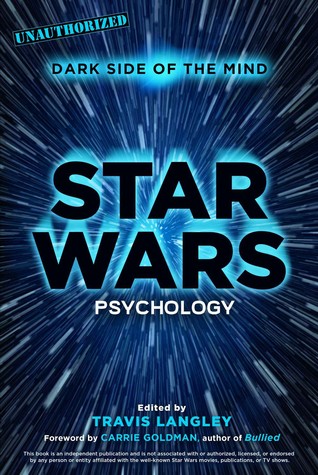 Star Wars Psychology: Dark Side of the Mind edited by Travis Langley
Genre: Psychology, Film & Entertainment
Publisher: Sterling Publishing (10/27/15)
Author/Editor Information: Website | Twitter
I know this is quite a departure from my usual reads, but for this book I clearly had to make an exception. Even though I hardly get the chance to read nonfiction anymore these days, when it comes to anything even remotely Star Wars related, I can’t help it, I just have to check it out.
Interestingly, and perhaps appropriate to my situation, Star Wars Psychology: Dark Side of the Mind seeks to examine the phenomenon that is Star Wars and explore what it is about this beloved franchise that appeals to millions of rabidly obsessed fans everywhere—by looking at it from a psychological perspective. We’ve all heard how George Lucas was influenced heavily by Joseph Campbell’s The Hero with a Thousand Faces and his concept of the monomyth, or “The Hero’s Journey”, which shaped early drafts of the first Star Wars movie. Using frequent references to classical motifs and archetypes drawn from Jungian analytical psychology, this collection of essays offers insights into why and how the Star Wars saga has managed to touch us all on a deeper level.
Written by a team of doctors, experts, and mega fans, Star Wars Psychology dissects the themes and topics of the movies while relating them back to scientific and social concepts. Many of the articles also use Star Wars to illustrate examples of psychological and sociological theory. This book is sure to appeal to people who love Star Wars and/or psychology buffs. While some of the theses proposed by some of these essays are those I’ve heard before or are obvious, others might make you see Star Wars in a whole new light.
From the dichotomy of good versus evil (the light side/Jedi Code versus the dark side/Sith Code) to discussions on what makes good people do bad things (Lando Calrissian and his fateful decision to betray Han Solo and the gang), Star Wars Psychology explores how elements in Star Wars relate to mental health, as well as how human beings think and feel. There is even an enthralling piece on the phenomenon of phantom limbs and speculation what multiple amputations at the end of Episode III would have done to Darth Vader’s brain.
Personally though, I was most fascinated by the chapters dealing with the “social side” of Star Wars, such as gender psychology or exploring the characters as role models. And even though this is nonfiction, some of the essay topics also relate back to speculative fiction, acknowledging that we create and enjoy fantasy worlds and stories as a way to ask probing questions about our own existence. Take the matter of droids, for example. Do C-3PO and R2-D2 have feelings? If so, to what extent? The matter is complicated by the fact we still don’t know enough about cognitive processes and human emotions to answer these questions once and for all. Think of all the sci-fi books you’ve read dealing with AIs and personhood, and how much psychology ends up being discussed in those stories.
I’m also impressed that we don’t look at just the movies. Many of the contributors reach into other media to make their points, citing Star Wars games, TV shows, books of the old Expanded Universe, and even in one case the soundtrack score featuring the inspiring music of John Williams. There are lots of other informational tidbits shown in textboxes, embedded in the chapters all throughout this book; here you might find little known details (my favorite was the little factoid about the Mark of Altruism from the now defunct Star Wars Galaxies MMO – how I miss that game) or more specific explanations into the theories and concepts within the field of Psychology.
Most would probably look at this book and categorize it as “pop psych”, a well-researched and professionally written book of essays intended to be devoured by the legions of Star Wars geeks everywhere, especially as the world prepares for the arrival of Star Wars: The Force Awakens this December. Nonetheless, it is an absorbing read, examining the ideas and core values of why we love Star Wars, encouraging us think about the movies and characters in new and unpredictable ways. There’s something for everyone in this fun and fascinating volume, a good addition to any Star Wars fan’s bookshelf.
***
STAR WARS PSYCHOLOGY: DARK SIDE OF THE MIND GIVEAWAY
Want Star Wars Psychology for your Star Wars bookshelf? Then this is most certainly the giveaway you’re looking for. The publisher has very generously offered The BiblioSanctum the opportunity to host a giveaway for one paperback copy of Star Wars Psychology: Dark Side of the Mind. This giveaway is open to residents in the US and Canada. To enter, all you have to do is send an email to bibliosanctum@gmail.com with your Name and valid Mailing Address using the subject line “STAR WARS PSYCHOLOGY” by 11:59pm Eastern time on Saturday, November 21, 2015.
Only one entry per household, please. Entrants must be 18 or older. The winners will be randomly selected when the giveaway ends and then be notified by email. All information will only be used for the purposes of contacting the winner and sending them their prize. Once the giveaway ends all entry emails will be deleted.
So what are you waiting for? Enter to win, you must! Good luck, and may the force be with you.
#RRSciFiMonth Waiting on Wednesday 11/11/15
Posted on November 11, 2015 12 Comments

“Waiting On Wednesday” is a weekly meme hosted by Breaking the Spine that lets us feature upcoming releases that we can’t wait to get our hands on!
Mogsy’s Pick:
Mechanical Failure by Joe Zieja: June 7, 2016 (Saga Press)
For Week 2 of SciFiMonth, my Waiting on Wednesday pick is this quirky military sci-fi title (literally…how can you see this book’s name and tagline and not give a little chuckle?) about a sergeant-turned-smuggler who ends up rejoining the fleet to help prevent a coup. The protagonist Rogers sounds like a real scoundrel. Have I mentioned how much I love scoundrels?
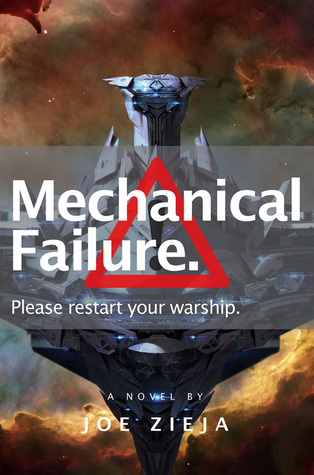 “A smooth-talking ex-sergeant, accustomed to the easygoing peacetime military of ten years ago, unexpectedly re-joins the fleet and finds himself trying to stop a coup from occurring.
The Great Galactic War resulted in the Two Hundred Years—and counting—peace, a time of tranquility that has never been seen. With an interstellar treaty signed by nearly every colony and enforced through a solid alliance between them, it seemed as if mankind has finally conquered war. This is what Sergeant R. Wilson Rogers experienced for ten years before he left the Meridan Patrol Fleet to become a smuggler.
But when a deal goes south, things quickly turn sour. Rogers is forced back into military service as an ensign and discovers a coup forming within the fleet. His backdoor and criminal experience is the best thing to stop this coup, and somehow, he finds himself working to do just that.”
#RRSciFiMonth Audiobook Review: A Borrowed Man by Gene Wolfe
Posted on November 10, 2015 14 Comments
Sci-Fi November is a month-long blog event hosted by Rinn Reads and Over The Effing Rainbow this year, created to celebrate everything amazing about science fiction! From TV shows to movies, books to comics, and everything else in between, it is intended to help science fiction lovers share their love and passion for this genre and its many, many fandoms.
A review copy was provided by the publisher in exchange for an honest review. All opinions are my own.

Genre: Science Fiction
Series: Stand Alone/Book 1
Publisher: Audible Studios (10/20/15)
Author Information: Website
Mogsy’s Rating (Overall): 2.5 of 5 stars
Narrator: Kevin T. Collins | Length: 9 hrs 32 min
Disappointingly, A Borrowed Man turned out to be less than I expected. I was initially drawn to the book because of the vague hints at a futuristic dystopian setting, but it was undoubtedly the description of the protagonist that sealed the deal. E.A. Smithe is a clone, created for the sole purpose of being an educational resource and made available on loan to all patrons of the public library where he sits displayed from a third-tier shelf. It’s an interesting premise, and paired with a mystery plot, this book should have scored a hit with me. However, having great ideas for a story is one thing, but I suppose carrying them out is another.
First though, a bit more about Smithe. As a library “reclone”, our protagonist is seen as more of a tool than a human being, just a piece of property with no legal rights. When you think about libraries today, they are vast storehouses of knowledge where literary works are preserved for eternity, and anyone with a library card can borrow the great works of authors long since dead. However, in Smithe’s world, they’ve gone even further than that. Actual authors and artists from the recent past have been cloned, their brains filled with information from the last saved scans of the original individuals before their deaths. So now not only can you borrow books and other media from the library, you can even choose to borrow their creators, whether you want to take them off the shelf for a consultation or lead them to the checkout counter to bring them home.
The real E.A. Smithe, the man who the main character was cloned from, was a pretty well-known mystery writer in his day. At the beginning of this story, a wealthy woman named Colette Coldbrook borrows his reclone, hoping to find out more about a book he wrote called “Murder on Mars”, a physical copy of which was in the possession Collette’s late father. Collette is convinced that the book contains important secrets and may be the key to the mystery of her murdered brother.
I have to say, despite my issues with A Borrowed Man, the ideas in it are fascinating. Smithe lives in an outwardly perfect world where civilization has been replaced by another system entirely, and most of humanity’s problems have been eradicated with the population down to a sustainable billion or so. However, dig deeper and you’ll discover that those problems aren’t really gone—just carefully hidden or swept aside like they don’t exist. Then there’s the situation with reclones. As library property, we’ve already established that Smithe isn’t considered a real person, but it gets even darker and more disturbing than that. Like other library resources that get too old or outdated, reclones are disposed of when they demand for them dwindles or when they aren’t borrowed anymore. Those who outlive their usefulness are drugged and then thrown unceremoniously into an incinerator.
But ideas only got this story so far. The plot started well enough before going downhill very early on; the narrative had me but then it lost me, which is perhaps the most frustrating feeling of all when a great mystery doesn’t meet its potential. I didn’t feel that the story was well developed, with frequent derailments by trivial matters that added nothing to the mystery. These overcomplicated devices only made things feel more tedious, along with a protagonist who was uninspiring, irritating, and repetitive. I wasn’t entirely ambivalent about the ending and how things would play out, but neither did I feel all that invested in solving the mystery.
Audiobook comments: I’ve enjoyed many audiobook narrated by Kevin T. Collins in the past, and I think he’s great. However, I felt he was the completely wrong choice to read this book. Collins is amazing in high-energy roles, which is the exact opposite of how I would describe the protagonist E.A. Smithe, who came across as fussy and somewhat prim and old-fashioned compared to those around him (which actually makes sense since his memories and mannerisms belonged to a man from an earlier time). I also pictured Smithe to be older man. Collins’ voice sounds much younger, marking him well suited for the Young Adult audiobooks I’ve listened to that were performed by him, but for A Borrowed Man, perhaps not so much.
Overall, I didn’t feel this novel lived up to its potential. As a noir mystery, the story fell short, but I did find a lot of the sci-fi aspects interesting and wished they had been better developed.
Story:  | Performance: | Overall:
#RRSciFiMonth Mini Reviews: Journey to Star Wars The Force Awakens
Posted on November 9, 2015 24 Comments
Sci-Fi November is a month-long blog event hosted by Rinn Reads and Over The Effing Rainbow this year, created to celebrate everything amazing about science fiction! From TV shows to movies, books to comics, and everything else in between, it is intended to help science fiction lovers share their love and passion for this genre and its many, many fandoms.
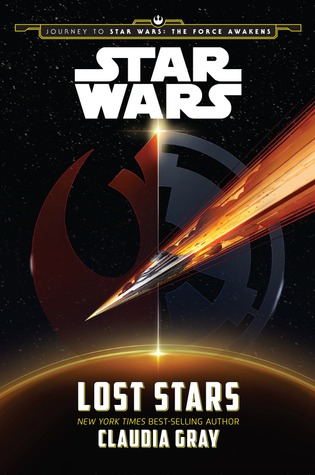
Genre: Young Adult, Science Fiction
Series: Journey to Star Wars: The Force Awakens
Publisher: Disney/LucasFilm Press (9/4/15)
Author Information: Website | Twitter
Mogsy’s Rating: 4.5 of 5 stars
And to think, I almost gave this one a pass when I was compiling a list of books I wanted to read from the new Star Wars canon. What a mistake that would have been. Yes, this is categorized as Young Adult, but to be sure, this is not the kind of Star Wars YA from the old EU when the stories tended to lean more towards middle-grade audiences and few children’s series stood out strongly enough to make an impression. Lost Stars, in a word, was awesome. I have been reading Star Was novels for years and have read many of them during that time, but this has got to be one of the best I’ve ever read.
The book tells the tale of two childhood friends who became lovers before ending up on opposite sides of the galactic war. Ciena and Thane grew up on the same planet just after annexation by the Imperials, but one was born in the more rural valley while the other came from an affluent second-waver family. However, the two met and bonded over a shared love for piloting and a dream to one day fly for the Empire. They entered the Imperial academy together, excited to be with each other as they made that dream come true. But as the war waged on, their fates diverged as one grew disillusioned with the Empire and joined the Rebel Alliance, while the other remained in Imperial service and rose through its ranks to become a high-ranking officer.
The beauty of this book is in its simplicity. At the heart of it is a love story, so you might not enjoy it as much if YA Romance isn’t your cup of tea. At the same time though, it is surprisingly free of the tropes that usually clog up this genre, and I didn’t feel as if the plot was made more complicated by any needless drama. Instead, all the good stuff comes through, themes like: honor versus duty, love and grief, opportunities lost and things left unsaid. Ciena and Thane are the loves of each other’s lives, but they were raised in very different homes, with very different values. Because of that, there will always be a part in each of them that can and never will be reconciled.
And you know what else is great? How deeply and intimately Lost Stars is tied to the original trilogy. You get to relive the major events of each movie from a whole different perspective. No doubt about it, while reading this book I felt like I was 100% in the Star Wars universe. And yet, the story also retains its own uniqueness. You ever think to yourself, surely, the Empire can’t be one homogenous body working in unison towards the same goal? Of course there had to be different factions, as well as good people in the Imperial forces who couldn’t stand by and do nothing while their side committed all sorts of atrocities. This book does a really good job showing this, and in a way it humanizes the Empire by portraying the protagonists as average everyday people.
Like anyone, both Ciena and Thane have close family and friends. They each have their own personal hopes and dreams. They experience desire and longing. My heart ached for the two of them and I wanted so badly for things to work out for them in the end. Move over Anakin and Padme and Episode II, because this is romance done right. Heck, this is “Journey to Star Wars: The Force Awakens” done right.
“Look through my eyes…look through my eyes.” *Happy sigh*

* * *
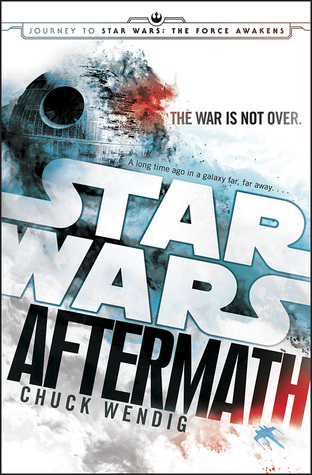
Genre: Science Fiction
Series: Journey to Star Wars: The Force Awakens
Publisher: Del Rey (9/4/15)
Author Information: Website | Twitter
Mogsy’s Rating: 3 of 5 stars
This was it, the long-awaited novel in the new Star Wars canon that was marketed as the “bridge” between Return of the Jedi and the new upcoming movie. In retrospect, the publisher might have oversold that just a tad. Well, okay, maybe a lot more than just a tad. Call me cynical though, but I never really expected to see this book provide much detail. In truth, I was more excited to see one of my favorite authors tackle one of my favorite franchises.
I did have my misgivings though. Chuck Wendig’s Blackbirds in my eyes is one of the best books ever. But it is also as far away from a general-audience thing like Star Wars as you can get. I love Wendig’s style for its gritty dark edginess and his brand of dry, sarcastic wit, and I worried that writing for a media tie-in would come with a lot of restrictions, leading him to dial it way back. In the end, I think something like this must have happened, because while I typically adore Wendig’s writing, I somehow found myself struggling with it in Aftermath. Something vital felt missing, which made his normally punchy and enjoyable style feel awkward, choppy, and grating here instead. I even had to switch to the audiobook version midway, which fortunately made getting through the book easier. Wendig is a fantastic writer, but I feel his style is more suited to urban fantasy, and feels a little out of place in the Star Wars universe, especially given his tendency to use many modern colloquialisms in his prose that jolted me out of the story.
And speaking of story, it was decent but not great. The problem was the lack of any compelling characters. Being a fan of expanded universes and tie-ins of all media, not just Star Wars, I have no problems with making the acquaintances of new faces, but in Aftermath there were JUST. SO. MANY. It was impossible to form an attachment to any one character, not even the familiar ones like good old Wedge Antilles or Rae Sloane the Imperial Admiral who was first introduced in A New Dawn. And so like many of the middling Star Wars novels I have read, I had a good enough time enjoying this ride, but never truly felt invested in the fate of the characters or the plot direction.
Furthermore, as I’d alluded to before, this isn’t exactly the “aftermath” I was expecting. It barely has anything to do with the destruction of the Death Star at end of ROTJ, nor does it give us many clues for The Force Awakens. It reads like any other new adventure with new characters; the story doesn’t feel whole, it feels a lot more like an introduction. It’s fun, but it’s fluffy. It lacks weight.
Aside from feeling sad about the loss of a couple great stories, for the most part I’m actually quite happy about the new canon. There was so much bloat in the old EU and I cringe whenever I think about how many years of my life I wasted torturing myself trying to finish series that aren’t even all that great (*cough* New Jedi Order *cough*). Good riddance, I say. I’m actually really optimistic about the wonderful possibilities going forward. So far, the majority of the new books have impressed me. Aftermath was actually a pretty decent read too, and my 3-star rating reflects that. Still, for a book I anticipated so much, it’s hard not to see that as a disappointment. For the first post-ROTJ novel, I admit I’d hoped for something more.
#RRSciFiMonth YA Weekend: Dreamseeker by C.S. Friedman
Posted on November 8, 2015 9 Comments
Sci-Fi November is a month-long blog event hosted by Rinn Reads and Over The Effing Rainbow this year, created to celebrate everything amazing about science fiction! From TV shows to movies, books to comics, and everything else in between, it is intended to help science fiction lovers share their love and passion for this genre and its many, many fandoms.
A review copy was provided by the publisher in exchange for an honest review. All opinions are my own.
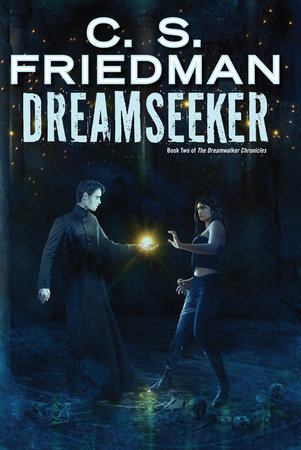
Genre: Science Fiction, Fantasy, Young Adult
Series: Book 2 of Dreamwalker
Publisher: DAW (11/3/15)
Author Information: Website
Mogsy’s Rating: 3 of 5 stars
Dreamseeker is the sequel to Dreamwalker and the second novel of C.S. Friedman’s Young Adult portal fantasy series–though it also has high crossover appeal for readers of adult spec fic. In addition, it features a uniquely fresh take on parallel worlds. With multiple genres colliding here to form an eclectic picture of magic and mysticism meeting advanced technology and scientific theory, you can expect to see an interesting blend of sci-fi and fantasy elements too.
The novel starts by immediately and mercilessly tossing us right back into the story, which picks up shortly after the end of the first book. As such, I probably wouldn’t recommend starting the series here because it cannot be read as a standalone, and the narrative does not provide much in the way of reminders when it comes to what happened in Dreamwalker. It’s been quite a while since I read that book myself, but after a while I was able to piece together all the details and remember again.
Our protagonist, Jesse Drake, has discovered that she is a Changeling. Not only is she not the person she thought she was, she is shocked to find out that she isn’t even from this universe! On the surface, Jesse realizes this explains a lot. Ever since she can remember, she has been dreaming of all these strange places. As an artist, she has been incorporating much of her dream aspects into her work…until one day, her paintings attract the attention of someone from an alternate world.
Jesse’s adventures following those events ended up resulting in the destruction of one of the dimensional gates into this world, allowing her to escape from her shadowy enemies. But just because she’s home now doesn’t mean she’s safe. And now she has starting dreaming some dark and disturbing things. Furthermore, there is the situation involving Jesse’s mother, who hasn’t been the same person since the injuries she sustained in an attack that was aimed at her daughter.
To save her mother and to protect herself and her family, Jesse is going to have to face her enemies and enter their world once more. Despite the direness of the situation, however, the plot of this book did not quite grab me as much as the first one.
I think this was due to several reasons. First, there was the confusion of trying to remember what happened in the first book. Story-wise, I could recall most of what happened, but it was the finer details I struggled with, like the magical mechanics behind the fetters. I also think I could have benefited from some brief reminders or explanations into the backgrounds of all the other characters, especially when it came to Jesse’s allies in the other world like Isaac and Sebastian since they both played pretty big roles in this book.
Second, the character I would actually have liked to see more of was mostly absent, which surprised me. Devon, whom I had hopes would be shaping up to be Jesse’s love interest in the first book, turned out to have very little to do with this story. It just seemed strange to me that the author would introduce romantic tension between Jesse and Devon, and then Jesse and Isaac, only to abandon this thread all together in this sequel. I can only guess Friedman decided to eschew with the romance completely and just focus on the intrigue, which in truth I wouldn’t have minded so much if Devon hadn’t been one of my favorite characters from Dreamwalker. Ah well, such is life.
Third, I know this sounds horrible, but I just couldn’t really understand Jesse’s motivations for going back into the other world. I understood that she wanted to help her mother, and perhaps she was wracked with the guilty knowledge that if it hadn’t been for Jesse, their house probably wouldn’t have burned down and her mom wouldn’t have been injured in the first place. But would it be enough to explain plunging headfirst into danger and possible death again? In the first book, Jesse’s brother Tommy was stolen away, so it made perfect sense to go through the gate to get him back. But in this book, Jesse’s mom is injured but at least her children are by her side. Wouldn’t the best thing to do (at least in the short term) have been to support her mother? By risking her own life, Jesse also risked the potential of piling even more grief and anguish onto her mom’s already fragile frame of mind.
These issues aside, however, I actually thought the book was pretty good. In my review of Dreamwalker, I said that the first book was a promising start to what has the potential to become a great new series. I still think I’m right, even if Dreamseeker wasn’t quite convincing, but the events in this sequel succeeds in setting up for more exciting things to come. Only time will tell if the next novel will get us back on track, but I’m looking forward to finding out.
More on The BiblioSanctum:
Review of Dreamwalker (Book 1)


 The BiblioSanctum