Sanctum Sanctorum: Our Comic Collection
Posted on January 28, 2016 20 Comments
This year, we have plans to stir things up a little more with our posts. You’ll still get lots of our in depth reviews as well as our contribution to regular memes and lots of lists to help fill up your to-read piles, but we’ll also be adding a few more of our bookish thoughts in new and interesting ways.
Sanctum Sanctorum is our new monthly roundtable feature on topics that make us tick. Behind the scenes, we often have discussions on various topics and, even when we are all in agreement, we each approach these topics from very different and interesting angles!
We’d love to hear your thoughts on these topics too! Feel free to answer the questions in the comments!
How did you get into comics?
 Tiara: I’m pretty much quoting myself from another source, but I started reading comics when I was five-years-old. (I started reading VERY early as a child.) The first comic I remember reading was Uncanny X-Men #159 where Storm was bitten by Dracula. (I have a lifelong love of vampires, too. Wonder why?) Much of it didn’t make much sense at the time because of my age, and I’m sure that my grandparents had a good time trying to explain some of the themes to my still budding mind. That comic remains one of my favorites to this day, and Storm is my favorite X-Woman of all time.
Wendy: My brother. He handed over his collection of Classic X-Men when I was about 10 years old and I dived right in.
Mogsy: This will probably come as no surprise, but I came to comics through my interest in art. As a kid, I was only really good at drawing animals, but I wanted to branch out and improve on drawing humans. I bought comics to study the art and emulate it, too young to realize superheroes and heroines probably aren’t the best subjects when it comes to learning human anatomy and proportions. Oh well. The stories were fun.
Make mine Marvel? Or Batman forever?
Tiara: Make mine Marvel. All Marvel everything, but I did start reading more DC over the years. I’ve always felt like DC was better at telling their stories, but Marvel was better at making you care about their characters on a personal level.
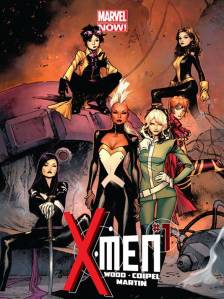 Wendy: Since Marvel’s X-Men was my first introduction, that perhaps coloured my opinion significantly, but even looking at the Big 2 now, I still lean toward Marvel. Their characters were far more approachable and relatable, and with the Classic X-Men stories that I started with, Chris Claremont so specifically wanted to make them human first, superheroes second. There are a lot of moments and characters in those books that have truly influenced who I am. That doesn’t mean I don’t read DC comics, though I tend to focus on their side stories that often fall outside of canon or some of their larger story arcs, such as Wonder Woman: The Hiketeia, Lex Luthor: Man of Steel, Joker, All-Star Superman, Superman: Red Son, Injustice: Gods Among Us, Batman: The Killing Joke, Batman: Knighfall, Catwoman: No Easy Way Down. The characters remain at a distance–gods to idolize, rather than relate to–but the stories are very good.
Mogsy: Marvel all the way. I’ve tried multiple times to get into DC comics, but for some reason it never sticks. Even when they did that whole One Year Later and other universe “resets”. I just don’t find their characters all that interesting, I guess. Honestly, I don’t even like Batman all that much. (*ducks and prepares for the barrage of rotten vegetables thrown my way*)
What does your current comic collection look like?
 Tiara: Loads of indie stuff. I don’t know if it’s even fair to call most indie comics “indie” because they’re starting to make such a name for themselves. Yeah, there are still Marvel titles that I pick up from time to time, but I find that I’m enjoying most of the stuff that isn’t considered “mainstream” (whatever that means now). Image started this for me some years ago around the time they started publishing Chew. From there, I started seeking out different lines and stories to read that weren’t from the Big Two. Right now, I’m into a ton of excellent books like Saga and Rat Queens.
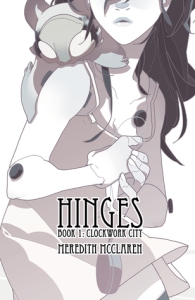 Wendy: A lot of Image comics like Saga, Sex Criminals, and Rat Queens are on my shelf. They are considered “indie” simply because they aren’t the Big 2, but Image really is pretty big and serves as a place for the writers and artists from DC and Marvel to tell the stories they want to tell, without being bound to established properties. I’ve been leaning more toward the Top Cow side of things lately, as they seem to make a bigger effort to find the new talent, such as Larime Taylor, while still being an outlet for their own staff like Stjepan Sejic. I’m also slowly discovering actual indie comics, some of which have begun online as webcomics, like Nimona or Hinges. The thing I like most about these indie comics is that they usually aren’t superhero comics, which seemed to be the only thing comics were about back in the day.
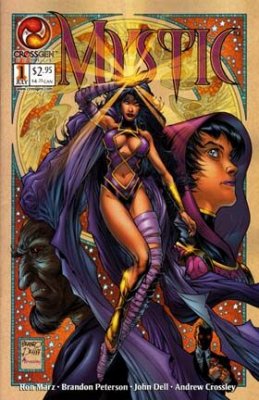 Mogsy: My newest stuff is all on my shelves in the form of trade paperbacks, mostly indies and Image comics like the titles Wendy mentioned. I can’t afford to pick up single issues every week anymore, so I mostly wait around to see what’s good out there before buying the collected editions. The big part of my collection though is the old stuff, which is all in boxes in my closet. I have a ton of Marvel and DC from the days I used to work at a comic book store because I had to keep up with all the big titles (just part of the job…someone’s gotta do it! 😉 ). But the oldest stuff in my collection is very mixed. I had lots of stuff from Image Comics again because I thought they had the best artists (so titles like Fathom, Crimson, The Darkness, Witchblade, Danger Girl, Battle Chasers, etc.) as well as some smattering of Vertigo (like Y the Last Man, Preacher, Hellblazer, Fables). You know, in general lots of mid-90s to early 2000s stuff. Oh! I also had all of the early CrossGen titles. Round of hands, who remembers CrossGen!
Team Tony or Team Cap? Your thoughts on 2009 Marvel’s Civil War event in relation to the up coming Captain America movie (even though the directors have said they aren’t relying too closely on this particular source material):

Tiara: Team Cap, and it wasn’t mostly because I agreed with him. Marvel just made Tony really deplorable in that event like they made his character just so ridiculously unlikable, even for Tony Stark. It took me years to even read another Iron Man comic after that event, and I didn’t even disagree with some of Tony’s sentiment in Civil War. I thought much of it made sense, but Marvel made him so dislikable during that time. Even in later comics, Tony realized how much of an asshole he was and used himself as an example why people should calm the fuck down and think about things during Avengers vs. X-Men (even if he did have a “LOL Fuck Science!” moment in AvX). With Civil War, I wanted an event that really made me feel torn between these two ideas, where it was more gray and I could see the good/bad on both sides. Maybe some people did feel like that, but I never could. But this gif sums up my general feeling about the whole thing (and most other Marvel crossover events):

Wendy: I had quit reading Marvel comics because, after things returned to normal following the Age of Apocalypse event, things just went down the drain with the storytelling and resurrecting and silliness. When I came back, Civil War was where I decided to pick things up. Uuuuuugh. Such a painful story. I didn’t know much about the Avengers, much less the two characters in question, but I was quick to determine that Captain America was my preference since the writers did such a great job of burying Tony’s valid concerns under his sudden fascism that involved all sorts of questionable, utterly out of character behaviour. This got even worse in Avengers vs. X-Men, making me wonder why I still give Marvel any of my money when I know their new crossover events are just cash grabs filled with inconsistent writing and people punching each other for the sake of punching each other.
Still, I have some hope for the movie. The directors are the same ones who did Captain America: The Winter Soldier, which I loved, and they have already stated that the movie will not follow the comic plot too closely. The trailer still seems to be a whole lot of punching each other for the sake of punching each other, but hopefully the characters remain true to themselves and there’s a truly valid reason for all this punching. But mostly, I’m here for Falcon:

Mogsy: This is still a sore point for me, even after all these years since the Civil War event. I’m Team Iron Man, and I’ll give you the explanation I gave everyone back when folks and I used to have these huge epic discussions over this very question (it’s just what you naturally did when you worked in a comic book store, hang around and have these huge epic nerd discussions). Tony Stark/Iron Man has always been one of my favorite characters. Maybe not THE favorite, but I certain liked him more than Captain America. Then the Civil War event hit, and I swear every Civil War event writer and their mothers started demonizing Iron Man. He’s always been a bit of a jerk, but what galled me was that they went out of their way to make him worse than the guy who kicks puppies for fun.
In a matter of months, he went from lovable jerk to despicable jerk, making decisions which I thought were frankly out of character for him. You’d think I’d drop him like a hot potato at that point and support Cap, but nope. I believe in loyalty to your favorite characters, and it’s not gonna change just because a few writers decided to force Iron Man into a villainous role by poisoning his personality, simply to give the story “more twists” (uggggh). Especially when Tony’s position was perfectly logical. Most people I know actually started on his side because he made sense. Honestly, who didn’t shed a tear when Miriam Sharpe handed him a figure of Iron Man, her dead son’s favorite toy, to remind him what he was fighting for? But no, that’s too easy! So they took the least creative way of turning people against Tony–by quickly and clumsily transforming him into a fascist dick. I understood why people flocked to Cap’s side after that happened to Tony, as they did a really good job making people hate him. But don’t you see, that’s not really him. And regardless, the original reasons behind the Superhuman Registration Act are still quite sound, and I wasn’t about to abandon Iron Man just because a bunch of writers determined he was the guy they were going to throw under the bus.
But that’s okay; admittedly it was kind of a fun experience being on the side with less support. So fight the good fight, Tony. You may be an arrogant asshole, but you’re still my arrogant asshole.
Short & Sweet Comic Stack 01/27/16 – Star Wars, Vol 1: Skywalker Strikes by Jason Aaron, John Cassaday (Illustrations), Laura Martin (Illustrations)
Posted on January 27, 2016 4 Comments
 Genre: Science Fiction
Series: Star Wars
Publisher: Marvel
TL;DR Review:
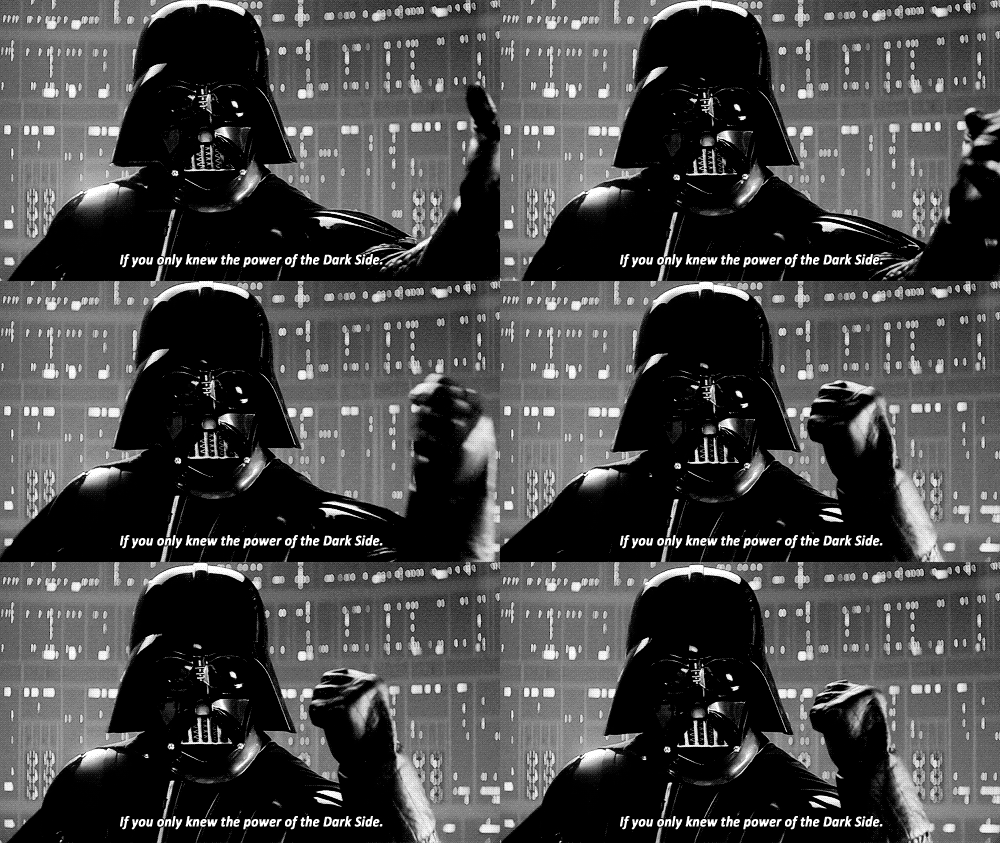
Tiara’s Rating: 4 of 5 stars. Definitely fanservice, but worthy fanservice. I loved all the Vader scenes!

After their greatest victory yet against the Empire by destroying the Death Star, Luke, Leia, Han, and friends decide to make another decisive move against the Empire by destroying a large arms factory on Cymoon 1. They arrive on the planet under the pretense of wanting to do business for the Hutts. They plant charges to destroy the base. However, they face a few miscalculations when they find slaves being kept on the planet, even thought the planet was supposedly only manned by electronic means, and Darth Vader makes a special guest appearance bringing him face to face with Luke Skywalker who hasn’t quite mastered his abilities. This takes place before Luke learns that his father is Darth Vader, and while Vader claims that all Jedi are dead, he can’t deny there is something special about Luke–who he hasn’t realized is his son. Vader sees the potential for a new pupil, and Luke leaves the rebels to find himself, to become they Jedi they need him to be.
Admittedly, this started somewhat slow for me. I wasn’t sure what to expect going into this after hearing that so much of the canon that had been built up for years in other comics and novels would now be considered dead to Disney. However, once the action picked up this wasn’t a bad book at all. The story was well paced with plenty of chuckle-worthy moments thanks to Han and his interactions with Leia, Chewbacca, and others.
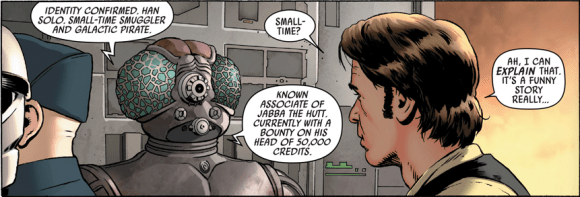
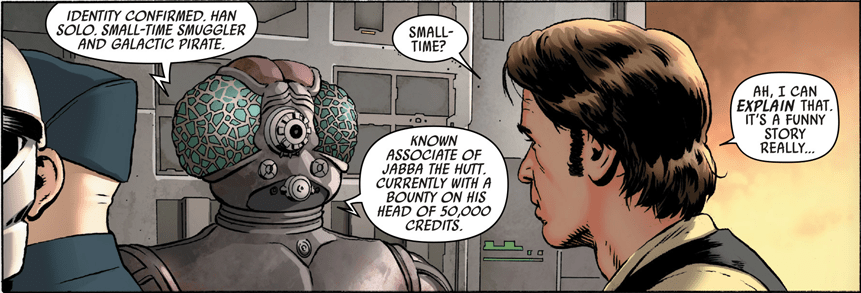
This book works well for both the casual Star Wars fan and the hardcore fan. This will feel like a continuation to the original movies while adding some background story for those who are just getting into the Star Wars mania.Though you will need to have some knowledge of the original trilogy if you’re new in town. The characters haven’t quite settled into the capable characters that you eventually come to know and love. They’re trying to figure out how this rebel thing is supposed to work. Allegiances are being tested, and they’re learning to summon and temper the natural abilities they have to offer to the cause. Is this a bit of fanservice? Yes, it is, but what tie-in media in this vein typically isn’t fanservice? Enjoy the wonderfully lush artwork and the nonstop action that makes this really feel like a Star Wars story, which means there is a lot of shooting and lots of things blowing up. Some of the artwork gets a little wonky in places and some of the story can lull just a little, but overall, this was a fun comic. On that note, I’ll leave you with some panels to enjoy (click on them to enlarge):


Waiting on Wednesday 01/27/16
Posted on January 27, 2016 19 Comments

“Waiting On Wednesday” is a weekly meme hosted by Breaking the Spine that lets us feature upcoming releases that we can’t wait to get our hands on!
Mogsy’s Pick:
And The Trees Crept In by Dawn Kurtagich: September 6, 2016 (Little Brown Books for Young Readers)
Dawn Kurtagich really impressed me with her debut YA novel The Dead House last year and I’m eager to read her next book. The book will also be published a couple months earlier in the UK under a different title (The Creeper Man) and just look at the cover for that edition…yeeeeah, that’s not creepy at all…


US vs. UK version
“A spine-chilling psychological thriller from stunning YA talent and author of THE DEAD HOUSE, Dawn Kurtagich.
When Silla and her little sister, Nori, escape London and their abusive father, Aunt Cath’s country house feels like a safe haven. Leaving the smog and fear behind, the girls have the love and freedom they never had in their violent home. But slowly, ever so slowly, things begin to unravel.
Aunt Cath locks herself in the attic and spends day and night pacing; every day the surrounding forest inches slowly towards the house; a mysterious boy appears from the enclosing wood offering friendship, and Nori claims that a man watches them from the dark forest. A man with no eyes who creeps ever closer. . .
Psychologically sinster and creepily atmospheric, Dawn’s second YA title is sure to grip fans of Stephen King, Kendare Blake and James Dawson.”
Novella Review: The Drowning Eyes by Emily Foster
Posted on January 26, 2016 17 Comments
A review copy was provided by the publisher in exchange for an honest review. All opinions are my own.
 The Drowning Eyes by Emily Foster
Mogsy’s Rating: 3.5 of 5 stars
Genre: Fantasy
Series: Stand Alone
Publisher: Tor.com (January 12, 2016)
Length: 144 pages
Author Information: Website | Twitter
Tor.com kicks off the year with another irresistible lineup of novellas in early 2016, and leading the charge is Emily Foster’s debut release The Drowning Eyes. In this slim little volume, a lone survivor sets off on an adventure in a wind-swept coastal fantasy to retrieve what was stolen from her and her people. With the Windspeakers’ island enclave pillaged and destroyed by the Dragon Ships, villages along the coastline are left unprotected and open to attacks. Now it’s up to Shina, a young apprentice, to reclaim the weather-shaping magic of the Windspeakers in order to save the villagers and drive back the raiders.
Determined and resourceful, Shina manages to find a captain desperate for funds and bargains for passage on her ship. Tazir and her crew are unhappy at the prospect of transporting their new guest at first, but they soon come around when everyone realizes the importance of Shina’s quest.
I know I can be a harsh judge of novellas, often with my main complaint being a wish for them to be longer or feel more complete. I’m afraid this is once again the case with The Drowning Eyes, which feels a lot like a too large idea trying to fit into too small a package. This admittedly weakens the story somewhat. But be that as it may, I want to underscore a few things I thought this novella did amazingly well and other areas that might have been limited by the short fiction format but shone through nonetheless.
First, the characters. I might not have spent enough time with them to call them truly memorable, but they were delightful to get to know. I have a soft spot for roguish sailor types, and the crew endeared themselves to me for the brief time I got to read about them. Their personalities were all wonderfully unique, and I enjoyed the interplay between them and the way they gradually accepted Shina into the fold and decided to throw their support behind her.
Second, the magic. Before you go thinking that this sounds like your typical feel-good quest narrative-type adventure story, you should get a load of the Windspeakers’ powers. Weather magic, the kind that is central to the plot in The Drowning Eyes, is a strictly guarded medium. Apprentices are brought to the enclave at a young age, and when they are deemed ready to don the mantle of a full Windspeaker, their eyes are gouged from their sockets and replaced with stones. It’s true that I may not remember the names of all the characters in this novella a year, three years, or five years from now, but I can pretty much guarantee I’ll remember this gruesome little detail about Windspeaker tradition for the rest of my life. Also, seeing as this is the third book I’ve read in as many weeks about ships and characters with weather-based magic that can control winds, it’s refreshing to see a new twist on a familiar idea, even if it is kind of disturbing.
Lastly, the world-building. I really liked what I saw, even if this story merely gave me a limited view through a tiny window. The rich descriptions paint a very lively picture of coastlines and the cultures of their inhabitants. The place feels very much alive, and even a small setting like life aboard a ship seems to have its own atmosphere.
And it was all over way too soon. I wish I could have held off the ending, but it came upon me like one of the story’s magical storms, and after a whirlwind of confused and sudden events, the book was finished. This is rather unfortunate, because a satisfying ending might have left me liking this book even more, but as it is, I felt the conclusion felt too incomplete—jarringly so.
However, as you can see from the many positives I talked about, The Drowning Eyes was still a book I really enjoyed. I think this would have made an excellent full-length novel with a more fleshed out plot and developed characters, but if given the chance to read more stories set in this world, I certainly wouldn’t say no. An impressive debut novella.






Book Review: The Bands of Mourning by Brandon Sanderson
Posted on January 25, 2016 25 Comments
A review copy was provided by the publisher in exchange for an honest review. All opinions are my own.
 The Bands of Mourning by Brandon Sanderson
Mogsy’s Rating: 4 of 5 stars
Genre: Fantasy
Series: Book 6 of Mistborn
Publisher: Tor Books (January 26, 2016)
Length: 448 pages
Author Information: Website | Twitter
2016 is another big year for Brandon Sanderson with a whole slew of new book releases and re-issues coming out, and he’s kicking it all off in late January with The Bands of Mourning. This is the sixth Mistborn novel and third volume of Waxillium Ladrian’s saga following on the heels of Shadows of Self, and according to Sanderson one is an intentional counterpoint to the other, which explains why there were only a few months to wait between the books. For readers like myself, that decision to publish them so close together was much appreciated, since I don’t think I could have waited until the end of the year to find out what happens, especially after that shocking ending in Shadows of Self.
Things come to a head in The Bands of Mourning, continuing the adventures of Waxillium and his companions. It has been six months since the events of Shadows of Self and our heroes are still recovering from the ordeal. Wax himself is still trying to come to terms with what happened but is also determined to move on with his life, and one of the first orders of business is his forthcoming marriage to Steris. But before the couple can tie the knot, a kandra brings tidings of a possible new discovery in the mountains.
Legends say that the Lord Ruler created a pair of metalminds called the Bands of Mourning that are so powerful that anyone who wears them will have all the Allomantic abilities at their command. Most believe that they are a thing of myth, but now a kandra researcher has returned to Elendel with drawings that look suspiciously like the Bands. Unable to resist the call of adventure, Wax agrees to travel south with the kandra MeLaan to investigate, bringing along Steris as well as his friends Marasi and Wayne. However, Wax was wholly unprepared to stumble across news of his lost sister along the way, and the quest for the Bands unexpectedly takes a dangerous turn as it puts him on the trail of Edwarn Ladrian, Wax’s unscrupulous uncle who is also involved with the shadowy organization known as The Set.
After so many books in the Mistborn series, I didn’t think I could be surprised anymore, but I was wrong. Most of the story in The Bands of Mourning does not take place in the Roughs nor does it take place in the city of Elendel, instead taking us out into the outskirts of the Basin. We’ve been with Wax for so long, it’s easy to forget there’s a whole wide world out there beyond the frontier regions or the urban areas, and the first stop is beautiful New Seran. Sanderson may be best known for his magic systems, but he is also a master at creating new places and bringing them to life. With its luscious fields of fruit and majestic waterfalls, the awe-inspiring vistas of New Seran make me think this could be Sanderson’s version of Rivendell or Naboo. Next up are the cold icy mountain ranges bordering the Basin, where the final chapters of the book take place. There’s also a farther, more mysterious place that I can’t really speak of for fear of spoilers, but regardless, out of all the novels in this series I think it’s safe to say this one expands the world the most, at least geographically.
The story does not disappoint either. It’s an action-filled romp through a fantasy world on the cusp of an industrial revolution, and the Western vibes are still strong with this book, which even includes scenes from a spectacular train robbery. Also, despite The Bands of Mourning taking place half a year after Shadows of Self and featuring a whole new adventure, the two books do indeed tie together when you look at it from the perspective of Wax’s personal growth. It is an emotional journey that brings resolution to the many questions our protagonist has been struggling with since the last book, and it also marks an end to one chapter while opening another. New possibilities are on the horizon, including the potential for new worlds, new relationships, and perhaps even a new villain. You might be able to get away with reading this on its own, but I do highly recommend picking up Shadows of Self first, or better yet, start Wax’s story from the beginning with The Alloy of Law (which is still my favorite of the new Wax and Wayne Mistborn novels).
Another thing I loved about this book? The supporting characters! The story is once again carried by POVs from our three usual suspects—Wax, Wayne and Marasi—but my favorite characters in this book were actually Steris and MeLaan. As usual, there was plenty of humor especially in the dialogue, and the best of that came in the form of interactions between Wayne and MeLaan, a brilliant pairing. But perhaps the greatest surprise of the novel was Steris. She always struck me as rather austere and aloof in previous books, but we finally get to see a lot more of her true self here. And maybe I’m biased, because I recognize a lot of myself in her uptight planning and obsessive list-making behavior, but out of all the characters, I felt she was the most sympathetic. I’m really excited to see what might be in store for her and Wax, because Sanderson really did a great job developing their relationship.
Overall, The Bands of Mourning is another fantastic installment in the Mistborn sequence. Brandon Sanderson fans will be sure to love this one, especially if you’ve been following the books and keeping up with Wax and the gang. You definitely won’t want to miss this rusting good read.
*** Originally reviewed at The Speculative Herald ***

More at The BiblioSanctum:
Review of Shadows of Self (Book 5)
Posted on January 24, 2016 Leave a Comment
“Don’t be afraid,” she said.
“The dead cannot hurt you.
They give you no pain except that of seeing your own death in their faces.
And one can face that, I find.”Yes, I thought. The good face pain.
But the great, they embrace it.
Book Review: The King’s Justice by Stephen R. Donaldson
Posted on January 24, 2016 10 Comments
A review copy was provided by the publisher in exchange for an honest review. All opinions are my own.
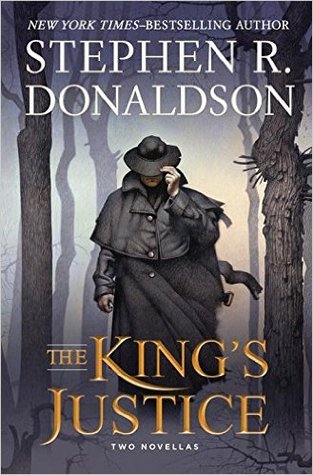 The King’s Justice by Stephen R. Donaldson
Mogsy’s Rating: 3 of 5 stars
Genre: Fantasy
Series: Novella Collection
Publisher: G.P. Putnam’s Sons (10/13/15)
Length: 320 pages
Author Information: Website
While my own personal experience with Stephen R. Donaldson is admittedly limited, his name is definitely no stranger in our household. My husband is a big fan of his Thomas Covenant books, which is probably the series Donaldson is best known for. Myself, I’ve only read the first book Lord Foul’s Bane as well as a couple books in his Gap series, so it’s safe to say that I’m still relatively new to his work.
Still, I was interested to read more. And what I’ve seen is enough for me to get a sense of his style and the tone of his stories—namely, frequently dark and brutal—so I had a good idea of what to expect going into The King’s Justice, Donaldson’s latest book which collects two new and original novellas. This a fantastic format if you are curious to give a new author a try or if you simply want to read more without having to commit to a longer series, especially since many of Donaldson’s are very heavy and can take quite an emotional toll.

The King’s Justice
This title story tells of a mysterious black-clad stranger arriving in the village of Settle’s Crossways to investigate a string of terrible murders. Known only as “Black”, he claims to be in the king’s service and proceeds to question the denizens of the town, using his powers of interrogation to make them reveal what they know to him. A new evil has made its home in this place, and Black will follow its trail to the ends of the earth even if it kills him—and it damn well might. But the king’s justice needs to be served and Black will not stop until his job is done.
This story is close to what comes to mind when I think of Stephen R. Donaldson. It’s a bleak and savage tale, delving into the darker side of human nature while also juxtaposing that with the esteem of one man’s hunt for justice. This is the shorter story of the two in this novel, and the events go by quickly. If you want to know more, you’ll find yourself out of luck because the plot is so streamlined and lean, but the result is a simple and elegant tale that gets straight to the point. Also not for the faint of heart, but readers familiar with Donaldson’s probably know that already.
The Augur’s Gambit
This second tale is much longer, almost twice as long as The King’s Justice and therefore may appeal more to readers looking for more character and story development. It follows the protagonist Mayhew Gordian, a Hieronomer to the Queen of Indemnie. His position requires him to read her majesty’s fate in the entrails of animals (and in one case, a stillborn baby) and every single time he sees the same message: Indemnie is doomed. Fiercely loyal to the crown, Gordian decides to launch his own investigations into who might be plotting against his queen and her daughter, the alluring Princess Excrucia (lovely name, isn’t it?)
The Augur’s Gambit may be longer, but it is also takes its time getting off the ground. The protagonist Gordian is not exactly an energetic character either, which hinders the pacing some more, though the narrative is not without some hints of humor, of the dark and ironic sort. The women are by far the more interesting characters here, with Queen Inimica’s confounding plot of proposing marriage to every single one of her barons as a means to uncover treachery, and of course Excrucia and the seductive hold she seems to have on our narrator. I didn’t find myself as drawn to this tale as I’d hoped, but it was nonetheless an interesting and complex tale of intrigue, complete with a couple unexpected surprises.

The short fiction format doesn’t always work for me, but I had a good time with these stories. All told, from what I’ve read of his work, The King’s Justice feels distinctively Stephen R. Donaldson. If you’re a fan, I would highly recommend grabbing this book to complete your collection, and for new readers curious about his writing, these two novellas would be an excellent place to start.

Rosemary and Rue Read-Along Week No.3
Posted on January 23, 2016 16 Comments
This Read-Along of Rosemary and Rue was arranged by Lisa at Over the Effing Rainbow. This book has been sitting on my TBR pile forever, and I figured now was a good time to read it along with other people! I enjoyed the last Read-Along I participated in which was for Full Fathom Five. The questions will be posted on Saturday, but I’ll be posting my responses on Sunday. If you’re interested in joining this Read-Along, visit the SF/F Read-Along group for more information and to join the discussion.

And oh, yes, there will be blood… er… spoilers…

Week 1: Saturday 9th January, Chapters 1-6, hosted by Over the Effing Rainbow
Week 2: Saturday 16th January, Chapters 7-14, hosted by Lynn at Lynn’s Books
Week 3: Saturday 23rd January, Chapters 15-20, hosted by Anya at On Starships and Dragonwings
Week 4: Saturday 30th January, Chapters 21-End, hosted by Over the Effing Rainbow


1. We finally get to meet Lily in person! What do you think? Does she live up to the buildup in the first part of the book? We also meet Julie for the first time. Does it surprise you that Toby seems to have more friends than she lets on?
I liked Lily. She definitely lived up to what I’d expect an undine to be, and it was nice to finally meet her. I didn’t much care for the “Japanese” accent that was used (remember, I’m listening to the audio), but it takes me a little while to adjust to Kowal’s accents and inflections for certain characters like Lily, Tybalt, and Dare. I guess if these aren’t accents you’re naturally good at mimicking like some people are, it takes me a while to believe it. I’m okay with her Tybalt now. Her Dare sounds more natural. Her Lily will have to grow on me, but most people who do “Asian accents” do because not many people are that great at them anyway, and it makes me cringe a little because it can make the character feel like a caricature a bit. I tried very hard to not feel like that about Lily, and I think I mostly did. The one thing I didn’t much care for is Lily, despite knowing how stubborn Toby is, sent her out with Julie and Ross, thinking Toby wouldn’t leave because she’d care about their safety. And that’s not all on Lily, though, because Toby hasn’t told anyone about the bond between her and Evening. I’m sure Lily wouldn’t have sent Julie and Ross into certain danger had she at least known that much because she would have known how serious the situation really was.
2. Tybalt to the rescue! Do you buy his excuse for why he chose to save Toby’s life? Ulterior motives much?
Of course I don’t. You know I’ve only been screaming it’s TRUE LOVE for the last three weeks now because I’m such a gross sap. However, I figured he’d have the convenience excuse of being able to say, “Well, I made a promise…” as I thought when answering last week questions and mentioned that would probably come up. It’s okay, Tybalt. You can be all the mean kitty you want to be, but I see you. I see you for what you are.

3. Toby gets together with Devin in this section. Their relationship is a bit fraught, what do you think? Is it good she is relying on Devin or do you think it is unhealthy?
Let me tell you something from experience, as someone who loves and hates passionately. It’s probably not good that she’s relying on him so much, but relationships like that are complex even without magic involved. It’s hard to pull away from something that intense, and even when you haven’t been with that person for a while, you still just kind of come together like a supernova, even if you haven’t seen each other in AGES, and it just explodes for all the wrong and right reasons. More importantly, in relationships like this is maintaining a sense of self. You can’t let it consume you, and it’s so easy to let it do just that. You have to be able to pull away even if it hurts the hell out of you or else you’re going to lose more than you bargained for. You HAVE to see it for what it is–both the perceived good and the bad. At first, I was worried that Toby was about to fall over that line, but now, I see she knows. She knows something is not right, she knows they’re not right (but everyone gives into temptation now and then), and she knows she can’t get lost in that. Their relationship reminds me of the song Do it Again by Robyn and Röyksopp: “Don’t care what they say, it hurts so good/ I don’t wanna stop, I know I should/We should not be friends/ We’ll just do it again/If you stay around, we’ll just do it again.”
4. That freaking doppleganger! Did you suspect Gillian was fake? Do you think Toby should try to get to know Gillian now that she is older?
Yes, only because at the beginning of the book Toby seemed so adamant that neither her ex or her child had any interest in her, and it was weird for this kid to show up all bubbly. Not that maybe her daughter wouldn’t have been interested in seeing her eventually, but after 14 years, no kid is showing up at their estranged mom’s house all sunshine and bubbles. Then, her answers to Toby’s questions and behaviors made it even weirder. But as a mom, I SO understand Toby wanting to believe what she saw at first. I think Toby should have a relationship with her child. I hope she gets to have a relationship with her child. But ultimately, that’s not going to be her decision. It’s going to be up to her child. She can extend the love as she has, but it’s up to her daughter whether she accepts it or not. Again, this is something I can tell from experience as someone who is just now starting to have a real relationship with my own mother as an adult.
5. Finally, we only have a few chapters left, any idea how everything is going to shake out? Ideas on who is behind it all yet?
Honestly, I haven’t been trying to shift through this too deeply, and here’s why. I just wanted to enjoy this just for the enjoyment of it. I read and review so many books with such a critical slant that sometimes I feel like I ruin the experience of a book just being fun. I’m notorious for being the one who connects most of the dots in the story because I’m always analyzing, looking at this critically. I remember mundane things in books that might not mean anything to anyone else and connect it to things characters do or say and form theories. That’s just me. I’m a thinker. I said I wouldn’t do that here. I said I wouldn’t overthink this. I mean, of course I’m going to have ideas, but I’m not doing my usual over analyzing. I’m going to ride this out to the blissful end. 🙂

“You nearly froze to death out there, you haven’t been fed since the fall of Rome, and I’m evil. How about you let me get to the kitchen without breaking my neck?”
The cats seemed unimpressed by this offer and complained all the way into the kitchen, stopping only after their bowl was full of mashed-up artificial fish.

Snarling, it turned toward Dare. I had to give the girl this much: she might have been an arrogant little brat, but she looked into the face of death and was sincerely unimpressed.
Those first few years had been nothing short of chaos, filled with power plays and tiny battles that never quite escalated into war.
Rosemary and Rue Read-Along Week No.1
Rosemary and Rue Read-Along Week No.2

YA Weekend: Truthwitch by Susan Dennard
Posted on January 23, 2016 26 Comments

A review copy was provided by the publisher in exchange for an honest review. All opinions are my own.

Mogsy’s Rating: 3.5 of 5 stars
Genre: Young Adult, Fantasy
Series: Book 1 of The Witchlands
Publisher: Tor Teen (1/5/16)
Length: 416 pages
Author Information: Website | Twitter
I typically try to approach ultra-hyped books with caution especially when it comes to the Young Adult fantasy genre, but I admit, when it came to Truthwitch by Susan Dennard I caved like an old sinkhole. This is the first time I’ve read the author so I had no idea what to expect, but her fans have so many lovely things to say about her Something Strange and Deadly series and Truthwitch also had such a wonderful description filled with all these promising elements, I knew I had to give the novel a try.
All told, I’m pleased that I did, for while there were plenty of mixed feelings, on the whole I could see where a lot of the excitement and love for this book is warranted. Truthwitch is often lauded for having a strong female friendship at its core, though for me the magic was by far the most notable aspect, the novel’s crowning glory. In the Witchlands where this story takes place, many individuals are gifted with powers called “witcheries” and these can manifest in many different ways. Some are pretty straightforward—among an Airwitch’s arsenal of abilities is control over winds and air currents, for instance—but others are more complex.
Take Iseult, who is one of our main protagonists and also a magic user called a Threadwitch, which means her powers allow her to read people’s emotions and see the literal ties that bind relationships. Ironically, the only threads Iseult can’t read are her own, so she can’t even see the bonds that tie her to her own best friend Safiya, for example. Safi herself has a witchery too, and hers is a rare one, for she is a Truthwitch, someone who can tell truth from lie. For obvious reasons, Safi’s power makes her highly coveted by powerful people, like rulers who believe having a Truthwitch will give them an advantage over their adversaries. For this reason, Safi’s witchery must remain a closely guarded secret.
War, however, has other plans. Safi and Iseult are “threadsisters”, which actually makes them closer than friends and in some ways even more than family. The two young women want nothing more than to be left alone to live their own lives, but the encroaching politics of the world will snatch those dreams away, making it difficult to hide. When Safi is promised to the emperor against her will, she refuses to be a pawn and devises her own escape, placing her fate and her friend’s in the hands of Merik, a dashing prince and sea captain. Unfortunately, their hasty retreat has also caught the attention of a Bloodwitch, and everyone knows there’s no running once one has got your scent.
First, the pros: As I alluded to before, I was very impressed with the magic, especially when the straightforward names of the individual types of witcheries often belied their hidden intricacies and other uses. Some witches are more powerful than others, or may exhibit different talents at varying strengths. This means that not all Airwitches will have the same air-manipulating abilities, and it’s common for one Airwitch to be able to do something that another can’t. Some kinds of witcheries also involve powers I never would have expected. Apart from controlling fire, for example, some Firewitches are also healers, but only if they have the training and aptitude for it. And they can’t heal all manners of injuries either, only some of them. So, if you have muscle damage, a Firewitch might be able to help, but for certain maladies of the blood, a Waterwitch might be a better bet. The different “rules” of the systems are all very elaborate and fascinating.
There’s also a lot to take in when it comes to the story, and personally, this was something I welcomed. Too often, I find myself frustrated with YA novels that feel overly simplistic or jejune, so it’s always nice whenever I encounter a YA fantasy with a more substantial plot and multiple layers to the narrative. There’s a whole web of complicated politics here that I did not expect and was pleasantly surprised to find, and I thoroughly enjoyed taking in the underlying conflicts between the three rival empires.
Now, the cons: Quite frankly, the biggest disappointment I had with this novel were the characters themselves. My favorite was the sensible and level-headed Iseult, and to my dismay she had a much more passive and diminished role compared to Safi, even though I believe the author tried to balance both of them equally. In reality though, Safi with her recklessness and hot temper dominated the show, but her personality frequently bordered on annoying. Her burgeoning romance with Merik also did very little for me, because I often found his character just as exasperating, if not more. You can tell this is a guy who tries hard to be an Alpha, but instead he comes across as an overbearing and insensitive blowhard.
Finally, as much as I admire Dennard’s vision to write a YA novel where female friendship takes center stage, I honestly didn’t feel much of it. Sure, the story tries repeatedly to drill Iseult and Safi’s closeness into your head, but the truth can be gleaned in the first third of the book where the girls get separated and spend much of the time apart. Here’s what ends up happening: Safi spends a lot more time in her head pondering the handsome and charming Prince Merik than she ever does being concerned with her threadsister’s wellbeing and whereabouts. Which actually shouldn’t have surprised me at all, though for moment I did hope that romance would take a backseat to sisterhood and friendship. Simply put, it’s not enough for the narrative to tell me Iseult and Safi are BFFs, I need to feel it.
There’s immense potential for the series though, and in spite of my issues with this book, the parts I did enjoy really stood out for me. And in truth, the characters started to improve for me towards the end of the novel, especially when it comes to Safi, and that really shows growth in her personality. My interest is piqued enough right now that I’m actually quite curious about the next book, and I hope that Iseult will have a more significant presence in the sequel and that the girls’ friendship will truly have a chance to shine.


 The BiblioSanctum