Guest Post: “Creating Crystal Magic” by Laurence MacNaughton + Book & Crystal Giveaway (INT)!
Posted on July 12, 2016 19 Comments
***The giveaway is now over, thanks to everyone who entered!***
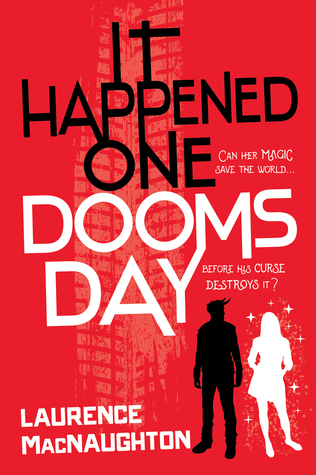 Magic. Demons. Impending apocalypse. All this and more can be found in Laurence MacNaughton’s new urban fantasy novel It Happened One Doomsday, which is out now from Pyr Books! Dru, the story’s heroine is hardly one of the best sorcerers in the world, but she sure can do some impressive things with her nifty crystal magic. Sound like a fun ride? I thought so too. Today I am thrilled to welcome the author himself to The BiblioSanctum to tell us a bit about the inspiration behind the fascinating magic system in his book, and I hope you will enjoy Laurence’s post as much as I did! We’re also very excited about this cool giveaway opportunity, so be sure to check it all out!

CREATING CRYSTAL MAGIC FOR IT HAPPENED ONE DOOMSDAY
by Laurence MacNaughton
In my new book, IT HAPPENED ONE DOOMSDAY, I wanted to create an utterly unique system of magic. Something you’ve never seen before in an Urban Fantasy novel. But hasn’t it all been done?
Maybe not. By chance, I had a brief (and rather odd) conversation with Dan Aykroyd from Ghostbusters, who’s a big believer in the metaphysical properties of crystals. He uses Herkimer diamonds to filter impurities out of his private-label brand of vodka.
Weird. But weird stuff inspires me, so I decided to explore the idea of crystal magic. That’s something I haven’t seen anyone do before.
As it turns out, some people believe that a pure quartz crystal can cleanse your soul.
Or that amethyst protects you against psychic attack.
Citrine supposedly brings wealth, when you place it in the back left corner of your house.
Halite (rock salt) dissolves negative energy.
Interesting, I thought. What would happen if I dialed these properties up to a super-power level?
What if a sorcerer could use crystals to cast powerful spells: levitation, invisibility, and so on?
I decided to go out and do some research. And what I discovered was fascinating.
The towns in the Rocky Mountains where I live are rife with rock shops and lapidaries, some of them little more than a room in someone’s house. If you know where to look, you can find some pretty cool stuff.
Take galena, for example. It’s a blocky crystal that shines like chrome. Scientifically speaking, it’s a lead ore with a low melting point. It also contains up to 2% silver.


But from a spiritual standpoint, it was used in ancient Egypt to line the eyes of the pharaohs. It may have been intended to give them second sight, possibly to protect against evil curses.
The heroine in my book, Dru, can use galena to fight demons.
At one rock shop, I talked to a guy who had found some impressive galena crystals in a mine in Missouri. There was so much groundwater in the rock over that mine that it dripped everywhere, constantly. They had to rig up corrugated steel on scaffolding inside the mine shaft to shield the workers and digging equipment from the underground rain.
Weird. But as you know, weird stuff inspires me.
In my book, Dru Jasper is the bookish owner of The Crystal Connection, a shop that sells potions, charms, and enchanted crystals to the powerful sorcerers who fight against evil. The “real” sorcerers don’t give Dru any respect – but what happens when her crystal powers become the key to saving the world?
Here’s an excerpt from the book:
After a moment’s consideration, Dru picked up a shiny chunk of galena. Like most galena crystals, it looked like it had been formed from a half-dozen different little cubes all fused together, and it had a dark mirror-like sheen, like a highway patrolman’s sunglasses.
She took a moment to weigh the crystal in her hand, until she could feel the faint whispers of its energy synchronizing with hers. “Here. Let me have your hand.”
Greyson put his arm on the counter, and she pushed back the sleeve of his leather jacket. When she touched the galena to his wrist, the crystal popped with a cold blue flare of light, like an old-fashioned photo flash, accompanied by a sinister sizzling sound.
Greyson yanked his arm off the counter and sucked his breath in through his teeth.
“Wow,” Dru said, with a little thrill of triumph, mixed with a tinge of surprised fear. She’d never seen galena react so spectacularly before. “Bingo. Looks like we have a demon.”
 ABOUT THE AUTHOR
I grew up in a creaky old colonial house in Connecticut that I was pretty sure was haunted. As a kid, I was a choirboy in a church that was built in 1754. I also pounded out stories on a black manual typewriter until I sold my first magazine article at age 19. Over the years, I’ve been a bookseller, typesetter, printer, copywriter and (somewhat randomly) a prototype vehicle test driver. When I’m not writing, I bike and hike the Colorado Rockies, explore ghost towns and wrench on old cars. But the whole time, I’m usually thinking about the book I’m going to write next. I love connecting with readers, so click here to contact me.
Laurence MacNaughton is the author of It Happened One Doomsday, The Spider Thief, and Conspiracy of Angels. Also find him at https://laurencemacnaughton.com and on Twitter @LMacNaughton!
It Happened One Doomsday + Galena Crystal Giveaway
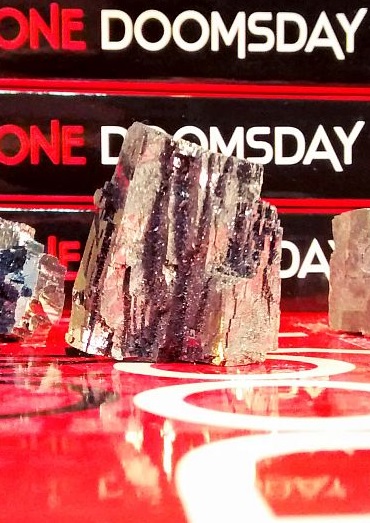
Interested in checking out It Happened One Doomsday? Well, you’re in luck! With thanks to the author and the publisher, the BiblioSanctum is pleased to be hosting this amazing giveaway for a chance to win one print copy of the book plus a genuine galena crystal like the one you see in the image above! This giveaway is open internationally, so come one come all! To enter, all you have to do is send an email to bibliosanctum@gmail.com with your Name and valid Mailing Address using the subject line “IT HAPPENED ONE DOOMSDAY” by 11:59pm Eastern time on Friday, July 22, 2016.
Only one entry per household, please. The winner will be randomly selected when the giveaway ends and then be notified by email. All information will only be used for the purposes of contacting the winner and sending them their prizes. Once the giveaway ends all entry emails will be deleted.
So what are you waiting for? Enter to win! Good luck!
***And there’s more! You can also visit Laurence’s website for details on an extra chance to win a demon-fighting galena crystal of your very own! To enter, just visit this page and subscribe to his author newsletter.***
Week 2: All is Fair Read-Along
Posted on July 11, 2016 1 Comment
Our read-along of The Split Worlds series continues, and this month we’re diving into the third book All Is Fair! If you’re interested in joining this Read-Along, visit the SF/F Read-Along group for more information and to join the discussion.
With thanks to Coolcurry for the read-along banner!

Caught in the insidious designs of powerful puppet-masters and playing a life-or-death game for control, Cathy and her comrades face their greatest challenge yet: changing the balance of power in the Split Worlds.
Now at the heart of the Londinium Court, deceit and murder track Will’s steps as he assumes his new role as Duke. Faced with threats to his throne and his life, the consequences of his bloody actions are already coming back to haunt him…
Meanwhile, Cathy, wrestling with the constraints of the Agency and Dame Iris, comes to terms with her new status in Fae-touched society and seeks others who feel just as restricted by its outdated social rules. As Max works with Cathy to uncover the horrors that underpin Fae-touched society, he bears witness as the final blow is struck against the last Sorcerers in Albion…



Week 1: Monday 4th July, Chapters 1-6, hosted by Over The Effing Rainbow
Week 2: Monday 11th July, Chapters 7-14, hosted by Hisham El-Far
Week 3: Monday 18th July, Chapters 15-22, hosted by The Illustrated Page
Week 4: Monday 25th July, Chapters 23-End, hosted by x + 1

1. We finally meet the Sorcerer of Mercia (Rupert?) – He is VERY different to Ekstrand. Not only does he seem younger and more adaptable to the modern world, he seems comfortable working with scholars from and In the Nether! As we compare and contrast the two Sorcerers, what does this say about Ekstrand – and does it change our views of his actions, behavior and decisions? Is he completely bonkers?
Mogsy: So I was pretty intrigued by the theories I saw last week that Ekstrand might be behind all the murders, and the thought had crossed my mind as well, though the whys and the hows remained elusive. I have to say the evidence is pretty damning against him right now, especially laid out like that by Margritte. Still, I have my doubts that it’s that simple.
For one, I am skeptical of the Ekstrand-Iris conspiracy theory; I think there’s a better chance of him simply being bonkers and paranoid. Meeting the Sorcerer of Mercia has shown us that not all of them are like Ekstrand. While Rupert’s certainly eccentric, he’s no more unusual than anyone who has become taken with Mundanus society, much like Cathy. According to Max, however, Ekstrand has been progressively becoming more unhinged, and after this week I think he may have really lost it.
2. Cornelius and Amelia have been well and truly rumbled – Will knows how badly he’s been manipulated by the siblings, and exactly how! Do you think that either or both of the siblings might bounce back somehow? What about Will and Amelia’s baby? Did Amelia benefit inadvertently from the “help” Will received from Lord Iris’s faerie? If Amelia benefited, Why didn’t Cathy?
Mogsy: I can’t tell you how much I abhor the Rosa siblings, I sincerely hope they don’t bounce back! But knowing Amelia and the way she operates, she probably has an ace up her sleeve. She’ll probably end up blackmailing Will or something, by threatening to tell Cathy everything or worse, knowing that a bombshell like her pregnancy would destroy whatever fragile trust the couple has built so far.
As for the baby, I’m not sure. I do anticipate that the Lords Iris and Poppy would be very angry if they ever find out, especially since it is speculated that their grand plan revolves around a son conceived by Will and Cathy (perhaps Amelia might find some way to use that against Will?) I have no idea why the faerie’s “help” benefited Amelia and not Cathy, maybe it was a “one-time” use charm and Will blew it on Amelia? Er, no pun intended…
3. Skullduggery and Subterfuge! Sam has uncovered Leanne’s secrets and mission – Cathy is unearthing the secrets and like minded thinkers that Miss Rainer has kept hidden. Margritte and Bartholomew seem to have been likely allies to Cathy’s cause – is it possible Lord Iris/Poppy and the other Fae are Intentionally manipulating events to keep the current status quo/gender in-equality in Londinium? If So, to what end? As for Sam – what is he going to do with his new knowledge about Leanne or her findings?
Mogsy: Bartholomew’s death was unfortunate, but I don’t think he and Margritte were intentionally removed because they were too progressive for Nether society; it’s more likely that they were just collateral damage of whatever machinations Lord Iris and Poppy have planned for Will and Cathy. I have a feeling the fae are far too complacent to worry about the status quo in society; instead I think this has everything to do with the son they so desperately want Will and Cathy to conceive. Is this child some kind of “chosen one” or something? Seriously, this thread is what’s bothering me the most.
As for Sam, I know I didn’t have much sympathy for him in the first book, but I’m slowly coming around. I have to wonder though, why in the hell didn’t Leeane tell Sam what she was up to? It’s one thing to want to protect your husband from the dangerous things you have going on, but as far as we know this as been going on for years and years, almost right after they got married. She knew her secrets were chiseling away at their marriage and yet continued on with her subterfuge? I’m sorry, but the right thing to do would have been to either trust Sam and come clean with him, or end things with him the moment she realized she was deliberately driving a wedge between them. But she let it go on, and Sam had to go through all the worries and heartbreak. I feel bad for ranting, since Leeane did end up paying the ultimate price, but I just couldn’t help feeling rattled when I got to the part with the warehouse and her letters. All those years of writing to Sam and pouring her heart out, and for what?
4. Where do you think the main characters are going to go now? Will Cathy meet Rupert? Will Rupert destroy Ekstrand? Will any more/new hidden players in this drama come into the center stage?
Mogsy: I don’t think this peace between Cathy and Will is going to last. Will seemed pretty dismissive of Cathy’s dreams when she told him her plans to bring gender equality to Nether society, but I think that’s just one of many things that could drive them apart. There’s also the silencing spell the Agency cast on Cathy, and the matter of Amelia and the baby. Plus, we mustn’t forget when Will drugged Cathy. I still think that’s going to come out someday and be the ultimate powder keg, because it’s going to make Cathy realize that Will’s no different than her parents.
I also think Cathy will meet Rupert (or they should anyway, if for no other reason than the fact they’re such kindred spirits) but I have my doubts that it’ll happen quickly. No idea what’s going to happen to Ekstrand and Max and the gargoyle at this point. I imagine Max will keep working for the sorcerer; until he realizes Ekstrand has gone off the deep end, I doubt he’ll suspect anything. As for Sam, I think he’s going to find out that Lord Iron has been yanking his chain. I really don’t trust that guy, he’s probably got his eye on Sam as his next victim.
And who knows which other characters will come out of the woodwork at this point?! Things are getting so twisty. I did enjoy Margritte as a new POV though, and her interactions with Rupert.
5. So much happened in this weeks chapters It was hard just limiting my questions to the above – What did you find to be the most interesting event/revelation? Or is there anything else you want to talk about?
Mogsy: Yes, SO much has happened in this section, I wish I’d thought to take notes on everything I wanted to talk about. But, considering how much I wrote this week, I think I got most of my questions/speculations down. Like I said, for me the most interesting revelation was Cathy and Will’s talk about why they think Lord Iris and Lord Poppy paired them together. Cathy brings up a good point: the two of them have centuries to settle down and start a family, so why are the fae rushing them to have a child like RIGHT THIS INSTANT? What’s so special about the two of them, and what will be so special about their son?
I’m also glad that Cathy found Miss Rainer’s secret group. She now has a time and a place to show up to and meet like-minded women like her, and I can’t wait to see how that turns out. Also, as much as I can’t stand Will, I cheered for him this week when he chewed out Amelia. There’s been a complete turnaround on my interests this week; it used to be that I couldn’t care less about the drama in Nether society, but things have gotten really crazy these last couple of weeks and now I’m more hooked on Cathy and Will’s story lines than I am on Max’s or Sam’s.
Audiobook Review: Underground Airlines by Ben H. Winters
Posted on July 11, 2016 15 Comments
A review copy was provided by the publisher in exchange for an honest review. All opinions are my own.
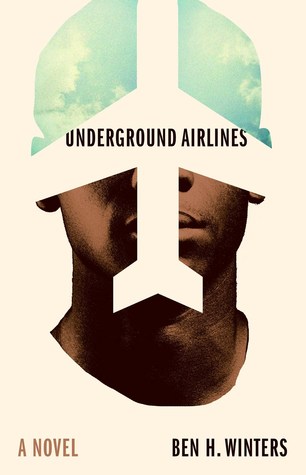 Underground Airlines by Ben H. Winters
Mogsy’s Rating (Overall): 4 of 5 stars
Genre: Alternate History, Mystery
Series: Stand Alone
Publisher: Audiobook: Hachette Audio; Hardcover: Mulholland Books (July 5, 2016)
Length: 9 hrs and 28 mins; 336 pages
Author Information: Website | Twitter
Narrator: William DeMeritt
I became a fan of Ben H. Winters back in 2012 when I first picked up his novel The Last Policeman. Since then, I’ve been following his work, subsequently reading Countdown City as well as World of Trouble as they were released. Together, those three books make up what I think is one of the most tragically underrated series I’ve ever read. So of course when I heard about Underground Airlines, I just knew I had to read it.
And wow, what an incredible book this was. If you haven’t read Winters yet, Underground Airlines is why you really need to. It’s very different from the past stuff I’ve read by him, but the writing and the storytelling both help cement in my mind that this author is entirely deserving of more attention.
His hard-hitting new book imagines what the world would look like today, if the Civil War never happened. In this alternate reality, slavery became protected in the Constitution and still exists in America in the “Hard Four” states, but even the northern parts of the country are deeply steeped in racism.
The story’s protagonist is a young black man called Victor, but that is merely one of his identities. A former slave who escaped only to be captured again, Victor was forced to make a deal with the federal government and to work as a kind of bounty hunter for the US Marshals. His handlers would set him on the trail of other runaway slaves, and then order him to track them down and bring them back to their masters. It’s a job that requires taking on a lot of aliases and putting on lots of different faces, but Victor is very good at playing whatever role is required of him. And whenever the work bothers him, he simply convinces himself that he’s just a man doing what he needs to do to survive, and that this is the price of his freedom.
But then Victor gets a new assignment to locate a runaway slave known as Jackdaw. It’s a particularly troublesome case, and from the very beginning Victor gets the sense that everything feels off. For one thing, he suspects that his boss is hiding information from him, and he doesn’t know why. As he traces the clues to find Jackdaw, he also uncovers disturbing secrets related to the Hard Four and their relationships with the government. Amidst all the pieces of this puzzle, an abolitionist movement called the Underground Airlines might be the key to solving the mystery, but Victor will need to figure out how to infiltrate them first.
The world of Underground Airlines will shake you to your core. You read about the horrific conditions in the Hard Four and the racist attitudes that are so imbedded in the culture, and sometimes it’s difficult to reconcile that with the modern setting of smartphones, laptops and GPS. At the same time though, perhaps our reality has more in common with this one than we’d like to believe. The issues in the novel may be magnified, but sadly they still exist in our world today.
Like many books in its genre, this one also made me ponder a lot about history. Namely, how fragile it is, in the sense how close events can come to turning out very differently. One change, one death, one missed opportunity, and everything can fall another way. Winters set out to explore this idea from top to bottom, working around the central premise: What if the Civil War never occurred? The America in his book is very different of course, but so is the entire world. No country exists in a vacuum, and America’s altered history not only influences its own politics, but it makes international governments perceive Americans differently as well. Within America, the culture is transformed, divided, and ailing badly; even though there are individuals, groups, government organizations, corporations, etc. standing in apparent solidarity against the evils of slavery, institutional racism is still alive and well.
Victor is an enlightening figure as well, a complicated protagonist to lead us through this story. It is clear that he recognizes the truth from the start: that he is free but not free, not a slave but still chained to the machine that keeps states like the Hard Four running. As hard as he tries to let go of his past, it comes back to haunt him every time he goes on a new assignment. A part of him hates what he does and what he has become, but denial is a powerful thing, burying the guilt most days. Little by little though, the cracks form in his armor, and he begins to question who he really is under all those different identities. He’s had to put on an act for so long, the past that he has tried so hard to escape will ultimately be the thing which helps Victor find his way back.
At the heart of it, Underground Airlines is a mystery and suspense novel, but it is still nonetheless oh so powerful. Ben H. Winters continues to impress me, going above and beyond all my expectations.
Audiobook Comments: I was also fortunate enough to review an audio copy of this book. I simply cannot praise the narration enough. William DeMeritt is a completely new narrator to me, but his performance immediately won me over. The main character Victor in the novel, who describes himself as a con man, has to juggle many identities and has to leap in and out of different roles depending on the situation. DeMeritt performs these parts wonderfully, lending authenticity to all of Victor’s various personas especially when he does the different accents and inflections in the dialogue. His narration made this story great, and I highly recommend this book in both print and audio.


Sunday Musings: Worlds Without End Update
Posted on July 10, 2016 10 Comments
School’s out, which means life can settle down to a more reasonable pace. At least for a little while! Despite the crazy over the past few months, I have managed to tuck away several entries for the various challenges that keep me focused on my annual reading goals. There’s the standard Goodreads challenge, where I am 64% into my goal of reading 100 books and graphic novels this year, as well the Audiobook Challenge that we’ve regularly been reporting on as a group. But my favourite challenge is the Roll-Your-Own-Reading Challenge at Worlds Without End. What started as one challenge each year has expanded into as many challenges as you can handle. I often bite off more than I can chew because, well, I love challenges and love the visual effect of seeing all those books lined up all pretty like, but this year, I’m not doing too badly with my nine challenges.
I Just Have to Read More of That Author
 Most of these challenges are self-explanatory, such as this one. I mostly keep this list for authors that I absolutely love reading, and authors that I want to get to know better.
Women of Genre Fiction
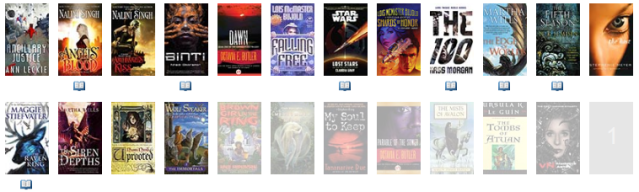 It ought to be easy to fill this list, and yet, I’m still missing one. There are many women writing genre fiction out there and I’m sure I’ll fill that last spot soon enough, but this serves as a reminder that the industry’s dominating force is still men for various reasons. Too many marginalized voices fall through the cracks or are silenced all together, so it’s important to keep promoting work that goes beyond the usual perspective.
Apocalypse Now
 The criteria for this challenge is any genre fiction that focuses on the end of the world as we know it. I initially started off small, but my entries have grown as I’ve combed through my to-read list for apocalyptic fiction. We do so love our end of the world stories.
Audiobook Reading Challenge
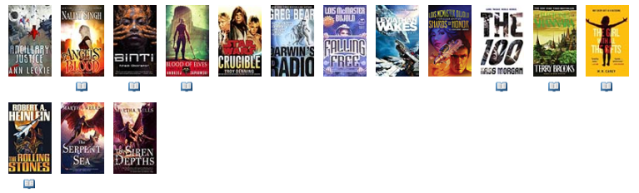 Taking on this challenge is a freebie since audiobooks are such a prominent part of my reading experience. The WWE challenge stops at a mere 15 books, but I’m already double that, with many more to go. But it’s nice to see a completed challenge under my belt.
Read the Sequel
 Far too many books on my shelf are sequels that I intend to get to after loving the first book so much, but those pesky new books always weasel their way in.
Space Opera
 I took up this challenge as part of my quest to venture off into the stars more often. Fantasy is fun, but sometimes, you need some good old spaceships and aliens.
The (Mostly) 2016 Star Wars Reading Challenge

With Star Wars movies scheduled every year now for the foreseeable future, of course I’m going to be jumping back into the galaxy far, far away. I still love the original expanded universe, but the new stuff is certainly proving its worth too.
Pick & Mix
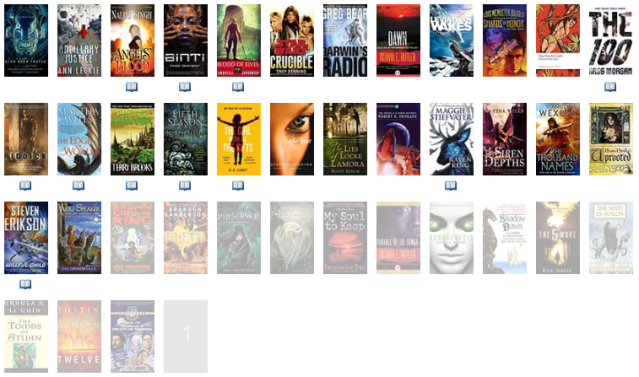 Another freebie that lets me feel good about completing a challenge by dumping everything I’ve read into one convenient place.
Tie-In Fighter

This goes along with my personal goals to read more novelizations. I already love reading auxiliary lore for games and for the Star Wars universe. It’s time to broaden my scope to other mediums.
Book Review: Heroine Complex by Sarah Kuhn
Posted on July 10, 2016 17 Comments
A review copy was provided by the publisher in exchange for an honest review. All opinions are my own.
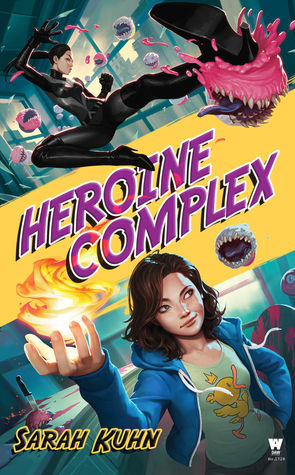
Mogsy’s Rating: 2 of 5 stars
Genre: Urban Fantasy, Superpowers
Series: Book 1 of Heroine Complex
Publisher: DAW (July 5, 2016)
Length: 368 pages
Author Information: Website | Twitter
I badly wanted to like this book, but its style was just completely wrong for my tastes, a model example of the classic “It’s not you, book–it’s me.” In these cases I always struggle to write my reviews, because I know what I perceive as flaws are in fact really selling points that will be very attractive to others. They say good content will always have an audience though, which is why I’m not too concerned about this book’s chances of finding success with readers everywhere, but I confess it didn’t really work as well for me, in spite of its huge charisma.
First, a little bit about Heroine Complex: The book tells the story of two best friends—one is a flashy superheroine, and the other is her quiet personal assistant. Ever since they were five years old, our protagonist Evelyn Tanaka has always found herself in Annie Chang’s shadow, and that’s become especially true now that Annie has become Aveda Jupiter, savior of San Francisco. It isn’t easy keeping up with a superheroine, or putting up with her epic tantrums whenever things don’t go her way, but Evie always tells herself she doesn’t mind the work. After all, Annie-now-Aveda is her oldest, most loyal friend. She’s been there for Evie through all the bad times, rescuing her whenever she needed the help and emotional support. Evie figures the least she can do to repay Aveda is to give her boss anything she wants, and do whatever she commands.
But then one day, Aveda injures herself while fighting cupcake demons, suffering a sprain which would put her out of commission for at least four to six weeks. Refusing to accept being out of the spotlight for that long, Aveda convinces Evie to act as her double and make public appearances in her stead. True to form, Evie caves spectacularly to her friend’s demands, never mind that she has no experience schmoozing at glitzy events, or fighting portal demons for that matter. In fact, Evie has spent most of her adult life actually trying to hide her own superpower, which she fears would be dangerous if she ever let it out.
What can I say? The whole superheroes meets The Devil Wears Prada premise wrapped up in an urban fantasy package was certainly irresistible to me, and at first I genuinely thought Heroine Complex would be right up my alley. And indeed, I would have loved it, I think, if some of the elements which first attracted me to this book–the humor, the action, the snark, etc.–hadn’t been so exaggerated and over-the-top. Another key problem I had with this book was how cartoonish the setting felt. UF has always been one of my favorite genres because I love the way it reimagines our world with supernatural aspects in it, while still maintaining the realism and believability of the setting. In contrast, Sarah Kuhn’s San Francisco and all the characters populating it are more like comic caricatures, and her writing style also reflects this general vibe.
By the way, I use descriptions like “cartoonish” and “comic” because I believe none of this is by accident. I get the feeling that this is exactly what the author is aiming for, but I really have to be in the right mood for this tongue-in-cheek style, and I guess I just wasn’t.
Not surprisingly then, story and characters are also ultra-predictable. Again, I know all that is part and parcel of this particular narrative style, but it still nettled. Evie, despite her quirkiness and ebullience, comes across too bland and two-dimensional. She and her friends are like walking clichés playing their assigned roles and speaking their hammy lines. The romance also felt a bit tacked on and flat, since whenever Evie and her love interest Nate shared a scene, their relationship only seemed to have two settings: sniping-at-each-other mode, or can’t-keep-our-hands-off-each-other mode. I did think the story was fast-paced and fun though, and the plot had its flashes of brilliance every now and then, but it simply wasn’t enough to keep me energized for nearly 400 pages.
Major kudos for the Asian American superheroine protagonists though, even if I could have done without a couple of the stereotypes, like how Asian parents only care about their kids’ grades and would disavow us if we didn’t get into med school, and my eyes just about bugged out of my head when I read that part where Evie said she was used to not letting herself feel because she’s Asian and knows all about emotional repression. Yes, I realize there’s usually a nugget of truth to stereotypes and I’m aware this is all done in the spirit of good fun, but seeing them propagate even for the sake of humor still makes me a tad uncomfortable especially since I’ve had to face many of these same misconceptions in my life (“You’ll want your daughters to be doctors, right?” Even when said in jest, this one is my own personal bane.)
Overall, I know I’m in the minority with my lukewarm reaction, so if you think you’ll enjoy the story’s style or the type of humor I described, then you should definitely give this book a try. Heroine Complex accomplishes what it sets out to do, and it does all of it very well, even if it did turn out not to be the kind of book for me.

Book Review: The Dragon Round by Stephen S. Power
Posted on July 9, 2016 22 Comments
A review copy was provided by the publisher in exchange for an honest review. All opinions are my own.
 The Dragon Round by Stephen S. Power
Mogsy’s Rating: 3 of 5 stars
Genre: Fantasy
Series: Stand Alone
Publisher: Simon & Schuster/Simon451 (July 19, 2016)
Length: 336 pages
Author Information: Website | Twitter
I’d wanted to read The Dragon Round by Stephen S. Power for a long, long time—I’d say pretty much from the moment I first read its description and glimpsed that stunningly gorgeous cover. For one thing, the fact that my love for dragons can only be matched by my love for seafaring fantasy definitely helped turn this book into instant catnip for my senses. Needless to say, my expectations were ultra-high going in. And I just really want to let that be known, in the hopes that maybe my mixed feelings at the end can be better understood.
We begin The Dragon Round with an introduction to the crew of the Comber, a merchant ship captained by Captain Jeryon, one of this story’s main characters. Like most experienced skippers, Jeryon got to be where he is by playing it smart and playing it by the book. His priority is to get his cargo to its destination, avoiding any and all trouble if possible, and so when trouble comes in the form of a dragon in the sky, Jeryon’s first instinct is to leave the creature be, hoping that it will ignore the Comber and go happily on its way. However, some of his crew members disagree, eyeing the dragon for its parts as extra prizes to bring home.
Unsurprisingly, the ensuing encounter with the dragon ends in disaster. Jeryon is overthrown by his mutinous crew and given “the captain’s chance”: to be cast off in a small boat with no rudder, no sails, and no provisions—simply left to the mercy of the seas. For taking Jeryon’s side, the ship’s healer Everlyn also receives the same fate. The two of them end up marooned on a desert island, with no way to escape. Fortunately, the island is abundant with food and water, and can sustain them for a long time, but with the desire for revenge still in his heart, Jeryon is not willing to give up so easily.
One day, Jeryon and Everlyn are exploring when they suddenly come across a dragon nest and witness something no human has ever seen before—a baby dragon hatching from its egg. The two of them decide to raise the tiny female dragonling, which they dub “Gray”, hoping that someday she will eventually grow large enough to carry them off the island. At least, that was the original plan, until Everylyn realizes that Jeryon has a lot more in mind.
To tell the truth, I’m really torn on how to feel about this book. I certainly loved the maritime aspect, and I also have this soft spot for desert island stories—Castaway, Robinson Crusoe, The Blue Lagoon, you name it. I can understand why some people might find them boring, but I’ve always found the survival element of them exciting. I thought the first half of this book was incredibly well done, captivating me with that explosive opening scene featuring the battle between the dragon and the Comber. Then came the on board tensions as Jeryon and Everlyn were sentenced to their cruel fate, their subsequent struggle to stay alive while floating adrift on the open ocean, and finally their arrival to the island where they learned how to build shelter and hunt for food. The two characters carried the story nicely, and I enjoyed their easy relationship and banter as they adjusted to their new reality. Things only got better when they essentially became parents to a baby dragon. Even from the start, Everlyn was the more doting one, treating Gray like a beloved pet. In contrast, Jeryon took to training Gray with a strong hand, because in his mind the dragon is also a deadly weapon.
I also adore revenge stories, and Jeryon is undoubtedly a character deserving of justice. What I found interesting though, is how my perception of him changed over time. I notice that a lot of revenge stories typically work by drumming up sympathy for the aggrieved, so that the reader can connect with their cause and cheer them on. The Dragon Round is different in that respect, showing how a thirst for vengeance can in fact twist a character to the point where they become altogether off-putting and distasteful.
I think this is where things started becoming shaky for me. Thing is, I didn’t actually mind Jeryon’s transformation from an upright captain with sense of honor to a deplorable bloodthirsty vigilante, but I do wish we had been with him for more of that process.
For you see, the second half of the book felt completely different from the first. Just as Jeryon begins his mission to hunt down all his past crew members who betrayed him, the story abruptly switches tack, taking us back on land where the plot also shifts its focus to the power struggles and political conspiracies happening within Hanosh. Not only do we see a change in setting, the narrative also changes a whole new set of character perspectives. Jeryon and Gray are relegated to the background, becoming incidental characters, and poor Everlyn feels almost entirely forgotten.
In a lot of ways, The Dragon Round felt like two books in one because its two halves are just so different. I definitely enjoyed the first half a lot more than the second, and it’s a shame that the excitement and wonder from the beginning didn’t carry through to the end, or I would have enjoyed this novel a lot more. There’s no denying some of the fantastic ideas here, but I just couldn’t embrace the book’s overall structure.
Overall, I had a good time with The Dragon Round, though a part of me also feels it could have been so much more. Still, if nothing else, the first half of the book made everything worth it, with Power proving himself as an excellent wordsmith and talented world-builder. I would be curious to see where his writing takes him next.

Book Review: Borderline by Mishell Baker
Posted on July 8, 2016 23 Comments
A review copy was provided by the publisher in exchange for an honest review. All opinions are my own.

Mogsy’s Rating: 4 of 5 stars
Genre: Urban Fantasy
Series: Book 1 of The Arcadia Project
Publisher: Saga Press (March 1, 2016)
Length: 400 pages
Author Information: Website | Twitter
I’m so glad I finally got the chance to read Borderline. I admit I haven’t been trying out a lot of new urban fantasy lately, since after a while so many of the common themes start to run together until I can’t keep the different stories straight in my head anymore. Borderline, though, is special. Very special. It’s completely invigorating and just what I needed to rekindle my excitement for the genre.
The story, which I originally thought would be darker and grimmer in tone due to what I read in the publisher description, actually turned out to be a lot of fun. The book stars Millie Roper, a young woman with borderline personality disorder who is in recovery for a failed suicide attempt a year before. The incident caused her to lose her legs and her promising filmmaking career, but just as Millie has decided to resign herself to her new reality, a strange woman called Caryl Vallo shows up in her room at the psychiatric center, claiming to represent a group called the Arcadia Project.
And what is the Arcadia Project? Now that’s where things get interesting. Imagine something like Men in Black, but replace the aliens with faeries. Arcadia is the name given to the “other” realm, where the Fey and other mythical creatures reside. They frequently come visiting in our mundane world, and some even make it their home. It’s the mission of certain secret branches of the government working with the Arcadia Project to track these Fey visitors and make sure they don’t stir up too much trouble on this side of reality. What that also means is when the Fey break the rules or go off radar, agents have to be sent in to investigate. That’s where the Arcadia Project comes in, and now Caryl is asking Millie to be their newest recruit.
Wow, where do I start? First of all, Millie is an incredible protagonist. Yes, she’s a complex, fully-realized character. And no, she’s not always likeable. Her borderline personality disorder sometimes makes her emotions volatile, and her behavior unpredictable. But paradoxically, I also found her very genuine despite her moods and thoughts constantly swinging in different directions. I find that unreliable narrators are commonly used in stories about characters with mental illness or behavioral disorders, but Millie also somehow breaks that mold, coming across to me as an exceptional and very different kind of protagonist. She can’t help what she feels in the moment, but she will always tell you straight. She has her dark and low moments, but when she’s not experiencing symptoms she can also be a very humorous, energetic and upbeat person. I loved her unique voice and wouldn’t have wanted anyone else at the helm of this wonderful story.
Speaking of story, on the whole Borderline features a rather conventional urban fantasy plot, but the joy of it is in the details. The book takes place in Hollywood, amidst sprawling film studio lots and glitzy celebrities. Millie herself was a former film student and an indie director before her suicide attempt. Both the character’s background and the setting are woven tightly into the story, so we also get to have some quirky twists involving the movie making industry. For example, almost every successful filmmaker and actor or actress in the past century has had some connections to Arcadia. Central to the plot is the really cool concept of Echoes. The idea suggests that every creative genius in our world will have a muse, or Echo, in Arcadia. And when they meet, it’s like the faerie-touched version of finding your soulmate—you just know. Once a person and their Fey Echo are joined, their talents can reach their full potential, unleashing even more creativity into their work and furthering their success. It’s a lovely idea, and I find it works especially well in this world Mishell Baker created.
I really don’t have many complaints. Perhaps the only thing that tripped me up is the way the author sometimes portrayed Millie’s BPD. I used to work in the therapy and rehabilitation field, and spent a great deal of time working with clients with mental illness, personality and behavioral disorders, as well as acquired brain injury. Millie’s “checklist” style of discussing her BPD at times felt exactly the way I’d described—often it felt like she was reading out of a copy of the DSM and ticking off all the major points like “Borderlines do this because” or “I am like that because” it’s what the info on the disorder says she should feel or do. It hasn’t really been like that in my experience; every individual is different and rarely does the full gamut of symptoms come neatly described and packaged together like that with any one person. It didn’t greatly affect my overall enjoyment of the novel though, and I appreciate the fact that Baker is trying to shine a light on mental health issues and the personal struggles of people who live with them.
I really wish I had read Borderline sooner, as it was such an extraordinary, refreshing novel. It’s exactly what I want in an urban fantasy: entertaining, original, and even meaningful. The fantastic cast simply further highlighted this read for me, from protagonist Millie Roper to my personal favorite character Caryl Vallo. Everything about this book was a delight, and I highly recommend it.
Book Review: Hope and Red by Jon Skovron
Posted on July 7, 2016 22 Comments
A review copy was provided by the publisher in exchange for an honest review. All opinions are my own.

Mogsy’s Rating: 4 of 5 stars
Genre: Fantasy
Series: Book 1 of The Empire of Storms
Publisher: Orbit (June 28, 2016)
Length: 544 pages
Author Information: Website | Twitter
Meet Hope. At the tender age of eight, she became the lone survivor of a massacre on her small southern fishing village after watching everyone she has ever known and loved die horribly in an experiment by the emperor’s biomancers. Rescued by a merchant ship, she was then taken in by the ancient order of Vinchen warriors and taught their ways by Hurlo, their grand master who went against his order’s rules and trained the girl in secret.
Meet Red. Not long after being orphaned and left alone in the slums of New Laven, he woke up one fateful day to find himself held captive aboard a ship alongside the infamous Sadie the Goat. Together, the two of them made their daring escape, and Sadie was so impressed by the boy’s talents that afterwards she named him her sidekick and protégé and the spot.
Under the tutelage of the female pirate/con-woman, Red grows up to become one of the greatest, most quick-fingered thieves in the criminal underworld. Hope, on the other hand, has dedicated her life to becoming an honorable and disciplined Vinchen warrior, dreaming of one day avenging her murdered village. Aside from losing their families at a young age, the two of them have very little in common. However, it appears that their separate paths have ultimately led them to a shared purpose and enemy, and it’s not long before we see Hope and Red joining forces for the biggest fight of their lives.
From the very start, I was completely taken by both Hope and Red. While the two of them don’t even meet until nearly halfway through the novel (and that’s when the fun really takes off) I nonetheless had a great time getting to know each of them on their own. The beginning of the book is mainly focused on their early lives, detailing the children’s experiences growing up with the respective mentors. To me, this section almost reads like an in-depth character study for both Hope and Red, delineating their qualities and showing how their personalities were shaped by the different ways they were raised. Characters are one the most important aspects of a story for me, so I was beyond pleased at such an intimate portrayal of our two protagonists.
Jon Skovron has also created a massive, fully-realized world filled with countless nations and cultures. We get to set sail with Hope to visit a great number of these locales after she departs from the Vinchen order and takes a bodyguard position on a ship’s crew. In the north is a different dynamic, where society may be more built up and urbanized, but it is not without its problems like abject poverty and the disparity in living conditions between the rich and the poor. Red has always found himself caught between two worlds, disowned by the upper class but also not fully accepted by his fellow street gangsters and wags. Despite introducing his readers to a large number of sights and sounds, people and places, maritime slangs and street lingo, I thought the author did a marvelous job uniting Hope and Red’s individual storylines into a tightly woven plot.
Speaking of which, there was never a dull moment. Mixing grit with light humor, the writing style was incredibly easy to get into, helped by the story’s smooth flow and quick pacing. As well, Skovron’s experience with writing in the Young Adult genre can be seen in some of the character actions and plot elements, giving Hope and Red some crossover appeal (albeit reader discretion is advised given the strong language and graphic violence).
Truly, the only criticism I have is the pacing in the last one hundred pages or so, where I felt the solution to Hope and Red’s dilemma was presented too neatly, and the book was also wrapped up too quickly. Compared to the intro, where our protagonists’ lives were so lovingly and painstakingly described in all their particulars, the ending felt somewhat scant and haphazard, almost like Skovron was in a rush to finish. Beyond this one gripe though, I can really find no other major faults.
If you prefer character-driven tales and world-building that gives you the full picture, then you should definitely check this out. Hope and Red is the perfect escape for fantasy fans looking for a fun, entertaining and action-packed adventure. I can’t wait to read the next book in the trilogy.
More on The BiblioSanctum:
Guest Post: “What Lies Beyond Grimdark” by Jon Skovron
Waiting on Wednesday 07/06/16
Posted on July 6, 2016 9 Comments

“Waiting On Wednesday” is a weekly meme hosted by Breaking the Spine that lets us feature upcoming releases that we can’t wait to get our hands on!
Mogsy’s Pick
Winter Halo by Keri Arthur (December 6, 2016 by Signet)
I read my first Keri Arthur book last year and was met with great success. That novel was of course City of Light, first book of her new Outcast series. I’m really looking forward to checking out its sequel this winter.
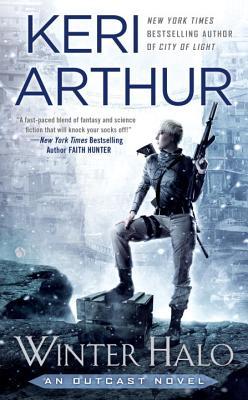 “When the bombs that stopped the species war tore holes in the veil between worlds, they allowed entry to the Others. Now, a hundred years later, humans and shifters alike live in artificially lit cities designed to keep the darkness at bay….
The humanoid supersoldiers known as the déchet were almost eradicated by the war. Ever since, Tiger has tried to live her life in peace in hiding. But in the wake of her discovery that Central City’s children are being kidnapped and experimented on, Tiger’s conscience won’t let her look the other way.
The key to saving them lies within the walls of a pharmaceutical company called Winter Halo. But as she learns more about the facility, Tiger’s mission is derailed by a complication: Winter Halo’s female security guards are being systematically attacked by an unknown force.
Now Tiger must summon all her gifts to stop those responsible for both atrocities—no matter the cost to herself…”
Book Review: The Transference Engine by Julia Verne St. John
Posted on July 5, 2016 13 Comments
A review copy was provided by the publisher in exchange for an honest review. All opinions are my own.
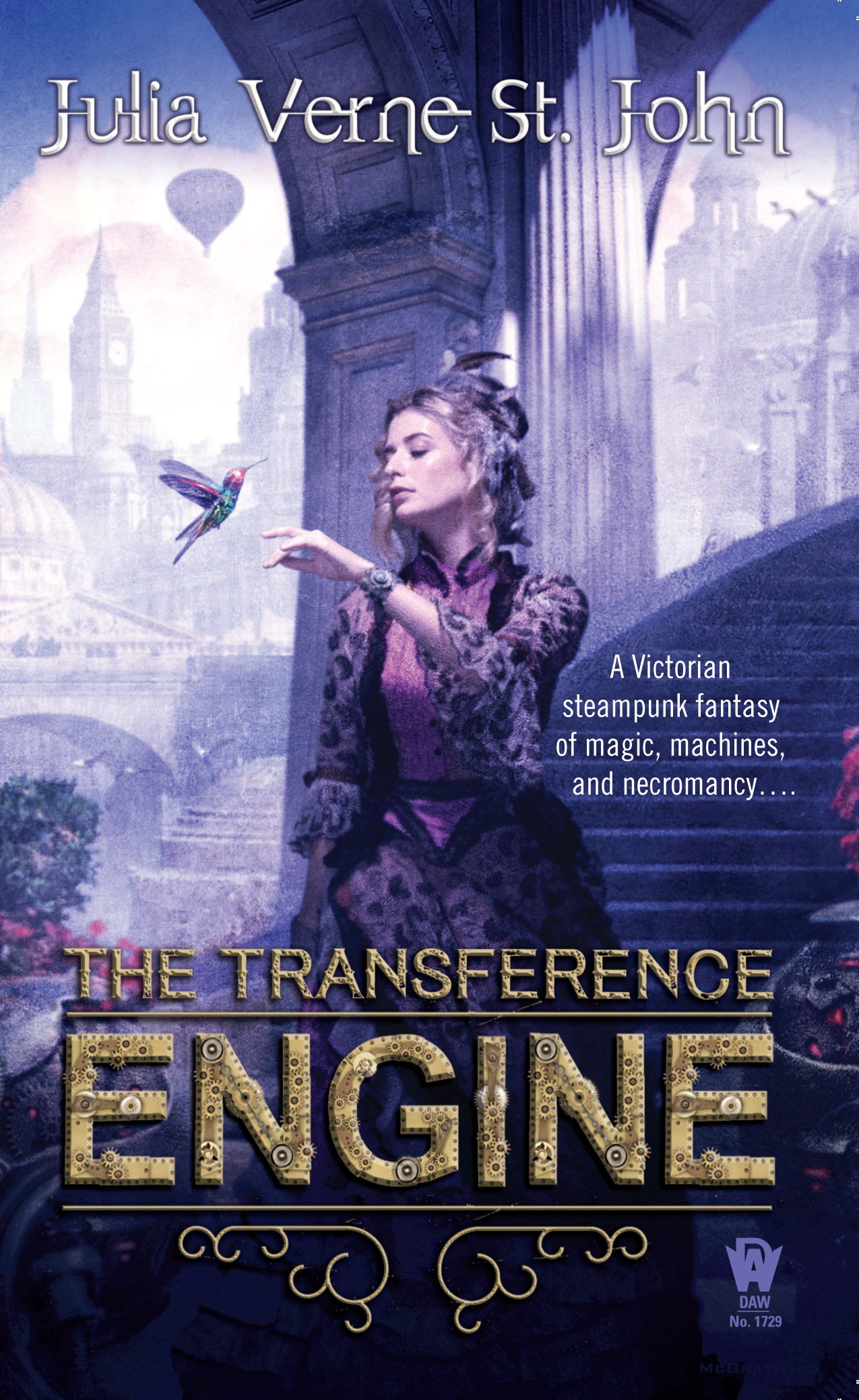 The Transference Engine by Julia Verne St. John
Mogsy’s Rating: 3 of 5 stars
Genre: Fantasy, Steampunk
Series: Book 1
Publisher: DAW (July 5, 2016)
Length: 320 pages
Author Information: Website
Julia Verne St. John’s fantasy steampunk alternate history novel The Transference Engine became one of my most anticipated releases of 2016 when The BiblioSanctum hosted the cover reveal for it earlier this year. The first time I glimpsed that beautiful cover was also the first time I’d heard of this book, and both the protagonist and the world sounded fascinating to me. A mystery involving necromancy, set in an alternate 1830s London that’s run on magic and machines? No way I wasn’t going to love this. In spite of my excitement though, by the time I was through the first few chapters, I realized I was probably going to have to adjust my expectations.
These first few dozen pages or so introduced us to Madame Magdala, the proprietress of the Book View Café, a magical library where patrons can sit and read while enjoying a cup of coffee and freshly baked pastries. However, the café’s centerpiece is a magical book sorting contraption designed by Ada Lovelace and Charles Babbage, a literal search engine that can find any book you ask for in the library’s collection. Magdala and Lovelace—the woman who will one day become the world’s first computer programmer—go way back, from the time Magdala was first hired by Ada’s mother to be a governess and protector for her daughter.
That’s because Ada’s father is also the notorious Lord Byron, the famous poet and depraved necromancer. Even after his death, Lady Byron feared that her husband’s followers would try to resurrect him in a new body using a soul-transferal machine called the Transference Engine. While the original machine was destroyed ten years ago, there’s no telling how far the necromancers will go to complete their task. Now, with reports of young men and women disappearing all around London (and several of the missing being employees of the Book View Café), Magdala is concerned that someone might be attempting to repair the Transference Engine by collecting enough innocent souls to bring back the one of Lord Byron.
In truth, I actually liked this novel. If I was a little disappointed, it’s only insofar because I thought I was going to love it. My main issue with the book was how slowly it started. For a 300-page novel, I typically expect things to be moving long by page 50, but this story didn’t pick up in earnest until more than halfway through, which is quite a lot to ask of your readers. I was feeling much more generous with The Transference Engine and kept reading because I genuinely was taken in by the world, but I think others might not be so patient. Not that the plot didn’t interest me, but I would have liked this a lot more if the major developments were presented sooner.
The number of confusing flashbacks was also another factor that played into the pacing issue. Part of the problem is that this book almost reads like a sequel, with the heroine constantly referring to events in the past like I should be aware of them already. This feeling of “sequel-ness” was so strong, I did some research after finishing The Transference Engine to see what I could find. It turned out, I was right—sort of. The character of Madame Magdala was actually first introduced in a collection of short stories called Steampunk Voyages, published by the author in 2013 under her name Irene Radford. Many of the past adventures Magdala mentions in The Transference Engine are apparently from this anthology, including her experiences involving her past clients, Mary Godwin and Percy Shelley (the latter was a necromancer too). Knowing all this, I understood the reason I felt so lost and confused was because I was effectively starting this story from behind.
That said, I really liked some of the characters and world-building elements. I actually wish these aspects could have been developed more, but the truth is this book was probably too short to fit all the ideas the author wanted. The narrative also spends way too much time on things I didn’t find as interesting, such as Magdala’s constant congratulating of herself for taking in orphans and other street children (almost like she has to remind us all every few minutes what a kind, magnanimous soul she is). In actuality, what I really wanted to know was more about the amazing technology in this world, like her little tiny clockwork hummingbird, or her awesome book finding machine. I’d also hoped that Ada Lovelace would feature more prominently in this book; I think she’s an incredible historical figure and it was such a shame that she didn’t play a bigger role in the story.
Once this book got going though, it really moved. All the set up in the first half of the novel paid off in the second, and I breezed through the story’s climax and conclusion. I don’t know if I can wholeheartedly recommend this since the beginning was so confusing and somewhat dull, but at least the ending was satisfying, even if it did wrap up a little too quickly and neatly. The pacing issues really hurt this novel, robbing this mystery story of its full potential, but there’s also plenty to like here if you’re a fan of the steampunk genre and enjoy reading about cool world-building ideas. If there’s a sequel, I can see pacing improving since the foundation has already been established, and I would be very curious to continue the story.


 The BiblioSanctum