Book Review: Curioddity by Paul Jenkins
Posted on August 29, 2016 19 Comments
A review copy was provided by the publisher in exchange for an honest review. All opinions are my own. Any quotes contained in the following review are from the advance copy and are subject to change.
Mogsy’s Rating: 3 of 5 stars
Genre: Fantasy
Series: Stand Alone
Publisher: St. Martin’s Press (August 30, 2016)
Length: 320 pages
Author Information: Website | Twitter
As its title implies, this novel is a bit of an oddball. Even the style of it reminds me a little of a children’s storybook, complete with its own whimsical fairy tale message: Your eyes only see what your mind wants to see, so sometimes all it takes is a change of perspective. Or, if you’d like: Magic is real, if you just look for it.
The book starts with an introduction to the saddest protagonist ever. Wil Morgan is literally the kind of guy who has dreams about coming in second in a World’s Biggest Failure competition. He’s crotchety, cynical and unimaginative—but that didn’t used to be the case. His childhood was filled with hopes and dreams, and his mother the brilliant jet propulsion scientist Melinda Morgan always encouraged him to reach for the stars and believe in the possibility of magic. But the year he turned ten, Melinda died in a laboratory accident, leaving young Wil in the sole care of his father who is as different from his mother as can be. Barry Morgan, who was never an outside-of-the-box kind of man to begin with, became even more paranoid and set in his ways after the death of his beloved wife, fearing that he would lose his only son too. He essentially forbade Wil to have an imagination, setting the boy on a path to a safe and unadventurous life. And so this was the story of how Wil came to be in his boring, miserable, and uninspired existence.
But a part of Wil has never given up hope. He still wants to believe in the possibility of magic. Maybe that’s why he became a private investigator in defiance of his father who wanted him to be an accountant, even though being a PI pays poorly and he is stuck working out of an office building whose elevators smell like rat vomit. One day though, Wil gets a new assignment from a strange man called Mr. Dinsdale, who claims to be the curator of the Curioddity Museum. Even though Wil secretly thinks the man has lost his marbles, he reluctantly accepts the task of finding Mr. Dinsdale’s missing museum exhibit, something called a “box of levity” (as opposed to gravity).
Paul Jenkin’s debut prose novel is a bit of a surprise, to be sure. I’ve been following his work as a comic book writer since his Hellblazer days and Curioddity is quite different from what I had expected when I first heard that he wrote a book. It’s a little hard to describe, since it has some elements from everywhere, including urban fantasy and even a little bit of magical realism. It’s also somewhat off-the-wall and weird. The reader’s mileage will therefore vary, as it’s so often the case with books like this. If you enjoy unusual stories or eccentric humor in the style of Douglas Adams’ Hitchhiker’s Guide to the Galaxy, then you might want to pick this one up.
On the other hand, if you’re not so sure this will be for you, it might be worth checking out a sample of Jenkin’s writing style if you can, which, speaking of, is very distinctive. You can probably get a good sense of what you’re in for within the first chapter. There are certain quirks like random breaks in the middle of scenes, and not a page goes by without a droll one-liner or some kind of cheeky metaphor. Here’s just one example from a random page:
“Wil felt like a nun at a fashion show: he was clearly out of his comfort zone, and would probably be better off sticking to his usual habits.”
Okay, that one got a chuckle from me. But a constant barrage of that can also get a little distracting, I’ll admit. I also don’t typically do so well with wacky plots and characters, and getting into this novel took time. Like I said, parts of this story reminded me of a children’s tale, and at times the book read like one too. There were flashes of cleverness, but also moments where the juvenile scenarios or Wil’s groan-worthy similes made me roll my eyes.
It’s not that I didn’t enjoy Curioddity though, because I did. Jenkins is clearly a talented writer and he can spin a good yarn. However, I’m also pretty sure I’m not the ideal target reader for this book. And you know what? Considering how well I did with it in spite of that, I would say that’s a win. Though its style sometimes ran counter to my tastes, the book’s whimsical message is something that will stay with me for a long time, as will its heartwarming conclusion. Bottom line, if you think his style will be a good fit for you, then I think you’ll love this one to bits.


#SPFBO Book Review: Assassin’s Charge by Claire Frank
Posted on August 28, 2016 14 Comments

After selecting our shortlist, the Bibliosanctum team is taking a closer look at our potential finalists. We are busy reading the six books left on our original list of thirty and then each of us will review two of them. Stay tuned for our follow up discussion on all of our picks to see who we choose to go on to the next round!

 Assassin’s Charge by Claire Frank
Reviewer: Mogsy
Genre: Fantasy
Series: An Echoes of Imara Novel
Publisher: Mad Wizard Press (April 10, 2016)
Length: 269 pages
Author Information: Website | Twitter
In order to choose one finalist from the pool of 30 books in our SPFBO batch this year, The BiblioSanctum had decided to read partials (approximately five chapters or 20-25% of each entry) to help narrow down our choice and determine a handful of five or six titles that we would want to put forward to the next phase. When I picked up Claire Frank’s Assassin’s Charge though, I didn’t need five chapters to know it was special. I was hooked after only the first few pages, gripped by the author’s smoothly polished and enticing writing style, but more importantly, I knew right away this was a book I wanted to spend more time with because I found myself irresistibly drawn by its enigmatic heroine.
Rhisia Sen is the best at what she does. Known throughout the land as the Reaper’s Bride, she is one of the most notorious and highest paid assassins in the Empire. She’s efficient and disciplined, and the caution she takes while choosing her contracts is a way to guarantee that she will never miss a mark. That kind of dependability is what earned Rhis her success and reputation.
However, all that is about to come crashing down around her. For her latest job, Rhis is only given the name of her target—Asher—as well as where she’ll find him, in a village located in a far-flung corner of the empire. It is a lucrative contract, which originated from the palace, and Rhis has reason to suspect that it came all the way from the Emperor himself. Still, believing this to be an assassination order like any other, Rhis sets off on a long journey across the ocean only to arrive at the designated rural village and discover that this assignment is like nothing she has ever gotten before. Asher turns out to a dark haired, silver-eyed foreigner who lives on a farm. And he is also just a little boy.
Even the most hardened assassins have a line they will not cross, and for Rhis, she draws it at killing a child. This was NOT what she signed up for, and why would the Emperor order a hit on a harmless farmboy anyway? But before she can wrap her head around these bizarre circumstances, Rhis discovers to her horror that she has become a target of the Empire herself. Clearly, someone doesn’t want any loose ends, and now Rhis’ only shot at survival is to take Asher on the run and hopefully convince a few of her old allies to help the two of them stay alive.
From this point onwards it’s a non-stop race around the Empire to avoid Imperial guards, Guild magicians, and even a merciless metal-armed bounty hunter. As enemy forces chase our protagonists across oceans and over mountain ranges, the pacing of this novel never lets up. And even though this cat-and-mouse pattern of events will continue to repeat itself over the course of the story, Claire Frank does a fine job keeping things interesting with plenty of action and mystery. Like, who is Asher and why is he so important? I confess, at first I thought I had the answers all figured out, but as it turned out, I underestimated the story’s potential. While it’s true that for the most part, Assassin’s Charge is an uncomplicated action and adventure oriented novel, I was still delighted to discover it had a few surprises tucked up its sleeves.
But of course, my favorite thing about this book is what drew me in the first place: the characters. Rhis is a wonderful protagonist, complex and well-written. I found her personality and mannerisms very genuine, and in particular her obsession with routine and counting really resonated with me because I experience a similar compulsion, and I remember when the moment of understanding hit me during the beginning chapters when Rhis first showed this behavior. Though she comes off as harsh and aloof in the intro, Rhis has a good heart within her and that gradually becomes apparent as the story unfolds. I liked how that the transformation felt natural, as opposed to a swift and abrupt change in her personality. Her relationship with Asher is similarly written in a way that feels just right, with wariness eventually giving way to trust. And let’s face it: a lot of times, fictional partnerships where one of the characters is a child can potentially be really annoying, depending on said child’s personality and maturity levels in the book. Thankfully, I found Asher very likeable. He reads realistically like a young boy, but he also makes a great team with Rhis.
As for criticisms, there’s the aforementioned issue with the repetitive nature of the story, and I think it’s more noticeable because the action and suspenseful scenes are spaced so closely together. There’s also a romance between Rhis and her old smuggling buddy Rickson (who’s like a roguish, charming piratey kind of character) which I thought was sweet, but could be better developed. Even though the two have known each other for a while, their relationship seemed to go from a spark to a wildfire in almost no time at all. Finally, I thought the ending was left rather open-ended. A couple major conflicts were resolved somewhat conveniently, and even then there were some important questions I felt weren’t answered in full. I’m not sure if Frank intends a follow-up novel about these characters, but I think this was meant to be a stand alone and yet I do get a sense of unfinished business.
I also wouldn’t have minded more world-building and detail about all the exotic places we visit in the book; given the characters’ travel times, I imagine this must be a huge world. However, it wasn’t until after I finished reading this that I learned Assassin’s Charge is actually a separate tale that takes place in world that Frank had already established in a series called Echoes of Imara, so perhaps more background information and history can be found there. What’s certain for now is that I’ve just added those books to my reading list, because Claire Frank is definitely an author that I would read again. I really enjoyed Assassin’s Charge so thank you SPFBO for putting this book on my radar.
Mogsy’s Bookshelf Roundup: Stacking the Shelves & Recent Reads
Posted on August 27, 2016 30 Comments
Bookshelf Roundup is a feature I do every other weekend which fills the role of several blog memes, like Stacking the Shelves where I talk about the new books I’ve added to my library or received for review, as well as It’s Monday! What Are You Reading? where I round up what I’ve read since the last update and what I’m planning to read soon. Mostly it also serves as a recap post, so sometimes I’ll throw in stuff like reading challenge progress reports, book lists, and other random bookish thoughts or announcements.

This was a lighter week compared to some of my previous updates, which I guess is a bit of a relief considering how far behind I am on my reading. These past couple weeks my life has been consumed by No Man’s Sky and of course next week will also see the release of World of Warcraft: Legion. I AM NOT PREPARED! (Sorry, couldn’t resist.) The next couple of months should be interesting as I try to juggle life with my pastimes, though I usually end up managing. I mean, who needs sleep anyway, right? 🙂
Received for Review
Now on to the books, because the new arrivals are no less exciting! Huge thanks to the publishers and authors for the following review copies received, and for more details and full descriptions of the books, be sure to click the links to their Goodreads pages:

The Bear and the Nightingale by Katherine Arden – I was thrilled to receive this ARC as I’ve been looking forward to checking out this book ever since I first found out about it, and it was also featured in one of my past Waiting on Wednesdays posts. Inspired by Russian fairy tales, this debut looks to be a truly magical read. With thanks to Del Rey.
Of Sand and Malice Made by Bradley P. Beaulieu – I don’t usually pick up companion novellas or short stories on-the-side of the full-length novels to the series I read, but for this one I’ll definitely make an exception. I adored Twelve Kings in Sharakhai when I read it last year so I’ll happily check out anything in the Song of the Shattered Sands world. My thanks to DAW Books.
Invasive by Chuck Wendig – Courtesy of the kind folks at Harper Voyager, this book doesn’t appear to be a direct sequel to Zer0es though it does take place in the same world. The description’s rather vague, but if it’s anything like the first book, I think it’ll be a pretty wild sci-fi thriller. The ants on the cover are making me nervous though, because every summer here we would get the worst odorous ant infestations and they are soooo disgusting. Not sure I need any more reminders about how nasty they are.
Glitter by Aprilynne Pike – This YA novel was totally new to me, but the pitch — Marie Antoinette meets Breaking Bad — caught my interest and the cover to this ARC is so vibrant and beautiful that I just might have to take a look. Drugs, decadence, and the Versailles, wow. Thank you to Random House for Young Readers for a chance to check this one out.
Mirror Image by Michael Scott and Melanie Ruth Rose – A nice little surprise came from Tor a couple weeks ago — a finished copy of this creeptastic looking horror novel, which I’ve noticed is getting lots of love around the blogosphere already. Looking forward to read it for myself, hopefully soon! With thanks to the publisher.
The Masked City by Genevieve Cogman – Much love to Roc Books for this finished copy of the sequel to The Invisible Library. I really enjoyed the first book, and I’m really glad this series is finally rolling out in the US. The Masked City has been out in the UK for like the better part of the year already, and the reviews make this one sound just as fun as its predecessor, so I’m pretty excited to dive in.


The Gilded Cage by Vic James – My recent self-imposed ban on requesting anything more from NetGalley has been helping me manage my to-read pile, but earlier in the week I fell off the wagon when I saw this show up on the site. I find it difficult to resist dystopian fantasy, and being auto-approved for the publisher made it doubly worse, so finally I just stopped fighting the call and clicked the button. At least it won’t be adding to my immediate TBR since it won’t be released until February next year. Thanks Del Rey!
The Bone Witch by Rin Chupeco – Speaking of hard to resist, this is another YA title that has been making huge waves lately. I’m usually wary of hype, but I’ve seen a few bloggers I follow speak very highly of this one already, and I trust their opinions. Regardless of how it turns out, I’m convinced I need to give this one a shot. My thanks to Sourcebooks Fire for approving me for the e-galley.
Behind the Throne by K.B. Wagers – Audiobook, with thanks to Hachette Audio. I decided to do the audiobook for this one, seeing as how sci-fi always seems work really well for me in the audio format. I’ve heard a lot of great things about this one and I can’t wait to start listening.
Reviews
A roundup of my reviews since the last update. We’re kind of all over the board this time, but No Good Dragon Goes Unpunished was easily my favorite read for this period and takes the top featured spot!
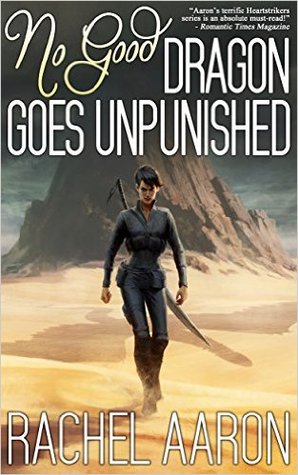
No Good Dragon Goes Unpunished by Rachel Aaron (4.5 of 5 stars)
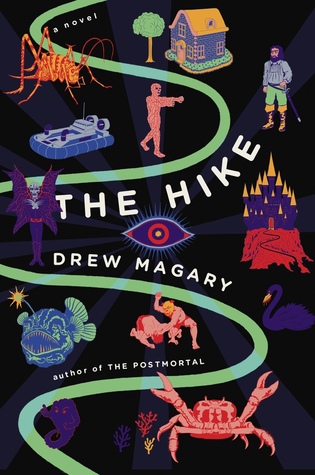
The Hike by Drew Magary (4 of 5 stars)
The Last One by Alexandra Oliva (4 of 5 stars)
Bite by K.S. Merbeth (4 of 5 stars)
Pathfinder Tales: Liar’s Bargain by Tim Pratt (4 of 5 stars)
The Last Adventure of Constance Verity by A. Lee Martinez (4 of 5 stars)
It Happened One Doomsday by Laurence MacNaughton (4 of 5 stars)
Ghost Talkers by Mary Robinette Kowal (3.5 of 5 stars)
The Prisoner of Hell Gate by Dana I. Wolff (3.5 of 5 stars)
The Dinosaur Knights by Victor Milán (3 of 5 stars)
The Kind Folk by Ramsey Campbell (2.5 of 5 stars)
Roundup Highlights:
What I’ve Read Since the Last Update
Here’s some of what I’ll be reviewing at the BiblioSanctum in the next few weeks, minus the reviews that are already up. I’m mostly following my mood when it comes to deciding what to read these days, but also still catching up with some books from July and early August that I definitely don’t want to miss. As well, I’m diving into my SPFBO reading list and am on track for choosing a final winner from our batch by the end of the first competition phase.




Have you heard of or read any of the books featured this week? What caught your eye? Any new discoveries? I hope you found something interesting for a future read! Let me know what you plan on checking out. Until next time, see you next Roundup!
Book Review: The Kind Folk by Ramsey Campbell
Posted on August 26, 2016 11 Comments
A review copy was provided by the publisher in exchange for an honest review. All opinions are my own.
The Kind Folk by Ramsey Campbell
Mogsy’s Rating: 2.5 of 5 stars
Genre: Horror
Series: Stand Alone
Publisher: Tor Books (August 23, 2016)
Length: 224 pages
Author Information: Website
I wish I had enjoyed this more, but when a novel of just a smidgen over two hundred pages takes me more than a week to read, something’s definitely not working for me, and I think I know what it is. While the premise behind The Kind Folk is certainly compelling, and horror novelist Ramsey Campbell sure knows his stuff when it comes to creating dread and suspense, I nevertheless had a difficult time getting used to his writing style and technique, which ultimately affected my overall enjoyment of the story and its characters. Of course when it comes down to an author’s writing style, each individual reader’s mileage may vary, so you may still wish to give this book a try if the story sounds like something that would interest you.
Imagine finding out you are not who you’ve always thought you were, and for the moment to play out on television in front of a nationwide audience. Luke is a 30-year-old standup comedian who along with his parents Maurice and Freda are called up to appear on Brittan’s Resolutions, a fictional Maury-like British daytime talk show which specializes in paternity tests. Maurice has long held suspicions that his son was actually fathered by his brother, Luke’s uncle Terence, and so the whole family has been subjected to a round of DNA testing. The results? Terence is NOT the father! Queue the collective sighs of relief and tears and joy. But before the congratulations can go around, the host drops another surprise: Maurice, you are also NOT the father! And yet, it’s the final bombshell that stuns everyone: DNA shows that Freda isn’t Luke’s mother either.
Reeling from the news, the family concludes that a mistake must have been made at the hospital when Luke was born, and somehow babies have been switched. Luke thus begins his quest to track down his biological parents, hoping that the knowledge would shed light on his medical history because he and his girlfriend Sophie are expecting their own baby very soon. He begins by approaching Terence for help, since Luke has always been close to his uncle, but Terence’s sudden death puts an end to that plan. Instead, Luke searches for clues in Terence’s journal, which the older man had filled with rambling, disjointed notes on his obsession with mythology and the occult going all the way back to a time just before Luke was born.
Terence had written about going to various locations around Britain seeking something, with the words KIND FOLK cropping up in the journal more than a few times. At first, Luke takes this to mean that the locals Terence met were nice and helpful, but as he traces his uncle’s steps, he begins to see strange unsettling things, and more than once he could have sworn he saw an inhuman creature following him out of the corner of his eye.
The mentions of “Kind Folk” of course were references to Faeries. These are the real scary ones too, and not your Disney-fied versions or even the beautiful, cruel tricksters you often see in urban fantasy. The ones in this book are so, so, so much worse. They don’t even look entirely human, with their elongated limbs and pale shapeless faces bearing a poor facsimile of regular features like eyes and mouths. The book also describes them doing this hideous thing with their hands, and I don’t know why, but there’s just something so hair-raisingly disturbing when it comes to extreme bodily contortions, which is probably why exorcism movies employ this device so much.
While there were times where I wish there had been more “horror” in this story, especially during sections where the plot meanders, this novel definitely had its terrifying moments, and almost without exception those scenes all involved the Folk. Whenever they appear, things immediately become creepy as hell. At the heart of this book is also the Changeling myth, based on old folk tales about how the Fae steal newborn babies by replacing them with a doppelganger who is one of their own. This is obviously relevant to Luke’s situation, but with the impending arrival of his own child, there’s this further sense that time is running out, adding a layer of suspense and dread as the baby’s due date ticks closer and closer.
Now for the main reason why this book didn’t work as well for me: Campbell’s writing has a very stark, bare-bones quality to it, with very little description. Coupled with a heavy reliance on dialogue, certain scenes can be difficult to follow. A character will say something, often without accompanying context, leaving me guessing at what he or she means by that. At the same time, when the author does describe the physical environment, he would sometimes use overly complicated clunky metaphors used to relay very simple ideas.
Hard as I tried, I also couldn’t get into the characters. There’s barely any emotion to them, and they seem to treat major events like any other normal day. A husband accuses his wife of being unfaithful, to the extent they all have to appear on a national daytime talk show to sort it out, and the next day they go just back to being a regular old married couple with all the tensions and marital conflicts forgotten. Luke’s uncle Terence dies, and everyone treats it with the gravitas of a trip to the mall. I also didn’t like Luke very much. He barely had a personality, even though he’s supposed to be a very successful comedian, charming audiences with his talent for imitations. His reaction to the DNA results also made me want to punch him in the face. Blood parents or not, for thirty years they raised him and loved him, but suddenly with the snap of the fingers it’s not “Mum” and “Dad” anymore, it’s “Freda” and “Maurice”—and he even goes as far as to change this for their contacts in his phone! I mean, SERIOUSLY, LUKE?! But of course, Freda and Maurice’s response to all of this is the equivalence of a shrug—no sadness, no anger, no hurt, no nothing.
The Kind Folk could have been a real winner, and certainly it contained all of the right ingredients. Unfortunately, it was the execution that really fell flat for me. With all these great ideas here, this novel could have been one of the most terrifying books I read this year, but while it did indeed have its frightening moments, the horror never really sustained itself due to some untidy plotting and weak characterization. If you can get into the writing, this would be a really fast read though, and might be worth a look if you want a book about some truly terrifying Faeries.

Book Review: The Hike by Drew Magary
Posted on August 25, 2016 21 Comments
A review copy was provided by the publisher in exchange for an honest review. All opinions are my own.
Mogsy’s Rating: 4 of 5 stars
Genre: Fantasy
Series: Stand Alone
Publisher: Viking (August 2, 2016)
Length: 288 pages
Author Information: Website | Twitter
The best description I can come up with for my mind-bending experience I had with this book can be summed up in the words of Jerry Garcia: “What a long, strange trip it’s been.” I had initially agreed to review The Hike with no small amount of trepidation, fearing that it might be too “weird” for my tastes. Can you blame me, though? I don’t even how I’ll do my usual novel summary for this review, because pretty sure anything I say will sound like the mad ramblings of someone on a bad acid trip, but here goes nothing:
Ben is a suburban middle-aged family man who takes a business trip up to rural Pennsylvania and books himself into his hotel. Before heading out to his dinner meeting though, he decides to explore around the area with a short hike. He sets off into the nearby woods, following a path he has chosen. Before long, he is beset upon by hulking man wearing the skinned-off face of a dog as a mask. Then there are more of them after him. Or something. Ben ends up running away, stumbling upon a campsite among the trees, and suddenly he is in his twenties again, staring into the face of his old college girlfriend. They sleep together and Ben wakes up. He’s back to his normal thirty-eight-year-old self again, with all his correct memories. But he’s still in the woods, and the girl is gone. All that’s left is a note at the empty camp which reads: “Stay on the path, or you will die.”
Ben stays on the path, all right. The book goes on for a bit longer in this vein. Along the way, he meets a talking crab, who lends him help. Then he’s kidnapped by a man-eating giantess named Fermona, who forces him to fight Rottweiler-men and dwarves in her gladiatorial arena. Up to this point, all Ben wants is to find his way back home to his wife and kids. But soon, he is given a mission: to find someone known as The Producer, supposedly the creator of this crazy world he’s found himself in. The “story”, as it is, keeps going on like this, as Ben spirals deeper into despair, wondering if he’ll ever see his family again.
I don’t usually go for books like this, so in case you’re wondering why I decided to give The Hike a try despite the publisher description clearly indicating that this will be a totally insane and off-the-wall experience, it was because of two words that jumped out at me: video games. Try as I might, I can never resist any novel with a video gaming, and I was also really curious to see how Drew Magary would weave together elements from video game and folk tale as the blurb suggests. Indeed, what we have here is completely unprecedented. Admittedly, the story does play out in a style somewhat reminiscent of those classic text-based adventure computer games, but I have to say unless you’re going into this using Catherine as a baseline for trippiness, this one is going to be WEIRD WEIRD WEIRD.
Typically, I prefer my stories to have a semblance of structure, as opposed to, say, just a random string of events thrown together—which was initially how this book came across. But just as I was starting to really regret my choice, Crab happened. Yes, Crab. To explain would be to give up spoilers, so all I’ll say is that my time with Crab changed everything. By the end of Part I of The Hike I wanted to cry. The revelation revealed there made me understand something about this book, like maybe there’s actually some rhythm to this madness, or maybe the madness is just the point.
At this point in my review, I actually had several more paragraphs planned. After some consideration, I nixed them. It was going to boil down to more commentary on why The Hike was so weird and wonderful, and why despite its kookiness I still enjoyed it a lot. I realized given the circumstances of this book, that’s all immaterial. It’ll either work or it won’t, and I don’t want to run the risk of potentially predisposing would-be readers if I make further attempts to describe its themes or to compare the story to something else, because any more would be revealing and that would remove a lot of the magic.
So throw everything you think you know about this book out the window. Even though it incorporates a number of elements from spec fic genres, at the end of the day it doesn’t matter; it’s going to do its own thing. I don’t think it’s a coincidence that the moment I let go of my preconceptions was also when I started really enjoying myself. There is truly no guessing where things will go, and once you relinquish the reins and simply let this baby take you where it will, The Hike will delight you and enchant you and move you. I’m really glad I took a chance on this special gem.

Waiting on Wednesday 08/24/16
Posted on August 24, 2016 16 Comments

“Waiting On Wednesday” is a weekly meme hosted by Breaking the Spine that lets us feature upcoming releases that we can’t wait to get our hands on!
Mogsy’s Pick
The Wall of Storms by Ken Liu (October 4, 2016 by Saga Press)
Naturally, this second book of Liu’s Dandelion Dynasty series is on my must-read list after how much I enjoyed the first book The Grace of Kings.
 “In the much-anticipated sequel to the “magnificent fantasy epic” Grace of Kings, Emperor Kuni Garu is faced with the invasion of an invincible army in his kingdom and must quickly find a way to defeat the intruders.
Kuni Garu, now known as Emperor Ragin, runs the archipelago kingdom of Dara, but struggles to maintain progress while serving the demands of the people and his vision. Then an unexpected invading force from the Lyucu empire in the far distant west comes to the shores of Dara—and chaos results.
But Emperor Kuni cannot go and lead his kingdom against the threat himself with his recently healed empire fraying at the seams, so he sends the only people he trusts to be Dara’s savvy and cunning hopes against the invincible invaders: his children, now grown and ready to make their mark on history.”
Book Review: Ghost Talkers by Mary Robinette Kowal
Posted on August 23, 2016 24 Comments
A review copy was provided by the publisher in exchange for an honest review. All opinions are my own.
Ghost Talkers by Mary Robinette Kowal
Mogsy’s Rating: 3.5 of 5 stars
Genre: Fantasy
Series: Stand Alone/Book 1
Publisher: Tor Books (August 16, 2016)
Length: 304 pages
Author Information: Website | Twitter
Ghost meets World War I in this really cool new paranormal alternate history novel by Mary Robinette Kowal. The book stars Ginger Stuyvesant, an American engaged to a British intelligence officer during a period of intense fighting in Europe. Our protagonist herself is a medium stationed in the French port city of Le Havre working for the Spirit Corps, a classified spiritualist project developed by Britain to gain an advantage over the Germans.
In the British army, each soldier goes through a top secret conditioning process to ensure that upon their deaths, their spirits will return to Le Havre so that the mediums there can take their report. It’s their final service to their country, passing on potential valuable intelligence like enemy troop movements and tactics. As a member of the Corps, Ginger’s job is to talk to the ghosts of these slain soldiers, collect their information, and pass it on through to the right people. If the Germans find out about what they’re doing here, the consequences can be devastating. However, Ginger’s fiancé Captain Benjamin Harford, being one of the key figures involved in the running of the Spirit Corps, is already suspicious that their secret may be out due to some recent strange activity. Ginger is soon made aware of a possible traitor in their midst, and while Ben is away at the front, the two of them exchange coded messages to share what they know. Together they work to uncover a spy and put a stop to the German’s attempts to target the Spirit Corps.
There’s also a major plot development that happens near the beginning of the book, and although the publisher description doesn’t mention it, it’s so obvious it’s coming that I’m not even sure it would constitute as a spoiler. Still, I’ll err on the side of caution and won’t reveal it, even if it will make writing the rest of this review more difficult. Without going into specific details, I think it is enough to say that this particular development will lead to some very poignant and emotional moments. Ginger felt very genuine to me, which of course is crucial to my enjoyment of a main character and her story.
I also enjoyed the ideas here. Often, when a book calls to me, there is a specific “hook” to the description that initially catches my attention. For Ghost Talkers, it was unquestionably the concept of a Spirits Corps of mediums working for the army. The idea that the military would find a strategic use for ghosts and isn’t really beyond the pale, and Kowal does a great job developing the ins-and-outs behind what Ginger and her fellow mediums do.
However, while world-building is fantastic on a micro-level, when it comes to relating it all back to the wider world out there and the history of the times, that’s where the seams of this novel start to show. When it comes to historical fantasy and alternate history fiction, atmosphere is always going to be more important than the details for me, and the main issue I had with the world-building here was that even though I knew I was reading a book set during WWI, the story never truly made me feel like I was there. I really liked how Kowal addresses many social issues at the time, such as the systemic sexism and racism, but while I applaud her intentions, in the process of tying her story together she also rushes through convenient resolutions which glosses over the harshness of the reality. It’s also not very clear how the Corps came to be, and the workings behind the huge network of people involved in maintaining its secrecy. For example, the story mentions a couple of famous figures like Harry Houdini or Arthur Conan Doyle who are actually accomplices for the British government, working on their behalf to cover up spiritualism and ghost-talking by actively debunking things like that in public. Without more context on the history of the Spirit Corps and how such a huge endeavor was pulled together though, all this comes across as mere name dropping and a slapdash way to try and connect readers to the historical era.
The story was also entirely too predictable, playing out like a conventional mystery—especially since it wasn’t subtle at all when it came to dropping false leads, so it was just a matter of the process of elimination to identify the traitor.
Still, the characters and their relationships shine, even if the plot and setting are weaker. And truly, I think the ultimate strength behind Ghost Talkers lies in its ideas about the Spirit Corps. Imagine having to interact with the departed souls of thousands of soldiers, many of whom died violently and unexpectedly. All ghosts and mediums know that they have a job to do, but reading about Ginger’s attempts to provide comfort and assurances to the spirits before they dissipate into the great unknown was both tragic and touching.
So if the book’s description catches your interest, I think that’s reason enough to check this one out. I wish the story had been expanded a little to create a more immersive atmosphere or to include some context and background information about the Corps, but perhaps that can be addressed with future books. This was a fast, enjoyable novel, and I’m glad I read it.

Book Review: No Good Dragon Goes Unpunished by Rachel Aaron
Posted on August 22, 2016 23 Comments
A review copy was provided by the author in exchange for an honest review. All opinions are my own.
No Good Dragon Goes Unpunished by Rachel Aaron
Mogsy’s Rating: 4.5 of 5 stars
Genre: Urban Fantasy
Series: Book 3 of Heartstrikers
Publisher: Aaron/Bach, LLC (August 5, 2016)
Length: 498 pages
Author Information: Website | Twitter
Just when you think things can’t get any crazier, Rachel Aaron doubles down on the dramatic tensions by throwing us onto the emotional rollercoaster that is No Good Dragon Goes Unpunished. If you aren’t caught up to this series yet, first of all, what are you waiting for? And second, the usual caveat applies for all my sequel reviews: there are potentially spoilery details ahead for the previous two books—nothing too much beyond what’s already revealed in the book’s description, but it’s something to keep in mind just in case you’d prefer to approach Nice Dragons Finish Last or One Good Dragon Deserves Another with completely fresh eyes.
For readers who have been following Julius Heartstriker on this wild, twisting journey since the very beginning though, they’re going to be so proud of our little nice dragon after this book. The youngest Heartstriker of J-Clutch is finally coming into his own. But even after gaining the power to overthrow his mother the great dragon Bethesda, our protagonist still has much more to do. He’s about to introduce a concept that no other dragon in the history of their species has ever contemplated before: Democracy. Refusing to kill Bethesda, Julius decides to put forth the idea of a new ruling Council instead, splitting the power of the Heartstriker into three. With Julius and his mother occupying two of the Council positions, that means only one more seat remains open, and whoever fills it will be decided by vote.
Queue the insanity. Because the rules stipulate that no further major decisions can be made until the Council is whole, both Bethesda and Julius have their own reasons for wanting the election to proceed quickly. However, only the latter has the greater good of the clan in mind, while the former simply wants to get her old power back. Bethesda is pulling out all the stops in an attempt to keep the Council from even happening, backing her own candidate for the coveted seat, and her supporters are also not above trying to kill Julius outright in order to gain her favor. To protect him, his older sister Chelsie is running herself ragged all over the mountain trying to keep the clan from tearing itself apart. Meanwhile, Heartstrikers from all over the country are flocking to the vote, and tensions are high with so many dragons crammed into one place. As they’re busy bickering away though, Algonquin, the ancient spirit of the lakes has declared war on all dragons, and they’re all sitting ducks as long as the last Council seat remains empty. Time is running out, but Julius doesn’t want a quick fix. He has only one chance to change the fate of his clan, and true to form, he wants to do it the right, honest, and good way.
Even after all that, we’re only just scratching the surface. No Good Dragon Goes Unpunished follows a lot of other plot threads, beyond the major one surrounding the Council election. One of these threads are hinted at by that gorgeous cover art, which of course features Chelsie Heartstriker in all her glory. Julius’ scary big sister plays a huge role in this book, and I think her fans are going to be very happy with all the big reveals about her past. There’s a particularly big bombshell that Julius is a little too guileless and innocent to figure out, but for me, it was like WHOOOOAAAAAA.
All of our other favorite characters also return, and then some. I love Marci even more with each book, and she and Julius are just so adorable that I want to melt into sappy puddle every time I read about them thinking of each other. As Julius makes strides in achieving his own potential, so does Marci; she’s set to become one of the most important mages in the world since the great meteor strike that brought magic back to the planet, thanks to her spirit companion, a spectral cat named Ghost. As much as I enjoyed reading about Marci and Julius’ relationship, I had even more fun discovering more about the bond between Marci and Ghost. I’ve always said the world-building is incredible in this series, and Rachel Aaron expands upon it with each book. In the last installment, we learned the true nature of Ghost, but he’s still a big enigma in many ways and this book offers up another key piece of information in the understanding of the series’ magical lore. There’s a reason why everyone wants this ghostly cat, including the UN and Algonquin herself, making Marci’s storyline just as exciting as Julius’.
And of course, how could it be a true Heartstrikers sequel without the rest of the family? Bob, Amelia, and Justin are back, along with Chelsie. But for the first time ever though, we’re also given a good look at just how truly massive the Heartstriker clan is. Feathers fly as the entire family, more than one hundred members strong, are gathered at the mountain. There’s a lot of dragon politics. We’re introduced to the plight of F-Clutch. There are plenty of those who don’t believe in Julius’ vision. Our protagonist pretty much spends this entire book trying to convince his many siblings that killing is wrong, and it’s almost painful at times to watch him try to sell his non-violent approach to those that you know will never come to his side. In several places, Julius’ naiveté made me want to throttle him, to scream at him to “Stick up for yourself!” or that “They deserve it!” Even with killing off the table, without the threat of some kind of punishment, aggressive and manipulative dragons will always try to game the system, and it baffled me that Julius never thought to address that problem. Even with all his blind spots though, I had to admire his conviction. It’s as the title says, no good dragon goes unpunished, and Julius takes a lot of abuse in this book, but he sticks to his guns through even the worst of it. Respect.
All told, this novel is simply excellent, and it’s another incredible installment in the Heartstrikers series. I felt that it was a very different book than One Good Dragon Deserves Another, which featured more action and adventure on a grander scale, whereas this focused more on dragon politics and family ties. This might make the book feel slower, but I personally felt the tradeoff was worth it for the more substantial and meaningful look into the characters’ relationships, not to mention the focus on weightier themes. The author has said that the next book will probably be the final Heartstrikers novel, which makes me sad that the series will be coming to a close but I’m also excited to find out how everything will wrap up. This one ended with a real shocker, and I can’t wait to see what happens next.

More on The BiblioSanctum:
Review of Nice Dragons Finish Last (Book 1)
Review of One Good Dragon Deserves Another (Book 2)
Book Review: The Last Adventure of Constance Verity by A. Lee Martinez
Posted on August 21, 2016 12 Comments
A review copy was provided by the publisher in exchange for an honest review. All opinions are my own.
The Last Adventure of Constance Verity by A. Lee Martinez
Mogsy’s Rating: 4 of 5 stars
Genre: Urban Fantasy
Series: Book 1 of Constance Verity
Publisher: Saga Press (June 14, 2016)
Length: 384 pages
Author Information: Website | Twitter
It appears plenty of people are already aware of the awesomeness of A. Lee Martinez, and as usual I’m just way behind. I first heard of the author only earlier this year, when I saw the title and cover for The Last Adventure of Constance Verity. How could I not be intrigued? Is Constance the badass looking woman smiling smugly at the viewer, apparently after having taken down a bunch of cultists single-handedly? And why might this be her last adventure? I wanted to KNOW. If there’s one thing’s for sure, this book caught my attention right away.
Indeed the story does star our eponymous heroine, and things kick off with one hell of an introduction. Going incognito as “Connie Smythe”, our main character attempts to start her “ordinary” life by getting an “ordinary” job. However, the moment her would-be employers find out about her true identity, the seemingly everyday interview takes a turn for the bizarre as they try to dispose of Connie by sacrificing her to the Hungry Earth monster. Just another day in the life of Constance Verity. Trouble just seems to follow her everywhere, much to her annoyance. All she wants to do is live a normal existence, but just how is she to do that when disasters like alien invasions, time traveling supervillains, or space pirates just keep falling into her lap?
This has been the case for most of Connie’s life. Whether she likes it or not, she is destined for heroism and adventure, thanks to a wish granted to her at birth by her fairy godmother. But now Connie has had enough of all of that, and just wants to settle down. Clearly, the blessing (or curse?) isn’t going to let that happen, so she’ll just have to do something more extreme: Constance Verity is going to kill her fairy godmother and take back control of her life.
This book is the latest addition to what I have labeled my “fantasy comedy” shelf. Martinez goes to town riffing on our beloved tropes from classic action-adventure and pulp stories, combining the humor with paranormal elements. There’s even a running joke between Connie and her trusty sidekick Tia, with them always making references to her past escapades, each one sounding more outlandish than the last. Our heroine has seen it all, from foiling evil supervillain plans take over the world to escaping so-called inescapable sure-death situations James Bond-style. Despite this ostensibly cheesy shtick though, it really works. This story deftly toes the line between satire and homage, so that the premise comes off as being more witty than cornball.
And though Constance Verity is meant to be an amalgam representing a number of our favorite larger-than-life heroes and heroines from classic pulp, she’s surprisingly easy to relate to. Of course, no one can claim to have a life quite like hers, but her desire to achieve some balance between work and pleasure is something a lot of people can sympathize with. It’s also clear after a while that Connie is chasing a pipe dream. After having done the extraordinary things she’s done, there’s just no going back to “normal” for her; not now or ever. We’re along for the ride as Connie discovers this for herself through much introspection and surprisingly profound discussions about determinism and free choice. Is Connie destined to live the rest of her life saving the world every day until she goes down in a glorious death as promised, or is it really just a simple matter of her refusal to turn away from a bad situation knowing that she has the power to help? Whether she likes it or not, Connie has the heart of a hero.
The Last Adventure of Constance Verity is sure to give you plenty of good laughs and some deeper themes to chew on. It’s unexpectedly charismatic and offbeat, and I think of all the fantasy comedy novels I’ve tried this year, so far this is by far my favorite. It’s funny and farcical without being puerile, entertaining without feeling forced. All in all, I had a wonderful time with this book, and I will certainly be looking into picking up more books by A. Lee Martinez!
Book Review: Pathfinder Tales: Liar’s Bargain by Tim Pratt
Posted on August 20, 2016 9 Comments
A review copy was provided by the publisher in exchange for an honest review. All opinions are my own.
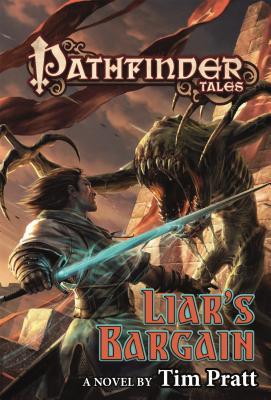 Pathfinder Tales: Liar’s Bargain by Tim Pratt
Mogsy’s Rating: 4 of 5 stars
Genre: Fantasy, Media Tie-In
Series: Pathfinder Tales
Publisher: Tor (June 7, 2016)
Length: 320 pages
Author Information: Website
With my Pathfinder group currently on summer break, I found myself desperately craving for a good quest narrative adventure. Enter Liar’s Bargain, which really hit the spot. Of course, I’d much rather be playing an RPG campaign, but if that’s not possible, reading a story that feels exactly like one is the next best thing.
This book is actually the follow-up to Tim Pratt’s Liar’s Island, and the third in a sequence featuring recurring characters Rodrick and his sentient ice sword Hrym, but like most of the novels in the Pathfinder Tales series it can be read as a standalone.
This time, Rodrick finds himself deep in crusader lands, the last place you’d want to be caught committing a crime. Lawbreakers in Lastwall are punished harshly, as our hapless hero discovers too late, after being sentenced to death for trying to steal a horse. Intrigued by his magical talking sword, however, Rodrick’s captors offer him another way to serve his sentence: join a covert government program with other seasoned outlaws to carry out missions too delicate (and dangerous) for ordinary soldiers. For one year, he would work under his boss Temple and do the bidding of the Lastwall crusaders. Should he survive after that period, he will go free. In the meantime though, Rodrick and his fellow criminals press ganged into service will be implanted with rubies infused with dark magic. If they attempt escape or try to wriggle out of their punishment in any way, Temple promises to activate the magic in the gems, and the explosion would tear their bodies apart.
For Rodrick, the choice was easy. He’d rather take his chances with a ragtag group of miscreants than face certain death at the hands of Lastwall’s executioners. And that is how he and Hrym find themselves teamed up with the outlaw Merihim and her silent companion Prinn, as well as a thief named Eldra and a mysterious alchemist who only goes by “The Specialist”. For the group’s first assignment, Temple sends them on mission to retrieve a very important person—simple enough, Rodrick thinks. But then, one of the others suddenly decide to go off script, and that’s when things start going horribly wrong.
This is only my second venture into the world of the Pathfinder Tales novels, and it couldn’t have been more different from my first, which was Liane Merciel’s Hellknight, a murder mystery mainly starring a duo made up of a hellspawn investigator and a battle-hardened paladin. In contrast, Liar’s Bargain features a traditional quest narrative plot structure and an ensemble cast, with each character bringing something valuable to the party. Merihim is the “brains” of the operation, much to Rodrick’s chagrin. Our poor protagonist fancies himself to be a good leader, but he and his sword were originally brought in simply to be the team’s muscle. The Specialist, despite his name, is the jack of all trades, playing the much essential support role. And of course, no adventuring group can be complete without its resident rogue, and that’s where Eldra comes in. All told, the cast had all the makings of your classic role-playing group, and the story was definitely more in the vein of what I had in mind when I first tried the series, unfolding like a multi-part campaign.
The plot is not very complex, but it’s every bit as fun as you’d expect it to be, with its fair share of surprising twists and turns. In several places, I even amused myself by picturing an imaginary DM setting the adventures up with a jaw-dropping scenario before announcing in an ominous tone, “Roll initiative”, simply because it was just so damn appropriate. As for the characters, Rodrick himself is somewhat of an arrogant puffed-up blowhard, but he plays the part with plenty of humor and snark. When your book’s protagonist has a best friend that’s a talking magical sword with the ability to ice anyone and anything, you can surely count on getting some excellent banter. I’ll admit to more than a few chuckles when I was reading this book, especially during the witty exchanges between Rodrick and Hyrm.
There were some issues, of course, like the Specialist and his apparent ability to come up with a solution to every problem, which felt much too convenient to me (though who knows, maybe he just rolled high on all his skill checks), or the fact that the story meanders too far off the main track with a couple “side quests” in the second half of the novel. But on the whole, I have to say I was quite pleased with Liar’s Bargain. It was entertaining the whole way through, which was exactly what I signed on for, and in fact, I liked it so much, I’m even contemplating going back to pick up the two previous Rodrick and Hrym novels.
Not a fan or player of Pathfinder or RPGs? No problem. Even readers who know nothing about the game can dive right in. If you’re looking for a fun, fast-paced fantasy read, you simply can’t go wrong with this story featuring the misadventures of a lovable gang of scoundrels and rogues.


 The BiblioSanctum