#RRSciFiMonth Book Review: Robogenesis by Daniel H. Wilson
Posted on November 11, 2016 13 Comments

Sci-Fi November is a month-long blog event hosted by Rinn Reads and Over The Effing Rainbow this year, created to celebrate everything amazing about science fiction! From TV shows to movies, books to comics, and everything else in between, it is intended to help science fiction lovers share their love and passion for this genre and its many, many fandoms.
“It’s hard to guess how smart the machines are, but a good rule of thumb
is that they’re always smarter than you think.”
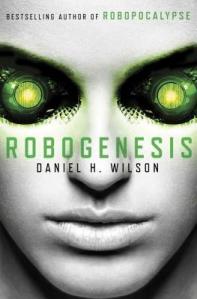 Robogenesis by Daniel H. Wilson
Series: Robopocalypse #2
Genre: Apocalyptic, Science Fiction
Publisher: Doubleday (June 2014)
Author Info: danielhwilson.com
Wendy’s Rating: 4 of 5 stars
Robopocalypse did not impress me and I had no intention of reading on, but hey, I needed another book from my apocalyptic stories reading challenge at Worlds Without End, and the library happened to have a copy soooo…
Previously, on robots take over the world, the AI, Archos-14, was defeated by plucky humans and a few free robots. But, as it turns out, Archos-14 wasn’t exactly the bad guy, despite its decimation of the human population and the physical alterations it made to some of the survivors. It was, as it promised, doing this for humanity’s own good. Because it knew that there had been 13 other attempts at creating an AI before it, and that the results had not simply been destroyed as they should have been. The True War that must be fought now is against Arayt Shah, an AI that cares only for power and survival and knows how to use humanity’s desire for the same to orchestrate further genocide. This isn’t simply a battle of AI vs AI. Both have to convince the surviving humans — as well as the surviving free robots — to build their armies and to fight their battles for them. As often occurs in stories where AIs determine humanity’s fate, the AIs failure is in its logic and lack of understanding of human emotions. This time, things are a little bit different, because it can be said that both Archos-14 and Arayt Shah understand human nature very well, albeit in different ways and for different purposes.
This is a much more grim story that reminds us that war never really ends, even for the survivors. They either have to continue struggling to rebuild what was lost and adapt to the new, or worse, they discover that there’s still another battle over the horizon. It’s not a book for anyone looking for a happy ending, or even hope for the future. It is bleak. It is harsh. It is ugly. It is realistic in its portrayal of war and how easily people can be used and discarded for the whims of those in power.
One of the things that I disliked about the previous book was the format of retelling each of the many characters’ first person accounts. Wilson discarded the impractical piecing together of the tales here. There are still many characters, some of whom we met previously, but the third person, straightforward format used this time more effectively and sensibly tells the story.


Book Review: An Import of Intrigue by Marshall Ryan Maresca
Posted on November 10, 2016 12 Comments
I received a review copy from the publisher. This does not affect the contents of my review and all opinions are my own.
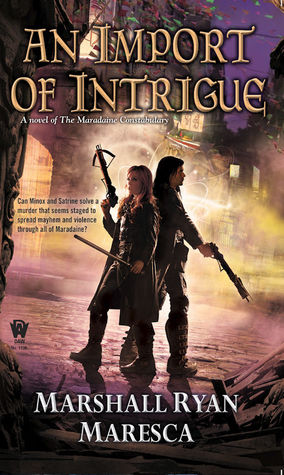 An Import of Intrigue by Marshall Ryan Maresca
Mogsy’s Rating: 3.5 of 5 stars
Genre: Fantasy
Series: Book 2 of the Maradaine Constabulary
Publisher: DAW (November 1, 2016)
Length: 389 pages
Author Information: Website | Twitter
An Import of Intrigue is the second installment in the Maradaine Constabulary series and another impressive achievement in storytelling and fantasy world-building by author Marshall Ryan Maresca. While this book may be the follow-up to last summer’s A Murder of Mages, it is also the fourth novel set in a bigger universe featuring Maradaine, a vibrant and exotic city filled with diverse characters and rich stories.
Once again, readers are following inspectors Satrine Rainey and her partner Minox Welling on a murder investigation involving baffling circumstances. This time, we’re in the neighborhood of Little East, a section of Maradaine home to a large number of different cultures and traditions. Druth, Fuergan, the Imach, Tsouljans, the Kierans, and the Lyranans all make their home in this largely forgotten part of the city, where it’s not uncommon for one to walk down its tumbledown streets and hear a multitude of conversations spoken in the languages of the speakers’ respective home countries or regions.
However, not all of Little East’s denizens always get along, and this latest case involving the death of an important foreign dignitary seems to be an attempt by the killer to stir up even more trouble, knowing that the tensions between the different groups are already on a knife’s edge. Evidence at the crime scene appears to implicate several of them, and Satrine and Minox spend the bulk of their investigation following up on leads in all the various cultural districts. Meanwhile, being an uncircled mage, Minox is starting to feel the adverse effects from his ongoing struggle with his magical powers and the stress of it is threatening to consume him, and Satrine is forced to confront her past as a figure from her former life comes to warn her away from digging too deep.
Just as I expected, I had another rollicking good time with the dedicated duo of Constables Rainey and Welling. I also really enjoyed the story, though if I was forced to pick favorites, I still have to go with first book. An Import of Intrigue had a lot to offer, exploring the political and social factors that affect the lives of everyone in Maradaine, but in terms of readability and flow, A Murder of Mages is the clear winner. Don’t get me wrong, for this sequel featured a plot that was just as strong and entertaining, but admittedly it suffers a little from pacing issues. The book’s introduction winds up being quite a slow builder, weighed down by the storm of people, places, and other names that reader has to quickly absorb in order to get the full picture of this murder mystery.
On the one hand, I love that Maradaine is such a multicultural city full of amazing sights and sounds. On the other, the half-dozen or so cultural groups involved in the investigation, along with the huge cast of characters that are introduced in such a short period of time made this already complicated case even more confusing. I found myself having to start and stop again and again in order to get all the various pieces of this story straight, which had an overall negative impact on the book’s energy and momentum. Not to mention, we also had to take several detours away from the main arc to focus attention on Satrine and Minox’s own personal conflicts. It just seemed like a lot to throw at readers, and better transitioning between the multiple plot threads could have helped smooth out the pacing.
The characters though, they were as ever well-written and top-notch. From an interview with Maresca, I learned that he is planning to be writing at least four series set in the world of Maradaine. To make each one unique and stand out from the others, I think the author’s creative approach to characterization will be the key. He has built complex lives for both Minox and Satrine, and An Import of Intrigue continues to flesh out their personalities and backstories. Minox has finally come to a point where he has to address his uncircled status and how that lack of training might be affecting his work, but it is undoubtedly Satrine who steals the show in this one with the revelations about her past life as a spy. Several of her secrets are blown wide open here, and I can’t help but wonder what this will spell for Satrine’s daughters as well as her severely disabled husband, who depends wholly on her to support him.
The plot thickens, as they say, and I am still just as curious and enthusiastic about the characters and their stories now as I was after I finished reading A Murder of Mages. If you enjoy fantasy and mystery, you’ll find both genres terrifically combined here within the pages of the novels in the Maradaine Constabulary series. Marshall Ryan Maresca continues to impress. Needless to say, if you liked the previous book, An Import of Intrigue is not to be missed.


More on The BiblioSanctum:
Review of A Murder of Mages (Book 1)
Marshall Ryan Maresca Q&A and Guest Post
Begin #SPFBO Phase 2: A Spotlight on the Final Ten
Posted on November 9, 2016 3 Comments

In case you are just joining us now for the coverage of the 2016 Self-Published Fantasy Blog-Off, The BiblioSanctum is part of a panel of ten blogs acting as judges to choose the winning book from out of 300 entries submitted this year. The first phase of SPFBO ended last month, which resulted in ten finalists that will be moving on to compete for the top spot.
This post serves to introduce and mark the start of Phase 2, which officially began on November 1, as well as to lay out our action plan. Also, we’d like to update everyone on the books that our reviewers will be looking at in this next stage of the competition, in case you missed the announcements elsewhere. We most definitely want to spotlight the final ten! Below you’ll find their covers and descriptions, along with links to their Amazon pages if you want to take a closer look. Congratulations to the authors!
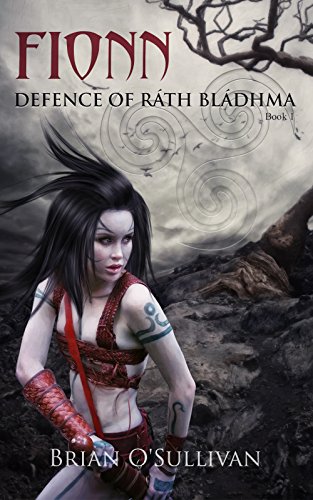



Fionn: Defence of Ráth Bládhma by Brian O’Sullivan
Ireland: 192 A.D. A time of strife and treachery. Political ambition and inter-tribal conflict has set the country on edge, testing the strength of long-established alliances.
Following their victory over Clann Baoiscne at the battle of Cnucha, Clann Morna are hungry for power. Meanwhile, a mysterious war party roams the ‘Great Wild’ and a ruthless magician is intent on murder.
In the secluded valley of Glenn Ceo, disgraced druid Bodhmall and her lover Liath Luachra have successfully avoided the bloodshed for many years. Now, the arrival of a pregnant refugee threatens the peace they have created together.
Based on the ancient Fenian Cycle texts, the Fionn mac Cumhaill Series recounts the fascinating and pulse-pounding tale of the birth and adventures of Ireland’s greatest hero, Fionn mac Cumhaill.
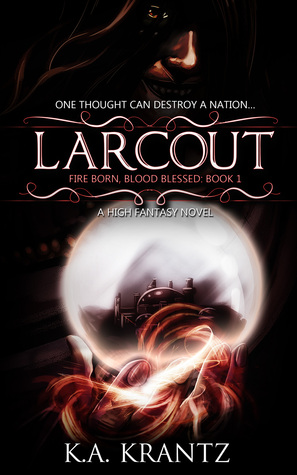
Larcout by K A Krantz
Blood-beings can be chattel or char.
Fire seethes through the veins of every Morsam, demanding domination and destruction. Combat is a hobby. Slaughtering the inferior blood-beings is entertainment. Life is a repetitious cycle in the prison fashioned by the gods. But mix-race abomination Vadrigyn os Harlo suspects the key to freedom lies with safeguarding the blood-beings; until her blood-born mother uses foreign magic to turn the Morsam against Vadrigyn. Betrayed, bound, and broken, Vadrigyn struggles against the dying of her essential fire. Yet the ebbing flames unleash the dormant magic of her mixed heritage…
The magic to destroy free will.
Seized by the gods and dumped in the desert nation of Larcout to stop history from repeating, Vadrigyn discovers her mother’s legacy of treason and slaughter still festers. To survive the intrigues of the royal court, the roiling undercurrents of civil war, and the gods themselves, Vadrigyn must unravel the conspiracy behind her mother’s banishment. But manipulating free will unleashes a torrent of consequences.
If she fails the gods, she will return to the Morsam prison, stripped of all magic and all hope.
If she succeeds, she can rule a nation.
Kasthu. Roborgu. Inarchma.
Live. Learn. Burn.
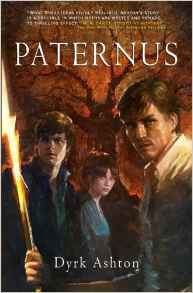
Paternus by Dyrk Ashton
The gods and monsters of myth have returned. In a breathtaking story that takes place in a single day, two ordinary humans are caught up in the final battle of a war that’s been waged since the dawn of time.
Gods, monsters, angels, devils. Call them what you like. They exist. The epic battles between titans, giants, and gods, heaven and hell, the forces of light and darkness. They happened. And the war isn’t over.
17 year old Fi Patterson lives with her stuffy English uncle and has an internship at a local hospital for the aged. She doesn’t know what she wants to do with her life, misses her dead mother, wonders about the father she never knew. One bright spot is caring for Peter, a dementia-ridden old man whose faraway smile can make her whole day. And there’s her conflicted attraction to Zeke — awkward, brilliant, talented — who plays guitar for the old folks.
Then a group of very strange and frightening men show up for a “visit”…
Fi and Zeke’s worlds are shattered as their typical everyday concerns are suddenly replaced by the immediate need to stay alive — and they try to come to grips with the unimaginable reality of the Firstborn.
“Keep an open mind. And forget everything you know…”
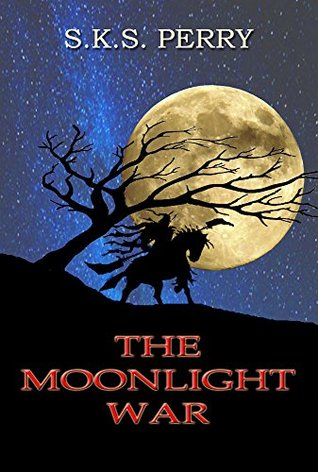
The Moonlight War by S.K.S. Perry
Three caravans have vanished traversing the Cowcheanne Way. The legendary Tahsis platoon, warriors thought by most to be invincible, are dispatched to investigate and are never heard from again. Rumours of native uprisings and bandit armies grow wilder and more widespread every day, while the more devout whisper about the return of the Horde, a mythic foe from ages past.
The truce between the warring Kael-tii and Ashai nations is put to the test when a new caravan is outfitted and they are forced to travel The Way together. As an ancient evil is unleashed upon them, a group of heroes, friend and foe alike, must band together for survival.
When the true nature of their mission slowly comes to light, the growing distrust between the Kael-tii and Ashai camps threatens to tear the caravan apart. Can they set aside their differences in time to combat the menace that imperils them all, or are they doomed to join the ranks of lost souls claimed by the cursed Cowcheanne Way?
Outpost by F.T. McKinstry
In a war-torn realm occupied by a race of unseen immortal warlords called the Fylking, trouble comes with a price. Using the realm as a backwater outpost from which to fight an ancient war, the Fylking taught human seers to build and ward over an interdimensional portal called the Gate. The Fylking’s enemies, who think nothing of annihilating a world to gain even a small advantage, are bent on destroying it.
After two centuries of peace, the realm is at war. Seers are disappearing and their immortal guardians are blind, deceived by their own kind. A Gate warden with a tormented past discovers a warlock using Fylking magic to gather an army of warriors that cannot die. A King’s ranger who defends the wilds of the realm is snared in a political trap that forces him to choose between love and honor. And a knitter touched by the gods catches the eye of a dark immortal with the power to summon storms.
Forced to find allies in unlikely places, these three mortals are caught in a maelstrom of murder, treachery, sorcery and war. When they uncover the source of the rising darkness, they must rally to protect the Gate against a plot that will violate the balance of cosmos, destroy the Fylking and leave the world in ruins.
The god they serve is as fickle as a crow.
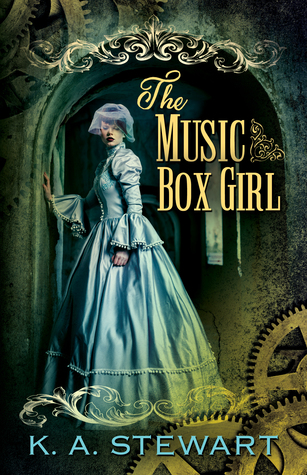
The Music Box Girl by K.A. Stewart
FOR THE LOVE OF MUSIC, FOR THE MUSIC OF LOVE
Steam and steel are king, nowhere more so than Detroit, the gleaming gem of the world’s industrial crown. A beacon of innovation and culture, it is the birthplace of the mechanical automatons, and the home of the famed Detroit Opera House. It is where people come with their dreams, their plans, and their secrets.
A young man with the voice of an angel and dreams of stardom.
A globe-trotting heiress with a passion for adventure and memories of a lost childhood love.
A mysterious woman with a soul made of pure music and a secret worth killing for.
Beneath the glitter and sparkle, something sinister lurks at the opera, and three lives will collide with tragic consequences.
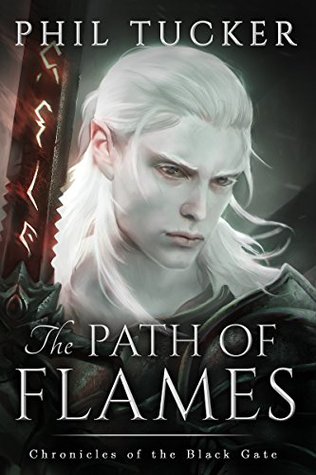
The Path of Flames by Phil Tucker
The first book in the new epic fantasy series readers are comparing to David Gemmell and Raymond E. Feist.
A war fueled by the dark powers of forbidden sorcery is about to engulf the Ascendant Empire. Agerastian heretics, armed with black fire and fueled by bitter hatred, seek to sever the ancient portals that unite the empire – and in so doing destroy it.
Asho–a squire with a reviled past–sees his liege, the Lady Kyferin, and her meager forces banished to an infamous ruin. Beset by tragedy and betrayal, demons and an approaching army, the fate of the Kyferins hangs by the slenderest of threads. Asho realizes that their sole hope of survival may lie hidden within the depths of his scarred soul–a secret that could reverse their fortunes and reveal the truth behind the war that wracks their empire.
The Grey Bastards by Jonathan French
LIVE IN THE SADDLE. DIE ON THE HOG.
Such is the creed of the half-orcs dwelling in the Lot Lands. Sworn to hardened brotherhoods known as hoofs, these former slaves patrol their unforgiving country astride massive swine bred for war. They are all that stand between the decadent heart of noble Hispartha and marauding bands of full-blood orcs.
Jackal rides with the Grey Bastards, one of eight hoofs that have survived the harsh embrace of the Lots. Young, cunning and ambitious, he schemes to unseat the increasingly tyrannical founder of the Bastards, a plague-ridden warlord called the Claymaster. Supporting Jackal’s dangerous bid for leadership are Oats, a hulking mongrel with more orc than human blood, and Fetching, the only female rider in all the hoofs.
When the troubling appearance of a foreign sorcerer comes upon the heels of a faceless betrayal, Jackal’s plans are thrown into turmoil. He finds himself saddled with a captive elf girl whose very presence begins to unravel his alliances. With the anarchic blood rite of the Betrayer Moon close at hand, Jackal must decide where his loyalties truly lie, and carve out his place in a world that rewards only the vicious.
Assassin’s Charge by Claire Frank
A cold-hearted assassin. A boy with a price on his head.
Rhisia Sen is one of the Empire’s highest paid assassins. Living a life of luxury, she chooses her contracts carefully, working to amass enough wealth so she can leave her bloody trade. She is offered a new contract on the outskirts of civilization, and almost refuses—until she sees the purse. It could be the last job she ever has to take.
But when she reaches the destination, she discovers her mark is a child.
The contract, and her reputation, demand she kill the boy—if she can banish his innocent face from her mind. But another assassin has been sent to kill her, and a notorious bounty hunter is on her trail. She doesn’t know why the boy is a target, or why her former employer wants her dead. Saving the child could be her only chance at survival.
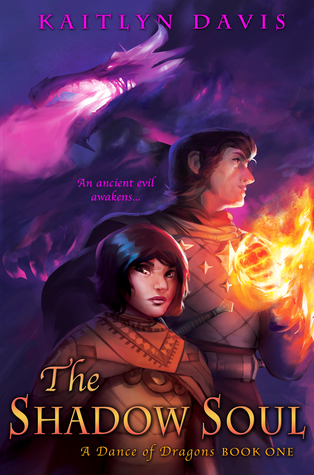
The Shadow Soul by Kaitlyn Davis
When Jinji’s home is destroyed, she is left with nowhere to run and no one to run to–until she meets Rhen, a prince chasing rumors that foreign enemies have landed on his shores. Masquerading as a boy, Jinji joins Rhen with vengeance in her heart. But traveling together doesn’t mean trusting one another, and both are keeping a deep secret–magic. Jinji can weave the elements to create master illusions and Rhen can pull burning flames into his flesh.
But while they struggle to hide the truth, a shadow lurks in the night. An ancient evil has reawakened, and unbeknownst to them, these two unlikely companions hold the key to its defeat. Because their meeting was not coincidence–it was fate. And their story has played out before, in a long forgotten time, an age of myth that is about to be reborn…

Here’s what will be happening in Phase 2: each book listed above will be read and scored out of 10 by the ten blogs, with those numbers going on to generate a cumulative score that will then be used to determine the overall winner. Over the course of the next six months though, we anticipate we’ll be bringing you full reviews for each of these books as well, again with the three of us sharing the work.
To follow along with Phase 2 progress, check out this page on SPFBO founder and author Mark Lawrence’s website, which will be updated with reviews and scores as they come in from the judges. The race is heating up, and we are excited to see how things will play out!



Waiting on Wednesday 11/09/16
Posted on November 9, 2016 13 Comments

“Waiting On Wednesday” is a weekly meme hosted by Breaking the Spine that lets us feature upcoming releases that we can’t wait to get our hands on!
Mogsy’s Pick
Gauntlet by Holly Jennings (April 4, 2017 by Ace Books)
The BiblioSanctum is participating in Sci-fi Month so I’m going to try to feature science fiction picks for my WoWs for the month of November. I’m looking forward to this sequel to last year’s Arena, a gritty and futuristic sci-fi novel about professional gamers who compete to the death in high-stake virtual competitions.
 “Kali Ling isn’t afraid of dying. She’s been killed hundreds of times in hundreds of different ways. And she knows there are things much more terrifying than death…
There’s a new game in town. A brutal, winner-takes-all, international video game tournament between the world’s most elite players, promising fame, prestige, and unbelievable fortune. But there’s a catch. The game uses new VR pods guaranteed to push digital warriors to their physical and psychological brink—adapting every time a gamer makes a move.
As the first female captain and youngest team owner in VGL history, Kali is used to defying the odds. But as the all-star tournament heats up, her determination begins to waver and the pressures of media, sponsors, and the game itself begin to put cracks in her hard-set convictions.
If Kali’s Team Defiance is to survive, they’ll have to find a way to be stronger than ever before. But battling the system may prove too difficult for even the most hardened of fighters…”
#RRSciFiMonth Book Review: After Atlas by Emma Newman + Giveaway
Posted on November 8, 2016 30 Comments
***The giveaway is now over, thanks to everyone who entered!***
Sci-Fi November is a month-long blog event hosted by Rinn Reads and Over The Effing Rainbow this year, created to celebrate everything amazing about science fiction! From TV shows to movies, books to comics, and everything else in between, it is intended to help science fiction lovers share their love and passion for this genre and its many, many fandoms.
I received a review copy from the publisher. This does not affect the contents of my review and all opinions are my own.
Mogsy’s Rating: 4.5 of 5 stars
Genre: Science Fiction
Series: Stand Alone/Book 2 of Planetfall
Publisher: Roc (November 8, 2016)
Length: 336 pages
Author Information: Website | Twitter
While After Atlas takes place in the same cosmos as Planetfall, it is more accurate to call it a companion novel than a true sequel. If you were like me and were confused by the ending of the first book, I’m afraid you’ll not find many answers here. There are mentions to previous events, but at best the link between the two novels are tenuous, with After Atlas following a new protagonist, featuring a completely new scenario in a new setting, and even the story’s tone and style are completely different.
Of course, even if this isn’t the direct sequel you’d hoped for, there’s still plenty of good news. It means After Atlas can be read as a standalone, for one thing. And out of all the books I’ve read by Emma Newman so far, I have to say this was hands down my favorite one of all. It’s quite a departure from her The Split Worlds series and even Planetfall, but that’s what I really enjoyed about it, and how the story dug its hooks under my skin so that even now, days later, I’m still reeling from that punch-drunk sensation I get when I finish an amazing book.
After Atlas introduces us to Govcorp detective Carlos Moreno who went into law enforcement not because he chose that career for himself, but because his contract was bought by Norope’s Ministry of Justice. When Carlos was just a baby, his mother left on the spaceship Atlas along with her fellow faithful to seek God among the stars, leaving her son with her bereft husband. The two of them soon ended up with the Circle, a religious cult led by the charismatic Alejandro Casales, a man whose calling has led him to gather the scientists left behind by Atlas and to heal their shattered families. But living at the Circle had its costs. Alejandro advocated a simple life for his followers, forsaking technology in order to appreciate the meaning behind one’s own hard work and endeavors. When Carlos became a teenager, he chafed against these rules, so he ran away.
Penniless, un-chipped, and innocent of the ways of the world, Carlos sadly ended up in the hands of human traffickers, which is how he came to be trapped in his indentured servitude. Life could be much worse than working for the MoJ though, so Carlos makes sure to do his job well and not cause any trouble lest he adds more years onto his contract. However, the very moment he finds out about his newest case, he knows that things could only go badly. An American VIP has been found murdered and hacked to pieces in a high-class hotel, and the victim is none other than Circle leader Alejandro Casales, a man Carlos once respected and loved even more than his own father.
What follows next is an exciting and suspenseful police procedural. While it is as far as you can get from the mysticism and colonization sci-fi we saw from Planetfall, the straight-up mystery of After Atlas worked a lot better for yours truly, a self-professed fan of science fiction noir. As far as I know, this is the first time the author has written anything like this, and boy does she have the touch. Best of all, she has made use of her futuristic setting and incorporated its science and technology fully, equipping Carlos and his team with the use of advanced AI and virtual reality. But even with all this helpful tech, the case involving Alejandro remains a tough nut to crack, thus much of the story’s impetus actually comes from our protagonist’s inquisitive personality and his own personal stakes in finding out the truth.
Which brings us to Carlos, our gifted but somewhat surly detective. His personality at the start will likely turn some folks off, but before long we will find out more about his past and understand why he might be so private and standoffish. Gradually we also come to grasp the significance of Alejandro’s death and how Carlos’ love-hate relationship with the murdered Circle leader will affect the course of the investigation. I thought Newman handled this aspect of the book particularly well, adding an extra dimension to the already stretched emotions surrounding the case.
Regarding the links to Planetfall, I mentioned before that they are few and tenuous, but readers who want the full picture might want to read the previous book before tackling After Atlas. This story takes place forty years after the Atlas spaceship departed earth with the Pathfinder and her followers, and weeks from now the time capsule that they left is scheduled to be opened. This aspect of the book might come across a tad confusing if you haven’t read Planetfall, but fear not for everything will be sufficiently explained so that the shocking ending of After Atlas will ultimately have the desired impact. As you might recall, the biggest problem I had with Planetfall was the last 10% of the book, and once more I can’t help but think that the final chapter of After Atlas will be the greatest point of contention among readers. Once again, I felt that the conclusion was rushed, but at least this time the end brought a stronger sense of closure—even if winded up shaking me to the core.
Nothing can stop me from recommending this book, though. Emma Newman has written a police procedural like she was born to this genre, laying out the clues and following up on all the leads before pulling everything together for a stunner, the way a composer conducts the many parts of an orchestra to build her symphony into a climax. After Atlas is a wonderfully gripping novel if you enjoy these kinds of stories, and for me it was one of the best I’ve ever read.

After Atlas Giveaway
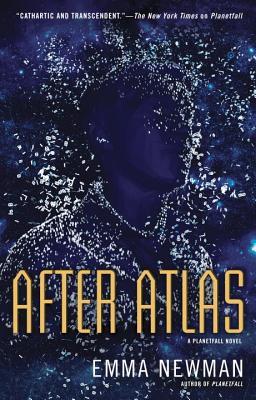
Our Sci-Fi Month giveaway blitz continues, this time courtesy of the awesome folks at Roc Books! Here’s your chance to win this excellent standalone companion novel to last year’s Planetfall by acclaimed author Emma Newman. With thanks to the publisher, The BiblioSanctum is hosting a giveaway for one print copy of After Atlas. This giveaway is open to addresses in the US. To enter, all you have to do is send an email to bibliosanctum@gmail.com with your Name and valid Mailing Address using the subject line “AFTER ATLAS” by 11:59pm Eastern time on Friday, November 18, 2016 and we’ll take care of the rest.
Only one entry per household, please. The winner will be randomly selected when the giveaway ends and then be notified by email. All information will only be used for the purposes of contacting the winners and sending them their prize. Once the giveaway ends all entry emails will be deleted.
So what are you waiting for? Enter to win! Good luck!
#RRSci-Fi Month Book Review: Wolf’s Empire: Gladiator by Claudia Christian and Morgan Grant Buchanan
Posted on November 7, 2016 18 Comments
Sci-Fi November is a month-long blog event hosted by Rinn Reads and Over The Effing Rainbow this year, created to celebrate everything amazing about science fiction! From TV shows to movies, books to comics, and everything else in between, it is intended to help science fiction lovers share their love and passion for this genre and its many, many fandoms.
I received a review copy from the publisher. This does not affect the contents of my review and all opinions are my own.
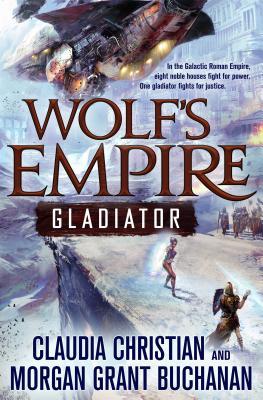 Wolf’s Empire: Gladiator by Claudia Christian and Morgan Grant Buchanan
Mogsy’s Rating: 3.5 of 5 stars
Genre: Science Fiction
Series: Book 1
Publisher: Tor Books (June 28, 2016)
Length: 496 pages
Author Information: Claudia Christian | Morgan Grant Buchanan
Imagine the Roman Empire in space, still busy conquering the stars and holding their brutal gladiatorial competitions to sate the bloodthirsty appetites of the public, even thousands of years into the far flung future. This is the scenario presented to us in Claudia Christian and Morgan Grant Buchanan’s Wolf’s Empire: Gladiator, a sci-fi space opera featuring a galaxy in which Ancient Rome never fell, instead remaining the greatest superpower that ever existed.
The book begins in the midst of a bitter rivalry between two noble families: House Viridian, represented by the proud Golden Wolf, and House Sertorian, bearer of the Ruby Hawk emblem. Across the galaxy, other royal houses has chosen sides, plunging the empire into utter chaos and war. In an attempt to halt the violence and prevent any more unnecessarily bloodshed, the Emperor has decreed that any future fighting will instead take place in the arena at the Imperial Games on the planet Olympus Decimus, where all scores will ultimately be settled. To the victor will go the spoils, while the losers will be forced to give up their status as a ruling house and be stripped of all their royal titles and properties. Wolf and Hawk will still have a chance to take each other down, but now their fighters’ attentions will be turned to honing their gladiatorial skills.
Enter our protagonist Accala Viridius, who has sworn vengeance upon the Sertorian forces who murdered her mother and brother. As a young noblewoman, no one will heed her words, but as a common gladiator, she can take matters into her own hands. Defying her father’s wishes, Accala sacrifices her social status and privilege to compete in the Imperial Games, armed with her weapon-of-choice, a sharp-edged discus.
With this amazing premise set to such a unique backdrop, I could hardly resist. The first couple acts of this novel were perhaps my favorite of all, for I enjoyed how quickly the story established a fully-formed picture of Accala, even in spite of her single-minded desire for vengeance. The authors quickly turned what could have been a vulnerability into a character strength, focusing on Accala’s anger when they developed her personality and began establishing her motivations around this central core. Flashbacks into the past were seamlessly worked into the narrative, portraying the protagonist’s grief at her mother and brother’s deaths, which in turn provided an explanation as to why she was so determined to train as a gladiator. Without venturing into spoiler territory, Accala’s obsession with revenge may also shed some light into her frame of mind as we go deeper into the story. At a certain point, our heroine finds out a shocking truth about her family and is subsequently presented with a horrible dilemma. Admittedly, I couldn’t bring myself to agree with a lot of the things she does in the later sections of this novel, but at least I can sympathize a little with what was driving her.
Accala’s questionable decisions aside, there were a few other nagging little issues that started cropping up as I dove further into this story. For one thing, there’s a whole whopping lot of stuff happening around here, which normally wouldn’t be something I’d complain about. I’d wager though, there’s probably enough plot development in here to fill three books, but cramming it all in one volume only served to create meandering distractions and bring about reader fatigue. That’s what wore me down eventually, as whatever momentum was gained by the solid intro slowly began to drain away once we crossed the halfway point, after which the plot started to feel repetitive and too drawn out. Needless to say, I did not enjoy the second half of the book as much as the first, and I also didn’t read this section with as much speed and enthusiasm.
That being said, the story’s quick pacing wasn’t actually that affected. Wolf’s Empire: Gladiator boasts plenty of fight scenes, and in fact it doesn’t take long at all for things to turn into a massive bloodbath with heads and limbs flying off left and right. There are a lot of twists too, so don’t be surprised when certain pieces on the game board come back into play, even once you think they’ve been taken out of the equation. Nothing is over until the authors decide it is.
I also enjoyed the world-building, even if some of its foundations are a little dubious. I for one am not entirely convinced that seven millennia later, certain customs and attitudes of the ancient Romans have remained static after all this time, such as the stifling patriarchy or the populace’s rabid lust for the gladiatorial blood sports. The Roman Empire in space is an interesting thought experiment more than anything though, and approaching it from a casual point of view, it can be a lot of fun to see how Christian and Buchanan handle the mashup of science fiction and antiquity.
Final verdict: Wolf’s Empire: Gladiator was a fun romp through the galaxy with its intriguing heroine. The first half was definitely stronger than the second half, though I still think it was a great read with a highly unique and imaginative premise. Certain parts of it brought to mind the intrigues and betrayals of Pierce Brown’s Red Rising combined with the fast-paced action of the competitive games in Holly Jenning’s Arena. I would recommend Wolf’s Empire: Gladiator for fans of space operas and gritty, adventurous sci-fi sagas.

YA Weekend Audio: Iron Cast by Destiny Soria
Posted on November 6, 2016 20 Comments

I received a review copy from the publisher. This does not affect the contents of my review and all opinions are my own.

Mogsy’s Rating (Overall): 4 of 5 stars
Genre: Fantasy, Historical Fiction, Young Adult
Series: Book 1/Stand Alone
Publisher: Audible Studios (October 11, 2016)
Length: 9 hrs and 43 mins
Author Information: Website | Twitter
Narrator: Christine Marshall
I didn’t really expect much from Iron Cast. It’s one of those books where its cover caught my eye while browsing Goodreads one day, and the description sounded interesting enough that it led me to add it to my to-watch list. Afterwards though, I must admit it’d pretty much flown out of my mind— that is, until one day I read a very positive review from Kaja whose blog I follow, and her praise was enough to put this book on my radar again. When the opportunity to review the Iron Cast audiobook came along, I jumped on it, and I am very glad I did.
The story is a historical fantasy that takes place in Boston. The year is 1919 and the city’s club scene is full of life, even as the country teeters on the cusp of the Prohibition Era. In underground venues all over, hemopaths entertain patrons on stage. They are the “blood afflicted” ones, gifted—or cursed, depending on your point of view—with the ability to create illusions and affect emotions through art. Best friends Corinne and Ada are two such talented individuals, employed at Johnny Dervish’s Cast Iron Club. By night, Corinne recites beautiful poetry while Ada plays mesmerizing tunes on her violin, but by day, the two young women work their magic as con artists.
Our protagonists aren’t exactly proud of what they do, but it’s a rough world out there for hemopaths and they have to take certain measures to keep themselves and their families safe. Ada and Corinne rationalize that they are cheating and stealing only from the people who deserve it, using the funds to hide the secret of their abilities and what they do for Johnny Dervish. Hemopaths using their abilities is illegal, and those captured are taken to institutions where inhumane experiments take place on prisoners under the pretense of rehabilitating them and making them “fit” to enter society again. One day after a botched job, Ada finds herself thrown into one such place, the nightmare that is Haversham Asylum. Corinne manages to break her out, but upon returning to the Cast Iron, the two of them discover to their horror that even worse misfortunes have befallen their friends at their beloved club.
In many ways, this book reminded me of a lot of Lee Kelly’s A Criminal Magic, another novel I read this year about illegal sorcery as a form of entertainment in clandestine nightclubs, which also takes place around this historical time period. While I enjoyed that one quite a bit, I do think Iron Cast managed to handle several elements with a lot more flair and energy. First of all, the setting: Destiny Soria really captured the essence of 1919 Boston in her descriptions of the people and places, from the poor and downtrodden in the urban tenements to the glitz and glamour of the city’s elite. It’s also an era of tumultuous politics, which is subtly but unmistakably reflected in the social climate portrayed in the story. The nature and soul of the time and place is so important for me when it comes to historical fiction, and in my opinion, the author nailed it. As I listened to the audio, I could practically feel the atmosphere oozing from every word.
Second, I adored Soria’s approach to the theme of female friendship. I know that’s a term that gets thrown around a lot, especially in YA where perhaps more readers are seeking out stories that feature strong friendships as a counterbalance to the genre’s heavy emphasis on romance. I’ve been drawn to books before that claim “female friendship” only to be disappointed the moment a guy steps in and overshadows that relationship (Truthwitch is an example that immediately comes to mind) so you can understand why I went into this one with no small amount of skepticism. Thankfully, those turned out to be unfounded. Corinne and Ada are indeed the best of friends and the strength of their bond was apparent from the get go. The two of them come from very different worlds—Corinne’s parents are prominent and wealthy members of the Boston elite and her brother is running for political office, while Ada is the daughter of two hardworking but impoverished immigrants and her father has been jailed for a crime he did not commit.
It may seem like a cliché for two girls from such different walks of life to bond over their shared hemopathy, but there’s so much more to their friendship than that. Corinne and Ada provide each other comfort and support, but each character also shows time and time again that she is willing to put the other’s safety and happiness above her own. That unconditional love means that they are aware of each other’s foibles and they even joke about how they drive each other up the wall—but all it does is make that loyalty stronger.
All told, I thought this was a great novel and a rather happy surprise. The audiobook was a great way to experience the story, with Christine Marshall’s narration bringing to life all the beauty and magic of Boston in the post-WWI era. I enjoyed her accents and intonations for the various characters and the way her smooth reading kept even the slower, more understated parts of the story moving along at a smart pace. A fantastic debut and highly recommended.
Mogsy’s Bookshelf Roundup: Stacking the Shelves & Recent Reads
Posted on November 5, 2016 39 Comments
Bookshelf Roundup is a feature I do every other weekend which fills the role of several blog memes, like Stacking the Shelves where I talk about the new books I’ve added to my library or received for review, as well as It’s Monday! What Are You Reading? where I round up what I’ve read since the last update and what I’m planning to read soon. Mostly it also serves as a recap post, so sometimes I’ll throw in stuff like reading challenge progress reports, book lists, and other random bookish thoughts or announcements.

Received for Review
Happy November! At this point in the year I am expecting things will be slowing down, giving me a chance to do some catching up on my reading. I’ve been reining in requests as well, but happily it looks like I’ll still have plenty to read this winter as the surprise arrivals keep coming in, and as ever I am always excited to be discovering new books (even if it means Mount TBR growing a little larger!) Thank you to the publishers and authors for the following review copies received, and for more details and full descriptions of the books, be sure to click the links to their Goodreads pages!

Arcanum Unbounded: The Cosmere Collection by Brandon Sanderson – I’m a big fan of Sanderson, having read most of his novels, but somehow many his novellas seem to have slipped through the cracks. I was already planning to read this collection, which would give me a chance to catch up with a lot of his short fiction, so when a surprise package arrived last week containing this book I was absolutely delighted. I would like to express my utmost gratitude to the Tor Books team.
Infernal Parade by Clive Barker – Another surprise arrival from the awesome folks at Subterranean Press! I’ve not actually had the pleasure of reading Clive Barker yet, even though I’ve enjoyed so much of other fantasy and horror media based on his work. I’m really looking forward to this one.
Silence Fallen by Patricia Briggs – It’s no secret how much I love the Mercy Thompson series. I was already planning on requesting this upcoming (tenth!) installment on NetGalley closer to release, so you can imagine my surprise and excitement when an ARC showed up this week. My thanks to Ace Books!
After Atlas by Emma Newman – This is actually one of my current reads for Sci-Fi Month, and by the time this post goes live I should be finished because I am LOVING IT. I hadn’t expected a police procedural when I picked it up, given the nature of Planetfall, Newman’s previous book set in this same universe. Needless to say, After Atlas is very different, but it’s pushing all the right buttons for me so far. Stay tuned for the review and a special Sci-Fi Month giveaway sometime in the next week! With thanks to Roc for the opportunity.
Zodiac by Sam Wilson – More goodies courtesy of Pegasus Books! This was another new-to-me book, so the first thing I did was look it up to find out more. It appears to be a mystery-thriller with just the slightest suggestion of a speculative fiction element – which intrigues me. The synopsis is a fantastic teaser, so it’s very likely that I’ll be checking this one out.
Level Grind by Annie Bellet – This is actually the omnibus collecting the first four novellas of a series called The Twenty-Sided Sorceress. With a book and series title like that, how could the gamer in me resist? Really looking forward to reading this. My thanks to Saga Press.

Congress of Secrets by Stephanie Burgis – Thanks to the wonderful team at Pyr Books for sending along this gorgeous finished copy. I really enjoyed Burgis’ previous novel Masks and Shadows and I am expecting more good things from her latest historical fantasy. And I’m sure you’re all tired of hearing me say this by now, but I just love that cover.
Department Zero by Paul Crilley – From Pyr also came this ARC of Crilley’s adult debut of humor and adventure. I’ve read his YA before and had a great time, so I’m actually quite excited to try this one. Another huge thanks to the publisher.
The People’s Police by Norman Spinrad – Another new-to-me arrival, though when I looked it up on Goodreads it seems I had tagged it as a title to watch. And no wonder! A modern fantasy set in New Orleans, it sounds very interesting. Thanks to Tor for the ARC and for putting this book on my radar.
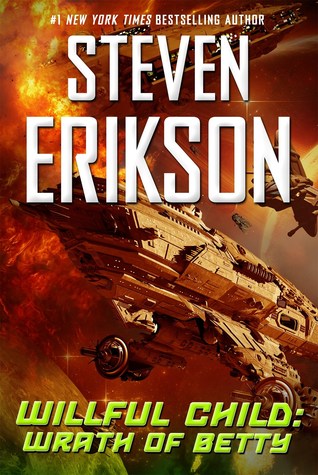
Willful Child: Wrath of Betty by Steven Erikson – Humor can be a tricky beast, especially when it comes to parody. Even more so when your subject matter is Star Trek. But as you can see from my review that went up yesterday, Erikson knows his source material well and he’s pulling no punches when it comes to this second novel in the Willful Child series. If you’re in the US or Canada, don’t forget to check out our giveaway! Thanks again to Tor for the finished copy and for helping us celebrate Sci-Fi Month!
The Unreal and the Real and The Found and the Lost by Ursula K. Le Guin – With shame, I admit I’ve never read Ursula K. Le Guin. Deep, deep, shame. But that is about to change soon, as I plan on diving into these two anthologies – one that collects a selection of her short stories, the other which collects her novellas. Before I accepted the pitch for these books though, I had no idea just how physically HUGE they were going to be, but honestly I should have expected it. These stunning hardbacks are a testament to Le Guin’s long and distinguished writing career. With almost 1,600 pages between them, I’m tempted to take and post a picture of these two ginormous tomes stacked on top of each other, because seeing that is when it really hits home. With thanks to Saga Press and Wunderkind for this incredible opportunity; I’m going to be cuddling up with these books all through winter and savoring each story.


Heartstone by Elle Katharine White – Pride & Prejudice retellings and other Austen-esque type fiction can be hit-or-miss with me. But wait, did you say there’s going to be magic and dragons? Where do I sign up! I really hope this one will live up to expectations. I was thrilled when I was approved for the eARC, with thanks to Harper Voyager.
Skitter by Ezekiel Boone – No matter how hard I try, I just can’t seem to say no to these “creature feature” books. Everyone remembers the creepy killer spider swarm in The Hatching right? When I saw the sequel for immediate download on NetGalley, I caved to the temptation. My thanks to Atria Books.
Six Wakes by Mur Lafferty – Speaking of temptations, there’s a great many of them from Orbit this fall and winter. I’m actually proud of myself that I only requested one e-galley…for now. I’m in a sci-fi mood thanks to Sci-Fi November, and Six Wakes has been on my radar for a while. My thanks to the publisher!
The Hanging Tree by Ben Aaronovitch – Not too many books can make me drop everything and read them as soon as I get my hands on them, but this is one of those cases. The Peter Grant/Rivers of London series is one of my favorites ever, and the wait for book six has lasted so long since it kept being pushed back. Even though it’s not coming out until end of January 2017 in the US (you lucky UK folks get it this month), I’ve already started reading. Thank you so much to DAW.
Idle Ingredients by Matt Wallace – Also thanks to Tor.com for sending me this e-galley of the fourth Sin du Jour book. I’m loving the series and I can’t wait to continue the culinary adventures of this lovable cast of wacky characters.
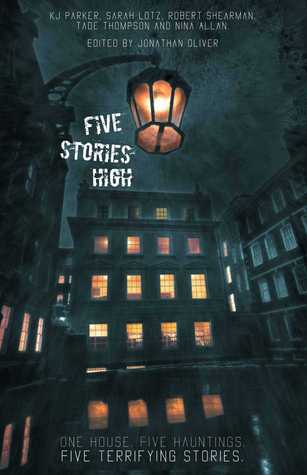
Five Stories High edited by Jonathan Oliver – K.J. Parker. Sarah Lotz. Nina Allan. Robert Shearman. Tade Thompson. I can be a real grouch when it comes to short story collections, but with an author line-up like that, even I was convinced to take a look. Plus, its premise – five tales of horror that take place in one five-storey Georgian mansion – sounds like it has strong potential. Thanks to Solaris Books for approving me!
Reviews
Lots of reviews since the last update since I had to write up all the books I finished while on vacation, but I’m just about caught up now. I’ve enjoyed some really superb reads in recent weeks, so I’ve got a couple to highlight in my Review Roundup today:
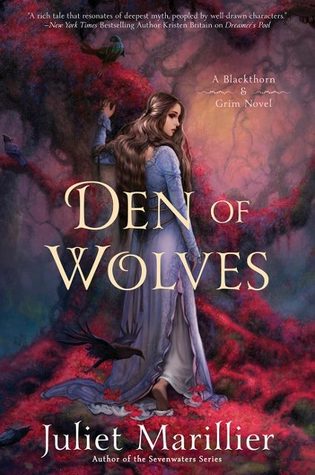
Den of Wolves by Juliet Marillier (5 of 5 stars)
Gemina by Amie Kaufman and Jay Kristoff (5 of 5 stars)
The Family Plot by Cherie Priest (4.5 of 5 stars)
The Queen of Blood by Sarah Beth Durst (4 of 5 stars)
Star Wars: Ahsoka by E.K. Johnston (4 of 5 stars)
The Cloud Roads by Martha Wells (4 of 5 stars)
Willful Child: Wrath of Betty by Steven Erikson (3.5 of 5 stars)
Dracula vs. Hitler by Patrick Sheane Duncan (3.5 of 5 stars)
Faller by Will McIntosh (3 of 5 stars)
Glitter by Aprilynne Pike (3 of 5 stars)
The Tourist by Robert Dickinson (3 of 5 stars)
Roundup Highlights:

Interviews & Guest Posts
Big thanks to the authors who stopped by The BiblioSanctum this week! Will Panzo, author of The Burning Isle wrote a fantastic piece on grimdark characters, and we were also pleased to be a stop on the blog tour for Marshall Ryan Maresca’s An Import of Intrigue. Check out their books!
Guest Post: “Your Heroes are False Idols” by Will Panzo
An Import of Intrigue: Marshall Ryan Maresca Q&A and Guest Post

What I’ve Read Since the Last Update
Here’s what I’ve been reading lately. Sci-Fi Month is already in full swing and as you can probably tell, I’m reveling in it. That being said, I’m still reading a good blend of spec fic genres and diving into a lot of November releases. You’ll have noticed that some of these books have already been reviewed, and the rest will be coming soon.




Have you heard of or read any of the books featured this week? What caught your eye? Any new discoveries? I hope you found something interesting for a future read! Let me know what you plan on checking out. Until next time, see you next Roundup!
#RRSciFiMonth Book Review: Willful Child: Wrath of Betty by Steven Erikson + Giveaway
Posted on November 4, 2016 9 Comments
***The giveaway is now over, thanks to everyone who entered!
Sci-Fi November is a month-long blog event hosted by Rinn Reads and Over The Effing Rainbow this year, created to celebrate everything amazing about science fiction! From TV shows to movies, books to comics, and everything else in between, it is intended to help science fiction lovers share their love and passion for this genre and its many, many fandoms.
I received a review copy from the publisher. This does not affect the contents of my review and all opinions are my own.
Willful Child: Wrath of Betty by Steven Erikson
Mogsy’s Rating: 3.5 of 5 stars
Genre: Science Fiction
Series: Book 2 of Willful Child
Publisher: Tor (November 1, 2016)
Length: 336 pages
Author Information: Website
Calling all Starfleet personnel: if you’ve ever found yourself hankering for a homage or parody of your favorite sci-fi franchise, you might just want to take a closer look at this humorous space opera by Steven Erikson of Malazan fame. While it’s true I don’t usually go for “spoofy” books such as these, when it comes to my beloved Star Trek though, you can be sure all bets are off.
These are the voyages of the starship A.S.F. Willful Child. Its ongoing mission: to blindly stumble upon strange new worlds, to be a huge pain in the ass to every new life and civilization it meets, to boldly go where no author has dared go before. Erikson has certainly pulled out all the stops for this one, and if you’ve read the first book, then you’ll already know that this series is very different from his fantasy. The style of humor is also bound to raise a few eyebrows, especially if you’re not prepared for it. Suffice to say, it can be a little (okay, maybe a lot) on the crass side. Well, you have been warned.
Still, considering the prime source of inspiration seems to come from Star Trek: The Original Series, it’s easy to see why there might be plenty of material for Erikson to play with. His Captain Hadrian A. Sawback is a lot like Shatner’s Captain James T. Kirk with his bluster and libido dialed up to eleventy-billion (though apparently he also looks a lot like Chris Pine, enough to be his stand-in). Meanwhile, all the members of Sawback’s bumbling crew have characteristics that will no doubt remind readers of characters not just from the 60s shows, but from all the other series and movies as well.
While the title is an obvious nod to Star Trek II: The Wrath of Khan, the hirsute Captain Betty of the Klang fleet actually receives very little page-time in this rowdy romp through space and time, in spite of his vow to destroy his archnemesis Captain Hadrian Sawback. The story is once again told in a style that kind of emulates the “episodic” format of a TV series, with the outrageous events of the plot flowing from one hilarious calamity to the next. I didn’t think it would be possible, but this follow-up to Willful Child might be even wilder, zanier, and more unrestrained than the first book. The satirical tone is also more forceful and cutting in this one, almost like Erikson has realized just how far he could push the envelope when it comes to the genre, and he’s endeavored to outdo even himself for this second novel. This escalation can be seen as Hadrian and Co. are thrown in increasingly deeper waters and more absurd situations, including a howling good scene where they find themselves trapped at an early 21st Century Comicon. As you can imagine, Galaxy Quest-levels of hilarity ensue.
The characters are also given a lot more depth—to the extent that it is possible in a spoof such as this. We see the return of many members of the bridge crew as well as the introduction of several new ones, forming an eccentric collection of personalities that signal no end to the fun in sight. As well, those who enjoyed the character dynamics from the first book will probably be pleased to see more of the same in this follow-up, especially if you got a kick out of the vicious ripostes between Hadrian and Tammy the shipboard-artificial-intelligence-and-sometimes-chicken from the future.
From the second part of that last sentence alone, you can probably guess there will be no serious majestic sweeping space epic here. But if you are a fan of Family Guy or The Simpsons-type satire and humor, then the snappy and suggestive dialogue together with the fast-almost-frenetic pacing of Willful Child: Wrath of Betty will give you more than you bargained for. I’ll admit, if this had been a spoof on anything else other than Star Trek, I might not have been quite so taken with it, but in general I think this series has a lot to offer for fans of sci-fi humor. Erikson’s main inspiration aside, you’ll also find him mercilessly/lovingly riffing on other franchises like Star Wars as well as many of the genre’s most popular tropes. All this amounts to plenty of laughs and never a dull moment.
More on The BiblioSanctum:
Mogsy’s review of Willful Child (Book 1)
Wendy’s review of Willful Child (Book 1)
Willful Child: Wrath of Betty Giveaway
To celebrate Sci-Fi Month, Tor Books has very generously offered The BiblioSanctum an opportunity to host this giveaway for the standalone follow-up to Steven Erikson’s Willful Child! Two lucky winners will each receive a hardcover copy of Willful Child: Wrath of Betty. This giveaway is open to residents in the US and Canada. To enter, all you have to do is send an email to bibliosanctum@gmail.com with your Name and valid Mailing Address using the subject line “WRATH OF BETTY” by 11:59pm Eastern time on Sunday, November 13, 2016 and we’ll take care of the rest.
Only one entry per household, please. The winners will be randomly selected when the giveaway ends and then be notified by email. All information will only be used for the purposes of contacting the winners and sending them their prize. Once the giveaway ends all entry emails will be deleted.
So what are you waiting for? Enter to win! Good luck!
#RRSciFiMonth Book Review: The Twelve by Justin Cronin
Posted on November 4, 2016 12 Comments
Sci-Fi November is a month-long blog event hosted by Rinn Reads and Over The Effing Rainbow this year, created to celebrate everything amazing about science fiction! From TV shows to movies, books to comics, and everything else in between, it is intended to help science fiction lovers share their love and passion for this genre and its many, many fandoms.

The Twelve by Justin Cronin
Genre: Post-Apocalyptic, Science Fiction
Series: The Passage #2
Publisher: Random House (October 2012)
Author Info: enterthepassage.com
Wendy’s Rating: 3.5 of 5 stars
“We made vampires. Sorry, it seemed like a good idea at the time.”
The Twelve begins by going backwards, taking us to the blanks that the previous book, The Passage, left behind by giving us the dark details of the outbreak that resulted in a vampiric apocalypse. The first part of the book introduces several interesting characters through whom we experience the terror and hopelessness of this extinction level event — but don’t get attached. This is an apocalypse after all and anyone going into apocalyptic stories expecting no one, even their faves, to die, is … well. I prefer a bit more realism in my apocalypses, so, I’ll be upset, but I will appreciate the narrative drama of a favourite characters death, as long as it’s done well, and not teased and then negated a few episodes later for sweeps week or something. Yeah, I’m talking to you, The Walking Dead.
Once passed the past, we get re-acquainted with some of the crew from the first book, as well as a few other characters. As always, Cronin is big on developing all these characters with sometimes meandering backstories filled with greater detail than may actually be necessary. But, I must point out that, Cronin tends to flesh out the male characters a lot more, than the female characters. In fact, while the chapters are often told from different character perspectives, the female PoV chapters often only provide a cursory look through their eyes, and worse, their lives are most often subject to the men in their lives or tropes — or both. There’s crazy Lila who lost a baby and keeps trying to replace it while constantly hallucinating over the men she married and the man that currently dominates and beats her. Sarah, who also gets to play in the motherhood trope, or Alicia the loner warrior who — oh hey rape! And of course Amy, who goes through a significant transformation, but Cronin fails to give us much of that through her perspective, which would have really added some depth to characters.
The Twelve leans more heavily on religion this time around, which is no surprise, considering where the story is situated. The religious aspect features most prominently among the new world order that is being pieced together. As we’ve learned from almost every other apocalyptic story, humanity sinks to its lowest during these times and only the most power hungry and depraved can keep the unwashed, frightened masses in check. Screw the idea of the majority of humanity coming together to rebuild and be nice to each other. Where’s the drama in that! Yeah, I’m talking to you, The Walking Dead. Still, I was a bit pleasantly surprised when the pieces of this dystopia connected with the threads woven in the past. I did enjoy the way the science that shaped the rise of the vampires continues to evolve here, and is then shaped by the powers that be with just the right amount of religious context to make this horrific new reality believable.
But of course, our heroes aren’t going to stand for that, and therein lies the plot, which culminates in an expected showdown that dissolves into some rather chaotic predictable storytelling. This is where the book really fizzles, and the Twelve that our heroes have been hunting all this time prove to be a disappointment. Not every climax needs to end in a giant stadium showdown.
I enjoyed this book more than I did the first, but in the end, I am at the same place I was with The Passage. I sort of care about these characters and enjoyed the worldbuilding well enough, but I’m not really in a rush to continue on.



 The BiblioSanctum