Cover Reveal: The Dragon’s Blade: Veiled Intentions by Michael R. Miller
Posted on November 25, 2016 6 Comments
Today I am excited to take part in the cover reveal for The Dragon’s Blade: Veiled Intentions by Michael R. Miller, the highly anticipated sequel to a book that should be familiar to our readers who have been following along with our Self-Published Fantasy Blog-Off coverage. The first book The Dragon’s Blade: The Reborn King was one of the thirty titles in our initial batch and was chosen as one of our final six. It was very special to us, so if you haven’t checked it out yet, you really should! I’m really looking forward to read book two which, like its predecessor, is graced with a cover to die for. Here it is in all its glory:


Rectar has always had his sights set on conquering the human lands. His demonic invasion of the west is gaining momentum – an unrelenting horde unhindered by food or sleep. Now, only the undermanned Splintering Isles lie between the demons and the human kingdom of Brevia. If the islands fall, the rest of Tenalp will soon follow.
The Three Races must work together if they are to survive, but they have another problem – Castallan. The traitorous wizard has raised a deadly rebellion and declared himself King of Humans. He believes himself safe in the bowels of his impenetrable Bastion fortress, but Darnuir, now King of Dragons, intends to break those walls at all cost.
To face these threats, all dragons, humans and fairies must truly unite; yet old prejudices may undermine Darnuir’s efforts once again. And as the true intentions of all are revealed, so too is a secret that may change the entire world.

It might also interest those who are curious about the series to watch the nifty trailer for the first book, and also head on to Goodreads to enter the author’s One Year Anniversary celebration giveaway! I hope you enjoyed the cover reveal! So what do you think? Let us know your thoughts in the comments!
Book Review: The Facefaker’s Game by Chandler J. Birch
Posted on November 25, 2016 21 Comments
I received a review copy from the publisher. This does not affect the contents of my review and all opinions are my own.
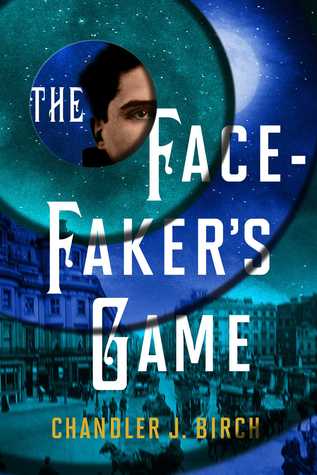 The Facefaker’s Game by Chandler J. Birch
Mogsy’s Rating: 4 of 5 stars
Genre: Fantasy
Series: Book 1
Publisher: Simon & Schuster/Simon451 (November 1, 2016)
Length: 464 pages
Author Information: Website | Twitter
Sometimes book blurbs can do more harm than good for the novels they’re trying to promote, by placing crushing expectations upon them that might not be realized. In the case of The Facefaker’s Game, my inner skeptic’s alarm immediately went haywire at the description “for fans of Patrick Rothfuss and Scott Lynch” which is one hell of an ambitious claim if I ever heard one. Then again, every once in a while it pays to give them the benefit of the doubt. While it’s true I went into this book with a healthy dose of realism to guard against the possible disappointment, in the end I shouldn’t have worried. This impressive fantasy debut by Chandler J. Birch definitely did not let me down.
The main character of The Facefaker’s Game is a fourteen-year-old boy with no past; one day, he just became aware of himself, standing in the middle of the street with no idea where he came from or even what his name is. Covered in soot, the boy decides to give himself the name of Ashes. Thing is though, he isn’t alone. Kids like him who just appear in the city one day with no memory are called rasa, and not surprisingly, few of them last long in a cutthroat crime-ridden neighborhood like Burroughside which is run by gangs. Ashes is lucky, if you could call him that; he is clever and quick, which means he is able to make just enough money from begging, stealing and cheating at cards to get by.
But then he gets on the wrong side of the crime lord Mr. Ragged, also Burroughside’s governor. For a while now, Ashes has been sheltering another rasa named Blimey, whom Mr. Ragged wants dead. Keeping Blimey hidden with the eventual goal of moving his friend out of Burroughside has its costs though, as it means Ashes has to steal more money, stay out later in the streets, and on the whole take more risks. One night, he takes it a step too far and runs afoul of the governor’s enforcers, but instead of meeting his end, Ashes is unexpected rescued by an Artificer named Candlestick Jack. Recognizing some magical potential in our protagonist, Jack decides to take the boy on as an apprentice, teaching him the mysterious art of light manipulation and illusion.
Of the many things that impressed me about this book, one of the first that jumped out at me was the quality of the writing. It might not be at the same caliber as the most seasoned authors, but this is Birch’s first novel and he clearly has a talent. His style is confident and easy on the eyes, making the story flow remarkably smoothly from one scene to the next. The pacing is strong and hit no lulls, making this one a relatively quick read for an adult fantasy novel that clocks in at almost five hundred pages. Birch also nails the mood of the setting, successfully portraying Burroughside as the rough, gritty, and merciless environment it is without painting it too darkly. Notwithstanding some of the grueling obstacles in our protagonist’s path, The Facefaker’s Game reads more like a fantasy adventure without the weight of cynicism dragging it down.
The book also features some memorable characters, despite many of them being examples of derivative archetypes. From Ashes (the orphan street urchin who turns out to be special) to Mr. Ragged (the evil and corrupt politician crime lord) and Candlestick Jack (the crafty yet benevolent master thief who takes in street rats to train them), you can’t help but feel you’ve met all of them all in some form or another before. Still, we know certain tropes have hung around the genre and stayed popular for so long, simply because the readership loves that stuff—the way I ate them up in The Facefaker’s Game. The author made me care about the protagonist and his friends, which I feel is the first and foremost goal a novelist should strive for, and to Birch’s credit, he also put a number of interesting spins on his characters, giving them back stories that made their personalities, motivations, and reactions feel very persuasive and real.
Story-wise, I thought this was tightly plotted for the most part, though several threads have been floated so far that have seemingly gone nowhere. There are definitely elements in here that could have been better incorporated, and it is my hope that any plot orphans and unanswered questions will be explored in a future installment. But even with its flaws, The Facefaker’s Game did not let me down. It’s an entertaining, fast-paced book that pulled me in effortlessly, especially since I adore stories about thieves, heists, and the creative uses of magic! Speaking of which, I thought Weaving and Stitching light and illusion was a fascinating basis for what Artificers do, and kudos to Birch for creating such an intricate and well thought magic system.
All in all, The Facefaker’s Game is a solid debut. I’m curious to see where Chandler J. Birch will take his characters next, and you can be sure I will be pick up his next novel.


#RRSciFiMonth Ocean of Storms by Christopher Mari and Jeremy K. Brown: Excerpt & Giveaway!
Posted on November 24, 2016 11 Comments
***The giveaway is now over, thanks to everyone who entered!***

In this science fiction thriller, one single shattering moment changes everything. Featuring a mix of political suspense, a mission to space, and even first contact and the possibility of the end of the world, I knew from the moment I heard about Ocean of Storms by Christopher Mari and Jeremy K. Brown that it was a story I wanted to read. The book is scheduled to be released December 1, 2016 by 47North/Amazon Publishing but today I’m excited to share with you all a special excerpt and giveaway as we draw near to the conclusion of SciFiMonth!
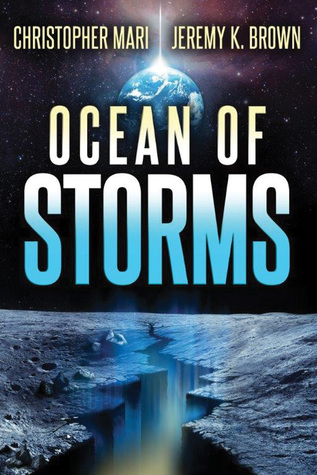 In the near future, political tensions between the United States and China are at an all-time high. Then a catastrophic explosion on the moon cleaves a vast gash in the lunar surface, and the massive electromagnetic pulse it unleashes obliterates Earth’s electrical infrastructure. To plumb the depths of the newly created lunar fissure and excavate the source of the power surge, the feuding nations are forced to cooperate on a high-risk mission to return mankind to the moon.
Now, a diverse, highly skilled ensemble of astronauts—and a pair of maverick archaeologists plucked from the Peruvian jungle—will brave conspiracy on Earth and disaster in space to make a shocking discovery.
Ocean of Storms is an epic adventure that spans space and time as its heroes race to fulfill an ancient mission that may change the course of humanity’s future.
Excerpt from Ocean of Storms by Christopher Mari and Jeremy K. Brown, on-sale December 1, 2016. Published by 47North, an imprint of Amazon Publishing. Copyright © 2016 Christopher Mari & Jeremy K. Brown.
December 22
Institute for Geophysics and Planetary Physics
La Jolla, California
12:14 a.m.
Max Shepherd knew few people who loved working the graveyard shift. But for him, working nights at the institute was about as plum a job as he could have wished for. Just a year into his doctoral program, he had landed a position as a research assistant to Dr. Elliot Seaborne, the noted seismologist currently heading up the Lunar Seismology Initiative. A NASA-sponsored project, the LSI was yet another component of the agency’s increasing desire to mount a return to the Moon.
A new series of lunar missions had been in the planning stages since Shepherd had been in grammar school. But since NASA had scrapped its shuttle program back in 2011, the Moon had become the agency’s central focus. Yet despite all the talk about new missions, NASA still found itself in yearly battles with Congress over the costs of space exploration. Desperate for a way to convince Congress that manned spaceflight had not gone the way of the dinosaur, NASA was willing to listen to any theories that might generate some additional funding. That’s when Seaborne had approached the agency with the plans for the LSI. The hope was that by demonstrating the Moon’s geologic activity, they might be able to convince the politicians to set a firm date to mount another round of manned missions to Earth’s nearest neighbour. Surprisingly, some initial funding had been approved. On July 7, 2010, an unmanned probe, Stellaluna, had been launched to the moon. Once in orbit, it had sent several seismometers to the Moon’s surface, devices considerably more sophisticated than the ones placed there by the Apollo astronauts more than forty years earlier. Now all that was left was for them to do their thing. Which is where Max Shepherd came in.
Pretty slow night up there, Shepherd thought as he glanced at Stellaluna’s telemetry. He began surfing through the channels on the lab’s thirty-six-inch flat-screen television. There wasn’t much on any of the twenty-four-hour news channels, just some footage from the recent congressional hearings on human cloning. Some major biotech company was apparently on the verge of a breakthrough, and the age-old debate had flared up again. After ten minutes of flipping, Max muted the sound and turned his attention to the lab’s radio antennas. He cranked the speakers, filling the room with the sounds of what was commonly called “cosmic debris,” the collected noise of millions of radio, TV, and cell phone signals trapped in the Earth’s atmosphere. The sound was eerie, like someone turning a wet finger around the rim of a crystal glass, but Max loved it.
Just as he was starting to relax, the seismic equipment monitoring Stellaluna’s probes sprang to life. Needles and gauges flicked with such intensity that he was certain he was looking at a massive impact. The Moon was continually being bombarded by meteorites, but whatever had stuck it tonight was a real whopper. Max scanned the readouts, searching for telltale signs. If this is a meteor impact, he thought, it’s a helluva big one. He reached for the desk phone and punched in Dr. Seaborne’s cell number.
“Unless the Moon just exploded, I don’t care,” came the sleepy voice on the other end.
“Sorry to bother you, Doctor,” said Max, “but I thought you’d want to see this.”
Seaborne sat up in bed, struggling to wake himself. “What’ve you got?”
“Something highly unusual. Massive seismic activity on an unheard-of-scale.” He tapped out a few keystrokes and emailed the data to Seaborne. “I’m sending you the numbers now.”
There was a pause as Seaborne checked over what Max has just sent to his smartphone. “Impact,” he deduced. “It’s going to be.”
“I thought so too,” Max said. “But it’s so damn big. It’s like—wait. I’ve got an e-mail coming in from Big Sky.”
Max often kept in touch with the astronomers at Big Sky Observatory in Montana. Whatever he heard, he reasoned, they might be able to back up visually.
“Um, Dr. Seaborne?” he said, hesitantly. “They’re saying that they’re picking up debris on the Moon.”
“Debris? There it is—it has to be an impact.”
“I agree, but they’re saying the ejecta pattern doesn’t match an impact.” Max paused, making sure he had read it right. “It’s almost as if—“
Before he could finish, a high-pitched tone tore through the phone lines, nearly striking them both stone deaf. Max yanked the phone away from his ears and dropped it, expecting the intensity of sound to diminish. He howled in shock and pain, but the sound was drowning out his own voice. It was everywhere—in the speakers, the TV, the stereo. It was even coming from the equipment that normally didn’t emit sound. The noise had a deep bass undercurrent that made Max think of a hive of angry bees. He could feel his bones vibrate from the sound. The experience was invasive, disorienting, and altogether awful. He crawled under a desk, praying that it would stop, or that he would die. The sound reached a fever pitch that seemed to resonate deep in Max’s brain before spiralling madly down to silence. Almost instantly, the discord was followed by a second wave. This one cascaded through Max with locomotive force and bringing forth a powerful sense of vertigo. The coffeepot exploded, spraying hot liquid everywhere. Every lightbulb overhead popped and burst. Even his MacBook cracked open. All at once, the windows of the lab blew inward. Max blinked, stunned. He meekly picked up the phone, listening to see if Dr. Seaborne was still there.
Nothing.
Dead.
For a terrible moment, Max felt as if he were the only person left alive on the planet. He peered out the shattered window at the Moon, wondering just what secrets she had to tell tonight.
Ocean of Storms Giveaway
And now, time for our final giveaway of this year’s Sci-Fi November! I hope you all had fun with us this month! With thanks to the publisher and the wonderful folks at Wunderkind PR, the BiblioSanctum has one print copy of Ocean of Storms up for grabs. The giveaway is open to residents of the US. To enter, all you have to do is send an email to bibliosanctum@gmail.com with your Name and valid Mailing Address using the subject line “OCEAN OF STORMS” by 11:59pm Eastern time on Sunday, December 4, 2016 and we’ll handle the rest.
Only one entry per household, please. The winner will be randomly selected when the giveaway ends and then be notified by email. All information will only be used for the purposes of contacting the winner and sending them their prize. Once the giveaway ends all entry emails will be deleted.
So what are you waiting for? Enter to win! Good luck!
Waiting on Wednesday 11/23/16
Posted on November 23, 2016 18 Comments

“Waiting On Wednesday” is a weekly meme hosted by Breaking the Spine that lets us feature upcoming releases that we can’t wait to get our hands on!
Mogsy’s Pick
Arabella and the Battle of Venus by David D. Levine (June 6, 2017 by Tor Books)
I was so glad when I learned there would be a sequel to Arabella of Mars, the book that first introduced us to the eponymous heroine who disguised herself as a boy so she could hitch a ride on an interplanetary trade ship to save her brother. I loved the book, but the ending was admittedly a bit abrupt — I wanted to know what happens with Arabella and Captain Singh, dammit! And now apparently I’ll get my chance.
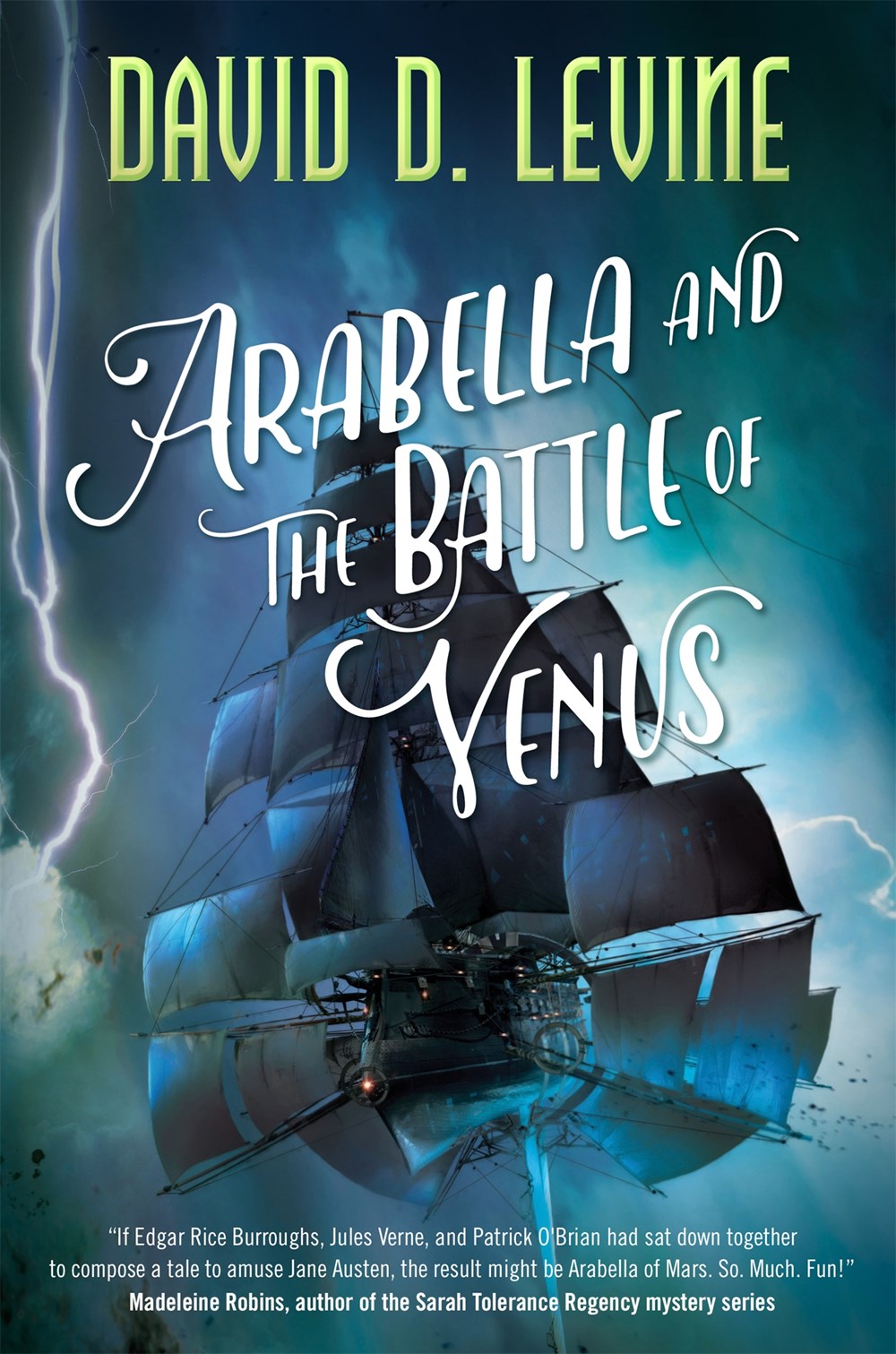 “The thrilling adventures of Arabella Ashby continue in the second book in Hugo-winning author David D. Levine’s swashbuckling sci-fi, alt-history series!
The swashbuckling Arabella Ashby is back for brand new adventure in the ongoing story of her life among the stars.
Arabella’s wedding plans to marry Captain Singh of the Honorable Mars Trading Company are interrupted when her fiancé is captured by the French and sent to a prisoner-of-war camp on swampy Venus. Now, Arabella must find passage to an enemy-controlled planet in the middle of a war, bribe or fight her way past vicious guards, and rescue her Captain.
To do this she must enlist the help of the dashing privateer, Daniel Fox of the Touchstone and build her own clockwork navigational automaton in order to get to Venus before the dread French general, Joseph Fouché, the Executioner of Lyon.
Once on Venus, Arabella, Singh, and Fox soon discover that Napoleon has designed a secret weapon, one that could subjugate the entire galaxy if they can’t discover a way to stop Fouché, and the entire French army, from completing their emperor’s mandate.”
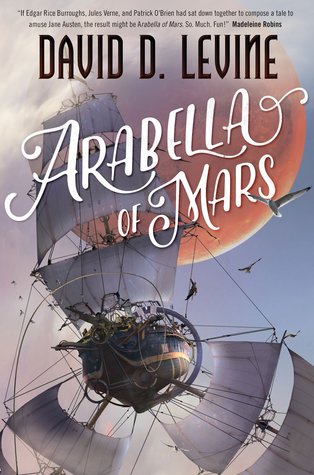
I am so in love with the artwork on these covers too.
Book Review: The Hidden People by Alison Littlewood
Posted on November 22, 2016 15 Comments
I received a review copy from the publisher. This does not affect the contents of my review and all opinions are my own.
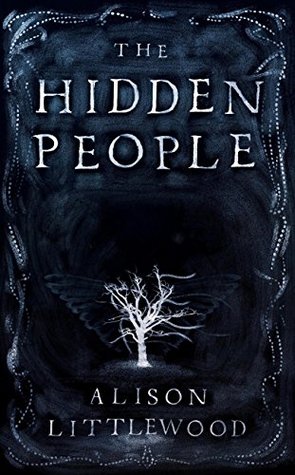 The Hidden People by Alison Littlewood
Mogsy’s Rating: 3 of 5 stars
Genre: Horror, Historical Fiction
Series: Stand Alone
Publisher: Jo Fletcher Books (November 1, 2016)
Length: 384 pages
Author Information: Website | Twitter
I’m always up for a good changeling story, and Alison Littlewood is an author I’ve been meaning to read for a long time. Thus when I found out about The Hidden People, I saw this book as the perfect place to start. There’s no doubt that the story is utterly atmospheric, full of the kind of beautiful, exquisite detail that slowly creeps up on you. Littlewood also writes wonderfully and has a flair for bringing a historical setting to life. And yet…I don’t know if I felt as fully engaged as I could be. This book had all the elements of a dark historical mystery or good horror tale, but lacked the pacing of one, and I think that’s where it might have missed its mark.
It is 1851 when a young Albie meets his cousin Lizzie for the first time at the Great Exhibition. It was a grand day of celebration for industry, modern technology, invention and design, but Albie only had Lizzie on his mind, and there she stayed for many, many years even though the two of them never saw each other again.
Fast forward to 1862, Albie is just sitting down to dinner with his wife Helena when his father breaks the horrible news: Lizzie, Albie’s pretty cousin that he met more than ten years ago, is dead. She was burned to death by her husband, who claimed his wife had been replaced by a changeling. Enraged and grieving, Albie takes it upon himself to visit the village where Lizzie had lived in order to pay his respects and seek justice. But upon his arrival, he is shocked and even more furious to see how deeply superstitious the people are. His cousin hasn’t even been buried yet, left in her twisted and charred state. And during the funeral, no one showed up. It appears that all the talk of magic and fairies is more than just that; the villagers actually believe that Lizzie has been fae-touched and is now anathema.
But Albie’s obsession with Lizzie means he is unable to let this injustice stand. He refuses to leave the village, even when his wife Helena comes to join him for the funeral and then tries to convince him to let it all go and return to his own life and family. After all, she reminds him, he’s only met his cousin once and that was more than a decade ago.
But apparently, Lizzie made quite an impression on Albie. The problem was, no one around him was convinced, and to be honest, neither was I. It’s unfortunate that this sets the precedent for the rest of the book, but also not surprising, considering the entire basis for Albie’s obsession rests on this one scene at the start of the book which lasts no more than seven pages. We’re told that Lizzie’s beauty, sweetness and charisma got under our protagonist’s skin and stayed with him for many years, but I never believed it. This huge disconnect made it hard for me to understand a key part of what made the main character tick, and as such it made sympathizing with him throughout the novel an uphill battle—especially when his preoccupation with Lizzie started straining his marriage.
Then there was the pacing. While I loved the dark, haunting, gothic style of The Hidden People, the story itself was very slow to build, taking away from the tensions the author was trying to convey. Littlewood’s prose is gorgeous, and she paints a detailed picture of rural village life in the mid-1800s complete with the different dialects and other cultural nuances, but the meticulous nature of her writing style also makes it difficult to stay engaged. That’s a shame because there’s really an excellent story in here, but I also can’t deny that at times I struggled with the restrained speed at which the plot unfolded.
Still, I’m happy I got to discover Alison Littlewood’s beautiful writing, and despite the book’s flaws I thought The Hidden People was worth my time. There’s a lot of good stuff in here too, a lot to counter the quibbles. If you have an interest in the time period and the subject matter, I strongly encourage you to take a look.

Book Review: Level Grind by Annie Bellet
Posted on November 21, 2016 22 Comments
I received a review copy from the publisher. This does not affect the contents of my review and all opinions are my own.
Mogsy’s Rating (Overall): 3.5 of 5 stars
Genre: Urban Fantasy
Series: Books 1-4 of The Twenty-Sided Sorceress
Publisher: Saga Press (October 4, 2016)
Length: 480 pages
Author Information: Website | Twitter
In gaming lingo, the term “level grind” often has negative connotations, typically used to describe having to engage in mind-numbingly tedious or repetitive tasks to gain experience or complete an achievement. Happily, this is not at all how I would describe my experience with Level Grind by Annie Bellet, which is in fact a very witty, vibrant, and entertaining urban fantasy. Collecting the first four novellas in the Twenty-Sided Sorcerer series, this omnibus admittedly offers pretty standard fare when it comes to the genre. Still, it manages to be a very entertaining read thanks to the stories’ vigorous pacing, the characters’ irresistible charms, and the author’s fun take on the usual tropes.
Meet Jade Crow, a sorceress on the run. After twenty-five years of hiding from her ex-lover and fellow sorcerer Samir who wants to eat her heart (gross, yes, but that happens to be the only way to kill a sorcerer and steal their powers) she has ended up settling in Wylde, Idaho, home to a thriving paranormal community that includes shapeshifters, witches, and leprechauns. A lifelong gamer and nerd, Jade is content enough to lie low and live a quiet life among friends, running her comic book and game store.
JUSTICE CALLING
Justice Calling is the first novella of the collection, introducing us our main characters and setting. It was just another day at Pwned Comics and Games when a tall and handsome stranger breezes through the door and accuses Jade of murder. Alek is a Justice, an enforcer for the Shifter community, and he has arrived in Wylde after receiving a vision that someone or something may be harming the lives of those he has sworn to protect, and he believes Jade is to blame.
This first story also sets the tone for the rest of the series: lots of gaming and pop culture references, unashamedly geared towards the gamer and geek demographics. That said, any general fan of urban fantasy can definitely enjoy these books as well. As the opening novella and also the shortest of the bunch, Justice Calling is unfortunately rather light on character development and world-building (imagine a full-length novel by Patricia Briggs or Ilona Andrews compressed into a little more than 100 pages, and that’s how I would describe this), but it does solidly establish more to come. This is when reading the omnibus comes in handy; with the next book conveniently waiting on the next page, there was no excuse not to satisfy my curiosity and hankering for more.
MURDER OF CROWS
This second story starts with Jade’s estranged father showing up at her doorstep, imploring her for help. Our protagonist has never forgiven her family for kicking her out of Three Feathers crow shifter ranch where she grew up, but she ultimately agrees to help after learning someone was out there brutally killing innocent people. As always, Jade suspects Samir, her evil sorcerer ex who could be murdering members of the Crow clan to get to her.
If book one was about laying down the groundwork and hooking readers in, then Murder of Crows is where things start to get a little deeper. Bellet fleshes out her world-building, exploring the various shapeshifting communities in her series and also incorporating Native American history, culture, and lore into her story. But it is character development that gets a huge boost. We learn a lot more about Jade and where she came from, and by the end of the book she is changed by the many difficult decisions she had to make. There’s also a strong vibe of mysticism in this one as Jade comes to terms with being a sorceress and what it’ll take to control her magic. The only thing I wasn’t crazy about was her romance with Alek; I mean, come on, it ends before it even begins!
PACK OF LIES
The next story begins as Alek suddenly comes back into Jade’s life, showing up at her door asking her for help (yes, there’s a clear pattern emerging here with regards to the way these books begin). The Wylde community is again threatened as news comes that wolves are killing other wolves, but things take an even worse turn when an innocent family is found slaughtered, seemingly caught in the middle of a shifter conflict. Even though Alek broke her heart, for the sake of her town Jade decides to lend him a hand in his investigation.
I didn’t get a chance to feel invested in Jade and Alek’s relationship in the previous two books, so quite a few of their interactions felt empty. These plots are also starting to become very predictable, especially when read back-to-back; someone always comes to Jade for help with a gruesome terrible crime, and as always, Jade thinks it must be Samir, the big bad who has been a constant threat in the back of her mind and yet he is still nowhere to be seen. To be fair, this is a rather common feeling for me when it comes to novellas, with there being so few pages to really develop a deeper story. Still, these books are meant to be short and sweet, and when all is said and done, Pack of Lies was another fast, entertaining read. Jade also reveals herself to be a sorceress at the end of this book which causes no small amount of tensions in her small town (even the other paranormals are kind of creeped out by sorcerers, with them being known to eat hearts and everything) which adds another interesting source of conflict to the series.
HUNTING SEASON
Yep, this one also starts with someone showing up at Jade’s door for help, and again we are led to believe that these dastardly acts (in this case, the grisly mass killings of unicorns) might be attributed to Samir. But this time, we actually get the sense that a greater story is emerging. Finally! A mysterious sorceress also turns up in Wylde, claiming to be running away from Samir and needs protection, and Jade is torn between wanting to help and not wanting to put her friends at risk.
I’ll be honest, this being the fourth installment, I thought we would have a lot more answers by now. But this is also a story with some great developments and nice twists. Hunting Season was perhaps the best of the novellas, and a great story to end this first collection.
Closing thoughts: So far, I’m really enjoying The Twenty-Sided Sorceress and I would highly recommend the omnibus format of Level Grind for an easy, convenient way to enjoy the first four novellas one after another. While it’s true that UF fans may find it a little derivative and too similar to many of the popular paranormal series out there, I think it aims for being light and fun rather than groundbreaking. And it worked! The stories’ short lengths also definitely had some impact on the depth of world-building, character, and story development, but the good news is, these areas continue to expand with each installment. It’s probably not a stretch to say if you love Mercy Thompson or Kate Daniels, you will do get a kick out of this series as well. Geeks and gamers will especially have a blast! I look forward to seeing what’s next.

#RRSciFiMonth: Star Wars: Crucible by Troy Denning
Posted on November 20, 2016 3 Comments
Sci-Fi November is a month-long blog event hosted by Rinn Reads and Over The Effing Rainbow this year, created to celebrate everything amazing about science fiction! From TV shows to movies, books to comics, and everything else in between, it is intended to help science fiction lovers share their love and passion for this genre and its many, many fandoms.
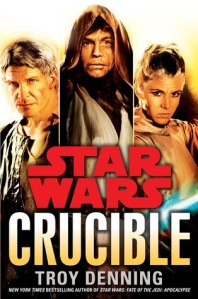 Crucible by Troy Denning
Genre: Science Fantasy
Series: Star Wars
Publisher: LucasBooks (January 2013)
Author Info: starwars.wikia.com/wiki/Troy_Denning
Wendy’s Rating: 2.5 of 5 stars

The original Star Wars EU is apocrypha now, but there’s still value in checking out these far reaching stories for old times sake. Han and Luke and Leia’s adventures and struggles have continued long beyond the death of the Deathstar. I am renaming this book: Star Wars: Old People, but, while age and battle has taken its toll here and there, bacta tanks and the Force can still do wonders for our intrepid heroes. Maybe it’s time for a little break. But first, let’s save the galaxy, one more time!
The Sith are probably still lurking around somewhere, but the more pressing concern is the questionable dealings of a pair of Columi brothers in the Outer Rim that threaten Lando’s successful mining operations and the ever fragile peace and prosperity of the galaxy.
It was initially kind of neat to read about the Columi, whose armour I’ve been sporting for some time in Star Wars: The Old Republic. But the actual characters — giant brained supposed genius who trip all over the jealous siblings tropes, complete with one of them obsessive over a girl — were kind of creepy. And not the interesting kind of creepy. The aforementioned girl obsession left much to be desired, as did most of the awkward sexual tensions and flirtings that went on. But I guess that awkward flirting is part of the Star Wars canon.

Or at least it was, until the invention of Poe Dameron.
 Crucible most certainly has a problem with the Force as a catch all plot device. I have not read many of these EU books that take place far into the future, but, if this one is to be believed, them damn Jedi are powerful enough to mess up everything, like allll the time. Frankly, the Emperor was right to cull that OP herd to balance the scales. It’s not all that fun when you know your heroes are going to win every time (but I don’t complain about the concept of Leia Jedi flipping around in Twi’lek cosplay — which was the one highlight of the story for me.). Speaking of heroes winning, if you’re supposed to be geniuses, Mr. and Mr. Columi, why would you decide to “torture” notorious gambler Han Solo by making him play Sabaac? This was one of many silly things that happened in this book, and the silly just kept going right to the end. Because why not throw all these things into an increasingly convoluted plot that takes the heroes into this titular Crucible, which reminded me of something more like a space house of mirrors, complete with clones and time travel. You can never go wrong with time travel plot devices!
This was a fun read, I guess, if only for the opportunity to hang out in the Star Wars realm again, but, if you are interested in the defunct EU, there are far better books out there.


Mogsy’s Bookshelf Roundup: Stacking the Shelves & Recent Reads
Posted on November 19, 2016 40 Comments
Bookshelf Roundup is a feature I do every other weekend which fills the role of several blog memes, like Stacking the Shelves where I talk about the new books I’ve added to my library or received for review, as well as It’s Monday! What Are You Reading? where I round up what I’ve read since the last update and what I’m planning to read soon. Mostly it also serves as a recap post, so sometimes I’ll throw in stuff like reading challenge progress reports, book lists, and other random bookish thoughts or announcements.

Received for Review
Thank you to the publishers and authors for the following review copies received, and for more details and full descriptions of the books, be sure to click the links to their Goodreads pages!

Silverwolf by Jacey Bedford – Earlier this year I really enjoyed Winterwood, so when the sequel showed up in the mail one day I was pretty excited. Can’t say I’m too crazy about the cover though, but as long as the story is once again filled with the adventure, magic and romance of the first book, then who am I to complain! With thanks to DAW.
In Calabria by Peter S. Beagle – I was also thrilled with the arrival of this ARC from the wonderful folks at Tachyon Publications. This will be my first time reading Peter S. Beagle.
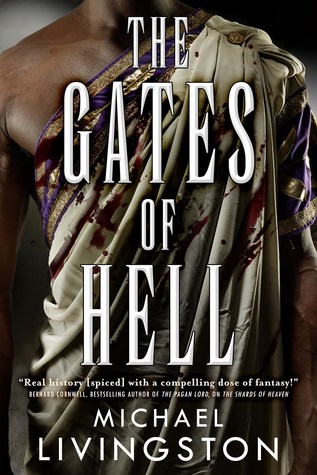
The Gates of Hell by Michael Livingston – Already read and reviewed, check out the link below! Fantastic sequel to The Shards of Heaven, a historical fantasy set in Ancient Rome. Much thanks to Tor for the finished copy.

Snowed by Maria Alexander – Yay, got my copy! My thanks to Raw Dog Screaming Press, a wonderful small publisher dedicated to putting out dark and off-kilter lit from the fringe, as well as Beverly Bambury Publicity. I don’t usually do “seasonal reads”, but I seriously can’t wait for the chance to snuggle up to this one over the holidays.
The Shadow of What Was Lost by James Islington – A new epic fantasy that sounds incredibly enticing; I really can’t wait to dive into this. My thanks to Orbit!
Dear Sweet Filthy World by Caitlín R. Kiernan – Another cool surprise from the awesome team at Subterranean Press. For readers who want to check out the author’s work, this anthology sounds like a great idea. It collects stories that were previously published in Kiernan’s subscription-only digest, so this is the first time many of them will be available to the general public.

The Catcher’s Trap by Ricardo Henriquez – This is a new one to me, and thanks to Inkshares for putting it on my radar. The pitch I received with it described the book as a dark fantasy/horror novel inspired by the author’s own struggles with depression, coming out as gay, and his experience immigrating to the United States. I’ve seen it compared to a dark fairy tale and Pan’s Labyrinth, and some of the reviews talking about the horror and the gruesomeness are actually giving me serious anxiety! I love the horror genre, but this might even be too intense for me. I can’t deny I’m intrigued though, and maybe I’ll give it a look once I take some time to rally myself.
Scythe by Neal Shusterman – I haven’t really been following this book, but when it came out of a surprise package last week I knew it on sight. That striking cover is not one you easily forget, and Neal Shusterman is an author I’ve wanted to read for a long time. I’m really excited to read this, thank you Simon & Schuster.
Six Wakes by Mur Lafferty – A surprise from Orbit which arrived two days after I had already downloaded the digital galley, but I’m also extremely grateful to have a physical ARC. My thanks to the publisher for sending me this highly anticipated novel!

Hunted by Meagan Spooner – After seeing so many bloggers feature this book on their blogs my resolve finally cracked and I requested it from Edelweiss. I can’t resist a Beauty and the Beast retelling. Thanks to HarperTeen.
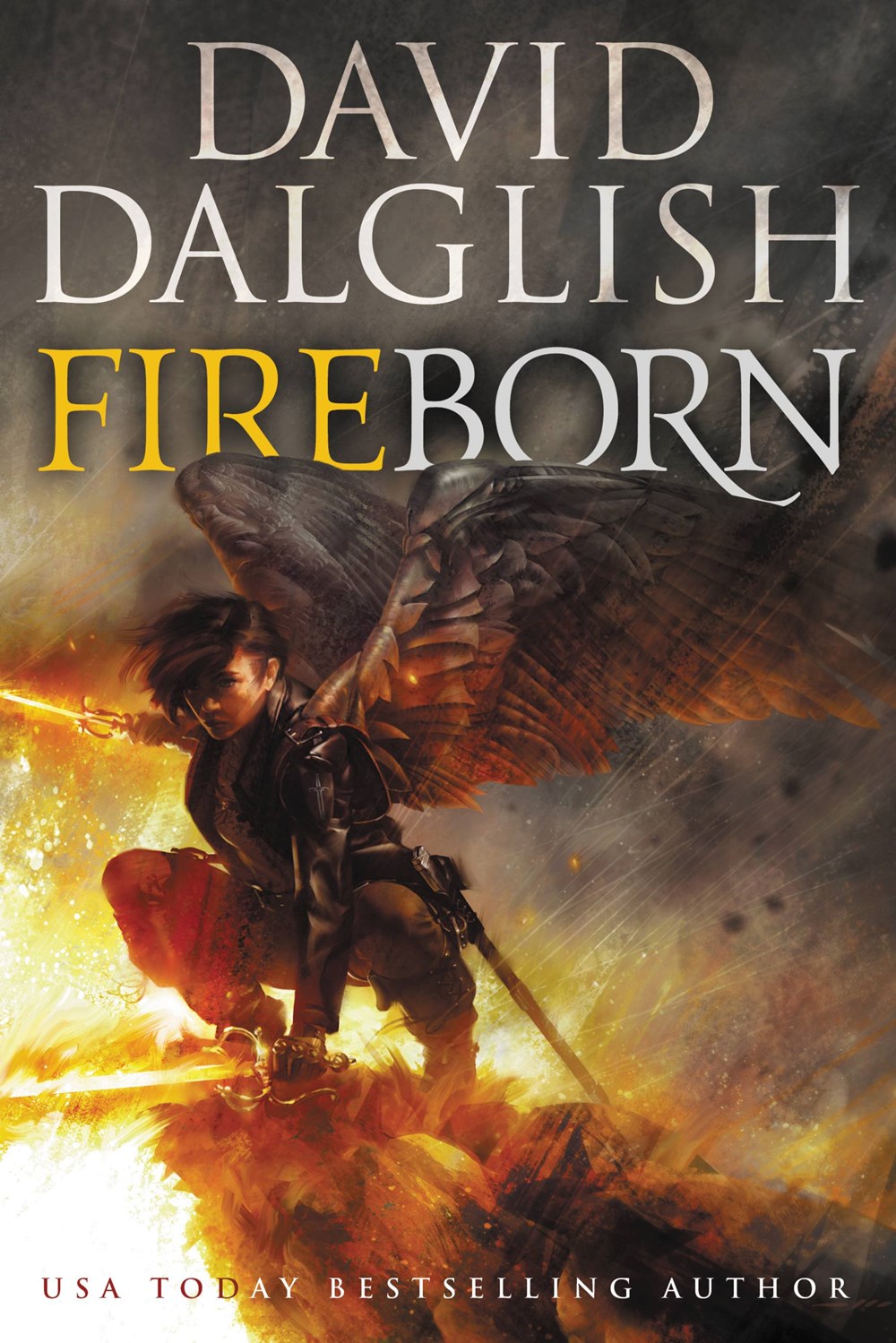
Blood for Blood by Ryan Graudin and Fireborn by David Dalglish – Audiobooks, with thanks to Hachette Audio. Very excited for the conclusion of the Wolf by Wolf duology, especially after the way book one ended. And speaking of highly anticipated sequels, I’m also looking forward to the follow-up to Skyborn.
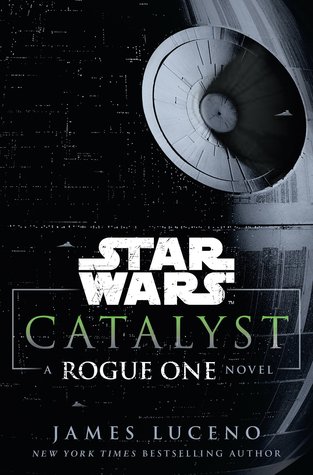
Star Wars: Catalyst: A Rogue One Novel by James Luceno – It really is a week for highly anticipated audiobooks. The movie can’t come soon enough, but in the meantime I’ll be checking out this prequel novel. With thanks to Random House Audio.
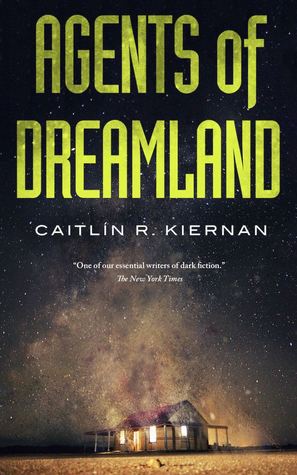
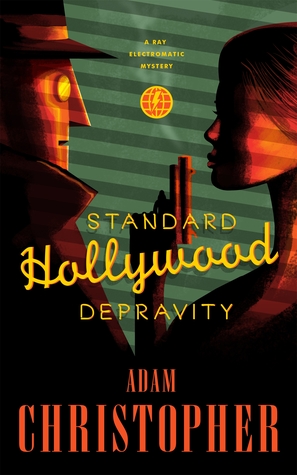
Agents of Dreamland by Caitlín R. Kiernan and Standard Hollywood Depravity by Adam Christopher – More novellas courtesy of the generous team at Tor.com! Caitlín R. Kiernan is a very busy author these days and I’d love to catch up on her more recent stuff. And while I haven’t read Made to Kill yet, I hope that won’t stop me from enjoying Adam Christopher’s new story set in that same world.
Reviews
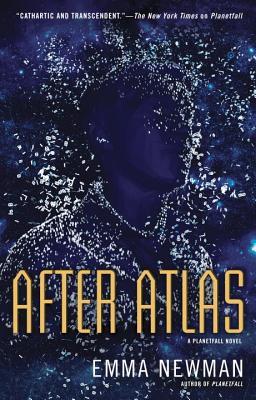
Review roundup time! Hands down the best two books I read during this period were After Atlas and The Purloined Poodle and I am happy to be highlighting both this week.
After Atlas by Emma Newman (4.5 of 5 stars)
The Purloined Poodle by Kevin Hearne (4.5 of 5 stars)
The Gates of Hell by Michael Livingston (4 of 5 stars)
Iron Cast by Destiny Soria (4 of 5 stars)
Wolf’s Empire: Gladiator by Claudia Christian & Morgan Grant Buchanan (3.5 of 5 stars)
An Import of Intrigue by Marshall Ryan Maresca (3.5 of 5 stars)
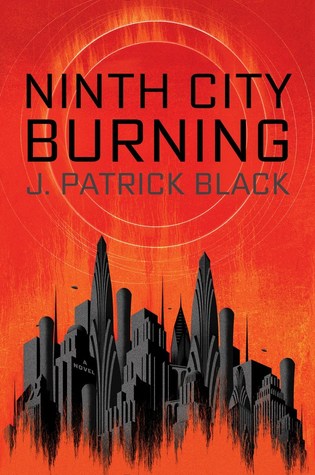
Ninth City Burning by J. Patrick Black (3 of 5 stars)
Chasing Embers by James Bennett (3 of 5 stars)
Roundup Highlights:

What I’ve Read Since the Last Update
Here’s what’s come off Mount TBR lately. Stay tuned for reviews!


Have you heard of or read any of the books featured this week? What caught your eye? Any new discoveries? I hope you found something interesting for a future read! Let me know what you plan on checking out. Until next time, see you next Roundup!
#RRSciFiMonth Book Review: Ninth City Burning by J. Patrick Black
Posted on November 18, 2016 22 Comments
Sci-Fi November is a month-long blog event hosted by Rinn Reads and Over The Effing Rainbow this year, created to celebrate everything amazing about science fiction! From TV shows to movies, books to comics, and everything else in between, it is intended to help science fiction lovers share their love and passion for this genre and its many, many fandoms.
I received a review copy from the publisher. This does not affect the contents of my review and all opinions are my own.
Ninth City Burning by J. Patrick Black
Mogsy’s Rating: 3 of 5 stars
Genre: Science Fiction
Series: Book 1
Publisher: Ace (September 6, 2016)
Length: 482 pages
Author Information: Website | Twitter
Ninth City Burning is an impressive debut, built upon an array of inventive ideas and wildly original world-building. It may be a science fiction novel at its core, but it also contains plenty of elements that would not be out of place in a fantasy epic. The story, which takes place hundreds of years in the future, is told through no less than half a dozen diverse narratives all woven together to form its brutal premise of war between humanity and an invading alien race. Despite this feast of creativity though, in some respects, Ninth City Burning is also an excellent example of too much not always being a good thing. It is ambitious for sure, but like a lot of debuts, I feel it also stumbles a bit from attempting to accomplish more than it can handle.
Five hundred years ago, Earth was nearly destroyed by the “Valentines”, named for the day they attacked. They brought a seemingly unstoppable weapon, a reality-bending force known as thelemity which they used to raze entire cities to the ground. But in doing so, the aliens also unwittingly “unlocked” the latent ability to use thelemity in a number of humans, thus giving Earth a fighting chance.
However, even though humanity now possesses the same weapon as the enemy, the Valentines are still gaining ground, putting pressure on the various Earth precincts to provide more resources and soldiers for the war. Involuntary drafts are in effect to keep fighters flowing to the front, and those with a talent to manipulate thelemity are swiftly identified by the Legion and sent to military academies to hone their power. Those who refuse to fight are banished to the far realms, forced to live as disassociated wanderers and outcasts.
Pretty much every group involved in the war is represented in this novel, starting with Jax, a 12-year-old boy already with the weight of the world on his shoulders. As a Fontanus, he has been identified by Legion as a source of thelemity, which means his survival on the battlefield is paramount and entire squads are trained on how to keep him safe. But though he is always surrounded, Jax has always felt a sense of loneliness created by the distance between himself and fellow soldiers. Then there is Naomi, a young girl from one of the unincorporated groups who had no idea that humanity was even at war with aliens. Her world turns upside down when she is suddenly identified as one of the rare individuals who can bend thelemity. Naomi’s sister Rae, a woman in her late teens faces a similar shock as she is sent to a military academy to train with students much younger than her. Another key character is Torro, a factory worker in a settlement that churns out soldiers and supplies for the war effort who becomes a reluctant but brave fighter after he is caught in the draft. On the Legion side of things, there’s Vinneas, an officer and a brilliant tactician, as well as Kizabel, an eccentric engineering genius.
There were probably a couple more POVs, but at this point I think I’ve named all the memorable ones. As I had alluded to before, this book could have been improved by cutting back in some areas, and the first thing I would have reduced is the number of perspective characters. The story reached the critical mass of POVs early on and I felt that more actually became unnecessary, distracting, and even ineffectual.
The concept of thelemity could have been introduced earlier as well, and that might have been possible if the introduction had been shorter and less cumbersome. Even so, I actually enjoyed the first half very much; it was the second half that ultimately took away much of my initial excitement by expounding on the details of the war against the Valentines. So, maybe just an overall trimming down of the various plot threads to improve pacing and flow wouldn’t have been such a bad thing either.
Still, there were some great ideas in here, when the story wasn’t struggling under their weight; I loved the concept of thelemity, which in akin to magic in many ways, and there were also numerous examples of fantastic and original world-building. One thing I can say for this book is that it is wholly unique, and it also has genuine wide appeal for audiences across the YA and adult spectrums.
In sum, Ninth City Burning might not be perfect, but it would also be a mistake to dismiss it out of hand. It is a solid, dynamic debut with some strong ideas, and J. Patrick Black is clearly a talented writer with lots of potential. This being the start of a new trilogy I hope that the sequels will move away from “first book” problems as the series matures.
Book Review: The Gates of Hell by Michael Livingston
Posted on November 17, 2016 14 Comments
I received a review copy from the publisher. This does not affect the contents of my review and all opinions are my own.
The Gates of Hell by Michael Livingston
Mogsy’s Rating: 4 of 5 stars
Genre: Fantasy
Series: Book 2 of The Shards of Heaven
Publisher: Tor (November 15, 2016)
Length: 400 pages
Author Information: Website | Twitter
As the second volume in a historical fantasy series about Ancient Rome, The Gates of Hell can be viewed as the “next chapter” of the events following the Final War of the Roman Republic. Approximately five years have passed since Alexandria fell. Marc Antony and Cleopatra are dead. Their daughter Selene has been taken into their conqueror’s household, becoming one of Augustus Caesar’s adopted children. But for all that, she knows she is still a hostage and the longing for avenging her parents still burns inside.
The book begins with Selene taking matters into her own hands, seeking her own Shard of Heaven after finding out about the godlike abilities they can grant to the people who wield them. She manages to find and obtain one disguised as a statue in the Temple of the Vestals, bringing another of one these powerful artifacts into play. Meanwhile, her arranged marriage to Juba of Numidia, an adopted son of Julius Caesar, ultimately grew into to be a relationship based on love and respect. Together with her husband, who also possesses a Shard of Heaven, they begin to experiment and practice with their artifacts, learning how to harness their power.
At the same time in another place, a secret group of guardians are in the act of securing the Ark of the Covenant, rumored to be the most powerful Shard of all. Former legion soldier Lucius Vorenus decides to travel to Library of Alexandria to meet with the Head Librarian to discuss certain theories they’ve developed about the holy Ark. Unknowingly, he attracts the attention of a disgraced astrologer named Thrasyllus, putting all that vital information into the hands of a desperate man who knows Augustus Caesar will do anything to know the location of another Shard of Heaven.
Whether our characters are driven by love or greed, faith or revenge, all their actions culminate into a harrowing conclusion that spells a threat to come for everyone. Like the previous book, The Gates of Hell was another great read. While it does have the distinct feel of a “middle book”, it comes without the baggage normally associated with one. Pacing is dynamic and swift, and perhaps even a bit too brisk in some places when all I wanted to do was bask in the atmosphere of the setting a little while longer. Like I wrote in my review of The Shards of Heaven, the author has an extraordinary talent for evoking the time period. The people, places and events surrounding the Ancient Roman Empire have always fascinated me, but I don’t consider myself an expert and need the historical background or details in the narrative from time to time.
In that respect, I find Livingston’s writing and storytelling style to be very readable; even someone with just the bare knowledge of the subject matter can enjoy this novel, because of the perfect balance he strikes when injecting history into his fiction and vice versa. I also thought it was really interesting how almost every character was based on a real figure or an account of them in the historical record, and in many cases I only found out after reading the glossary at the end of the book. Livingston offered enough historical detail without overwhelming the reader, and to be honest, could have afforded to give more if he had wanted to.
Then there are the characters. Selene, a personal favorite (both in this book and in written history) is back with a bigger role in this sequel, carrying on her mother’s memory and legacy. She has been adopted into the family of Octavian/Augustus Caesar, but there’s no love lost there. She was also made to marry Juba, though to her surprise she grows to love him. The two of them bond over their shared experiences of having their parents and homelands conquered by Rome, but Juba still has mixed feelings towards Octavian, his brother by adoption. There are some incredibly complex emotions surrounding these characters, and with those, the reader might start to see Octavian from a whole different perspective.
My only criticism is that Selene, Juba, and Octavian might have been portrayed a little too well, with the result being that some of the supporting characters, including Thrasyllus and Vorenus, were overshadowed. Also, without giving away too much of the story, some parts were predictable in the sense that we were repeatedly told over and over how “in love” a certain couple was, which we all know is code for “something bad will happen.” As such, when the other shoe dropped, there were no surprises.
As a follow-up to Michael Livingston’s fantastic debut though, The Gates of Hell carries this series incredibly well. Everything that worked in The Shards of Heaven is back here in this sequel, including compelling history, powerful storytelling, and engaging characters. There’s some great set-up for the next novel, and I can’t wait to read it.
More on The BiblioSanctum:
Review of The Shards of Heaven (Book 1)
Guest Post: “Five Amazing Women in Ancient Rome” by Michael Livingston


 The BiblioSanctum