2017 Audiobook Challenge
Posted on January 31, 2017 6 Comments
We love audiobooks here at Bibliosanctum for a variety of reasons from distraction while doing chores to just enjoying a good story being read by an awesome narrator. We also love to undertake a good challenge, especially when it coincides with our love of reading. This will be Bibliosanctum’s third year participating in the event, and we’re excited to see where this year’s challenge takes us!
The Book Nympho hosts this challenge ever year, and this will be their fifth year organizing the event. This year we welcome a new host to the challenge, Caffeinated Book Reviewer. Make sure to check out their sign-up page for this year’s challenge, and be sure to check out their Goodreads group.
Reading Challenge Details:
- Runs January 1, 2017 – December 31, 2017. You can join at any time.
- The goal is to find a new love for audios or to outdo yourself by listening to more audios in 2016 than you did in 2015.
- Books must be in audio format (CD, MP3, etc.)
- ANY genres count.
- Re-reads and crossovers from other reading challenges are allowed.
- You do not have to be a book blogger to participate; you can track your progress on Goodreads, Booklikes, Facebook, LibraryThing, etc.
- If you’re a blogger grab the button and do a quick post about the challenge to help spread the word. If you’re not a blogger you can help by posting on Facebook or Tweeting about the challenge.
Levels:
- Newbie (I’ll give it a try) 1-5
- Weekend Warrior (I’m getting the hang of this) 5-10
- Stenographer (can listen while multi-tasking) 10-15
- Socially Awkward (Don’t talk to me) 15-20
- Binge Listener (Why read when someone can do it for you) 20-30
- My Precious (I had my earbuds surgically implanted) 30-50
- Marathoner (Look Ma no hands) 50+
Tiara’s Goal
I usually aim low in this challenge and usually finish higher than I expected. I’ve managed to hit Marathoner for the past two years. Last year, thanks to a busy schedule, I listened to 80 audiobooks until my schedule got too hectic later in the year and took me completely out of the game. I’m going to stick with my usual convention. I am aiming for a short goal of Socially Awkward with a long goal of My Precious. My ultimate goal is Marathoner again, but I never know how my year is going to go.
Wendy’s Goals
Like Tiara, I aim low and then am pleasantly surprised when I outdo myself. I am off to a good start already, so I don’t think Binge Listener is unreasonable for 2017.
Mogsy’s Goals
I really like the idea of setting a short goal and a long goal, so my aim is for My Precious. I think the low end of 30 audiobooks will be easily achievable, but that doesn’t mean I won’t keep striving for the high end of 50 which will hopefully push me over to the edge to achieve Marathoner again, which is what happened last year.
Top Ten Tuesday: Ten Comics on My TBR
Posted on January 31, 2017 15 Comments

Top Ten Tuesday is an original feature/weekly meme created by The Broke and the Bookish. They created the meme because they love lists. Who doesn’t love lists? They wanted to share these list with fellow book lovers and ask that we share in return to connect with our fellow book lovers. To learn more about participating in the challenge, stop by their page dedicated to it and dive in!
This week’s topic: Ten Comics on My TBR
Tiara’s Picks
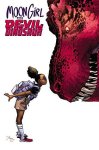 Moon Girl and Devil Dinosaur, Vol. 1: BFF by Amy Reeder, Brandon Montclare
LUNELLA LAFAYETTE IS AN INHUMAN PRETEEN GENIUS WHO WANTS TO CHANGE THE WORLD!
That job would be a lot easier if she wasn’t living in mortal fear of her latent Inhuman gene. There’s no telling what she’ll turn into – but Luna’s got a plan. All she needs is an Omni-Wave Projector. Easy, right? That is, until a red-scaled beast is teleported from the prehistoric past to a far-flung future we call…today! Together they’re the most Marvelous Team-Up of all – the Inhuman Moon Girl and time-tossed Devil Dinosaur! But will they be BFFs forever, or just until DD’s dinner time? And Lunella soon learns that there are other problems with a having a titanic T. Rex as a pet in the modern-day Marvel Universe. School, for one. Monster hunters are another – especially when they’re the Totally Awesome Hulk! Then there’s the fact that everyone’s favorite dino didn’t journey through time alone. Beware the prehistoric savages known as the Killer-Folk – New York City’s deadliest tourists! Can Lunella handle all this turmoil… and keep herself from transforming into an Inhuman monster?
 Paper Girls, Vol. 1 by Brian K. Vaughan
In the early hours after Halloween of 1988, four 12-year-old newspaper delivery girls uncover the most important story of all time. Suburban drama and otherworldly mysteries collide in this smashhit series about nostalgia, first jobs, and the last days of childhood.
 Planetoid Praxis #1 by Ken Garing
SERIES PREMIERE PLANETOID PRAXIS is the long-anticipated sequel to the popular 2012 miniseries PLANETOID. The inhabitants of a distant planetoid have fought off their robot overlords and established a thriving settlement on the planetoid’s mechanized surface. Now, years later, their de facto leader, Onica, must grapple with a new complication when their isolated way of life is threatened by the arrival of an unexpected visitor!
 Deadly Class, Vol. 1: Reagan Youth by Rick Remender
It’s 1987. Marcus Lopez hates school. His grades suck. The jocks are hassling his friends. He can’t focus in class. But the jocks are the children of Joseph Stalin’s top assassin, the teachers are members of an ancient league of assassins, the class he’s failing is “Dismemberment 101,” and his crush has a doubledigit body count. Welcome to the most brutal high school on earth, where the world’s top crime families send the next generation of assassins to be trained. Murder is an art. Killing is a craft. At Kings Dominion School for the Deadly Arts, the dagger in your back isn’t always metaphorical.
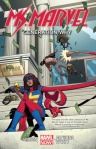 Ms. Marvel, Vol. 2: Generation Why by G. Willow Wilson
Who is the Inventor, and what does he want with the all-new Ms. Marvel and all her friends? Maybe Wolverine can help! If Kamala can stop fan-girling out about meeting her favorite super hero, that is. Then, Kamala crosses paths with Inhumanity — by meeting the royal dog, Lockjaw! But why is Lockjaw really with Kamala? As Ms. Marvel discovers more about her past, the Inventor continues to threaten her future. Kamala bands together with some unlikely heroes to stop the maniacal villain before he does real damage, but has she taken on more than she can handle? And how much longer can Ms. Marvel’s life take over Kamala Khan’s? Kamala Khan continues to prove why she’s the best (and most adorable) new super hero there is!
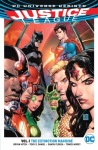 Justice League, Volume 1: The Extinction Machines by Bryan Hitch
A part of DC Universe: Rebirth!
A new day dawns for the Justice League as they welcome a slew of new members into their ranks. The question remains though, can the world’s greatest superheroes trust these new recruits? And will the members of League be able to come together against an ancient evil that threatens to reclaim not just the world, but the entire universe!
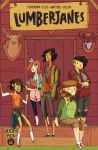 Lumberjanes, Vol. 1: Beware the Kitten Holy by Noelle Stevenson
At Miss Qiunzilla Thiskwin Penniquiqul Thistle Crumpet’s camp for hard-core lady-types, things are not what they seem. Three-eyed foxes. Secret caves. Anagrams. Luckily, Jo, April, Mal, Molly, and Ripley are five rad, butt-kicking best pals determined to have an awesome summer together… And they’re not gonna let a magical quest or an array of supernatural critters get in their way! The mystery keeps getting bigger, and it all begins here.
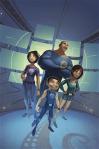 Deep by Tom Taylor
Journey into The Deep with the daring aquanaut family, The Nektons, aboard their state-of-the-art (and oh so shiny) submarine, The Aronnax. When an earthquake off the coast of Greenland leads to strange reports of monster sightings, William and Kaiko Nekton, along with their kids, Fontaine and Ant (and of course, Ant’s pet fish, Jeffrey), dive into the mystery! Will they find what they’re looking for? Will they teach a fish to fetch? Will they be accidentally eaten?
 LadyCastle by Delilah S. Dawson
When King Mancastle and his mighty vassals ride off on crusade, the women left behind are not at all put out-that’s a lot less armor polishing for them to do. Of course, when the men get themselves eaten by a dragon and leave a curse that attracts monsters to the castle…well, the women take umbrage with that. Now the blacksmith’s wife Merinor is King, Princess Aeve is the Captain, and the only remaining (and least capable) knight Sir Riddick is tasked with teaching the ladies of the castle how to fight, defend, build, and do all manner of noisy things the men had been doing while the women assumed they were just drunk. Novelist Delilah S. Dawson (Star Wars: The Perfect Weapon, As Wicked as She Wants, Wake of Vultures) brings her first original series to comics, and is joined by breakthrough illustrator Ashley A. Woods (Niobe: She Is Life) for a rollicking fantasy adventure featuring women reclaiming their lives on their terms.
 Injustice: Gods Among Us: Year One, Vol. 1 by Tom Taylor
Things in the DC Universe have changed after Superman is tricked into destroying the one thing he loves the most. Now unwilling to let crime go unpunished, the heroes of our world must choose if they are with Superman or against him. But not every country will submit to his new world order and neither will Superman’s greatest threat-Batman!

Excerpt and Giveaway: The Stars Are Legion by Kameron Hurley
Posted on January 30, 2017 7 Comments
***The giveaway is now over, thanks to everyone who entered!***
Today I’m excited to share with you all a special excerpt and giveaway for a book that has been getting a lot of attention lately. The good news is that there’s not long to wait for it now! Next week Saga Press will be publishing The Stars Are Legion by Kameron Hurley, a science fiction novel described as a gritty, action-packed and feminist space opera. It will be available on February 7, 2017 wherever books are sold, so be sure to check it out! In the meantime, please enjoy the following excerpt and don’t forget to enter our giveaway if you’re in the US for a chance to win a copy of your own.

 Set within a system of decaying world-ships travelling through deep space, this breakout novel of epic science fiction follows a pair of sisters who must wrest control of their war-torn legion of worlds—and may have to destroy everything they know in order to survive.
On the outer rim of the universe, a galactic war has been waged for centuries upon hundreds of world-ships. But these worlds will continue to die through decay and constant war unless a desperate plan succeeds.Anat, leader of the Katazyrna world-ship and the most fearsome raiding force on the Outer Rim, wants peace. To do so she offers the hand of her daughter, Jayd, to her rival. Jayd has dreamed about leading her mother’s armies to victory her whole life—but she has a unique ability, and that makes her leverage, not a leader. As Anat convinces her to spend the rest of her life wed to her family’s greatest enemy, it is up to Jayd’s sister Zan—with no stomach for war—to lead the cast off warriors she has banded together to victory and rescue Jayd. But the war does not go at all as planned…
In the tradition of The Fall of Hyperion and Dune, The Stars are Legion is an epic and thrilling tale about familial love, revenge, and war as imagined by one of the genre’s most imaginative new writers.
Excerpt from The Stars Are Legion by Kameron Hurley, on-sale February 7, 2017. Published by Saga Press. Copyright © 2017 Kameron Hurley, reprinted with permission from Saga Press.
“There is nothing I fear more than someone without memory.
A person without memory
is free to do anything she likes.”
–Lord Mokshi, Annals of the Legion
1
Zan
I remember throwing away a child.
That’s the only memory I know for certain is mine. The rest is a gory blackness. All I have, then, are the things I’ve been told are true:
My name is Zan.
I once commanded a great army.
My mission was to destroy a world that does not exist.
I’m told my army was scattered, or eaten, or blown apart into a thousand twinkling bits of debris, and I went missing.
I don’t know why I’d ever want to lead an army—especially a losing one—but I’m told I spend my life pushing hard to get to the rank and skill I attained. And when I came back, spit out by the world or wrenched free of my own will, I came back wrong. What wrong means I don’t know yet, only that it’s also resulted in my lack of memory.
The first face I see when I wake each period in my sickbed is full-lipped and luminous, like looking into the face of some life-giving sun. The woman says her name is Jayd, and it is she who has told me all I know to be true. When I ask, now, why there is a dead body on the flood behind her, she only smiles and says, “There are many bodies on the world,” and I realize the words for world and ship are nearly identical. I don’t know which she used.
I drift.
When I wake net, the body is gone, and Jayd is bustling around me. She helps me sit up for the first time. I marvel at the dark bruises on the insides of my arms and legs. A broad scar cuts my belly in two, low near my groin, and there is something strange about my left hand; it’s clearly smaller than the right. When I try to make a fist, it closes only halfway, like a tortured claw. When I slide to the floor, I discover that the bottoms of my feet are mostly numb. Jayd does not give me time to examine them as she pulls a porous, draping robe over my shoulders. It’s the same cut and heft as hers, only dark green to her blue.
“It’s time for your first debriefing,” Jady says as I try to make sense of my injuries. She takes my hand and leads me from the room, down a dark, pulsing corridor. I squint. I see that our entwined hands are the same tawny color, but her skin is much softer than mine.
“You were gone for a half-dozen turns,” she says, and she sits me down beside her in a room off the corridor. I stare at my palms, trying to open and close my hands. If I work at it, I can get the left to close a bit more. The room, like the corridors, is a warm, glistening space with walls that throb like a beating heart. Jayd smooths the dark hair from my brow with comforting fingers, the movement as reverent and well practiced as a prayer.
“We thought you dead,” she days, “Recycled.”
“Recycled into what?” I say, but the all blooms open, the door unfurling like a flower, and an older woman beckons us inside, and Jayd ignores my question.
Jayd and I go after her and sit on a damp bench on one side of the great plain of a table. The woman sits across from us. Patterns move over the surface of the table, though whether they are writing or purely decorative or something else entirety, I don’t know. The more I look at them, the more my head throbs. I touch my temple, only to find that my fingers come away sticky with viscous lubricant or salve. I trace my finger along the ridge of a long scar that runs from the edge of my left brow to the curl of my left ear. I have still not seen my own face. I have encountered no reflective surfaces. There is indeed something very wrong here, but I don’t think it’s me.
“I’m Gavatra,” the older woman says, her voice a low rumble. Her black hair is shorn against her dark scalp, revealing four long scars like scratch marks on the side of her head. She wears a long, durable garment of shiny blue fabric, like something excreted from the walls. It’s all held together with intricate knotted ties. She peers into my face and sighs. “Do you know who you are?”
Jayd says, “It’s the same as all the other times.”
“Other times?” I say, because how many times can one lose an army and get eaten by a ship and come back with injuries like these and live?
Jayd gazes deeply into my eyes, desperately searching my face for something. She has a broad, intense face with sunken eyes, and a bold beak of nose. I feel I should know or understand something for her look, but my memory is a hot, sticky void. I intuit nothing. I flex my hands again.
“Eight hundred and six of your sisters have tried to board the Mokshi.” Gavatra says, tapping her fingers across the surface of the table. The patterns change, and she scrutinizes them as if scrying. “You’re the only one who ever comes out, Zan. This appears to be why Lord Katazyrna keeps sending you there, despite the fact that you’ve never successfully led an army inside. Only yourself.”
“The Mokshi,” I say. “The world that doesn’t exist?”
“Yes,” Jayd says. “You remember?” Hopeful or doubtful?
I shake my head. The phrase means nothing to me. It has simply surfaced. “How many times has this happened to me?” I say. My left hand trembles, and I gaze at it as if belongs to someone else. It occurs to me that maybe it once did, and that chills me. I want to know what’s happened to my memory, and why there was a body on the floor in my sick room, and why I threw away a child. But I know they aren’t going to be pretty answers.
The Stars Are Legion Giveaway
And now time for the giveaway! With thanks to the publisher and the wonderful folks at Wunderkind PR, the BiblioSanctum has one print copy of The Stars Are Legion up for grabs. The giveaway is open to residents of the US. To enter, all you have to do is send an email to bibliosanctum@gmail.com with your Name and valid Mailing Address using the subject line “THE STARS ARE LEGION” by 11:59pm Eastern time on Thursday, February 9, 2017 and we’ll take care of all the rest.
Only one entry per household, please. The winner will be randomly selected when the giveaway ends and then be notified by email. All information will only be used for the purposes of contacting the winner and sending them their prize. Once the giveaway ends all entry emails will be deleted.
So what are you waiting for? Enter to win! Good luck!
YA Weekend Audio: Empress of a Thousand Skies by Rhoda Belleza
Posted on January 29, 2017 17 Comments
I received a review copy from the publisher. This does not affect the contents of my review and all opinions are my own.
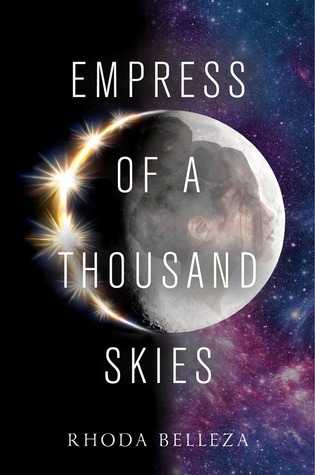 Empress of a Thousand Skies by Rhoda Belleza
Mogsy’s Rating (Overall): 3.5 of 5 stars
Genre: Science Fiction, Young Adult
Series: Book 1
Publisher: Listening Library (February 7, 2017)
Length: 9 hrs and 13 mins
Author Information: Website | Twitter
Narrator:
The last couple years have seen me get a lot pickier with my choice of YA reads, the key reason being that originality is such a rare quality in the genre these days. That’s why when I first came upon the description of The Empress of a Thousand Skies, I thought it showed promise—because sometimes, it’s not what a book’s blurb says that seals the deal; it’s what it doesn’t say. Despite the synopsis being rather short and vague, I liked how it mainly focused on the roles of the characters themselves and the way these mini-profiles teased possibilities and potential.
First, we have the Empress—or soon-to-be Empress. Crown Princess Rhiannon Ta’an, affectionately known as Rhee, is the sole surviving heir to a powerful dynasty that has ruled the galaxy for hundreds of years. Today, on her sixteenth birthday, she will come of age and return to her seat of power to take back her rule, which a regent has been holding for her in trust ever since Rhee’s parents and older sister were killed in a starship crash. Everyone called it an accident, but Rhee knows in her heart that it was not. For the last ten years she has been training and preparing for this day, the day she will be crowned Empress so she can finally take revenge on the one who orchestrated her family’s death.
However, the enemy’s reach is long and before Rhee can reach her destination, she becomes the target of a last-ditch assassination attempt. Against all odds she manages to survive, but the official word gets out that she has been killed, with the deed being pinned on a well-known reality show star. Enter Alyosha, the Fugitive. Overnight, Aly goes from being adored by fans to becoming the most wanted man in the galaxy. Now he is on the run, desperate to clear his name and find out why he has been framed. Meanwhile, Rhee teams up with an unexpected ally on her quest for the truth, and together they forge ahead with her plans to expose a Madman and to stop them from plunging the galaxy into all-out war.
So, did Empress of a Thousand Skies meet my expectations? Well…yes and no. While I had a good time with the book, it also didn’t take me long to realize the story wasn’t going to blow me away in the originality department as I’d hoped it would. Books featuring that timeworn cliché of a sole surviving royal character seeking vengeance for their murdered family are a dime a dozen, and I was really hoping Rhee’s story was going to add something more to this, but it didn’t. In fact, the entire book was rather predictable, with a plot that felt heavily formulaic and on-rails like a theme park ride you’ve been on many times before. Overall, the book’s themes and messages were commonplace and relatively bland. Even the “twists” were pretty well scripted in advance, with foreshadowing that’s so obvious that anyone paying close attention will know exactly what’s coming.
There was also this sense that the author wanted us to like her protagonist, and yet the story never failed to drive home Rhee’s many shortcomings every chance it could, with an almost cruel consistency. I wanted to root for Rhee, I really did, but the writing itself made that hard to do when it was constantly reminding me what a spoiled and sheltered princess she was, whose naiveté always steered her wrong or made her plans seem half-baked and ineffectual. Poor girl could never catch a break.
And yet, you know how there are movies you can watch over and over again without getting bored, the ones you can still enjoy even when you can recite all the lines and know when everything’s going to happen? Reading this book was a little like that. No matter how predictable the story got, I never stopped having fun with it. There was also enough to keep me interested, especially Aly’s chapters which offered a more unique point of view. And while world-building was a little lacking, there were a still a number of details that jumped out at me, such as the cool tech or the political relationships between the different cultures. It would be nice to see the next book elaborate on these areas.
For a YA novel, Empress of a Thousand Skies doesn’t bring anything terribly new to the table, but it’s still a pretty solid debut. The book was fun despite its flaws, the main ones being the story’s predictability and the weak development of the main character, but all that can be overlooked if you’re just looking for an entertaining read. It is the first of a planned duology and I am definitely planning on seeing it through to the end.
Audiobook Comments: As an audiobook, Empress of a Thousand Skies was the listening equivalent of “unputdownable”. Because their stories are relatively straightforward, I find that YA novels typically make for very fast and addictive listens, and this one was no exception. I’m also no stranger to the work of Rebecca Soler, one of my favorite audiobook narrators, having been a fan of hers since listening to her read Marissa Meyer’s The Lunar Chronicles series. Since she always puts everything into her performances, I couldn’t imagine Soler bringing anything but her A-game to this one, and I was right.


Mogsy’s Bookshelf Roundup: Stacking the Shelves & Recent Reads
Posted on January 28, 2017 32 Comments
Bookshelf Roundup is a feature I do every other weekend which fills the role of several blog memes, like Stacking the Shelves where I talk about the new books I’ve added to my library or received for review, as well as It’s Monday! What Are You Reading? where I round up what I’ve read since the last update and what I’m planning to read soon. Mostly it also serves as a recap post, so sometimes I’ll throw in stuff like reading challenge progress reports, book lists, and other random bookish thoughts or announcements.

Received for Review
Thank you to the publishers and authors for the following review copies received. For more details and full descriptions of the books, be sure to click the links to their Goodreads pages!

Bookburners by Max Gladstone, Margaret Dunlap, Mur Lafferty, Brian Francis Slattery – Bookburners was originally released in a serialized format which I was unfortunately unable to keep up with (like TV shows, I simply prefer to binge-consume full seasons all at once). However, my wishes were granted with the release of the collected edition this month, and much thanks to Saga Press and Wunderkind PR for sending a review copy.
Star’s End by Cassandra Rose Clarke – CRC has never disappointed, and I’m really looking forward to her next sci-fi novel about a young woman preparing to take over her father’s corporate empire, only to discover the more sinister aspects of his work involving alien DNA. Thank you to Saga Press for the ARC.
With Blood Upon the Sand by Bradley P. Beaulieu – So excited about this sequel to Twelve Kings of Sharakhai! My thanks to DAW.

Red Sister by Mark Lawrence – This was the first of a couple surprise ARCs that arrived last week, courtesy of Ace Books! I’m very excited to check out this start of a brand new series by Lawrence, set in a world separate from his other books. It is about a young woman training to become a warrior nun, and will feature a stronger coming-of-age feel from the sound of things.
City of Miracles by Robert Jackson Bennett – The next surprise was this third novel of The Divine Cities, which I’d previously been approved for at NetGalley, but I was nonetheless thrilled when I opened the package to find this ARC inside. Nothing beats the feel of a paper book cradled in your hands, and I’m definitely looking forward to curling up on the couch with this one. Thank you, Broadway Books.
The Collapsing Empire by John Scalzi – The Collapsing Empire sees Scalzi returning to space opera, but surprise, it’s not going to be another Old Man War book. It’s hard to be disappointed, though. I’m looking forward to experiencing something completely new, and I have a feeling this is going to be great. My thanks to Tor Books!

Dragon Captives by Lisa McMann – Cheers to Aladdin Books/Simon & Schuster for putting this book on my radar! I had not heard of it before it arrived, but research quickly led me to discover that it is a spin-off from The Unwanteds. I’ve only been vaguely aware of the series before now, and this seems like the perfect jumping on point for readers curious about the world or the author’s work!
The Ghoul Vendetta by Lisa Shearin – I’ve been enjoying this urban fantasy series from the very start, and hopefully book four of The SPI Files will continue the fun! My thanks to Ace Books.
Department Zero by Paul Crilley – Huge thanks to Pyr Books for this finished copy! I had a great time with this book, and here’s my review in case you missed it. Paul Crilley also stopped by with a guest post this week, so check it out – and don’t forget to enter our giveaway if you’re in the US or Canada!


Empress of A Thousand Skies by Rhoda Belleza – Audiobook, with thanks to Listening Library. This was on my most-anticipated YA list, so I just had to request! I’ve already finished it since it was a very quick listen, and my review should be up soon.
Kings of the Wyld by Nicholas Eames – I just couldn’t resist clicking the download button on NetGalley. This one sounds like so much fun, with a mix of old-school fantasy and rollicking adventure. My thanks to Orbit for the opportunity.
River of Teeth by Sarah Gailey – And now for something a little different – the blurb of this one describes it as a story about “a bayou overrun by feral hippos and mercenary hippo wranglers around the globe” and OMG all I know is that I NEED THIS BAD. Thanks so much to Tor.com.
The Ship by Antonia Honeywell – This one was a bit of an impulsive request, but I have a serious weakness for atmospheric dystopian novels and something about the description of The Ship just jumped out at me. With thanks to Orbit Books and NetGalley.
Reviews
Review roundup time! Here are the reviews I posted since the last update, and topping the list are a couple of sequels, The Liberation from The Alchemy Wars and The Guns of Empire from The Shadow Campaigns. Check out these series if you haven’t yet!
The Liberation by Ian Tregillis (4.5 of 5 stars)
The Guns of Empire by Django Wexler (4.5 of 5 stars)
The Hanging Tree by Ben Aaronovitch (4 of 5 stars)
The Burning Page by Genevieve Cogman (4 of 5 stars)
The Last Harvest by Kim Liggett (4 of 5 stars)
Behind Her Eyes by Sarah Pinborough (4 of 5 stars)
Dreadnought by April Daniels (3.5 of 5 stars)
Little Heaven by Nick Cutter (2 of 5 stars)
Roundup Highlights:


Interviews & Guest Posts
Earlier this week Paul Crilley also wrote us a fantastic piece about humorous banter and snappy dialogue, which you’ll find plenty of in his book Department Zero. Thanks so much for stopping by, Paul!
Guest Post: “The Bantering Partnerships in Literature and Film” by Paul Crilley


What I’ve Read Since the Last Update
Here’s what I’ve finished recently, a couple of the reviews are up already and be sure to stay tuned for more!


Have you heard of or read any of the books featured this week? What caught your eye? Any new discoveries? I hope you found something interesting for a future read! Let me know what you plan on checking out. Until next time, see you next Roundup!
Book Review: The Hanging Tree by Ben Aaronovitch
Posted on January 27, 2017 31 Comments
I received a review copy from the publisher. This does not affect the contents of my review and all opinions are my own.
The Hanging Tree by Ben Aaronovitch
Mogsy’s Rating: 4 of 5 stars
Genre: Urban Fantasy
Series: Book 6 of Peter Grant/Rivers of London
Publisher: DAW (January 31, 2017)
Length: 336 pages
Author Information: Website | Twitter
After two years of watching the release date hover in flux and getting pushed back time and time again, I must confess waiting for this book was its own special kind of agony. That was also when I realized I was irrevocably addicted to Peter Grant.
The Hanging Tree is book six of the series which returns to London and places the main story arc back on track, following the short respite we took to the countryside with our protagonist in Foxglove Summer. The story begins with a drug-related death at a house party in one of the most exclusive residential areas in the city. Normally, the case wouldn’t have been within the purview of the Folly, which the Met’s investigative unit for all things magical and paranormal, except for the fact that one of the party goers turned out to be the daughter of Lady Ty, goddess of the river Tyburn. Suddenly, Peter is in a bind since he owes Lady Ty a favor, and as such he has reluctantly agreed to do all he can to keep her teenage daughter Olivia out of investigation. But as it turns out, his promise might be a moot point. After all, what do you do when the young lady in question is actually brazenly admitting to be the one who gave the victim the drugs which might have led to the fatal overdose?
Meanwhile, Peter and his boss Nightingale are also back on the trail of the Faceless Man, the main baddie of the series. Word on the street is that a rare book on magical properties has gotten everyone in the practitioner community in a tizzy trying to get their hands on it, including covert groups from abroad. Peter has reason to suspect that the Faceless Man has his fingers all over this one, but then there’s a lot going on here, including the fatal house party, Lady Tyburn’s daughter and the person she’s protecting, the mysterious book, a foxy thief, and the American agents who have suddenly shown up in town. Now Peter’s job is to find out how all of this is connected.
The Hanging Tree might not be my favorite in the series, but it was still very much worth the wait. For one thing, we come closer than ever before to finding out all the answers and discovering the whole truth behind the Folly’s greatest nemesis. In addition, a complicated figure from Peter’s past also makes a return bearing surprises for our protagonist. If you’ve been following along all this time, then this book is definitely not to be missed, especially in light of the significant revelations dropped on us in the latter half of the story.
That said, I also thought it fell short of being one of the best Peter Grant books because it had a lot less of the dry, sardonic humor which has always been one of the key hallmarks of this series. While still very enjoyable, this might be the first one that didn’t make me literally laugh out loud. There also wasn’t enough of Nightingale. What I wouldn’t give to see him kick some ass again in another epic wizarding duel, instead of just hearing everyone around him talk about it. He is like the Met’s secret weapon that gets waved in front of our faces a lot, but we hardly ever get to see him in action.
In terms of criticisms though, that was probably the extent of it, which made me very happy since I had such high expectations for this book. It wasn’t always fast-paced, but as far as police procedurals go, it had just the right amount of mystery, suspense, and action. The story had so many moving parts that Aaronovitch was constantly juggling and keeping aloft, I can’t say there was really much time for anything else. Still, we got to see a little more of Peter’s relationship with Beverly, and I’m also enjoying the larger role of Sahra Guleed, another police officer who is shaping up to be the perfect partner for Peter while the two of them are on the beat. They have a great working dynamic, almost like they are of one mind when they tackle everything from suspect interviews to Falcon raids, and I’m really hoping this is the first step to Guleed becoming a series regular.
The more urban fantasy I read, the easier it gets to spot if a sequel is “filler” or an actual book where “very important things” happen. The Hanging Tree, I’m happy to report, definitely belongs in the latter category. Don’t get me wrong because I loved the previous book which was a nice break from the hunt for the Faceless Man, but I’m also pleased that this one brings us right back into thick of things and resolves some of the questions left by the shocking events at the end of Broken Homes. This book is what I would call a real game-changer. While it did end rather abruptly, it’s clear that Peter and the gang will have to tread even more carefully going forward, and the next book should be very interesting indeed. Now if I can only survive the wait…

More on The BiblioSanctum:
Review of Whispers Underground (Book 3)
Review of Broken Homes (Book 4)
Review of Foxglove Summer (Book 5)
Guest Post: “The Bantering Partnerships in Literature and Film” by Paul Crilley + Giveaway!
Posted on January 26, 2017 9 Comments
***The giveaway is now over, thanks to everyone who entered!***
Today I am thrilled to welcome author Paul Crilley to The BiblioSanctum to talk about his latest novel Department Zero, a science fiction-fantasy adventure mash-up about infinite alternate realities and a secret society of universe-jumping agents, complete with a nice shot of Lovecraftian horror. In case you missed my review I had a blast with the book, my favorite thing about it being the wicked sense of humor to which I attribute the hilarious dialogue and many of the memorable lines. So you can imagine how excited I was to have Paul himself chime in on this very topic, giving us insight into the art of banter! Department Zero is now available wherever books are sold, so be sure to check it out. Happy reading!

THE BANTERING PARTNERSHIPS IN LITERATURE AND FILM
by Paul Crilley
It’s probably no secret by now that I like to have characters throwing banter at each other in my books. Whether it’s Corrigan the piskie and young Emily Snow in my Invisible Order series, Abraxis Wren and Torin the dwarf in my Eberron books, Sebastian Tweed and Octavia Nightingale in the Tweed & Nightingale Adventures, or the dog and Gideon “London” Tau in Poison City.
Give me banter and cool characters any day of the week. So knowing this it shouldn’t come as a surprise when readers find out my newest book, Department Zero, also has two characters who like to insult and throw zingers at each other. (Who’d a thunk it?)
I think it makes the books fun, it fits with the style of novels I write, and of course, I love writing those kinds of conversations. In Department Zero, the two characters are Harry Priest, a divorced dad trying to do right by his daughter while also going through a bit of a slump in his life, and Havelock Graves, the arrogant, annoying, long-winded investigator in the Interstitial Crime Department, (a rather large law enforcement agency that polices the thousands of different multiverses that are out there.)
Below is my contribution to the bantering partnerships in literature and film.
##
Graves looks at me. “What happened?” he asks.
Should I lie? Say the beetle-armor monster took him out? But s**t, why should I? It wasn’t my fault. The guy appeared from nowhere. With a gun. How was I supposed to know?
“I… kinda shot him. A bit.”
Graves raises an eyebrow. “You shot him?”
“Yes.”
“A bit?”
“Well… a lot. He materialized in thin air. Right in front of me. The goddamn spider wall was closing in. I’d just shot a talking monkey with an old man’s face. I was on edge.”
“You were on edge?” repeats Graves. “That’s the excuse you give for murdering one of my top operatives? You were on edge?”
“Come on, man. I’ve had a rough day. Look, I’m sure I’ll feel terrible about it tomorrow. I’ll probably have to go for counselling. I’ll drink myself to sleep every night to try and forget the look on his face when he died. And you know what? That’s something I have to deal with. That’s my burden for what I’ve done. For the life I’ve taken. So I don’t need you on my back as well.”
Graves studies me curiously. “You really mean all that?”
“No,” I say. “The guy was an asshole. I’m sorry I killed him, but he shoulda known goddamn better than to sneak up on someone with a gun. Especially wearing that creepy-ass mask.”
##
Graves slides in opposite me. I stare at him, shake my head.
“You ruined my life, you know that?”
“That had nothing to do with me. You turned up at the wrong crime scene and your partner stole something that didn’t belong to him.”
“Yeah, well he’s dead, so you’re taking the rap.”
“Whatever makes you feel better.”
I lean forward. “You don’t understand.” I glance surreptitiously around. “Everything’s changed. I can’t sleep. I’m convinced I’m going to turn around and see these… things coming after me. I sit outside my ex-wife’s house all night.”
“Hey now. You can’t pin your stalking on me.”
“I’m not stalking. I’m watching. Protecting my kid. In case any of those… things turn up.”
“It doesn’t work like that.”
“Then how does it work?” I shout. “Because I don’t know!”
“Do you want to know?”
I blink.
“I mean, really want to know? Because… that’s actually why I’m here. To offer you a job.”
“A…job?”
“At ICD.”
“Which is?”
Graves winces. “The Interstitial Crime Department.”
“You’re speaking words, but I have no idea what you’re saying.”
“It’s very hard to explain. It’s like… explaining the concept of time travel to an ant.”
“You can time travel?”
“What? No. I…” Graves sighs. The ICD is like your FBI, right? We look into crimes, but on a cosmic scale.”
I shake my head. “Not following.”
Graves sighs in frustration. “Are you familiar with the multiverse theory? That there are an infinite number of universes out there, some with only minor differences. Some with major differences. Like, there could be a dimension identical to this one, except all humans have nine fingers and toes. Or… or where dogs can speak. Or where the nazis won the war. Or where mankind all has telepathy. Or a world totally different. Where magic works and orcs and ogres exist. Where you can live you your Lord of the Rings fantasy. Or another universe where you can travel the starts in solar-powered sails barges, coasting the gases of stars through the infinite voids of space.”
“Poetic. Still don’t know what you’re talking about.”
“I think you’re being wilfully stupid.”
“Nothing wilful about it.”
“You said it, idiot. But you get the idea. An infinite number of worlds means and infinite number of crimes. Which is where the Interstitial Crime Department comes in. See… a lot of people know about these shifting realities and you know what people do when they see an opportunity like this?”
“Somehow use it for sex?”
“That’s another department,” says Graves crisply.
##
And now as a nod to those partnerships that inspired my own writing over the years, I thought I’d list my top three buddy-up partnerships in movies. (Movies, because you don’t really see many in books, and, well, I love movies.)
First up is In Bruges. Do yourself a favor. If you haven’t seen it, rectify this oversight immediately. The film stars Colin Farrell and Brendan Gleeson as Irish hitmen hiding out in the Belgian city of Bruges after a contract killing goes badly wrong. Gleeson is the tired professional, while Farrell (in his best part) is the slightly naïve, terminally depressed protégé. The movie is chock full of brilliant and funny conversations.
Ken: Coming up?
Ray: What’s up there?
Ken: The view.
Ray: The view of what? The view of down here? I can see that down here.
Ken: Ray, you are about the worst tourist in the whole world.
Ray: Ken, I grew up in Dublin. I love Dublin. If I grew up on a farm, and was retarded, Bruges might impress me but I didn’t, so it doesn’t.
##
Chloë: So what do you do, Raymond?
Ray: I… shoot people for money.
Chloë: [smiling] What kinds of people?
Ray: Priests, children… you know, the usual.
Chloë: Is there a lot of money to be made in that business?
Ray: There is for priests. There isn’t for children. So what is it you do, Chloë?
Chloë: I sell cocaine and heroin to Belgian film crews.
Ray: Do you?
Chloë: Do I look like I do?
Ray: You do, actually. Do I… look like I shoot people?
Chloë: No. Just children.
Next up is Kiss Kiss Bang Bang, Shane Black’s little known black comedy, detective-noir thriller. Kiss Kiss Bang Bang is probably my second favorite film, mainly because of the chemistry between Robert Downey Jr and Val Kilmer. Robert Downey Jr is Harry Lockheart, a thief who’s mistaken for an actor and is flown to LA where he has to take detective lessons from “Gay Perry”. Of course, things do not go to plan and they get embroiled in a pretty complex little mystery.
Perry: We gotta move her somewhere. You got gloves?
Harry: Excuse me?
Perry: Gloves. Do you have gloves? You have to move her. If it’s a frame-up, some asshole’s probably calling the cops on you right now. Do this: wrap up the body in a blanket, a sheet, anything.
Harry: Okay, any particular kind of gloves?
Perry: Yes, fawn. Will you f***ing hurry!
Harry: Perry?
Perry: Yeah?
Harry: I peed on it.
Perry: What? You peed on what?
Harry: I peed on the corpse. Can they do, like, ID from that?
Perry: I’m sorry, you peed on…?
Harry: On the corpse. My question is…
Perry: No, my question, I get to go first: Why in pluperfect hell would you pee on a corpse?
Harry: I didn’t intend to! It’s not like I did it for kicks!
##
Harry: Do you think I’m stupid?
Perry: I don’t think you’d know where to put food at, if you didn’t flap your mouth so much. Yes I think you’re stupid.
##
Perry: Look up idiot in the dictionary and you know what you’ll find?
Harry: A… picture of my face?
Perry: No! The definition of the word idiot which you f***ing are!
And of course, my absolute favorite. Pulp Fiction, (Which I kind of reference in the opening chapter of Department Zero.), the noir, black comedy crime film written and directed by Quentin Tarantino. Pulp Fiction deals with various intersecting stories dealing with LA mobsters, small time hoods, hitmen, boxers on the run and a briefcase that may contain a human soul (or possibly just the diamonds from Reservoir Dogs.)
But the best two-piece partnership ever comes from the two hitmen. John Travolta’s Vincent Vega and Samuel L Jackson’s Jules Winnfield. Below are three quotes. I could have kept going, but it’s kind of hard to find ones that aren’t all swearing.
Vincent: And you know what they call a… a… a Quarter Pounder with Cheese in Paris?
Jules: They don’t call it a Quarter Pounder with cheese?
Vincent: No man, they got the metric system. They wouldn’t know what the f**k a Quarter Pounder is.
Jules: Then what do they call it?
Vincent: They call it a Royale with cheese.
Jules: A Royale with cheese. What do they call a Big Mac?
Vincent: Well, a Big Mac’s a Big Mac, but they call it le Big-Mac.
Jules: Le Big-Mac. Ha ha ha ha. What do they call a Whopper?
Vincent: I dunno, I didn’t go into Burger King.
##
Vincent: Want some bacon?
Jules: No man, I don’t eat pork.
Vincent: Are you Jewish?
Jules: Nah, I ain’t Jewish, I just don’t dig on swine, that’s all.
Vincent: Why not?
Jules: Pigs are filthy animals. I don’t eat filthy animals.
Vincent: Bacon tastes gooood. Pork chops taste gooood.
Jules: Hey, sewer rat may taste like pumpkin pie, but I’d never know ’cause I wouldn’t eat the filthy mother***er. Pigs sleep and root in s**t. That’s a filthy animal. I ain’t eat nothin’ that ain’t got sense enough to disregard its own feces.
Vincent: How about a dog? Dogs eats its own feces.
Jules: I don’t eat dog either.
Vincent: Yeah, but do you consider a dog to be a filthy animal?
Jules: I wouldn’t go so far as to call a dog filthy but they’re definitely dirty. But, a dog’s got personality. Personality goes a long way.
Vincent: Ah, so by that rationale, if a pig had a better personality, he would cease to be a filthy animal. Is that true?
Jules: Well we’d have to be talkin’ about one charming mother***in’ pig. I mean he’d have to be ten times more charmin’ than that Arnold on Green Acres, you know what I’m sayin’?
##
Jules: This was Divine Intervention! You know what “divine intervention” is?
Vincent: Yeah, I think so. That means God came down from Heaven and stopped the bullets.
Jules: Yeah, man, that’s what it means. That’s exactly what it means! God came down from Heaven and stopped the bullets.
Vincent: I think we should be going now.
Jules: Don’t do that! Don’t you f***ing do that! Don’t blow this shit off! What just happened was a f***ing miracle!
Vincent: Chill the f**k out, Jules, this s**t happens.
Jules: Wrong! Wrong, this s**t doesn’t just happen.
Vincent: Do you wanna continue this theological discussion in the car, or at the jailhouse with the cops?
Jules: We should be f***in’ dead now, my friend! We just witnessed a miracle, and I want you to f***ing acknowledge it!
Vincent: Okay man, it was a miracle, can we leave now?
So there you have it. When people say my books read like movies it’s probably because I do write a lot of them as if they were movies. I’m a screenwriter by trade, so it’s just natural that kind of style would slip in to my prose as well.
 ABOUT THE AUTHOR
Paul Crilley is a Scotsman living in South Africa. He wrote The Invisible Order series for Egmont USA and The Adventures of Tweed & Nightingale for PYR. He also wrote the award-winning detective novels The Abraxis Wren Chronicles for Wizards of the Coast.
Paul also writes computer games, and worked on the Bioware/Lucasarts MMO Star Wars: The Old Republic, and also worked for Disney on Armies of Magic.
On the comics front, Paul adapted his Eberron detective duo Abraxis Wren and Torin for IDW Publishing, and he recently planned out and wrote three issues of their six-issue crossocver series, X-Files: Conspiracy.
Paul is also a scriptwriter and has written over a hundred hours of television, ranging from drama, sitcoms, and crime thrillers to children’s shows.
Department Zero Giveaway
Interested in checking out this book? Here’s your chance to win a copy of your very own! With thanks to the publisher, The BiblioSanctum has two print copies of Department Zero up for grabs! This giveaway is open to addresses in the US and Canada. To enter, all you have to do is send an email to bibliosanctum@gmail.com with your Name and valid Mailing Address using the subject line “DEPARTMENT ZERO” by 11:59pm Eastern time on Friday, February 3, 2017.
Only one entry per household, please. Two winners will be randomly selected when the giveaway ends and then be notified by email. All information will only be used for the purposes of contacting the winners and sending them their prize. Once the giveaway ends all entry emails will be deleted.
So what are you waiting for? Enter to win! Good luck!
Waiting on Wednesday 01/25/17
Posted on January 25, 2017 10 Comments

“Waiting On Wednesday” is a weekly meme hosted by Breaking the Spine that lets us feature upcoming releases that we can’t wait to get our hands on!
Mogsy’s Pick
Lady of the Lake by Andrzej Sapkowski (March 14, 2017 by Orbit)
At long last the official English translation of the final book of The Witcher will be released this spring, though at this time I have no idea if the audio edition from Hachette Audio will be available on the same day as well. Being a diehard fan of the audiobooks and Peter Kenny’s excellent narration for this series though, I wouldn’t even mind waiting a little longer for it if I have to!
 “The Witcher returns in this action-packed sequel to The Tower of Swallows, in the New York Times bestselling series that inspired The Witcher video games.
After walking through the portal in the Tower of Swallows while narrowly escaping death, Ciri finds herself in a completely different world… an Elven world. She is trapped with no way out. Time does not seem to exist and there are no obvious borders or portals to cross back into her home world.
But this is Ciri, the child of prophecy, and she will not be defeated. She knows she must escape to finally rejoin the Witcher, Geralt, and his companions – and also to try to conquer her worst nightmare. Leo Bonhart, the man who chased, wounded and tortured Ciri, is still on her trail. And the world is still at war.”
Audiobook Review: Behind Her Eyes by Sarah Pinborough
Posted on January 24, 2017 19 Comments
I received a review copy from the publisher. This does not affect the contents of my review and all opinions are my own.
Behind Her Eyes by Sarah Pinborough
Mogsy’s Rating (Overall): 4 of 5 stars
Genre: Thriller, Mystery
Series: Stand Alone
Publisher: Macmillan Audio (January 31, 2017)
Length: 11 hrs and 28 mins
Author Information: Website | Twitter
Narrators: Anna Bentinck, Josie Dunn, Bea Holland, Huw Parmenter
Sarah Pinborough is fast becoming a must-read author for me. Her books, like the Dr. Thomas Bond duology and The Language of Dying are among some of my favorites, demonstrating her incredible writing talent and versatility. Needless to say, my anticipation for her new mystery suspense novel Behind Her Eyes was tremendous, especially with the #WTFThatEnding social media campaign working in overdrive throughout the months leading up to release.
The story opens with an introduction to Louise, a divorced single mom who works as a doctor’s assistant. Having watched her ex-husband move on with a new girlfriend and a baby on the way, she’s understandably feeling a bit dejected and lonely, which is why her spirits are lifted when she meets a handsome man at a bar one night and things end with a clandestine kiss between them. However, that rush quickly fades when she arrives back at work on Monday only to find that the firm’s new psychiatrist is none other than the man from the bar. His name is David Martin, her new boss. And he is also very much married.
The two of them decide to put the night behind them and promise to never speak of it again. But then by chance, Louise runs into Adele Martin, David’s chic, sophisticated and beautiful wife. Try as she might to stay away, Louise can’t help but be drawn to the other woman. Adele may seem perfect on the surface, but Louise senses a timid and broken soul underneath. The two of them strike up a close friendship, keeping their interaction a secret from David, who seems to make Adele nervous and scared. The secrecy is just as well for Louise, since despite their earlier promise to each other to forget the kiss, she and David have become involved in a passionate affair. Louise isn’t proud of what she’s doing, but she also can’t deny that she’s falling for David. And yet, she also cares very much for Adele, a woman who appears to be in desperate need for someone to listen to her and be her friend. Something awful is going on in the Martins’ marriage, and even though Louise is smitten, she also has concerns about David’s angry, controlling streak and wants to know why Adele is so afraid of her husband.
Before one gets drawn into the sense that this is nothing but your usual mystery thriller about a love triangle from hell, I have to warn you that trusting anybody in this book would be a huge mistake. There’s nothing ordinary about this novel, and I mean that on so many levels. Sarah Pinborough is not only an amazing storyteller, she’s also a master of pulling the strings and keeping you guessing. Like a lot of her books, there’s always an element of something beyond the realm of the mundane, and that is all I’ll say to hint at the underlying riddle at the heart of this story.
Here’s also where I’ll be getting a little vague in my review, since I doubt there’s any possible way to discuss plot details without spoiling, so I’m limiting my descriptions to emotions. First, I was intrigued. Most of the story is told through Louise’s perspective, and the author has created a very well-rounded character in her. It’s true that I hated her for her duplicity in carrying on with a married man while being friends with his wife, but at the same time there’s an authenticity to her that made it easier to understand why she couldn’t extract herself from that situation. I felt something similar for Adele, the other major point-of-view character. Her sections were both strange and disturbing. Clearly she’s a damaged woman, and flashbacks to the past reveal tragedy and pain. The scenes she shares with her husband also indicate something very wrong in their marriage. The truth is a mystery, with subtle clues doled out along the way, adding to the growing feelings of unease. These days it might seem like a cop-out to compare any kind of dramatic suspense-thriller novel to Gone Girl, but no joke, I got those same vibes with this one. Tensions reach a peak as we close in on the finale, where Pinborough drops the major bombshell.
That brings us to the ending, where the author clearly delivers on the marketing campaign’s promise of WTFuckery. Still, there’s a part of me that wishes the publisher hadn’t hyped the hashtag all over social media, not only because it raises readers’ expectations but also because everyone knows that surprises always work best when you don’t know they’re coming. Granted it was still a shocking ending, but I think it would have been even better if I hadn’t known ahead of time to prepare for something big. That said, if it drives people to be curious and pick up this amazing book, I can’t complain; just know that this story so much bigger than #WTFThatEnding because it is the twisted, complex and clever build-up which makes the conclusion such a powerful whack on the head.
If you’re fan of psychological thrillers, you need to do yourself a favor and pick up a copy of Behind Her Eyes because I really can’t recommend enough. Strap yourself in and enjoy the ride.
Audiobook Comments: I was also fortunate to receive an audiobook copy of Behind Her Eyes to review, and I thoroughly enjoyed it. The book is read by multiple narrators (Anna Bentinck, Josie Dunn, Bea Holland, Huw Parmenterto) to illustrate separate character storylines, though on several occasions a couple of their voices sounded too similar for me to distinguish right away whose perspective we’re following. There were also a few confusing chapter transitions and moments where I was confused whether we were in the present “Now” storyline or flashing back to the “Then” timeline, so I really had to pay careful attention. These nitpicks aside though, this audiobook was a great listen and I was fully immersed in the experience.
Click below to hear an audio excerpt of BEHIND HER EYES, narrated by Anna Bentinck, Josie Dunn, Bea Holland, Huw Parmenter. With thanks to Macmillan Audio.
Book Review: Dreadnought by April Daniels
Posted on January 23, 2017 23 Comments
I received a review copy from the publisher. This does not affect the contents of my review and all opinions are my own.

Mogsy’s Rating: 3.5 of 5 stars
Genre: Science Fiction, Young Adult
Series: Book 1 of Nemesis
Publisher: Diversion Books (January 24, 2017)
Length: 276 pages
Author Information: Website | Twitter
This year, if you’re involved in one or more of the many diversity reading challenges out there or simply encouraging yourself to check out more diverse reads, I hope you’ll consider Dreadnought. Books like this one have a relevant place in our world today for their role in celebrating LGBT voices and spreading awareness, and I think what excited me most was the depth of our protagonist and the way her story was told.
Fifteen Danny Tozer has always known in her mind and in her heart that she is a girl, even if her body says otherwise. The crushing anxiety of trying to keep people from finding out she’s transgender has been building lately, which is why at the start of this book, she finds herself hiding behind the mall secretly painting her toenails—holding onto this one thing she can control. That’s when all of a sudden, out of nowhere, the world’s greatest superhero known as Dreadnought literally falls out of the sky and lands right in front of her. Gravely injured by a supervillain named Utopia, Dreadnought knows his time is near, so with his dying breath he passes his powers on to Danny.
In that moment, Danny is changed. Becoming the new Dreadnought has not only granted the amazing superpowers that come with the role, but it has also transformed her body into what she’s always thought it should be, the girl she has always been inside. For Danny, this is the greatest thing that’s ever happened to her, though that happiness is quickly dampened when faced with the hostile reactions of her overbearing father who refuses to accept her new identity. At school, her best friend David is also suddenly treating her differently, saying and doing these awful things. Furthermore, Danny has realized that the mantle of Dreadnought comes with certain responsibilities—like saving the world. Sure enough, it’s not long before the superhero team Legion comes knocking at her door trying to recruit her, and the offer has Danny feeling torn. She knows she wants to help people, but she’s just not sure she wants to be the kind of hero the Legion wants her to be.
At its heart, Dreadnought is a superhero novel—it’s fun, fast-paced, and action-packed. But as you can see, there’s also a lot more to the story, and the conflicts here are complex and multi-faceted. I liked how this book incorporated the superhero elements while at the same time using Danny’s super-powered transformation and the accompanying acquisition of Dreadnought’s abilities as an allegory for a person coming out as transgender. April Daniels has done a fantastic job exploring Danny’s story, especially in detailing her internal struggles, her hopes and joys, fears and doubts. I can’t even pretend to understand how it feels for teens in that situation, but reading about Danny was definitely an emotional journey. Her character is well-written, deeply developed and very real.
Plot-wise, Dreadnought is an entertaining read. Momentum took some time to build, but when Danny meets the Legion, I think that was when the story really hit its stride. I loved Doc Impossible, and the banter between her and Danny during their first major scene together quickly made her one of my favorite side characters. Another thing I loved about this book was the female friendship. While Danny considers Legion’s offer to join up, she meets up with another “greycape” hero named Calamity (and I have a serious weakness for cowgirl-themed heroes) and the two of them take it upon themselves to help those who slip through the cracks of the Legion’s watch. They have a great dynamic together, and the excitement ramps up as the duo decide they have what it takes to take down Utopia themselves.
But for all its strengths, the story also has its weaknesses. There were parts of it that felt a little too clichéd or unconvincing. For example, other than Danny and maybe a couple other characters, no one else was all that fleshed out, and they were treated more like props than real people. Take the Legion—we hear about all their great deeds and how they’re the most powerful superhero team in the world, but of course at the moment of truth they are rendered useless so that our protagonist can conveniently step up to save the day. Portrayal of characters like David, Graywytch, or Danny’s parents are also extreme to the point where they sometimes felt like caricatures of caricatures. While people like that certainly exist, the way they were written in this book felt scripted and done for the sake of pushing the story along. The author also did more telling than showing, with rocky prose in places and pages of info-dumping being a frequent issue early on in the novel. Finally, world-building felt sparse and glossed over, and throughout the book I couldn’t help but experience this disconnect to the wider world beyond.
All told though, I enjoyed Dreadnought a lot. It’s an eye-opening book featuring a wonderfully developed and genuine protagonist. This is the origin story about how she became the eponymous superhero, and it is an unforgettable journey of action and emotion. What a promising start, with much potential for the rest of the Nemesis series!


 The BiblioSanctum