Waiting on Wednesday 03/29/17
Posted on March 29, 2017 17 Comments

“Waiting On Wednesday” is a weekly meme hosted by Breaking the Spine that lets us feature upcoming releases that we can’t wait to get our hands on!
Mogsy’s Pick
Invictus by Ryan Graudin (September 26, 2017 by Little Brown Books for Young Readers)
After the pulse-pounding, incredible thrill that was the Wolf by Wolf duology, Ryan Graudin has certainly earned a fan in me for life. I’m very much looking forward to her next novel Invictus, a sci-fi time traveling adventure.
 “Farway Gaius McCarthy was born outside of time. The son of a time-traveling Recorder from 2354 AD and a gladiator living in Rome in 95 AD, Far’s birth defies the laws of nature. Exploring history himself is all he’s ever wanted, and after failing his final time-traveling exam, Far takes a position commanding a ship with a crew of his friends as part of a black market operation to steal valuables from the past.
But during a heist on the sinking Titanic, Far meets a mysterious girl who always seems to be one step ahead of him. Armed with knowledge that will bring Far’s very existence into question, she will lead Far and his team on a race through time to discover a frightening truth: History is not as steady as it seems.
In this heart-stopping adventure, Ryan Graudin has created a fast-paced world that defies time and space.”
Novella Review: The Dispatcher by John Scalzi
Posted on March 28, 2017 27 Comments
I received a review copy from the publisher. This does not affect the contents of my review and all opinions are my own.
Mogsy’s Rating: 4 of 5 stars
Genre: Science Fiction
Series: Stand Alone
Publisher: Subterranean Press (May 31, 2017)
Length: 136 pages
Author Information: Website | Twitter
Imagine a world where it is nearly impossible to kill anyone. In The Dispatcher, John Scalzi’s sci-fi novella which takes place in the not-so-far future, this is exactly the state of affairs. One day, people simply woke up to this new game changer. If you committed suicide, you stayed dead. If you died in an accident, you stayed dead. If you passed away due to illness, you stayed dead. But for some bizarre reason, if you were murdered, your body would mysteriously awaken back to life, naked and whole in your home. In 999 times out of a 1000, those whose lives were intentionally ended by someone else would return to the living like this. No one knows why, no one knows how, no one has any clue what it all means. But what they do know, is that the world is forever changed by this phenomenon.
A good case in point, our protagonist Tony Valdez is a man whose job was created by the government as a result of this new reality. He is a Dispatcher—a trained and licensed professional killer. True, the terms of his position may dictate that he dispatch his clients as quickly and humanely as possible, and there are many rules surrounding his work contracts. But at the end of the day, Tony is aware that his presence is only ever requested when here’s a potential need for him to take a life. For instance, a good number of his assignments involve him being on hand at operating rooms in hospitals, just in case the surgery goes horribly wrong and a patient needs a second chance. In such a situation, Tony would deliver a special “payload” to the dying patient’s brain which would result in their death, essentially murdering them—then BOOM, patient reappears in their home, alive to attempt going under the knife another day.
Of course, not all Dispatchers follow the rules. As someone who used to pick up unofficial and lucrative “private” jobs under the table, Tony knows there are still plenty of his fellow Dispatchers who are doing these illegal gigs on the side. So when one of them goes missing, Tony teams up with a police detective to find out if his colleague’s illicit activities might have led to his disappearance.
With Lock In and now The Dispatcher, I truly think John Scalzi has entered a new phase of his career. While his style has always been quite readable to me, in this book I started to see a new level of polish and elegance in his writing. He seems to have moved past his issue with dialogue tags and the excessive “he saids, she saids”, for one thing. For another, gone is much of the “popcorn humor” his previous books are known for. Though it wouldn’t be fair to say The Dispatcher is completely devoid of levity, for the most part this novella is a very serious endeavor, featuring some thought-provoking yet morbid themes. It may be a short book, but it sure packs a lot of substance.
It’s also clear that much consideration has been put into the concept. While it’s true that the book never ends up giving an explanation for why people who are murdered just start coming back to life, I never really saw that as the point—rather, I looked at The Dispatcher as an interesting thought experiment, and the premise was simply there to provide a framework. What would happen if people couldn’t kill each other anymore? Would it hold people back from their impulses, or would it actually embolden them and make them more reckless, so that we would have secret fight clubs fought with hammers or college kids LARPing in the park with real swords and axes? How might people exploit this new phenomenon, or use Dispatchers to their advantage? What would it do to the world’s views on war, crime, healthcare, religion and pretty much everything in our daily lives? This book explores all these questions and more, touching upon the social effects on a population level, as well as the physical, moral, and psychological implications on a more personal level.
Best of all, woven though all of this is a great story. The Dispatcher gives off vibes of sci-fi crime noire mixed with a little bit of urban fantasy, making it a little tough to categorize, but what comes through strongly is the solid mystery plot. For a novella, I also thought it was very well-paced, with no filler scenes or lulls. All told, the story was riveting from start to finish, making this one a super quick read.
In sum, this is a book I would highly recommend. Even though I love Scalzi’s science fiction and humor, I definitely wouldn’t mind seeing him write more like this, or even expand The Dispatcher universe with future stories since there’s so much potential and possibilities to explore. He has truly created something special here, reminding me once again why he is one of my favorite authors.


Book Review: The Night Ocean by Paul La Farge
Posted on March 27, 2017 25 Comments
I received a review copy from the publisher. This does not affect the contents of my review and all opinions are my own.
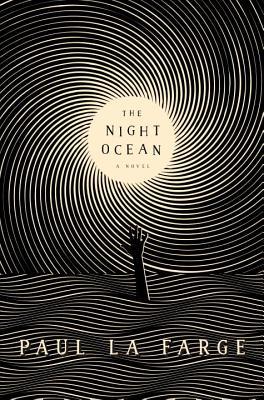 The Night Ocean by Paul La Farge
Mogsy’s Rating: 4 of 5 stars
Genre: Historical Fiction, Mystery
Series: Stand Alone
Publisher: Penguin Press (March 7, 2017)
Length: 400 pages
Author Information: Website | Twitter
The Night Ocean is not my usual genre, I confess, but its subject matter was simply too enticing to resist. While it’s true that I’ve always been drawn to books inspired by the writings of H.P. Lovecraft, perhaps just as interesting—if not more so—are the stories about the man himself. A pioneer of weird fiction, his lasting influence on the horror genre can be seen all around us, and yet, there is also a darker side to his legacy. In life, Lovecraft held some repugnant views, and in many fandom circles his racism and bigotry are still discussed almost as much as his work today. Still, love him or hate him, there appears to be a fascination with HPL’s work and personal life which cannot be denied.
Perhaps I should back up a bit, though. While indeed The Night Ocean explores the life of Lovecraft, it does it in a most unconventional and bizarre manner (which I’ll talk more about later), weaving fiction and history into a far-reaching chronicle that also ties in the lives of many other characters. Some of these names will even be familiar to Lovecraft and Horror/SFF aficionados, but first we begin this story with the tragedy of Dr. Marina Willett and her husband Charlie.
It all started with The Erotonomicon. Said to be the erotic diary of H.P. Lovecraft but later claimed to be a hoax, almost all copies are said to be destroyed back in the 50s, but somehow Charlie manages to track one down. As a life-long speculative fiction fan and a writer by trade, Charlie wants to make his next book an investigative piece about the diary, a decision that ends up plunging him into an all-consuming obsession with Lovecraft, much to Marina’s dismay. At the heart of Charlie’s project is a particular entry written in The Erotonomicon about a summer in 1934 involving Lovecraft and his friend Robert Barlow, a gay sixteen-year-old fan with whom the author stayed for a number of weeks while on a visit to Florida. Later known as the author and anthropologist R.H. Barlow, Robert also ended up collaborating with Lovecraft on several stories including “The Night Ocean”, which this book is named for.
Determined to find out the truth about Lovecraft and Barlow’s relationship, Charlie sets out on a continent-spanning journey to find out everything he can about what really happened between the two men that summer in Florida. However, Charlie’s obsession ultimately leads him to his downfall, and after suffering depression and anxiety, he checks himself into a hospital at the urging of his wife. Not long after that, he escapes into the wilderness and disappears without a trace. The note he left made it pretty clear to everyone that Charlie had planned and carried out his suicide, but Marina finds this difficult to accept. Holding on to the belief that her husband is still alive, she retraces his steps for the last two years, going to the places he visited and talking to the people he interviewed for his book, all in the hopes that it will shed some light on where she might find Charlie.
Quite frankly, describing the story any more than this would be a downright nightmare because I would be at an absolute loss as to how to keep going. The Night Ocean is one strange book, difficult to summarize and classify since it is made up of so many perspectives and interconnecting parts. The overall concept behind the novel is certainly ambitious and ingenious, but the way the story is presented will probably make it seem unfocused. Even though the entire book is told through Marina’s eyes, I would say the first half of the book is about Charlie—but also not—while the second half is about Marina—and yet also not. Yes, I’m aware of how confusing this sounds, but really at the heart of both threads is a man named L.C. Spinks, the publisher of The Erotonomicon. Is the diary really a hoax? Or if there’s some truth to it, then which parts of it are real and which parts are completely fabricated? The Night Ocean is an intricately woven web of fact and fiction, combining Paul La Farge’s rich imagination with the results of what must have been hours upon hours of painstaking research on his part.
And how does H.P. Lovecraft play into all this, you ask? Well, last summer I read and really enjoyed a novel called I Am Providence by Nick Mamatas, and even though it and The Night Ocean could not be any more different in tone and style, I still found it impossible not to draw parallels between these two books. Perhaps it is because they are both “Lovecraftian fiction” in the atypical sense; rather than playing directly off of HPL’s large body of works and the mythos he had created, they instead took an almost meta-fiction approach, both narratives coming up with a unique way to explore the author’s life and work through the lens of fandom. After all, one can hardly provide a full picture of Lovecraft’s legacy without recognizing the activities and creations of his highly dedicated fans, a cult following which has been growing since the 40s and 50s—fanzines, conventions, internet clubs and groups, etc. The Night Ocean is a book of many layers and components, and yes, there are parts of the story which deal with the nature of the fan community, presenting both its wonderful and ugly sides.
All told, I had a shockingly good time with this book. Because of its tangled nature, I doubt it going to be for everyone, but still, I highly recommend it if the description interests you. While I found the author’s writing style somewhat quirky and disjointed, I nevertheless managed to get into the rhythm of the story quickly, becoming mesmerized by extraordinary lives of these characters. There’s a lot of pain and heartbreak within these pages, but also a surprising amount of tenderness and beauty that I had not expected to find in a book featuring Lovecraft as a key figure. And even though there’s a lot of ambiguity in the story—a fact that often vexes me—in this case, I believe it might actually add to the book’s mystique.
At once frustrating and rewarding, The Night Ocean is alternate history on a completely new and innovative level. Easily one of the more clever, intense, and haunting books I’ve read so far this year, and its ending will likely stay with me for a long, long time.
YA Weekend: Nemesis by Brendan Reichs
Posted on March 26, 2017 15 Comments
I received a review copy from the publisher. This does not affect the contents of my review and all opinions are my own.

Mogsy’s Rating: 3 of 5 stars
Genre: Science Fiction, Young Adult
Series: Book 1
Publisher: G.P. Putnam’s Sons Books for Young Readers (March 21, 2017)
Length: 464 pages
Author Information: Website | Twitter
On the surface, this book had everything going for it: an original premise, a tantalizing mystery, a very promising plot. By all accounts, I should be extremely pleased with it, so why then can I not seem to shake this vague sense of discontent? Perhaps it is precisely because this book had so much potential, and knowing that it could have been even better is the source of my disappointment. Had the author carried out his ideas more effectively—and not tried to do too much all at once—the story might not have started fraying at the seams as it did.
Nemesis introduces us to two main POVs, the first of which belongs to Melinda “Min” Wilder, a teenage girl who has been experiencing a frightening occurrence every two years ever since she was eight years old. Every other year and always on her birthday, a strange man in a suit with glasses finds her alone and kills her. Whether it’s throwing her off a cliff or bashing her skull in with rock, he never fails to show up and do the job. And as if that isn’t horrifying enough, what happens next is even more disturbing—after dying, Min always finds herself waking up again, alive and whole, in the same spot in the middle of the woods of her small rural Idaho town. The first time it happened, she walked home to find that only a few hours have passed since her death. During that time, all evidence of her killing had been erased. The second time it happened, on Min’s tenth birthday, the town psychiatrist diagnosed her with a dissociative disorder. Min was prescribed medication that she has been taking every day for the last six years, but without fail, the mysterious suited man still always shows up on her even-numbered birthdays and kills her.
Our second POV character is Noah, and though he doesn’t get to chime in until later, we first get to meet him through Min’s eyes. As the son of the richest man in town, Noah appears to have it all: money, good looks, and popularity. However, the truth is a lot more complicated. Despite being surrounded by friends, Noah is often emotionally aloof, quiet, and generally unassertive—pretty much the complete opposite of Min and her best friend Tack. Publically, Noah puts on a stoic face, but privately he is haunted by nightmares of violence and death. For almost all his life, his father has been telling him what a weakling he is for not being able to overcome the hallucinations and bad thoughts in his head. After so long, Noah has even started to believe that he is useless and weak. When his jerk friends start bullying Min and Tack, all he can do is stand silently by and watch, too timid to speak out against Ethan, the leader of the popular kids.
By the way, in the middle of all this, the rest of the world at large is facing bigger issues. At the beginning of the book, we’re made aware that earth is in danger of being in the direct path of a huge asteroid hurtling through space. The Anvil is deemed a planet-killer, and as the story opens the whole world is holding its breath for a press conference in which NASA will announce whether or not the asteroid will make impact. Scientists are putting the odds at 50/50.
With all this going on, how could I not think Nemesis would be great? And indeed, at least in the first half, the book lived up to the potential promised by its synopsis. The suspense was bolstered by the intrigue and all the questions of which there were plenty, such as, just what the hell is going on with Min? Assuming she is right in her convictions and that none of this is all in her head, how is what’s happening to her even possible? Is there a significance in the fact that she and Noah share the same birthday? And what does all this have to do with the giant asteroid threatening to end all life on earth?
The good news is, we get the answers to all these questions by the end of the book. The bad news though, is that explanations seldom live up to the hype generated by the mystery in these sorts of situations, and this can’t be more true in the case of Nemesis. I also didn’t really enjoy how the story took a turn in a completely different direction around the halfway point, when we abandoned the mystery and things sudden devolved into a Lord of the Flies meets The Hunger Games fiasco. It felt like an attempt to make this book conform even further to YA conventions, which of course never makes things more interesting.
That said though, overall Nemesis was an enjoyable, entertaining book. I liked that about it. But somewhere along the way, I also felt the story lost sight of its goal to be different and unique and exceptional, reverting back to the usual tropes to order get in on the teen dystopian boom. To be fair, I rarely take issue with the tropes themselves, which can be fun. But a lot of books seem to fall into this trap, and quite frankly I’m really starting to get tired of it. I also felt somewhat let down by the ending, which offered an explanation for everything but had more holes than a slice of Swiss cheese. After all the buildup and anticipation, I honestly expected more, and the scenario we got struck me as absurd and not well thought out.
All told, Nemesis could have been great, but halfway through I felt it started to become a different book. The premise was also fantastic, but for all the intriguing questions it raised, the answers offered at the end made me think Reichs might have bit off more than he could handle. Still, I’m not closing any doors to the possibility that I’ll read the sequel. Like I said, this book was overall fun and entertaining, and I think there’s also a good chance the next one can turn things around and bring us back to the suspense and mystery we first saw in the intro, so I’ll be keeping an eye out for it.

Mogsy’s Bookshelf Roundup: Stacking the Shelves & Recent Reads
Posted on March 25, 2017 45 Comments
Bookshelf Roundup is a feature I do every other weekend which fills the role of several blog memes, like Stacking the Shelves where I talk about the new books I’ve added to my library or received for review, as well as It’s Monday! What Are You Reading? where I round up what I’ve read since the last update and what I’m planning to read soon. Mostly it also serves as a recap post, so sometimes I’ll throw in stuff like reading challenge progress reports, book lists, and other random bookish thoughts or announcements.

Received for Review
Thank you to the publishers and authors for the following review copies received. For more details and full descriptions of the books, be sure to click the links to their Goodreads pages!

Golden Age and Other Stories by Naomi Novik – This is a collection of stories set in Naomi Novik’s world of Temeraire, an alternate fantasy series set during the Napoleonic wars…with dragons. I have six of the novels under my belt so far, with plans to catch up with the remaining three now that the series has ended – hopefully not being completely caught up yet won’t prevent me from enjoying the stories in this anthology because I am most definitely planning on reading Golden Age! Thank you, Subterranean Press!
The House of Binding Thorns by Aliette de Bodard – Sequel to The House of Shattered Wings, which I enjoyed last year. Looking forward to seeing more of this world featuring a post-apocalyptic version of Paris ruled by fallen angels. With thanks to Roc Books.
Lifeblood by Gena Showalter – With thanks to Harlequin Teen and the kind folks at Wunderkind PR, I received this surprise arrival which I later found out is a sequel to a book called Firstlife, which I haven’t read. Has anyone read this series? Let me know if you think book two can be read as a standalone, or if I should pick up book one and start from the beginning, because this looks really interesting!

The Strange Case of the Alchemist’s Daughter by Theodora Goss – Imagine a story merging many works of fiction into one world, bringing together some of the most well-known characters from our beloved classics – but with what sounds to be a very cool twist. I’m very excited to read this one! Thank you to Wunderkind PR and Saga Press.
A God in the Shed by J-F Dubeau – You know I’m always up for trying out new horror! Much thanks to Inkshares for putting this Sword & Laser Publishing Contest winner on on my radar, it sounds deliciously dark and insane.
Wilders by Brenda Cooper – I’m a big fan of Cooper’s books, especially her Glittering Edge duology. I’m really looking forward to see what she has in store for us next in her new novel coming out this summer. With thanks to Pyr for the ARC!

Waking Gods by Sylvain Neuvel – A surprise arrived earlier in the week in the form of this finished copy of book two in the Themis Files sequence. I may have had some mixed feelings about the first book, but it doesn’t affect my curiosity or excitement to find out what’s going to happen next! Thanks to Del Rey Books.
Avengers of the Moon by Allen Steele – Much thanks to Tor Books for sending me an ARC of Allen Steele’s upcoming adventure sci-fi novel. Last year I loved his book Arkwright, and though Avengers of the Moon sounds completely different in subject and in style, I am still very interested in giving it a try.
Spymaster by Margaret Weis and Robert Krammes – I’ve always wanted to try a Margaret Weis book, but because she’s involved with so many ongoing series and projects, a good jumping on board just never seems to present itself. However, Spymaster is the first book of a new series called Dragon Corsairs that takes place in the world of the Dragon Brigade trilogy, so who knows, this might finally be my chance. Plus, dragons and privateers? Where do I sign up! Thanks again to Tor Books for this gorgeous finished copy, I just love the cover art.





Soul of the World by David Mealing – eARC courtesy of Orbit via NetGalley. I just couldn’t help myself. After all, is there anything so exciting as a new epic fantasy series, and a debut to boot?
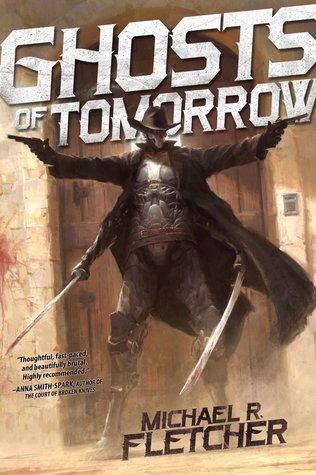
Ghosts of Tomorrow by Michael R. Fletcher – When the author contacted me last week asking if I would be interested in a review copy of his latest novel, my answer was of course a resounding HELL YES! Thank you, Michael!
The Island Deception by Dan Koboldt – As you may recall, last year I enjoyed a book called The Rogue Retrieval, a fantasy adventure about a Vegas illusionist who winds up stepping through a portal into another world filled with real magic. The Island Deception is the sequel, and my thanks to Dan Koboldt and Harper Voyager for hooking me up with an eARC.
The Witch Who Came In From the Cold by Lindsay Smith, Max Gladstone, Cassandra Rose Clarke, Ian Tregillis, Michael Swanwick – No surprise why I want to read this one, considering I have read and loved the books by many of the above authors. I also prefer to read serial novels only once they’re all completed, so this is the complete Season One, with thanks to Serial Box.
Flame in the Mist by Renée Ahdieh – Another new batch of books popped up at First to Read last week, so of course my attention went straight to their YA offerings and I managed to snag an eARC of Flame in the Mist. I had a good time with the author’s debut The Wrath and the Dawn so I have some pretty high hopes for this.
Strange the Dreamer by Laini Taylor – Audiobook with thanks to Hachette Audio. Already I’ve seen plenty of positive reviews for Laini Taylor’s highly anticipated new novel, so I’m really psyched about this and even more thrilled that I’ll get to experience the audio version.
Reviews
Time for a review roundup! The last two weeks have been dominated by sci-fi and urban fantasy reads, and there were also a bunch of sequels in there including three series enders. Topping the list for my featured spot is the amazing Phantom Pains – my first 5-star-rated book of the year too, I believe!
Phantom Pains by Mishell Baker (5 of 5 stars)
The Return by Joseph Helmreich (4 of 5 stars)
Star Wars: Aftermath: Empire’s End by Chuck Wendig (4 of 5 stars)
Star’s End by Cassandra Rose Clarke (3.5 of 5 stars)
A Conjuring of Light by V.E. Schwab (3.5 of 5 stars)
Etched in Bone by Anne Bishop (3.5 of 5 stars)
Revenger by Alastair Reynolds (2 of 5 stars)
Roundup Highlights:

Interviews & Guest Posts
Also huge thanks to Ben Galley who stopped by last week to give us a fascinating look into the world of his new dark fantasy novel, The Heart of Stone. I can’t wait to read this book!
Guest Post: “The World behind The Heart of Stone” by Ben Galley


What I’ve Read Since the Last Update
Here are the books I finished recently, so expect to see reviews of them soon!



Have you heard of or read any of the books featured this week? What caught your eye? Any new discoveries? I hope you found something interesting for a future read! Let me know what you plan on checking out. Until next time, see you next Roundup!
Friday Face-Off: Street Lamp
Posted on March 24, 2017 25 Comments

Welcome to The Friday Face-Off, a weekly meme created by Books by Proxy! Each Friday, we will pit cover against cover while also taking the opportunity to showcase gorgeous artwork and feature some of our favorite book covers. If you want to join the fun, simply choose a book each Friday that fits that week’s predetermined theme, post and compare two or more different covers available for that book, then name your favorite. A list of future weeks’ themes are available at Lynn’s Book Blog.
This week’s theme is:
“He stood under the street lamp, sleet settling in his hair, hands fisted at his side”
~ a cover featuring a STREET LAMP
Mogsy’s Pick:
Drood by Dan Simmons
This week’s topic is one that invokes powerful imagery, so it is no surprise that my choice today is a very atmospheric, very creepy book. When people hear the name Dan Simmons, Drood probably isn’t going to be the first book of his to come to mind, and neither is it one of his best in my opinion. That said, it is still a fine example of what an talented and versatile author he is. Based on actual biographical events, the story is a mix of historical fiction and gothic horror, exploring the the still-unresolved mysteries behind the final days of Charles Dickens. It is told through the eyes of Wilkie Collins, a distinguished English novelist in his own right and a contemporary of Dickens, whom Simmons channels perfectly by imitating the expository style of the writing from this era.
Without further ado, let’s take a look at some of the covers:
From left to right, top to bottom: Little, Brown and Company (2009) – Quercus (2009) – Subterranean Press (2009)


Dutch (2009) – Polish (2012) – Spanish (2010) – Russian (2010) – Italian (2010) – Portuguese (2012)


Winner:
Well, I can tell you right away which one’s not my favorite: the Polish edition. Whatever the hell that thing is, it’s going to give me nightmares.
As for the one I like the best, it’s hard to choose. The covers featuring street lamps are all very well done (especially the Italian edition) but ultimately I’m going to have to go with the 2009 Subterranean Press. Many of their limited edition publications are well known for having gorgeously illustrated special covers, but I think I like this one even more than most. The depiction of Charles Dickens’ hat as a fiery train wreck is a reference to the Staplehurst Rail Crash, which Dickens survived by sheer luck because his carriage did not completely fall into the river bed after his train derailed while going over a viaduct. The accident is said to have affected him greatly and some claimed he never recovered from the trauma. It’s also a key event covered in Drood, which is why I think this cover is even more evocative and meaningful.
What do you think? Which one is your favorite?
Book Review: Star’s End by Cassandra Rose Clarke
Posted on March 23, 2017 17 Comments
I received a review copy from the publisher. This does not affect the contents of my review and all opinions are my own.
Star’s End by Cassandra Rose Clarke
Mogsy’s Rating: 3.5 of 5 stars
Genre: Science Fiction
Series: Stand Alone
Publisher: Saga Press (March 21, 2017)
Length: 432 pages
Author Information: Website | Twitter
From the moment I first picked up this book, I knew I was walking into something special. After my experience with her novels The Mad Scientist’s Daughter and Our Lady of the Ice, Cassandra Rose Clarke’s name has pretty much become synonymous for me with some very cool ideas in sci-fi, and she has not disappointed me yet. Star’s End, I am happy to say, is another strong entry into the genre. And while it’s true that I did not quite fall head over heels for it like with her previous novels, I nevertheless devoured the story like there was no tomorrow.
Described as a space opera which takes place in the far-flung future, Star’s End follows a young woman named Esme Coromina, heir to her father Philip’s vast corporate empire consisting of four terraformed moons that orbit one giant gaseous planet. Together, the moons are known as the Four Sisters—and perhaps not so coincidentally, Philip also has four daughters. Of his children though, only Esme, the eldest, is in a position to succeed him and take over the company when he dies; the three younger sisters have long turned their backs on him and abandoned the family business, due to a falling out long ago caused by something terrible Philip did. Esme was the only one who stayed, partly out of ambition and partly because she plans on changing things for the better once she inherits the Coromina Group.
What follows is narrative that alternates back and forth between past and present, exploring the events that led up to Philip’s heinous act that drove Esme’s sisters away. But the biggest shock to our protagonist comes at the start of this book—her 300-year-old father, whom she has always thought of all-powerful and invincible, is dying. Afflicted with a fatal disease that not even his rejuvenation treatments can cure, Philip tells Esme that he probably has at most six months to live, but before he dies, he would like to see all his daughters one last time. Esme, skeptical of her father’s reasons for this request, agrees to help him regardless, though deep down, she knows the real difficulty behind his dying wish is whether or not she can even convince her sisters to come home. When they left, the three of them made it very clear that they wanted no more to do with Philip Coromina or their eldest sister—for in their eyes, by staying by their father and his company, Esme had betrayed all of them too.
As a result, Esme finds herself in a rather awkward and painful situation. It’s this that makes me feel so deeply for her character, and makes me want to applaud the author for once again setting up such a compelling and emotional premise. Tracking down her sisters one by one, Esme must confront her guilt and come to terms with her past failings in this heartbreaking tale. In a lot of ways, this makes Star’s End a lot less like your traditional space opera novel, and more like your familial drama about love and redemption. In fact, it makes me think that the publisher description is actually a little misleading, suggesting that there’s a lot more suspense in this story when there really is none. Sure, there are indeed the promised “sinister aspects” of the Coromina Group involving its work with alien DNA, not to mention the overall mystery of the “big bad thing” that Philip did—but when answers do come, it is not a shock, nor are Esme’s next moves really in question. Because of the way Star’s End is structured, i.e. alternating between the past and the present timeline, nothing that happens is really a surprise, though ultimately it might not matter so much since the novel’s strengths are clearly in the character building and in the poignancy of Esme’s quest.
Perhaps this is also why Star’s End reminded me so much of The Mad Scientist’s Daughter. While on the surface the two stories have very little in common with each other, both are excellent in providing a deep analysis and portrayal of their main characters. Almost everything else fades into the background as Esme takes center stage in Star’s End, much like how the plot in The Mad Scientist’s Daughter took a backseat while Cat’s personality and her relationship with Finn came to the forefront. This, in my opinion, is where Cassandra Rose Clarke’s writing really shines. When it comes to the delineation of her protagonists, she is an artist; she’ll take apart a character’s entire life, deconstructing their past and present to show how their experiences influence their decision making and shape them as a person. This kind of in-depth character study is exactly we get to see in Star’s End with Esme.
Still, there were a few hiccups. The first time we jumped from the present timeline back to the past, I was really jarred by the change from third-person to first-person narrative mode, and unfortunately, I never truly got used to the switching. As a result, I always found myself feeling more sympathy for and in tune with “past” Esme, especially since older “present” Esme sometimes felt wishy-washy and inconsistent. One moment, she would be preening in response to her father’s praise and proud that she pleased him, but the next she would be flushing with shame if someone else complimented her on the exact same thing by comparing her to Philip. I was also frustrated that Esme didn’t stand up for herself more, considering how her heart was always in the right place. Given how much of the past was outside her control, I didn’t understand why Esme had to be so hard on herself either, and thought that a lot of her sisters’ treatment of her was grossly unfair.
Minor as they were, some of these flaws were admittedly distracting enough that I felt the need to rate this one slightly lower than the author’s other novels I’ve read in the past. BUT! In spite of that, I still want to make it clear—I had a really good time with Star’s End. This book was a powerful and enjoyable read, and even though it wasn’t exactly what I expected, I am in no way disappointed with the way things turned out. If anything, it just reaffirms Cassandra Rose Clarke as a must-read author; I honestly can’t wait to see what she’ll surprise me with next.

Waiting on Wednesday 03/22/17
Posted on March 22, 2017 22 Comments
“Waiting On Wednesday” is a weekly meme hosted by Breaking the Spine that lets us feature upcoming releases that we can’t wait to get our hands on!
Mogsy’s Pick
Oathbringer by Brandon Sanderson (November 14, 2017 by Tor)
It’s glorious.
 “In Oathbringer, the third volume of the New York Times bestselling Stormlight Archive, humanity faces a new Desolation with the return of the Voidbringers, a foe with numbers as great as their thirst for vengeance.
Dalinar Kholin’s Alethi armies won a fleeting victory at a terrible cost: The enemy Parshendi summoned the violent Everstorm, which now sweeps the world with destruction, and in its passing awakens the once peaceful and subservient parshmen to the horror of their millennia-long enslavement by humans. While on a desperate flight to warn his family of the threat, Kaladin Stormblessed must come to grips with the fact that the newly kindled anger of the parshmen may be wholly justified.
Nestled in the mountains high above the storms, in the tower city of Urithiru, Shallan Davar investigates the wonders of the ancient stronghold of the Knights Radiant and unearths dark secrets lurking in its depths. And Dalinar realizes that his holy mission to unite his homeland of Alethkar was too narrow in scope. Unless all the nations of Roshar can put aside Dalinar’s blood-soaked past and stand together–and unless Dalinar himself can confront that past–even the restoration of the Knights Radiant will not prevent the end of civilization.”
Top Ten Tuesday: Top Ten Favorite Novellas
Posted on March 21, 2017 42 Comments

Top Ten Tuesday is an original feature/weekly meme created by The Broke and the Bookish. They created the meme because they love lists. Who doesn’t love lists? They wanted to share these list with fellow book lovers and ask that we share in return to connect with our fellow book lovers. To learn more about participating in the challenge, stop by their page dedicated to it and dive in!
This week’s topic: Top Ten Favorite Novellas
Mogsy’s Picks
The theme for this week’s Top Ten Tuesday is “Read In One Sitting”, which opens the topic up to a myriad possibilities. Bloggers are invited to post anything from ten of the shortest books they’ve ever read to recommending the top ten books to read when you are short on time, or even top ten books that will make you read the whole day away, etc. Pretty much anything goes, so I’ve decided to take this opportunity to talk about an under-read category of mine: Novellas. As you know, I’m not the biggest reader of the short fiction format, but I’ve been doing better in recent years! In that time, there have been some really good novellas I’ve come across, and I’d like to take today to talk about some of them. And yes, most of these were devoured by me in one sitting!
 The Emperor’s Soul by Brandon Sanderson

The Emperor’s Soul has the distinction of being the first novella that I’ve rated a full five stars. It took me less than two hours to read, but encompassed everything I like about Sanderson’s works, including a new and unique magic system. While it takes place in the same world as Elantris, the book features a whole new cast of characters, is set in a new location, and plays out perhaps in another time. In fact, only passing mentions of certain places in the story’s world reminded me that it was the same universe. Regardless, so much of this story spoke to me. Brandon Sanderson may be a writer, though in a way he is an artist himself, his medium being his words. Certainly this book shows he thinks like an artist, or at least knows how one feels. This is a brilliant short novel, with a powerful message.
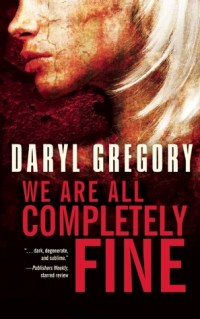 We Are All Completely Fine by Daryl Gregory

This novella made me an instant fan of Daryl Gregory. It is an average-sized novella, a very quick read, and yet it is just so densely packed with goodness. It just begs to be experienced firsthand. True, it might not be an easy read at times, with its disturbing themes and bone-chilling violence, but I did also find it tremendously addicting. It’s also the characters that make We Are All Completely Fine – mainly because they are all so completely not. Unraveling each character’s mystery is the first step of this hair-raising journey, and definitely my favorite part of this story. After all, no one would believe them if they told their personal tales of what really happened to them… (Read the full review…)
 The Last Witness by K.J. Parker
Every once in a while, along will come a novella that is so bizarre, so offbeat and so unlike anything I have ever read before, that somehow, against all the odds, it just…works. The Last Witness is such a novella. Its protagonist and narrator is a man with a very special talent. He would be quick to tell you that it is not like mind-reading, not really. What he does is something much more fiddly and delicate. What he can do is enter your mind and take away your memories. A single one or all of them, it doesn’t matter; they would be transferred to his own mind, and it would be like you never had them. By all rights I should have found this book unfulfilling, given the story’s disorganized structure and how impossible it was connect with the character and his haphazard perspective, but it ended up really resonating with me. It’s strange, but in the best way possible. (Read the full review…)
 Sin du Jour series by Matt Wallace

Gonna cheat a little here and feature the full series, since the books are all short enough to be read in one sitting. Imagine Hell’s Kitchen meets Dresden Files, marinated in a flavorful blend of action and thrills, seasoned generously with humor. Two ordinary down-on-their-luck New York chefs suddenly find themselves landing the gig of lifetime at Sin du Jour, an exclusive catering company owned by one of the city’s hottest celebrity chefs. However, it soon becomes clear that Sin du Jour is no ordinary catering company. For one thing, their clients are demons. If a couple hours with a bite-sized, light-hearted urban fantasy novella sounds like a good time to you, then you need to check out this series. (Read the full reviews…)
 Legion by Brandon Sanderson

I still can’t believe I’m so in love with a book that’s listed as a mere 88 pages. I often find myself struggling with novellas that are less than a hundred pages because that’s usually not enough to give me all the plot and character development I want. But I should have had faith in Sanderson. There’s a reason why he’s one of my favorite fantasy authors. I love the stuff the guy comes up with, especially his unique magic systems and characters’ fantasy powers. Legion is no exception. To the outside world, protagonist Stephen Leeds appears to live by himself in a huge mansion, but his reality is in fact very different. His mental condition allows him to generate a variety of hallucinated people who share his space with him, and they are all unique with their individual personalities, skills and knowledge. They in turn advise and share their expertise with Leeds whenever he needs to know about certain topics. This unique “power” in turn makes Leeds one hell of a detective/investigator. Sounds cool, doesn’t it?
 The Purloined Poodle by Kevin Hearne

What a fun little book! Not to be missed by fans of Hearne’s Iron Druid Chronicles, and even if you don’t follow the series, it’s worth taking a look. While it would help if you knew a little of the series’ basic foundations, everything else is going to be pretty easy to pick up along the way, especially since The Purloined Poodle is a whole different kind of animal (pun absolutely intended)! For one thing, the entirety of the tale is told through the eyes of a dog. That’s right, Oberon fans, urban fantasy’s most popular pooch gets his very own book. Dog lovers, urban fantasy enthusiasts, and Iron Druid fans take note: if you are one or any combination of the above, I would highly recommend this novella. Reading it won’t take long and it’s the perfect escape. (Read the full review…)
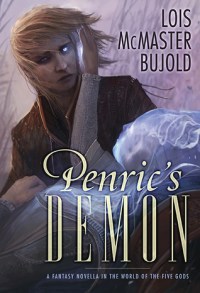 Penric’s Demon by Lois McMaster Bujold

It’s always a pleasure to return to Lois McMaster Bujold’s World of the Five Gods, which is also the setting of her books like The Curse of Chalion and Paladin of Souls—two of my favorite novels of all time. There’s just so much to love about this world, not least of all the phenomenal world-building featuring some of the richest lore and history I’ve ever encountered in the fantasy genre. One thing of note is the major role that religion plays in this universe. Fate and free will are often recurring themes in the stories set in this world, as well as the question of divine intervention. Penric’s Demon is a good example of this, following the misadventures of a hapless mortal caught up in the drama of the gods. There’s even several sequels, and I do hope Bujold will keep on writing more. These charming little novellas feature everything I love about the author’s writing, and don’t underestimate their short length because these compact tales can still pack a lot of punch. (Read the full reviews…)
 The Language of Dying by Sarah Pinborough
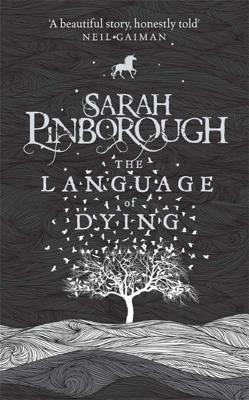
This novella couldn’t have been more different than Pinborough’s other work, and yet I loved it no less. A beautiful soul-rending song straight from the heart, this tiny little book packs an emotional punch by shifting gears instead to look at the turbulent nature of grief and the profound effects it has on one troubled family. Despite its label as a fantasy novella, the ties that bind the story to the genre are light and ambiguous. However, it’s the themes that really come through: pain, grief, death, loss. Family, support, togetherness, love. Ultimately, these are the topics that define the sweet poignancy of this beautifully crafted novella. The Language of Dying is an astonishingly good read, simple in its approach, but thoughtful and heartbreaking in its execution. It’s not an easy book to read, but you will be glad you did. (Read the full review…)
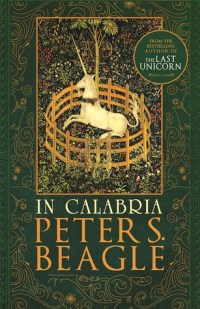 In Calabria by Peter S. Beagle

Magical realism fans are going to want to take note. In Calabria is a short and simple tale, but packed with some powerful themes. I’ve always loved stories with unicorns in them, especially those that portray them in meaningful ways, and if anyone can be relied upon to write a book that does just that, it is Peter S. Beagle. With the deft touch, the author weaves a strong thread of mythology into this gorgeous and emotional tale about love, sacrifice, and courage. Reading it is like stepping through a veil and into a dream, crossing into that secret and magical place where everyday life comes face to face with the fantastical. Highly recommended for readers who love genuine characters, evocative settings, and storytelling with a touch of pure magic. (Read the full review…)
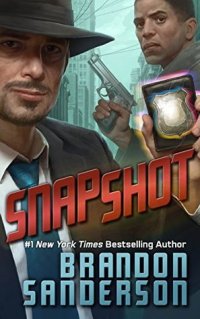 Snapshot by Brandon Sanderson

Are you really that surprised Brandon Sanderson makes it onto this list three times? Honestly, I have no idea how the guy does it. Whether his books are 1000 pages or 100, they’re always fun to read, not to mention creative as hell. As you’d expect, this was definitely the case with Snapshot. It is a mystery story, but there are so many layers to it that I believe even non-fans of crime and detective stories will be able to appreciate it. For one thing, the fantastic premise adds several extra dimensions to the plot, and our characters are repeatedly thrown into situations that will get your brain juices flowing. I don’t often hand out such high ratings for a novella simply because so few have impressed me to this degree, but I’ll happily throw my full recommendation behind this one, because I thought it was a truly imaginative and brilliant read. (Read the full review…)
Book Review: Phantom Pains by Mishell Baker
Posted on March 20, 2017 16 Comments
I received a review copy from the publisher. This does not affect the contents of my review and all opinions are my own.
Phantom Pains by Mishell Baker
Mogsy’s Rating: 5 of 5 stars
Genre: Urban Fantasy
Series: Book 2 of The Arcadia Project
Publisher: Saga Press (March 21, 2017)
Length: 416 pages
Author Information: Website | Twitter
Last year Mishell Baker burst onto the scene and shook up the urban fantasy world with her debut Borderline, dazzling me with her fresh take on the genre. She also introduced us to Millie Roper, one of the most genuine and notable protagonists that I’ve ever had the pleasure to meet. It is therefore with great excitement that I can say the sequel Phantom Pains is even better, stronger, and more inventive than its predecessor. The Arcadia Project, welcome to my favorite series shelf!
If you haven’t read the first book yet, 1) you’re missing out, and 2) you may want to catch up first before tackling this one. Phantom Pains begins approximately four months after we last saw Millie, who has left the Arcadia Project after the devastating loss of her partner Teo. The Hollywood soundstage upon which the incident happened has since been designated a magical crime scene, restricted to all but those who are savvy to Arcadia, the “other” realm where Fey and other supernatural creatures reside.
However, just as Millie and her former boss Caryl are carrying out their final inspection of the soundstage before clearing it to open again, something strange happens. A vision of a tormented Teo suddenly appears to Millie, beseeching her to “let him in”. Traumatized, Millie is only marginally comforted when Caryl tells her that it could not have been the spirit of Teo, since ghosts don’t exist. But if that’s true, then what did she see?
While reluctant to rejoin the Arcadia Project as a full agent, Millie does agree to help them get down to the bottom of this, if nothing else to get the soundstage up and running again so she can get a particularly nettlesome studio client off her back. For the first time in months, Millie returns to her old home of Residence Four, where she is scheduled to meet with two bigwigs from the Project’s National Headquarters. Soon after her meeting though, one of them is found brutally murdered with dark magic—the kind that only Caryl, a warlock, is capable of. Still, despite the overwhelming evidence, Millie is certain that Caryl didn’t do it. Painfully aware that she is her friend’s last and only hope, Millie must now gather whatever allies and resources she has left to try and clear Caryl’s name before it is too late.
Let’s start with how simply awesome Millie is as a protagonist. Phantom Pains continues to develop and grow her as a complex and fully-realized character, while also progressing her journey as a survivor. I could tell you that Millie has borderline personality disorder, or that a about a year ago she had a failed suicide attempt that caused her to lose her legs a promising film career. But the truth is though, those mere descriptions simply don’t do her justice. Millie is so much more, and once you pick up these books and experience her voice for yourself, you’ll know what I mean. It really speaks volumes about the author’s skills as a writer that she is able to convey the character’s tragic past and disabilities in an unflinchingly honest yet respectful manner, making her feel realistic and convincing without resorting to stereotypes. Outstandingly, Baker challenges our established views on disability in fiction simply by writing a fun and enjoyable story, and her protagonist is portrayed as she is: vulnerable but strong, flawed but indomitable, different but no less important.
Bottom line, I just love Millie, despite her not always being likeable. It’s true that she’s a straight-talker, and her BPD sometimes affects her emotionally, making her say or do impulsive things. Interestingly though, I find that she has mellowed out somewhat in Phantom Pains, her voice reflecting the ongoing treatment she reports to have been receiving in the four months since the events of Borderline. And on that note, I was also happy to find out that Millie and Caryl remained friends, even in the aftermath of all that happened. The two of them have a great dynamic, not to mention Caryl was one of my favorites from the first book and it thrilled me to see her play a bigger role in this sequel. If you aren’t familiar with Caryl’s circumstances I’m not going to spoil anything for you, though I will say that Phantom Pains revealed much more of her history and what I learned broke my heart into a million pieces.
And that brings us to the story, which was absolutely fantastic. While the plot may have been slower to take off and there were more holes in it than I would have liked, I am completely willing to forgive everything in light of how this book ended. It’s not going to be the epic conclusion you would expect in terms of style and tone, but for me the ending was still surprising and emotionally impactful, the kind that makes you look back and realize the entire story had been setting up for this moment. There is a very real kind of beauty in the way everything came together in the end, and of course Mishell Baker nailed it perfectly.
In sum, Borderline was great, and to my delight, Phantom Pains was even better. Bar none, The Arcadia Project is the most refreshing series to come out of the urban fantasy genre in years. Anyone who is a UF fan needs to do themselves a favor and check out these books right now!

More on The BiblioSanctum:
Review of Borderline (Book 1)


 The BiblioSanctum