Book Review: Crossroads of Canopy by Thoraiya Dyer
Posted on April 16, 2017 40 Comments
I received a review copy from the publisher. This does not affect the contents of my review and all opinions are my own.
 Crossroads of Canopy by Thoraiya Dyer
Mogsy’s Rating: 2.5 of 5 stars
Genre: Fantasy
Series: Book 1 of Titan’s Forest
Publisher: Tor (January 31, 2017)
Length: 336 pages
Author Information: Website | Twitter
Crossroads of Canopy could have been a brilliant debut; it almost hurts to have to talk about why it didn’t work for me. While Thoraiya Dyer’s vision of a vibrant and lush world high above the forest floor is nothing short of breathtaking, I found a curious lack of impetus behind the characters and the plot, and whatever potential the story had at the beginning simply failed to materialize by the end of the book.
The story introduces us to Unar, a young woman living in a destitute household in one of the thirteen kingdoms making up the realm of Canopy. Each kingdom is ruled by its respective god or goddess, and when they die, their spirit is reincarnated into a new human body, beginning the cycle anew. When Unar discovers her parents’ plot to sell her into slavery, she quickly hatches up a plan to supplicate herself before the temple of Audblayin, the patron deity of her domain, hoping to join their ranks as a Gardener serving the fertility goddess. But while she ends up being accepted, Unar’s curiosity and ambitions are a constant source of trouble for the temple, not to mention the frequent clashes caused by her willfulness. Because of her near escape from a life of slavery though, she does come to form a sympathetic bond with some of the temple slaves.
When Audblayin dies, Unar sees this as her chance to fulfill her dreams of becoming a bodyguard for the reincarnation. This leads her to descend into Understorey, the dark and dangerous realm beneath Canopy to search for her newborn god. However, in Understorey’s depths, Unar ends up finding way more than she bargained for, including new forms of magic, a revolution in the making, and perhaps something else she once thought was lost to her forever…
First, I’d like to begin with what I really enjoyed about Crossroads of Canopy because it’s always good to lead with the positives. The world of this novel is simply stunning. It’s impossible to read to this book and not be affected by its vivid descriptions of a realm nestled in the greenery of a giant forest. While settings featuring treetop civilizations may not be an entirely new idea, I have to say I’ve never seen something quite like Canopy. Dyer has created a living, breathing realm teeming with culture, religion, and language. Like any society, it also has its ups and downs—quite literally, in fact, in Canopy, where the elites living at the top close to the sunlight are in a position of privilege while those down below in Understorey and Floor live in shadow and poverty. But even knowing about its darker truths, Canopy was a place I wanted to spend more time in, breathing in its rich atmosphere and natural beauty.
In fact, my main problem with this book was not because it was badly written (on the contrary, the writing is gorgeous), but rather because I was disappointed that it never lived up to its promise. At the end of the day, Crossroads of Canopy feels very much like a book bursting with brilliant ideas when it comes to world-building themes and concepts, but when it comes to story and plotting, things start to look a lot less rosy. There was simply no hook beyond the novel’s extraordinary world; strip it down to its core, and what you get is another standard coming-of-age tale starring a heroine who borders on exasperating in her arrogant and foolishly staunch belief that she is oh-so-special. To be fair though, Unar was probably meant to grow over the course of the book, yet by the time she finally has a change of heart, I found myself so turned off by her character that it almost made no difference.
I also found myself frustrated with the story’s pacing. This book had what I call the “sandwich effect” (an issue which seems to be quite common with debuts), kicking thing off with a fascinating intro and closing with a relatively stirring and eventful conclusion, though everything in between was rather dull and meandering. My attention starting waning somewhere in the middle of Part Two after Unar ventures into the Understorey, and unfortunately I was never able to gain back my initial enthusiasm.
That said, I don’t regret reading this book. While it’s true that the story didn’t work for me, clearly Thoraiya Dyer has got some serious writing chops. If Crossroads of Canopy sounds interesting to you, I would still encourage you to look into it (and check out the reviews by others who liked it more than me) especially if you enjoy gorgeous prose and modern fantasy featuring innovative world-building. Though personally I will not be continuing the Titan’s Forest series, from what I saw in Crossroads of Canopy, I have a feeling the author will be going places.


YA Weekend: Wintersong by S. Jae-Jones
Posted on April 15, 2017 26 Comments
I received a review copy from the publisher. This does not affect the contents of my review and all opinions are my own.

Mogsy’s Rating: 2.5 of 5 stars
Genre: Fantasy, Young Adult
Series: Book 1
Publisher: Thomas Dunne Books (February 7, 2017)
Length: 436 pages
Author Information: Website | Twitter
For the second time this year, a Young Adult novel has disappointed me by starting off with a lot of promise, only to completely fizzle out in the second half. Gah, I just want to slam my head against a wall. After all, it’s one thing to read a book I did not like, but it’s quite another to watch incredible potential end up being squandered.
To its credit, Wintersong did have a great start. In fact the book had one of the most well-written and put together intros I’d ever read. The story begins in a simple 18th-19th century Bavarian village, where our protagonist Liesl and her family run an inn. All her life, she has heard tales of the mysterious Goblin King, a dangerous trickster who rules the Underworld and stalks the forests around their home, waiting to enrapture his next victim. An aspiring composer, Liesl has allowed these stories be her inspiration, even though she hides her talent from the world. In her family, it is her little brother who is destined for greatness, and all of Liesl’s efforts have gone into making sure that young Josef will get noticed and receive his apprenticeship.
But soon, our protagonist realizes she has made a mistake. With everyone’s attention on Josef, it is Liesl’s younger sister Käthe who has paid the price. One night, Käthe goes missing, stolen away by the Goblin King. Blaming herself for her sister’s plight, Liesl has no choice but to journey to the Underworld in the hopes of finding a way to rescue her. However, once faced with the Goblin King himself, she is reminded that in accordance with the Old Laws, Käthe’s freedom can only be bought with a sacrifice. The only choice Liesl has is to offer herself in her sister’s place, a trade that the Goblin King accepts.
While this is nothing terribly groundbreaking as far as folklore/fairy-tale inspired retellings go, I was initially impressed by Wintersong because of the writing. Whatever the story lacked in originality was made up for by S. Jae-Jones’ beautiful style, which is bursting with rich description and yet still incredibly easy on the eyes. For a debut novelist, she has a master’s talent for conveying a perfect atmosphere for whatever scene she is writing, and even a predictable plot could not prevent me from getting into the story. It helped that the beginning few chapters were so full of interesting conflicts, like the preparations for Josef’s once-in-a-lifetime audition or Käthe’s impending marriage to Liesl’s childhood sweetheart. Liesl herself intrigued me as a character, for even though she was the stereotypical bland and self-sacrificing older sister, I sympathized with her because of all that she’s had to give up for her family.
If I could have rated sections of Wintersong individually, I would have given the first half 4 or 5 stars—I just loved it that much. I was psyched. Imagine that, a book that has been described as Labyrinth meets Beauty and the Beast, actually living up to the hype.
But alas, it seemed I’d gotten my hopes up too soon. Around halfway, the story took such a steep nose-dive that I have to wonder if the second half had been treated to the same amount of scrutiny while in the editing phases. Barely anything happened. Liesl became a completely ineffectual, tedious character. The narrative spent an inordinate amount of time getting into the minutiae of musical theory. The story became an almost unbearable chore to read.
Once again I blame an awkward romance. While I can see how some readers might find the dark and sexy undertones beneath Liesl and the Goblin King’s relationship appealing, I believe a satisfying and realistic love story should encompass a lot more than that. What I missed from their entire courtship was a sense of chemistry or anything to convince me that there was something deeper, and unfortunately the longer the story belabored their hokey romance the more exasperated I became with everything.
It’s a real shame, because Wintersong could have been great, but sadly the promise shown in the intro did not extend into the rest of the book. At the end of the day, I simply wanted more to happen in the story, I needed more agency in the protagonist, and I needed a lot more conflict than just the cloying empty calories of a romantic drama. I do think that the author will have a long and successful writing career ahead of her though (because man, she can really write), and I am definitely open to the possibility of reading more of her books, but ultimately this one was just not for me.
Book Review: Waking Gods by Sylvain Neuvel
Posted on April 14, 2017 20 Comments
I received a review copy from the publisher. This does not affect the contents of my review and all opinions are my own.

Mogsy’s Rating: 3.5 of 5 stars
Genre: Science Fiction
Series: Book 2 of Themis Files
Publisher: Del Rey (April 4, 2017)
Length: 320 pages
Author Information: Website | Twitter
While Sleeping Giants was not without its flaws, it did succeed in leaving me curious about where the story will go next. So when the opportunity to read the sequel presented itself, it didn’t take much convincing for me to jump on board.
Ten years have passed since the events of the first book. The world has accepted the presence of Themis, the giant robot first found buried in pieces all over the world, later assembled to become humanity’s greatest weapon. Ancient aliens had left her here to be our protector—or that’s what the Earth Defense Corps wants everyone to believe. Which is why when a second robot—even more massive than Themis—suddenly materializes from out of nowhere in the middle of London, the local population’s reaction to it is decidedly nonchalant and calm. Despite being larger, the robot’s appearance is familiar, and in a way…comforting.
However, with each passing day and with no further movement from the robot, its looming presence is quickly becoming a source of anxiety for the EDC and people are starting to ask some difficult questions. What is this second robot doing there? Where did it come from? Who is piloting it? What do they want and what are they waiting for? Before answers can be forthcoming though, the robot makes its move—and no one is quiet prepared when it finally happens. The resulting devastation in London is unspeakable, the death tolls staggering—and unfortunately, these horrors are just the beginning. As more of the giant robots start appearing in big cities across the globe, Dr. Rose Franklin and her team must figure out Themis’ secrets before humanity faces its impending extinction.
No question about it, Waking Gods is better than its predecessor. Like Sleeping Giants, it is presented as collection of journal entries, transcribed interviews and dictations, textual communications, etc. making it a very quick read, so if you enjoyed the structure of the first book then you should have no problems getting into this sequel. The ideas are also just as unique and imaginative. Second book slump? Nope, not here. From colossal robots of alien origin to conspiracies involving ancient factions on Earth, all these elements introduced in Sleeping Giants are just the tip of the iceberg. There’s simply so much more to this story to discover, and the shockers and plot twists here make the ones in the first book feel tame in comparison.
Thing is though, epistolary novels are not always that conducive to character development, so it’s a good thing that most of the main players from the first book also return for the sequel. The author has an incredible talent for writing dialogue (you sorta have to, in order to pull off a project like this!) but revealing most of the plot through interview transcripts also sacrifices a lot of emotional connection to the characters, which was one of my biggest issues with Sleeping Giants. Thankfully I found this “distancing effect” to be less of a problem in Waking Gods, or perhaps I simply needed at least two books to really get a feel for Rose, Kara, Vincent, and of course our mysterious unnamed interviewer.
That said, I still find the format limiting in certain situations. While the info-dumping is not quite as bad as it was in the first book, you still get the occasional awkward moment, especially in the sections with oral dictation. Imagine if you will that a giant robot was in the process of falling right on top of you. Most people in this situation would be running helter-skelter for their life, not stating ludicrous things like “I’m not sure I can outrun a twenty-story building!” or “I can hear it crumbling down behind me!” into a microphone while trying their darndest not to die. There’s a fine line between keeping things interesting and convincing when it comes to epistolary novels. Compared to the first book, Waking Gods may a strike a better balance in this regard, but I feel we’re still not all the way there yet.
Nevertheless, I’m glad I read it. If you had fun with Sleeping Giants, this sequel will be definitely worth your time. I have to say any criticisms I have are pretty minor; on the whole this book is an improvement over the first one, pushing the story and characters to greater heights while dropping plenty of surprises. I devoured Waking Gods and enjoyed every moment, and all I have to say about that ending is, there’d damn well better be another book!

More on The BiblioSanctum:
Review of Sleeping Giants (Book 1)
Book Review: Lady of the Lake by Andrzej Sapkowski
Posted on April 13, 2017 17 Comments
I received a review copy from the publisher. This does not affect the contents of my review and all opinions are my own.
 The Lady of the Lake by Andrzej Sapkowski
Mogsy’s Rating (Overall): 3.5 of 5 stars
Genre: Fantasy
Series: Book 5 of The Witcher (Novels)
Publisher: Hachette Audio (March 14, 2017)
Length: 20 hrs and 7 mins
Author Information: Website
Narrator: Peter Kenny
Eighteen years after its original publication in Polish, this concluding volume of The Witcher series finally has its official English translation. While fan translations have been around for quite a while now, honestly I thought it was well worth the wait, if nothing else because I got to enjoy the excellent audiobook edition. I started off by reading the books, but then on a whim decided to switch formats once I got to Baptism of Fire and never looked back.
Anyway, the final book of a series is always something special. By this time, the story has taken over your mind and the characters have wormed their way into your heart. While endings can be a delight, oftentimes they are also bittersweet, because you’ve had so much fun on this adventure but now it’s time to say farewell. You start to wonder to yourself what the long awaited finale might be like: will it be everything you ever wanted, or fall short of expectations?
Well, in the case of The Lady of the Lake, my thoughts were mixed. The story begins cryptically, with Sir Galahad of Arthurian legend fame stumbling upon Ciri bathing in a pond. After the knight mistakes her for the Lady of the Lake which causes Ciri to correct his error, the two of them start talking and she begins to recount the tale of what she has been up to since the Tower of Swallows. It seemed that the portal she entered there had taken her to a different world, one where the Elves reigned. Seeing that she was trapped and at his mercy, the Elven king had proposed a bargain: Ciri could have her freedom…but only if she would agree to bear his child.
Meanwhile, back in her home world, the northern armies and the Nilfgaardian forces are still at war. In the middle of all this, Geralt and his companions are also continuing their search for Ciri, but with the recent abduction and imprisonment of Yennefer, the Witcher now has even more troubles on his hands.
It vexes me admit this, but The Lady of the Lake was probably the most confusing of all the books. Not that any of them have shown much linear storytelling, but for this one Sapkowski takes devices like flashbacks, dream sequences, POV switches and time jumps to extremes. This not only made the book feel very disjointed and hard to follow, it also dampened my enthusiasm for the story especially when we went on wild tangents that added zilch to the main plot or followed characters I could not care less about. If it were up to me, I would also have axed much of the ending. In my opinion, too much of the fluff that came after the climax spoiled a lot of the impact.
Now that I’ve gotten my complaints out of the way though, here’s what I did like: 1) Pretty much any scene where Ciri or Geralt and any of his companions or key characters appeared was topnotch. These are the characters I’ve come to know throughout the series and I found it hard to stay focused whenever the attention shifted away to anyone else. 2) Despite all the jumping around we do, there was at least a sense that final volume was trying to pull everything together; whether it’s a nod to events in the previous books or tying up loose ends and bringing things full circle, the narrative made an earnest attempt at closure. 3) All the references to fairy tales, myths and legends. This was one of the aspects I fell in love with when I first picked up The Last Wish so long ago, and it just seemed so apt for this last book to bring me back to those memories. 4) The action sequences were amazing. Obviously, it’s great anytime we get to see Geralt or Ciri kicking ass, but there was also this one epic scene depicting a huge battle which I thought was really well done, transporting the reader into the thick of the fighting.
Overall the book’s strengths outweighed the weaknesses, ultimately making The Lady of the Lake an enjoyable if flawed read. It wasn’t my favorite book of the series, and as an ending, it definitely wasn’t as good as what I’d hoped for. Still, I don’t regret reading it at all. Taken as a whole, The Witcher is a superb series, and I would certainly not discourage anyone to try these books just because I wasn’t a hundred percent pleased with this concluding volume; after all, you’d be missing out on many more great moments on this epic journey. In spite of everything, it was well worth it to see this saga through to the end.
Audiobook Comments: As always, Peter Kenny brings his best. His narration was a big reason why I stuck with the audiobooks for this series, because when he reads he brings the stories and characters to life. The Witcher books are also generally pretty well suited for this format, I find, because of their nonlinear structure, and the stories just seem to flow more smoothly and are less distracting when I’m listening. So if you’re considering tackling this series with the audiobooks, I say go for it; truly I can’t recommend them highly enough.

More on The BiblioSanctum:
Wendy’s review The Last Wish (Anthology 1)
Mogsy’s Audiobook review of Sword of Destiny (Anthology 2)
Mogsy’s Audiobook review of Blood of Elves (Book 1)
Wendy’s Audiobook review of Blood of Elves (Book 1)
Mogsy’s Audiobook review of The Time of Contempt (Book 2)
Mogsy’s Audiobook review of Baptism of Fire (Book 3)
Mogsy’s Audiobook review of The Tower of Swallows (Book 4)
Waiting on Wednesday 04/12/17
Posted on April 12, 2017 14 Comments

“Waiting On Wednesday” is a weekly meme hosted by Breaking the Spine that lets us feature upcoming releases that we can’t wait to get our hands on!
Mogsy’s Pick
The Boy on the Bridge by M.R. Carey (May 2, 2017 by Orbit)
Not long to wait now; in less than a month we’ll be seeing the release of this companion novel to The Girl With All the Gifts. Judging by the vagueness of the description, I’m anticipating lots of surprises, just like in the first book. I’m hoping it’ll be just as terrific.
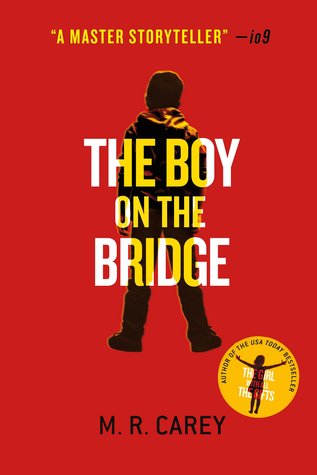 “From the author of USA Today bestseller The Girl With All the Gifts, a terrifying new novel set in the same post-apocalyptic world.
Once upon a time, in a land blighted by terror, there was a very clever boy.
The people thought the boy could save them, so they opened their gates and sent him out into the world.
To where the monsters lived.”
Top Ten Tuesday: Top Ten of the Most Unique Books I’ve Read
Posted on April 11, 2017 30 Comments

Top Ten Tuesday is an original feature/weekly meme created by The Broke and the Bookish. They created the meme because they love lists. Who doesn’t love lists? They wanted to share these list with fellow book lovers and ask that we share in return to connect with our fellow book lovers. To learn more about participating in the challenge, stop by their page dedicated to it and dive in!
This week’s topic: Top Ten of the Most Unique Books I’ve Read
Mogsy’s Picks
This is by no means a comprehensive list. I have read many books that can be considered unique in and of themselves, and there have been plenty of standout titles with unique ideas, stories, settings, characters, or a combination of any of these factors. The books I’m featuring today are the ones I’ve decided are worth giving extra attention to though, because they all have one thing in common: In one way or another, they’ve all made me go, “Whoa, this is different.”
Sometimes it’s because the books themselves are weird, or they feature some very unconventional or original ideas. Sometimes it’s because the stories are unpredictable, and there’s just no way of telling how things will play out. A couple of these books are among my favorites, while there are also a few that did not work for me at all. If there’s one thing I know though, it’s that you definitely won’t find too many other books like them.
 The Hike by Drew Magary
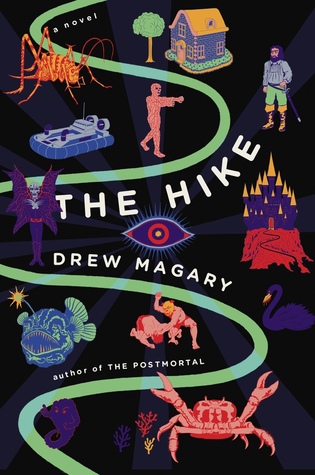
The best description I can come up with for my mind-bending experience with this book can be summed up in the words of Jerry Garcia: “What a long, strange trip it’s been.” I had initially agreed to review The Hike with no small amount of trepidation, fearing that it might be too “weird” for my tastes. Can you blame me though? The summary I wrote for this book sounds like a lot like the mad ramblings of someone on a bad acid trip. To read this book, you pretty much have to throw everything you think you know about it out the window. That’s because it’s going to do its own thing. I doubt it’s coincidence that the moment I decided to let go of my preconceptions was also when I started enjoying myself. There is truly no guessing where things will go, and once you relinquish the reins and simply let this baby take you where it will, The Hike will delight and enchant you. (Read the full review…)
 Ninefox Gambit by Yoon Ha Lee

On the one hand, there were parts in Ninefox Gambit that made reading it a real struggle. On the other, there’s also no doubt it’s one of the most fascinating sci-fi novels I’ve ever read. First, just let me first state unequivocally that this book contains some of the freshest, most inventive ideas I’ve ever encountered in sci-fi. The story no doubt breaks new ground in combining elements from multiple genres, and it is extremely clever. Still, it’s easy to become confused and overwhelmed if you’re not paying close attention, and sometimes the ideas that make you gawp in wide-eyed wonder at its ingenuity are the same ones that will make you want to tear your hair out in frustration. As such, I probably wouldn’t recommend this book to everyone, but if you’re a sci-fi fan interested in something more innovative and unusual, then this might be exactly what you’re looking for. Ninefox Gambit might not be an easy read, but there’s also a lot to like if you’re willing to invest in it. (Read the full review…)
 Touch by Claire North
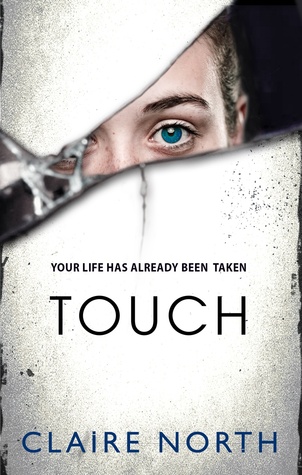
For this list, I think I could have gone with any of the books I’ve read by Claire North, but I decided to go with Touch because of how much I loved it beyond just its inventiveness and ingenuity alone. It’s especially a great read if you enjoy what-if stories and thought experiments, though imagining possible scenarios based on the theories in this novel might take you places you don’t want to go. “Have you been losing time?” I don’t think I can ever hear or read this phrase again without getting a shiver down my spine. Touch was, in a word, fascinating. If you enjoy wild, mind-trip movies like Inception then you need to read this book. I adored the novel’s premise and I think the story would make an excellent movie, if only there was someone talented enough who could pull it off (quick, someone send a copy to Christopher Nolan!) (Read the full review…)
 The Long Way to A Small Angry Planet by Becky Chambers

There’s nothing else quite like book, which I guess says a lot about the direction of much science fiction today. So The Long Way to A Small Angry Planet might not be your typical heart-pounding space opera, but it’s…it’s…well, it’s actually kinda hard to explain. Yes, it encompasses a number of familiar genre concepts like exploration and conflicts between alien cultures, and there are even a handful of tense situations thrown in. Still, what got to me was the heart, the love and “feel-good” vibes at the core of this novel. Even though many of its ideas are not new, Chambers’ story, characters, and worlds all felt like something I’d never experienced before, simply due to the way she presented them. I can truly say this book was nothing like I expected, but the end result was refreshingly beautiful and uplifting. Definitely one of a kind.
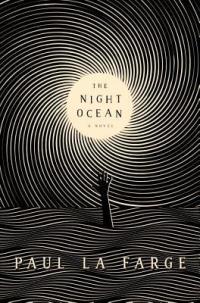 The Night Ocean by Paul La Farge
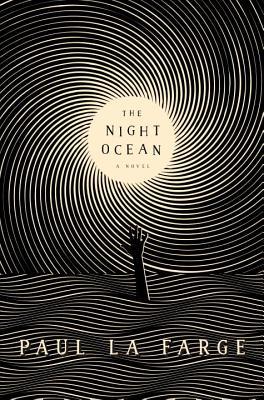
This is definitely one strange book, and difficult to summarize or classify because it is made up of so many perspectives and interconnecting parts. The overall concept behind the novel is certainly ambitious and ingenious, but the way the story is presented will probably make it seem unfocused. Still, I had a shockingly good time with this book. At once frustrating and rewarding, The Night Ocean is alternate history on a completely new and innovative level. Easily one of the more clever, intense, and haunting books I’ve read so far this year, and its ending will likely stay with me for a long, long time. Because of its tangled nature, I doubt it going to be for everyone, but I highly recommend it if the description interests you. Even though there’s a lot of ambiguity in the story—a fact that often vexes me—in this case, I believe it might actually add to the book’s mystique. (Read the full review…)
 The Tourist by Robert Dickinson

I have a feeling this book will pose a head-scratcher even for fans of time travel stories, which is a shame because there are some truly unique and riveting concepts in here. Still, it doesn’t matter how amazing a novel’s ideas are, they mean very little if readers cannot make heads or tails out of its story or what the author is trying to accomplish. That said, even though I can’t wholly bring myself to recommend the novel because of how confusing the story is, I have to admit that the ideas are cool enough that it might be worth picking up this book to experience them, especially if you’re into time traveling tales that are different, and if you’re feeling in the mood for a challenge. You definitely won’t be able to predict what happens! (Read the full review…)
 Beyond Redemption by Michael R. Fletcher
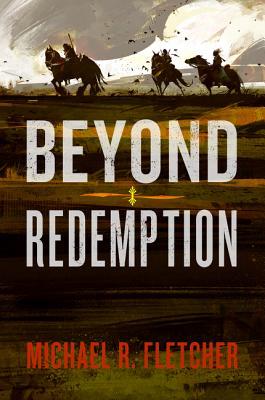
In Beyond Redemption, the world that Michael R. Fletcher has given us is literally steeped in chaos, madness, and delusion. Individuals known as Geisteskranken are the unstable and insane individuals whose psychoses manifest as reality. Furthermore, under normal circumstances their powers are also shaped by collective beliefs, so the more people who believe in your delusion, the more those ideas become the truth. Let’s just take a moment to digest this, shall we? You’re essentially being thrown into a world where the “magic” is delusion, and all your magicians are batshit insane! Come on, doesn’t that sound amazing? Though I suppose if you think a book like this sounds too crazy and ludicrous to pull off, I don’t blame you. The thing is though, it works. It really does. Well, perhaps one has to be a little bit crazy to enjoy a book as dark, gritty and twisted as Beyond Redemption, but if that’s the case, then please pass me some more of that sweet, sweet insanity. (Read full review…)
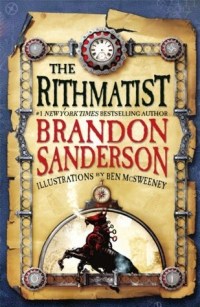 The Rithmatist by Brandon Sanderson

You should have known I would try to work in something by Brandon Sanderson, master of world-building and creating unique magic systems that he is. So what am I going to go with? Mistborn? Stormlight Archives? Warbreaker? Nope, nope, and nope. I’ve decided to go with one of his YA titles, The Rithmatist. Rithmatists are a chosen group of magic users who can make chalk-drawn lines, circles and figures called Chalklings come to life and take on unique properties. They are trained at schools and sent on to the wilds where they defend humanity against hordes of dangerous and blood thirsty Wild Chalklings that threaten to overrun the territory. Rithmatists also battle each other for practice and for sport, and their matches are intense, with most strategies coming down to whether to spend the time drawing a strong defense, or mounting a fast and powerful offense. Admittedly, The Rithmatist isn’t one of the author’s strongest novels, nor is the magic and world-building in it the most robust – and yet, I love this book and its cool magic system is one of my favorites. Sanderson’s flair for fantasy and writing about magic is as usual unparalleled and something you absolutely won’t find anywhere else. (Read the full review…)
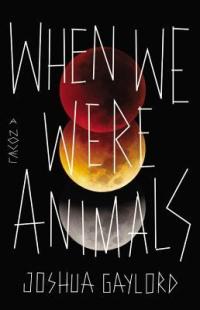 When We Were Animals by Joshua Gaylord

When We Were Animals may well be one of the most interesting book to ever hit my shelves. I’m still finding it difficult to categorize this unconventional coming-of-age tale, which combines elements from a variety of genres including mystery, paranormal and horror. Most of the story is told in retrospect, as the protagonist looks back on her childhood growing up in a small town with a big, dark secret. For a few nights every month during the full moon, the town’s teenagers run naked and free through the streets like animals, seized by a mysterious and uncontrollable urge known as “breaching”. Every resident of this town has gone through it and know to also expect it in their children, which typically coincides with puberty and lasts about a year. It doesn’t take much reading between the lines to figure out When We Were Animals is an allegory for growing up, but it does it in an absolutely fantastic and well executed manner and does not flinch from the stark realities of human nature. I’m still reeling from the rollercoaster of emotions. (Read the full review…)
 The Library at Mount Char by Scott Hawkins
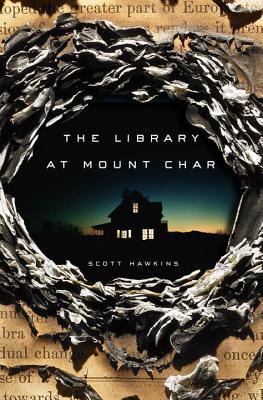
I’ve said it before and I’ll say it again: I don’t often do well with “weird.” Personally, I prefer stories that are more grounded, and books that push the metaphysical boundaries or flirt with the abstract will sometimes give me pause. Comparisons of this book to Neil Gaiman were probably the first warning bells, and the second flag was raised when I read several reviews for this book mentioning a rampaging psychopath going on a killing spree clad in a purple tutu. So, I was definitely prepared for some bizarre WTFery. Ultimately though, I think The Library at Mount Char deserves to stand on its own merits as a uniquely imagined masterpiece. If I had any designs to become a writer, I would be completely green with envy at Scott Hawkin’s incredible imagination and creativity. If you want your mind blown by fresh, never-before-seen ideas, then you’ve come to the right place. While this book did test my limits, I will say at no point did I lose interest. (Read the full review…)
Book Review: Gauntlet by Holly Jennings
Posted on April 10, 2017 15 Comments
I received a review copy from the publisher. This does not affect the contents of my review and all opinions are my own.

Mogsy’s Rating: 3.5 of 5 stars
Genre: Science Fiction
Series: Book 2 of Arena
Publisher: Ace (April 4, 2017)
Length: 336 pages
Author Information: Website | Twitter
Get ready, because it’s time to enter the arena again. Gauntlet is everything a reader dreams of in a sequel—bigger world, higher stakes, and even more dangerous and violent challenges. I had a really good time with the first book, but at the same time I was also curious to see how this follow-up would build on its potential and whether or not it would improve on a few of the weaknesses.
Quite a lot has happened since the end of Arena. With her RAGE tournament winnings and money she made from her new found fame, our protagonist Kali Ling has returned to buy out Defiance, becoming the captain and owner of her gaming team. When the story begins, Kali is troubled by a new development that has been sweeping the virtual gaming world—a house. Though in truth, this “house” is more of a colossal mansion. Nicknamed “The Wall”, it sits nestled on a sprawling estate sealed away from the public. For weeks, rumors have been flying around that the best gaming teams from around the world have been invited inside, but no one knows what goes on during these visits. Wild parties? Drugs? Not knowing is driving Kali crazy, and yet she can’t help but keep up with the coverage to see which gaming superstars will show up at the mansion next.
Little did she expect, however, that soon her own team would be getting their chance to visit The Wall. The elusive owner of the mansion turns out to be the CEO of Tamachi Industries, a tech giant which has developed a new kind of gaming pod which, if effective, could change the face of virtual gaming forever. Now the company is on the cusp of revealing their product to the world, and they’re planning to do it with style—by organizing a huge tournament where the best teams from around the globe will be competing for prestige and the grand prize in the form of a nine-figure check. Like all the others before them, Defiance has been asked to meet with Mr. Tamachi at his mansion so he can extend an invitation to join his tournament. Would Kali wish to accept? Well, I think we all know the answer to that.
To start, there were some nice improvements over the first book, and probably the biggest one is the characterization of Kali herself. She is noticeably more mature in Gauntlet, having taken over the responsibilities of being Defiance’s owner. In the aftermath of her recovery with drug addiction, she has also made it her personal mission to keep herself and the team clean, happy, and healthy—even if it means she has to play the mother hen once in a while. Still, on the whole I enjoyed seeing these changes to her personality because they made her a much more likeable protagonist. No longer is she the angry and impetuous teenager she was in Arena; now her thought processes have shifted towards being more level-headed and rational, as well as much less self-centered. As a bonus, for all the scenes we get to watch Defiance kicking ass in-game, we also get to spend plenty of time outside the virtual world watching them grow closer as a team and a family. These were all changes that pleased me.
That said, this book still has strong “Young Adult” vibes attached to it, which if you did not enjoy in Arena, chances are you will also find this sequel problematic. Again, the logic behind the premise is a little shaky and may require a bit of a stretch in imagination. There’s also a romantic side plot that takes up a lot of the focus, and I felt that many of the story’s conflicts are inflated when they are actually very trivial or easily solved. In addition, we did not see an expansion in the scope of storytelling; everything is still seen through the limited sphere of the gaming world behind Kali’s eyes, and as much as she has matured, this bubble is apparently still all she knows. Gaming is like the only thing that exists to her, i.e. in her mind, the only news worth following is gaming news, no one else in the world has any interests besides following virtual gaming tournaments and their players, gamers are the gods of the human race, etc. On a character level, it made her feel somewhat shallow, and on a world-building level, it also meant less of what I’d hoped to see in this sequel.
Still, the story was loads of fun. Just like Arena, the plot was a bit simplistic and predictable, but it also had a lot more action and grit. If you enjoyed the feverish, frenzied tone of the RAGE tournaments in the first book, then I guarantee you’ll love how Holly Jennings has stepped up her game (no pun intended) in Gauntlet. And if you’re gamer, you’ll probably get even more out of the book’s atmosphere and references to games and gamer culture.
Overall, I was very satisfied with this sequel. While a few of the stumbling blocks from the first book have carried over, in general I felt there were many more areas which have been improved. Gauntlet once again fits my perfect definition of pure entertainment—dynamic, fast-paced, and gripping. I sure hope we’ll be seeing more of Kali and Defiance, because it would be so cruel of Holly Jennings to leave us hanging with that ending! I can’t wait to catch up with the team again in the pages of the next book.
*** Originally reviewed at The Speculative Herald ***
More on The BiblioSanctum:
Review of Arena (Book 1)
Book Review: Avengers of the Moon by Allen Steele
Posted on April 9, 2017 14 Comments
I received a review copy from the publisher. This does not affect the contents of my review and all opinions are my own.
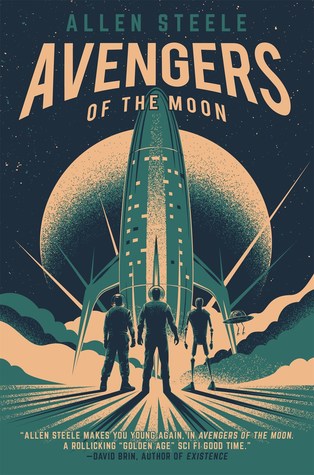 Avengers of the Moon by Allen Steele
Mogsy’s Rating: 3 of 5 stars
Genre: Science Fiction
Series: Stand Alone/Book 1
Audiobook Publisher: Tor (April 11, 2017)
Length: 304 pages
Author Information: Website
Whatever can be said about Avengers of the Moon, Allen Steele has accomplished something rare and remarkable here. In his afterword, he suggests that this novel can be viewed as a reboot of Captain Future—a character I was not initially familiar with, though pulp lovers will no doubt recognize this science fiction hero who appeared primarily in a series of adventure stories written by Edmond Hamilton in the 40s. Steele goes on to explain, however, that he did not mean for this book to be a homage or a parody; rather, his intent was to revive the character for modern times and introduce him to a new generation of readers. Avengers of the Moon is therefore the hero’s updated “origin story” following the journey of protagonist Curtis Newton to become Captain Future.
Curt was just a baby when his mother and father were murdered in cold blood. The boy then fell into the care of a robot, an android, and the disembodied brain of Professor Simon Wright, a good scientist friend of the family. Together, this unlikely trio raised Curt in a secret underground bunker on the moon in order to hide his presence from Victor Corvo, the corrupt businessman who killed his parents.
Twenty years later though, Curt emerges from hiding, determined to bring Corvo to justice. In that time, the businessman has risen far on the ladder of power, becoming a Lunar senator. To take down his prominent quarry, Curt must adopt the persona of Captain Future and uncover the full extent of Corvo’s conspiracy, which even goes as far as to include a plot to assassinate the president of the Solar Coalition. Together with his three guardians Otho, Crag, and Simon, as well as the help of beautiful Inspector Joan Randall of the Interplanetary Police Force, our hero embarks on his first “troubleshooting” assignment.
The pulp influence is obvious; even with the updates to bring Captain Future more in line with the technology and culture of our times, the writing here feels like an attempt to imitate the style from the sci-fi and fantasy pulp magazines of the 40s. Naturally, coming from Steele’s last novel Arkwright, this was a considerable change for me. The writing in Avengers of the Moon feels less formal and “sophisticated” in comparison, with practically non-existent character development, playing instead on the pulp tradition to convey the idea of larger-than-life heroes, over-the-top villains, and voluptuous femme fatales. All this is of course by design, a nod to the source material which will no doubt delight Sci-fi Golden Age enthusiasts, but even as someone unfamiliar with the original Captain Future, I have to say I found this whole effort to recreate the retro atmosphere quite charming.
That said, this is clearly a novel written for fans, by a fan. I hadn’t expected to get as much out of Avengers of the Moon as someone already familiar with Captain Future, for example, and I was right. Does that mean I thought the book was bad? No, absolutely not. It’s just that I was not the ideal audience. In spite of this, the book is still pretty solid for what it’s meant to be, combining the modern with a bit of throwback nostalgia. Steele deserves a huge pat on the back for the ideas behind this ambitious project; I have a feeling he has just made a lot of his fellow Captain Future geeks very happy.
Bottom line, it’s probably safe to say that Avengers of the Moon should not, must not be missed by fans of Captain Future. As a reboot, I’m not sure how effective it is at winning new fans, but I also can’t deny I had a good time learning more about the character. This may be a book intended for a niche audience, but I would say if you enjoy the pulps or are even remotely interested in the style, it is worth a look. While it’s nothing too serious or deep, the story is a fun and snappy read.

Mogsy’s Bookshelf Roundup: Stacking the Shelves & Recent Reads
Posted on April 8, 2017 34 Comments
Bookshelf Roundup is a feature I do every other weekend which fills the role of several blog memes, like Stacking the Shelves where I talk about the new books I’ve added to my library or received for review, as well as It’s Monday! What Are You Reading? where I round up what I’ve read since the last update and what I’m planning to read soon. Mostly it also serves as a recap post, so sometimes I’ll throw in stuff like reading challenge progress reports, book lists, and other random bookish thoughts or announcements.

Hard to believe April is upon us already, but while 2017 is zipping on by, I also can’t really find it in myself to complain too much. The thing is, I am just so beyond ready for spring right now. In fact, this week I’ll be away on a much needed break, traveling south in search of warmer climes, so apologies if I’m slower to reply to comments or visit your blogs in the coming days, but I’ve got a good excuse! 🙂
Anyway, as you can imagine things have been busy with all the preparations, but I’m looking forward to some rest and relaxation. I don’t actually expect I’ll get much reading done, but I’m packing a bunch of books regardless, including some of my new arrivals…
Received for Review
Thank you to the publishers and authors for the following review copies received. For more details and full descriptions of the books, be sure to click the links to their Goodreads pages!

Kicking things off, we have this trio of lovelies: The Best of Subterranean edited by William Schafer contains a selection of the finest pieces short fiction published between 2005 and 2014 during Subterranean magazine’s run. It features a whopping 30 stories and the author lineup reads like a dream team of modern SFF masters like Alastair Reynolds, Cherie Priest, Joe Hill, Catherynne M. Valente, Caitlín R. Kiernan, George R. R. Martin, John Scalzi, Kelley Armstrong, K.J. Parker and many, many more. Yes, it is a MASSIVE anthology. Next up, The Innkeeper Chronicles Vol. 1 by Ilona Andrews is the omnibus collection the first three books of the authors’ self-pubbed series. I’ve always wanted to check these out! And finally, we have The Process (Is A Process All Its Own) by Peter Straub. Long time readers of the author will probably be familiar with his “latter day Jack the Ripper” serial killer character Tillman Hayward, whom Straub will be bringing back in this upcoming novella. Personally I’ve never read Straub before, but this one has a chilling, disturbing vibe to it that’s really calling to me, so I’ll probably check it out. My thanks to Subterranean Press for the ARCs!

Tremontaine created by Ellen Kushner – After my incredible experience with Bookburners, I told myself I would check out more serials from Serial Box. Thus, my attention immediately fell upon Tremontaine. This one is the complete first season collecting all thirteen episodes of this prequel series to Kushner’s Riverside and I can’t wait to binge read them all! Next up is The Berlin Project by Gregory Benford, a historical re-imagining of world where the atom bomb had been ready in time to stop Hitler from killing millions of people. Alternate history is my kinda thing, so of course I had to take a look. With thanks the amazing team at Wunderkind PR and Saga Press!
The Wolf Road by Beth Lewis is coming out in paperback soon! Thank you to Crown for this finished copy, sporting its gorgeously striking redesigned cover. In case you missed my review of the original hardback release, you can check it out here!

Brimstone by Cherie Priest – I’m really excited to read this one! And maybe just a little trepidatious as well. Early reviews appear to be all over the place, and considering how Priest has been hit or miss with me in the past, I really don’t know how I will do with this one! I did however really enjoy her last novel The Family Plot, so I am optimistic that she’ll have another horror hit on her hands. Thank you to Ace Books!
Luna: Wolf Moon by Ian McDonald – Ever since I read Luna: New Moon I have been champing at the bit for this sequel. I NEED to know what happens! Thank you to Tor Books for the finished copy!
The Last Iota by Robert Kroese – Last year I read The Big Sheep, a most excellent futuristic sci-fi mystery with shades of Sherlock Holmes and Philip K. Dick, mixed with a heavy dose of humor and bizarre twists. Huge thanks to the author and Thomas Dunne Books for this ARC of the sequel! I’m so pumped to read it.


The End of the Day by Claire North – I’ll never say no to a new Claire North novel. I can always rely on her stories to be completely innovative and unique. My thanks to Redhook!
The Five Daughters of the Moon by Leena Likitalo – Thanks Tor.com for sending this one along! I’m loving the sound of this historical fantasy “inspired by the 1917 Russian Revolution and the last months of the Romanov sisters.”
The Harbors of the Sun by Martha Wells – Martha Wells returns with a fifth novel in her Books of the Raksura sequence. The incredible world-building in this series never ceases to amaze me. With thanks to Night Shade Books and Edelweiss.

Last week I also received a couple of exclusive promo samplers for Tyrant’s Throne, the upcoming fourth novel of the Greatcoats series. Inside Secrets of the Greatcoats are some handy recaps of the first three books and an excerpt from book four, as well as a bunch of other cool extras like “secret” letters from the king. The reason I have two versions is because I got one each from both the UK and US publishers. Thanks so much Jo Fletcher Books and Quercus! I can’t wait to read Tyrant’s Throne!
Reviews
It’s review roundup time! It’s almost a wall of four stars…it was a good couple weeks, I guess!
The Collapsing Empire by John Scalzi (4 of 5 stars)
Red Sister by Mark Lawrence (4 of 5 stars)
The Path of Flames by Phil Tucker (4 of 5 stars)
Winter of the Gods by Jordanna Max Brodsky (4 of 5 stars)
The Dispatcher by John Scalzi (4 of 5 stars)
The Night Ocean by Paul La Farge (4 of 5 stars)
Nemesis by Brendan Reichs (3 of 5 stars)
Tough Traveling
In blog news, the big announcement this month is of course the return of Tough Traveling! To celebrate, a few of us got together to collaborate on the inaugural post over at Fantasy Faction, where our new host Laura has set up a place for everyone participating in this meme to link up. There you will also find more info on Tough Traveling if you want to join in the fun! The theme is appropriately BEGINNINGS, and you can feel free to post your lists throughout the month. You can also start preparing for the theme for May, which will be ASSASSINS!
What I’ve Read Since the Last Update
Here are the books I finished recently. Last week was pretty much a flurry of review writing as I pushed to schedule as many posts as possible ahead of time, so you should see regular blog activity proceed as normal. My presence online will probably be sporadic though, but I promise I will catch up with everything upon my return! Happy reading, everyone!


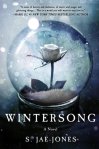
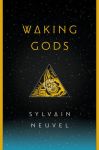


Have you heard of or read any of the books featured this week? What caught your eye? Any new discoveries? I hope you found something interesting for a future read! Let me know what you plan on checking out. Until next time, see you next Roundup!
Friday Face-Off: Circus
Posted on April 7, 2017 26 Comments

Welcome to The Friday Face-Off, a weekly meme created by Books by Proxy! Each Friday, we will pit cover against cover while also taking the opportunity to showcase gorgeous artwork and feature some of our favorite book covers. If you want to join the fun, simply choose a book each Friday that fits that week’s predetermined theme, post and compare two or more different covers available for that book, then name your favorite. A list of future weeks’ themes are available at Lynn’s Book Blog.
This week’s theme is:
“You can get the monkey off your back, but the circus never leaves town!”
~ a cover featuring the CIRCUS
Mogsy’s Pick:
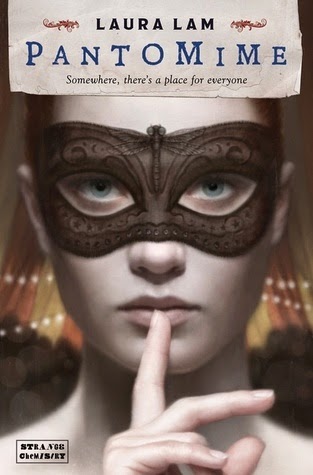
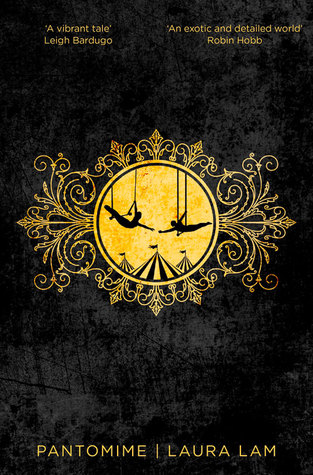
Pantomime by Laura Lam
This week is another head-to-head contest. Coming up with covers featuring circuses was certainly not a problem, but I just couldn’t pass up this opportunity to talk about one of my favorite books! Yes, Pantomime is a story about a circus, the greatest circus in all of Ellada. But peel back the layers, and it is also a coming-of-age story dealing with matters of gender and sexuality. This fantasy YA novel follows an intersex teen named Micah Grey as he embarks on a journey to understand his non-binary identity and what that might mean to him physically and socially as he attempts to find his place in the world.
Let’s check out the covers:
2013 Strange Chemistry (left) vs. 2015 Pan Macmillan
And as a bonus, here are the covers to the sequels too, even though I haven’t read them yet:
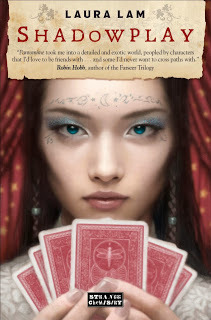
Shadowplay by Laura Lam
2014 Strange Chemistry (Left) vs. 2016 Pan Macmillan (Right)

Masquerade by Laura Lam
2017 Pan Macmillan

Winner:
As much as I love the new designs, I’m going to have to go with the original covers. They’re more mysterious and enticing, and they just grab my attention right away. I also generally prefer covers with people on them, and seeing these covers also makes me feel nostalgic for Strange Chemistry.
What do you think? Which one is your favorite?


 The BiblioSanctum