Waiting on Wednesday 11/22/17
Posted on November 22, 2017 18 Comments


“Waiting On Wednesday” is a weekly meme that first originated at Breaking the Spine but has since linked up with “Can’t Wait Wednesday” at Wishful Endings now that the original creator is unable to host it anymore. Either way, this fun feature is a chance to showcase the upcoming releases that we can’t wait to get our hands on!
Mogsy’s Pick
Defy the Worlds by Claudia Gray (April 3, 2018 by Little Brown Books for Young Readers)
In honor of Sci-Fi November, I’m featuring sci-fi picks for my Waiting on Wednesday posts this month. Many titles on my list of highly anticipated science fiction will be released next spring, including a bunch in the Young Adult category. One of the ones I’m looking forward to the most is this sequel to Defy the Stars, written by Claudia Gray who has become one of my favorite YA authors. Note: Since the Little Brown edition doesn’t have a final cover yet, I’m using the one to the UK edition (which I like much better, anyway).
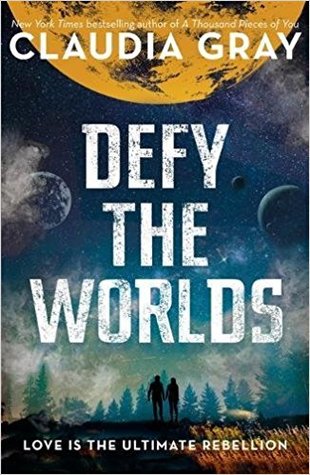 “Noemi Vidal has returned to her planet, Genesis, as an outsider. Ostracized for refusing to sacrifice Abel, the galaxy’s most advanced mechanical man, she dreams of traveling through the stars one more time. And when a deadly plague arrives on Genesis, Noemi gets her chance. As the only soldier to have ever left the planet, it will be up to her to save its people…if only she wasn’t flying right into a trap.
Abel, now fully aware of his soul and captaining his own ship, never thought he’d get to see Noemi again, not when the entire universe stands between them. But when his creator, Burton Mansfield, delivers news of Noemi’s capture, Abel must go to her, no matter the cost.
In a race against time, Abel and Noemi band together to stop Mansfield once and for all. The depraved scientist has engineered a way to achieve immortality, but that technology comes with perils of its own. Abel and Noemi are about to discover a secret that could save Genesis and Earth…or destroy them all.”
#RRSciFiMonth Book Review: Provenance by Ann Leckie
Posted on November 21, 2017 25 Comments
I received a review copy from the publisher. This does not affect the contents of my review and all opinions are my own.
Mogsy’s Rating: 3 of 5 stars
Genre: Science Fiction
Series: Stand Alone
Publisher: Orbit (September 26, 2017)
Length: 439 pages
Author Information: Website | Twitter
While I’ve read and enjoyed Ann Leckie’s Imperial Radch trilogy, I confess I probably wasn’t as enamored with it as the majority of readers. Despite the inventive and original ideas and the brilliant way there were executed, I really struggled with the pacing and there were also times where the narrative style made me feel completely out of my depth. And so when Provenance came out, I felt torn as to whether or not to read it. Eventually though, I was won over by the exciting premise as well as the general consensus that this was a lighter, more approachable story, and easier to get into compared to Ancillary Mercy.
For the most part, I felt this was true. The novel follows Ingray Aughksold, the adopted daughter of a prominent politician on the planet of Hwae, where power games are the norm. Our protagonist’s mother Natano has the choice of passing down her title to only one of her children, and Ingray desperately wants it to be her, though she knows the competition will be fierce. Her main rival is her clever and charming brother Danach, whom many already think has secured the inheritance, but unbeknownst to everyone, Ingray has one last-ditch card up her sleeve to play.
For you see, in Hwaean society there are certain historical relics called vestiges that are prized above all other treasures, and a thief named Pahlad Budrakim is said to have stolen some and hidden them away before being convicted and sent to “Compassionate Removal” (a punishment that involves a rather horrible form of exile). If Ingray can somehow free and convince Pahlad to reveal the location of the stolen vestiges, she can simply retrieve them and return home a hero. Sure, her plan may be half-baked and nothing short of a gamble, but pulling it off would certainly win her Natano’s favor.
Unfortunately, things go wrong almost immediately for Ingray as she arrives to retrieve Pahlad (after paying a hefty sum, which was almost all the money she had), only to find the prisoner delivered inside a suspension box. She also did not anticipate that the starship captain she hired to take them home would object to transporting a passenger in stasis, insisting that she wake the prisoner before he would agree to take them anywhere. So imagine Ingray’s dismay, when after they breach the suspension box, the person within comes to life in a bewildered state, claiming vehemently not to be Pahlad Budrakim at all.
Returning to the Imperial Radch universe, Provenance does share a few similarities with the Leckie’s debut trilogy, such as the gender-fluidity, lack of emphasis on sexual stereotypes, inclusion of many different alien races, and presence of sentient machines. However, as evidenced by the book’s description, the story also contains a more accessible and reader-friendly plotline, one that concerns itself more with intimate matters like family and friendship. This is just one of many reasons why I think this novel worked better for me on a personal level, in contrast to the way I felt about Ancillary Mercy which left me with a nagging sense of detachment to the characters.
Ingray, on the other hand, was someone I found easier to relate to, which in turn helped me gain a deeper appreciation for the world-building elements. While Leckie can sometimes go a little overboard with the details (something I also noticed from previous experiences with her work), the data dumps seemed much more manageable this time around, probably because almost all the world-building had direct consequences for our protagonist. Every background tidbit on the culture of the Hwaeans or the history of vestiges meant something to Ingray’s future, for example, resulting in a greater interest and investment on my part.
And yet, for all its strengths, Provenance still presented me with a few roadblocks. Its lighter tone notwithstanding, the story was slow to unfold and failed to build up much steam after the first hundred pages. After a promising start, everything just sort of…plateaued. To be fair, the story did interest me enough to keep reading to the end, but my feelings for the second half of the book were much more muted compared to the gripping excitement I felt in the first half.
It has occurred to me, of course, that Leckie could be one of those authors whose style and I simply don’t click. I’m always conflicted whenever I finish her novels, reeling in awe and admiration of the story’s themes and concepts, but at the same time wishing it could have been more. And that’s pretty much how I felt about Provenance in a nutshell. I think it’s an intriguing book that expands the universe, making it a must-read for Imperial Radch and Ann Leckie fans, but once again I’m on the fence.


Book Review: Above the Timberline by Gregory Manchess
Posted on November 20, 2017 22 Comments

Above the Timberline by Gregory Manchess
Genre: Fantasy, Art
Publisher: Saga Press (October 24, 2017)
Length: 240 pages
Author Website: www.manchess.com
I received a review copy from the publisher. This does not affect the contents of my review and all opinions are my own.
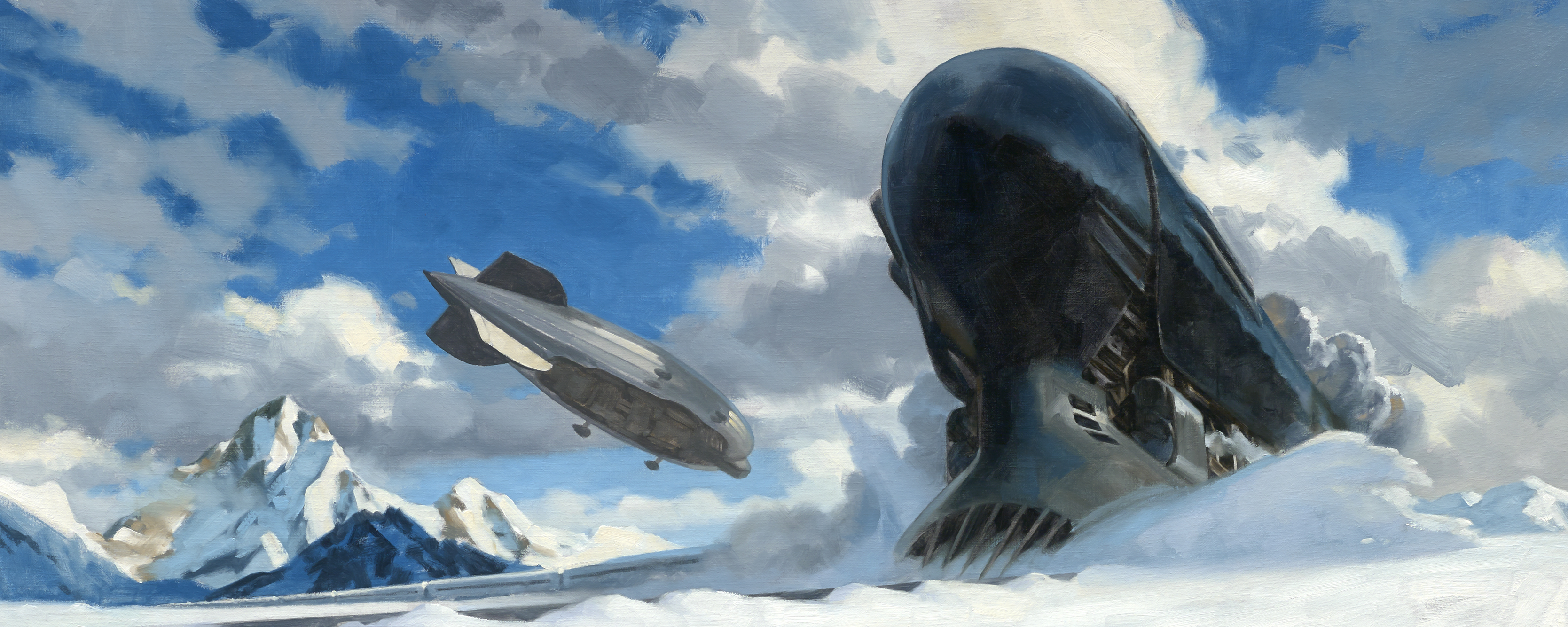
I’d never read a “painted novel” before, but I think I like it—especially if it means getting to enjoy my stories with such jaw-droppingly stunning artwork. It certainly doesn’t get better than Above the Timberline by Gregory Manchess, a lushly illustrated experience that is truly a feast for the eyes. And if you can somehow tear your eyes away from the artwork long enough to read the text portion of the novel, there’s also an adventurous pulp-inspired tale to go with it too.
Book Trailer for Above the Timberline
Told mostly through journal entries, the story follows a young pilot named Wesley Singleton who leaves the flight academy for the frozen wastes, determined to find his missing father, Galen. We are more than a thousand years into the future, following a cataclysmic pole shift that resulted in the continents tearing themselves apart, and now most of the Earth’s surface is covered in snow. The elder Singleton, a famed explorer and prominent member of the Polaris Geographic Society, was carrying out his lifelong quest to find a legendary lost city said to be buried beneath the ice, when all communication was suddenly lost on his latest expedition. Everyone had already given him up for dead except for Wes, who now has no choice but to turn to a corrupt former friend of his father’s named Braeburn Wilkes in order to get the funds he needs for his solo rescue mission.

But of course, there’s also more to Wes’s motivations than meets the eye. He knows his father is a experienced explorer, with the skills to survive the wastes. Galen also has reason to hide his discoveries from the unscrupulous PGS, and he so has adopted a means of transmitting coded coordinates of his locations that only his family can decipher. His instincts telling him that his father might have found something out on the ice, Wes takes along Galen’s most prized possession—a mysterious piece of old technology called the Arktos Device.
What comes next is an intense adventure through the snowy wilderness as Wes attempts to retrace his father’s steps, using Galen’s notes to guide him. Chronicling his own expedition in his journal, Wes faces his own challenges, from stampeding wooly rhinos and hungry snow cats to vehicle crashes and hostile encounters with the Tukklan people. All the while, Wilkes is also on his tail, suspecting that Wes knows more than he lets on.


Due to the journal format, you can expect the writing to be on the sparser side, comprising meager descriptions, choppy transitions between scenes, as well as other stylistic quirks like line-by-line dialogue without tags. Fortunately for us, every entry is accompanied by detailed artwork, which helps us fill in what the text doesn’t show. By doing this, Manchess manages to presents the full story by supplementing his writing with the cinematic quality of his beautiful paintings, and sometimes vice versa.
But let’s face it; if you pick up this book, it’s going to be for the irresistible visuals. The story itself, while fun, is nothing too special by itself and almost incidental compared to the incredible artwork. Unlike a traditional novel, it’s the paintings that bring the story to life and not the writing, and I found Manchess’s art style particularly well suited to the task. Every piece is rendered in vivid, bold colors creating luscious textures and dramatic shadows, with even the bleakest winter landscapes coming off as vibrant and alive, not to mention how scenes depicting dynamic action looked so realistic that their subjects practically seemed to leap off the page.

At the end of the day, Above the Timberline is a masterpiece no matter how you look at it. The story is decent enough, but the superb visual component is what everyone should be talking about. Without a doubt, it’s Manchess’s majestic, glorious artwork that will make this one stand out and become a treasured possession in any fantasy literature or art lover’s library. I could spend days with this book just marveling at the paintings alone. Highly recommended.
#RRSciFiMonth: Sunday Musings: Journey to The Last Jedi
Posted on November 19, 2017 9 Comments
Apparently, Disney has ten years worth of Star Wars movies lined up. This is extra good news for me, not just because OMG ANOTHER DECADE OF NEW STAR WARS, but because Star Wars Christmas Day has become a tradition in my family. Buying movie tickets makes for easy Christmas shopping, and it makes my heart swell to see three generations (four if my dad decides he’s not too sleepy) of my family in the theatre.
 It’s been two years since this new phenomenon started with The Force Awakens and I have finally gotten around to listening to the audiobook. As always, Marc Thompson is the only person who should ever be allowed to narrate Star Wars books. It was nice to hear Han Solo’s smirk one last time and the subtext of emotion that he injects into the smuggler’s moments with Leia. As Tiara and Mogsy have already pointed out in their reviews, here and here, the novelization helps to add a few extra bits of context that were missing from the film. It fills in a few gaps, such as explaining what happened to Poe Dameron between his crash landing and his epic return, where the movie unfairly left me mourning the loss of that wonderful man for more than half the film.
 After my exploration of novelizations last year, it’s nice to continue this journey with Alan Dean Foster. But The Force Awakens isn’t the only Star Wars adventure I took this year. As part of my 2017 Worlds Without End reading challenges, TFA served as the third of three Star Wars reads this year. The first was Revan. As a Star Wars: The Old Republic player who has followed Revan’s path since Knights of the Old Republic, I now understand people’s disappointment with this book. I’d long since gotten over Revan after playing some of his continued story in the BioWare MMO, but I’m no longer invested enough to have been hurt by it, but as I said, I understand.
The story follows Revans attempts to discover the truth behind his lost memories, which leads him to a literal dark place that only an unusual team-up between the protagonist from KOTOR2 and a new character, Lord Scourge, can save him from. It was supposed to be a conclusion to the game stories, but instead, it was a whole lot of exposition, a rushed ending, and no real conclusion for Revan. Which I already knew at that point, since I’d met him a few more disappointing times in Star Wars: The Old Republic. I’m all about inconclusive endings, but they have to actually be good.
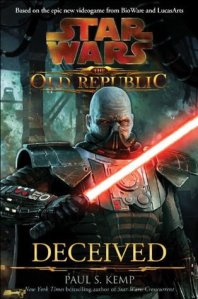 Sticking with Star Wars: The Old Republic, the next step on my journey was Deceived, which focuses on Lord Malgus, the initial main villain of the MMO. First of all, as a book based on a game that includes battle sequences, I was really impressed with the way the author handled the action. Since I regularly play the game, I recognized many of the moves and could follow along with the battles.
Malgus is a Sith, through and through, but everyone has their weaknesses. Much like Revan, this story continues the intermingling of darkness and light, and it follows two main characters who walk the edge of the mirror. The Sith and the Jedi have always been two extremes. Good and evil aren’t always that simplistic. So I like books like this that explore the gray area.
 My challenge was only for three books, but the library is always nice enough to recommend a few similar goodies, which led me to Thrawn. For many of us old school fans, Timothy Zahn’s first Star Wars trilogy was our first step into the glorious expanded universe. For me, it may have set the stage for my Star Wars: The Old Republic’s Imperial Agent’s sordid affair with a Chiss on the cold, cold planet of Hoth. Reading Thrawn just served to solidify the blue sexy. There’s a reason Grammarly wants me to change “Chiss” to “kiss.” But I digress.
Luke and company may have thwarted Grand Admiral Thrawn in the original trilogy, but I guess that doesn’t count anymore. Now we’re seeing Thrawn from a new angle, starting with his reintroduction through Star Wars Rebels where he hooked up with Anakin Skywalker. Now we’re meeting a man exiled from the aristocracy, who stealths his way into the Empire through his superior strategic intelligence. Despite being an alien, the Emperor recognized a good thing when he saw it and Thrawn’s skills quickly move him through the ranks. He is accompanied by a backwater assistant, Eli Vanto, through whom we get to access the emotions necessary to appreciate a character-driven book. Otherwise, the only insight we get into Thrawn himself is through his analysis of everyone he meets and their reactions to each situation, and his Art of War-like introductions to each chapter. He is able to read and anticipate everyone and everything, but we can’t have a perfect world here. Thrawn does fail to comprehend the political aspect of the Empire, which is where Orenda Pryce comes in. She understands how to read more than just people and knows how to play the political game. This story also serves to show us that the Empire isn’t necessarily as bad as it seems. The Emperor, well he’s one evil SOB, but there is something to be said about establishing some semblance of order, which is something Thrawn certainly understands.
So with all that Star Warsing this year, I feel like I’m ready for December 15th. Well, I’m ready, as in I am sufficiently Star Wars’d up. But I won’t be ready to see General Leia Organa on screen again and learn her fate. I will have at least one box of tissue ready. Maybe three.

Audiobook Review: Origin by Dan Brown
Posted on November 19, 2017 22 Comments
I received a review copy from the publisher. This does not affect the contents of my review and all opinions are my own.
Mogsy’s Rating (Overall): 4 of 5 stars
Genre: Mystery, Thriller
Series: Book 5 of Robert Langdon
Publisher: Random House Audio (October 3, 2017)
Length: 18 hrs and 9 mins
Author Information: Website | Twitter
Narrator: Paul Michael
I read this one as a treat to myself. Say what you will about Dan Brown, but the man how to write a page-turner, especially in his Robert Langdon series which frequently combines elements of the mystery-thriller genre with interesting ideas about art, history, and science. There’s a lot of entertainment value in his books, and after the stressful month I’ve had (not to mention a string of less-than-satisfactory reads) I decided that I deserved a break with some much needed brain candy. Hence Origin.
I’ll begin by saying I’ve read all the Robert Langdon books and enjoyed most of them, so I had a pretty good idea what I was getting into when I started this. Our favorite professor of symbology is back, this time all dressed up for an important evening at the Guggenheim Museum in Bilbao to attend a major announcement by a former student named Edmond Kirsch. In the two decades since Langdon had first taught him, Kirsch has become a billionaire celebrity, making a name for himself as a genius inventor and futurist who specializes in using technology to accurately predict the path the world would follow. Now the world is holding its breath to see what he will say next. In the years leading up to this night at the Guggenheim, Langdon only knows that Kirsch had been working on something big—a reveal that the futurist claims would alter the face of religion and science forever by answering the two most fundamental questions about human existence: Where do we come from? And where are we going?
On the entire planet, there are only a handful of people who are aware of the full details behind Kirsch’s mysterious presentation. However, a shadowy organization has caught wind of the earth-shattering information Kirsch plans on sharing with the world, and they will go to any lengths to shut him down. When the night inevitably devolves into chaos, Langdon suddenly finds himself partnered up with the smart and beautiful Ambra Vidal, a museum director who was helping Kirsch orchestrate his high-profile event. As the only two people who can salvage the evening’s plans, they find themselves fleeing to Barcelona following a trail of clues that would ultimately unlock the secret of Kirsch’s big discovery, meanwhile dodging police and agents from the Spanish Royal Palace who are trying to bring them in for questioning.
In other words, this story follows the classic Dan Brown formula, and if you’ve read the previous Robert Langdon novels, nothing here will really surprise you. Still, I’m enjoying the series’ shift towards themes of futurism and cutting edge technology while still remaining close to its roots of art, religion, and history, which were some of the central topics in the earlier books like Angels & Demons and The Da Vinci Code. In Origin, however, some plot aspects even venture into the edges of science fiction, albeit the kind that deals with more current (or near-future) technology and ideas. Blending together the modern and the not-so-modern, Brown takes readers on another gripping adventure, this time delving into the age-old debate of Religion vs. Science, but there’s no agenda-pushing of any kind here, just a straight-up mystery-thriller built around the theme.
My favorite thing about Origin though, was the setting. This being a Robert Langdon book, you just know there will be a lot of famous historical landmarks and details about the architects and artists involved in the plot. Most of this story takes place in Barcelona, one of the most beautiful cities I’ve ever had the pleasure to visit. There’s so much history here, and so many amazing places to see. Anyone who has ever been to La Sagrada Familia for example can tell you there’s nothing else quite like climbing to the top of the towers and looking down at the staircase spiraling down into the abyss, and I was so thrilled when I found out that a large chunk of the story involved Gaudi’s famous church. Here’s one thing I can say about Dan Brown—even though he can sometimes go a bit overboard with his info-dumping, he is also fantastic with using descriptions to bring out the true splendor and magnificence of a place.
The other thing Brown knows how to do really well is write an unputdownable book. Sure, few would describe his writing as elegant or his storytelling as original, not to mention the plot was a bit predictable and I think he might overplayed the climax and ending. Still, none of this changes the fact that Origin was just plain fun. On a pure enjoyment level, I would even say I had a better time with this than a lot of books that could be described as more “literary” or “innovative”. Brain candy was what I wanted and brain candy was what I got. Certainly if you’re a fan of Dan Brown and his Robert Langdon stories, I would recommend this one, and readers who like fast-paced thrillers may want to check it out as well.
Audiobook Comments: They chose a good narrator in Paul Michael, who apparently read for the previous books as well. He’s good at accents, which is important for a story like this which involves characters from all over the world. I was impressed with his ability to vary his voices and the way he brought the story to life. This is the first time I’ve listened to a Robert Langdon novel in audio, but I would probably go with this format again if Brown writes another one and they continue to keep the same narrator.

Mogsy’s Bookshelf Roundup: Stacking the Shelves & Recent Reads
Posted on November 18, 2017 34 Comments
Bookshelf Roundup is a feature I do every other weekend which fills the role of several blog memes, like Stacking the Shelves where I talk about the new books I’ve added to my library or received for review, as well as It’s Monday! What Are You Reading? where I round up what I’ve read since the last update and what I’m planning to read soon. Mostly it also serves as a recap post, so sometimes I’ll throw in stuff like reading challenge progress reports, book lists, and other random bookish thoughts or announcements.

Received for Review
Thank you to the publishers and authors for the following review copies received. For more details and full descriptions of the books, be sure to click the links to their Goodreads pages!

With thanks to Saga Press and the awesome team at Wunderkind PR for sending me a finished copy of Barbary Station by R.E. Stearns. We currently have a giveaway running for this book, so if you’re a resident of the US and are interested in checking it out, be sure to head on over to this post to read an excerpt and enter for a chance to win!
Earlier this month I also received a surprise ARC of Senlin Ascends by Josiah Bancroft, with thanks to Orbit. In case you missed the news, this novel was actually one of the contestants in last year’s SPFBO, and while it didn’t win, the book did go on to receive a ton of attention and praise through word of mouth, resulting in a contract with a traditional publisher. Success stories like these make me so happy, and they prove without a doubt that the buzz does help! I’m really looking forward to this one.
Up next is Seriously Hexed by Tina Connolly, the third volume in the Seriously Wicked series. I’ve only read the first book so I’m a bit behind, but I do recall having a good time with the story which was quite fun and very cute, so I’d like to continue if I can. My thanks to Tor Teen for the finished copy.
And courtesy of DAW Books: A Spoonful of Magic by Irene Radford is the first book of a new urban fantasy series about a kitchen witch and her magical family…which apparently also includes an asshole husband who cheats on her. I’ve been seeing a lot of mixed reviews for this one so far, which is kind of making me nervous and, if I’m to be honest, a little curious. Guess I won’t know how I feel until I try the book for myself, so wish me luck. Then there’s Terminal Alliance by Jim Hines, kicking off his new humorous and action-filled series about an alien race coming to Earth only to find that a mutant virus had wiped out half the planet, leaving the survivors in a feral, shambling state. How this is going to play out is anyone’s guess, but I do want to find out!
With thanks to Berkley, I also received a finished hardcover of Seventh Decimate by Stephen R. Donaldson. This is another title I’ve been seeing some mixed reactions for, but like I said, a new series from the mind who brought us the Thomas Covenant Chronicles is something I don’t want to miss.
From the generous folks at Simon & Schuster publicity I also got a surprise copy of The Empress by S.J. Kincaid. I haven’t read the first book, but I’ve always been curious about the series so this might just be the motivation I need to pick it up. Pretty sure my library will have a copy of The Diabolic readily available, and maybe even in audio.

Earlier this month, I also received a package containing the following November releases from Orbit: Into the Drowning Deep by Mira Grant is one I’m definitely going to be reading this fall, and if I can’t fit it in before the month is over, it’s going to be top priority for “Catch-up December”. I’m also very curious about The Rule of Luck by Catherine Cerveny, the first book of a new sci-fi series that appears to have both adventurous and romantic elements. More science fiction also comes in the form of Places in the Darkness by Chris Brookmyre, this one being described as a murder mystery/crime thriller set on a futuristic space station.
Next up are a trio of new arrivals from Tor: The Eterna Solution by Leanna Renee Hieber is the third installment in the Eterna Files sequence, and again to my shame, I’ve only read the first book. Not sure I’ll be able to catch up anytime soon, but at least this is the final volume so I can’t fall any more behind! I also received this ARC of The Midnight Front by David Mack, a novel set during World War II about a man who joins up with the Allies’ top-secret magickal warfare program in order to get revenge on the Nazi sorcerers who killed his family. And rounding up this batch is Black Goat Blues by Levi Black, sequel to Red Right Hand which was a rather grim Lovecraftian horror I read last year. It looks like a pretty quick read, so there’s a good chance I’ll be checking it out soon.

Finally, a huge thanks goes to Entangled Publishing for sending me Haven by Mary Lindsey which came along with a boxful of awesome goodies. I don’t know how I got lucky enough to land on their mailing list, but I was surprised indeed when this gorgeous package arrived carrying its precious cargo. The book was new to me too, so the first thing I did was research it, and to my excitement, I discovered that it is a dark YA paranormal fantasy tale featuring a unique take on Beauty and the Beast. Seriously, I have no idea why I’d never heard of this book before, but now I know I NEED to read it.
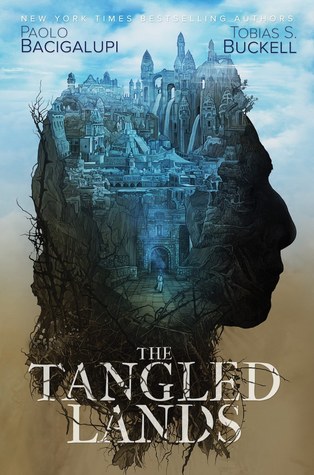
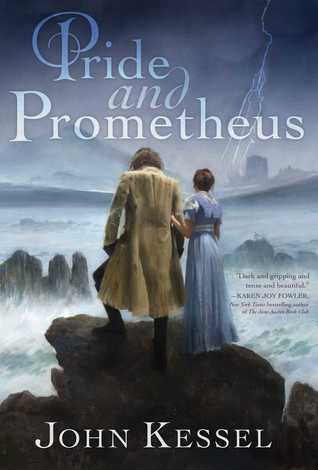


On to the digital pile! I know we’ve already covered the dangers of NetGalley auto-approval privileges, but I never learn. This time it’s Saga Press luring me into temptation, with The Tangled Lands by Paolo Bacigalupi and Tobias S. Buckell and Pride and Prometheus by John Kessel, both of which were on my watchlist so I just couldn’t resist. Then The Philosopher’s Fight by Tom Miller from Simon and Schuster caught my eye, and it just sounded so amazing (“an epic historical fantasy set in a World-War-I-era America where magic and science have blended into a single extraordinary art”). The “Read Now” option was available so I just went ahead and clicked it, because I am a weakling with no self control.
Thanks also to Harper Voyager for sending me an eARC of Sinless by Sarah Tarkoff, a dystopian set in a world where morality is physically enforced, so that those who are “good” are blessed with beauty while those who are not suffer disfigurement or even death. I decided to give this one a try because the premise sounds like it has potential.
And this week I received only one audiobook for review. For a while, All Those Explosions Were Someone Else’s Fault by James Alan Gardner was only peripherally on my radar, until I realized it was a superhero book. Yeah, that changes things. With thanks to Audible Studios.
Reviews
A quick summary of the reviews I’ve posted since the last update:
Oathbringer by Brandon Sanderson (5 of 5 stars)
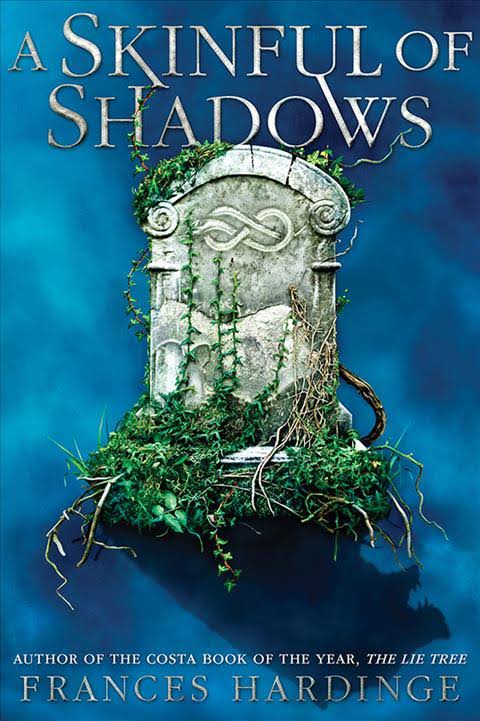
A Skinful of Shadows by Frances Hardinge (4.5 of 5 stars)
All Systems Red by Martha Wells (4 of 5 stars)
Artemis by Andy Weir (4 of 5 stars)
Invictus by Ryan Graudin (3.5 of 5 stars)
Valiant Dust by Richard Baker (3 of 5 stars)
The Bloodprint by Ausma Zehanat Khan (2 of 5 stars)
Roundup Highlights:

What I’ve Read Since the Last Update
Since it is Sci-Fi Month, I used this opportunity to bump up a lot of the sci-fi reads on my TBR. Here’s what I’ve “unstacked” from my shelves since my last roundup post. This weekend marks the end of a very busy time for me, so I should be catching up again soon.


Have you heard of or read any of the books featured this week? What caught your eye? Any new discoveries? I hope you found something interesting for a future read! Let me know what you plan on checking out. Until next time, see you next Roundup!
Friday Face-Off: Double Image or Reflection
Posted on November 17, 2017 21 Comments
Welcome to The Friday Face-Off, a weekly meme created by Books by Proxy! Each Friday, we will pit cover against cover while also taking the opportunity to showcase gorgeous artwork and feature some of our favorite book covers. If you want to join the fun, simply choose a book each Friday that fits that week’s predetermined theme, post and compare two or more different covers available for that book, then name your favorite. A list of future weeks’ themes are available at Lynn’s Book Blog.
This week’s theme is:
“Snap!”
~ a cover featuring a DOUBLE IMAGE or REFLECTION
Mogsy’s Pick:
Binary by Stephanie Saulter
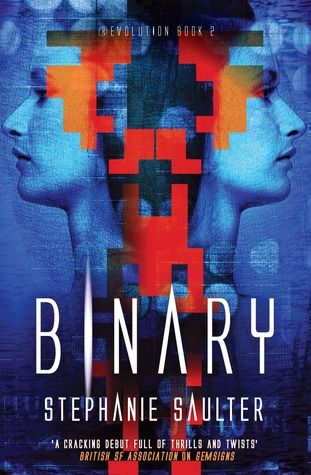
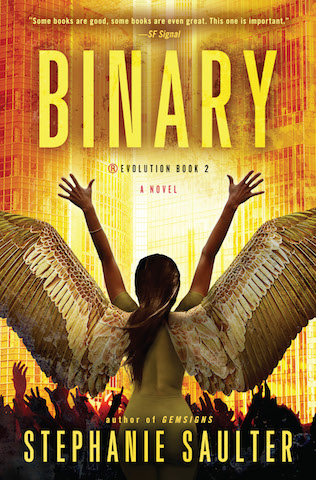
So I had this post all planned out and halfway drafted before I went to grab info on the book…and realized I hadn’t actually read it yet! Oops! So, apologies for cheating a little this week, but I’ve decided to keep this as my pick regardless, because 1) I did read the first book, which I loved to pieces, and 2) I own both the UK and US editions and am pretty fond of both covers, hence why I thought to feature it in the first place. Binary is the second book of the ®Evolution series, set in the not-so-far-off future. The first book Gemsigns explained how a devastating virus almost wiped out humanity, and in order to survive, almost every new person born on the planet had to be genetically modified.
However, some genetic engineers went even further, giving rise to different kinds of genetically modified humans, termed “Gems”, which were tailored to specific duties that needed performing. However, with minimal thought given to their quality of life or well-being when they were created, Gems became essentially nothing but humanity’s tools. A century later though, the Declaration finally freed gems from their servitude, but neglected to translate and clarify their rights or status in the global legal system. In this period of instability, some gemtech companies would like nothing more than to see everything return to the pre-Declaration days, but fortunately the gems have Aryel Morningstar, their charismatic spokesperson who will do all she can to ensure that their voices will be heard.
I really need to get to this book at some point. Gemsigns was awesome, so I have no idea why I still haven’t! In the meantime, let’s check out the covers. It’s a head-to-head between only two this week, but I think they’re both pretty eye-catching:
Jo Fletcher Books UK – 2014 (left) vs. Jo Fletcher Books US – 2015 (right)
Winner:
They’re both very striking covers, each featuring bold, brilliant colors. But I confess, I chose this book with already a clear winner in mind. While I’ve been a fan of the minimalist design of the UK edition ever since it came out, I have to say when the US edition was released a year later, I was just completely floored by the stunning imagery. And the best part? It’s actually an allusion to my favorite scene from the first book. That’s all I’ll say about that though, no spoiling!
But what do you think? Which one is your favorite?
#RRSciFiMonth Barbary Station by R.E. Stearns: Excerpt and Giveaway!
Posted on November 16, 2017 12 Comments
***The giveaway is now over, thanks to everyone who entered!***
Today I’m excited to share with you all a special excerpt and giveaway for Sci-Fi Month: a book about space pirates and murderous AI, oh my! On October 31st, Saga Press published Barbary Station by R.E. Stearns, a science fiction novel described an action-packed and adventurous queer pirate space opera following a pair of intrepid women ready to claim themselves a slice of glory and happiness – that is, if they can stop an out-of-control AI from killing them all. This is a book that’s been on my radar for a while, and I can’t wait to check it out! In the meantime though, please enjoy the following excerpt and don’t forget to enter our giveaway if you’re in the US for a chance to win a copy of your own.

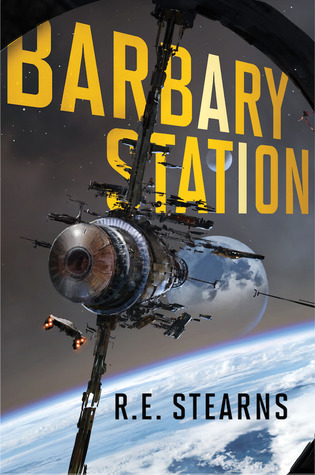 Adda and Iridian are newly-minted engineers, but in a solar system wracked by economic collapse after an interplanetary war, an engineering degree isn’t worth the paper it’s printed on. Desperate for gainful employment, they hijack a colony ship, planning to join a pirate crew at Barbary Station, an abandoned shipbreaking station in deep space.
But when they arrive at Barbary Station, nothing is as they expected. The pirates aren’t living in luxury — they’re hiding in a makeshift base welded onto the station’s exterior hull. The artificial intelligence controlling the station’s security system has gone mad, trying to kill all station residents. And it shoots down any ship that tries to leave, so there’s no way out.
Adda and Iridian have one chance to earn a place on the pirate crew: destroy the artificial intelligence. The last engineer who went up against the security system suffered explosive decapitation, and the pirates are taking bets on how the newcomers will die. But Adda and Iridian plan to beat the odds.
There’s a glorious future in piracy…if they can survive long enough.
Excerpt from Barbary Station by R.E. Stearns, on-sale October 31, 2017. Published by Saga Press. Copyright © 2017 R.E. Stearns, reprinted with permission from Saga Press.
In her water tank, Adda shook blue dust out of her hair. Since the tank was suspended underneath the pirate compound, beneath the station’s double hull, Iridian proclaimed it safe enough without the blue antiradiation coating. Adda kept forgetting to pull her hood over her head when she left the tank, and the blue stuff that covered the rest of the compound’s ceiling and walls fell into her hair and shirt.
She piled pillows inside her workspace’s noise-canceling canopy. Though the sides were transparent beneath a thick grid of black tracer lines, it did resemble a tent. Once she’d plugged her nasal implant jack and her comp into the main unit, she triggered the comp’s countdown timer. If she spent five hours in a workspace, Iridian usually checked on her. When both of them forgot, Adda had headaches and nightmares. She placed a thin purple sharpsheet square on her tongue. While it dissolved, she inserted earbuds, which hissed pink noise and canceled out everything else.
Time to find out what I’m up against. As one of her professors used to say, Zombie AI can’t develop their own priorities, so give them yours. If she got the intelligence to interact with her, she could ask it to stop. The pirates didn’t have a workspace generator, so they couldn’t have tried that.
She lay on her back and sealed the sound-resistant generator tent. After several seconds, the sharpsheet took effect and the generator’s software accessed her neural implant net to draw her into a workspace. Her parents’ house in Virginia, before the bombing, assembled around her.
The comp glove could render small parts of the programs she worked with, but interacting with the fragments limited her view of the system as a whole. The workspace software converted the concepts and commands into visual metaphors her brain processed quickly, naturally, and more effectively with the sharpsheets’ help. Sunlight patterned down through a large, high window. All six shelves of the bookshelf beside it were full of ancient paper books, many more than the tiny collection of books that her mother had maintained. Each book represented information on the station intranet’s public front. Station administrators would be remarkably careless to leave a manual on the station’s security intelligence sitting out on unprotected intranet, but she had to check. A spiral-bound stack of paper labeled Employee Policies might be helpful.
An orange glow with ragged gray-blurred edges swam over a plain black book’s spine. The glow shrank into the words Criminals and Criminology. With dreamlike slowness, Adda pulled it from its shelf, blew the ensuing dust cloud away from her nose, and placed the book beside her bare feet.
Despite the carpet, the book landed with a sound like a massive gong struck with a hammer. Adda stilled, her hand hovering over the book. She hadn’t set any alarms like that, so who had?
When she turned back to the bookshelf, a yellow eye stared out from its back panel, in the space where the book had been.
“Hello.” She breathed slowly to keep her field of vision, already gently twisting left and right, from starting to spin in response to her excitement. It wasn’t clear how well her biological functions carried through the workspace to the intelligence. Heart rates told a lot about humans. What conclusions AegiSKADA drew from hers was something else again.
“I’m looking for your occupant monitoring archives. I’m a friend. Everyone near me is too.” She concentrated on the concept of a group of nonthreatening individuals with similar objectives and priorities. “We don’t attack friends.”
The eye didn’t blink. Its pupil was a splotch of black liquid, asymmetrical and fraying into digital static at its edges. Adda reached into the bookshelf and pressed her fingertips to the top of the panel, above the eye. The titles on the other books’ spines swam, cycling through numeric codes and names. The eye refocused on them. The human-to-AI translation software in her comp was hard at work.
“Look at me.” She concentrated on how delighted she was to meet a new intelligence. The eye’s gaze flicked from one mental construct of household objects to the next, checking each one for signs of her. It was possible that no one had spoken to it in the four years since the station had been abandoned. If it understood what she’d said, it didn’t agree with her.
AI played games with human minds. Her translator should protect her, but depending on what direction this intelligence’s development took, the translator might be outmatched.
The risk raised her heart rate. The room rocked like a boat on stormy seas. The eye focused on her, confirming its access to biometric sensors. How many had the station’s designers planted, recording every cardiac rhythm of humans within range? And where was the one recording hers, alone in an empty water tank? She shut her eyes against the swinging room and concentrated on the second question. The rocking sloshed the contents of her stomach. Whispers in static too soft to interpret brushed across her arms and thighs. She thought she heard her name, and Pel’s.
When she opened her eyes, a dark image flickered in and out of existence below the eye on the book spine. Orange specks of light near the top were probably the string of lights in the passage between the hulls.
Adda grinned. It was so satisfying to create an answer through the intensity of her question. The nearest sensor node was in the hull passage that led to the pirate compound. She didn’t know what to do about that yet, but she’d think of something.
A cardinal peeped triumphantly outside the high window. The whispers faded to silence, and a hard, squared-off edge formed against her palm. She drew a paper book out of the bookshelf with the intelligence’s eye in the center of the cover. The image of the space between the hulls flickered out.
Behind the workspace’s hallucinations, her translator had convinced AegiSKADA that she was a temporary systems maintenance technician. That granted her the most basic levels of personal security aboard the station. Leaving so much of her identity open to the intelligence made her vulnerable, but she now claimed enough clearance to review its biometric database.
Millions of records swirled around her as dust motes in sunlight, with no archival procedure. AegiSKADA had recorded over a year of the pirates’ heart rates, respiration, gait, words, and images, every move the pirates had made since they’d crashed in the docking bay below. As she watched, the intelligence accessed record after record that hadn’t been significant enough for the workspace to render before. The workspace depicted each shining mote of information for only an instant, and then the eye on the book absorbed them.
The intelligence hadn’t been accessing those records when she first applied the translator. Adda could only imagine AegiSKADA accessing the pirates’ data this way in order to select targets for investigation or attack. If she had time to think, more reasons might occur to her. It was appalling that the intelligence had so much biometric data so readily available. None of the utilization scenarios she was coming up with had positive outcomes for Sloane’s crew.
AI rarely gave humans enough time to develop viable plans of attack, and she couldn’t just watch it work. Adda slammed her hand down over the eye to stop the transfer to its active memory. The home around her flickered, with red nothing behind it, as her software struggled to block AegiSKADA from records it was already accessing.
The eye widened and widened beneath her hand. It expanded past the borders of the book representing her software barriers between the intelligence and her personal system. The eye swelled to the width of the bookshelf, then the room, before Adda could draw her hand away. And it was focused on her.
The overwhelmed translator didn’t interpret the angry digital buzz filling the workspace, but something was hunting her, had caught her scent in the red beyond the workspace’s world. It was coming, and she had to get out.
Barbary Station Giveaway
And now time for the giveaway! With thanks to the publisher and the wonderful folks at Wunderkind PR, the BiblioSanctum has one print copy of Barbary Station up for grabs. The giveaway is open to residents of the US. To enter, all you have to do is send an email to bibliosanctum@gmail.com with your Name and valid Mailing Address using the subject line “BARBARY STATION” by 11:59pm Eastern time on Wednesday, November 22, 2017 and we’ll take care of all the rest.
Only one entry per household, please. The winner will be randomly selected when the giveaway ends and then be notified by email. All information will only be used for the purposes of contacting the winner and sending them their prize. Once the giveaway ends all entry emails will be deleted.
So what are you waiting for? Enter to win! Good luck!
Waiting on Wednesday 11/15/17
Posted on November 15, 2017 17 Comments
“Waiting On Wednesday” is a weekly meme that first originated at Breaking the Spine but has since linked up with “Can’t Wait Wednesday” at Wishful Endings now that the original creator is unable to host it anymore. Either way, this fun feature is a chance to showcase the upcoming releases that we can’t wait to get our hands on!
Mogsy’s Pick
Moon Rising by Ian McDonald (July 31, 2018 by Tor Books)
In honor of Sci-Fi November, I’m featuring sci-fi picks for my Waiting on Wednesday posts this month. Up next is the third book of Ian McDonald’s Luna series, which has been described by many as “Game of Thrones on the Moon”. What most of us thought was a duology turned out to require one more book to round out the ending, and this is the highly anticipated conclusion we’ve been waiting for.
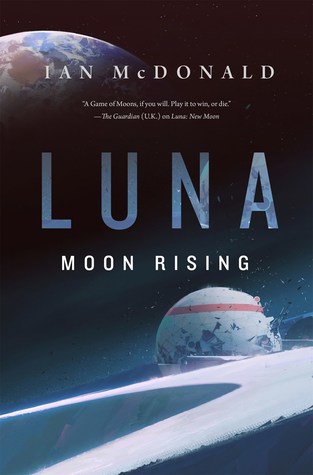 “The continuing saga of the Moon’s Five Dragons, already under option from CBS, a fast-paced, intricately plotted space opera pitched as Game of Thrones meets The Expanse
A hundred years in the future, a war wages between the Five Dragons—five families that control the Moon’s leading industrial companies. Each clan does everything in their power to claw their way to the top of the food chain—marriages of convenience, corporate espionage, kidnapping, and mass assassinations.
Through ingenious political manipulation and sheer force of will, Lucas Cortas rises from the ashes of corporate defeat and seizes control of the Moon. The only person who can stop him is a brilliant lunar lawyer, his sister, Ariel.
Witness the Dragons’ final battle for absolute sovereignty in Ian McDonald’s heart-stopping finale to the Luna trilogy.”
Book Review: Oathbringer by Brandon Sanderson
Posted on November 14, 2017 43 Comments
I received a review copy from the publisher. This does not affect the contents of my review and all opinions are my own.
Oathbringer by Brandon Sanderson
Mogsy’s Rating: 5 of 5 stars
Genre: Fantasy
Series: Book 3 of The Stormlight Archive
Publisher: Tor (November 14, 2017)
Length: 1248 pages
Author Information: Website | Twitter
A full five stars to Oathbringer and nothing less. If you’ve read the two previous volumes in the Stormlight Archive, you’d probably already understand; this series is a masterful, meticulous continuation into the journey to explore the mysterious world of Roshar, and once again this third installment is revealing so much more about our characters and their roles in this epic tableau. I find myself speechless, as I often am after reading a Brandon Sanderson novel, because there’s so much to talk about and yet also so much I can’t spoil. I’m also not too articulate when my mind is blown, so trying to put into words my roiling feelings upon finishing Oathbringer will be difficult, but I’ll try my best to convey my thoughts on this work of art. That said, you should still only read this review after you’ve read the first two books (and if you haven’t yet, what are you waiting for, anyway!?) just in case.
For readers who have made it to this point though, you’ll already know that the world is on the verge of another Desolation, a cataclysmic event that has occurred on a cyclical basis throughout the history of Roshar. The heralds of these wars, known as Voidbringers, have returned along with the other forces of Odium, a powerful being who is the manifestation of hatred itself. The focus once more returns to the main characters of this series: Dalinar Kholin, a Highprince of Alethkar who is the brother of the late King Gavilar; Kaladin, also known as the Stormblessed, who was a bridge crew slave before eventually becoming captain of the royal guard; Shallan Davar, a young Lighteyes woman and scholar-in-training, who studied under the tutelage of Princes Jasnah Kholin; and Adolin Kholin, eldest son of Dalinar and a full Shardbearer like his father, who is now betrothed to Shallan. Together, these characters must work together to hold off the end of the world, but to do that they’ll also need some outside help.
Desperate for allies, Dalinar has set up his new base of operations at the legendary city of Urithiru after losing his own home to the invaders, attempting to reach out to the other Highprinces and rulers of other nations in the hopes of forming a united front against the forces of Odium. The enemy has now subsumed a great number of Parshendi fighters for their side through awakening of the previously docile parshmen with their summoning of the Everstorm, and the only chance the humans have now may be the mysterious fabrials known as Oathgates which, when activated, are said to be capable of transporting anyone to Urithiru.
Problem is though, Dalinar not only has the shadow of his past working against him, most people also think he’s gotten soft in his resolve as well as in his head, especially after he expressed beliefs that could be considered heresy. So far, much of what we’ve seen of Dalinar paints him as an honorable, principled, and valiant figure, which is one of the reasons why he’s always been a favorite of mine ever since meeting him in The Way of Kings. But the story has always teased a darkness in his past, hinting at an angry, violent, and ruthless young man before the assassination of Gavilar dramatically altered his way of thinking. There was also that mysterious business with Dalinar’s wife, whom he can’t remember at all—not even her name, which comes across as white noise in his mind if someone utters it in his hearing.
As a result, many questions have been raised about Dalinar’s history, and the good news is that Oathbringer lives up to every expectation by offering up a ton of answers. Is it any wonder that this may be my favorite volume of the Stormlight Archives yet? In between telling the events of the present, the narrative also occasionally takes us back to the past, delving into Dalinar’s younger years. Admittedly, these sections weren’t always easy to read, and not just because we got to see some of the atrocities he’s committed in his youth. It was also hard to reconcile this young man, who constantly fed off his sense of “The Thrill” by seeking violence and death, with the older and wiser Dalinar I’ve come to know. Though I hated to admit it, I even came to sympathize with some of the other leaders and their reluctance in helping Dalinar, fearing him to be a tyrant who will use the Oathgates to usurp them. Still, I suppose there was some beauty in these flashback chapters, especially when Adolin was born and we got to see Dalinar react to becoming a father, but ultimately there is a lot more pain than happiness in these past sequences, and some of the terrible and heartbreaking events covered the final few flashbacks damn near broke me.
Of course, Oathbringer being “Dalinar’s book” notwithstanding, Sanderson also pays plenty of attention to the other characters, developing the roles of Kaladin, Shallan, Adolin, and even those of a number of important supporting figures besides, including a few I can’t name for fear of revealing too much. Shallan in particular gets a lot of love, because following the revelation that she is a Knight Radiant, she has become something of a magical powerhouse. That said, getting a hang of her Lightweaving abilities involve a lot of growing pains, and in inventing multiple identities for herself, Shallan also risks losing the essence of who she is. Much of Shallan’s storyline sees her testing the limits of her powers and learning to become comfortable in her own skin, which also ties into her growing relationship with Adolin, who is trying to come to terms with all that is expected of him as Dalinar’s son. Their romance subplot continues to fill my girlish heart with glee though, because I still can’t get over just how damn cute the two of them are together. To be honest, Kaladin was perhaps my one source of mild disappointment, and only because his character and personality has not evolved as much compared to the others. The storming bridgeboy is still as brave, loyal, and caring as ever, but his penchant to want to save everybody all the time also means that the all-consuming guilt still gets to him when he realizes he can’t. But then again, that’s why we all love Kaladin, isn’t it?
Thus far, I know I’ve only mostly talked about the characters, but mainly because I think they are the heart and soul and these books. But I would be remiss if I didn’t at least mention the incredible world-building, even if I probably sound like a broken record by now, since it’s no secret that Brandon Sanderson is a genius when it comes to this area. I am in awe of the number of new ideas that are still coming out of this series though, and the astounding amount of new knowledge I gained about the world of Roshar from reading Oathbringer. The characters go to some amazing places and see some amazing things, and we learn along with them as they discover new and important information about the Desolations, the Heralds, the Oathpact, Honorblades, spren, and so much more.
And finally, all I have to say about the plot is that it was epic. Virtually no other word would do to describe this magnificent feat of storytelling. While I won’t pretend that every moment of this 1200+ page tome was a riveting experience, I can honestly say I was never bored. Oathbringer was long and slow to build, but in a good way, unfolding at the kind of pace that increases anticipation rather than induces tedium, and there were also plenty of surprises and shocking developments, including both triumphs and losses. The last two hundred pages or so were something else as well. Much of the book builds towards this final showdown, when all the character POVs come together in an exhilarating, climactic battle that’s sure to knock you off your feet. You’ll remember the ending to this one for sure.
All told, Oathbringer is another stunning addition to the already impressive Stormlight Archive, and I’m in love with this series more than ever. Events are starting to come together to form a clearer picture, but of course there’s still much to come in this journey, which I’m excited to continue. If you’ve been enjoying this ride as much as I have so far, trust me when I say there is no way you will want to miss this book. Read it, I say, read it!



 The BiblioSanctum