Audiobook Review: A People’s History of the Vampire Uprising by Raymond A. Villareal
Posted on July 23, 2018 33 Comments
I received a review copy from the publisher. This does not affect the contents of my review and all opinions are my own.
 A People’s History of the Vampire Uprising by Raymond A. Villareal
Mogsy’s Rating (Overall): 3.5 of 5 stars
Genre: Horror
Series: Stand Alone
Publisher: Hachette Audio (June 5, 2018)
Length: 13 hrs and 27 mins
Author Information: Website | Twitter
Narrators: Jim Meskimen, Christine Lakin, Robert Petkoff, full cast
Three and a half years ago, a body of a seemingly dead woman walks out of an Arizona morgue, confounding everyone from the local police to scientists at the CDC. And so begins what this novel calls a “people’s history” of vampirism—or at least a disease that leads to symptoms that resemble what our popular culture considers vampire-like. This disease, the Nogales organic blood illness (or designated the NOBI virus), changes its victims’ physiologies in drastic ways, including giving them super strength, an aversion to sunlight, and extending their lives by hundreds of years. And yes, it also gives them a thirst to feed on human blood.
In just a short period of time, the infection spreads across the United States, but in a very unprecedented pattern for a disease. This is in part due to NOBI’s unconventional process of transmission. Gradually, becoming a “vampire” is something seen as much desired, and those who have been “recreated” quickly become the nation’s elite, rising in prominence in their respective fields. Calling themselves the “gloamings”, they begin to use their increasing influence to demand more rights and legal protections in the midst of rising death and chaos sweeping across the country. People are literally dying to become gloamings, with the transformation success rate estimated at only fifty percent.
Offering readers a glimpse into different sections of the population to see how the gloaming invasion has affected society, A People’s History of the Vampire Uprising follows several key characters including a CDC researcher named Lauren Scott, a Catholic priest named Father Reilly, an FBI agent named Hugo Zumthor, and a political campaign manager named Joseph Barrera. These perspectives come together to form a narrative that spans several years, following the course of the NOBI epidemic from its inception to its outbreak, and subsequently how its effects have changed the world.
Have you ever wondered while reading those urban fantasy series which feature humans and vampires living side by side, in precarious but relative peace, how that status quo might have come about? As readers, I think we take a lot of those dynamics for granted, never questioning the myriad problems such a monumental event—that is, accepting vampires into the general population—would cause our society. In a way, A People’s History of the Vampire Uprising serves to fill that gap, viewing this “what if” situation through a realistic and modern lens. The author Raymond A. Villareal delves into the nitty-gritty details, addressing the political and social turmoil and the growing pains of a country taking steps to accommodate a growing population of gloamings. What economic consequences are there, for example, when a good chunk of your workforce can’t work the typical 9-to-5 day? What effects would today’s social media have on the image of gloamings? What would happen if a high-profile gloaming ran for political office? How much is the average citizen willing to take?
As fascinating as these questions are, sometimes the minutiae gets in the way of the overall narrative. Villareal is a practicing attorney, and so it’s not surprising when you get the occasional chapter steeped in legalese and other jargon in favor of the clear and simple. Calling this a “panoramic thriller” might also be a stretch, as are perhaps the comparisons to World War Z. The format of the book may call to mind Max Brook’s epistolary novel about zombies, but it has nowhere near the scope nor presence. A People’s History of the Vampire Uprising failed to grip me the way I thought it would, and its presentation was also a little messy.
That said, the novel has its fascinating moments and flashes of insight. The different characters were interesting and enjoyable to follow. Overall the premise is a good one, even if the execution isn’t as strong as I’d hoped. I would recommend it, but with caveats. Don’t expect a thriller of epic proportions, but there’s admittedly plenty in A People’s History of the Vampire Uprising to stimulate and capture the imagination of any vampire fiction aficionado, and it’s certainly not conventional or average.
Audiobook Comments: Fans of full-cast audiobooks will enjoy the audio version of A People’s History of the Vampire Uprising which features multiple narrators portraying the roles of all major characters in the novel. For a story that is told mostly through interview transcripts and other documentation, the multi-cast format is also perfect for emphasizing the different narrative voices and personalities.


Audiobook Review: Station Breaker by Andrew Mayne
Posted on July 22, 2018 25 Comments
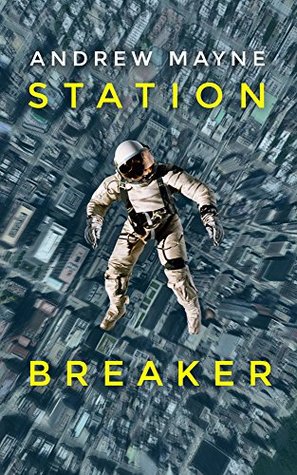 Station Breaker by Andrew Mayne
Mogsy’s Rating: 4 of 5 stars
Genre: Science Fiction, Thriller
Series: Book 1 of Station Breaker/Space Ops
Publisher: Tantor Audio (June 14, 2017)
Length: 10 hrs and 40 mins
Author Information: Website | Twitter
Narrator: Kyle McCarley
Recently, my family went on a road trip and my husband and I needed a good audiobook to listen to for the 8-hour drive. This was no small challenge. First, it would have to suit both our tastes, and my husband can be really picky. Second, anyone who’s ever driven long distances knows how monotonous it can be. Doesn’t matter how much coffee you load up on, those long stretches of highway offering little to no variety when it comes to scenery can really sap your energy, especially when you’re driving at night or stuck in bumper-to-bumper traffic. When searching for the perfect road trip book, I knew I needed to look for something exciting, something guaranteed to suck you in and make the time pass much quicker.
And so, I give you Station Breaker by Andrew Mayne. I’m already a big fan of the author from his Naturalist series, and not long ago, I discovered that before those books, he had also written a near-future sci-fi duology described as a space disaster meets manhunt thriller. Having seen what Mayne is capable of, I had a really good feeling about this one.
As the story opens, we are introduced to astronaut David Dixon who is feeling excited but also a little nervous about his first mission. His employer, a private American aerospace and transport company, had called him in last minute to replace another astronaut who had to bow out because of an injury. His whole life, David has always dreamed about going to space. After waiting in the wings for so long, he’d started to think this day would never come. So understandably, he is a little hesitant to say anything to jeopardize his chances when he notices the mission commander slip a gun into their spacesuit.
Being the rookie though, David decides to trust his superiors. Unfortunately, that decision ultimately winds up with shots fired on a Russian space station, and multiple deaths. David is forced to make an emergency landing from orbit by himself, plunging into the outskirts of Rio de Janeiro. The whole world now thinks he is a terrorist, but David has something that would prove his innocence and expose the real culprits behind an international conspiracy. But first, he’ll have to make it back to the United States. The problem is, with enemies hidden in the upper echelons of the government, David doesn’t know who he can trust. He can only rely on his own wits and knowledge to get himself home, all the while dodging the shadowy forces who will do anything to get their hands on the evidence he has in his possession.
By now, I’ve come to expect certain things from Andrew Mayne, like his addictive writing style, his hilariously snarky sense of humor, and his ability to pull me in with fascinating science. And of course, who can forget his over-the-top plot twists? This book was completely insane. We’re talking levels of insanity where characters jump out of space capsules during reentry, partake in car chase shoot-outs in a football stadium while driving an ambulance, or commit grand theft airplane by attempting to make off with a passenger jetliner. And here I thought The Naturalist was farfetched at times, but that book has nothing on Station Breaker.
Thing is though, I didn’t mind at all. This book was funny and packed to the gills with action, and the story’s over-the-top nature gave it a summer blockbuster feel, which is intended as a high compliment. When you’re stuck on the interstate with nothing to look at but miles of fallow farmland or industrial parks as far as the eye can see, these breathtaking adrenaline-pumping scenes get you revved up far better than a regular old shot of caffeine. Time and distance flew right on by as we listened to this audiobook, and there were quite a few laughs along the way too. David Dixon is a likeable character, and the fact that he is not your typical action hero makes it even easier to root for him. His narrative voice is full of humor and good flow, and his unconventional path to becoming an astronaut also means he often has a different perspective on problems and creative ways of solving them.
Bottom line, Station Breaker was a great choice for our purposes. I was completely engrossed in the story. Sure, the plot can get a little far-fetched and extreme at times, but if there’s one thing you can’t accuse this book of, it’s being boring. My one major criticism is that it ends on a very blatant and very annoying “to be continued”, so my suggestion would be to have the next book ready. All in all, I highly recommend this one for anyone looking for a high-octane and non-stop action thrill ride. I’ve already picked up and devoured the sequel.

Book Review: Minecraft: The Crash by Tracey Baptiste
Posted on July 21, 2018 23 Comments
I received a review copy from the publisher. This does not affect the contents of my review and all opinions are my own.
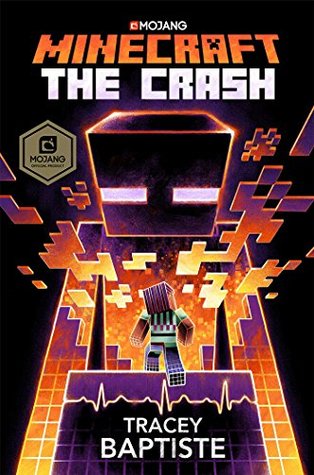 Minecraft: The Crash by Tracey Baptiste
Mogsy’s Rating: 4 of 5 stars
Genre: Media Tie-In
Series: Stand Alone/Book 2 of Minecraft
Publisher: Century (July 12, 2018)
Length: 288 pages
Author Information: Website | Twitter
Minecraft: The Crash is the second official tie-in novel based on the popular survival sandbox video game, though unlike the first book, whose clueless protagonist wakes up in the strange blocky world of the game with no explanation, this standalone sequel is rooted more in our own reality. It is also, in my opinion, a more mature book. While the target audience for this series falls in the middle grade to young adult range, I feel that some of the story’s deeper themes will be lost on younger readers.
Still, depending on how you look at it, that might be a good thing. The Crash is a book that can be enjoyed on multiple levels. Obviously, you can expect a Minecraft novel to be adventurous and fun—and trust me when I say there will be no disappointment there. However, I was also surprised to find a more complex and deeper thread of meaning woven subtly into this novel. I won’t lie—the ending made me cry. It wasn’t that the story was unduly sad or made me miserable and distraught, but there was a powerful and bittersweet element to the conclusion that really pulled on my heartstrings and made me tear up.
The story follows two teenagers, Bianca and Lonnie, who have been best friends ever since the fateful day they met on the playground and bonded over a love for Minecraft. Almost ten years later, the game is still the glue that binds them, even though they go to different high schools and Lonnie is a junior, while Bianca is a newly-minted freshman. Then one night, while on their way to a homecoming game, the two friends get into a terrible car accident. Bianca finally wakes up sometime later in the hospital, after multiple surgeries to save her life. She learns from the doctors and from her parents that the accident was very serious, and that she could have been paralyzed from her injuries. No one tells her anything more, only that she needs to concentrate on getting better.
Soon, Bianca discovers that there are other children at the hospital, some who are very sick and are admitted for long-term care. To provide entertainment for their young patients, the facility is equipped with a state-of-the-art virtual reality gaming system so that users can play and interact with each other in-game. To Bianca’s delight, it even supports a VR version of Minecraft. One day, she meets AJ, a young boy who visits her room and invites her to his Minecraft server which has been heavily customized with mods that he designed himself. As Bianca explores AJ’s realm, she also meets Esme and Anton, two other teens who are at the hospital playing on the server. She teams up with them, hoping to find Lonnie along the way so they can all work towards playing to the End, which is the final dimension of Minecraft. Strange things have been happening on the server, which isn’t running the way it is supposed to. Our characters find themselves trapped in the game, and it is their hope that reaching the End will help them get back to the real world.
Minecraft: The Crash raises several interesting topics. We all know that games can be useful educational tools. But can they also be used for therapeutic purposes? Bianca is a strong and resourceful character, but also extremely stubborn. She has a lot of questions, but after a while, it’s clear to see she’s neither physically nor mentally prepared to handle many of the answers awaiting her at the end of her journey. She frequently gets into arguments with her companions, especially Esme, whose personality clashes strongly with our protagonist’s. Anton is like the mediator of the group, who tries to defuse tense situations and get everyone to work together. Still, despite the constant conflicts and infighting, our characters’ time in the game ultimately becomes both a learning and healing experience—for all of them. While adventuring through Minecraft together, they had inadvertently created their own little support group.
This probably goes without saying, but this book will also be perfect for Minecraft fans. Readers who love the game will no doubt recognize something of themselves in the characters, who are all Minecraft enthusiasts. Each of them has their own building styles, from Lonnie who loves to plan his projects, to Bianca who is more of a “wing it” type of player who improvises as the inspiration strikes her. Then there’s AJ, who likes to build massive, intricately-detailed and elaborate structures, or paranoid Anton who surrounds his fortress base with explosives and other deadly traps. You’ll also find plenty of Easter eggs and other game references scattered throughout the story. The bulk of the book is the actual adventure, following our characters in-game as they gather, explore, craft, build, and fight. It’s all very entertaining.
That said, as I alluded to earlier, there are also some darker and sadder themes underlying this novel. Most of the characters in the story are kids who are very sick or injured. There’s also the question of what happened on the night of Bianca’s accident, along with the difficult truths she must figure out for herself. This novel genuinely surprised me, because I did not expect such an emotional conclusion, or that the final message would be so beautifully or poignantly written.
Overall, I would recommend Minecraft: The Crash. It features a fun and fast-paced adventure which would undoubtedly appeal to fans of Minecraft, though I daresay even non-gamers will be able to find a lot of joy in the book as it contains a story with themes that will speak to readers from all walks of life.
Friday Face-Off: Ice and Snow
Posted on July 20, 2018 27 Comments
Welcome to The Friday Face-Off, a weekly meme created by Books by Proxy! Each Friday, we will pit cover against cover while also taking the opportunity to showcase gorgeous artwork and feature some of our favorite book covers. If you want to join the fun, simply choose a book each Friday that fits that week’s predetermined theme, post and compare two or more different covers available for that book, then name your favorite. A list of future weeks’ themes are available at Lynn’s Book Blog.
This week’s theme is:
“In winter with warm tears I’ll melt the snow.”
~ a cover that features ICE AND SNOW
Mogsy’s Pick:
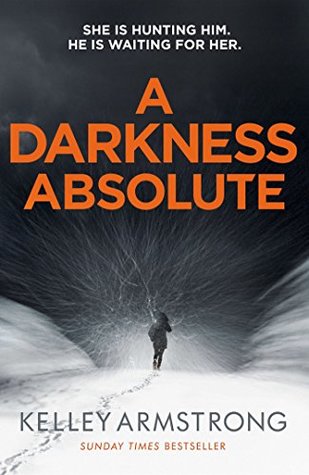
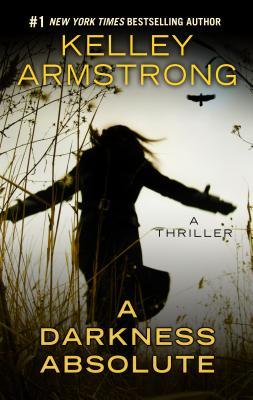
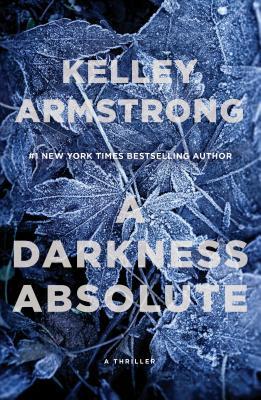
A Darkness Absolute by Kelley Armstrong
A Darkness Absolute is the follow-up to City of the Lost, continuing Kelley Armstrong’s mystery suspense series starring ex-homicide detective Casey Duncan. Months have passed since Casey first came to Rockton, a secret community nestled in the remote wilds of the Yukon. People come to this town to escape their past lives, expecting a safe haven, but the reality is much more sinister. Not everyone in Rockton is who they say they are.
Now winter has arrived with a vengeance, driving some of the townspeople stir-crazy with cabin fever. One night, a listless resident decides to do a runner in the middle of a snow storm, leaving Casey with no choice but to follow in an attempt at search and rescue. While taking shelter in a nearby cave system, she is shocked to discover a terrified and malnourished woman trapped in a hole. A former Rockton resident, the woman had been reported missing more than a year ago. This whole time, she had been held captive in these caves by an unknown assailant, being subjected to unspeakable acts of abuse. The mystery deepens when Casey returns to the cave system to look for clues about the perpetrator, but instead finds the remains of two other women. Rockton’s worst fears are confirmed: there’s another killer on the loose.
Let’s take a look at the covers now:
From left to right:
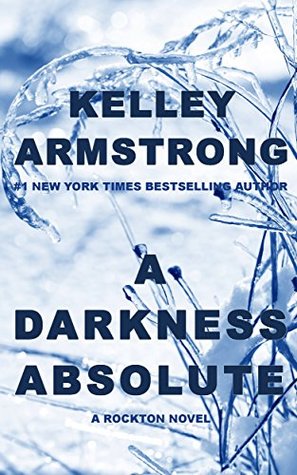
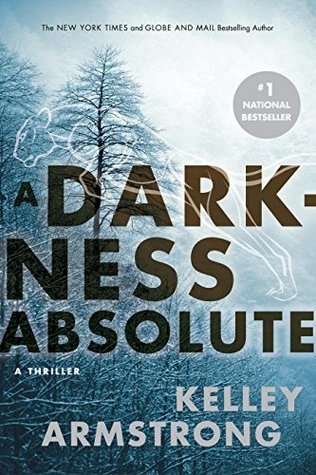
Minotaur Books (2017) – KLA Fricke Inc (2017) – Random House Canada (2017)
Sphere (2017) – Wheeler Publishing (2017) – Vintage Books Canada (2018)

Winner:
Brrrr! I’m getting chilly just looking at all these covers. All of them do a great job depicting the cold, dark, merciless nature of a Yukon winter, and all are quite appropriate for a mystery suspense thriller. Still, one cover in particular really stuck out for me, because of the way it captures the fragility and precariousness of life in the isolated wilderness. It is the Vintage Books Canada edition, which I think is beautiful, but I also like that it gives me the unsettling sensation of stillness and frozen death.
But what do you think? Which one is your favorite?
Book Review: Spellslinger by Sebastien de Castell
Posted on July 19, 2018 43 Comments
I received a review copy from the publisher. This does not affect the contents of my review and all opinions are my own.
 Spellslinger by Sebastien de Castell
Mogsy’s Rating: 4.5 of 5 stars
Genre: Fantasy, Young Adult
Series: Book 1 of Spellslinger
Publisher: Orbit (July 17, 2018)
Length: 432 pages
Author Information: Website | Twitter
Sebastien de Castell is the real deal, and if I still had any lingering doubts about that…well, then Spellslinger just laid them all to rest. While I’m a huge fan of his Greatcoats series, as we all know, it’s no small thing whenever an author decides to leap genres or go from writing books for adults to writing YA. De Castell, however, brilliantly navigates the traditions and expectations of the genre without a hitch, making it all look easy. Even better, he’s brought everything I love about his writing to this project, from his clever sense of humor to his knack for creating characters you care about.
In Spellslinger, we’re introduced to Kellen, a young mage-in-training. Problem is though, he’s not exactly mage material. With his sixteenth birthday looming on the horizon, the time for him to take is trials is quickly approaching, but he still doesn’t have much control over his magic. In fact, his ability seems to be diminishing by the day, and that’s a big problem. If he can’t pass his trials, he’ll be relegated to the serving class, looked down upon by the rest of the mage society and bringing shame to his family. For Kellen, it’s an unthinkable fate, and he’s willing to do anything to avoid it, even if it means putting his own life on the line.
But then enter Ferius Parfax, a visitor from out-of-town whom everyone thinks is a spy trying to steal secrets to take back to her masters. However, there’s more to the outsider than meets the eye, especially when she helps Kellen see things from a new perspective, forcing him to re-evaluate everything he thought he knew about his world and his place in it.
Admittedly, there’s nothing extraordinary about the way Spellslinger starts—we have a teenage protagonist who is desperate to prove his worth. He’s also part of a heavily tiered society where people either have magic (and are powerful) or they do not (and are powerless). For his entire life, Kellen’s identity has been wrapped up in these rules, and so little wonder that he’s so devastated about his fading magic. But even in the face of his disparaging classmates and the pressure from his family, Kellen persists. Unlike his peers, who have never had to struggle the way he has, Kellen knows how to make the best out of a crappy situation. He compensates for his weakness in magic with his resourcefulness, using his quick wits to overcome any obstacle on the fly, making him an interesting character to follow because he’s always full of surprises.
But at the same time, Kellen is a 15-year-old boy, and with that youth also comes a certain naivete that gets him in trouble. He is too trusting of his society and the system. He sometimes lets his bullies get to him. And he’s also seriously crushing on this girl in his class. These everyday problems have a way of making our protagonist feel genuine and relatable, even if one gets the sense that Kellen lives in a small, insular bubble which severely restricts his worldview. That’s where Ferius comes in. With her experience and worldliness, she offers Kellen possibilities he’s never dreamed of. She’s also fantastically written, with a strength of personality that makes her immediately likable and memorable. In that regard, she’s a de Castell character through and through. In fact, if I had to level one criticism at the characterization, it would be that Ferius overshadows Kellen in many instances, even though she is part of the supporting cast and appears much less often.
Still, when it comes to stealing the show, hands down that honor goes to Reichis. But I think I’ll let prospective readers discover for themselves why!
In terms of plot, Spellslinger was also great fun. Perhaps the first half was hampered slightly the slower pacing, but with all the incredible world-building happening in these early pages, I was hardly bothered by it. This being a YA novel, I also wasn’t surprised to find story elements here that were skewed towards younger readers, though not distractingly so. De Castell doesn’t talk down to his audience or try to soften any blows as Kellen is confronted with some difficult lessons and some harsh realities, and while the plot is easy to follow, I wouldn’t call it simplistic. With almost nothing extraneous attached, the story is well streamlined so things flow rather smoothly, making for a fast and entertaining read.
I confess, few YA series openers these days are actually compelling enough to make me want to keep reading. Spellslinger, however, made me want to grab up the next book as soon as I was finished, which speaks volumes about the author’s talent and versatility. Looks like Sebastien de Castell has another winner on his hands! I continue to be amazed by his ability to keep me captivated with his spellbinding stories, and I can’t wait to pick up Shadowblack.

Waiting on Wednesday 07/18/18
Posted on July 18, 2018 25 Comments

“Waiting On Wednesday” is a weekly meme that first originated at Breaking the Spine but has since linked up with “Can’t Wait Wednesday” at Wishful Endings now that the original creator is unable to host it anymore. Either way, this fun feature is a chance to showcase the upcoming releases that we can’t wait to get our hands on!
Mogsy’s Pick
We Are Mayhem by Michael Moreci (April 9th, 2019 by St. Martin’s Press)
Earlier this year, comic book writer Michael Moreci made the leap to novels with Black Star Renegades, his sci-fi debut that has been compared to Star Wars and Guardians of the Galaxy. Next spring, the saga will continue in this sequel which will no doubt be another love letter to these popular franchises while offering even more rollicking adventures through the galaxy.
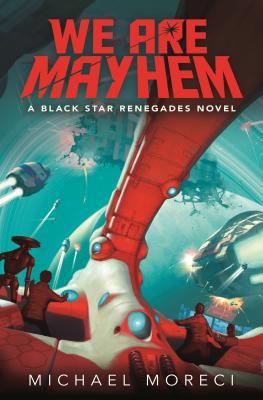 “The second entry in the Star Wars-inspired series that Nerdist calls “the next big thing.”
Though the ragtag group of misfits known as the Black Star Renegades won a decisive battle by destroying Ga Halle’s War Hammer, the war is far from over. In response to losing the crown jewel of its fleet, the evil Praxis empire has vengefully reinforced its tyranny across the galaxy–but its rule won’t be had so easily. Led by hotshot pilot Kira Sen, a growing rebel force stands in the way of Praxis’s might. Not only do they possess the will to fight for galactic freedom, they also possess the ultimate ace in the hole: The mythical Rokura, the most powerful weapon ever known.
Too bad Cade Sura hasn’t figured out to use it.
As Kira wages an increasingly bloody war against Praxis, Cade is left with only once choice: With Ga Halle scouring every star system for the coveted weapon, Cade embarks on a dangerous mission into uncharted space to discover the Rokura’s origins. Only then can he learn how it can be wielded. Because if he doesn’t, all hope for the galaxy might be lost.”
Top Ten Tuesday: Favorite Novellas & Short Story Anthologies
Posted on July 17, 2018 33 Comments

Top Ten Tuesday was created by The Broke and the Bookish, a weekly meme that now resides at That Artsy Reader Girl. The meme first came about because of a love of lists. Who doesn’t love lists? The original creators also wanted their lists to be shared with fellow book lovers and to ask that we in turn share ours with them and connect with other book bloggers. To learn more about participating, stop by their page dedicated to it and dive in!
This week’s topic: Favorite Novellas & Short Story Anthologies
Mogsy’s Picks
As you may know, I am not a novella or short fiction kind of person. Like, at all. Occasionally though, I will come across a few gems, but since I’ve already featured many of my favorites in last year’s “Read in One Sitting/Novellas” topic, this time I’m also going to be including my favorite short story anthologies to help round out my list!
 All Systems Red by Martha Wells

Reading Martha Wells is always a delight, but All Systems Red seemed like such a departure from her usual projects that I had no idea what to expect. As it turned out though, this little novella was a real treat. Told from the point of a view of a rogue SecUnit—a part organic, part synthetic android designed to provide humans with protection and security services—this story takes readers on a journey to a distant planet being explored by team of scientists. Accompanying them is our protagonist, a self-proclaimed “Murderbot”, whose presence is required by the Company sponsoring the mission. Thing is though, Murderbot doesn’t exactly feel warm and fuzzy towards humans, and it knows that the scientists aren’t too comfortable with having a SecUnit on the team either, given the cagey way they get whenever it’s around. Still, that’s just fine for Murderbot. Having hacked its own governor so that it doesn’t have to follow Company directives, all it wants is to be left alone to enjoy the thousands of hours of entertainment vids that it has downloaded from the humans’ satellites. Of course, no one can suspect that Murderbot is secretly autonomous, so it still has to go about its job like everything is normal, and this arrangement was working out just fine until one day, a routine surface test goes seriously wrong. Overall, I found myself pleasantly surprised by this novella, and I definitely would not hesitate recommending it to anyone looking for a quick sci-fi fix with a fun and captivating premise. (Read the full review…)
 Apart in the Dark by Ania Ahlborn

Apart in the Dark is actually an omnibus, so we’re getting a twofer! The first story in this collection is The Pretty Ones, which takes place in New York City during the sweltering summer of 1977—the year in which the Son of Sam conducted his infamous killing spree. Our protagonist is Nell Sullivan, a auiet, awkward, and extremely self-conscious young woman who doesn’t feel like she fits in with the rest of the girls at work. Silently, she seethes at all their bullying and cruel jabs, imagining torturing and killing them in the worst of ways. More than this I don’t want to say, because wow, there were a ton of cool twists and surprises packed in this novella which only clocks in at about 140 pages. The second story is I Call Upon Thee which follows Maggie Olsen, a college student who was raised in Savannah, Georgia in a big gorgeous house with her two older sisters. But something happened in that house when our protagonist was a child—something dark and unnatural—that made her decide to leave the moment she graduated high school and never look back. Containing all the ingredients of a classic horror tale, this tale plays upon our childhood fears of the dark and things that lurk under our beds or in our closets. Of the strange sounds waking you up in the dead of night. Of the quick blurry shadows that you catch just out of the corner of your eye. If you’re curious about the work of Ania Ahlborn, this would be an excellent place to start. (Read the full review…)
 The Furthest Station by Ben Aaronovitch

I tend to skip the novellas and short stories that authors are always tacking onto or in between books of their series, but believe me when I say all bets are off when it comes to Rivers of London. The instant I learned about The Furthest Station, I just knew I had to read it. As a city with a long history, London is also home to a lot of ghosts. Many of them even ride the Underground each day along with—and unbeknownst to—the thousands of living Londoners on their work commute, but rarely do these spectral passengers make any trouble. So when the police start receiving a number of reports about frightening, aggressive, and disturbing ghost sightings on the Metropolitan Line, the situation is worrying enough to get PC Peter Grant and his supervisor Inspector Nightingale on the job. Gradually, they are able to collect enough clues to piece together an explanation for the ghosts’ strange behavior…and the prognosis is not good. A very real person’s life maybe in imminent danger, and it is up to the Folly as Britain’s only paranormal investigative unit to save a kidnapping victim before it is too late. While it’s meant to be a fun side episode to help us Peter Grant addicts curb our appetites while waiting for the next book, ultimately I found The Furthest Station so entertaining that I’d readily recommend it to newcomers and old fans alike. (Read the full review…)
 The Dispatcher by John Scalzi

The Dispatcher is a novella that takes place in a world where it is nearly impossible to kill anyone. If you committed suicide, you stayed dead. If you died in an accident, you stayed dead. If you passed away due to illness, you stayed dead. But for some bizarre reason, if you were murdered, your body would mysteriously awaken back to life, naked and whole in your home. In 999 times out of a 1000, those whose lives were intentionally ended by someone else would return to the living like this. No one knows why, no one knows how, no one has any clue what it all means. But what they do know, is that the world is forever changed by this phenomenon. With this novella, I truly believe that Scalzi has reached a new stage in his writing career. While his style has always been quite readable to me, in this book I started to see a new level of polish and elegance in his writing, and gone is much of the “popcorn humor” his previous books are known for. Though it wouldn’t be fair to say The Dispatcher is completely devoid of levity, for the most part this is a very serious endeavor, featuring some thought-provoking yet morbid themes. It may be a short book, but it sure packs a lot of substance. (Read the full review…)
 Working for Bigfoot by Jim Butcher

This one collects a trio of short stories known as Jim Butcher’s “Bigfoot trilogy” from his Dresden Files series, even though I technically read all three in another anthology called Brief Cases. The first story B is for Bigfoot features Harry Dresden and his first interaction with the Sasquatch known as River Shoulders. In this one, Harry is hired to help Irwin Pounder, River Shoulders’ son who lives with his human mother. It seems lately that Irwin has been having some trouble at school, and Harry takes it upon himself to give the boy a talk about bullies. The second story is I Was A Teenage Bigfoot, where Irwin is a little older, attending the prestigious Saint Mark’s Academy for the Gifted and Talented. But his supernatural origins might have attracted some unwanted attention, so his mother Dr. Helena Pounder hires Harry to keep an eye on her son. The last story is Bigfoot on Campus, following Harry as he helps Irwin Pounder out for the third time. Irwin is now all grown up and in college, playing on the football team, dating a pretty girl, and generally busy doing college student things. However, when it is discovered that Irwin’s girlfriend Connie Barrowill is a vampire of the White Court, Harry goes to let River Shoulders know that his son may be in danger. But as always, things are never as they seem, especially when it turns out Connie is also unaware of her true nature. (Read the full review…)
 The Language of Thorns by Leigh Bardugo

Leigh Bardugo’s The Language of Thorns collects six short stories set in the “Grishaverse”, the world in which her novels like Shadow and Bone and Six of Crows take place. However, these tales are for the most part unrelated to either of those series—a point in this anthology’s favor, in my opinion—and therefore can be enjoyed on their own. It would be more accurate to think of these as fairy tale retellings, each self-contained and often involving their own message and lessons. Personally, I find this format more appealing, as I tend not to get as much out of “side stories” that are tied to (and hence feel “tacked on” to) existing characters and events from a main series. Filled with dark undertones, many of these stories also call back to familiar classic fairy tales—but with a twist. I don’t often find myself recommending anthologies, but I will in this case, since I think this book would appeal to a wide range of readers, especially those who love fairy tale-inspired fiction and imaginative retellings. Perfect for both fans of the author’s Grishverse and newcomers alike. (Read the full review…)
 Arcanum Unbounded by Brandon Sanderson

Huge Brandon Sanderson fan that I am, I try to read everything he writes, but especially the works that take place in his fictional universe of the Cosmere. But while I have read all the novels, somehow many of the novellas seem to have slipped through the cracks. When a lot of the stories have only appeared online or in other anthologies, it can make tracking down every single one a challenge. Enter Arcanum Unbounded: The Cosmere Collection. It feels like I have been waiting my whole life for this. Collecting eight previously published short stories and novellas plus one new never-before-seen tale that takes place in the world of The Stormlight Archive, this anthology is a must-have for every Cosmere geek. But even if you are a reader who simply enjoys spending time in Sanderson’s worlds without being all that concerned with how they fit together, you will be amazed by the all-encompassing and in-depth quality of this collection. The stories themselves are fantastic of course, but you are also guaranteed to walk away from this with a better understanding of the immense and epic macrocosm that is the Cosmere. Arcanum Unbounded is now one of the most treasured books on my bookshelf. (Read the full review…)
 The Paper Menagerie by Ken Liu

Like many collections, there are stories in The Paper Menagerie that I liked more than others, but overall I feel confident saying this is one of the best anthologies I have ever read. The book contains fifteen tales, showcasing a stunningly wide spread of themes and subjects. Readers of speculative fiction will enjoy stories featuring everything from artificial intelligence and virtual reality to space exploration and time travel. Many of the stories also combine these elements with influences from with cultural and historical sources, with a strong focus on Asian philosophy, mythology, and identity. Together, they come to create this profoundly heartfelt collection filled with beauty and emotion. Even if it is somewhat front-loaded with the more memorable stories at the beginning, most of the tales in here are captivating in very profound ways and at times carried a personal meaning for me. Like I said, I don’t often recommend short story collections, but I will for this one, and with much enthusiasm. Ken Liu’s The Paper Menagerie and Other Stories is a beautiful work of art, guaranteed to touch hearts and engage minds. (Read the full review…)
 Golden Age and Other Stories by Naomi Novik

Golden Age and Other Stories is a charming little anthology that is sure to please fans of Naomi Novik’s Temeraire, though if you are just getting started on the series or are hoping to sample some of the stories here before diving into the main books, this might not be the most ideal entry point. While I don’t think you have to complete the series to appreciate this collection, having some basic knowledge of the world to start will definitely help you out a lot. This anthology also features an interesting format, consisting of six short stories which are then followed by about two dozen snippets termed “Drabbles”. All of them are accompanied by a piece of fan art upon which these tales are based, so not only are you getting plenty of dragon-y goodness with this collection, you’ll also be receiving a generous helping of gorgeous eye candy. But how do the stories themselves stack up, you ask? Well, as with most collections, the offerings here are somewhat unbalanced, hitting both highs and lows. I don’t mind admitting that I was largely unimpressed with the first few stories or any of the Drabbles at the end, but sandwiched between them are several amazing gems that are so good that I would say they are worth the price of admission alone. (Read the full review…)
 The Refrigerator Monologues by Catherynne M. Valente

Ever wonder what it’s like to be a girlfriend or wife of a superhero? The answer is not so glamorous in The Refrigerator Monologues. Inspired by “Women in Refrigerators”, a term used to describe a trope used in many comic book plots involving the deaths, disablement, and disenfranchising of female characters to forward a male superhero protagonist’s storyline, this clever collection offers both a darkly humorous commentary on the subject as well as a vicious lampoon on these kinds of story arcs as a whole. Meet the six women of the Hell Hath Club, all inspired by well-known characters in the DC or Marvel universes so that even passing fans of comics should recognize some of their origins. Each story explores the background of a female character who has been killed, depowered, or generally dismissed in favor of the male superheroes (and in one case, a supervillain) in their lives. Now the six of them meet regularly in the afterlife, hanging out at a quaint little joint called the Lethe Café where they share their stories, support each other, and listen to the gargoyles bands play punk rock. Sharply droll and acerbic, The Refrigerator Monologues offers a look at the superhero genre from a rare but important perspective. Whether these stories make you laugh or cry, pound your fists or roll your eyes, at the end of the day they’re bound to evoke emotions and start some conversations. And sometimes, that’s all that really matters. (Read the full review…)
Book Review: Trail of Lightning by Rebecca Roanhorse
Posted on July 16, 2018 39 Comments
I received a review copy from the publisher. This does not affect the contents of my review and all opinions are my own.
 Trail of Lightning by Rebecca Roanhorse
Mogsy’s Rating: 4 of 5 stars
Genre: Urban Fantasy
Series: Book 1 of The Sixth World
Publisher: Saga Press (June 26, 2018)
Length: 287 pages
Author Information: Website | Twitter
Trail of Lightning welcomes us to the “Sixth World”, a post-apocalyptic future in which our planet has gone through a number of drastic changes. Rising sea levels and devastating tsunamis have wiped out most of the earth’s coastal cities, killing billions and leaving only the inland regions and high elevations above water. In the southwest of what was once the United States, the Navajo Nation of Dinétah has survived, shielded by a magical barrier. However, their people too have seen plenty of hardship since the Big Water swept over the continent, isolated as they may be. Many of their legends have come to life, their gods and mythological figures made real. Unfortunately, these also included the monsters from their ancient lore, who are now loosed upon the land, preying on humans.
Enter our protagonist, Maggie Hoskie. Whenever there was a monster that needed killing, she and her former mentor Neizgháni, a monster slaying god of Native American legend, would take care of it together. But that was before Neizgháni abandoned her. Now on her own and feeling hurt and betrayed, Maggie ekes out a living by taking on contracts as a monster bounty hunter. The book begins as she is called upon to track down a creature that has snatched a little girl from a Dinétah village. Maggie follows the trail into the mountains, only to find that the creature is in fact a magical construct similar to a golem—the kind only a powerful witch can create. To find out more, she decides to seek out the help of her wise friend Grandpa Tah, but as it turns out, the old man has other ideas. After introducing Maggie to his grandson Kai Arviso, a Medicine Man in training, Tah persuades Maggie to take the young man along with her on her monster hunt, convinced that their skills will complement each other. Reluctantly, Maggie agrees, and together with her new partner, the two of them set out for the old tribal archives hoping to glean some clues as to who orchestrated the golem attack.
Over the years, I’ve seen a lot of books containing elements which have a basis in Native American myths and culture, especially in the urban fantasy genre. But rare it is to find a book like Trail of Lightning where indigenous characters and their lives are at the forefront of absolutely everything, including the story and setting. This book is set entirely within Dinétah—a relatively small area on a map, to be sure, but Rebecca Roanhorse makes it feel as though there are endless possibilities to explore. The world-building is fantastic, drawing upon the Navajo perspective to flesh out the history and atmosphere of the setting. I also loved the supernatural aspects, which we got to see a lot more of as the plot unfolds. It’s like every time you turn the page, the world opens up a bit more. Fascinating people, incredible stories, and all kinds of extraordinary beings and creatures can be found in Dinétah, and I had a lot of fun discovering them all.
Maggie is also a wonderful protagonist. She’s a bit of an enigma when we first meet her, everything about her shrouded in mystery. She’s cagey about her past—and for good reason, since her history is full of pain and violence—but in time, she does start to reveal more about herself. I love her voice and take-no-nonsense attitude as she moves through life, ignoring the ugly rumors from the people who fear her for what she does. She also has great chemistry with Kai, even though he is her opposite in many ways. Truth is, the plot of this novel is actually quite basic and uncomplicated, but it’s the characters and their relationships that drive the narrative forward, keeping the momentum going and the reader interested.
Like most debut novels though, Trail of Lightning is not without its flaws. As I alluded to before, the story is rather simplistic, and paced somewhat unevenly. There were also predictable sections mixed in with plot developments that felt completely random. And while overall the world-building was fantastic, I still felt there were some gaps that needed to be filled, because I was left with a lot of questions. In terms of characters, the supporting cast could have been given more attention, though Maggie and Kai themselves were very well written. However, I also felt that their romantic relationship came on a little too fast and out of nowhere. The story’s antagonist was a bit of a disappointment as well, and I still have very mixed feelings on how the resolution to the conflicts played out.
But at the end of the day, I can’t deny I had a great time with Trail of Lightning. The book runs into a few hitches, but overall it’s a fast-moving and exciting plot with compelling characters and rich world-building that will keep you turning the pages quickly. I hope this novel will be the start of many more to come in the series, because clearly we’re only scratching the surface of the potential here. I look forward to returning to The Sixth World.
Audiobook Review: Something in the Water by Catherine Steadman
Posted on July 15, 2018 16 Comments
I received a review copy from the publisher. This does not affect the contents of my review and all opinions are my own.
 Something in the Water by Catherine Steadman
Mogsy’s Rating: 4 of 5 stars
Genre: Thriller, Suspense
Series: Stand Alone
Publisher: Random House Audio (June 5, 2018)
Length: 11 hrs and 40 mins
Author Information: Website | Twitter
Narrator: Catherine Steadman
I’ve been in a bit of a book funk the last few weeks and was desperately, urgently in need of a fast and addictive read to lift me out. So, I did what I usually do whenever I find myself in these kinds of situations: I picked up a thriller.
As a subgenre of mystery, the category of domestic suspense seems to be rising in popularity lately, and Something in the Water is the newest kid in town that everyone’s been talking about. Following a newlywed couple, the story opens with scene to remember: Erin, a young up-and-coming documentary filmmaker, is busy digging a grave while her husband Mark lies quiet and still a few feet away. The rest of the book is told in flashback as Erin ruefully recalls the series of turbulent events that have led them both to this harrowing moment.
Just a few short weeks ago, the happy couple were in Bora Bora on their honeymoon, trying to get the most out of their time on the tropical island before returning home to Britain. Erin is in the middle of working on a documentary on prisoners returning to their normal lives after incarceration, and one of her subjects is a high-profile crime lord whose involvement would give her new film plenty of much needed publicity once it’s finished—but only if everything goes as planned. However, Mark has just lost his job, and right now no one seems to be interested in hiring an investment banker. With the expenses on their lavish wedding and mortgage on their expensive home still needing to be paid, the couple’s finances are a bit stretched at the moment. In addition, both are eager to start a family, so they’re also trying for a baby.
Still, even with all the uncertainty in their lives, Mark and Erin are madly in love and determined to focus only on each other while they are in paradise. They spend their days lounging, hiking, and taking in the local culture. Mark, a licensed diver, even convinces Erin to join him in some scuba diving. Then, while on one of these trips out onto the crystal blue waters, something thunks against their boat. And what they find changes everything.
One of the key features of a domestic suspense is its focus on ordinary people caught up in extraordinary circumstances, which perfectly describes Erin and Mark’s situation. Their discovery in Bora Bora leads them down a path neither is prepared or equipped to navigate. In fact, one of the biggest joys—and frustrations—of this book was watching Erin stumble her way into one mistake after another, and I do mean this in the best possible way. After all, she’s in so deep over her head that it’s difficult not to sympathize even when she makes some monumentally boneheaded mistakes, for I doubt many people would be any less clueless if they ever found themselves in her circumstances.
Obviously, I can’t say much more about the plot because I absolutely do not want to spoil a thing, and truly, the less you know going into Something in the Water the better. Reading this novel though, it was easy to connect with the characters because they are so incredibly believable, even in all their rapacity and naivete. One might even point out that Mark and Erin’s foibles make them feel more genuine. I for one loved how each and every one of their decisions made me ponder what I would have done in their shoes. Would I have done things differently? Would I even be able to keep my cool and think rationally through such a bizarre and stressful situation? This story kept me on my toes from beginning to end, filling me with equal parts curiosity and anxiety as I watched the consequences of the characters’ decisions play out. There were a lot of details to pay attention to, but the narrative also flowed at a fast and exciting pace, keeping up the high levels of suspense.
All in all, I was very glad I picked up Something in the Water because it definitely cured me of my book funk, filling me with a renewed energy following a recent string of unexceptional, middle-of-the-road reads. It’s actually quite impressive for a debut. While it wasn’t perfect, all the elements you want in a thriller are there and I never found myself bored. If you’re looking for a good psychological thriller this summer, I highly recommend this one.
Audiobook Comments: I don’t watch Downton Abbey, so I had no idea who Catherine Steadman was or that she’s an accomplished actress until I started listening to the audio of Something in the Water and realized she narrated her own book. Usually that would make me nervous, but as soon as I heard Steadman read I knew that she had to be a professional, prompting me to look her up and discover her acting credits. She was simply phenomenal, delivering a five-star performance. Now I know that in addition to being a great author, she’s also a fantastic actress who is proficient in a wide range of accents and is versatile enough to adapt to any character role.
Mogsy’s Bookshelf Roundup: Stacking the Shelves & Recent Reads
Posted on July 14, 2018 34 Comments
Bookshelf Roundup is a feature I do every other weekend which fills the role of several blog memes, like Stacking the Shelves where I talk about the new books I’ve added to my library or received for review, as well as It’s Monday! What Are You Reading? where I round up what I’ve read since the last update and what I’m planning to read soon. Mostly it also serves as a recap post, so sometimes I’ll throw in stuff like reading challenge progress reports, book lists, and other random bookish thoughts or announcements.


Welcome to Bookshelf Roundup, the On-The-Road edition! As you can see I’m vacationing in Canada at the moment, and this being my first time back home in almost ten years, I’m very excited. I know I haven’t been around to visit everyone’s blogs, but I promise to catch up and comment again once I get back. Since this is also a pre-scheduled post, with my physical copies at home and the post office holding some book packages for me, I’ll be featuring only my digital book haul this week. As a result, this is going to be a shorter update, but as always I’d like to thank the publishers and authors for the review copies received. For more details and full descriptions of the books, be sure to check out the links to their Goodreads pages!
Received for Review

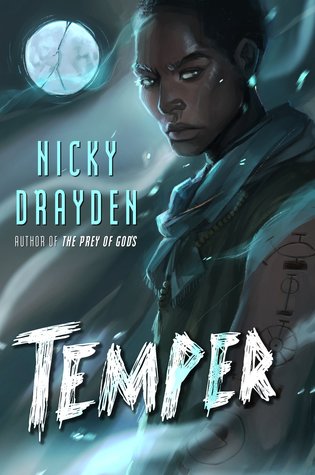


My thanks to HarperVoyager for the following eARCs: Record of a Spaceborn Few by Becky Chambers is the third book in the Wayfarers sequence, once again featuring new characters in a new adventure so presumably it can be read as a standalone like the previous installments. I love this universe and I can’t wait to return to it! I also received Temper by Nicky Drayden which I’m really excited about – I still want to read her book The Prey of Gods which came out last year, but figured that I’ll try to get to this one first.
From NetGalley, I requested Seventh Born by Monica Sanz because I was intrigued after reading its description. My thanks to Entangled: Teen for approving me; they sure have been putting out a lot of really good looking titles lately!
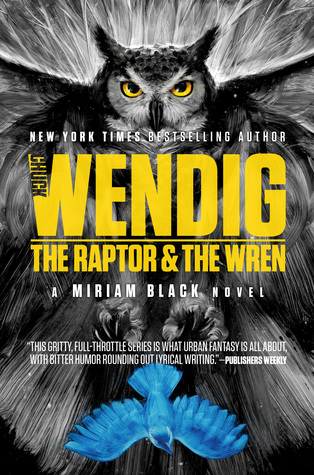
In the audiobook pile, I received The Raptor & the Wren by Chuck Wendig from the awesome folks at Audible Studios. Feels like I’ve been waiting forever for this fifth book in the Miriam Black series to come out in audio, and it was finally released earlier this month. And courtesy of Listening Library, I was also lucky enough to snag an advance listening copy of Dance of Thieves by Mary E. Pearson. I’ve enjoyed her books in the past and I’m looking forward to reading more!
Reviews
A list of my reviews posted since the last update:
Starless by Jacqueline Carey (4.5 of 5 stars)
Spinning Silver by Naomi Novik (3.5 of 5 stars)
Damselfly by Chandra Prasad (3.5 of 5 stars)
Born to the Blade created by Michael R. Underwood (3 of 5 stars)
The Oddling Prince by Nancy Springer (3 of 5 stars)
The Singularity Trap by Dennis E. Taylor (3 of 5 stars)
The Cabin at the End of the World by Paul Tremblay (3 of 5 stars)
Roundup Highlights:
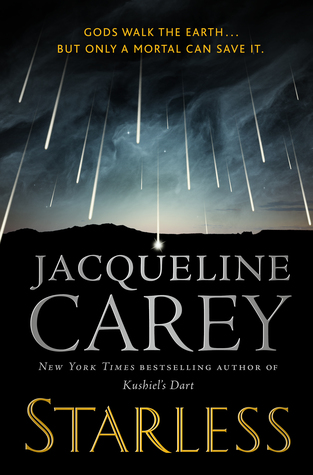
What I’ve Read Since the Last Update
Here’s what I’ve managed to “unstack” from the TBR since the last update. More reviews coming soon!
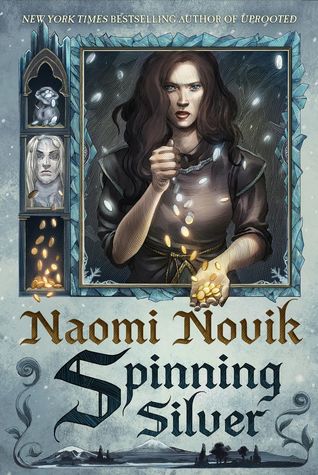
Have you heard of or read any of the books featured this week? What caught your eye? Any new discoveries? I hope you found something interesting for a future read! Let me know what you plan on checking out. Until next time, see you next Roundup!


 The BiblioSanctum