Novella Review: The October Man by Ben Aaronovitch
Posted on March 11, 2019 24 Comments
I received a review copy from the publisher. This does not affect the contents of my review and all opinions are my own.
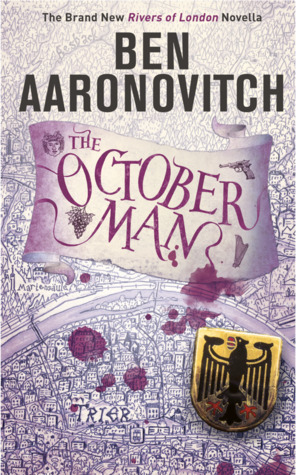 The October Man by Ben Aaronovitch
Mogsy’s Rating: 4 of 5 stars
Genre: Urban Fantasy
Series: Book 7.5 of Rivers of London
Publisher: Subterranean Press (May 2, 2019)
Length: 216 pages
Author Information: Website | Twitter
With Lies Sleeping ending with the final showdown between Peter Grant and his archnemesis the Faceless Man, bringing a seven-book story arc to a close, fans are wondering where the Rivers of London series will be going from here. Rumor is that Peter will be back, but in the meantime, we get to whet our appetites with a spinoff novella called The October Man.
Providing readers with some much-needed breathing space following the intensity of all that Faceless Man action, this tale features a classic down-to-earth mystery taking place in the German city of Trier and introduces a new protagonist. Tobias Winter is an investigator for the Abteilung KDA, Germany’s own version of a supernatural crime fighting force similar to the Folly, and he is also one of the country’s few officially sanctioned magical practitioners. He arrives to the Mosel wine region after a suspicious death is reported in the area, teaming up with local police officer Vanessa Sommer to figure out what happened to the victim whose body was found covered in a grey fungus known as noble rot—an important infestation used in the process of making particularly fine and concentrated sweet wine.
Magic may have killed the poor man, but it is good old-fashioned detective work leads our characters to a nearby vineyard owned by a woman named Jacky Stracker, whose family has had a long and interesting history of interacting with the surrounding genius loci. Their investigation also uncovers a connection between the victim and a peculiar drinking club whose members are a group of middle-aged friends holding weekly get-togethers to enjoy good wine and experience the culture and arts of Trier. With a history that stretches back to the time of Ancient Rome, Germany’s oldest city offers no shortage of suspects, both mundane and magical, and it is up to Winter and Sommer to crack the case before the killer can strike again.
The October Man is a very well-constructed detective story, simple enough to be told in the span of a novella (granted, at more than two hundred pages, this one’s on the longer side) while still containing plenty of complexity to hold the reader’s attention. In addition, its pacing allows for plenty of fast-paced action and police work, but moments of downtime also provide opportunities to get to know our characters better. Despite being in a new setting and following a new protagonist, I was delighted to feel all the familiar attributes and the fine balance of Ben Aaronovitch’s writing style.
And of course, the best part about this story was being able to see magic in another part of the world. Expanding the Rivers of London universe, Aaronovitch shows how other places have their own protective spirits and genius loci. He also explores the way magical crimes are investigated and handled in Germany, and it was interesting to contrast attitudes and procedures between Abteilung KDA and the Folly due to political and cultural differences. Trier itself is a fascinating setting, boasting rich architectural history and a lively social and art scene, all of which the author highlights with the same kind of passion and attention to detail he gives to the Peter Grant novels. I also loved how the story revolved around the region’s wine industry and incorporated the history and process of wine making into many threads of the plot.
Perhaps my only criticism is Tobias Winter’s voice, which does not distinguish itself enough from Peter Grant’s. They sound so similar that I found myself frequently forgetting that we were supposed to be following a completely different protagonist, and only the occasional German brought me back. Although Tobias comes across as slightly more serious than Peter, to me it just seems there should be a greater distinction between their two personalities and narrative patterns, given their disparate backgrounds. That said, this can also be viewed as a positive, because if you enjoy the tone and style of the main series, then you should feel right at home with this one too.
All in all, Ben Aaronovitch has delivered another fun and captivating Rivers of London mystery, The October Man being a novella and featuring a different setting and characters notwithstanding. I loved getting to meet Tobias and Vanessa, and it would thrill me greatly to see this corner of the series expanded with more stories in the future.


More on The BiblioSanctum:
Review of Whispers Underground (Book 3)
Review of Broken Homes (Book 4)
Review of Foxglove Summer (Book 5)
Review of The Furthest Station (Book 5.7)
Review of The Hanging Tree (Book 6)
Review of Lies Sleeping (Book 7)
YA Weekend: White Stag by Kara Barbieri
Posted on March 10, 2019 14 Comments

I received a review copy from the publisher. This does not affect the contents of my review and all opinions are my own.

Mogsy’s Rating: 3 of 5 stars
Genre: Fantasy, Young Adult
Series: Book 1 of Permafrost
Publisher: Wednesday Books (January 8, 2019)
Length: 368 pages
Author Information: Website | Twitter
So I have some really mixed feelings about White Stag, and honestly, even having gone in knowing about some of its potential issues did not make putting together this review any easier. My problem is that I did not find this to be a bad book, just an aggressively mediocre one in that I’m having a hard time coming up with anything about it that excited me. And what’s more the pity, I recognized some clear attempts to make this one stand out, but in the end the story still felt bland and generic.
At the center of this tale is seventeen-year-old Janneke, the youngest of a family with only daughters, hence she was raised by her father to be his heir. In the wilderness, she learned how to hunt and track and other survival skills. But one day, her village is razed to the ground and everyone is massacred by the depraved goblins of the Permafrost court. As the sole survivor, Janneke is taken and tortured by the wicked Lydian, suffering the worst kinds of abuse at his hands before she was handed off to his nephew, Soren.
When the book opens, Janneke has already spent a century as a goblin thrall. Soren, however, has been a much kinder master than his uncle, and over time the two have settled into a comfortable, if not convivial, relationship. But then the death of the Goblin King throws everything into uncertainty, setting off the Hunt for the great white stag which would determine the next ruler of Permafrost, a position that both Soren and Lydian would be vying for. Still suffering from the memories and scars of the violence she has endured, Janneke finds herself caught between two worlds, her loyalties to Soren tested as the goblin and human aspects of her spirit clash within her.
On the surface, there appears to be quite a lot going on in White Stag, but dig a little deeper and it is revealed that most of this is of the window dressing variety—nothing really necessary or essential to the plot, which, in a nutshell, comes down to the stag hunt. The main story is simple, really: the first goblin to kill the stag gets to be the new king, but since the villain wants to fix the contest so that he can be the ruler forever, Janneke and Soren must do everything to stop him from carrying out his evil plans. Ironically, had the author kept things as simple and straightforward, I might have enjoyed the book more; as it is, though, all the superfluous bells and whistles and other melodramatic fluff actually made this one feel uninspired and less interesting.
Take the goblins, for one. On the one hand, I appreciate the attempt to build a story around these unconventional fantasy creatures, though on the other, I am disappointed by the wholly conventional and surface-level way it was carried out. The whole thing reminds me of a running joke I have with a gamer friend of mine regarding elves, a staple race of many of the MMORPGs we play. My friend despises playing elves because he thinks they have become a worn out, tired old trope that either needs to be completely revamped or straight-up retired. Unfortunately though, they have a tendency to pop up time and time again, even in new games where “original” playable races of pointy-eared, magically adept, forest-loving immortals are obviously just reskinned and re-designed versions of the classic elf. Whenever this happens, my friend always goes, “Nope, I’m not fooled.” And in the case of White Stag, I’m not fooled either. This novel had a chance to do all kinds of cool and different things with goblins, but really, for all intents and purposes, they are the Fae, complete with all their courtly machinations, glamor, and every other kind of faerie trope.
Then, there’s Janneke and Soren’s relationship. Again, I liked the attempt at an unconventional romance, one between two people who have been companions for a long time but are only now starting to explore the possibility of becoming more to each other. However, none of Janneke or Soren’s interactions really came across this way. Their “romantic profile” did not a resemble that of a couple who have known each other for close to a century, and whatever chemistry they had was ruined for me by that nagging feeling of incongruency.
There are other issues here, namely plot points and world-building elements that are interesting at first glance but slowly start to lose their appeal as you read on and find out they are either superficial cosmetic details or underdeveloped. Thing is, Kara Barbieri clearly has the writing chops and fantastic ideas, but just doesn’t seem to have mastered bringing them all together in an orderly and cogent way. As a result, White Stag feels like the book version of a stock piece of music or artwork, full of surface beauty but no real substance or depth. With time and experience, I think Barbieri can become an accomplished author because I see so much of her potential in this book, which was a decent read that could have been a great had it not been held back by its generic nature and uncertainty of itself.

Audiobook Review: Stranger Things: Suspicious Minds by Gwenda Bond
Posted on March 9, 2019 22 Comments
I received a review copy from the publisher. This does not affect the contents of my review and all opinions are my own.
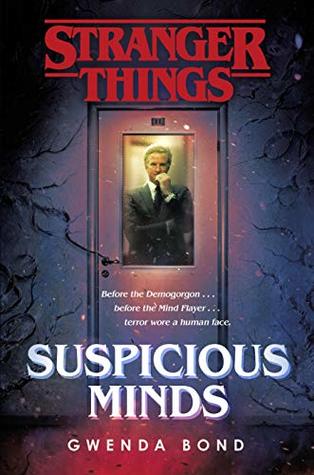 Stranger Things: Suspicious Minds by Gwenda Bond
Mogsy’s Rating (Overall): 3.5 of 5 stars
Genre: Science Fiction, Horror, Media Tie-in
Series: Book 1 of Stranger Things
Publisher: Random House Audio (February 5, 2019)
Length: 8 hrs and 56 mins
Author Information: Website | Twitter
Narrator: Kristen Sieh
For those of us who can’t get enough of Stranger Things, the good news is that Random House has partnered up with Netflix to publish a number of books based on the hit sci-fi horror web show. Of these, Suspicious Minds by Gwenda Bond is the prequel novel featuring Eleven’s mother, Terry Ives, who has been a figure shrouded in mystery ever since the series began. If you’ve ever wondered how she became a test subject in the government research program into the supernatural and paranormal, this book will reveal the story and more.
Suspicious Minds opens in the year 1969, and from Woodstock and the moon landing to the Manson murders and war in Vietnam, it was an eventful summer for the youth of America. For a group of college students in the heartland of Indiana, however, life is about to get even more interesting. After learning of the paid volunteer opportunities offered by the psychology department on campus from her roommate, Terry Ives decides to take part in a research experiment in the hopes of earning some extra cash. There, she meets others who have been selected for the program, including Alice, Gloria, and Ken.
But within the research facility known as the Hawkins National Laboratory, Terry soon suspects that not all is as it seems with the experiment or with its director, Dr. Martin Brenner. As she and her fellow test subjects are made to undergo more demanding and unsettling tests, Dr. Brenner also grows more controlling and tight-lipped about the exact nature of his research. Then, there are the children. One day, Terry happens to meet a little girl in another wing of the building, whose files identify her simply as Eight. The presence of other records indicates the possibility of even more kids kept behind the locked secretive doors of the facility, and Terry and her friends are determined to find out why.
The good news is, whether you’re a diehard fan of Stranger Things or someone who has never seen a single episode, pretty much anyone can pick up and enjoy Suspicious Minds. Because it is a prequel that takes place well before the events of the show, no prior knowledge is strictly required, though of course if you are familiar with the series you will get much more out of the references and other little Easter eggs thrown into the narrative. No surprise perhaps, but one of my favorite things about this book was getting the chance to meet Kali as a little girl.
However, make no mistake, Suspicious Minds also offers up a completely brand-new experience. We are thrown into another era, the late 60’s in this instance, where the country is a very different place than the 80’s setting of the show—socially, culturally, economically, and politically. Bond has done her homework, ensuring that her story feels at least historically convincing. Furthermore, instead of focusing on a group of middle school protagonists, this novel follows an older crowd—college-aged, to be exact. This not only puts Terry Ives at the right age when all this went down, it also serves to make this book more appealing to a wider audience, i.e. older viewers of the show who might find a “new adult” book more palatable than a YA label.
That said, I can’t help but wonder if this desire to please everyone may have contributed to the story’s general lack of focus. There are times when our 19-to-20-year-old characters seem to act, think, and speak like preteens, or certain sections of the book that droned on and on about the sentimental dramas of youth without adding anything relevant to the overall plot. I also thought the first half of the novel was also better written and organized than the second half, which felt a little rushed and messy—a pattern you see often with an author who has a pretty solid idea of what the beginning and end of their book should look like, but struggles to connect them with everything that happens in between.
Still, despite its flaws, Suspicious Minds was a fun read that offered me exactly the right kind of enjoyment and escapism. I wouldn’t say that it’s absolutely essential for Stranger Things fans in that it won’t reveal any great secrets or hidden plans for the series, but what this novel manages to do is what all tie-ins should—that is, provide more background history into the original’s story and world. If you’re like me and that’s the sort of thing you’re into, I highly recommend giving this novel a go, especially since there’s plenty in it to appreciate if you like the show.
Audiobook Comments: At first, I felt that narrator Kristen Sieh’s voice was a little off (too peppy, too young) for the kind of book I thought this was going to be, but as the story revealed more of its nature and the “new adult” vibes, this discordance became less and less. I ended up being generally pleased with her performance and overall thought this audiobook was a very light and easy listen.

Friday Face-Off: Sea Creature
Posted on March 8, 2019 27 Comments
Welcome to The Friday Face-Off, a weekly meme created by Books by Proxy! Each Friday, we will pit cover against cover while also taking the opportunity to showcase gorgeous artwork and feature some of our favorite book covers. If you want to join the fun, simply choose a book each Friday that fits that week’s predetermined theme, post and compare two or more different covers available for that book, then name your favorite. A list of future weeks’ themes are available at Lynn’s Book Blog.
This week’s theme is:
“Two little fishes and a momma fishy too”
~ a cover featuring a SEA CREATURE
Mogsy’s Pick:
Kraken by China Miéville
Ah, is there a more fearsome sea creature than the mighty Kraken? In this book though, it’s really the preserved body of a rare Architeuthis dux—better known as the giant squid. The story follows Billy Harrow, a scientist at the Museum of Natural History in London as well as its resident mollusk expert charged with overseeing the exhibition of the prized specimen. But then the huge creature unexpectedly goes missing, and Billy suddenly finds himself thrown into a side of the city he never knew existed: a world full of strange magic, secret doomsday cults, and other supernatural beings.
My first and only book I’ve read by China Miéville, this one’s definitely getting filed under “weird shit.” Let’s take a look some of the covers:
From left to right, top to bottom:
Del Rey (2010) – Tor UK (2010) – Pan Books (2011)


Russian Edition (2012) – Czech Edition (2010) – Italian Edition (2019) – Turkish Edition (2013)


German Edition (2011) – Hungarian Edition (2013) – Spanish Edition (2013)


Winner:
There are many strong contenders this week—who knew tentacles could be so appealing? My favorites are the Pan Books (2011), Hungarian (2013), and Spanish (2013) editions, but if I had to choose one, I think the Spanish one edges out the others slightly. At the same time, the styles are all so different, my winner could very well change by the hour, depending on the mood I’m in at the time.
But what do you think? Which one is your favorite?
Book Review: Batman: The Court of Owls by Greg Cox
Posted on March 7, 2019 27 Comments
I received a review copy from the publisher. This does not affect the contents of my review and all opinions are my own.
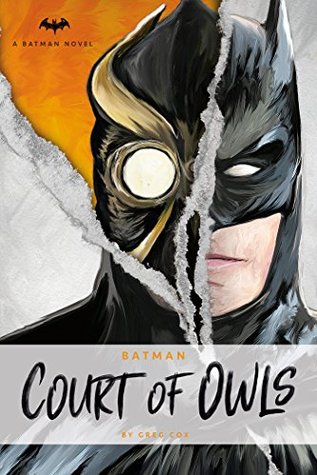 Batman: The Court of Owls by Greg Cox
Mogsy’s Rating: 4 of 5 stars
Genre: Media Tie-in, Comics, Superheroes
Series: Stand Alone
Publisher: Titan Books (February 19, 2019)
Length: 336 pages
Author Information: Website
Batman: The Court of Owls by Greg Cox is an original novel based on the titular secret society that has been operating from the shadows of Gotham for centuries. Known for using their wealth and political influence to shape the city, their origins were first gleaned in the opening arc of the New 52 series of comics featuring the Caped Crusader back when DC carried out their 2011 revamp, which was also when the Court made their first appearance. With the deft writing skills of a seasoned author and the keen alacrity of well-versed fan, Cox expertly combines classic elements of the character and story with the touches of the modern world to create this brand-new exciting adventure.
Many of Batman’s enemies have attempted to beat him physically or break his will—but only one has ever come close. This villain is not actually one figure but a group of many. Collectively, they call themselves the Court of Owls, named for the bat’s natural predator. Their members have included some of Gotham’s richest and most famous going back to the colonial era, making them a true threat. In the comics, the Court utilized their vast resources and deadly assassins to best Batman by trapping him in their massive underground labyrinth, where they succeeded in driving him to the edge of his sanity before our hero managed to escape. While these events are not rehashed in this novel, they do provide the background to this story and are referenced periodically, not to mention the trauma of that experience has also left deep scars on Bruce Wayne’s psyche.
Presently, a series of disturbing murders have given Batman cause to suspect the Court of Owls have reemerged from the shadows and are planning something big. The first victim was a college art professor, whose charred corpse was found burned from the inside out. A bit of digging revealed that one of his students, Joanna Lee, has recently gone missing—and Batman finds himself unexpectedly familiar with her name. As it turns out, Joanna had been researching the life and works of a famous artist and scientist from Gotham’s history named Percy Wright, who was also a known Owl. Something in her research must have alerted the Court because they are now intent on silencing her, and Batman surmises that the college student had gone into hiding. Now he must race against time to beat the Court’s assassins, called Talons, to find Joanna first. Turning to some allies for help, Batman also discovers a connection between his own history and that of an early 19th century young model named Lydia Doyle, who had been Percy Wright’s mistress and greatest muse before she disappeared without a trace in 1918.
One of my favorite things about The Court of Owls is that it is a mystery, which calls back to Batman’s detective roots. On top of that, readers are also in for a treat as Gotham is comprehensively depicted in a literary fashion. Greg Cox incorporates both past and present in this generations-spanning tale that pulls together everything from the architecture and art scene of the city to the history of its famous families, including the preeminent Waynes. The chapters detailing Percy and Lydia’s lives transport us back to Gotham’s heyday when it was still a shiny beacon of prosperity and even the site of a grand World’s Fair, well before it became riddled with crime and corruption.
This novel is also an example of the best of classic Batman, weaving the elements that are most treasured by fans into its fast-paced and intricate plot. The story is steeped in darkness and mystery, thanks in part to the bloody history of the Court of Owls. This ruthless organization is more than a match for the Caped Crusader, and not only because they know his true identity but also because many of their wealthy socialite members move in the same circles as Bruce Wayne. Furthermore, the Owl’s Talons are near invincible with the quick healing effects granted to them by the power of electrum in their veins, making them a challenge to defeat. It almost doesn’t seem fair, but the result is some of the best fight scenes I’ve ever read in a superhero or comic book related novel, so I guess I can’t complain too much.
Finally, in spite of all the attention paid to the Court of Owls, this is still very much a Batman story, focusing on the Dark Knight as well as his extended Bat-family. I was thrilled when Nightwing made an appearance, though his role was more of a cameo, as well as Barbara Gordon as Batgirl, whose tech savviness was used many times to crack the case, revealing the secrets of Percy Wright’s scientific work as well as details into his tragic affair with Lydia. Every character had a role to play, and I found myself riveted by the interplay between the past and present timelines especially when, on occasion, the truth was revealed to the reader in Percy’s chapters first. Whenever this happened, I had the joy of watching Batman do what he does best in his present chapters, sleuthing out the answers for himself with the help of his friends and high-tech gadgetry.
This is the second book I’ve read in Titan Books’ new line of novels based on some of the greatest characters and stories in the Batman world, the first being Harley Quinn: Mad Love by Paul Dini and Pat Cadigan, which was also a fantastic read. Like Dini and Cadigan, Greg Cox also has my kudos for his ability to write such an enjoyable novel about a beloved classic comic book character, blending the old and familiar with the new and modern. I for one am looking forward to more like this and will be picking up Batman: Killing Joke by Christa Faust very soon to complete the trio. Here’s hoping too that more iconic Batman comics will soon get the same treatment.
Waiting on Wednesday 03/06/19
Posted on March 6, 2019 22 Comments

Waiting On Wednesday” is a weekly meme that first originated at Breaking the Spine but has since linked up with “Can’t Wait Wednesday” at Wishful Endings now that the original creator is unable to host it anymore. Either way, this fun feature is a chance to showcase the upcoming releases that we can’t wait to get our hands on!
Mogsy’s Pick
The Harp of Kings by Juliet Marillier (September 3, 2019 by Ace Books)
It’s the start of a new series by the wonderful and amazing Juliet Marillier, that alone is exciting enough! Also, I co-host an MMO music podcast called The Battle Bards, so I kind of have to read this.
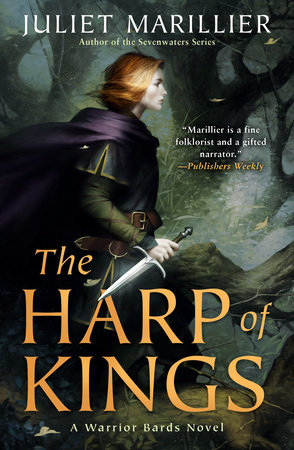 “A young woman is both a bard–and a warrior–in this thrilling historical fantasy from the author of the Sevenwaters novels.
Eighteen-year-old Liobhan is a powerful singer and an expert whistle player. Her brother has a voice to melt the hardest heart, and a rare talent on the harp. But Liobhan’s burning ambition is to join the elite warrior band on Swan Island. She and her brother train there to compete for places, and find themselves joining a mission while still candidates. Their unusual blend of skills makes them ideal for this particular job, which requires going undercover as traveling minstrels. For Swan Island trains both warriors and spies.
Their mission: to find and retrieve a precious harp, an ancient symbol of kingship, which has gone mysteriously missing. If the instrument is not played at the upcoming coronation, the candidate will not be accepted and the people could revolt. Faced with plotting courtiers and tight-lipped druids, an insightful storyteller, and a boorish Crown Prince, Liobhan soon realizes an Otherworld power may be meddling in the affairs of the kingdom. When ambition clashes with conscience, Liobhan must make a bold decision and is faced with a heartbreaking choice…”
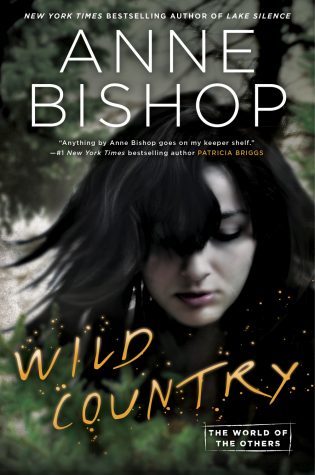
Book Review: Wild Country by Anne Bishop
Posted on March 5, 2019 20 Comments
I received a review copy from the publisher. This does not affect the contents of my review and all opinions are my own.
Mogsy’s Rating: 4.5 of 5 stars
Genre: Urban Fantasy
Series: The World of the Others
Publisher: Ace Books (March 5, 2019)
Length: 496 pages
Author Information: Website
Wild Country by Anne Bishop is, bar none, my favorite book in the world of The Others to date. All my favorite elements have been brought back, while all the gripes have been either corrected or dealt with. Also, I am simply loving this spinoff format allowing the author limitless opportunities to explore the stories of other people, creatures, and places in this wondrous magical world of Thaisia.
Before I continue, because the events of Wild Country take place in the aftermath of Marked in Flesh and run concurrently with much of Etched in Bone, it may contain potential spoilers for the original 5-book series if you haven’t read it yet. This time, readers are brought to Bennett, a settlement in the wild territory known as the Elder Hills. At one point it was a thriving town, before the powerful Terra Indigene in the area killed every man, woman and child in retaliation for the slaughter of the Wolfgard pack. While the Elders have consented for Bennett to be rebuilt and repopulated, they do so with one stipulation: the town must be under Terra Indigene control, and any human living within its limits must agree to work with the Others and be subject to their authority.
As it turns out, a surprising number of humans are willing to make this bargain, though many are drawn to Bennett out of desperation. Whether it’s the need for work, a place to lie low and disappear, or simply a community in which to belong, they have all come with the hopes of making a new life for themselves. Soon, Bennett is up and running again, with a new deputy in town, a lively bookstore, and even an old-timey saloon. But even after the Elders’ show of power, some humans still have it in their heads that they can simply take from the Others what they feel is rightfully theirs. Many groups that have sprung up in recent years to take advantage of the lawless frontier environment, including a notorious gang of hustlers known as the Blackstone Clan. Unfortunately, these mobsters see the flourishing Bennett as an invitation to take some of that success for themselves, and their leader is also looking to settle a score with someone he suspects is hiding out in the town.
Without a doubt, the characters were the highlight of this novel. As thrilled as I was to make new acquaintances, I was even more excited to catch up with old friends, many of whom were introduced but only seen briefly in Marked in Flesh and Etched in Bone—names like Jana Paniccia, Barb Debany, Jesse Walker, Abigail Burch, and Virgil Wolfgard. A couple of familiar faces we’ve known even longer, like John Wolfgard, who worked at Howling Good Reads and has relocated to Bennett to run the bookstore (a staple in every Others novel), as well as Tolya Sanguinati, who has been tapped to lead the entire town. I loved getting the chance to catch up with these characters and see what they’ve all been up to, and apparently, the answer is a lot.
Much of this story involves the residents of Bennett attempting to get the town back into shape. Perhaps my only criticism of the book is that this process dragged on just a tad too long; there’s only so much description of cleaning, recruiting, hiring, and building I can take before it becomes tedious, but thankfully Bishop kept things interesting enough with the introduction of new characters and establishing their fascinating backgrounds. One example is Scythe, who is a particularly dangerous kind of Terra Indigene though she is no less enterprising because of it, hoping to set up a Wild West style saloon called the Bird Cage in Bennett. Then there’s Joshua, a young man who grew up with the Panthergard but whose origins and what they represent make him a troubling enigma for both humans and the Others. More great characters include a mixed family headed by Evan and his partner Ken, who have come to town with a group of Terra Indigene orphans they have rescued.
The result of all these different lives coming together gave this novel an incredible “fresh start” vibe that I found exciting and full of hope. Despite the town’s grim history, I loved Bennett for the same reasons I love Westerns and stories about pioneers settling on wild frontiers. This new setting also allowed for fresh situations and dynamics we’ve never seen before. One of my main complaints about Lake Silence was how similar it felt to Meg Corbyn’s story, containing a lot of parallels and reusing many the same ideas from her time in Lakeside Courtyard. Wild Country, on the other hand, felt more like a true departure, even with the return so many known characters. I especially loved the women in this book, like Jana and Abigail who despite their flaws are strong, resourceful and driven, setting themselves apart from Meg who I thought was too meek and always needed to be saved.
While some of the plot developments in the second half of Wild Country felt similar to the previous books—mainly those related to the Human vs. Others conflict—this is one area I didn’t mind where the tone and spirit remained the same. Besides, the stakes felt higher in this novel, with villainous humans who are more underhanded and devious, and likewise the Terra Indigene characters were also more ruthless and unforgiving.
Truly, Wild Country is my favorite book set in the Others world so far, and I hope Anne Bishop continues to branch out and tell even more stories about the denizens and communities surrounding the original Lakeside Courtyard. There are so many possibilities to explore, and I can’t wait to see what she comes up with next.

More on The BiblioSanctum:
Review of Written in Red (Book 1)
Review of Murder of Crows (Book 2)
Review of Vision in Silver (Book 3)
Review of Marked in Flesh (Book 4)
Review of Etched in Bone (Book 5)
Review of Lake Silence (Book 6)
Novella Review: Your Favorite Band Cannot Save You by Scotto Moore
Posted on March 4, 2019 23 Comments
I received a review copy from the publisher. This does not affect the contents of my review and all opinions are my own.
 Your Favorite Band Cannot Save You by Scotto Moore
Mogsy’s Rating: 4 of 5 stars
Genre: Science Fiction, Horror
Series: Stand Alone
Publisher: Tor.com (February 5, 2019)
Length: 127 pages
Author Information: Website | Twitter
Your Favorite Band Cannot Save You ended up being as quirky and wild as its title suggests, and quite honestly, it’s rare for a book to be this weird but for me to still like it so much. While you could technically classify it as science fiction with a light sprinkling of cosmic horror, at the end of the day, I believe this strange and slightly freaky novella is simply too unique to be pigeonholed into any one category.
I also have a feeling it would work best if the reader knows as little about the plot going in, but I will say that music—especially the passion and critique for it—is the central theme. The story is told from the perspective of a small-time music blogger who one day stumbles across a mysterious track on Bandcamp uploaded by a new artist he’s never heard of before. From the moment the powerful song hit his ears, however, he knew that Beautiful Remorse would be the next big thing. Fronted by its enigmatic singer, Airee MacPherson, the band promises to release a new song every day for the next ten days, much to the delight of its legions of new fans who listened to the first track and couldn’t get enough. There was just something about the song that was so potently addictive and irresistible, almost transcendent.
Before long, our music blogger gives in to curiosity and reaches out to Airee MacPherson, managing to score an interview and a chance to go on tour with Beautiful Remorse. At first, it’s like a dream come true—that is, until he shows up at their first concert and realizes something is seriously wrong with the whole picture. To say that Airee is nothing like he expected is an understatement, but by the time her true intentions are revealed, it is too late for our hapless protagonist to walk away.
Let me just start by saying that the insanity of this book is a feature, and not a bug. As such, it probably won’t be for everyone, but I genuinely enjoyed every moment of the story and it’s one you should check out if you’re looking for something a little different and offbeat. Clocking in at about 120 pages, this novella was also a quick read and well worth the hour or so it took me to read it. Considering how poorly I usually fare when it comes short fiction, or weird books like this for that matter, it surprised me how riveted I was from start to finish.
I’m sure one thing that helped was the main character’s voice. He’s a music nerd, and as such, his attitude was at once endearing and slightly annoying in the way only someone who is a nerd of anything can be. The author certainly captured the nature of fandom and obsession very well, right down to the zealous online communities to the clamor to be first to discover new things and coin new terms. The writing style was so distinctive and full of wit and personality that I could not help but be sucked in right away.
And yes, this was funny. I laughed a lot, though not always for the expected reasons. There were times where we got legitimate moments of chuckle-worthy humor, while at others, I found myself busting a gut at just the sheer absurdity of it all. In any case, you can’t accuse this book of being boring. Bizarre, yes, and even violently dark in places, but there is definitely no room for any downtime or lulls here. Readers are thrown into the thick of it from the get-go, and this fervent energy continues all the way through with no way to predict how anything will play out.
I wish I could say more, but Your Favorite Band Cannot Save You is really one of those books you have to experience for yourself. Needless to say, I had a lot of fun with this one, and if you enjoy fast-paced eccentric stories and don’t mind a slight horror bent with lots of WTFery thrown in, I hope that you will too.
Book Review: Embers of War by Gareth L. Powell
Posted on March 3, 2019 27 Comments
I received a review copy from the publisher. This does not affect the contents of my review and all opinions are my own.
 Embers of War by Gareth L. Powell
Mogsy’s Rating: 4 of 5 stars
Genre: Science Fiction
Series: Book 1 of Embers of War
Publisher: Titan (February 20, 2018)
Length: 411 pages
Author Information: Website | Twitter
Embers of War by Gareth L. Powell is a sci-fi military space opera that has been on my radar ever since it was released last year, but it wasn’t until news of the sequel arrived that I was finally spurred to pick it up. And now that I’ve finished it, I’m kicking myself wondering why it took me so long. This novel has everything I wanted out of the genre and more, and I had a lot of fun reading it.
Following a handful of different characters, the story is set in the aftermath of a bitter and violent war fought in a galaxy rife with political tensions. Disgusted with the part she played, the sentient warship Trouble Dog has decided on a new course for her life, joining the House of Reclamation, an organization that answers the calls of distressed starships, in the hopes of atoning for the atrocities she committed. Sal Konstanz, who once fought against Trouble Dog, now finds herself on the same side as the ship as her captain. Together with their crew of medics and rescue workers, they follow a signal from a downed vessel to a touristy but disputed area of space called the Gallery, a system whose planets have all been carved into gargantuan intricate shapes by an ancient alien race.
Meanwhile, elsewhere in the system is another example of former enemies now working together as allies. Ashton Childe and Laura Petrushka, agents from opposing sides team up to locate a missing poet who was rumored to have been on the ship that went down in the Gallery. And indeed, the missing woman in question is Ona Sudak, whose relaxing pleasure cruise with her travel companion has turned into a nightmare after the attack on her ship leaves them marooned on a strange planet surrounded by all kinds of mysterious threats.
Out of all the characters though, the one I was most looking forward to going into the book—and whose point-of-view turned out to be my favorite—was Trouble Dog. The idea of sentient starships is becoming more and more popular in science fiction, a trend I’m enjoying very much, and Powell’s take is both interesting and inventive. While the concept of a living ship made up of both organic and machine parts is nothing new, Trouble Dog gets her own chapters written in the first person, allowing readers an intimate look into the way she thinks and feels. Although warship class vessels should be unaffected by emotion, the better to do their job, that clearly didn’t turn out to be the case for Trouble Dog who struggles with her fair share of hang-ups as well as memories she’d much rather forget. For a ship character to feel even more “human” than some of her actual human co-stars in a book is no small achievement, and I applaud the author’s skill in pulling this off, though I’m also pleased that he allowed Trouble Dog to retain many of her A.I. traits, resulting in a perspective that it is truly memorable and unique.
And while we only get to visit a relatively small slice of this universe—mainly the Gallery, where most of the book’s action takes place—I’m already in love with the setting. Everything I find irresistible about the space in science fiction is embodied in the mystery and majesty of this system, where entire planets are sculpted into works of art by some unknown civilization many eons ago, using advanced technology we can only dream of. The effect is both inspiring and a little eerie, but I’m intrigued and excited to explore further.
In terms of the story, I’m pleased with how all the different threads came together. However, as much as I enjoy space operas featuring ensemble crews, most novels told via multiple perspectives inevitably lead to some character arcs being more compelling than others. This is what I found with Embers of War, which saw Trouble Dog and Sal Konstanz emerging as my clear favorites almost as soon as the book began. Namely, this was because a character was only as interesting as their interactions with other characters, with the ship and her captain’s dynamic being the best example of a relationship that immediately stood out. Other perspectives like Ashton Child or Nod, the ship’s no-nonsense engineer, were not as appealing, though I understood their need to show another side of the story or flesh out the world-building. In addition, there were plenty of secrets beneath the surface as well as a number of interconnected events whose links aren’t revealed until later, which made discovering them one of the highlights of the novel’s climax and concluding chapters.
All in all, Embers of War was a great read that ticked off the boxes when it comes to what I look for in a military sci-fi or space opera. On top of that, I thought it laid out the groundwork for the sequel quite nicely, and I am beyond excited to jump into the next book Fleet of Knives where I hope Gareth L. Powell will continue to develop the series’ fascinating concepts and themes.
Mogsy’s Bookshelf Roundup: Stacking the Shelves & Recent Reads
Posted on March 2, 2019 41 Comments
Bookshelf Roundup is a feature I do every other weekend which fills the role of several blog memes, like Stacking the Shelves where I talk about the new books I’ve added to my library or received for review, as well as It’s Monday! What Are You Reading? where I round up what I’ve read since the last update and what I’m planning to read soon. Mostly it also serves as a recap post, so sometimes I’ll throw in stuff like reading challenge progress reports, book lists, and other random bookish thoughts or announcements.

Received for Review
My thanks to the publishers and authors for the following review copies received, and be sure to click the links to their Goodreads pages for more details and full descriptions!

With thanks to Ace Books for sending along finished copies of The True Queen by Zen Cho and Wild Country by Anne Bishop. Both are highly anticipated sequels I’m really excited to read!
Also thanks to the kind folks at Night Shade Books and Talos for the following haul: a copy of the brand new re-issue of The Heirs of Babylon by Glen Cook, his long out-of-print debut novel; Mythic Journeys edited by Paula Guran, a collection of classic myths and legends retold by some of the most popular SFF authors of today including Neil Gaiman, Catherynne M. Valente, Ann Leckie, Ken Liu and more; a finished copy of Darksoul by Anna Stephens, the sequel to Godblind which I have already read and reviewed here; and The Warship by Neal Asher, book two in the author’s Rise of the Jain series.

My thanks also to Subterranean Press for this pair of lovely ARCs: Small Kingdoms by Charlaine Harris is an anthology featuring a handful of linked stories by the author collected in one volume for the first time, and Before I Wake by David Morrell is the author’s third short story collection containing fourteen tales featuring a wide range of genres and topics.
From Tor, I also received finished copies of The Revenant Express by George Mann which is the fifth book in a steampunk series called Newbury and Hobbes, as well as Endgames by L.E. Modesitt Jr. which is the twelfth novel in his Imager Portfolio series. Considering how both series are new to me, it’s highly unlikely I’ll get to either of these, but my thanks to the publisher regardless!
And a huge thank you to the amazing team at Berkley for this surprise ARC of The Girl in Red by Christina Henry that landed in my mailbox last week. I’ve enjoyed all of Henry’s dark fairy tale retellings so far, which makes me optimistic for this upcoming post-apocalyptic take on Little Red Riding Hood.
Also much love to DAW for this wonderful surprise of Pariah by W. Michael Gear, the ARC of the final book in the Donovan trilogy which I have been enjoying very much. I’m looking to seeing how things will wrap up.

Courtesy of Tachyon Publications, I also received an ARC of The Last Tsar’s Dragons by Jane Yolen and Adam Stemple, a historical fantasy inspired by the Russian Revolution with dragons!
Thank you also to Orbit/Redhook for these new arrivals: a finished copy of The Witch’s Kind by Louisa Morgan, a historical fantasy about magic, family, love and sacrifice from the author who brought us A Secret History of Witches; an ARC of Children of Ruin by Adrian Tchaikovsky, the hugely anticipated follow-up to one of my favorite sci-fi novels, Children of Time; and a finished copy of Tiamat’s Wrath by James S.A. Corey, the eighth book of the epic space opera series The Expanse. Words cannot describe how excited I am about this next installment.
Also thanks to Simon & Schuster for offering to send a print ARC of The Philosopher’s War by Tom Miller, the sequel to one of my favorite books I read in 2018, The Philosopher’s Flight.
And finally, my thanks to Flatiron Books for an ARC of this quirky looking book called FKA USA by Reed King. Described as something of a mashup of The Wizard of Oz, A Hitchhiker’s Guide to the Galaxy, The Road, and Ready Player One, how could I not be curious about this fascinating debut that seems to have a little bit of everything?
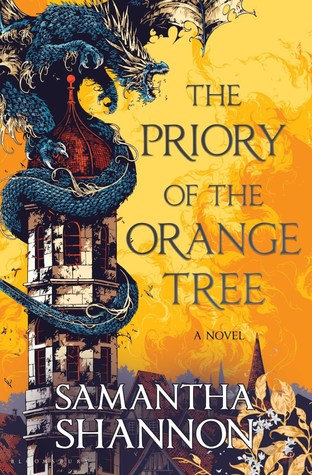
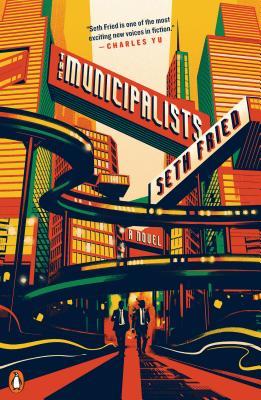
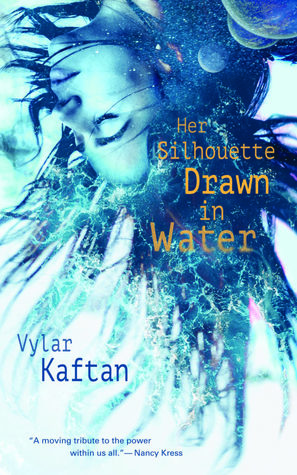
In the digital pile, with thanks to Audible Studios for The Priory of the Orange Tree by Samantha Shannon, a door-stopper of a tome which I’d hoped to tackle in audio so I was thrilled to receive a listening copy. And from Penguin Random House Audio, I received a listening copy of The Municipalists by Seth Fried, a book featuring the unlikely partnership between a U.S. Municipal Survey worker and a day-drinking know-it-all supercomputer. Color me intrigued.
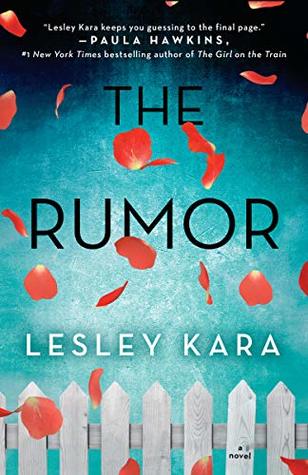
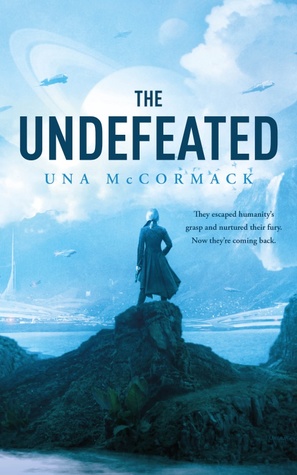
Feeling hungry for a new thriller, I also requested The Rumor by Lesley Kara, with thanks to Ballantine Books and NetGalley for the eARC. And last but not least, thank you to Tor.com for sending me e-galleys for The Undefeated by Una McCormack and Her Silhouette, Drawn in Water by Vylar Kaftan, both of which I’m looking forward to checking out.
Reviews
A quick summary of my reviews posted since the last update:
A Labyrinth of Scions and Sorcery by Curtis Craddock (4 of 5 stars)
Four Dead Queens by Astrid Scholte (4 of 5 stars)
Slayer by Kiersten White (4 of 5 stars)
Crucible by James Rollins (3.5 of 5 stars)
Gates of Stone by Angus Macallan (3.5 of 5 stars)
King of Scars by Leigh Bardugo (3 of 5 stars)
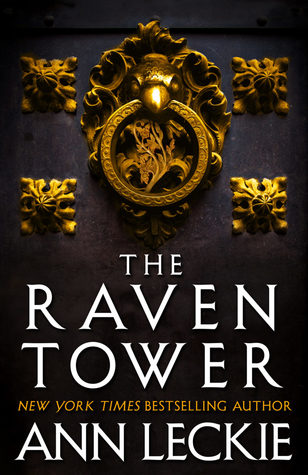
The Raven Tower by Ann Leckie (2 of 5 stars)
Interviews & Guest Posts
A shout out to the authors who stopped by The BiblioSanctum these last two weeks!
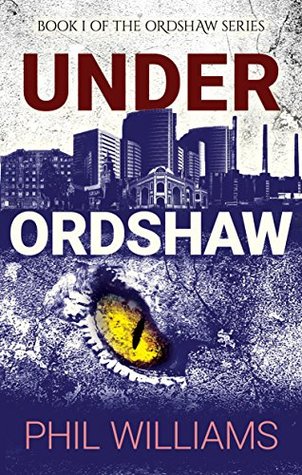
Guest Post: “Under Ordshaw’s Covers” by Phil Williams

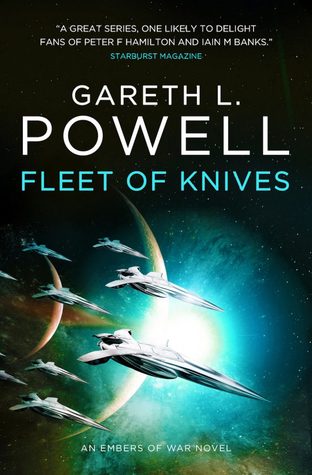
Guest Post: “Creating a Sentient Starship” by Gareth L. Powell

What I’ve Read Since the Last Update
Here’s what I’ve managed to “unstack” from the TBR since the last update. More reviews coming soon!


Have you heard of or read any of the books featured this week? What caught your eye? Any new discoveries? I hope you found something interesting for a future read! Let me know what you plan on checking out. Until next time, see you next Roundup!


 The BiblioSanctum