Book Review: Storm Cursed by Patricia Briggs
Posted on April 30, 2019 28 Comments
I received a review copy from the publisher. This does not affect the contents of my review and all opinions are my own.
 Storm Cursed by Patricia Briggs
Mogsy’s Rating: 3.5 of 5 stars
Genre: Urban Fantasy
Series: Book 11 of Mercy Thompson
Publisher: Ace (May 7, 2019)
Length: 368 pages
Author Information: Website | Twitter
At eleven books, the Mercy Thompson series has become a veritable saga at this point. Pack drama and supernatural politics, this one’s got it all! And believe it or not, many of these story threads are still developing and building upon everything that has come before.
This is the case in Storm Cursed, which takes us back to the Tri-Cities area after our eventful detour through Europe in Silence Fallen—which also means we return to Tri-Cities politics. Repercussions of Mercy’s past decisions have caught up to her, and while it felt like the right thing to do at the time, nothing could have prepared her for the pressures involved in taking responsibility for the safety of everyone living in the territory of the Columbia Basin pack.
As always though, Mercy has the full support of her husband and pack leader Adam, even if some of the other werewolves only barely tolerate her—and only because they have to. But what’s done is done, and now everyone is busy dealing with the aftermath of Mercy’s proclamation, including getting rid of any intrusions on their territory or threats to their people.
Still, some major power shifts are happening. The Tri-Cities area now has the reputation of neutral ground, where negotiations can take place between the US Government and the Gray Lords of the Fae. As a whole slew of important people descends upon their home territory, Mercy finds herself playing reluctant liaison between the politicians and the supernatural community. Meanwhile though, other troubling things are happening around the place, including the emergence of zombie animals and a massacre on the local witch’s coven. With all these fires needing to be put out, Mercy barely has time anymore to put in hours at her car mechanic day job, even though the garage has reopened since being burned down a few months back.
I’ll be honest—this wasn’t my favorite Mercy Thompson novel by far, especially coming on the heels of the thrilling installment that was Silence Fallen. After that nice little break, it appears the series has settled into holding pattern again, in that this one felt like a bridge book whose purpose is to establish a foundation for what’s coming next. There also wasn’t one central conflict in the story; instead, there were several all being developed in tandem, which resulted in a lack of focus. In addition, the political aspects dragged on, not to mention how some of those parts felt awkwardly shoehorned in when there were more urgent problems to worry about, like, oh, I don’t know, how about Elizavetta’s entire family being brutally tortured and murdered and the imminent takeover by a rival coven of black witches? It certainly didn’t feel like that bombshell was given the gravity it deserved, and it’s possible all these reasons made Storm Cursed feel comparatively less engaging than some of the books that came before.
That said, if you’re still following the series at this point, you’ll know what a delight these characters are to follow. It’s impossible for Patricia Briggs to write a bad Mercy Thompson book in my eyes, because each volume always introduces something new and interesting. One of my favorite aspects is seeing all the relationships develop, not just on a personal level between characters but also on a larger scale between all the paranormal communities (Fae, Witches, Werewolves, etc.) in the Tri-Cities. I also love how this book brought back a ton of familiar faces like Zee and Stefan, while still having room to introduce newer names like Sherwood and Larry. It’s true that all the characters get hard to keep track of sometimes, and even as someone who has followed this series closely, occasionally I get forgetful and lost when the story references some past events. This is definitely a series where you have to be up-to-date with the books, and to an extent also be familiar with the Alpha & Omega universe (which I don’t read, which is probably why I’m at a slight disadvantage).
At the end of the day though, even with the Mercy Thompson series’ highs and lows, each book is still an adventure where you never know what’s around the corner for everyone’s favorite coyote shapeshifter and the rest of the gang. While Storm Cursed was a bit of a mixed bag, with a lot of things going on and sections that were less engaging than others, overall I had a good time, and as always, I can’t wait for more.


More on The BiblioSanctum:
Reread of River Marked (Book 6)
Review of Night Broken (Book 8)
Review of Fire Touched (Book 9)
Review of Silence Fallen (Book 10)
Review of Shifting Shadows (Anthology)
Book Review: Kin by Snorri Kristjansson
Posted on April 29, 2019 29 Comments
I received a review copy from the publisher. This does not affect the contents of my review and all opinions are my own.
Mogsy’s Rating: 4 of 5 stars
Genre: Mystery, Historical Fiction
Series: Book 1 of Helga Finnsdottir
Publisher: Jo Fletcher Books (March 8, 2018)
Length: 352 pages
Author Information: Website | Twitter
I’ve wanted to read Snorri Kristjansson for a while, and I’ve had his Valhalla Saga on my reading list ever since I first heard it described as a Viking historical fantasy replete with longships plowing the glorious waves and lots of bloody axe battles. So when I found out about Kin, the first book of his Helga Finnsdottir series, I was a little surprised at the departure. No epic clashes on the battlefield here, nor bloodstained tales of Vikings burning, raiding, and pillaging their enemies. Instead, what we get is this rather moody and domestic little murder mystery taking place on a quiet 10th century Icelandic homestead, and well, I can’t say I’ve ever read anything of its kind before. It’s undoubtedly an unusual direction to take when it comes to the topic of Vikings, but I can’t say it wasn’t interesting or refreshing. In fact, I had a very good time with the novel and found it to be a fun and engaging read.
At the center of Kin is a somewhat dysfunctional family headed by retired Viking warlord Unnthor Reginsson. He and his wife Hildigunnar have four grown children who have left home and are establishing their own lives and families, but they have also adopted a girl named Helga who still lives with them. Along with Unnthor’s right hand man Jaki and his son Einar, Helga helps out around the farm. On any average day, it is just the five of them, but very soon, things are about to get a lot more crowded and busy. Unnthor has invited his children back for a reunion, and the book begins as, one by one, they arrive at the farm with their families.
First is eldest son Karl, who is short-tempered and aggressive, arriving with his wife Agla and their teenaged daughter Gytha. Then there’s second son Bjorn, who is a giant of a man but much less volatile than his older brother, though the two of them have never gotten along. Bjorn and his wife Thyri have a son, Volund, whom they believe to be a bit simple-minded. Next is clever and feisty Jorunn, Unnthor and Hildigunnar’s only daughter by birth. She arrives with her husband Sigmar, a Swede and hence viewed by the rest of the family as an outsider. And last but not least is youngest son Aslak, considered the meekest of the siblings, who arrives with his thorny wife Runa and their two little children Bragi and Sigrun.
At first, the house is full of cheer and joy with the family all under one roof again, but unfortunately the mood doesn’t last. Soon, bitter resentment and old rivalries are brought to light again, causing plenty of tension and fighting. Karl is confrontational with his crude and offensive ways, and Bjorn, ever competitive with his brother, was never one to let him get away with it. Jorunn and Sigmar are crafty and manipulative, keeping mostly to themselves. Aslak, who just wants to build a happy home is nonetheless unhappy with his family’s situation. And in the middle of this is Helga, watching Unnthor and Hildigunnar trying in vain to settle their children and smooth over conflicts. As if that weren’t enough, all of them have also heard of rumors that their father is sitting on a big hoard of hidden treasure, and each one wants a piece of it. It’s only a matter of time until this uneasy situation boils over, and sure enough, one morning Helga is awoken by a terrified scream to discover one of the family members dead, murdered in the night.
It’s true there are a lot of characters to keep track of, but if you enjoy family drama, then this will be your type of book. I suppose that’s what drew me in. This isn’t a fast-paced story by any means and there’s not much action to speak of, and yet I found myself hanging on every word. First of all, throw all your preconceived notions about family reunions out the window—this isn’t going to be anything like you expect. It isn’t a gathering full of laughter or happy tears from seeing your kin again after so many years apart. In contrast, they’re all ready to jump down each other’s throats at the slightest provocation, and keeping an eye out to take advantage of any signs of weakness. In fact, it’s crossed my mind to wonder if anyone in this strange little family actually like one another. The time and place of this novel is a whole different world from what we know, so don’t be expecting the characters to fall into conventional family roles or for any of them to act in a certain way, because chances are, you’ll be surprised. And this feeling of not being able to predict anything is what kept me turning the pages.
In many ways, a book like Kin shouldn’t have worked for me, but it did. Kristjansson presents a very strong sense of place and the atmosphere is underscored by the isolation of the setting. While there are a limited number of suspects, the narrative is no less intense or troubling because we know it had to be someone in the family—and kin or not, the justice meted out will be swift and merciless. I also loved the prose as it is very readable and easy to get into, and trust me, you’ll appreciate that you won’t have to struggle with the writing style once you realize how many characters there are to keep track of, not to mention all the possible motives.
All things considered, I’m glad I finally got to read Kin. The author’s unique handling of Vikings was a pleasant surprise for me, and I found I greatly enjoyed the story’s compelling blend of historical fiction and crime mystery, so if you’re a fan of these genres you should take a look. As the novel’s protagonist, Helga Finnsdottir was a joy to follow and I look forward to seeing her again in the series’ next book, Council.

YA Weekend: Aurora Rising by Amie Kaufman and Jay Kristoff
Posted on April 28, 2019 29 Comments
I received a review copy from the publisher. This does not affect the contents of my review and all opinions are my own.
 Aurora Rising by Amie Kaufman and Jay Kristoff
Mogsy’s Rating: 4 of 5 stars
Genre: Young Adult, Science Fiction
Series: Book 1 of The Aurora Cycle
Publisher: Knopf Books for Young Readers (May 7, 2019)
Length: 480 pages
Author Information: Amie Kaufman | Jay Kristoff
Amie Kaufman and Jay Kristoff have done it again. While Aurora Rising is no Illuminae Files trilogy (but let’s face it, we all knew that filling those shoes would have been an extremely tough thing to do anyway), it does bring its own brand of excitement and entertainment to the table, offering a solid YA adventure that should satisfy any sci-fi fan looking for a thrilling space romp.
The year is 2380, and at the prestigious Aurora Academy it is the eve of the Draft, which has been on cadet Tyler Jones’ mind for as long as he has been looking forward to graduation. As the school’s star student, he would have the pick of the best recruits for his squad. However, an unwavering sense of duty leads him to answer a distress call that night, causing a huge kerfuffle resulting in Tyler missing the most important day of his life. In the aftermath, he is left with a crew of misfits, the leftover dregs of the academy that no other squad leaders want.
Nevertheless, Tyler is determined to be a good leader, resolving to live up to his reputation of “golden boy” and to do the best with what he’s got. First, we have Scarlett, Tyler’s twin who joined the academy in solidarity with her brother, and likewise she has decided to stick with him now out of a sense of loyalty, serving as his squad’s diplomat. Next, we have Cat, an ace pilot who has been friends with the twins since they were all children. It’s also something of an open secret that she’s always carried a torch for Tyler, though all of them tiptoe around the fact. And then we have Kal, a member of Syldrathi race, an alien species affectionately referred to as space-elves. Kal, however, is no willowy sprite; he’s got a fiery temper and serious anger management problems, which is why no one else at the academy would touch him with a ten-foot pole despite his legendary fighting prowess. Also, we have Zila, the squad’s brilliant science officer, except she’s so volatile and prone to get trigger-happy that not even the promise of her genius can overcome others’ fears of working with her. And finally, there’s Finian, the team’s second alien member, of the Betraskan species. Frequently underestimated by others because of his impaired mobility which requires him to wear an exoskeleton suit for support and movement, Fin is a tech expert who is the best at what he does despite the massive chip on his shoulder. Together, the six of them make up Squad 312, our novel’s heroes.
But wait! There’s one final surprise member of team, a wild card no one anticipated until she made her presence known on the crew’s first official mission after stowing away on board their ship. This is Aurora Jie-Lin O’Malley, a girl who finds herself in an unfamiliar world after waking up from being cryogenically frozen for the last two hundred years. And as if this strange future wasn’t scary enough, for some reason there are hostile forces hunting Auri, and she’s also developing superhuman abilities that both terrify and fascinate her. As Squad 312 struggles to decide what to do with their newest crewmate, they also must worry about their own safety as Auri’s powers grow more dangerous and her pursuers close in.
First thing I noticed about Aurora Rising is that there’s something very Star Trek-y about its setup, which immediately biased me towards its story and characters. For one thing, I’m a real sucker for ensemble casts in my space operas and sci-fi adventures, and the motley crew of this book promised great and interesting things. I also liked how the authors actually gave our characters genuine personalities and background histories. I’ve come across way too many YA novels these days that promise diverse characters, but in reality, what we end up getting is a parade of diversity labels and shallow characters who are empty husks defined only by their race/gender/sexual orientation/disability, etc. Honestly, this gets tiresome after a while, not to mention it’s a bit insulting. Which is why I can’t tell you how refreshing it is to read about Squad 312 and have them actually feel like well-rounded and authentic people who have experienced real emotions and lived real lives. And quite frankly, I would have expected nothing less from Kaufman and Kristoff, who have already shown us they can write amazingly well-developed characters with their Illuminae Files series.
But while I would have no hesitation whatsoever recommending Illuminae Files to anyone, regardless of their age, I do have to mention that Aurora Rising feels more skewed towards a younger audience, with a stronger “teen read” vibe. The characters’ attitudes, dialogue, and sense of humor seem to reflect this. Like for example, the ridiculous number of times Tyler’s attractiveness was mentioned or how he was constantly referred to as “Captain Hotness” (I swear, if I had to read about his damn dimples one more time…) Then there was Auri’s annoying way of calling Kal “Elrond” and making endless stupid Lord of the Rings references. So if this is the kind of stuff that grates on your nerves, your eyes are probably in for some epic rolling.
The premise of Aurora Rising is also not as complex as any of the books in the Illuminae Files trilogy, nor is it anywhere near as unique. It’s pretty much your standard heist plot, but in space, and I’ve read better. Still, to its credit, this book is exciting, if a bit drawn out at times—though often when we get lulls, it’s because of character development, which is why I give some of the wonky pacing a pass.
All told though, Aurora Rising was a satisfying read with fantastically developed characters (in spite of all the snark) and a decent plot with well-written action. I truly did not think it would reach the heights of Illuminae, so I’m glad I kept my expectations realistic, but still, overall I am very happy with how this book turned out.
Mogsy’s Bookshelf Roundup: Stacking the Shelves & Recent Reads
Posted on April 27, 2019 26 Comments
Bookshelf Roundup is a feature I do every other weekend which fills the role of several blog memes, like Stacking the Shelves where I talk about the new books I’ve added to my library or received for review, as well as It’s Monday! What Are You Reading? where I round up what I’ve read since the last update and what I’m planning to read soon. Mostly it also serves as a recap post, so sometimes I’ll throw in stuff like reading challenge progress reports, book lists, and other random bookish thoughts or announcements.

Received for Review
My thanks to the publishers and authors for the following review copies received, and be sure to click the links to their Goodreads pages for more details and full descriptions!

Kicking off today’s roundup, with thanks to the kind folks at Ace/Roc/DAW for the following: a finished copy of Storm Cursed by Patricia Briggs, the eleventh book in the Mercy Thompson series. I’ve started this one and I’m already about halfway through and enjoying myself a lot, though it’s been a while since I read the last book so I’ve been having some trouble keeping track of some of the past events being referred to in the story. Next up is a finished copy of Empire of Grass by Tad Williams, the second book of his The Last King of Osten Ard series. I only read Williams for the first time last year with The Witchwood Crown, and even though the fantasy themes in it are a bit convention, I’m looking forward to continuing the series. I also received a couple of surprise ARCs from the publisher: The Wolf’s Call by Anthony Ryan, the first book of his new series Raven’s Blade which will be a new adventure set in the same world as his Raven’s Tower trilogy, and Priest of Lies by Peter McLean, book two of War for the Rose Throne. I wasn’t all that crazy for the first book, so I’m still deciding whether or not I will be continuing this series.
Speaking of surprises, with thanks to Crown Publishing I also received an ARC of a new book I’m only learning about for the first time called The Warehouse by Rob Hart. Described as a darkly satirical near-future thriller, this sci-fi dystopian follows two characters working at an Amazon-like mega-company that has pretty much monopolized the entire country and held it hostage. It sounds really interesting so I might end up giving this a try. And with thanks to Redhook, I also received an ARC of another new-to-me title called The Unlikely Escape of Uriah Heep by H.G. Parry, a novel described as the “ultimate book-lover’s fantasy” featuring a protagonist who has the power to bring literary characters into the world. Um, yes? That definitely sounds like a book-lover’s fantasy to me! I’ll have to give this one a try for sure.

Also thank you to Subterranean Press for sending me the following ARCs of books by some big name fantasy authors: Houses Under the Sea by Caitlín R. Kiernan is a collection of over two dozen of her best Lovecraftian tales and is a must for any fan of the author; A Pilgrimage of Swords by Anthony Ryan is a novella set in a completely new world about a veteran warrior who makes a pilgrimage to the center of a cursed land in the hopes of seeking redemption; and Fan Service by Gail Carriger is an omnibus described as a collection of stories specifically curated to honor the author’s most devoted fans, set to release this fall to commemorate the ten year anniversary of Carriger’s Soulless.
Courtesy of Orbit books, I also received Queenslayer by Sebastien de Castell, the fifth book in his Spellslinger series. It’s hard to believe we’re coming up on the penultimate book already, I guess time flies when you’re having so much fun. From the publisher I also received a finished copy of A Boy and His Dog at the End of the World which came included with a few themed postcards. I hadn’t started the book at the time so I didn’t understand their significance, but now that I’ve finished I think they’re pretty clever. My review went up earlier this week in case you missed it!
And finally from the amazing team at Tor, I received a finished copy of Knight by Timothy Zahn, the second book in his Sibyl’s War series. I haven’t read the first book yet, but I was also sent it for review last year and I’ve considered checking it out. Reviews I’ve seen have been mixed though, so I’ll probably think on it a little bit longer.

I’ve been pretty restrained when it comes to requests, but this week I accepted a digital galley of Three Laws Lethal by David Walton, releasing from Pyr this summer. I’ve enjoyed the author’s books in the past and didn’t even know he’ll have a new book coming out! Also, I’m always up for some horror so I couldn’t resist grabbing The Toll by Cherie Priest when I saw it pop up on NetGalley earlier this week, especially since this was a book I’ve featured in a past Waiting for Wednesday.
In the audiobook pile, I was excited to receive a listening copy of Star Wars: Master & Apprentice by Claudia Gray from Random House Audio. Gray hasn’t disappointed me with any of her Star Wars books yet, so I’m looking forward to this one and hoping to start it soon. Earlier this week, I was also contacted by Audible Studios with an offer of an advanced listening copy of Outland by Dennis E. Taylor. Since I’ve enjoyed the author’s Bobiverse books and am also a big fan of narrator Ray Porter, I happily said yes!
Reviews
Here is a quick summary of my reviews posted since the last update:
Storm of Locusts by Rebecca Roanhorse (4.5 of 5 stars)
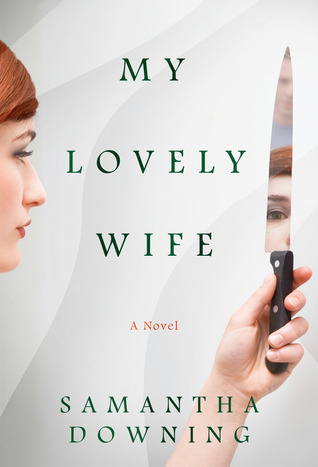
My Lovely Wife by Samantha Downing (4.5 of 5 stars)
Tiamat’s Wrath by James S.A. Corey (4.5 of 5 stars)
Sky Without Stars by Jessica Brody and Joanne Rendell (4 of 5 stars)
A Boy and his Dog at the End of the World by C.A. Fletcher (4 of 5 stars)
Holy Sister by Mark Lawrence (4 of 5 stars)
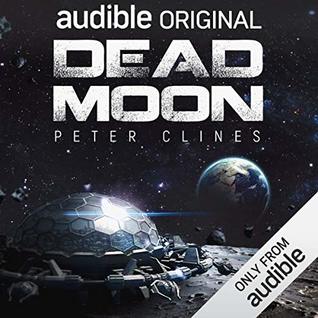
Dead Moon by Peter Clines (3.5 of 5 stars)
Miranda in Milan by Katharine Duckett (3 of 5 stars)
The Binding by Bridget Collins (3 of 5 stars)
Roundup Highlights:

What I’ve Read Since the Last Update
Here’s what I’ve managed to “unstack” from the TBR since the last update. More reviews coming soon!



Have you heard of or read any of the books featured this week? What caught your eye? Any new discoveries? I hope you found something interesting for a future read! Let me know what you plan on checking out. Until next time, see you next Roundup!
Friday Face-Off: Sunrise/Sunset
Posted on April 26, 2019 27 Comments
Welcome to The Friday Face-Off, a weekly meme created by Books by Proxy! Each Friday, we will pit cover against cover while also taking the opportunity to showcase gorgeous artwork and feature some of our favorite book covers. If you want to join the fun, simply choose a book each Friday that fits that week’s predetermined theme, post and compare two or more different covers available for that book, then name your favorite. A list of future weeks’ themes are available at Lynn’s Book Blog.
This week’s theme is:
“The sunrise was the colour of bad blood.”
~ a cover featuring a SUNRISE OR SUNSET
Mogsy’s Pick:
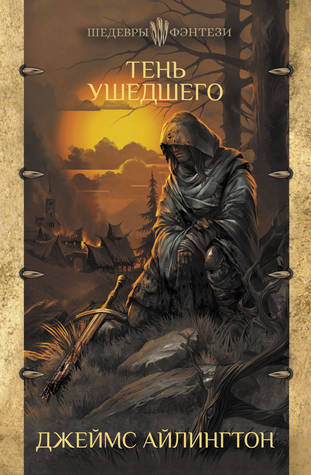
The Shadow of What Was Lost by James Islington
Whenever I hear about an indie fantasy that makes the jump to a traditional publishing house, it always piques my curiosity, and of course, The Shadow of What Was Lost was no exception. While I didn’t think it revolutionized epic fantasy in any way, I nevertheless found it to be an engaging series-opener. Let’s take a look at the covers:
From left to right, top to bottom:
Smashwords (2014) – Orbit (2016)
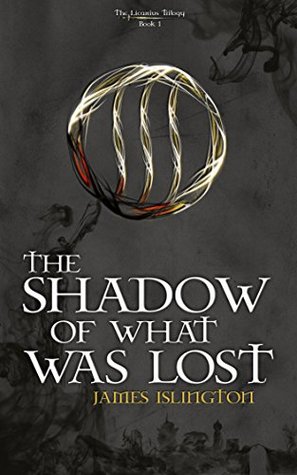
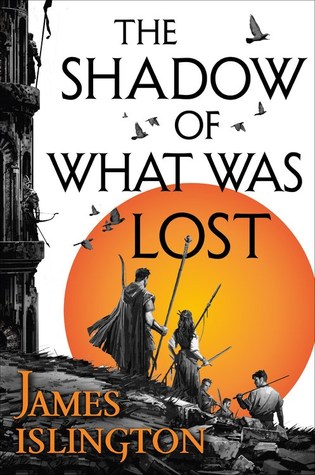
German Edition A (2017) – German Edition B (2018)


Czech Edition (2018) – Russian Edition (2019)

Winner:
I’m going to have to go with the Orbit edition for this one. I love the art style and the way the monochromatic parts of the image make the orange of the sun really pop.
But what do you think? Which one is your favorite?
Audiobook Review: Dead Moon by Peter Clines
Posted on April 25, 2019 18 Comments
I received a review copy from the publisher. This does not affect the contents of my review and all opinions are my own.
Mogsy’s Rating (Overall): 3.5 of 5 stars
Genre: Science Fiction
Series: Book 3 of Threshold
Pubisher: Audible Studios (February 14, 2019)
Length: 11 hrs and 23 mins
Author Information: Website | Twitter
Narrator: Ray Porter
I’ve really enjoyed Peter Clines’ books in the Threshold series so far (14 and The Fold) which was why I was excited when I found out that he would be releasing a third book as an audio exclusive with Audible. While all these stories appear to take place in the same world, any connections between them are immaterial to their individual plots so each one can be read as a standalone. As such, I wasn’t too surprised to discover that this new book, Dead Moon, would take place in the future on the moon, though I was a little taken aback by the very different tone, style, and overall quality.
That’s not to say Dead Moon was a bad book, but it does feel less well put together compared to Clines’ previous Threshold novels, with a more slapdash plot and characters that aren’t as developed. The premise also comes across as less unique and more commercial, like something I might come across in a B movie on the Syfy channel—as in fun, but superficial. As you can probably figure out from the book’s description, this is a zombie story on the moon. The year is 2243 and overcrowding and environmental degradation on earth has forced humankind to figure out a new way to deal with their dead. The solution? Make the moon a graveyard, where Earth’s wealthiest citizens can launch the remains of their deceased loved ones to rest in peace for eternity looking down on us from the brightest object in the night sky.
But such an enormous undertaking also requires a lot of manpower to maintain. Enter the Caretakers, men who women who live onsite in Luna City, the moon’s largest operations center, where they perform tasks such as grave digging and overseeing the cemeteries. It is lonely and isolated work, but it is also perfect for Cali Washington, who has signed on to become a Caretaker in order to start a new life and escape the troubles from her old one. Not long after she begins her position, however, a mysterious meteor crashes into onto the moon’s surface, affecting the grave sites in a terrifying way. Far away from any help and amidst dangerous dust storm conditions as well as impossible reports about the dead rising, Cali and her fellow Caretakers must band together and try to survive.
Unlike 14 or The Fold, the overall premise of Dead Moon is relatively simple, and the book is what I would call a popcorn read, with a story and characters that present themselves accordingly. There’s also plenty of action, and while these scenes and the dialogue are pretty hammy, there’s no denying the entertainment value. This is a zombie book, after all, and it’s the kind where you know right away what you’re getting into. It will mostly play out the way you expect, though there are also a few twists and surprises thrown in that those who have read the previous Threshold books will probably appreciate more.
In terms of characters, we have a diverse and interesting cast. But as with many of these pulpy space disaster stories, it wouldn’t really be advisable to get attached to any of them, since a bunch of them will not survive. Some were clearly written to be fodder for the zombies, so not surprisingly, character development is on the lighter side. Likewise, the plot has a “throwaway” quality to it, which is pretty typical with these typcs of fluffy reads. I get the feeling that Clines wasn’t overly concerned with any possible plot holes or explanations that don’t sense—like, come on, it’s moon zombies! It’s supposed to be over-the-top and a little silly, so I’ll give it a pass for being so outlandish. Like I said, these aren’t necessarily bad attributes, as long as you come into this with realistic expectations.
In other words, Dead Moon isn’t a deep book by any means, but I had a good time with it, even though I don’t think its quality is in line with the previous Threshold books (especially with The Fold, which I thought was mind-blowingly clever and engaging). For the right person at the right time though, I can see it being very enjoyable. I will give that it is thrilling and great fun—a fantastic audiobook to check out to if you want an easy and fast listen. A solid 3-3.5 stars.
Audiobook Comments: If nothing else, you should be picking up this audiobook for the awesome narration of Ray Porter. I’m a huge fan of his because his performances are always topnotch no matter what kind of material he’s given to work with. The guy brings an electrifying energy to any book because of his great voices and enthusiasm.
More on The BiblioSanctum:
Review of 14 (Book 1)
Review of The Fold (Book 2)
Waiting on Wednesday 04/24/19
Posted on April 24, 2019 15 Comments

Waiting On Wednesday” is a weekly meme that first originated at Breaking the Spine but has since linked up with “Can’t Wait Wednesday” at Wishful Endings now that the original creator is unable to host it anymore. Either way, this fun feature is a chance to showcase the upcoming releases that we can’t wait to get our hands on!
Mogsy’s Pick
Deadly Little Scandals by Jennifer Lynn Barnes (November 5, 2019 by Freeform)
Not my usual genre, but last year I read my first book by Jennifer Lynn Barnes, Little White Lies, and had so much fun with it. I’m so happy to see the synopsis of the sequel promises to be just as irresistible…and scandalous.
 “Think of the White Gloves like the Junior League-by way of Skull and Bones?
Reluctant debutante Sawyer Taft joined Southern high society for one reason and one reason alone: to identify and locate her biological father. But the answers Sawyer found during her debutante year only left her with more questions and one potentially life-ruining secret. When her cousin Lily ropes her into pledging a mysterious, elite, and all-female secret society called the White Gloves, Sawyer soon discovers that someone in the group’s ranks may have the answers she’s looking for. Things are looking up… until Sawyer and the White Gloves make a disturbing discover near the family’s summer home–and uncover a twisted secret, decades in the making.
No one is quite who they seem to be in this twisty, soapy, gasp-inducing sequel to Jennifer Lynn Barnes’ unputdownable Little White Lies.”
Book Review: A Boy and His Dog at the End of the World by C.A. Fletcher
Posted on April 23, 2019 23 Comments
I received a review copy from the publisher. This does not affect the contents of my review and all opinions are my own.
A Boy and His Dog at the End of the World by C.A. Fletcher
Mogsy’s Rating: 4 of 5 stars
Genre: Post-Apocalyptic, Science Fiction
Series: Stand Alone
Publisher: Orbit (April 23, 2019)
Length: 384 pages
Author Information: Website | Twitter
I have two dogs, and they are family. And I would do anything for family. If someone were to make off with them, you can damn well be sure I’d go to the ends of the earth to get them back. Hence it is little wonder why I was immediately drawn to the premise of this book, which spoke to me as I’m sure it speaks to dog lovers everywhere.
At its heart, A Boy and his Dog at the End of the World by C.A. Fletcher is a post-apocalyptic story of courage, determination and survival, with themes of friendship and unconditional love. Long after the Gelding, an event which caused sterility in most of the human population, the world has become a crumbling and empty wasteland. It’s an isolated life for our protagonist Griz, who lives with his parents, brother, sister, and dogs Jip and Jess on the coast where they are entirely self-sufficient because they have to be, for in just a few generations the number of people living on earth has decreased so drastically that you rarely meet anyone anymore.
Which is why when a boat with red sails appears on the horizon one day, everyone is excited albeit a little wary. Visitors mean news from the outside world and potential for trade, but Griz still understands the need to be careful. He does not trust the stranger, Brand, when he arrives, despite—or perhaps because of—the big man’s powerful charisma. With his exotic goods and fascinating stories, Brand charms them all, but sadly Griz’s suspicions ultimately proved to be correct when he wakes up the next morning to find the boat with the red sails gone, along with Jess. Brand had stolen away in the early hours with the family’s food stores, some of their provisions, as well as Griz’s beloved terrier, and now our protagonist will do anything to get his best friend back.
What follows is an adventure, one unlike any you’ve seen before. It is lonely and a little sad, yes, but there is also beauty in that quiet solitude. When Griz first realizes that he has lost Jess, there is a burst of confusion and panic, a wild and feverish moment where all the boy can think of is catching the thief and rescuing his dog. But after a while, that energy starts to fade, and in truth, this is where I think the novel truly starts to shine. Like Griz, you might not wish to slow down, but it is in these quieter, more subdued moments that readers are finally able to appreciate all the little things this story has to offer, and as the saying goes, you don’t know what you’ve got till it’s gone, a point which this book illustrates frighteningly well.
For example, let’s start with the way this story is told. In a world where electricity is but a memory, the people in this new post-apocalyptic reality have learned ways to make their own entertainment. For Griz, his joy lay in books, from which he learned about the world before. The people who wrote them might be long gone, but their stories remain, inspiring Griz to write his own. He’s recounting his life to you personally, except “you” are actually boy from an old photograph he’s found. He imagines you in your past filled with airplanes and mobile phones, wondering what it must be like to fly or to have any information you might want to know at your fingertips. The result is a touching narrative with tragic and heart-wrenching undertones, especially since Griz’s voice comes across so personal and genuine.
I was also surprised to find that while this entire novel is based around the protagonist’s journey to get his dog back, in fact the actual search for Jess encompasses only a small part of this saga. Most of this story is Griz’s, but later on we do get to meet at least one other important character who winds up changing our protagonist’s life, teaching him lessons in friendship and loyalty. Like I said, this is a lonely book, but the few people (and dogs) we get to meet in it have such huge and flavorful personalities that at no time did the story feel empty or small.
That said, there were some pacing issues, with most of these hitches being in the middle sections given how much time Griz spends alone. But considering the limitations Fletcher had to work with, I think he did a great job pulling all the pieces of this story together. I also wish the ending had been better developed, given some of the bombshells revealed there, but because of the way this book is presented, as a kind of journal, we have a lot of restrictions on how information can be shared and explored. Again, I think the author did the best he could within the constraints.
All in all, this book was a joy to read, full of wistfulness and melancholy but also plenty of hope, love, and simple pleasures. I thought I had read it all when it comes to post-apocalyptic and dystopian novels, but books like A Boy and his Dog at the End of the World prove there are still amazing stories to be told in this genre!
Book Review: Storm of Locusts by Rebecca Roanhorse
Posted on April 22, 2019 28 Comments
I received a review copy from the publisher. This does not affect the contents of my review and all opinions are my own.
Storm of Locusts by Rebecca Roanhorse
Mogsy’s Rating: 4.5 of 5 stars
Genre: Urban Fantasy
Series: Book 2 of The Sixth World
Publisher: Saga Press (April 23, 2019)
Length: 384 pages
Author Information: Website | Twitter
I’ve been running around for the whole of last year telling anyone who would listen that Trail of Lightning by Rebecca Roanhorse is bar one the best thing to happen to urban fantasy in years. To say I was excited to read the sequel is an understatement. And now that I’ve read it, I am pleased to report that the highly-anticipated Storm of Locusts, like its predecessor, was just as fun and action-packed, while still managing to feel new and breath fresh life into the genre.
Four weeks have passed since the events at Black Mesa that saw Maggie defeat a god and save Dinétah, but her actions have cost her greatly, including her friendship with Kai Arviso, the young medicine man with whom she had fallen in love. Back at home with a lightning sword she’s not quite sure how to use, Maggie tries to make the best out of her situation by once again taking on odd jobs. After all, following the Big Water, there’s always something monstrous that needs to be slain in the Sixth World. So when whispers of a Navajo legend called the White Locust reaches Maggie’s ears, she doesn’t think much of it at first, treating the investigation like any other as she heads out with a crew to look into the rumors. But what they find is much more troubling. Not only is the White Locust real, he has amassed himself a number of followers, creating a dangerous cult. And to his faithful, he grants them delicate diaphanous wings of metal that look disturbingly insectoid, just like his namesake.
Worse, Maggie has suddenly become the reluctant guardian of Ben, a teenage girl possessed of a strange clan power, much like herself. Ben seems to look up to Maggie just as much as she seems to fear her, but she is also young and fiery with a thirst for vengeance. So when the twins Rissa and Clive Goodacre come calling with new information on the whereabouts of the White Locust, it is no surprise that the girl wants to tag along. Maggie doesn’t like the idea, but can’t deny that Ben’s power might be useful, for the news the Goodacre siblings bring isn’t good. It appears the cult leader had paid a visit to their home, taken their youngest brother Caleb with him, and that Kai might have been complicit in the abduction. Though Maggie doesn’t want to believe that the man she loves could have been involved, the evidence against him is damning. Determined to get down to the truth, she agrees to help the twins track down the White Locust and get Caleb back—and then perhaps she can also finally confront Kai and clear the air between them.
In all the ways that matter, Storm of Locusts is the perfect sequel. All of our favorite characters are back, with a several new faces to join the fun. Once more, we are transported to a world steeped in Native American myths and culture, where indigenous characters and their lives are in the foreground of both the setting and the story. Speaking of which, the plot of Storm of Locusts was a blast, making for a quick read where the action never stopped, and the turns just kept on coming. Overall, the writing also felt tighter and more streamlined, so needless to say, the pages flew by in a frenzy.
But Rebecca Roanhorse has not been content to simply retread old ground and rehash the previous book’s ideas. For one, I loved how the gates were literally flung open to the rest of the world in this sequel, with the story taking us beyond the magical walls of Dinétah to see how other survivors of the Big Water have managed to eke out a life in this post-apocalyptic landscape. Readers are treated to a road trip (by land, by water, and even by air) of sorts as we join Maggie on a journey that includes a treacherous route through human trafficking territory, a run-in with an implacable god who still has unfinished business with our protagonist, as well as the eventual confrontation with the mysterious foe known as the White Locust. But amidst all the danger, there are moments of peace and beauty too. Not all of the country had been destroyed when the world went to hell, and we also get to see how pockets of civilization have survived in areas surrounding calm picturesque lakes and the mighty concrete dams on the Colorado River that are still standing.
Then there are the characters. Maggie is not the easiest protagonist to like, but she does grow on you after a while. In Storm of Locusts, she’s still as stubborn and combative as ever, but it’s also true that since Kai came along, her edges have softened a little. And now with the introduction of Ben, Maggie has opened up even more, to my delight. Because much like the first book, the plot of this novel is in fact very straightforward and uncomplicated, following a classic quest narrative. Ultimately, it’s the relationships that really drive the story, and in this area, the sequel has greatly outdone its predecessor. I suspect part of this is because romantic element is downplayed, allowing the story to focus on Maggie’s dynamics with Ben, Clive, and Rissa instead. These friendships have defined her personality and motivations in a way that her romance with Kai could not, and I’m glad we were given a chance to explore her character from this angle.
Overall, I loved Storm of Locusts. It’s a sequel that took all the best parts of Trail of Lightning and made them even bigger and better, while also adding fresh ideas and new adventures for our protagonists. I’m thrilled with the direction of this series and hope the trend of improvement keeps up! Can’t wait for book three!

More on The BiblioSanctum:
Review of Trail of Lightning (Book 1)
YA Weekend: Sky Without Stars by Jessica Brody and Joanne Rendell
Posted on April 21, 2019 23 Comments

I received a review copy from the publisher. This does not affect the contents of my review and all opinions are my own.
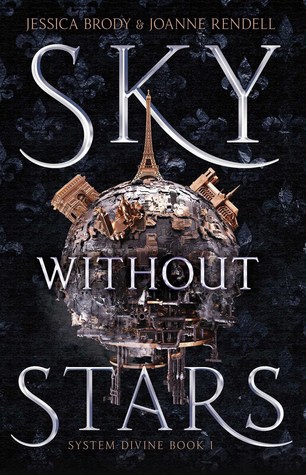 Sky Without Stars by Jessica Brody and Joanne Rendell
Mogsy’s Rating: 4 of 5 stars
Genre: Science Fiction, Young Adult
Series: Book 1 of System Divine
Publisher: Simon Pulse
Length: 592 pages
Author Information: Jessica Brody | Joanne Rendell
These days, more and more YA authors are turning to popular and beloved stories to create their own worlds or to put their own spin on familiar ideas. In fact, it’s become so ubiquitous that it’s no surprise that a significant portion of my YA shelf is made up of retellings. With fairy tales and classic lit being the most common sources of inspiration, I’m at the point where yet another Beauty and the Beast or Shakespearean retelling would hardly make me bat an eye, though every once in a while something will cross my path that still manages to spark curiosity and makes me sit up a bit straighter.
Sky Without Stars by Jessica Brody and Joanne Rendell was one of these books. When I first heard that it was modeled after Les Misérables, I was immediately intrigued. Leaving aside the fact it’s not every day you come across a Les Mis retelling, such an undertaking would also be incredibly ambitious and—as I would imagine—extremely difficult. But if the authors can pull it off? Well, then this could be a brilliant and awesome novel indeed.
The first installment of a sci-fi series called System Divine, named after the far-flung star system in which this story takes place, Sky Without Stars introduces readers to a futuristic society divided in a class system reminiscent of the three estates hierarchy used in pre-Revolutionary France. Back in the time when the First World fell, the planet of Laterre meant hope for all survivors of the Last Days. Hundreds of years later, however, it has become a place where the rulers and nobility of the First and Second Estates reign supreme, while the Third Estate—the poor common class—are left to starve in the streets.
We mainly follow three key protagonists who come from very different backgrounds, though their destinies will be forever entwined and changed by this story’s events. First, we have Chatine, a young thief whose only goal in life is to scrape together enough money to buy her way off Laterre and escape the cruel regime. Next, we have Marcellus, a promising young officer whose grandfather is also a powerful general of the Second Estate, or the class of enforcers who serve the planet’s rulers by keeping the masses of the Third Estate in line. And finally, we have Alouette, an acolyte of a secret order sworn to protect the written history of the planet, hidden in the last surviving library underground.
The three of them are brought together when, in desperate need of more funds, Chatine is forced to take on an assignment to spy on Marcellus, doing it under the guise of her male alter ego, Théo. Because his father was a notorious traitor imprisoned for his crimes years ago, Marcellus is believed by his grandfather to be ripe for recruitment by the resistance group Vangarde, prompting the need for his surveillance. Meanwhile, curious about life on the surface, Alouette sneaks out from her underground refuge for a quick peek, only to become embroiled in world of chaos and rebellion as news of a brazen attack against the First Estate ripples across the whole of Laterre.
For a YA novel, Sky Without Stars is a massive clunker of a book, as I would expect any retelling of a Victory Hugo classic would be. While I wouldn’t say each and every one of its nearly 600 pages were enthralling or hard to put down, for the most part I think the authors should be commended for doing a great job with the concept, especially given the restrictions they were working with and the fact that they injected a lot of their own ideas. This made for some truly fascinating world-building, the sci-fi setting with its advanced tech contrasting nicely with the historical events the story is based on—namely the events leading up to and surrounding the June Rebellion, the anti-monarchist uprising that inspired Les Misérables. Issues like the wealth disparity between classes and the overall poor living conditions of the Third Estate played well into the novel’s dystopian themes of injustice and revolution, and the world itself is strongly influenced by French culture and language.
Despite the length of the novel, I also managed to get through it rather quickly, thanks to the rock-solid writing and smooth pacing. I do think that most of the book’s readability can be attributed to the use of multiple POVs, which were some of most balanced I have ever seen in that I didn’t think any of the characters were over or underrepresented. When you’re dealing with a huge tome like this, and an author collaboration to boot, so many things could have gone wrong with regards to character development, yet I felt Chatine, Marcellus, and Alouette’s roles were all equally well written and explored. This resulted in surprisingly few lulls in the narrative, because I genuinely found them all interesting to read about.
Needless to say, fans of retellings will eat this one right up, but I also wouldn’t hesitate to recommend this novel to readers of epic fantasy or anyone who enjoys a rich and textured sense of vastness to go with their stories of layered adventure and intrigue. Considering the many ways this Les Misérables retelling could have strayed from its intended course or blown up in all our faces, Sky Without Stars actually turned out to a surprisingly well-rounded and entertaining read. I will be sure to pick up the next volume.


 The BiblioSanctum