Waiting on Wednesday 06/19/19
Posted on June 19, 2019 21 Comments

Waiting On Wednesday” is a weekly meme that first originated at Breaking the Spine but has since linked up with “Can’t Wait Wednesday” at Wishful Endings now that the original creator is unable to host it anymore. Either way, this fun feature is a chance to showcase the upcoming releases that we can’t wait to get our hands on!
Mogsy’s Pick
Unnatural Magic by C.M. Waggoner (November 5th 2019 by Ace)
This was another book that caught my attention earlier this month as I was browsing Goodreads, and the pretty cover sure doesn’t hurt, either! Mainly, I am just so excited that there are trolls in this one.
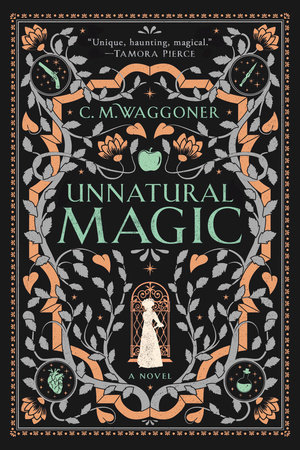 “Onna can write the parameters of a spell faster than any of the young men in her village school. But despite her incredible abilities, she’s denied a place at the nation’s premier arcane academy. Undaunted, she sails to the bustling city-state of Hexos, hoping to find a place at a university where they don’t think there’s anything untoward about providing a woman with a magical education. But as soon as Onna arrives, she’s drawn into the mysterious murder of four trolls.
Tsira is a troll who never quite fit into her clan, despite being the leader’s daughter. She decides to strike out on her own and look for work in a human city, but on her way she stumbles upon the body of a half-dead human soldier in the snow. As she slowly nurses him back to health, an unlikely bond forms between them, one that is tested when an unknown mage makes an attempt on Tsira’s life. Soon, unbeknownst to each other, Onna and Tsira both begin devoting their considerable talents to finding out who is targeting trolls, before their homeland is torn apart…”
Excerpt: The Record Keeper by Agnes Gomillion
Posted on June 18, 2019 7 Comments
The BiblioSanctum is pleased to be participating in the tour for The Record Keeper by Agnes Gomillion, a visceral and thrilling #OwnVoices dystopia based on the life of Frederick Douglass! Today we are sharing an exciting excerpt from the novel, available now from Titan Books wherever books are sold. Check it out, and be sure to also visit the other stops on the tour!

The Record Keeper by Agnes Gomillion
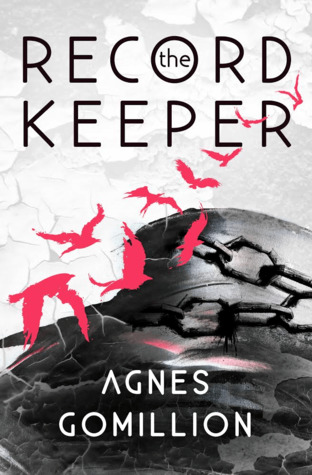 The Record Keeper is a visceral and thrilling near-future dystopia examining past and present race relations.
After World War III, Earth is in ruins, and the final armies have come to a reluctant truce. Everyone must obey the law–in every way–or risk shattering the fragile peace and endangering the entire human race.
Although Arika Cobane is a member of the race whose backbreaking labor provides food for the remnants of humanity, she is destined to become a member of the Kongo elite. After ten gruelling years of training, she is on the threshold of taking her place of privilege far from the fields. But everything changes when a new student arrives. Hosea Khan spews dangerous words of treason: What does peace matter if innocent lives are lost to maintain it?
As Arika is exposed to new beliefs, she realizes that the laws she has dedicated herself to uphold are the root of her people’s misery. If Arika is to liberate her people, she must unearth her fierce heart and discover the true meaning of freedom: finding the courage to live–or die–without fear.
Excerpt from The Record Keeper by Agnes Gomillion, published by Titan Books. Copyright © 2019 by Agnes Gomillion
In the fall before I met Hosea Khan, I accepted the Silver Medal Award in old-world history. In my winning essay, I outlined the events lading up to the Last War, the war that destroyed the old world, save a sliver of the east coast of old North America.
Every Record Keeper knows the paramount forces behind that catastrophe, as they validate our aversion to electro-technology. The conclusion I drew in my essay, however, was extraordinary. I argued that the fate of the old world could be traced to a single instant.
I had many unfortunate moments to choose from. For example, in a last-minute decision, the Director of the Omega Project, the final brainchild of the bankrupt SETI gropu, decided to cut costs by using the Allen Telescope Array in place of more sophisticated models proposed for the Project. It was an important decision since the Allen elements linked directly to the Internet and left the whole world vulnerable to attack.
If not that moment, I might have pinpointed the minute Steve Kalowitz, a manager on the Project, relinquished control of the monitor room to Henry Burns, an overworked intern. Leaving an intern unsupervised was against protocol, but that night was the last of the year, and Kalowitz was eager to celebrate with his wife and triplet toddlers—all of whom died eight days later when the first heavy bomb, dubbed “the Volcano Marker,” landed. I could have chosen the moment one of the radio telescopes transmitted a signal to the undermanned control room, a process that took less than a second. Or the moment Burns, in receipt of the signal, comprehended its significance.
The Allen telescopes were designed to scan the sky for artificial radio waves. A synthetic signal, such as the one transmitted that night, could have come from an extraterrestrial society, with superhuman transmitters. Or, more likely, the signal was a hoax—a human hacker fishing for dramatic entry into the worldwide network he intended to destroy.
Regardless, the telescopes collected the signal and fed it into imaging software. A moment later, the Project monitor displayed the software’s yield—a sheet of music! Staffs, a treble clef, time signature and waves of black notes.
In my essay, I wondered why Burns, presented with this chillingly sophisticated image, did not immediately send for Kalowitz, who would have called the Project Director, who would have alerted the American President, who might have saved the world. But I found no satisfying answer. Instead, Burns downloaded the signal and processed it into sound: a long overture of static, a series of beeps and drones, a moment of silence, a tune.
Listening, Burns sighed. By no coincidence, we think, the tune was one his grandmother Burns had sung to him in the crib. Her sweet face came to his eyes that night, and her breath to his nose. The chorus crested, and his heart melted—in an instant.
And I shall hear, though soft you tread upon me
And all my grave will warmer, sweeter be
For you will bend, and tell me that you love me
And I shall sleep in peace until you come to me.
Lulled by the familiar ballad, Mr Burns relaxed his ordinarily cautious nature. He emailed the song to his mother, Patricia, who sent it to her brother, Jonah, who forwarded it to his entire address catalog.
A recipient of Jonah’s email had a premonition of danger and marked the attachment as potentially hazardous spam—too late. The virus had learned to propagate itself. It infiltrated every computer that came within range of an Internet signal, even momentarily. At 98.9 percent saturation, the virus began to feed. Confusion, blackout, global meltdown. Whoever launched the Volcano Maker, United Korea we think, triggered the Last War—the end of an age. The United States responded, along with the Pax-Putinia, violating the Upper-East Treaty. When that treaty fell, all the old allegiances and grudges resurfaced in total war.
On account of the blackout, aerial navigation was imprecise. Bombs exploded hundreds of miles off target, shattering alliances and bolstering animosity. As the lines between nations dissolved, mad men took over each of the seven continents, and bombing continued, destabilizing the crust of the Earth. The ten-year Continent Conflict ended when a parasitic organism rose up, we think, from the magma layer and killed millions before it was contained. Crashing seas of molten lava, unpredictable quaking, and boiling geysers that sprayed strange bacteria and disease left most of the world uninhabitable.
Hungry herds of refugees sought shelter, strength and new world order. Eventually they found it, on a stable island that was old North America. They organized into tribes and managed a few years of peace before fighting broke out again, a six-year race war. When the three remaining armies—the Dark Kongos, the Brown Clayskins and the Whites, called English—finally agreed to end it, they met in the north country, near Niagara, and hashed out a compromise.
 ABOUT THE AUTHOR
AGNES GOMILLION is an #OwnVoices writer and speaker based in Atlanta, Georgia, where she lives with her husband and son. Homegrown in the Sunshine State, Agnes holds a degree in English literature with a focus on African-American literature from the University of Florida and a Juris Doctorate and Legal Master degree from the University of Florida’s Levin College of Law. She is a voracious reader of the African-American literary canon and a dedicated advocate for marginalised people everywhere. Her debut novel, The Record
Keeper, is a literary addition to the afro-futuristic science-fiction genre.
Book Review: The Poison Thread by Laura Purcell
Posted on June 17, 2019 25 Comments
I received a review copy from the publisher. This does not affect the contents of my review and all opinions are my own.
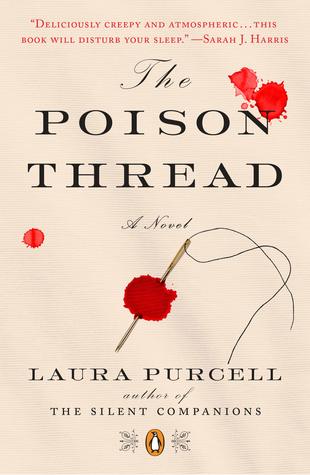 The Poison Thread by Laura Purcell
Mogsy’s Rating: 5 of 5 stars
Genre: Horror, Historical Fiction
Series: Stand Alone
Publisher: Penguin Books (June 18, 2019)
Length: 368 pages
Author Information: Website | Twitter
One of my favorite reads last year was The Silent Companions by Laura Purcell, a Gothic historical chiller whose innovative plot with its creepily delicious vibes and stunning reveals left me reeling for days. When I found out that her new book The Poison Thread (titled The Corset in the UK), you can bet I was excited and couldn’t wait to read it.
And holy crap, mind blown! What with the author’s previous novel setting such a high bar, I knew there was a good chance my expectations wouldn’t be met, but The Poison Thread ended up blasting them away and delivered a whole lot more besides. I loved this book, and in many ways, I thought it was even better than The Silent Companions. Told in a similar style and format which alternates between two central viewpoints, the story is set in the Victorian era and follows Dorothea Truelove, a wealthy young heiress who visits women in prisons as part of her charity work, as well as Ruth Butterham, a sixteen-year-old inmate awaiting trial for murder.
As you can imagine, the two women couldn’t be any more different. Raised in high society, Dorothea never wanted for anything growing up, but with her twenty-fifth birthday fast approaching, she is growing increasingly frustrated with her father’s demands for her to marry. For one thing, she is already in love with a handsome and well-regarded police constable, who nevertheless would be deemed socially unacceptable and beneath her station in her father’s eyes. Furthermore, she also doubts that any of the suitors picked for her would approve of her interests. Having long held a fascination for phrenology, Dorothea has been independently studying the relationship between head shape and morality, using her visits to the Oakgate Prison for women as research trips to gather measurement data and personal stories from the inmates. It is there that she meets Ruth, a young maid accused of callously murdering her mistress by deliberate and slow degrees. Through the interviews conducted by Dorothea, readers get to learn more about Ruth as she recounts her life during the years leading up to her arrest. Unlike Dorothea, Ruth grew up in poverty as the daughter of an alcoholic artist and an overworked seamstress. From her mother she learned the art of sewing, and as it turned out, she was extraordinarily gifted at it.
However, Ruth is convinced that her talent goes beyond mere skill, believing that she has the power to channel her thoughts and emotions into each and every stitch. Infused with tragedy, anger and pain, the garments she makes are cursed items that bring bad things and death to those who wear them, she tells Dorothea, who is baffled by the girl’s wild claims. Does Ruth truly believe in this supernatural nonsense, or is it just a cruel trick from a bona fide psychopath who wants to mess with Dorothea’s mind? Surely the things Ruth describes can’t be real?
This element of uncertainty was what made The Poison Thread so captivating, and I was completely bewitched by this book which kept me reading long into the night. The story frightened and disturbed me, though not exactly in the traditional sense, and that was just fine with me. After all, I’ve always found the best Gothic horror to be those that seek to create unease through atmosphere, generating an oppressive aura of mystery and intrigue around uncanny situations that can’t be explained. Of course, Laura Purcell did just that, and I recognized many of the same methods used in The Silent Companions which made that book such an eerie, compelling read. But in additional the feelings of dread and uncertainty surrounding Ruth’s story, the writing also evoked the more visceral and raw emotions related to earthly horrors like poverty, disease, class inequality, and human cruelty. Some of these sections were difficult to read, but they helped define Ruth while also presenting us with a lot more questions about her motivations.
Needless to say, this is an incredibly layered novel. Much like it was with The Silent Companions, there’s a lot hidden beneath the surface. One by one, these threads are gradually teased out as events unfold in both characters’ lives. As a result, this story is a bit of a slow burner, but because there’s so much to pay attention to, things still feel like they move along at a good clip. Certainly, the characters help a lot. You’ll no doubt go through a roller coaster of emotions when it comes to both Dorothea and Ruth, changing your mind about them all the time as you find out more about their lives and how they’ve grown. And that, I think, is the beauty of Laura Purcell’s writing; she will constantly keep you guessing, throwing out new information and clues at every turn. I for one can’t say I expected that ending coming.
In my opinion, The Poison Thread was damn near perfect. Fans of Gothic horror, do yourselves a favor and check out the work of Laura Purcell, who has now solidified her status as one of my favorite writers in the genre. This book was simply astonishing. Her next one can’t come soon enough.


Book Review: Pariah by W. Michael Gear
Posted on June 16, 2019 20 Comments
I received a review copy from the publisher. This does not affect the contents of my review and all opinions are my own.
Mogsy’s Rating: 4 of 5 stars
Genre: Science Fiction
Series: Book 3 of Donovan Trilogy
Publisher: DAW (May 14, 2019)
Length: 496 pages
Author Information: Website
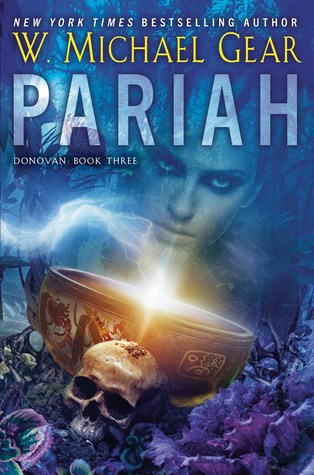
What a fun return to Donovan in this third and final volume of W. Michael Gear’s sci-fi adventure series about the trials and tribulations of settling an untamed new world! That the planet was named for the first person to die on its surface just moments after stepping off the original colonization ship seems apt somehow, for Donovan is home to innumerous species of native flora and fauna that can kill you in more ways than you can imagine. As a result, those who managed to survive quickly developed a healthy respect for the local wildlife and learned not to take anything in life for granted, for you never know what can happen on Donovan. Over time, this also meant that a whole new system of traditions and beliefs have evolved, one that is very different from those in the Solar System, so needless to say, whenever fresh meat arrives on Donovan it’s always interesting to watch.
In the first book, Outpost, we saw what happened with the arrival of the Turalon, the first ship to make it into Donovan’s orbit in more than six years. These newcomers either stayed and adapted, or they chose to brave the risky return trip back home to Earth. The second book Abandoned focused on how those who had decided to stay on Donovan managed to cope as they continued to carve out their own path in this new society and assimilate into the local population, while those who didn’t or couldn’t simply perished. And now in Pariah, a second group has arrived on Donovan, though this time, due to the strange provenance of the new ship, things are a bit more complicated and highly unusual.
In this last book, readers finally get answers to the questions surrounding the missing ships that never made it to Donovan, as well as details about the creepy ghost ship that suddenly appeared in the planet’s orbit carrying nothing but a pile of the original crew’s bones. Part of the explanation lies in the arrival of the Vixen, a Corporation ship that disappeared fifty years ago but has now reappeared at Donovan, its passengers having no idea that so much time has passed. To them, they made the years-long trip to the planet in the blink of an eye. Now they find themselves out of their own time, trapped on a wild and undeveloped alien planet, and surrounded by a population of colonists using technology considered primitive even to those who are half a century out-of-date. Didn’t I tell you this was going to be fun?
Again, as with the previous books, the character list was what made Pariah so irresistible and compelling. Two main POVs were added from the Vixen, one being Dortmund Weisbacher, a scientist whose belief in his own theories of conservation practically borders on zealotry, but of course, he also has no idea that all his methods have been discredited and proven failures in years he’s been gone. Not that knowing would have changed his mind anyway. Donovan was supposed to be his planet to study and conserve, and arriving fifty years too late to find it already teeming with colonists and industry is enough to send him into a raging fit. And then there’s Tamarland Benteen, also known as the scorpion—a nickname he earned while serving as the consort and personal assassin for one of the most powerful politicians in the Solar System. And being out of his own time and on a strange planet bothers him not one bit. To Benteen, all people are the same—they can be manipulated, controlled, and threatened…all you need to know is what buttons to push. Whether it’s their safety, livelihoods, or their families, everyone has a weakness. He may have left the Solar System an exile, but Benteen is determined to be in power again, and he’s not above imprisoning and killing the local Donovanians to do it. Hard to believe there could be a slimier, more dastardly character than Dan Wirth, but hey, there you go.
And speaking of Dan Wirth, a whole bunch of familiar characters also make their return. Wirth himself has established himself as the local kingpin, running the lucrative casino and gaining more money and power by keeping everyone in his pocket. My favorite character, Corporation supervisor Kalico Aguila, has also become a beloved figure on Donovan, a far cry from the early days when she first marched into town thinking she could bend the colonists to her will. Then of course there are the locals, including Talina Perez, who is essentially the most vital figure in the entire series. However, in Pariah, Tal is a bit of a mess. Her personal war with the quetzals continues to rage on in the field as well as inside her own body, as her very DNA is threatened by alien genetic code trying to take over.
In the end, I just loved how all these character threads came together to fall under a unifying theme, which also lead to an all-important lesson—that those who want to mess with Donovan do so at their own peril. From Dortmund’s attempts to “save” Donovan and Benteen’s desire to take over Port Authority, we got to see in a most satisfying way how the planet and its people will always fight back. Those like Aguila have already been cowed and humbled. And when it comes to Talina’s problems, the book keeps us wondering just who will eventually prevail in this battle of wills, for not even those who have embraced Donovan are spared.
Perhaps my only criticism of this novel is that it felt somewhat scattered and disjointed, weakening the overall story. For instance, I felt the plot spent way too long on Talina’s internal struggle, represented by her time in some strange Mayan dreamscape. I confess that I skimmed most of these chapters. Pariah was also the first time I didn’t feel as connected to Tal’s sections, preferring to read about the other characters instead. As a result, the pacing suffered, since some parts dragged while others felt rushed.
That said, Pariah was a rewarding end to a fantastic trilogy, even if I felt this was the weakest of the three books. Simply put, too many different things going on probably hurt the overall story’s pacing and cohesiveness, though ultimately we got some stunning answers into the mystery surrounding the missing ships as well as some fascinating details into the science of Donovan. I still would not hesitate to recommend this trilogy to anyone who loves sci-fi action and adventure, especially if you enjoy stories related to space travel and colonization. I’m very excited at the possibility of more books set in this universe.

More on The BiblioSanctum:
Review of Outpost (Book 1)
Review of Abandoned (Book 2)
Book Review: Limited Wish by Mark Lawrence
Posted on June 15, 2019 25 Comments
I received a review copy from the publisher. This does not affect the contents of my review and all opinions are my own.
Mogsy’s Rating: 4 of 5 stars
Genre: Science Fiction
Series: Book 2 of Impossible Times
Publisher: 47North (May 28, 2019)
Length: 222 pages
Author Information: Website | Twitter
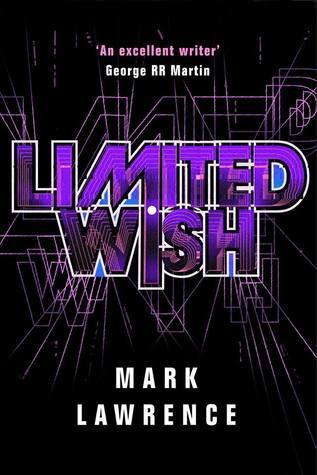
I’m loving the quick release schedule for these books, because it meant I was able to jump right into Limited Wish almost immediately after finishing One Word Kill and I was definitely looking forward to continuing the story of Nick Hayes and his friends. Following the events of book one, our protagonist has beaten his diagnosis of cancer and is now enrolled in the prestigious Mathematics program at Cambridge, following in his brilliant late father’s footsteps. It is 1986 and Nick is looking forward to beginning a new chapter in his life as a university student, but still he maintains close ties to his mother and his group of D&D friends at home. Of course, things haven’t exactly been the same between them anymore, not since their brush with time travel, and considering what they’ve all been through, that’s not too surprising.
As it turns out though, Nick’s adventures are far from over. At school, he meets a fellow student who seems strangely familiar, though he’s pretty sure he’s never seen her before. Comprehension dawns as he realizes that his past shenanigans must have caused several disruptions through time, and now life as he knows it is in danger of unraveling unless he can get the gang together again to fix the very fabric of reality—with the help of some unexpected and impossible allies to boot.
Oh, reviewing a time travel book is always so frustrating, because how do you explain the best parts without spoiling things? Multiple possibilities, mind-bending paradoxes, uncanny precognition, communications from the future…this book has it all. I think it’s safe to say if you enjoyed One Word Kill, then Limited Wish will appeal to you for all the same reasons, but with the stakes even higher this time, the difference is that you will likely get hooked much faster and much harder. No small amount of credit is also due to Mark Lawrence for this, for as always, he writes in a style that is easy for readers to grasp and to grow addicted to, so you just can’t help but keep turning the pages. Even the driest and most complex of theories seemed straightforward and superbly, unendingly fascinating in his hands, and as a result, I finished Limited Wish in about a day. It’s also a fast-paced and rather short novel, so that helped as well.
Again, the characters stole the show in this one. Nick Hayes as a protagonist is likeable and sympathetic, to the point where you almost have to resent the author a little for putting this sweet kid through the wringer. Though if you’ve read Mark Lawrence, chances are you already know his characters are no strangers to hardship, given his penchant to throw seemingly impossible obstacles before them. It’s what makes reading his books so worth it. Limited Wish hooked me in because I already felt close to Nick, and it was both joyous and heartbreaking to see him be presented with another challenge. Like One Word Kill, this sequel strikes a fine balance between the entertaining action and the emotional, poignant gut-punch moments. It makes you really feel for Nick, simultaneously making him a character you want to cheer for, as well as to wrap around in protective arms in order to shield him from all the pain and uncertainties of life. At the same time, the story is also full of these wild and incredible scenarios that make you wonder what you would do if you were in the protagonist’s shoes, coming face-to-face with people from his past and present. That is to say, despite its moodier moments, this is a really fun read that contains plenty of lightness to balance out some of the life-altering confusion and angst.
So what else is there left to say, besides I can’t wait to see what else this series has in store for us! I’ve been a fan of Mark Lawrence for a long time, but the last couple of years has seen his writing and storytelling evolve to a whole new level, with the proof of that happening right before us in the Impossible Times trilogy. Bring on the third book, I say, because I’m loving it. With Dispel Illusion due out before the end of the year, I’m just glad the wait won’t be too long!
More on The BiblioSanctum:
Review of One Word Kill (Book 1)
Friday Face-Off: Something Sweet
Posted on June 14, 2019 30 Comments
Welcome to The Friday Face-Off, a weekly meme created by Books by Proxy! Each Friday, we will pit cover against cover while also taking the opportunity to showcase gorgeous artwork and feature some of our favorite book covers. If you want to join the fun, simply choose a book each Friday that fits that week’s predetermined theme, post and compare two or more different covers available for that book, then name your favorite. A list of future weeks’ themes are available at Lynn’s Book Blog.
This week’s theme is:
“Coraline opened the box of chocolates. The dog looked at them longingly.”
~ a cover featuring SOMETHING SWEET
Mogsy’s Pick:
Chocolat by Joanne Harris
Forgive me for going with the obvious choice this week, but I was completely at a loss as to what other book I could feature for the theme! Also, because this was one of the first books I ever read by the author, I just thought it was appropriate, as I have become such a big fan of hers since.
There are a ton of editions and covers available for this book, so I only selected the best and most notable (and sweetest!) to feature. Let’s take a look at some of them now:
From left to right:
Black Swan (2000) – Penguin Books (2000) – Transworld Digital (2010)

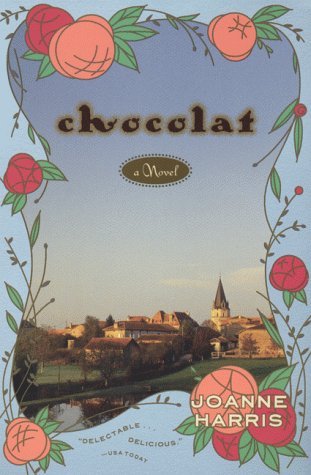
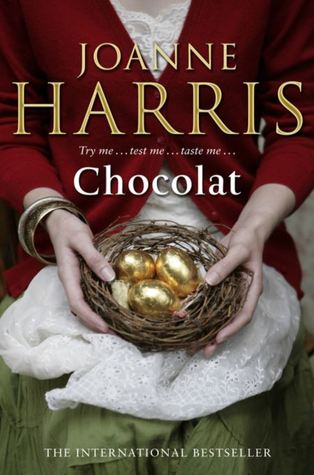
Penguin Movie Tie-In (2000) – Penguin Non-Classics (2000) – Ukrainian Edition (2015) – Czech Edition (2001)


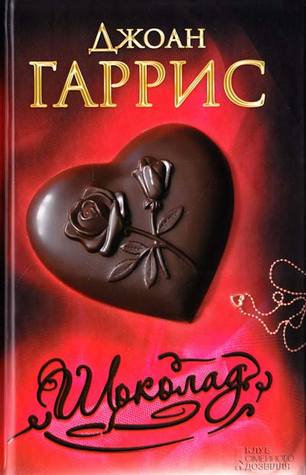

Romanian Edition (2007) – Lithuanian Edition (2004) – Lithuanian Edition (2018)
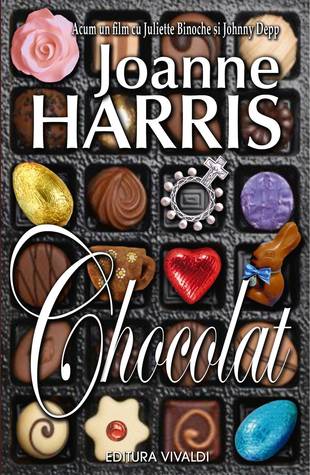


– Dutch Edition (2007) – Dutch Edition (2012) – Croatian Edition (2002) – Polish Edition (2006)


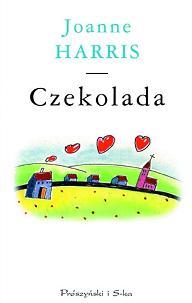
Russian Edition (2007) – Russian Edition (2009) – Swedish Edition (2012)

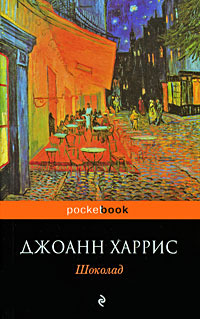

– Italian Edition (2005) – Italian Edition (2015) – French Edition (2000) – French Edition(2014)


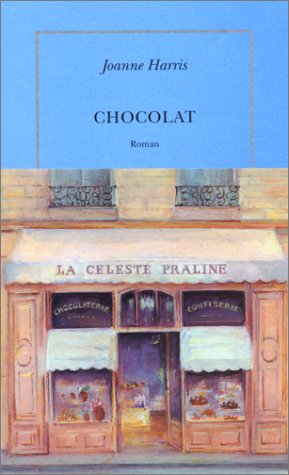

Portuguese Edition (1999) – Portuguese Edition (2007) – Slovak Edition (2017)



Winner:
It was so hard for me to pick this week, with the CHOCOLATE OVERLOAD. A few did jump out at me though, with the Russian 2007 edition being one of the memorable standouts, but in truth I do have several that I love.
But what do you think? Which one is your favorite?
Guest post: “Goodness in a Nietzschean World” by M.C. Planck
Posted on June 13, 2019 21 Comments
 Today, we’re pleased to welcome author M.C. Planck to the BiblioSanctum to celebrate the release of Black Harvest, his newest novel and the fifth installment in the World of Prime sequence! Hard to believe how quickly time has flown and how much this series has expanded. The still recall with excitement the first book Sword of the Bright Lady with its world reminiscent of a video game, complete with fearsome monsters to be defeated and powerful rewards to be gained. It reminds me I really need to get back into this series full of magic, adventure, combat, and strategy! In the meantime though, I hope you enjoy this guest post by the author as he shares with us the influences behind his RPG and gaming-inspired world. Released June 11, 2019 by Pyr Books, Black Harvest is now available at bookstores everywhere, be sure to check it out!
GOODNESS IN A NIETZSCHEAN WORLD
by M.C. Planck
Many people are aware now of the literary influence of Jack Vance on Dungeons and Dragons, and thus by extension on the entire RPG world that has been created by, around, or in counterpoint to that game. Vance created spells that have to be memorized, the concept of levels for both magic and sword-fighting, and a ruined world full of forgotten marvels and outlandish monsters.
I think it is less obvious how much Nietzsche contributed to the genre with the concept of “that which does not destroy us makes us stronger.” In the Nietzschean view, as in all level-based RPGs, struggle and victory result in increased power, which enables even greater struggles and victories.
This is not how it works in Real Life. Professional boxers do not become better boxers by winning prize fights; instead, they routinely practice against opponents who are careful not to hurt them. They time their work-outs to taper off just before a big match so they will be fresh for the fight, and they require lengthy recovery time afterwards before they are ready for the next one. Victory brings recognition and financial rewards, which may then fuel future training, but victory itself is of no value to the fighter.
Or, as is often said of chess, you only learn from games you lose.


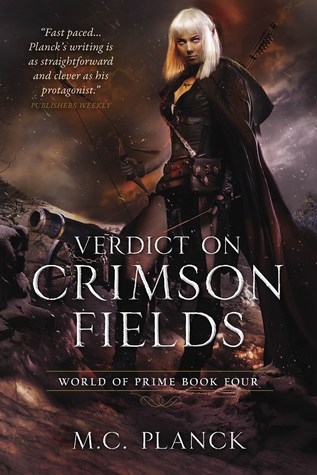
But that doesn’t make for a very fun role to play, and it doesn’t drive the apotheosis of the uberman which we call “levelling.” In D&D and its variants, one gains power not through practice but through victory; it is a running joke that an academic sitting in his tower studying ancient tomes masters the arcane arts less successfully than an adventurer blasting goblins to bits on a daily basis.
Many fantasy novels tend to simply ignore this rift between the games we play and the books we read. The peculiarities of level and progressive victory are written of as rounding errors in the mechanics, blemishes that show how difficult it is to simulate a world in a set of game rules.
For my book Sword of the Bright Lady, I wanted to examine those concepts directly. I wanted to see what the world would look like if the rounding errors were really real. I wanted to know what it would be like to live in the world we play in, rather than attempting to play in the world we live in.
In the World of Prime, you really do get better through victory: levels, and the supernatural powers they bring, are gained by consuming the souls of the slain. Training has its purpose and mortal warriors still use it, but even the greatest Olympian is easily outclassed by a serial killer with a body count in the dozens. By making souls a tangible commodity that can be harvested, bought, and sold, I managed to organically derive every trope of the genre: kings really are all fantastic swordsmen, wizards will make you magic swords for a price, side-quests are a perfectly reasonable way to prepare for saving the world, and murder-hobo is a legitimate career choice.
Once I created this world, I discovered an even more interesting question: how does one do good in a world where the power to do good comes from eating people’s brains? What is the difference between a saint and a sinner, if both of them have gained their position through the deaths of innocents? Is the ability to heal the sick and raise the dead worth ten thousand corpses?
How can you gain powers that make you more than human, at such a terrible price, and yet remain true to yourself and your morality? That is the question I set out to answer in Sword of the Bright Lady. My protagonist, Christopher Sinclair, is a modern person because I wanted a morality and a viewpoint we could relate to. He is an engineer because I wanted him to be a problem-solver. He becomes a priest of Good because I wanted to see how he did it. Along the way there are some great sword-fights and cool spells, which hopefully keep the story interesting, but also give me the opportunity to poke fun at any number of silly situations that appear in our games and yet, in the World of Prime, turn out to be perfectly reasonable responses to the inherent absurdity and cruelty of an genuinely Nietzschean world.
 ABOUT THE AUTHOR
M.C. Planck is the author of the World of Prime fantasy series of novels and the science fiction novel The Kassa Kambit. After a nearly-transient childhood, Mike hitchhiked across the country and ran out of money in Arizona. So he stayed there for thirty years, raising dogs, getting a degree in philosophy and founding a scientific instrument company. Having read virtually everything by the old masters of SF&F, he decided he was ready to write. A decade later, he was actually ready and relieved to find that writing novels is easier than writing software, as a single punctuation error won’t cause your audience to explode and die. When he ran out of dogs, he moved to Australia to raise his daughter with kangaroos.
Waiting on Wednesday 06/12/19
Posted on June 12, 2019 19 Comments
Waiting On Wednesday” is a weekly meme that first originated at Breaking the Spine but has since linked up with “Can’t Wait Wednesday” at Wishful Endings now that the original creator is unable to host it anymore. Either way, this fun feature is a chance to showcase the upcoming releases that we can’t wait to get our hands on!
Mogsy’s Pick
The Glass Magician by Caroline Stevermer (April 7th 2020 by Tor Books)
Okay, it was the comparison to The Golem and the Jinni that kinda did it. Though the gorgeous cover that I spied on Goodreads earlier this week didn’t hurt either. Regardless, if this one can live up to its blurb, it’ll be a book to watch.
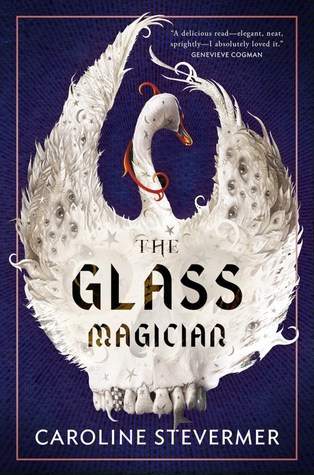 “Reminiscent of The Golem and the Jinni, The Glass Magician by Caroline Stevermer is a magical and romantic tale set in New York’s Gilded Age.
New York 1905–The Vanderbilts. The Astors. The Morgans. They are the cream of society–and they own the nation on the cusp of a new century.
Thalia Cutler doesn’t have any of those family connections. What she does know is stage magic and she dazzles audiences with an act that takes your breath away.
That is, until one night when a trick goes horribly awry. In surviving she discovers that she can shapeshift, and has the potential to take her place among the rich and powerful.
But first, she’ll have to learn to control that power…before the real monsters descend to feast.”
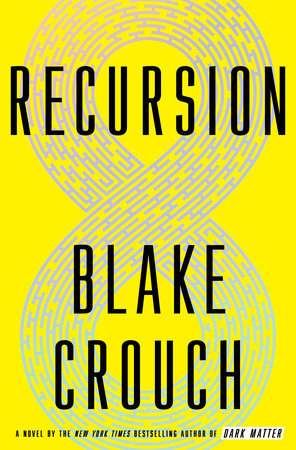
Book Review: Recursion by Blake Crouch
Posted on June 11, 2019 33 Comments
I received a review copy from the publisher. This does not affect the contents of my review and all opinions are my own.
Mogsy’s Rating: 5 of 5 stars
Genre: Science Fiction
Series: Stand Alone
Publisher: Crown (June 11, 2019)
Length: 336 pages
Author Information: Website | Twitter
If the best thrillers make you feel breathless, then Recursion by Blake Crouch is definitely one you don’t want to miss! I also laughed, fretted, and raged a little. Heck, I’m not ashamed to admit I even cried some. I swear, if all books were this exciting and addictive, there’d be no such thing as reading slumps. But then I guess we’d also be in a lot of trouble, because nothing would ever get done and no one would ever leave their house again.
So what is this book about? Well, as with all of Crouch’s books, giving a quick rundown of the premise is going to be tough. For one thing, you don’t want to run even the tiniest, eensy-weensy risk of revealing any spoilers, because for best results, you really should go in blind. Second, this author is somewhat known for his wild premises and mind-bending, difficult-to-explain sci-fi tech and theory (if you’ve read Dark Matter, then you know what I’m talking about) and there were times where trying to wrap my head around this book made me think my brain was going to short circuit. Still, here’s the gist: Recursion opens following New York City police officer Barry Sutton as he responds to reports of a suicide attempt by a woman about to jump off the ledge of a high-rise building. Following the event, the shaken cop is driven to learn more about the illness termed False Memory Syndrome—an alarming epidemic that is starting to sweep across the nation, afflicting its victims with vivid memories of a life they never lived. Ten percent of those with FMS end up killing themselves, driven mad by the conflicting realities in their mind.
At the same time, we’re also introduced our second POV, a brilliant neuroscientist named Helena Smith. After her mother was diagnosed with Alzheimer’s, Helena became obsessed with developing her new technology which would help human beings preserve the most precious memories of their lives. However, the future of her research was soon placed in jeopardy, with both precious time and money running out, so when a mysterious benefactor suddenly approaches her with an offer to fully fund her work and provide her access to all the necessary resources and facilities, Helena decides to accept. Very quickly, her team starts making incredible breakthroughs, ultimately creating a device which would essentially allow anyone to relive their most significant, life-changing moments. But during testing, they also discover an unintended side effect, one that would have devastating consequences on the world if the truth of the technology was ever revealed and misused.
Blending theories of time travel, alternate realities, and psychological phenomena, what Recursion basically presents to us is a completely unique and refreshingly new take on some familiar ideas. Like most stories to do with memory manipulation though, it can also be a real head-trip. That said, to an extent I do think that the key to approaching and enjoying these kinds of stories is to not think about them too hard, and just go with the flow. Crouch isn’t going to delve too deeply into the science, so it wouldn’t really do to get into the whys and hows. Personally speaking, once I started thinking of the premise as more of a thought experiment, that was when I was able to let go and allow myself to be carried away by the novel completely.
The momentum of Recursion was also relentlessly fast-paced and engrossing, though for those who have read Dark Matter, there was a similar brief lull in the middle part of narrative where the characters sat in a holding pattern while trying to figure stuff out. And like a lot of books dealing with time, memory, etc., you are going to have your fair share of plot holes and a few explanations that don’t hold water. Hence, I’m not going to argue that this novel was perfect, because it was not—but after a lot of thought, I did decide to bump up my rating to a full five stars. I did this because of the deeper meanings I found behind the story. Yes, this is a sci-fi thriller we’re talking about, but leaving aside the action and suspense I expected to find, there was also a emotional depth that surprised me—messages like, don’t take the good things in your life for granted, or always treasure your loved ones and hold them and their memories dear. I certainly did not anticipate to find so many of these tender and touching moments in the book, many of which almost brought me to tears, and the ending did in fact make me cry a little.
As I always say, sometimes it takes more than just a great premise, great characters, and a great story to make a five-star book. For me, there almost always has to be an emotional connection. More than anything else, I think that was why I enjoyed Recursion so much, because not only did the novel deliver a fast-paced and mind-bendingly suspenseful thriller full of twists and turns, there were also parts of it that deeply moved me—and ultimately, it’s these moments that elevate this book above others in the genre and why it will also remain with me for a long time.
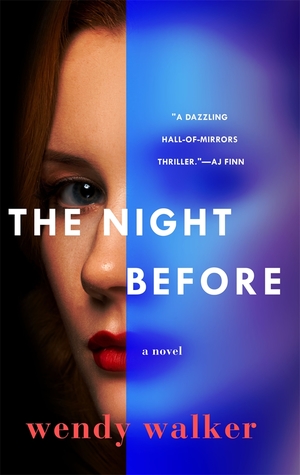
Audiobook Review: The Night Before by Wendy Walker
Posted on June 10, 2019 19 Comments
 The Night Before by Wendy Walker
Mogsy’s Rating (Overall): 3.5 of 5 stars
Genre: Thriller, Suspense
Series: Stand Alone
Publisher: Macmillan Audio (May 14, 3019)
Length: 8 hrs and 43 mins
Author Information: Website | Twitter
Narrators: Gabra Zackman, Saskia Maarleveld
Okay, so if you or anyone you know is nervous about online dating, then The Night Before is definitely NOT the book to read! Pretty much every nightmare scenario involving lies, deceit, and misrepresentation you can think of is covered in this suspenseful thriller that will leave you guessing at every turn. At the center of this story is Laura Lochner, who has not had much luck in her life when it comes to romance. She has a tendency to fall in love too hard and too fast, and usually for the wrong type of guy. When these relationships inevitably end, they also always seem to send Laura into a tailspin, so that not even her closest friends and family can usually predict her next moves.
Then there’s Rosie, Laura’s older sister, who is almost the complete opposite. Rosie never really had to worry about dating and love, for she ended up marrying Joe, one of her best friends since childhood. They are in as much love today as they were when they started dating in their teens, and now they are raising a young son together. Rosie, however, is worried about Laura, having spent much of her life looking after her sister and knowing how volatile the younger woman can get whenever her relationships implode. Recently, Laura has moved in with Rosie and Joe following her latest breakup when the man she was seeing suddenly dumped her over text message. After some time, Laura feels ready to date again, turning to an online dating site, much to the disapproval of her sister who doesn’t really trust blind dates. Still, Rosie wants to be supportive, and watches with trepidation and hope as Laura drives off to meet the man she connected with online.
But when Laura does not come home that night, nor the following morning, Rosie’s worst fears are confirmed. Laura is missing. None of the calls placed to her phone are connecting, the car she left in was found empty with two parking tickets in the window. Desperate to find her sister, Rosie enlists the help of her husband and their friends to try and track down Laura’s last known whereabouts and movements. Everyone thinks Rosie is just terrified for her sister, but the reality is actually more complicated than that. No one else knows Laura the way she does. No one else knows exactly what Laura is capable of.
Told in chapters alternating between the two women’s POVs, the novel gradually unravels the truth of what happened the night Laura went on her date. Rosie’s perspective is in the present, chronicling all the steps she and her friends take in their efforts to find her missing sister. The panic and desperation in these sections are ever present, relentlessly driving the narrative forward. In contrast, Laura’s perspective generates interest using slow reveals, with the bulk of it taking place the night of her date with “Jonathan Fields”, the charming man she met through the dating site. Working in tandem, the two POVs weave a fascinating narrative that ratchets up the tension and suspense, leaving you wondering just what the hell is going on. In addition, the story also includes brief interview snippets of Laura’s sessions with her therapist from four months ago, in which they discussed her relationship problems and why she feels she is “unlovable”. Of course, it is not immediately clear why these sections were included in the book, until close to the end when all the stunning answers are revealed.
The author Wendy Walker also plays some tricks of her own, ensuring that our characters’ knowledge of the night in question remains separate. We only know what Laura knows while we are with her on her date, and likewise the next day, Rosie’s investigation is undertaken with what limited information she has access to. Even knowing this, I have to admit I made the mistake of making many assumptions and fell prey several times for the story’s clever misdirection, even when I was suspicious and on full alert, which I think is a testament to Walker’s storytelling skills.
That said, I don’t think The Night Before was anything too extraordinary when it comes to the plot’s structure or delivery. I enjoyed the online dating angle and the surprises at the end, but as thrillers go, it is pretty standard for the genre. Still, that’s not a negative by any means. Overall it was a fun read, and its quick pacing and sharp twists had me hooked. I would not hesitate to recommend it if you’re looking for a suspenseful and engaging psychological thriller.



 The BiblioSanctum