Mogsy’s Bookshelf Roundup: Stacking the Shelves & Recent Reads
Posted on September 7, 2019 29 Comments
Bookshelf Roundup is a feature I do every other weekend which fills the role of several blog memes, like Stacking the Shelves where I talk about the new books I’ve added to my library or received for review, as well as It’s Monday! What Are You Reading? where I round up what I’ve read since the last update and what I’m planning to read soon. Mostly it also serves as a recap post, so sometimes I’ll throw in stuff like reading challenge progress reports, book lists, and other random bookish thoughts or announcements.

Received for Review
My thanks to the publishers and authors for the following review copies received, and be sure to click the links to their Goodreads pages for more details and full descriptions!

I’d like to kick things off with a big thanks to Orbit for following finished copy haul: An Orc on the Wild Side by Tom Holt looks to be a funny one, but humor being so subjective, I’ll be keeping my hype in check. I’m also very excited about A Little Hatred by Joe Abercrombie and am looking forward to starting it later this week. And Grave Importance by Vivian Shaw is the third book of the Dr. Greta Helsing series which I’m enjoying a lot so far.
Also courtesy of Ace Books, I received a surprise ARC of Novice Dragoneer by E.E. Knight, a YA/coming-of-age fantasy about a girl who enters into a military order of dragonriders. Thanks also to Tor Books for a finished copy of Inch by Inch by Morgan Llywelyn, which reminds me I still have to read the first book Drop by Drop! And with thanks to Del Rey for sending me a finished copy of The Nobody People by Bob Proehl, which I reviewed earlier this week.

My thanks also to Subterranean Press for spoiling me these last two weeks with the following ARCs: Knife Children by Lois McMaster Bujold is one I’m thrilled to discover, because it is part of the Sharing Knife series which I loved when I read it years ago. The Best of Elizabeth Bear is an anthology of 27 of the author’s stories and novellas and looks to be a great collection for any fan. And finally, I really like the sound of King of the Dogs, Queen of the Cats James by Patrick Kelly. It’s got a circus and animals, what’s not to love?
Also thank you to Entangled: Teen for sending me Mirror Bound by Monica Sanz, the second book of The Witchling Academy. I believe I have the first book, so I look forward to catching up. From the kind folks at 47North and Wunderkind PR, I also received an early copy of The Vine Witch by Luanne G. Smith. I wasn’t all that sure about this one, but the more I’m learning about it, the more interested I am to read it. And from Tachyon Publications comes this quirky little title called Peter Watts Is An Angry Sentient Tumor, a collection of “Revenge Fantasies and Essays” by the author. I’m not sure this one is for me, but I did have a bit of a chuckle reading the publisher description.


In the digital haul, I was approved for Deadly Little Scandals by Jennifer Lynn Barnes, the sequel to Little White Lies. Thank you to Freeform via NetGalley! Also from NetGalley, I grabbed A Longer Fall by Charlaine Harris, the sequel to An Easy Death, with thanks to Saga Press. I just featured this book on a Waiting on Wednesday a couple weeks ago, so needless to say, I’m pumped to read this. And courtesy of Harper Voyager, I also received an invite widget to read Escaping Exodus by Nicky Drayden. I’ve read only one other book by the author, which didn’t really work for me, but I definitely wanted to give her work another shot.
And last but not least, in the audio pile, huge thanks to Macmillan Audio for listening copies of Darkdawn by Jay Kristoff and The Girl the Sea Gave Back by Adrienne Young! I’m so excited to listen to both of these!
Reviews
Here is a quick summary of my reviews posted since the last update:
The Magnolia Sword: A Ballad of Mulan by Sherry Thomas (5 of 5 stars)
Hollow Kingdom by Kira Jane Buxton (4 of 5 stars)
Gears of War: Ascendance by Jason M. Hough (4 of 5 stars)
Crown of Feathers by Nicki Pau-Preto (4 of 5 stars)
To Be Taught, If Fortunate by Becky Chambers (3.5 of 5 stars)
Missing Person by Sarah Lotz (3.5 of 5 stars)
The Passengers by John Marrs (3.5 of 5 stars)
The Nobody People by Bob Proehl (3 of 5 stars)
Roundup Highlights:

What I’ve Read Since the Last Update
Here’s what I’ve managed to “unstack” from the TBR since the last update. More reviews coming soon!


Have you heard of or read any of the books featured this week? What caught your eye? Any new discoveries? I hope you found something interesting for a future read! Let me know what you plan on checking out. Until next time, see you next Roundup!
Friday Face-Off: Autumn/Fall
Posted on September 6, 2019 28 Comments
Welcome to The Friday Face-Off, a weekly meme created by Books by Proxy! Each Friday, we will pit cover against cover while also taking the opportunity to showcase gorgeous artwork and feature some of our favorite book covers. If you want to join the fun, simply choose a book each Friday that fits that week’s predetermined theme, post and compare two or more different covers available for that book, then name your favorite. A list of future weeks’ themes are available at Lynn’s Book Blog.
This week’s theme is:
“Warm September brings the fruit”
~ a cover that is seasonal for AUTUMN/FALL
Mogsy’s Pick:
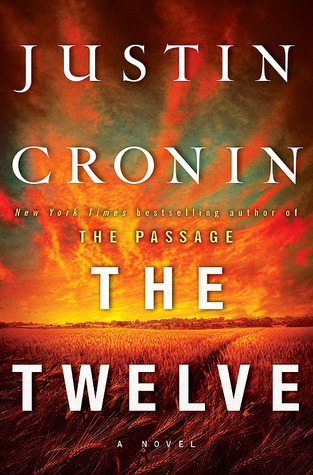
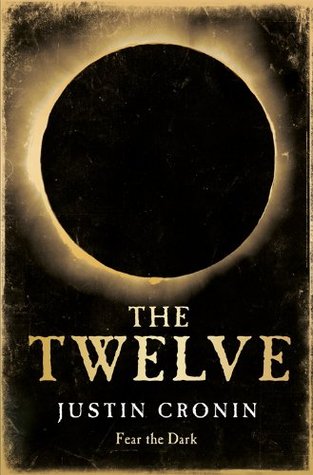
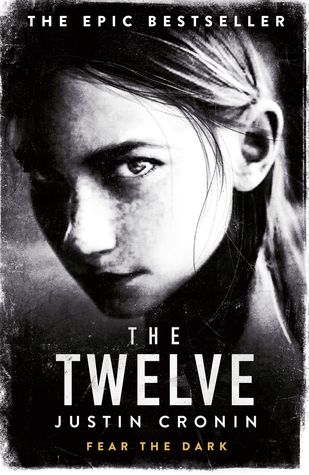
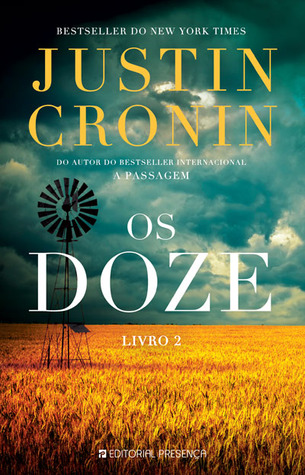
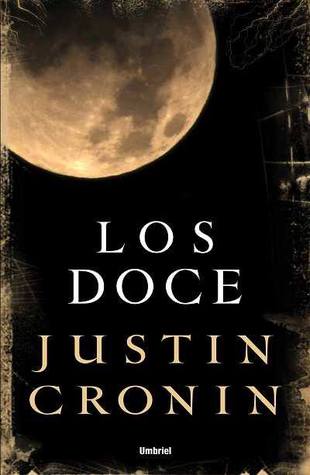
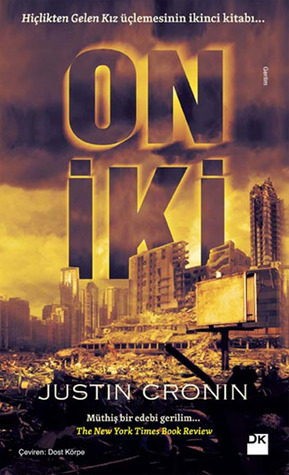
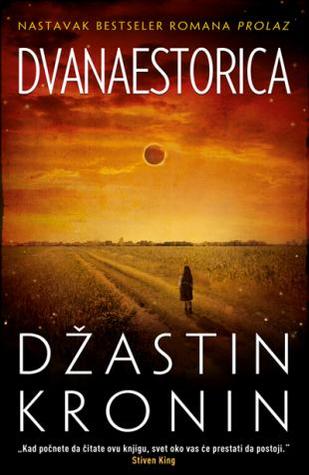
The Twelve by Justin Cronin
Well, I’ve officially run out of books I’ve read with covers featuring color-changing foliage and falling leaves for this topic, so I’m going to look to another theme for fall: Harvests!
In this second book of The Passage trilogy, the apocalypse continues to unfold as our group of survivors take action to fight back against the virals and their collaborators, and even aim to take down the twelve original infected plague-bearers that started it all. Let’s take a look at the covers:
From left to right:
Random House (2012) – Orion Hardcover (2012) – Orion Paperback (2013)
Dutch Edition (2012) – Portuguese Edition (2013) – Spanish Edition (2013)
Turkish Edition (2014) – Serbian Edition (2012) – Bulgarian Edition (2013)
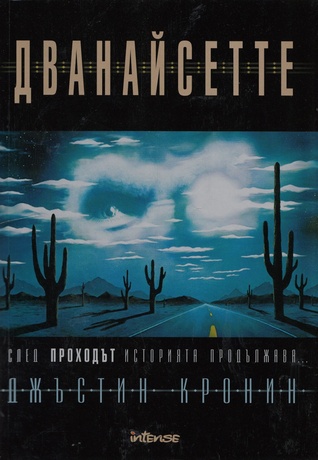
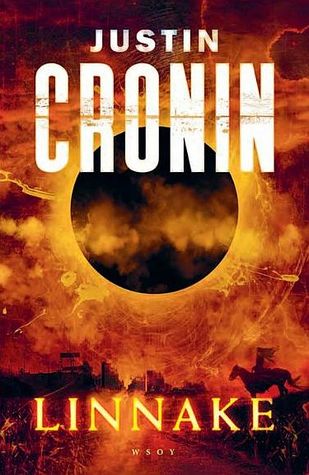
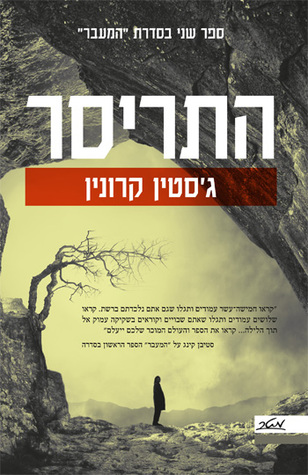
Romanian Edition (2019) – Finnish Edition (2013) – Hebrew Edition (2014)

Winner:
I love a lot of the harvest covers, especially the ones with the gorgeous colors in the sky. Some of these are almost too beautiful for a bleak apocalyptic novel like this. My favorite is the Portuguese edition this week, because of the brilliant contrast between the fields and sky.
But what do you think? Which one is your favorite?
Book Review: The Nobody People by Bob Proehl
Posted on September 5, 2019 19 Comments
I received a review copy from the publisher. This does not affect the contents of my review and all opinions are my own.
The Nobody People by Bob Proehl
Mogsy’s Rating: 3 of 5 stars
Genre: Science Fiction, Fantasy
Series: Book 1
Publisher: Del Rey (September 3, 2019)
Length: 496 pages
Author Information: Website | Twitter
The Nobody People is one of those books with a great premise that maybe looks better on paper than in execution. It is also very ambitious, resulting in some difficulty engaging on my part, simply because a lot was happening and the at times the plot felt all over the place. The novel begins with an introduction to Avi Hirsch, whom I’d initially assumed to be our main protagonist. A former war correspondent, he is a journalist who has taken to doing more local jobs after losing his leg on his last assignment overseas. But due to his expertise on terrorism and explosives, Avi was asked to investigate disturbing reports of young man who was able to carry out a string a suicide bombing attacks at multiple locations without dying himself—and without, apparently, a bomb.
And so begins Avi’s first exposure to the group of super-powered individuals who call themselves “Resonants.” His investigation has drawn their attention, but there is also another reason why they decided to approach him, and that is because they have identified his young daughter Emmeline—whom Avi had always just assumed was especially precocious and gifted—as one of them. Their leader, a man named Bishop, has established a school which he would like Emmeline to attend, where she would be able to learn to use and control her powers.
Eventually though, with the occurrence of even more high-profile cases involving Resonants in the news, they are forced to reveal themselves, and as expected, the response is not exactly friendly.
First off, that author Bob Proehl was inspired by the X-Men is immediately obvious. In fact, if he hadn’t made so many deliberate references to comic books, I might even have called this book a blatant copy-cat rather than the homage it’s probably meant to be. He’s borrowed a lot of ideas from the X-Men universe, from little details like the Bishop Academy in New York to the overarching themes of marginalization and bigotry against the mutants—oops, my bad, I mean the Resonants. This in itself isn’t a negative, per se, since I love the X-Men and Proehl is by no means the first author to be influenced by the comic or use its tropes for himself. That said, I was a little taken aback by how bold some of these similarities were, and a little disappointed that this book wasn’t a tad more original. At times, the story even had a fanfic vibe to it that I found hard to shake.
But my main issue with The Nobody People, as I’ve alluded to already, is the fact that there is just SO. MUCH. GOING. ON. There is a lot of conflict, but not really a unifying thread to make everything feel cohesive. Like I said, I started the book thinking Avi was the main protagonist, and the first handful of pages made me think we were settling for a detective story. Of course, that belief was quickly dispelled as we were introduced to the Resonants, and ultimately, it was Fahima Deeb, a queer Muslim woman with an uncanny supernatural connection to mechanical objects who ended up taking over the reins. But throw in other POVs like Emmeline, Patrick, Carrie and many more others, over time it became increasingly more difficult to feel emotionally invested in each character equally. There were a lot of names to keep track of, and some inevitably fell through the cracks and felt undeveloped, uninteresting.
The story also dragged and rambled at times, coming across as more episodic like a TV series rather than having a distinct beginning, middle, and end (which, while we’re on the topic, was very abrupt and I can’t say I was a fan of the ending at all). To the book’s credit though, I have to say there were many highlights and memorable moments, plus plenty of intrigue. I just wished that all these ideas, themes, plot points, and character motives could have been better pieced together to form a smoother, more cogent and convincing narrative.
Overall, I would say The Nobody People is worth a read if you’re into superhero type fiction, keeping in mind it won’t be offering up anything too new or groundbreaking. The story also had the feel of an ensemble cast TV series with numerous mini-arcs complete with multiple climaxes (and anti-climaxes) which could be quite awkward and tiresome at times. However, the plot was not without its high points, and occasionally an action scene or a particular subplot would really shine through and grab my attention. The way the book ends makes me think this will be a series, one that I feel has some promise. Should a sequel be written, I may be open to continuing with the story.


Waiting on Wednesday 09/04/19
Posted on September 4, 2019 24 Comments

“Waiting On Wednesday” is a weekly meme that first originated at Breaking the Spine but has since linked up with “Can’t Wait Wednesday” at Wishful Endings now that the original creator is unable to host it anymore. Either way, this fun feature is a chance to showcase the upcoming releases that we can’t wait to get our hands on!
Mogsy’s Pick
The Other People by C.J. Tudor (January 28, 2020 by Ballantine Books)
I’ve become quite a fan of C.J. Tudor after The Chalk Man and The Hiding Place, so I was excited to hear she will be coming out with a third novel in early 2020.
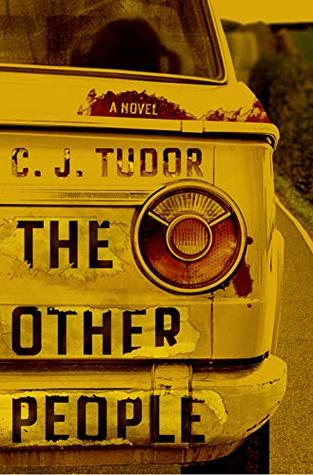 “Driving home one night, stuck behind a rusty old car, Gabe sees a little girl’s face appear in the rear window. She mouths one word: ‘Daddy.’ It’s his five-year-old daughter, Izzy.
He never sees her again.
Three years later, Gabe spends his days and nights travelling up and down the motorway, searching for the car that took his daughter, refusing to give up hope, even though most people believe that Izzy is dead.
Fran and her daughter, Alice, also put in a lot of miles on the motorway. Not searching. But running. Trying to keep one step ahead of the people who want to hurt them. Because Fran knows the truth. She knows what really happened to Gabe’s daughter.
Then, the car that Gabe saw driving away that night is found, in a lake, with a body inside and Gabe is forced to confront events, not just from the night his daughter disappeared, but from far deeper in his past.
His search leads him to a group called The Other People.
If you have lost a loved one, The Other People want to help. Because they know what loss is like. They know what pain is like. They know what death is like.
There’s just one problem . . . they want other people to know it too.”
Top Ten Late 2019 Releases in the “Maybe” Pile
Posted on September 3, 2019 35 Comments

Top Ten Tuesday was created by The Broke and the Bookish, a weekly meme that now resides at That Artsy Reader Girl. The meme first came about because of a love of lists. Who doesn’t love lists? The original creators also wanted their lists to be shared with fellow book lovers and to ask that we in turn share ours with them and connect with other book bloggers. To learn more about participating, stop by their page dedicated to it and dive in!
This week’s topic: Top Ten Upcoming Releases I’m On the Fence About (Late 2019)
It was serendipitous that today’s official Top Ten Tuesday topic is about books that are outside my comfort zone, because as it happens, I was also due to make my list of books that I’m on the fence about for late 2019, hence I’m adapting this theme a little to suit my purposes this week. I made similar lists for early 2019 and mid-2019, featuring some titles that didn’t quite make it onto my “Must-Read” pile but that I was curious about nonetheless. A lot of these books sound really good, but for one reason or another, I’m just not sure if they’ll be for me, but if experience has taught me anything, sometimes daring to try something new or different can pay dividends. So without further ado, these are ten books I’ve been hemming and hawing over for a while now, but if you think there are any that I should change from a “maybe” to a “must”, please let me know!
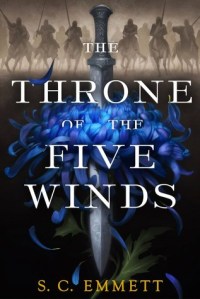 The Throne of the Five Winds by S.C. Emmett

Two queens, two concubines, six princes. Innumerable hidden agendas. Yala, lady-in-waiting to the princess of a vanquished kingdom, must navigate their captors’ treacherous imperial court.
The Emperor’s palace — full of ambitious royals, sly gossip, and unforeseen perils — is perhaps the most dangerous place in Zhaon. A hostage for her conquered people’s good behavior, the lady Komor Yala has only her wits and her hidden maiden’s blade to protect herself — and her childhood friend Princess Mahara, sacrificed in marriage to the enemy to secure a tenuous peace.
But the Emperor is aging, and the Khir princess and her lady-in-waiting soon find themselves pawns in the six princes’ deadly schemes for the throne — and a single spark could ignite fresh rebellion in Khir.
And then, the Emperor falls ill, and a far bloodier game begins…
 Sabbath by Nick Mamatas
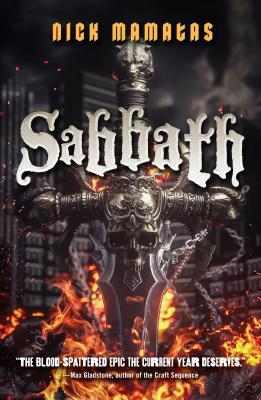
Highlander meets Seven in Nick Mamatas’s Sabbath.
The infamous eleventh-century warrior Hexen Sabbath is plucked from death and certain damnation by a being claiming to be an angel of the Lord, and finds himself dropped into contemporary Manhattan with no clothes, no weapons, no resources, and one mission–to track down and kill the living personifications of the Seven Deadly Sins before they bring about Armageddon.
With time running out and his only ally a destitute art gallery owner, Sabbath must fight his way through New York’s elite and challenge the world’s most powerful man, or an eternity of suffering will be his, and our, only reward.
 Salvaged by Madeleine Roux
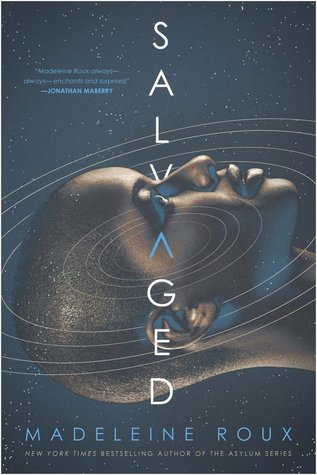
In this dark science fiction thriller, a young woman must confront her past so the human race will have a future.
Rosalyn Devar is on the run from her famous family, the bioengineering job she’s come to hate, and her messed-up life. She’s run all the way to outer space, where she’s taken a position as a “space janitor,” cleaning up ill-fated research expeditions. But no matter how far she goes, Rosalyn can’t escape herself. After too many mistakes on the job, she’s given one last chance: take care of salvaging the Brigantine, a research vessel that has gone dark, with all crew aboard thought dead.
But the Brigantine’s crew are very much alive–if not entirely human. Now Rosalyn is trapped on board, alone with a crew infected by a mysterious parasitic alien. The captain, Edison Aries, seems to still maintain some control over himself and the crew, but he won’t be able to keep fighting much longer. Rosalyn and Edison must find a way to stop the parasite’s onslaught…or it may take over the entire human race.
 How Rory Thorne Destroyed the Multiverse by K. Eason

First in a duology that reimagines fairy tale tropes within a space opera—The Princess Bride meets Princess Leia.
Rory Thorne is a princess with thirteen fairy blessings, the most important of which is to see through flattery and platitudes. As the eldest daughter, she always imagined she’d inherit her father’s throne and govern the interplanetary Thorne Consortium.
Then her father is assassinated, her mother gives birth to a son, and Rory is betrothed to the prince of a distant world.
When Rory arrives in her new home, she uncovers a treacherous plot to unseat her newly betrothed and usurp his throne. An unscrupulous minister has conspired to name himself Regent to the minor (and somewhat foolish) prince. With only her wits and a small team of allies, Rory must outmaneuver the Regent and rescue the prince.
How Rory Thorne Destroyed the Multiverse is a feminist reimagining of familiar fairytale tropes and a story of resistance and self-determination—how small acts of rebellion can lead a princess to not just save herself, but change the course of history.
 An Orc on the Wild Side by Tom Holt
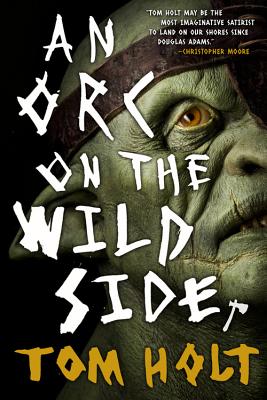
Winter is coming, so why not get away from it all?
Being the Dark Lord and Prince of Evil is not as much fun as it sounds, particularly if you are a basically decent person. King Mordak is just such a person. Technically he’s more goblin than person, but the point is that he is really keen to be a lot less despicable than his predecessors.
Not that the other goblins appreciate Mordak’s attempts to redefine the role. Why should they when his new healthcare program seems designed to actually extend life expectancy, and his efforts to end a perfectly reasonable war with the dwarves appear to have become an obsession?
With confidence in his leadership crumbling, what Mordak desperately needs is a distraction. Perhaps some of these humans moving to the Realm in search of great homes at an affordable price will be able to help?
 The Vine Witch by Luanne G. Smith

A young witch emerges from a curse to find her world upended in this gripping fantasy of betrayal, vengeance, and self-discovery set in turn-of-the-century France.
For centuries, the vineyards at Château Renard have depended on the talent of their vine witches, whose spells help create the world-renowned wine of the Chanceaux Valley. Then the skill of divining harvests fell into ruin when sorcière Elena Boureanu was blindsided by a curse. Now, after breaking the spell that confined her to the shallows of a marshland and weakened her magic, Elena is struggling to return to her former life. And the vineyard she was destined to inherit is now in the possession of a handsome stranger.
Vigneron Jean-Paul Martel naively favors science over superstition, and he certainly doesn’t endorse the locals’ belief in witches. But Elena knows a hex when she sees one, and the vineyard is covered in them. To stay on and help the vines recover, she’ll have to hide her true identity, along with her plans for revenge against whoever stole seven winters of her life. And she won’t rest until she can defy the evil powers that are still a threat to herself, Jean-Paul, and the ancient vine-witch legacy in the rolling hills of the Chanceaux Valley.
 The Andromeda Evolution by Daniel H. Wilson and Michael Crichton
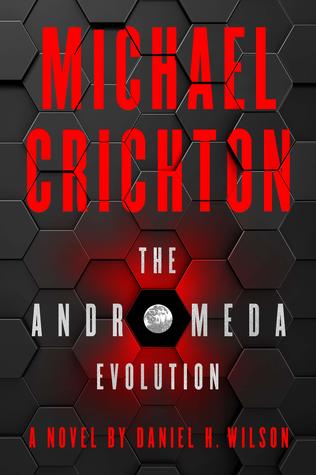
The Evolution is Coming.
In 1967, an extraterrestrial microbe came crashing down to Earth and nearly ended the human race. Accidental exposure to the particle—designated The Andromeda Strain—killed every resident of the town of Piedmont, Arizona, save for an elderly man and an infant boy. Over the next five days, a team of top scientists assigned to Project Wildfire worked valiantly to save the world from an epidemic of unimaginable proportions. In the moments before a catastrophic nuclear detonation, they succeeded.
In the ensuing decades, research on the microparticle continued. And the world thought it was safe…
Deep inside Fairchild Air Force Base, Project Eternal Vigilance has continued to watch and wait for the Andromeda Strain to reappear. On the verge of being shut down, the project has registered no activity—until now. A Brazilian terrain-mapping drone has detected a bizarre anomaly of otherworldly matter in the middle of the jungle, and, worse yet, the tell-tale chemical signature of the deadly microparticle.
With this shocking discovery, the next-generation Project Wildfire is activated, and a diverse team of experts hailing from all over the world is dispatched to investigate the potentially apocalyptic threat.
But the microbe is growing—evolving. And if the Wildfire team can’t reach the quarantine zone, enter the anomaly, and figure out how to stop it, this new Andromeda Evolution will annihilate all life as we know it.
 After the Flood by Kassandra Montag
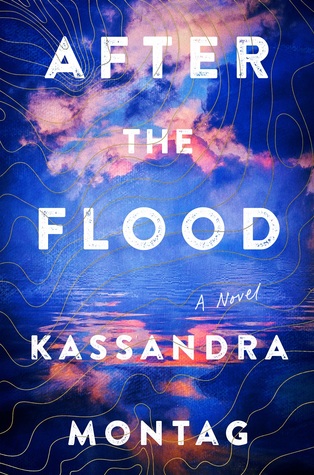
A little more than a century from now, our world has been utterly transformed. After years of slowly overtaking the continent, rising floodwaters have obliterated America’s great coastal cities and then its heartland, leaving nothing but an archipelago of mountaintop colonies surrounded by a deep expanse of open water.
Stubbornly independent Myra and her precocious seven-year-old daughter, Pearl, fish from their small boat, the Bird, visiting dry land only to trade for supplies and information in the few remaining outposts of civilization. For seven years, Myra has grieved the loss of her oldest daughter, Row, who was stolen by her father after a monstrous deluge overtook their home in Nebraska. Then, in a violent confrontation with a stranger, Myra suddenly discovers that Row was last seen in a far-off encampment near the Artic Circle. Throwing aside her usual caution, Myra and Pearl embark on a perilous voyage into the icy northern seas, hoping against hope that Row will still be there.
On their journey, Myra and Pearl join forces with a larger ship and Myra finds herself bonding with her fellow seekers who hope to build a safe haven together in this dangerous new world. But secrets, lust, and betrayals threaten their dream, and after their fortunes take a shocking—and bloody—turn, Myra can no longer ignore the question of whether saving Row is worth endangering Pearl and her fellow travelers.
A compulsively readable novel of dark despair and soaring hope, After the Flood is a magnificent, action packed, and sometimes frightening odyssey laced with wonder—an affecting and wholly original saga both redemptive and astonishing.
 Chilling Effect by Valerie Valdes
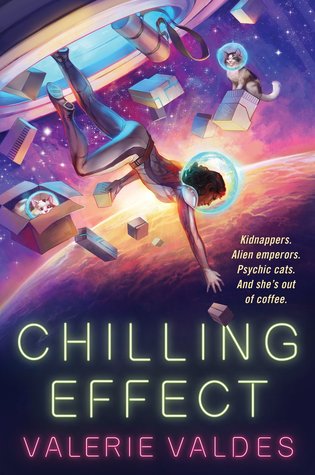
A hilarious, offbeat debut space opera that skewers everything from pop culture to video games and features an irresistible foul-mouthed captain and her motley crew, strange life forms, exciting twists, and a galaxy full of fun and adventure.
Captain Eva Innocente and the crew of La Sirena Negra cruise the galaxy delivering small cargo for even smaller profits. When her sister Mari is kidnapped by The Fridge, a shadowy syndicate that holds people hostage in cryostasis, Eva must undergo a series of unpleasant, dangerous missions to pay the ransom.
But Eva may lose her mind before she can raise the money. The ship’s hold is full of psychic cats, an amorous fish-faced emperor wants her dead after she rejects his advances, and her sweet engineer is giving her a pesky case of feelings. The worse things get, the more she lies, raising suspicions and testing her loyalty to her found family.
To free her sister, Eva will risk everything: her crew, her ship, and the life she’s built on the ashes of her past misdeeds. But when the dominoes start to fall and she finds the real threat is greater than she imagined, she must decide whether to play it cool or burn it all down.
 The Starless Sea by Erin Morgenstern
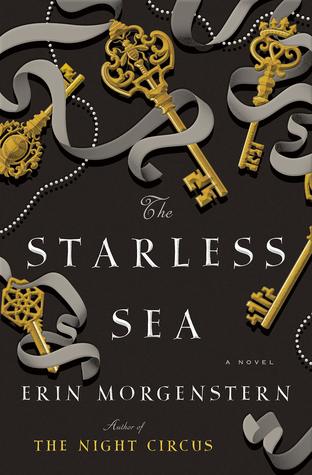
Zachary Ezra Rawlins is a graduate student in Vermont when he discovers a mysterious book hidden in the stacks. As he turns the pages, entranced by tales of lovelorn prisoners, key collectors, and nameless acolytes, he reads something strange: a story from his own childhood. Bewildered by this inexplicable book and desperate to make sense of how his own life came to be recorded, Zachary uncovers a series of clues–a bee, a key, and a sword–that lead him to a masquerade party in New York, to a secret club, and through a doorway to an ancient library, hidden far below the surface of the earth.
What Zachary finds in this curious place is more than just a buried home for books and their guardians–it is a place of lost cities and seas, lovers who pass notes under doors and across time, and of stories whispered by the dead. Zachary learns of those who have sacrificed much to protect this realm, relinquishing their sight and their tongues to preserve this archive, and also those who are intent on its destruction.
Together with Mirabel, a fierce, pink-haired protector of the place, and Dorian, a handsome, barefoot man with shifting alliances, Zachary travels the twisting tunnels, darkened stairwells, crowded ballrooms, and sweetly-soaked shores of this magical world, discovering his purpose–in both the mysterious book and in his own life.
Audiobook Review: Hollow Kingdom by Kira Jane Buxton
Posted on September 2, 2019 27 Comments
I received a review copy from the publisher. This does not affect the contents of my review and all opinions are my own.
Hollow Kingdom by Kira Jane Buxton
Mogsy’s Rating (Overall): 4.5 of 5 stars
Genre: Fantasy, Humor, Dystopian
Series: Stand Alone
Publisher: Hachette Audio (August 6, 2019)
Length: 10 hrs and 11 mins
Author Information: Website | Twitter
I confess, I almost passed this book over at first because I was afraid its particular style of quirk and humor would be a little too over-the-top for me. Thank goodness a couple of reviews from bloggers I follow ended up changing my mind and made me decide to give Hollow Kingdom a try after all. This was hilarious and oh so much fun. Even some of its extreme whackiness couldn’t get me down.
For one thing, I thought after years of reading all kinds of zombie fiction I could get my hands on, I’d seen everything, but clearly I was wrong. Yes, Hollow Kingdom is a zombie book, but I guarantee it’ll be unlike anything you’ve read before. Have you ever wondered, when the world goes to hell in a handbasket in all these zombie stories, what happens to the animals after civilization crumbles and all of humankind has become the mindless walking dead? Well, this is what this novel is about. Not only are animals the primary focus of the story, they are also its stars. Our protagonist Shit Turd, abbreviated S.T., is an appropriately crass and potty-mouthed crow who leads us through this apocalyptic narrative. His best friends are Dennis, a dim-witted but sweet old bloodhound, and their owner Big Jim, who raised S.T. as a hatchling and taught the little bird all he knew. Humans, for example, are called MoFos because that’s what Big Jim calls other people all the time.
Things couldn’t have been better for the three of them, living a happy and simple life in Seattle. But then one day, Big Jim’s eyeball falls out. That was when S.T. knew something was wrong, even before his owner tried to take a big bite out of him. All around them, the city is descending into madness, with all the MoFos of the world turning into hollow, ravenous shells of what they once were. Escaping into this terrifying new reality, S.T. and Dennis find out from the local wildlife what is going on before deciding that their new mission in life is to liberate all the household pets and other helpless animals now trapped behind locked doors, gates, enclosures.
What made this novel such a blast was the voice of S.T., who has a very human spirit but is a crow through and through. Relatively speaking, the story was a bit light, though you can never feel it because S.T.’s personality is big enough to fill the whole book, as it were. Everything that came out of his mouth was a riot, from his observations of the world to his personal philosophies on life and lessons he’s learned from watching TV with Big Jim. This plucky little bird also loves his creative and colorful insults and sometimes his snark can be a bit much, though he never failed to make me laugh out loud. However, beneath that rude-talking exterior is a real softie, and the way he sticks by Dennis like a protective older brother is a testament that. Never mind that we’re talking about a crow and a dog here; the two of them are easily topping my list of favorite book buddy relationships I’ve read this year.
The point of Hollow Kingdom was to also put the focus on the animals, and in this respect, the story did not disappoint. Between chapters, we sometimes get these short little interludes which show what else is happening around the world, all from the POV of animals. Author Kira Jane Buxton must be quite the animal lover herself because she somehow managed to capture the mannerism and behaviors of all these creatures so well, whether it be a domestic cat or a polar bear. In this world, animals also interact with one each other through something called the “Aura”, an almost mystical-like force that collects all their communication cues and transmits them out like the internet—a very cool idea.
I hesitate to say much more because I don’t want to risk spoiling anything, and also because this is one of those books you have to experience for yourself to really know whether it’s for you. That it is highly original and unconventional is obvious, I think, and like I said, this is not your typical zombie story. I don’t think it’ll be for everybody, simply because humor is so subjective, and S.T.’s voice also might be too explicit and brassy for some. Still, if you don’t mind it, there’s definitely sweetness and warmth aplenty to be found if you dig a little deeper, like themes of love and loyalty, lessons of life and death. There are moments that will make you laugh and make you cry. And it will also make you appreciate the animals around you all the more. Bottom line, this was a seriously entertaining read and I’m glad I gave it a chance.

Novella Review: To Be Taught, If Fortunate by Becky Chambers
Posted on September 1, 2019 24 Comments
I received a review copy from the publisher. This does not affect the contents of my review and all opinions are my own.
To Be Taught, If Fortunate by Becky Chambers
Mogsy’s Rating: 3.5 of 5 stars
Genre: Science Fiction
Series: Stand Alone
Publisher: Harper Voyager (September 3, 2019)
Length: 144 pages
Author Information: Website | Twitter
First, let me preface this by saying I am a huge Becky Chambers fan and I loved all three books in her Wayfarer series. However, To Be Taught, If Fortunate is unrelated to that universe and the style of writing didn’t have really have the same charm or engaging feeling as her other books. Of course, it’s possible that it’s because we’re dealing with a novella this time, but overall, I also feel that this book lacks the character-driven magic that I’ve come to associate with Chambers’ writing.
The premise behind this story isn’t a new one: Earth is deteriorating, and humankind needs new places to live. But instead of terraforming planets to suit us, advanced technology has enabled us to transform ourselves to suit alien environments. The book opens on a space exploration vessel Merian, introducing protagonist Ariadne and her fellow astronauts as they awaken from the torpor chambers which have kept them in a semi state of suspended animation by slowing down their aging and metabolism. The small crew of four is on a mission to study a handful of new planets that are lightyears away from Earth, meaning that even though the original plan was to return home after their work is done, everyone they left behind would be dead and gone.
Together with Ariadne on the Merian are also Elena, Jack, and Chikondi. As the ship’s flight engineer, Ariadne’s duties include detailing their mission as well as logging and trasmitting their findings. This book, in a way, is her message sent back to Earth, explaining what they’ve experienced and discovered on the four different planets they visit.
I suppose it’s the way this book is written, where much of it takes the form of a communications report, which made me struggle with connecting to the characters—way more than it should have. That Ariadne is a scientist and an engineer is also blatantly obvious, as our narrator loves to expound on theory and technical details. On every planet we visit, we get in-depth descriptions of the flora and fauna they encounter, the ways they differ from earth lifeforms. Because of this, the biology enthusiastic in me was fangirling with glee, but admittedly the hard science also took a lot away from the character development and dynamics, the elements which made Chambers’ Wayfarers such a joy to read.
The book is also divided into four short linked tales, which goes on to further fracture an already limited narrative, this being a 144-page novella and all. While I was fascinated by the sights and sounds the crew documents on the different planets, as well as the multiple adaptations their bodies had to go though, I wish the characters themselves had gotten the same level of attention. Clearly I’ve been spoiled by the author’s previous books, which were packed with poignant and emotional themes and very human stories.
For fans of stories about space exploration and colonization though, this book will be a treat. Obviously, each planet the Merian crew visits offers its own problems, some more challenging than others. Everything from geography, climate, and the local wildlife needs to be considered. Ariadne is a very sharp and introspective narrator, and through her eyes we see how she works through possible solutions to obstacles, using knowledge she knows from everything from chemistry to astrophysics, and we even get plenty of her philosophical musings besides.
As I said, To Be Taught, If Fortunate wasn’t a bad book. However, had this novella been a full-length novel with a bit more in the storytelling and characters department, I might have enjoyed this one a lot more. It feels quite different—and it is quite different—from what I expected from Becky Chambers, and I was a little disappointed we didn’t get to see as much of her excellent characterization this time around. That said, I do love that she is flexing her writing muscles and trying something a bit more complex and cerebral. I’ll still look forward to everything else she writes in the future.

YA Weekend: The Magnolia Sword: A Ballad of Mulan by Sherry Thomas
Posted on August 31, 2019 21 Comments

I received a review copy from the publisher. This does not affect the contents of my review and all opinions are my own.
The Magnolia Sword: A Ballad of Mulan by Sherry Thomas
Mogsy’s Rating: 5 of 5 stars
Genre: Young Adult, Historical Fiction, Fantasy
Series: Stand Alone
Publisher: Tu Books (September 10, 2019)
Length: 352 pages
Author Information: Website | Twitter
After consistently being disappointed by so many books described as “Mulan retellings”, you can probably understand why I went into The Magnolia Sword: A Ballad of Mulan with no small amount of trepidation (though of course I could hardly resist it). And quite honestly? I was blown away by this “Own Voices” novel. Sherry Thomas has written a refreshing new take on this famous Chinese folktale about the legendary female warrior, applying her own unique approach to the portrayal while staying faithful to the original story and ensuring historical and linguistic accuracy.
In this version of the tale, Hua Mulan has always been a skilled fighter. Each generation, the Huas and their rivals the Yuans vie for the honor to safeguard the two fabled swords named Sky Blade and Heart Sea, the outcome determined by a duel between one representative from each family. From a young age, Mulan has been trained for the role by her father, who made her disguise herself as a boy and take on the name of her twin brother who died in infancy. If she wins her duel against her Yuan challenger, Sky Blade and Heart Sea will be reunited under their house, and she will also score a major victory in the feud between their two families, avenging her father who was maimed in his own duel a generation before.
However, right before the duel, the Huas receive a letter from her opponent requesting the match to be postponed. War is brewing, and it seems the Yuans must focus their attentions elsewhere. At first, Mulan’s father regards the missive as a snub, until a messenger from the Emperor arrives at their own village along with a royal decree demanding each family put forth a male recruit for the war effort. To protect her little brother, who is too young, and her father, who is disabled and too old, Mulan decides to enlist using her male persona. On her first day in the army, she manages to impress the son of the duke with her martial arts skills, earning herself a place among his elite guard. To her surprise though, the position is not the safe assignment that she had expected. The young princeling is determined to fight on the front lines, and when Mulan discovers the secret he has been hiding, she realizes they may be in more danger than she thought.
Inspired by the traditions of wuxia, a genre which translates to “martial-chivalric” fiction, Sherry Thomas spins an epic tale of courage and adventure. I adored her depiction of Mulan, who embodies all the traits we think about when it comes to the character—fiercely independent, altruistic, and honorable. At the same time, the narrative never lets us forget that behind all that armor, our protagonist is a teenager, and wholly human. She is everything we want out of a kickass heroine, and yet still has a vulnerable side to her that makes her sympathetic and easy to relate to.
The story also takes place in 5th century China, during a period known as the Northern and Southern dynasties which was marked by much political unrest. Frequent references are made to these conflicts between the north and south, creating an atmosphere of tension that pervades through the entire novel. Major kudos to the author for doing what must have been a staggering amount research to get certain details as accurate as possible, and her afterword at the end of the book, including historical and linguistic notes, was a fascinating look into that process.
I really enjoyed the story as well, and the way it retained its folktale roots. Action played a large part, featuring both close-quartered martial arts and large-scale fighting in heated battles. But my favorite scenes were always the quieter moments where we got to explore the character relationships. There is a super sweet romance between our protagonist and her love interest, a man who is as honorable and brave as she is. They were certainly well matched, and I was rooting for them every step of the way. I was also glad this story shone a light on Mulan and the love and respect she has for her father, which a surprising number of retellings tend to neglect, considering his role in her decision to enlist in the army in his place. The Magnolia Sword adds another complex layer to their bond, making the final chapter with Mulan’s homecoming and seeing her father again even more touching and poignant.
Bottom line, I just loved this. The Magnolia Sword: A Ballad of Mulan is one of the best Young Adult novels—and easily my favorite retelling—that I’ve read so far this year. A very satisfying novel overall, which filled me with all kinds of warm and happy feelings when it was over. Highly recommended!

Friday Face-Off: Yellow
Posted on August 30, 2019 27 Comments
Welcome to The Friday Face-Off, a weekly meme created by Books by Proxy! Each Friday, we will pit cover against cover while also taking the opportunity to showcase gorgeous artwork and feature some of our favorite book covers. If you want to join the fun, simply choose a book each Friday that fits that week’s predetermined theme, post and compare two or more different covers available for that book, then name your favorite. A list of future weeks’ themes are available at Lynn’s Book Blog.
This week’s theme is:
“I wandered lonely as a cloud”
~ a cover that is predominantly YELLOW
Mogsy’s Pick:
Fiend by Peter Stensen
I’ve been feeling in a zombie kind of mood lately, which is why I thought I’d go with a lesser known yellow-cover book this week with Fiend, a novel about what the zombie apocalypse would look like if meth heads were the only survivors. What would happen, if for whatever reason, being a junkie somehow made you immune to the becoming one of the walking dead? It’s a pretty awesome social thought experiment, I have to say, even if the book itself ended up being a bit of a train wreck.
Let’s take a look at the covers:
From left to right:
Crown (2013) – Windmill Books (2014)
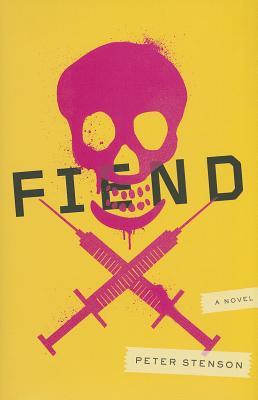

French Edition A (2014) – French Edition B (2015)
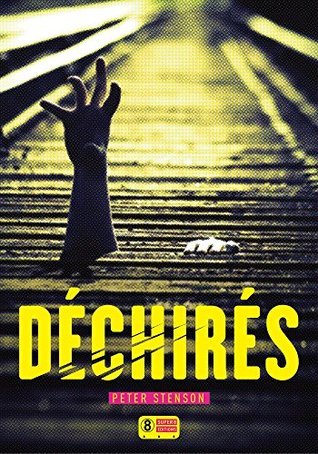

Winner:
Call me traditional, but I’m a big fan of the French (2014) edition which is just “zombified” enough and just yellow enough to catch my attention without being too gaudy or contrived!
But what do you think? Which one is your favorite?
Book Review: Gears of War: Ascendance by Jason M. Hough
Posted on August 29, 2019 16 Comments
I received a review copy from the publisher. This does not affect the contents of my review and all opinions are my own.
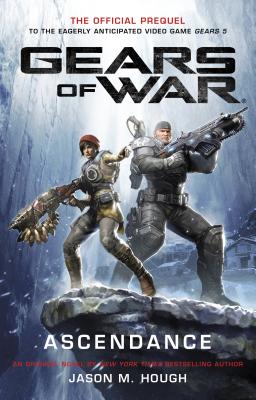 Gears of War: Ascendance by Jason M. Hough
Mogsy’s Rating: 4 of 5 stars
Genre: Science Fiction, Media Tie-In
Series: Gears of War Universe
Publisher: Titan Books (July 30, 2019)
Length: 464 pages
Author Information: Website | Twitter
Bring on Gears 5, because I’m ready! And of course, being the tie-in addict I am, I just had to read the prequel novel too. Taking place in the immediate aftermath of Gears of War 4, Gears of War: Ascendance follows Corporal Kait Diaz as she grieves the loss of her mother in the Swarm War. Swearing revenge, she joins Marcus, JD, Del, Samantha, Cole, and Baird to the city of New Ephyra, where they have been summoned by First Minister Jinn. In exchange for a pardon for all the “crimes” they committed during the war, the Gears are asked to swear loyalty to the minister, as well as to bring proof of the new swarm threat.
But Kait, still bitter at all that has been done to her people, refuses. Instead, she decides to strike out on her own, returning to her ruined village after discovering that two children might have survived the devastation. Recognizing her pain and anger, Marcus Fenix decides to back her up, departing New Ephyra together as rogue agents on a rescue mission. Meanwhile, JD and Del, who have agreed to the minister’s offer and taken on new command positions, are on patrol to locate the swarm when they are cut off from the city and trapped by enemy forces.
Attacking the story from these two sides, Jason M. Hough delivers an exciting adventure leading into the new game that fans will no doubt adore. I have played all the Gears of War games, and even read a few of the novels by Karen Traviss. However, I was not at all concerned about the author change, knowing full well the capabilities of Mr. Hough who has written a couple of my favorite action sci-fi novels, including The Darwin Elevator and Zero World. He’s also no stranger to video game tie-ins, having written a novel for Mass Effect: Andromeda. Suffice to say, it pleases me to no end that he has once more brought his talents for writing heart-stopping action and battle sequences to Ascendance, which were made even more incredible because we’re dealing with some of the best foes ever designed in gaming—the Swarm.
That said, you would have to be intimately familiar with the Gears franchise to fully appreciate this novel. While it serves as a prequel to Gears 5, it also builds upon four games’ worth of story and characters and spoils the ending to Gears of War 4. The opening assumes that you have finished the game and learned of Reyna’s fate and the role Kait played in it. The rest of the plot—Kait’s renunciation of First Minister Jinn, her return to her village, the surprising allies she meets there, and so forth—is the fallout from those events. What this means is that unlike a lot of media tie-ins these days which are written as standalones, this one actually requires a fair amount of background knowledge.
But for those of us who love this world and its characters, it is a very special treat. This novel breathes new life into Kait and Marcus, JD and Del. Their personalities are given new layers and dimensions that we’ve never seen before, and it’s clear that Hough gets it; he understands the importance of tie-in novels to fans and why we seek them out. It’s not just about seeking more adventure, or more time in our favorite gaming worlds (though that certainly doesn’t hurt). It’s about digging deeper and getting to know more about our characters and learning what makes them tick. While storytelling in video games is all the rage these days, the narrative style of a novel allows authors to explore certain areas that we can’t behind a controller, and Hough doesn’t waste a single opportunity to flesh out the characters.
And of course, I have no complaints about the action, which is the author’s forte after all. He has a very cinematic writing style, where you can easily picture what you read playing out on a big screen. With the events playing out in the story on two fronts, it meant that there was never a dull moment, and the pacing was relentless and constantly driving forward.
Overall, if you are a Gears fan, there is no question of whether or not you should read Gears of War: Ascendance. The answer is yes, and you should do it before playing Gears 5 if you want the full experience. So ready your chainsaw guns, everyone—because not only does this novel bridge the time between the fourth and the fifth game, it’s also a hell of a fun read. I hope this will mean more Gears of War novels in the future.


 The BiblioSanctum