#SciFiMonth Top Ten Science Fiction Reads of 2019
Posted on November 26, 2019 18 Comments

Top Ten Tuesday is an original feature/weekly meme created by The Broke and the Bookish. They created the meme because they love lists. Who doesn’t love lists? They wanted to share these list with fellow book lovers and ask that we share in return to connect with our fellow book lovers. To learn more about participating in the challenge, stop by their page dedicated to it and dive in!
This week’s topic: Top Ten Science Fiction Reads of 2019
Today’s Top Ten Tuesday theme is actually a “Thankful Freebie”, and since we’re also nearing the end of Sci-Fi Month I’ve decided to feature some science fiction books I’ve been grateful for and had the pleasure of reading this year.
Mogsy’s Picks
 Do You Dream of Terra-Two? by Temi Oh

Set in a more technologically advanced version of our present world, this novel follows six young candidates for a highly competitive British space exploration program to establish a colony on far-flung Terra-Two, a pristine Earth-like planet possessing ideal conditions for life. Having spent years studying at the Dalton Academy for Aerospace Science since they were preteens, our six astronaut hopefuls have trained their hearts out for the opportunity, beating out millions of others across the country. However, with emotions already raw from having to leave their loved ones behind and knowing that they will all be living within the tight confines of a spaceship for the next twenty-three years, life aboard their spaceship Damocles will prove to be a rough process, with homesickness, self-doubt, depression and other personal fears plaguing each of them in turn. It’s probably no surprise that I, being a huge fan of books devoted to telling human stories, absolutely adored this book, and if you enjoy character-oriented tales with interesting relationships dynamics and lots of personal growth, then this is one you can’t afford to miss. (Read the full review…)
 Three Laws Lethal by David Walton
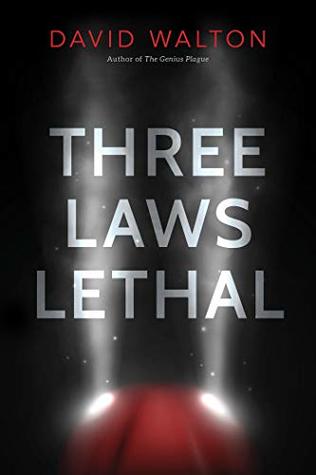
Three Laws Lethal is something of a cautionary tale against artificial intelligence, using the concept of autonomous self-driving vehicles as inspiration. That said, I doubt the concept of the AI entity in this story is anything like you’d imagine, as it’s pretty unusual. As well, this is a very human story, focusing on the lives of four friends who bonded over a love of technology, innovation, and entrepreneurship while in college. Their dream was to start a taxi service company using a fleet of self-driving cars, and between them, they had the money, brains, and ambition to make it all happen. But then everything changes following a horrific tragedy involving the death of one of their own. For me, the most compelling sci-fi novels are the ones that can entertain me and teach me something new at the same time. This describes all of Walton’s books. love sci-fi novels that are exciting and smart. I also love being surprised. There are twists aplenty in the plot, several that had me gaping in shock. It kept me turning the pages, eager to find out what would happen next. It’s an energetic, non-stop thrill ride from start to finish. (Read the full review…)
 Recursion by Blake Crouch
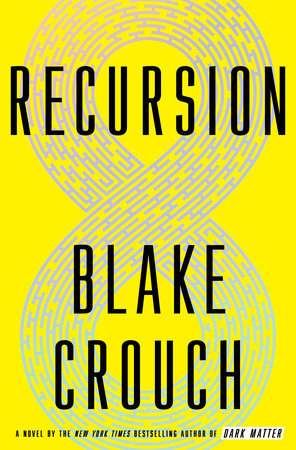
If the best thrillers make you feel breathless, then Recursion by Blake Crouch is definitely one you don’t want to miss. The story opens with New York City police officer Barry Sutton as he responds to reports of a suicide attempt by a woman about to jump off the ledge of a high-rise building. Following the event, the shaken cop is driven to learn more about the illness termed False Memory Syndrome—an alarming epidemic that is starting to sweep across the nation, afflicting its victims with vivid memories of a life they never lived. Ten percent of those with FMS end up killing themselves, driven mad by the conflicting realities in their mind. At the same time, we’re also introduced our second POV, a brilliant neuroscientist named Helena Smith. After her mother was diagnosed with Alzheimer’s, Helena became obsessed with developing her new technology which would help human beings preserve the most precious memories of their lives. Blending theories of time travel, alternate realities, and psychological phenomena, what Recursion basically presents to us is a completely unique and refreshingly new take on some familiar ideas. Like most stories to do with memory manipulation though, it can also be a real head-trip, but there were also parts of it that deeply moved me—and ultimately, it’s these moments that elevate this book above others in the genre and why it will also remain with me for a long time. (Read the full review…)
 A Boy and His Dog at the End of the World by C.A. Fletcher

At its heart, A Boy and his Dog at the End of the World is a post-apocalyptic story of courage, determination and survival, with themes of friendship and unconditional love. Long after the Gelding, an event which caused sterility in most of the human population, the world has become a crumbling and empty wasteland. It’s an isolated life for our protagonist Griz, who lives with his parents, brother, sister, and dogs Jip and Jess. You rarely meet anyone anymore, which is why when a boat with red sails appears on the horizon one day, everyone is excited albeit a little wary. Visitors mean news from the outside world and potential for trade, but Griz still understands the need to be careful. He does not trust the stranger, Brand, when he arrives, despite—or perhaps because of—the big man’s powerful charisma, and sadly Griz’s suspicions ultimately proved to be correct when he wakes up the next morning to find the boat with the red sails gone. Brand had stolen away in the early hours with the family’s food stores, some of their provisions, as well as Griz’s beloved terrier Jess, and now our protagonist will do anything to get his best friend back. All in all, this book was a joy to read, full of wistfulness and melancholy but also plenty of hope, love, and simple pleasures. (Read the full review…)
 Aftershocks by Marko Kloos

Five years have passed since a brutal inter-planetary war ended with a peace treaty, beating back the once proud Gretians who had instigated the conflict. Aden, a former soldier who fought on the side that lost and who now finds himself held in a prison-of-war camp. The system has been rebuilding itself ever since, though there is still a lot of bad blood and animosity among the different peoples. Many lives had been impacted by the war, and there are some survivors who will never forgive the Gretians for what they did. Idina is one such person. She’s a Palladian with a grudge, now part of the occupying force on Gretia making sure history won’t repeat itself. For the past five years, patrols with her platoon have been quiet and uneventful, until one day they are ambushed by an unknown enemy. In another part of the system, Lieutenant Commander Dunstan Park of the Rhodian Navy is in space guarding the seized Gretian fleet when suddenly, all the inoperative ships are destroyed in a series of explosions, billions of tons of firepower wiped out in an instant. It appears that the peace is not as stable as believed. Normally, I would have trouble reading an “afterwar” book. But Marko Kloos looks at the question of “what now?” through the eyes of very engaging characters, each of them providing a unique and interesting perspective. This novel was a solid start to what promises to be a fantastic series, and I can’t wait for the sequel. (Read the full review…)
 Tiamat’s Wrath by James S.A. Corey

As the penultimate book in the epic Expanse series, Tiamat’s Wrath gives one the feeling of an entire galaxy holding its collective breath—things aren’t so much happening as they are preparing the field for the final play. And yet, if you’ve been on this train since the beginning, you’ll know that just because the end is around the corner, that doesn’t mean we can’t still blow a lot of stuff up in the meantime and put readers through the emotional wringer. There are many remarkable moments like this in the book, and in fact, one of the things Tiamat’s Wrath does best is making the story feel like it’s in constant motion and packed with action. What’s more impressive is that this is happening even as the authors are spending lots of time pushing plot points and maneuvering characters around the place like pieces on a chessboard. Granted, many of surprises and twists they end up inflicting on us are painful, hitting readers right in the emotions. Here’s where the relationships between characters come into play, especially if you’ve gotten the foundation from the first seven books. Ultimately, I don’t think there’s been another science fiction series that has come anywhere near to consuming me the way The Expanse has. It is, in every sense of the word, a phenomenon, capturing the imaginations of readers everywhere with its space-operatic intrigue and daring action, its intense thrills and wonder, as well as its human tales of courage and resilience. (Read the full review…)
 Star Wars: Master & Apprentice by Claudia Gray
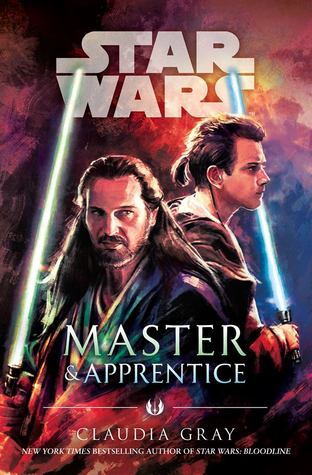
I have been most impressed with Claudia Gray’s books in the new Star Wars canon, and I have to say, she has yet to disappoint me. Now she’s at the top of her game once again with Star Wars: Master & Apprentice, a novel set a handful of years before the events of The Phantom Menace which shines the light on 17-year-old padawan Obi-Wan Kenobi and his complicated relationship with his mentor, Qui-Gon Jinn. For a tie-in novel, it’s surprisingly complex and layered. There’s certainly a lot to unpack here, but the central theme of the book is undeniably the dynamic between the two main characters. Qui-Gon’s fear of failing his apprentice is written incredibly well, and likewise so is Obi-Wan’s struggle to understand his master and his determination not to disappoint him. It was heartbreaking to read about their anxieties, knowing that deep down, they both loved and respected each other very much. Needless to say, in my eyes, Master & Apprentice is one of the new canon’s better books. I had a great time, and after reading it, I also think it would be fantastic to see more prequel or pre-prequel era Star Wars novels in the future. (Read the full review…)
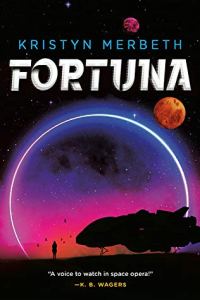 Fortuna by Kristyn Merbeth

In this action-packed space opera about a dysfunctional family of smugglers, we journey with Scorpia Kaiser and her mother and siblings aboard the Fortuna across a galaxy filled with conflict and chaos. As the eldest daughter, Scorpia is looking forward to inheriting the business and the ship one day. But a recent transmission has thrown a wrench into those plans. Three years ago, her older brother Corvus turned his back on the family, enlisting in a war to fight for his home planet of Titan. His decision broke Scorpia’s heart, and because of that she has never forgiven him for his betrayal. But now, Corvus’ tour of duty is over, and their mother has ordered the Fortuna to rendezvous with him while on their way to another job, which unexpectedly takes a calamitous turn right in the middle of the awkward reunion. With an entire planet dying around them, the Kaisers must now put aside their differences and work together in order to survive. When it comes to delivering a boatload of sci-fi action and rip-roaring entertainment, Merbeth knows exactly what she’s doing, keeping the story’s momentum raging along like a pro. Even when you know what’s coming, you just can’t help but hold your breath and keep your fingers crossed, and that’s exactly the kind of intensity and electrifying experience I look for in my space opera. (Read the full review…)
 Walking to Aldebaran by Adrian Tchaikovsky

I confess, I haven’t always had much luck with novellas, even when it comes to those by favorite authors, but I ended up really enjoying this one. For me, it was simply the right mix of humor and horror. Take the witty, smart-alecky narrative style of The Martian and combine it creepy, dread-inducing atmosphere of Alien, and you’d probably end up with something like Walking to Aldebaran. One wouldn’t think that would work so well, but it did. The book takes us inside the head of our protagonist, astronaut Gary Rendell. He has been on his own for a long time, long enough for him to start going a little stir-crazy, hoping to find another living soul to call friend. They wouldn’t even need to human. At this point, Gary is beyond caring about such trivialities, for you see, he’s trapped on a giant alien artefact that was found drifting at the edge of our solar system, following a disaster that killed the rest of his crewmates. Now he’s lost, frightened and alone, wandering aimlessly through the cold dark tunnels of the megalith. Equal parts hilarious and terrifying, this one was a joy to read. I don’t recommend novellas often, but once in a while an exception will come along, and this one I believe would be an excellent introduction to Adrian Tchaikovsky because it’s a wonderful showcase of his talents as a storyteller. (Read the full review…)
 The Warehouse by Rob Hart
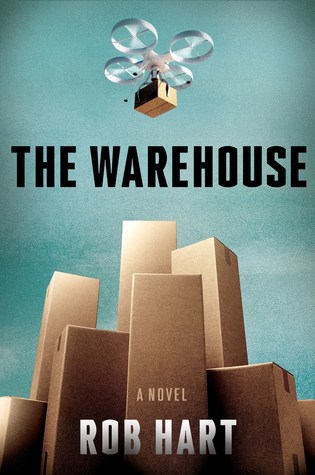
The Warehouse by Rob Hart is clearly riffing on the tech giant Amazon with Cloud, a megacorp in the future that has completely consumed the American economy, becoming the only thriving company in this dystopian world ravaged by recession and high unemployment. Competition for work is fierce especially since the government can no longer be relied upon for any kind of social support, so naturally, desperate jobseekers turn to Cloud en masse in the hopes of scoring a position in one of their many sprawling warehouses. These facilities, in addition to serving as the company’s distribution and fulfillment centers, are also where employees eat, sleep and live when they’re not spending the long hours working on the floor. On top of room and board, workers also get healthcare and other benefits to go along with the job. But the truth at Cloud is a lot more sinister. Through the eyes of three characters, readers are given insight into just what it’s like to work for the company. To start, the novel’s tagline of “Big Brother meets Big Business” is highly appropriate. Rob Hart’s depiction of a future where workers no longer have any rights and everything is about the bottom line is eerily disturbing, if for no other reason than how realizable the situation is if we no longer have the regulations in place to reign in large corporations. I would recommend this book for fans of the genre, especially if you enjoy dystopian scenarios that get under your skin and make you think. (Read the full review…)
Book Review: Novice Dragoneer by E.E. Knight
Posted on November 25, 2019 9 Comments
I received a review copy from the publisher. This does not affect the contents of my review and all opinions are my own.
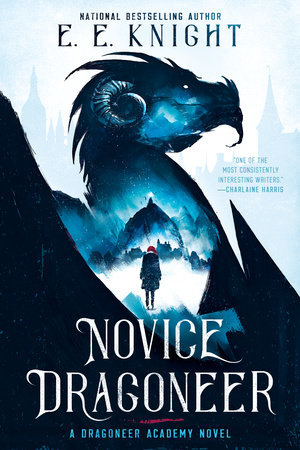 Novice Dragoneer by E.E. Knight
Mogsy’s Rating: 3.5 of 5 stars
Genre: Fantasy
Series: Book 1 of Dragoneer Academy
Publisher: Ace Books (November 5, 2019)
Length: 512 pages
Author Information: Website | Twitter
Novice Dragoneer feels like a book I’ve read before, in one incarnation or another. And if you’ve read a lot of coming-of-age fantasy, books feature magic or warrior schools, or stories about dragon riders, then there’s a good chance this is going to feel very familiar to you too. But that’s certainly not a criticism. I for one love a good adventure that has a bit of everything, and even with its more derivative elements, I found this novel delightfully entertaining.
Our story follows Ileth, a fourteen-year-old orphan who has always dreamed of soaring the skies as a dragon rider. Unfortunately, due to the small stature and stutter, nobody ever thought she would amount to much, and our protagonist often found herself relegated to the kitchens for serving or cleaning work.
But then one day, Ileth is given the chance of a lifetime. After gaining acceptance into the prestigious Dragoneer Academy, she spends the next few years training at the fortress and moving up the ranks. But due to her lowly status in a school mostly attended by cadets from rich and powerful families, it is an uphill battle for Ileth to prove she deserves to be a dragon rider as much as any of them. Trouble, however, keeps finding her, and soon in a political move she is sent to a neighboring kingdom as a dragon-dancer where she makes the acquaintance of an old but venerated dragon with a mysterious past.
All told then, there’s nothing earth-shattering or highly original in Novice Dragoneer, but boy, was it a lot of fun. I was especially enchanted by its early chapters in which we follow Ileth through her dragon rider training. As you know, I love a good fantasy school trope, and this book checks off all the right boxes. We have the scrappy underdog protagonist who is fighting for a coveted position against students who are more privileged, and I also love that the training scenes that involve the requisite unpleasant tasks that all lowly initiates must do as a rite of passage. All the typical roles you would expect were present, including the hard-ass instructors and nasty bullies. Like I said, this is the type of novel where you pretty much know what you’re getting into from the get-go, but nevertheless it offers up a fair amount of enjoyment.
Strangely enough, it was when the story started exploring new territory that it started losing me. Personally, I would have been perfectly happy with more time spent at the academy, but understandably the plot must move on, and so we entered into the later parts of the book that did not appeal to me as much. Pacing was something of an issue, as we experience a slight slump in the middle sections, but bottom line, where the plot saw Ileth dispatched to a foreign land simply was not as interesting to me as the drama in the school setting. That said, one major advantage this part of the story was that it had more dragons!
Speaking of which, hands down the dragons in this book were some of the best highlights. They talk, they fly their riders into battle, and they love to watch human females dance! The ones we get to meet are absolutely charming, and the book definitely picked up in the last third as the story shifts gears once more to follow Ileth as she embarks on a quest to help a dragon.
Indeed, the transitions in Novice Dragoneer are quite distinct. They follow our protagonist as she grows with each section of the novel, so while the early parts feel very Young Adult, by the end of the story we reach a point where adults might find more crossover appeal, since it explores some darker and more mature themes. I was happy with Ileth’s development, the way she grows not only physical but also mentally and in confidence. As she forges new friendships, her interactions with other characters also became more compelling.
All in all, I had a good time with Novice Dragoneer. It’s pretty standard as far as coming-of-age fantasy goes, featuring themes and tropes that won’t be anything new for the experienced genre reader, but it was a solidly enjoyable read in spite of that. Fans of magic school stories will especially take great pleasure in it, and while parts of the story ran overly long, E.E. Knight reined things back in and regained control before the meandering can get too out of hand. Most importantly, the plot and characters have my attention now, and I’ll be looking forward to the sequel.


#SciFiMonth Audiobook Review: The Queen’s Advantage by Jessie Mihalik
Posted on November 24, 2019 6 Comments
I received a review copy from the publisher. This does not affect the contents of my review and all opinions are my own.
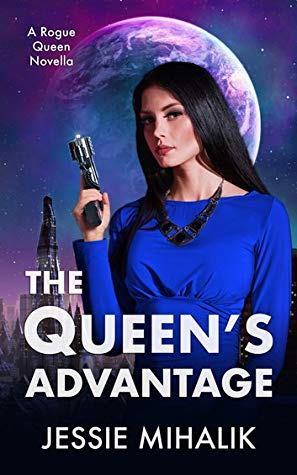 The Queen’s Advantage by Jessie Mihalik
Mogsy’s Rating (Overall): 3.5 of 5 stars
Genre: Romance, Science Fiction
Series: Book 2 of Rogue Queen
Publisher: Tantor Audio (October 8, 2019)
Length: 5 hrs and 41 mins
Author Information: Website | Twitter
Narrator: Rachel Dulude
Time for another bite-sized romance sci-fi adventure by Jessie Mihalik! Like a lot of folks, I first came to these Rogue Queen books after reading Polaris Rising in her Consortium Rebellion series. Of course, once I discovered these novellas which were previously released in serialized format on the author’s website were getting officially published with audiobook releases as well, I just had to pounce.
The Queen’s Advantage is the follow-up to The Queen’s Gambit, which continues the story of our protagonist Queen Samara of the Rogue Coalition. Following her daring rescue of Emperor Valentin Kos from the clutches of the Quint Confederacy, Samara has agreed to help him root out the traitors in his court. It will be a dangerous job given how many enemies the emperor has, and it doesn’t help that those same mysterious traitors aren’t big fans of Samara either, considering how her past stunts had cost them a whole lot of money.
Sure enough, soon after their arrival there is a violent attack, prompting Samara to move up her schedule and show her hand early. Troublingly, Valentin appears to be losing control of his security forces, and his adversaries will no doubt make use of the confusion to sow more discontent and chaos, if they haven’t already infiltrated the higher levels of the administration. This is a problem for Samara, who has promised to repay her debts to Valentin by guarding him, not to mention there is the matter of their burgeoning relationship. The two of them have become quite close, and Samara is the type of woman who always keeps her promises and fights to protect what’s hers.
Compared to The Queen’s Gambit, this sequel might have had just a tad less action, but the story makes up for it by delving deeper into the world building. The Queen’s Advantage shines a light on the intricate web of politics that connects the galaxy, expanding on the power dynamics that exist between the factions in conflict. In particular, we get to see the inner workings of the Kos Empire, which aren’t as hunky-dory as we think—for one thing, Valentin doesn’t have limitless authority, and the truth is he faces quite a lot of opposition to his rule and there are quite a few people at court who hate his guts. In fact, what we learn here is that the state of the Empire is actually quite a mess. And walking into the middle of this pit of snakes is Samara, a queen in name only, who is as welcome as a wet dog at a fancy dinner.
With two books each of the Consortium Rebellion and Rogue Queen series under my belt now, I can also confidently say that Samara is a typical Mihalik heroine—and I mean that in the best way possible. Her protagonists are all smart, tough, and independent women who can take care of themselves. Case in point, Samara can more than hold her own against the scheming politicos and other bureaucrats who look down their nose at her. She’s also fiercely protective of Valentin, who is probably my favorite of Mihalik’s male love interests so far. He’s funny, sweet, and surprisingly down-to-earth for an emperor. While I’m still not sure how realistic this feels, I’m liking the chemistry between him and Samara, his idealism being a good counterpoint to the rougher parts of her personality.
Also, another thing I like is that we’re not rushing into the romance. That said, neither would I call it a slow-burn; quite simply, there are a few matters in our characters’ relationship that still need to be ironed out, and we’re just letting things take their natural course—the way it should be. Again, you won’t find anything too deep here, but The Queen’s Advantage nevertheless serves its purpose as an entertaining diversion if you’re looking for something to lighten up a few hours of your afternoon. I would recommend this series, especially if you’re enjoying what you’re seeing in Jessie Mihalik’s other novels.
Audiobook Comments: Rachel Dulude reprises her role as narrator, and once more she brings a passion and enthusiasm to the novel and is a perfect voice for Samara. One thing to note, however, is that I had to speed up playback for this audiobook a bit more than usual because of the slow speech rate, but this wasn’t a major issue and overall my enjoyment was unaffected.
More on The BiblioSanctum:
Review of The Queen’s Gambit (Book 1)
Book Review: Unnatural Magic by C.M. Waggoner
Posted on November 23, 2019 19 Comments
I received a review copy from the publisher. This does not affect the contents of my review and all opinions are my own.
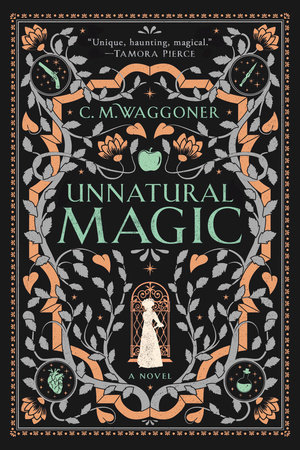 Unnatural Magic by C.M. Waggoner
Mogsy’s Rating: 4 of 5 stars
Genre: Fantasy
Series: Book 1/Stand Alone
Publisher: Ace (November 5, 2019)
Length: 400 pages
Author Information: Website | Twitter
Unnatural Magic was a solid read that was hard to pin down at times, but once you learn how to go with the flow, the book might end up surprising you in the best way possible. A novel which strives to tackle traditional fantasy in a fresh and unique way, C.M. Waggoner’s debut offers a cleverly transformative tale that explores love, ambition, and the tenacity of spirit in finding acceptance.
Set in a world where humans and trolls co-exist, albeit not always peacefully, Unnatural Magic opens on a setting which feels vaguely turn-of-the-century gaslamp, starting with an introduction to the first of our major characters, Onna Gebowa. From an early age, she has displayed an aptitude for magic, though achieving her dreams of attending the premiere academy of arcane arts will be difficult, given the male-dominated field. After being rejected, Onna decides to forge her own path, traveling to the city of Hexos where they will be more appreciative of her extraordinary talent and skills.
Meanwhile in another part of the world, Tsira is a half-troll who is also planning for a journey to Hexos. Despite being daughter of the clan leader, she has always been regarded as a bit of an outsider, and Tsira has had enough, choosing instead to leave her people and strike out on her own to find work among the humans. On the way to the city though, she saves the life of Jeckran, a human soldier who has been wounded and left for dead in the snow. As Tsira nurses him back to health, the two of them grow closer and eventually become lovers, continuing on to Hexos together.
While the ties linking Onna and Tsira’s storylines are still tenuous at this point, they quickly become more apparent when a brutal string of murders bring human and troll relations to a near state of war. Trolls are being targeted by the killer or killers, and Onna is on a mission to find out who and why. Personally affected by the killings, Tsira also throws herself into the investigation, with Jeckran loyal by her side.
As I said, once you get into the rhythm of things, Unnatural Magic can be absolutely delightful. It has the sprawling feel of an epic fantasy, but also features an intriguing mystery at its heart. The human-troll politics of this world were interesting too, and Waggoner has created a troll culture that feels well-crafted, robust, and replete with lore and history. The two societies differ in the way they view magic, but they also have very different expectations and ideals when it comes to certain social behaviors and gender roles. Nothing illustrates this better than the relationship between Tsira and Jeckran, who are looked upon with morbid curiosity or downright contempt wherever they go. Falling outside the norms of both cultures, their romance nonetheless works well for them, though like all couples they had to go through an adjustment period.
Then there’s Onna, whom I confess I had a hard time liking at the beginning. Ineffectual and timid, perpetually on the verge of bursting into tears, she was an infuriating character who was utterly lacking in self-agency. It’s like, come on, girl! You’re smart and you can out-magic all the men in the room, grow some backbone and stop letting everyone trample all over you! But quickly it became clear the author was setting up for Onna’s eventual transformation and growth. Gradually, her character comes into her own and becomes a force to be reckoned with, taking on a more authoritative role. By the end of the book, she’s a completely different person.
But now, time for the part I dread most in which I talk about the book’s weaknesses. Not too surprisingly, this being a debut, there were a few hitches. While there was plenty to love when it came to the ideas in world-building, I could have done with more actual descriptions of the setting. I often had a difficult time picturing the characters’ surroundings, especially when they were in the city which felt more like a cobbled-together backdrop rather than a living, breathing hub. At times it also felt like Waggoner got carried away, trying to pack too much into the plot. This affected the pacing, and quite honestly, some of the early parts of the book were a slog because it took so long for the crux of the novel to emerge. It wasn’t until both Onna and Tsira’s storylines started linking up that the writing became tighter and the plot became more streamlined, around halfway through the book. I also want to make a note about the sex and the swearing. I take no issue with either in general, but some of it was written so awkwardly and felt so out-of-place that most of it just struck me as awfully self-indulgent.
But overall, I have to say I enjoyed myself. While certain aspects could have used a few tweaks, on the whole Unnatural Magic was quite brilliant and solid for a debut. With experience and time, many new authors will iron out a lot of issues in their writing, and with that said, I think C.M. Waggoner is definitely a name to keep an eye on.

#SciFiMonth Friday Face-Off: Futuristic
Posted on November 22, 2019 15 Comments
Welcome to The Friday Face-Off, a weekly meme created by Books by Proxy! Each Friday, we will pit cover against cover while also taking the opportunity to showcase gorgeous artwork and feature some of our favorite book covers. If you want to join the fun, simply choose a book each Friday that fits that week’s predetermined theme, post and compare two or more different covers available for that book, then name your favorite. A list of future weeks’ themes are available at Lynn’s Book Blog.
This week’s theme is:
~ a cover featuring that is FUTURISTIC
Mogsy’s Pick:
Ancillary Justice by Ann Leckie
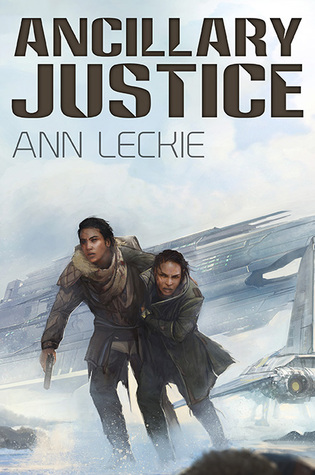
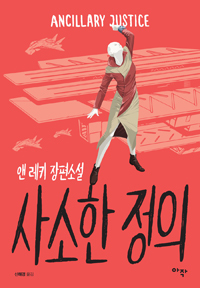
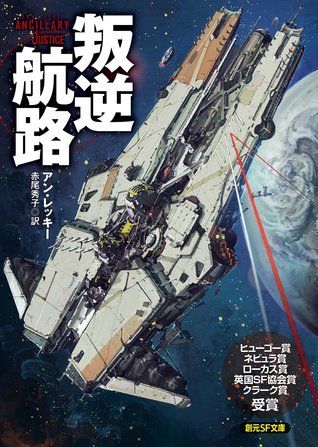
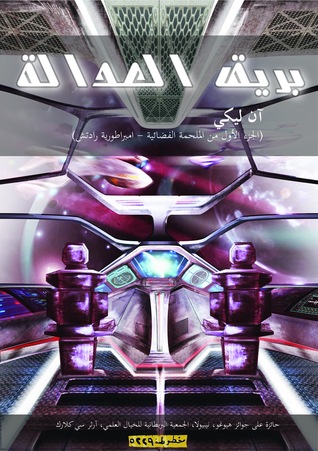
It’s Sci-Fi November! To celebrate, I’ll be featuring science fiction titles on Friday Face-Off for the full month. Up next, we’re shining the spotlight on Ancillary Justice by Ann Leckie, a novel I can appreciate for its originality and imaginative ideas. The book follows Breq, a soldier who is more (and, I suppose, also less) than she seems. An “Ancillary”, Breq was formerly one of many corpse soldiers all linked up with an artificial intelligence as part of a massive starship called the Justice of Toren. So in a sense, she is the Justice of Toren. Breq as well as all the other corpse soldier “segments” who were treated as appendages connected to the Justice of Toren were collectively considered part of the ship. It’s an incredibly elaborate concept that’s a bit to hard to wrap your head around, but man, was it cool to read about.
But we’re here to talk about covers today, so let’s take a look at them now!
From left to right:
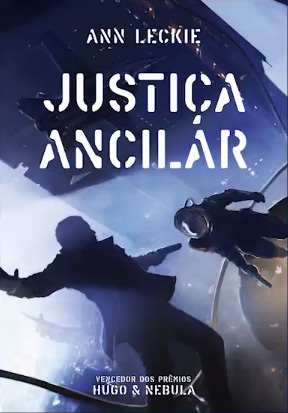
Orbit (2013) – Subterranean Press (2015) – Portuguese Edition (2018)
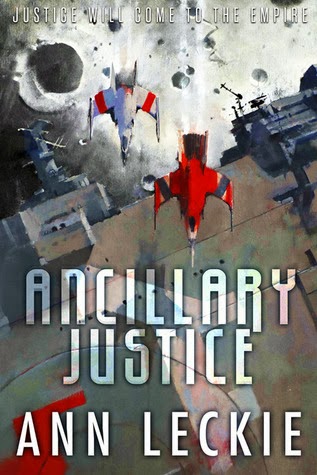
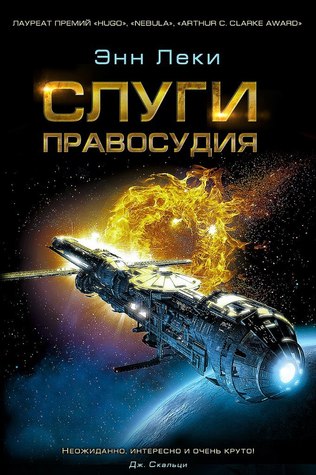
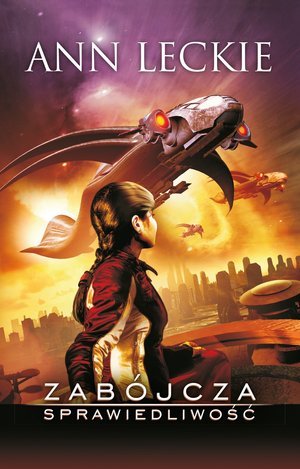
Russian Edition (2015) – Polish Edition (2015) – French Edition (2015)
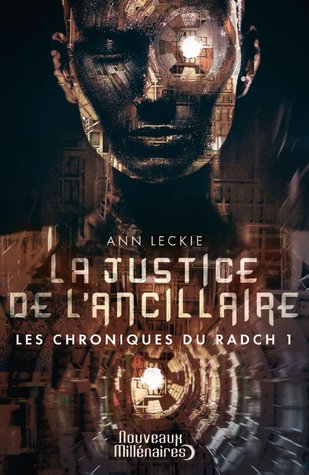
Estonian Edition (2015) – Greek Edition (2019) – German Edition (2015)
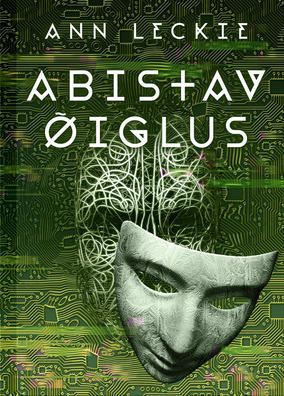
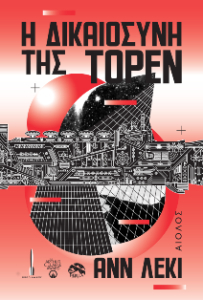
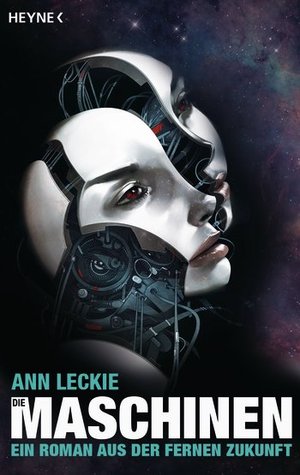
Korean Edition (2016) – Japanese Edition (2015) – Arabic Edition (2016)
Winner:
I thought for sure I’d be picking the Orbit edition today, but as I was looking through the available covers while I was drafting this post, another one snuck in unexpectedly and stole my heart! I am of course talking about the Polish edition, which just has a je ne sais quoi quality to it that I find very appealing.
But what do you think? Which one is your favorite?
Thriller Thursday: The Siberian Dilemma by Martin Cruz Smith
Posted on November 21, 2019 12 Comments
I received a review copy from the publisher. This does not affect the contents of my review and all opinions are my own.
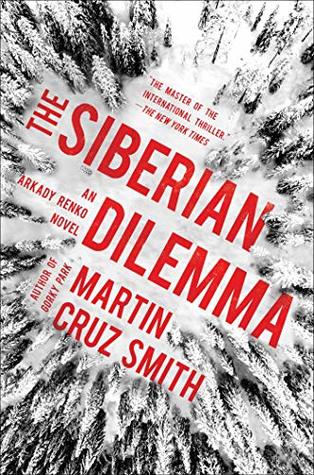 The Siberian Dilemma by Martin Cruz Smith
Mogsy’s Rating: 3.5 of 5 stars
Genre: Mystery, Thriller
Series: Book 9 of Arkady Renko
Publisher: Simon & Schuster (November 5, 2019)
Length: 288 pages
Author Information: Website | Twitter
Normally I wouldn’t just jump into the middle of a series, but I’m trying to vary my reading and felt I was due for a mystery thriller. Enter The Siberian Dilemma by Martin Cruz Smith, the ninth book in a spy series called Arkady Renko which has only been peripherally on my radar. Formerly an investigator for the Soviet Militsiya in Moscow, our eponymous protagonist has taken on various roles since, solving crimes and mysteries all over the world.
In The Siberian Dilemma, Arkady heads into the wilds of the northern Russian province to search for his girlfriend Tatiana Petrovna, an investigative journalist who has gone missing. Although Tatiana has been known to go off-grid for weeks at a time while she is on an assignment, Renko grows concerned after her failure to return home on the train. The constant target of death threats, Tatiana may be in danger, especially given the sensitive nature of the story she is doing on Mikhail Kuznetsov, a wealthy and influential oligarch running for president against Vladimir Putin in the upcoming election.
So when Renko is dispatched to Siberia by his superiors to interrogate a prisoner, he decides to use this opportunity to also check on Tatiana and make sure she is safe. On his way there, he meets Rinchin Bolot, a traveler who is fascinated by Renko and wishes to accompany him as his factotum—a sort of sidekick who actually winds up being quite helpful to our protagonist out in a lot of ways, especially when the mission inevitably turns deadly. After Kuznetsov’s business partner and best friend is murdered, Renko fears that others who have gotten close to the presidential candidate may be targeted next—including himself and Tatiana.
As a first timer to this series, the only reason why I braved starting with book nine was because apparently it could be enjoyed as a standalone. For the most part, I think this is true. Martin Cruz Smith does a good job catching readers up, even if you haven’t read any of novels that came before. That said, I’m sure there were a lot of nuances and connections I must have missed, simply from being unfamiliar with the series’ history. For example, there are several side characters who show up, and from their easy rapport with the protagonist it is clear they had major roles to play in the previous books. One of these is Zhenya, Renko’s adopted teenaged son, and of course Tatiana, whose relationship with the main character was only explored lightly because the narrative assumes the reader is aware of how they met and got together.
That said, there was enough thrust behind the mystery which helped new readers like me get hooked and interested in the story. Granted, things got off to a slow start, which I believe was due to a couple of reasons. The first is once again my unfamiliarity with the series, making it difficult to maintain a strong interest in the early chapters which mostly served to catch us up with Renko’s work and the people around him. The second reason has a lot to do with the nature of spy fiction itself. In the tradition of crime and espionage novels, The Siberian Dilemma places a lot of emphasis on the intrigue and suspense behind the games that major political powers play. While there is also plenty of action, most of these edge-of-your-seat moments—the shootouts, ruthless betrayals, and even a harrowing bear attack—don’t come until the second half of the book.
There’s also a muted quality to the author’s style that took a while to get used to. This removed a lot of the tension from the story, and as a result I never felt truly afraid for Renko, even when he experienced all these close calls. However, I was also pleasantly surprised to find a fair bit of humor in the book. Rinchin Bolot was especially a hoot, injecting some much-needed levity in what was otherwise a pretty dark book. The novel’s biggest weakness was perhaps its pacing, which was unstable with a slow and measured beginning while the ending felt rushed. This was very jarring for a newbie like me and sometimes made it harder to stay focused.
Still, overall I was pretty impressed, speaking as a reader coming to this author and series for the first time. It was also a quick read and easy to get into, despite a few minor obstacles and challenges. In addition, I highly enjoyed the Moscow politics and Russian investigator angle, which I don’t often get to see a lot in the mysteries and thrillers I typically read. All told, I definitely wouldn’t mind picking up more of Martin Cruz Smith’s work or reading more Arkady Renko novels.
#SciFiMonth Waiting on Wednesday 11/20/19
Posted on November 20, 2019 18 Comments

“Waiting On Wednesday” is a weekly meme that first originated at Breaking the Spine but has since linked up with “Can’t Wait Wednesday” at Wishful Endings now that the original creator is unable to host it anymore. Either way, this fun feature is a chance to showcase the upcoming releases that we can’t wait to get our hands on!
Mogsy’s Pick
Chaos Reigning by Jessie Mihalik (May 19th, 2020 by Harper Voyager)
As you know, I recently reviewed Aurora Blazing, and I had also just finished the second book of Mihalik’s Rogue Queen novella series the other day. And so, the cover reveal of this novel earlier in the week week couldn’t have come at a better time! Really looking forward to this one, and once again we have a very beautiful cover and intriguing blurb.
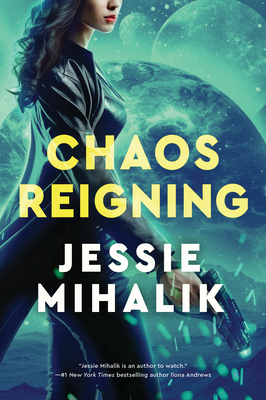 “Interplanetary intrigue and romance combine in this electrifying finale to the Consortium Rebellion series.
As the youngest member of her High House, Catarina von Hasenberg is used to being underestimated, but her youth and flighty, bubbly personality mask a clever mind and stubborn determination. Her enemies, blind to her true strength, do not suspect that Cat is a spy—which makes her the perfect candidate to go undercover at a rival House’s summer retreat to gather intelligence on their recent treachery.
Cat’s overprotective older sister reluctantly agrees, but on one condition: Cat cannot go alone. Alexander Sterling, a quiet, gorgeous bodyguard, will accompany her, posing as her lover. After Cat tries, and fails, to ditch Alex, she grudgingly agrees, confident in her ability to manage him. After all, she’s never found a person she can’t manipulate.
But Alex proves more difficult—and more desirable—than Cat anticipated. When she’s attacked and nearly killed, she and Alex are forced to work together to figure out how deep the treason goes. With rumors of widespread assaults on Serenity raging, communications down, and the rest of her family trapped off-planet, Catarina must persuade Alex to return to Earth to expose the truth and finish this deadly battle once and for all.
But Cat can’t explain why she’s the perfect person to infiltrate hostile territory without revealing secrets she’d rather keep buried. . . .”
#SciFiMonth Audiobook Review: Star Wars: Resistance Reborn by Rebecca Roanhorse
Posted on November 19, 2019 25 Comments
I received a review copy from the publisher. This does not affect the contents of my review and all opinions are my own.
 Star Wars: Resistance Reborn by Rebecca Roanhorse
Mogsy’s Rating (Overall): 4 of 5 stars
Genre: Science Fiction, Media Tie-In
Series: Star Wars Canon, Journey to Star Wars: The Rise of Skywalker
Publisher: Random House Audio (November 5, 2019)
Length: 11 hrs and 29 mins
Author Information: Website | Twitter
Narrator: Marc Thompson
Guys, I was so excited when I found out about Star Wars: Resistance Reborn and that Rebecca Roanhorse would be writing it. Rebecca Roanhorse, as in The Sixth World Rebecca Roanhorse? I love that series! And couldn’t have been more thrilled that she was tapped for this project. But she also has her work cut out for her, given the challenging task of bridging The Last Jedi and The Rise of Skywalker.
Reduced to only a handful of survivors after the harrowing events at the battle of Crait, the Resistance now they must decide their next steps. Leia Organa, unwilling to give up, sends out a call for help to whoever would listen. But it appears most of her support have abandoned her—or have been captured and detained by the First Order. Wracked with guilt for his actions, Poe Dameron is ready to do anything to make amends. At Leia’s request, he takes it upon himself to search for more allies.
And at its heart, that’s what this book is all about: Poe’s road to redemption. He knows he screwed up royally in The Last Jedi, and Resistance Reborn is merciless in making you feel the full brunt of the repercussions to his actions.
So this, in essence, is really Poe’s story. The consequence of his recklessness that effectively led to the end of the Resistance is a shadow that looms over the entire novel. But just as the rebellion needs to be reborn, so does our commander of Black Squadron. No one is harder on Poe than Poe himself, and throughout this journey, filled with moments both heartwarming and heart-wrenching, he realizes that he still has teammates and true friends who will fight by his side, lifting him out of that dark place. And then there are the kind of allies who won’t take such a direct route, choosing instead to empower him and set him on the right path by teaching him how to help himself.
Which brings me to the cast of characters, and I was pleasantly surprised to find we got to follow some major players. In my experience, whenever we get a “bridge book” or a “prequel novel” in the Star Wars expanded canon that promises to fill in the gaps, what we usually get instead is a fun but fluffy throwaway piece starring a bunch of expendable one-use characters because you just know they’ll save all the most important developments for the movies. A prime example of this is the first book of Aftermath (though to be fair, some of the characters in that trilogy ultimately became quite prominent, impacting the Star Wars universe quite significantly, but more on that later).
Such is life when it comes to media tie-ins, after all, but Resistance Reborn on the other hand features all our old favorites: Leia, Rey, Finn, Poe, Rose, Chewbacca, and the list goes on. It helped make this feel like a real Star Wars novel, lending weight to its people, events, and places. It also made me feel like what I read mattered on a greater level, and you’d be surprised how few canon novels thus far have passed this test.
Not only that though, Resistance Reborn is like a gift to the superfans of Star Wars who have really embraced the franchise beyond the movies. If you’ve also enjoyed the books, comics, video games, TV shows, etc., there will be quite a few references and appearances by characters you’ll recognize from elsewhere. Snap Wexley, for example, who made his debut on the aforementioned Aftermath and was brought to life on the big screen in The Force Awakens. Shriv Suurgav and Zay Versio, from Battlefront II. Even Ransolm Casterfo, the handsome rogue senator from Claudia Gray’s brilliant Leia Organa novel Bloodline will show up, with some answers as to what he’s been up to all these years. Not only that, we have some highly recognizable names like Wedge Antilles, who has married Snap’s mother Norra and are living together as farmers on Akiva. Maz Kanata, who understands more than most how the Force works in mysterious ways. And of course, there are ties aplenty to the Poe Dameron and Black Squadron comics. It was fascinating to see this book gather all these disparate characters together, forming the basis of a new resistance. There’s a sense of renewed hope, but also this bittersweet acceptance of an end to an era. The coming battle will be fought by this new line-up of rebels, and I’m curious to see who will show up in The Rise of Skywalker.
As for Rebecca Roanhorse’s writing, I think her style translates well to Star Wars, despite the occasional turn of phrase which would jolt me out of the immersion. Her best portrayals were of the female characters (there was one particular scene I loved, involving a heartfelt conversation between Leia and Rey), while a couple of her male characters like Wedge and Finn could have used some fine-tuning, and there were a few telling-not-showing moments where Poe came across just a bit too detached. But overall, I couldn’t be happier with Roanhorse’s work and her dedication to detail. The book was peppered with little Easter Eggs, calling back to everything from Star Wars: Rebels to the original trilogy.
But when it comes to story, admittedly the plot was on the flimsier side, and it worked out too neatly. Yes, we get this whole build-up to a nail-biting finale, but at the end of the day, we are still left with an awkward sense of being back to square one. Granted, we now know the Resistance isn’t as alone as we thought it was; the most important elements of Black Squadron are intact and we we’ve dug up some new allies. Poe, the linchpin of the novel, also gets his absolution. But really, all this could have been inferred from the end of The Last Jedi. I guess the point I’m trying to make is, Resistance Reborn ends in a way that seems purposely designed not to affect the third movie at all, but again, this just goes back to the nature of media tie-ins. Like most, it’s a standalone, supplementary rather than required, and the most important characters are kept from making any huge decisions or weren’t developed much because obviously you save those things for the movie.
That being said, should you read Resistance Reborn? Yes, if you’re a diehard Star Wars fan and are going all in on Journey to Star Wars: The Rise of Skywalker, you absolutely should. Despite its weaknesses (many of which are related to the tie-in genre rather than anything negative to do with the book itself) this was one of the better novels from the new canon. Rebecca Roanhorse did a fantastic job writing a fun new adventure to fill the gap between the two films, even fixing or clarifying a few things from The Last Jedi, while providing lots of geek-out moments for those of us who love everything Star Wars.
#ScifiMonth Book Review: The Andromeda Evolution by Daniel H. Wilson and Michael Crichton
Posted on November 18, 2019 26 Comments
I received a review copy from the publisher. This does not affect the contents of my review and all opinions are my own.
 The Andromeda Evolution by Daniel H. Wilson and Michael Crichton
Mogsy’s Rating: 4 of 5 stars
Genre: Science Fiction
Series: Book 2 of Andromeda
Publisher: Harper (November 12, 2019)
Length: 384 pages
Author Information: Website | Twitter
To start, I read The Andromeda Strain a long time ago. Admittedly, it wasn’t one of my favorites by Michael Crichton, and I can’t say I remembered much from it at all. Personally, I wouldn’t have pegged it for being sequel-worthy, but here we are, fifty years after the book was published, commemorating it with The Andromeda Evolution…and well, I’m sold! Written in its entirety by the talented Daniel H. Wilson, who is certainly deserving of honor, this novel helped put to rest my skepticism and convinced me there was a story there. Crichton’s name is on the book because Wilson worked and built upon many of the themes the man had developed, paying tribute to his ideas and doing them justice.
As I said though, I recalled very little from the original when I started this book; it’s been more than twenty years since I read The Andromeda Strain and my memory just isn’t that great. That said, I had no problems getting into The Andromeda Evolution, as the narrative does a very good job recapping everything that had happened. Decades have passed since the original team of scientists discovered Andromeda, a highly virulent microorganism of extraterrestrial origin that caused instantaneous death through blood clotting. The government attempted to contain it in a subterranean bunker, but Andromeda ultimately evolved to breach its containment and escape. Despite its highly destructive nature though, by then the microorganism’s traits had been altered to the point was no longer harmful to humans.
Still, the US military is taking no chances. A special team called Project Eternal Vigilance had been created to do exactly as its name implies—keep watch, 24/7, for any sign of Andromeda’s return. And for a while, it seemed humanity was safe. Nearly half a century has gone by, and Eternal Vigilance has found nothing. But just as the project was on the verge of being shut down, a mapping drone flying over the rainforests of Brazil sends back reports of a disturbing anomaly found in the middle of the Amazon. Unfortunately, preliminary tests of its chemical signature confirm everyone’s worst fears—Andromeda is back, and its behavior is evolving in ways no one can predict.
In some ways, the first half of this novel can be viewed a parallel to the early events of The Andromeda Strain. Once more, we start off with the dispatching of a group of scientists, a second Project Wildfire, updated to suit today’s diverse society and workforce. But after the intro, the story swiftly develops a personality of its own, while still adhering to the foundation of the original tale. The beginning is also very technical, written in a debrief report-style format and tone that is meant to be informative rather than literary. Some of it is eerily reminiscent of Crichton’s own writing when he used to do this in some of his books, and I can’t help but feel that maybe this is Wilson’s way of paying homage.
I also thought perhaps it was a good thing that I did not recall much from the original novel. Of course, bits and pieces came rushing back as I was reading, but for the most part, I felt like I was experiencing something completely new. A few elements struck me as familiar, like the story structure or the technology and the diagrams, but on the whole I was thrilled with the freshness and surprises of The Andromeda Evolution. Wilson was working heavily off many of Crichton’s ideas, but he’s something of a dab hand himself when it comes to the techno-thriller genre. For one thing, he knows how to get technical without overwhelming the reader, and he’s also good at balancing all that hard science with the storytelling aspects, which is how you get epistolary chapters and embedded scientific reports that are as riveting to read as the survivalist scenes of our characters trying to make it out of the jungle.
Ultimately, I enjoyed this one a lot, and to be honest, I didn’t think I would. Sure, going into the book blind and not knowing what to expect might have helped a little, but it didn’t take long for me to become genuinely impressed. The Andromeda Evolution perfectly encapsulates everything I love about a Michael Crichton novel while still sporting its own unique flair and special energy, so my hat’s off to Daniel H. Wilson for pulling it off!
YA Weekend Audio: The Queen of Nothing by Holly Black
Posted on November 17, 2019 39 Comments

I received a review copy from the publisher. This does not affect the contents of my review and all opinions are my own.
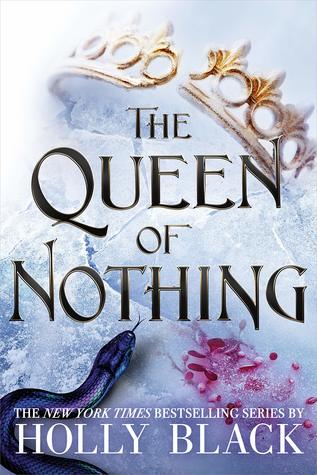 The Queen of Nothing by Holly Black
Mogsy’s Rating (Overall): 4 of 5 stars
Genre: Fantasy, Young Adult
Series: Book 3 of The Folk of the Air
Publisher: Hachette Audio (November 19, 2019)
Length: 9 hrs and 41 mins
Author Information: Website | Twitter
Narrator: Caitlin Kelly
One of the most anticipated endings has finally arrived, and did it meet my expectations? Hell yeah it did. Here’s the thing, though—The Queen of Nothing calls back to some of the themes and elements used in the first two books, but rest assured Holly Black has taken the appropriate steps to give this finale a very special flair to make it stand out. We also get so much of everything we’ve come to love throughout this series, including more conspiracy and more manipulation (in other words, more Fae politics in general) as well as deeper look into the tantalizingly complex relationship between Jude and Cardan.
But first, the obligatory warning: make sure you’ve finished both The Cruel Prince and The Wicked King before reading this review. There won’t be spoilers for The Queen of Nothing, but due to the author’s love of cliffhangers and unexpected surprises, it would be impossible to discuss this book without referencing past events, so I hope you’re caught up! The novel begins straight away with the fallout from the previous book’s bombshell ending, in which Cardan manages to convince Jude to release him from his vows to her, making her his queen before promptly exiling her back to the world of mortals as soon as he gets his free will back. Rightfully pissed off at Cardan’s betrayal, Jude whiles away her days seething at the fact that even though she is the legitimate queen of Faerie, she has lost all authority and her life would be forfeit if she ever tries to return.
But then comes a desperate request for help from her twin sister Taryn, who finds herself in grave danger. To save her, Jude must take a great risk and sneak back into the Faerie Court, using a combination of magic and her own wits to hide herself in plain sight. But going back also means having to confront Cardan, something Jude isn’t sure she’s prepared for, after everything they’ve been through together. Worse, it appears the political situation has not improved since she left. As the realm braces itself for war, Jude finds herself caught in the middle of a roiling quagmire of secret plots, assassination attempts, and other cloak-and-dagger-type dealings.
Holly Black is a master storyteller, and all her careful plotting has finally come to fruition in this final novel of The Folk of the Air trilogy in which one wrong step by the main character can bring everything crashing down. Fae politics have been the backbone of the series since the beginning, but they are especially at the forefront in The Queen of Nothing, as Jude treads a fine line in her dealings with Cardan. But now the suspense is even higher, since we’re not sure where they stand—is the king still a lover and ally, or is he an enemy who will be the death of our protagonist? The two of them continue to tease us with this beguiling dance. Remember, almost every major character in this world has an agenda, and we know from experience that the details behind those agendas are always closely guarded, which keeps the tensions high and readers guessing.
I also love how Jude is a survivor. No, she’s not always nice, nor does she always do the right thing. We’ve already seen the lengths she will go to further her own goals, but that’s not always a bad trait to have in a main character who is more of an antiheroine. It certainly makes things a lot more interesting! Jude’s personality is a result of her experiences, many of which are dark and traumatic. That said, she still has a lot of admirable traits. Hungry for revenge, her reasons for returning to Faerie might not be entirely altruistic, but part of her is also motivated to protect a sister and her secret—someone who is arguably undeserving of such loyalty.
Other highlights include major family drama. We’ve already touched upon some of the issues with Tayrn, and that’s just the tip of the iceberg. Furthermore, we get to spend some quality time with Oak, who is being kept safe in the mortal realm. On the topic of Jude’s traumatic past, this book also features some serious developments with Madoc. More than that I don’t wish to say for fear of revealing too much, but if you are invested in any or all these characters I think you’ll find yourself deeply engrossed with everything that happens.
Bottom line, if you’ve enjoyed everything you’ve read in the trilogy thus far, I have a feeling you will also love the way The Queen of Nothing brings everything to a close. It’s everything I liked about the previous books and more. All in all, a very satisfying finale, and together these three books make up one of the best YA series I’ve read in years.
More on The BiblioSanctum:
Review of The Cruel Prince (Book 1)
Review of The Wicked King (Book 2)


 The BiblioSanctum