Book Review: The Splinter in the Sky by Kemi Ashing-Giwa
I received a review copy from the publisher. This does not affect the contents of my review and all opinions are my own.
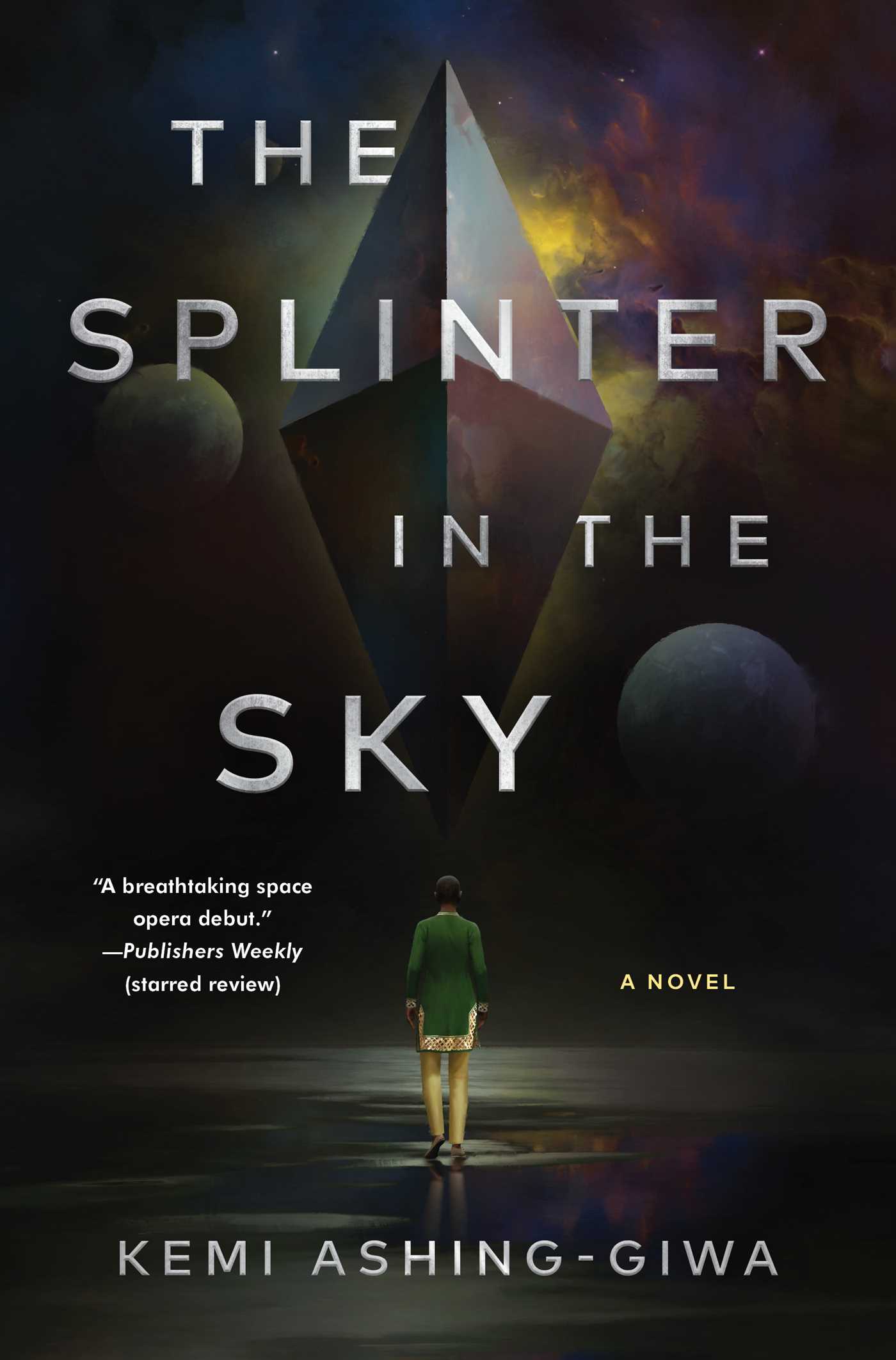 The Splinter in the Sky by Kemi Ashing-Giwa
Mogsy’s Rating: 2 of 5 stars
Genre: Science Fiction
Series: Stand Alone
Publisher: Saga Press (July 11, 2023)
Length: 384 pages
Author Information: Website | Twitter
I have some conflicted feelings about this book. On the one hand, the general concept behind it is sound, though whether it is because of overzealous messaging or inexperience by the author (The Splinter in the Sky is Kemi Ashing-Giwa’s debut), the story itself comes across so aggressively bland and mediocre that it’s difficult to even point to what wasn’t working.
As the novel opens, we meet protagonist Enitan Ijebu, a linguistics scholar and tea hobbyist who lives in the province of Koriko occupied by forces of the Holy Vaalbaran Empire. While the Empire and the neighboring Ominirish Republic has ostensibly agreed to a peace treaty following years of bloody war, it is revealed that Vaalbara still has its sights on expansion. One day, upon returning home to find her sibling Xiang missing, Enitan learns that Vaalbara has been snatching citizens of Koriko off the streets in order to forcibly recruit them into their armies. And now, it has happened to her beloved sister.
Determined to rescue Xiang, Enitan agrees to be a political hostage so that she can be taken to the Splinter, the capital of Vaalbara. After all, if there are any answers to be found, they should be at the heart of the Empire. But then, things immediately take a turn for the worse when her transport is intercepted by the Ominirish. Rather than kill her though, they end up making her an offer she can’t refuse. With a new Imperator on the Vaalbaran throne, the Republic is desperate for information on their enemy and want Enitan to spy for them in exchange for their help to get her and Xiang out. Having no love for the Empire, Enitan readily accepts the deal, though matters quickly become more complicated upon her arrival at the Splinter when she makes the acquaintance of the very person she is meant to spy on. The newly elevated God-Emperor Menkhet is nothing like she expected, and when she too asks Enitan to spy on her behalf, our protagonist finds herself caught in a very difficult situation.
With a premise so strongly rooted in political intrigue, I truly did want to love this book—was fully prepared to love this book—but unfortunately, the more I read the more disenchanted I became. First of all, nothing about the story, the characters, their relationships, or the setting really excited me. Everything about The Splinter in the Sky was just so very average and at times also derivative and predictable that it was difficult not to feel a little disappointed.
Then there were the themes of colonialism. While on the surface I can appreciate what Ashing-Giwa was going for, her handling of the social commentary was simply way too ham-fisted and unsubtle, leading to the almost complete overshadowing of the political drama that I wanted to read about in the first place. Enitan herself was also a wholly unlikeable protagonist because of the massive chip on her shoulder. Even though I could sympathize with her people’s plight and understand the reasons for her resentment and anger, I can’t say I cared for the way she acted like she and she alone had a monopoly on righteous rage, and suffice it to say, this lack of self-awareness on her part got really old, really fast.
In general, I’m fine with social commentary in sci-fi, an ideal genre for exploring societal issues and themes through the topics it covers. But when an author tries to deliver that commentary at the expense of character and story development in a way that’s too obvious, that’s another matter entirely. Not surprisingly, that took away some of my enjoyment here. Along with the novel’s generic themes, cookie cutter characters and overall lack of standout traits, I’m sad to say The Splinter in the Sky fell short of my expectations.




 The BiblioSanctum
Authors need to write stories first. Then, they can write their pet political screeds in another book where everybody with good sense can simply ignore it. Mixing the two just means the author is going piss everyone off and get their name forgotten faster than usual…
LikeLike
For real. It’s even more frustrating when you know the author consciously chose this path, they made the decision to get on a soapbox rather than tell a good story.
LikeLiked by 1 person
“Ham-fisted” insertion of social commentary is not good, I don’t think I would like this either!
LikeLike
It’s a shame how many books fall into this trap!
LikeLike
It’s an intriguing cover, it’s too bas that it wasn’t more
LikeLiked by 1 person
Pingback: Bookshelf Roundup 07/30/23: Stacking the Shelves & Recent Reads | The BiblioSanctum
Maybe not the book for me
LikeLiked by 1 person
Damn for average and predictable books Mogsy!
LikeLiked by 1 person
That’s a shame. You wouldn’t think this kind of book would be a debut would you, it’s surprising it was published in a way, like one of the comments above says, start with a story, vent after you have a few under your belt.
Lynn 😀
LikeLike