Archive Book Review: Libriomancer by Jim C. Hines
Posted on January 5, 2013 4 Comments

My rating: 3 of 5 stars
Libriomancers have the ability to “pull” things such as objects and even people/animals (albeit, it’s a bit dangerous to pull anything other than objects from the books) from books. Isaac is a libriomancer who has been delegated to a librarian job after something went awry during an investigation two years prior to this story. Isaac is part of a secret society whose job is, among other things, to keep magic in check. The society is headed by Johannes Gutenberg who is hundreds of years old, but now he’s missing. And vampires have shown up at Isaac’s door. So, of course, Isaac finds himself on the case.
As an avid reader, why wouldn’t I want to read about about magic centered around the power of reading? Isaac could be any one of us bibliophiles if you look over the paranormal part. He gets lost in the magic of the worlds that books create. Even before he became a libriomancer, they were his protection and his home. Being able to actually manipulate the power was just a perk of a love he already had. It was adorable how he’d get distracted just thinking about all the books inside a library and how he’d get upset if a book had been abused.
You’d think with such an arsenal at the libriomancers’ disposal that things would get out of hand quick, but Hines did a great job of adding many limitations to the magic.One of the more interesting limitations is the fact that the magic is “created” by readers in a sense, and a libriomancer just taps into that magic and bends it to their will. Also, certain books are magically “locked” to keep libriomancers, especially people who have no idea that they’re libriomancers, from pulling something from a book that could possibly cause chaos. I chuckled a little bit at the paragraph where Isaac mentions that J.K. Rowling was asked not to include a certain item in her future books.
Isaac is a bit Dresden-ish to me. His humor and attitude just made me picture Harry in his place more than a few times. But I’m starting to think that’s the usual archetype for the male paranormal hero just as many paranormal female heroes share many of the same traits. However, Isaac is a huge geek with a love for Doctor Who, Firefly, and science fiction novels–the latter two inspiring him to wear a brown duster. His companion is a loyal fire spider named Smudge who he pulled from a book and became too attached to to return. Smudge is prone to flaring up when danger is near and causes more than a few fire accidents.
I do have to give Isaac a few more props because he wants to use his magic. So many male and female protags in a paranormal book don’t want to use their magic or spend way too much time debating over what using the full extent of their magic could mean. Isaac is forbidden to use his magic, but he wants to use it. Yes, he talks about the possibility of losing himself in his magic, which is a very valid concern for a libriomancer, but he’s more curious about how doing certain things with his magic could shape their ideas on how their magic works. I loved that. He’d get excited about the prospect, embrace the ideas of how “book magic” could be fully shaped, and he’d even, at times, understand that he probably does not have enough control of his power to test that.
Then, there’s Lena. The moment Lena Greenwood entered the book, I knew that I was going to love her. She kicks ass like most female protagonists in a paranormal series, but her looks set her apart from them. Isaac described her as heavy set and beautiful. Notice I said “and” right there instead of “but.” Her weight isn’t treated as something “wrong.” Isaac doesn’t lament that she would be prettier if she was slimmer. In fact, when he described her, her being heavy set was just a matter-of-fact opinion coupled with the rest of his description about her. It doesn’t really come up again for him again except one other time, but another character did ask Isaac, “Who’s the fat chick?” I really appreciate Hines adding a beautiful female protagonist and love interest who isn’t a size 2 and whose weight isn’t analyzed from every angle as “something wrong with an otherwise beautiful woman.”
Lena is the lover of a psychologist who treats people like Isaac. (Libriomancers are susceptible to taking characters into their heads and forming multiple personalities, and her girlfriend, the doctor, has treated Isaac in the past.) She loves the doctor, but she begins to love Isaac, too. I wasn’t surprised when they became a threesome more in the way of a triangle with Lena being the pinnacle. I mean, how many times have we gotten a threesome in a paranormal romance book featuring a woman when she can’t choose between two men? However, I liked some of the reasoning behind it, aside from how they feel about one another, being that they both make Lena feel complete.
She’s able to have multiple sides to her personality because of both of them. She’s a magical being born from a book. Her nature is to be agreeable for her lover. She adapts to be a perfect mate for them. She can’t change that about herself. She can only be choosy about who she allows to shape her, which the ultimate form of trust for her. With two lovers, she’s finding for the first time that she can disagreeable if she likes because she can offer a differing opinion where once she could only be agreeable to a lover–whatever their whims. She’s finding a new dimension that allows her to be more than just what Isaac or the doctor wants her to be. She’s beginning to feel like she has true depth.
Anyhow, moving on.
One thing that annoyed me? All the name dropping. This is an issue that I’ve taken with many books that do so much name dropping. It always ends up feeling overdone to me.
Media that depends on pop culture references, whether it’s a book or some type of visual media (movies, television shows, etc.), leaves me feeling some kind of way–mainly because I always end up thinking: “Who is going to care about/know about these references in a few years?” True, Hines used some classics that are and will continue to be enduring, but many of the vampires/monsters take their names from authors popular at this moment like Stephanie Meyers and Charlaine Harris, who–no offense–I don’t see their current works being something that people will care much about twenty years from now. When writers root themselves so deeply in the trends that are hot right now in a story, it tends to make a story feel dated when coming back around to it, especially if that story isn’t meant to be about an era past.
I would’ve liked to have seen more originality as far as the books were concerned in the story, but I understand it being easier to reference books already in existence since most readers would already be vaguely familiar with most of them. And it wouldn’t require Hines to go into detail describing the book. But Meyerii vampires, also known as Sparklers, really? I do have to give Hines some props for books being an “unnatural” way of becoming a monster.
Even though libriomancers were the main magic practitioners talked about, there were hints of other interesting magic(like Isaac’s boss using music called “bardic magic”), and I hope we get to see a little more of those. I’m hoping to see more of Johannes Gutenberg and Ponce de Leon in future books because the bits of their relationship shown in the book was an interesting tease for readers. The story could’ve been a little stronger, but I did enjoy it and the characters.

Book Review: Anna Dressed in Blood by Kendare Blake
Posted on December 15, 2012 3 Comments
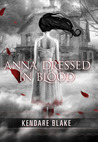 Anna Dressed in Blood by Kendare Blake
I’ve been watching horror movies and reading horror books nearly as long as I’ve been reading. Nothing much scares me or surprises me anymore with the genre, but I still enjoy the genre because of the atmosphere the stories present as well as how the stories are told. I think horror novels are some of the more inventive lords of fiction. And while the BIG BAD may not scare me, I always find that there’s a certain amount of trepidation I feel for the characters, for lack of better word, when viewing/reading horror if the story is well crafted—even though I know 90% of the time they’re going to make it out of the story mostly intact. Anna Dressed in Blood was no different. I didn’t find the story scary, but I loved this certain level of eeriness this story possessed.
This book was recommended to me by Amazon because of other recent books I’d read at the time. I usually only give their recommendations a cursory glance at best, but the cover was a real eye treat, the title was interesting, and the fact that the protagonist was a male made we want to give this a try. I’ve had this book for a while, started it, but put it down in favor of something else. A friend and I buddied up and read the book together after finishing another book that I loved.
It’s not often that we get a male protagonist in the young adult genre. Perhaps that’s not a fair assessment. Maybe there are a fair amount of male protagonists in the genre, but if there are, they are obviously far outnumbered by their female counterparts and easily missed in the genre because of that. Here we have this teenage boy who has been slaying ghosts for the past three years of his life, moving from one haunted town to the next, secretly preparing for what he thinks will be the biggest fight of his life. Anna was supposed to be the true test of his skill, the slaying that would determine if he was ready for that fight. But even before he meets Anna, he becomes a bit obsessive about her, and after he meets her, he finds out that she’s not his usual phantasm.
I liked how Blake crafted the story almost like a modern ghost tale you’d tell your friends around the campfire, and it retained a level of intrigue that kept me turning, things rippled under the surface and were gradually revealed as readers moved deeper into the story.
I really have to applaud her in Cas’ character development. She did a wonderful job of capturing that youthful arrogance, pride, fear, and self-doubt. Something I feel so many young adult authors don’t do as well. This may be just a bias as an adult reader, but so many young adult authors exaggerate the things that define teenagers, which ends up annoying me to no end. It doesn’t feel natural. It’s like reading some gross caricature of teenagedom, their virtues and flaws magnified to a ridiculous degree. It’s hard to empathize with some other heroes and heroines for this reason even when I understand their position in the story. I didn’t have that problem with Cas.
Sure, the kids in this story did things that made me roll my eyes, but not in complete exasperation. It was more of an amused eye roll that I might give teenage antics in real life than an “unbelievable” eye roll. Now that’s not to say that there weren’t some moments when things did get a little too much, even for the fantastic nature of the story, but Blake had far less moments of that than many young adult authors.
I appreciate that Blake presented magic, even black magic, as not being inherently good or evil, but solely a weapon for the good/bad intentions of those who wield it. I get tired of so many books treating magic as a black and white, good and evil thing while ignoring the complexity that magic brings. I really liked that two of the good guys were practitioners of black magic (and Cas’ mom practices white magic), one even had a great deal of experience with voodoo, which is often maligned in fiction. So, it’s always nice to see an author trying to show the balance that white/black magic brings to the world without assigning good or bad to them.
I had a hard time believing that Cas isn’t behind in school even though he’s changed 11 schools in three years. I don’t care how smart he is because schools follow different curriculums and a whole host of other things that would have an affect on his education, especially with so much his focus going into the ghost hunter thing. I also didn’t think the murders that happened after Anna’s “release” were well done. I mean, it was predictable that they’d think it was her. I don’t have any problem with that, but it was a such a weak presentation and hardly seemed worth the effort of trying to cast doubt on Anna for the characters and the readers. There was nothing about those murders that made me even remotely believe that Anna had anything to do with them, especially since Cas says that there are numerous ghosts in any town. Most of them are nonviolent, but it’s conceivable that there would still be a few who were not.
I was also mildly disappointed in how predictable the deaths of Will, Chase, and Mike were. You could tell they were expendable characters to be used as cannon fodder to spare the other main characters. Mike’s murderous indifference to Cas’ life, drunk or not, seemed a bit forced and out of place for me. It seemed like she was trying to dredge up early sympathy for Anna by making her something of a hero for Cas, which was unnecessary as we learn more and more about through the story and eventually completely through her memories. And that, to me, was more than ample for readers to feel sympathy for Anna, especially when you consider that most violent ghosts are usually innocent victims who died angry. Anna was no exception.
Now, Blake played with theme of Anna being Cas’ savior instead of the other way around again later in the story, but that was exactly the moment when Cas needed her. I liked how Anna wasn’t a reduced to a quivering girl ghost who needed the slayer to rescue her after she relived the horror of her death. Instead, she was able to reconcile who she was with the monster that’d been placed inside her, making her more than formidable and in complete control of both aspects of herself. Now, some people may say that Anna being the supernatural protector is predictable, and that’s a fair judgment. But I liked that the main female protags in the story are not diminished by their male counterparts. Anna doesn’t protect more than she complements Cas. She doesn’t stop him from being who he is, but she’s more than aware when he needs her help. And I loved how strong she was, both mentally and physically, strong enough to not hesitate to make a pivotal decision in the big fight and strong enough to drag the BIG BAD down to hell or whatever, sacrificing herself in the process.
Carmel was another character I appreciated. Yes, she is the perfect All-American girl, but she’s not stuck on herself. I know we often get popular girls in stories with a golden heart as much as we get the bitchy popular girl, but Carmel is more than aware that her status gets her everywhere. She doesn’t dispute the arguments presented about that and isn’t beyond using her popular girl status to her advantage. And she’s also not the sweet girl who stands by helplessly. She has a protective streak a mile wide for her friends. She seems to lose most of her calm and cool demeanor when faced with situations she perceives as threatening to her friends more than herself. I absolutely adored the description Cas gave of her running in with an Amazon scream to help him and Anna at the end. Very reckless on her part, but she’d been presented as the type of person to do that, even when the odds were against her, throughout much of the story. And I love that despite the fact she was the popular girl she was seen as a warrior rather than a nuisance in her own right.
Overall, I enjoyed this book. It was such a fast paced great read that I was zooming through, eager to see what happens next, and I will definitely be reading the next part in this series ASAP.

Book Review: The Hundred Thousand Kingdoms by N.K. Jemisin
Posted on December 5, 2012 1 Comment
 The Hundred Thousand Kingdoms by N.K. Jemisin
My rating: 4 of 5 stars
Spoilerish. Hm. Where do I start with this? I really enjoyed this book. I would be lying if I said that part of the reason I picked up this book wasn’t because the writer is a woman of color. It’s so rare to see people of color writing and representing ourselves in high fantasy stories. I’m starting to see more urban fantasy novels featuring, and being written by PoC, but high fantasy still sometimes seems a little taboo for PoC. And maybe I’m wrong, and I just haven’t been pointed in the direction of the plethora of fantasy novels written by PoC because they’re hidden away in the AA sections and rarely mentioned if ever mentioned.
I found out about this book through Tumblr when people were posting fanart for the series, and the little information that I was able to glean about series piqued my interest. Once I started this book, I couldn’t stop reading. Yeine was a great narrator, not one of those narrators who spends too much time turning over every single detail they’re taking in and making a story feel convoluted with unnecessary information. I also liked that she wasn’t perfect. So many heroes spend a bulk of their story saying why they’re not perfect while being basically perfect with such irrelevant flaws that are really more like strengths. Yeine doesn’t have to remind readers she’s not perfect, you see it in her actions, her choices, and her responses. She’s a woman doing the best she can in a precarious situation and it shows.
I also liked this world that Jemisin created that seems to be a blend of so many cultures and religions. I found the history of the gods fascinating. Their perception and understanding of things differ so much from how a human experiences these things, and I think Jemisin captured their dichotomy between them and humans, even between each other, so well. I loved the “oh-so-human-yet-not” angle she played with the gods. They often remarked that humanity’s flaws were their flaws because they created everything.
I couldn’t help loving Sieh, Nahadoth, Zhakka, and even Kurue and Itempas. While I squealed all over Naha, Sieh, and Zhakka, Tempa (Itempas) was so fascinating to me, even though he didn’t make a real appearance until the end of the book. Just the nature of how humans and other gods spoke about him made him feel omnipresent and powerful–and even a bit terrifying. Because while Naha outwardly showed his danger, Tempa came off as cool, calm fury. When we finally “met” him, I wished we’d had more time to get to know him.
What I really liked about Jemisin’s book sort of falls in the same vein as how I feel about G.R.R.M.’s books in his A Song of Fire and Ice series. While these stories are set in fantasy settings where magic is present, there’s something real and visceral in how they portray characters. They manage to capture a lot of human nature in their characters and make it something more than just a fantasy novel. These stories really know how to make you relate to the characters and ruminate on their machinations.
Now, Jemisin works with the high fantasy and magic way more than G.R.R.M does, in my opinion, but it doesn’t take away from the fact that these are people–and gods–making mistakes, acting on emotions, and not just a “magic made ‘im do it!” scenario, which I highly appreciate.
There are characters I would’ve loved to explore in more depth like Scimina, Dekarth, and Relad. I felt like some of the revelations we came to about Dekarth and Viraine happened a little too quickly at the end there like it would’ve been better if more of this unfolded throughout the story instead of everything getting the big reveal near the end of the book, even if you pretty much suspect that’s how it will end. And I really wish we’d learned more about Darr. These are a couple of reasons that I didn’t give this a full 5 stars, but more like 4.5 stars.
Helluva story overall. I started the next book almost immediately, though I haven’t gotten in very far. Usually when I realize that the next part of a series won’t necessarily follow the characters that I’ve come to love, I feel a little apprehensive, but Yeine’s story mostly felt complete. (And I’m sure the gang will still factor in.) Did I feel Jemisin could’ve dragged this story on for a couple of books? Maybe, but only if she’d stretched out the story told in this book. But I’m actually excited to read about another character’s adventures in this world.
Note: This is an old review that I’m archiving for linking purposes.
Book Review: Stars Wars: The New Jedi Order: Traitor by Matthew Stover
Posted on November 19, 2012 Leave a Comment
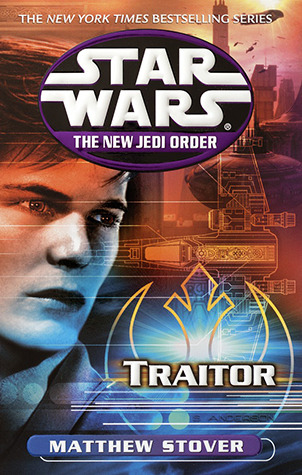
The issue I have with the Force is that the movies made everything so black and white. Give in to your hate and passion and poof, you’re dark side. The Sith have their code about killing all the things and power, and the Jedi have their code about not having sex and only killing all the things when you really, really have to. Both are annoying opposites and their philosophies and drama grow tiresome after a short time, more so when the struggle for every Jedi in the Star Wars universe includes going dark and staying dark, or going dark and finding redemption.
Thankfully, my recent gaming adventures into the Old Republic have renewed my faith in the Star Wars universe by providing numerous characters and stories that go deeper than the black and white/good and evil trope.
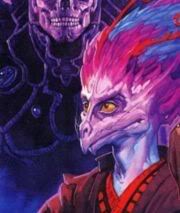 |
| Yes, I did say Jedi Chicken. Not to be confused with the Jedi Bunny |
Jolee Bindo started me down the path in KOTOR. In KOTOR2, Kreia, my beloved and hated master (spoilers), truly broke this trope, and then Traitor took it all one leap further, with the help of a Jedi chicken named Vergere who was once a source of ridicule for me, but is now a subject of respect, curiosity and maybe even some awe and adoration.
I initially had trouble with the New Jedi Order series – though I only read the first book – mainly because of the new enemy, the Yuuzhan Vong. While I liked the idea of a dominating race outside of the Force, I got a little tired of the “organic app for that” way the Yuuzhan Vong could deal with every single thing (except Lando’s pocket world melters and those pesky Jedi kids). The events on Sernpidal broke the Star Wars bubble of heroes (not including Jedi Masters who need to motivate their padawans) never die and set the tone for the subsequent series.
I skipped several books to pick up Traitor, as recommended by my fandom hero, Beccatoria. That bubble breaking had continued (though I’d already spent enough time on Wookieepedia to know that) and we now have Jacen Solo (spoilers) dealing with his “death” with the help of Vergere who robs him of the Force, tortures him with pain and forces him to question everything he is and everything the Force is and is not, in order to find his own path that surpasses both the darkness and the light.
It is a very personal journey that we get to go on with Jacen that initially had me at about three stars, but once all was said and done and Vergere revealed her pride in her student/teacher, I found myself overwhelmed with curiosity about what this means for the future of the Jedi and Sith through Jacen’s … enlightenment.

Graphic Novel Review: Dragon Age: Those Who Speak by David Gaider
Posted on November 19, 2012 Leave a Comment

Dragon Age: Those Who Speak by David Gaider
The Silent Grove re-opened a few issues raised in Dragon Age: Origins and the prequel book, The Stolen Throne, and added a few new ingredients. I was worried that Those Who Speak would fail to deliver an appropriate conclusion to all of that in a mere three issues – and I was right. Fortunately, Those Who Speak is not a conclusion, but rather an interlude where King Alistair and his companions, the pirate queen, Isabela, and the dwarven businessman, Varric Tethras, gain a new old ally and, more importantly, we get a further peek inside Isabela.
From book two onward, this is clearly Isabela’s story. Alistair’s hunt for his daddy and his dragon blood issues can wait. This is about the Pirate Queen that some players of Dragon Age II may have dismissed because of her penchant for sex, violence, sex, sex and abandonment. But in truth, despite being paid to accompany Alistair, she is fiercely loyal to those who earn her trust, even at cost to herself. Her devotion to her crew above all is admirable, as is her seemingly unbreakable spirit.
As much as I like the visuals, I wish David Gaider had taken the time to make this another Dragon Age novel, instead of a series of comics. In his novels, he has more room to expand on these characters and is skilled enough in his descriptions of the places, actions and events that he could have brought far more to the story and characters than we see here.
Posted on October 19, 2012 1 Comment
 The Stolen Throne by David Gaider
Gaider’s writing encompasses a lot of emotion, even in a character that seems limited to only a few. Barely 50 pages in, I already respected Loghain and even liked him, despite his harsh demeanor. Appreciation for King Maric was to be expected once it was established that he was much like his son, Alistair, in personality. But it was Loghain that I was interested in and the book did not let me down — though it also means I am heartbroken over Loghain’s ultimate fate.
Not that Maric’s story as the king seeking to reclaim his stolen throne was over shadowed by Logain’s story of the man whom he befriended, or the women whom they loved. Gaider put together an intricate tale of a kingdom torn, complete with well-written battles and action sequences. The characters are all well-fleshed out and their relationships go beyond the predictable romantic geometry. I can’t say more without getting into spoilers, but I was really surprised by the route Gaider took with the romances in particular. They were integral to the story and the shaping of the characters and I was surprised and impressed that Gaider did not aim for a typical happy ending for the king and kingdom.
Book Review: Dragon Age: The Calling by David Gaider
Posted on October 19, 2012 Leave a Comment

Story-wise, this wasn’t as good as its predecessor, The Stolen Throne, with a somewhat shaky plot pushed a long by the questionable motivations of the characters. Fortunately, it was the characters that made me want to read these books in the first place in order to learn more about them, and Gaider again delivered, with the focus, this time, on Maric and Duncan. He adds a load of depth to both characters, making me love them all the more and feel for them and those that come after.
Maric was already a charming character by the end of The Stolen Throne but events from the end of that book and since served to break him. He is a man depressed and ready to die, with nothing to save him from his darkness. Meanwhile, the stoic Duncan we know from the game used to be a swarthy, cocky and sneaky young thief with a reasonably noble heart and a healthy fear of his Warden Commander, Genevieve, who is leading the mission into the deadly Deep Roads to hunt for her brother. The Calling also relates to Dragon Age: Awakenings, introducing the sentient darkspawn known as The Architect, as well as a few of his companions.
As I said, the plot and motivations of the characters are rather weak. It was frustrating watching characters make decisions that really made no sense, serving no purpose other than to push them to the ultimate goal of finding Genevieve’s brother. That done, we end up with the plot twist which, while unsurprising, was also questionable. I concluded that the actual plot really was not the important thing to Gaider. He was more interesting in adding character backstory to alter canon created within the games, most notably with the parentage of Maric’s bastard son, Alistair.
Otherwise, I really like Gaider’s grasp of battle writing. It probably helps that I’ve played the game these books spawn from, but I think anyone else would appreciate and be able to visualize the battles and how each character moves and flows within them. Playing the game means you can actually visualize the commands used by the PCs and NPCs in game. And, in spite of the weak story surrounding them, I adore the characters. Gaider writes them all well, making them all very interesting – redeeming the apparently irredeemable, questioning the noble and letting us see their darkness. I love the relationships he develops between them and love the bittersweet and the heartbreaks that he seems to enjoy writing.

Book Review: Cloud Atlas by David Mitchell
Posted on October 19, 2012 Leave a Comment
I read this book because of the trailer, like many others. The trailer – despite the presence of Tom Hanks AND Halle Berry – fascinated me, though I could not fathom what was going on in what promised to be an excitingly visual journey through the times and lives of oddly connected people.
The first chapter was a difficult start, mainly due to the language. An older, more formal English, the dialogue was filled with words and nuances I didn’t understand, but rather than break the mood to look everything up, I just sank in and let Adam Ewing’s meanings come to me.
In the second chapter, featuring Robert Forbisher, the language changed dramatically. By the third chapter, about Luisa Rey, I had gotten the concept of the connecting threads, no matter how thin, between the people (though I felt the birthmark was a bit too contrived), but more importantly, I had fallen in love with the language and concluded that it was as much a character in this story as the people themselves. It shaped them as it moved and flowed and changed through each chapter…
Reviewing the trailer now that I have finished the book still leaves me wondering, though now I’m wondering just how they are going to tell this story – these stories – and tell them right. It’s not really the “action adventure” that People Magazine describes it as… and the trailer implies that the directors have opted to make the connections much less subtle than the book does… I will have to return to this review once I’ve seen the film for comparison….
Book Review: Parable of the Talents by Octavia E. Butler
Posted on September 19, 2012 1 Comment
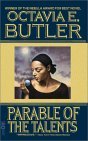 Parable of the Talents by Octavia E. Butler
Octavia E. Butler’s books are not for the squeamish and most certainly not for people who want happy, Hollywood endings. Things work out in the end – but never in a nice neat package. There is always a lot of loss in all of its most painful forms. Her works are very realistic in that matter. In fact, her works are realistic in all matters. They are a reflection of life and of the human spirit. They don’t allow you to escape into science fiction and fantasy as easily as other books in the genre might. They are harsh truths.
Butler’s books are considered science fiction, but she stresses that science fiction is not just about the fantastical, requiring a big suspension of disbelief. Even when her stories involve aliens, mutants or vampires, there is still the sense that such things could very well happen in our very near future.
The story takes place in and around the 2030s and, considering that that is not that far from now, it contains some rather frightening predictions for our future. There is an election that occurs in the background of the plot that is very much reminiscent of what is happening right now. I would like to believe that certain aspects, such as the religious “Crusaders” and slave collars are an exaggeration, and yet, part of me knows that, even now, the kind of thinking that the book’s Christian Church of America instills is very much prevalent.
Community – and the meaning of family with in the community – is a prominent theme, as it is in all of Butler’s books so far. One way or another, people are brought together and they form their own community that is very different from the outside world, but functions – for the most part – harmoniously, until the outside world inevitably comes violently knocking.
In this, the disruption of the little community of Acorn is at the hands of Christian extremists who considers Acorn a cult of heathens. Earthseed, the religion created by the main character, Lauren Oya Olamina is based on the Parable of the Talents in the Bible; it is based on truth. Though I’m not overly keen on the ultimate Destiny of Earthseed, there is a lot of merit in the religion itself and I took a lot away from this book on those terms. (Side note: How is Scientology such a thing, but Earthseed is not? If I weren’t so lazy, I’d definitely convert to Earthseed…)
“God is Change.
To shape God
With wisdom and forethought
To benefit our world,
Your people,
Your life,
Consider consequences,
Minimize harm
Ask questions,
Seek answer,
Learn,
Teach.”
“It means that Change is the one unavoidable, irresistible,on-going reality of the universe. To us, that makes it the most powerful reality, and just another word for God.”
“But what can you do with a God like that? I mean… it isn’t even a person. It doesn’t love you or protect you. It doesn’t know anything. What’s the point?”
“The point is, it’s the truth. It’s a hard truth. Too hard for some people to take, but that doesn’t make it any less true.”
It’s not a book solely about religion or the religion of Earthseed itself. It doesn’t necessarily preach. In fact, it does exactly what all religions should do: it shows what Earthseed is through the actions of its people. It’s a book about survival and, as my husband points out, religions are born or are at their strongest when we have something to lose. In this case, Earthseed is what the poor and abused have come to cling to in order to survive and not give up hope, while extremist Christianity runs rampant among the rich and those who fear everything else.
For the second time, I’ve ended up reading Butler’s books out of order. Parable of the Sower comes first, as a biography of Olamina, but I didn’t realize this until I read the interview on Talents and Sower at the back of my edition. I already intended to read Sower, but Butler’s descriptions of how Talents came about – during the sickness and eventual death of her own mother – as well as how she struggled with where Olamina was going in her story made it all the more interesting.
Having now finished a handful of Butler’s books, with several more to go, I am once again saddened by her loss. Her writing encompasses so many harsh truths and ignorance and abuses – baring the soul of humanity, warts and all.

Musings: The Hundred Thousand Kingdoms by N.K. Jemisin
Posted on September 15, 2012 2 Comments
 I adore this book. I could not sleep after reading it – after staying up ridiculously late to finish reading it – my mind was too busy. I bought the trade paperback of the book and read it again within two months because I love this book so much. It was even better the second time through, knowing what I knew now about the events and characters.
Perhaps one day I’ll write a proper review for this, but for now, I can only tell you that I give this book five stars and I recommend it to everyone.
For now, some of the many thoughts inspired by The Hundred Thousand Kingdoms. (SPOILERS)


 The BiblioSanctum