Film Review: Persepolis by Marjane Satrapi
Posted on May 13, 2013 Leave a Comment

What is a movie review doing in a book blog, you might ask? Well you see, I would reply conspiratorially, I cheated.
Persepolis – the graphic novel – was the topic of discussion in our recent Ladies Night Comic Club meeting, but procrastination various distractions and priorities got in the way of me reading it. Since the film is so close to the source material, I decided to check that out instead.
This is an autobiographical story about Marjane Satrapi’s coming of age during the Iranian Revolution. The majority of the animation is in black and white, which gives the film a more universal appeal. The simplicity of the imagery manages to convey so much complexity and emotion. Often times as I watched it, I forgot when it takes place (1980s) and that it takes place in Iran – which was the author’s intent. It was easy to realize how alike we are and to wonder about the potential for such events to occur within our own cultures at any time. I recently walked away from The Handmaid’s Tale thinking that, while frightening, we are not quite there yet with some of the political and religious movements in North America. But, watching Persepolis made me realize just how close other nations are to that kind of dystopian future. And maybe we’re not so far away here either.
Marjane’s story begins with her as a rebellious child who wants to be a prophet and idolizes Bruce Lee. She is outspoken and throughout the story I often thought her rebellious moments would lead to her own punishment, like her Uncle Anouche who is imprisoned and later killed for his left-wing ideals. Undoubtedly, her greatest influence and my favourite character is Marjane’s grandmother, who provides moral guidance for Marjane and admonishes her when she forgets to stay true to herself or takes for granted the sacrifices others have made. Her parents are depicted in a quiet, subdued manner, but it is clear that their love, encouragement, comfort and support are also an important part of Marjane’s life. I loved the way they were always willing to stand behind her without questioning her or her mistakes, while her grandmother represented an unapologetic view that has no time for the indulgence of self-pity.
I expected Marjane’s life story to result in some sort of epic anarchistic moment where she firmly takes up the cause to fight the powers that be. Instead, we see a gentle coming of age story where Marjane goes through many of the trials and tribulations, loves and losses of any normal person – only, this life is set with the backdrop of war, political strife, revolution, repression, sacrifice and more. And then I realized the obvious: this film is the result of her life. This film is the moment of epic anarchy where she firmly takes up the cause. Only, she’s done it in such a way that nothing is forced on you. Nothing is preachy. It’s interesting to note that Persepolis was banned in many places, including Iran, of course, only to have the bans lifted (though with some restrictions still imposed in some places).

Book Review: The Monstrumologist by Rick Yancey
Posted on May 12, 2013 Leave a Comment

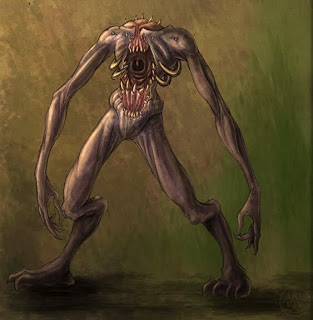
I won’t claim Young Adult speculative fiction as my main interest, though lately, it does feel like I’ve been on a YA kick. I like picking it up occasionally, but it always seems like my favorite books in the genre are the ones that can be enjoyed by all ages, the ones that don’t scream “YA!” the instant I open the book and meet its teenage protagonists. You know what I mean.
 |
| From the Corner Ink Journal blog |

Book Review: The Remortal by Ramsey Isler
Posted on May 10, 2013 Leave a Comment
Immortality is boring. This is one of the aspects of stories about immortality that I enjoy, but not many of the stories I’ve read deal with this. Or rather, they don’t focus on the desire of an immortal to move on. I was attracted to The Remortal specifically because this was the plot of the book. An immortal, Van Giles, is tired of his life on earth and wants to ascend to something greater in the unknown beyond. To do so, he needs a successor to kill him and take his place as an immortal. In a street teen named Telly Gonis, Van sees a good person in a bad situation and determines Telly to be the perfect choice.
There are other immortals in the book, each descending from a noble line, including the White Lotus Society, Julius Caesar and Spanish nobility. They are not entirely pleased with Van’s choice of successor. Nor are the pleased with Van’s choice to ascend in the first place. Or with Van in general, for that matter. There was potential for the story to focus too much on the concept of upper class versus lower class but, while the other immortals do have concerns, I really liked the way Isler let the others deal with Telly personally and come to their own conclusions beyond mere snobbery. I also liked the way Telly is torn over his loyalty to Van and all the choices that became wrapped up with the ascension process.
Van begins as a mostly likeable character with rational motivations, but once Telly agrees, Van’s “training” process reveals a cruelty that the other immortals already knew existed and fear will pass on into the afterlife. Van’s influence, along with the training and abilities Telly gains during the ascension process, change Telly from the innocent young man he was. Again, it would have been easy to turn this into a simple case of “Van is actually evil and Telly must free himself from that evil influence!” but I appreciate that Isler made things more complex than that.
Telly has to come to terms with his new self, his motivations, the choices given him by the other immortals, and Van. He also has to deal with the fate of his best friend, Mattie. Telly is presented as a reasonable character who does have a good heart and is able to show emotion without the story dwelling longer than necessary. There is one particular plot point with the Tree of Life that I’m not entirely certain was necessary to Telly’s progress, but otherwise, I enjoyed Telly’s journey and liked that I wasn’t entirely sure what Telly would choose to do in the end. I also didn’t expect the other immortals to make certain decisions in the end, though I suspected Telly’s friendship with Mattie and the circumstances of Mattie’s health would play a role.
Not Available in Canada
Posted on May 9, 2013 1 Comment
This morning, I wanted to buy a new book when I saw it featured on Goodreads and was intrigued by the description. I clicked the link which took me to Amazon.com, but was greeted with a now familiar message:

I dutifully obeyed the implied instructions and went to Amazon.ca:

Book~Film Comparison: Nightwatch by Sergei Lukyanenko
Posted on May 6, 2013 Leave a Comment
Night Watch by Sergei Lukyanenko
This book, along with the movie, was chosen for February 2012’s book club read based on the praise of some members who really loved the film.
The premise involves the existence of supernatural beings, “Others,” who choose to ally themselves with the Light or the Dark. Both sides, through the Nightwatch and Daywatch respectively, keep a close eye on each other in order to maintain the uneasy truce between them. The story takes place in Russia, but indicates that the watches exist worldwide.
Anton, the main character, is a member of the Nightwatch who’s assignment, a young boy named Igor, is being hunted by vampires. Igor is an Other who has yet to come into his powers and therefore has not yet chosen a side. Anton crosses paths with a woman named Svetlana whom he realizes has been cursed. In this story, curses, even the little ones we utter in moments of frustration or jest, can be deadly if left unchecked. Whatever curse has been inflicted on Svetlana has the potential to destroy the entire city and it becomes the goal of the Nightwatch to find the source and stop it, while protecting Igor from the Daywatch.

This is one of the few cases where a movie far outshines the book. Lost in translation is always a problem when a book is literally translated into another language and culture, but that was not an issue for me here. I felt that the book spent a lot of time with convoluted plots that Anton would figure out without actually letting the reader in on the process. The characters weren’t particularly interesting or well developed. The purpose of the whole mystery seemed to change and lose focus along the way and, well, I eventually just got bored of the plot twists
The movie, on the other hand, was very interesting. It boiled the story down to its essence, gave it far more purpose in a pithy manner and strengthened several other elements, including the main character and his motivations. The movie was more focused than the book with the overriding issue of the curse and the conflict between Dark and Light, allowing far greater character and relationship building, even within the time constraints of a film setting. The end result was a truly engaging story with an unexpected ending.
The only issue I had with the film was that, initially, it was very visually chaotic. I assume the goal of this was to shock and frighten, as the opening scenes involved a gory battle between Anton and a pair of vampires. It helped that I’d read a few chapters of the book before watching, so that I could piece the chaos together a bit better. Fortunately, the visual chaos settled down after this.
I finished the rest of the book after watching the movie, but it was a struggle to do so because of how often the plot meandered off in various directions.


Character Appreciation Post: Phèdre no Delaunay de Montrève
Posted on May 4, 2013 4 Comments
 |
| As painted by Lee Moyer for the 2013 Literary Pin-up Calendar |
Who is Phèdre no Delaunay de Montrève? Born flawed by a scarlet mote in her left eye and given an ill-luck name, Phèdre was sold into indenture at Cereus House when her parents, traveling merchants, ran out of funds. Her flaw and her rebellious nature made others certain that she would amount to very little, until Anafiel Delaunay recognized her as an anguissette, one who derives pleasure from pain. It is said that the gods use their chosen hard – an understatement for Phèdre, chosen by Kushiel, the punisher. Beginning in the book Kushiel’s Dart, Phèdre’s adventures would take her across the world, through wars, conspiracies, violence and love to become the most desired courtesan in all of Terre d’Ange and beyond. But who is she? As a child, Phèdre could never accept her apparent fate. She constantly ran away from Cereus House, intent on seeing what was beyond the walls of the Night Court and reveling in the danger. When the Dowayne of Cereus House discovered Phèdre cutting herself and taking pleasure in the pain, the Dowayne obeyed her instincts and summoned Anafiel Delaunay. As a member of Delaunay’s house, Phèdre truly came into her own. Delaunay allowed her every opportunity to learn and her inquisitive and brilliant mind gobbled it all up. As long as she did not defy him or common courtesy and protocol, Delaunay encouraged her willingness to speak her mind. She came to understand the power of knowledge, as this was all part of Delaunay’s plans. Where best to learn the secrets of men and women but in the bedroom and, as an anguissette who chose to study Naamah’s arts, Phèdre was highly desired. Circumstances painfully removed Delaunay from her life and whisked her away to the northern wilds. Despite being raised in a lifestyle of indulgence in the Night Court, Phèdre is an incredibly adaptable woman and her will to survive ensured that she not only endured her exile in Skaldia, but ensured that her then protector, Joscelin Verreuil, survived too. For those she loves or considers to be under her protection, there is no end that Phèdre will not go for her friends. Whether she is forced by fate or it is of her own choosing, she is an unstoppable force when it comes to those she cares for. Being chosen by Kushiel could be considered a curse by many, but Phèdre embraces it and its responsibilities, no matter how cruelly fate leads her. If Phèdre makes a promise, it will be kept. I consider Phèdre to be warrior woman – not one that wears armour or bears a weapon. Phèdre’s armour and weapons are her mind and body. She earns loyalty and respect through her compassion and willingly submits when she deems it necessary. Through all things, Phèdre endures.
Image Comics: You’ve Come a Long Way Baby
Posted on May 3, 2013 1 Comment
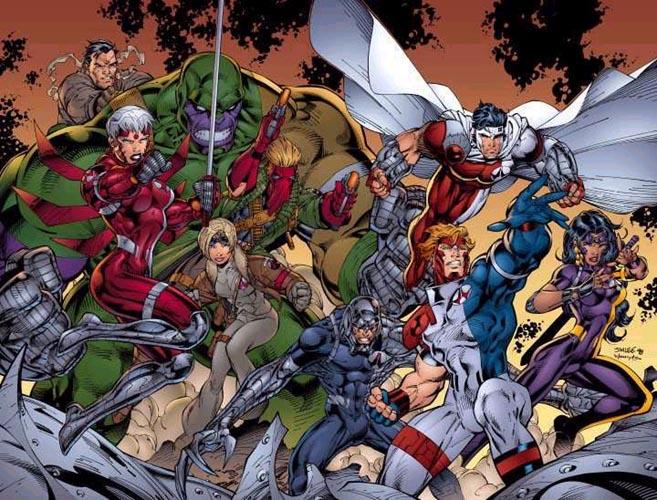
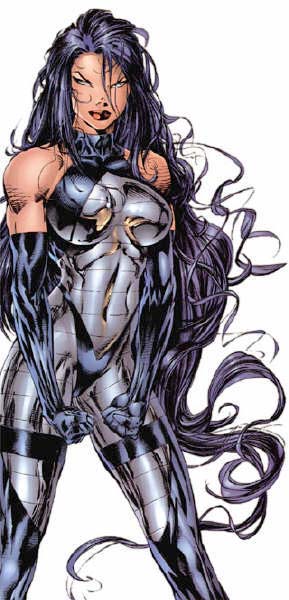
Shiny!
I maintain a sordid, lovehate relationship with Marvel Comics, but back in the 1990s, there was a time when we kind of sort of broke up. That is to say, I cheated on Marvel. With Image Comics. I know I know, but you have to understand that I was young and naive and easily swayed by the shiny!
I followed my favourite X-Men artists, Jim Lee and Marc Silvestri over to Wildstorm and jumped head first into Cyberforce and WildCATs. Some intelligent part of me was aware that these books were just X-Men with shinier costumes and bigger boobs, but I persevered, picking up other titles like GEN13, Wetworks and Witchblade. I became a Disciple of the Blade, I moderated Top Cow message boards for Fathom (RIP Michael Turner), designed outfits for Pez and I was (am) hopelessly smitten with Ian Nottingham.
But eventually, I grew up.
The thing is, so did Image.
Over the past few years, I’ve slowly been getting back into the comic book scene and more often than not, Image books are popping back up on my radar. Long gone are the days of extremely perky nipples and spine-adjusted women. Image now boasts Eisner Award winning titles. A friend recently stubbornly spoke about how he’d never read another Image comic after he too had woken up from the foil covered ’90s. But when my friends and I started listing off some of the fantastic titles Image has been pushing out for the past while, he realized he’d been reading and loving Image Comics all along.
A lot of credit goes to their push for creator owned comics. A lot of comic companies accept original submissions, but I doubt you’ll ever see that happening with DC and Marvel. Image has opened its doors and as a result, we’ve gotten some really amazing and off the wall books. Not all of them are good, but all of them feature some fantastic ideas. Yes, even Ziggy Marley’s Marijuana Man has its merits. Here are just a few of the goodies that we’ve reviewed here at The BiblioSanctum.



Not to mention Saga, Mind the Gap, Fatale and a little something called The Walking Dead. These days, its hard not to make a list of critically acclaimed comics and not find a few Image titles on there. Image still has some of its old titles like Witchblade and Cyberforce, but even those books have matured. I’ve not read the new versions yet, but I definitely want to.
Worlds without End
Posted on May 3, 2013 Leave a Comment
As if I need another book-related site to belong to, I’ve recently discovered Worlds Without End, a fan-run community site for award-winning science fiction, fantasy and horror books. Their motto is “We don’t want you to ever have to read a bad book again.” In theory, I don’t agree with that notion because not all award-winning books are to everyone’s liking and not all non-award winning books are bad. Focusing only on award-winning reads means missing a lot of gold!
Not that choosing to focus on award-winning, recognized books is a bad thing. What the site chooses to focus on is, of course, their prerogative. Says Dave Post of Worlds Without End:
“The goal of the site is to give you the tools to find the best books for you. We’re not suggesting that you only read the award winning books but the awards do give you a glimpse into what was considered the best or at least what was popular for any given year. We cover a bunch of different awards so you can find the ones that you like and compare the awards and best of lists to see what rises to the top. From there you can read reviews and excerpts and talk to other folks about the books you’re interested in and hone in on the likely ones for you. Time has not been kind to all the award winners and there are more than a few right out stinkers in there too. We hope to help you avoid those where we can.”
WWE is a well organized and active site inviting you to discover great books. Sign up and you gain access to their BookTrackr that tracks your reading history, highlighting your statistics towards reading all the award winning/nominated books and/or books on various lists of recognition. There are the typical book giveaways, interviews, podcasts, forums and a lot more.
 They also run challenges, such as the 2013 Woman of Genre Fiction Reading Challenge, which resulted in me staying up too late last night adding books to my reading list and selecting the authors I want to read for the challenge. Twelve authors for twelve months, including reviews. Gee, how ever will I manage? Challenges like this will help me chip away at that massive to-read pile, helping me to focus on what to read next. Since I’m starting five months late, I don’t feel guilty using some of the books I’ve already read this year.



New Author Spotlight: Ramsey Isler
Posted on May 3, 2013 Leave a Comment
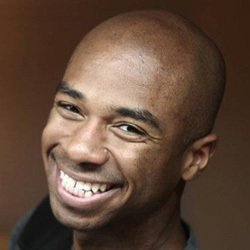
Ramsey Isler has figured out how to keep himself busy, balancing his professional techiness and column writing with his many novel writing projects. Somewhere in there he also finds time to blog about the geekier things in life, publishing and more.
1. What are your favourite books and how have they influenced your writing?
When I was 12 years old, I committed to reading Stephen King’s The Stand during my summer break from school. My much older brother had read it and I decided, as little brothers often do, to take interest in the same things he liked. The Stand is a massive book at around 1200 pages (I read the uncut edition), and to my twelve-year-old self it was the equivalent of trying to scale a mountain. But I did it. I’m sure many would question whether King’s graphic tales are “appropriate” for a kid that age, but I was mature enough to understand and enjoy the way King created a realistic fantasy (and the nightmares only lasted a couple days; no problem). That book really started my interest in writing and reading contemporary fantasy.
As a bona fide geek and engineer by training, I’ve also always been a fan of sci-fi. Shortly after college I really got into the Star Wars expanded universe novels, and discovered a book called Traitor by Matt Stover. Most people probably wouldn’t expect something as seemingly trivial as a Star Wars story to have a huge impact on a writer’s life, but this one really changed the way I write. It was more than a sci-fi story — it was filled with complex, mature philosophy and raw emotion. The plot focuses on Han and Leia’s son Jacen, a young Jedi trying to find his place in the universe as he struggles with reconciling his Uncle Luke’s teachings with a violent and cruel alien enemy. Jacen eventually becomes an unwilling student of Vergere, an avian alien who was a member of the Old Jedi Order back before Palpatine took over. She takes Jacen on a far different spiritual path than his Jedi teachings ever did — a journey that deals in many moral gray areas — and she does so through remarkably cruel tutelage. Throughout the book, you’re never quite sure what her motives are, but there’s a definite method to her madness. In the end, Vergere is on the side of the protagonists, but it’s not clear if you can call the protagonists the “good” guys, or if the antagonists are really the “bad” guys. It’s all a matter of perspective, and each character has elements of both light and dark. That book has become my guide for writing stories that go beyond simple black and white morality tales. I strive for something more thought-provoking instead.
2. What authors have inspired you?
As mentioned above, King and Stover definitely had an impact on me. Although King is often classified as a horror writer, he really is a master of many types of speculative fiction and he’s done some remarkable work in my favorite genres. The Dark Tower series is another of my inspirations.
Neil Gaiman has also been a big influence through what he does beyond his novels. He is a remarkable speaker and a wise tutor with plenty of practical advice that has guided my writing career.
Maya Angelou has been an inspiration since I was in grade school, but I came to appreciate her work more as I grew older. Her work taught me that you can say something extremely profound with only a few words. There’s an art to telling a big story in small passages. Her poetry provides many lessons on efficient storytelling.
3. Describe your writing process. How do you handle writer’s block and other challenges?My writing process is very cinematic (in my mind, at least). All my stories start out as cool ideas that I envision as “scenes” in my head. Then I develop these major scenes in the manner of a theatrical director choosing a setting, moving set pieces around, and guiding the actors to deliver the best performance. Then, once I have a series of juicy scenes that encompass the main plot points, the rest of the story develops organically from them. I very rarely know what a story will be from beginning to end when I start writing. It all develops during the process of coming up with these scenes and connecting them to each other.
I don’t really get writer’s block in the sense of not knowing what to write next. My writing challenges come when I know exactly what I want to say, but I have to ensure that it all make sense and fit in with other parts of the story. I despise plot holes, and I really dislike speculative fiction where elements aren’t explained adequately or the rules of the world aren’t consistent. But I also understand why so many writers are guilty of these things, because it is HARD. It’s hard to create fantastical worlds and fill them with believable characters, events, and inventions that just intuitively make sense to the reader without having them think too much about it. Much of writing is actually about thinking, and the most difficult parts of my writing come when I just have to sit down and hash out all the logical and factual issues with a part of my story. It can take a lot of time, but the story always comes out better because of it.
4. What are your future writing plans?I’m currently finishing up my new novel, Clockworkers. Here’s the plot in a nutshell: an entrepreneurial young woman inherits a special gift from her father – an elf. She puts him to work building products for her luxury watch company, but she soon discovers that there are certain dangers involved with employing elves. The book puts a brand new perspective on elf tales. The European-based work of Tolkien and the Grimms dominate what we think of as “elves”, even though almost every culture in the world has some sort of native folklore about mystical little people. Part of my motivation for writing Clockworkers was to show a more diverse elf cast, but I also just love creating modern folklore, and elves are a topic I’ve always wanted to explore and reinvent. Plus, I always wanted to write “scary” elves; there’s always a tiny bit of Stephen King in my writing.
I’m also working on a sci-fi novella. This one is about video games, artificial intelligence, death, and what happens when all three collide. Look for it on digital book stores in Summer 2013.
There’s also an impending sequel to my second novel, The Ninth Order. Sequels can be tough to write, and I want to spend a lot of time getting this one right, so it probably won’t be out until next year. But so far it’s proving to be very fun to write, and that usually means it will be very fun to read too.
Comic Review: Private Eye by Brian K. Vaughan
Posted on May 1, 2013 Leave a Comment

It’s the year 2076. After all the information we’ve ever uploaded online is suddenly released for everyone to see, privacy has become a sacred right valued by everyone. Well, almost everyone. Where there are secrets, there will always be paparazzi. In this case, the paparazzi become private detectives, hunting the secrets behind the secret identities that everyone is now wearing. The story follows P.I., a private detective hired to dig up any information on his client who happens to be involved with a very dangerous man.
This comic will make you think twice the next time you make a payment online or save something to a cloud. And the irony is that this comic is only available online. In a trendy move, the creators behind Panel Syndicate have made their comic available in digital format only, for the low low price of whatever the hell you want! Funds from sales will be used to publish future issues, which have been made available worldwide, with increasing translations available.
The Private Eye is a futuristic throwback with generous nods to the detective stories of yesteryear. Technology exists and pops up in unexpected places, but with everyone now fearful of revealing who they really are, all the things we take for granted now, like cellphones and driver’s licenses, are dangerous commodities to own. The world presented is recognizable as a very possible, not so distant future. I’m reminded of the recent #Nymwars that occurred when Google+ demanded that users give up their pseudonyms. Many of us ended up conceding, despite knowing full well that the purpose behind Google’s decision is all about marketing to advertisers who want to market to us.
Normally, I am very lenient when reviewing the first few books in a new comic. I allow a grace period for the stories and characters to present themselves and develop. But sometimes, the creators really nail everything in the first go. That’s the case here with the characters, the society and then the mystery pouncing on the reader and firmly taking hold. Toss in some sleek art, and I was sold.



 The BiblioSanctum