New Author Spotlight: Daniel Hope
Posted on January 22, 2014 Leave a Comment

Co-founder and now Managing Editor of the online Science Fiction and Fantasy magazine, Fiction Vortex, Daniel recently self-published his first novel, a science fiction gem called The Inevitable (see my review here).
1. What are your favourite books and how have they influenced your writing?
This probably comes as no surprise, but I’m a real sucker for science fiction. I love old Asimov stories, even when they don’t held up too well over the years. A constant influence is Douglas Adam’s Hitchhiker’s Guide to the Galaxy because I find myself gravitating back to it every year or two. Great concepts really draw me in, too. So stuff by Vernor Vinge, Neal Stephenson, James S. A. Corey, and plenty of others get my attention regularly.
2. What authors have inspired you?
As I mentioned above, Douglas Adams has made a huge impression on me, just because of how effortless his writing feels. Terry Pratchett was another early influence. (I have a thing for British humor apparently). William Gibson also had a huge influence on me because he can make a strange world feel so real.
3. Describe your writing process. How do you handle writer’s block and other challenges?
If I had to choose a single word to describe my writing process, it would probably be “disjointed.” I’m easily stumped by a story, and I feel like the only way to work through it is to break my routine. So I have a half dozen notebooks, half a billion different word processor files, and sheets and sheets of scribbles scattered about. I write on the train, in a cafe, on my bed, just about anywhere but at my desk to get the juices flowing. This makes for a huge problem when it’s time to pull everything together, but it seems to work.
4. What are your future writing plans?
I’ve got another science fiction novel in the works, although it’s a completely different setting and tone than my first novel. I don’t know what will happen after that, but I can guarantee it will involve words.
Waiting on Wednesday 01/22/14
Posted on January 22, 2014 Leave a Comment

“Waiting On Wednesday” is a weekly meme hosted by Breaking the Spine that lets us feature upcoming releases that we can’t wait to get our hands on!
Devi Morris has a lot of problems. And not the fun, easy-to-shoot kind either.
After a mysterious attack left her short several memories and one partner, she’s determined to keep her head down, do her job, and get on with her life. But even though Devi’s not actually looking for it — trouble keeps finding her. She sees things no one else can, the black stain on her hands is growing, and she is entangled with the cook she’s supposed to hate.
But when a deadly crisis exposes far more of the truth than she bargained for, Devi discovers there’s worse fates than being shot, and sometimes the only people you can trust are the ones who want you dead.”
Book Review: Red Delicious by Kathleen Tierney/Caitlín R. Kiernan
Posted on January 21, 2014 Leave a Comment
Red Delicious by Kathleen Tierney/Caitlín R. Kiernan (Roc)
Genre: Urban Fantasy
Series: Book 2 of Siobhan Quinn
Publication Date: February 4, 2014
Author Information: Website | Twitter
Mogsy’s Rating: 4.5 of 5 stars
Even before the first page, I was cracking up at the epigraphs. Okay, maybe it’s just the geek in me, but I don’t think it’s possible to go wrong with a book that quotes “old Asura proverbs” from Guild Wars 2. Regardless, I knew I was going to be in for a ride with this one, and I would have expected nothing less from the follow-up to the utterly brilliant book that was Blood Oranges. Yep, it feels great to be back in the world of Siobhan Quinn!

Book Review: Theft of Swords by Michael J. Sullivan
Posted on January 21, 2014 1 Comment
Theft of Swords by Michael J. Sullivan
Genre: Fantasy
Series: Riyria Revelations vol.1
Publisher: Orbit
Publication Date: November 2011
Author Info: www.riyria.com
Wendy’s Rating: 3 of 5 stars
Riyria means “two” in elvish and the two in question are Hadrian Blackwater, the master swordsman, and his shadow partner, Royce Melborn, the brooding master thief. The reputation of Riyria precedes them such that even the local guildsmen know not to cross paths with them, and their skills are so great, that their resume boasts many references from lords and ladies who have used their subterfuge and even assassination services. But when Hadrian falls for a big score that goes against all their rules, unsurprisingly, they end up on the wrong end of a sword. Blamed for the murder of the king, they are set for execution, until the princess gives them a way out: kidnap the prince and take him to a mysterious prison to find a mysterious prisoner.
Theft of Swords collects the first two books in Riyria Revelations series, The Crown Conspiracy and Avempartha. These stories contain a lot of possibility, but as you can tell by my three star rating, they fell short for me. The plot and characters are set up to be amazing, but some how, they failed to truly cross the line into the realm of being memorable. They are missing the “something more” that should make them truly spectacular.
Every time I felt like we were getting somewhere with character building or plot transition, things sped up to the end and/or glossed over what should have been the meat of the development. For example, Hadrian and Royce kidnap the prince, who is a petulant creature that ends up figuring himself out in order to prove himself worthy of taking his father’s place. But there was not really a strong interaction to show us the transition. Instead, we got a long inner monologue where he realized that he had to grow up. And that’s a major problem in Theft of Swords – a reliance on too much exposition. There are a lot of moments spent divulging a lot of information that, while relevant to the overall world, do not hold any immediate importance to the events, or even slow down the momentum of the story. For example, when Royce is teetering on the edge of a step about to collapse within a tower set to fall apart and kill him and the princess he’s trying to rescue, the tension of the moment is completely lost because the dwarf goes into complete schematic detail on how he manufactured the elaborate trap. And as much as I want to know about Royce’s shadowy past, I didn’t need him to meet up with a group of bad guildsmen who’s only purpose seemed to be to detail Royce’s shadowy past. Oh and to deliver a message about a girl who needed Riyria’s help.
Hadrian and Royce disappointed me the most. They should have been a dynamic duo, but instead, I found myself wondering what the elvish word for “one” was. The characters aren’t interchangeable, but I felt that their personalities weren’t clearly defined well enough beyond “charming warrior” and “shadowy thief” to actually require both of them, save in moments when they were needed to be in two different places at once, being warriory and thiefy, respectively. Fortunately, by the end of the second book, things got a little bit better and the female characters, Princess Arista and the commoner, Thrace, likewise became a bit more interesting.
Still, I did really like the way Sullivan included fantasy standards of elves, dwarves, magic and mythical beasts, but did not place them at the forefront of the story. Here, elves are a downtrodden race and there are some enticing hints of future conflicts and interactions that I hope will be fully realized.
Esrahaddon, the maimed and imprisoned wizard, is also an intriguing character. Though he too often gets to reveal the answer to all the riddles, rather than letting our heroes do so, I look forward to learning more about him. He is a man with plans within plans that promise a lot more intrigue ahead.

Book Review: Fortune’s Pawn by Rachel Bach
Posted on January 20, 2014 Leave a Comment
Genre: Science Fiction
Series: Book 1 of Paradox
Publisher: Orbit
Date of Publication: November 5, 2013
Author Information: Website | Twitter
Rachel Bach is also Rachel Aaron, an author who put herself on my radar earlier this year after I read The Spirit Thief, the excellent first book of her fantasy series The Legend of Eli Monpress. That novel really impressed me with its light-hearted yet suspenseful story, not to mention the fun, down-earth-characters. So while we may be heading to a place a little beyond earth’s atmosphere this time around, I had good a feeling that Fortune’s Pawn would be just as enjoyable and entertaining.
Fortune’s Pawn introduces us to Deviana “Devi” Morris, a Paradoxian mercenary not content to settle for anything less than the best — and the best, to her, is a position with the Devastators, the elite armored branch of the king’s fighting force. But achieving such a decorated post won’t be easy, and Devi knows she will need a lot more experience to even get herself noticed.
Following a tip from a friend, Devi applies for a job on the Glorious Fool, a tiny trade vessel with a reputation for being a “cursed ship”. Trouble seems to always follow the Fool, and it is said that one year of security work there is equal to five years anywhere else. If experience is what the Devastators want, Devi figures there’s no better place to get it. After all, she’s confident her skills can get her through anything.
Not entirely true, of course, as we the readers can expect. Secrets and a multitude of dangers await Devi, the kind she never would have thought to prepare for in a million years, including…love? Now, what’s this? Romance in my science fiction? Oh boy, I was tickled pink when I found out, practically cackling and rubbing my hands together with glee. This is one instance where the addition of a romantic arc was definitely most welcome. I didn’t think much of Devi at first, being all brawn and ambition, but throw in her feelings for Rupert Charkov, the Glorious Fool‘s sexy, charming and mysterious cook and suddenly she became a much more interesting and deeper character.
The plot, which I also thought would be rather simple and straightforward, took a few startling turns as well. To be honest, I’d picked this one up as a palate cleanser after my recent string of emotionally-heavy books, fully expecting it to be mind-candy I’d been looking for — quick, uncomplicated and fun. I had anticipated a few action scenes involving high-tech battles with aliens to be the highlight of Fortune’s Pawn, but much to my surprise, I quickly discovered a lot more below the surface. The book is indeed a lot of fun so I got what I wanted, but there’s also an intriguing mystery here, a teasing thread that gave the story that extra boost and made it more special.
In any case, Fortune’s Pawn was exactly what I needed, with its strong protagonist and her candid narrative, a colorful and interesting supporting cast (a crew member who is essentially a giant chicken as the ship’s second? Brilliant!) and the story’s dynamic, spirited pace. All this made it a great book that was really hard to put down.

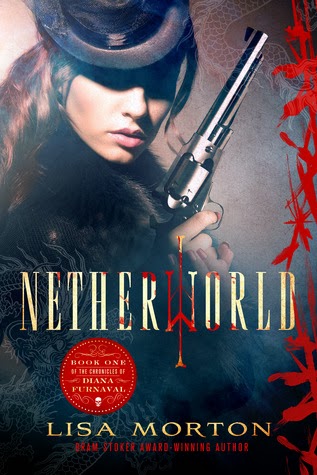
Book Review: Netherworld by Lisa Morton
Posted on January 19, 2014 Leave a Comment

Book Review: The Grim Company by Luke Scull
Posted on January 18, 2014 1 Comment
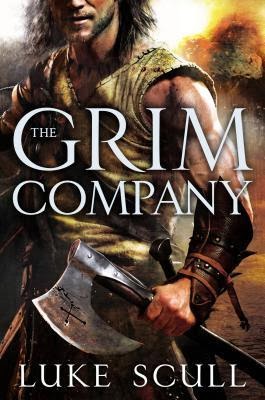
The Grim Company by Luke Scull
Genre: Fantasy
Series: Book 1 of The Grim Company
Publisher: Roc
Date of Publication: September 3, 2013
Author Information: Website | Twitter
Okay, I can be pretty out of it sometimes. I picked up Luke Scull’s The Grim Company on account of all the positive buzz surrounding the book, and ended up loving it. But the thing is, I didn’t read many reviews or any information about it ahead of time, so it wasn’t until weeks after I finished the book that I finally found out about all the comparisons made to Joe Abercrombie, an author whose work I adore as well.
In retrospect, I suppose there were a lot of parallels, but at the time I can honestly say I didn’t get that vibe at all, other than the fact both authors write grimdark fantasy about gruff and tough barbarian warriors who love to swear a lot (not a distinction held by any one specific author in the industry, really). In the end I’m glad I went into this book blind, because I found that Luke Scull’s writing shone through with his own style, not to mention the heavy focus on magic and other unique ideas found in his book made me consider it entirely on its own merits.
When it comes to a gritty fantasy adventure, we’re definitely starting out on the right track with a story that spans far and wide in terms of locale and history, featuring settings from palace halls to the northern remote highlands. Five hundred years ago, the Magelords killed the gods and now their tyrant Salazar rules the empire of Dorminia. Meanwhile, his greatest adversary the White Lady plots his demise from across the Broken Sea and seeks to free the people. Far away from both, demonic forces plague the remote mountains in the north.
Book Review: Seoul Survivors by Naomi Foyle
Posted on January 17, 2014 1 Comment
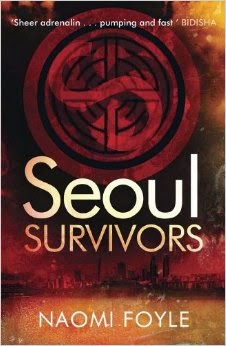 Seoul Survivors by Naomi Foyle (Jo Fletcher)
Genre: Science Fiction
Series: Stand Alone
Publication Date: February 6, 2014 (Paperback)
Author Information: Website | Twitter
Mogsy’s Rating: 4 of 5 stars
It’s only January, but already I have a feeling that this is going to be one of the more “out there” books I’ll read this year. As usual, Jo Fletcher Books continues to push the envelope and explore beyond the boundaries of traditional adult speculative fiction with novels like Seoul Survivor.
COVER LOVER: Behind the Scenes with The Barrow
Posted on January 16, 2014 Leave a Comment

Cover Lover is a feature originally created by our friend and fellow book blogger, Jaedia at Once Upon A Time. Usually, we chat about covers that strike our fancy, of which The Barrow‘s cover most definitely is one, but Eisner award nominated Author and Artist Mark Smylie, Pyr®‘s award-winning Editorial and Art Director Lou Anders and the incredible scifi/fantasy cover Illustrator Gene Mollica have graciously helped me take this feature one giant step further by offering us some insight on the cover design process.
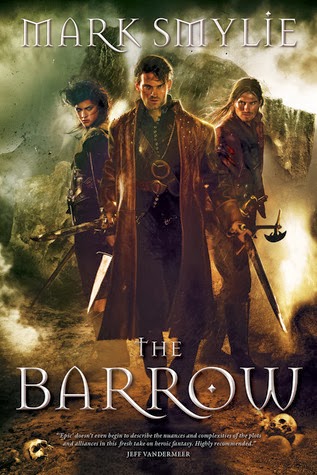
Some covers are more symbolic. Some covers focus on a particular aspect of or event within the story. Some, like this one, seem to directly reflect the book’s description of an epic, swash-buckling adventure. What factors go into selecting a particular image? How closely should the image reflect the actual story or particular elements of the story?
Lou Anders: The most important job for a book cover is that it connects the right book with the right reader. I’ve likened book covers in the past to the patterns and colors of different flowering plants, signalling to the appropriate insects “This is the flower you want; stay away from that one over there. Try this!” Book covers have about thirty seconds or less to catch the casual bookstore browser’s eye, and if they can’t do that, then it doesn’t matter how attractive they are. In fact, before the book ever reaches the shelf, its first (and arguably most important) audience is the book buyer who determines how many copies to buy for his/her store. At Barnes & Noble, that’s one individual, who buys for all of science fiction and fantasy nationally. I think it is wonderful when a book cover depicts its contents accurately and in line with its author’s intent, and we always strive for this, but an accurate representation of the contents is not as important as an accurate presentation of the type of experience the book promises. The most important consideration is that the book cover accurately indicates the promise of the book. That’s it right there. The book cover is a promise, and we need to keep that promise. In this particularly case, a lot of directions were tried and discarded, because, although they were wonderful pieces of art in their own right, they promised a different experience from the one Mark’s story provided.
 |
| Behind the scenes |
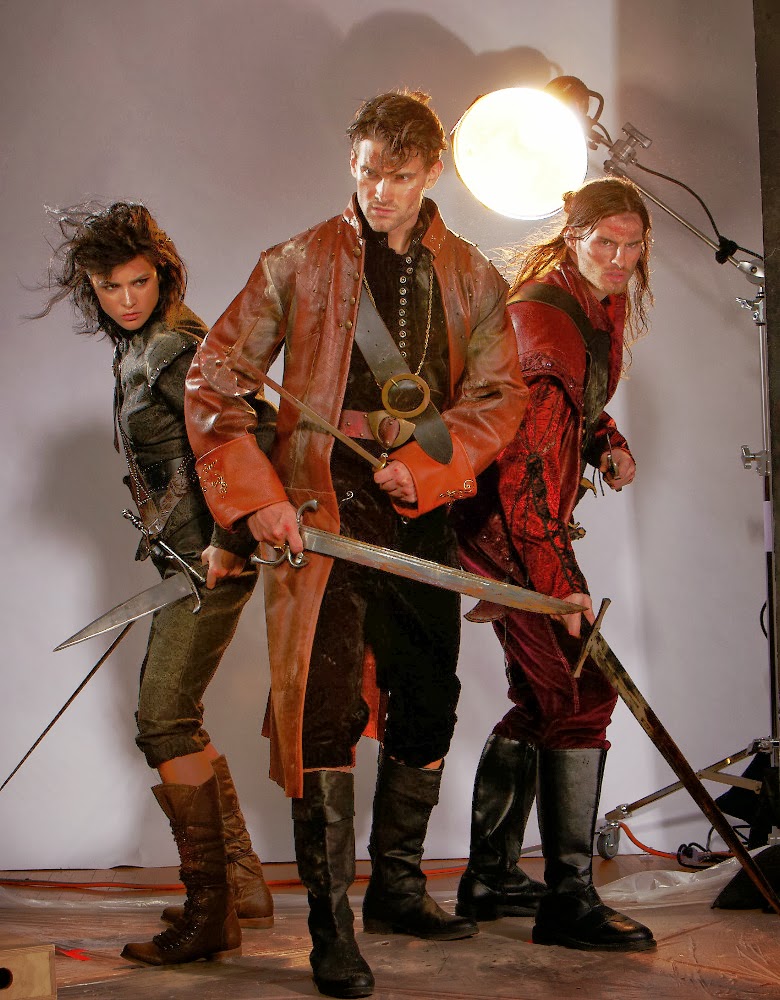
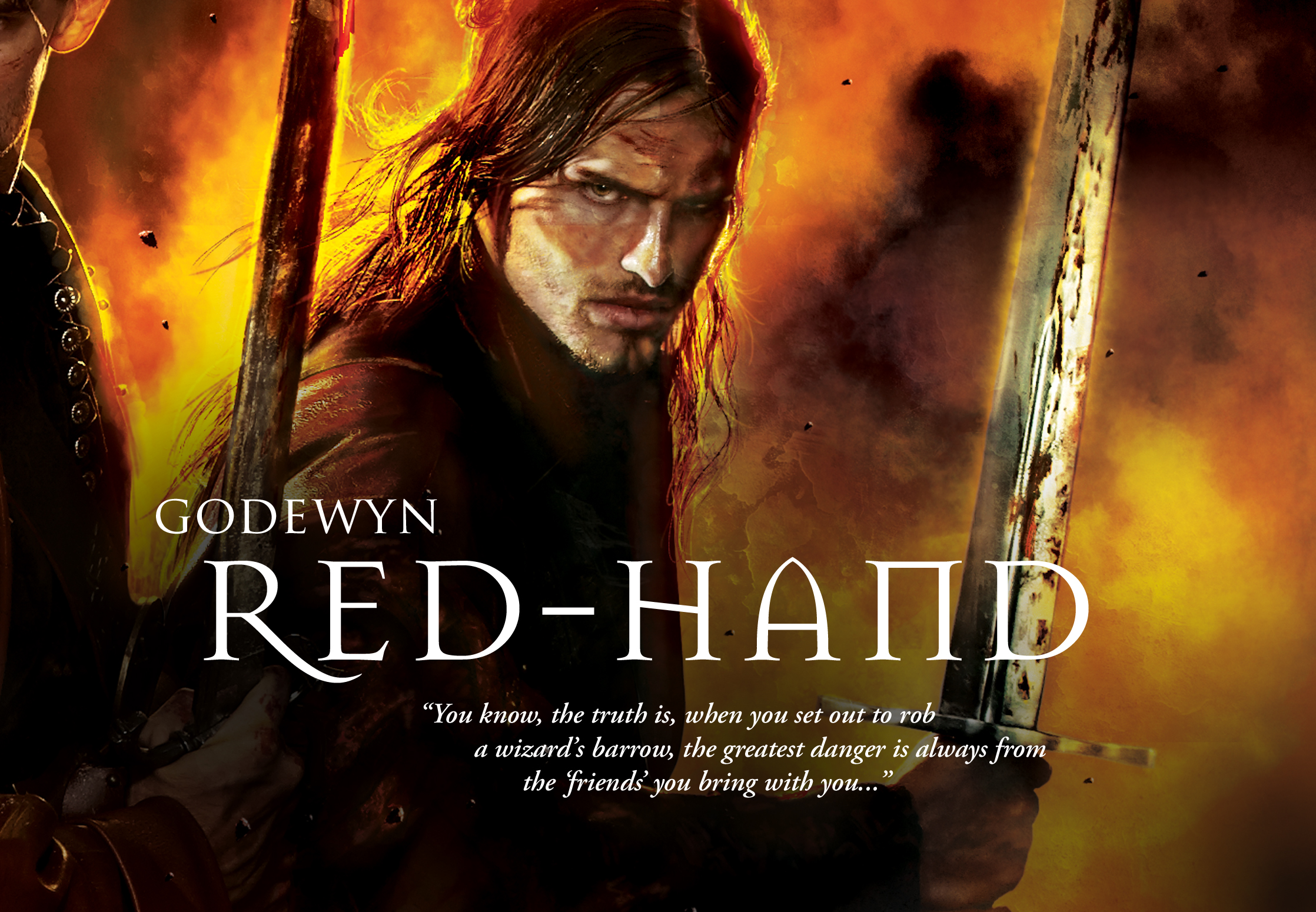
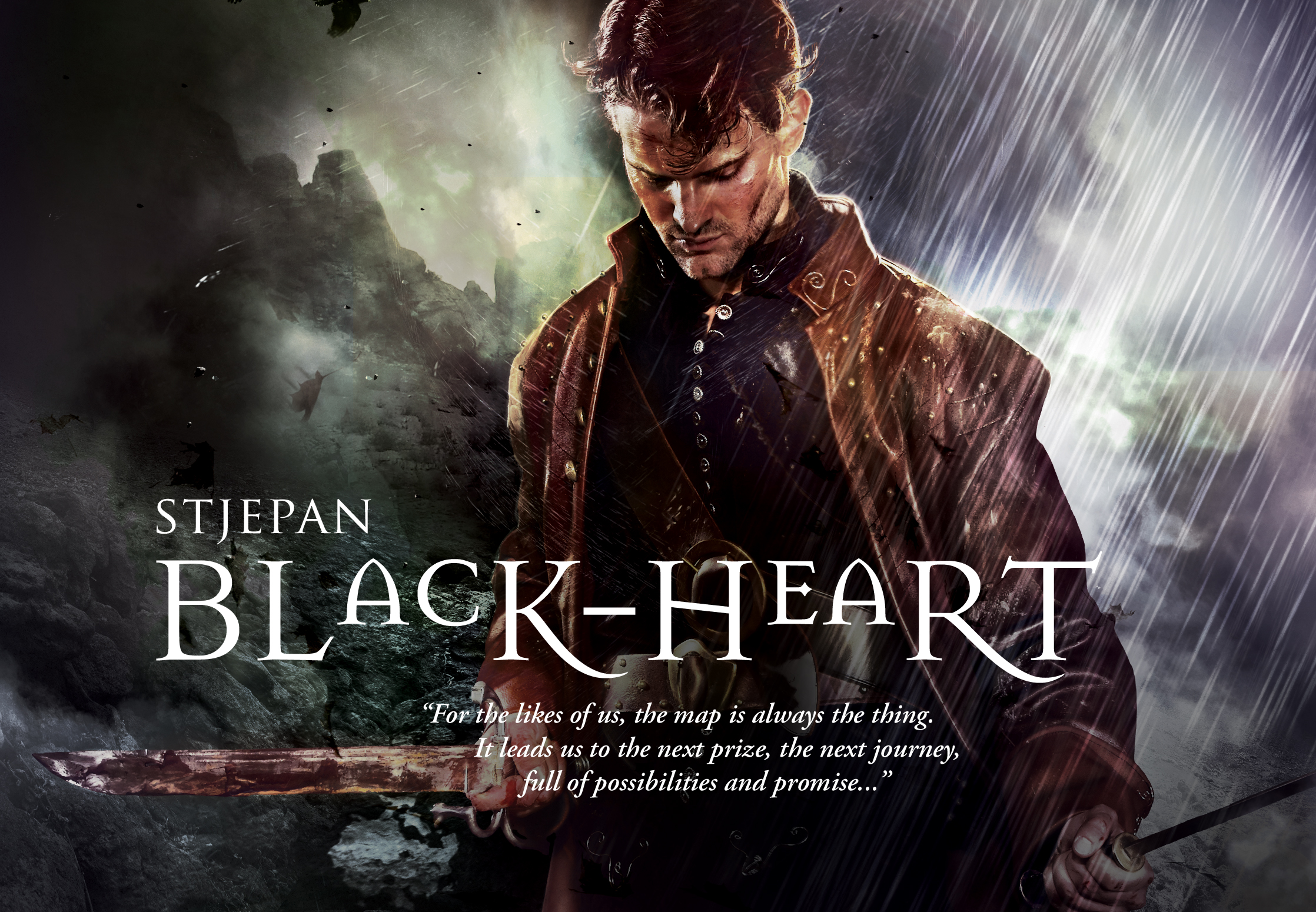
Gene Mollica: To be honest, the decision as to what kind of image is best for a certain book usually happens before it gets to me, the artist – it’s made by the editors, art directors, and publishers based on what they think is most powerful about the book, the market they’re going after, and hopefully some input from the author. Then, they call me with a description, and I concept and create the image – the model, the clothes, the pose, the setting, and the mood. There are all kinds of covers in science fiction/fantasy – I tend to like the ones that are more photographic or photo-real appearing, and dramatically lit. For The Barrow, I had the opportunity to work very closely with both the editor and the author, which doesn’t always happen – Mark actually lives nearby so he came to my office and I showed him my ideas, some models, and the costume design before we did the shoot. I really wanted to bring the gritty tone and the characters to life and I’m pretty happy with the way it turned out.
Mark Smylie: There’s obviously a huge range in terms of sf/fantasy covers, though I think the range in fantasy tends to be a bit more narrow. If it works, The Barrow is a novel about some pretty grim and gritty characters doing some very dangerous and dirty work; I won’t go so far as to call it grimdark, I wasn’t even aware of that term until recently, but if it winds up with that label I don’t think I’d object too hard. It’s kind of like an archetypal Dungeons & Dragons adventure as run through the filter of Lock Stock and Two Smoking Barrels: a predominantly street-level view of the world, loaded with (casual) violence and tension and hopefully some unexpected twists. There are all sorts of other themes and layers that run through the book – well, there are if I was successful as a writer, that is – such as the fate of women in a medieval-style patriarchal culture, the question of who you trust and why, how you decide what you’re loyal to, how history and lineage are bound up in a present reality. I think when Lou and I were initially discussing cover ideas we had discussed a fairly wide range of cover concepts, with some of them hitting more on some of those additional themes and elements rather than focusing on the main vibe of the book. But in the end Lou thought it would be best to really emphasize that gritty quest-narrative that drives the book, and I think the result is spot-on.
How much editorial input is there prior to and during the design process? Does an editor see the design before it is complete? Does the editor have input on what it should look like?
Lou Anders: In this case, I am both Editorial Director and Art Director of Pyr, so yes. This editor commissions the artist, communicates the art brief, views the roughs and art directs the entire process. I also oversea the work of our three very talented in-house designers (Jacqueline Nasso Cooke, Nicole Sommer-Lecht, and Grace M. Conti-Zilsberger).
Gene, what information do you get to work with in order to create a cover? Do you read the story itself, or are you just provided an overview?
Gene Mollica: I was really fortunate with this project because I got a lot more than just the usual brief overview; I had the pleasure of working with two very visual people who like to be hands on. Lou knew very well what he needed and what visual directions to take. Mark is a fabulous artist and provided very clear illustrations and descriptions of each of the characters.
Together we made a great team, as we continued to nail down and refine the concept. We reviewed models / talent for the photography; once we picked the talent, we then discussed wardrobe carefully so that I could start designing the costumes (all of the wardrobes for the characters were custom made by my fabulous costumer).
It got really fun when we realized that both Mark and I lived just minutes from each other – that called for a face to face throw down of who has the best weapons in their arsenal. Mark won, incredibly convenient that he’s also a collector of fine rare medieval weapons. So like two big kids we got into the costumes, weapons, baldric, belts, knives and swords – work life doesn’t get better than this.
So this assignment was a hell of lot of fun, rarely do you get this much direct insight from an editor and the author. Together, hopefully we achieved a great cover.

Mark Smylie: I might take issue with Gene saying I won the arsenal contest. Gene’s got a great collection of weapons and props, certainly far more pieces than I do, and I even had a bit of a geek moment when I spotted the sword he used for the cover of Joe Abercrombie’s Best Served Cold (which I believe wound up being used as Erim’s sword on the cover, though you don’t really get a look at the hilt; there are other pictures from the studio shoot where you can see that it’s the same sword).
As an artist yourself, Mark, did you consider doing the cover? Why or why not? How much input did you have on the process? How do you feel about the end result?
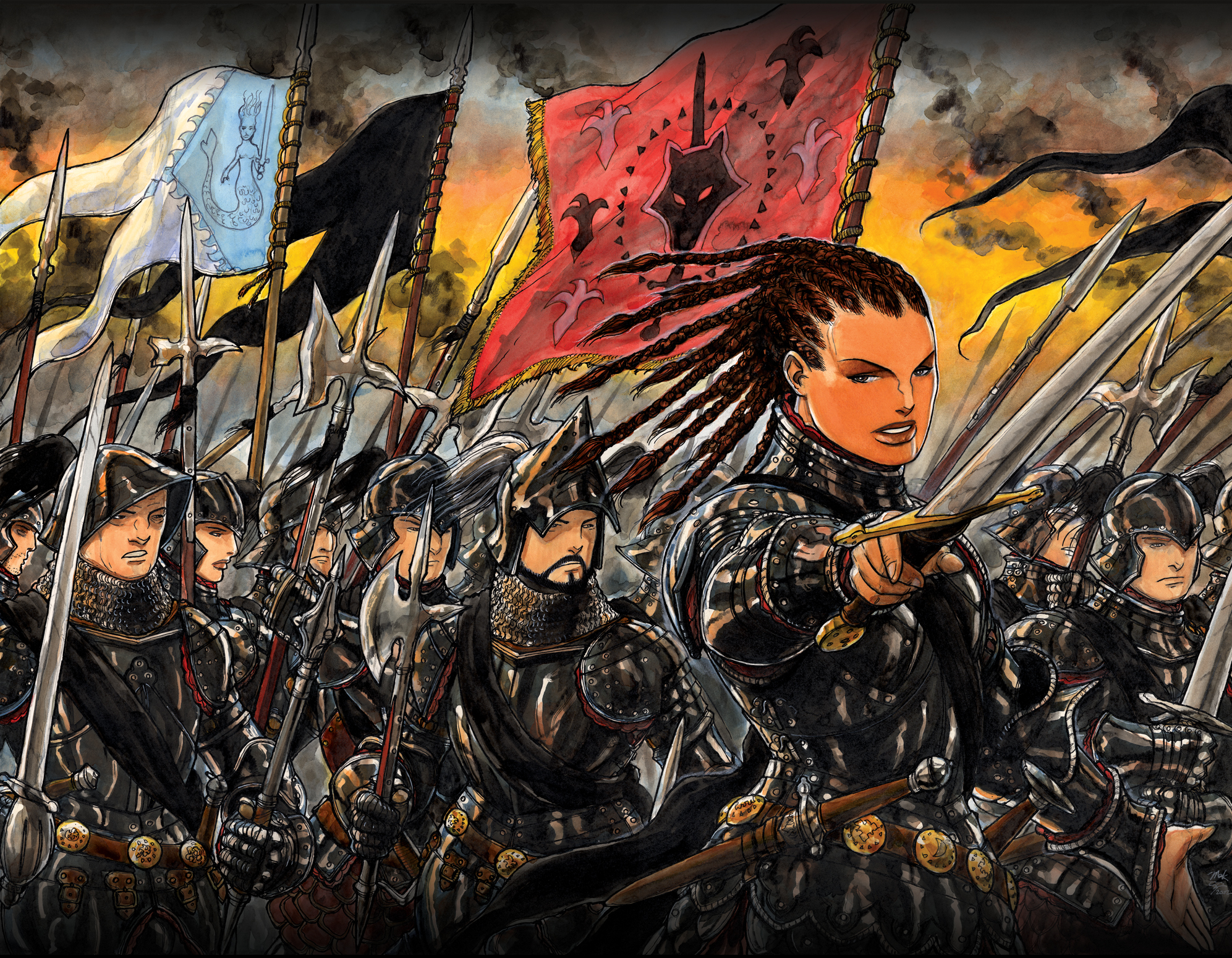
Mark Smylie: Lou actually asked me early on if I wanted to do the cover; I think he assumed the answer would be yes. But I declined. My art style uses a mix of watercolor, colored pencil, and ink line, and I think it works well in comics or in roleplaying game illustrations but maybe less so in the realm of sf/fantasy book covers, which tend to be either painterly, photorealistic, or very design-oriented.
 |
| Mark Smylie’s Artesia |
Since I come out of comics and graphic novels as a writer/creator/illustrator, I wanted there to be a clear message to the reader: this is a fantasy novel. It’s not a graphic novel in disguise, or somehow translated into a prose work (well, okay, technically it was a screenplay first; but it was never intended to be a comic). So I thought it was important to have someone do the cover who could give it that feeling of “hey, look, it’s an actual fantasy novel.” Lou and I kicked some ideas around – I think the only stipulation I asked was that it couldn’t be someone that I already knew – and at one point he suggested Gene. I had seen a number of Gene’s covers (such as the cover he did for Best Served Cold, and for Brian McClennan’s Promise of Blood and the Powder Mage series) and really loved the idea of a sharp, photorealistic style to it. I was able to provide some details and sketches and sample photos as a kind of look-book for the characters and their equipment, and then as Gene mentioned since it turned out we lived not too far from each other I was able to pop over to his studio and take a look at some of the available weapons and costume choices. With the comic I’ve always tried to inject realism into the armor and weaponry and costuming, and Gene and his costumer have a great sense of how to mix fantasy and historical elements in the look of the character’s clothes. It was fun to be asked to be involved in the process and I really loved Gene’s end result (so much so that I asked Gene to do individual character portraits that I am using on the book’s website, at www.swordandbarrow.com).

Book Review: Ex-Purgatory by Peter Clines
Posted on January 15, 2014 2 Comments
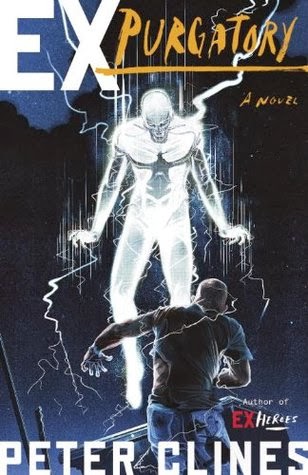 Ex-Purgatory by Peter Clines (Broadway Books)
Genre: Science Fiction Fantasy
Series: Book 4 of Ex-Heroes
Publication Date: January 14, 2014
Author Information: Website
Mogsy’s Rating: 3.5 of 5 stars
It’s an age of trilogies we live in, so you can’t really blame me when at first I thought Ex-Communication was going to be the end of the Ex-Heroes series. Thank goodness it was not. I was so happy when I finished reading that and found out about Ex-Purgatory, because I don’t think I’m ready to say good bye to this superheroes vs. zombies fest quite yet.
Ex-Purgatory was…strange, though. Despite (or perhaps because of) the fact I’ve been following this series since the beginning, I was thrown for a loop as soon as I started the first page. St. George is now just George Bailey, working as a janitor on a university campus. No super strength, no invulnerability, no flying. No fire-breathing, no nothing! Seriously, I was like, is this like a prequel or something? A flashback? What’s going on?
Well, there’s a reason why the book description is so vague. The story’s sort of a surprise, though a reader who remembers some of the events and characters from the previous books would probably figure it out quite quickly. I’ll just put it this way: you know how when you sit down to watch a Star Trek: The Next Generation marathon and like a Holodeck episode comes on you just immediately know it’s going to be weird? It’s sort of like that.
Fans of movies like Inception or shows like Lost will probably really enjoy this one. And that’s what puzzles me — I normally go nuts over stuff like that and thrive on high levels of weirdness especially when it comes to books like this; I wouldn’t have such a love for this series in the first place if I didn’t. Still, I wasn’t as on board with the story as I’d hoped. Something just felt missing here, and I think it has to do with superpowers and the zombies taking a backseat while the main conflict shifted internally to focus on the heroes trying to figure out what was going on instead.
I still really enjoyed the book; it has a lot of the things I really like about this series, including the action and clever dynamics between all the characters. I’ve always loved how Peter Clines writes about his ensemble casts, the way he gives each person a unique identity and attitude for speaking. It does make for some very entertaining scenes. Take complete polar opposite personalities like Karen Quilt AKA Stealth and Barry Burke AKA Zzzap, for example, throw them into a conversation together and watch the fur fly and dialogue flow. The satirical take on superhero archetypes still also makes me chuckle.
As for the main plot, methinks how it’ll be received will depend on the invidual reader. I think it’s slightly darker in tone than the last three books, and Clines was definitely out to try something a little different with the whole idea behind this story. Others will probably love it, even if I personally wasn’t completely sold (though, I still think I should have been. And I still feel somewhat like a wet blanket that that wasn’t the case). I just love these heroes and their powers so much, and to read about how all of them have forgotten who they are for so much of the book just feels…too odd!
Don’t get me wrong, this was nevertheless very good. Yes, it’s different but whether it’s a welcome or unwelcome change, you’ll just have to read it and be the judge of it yourself!



 The BiblioSanctum