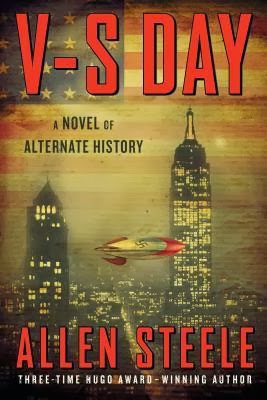
Book Review: V-S Day by Allen Steele
Posted on January 30, 2014 Leave a Comment

Audiobook Review: Wheel of the infinite by Martha Wells
Posted on January 30, 2014 1 Comment
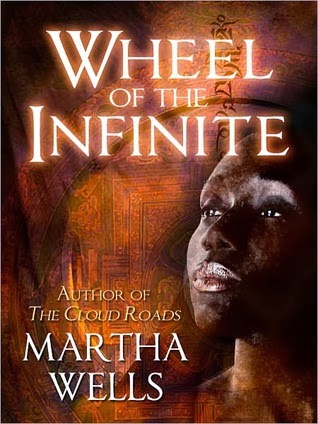
Wheel of the Infinite by Martha Wells
Genre: Fantasy
Publisher: Martha Wells
Publication Date: July 2011
Narrator: Lisa Reneé Pitts
Author Info: www.marthawells.com
Wendy’s Rating: 4 of 5 stars
Once again, Wells weaves her magic and builds us a world at once unique, inviting and familiar, though it is by no means the typical medieval European fantasy setting.
Darkness looms and terrible forces threaten to rise from the storm. The sorceress Maskelle has been summoned back from exile to aid in the annual process of remaking the Wheel of the Infinite in order to maintain peace and harmony. Maskelle travels unobtrusively with a group of play actors, but as the Voice of the Adversary she is not unknown. In fact, in spite of her dark past, she is revered as much as she is feared and her word as much as her power commands respect. Yet Wells makes it clear that she is a woman first, not merely a demi-god to be worshipped.
Along her journey, Maskelle meets the swordsman, Rian, whom she rescues from hoodlums intent on his death. He too has a questionable past, which Maskelle eventually teases out of him, just as he learns of hers. Their relationship is intriguing. I want to say that there was no spark and it did not feel genuine, but in thinking about it for a while after, I came to really appreciate how well they functioned and how easily they accepted each other. Neither of them had reason to trust each other, and, considering Maskelle’s history with her lovers, Rian ought to have gone running. Yet, they both fit together in this comfortable, pragmatic coupledom.
One of the things that sets this book apart from others in the genre is the lead character. Maskelle is not the typical heroine. She is a middle-aged woman of colour coming to terms with the creaks and groans that come with her age. She is a bit bitter, but not without reason. She is proud. She is powerful. And she knows how to laugh at herself and with those around her.
Her world is also unusual, but that should be no surprise. Once again, Wells weaves her magic and builds us a world at once unique, inviting and familiar, though it is by no means the typical medieval European fantasy setting. This has more of a modest South East Asian feel, with a myriad of people populating the different places through which Maskelle and her companions travel.
There is a heavy focus on the religious aspects of the world, which Wells carefully brings to light as the plot unravels. To be clear, by “heavy focus,” I don’t mean that this is in any way a preachy story. I simply mean that it is a prominent part of the plot through which Wells continues to show us how incredibly complete her world building skills are, without being overwhelming.
I initially listened to this as an audiobook, but eventually switched to the ebook. The narration was too disjointed and the transitions were not very smooth. I probably should have switched to the ebook sooner, as I think it would have helped me connect with the characters even more.


Interview with Mercedes M. Yardley, Author of Nameless
Posted on January 29, 2014 Leave a Comment

So you’ve seen our reviews for the whimsically dark Nameless: The Darkness Comes and the deliciously twisted but powerful Apocalyptic Montessa and Nuclear Lulu, and if you’re anything like me after reading these books, you’re probably thinking right now: I simply must find out more about this author.
Well, you’re in luck! The BiblioSanctum is honored and thrilled to feature Mercedes M. Yardley on the blog today.
Mogsy: Hello Mercedes, and welcome to the BiblioSanctum! This is so exciting, thank you so much for the interview!
Mercedes M. Yardley: Hi Mogsy! I’m so glad to be here. Thank you for having me.
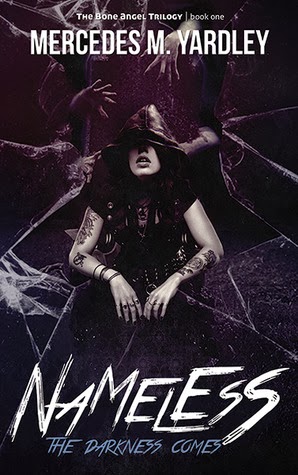
Mogsy: Let’s dive right in! As a dark fantasy writer, you’ve written numerous stories for anthologies and magazines, a novella (speaking of which, I loved Apocalyptic Montessa and Nuclear Lulu) and now the newly released Nameless, your debut novel and the first book of a new trilogy. Tell us! What are new readers in for? How would you describe your work to them?
MMY: I’d say that I write dark fantasy and horror for people who don’t like horror. I love monsters in love. Finding the beauty and intricacies in characters that most might not find especially empathetic. I adore the magnificence of words. There’s quite a bit of wordplay in my books. They’re dark and hopeful.
Mogsy: What was it like to write Nameless, going from writing short fiction to a longer piece? Did it feel very different or daunting?
MMY: It wasn’t especially difficult. Most people don’t know this, but Nameless wasn’t the first novel that I wrote; it was only the first novel published. They don’t necessarily publish in the order that you write them. The stars aligned perfectly for Nameless to come out right now, and I’m very pleased with it. So really, it’s my…let me see…fifth or sixth novel that I actually wrote. So I had a decent hang of it by then.
But it is difficult transitioning from short pieces to novel-length ones. I’m especially fond of flash fiction, which is a thousand words or less, so when I’m looking at an 80,000 word novel, it can be a little bit daunting. But at the same time, it gives me room to play, and there’s a sense of relief to it. “Ah! I can finally explain everything! This is lovely.” With short fiction you need to imply so much without really saying anything at all. Longer works allow you to take the time that you need.
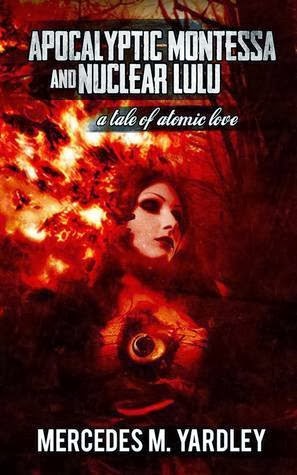 Mogsy: In the books of yours that I’ve read, there is a strong horror element but also, I was surprised to see, a powerful love story. People don’t usually associate the two, but these “strange loves” that are so terrifying and yet so intense is what I’ve come to love about your work. Ever since reading Apocalyptic Montessa, I’ve been dying to ask: where do you get your ideas or inspiration for these relationships?
MMY: My husband, of course. He is strange and terrifying.
Of course I’m kidding. I’m the strange and terrifying one in our relationship.
You know, I’ve always been drawn to that sort of thing. The concept of loving the unlovable. Again, it goes back to that “Monsters Who Love” theme. Maybe it came from reading too many Beauty and the Beast or Bearskin stories growing up. But I firmly believe in the goodness of humanity. I believe that each soul, no matter how corrupt, has beauty and a little seed of goodness inside of them. This is interesting because a friend and I were discussing this very thing the other day. People who are monsters and our relationships to them. I used to work in a very dark and scary environment. I worked at a home for sex offenders, and it changed my perspective dramatically. I saw the worst of the worst, the horrible things that people could do, and I was also allowed to see that despite these unfathomable things, they were still people with some beautiful thoughts. One day one of the clients held the door open for me, and it was a very big deal. He said he wanted to learn to do things for other people. That maybe the little good things could add up and he could be of worth some day. That simple act of holding a door open for me, when I was, in all reality, a potential rape victim for him…that changed me. Beauty in the horror. Love in the monsters. It’s there.
I love exploring that. Finding that worth in people and in my characters. It’s my diamond in the rough.
Mogsy: From Luna to Montessa, Lulu to Reed Taylor, I just have to say I love your character development. And of course, I’m also really intrigued by your unique take on Jack the Ripper in your story in the Tales of Jack the Ripper anthology. Is there a process for you when it comes to shaping such interesting and distinct characters? Do you have a good idea of them before you start, or do they sometimes surprise you as the writing progresses?
MMY: This is a great question! I’m constantly surprised in my writing process. I sit down with a vague idea and go from there. Last night, for example, I wrote a story where I opened my computer and thought, “Okay. I have a garden gnome named Boris and a character named Todd. Go.” Now I know that Boris talks and Todd is dead, but I didn’t know that when I sat down.
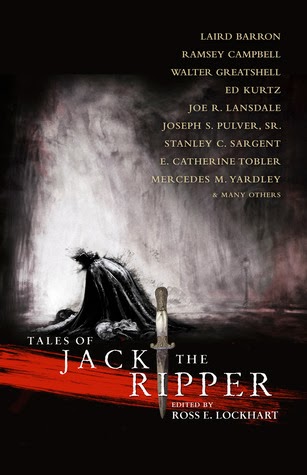 With “A Pretty for Polly”, the Jack the Ripper story, I knew I wanted to make him as sympathetic as possible. I also knew it would be difficult. Jack the Ripper is tough to garner any sympathy for. But I was smitten with the anthology and really wanted to do something unique with Saucy Jack.
Luna was snarky and terrified of being abandoned. (That’s why she never calls Reed Taylor by his first name only; it’s too intimate.) Montessa is special but weary. Lulu tries to keep his explosive, steamy anger under wraps. Reed Taylor has a good heart. These are the things I knew about the characters going in. They’re tiny little scraps of ideas, but I let them work themselves out until they wove together to create, what I hope, are fully fleshed characters.
Mogsy: Great answer, and thanks for satisfying my curiosity! As you know, when I interview an author, I like to find out more about their writing and their stories, but I also want to know more about them too. What is thing that readers might be surprised to learn about you that’s not in your author bio or anywhere else?
MMY: My mother had a lilac bush and purple irises growing in the backyard. There was an apple tree, too, and a weeping willow. I would climb in the willow and read. I had a certain branch that I liked to sit on. I’d write poems beneath the lilacs and play with my He-Man and She-Ra dolls there. And to this day purple irises are my favorite flowers. When I get particularly stressed and need to relax, I find that I still dream of the backyard set up like it used to be.
Mogsy: That sounds truly, truly wonderful. Speaking of reading, you also strike me as someone who would read some interesting books. What are you currently reading right now, or what are some good books that you’d recommend?
MMY: Oh, I’m reading everything! A little bit of everything at the same time. I’m reading a book on cleaning up crime scenes and blood spills. Another one about Elizabeth Short, who is better known as The Black Dahlia. I’m reading Bunnicula with my kids, and just finished a book that I read as a child called The Witches of Worm. And I also finished a book about auras that my sister-in-law lent me. Apparently my aura is magenta. I can blame it for all of my problems.
I’d suggest everybody read August Frost by Monique Roffey. It’s absolutely lovely. My favorite book that I read last year was probably a nonfiction book titled Talking to the Dead by Barbara Weisberg. It’s about the rise of spiritualism in the US and focuses on the Fox sisters. The whole concept of paranormal aspect aside, it was a fascinating look into the role of women at the time. For instance, it was improper to work outside of the home. But holding séances in your parlor? Oh, well, it’s in the house. That’s cool.
It’s just bizarre to me.
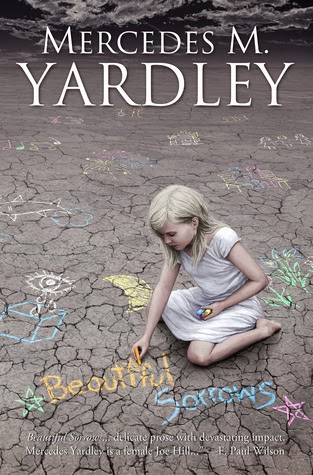 Mogsy: Well, I believe you’ve just made me add a couple more books to my to-read list. And Bunnicula! That’s such an awesome book to read to kids. On that note, how do you balance writing with the other aspects of your life like family, etc? And are there any hobbies you like to escape to in order to unwind?
MMY: My friend and fellow author C. Michelle Jefferies and I were just having this conversation at lunch last month! Balance is so difficult. Almost too difficult. She decided that she’s going to use the term “alignment” instead of balance, and I like that. I’m going to align myself with my goals rather than worrying about balance all of the time. Because it’s impossible. I find that I can take care of the kids and write, or take care of the kids and clean the house, or do promo and clean and let the kids look like little Charles Dickens orphans. I can’t seem to do all of it. So if I shoot for my goals, and make sure I’m heading in the right direction, then I’ll consider that success. I’m exceptionally hard on myself. I always feel like I’m severely lacking. I think most of us expect too much out of ourselves. But if I’m aligned correctly, and heading in the right direction, maybe that will be enough to put my heart at ease.
Mogsy: Nameless is the first book of The Bone Angel trilogy, with two more books incoming, yay! So what’s next for Luna Masterson? At this early point, is there anything you can tell us about the sequel?
MMY: Bwahahaha! That’s what I can tell you.
We spent the first book getting to know Luna and realizing how loyal yet terrified she is. She’s had everybody she’s ever cared about taken from her at one time or another. I expect Book Two to be darker. I want to push her to the breaking point and see what happens. She thinks she’s tough, but Luna is exceptionally vulnerable. We’re going to explore that vulnerability a little bit.
Mogsy: I can’t wait! Now I am excited for Luna but kind of fear for her at the same time. She was just such a delight. But now that we know about Luna, what else is next for Mercedes M. Yardley? Aside from The Bone Angel, are there any ideas for other stories? Any big projects you’re excited about currently or in the near future, either writing or non-writing related?
MMY: Oh my goodness, Mogsy. There are projects! Tons and tons of projects. Including the sequel to Nameless: The Darkness Comes, I’m currently working on four novels. Two are collaborations. My favorite thing that I ever, ever wrote is coming out from Ragnarok Publications this September, and I’m simply over the moon about it! And I’m also involved with two separate, very intricate shared-world projects. It’s an insanely busy but exciting year for me.
Mogsy: Whee I’m so happy to hear about more books from you this year! You’ve given me lots to look forward to now.
Once again, thanks for being so awesome, Mercedes. And for writing such great stories! On behalf of all of us at BiblioSanctum, we appreciate you for dropping by. Wishing you the best for all your current and future endeavors!
MMY: Thank you so much! I appreciate you letting me stomp around your turf.
Waiting on Wednesday 01/29/14
Posted on January 29, 2014 Leave a Comment

“Waiting On Wednesday” is a weekly meme hosted by Breaking the Spine that lets us feature upcoming releases that we can’t wait to get our hands on!
Dragon Age #4: The Masked Empire by Patrick Weekes – April 2014 (Tor Books)
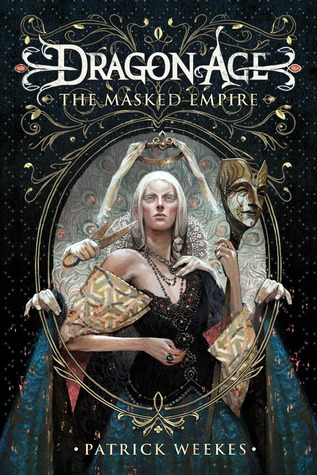
Empress Celene of Orlais rose to the throne of the most powerful nation in Thedas through wisdom, wit, and ruthless manipulation. Now, the empire she has guided into an age of enlightenment is threatened from within by imminent war between the templars and the mages, even as rebellion stirs among the downtrodden elves To save Orlais, Celene must keep her hold on the throne by any means necessary.
Fighting with the legendary skill of the Orlesian Chevaliers , Grand Duke Gaspard has won countless battles for the empire and the empress But has he fought in vain? As the Circle fails and chaos looms, Gaspard begins to doubt that Celene’s diplomatic approach to the mage problem or the elven uprisings will keep the empire safe. Perhaps it is time for a new leader, one who lives by the tenets of the Chevalier’s Code, to make Orlais strong again.
Briala has been Celene’s handmaid since the two of them were children, subtly using her position to help improve the lives of elves across Orlais. She is Celene’s confidante, spymaster, and lover, but when politics force the empress to choose between the rights of Briala’s people and the Orlesian throne, Briala must in turn decide where her true loyalties lie.
Alliances are forged and promises broken as Celene and Gaspard battle for the throne of Orlais But in the end, the elves who hide in the forests or starve in the alienages may decide the fate of the masked empire.
Traitor’s Blade by Sebastien de Castell – March 6, 2014 (Jo Fletcher Books)
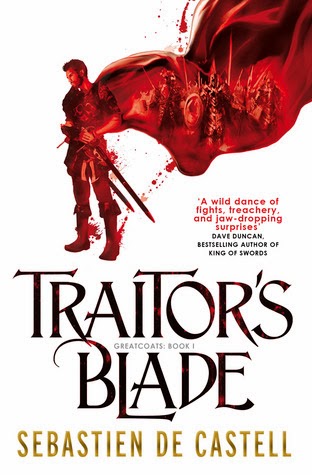 “Falcio is the first Cantor of the Greatcoats. Trained in the fighting arts and the laws of Tristia, the Greatcoats are travelling Magisters upholding King’s Law. They are heroes. Or at least they were, until they stood aside while the Dukes took the kingdom, and impaled their King’s head on a spike.
Now Tristia is on the verge of collapse and the barbarians are sniffing at the borders. The Dukes bring chaos to the land, while the Greatcoats are scattered far and wide, reviled as traitors, their legendary coats in tatters.
All they have left are the promises they made to King Paelis, to carry out one final mission. But if they have any hope of fulfilling the King’s dream, the divided Greatcoats must reunite, or they will also have to stand aside as they watch their world burn…”
Cover Reveal: John Golden, Freelance Debugger by Django Wexler
Posted on January 28, 2014 Leave a Comment
Today, it is my pleasure to bring you a special cover reveal and spotlight courtesy of Ragnarok Publications, a relatively new publisher that is already on its way to putting out some very fine books. I’m super excited to be sharing this because the following is a project from one of my favorite authors — Django Wexler!
Say hello to John Golden, Freelance Debugger, a series of novellas featuring a protagonist whose job is to keep fairies and other pesky supernatural creatures from infesting and destroying corporate computer systems.
This is what Django has to say about his new book:
I’ve had something like this idea kicking around for a long time, this story of a magical troubleshooter in a modern setting who has to deal with troublesome elves, fairies, and so on, as a kind of pulp pastiche.

I’d also played with the idea of using footnotes for humorous effect in a couple of non-fiction pieces, inspired by some excellent uses in fiction I love—Jonathon Stroud’s Bartimaeus books, for example, or Discworld. When it all really clicked was when I tried having the story be in first person, and the footnotes written by a different character; the contrast just kept making me laugh, so I went with that.
And without further ado, here’s that zany, excellent cover:

Having had the chance for a pre-release glimpse of the story, I can tell you already, folks, this is a good one. People who love full-tilt and witty urban fantasy, especially those readers in the IT field will sure get a kick out of this. Sharp-eyed gamers might also see something of interest on that cover. (PSST! The next story will have World of Warcraft!)
Not long to wait now! John Golden, Freelance Debugger will be released as an ebook, available on Kindle February 3rd.
Comic Review Bites
Posted on January 28, 2014 Leave a Comment
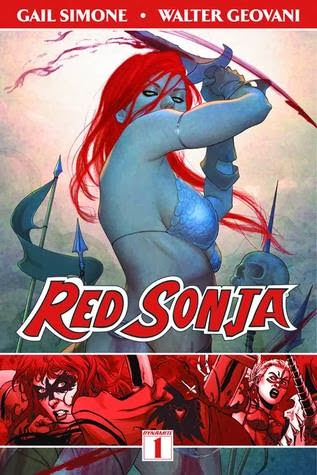
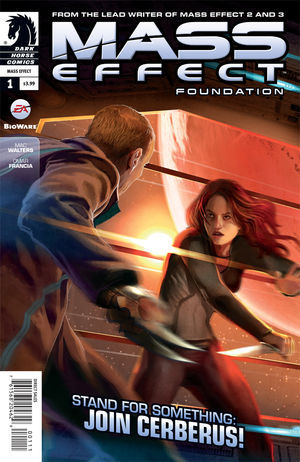 Mass Effect: Foundations vol.1
Mass Effect fans know Maya Brooks from the Citadel DLC. In Mass Effect: Foundations, we learn how she came to be an agent of Cerberus, compiling dossiers on Shepard’s eclectic crew. Issue one was a very interesting look into that very process, but when the next issues began shoehorning Maya into what should simply have been origin stories for our favourite characters, things started to fall apart. I suspect the idea was to make Maya the Mara Jade of the Mass Effect world, but her presence lacked the subtlety of the Emperor’s Hand. I found Kaidan Alenko’s story particularly disappointing. Anyone who took the time to talk to him in the original game already knew this story, so the issue felt more like an excuse to show Kaidan’s teacher being excessively mean and shouting a lot, within panels literally flooded with biotic powers, without telling anything new.


Grimm Fairy Tales: Realm Knights
Based on the covers of Grimm Fairy Tales, I hadn’t expected much, but was pleasantly surprised when I read volume one. Realm Knights takes a different spin on the fairy tales with fully realized characters as part of the real world. And when Chronos returns seeking vengeance against the gods that imprisoned him, Snow, Robyn Hood, Hook, Van Helsing and Red Riding Hood are brought together to defeat him. Fans of the series will undoubtedly recognize the characters and their powers, quirky personalities and relationships, but a new reader can have just as much fun on this wild ride, especially when the amusing Hades shows up to help or hinder them in the fight against his father.


One thing that immediately sets Sheltered apart from other post-apocalyptic stories is the fact that it’s actually a pre-apocalyptic story. It begins at a secluded camp of survivalists who have been busily preparing for the inevitable. What they didn’t expect is how their preparations would affect their children. Lead by Lucas, who believes that the only chance the younger generation has for survival, is to take their parents’ teachings to heart. Meanwhile, Hailey and Victoria, who were not part of the plan, end up doing a lot of nothing for most of the volume, while Lucas tries to maintain his fragile control.
While I really liked the idea behind Sheltered, I felt the motivations of the children were not strong enough to make it truly believable. The Lord of the Flies mentality is easy enough to comprehend, but not before the children bring their deadly plan to fruition. There is no clear reason for the children to follow through with Lucas’ plan, no matter how much of a bully he might be or how convincing his end of the world scenario is.

Following the death of her parents, Aurora Grimeon is sent to live with her grandfather, Silver, in the mysterious Ossuary Isle. Upon her arrival, she is greeted by the haunting form of a blue flame. The neighbours refer to it as a will-o-the-wisp, but Silver dismisses it as science. And while Silver does not care much for the superstitious nature of his neighbours, he does consent to send her off to Mama Nonnie, the local hoodoo woman, for protection spells. Death surrounds the people of Ossuary Isle, and Aurora’s arrival seems to herald more of it.
This is a an intriguing little tale, with quirky, beautiful art, perfectly suited to the dark, morbid environment. Graves and grave workers line the swamp and Silver’s hobbies and research certainly are macabre. I really liked the way the superstitions, which at first seemed to be worthy only of dismissal, were used, taking on a life of their own as the mystery unwound and the story went places I did not quite expect. And then there’s Missy the raccoon…
Step-by-Step with Cover Illustrator Gene Mollica
Posted on January 27, 2014 Leave a Comment

There’s a good chance that, if you’re a Science Fiction, Fantasy, Steampunk and Urban Fantasy reader, you’ve read a book featuring one of Photo-Illustrator Gene Mollica‘s incredible covers. A graduate of the Rhode Island School of Design (RISD), Gene began his artistic career as a traditional painter, but soon moved into the challenging world of digital media.
When chatting with Gene, one thing becomes very clear: creating the most stunning image possible is his goal, and he goes above and beyond to make that happen. The wrong cover can confuse an audience, so it’s Gene’s job to make sure that his work is not only eye-catching, but captures the attention of the right readers. The key is visually interesting texture and detail to “anchor the eye,” while still encouraging movement across the page. And of course, the image should reflect the story within.
“I put a little something of myself in every cover,” says Gene.
The result is beautiful images that offer a window into an author’s world. And the best part is that he absolutely loves doing it and loves chatting about it.
 |
| The Crimson Campain by Brian McClellan |
We learned a little about the cover design process in our recent Cover Lover, featuring Mark Smylie’s The Barrow, but Gene very kindly offered to go deeper, taking us through the steps that bring his brilliant covers to life.
STEP ONE: The brief.
There are many important factors that go into the design beyond the outline of story and characters. The current market trend and competing books within the genre need to be considered, which is why it is important to find what makes an individual book unique and bring that to light in the cover.
The information a cover designer receives from an editor/art director can be quite sparse, and when Gene first began in the industry, this was an obvious challenge. Now that experience has made him far more confident, he readily pushes back to the art direct/editor to request more detail. Authors have also found that his friendly and receptive nature, and his desire to truly understand their vision, means they can really get down to the defining details. Does the character have a tattoo? What kind of attitude and expression would they have? Are they wearing a specific style or piece of clothing?
 |
| Lena Greenwood from Codex Born |
The visual challenges Gene deals with can be as basic as those in Brian McClellan‘s Powder Mage series, which required a civil war costume with a medieval background. Or they can be far more intimidating, such as working on the notorious Jim C. Hines‘ Magic Ex Libris series. Gene says that he’s learned a lot from Hines’ critical analysis of the posing of female characters. Codex Born, the second book in the series, presented a real challenge based on the character description of a Native woman of a larger body type. “Oh it was terrifying!” Gene laughs, but fortunately, Hines was pleased with the end result.
STEP TWO: Agreement on a desired direction.
Through thorough back and forth discussions with the art directors, editors and/or the authors, Gene is able to put together some rough sketches for approval, before getting down to business.
STEP THREE: Pre-production.
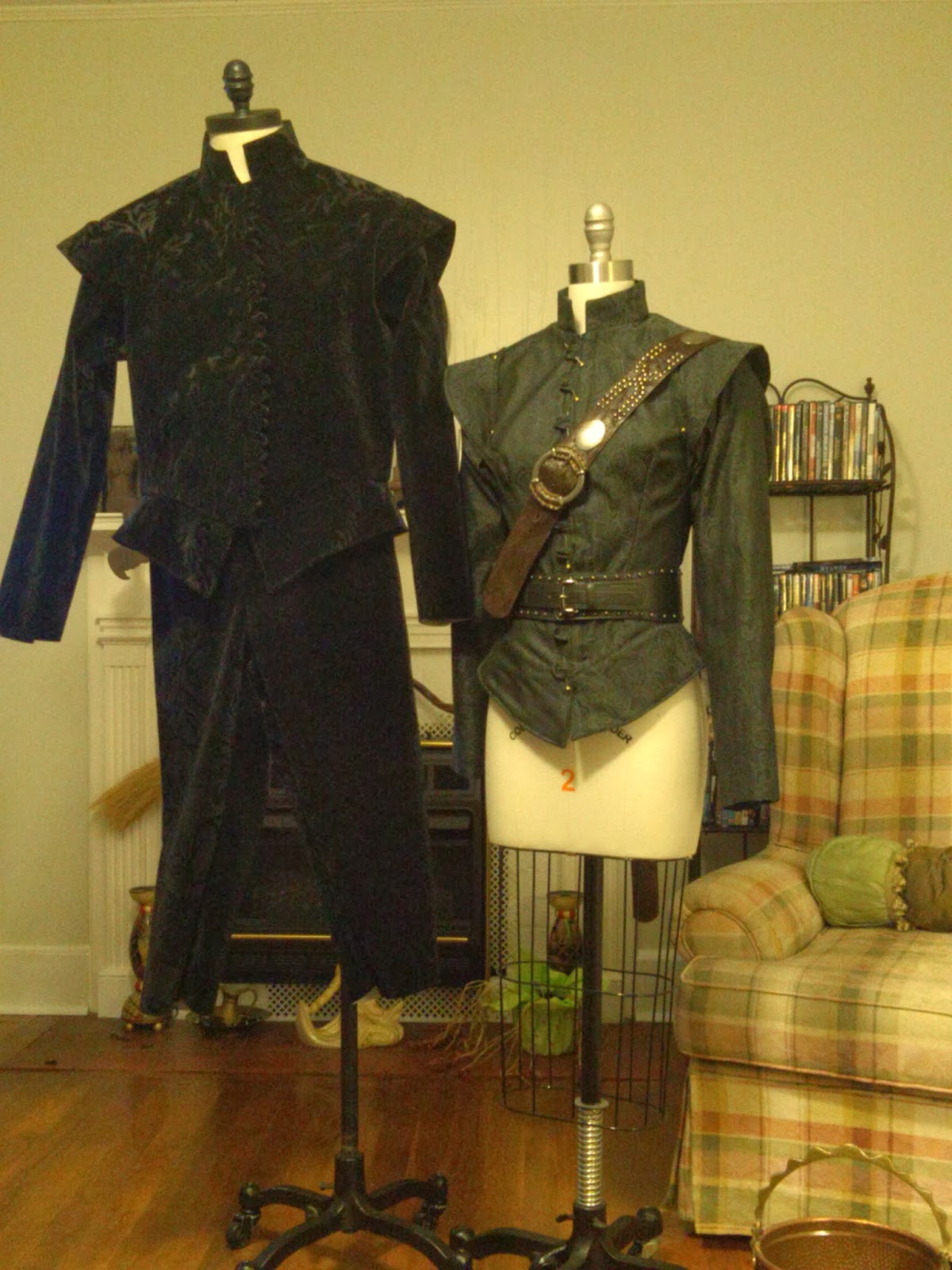
“I love the costume part,” says Gene. Many of his covers are for the Urban Fantasy genre, featuring jeans and tank tops, but he really gets to have fun with Fantasy. Then Steampunk came along and opened up a whole new world.
Initially, Gene attempted to rent all the costumes, but discovered that rental shops tend to fulfill the more robust demands of theatrical costuming. Now, he works with professional costume designers and his growing collection of weapons and gadgets to get the perfect look.
Gyllian of Eeldrytch Armouree is a critical member of Gene’s team. He handles all of the leather pieces, belts, baldrics and customizes the weapons. Gene also works with the fabulous design team of Shirley and Victor Forster of Renaissance Sewing, but Deborah Gerard has become his lead after years of working together on Gene’s many projects, from start to finish. “I totally rely on her expertise and thorough knowledge of historical costumes and traditions. Her design capabilities experience and versatility across a wide spectrum has really brought my work up to a new level.”
Looking for a custom designed costume based on the cover of your favourite novel? All of these gorgeous designs can be recreated!
Once the props and costumes have been chosen, it’s time to select the talent. Gene’s preference is to work with professional talent agencies which, while a bit more costly, has the advantage of filtering talent that is the most suitable to his needs.
STEP FOUR: The photo shoot.
With the costumes, props and talent in place, and a quick review with the art director again, the process advances to the photo shoot where Gene rounds out his team with his, assistant, Mike Moosbrugger, who’s knowledge of professional studio lighting and work flow is exceptional. And on-set stylist Agata Smentek transforms the models with her fantastic hair and make-up.
STEP FIVE: Composites.
 |
| Wolfbreed by S.A. Swan |
Once pictures from the photo shoot are approved, Gene creates some quick composites and rough images for review. He used to provide ten or twelve comps, but, as with all processes, experience allows for a lot of streamlining. With a firm understanding of the direction the cover needs to go, Gene is able to rough in the background and foreground colour palette to create just a few high resolution comps that are very close to the final product.
STEP SIX: Final illustration.
Finally, working in Photoshop with stock photos – a mountain from here, a tree from there – Gene creates his masterpiece – a seamless blend of colour, lighting and design to catch the eye of the reader.
Book Review: The Stormcaller by Tom Lloyd
Posted on January 26, 2014 Leave a Comment
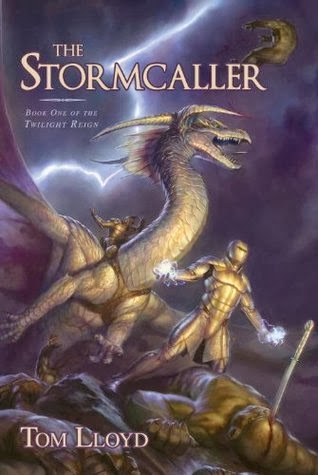
Genre: Epic Fantasy
Series: Book 1 of Twilight Reign
Publication Date: October 21, 2008 (Pyr)
Author Information: Website | Twitter
Mogsy’s Rating: 4 of 5 stars
I have to say I did things a little bit backwards when it came to this series. It all started with The God Tattoo, Tom Lloyd’s anthology of stories from the Twilight Reign that I read last year. Needless to say, I enjoyed it very much. Furthermore, it made me want to explore everything else this world had to offer, so when Pyr gave me the opportunity to read and review The Stormcaller, the first book of the series that began it all, I very enthusiastically accepted.
That collection of tales had given me a taste of the Twilight Reign universe, and piqued my interest with its promise of a dark and epic fantasy. Here was the world I had been introduced to, one of white-eyes, ancient deities and terrible magic. Now I was finally able to see the wider context, getting the full depth of the story filled with gods and demons, clandestine politics and violent clashes between warring peoples. I feel like what I’d gotten from the anthology was just a nibble. And here, this was the whole cake.
Mogsy’s Book Haul
Posted on January 25, 2014 Leave a Comment

Dreamwalker – kicking off this list of new arrivals in the last fortnight is this gem by C.S. Friedman from DAW Books. Her adult fantasy books have always intrigued me, but Dreamwalker is actually quite a departure, featuring a story set in a modern setting that is geared more towards a young adult audience. Nevertheless, it’s a good one! Be sure to keep an eye out for my review sometime next week.
Only the Good Die Young – the start of a new haunting series by Chris Marie Green. I’m really looking forward to checking out this author, not to mention I love ghosts in my urban fantasy!
V-S Day – this one looks simply fascinating. A little different from my usual reads, perhaps, but I’m always trying to challenge myself to read outside my comfort zone, and who can say no to a World War II alternate history novel?
Seoul Survivors – Jo Fletcher Books never fails to deliver when I’m looking for “something different” or “out there” in my speculative fiction. Naomi Foyle definitely has a new fan in me after this one. If you haven’t seen my review for Seoul Survivors yet, you can check it out here.
Stone Cold – the follow-up to Devon Monk’s Hell Bent, her new Broken Magic spin-off series from her Allie Beckstrom novels. I read and enjoyed Hell Bent last year and thought it was chock-full of potential, so I’m pretty excited for this one.


Scourge of the Betrayer – now on to the digital pile, which is never without its fair share of audiobooks. The Audible Matchmaker tool strikes again, and I’m finding more books that I have bought Kindle ebooks for that have a good price for the audio version. Scourge of the Betrayer has been on my to-read list for a while, and I hear the sequel is coming out in the summer, so boom, sold!
Shadow Ops: Control Point – the third book of this series is about to come out and it’s been getting some pretty rave reviews, so it got me thinking, maybe I shouldn’t wait to read this one anymore. I snagged the audiobook and let me tell you, that was a credit damn well spent. The review will be up soon, as soon as I recover from the awesomeness.
Nameless – an ebook for review from Ragnarok Publications, and having had such a great time with Mercedes M. Yardley’s novella last month, I didn’t need much convincing to read this one. Yardley’s stories and characters are always so grimly addicting!
Honor Among Thieves – I’m requesting books from NetGalley in moderation these days, but you couldn’t have kept me away from this one. Daniel Abraham and Ty Franck writing as James S. A. Corey + Han Solo = win. That is all.
YA Weekend: Silence by Michelle Sagara
Posted on January 25, 2014 1 Comment
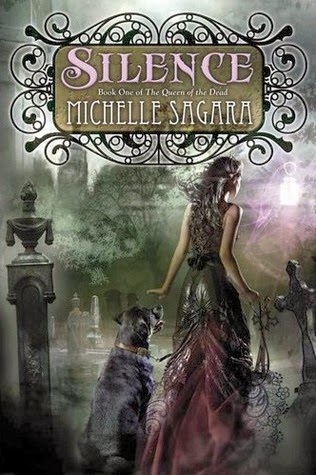
Silence by Michelle Sagara (DAW)



 The BiblioSanctum