PANELS: Sex Criminals vol.1: One Weird Trick
Posted on July 4, 2014 9 Comments

Suzanne’s first sexual experience leads to the discovery of “The Quiet” in Sex Criminals Volume 1: One Weird Trick
Audiobook Review: Prince of Thorns by Mark Lawrence
Posted on July 4, 2014 13 Comments
 Prince of Thorns by Mark Lawrence
Genre: Dark Fantasy
Series: The Broken Empire #1
Publisher: Voyager (August 2011)
Narrator: James Clamp
Author Info: mark—lawrence.blogspot.ca
Wendy’s Rating: 5 of 5 stars ~ Lawrence delivers knife-edge wit, crisp descriptions, swift action and reaction. There are no wasted words as he paints his dark pictures,with each and every moment evoking a raw intensity of action and emotion.
I am remiss. I have had Prince of Thorns sitting on my nightstand for too long with full intention to read it, though I have admired Mark Lawrence for a long time. His wit and his commitment to giving of himself to his fans, all things writery, and more, speaks of a man worthy of lots of attention. So forgive me, Mark, for taking so damn long to fall in love with your series. Please accept this five star review, which I have written after only about a hundred pages, as my humble apology.
I have a soft spot for broken people. For the assholes, jerks and bastards that others shun. I am not naïve enough to wholly trust them, and I am mostly not I arrogant enough to believe I am the one who can “fix” them. But I appreciate their honesty about who they are and how they see the world.
With this in mind, it was no surprise to me that Prince Jorg became an instant favourite. Jorg is driven by, among many other things, a seething rage and a lust for revenge against the enemy that brutally killed his mother and little brother while Jorg watched, trapped by fear and thorns. This is called Prince of Thorns for a reason, and Lawrence neither wastes nor overuses the literal and figurative barbs that have shaped Jorg’s life.
But I’m going to save the gushing soliloquy on why I love Jorg, for a future Character Appreciation Post. Stay tuned!
It’s not just Jorg that sold me. Lawrence’s skill as a writer is mind blowing. A sure sign that I’m smitten with a book is when I am listening to the audiobook (wonderfully narrated by James Clamp, who shall be added to my list of favourite narrators), and find myself running back to the book itself to dogear pages and underline all the delicious text, and then spam Goodreads with all my favourite quotes.
Writing through Jorg’s eyes, Lawrence delivers knife-edge wit, crisp descriptions, swift action and reaction. There are no wasted words as he paints his dark pictures, with each and every moment evoking a raw intensity of action and emotion.
At its heart, Jorg’s journey is a simple one that we’ve read before: the (self-)exiled prince returning to claim his birthright from a father who refuses to acknowledge him until he proves himself worthy. But Lawrence gives this a dark twist, starting with a dark and twisted character. Jorg is not a purely evil creature and perhaps there are other factors at play beyond his control, but Jorg never makes excuses for his decisions and their consequences. And while he recognizes the immorality and/or impropriety of his choices, they are always based in the ruthless practicality of achieving his goals, no matter the sacrifice required (I may have to have words with you, Mr. Lawrence, for one sacrifice in particular. *shakes an angry fist at you*)
There is unrest in the land and Jorg’s father tasks him with taking down one of his enemies. This is not as straight forward a process as one might think it should be. The story gets a little muddy when it delves deeper into the dark magic infesting the lands, but it all leads Jorg into some very intriguing plot twists and spoilery discoveries about the world Jorg lives in. I won’t divulge those elements here, but I will say that I am now very intrigued by the history behind the broken kingdoms and am on a definite need to know more basis.
Some might complain that this book is too dark and too hopeless. There are no good guys or heroes, only deeper shades of wrong with our lead being just as depraved as the rest. It’s a gritty and realistic world, even with the magical elements. Personally speaking, I love the way Lawrence teeters on the edge of true darkness and am curious to see how far he’s willing to go.

Posted on July 3, 2014 Leave a Comment
“Instructing you, sweet Ista, would be like teaching a falcon to walk up to its prey. It might with great effort be done, but one would end with a very footsore and cranky bird, and a tedious wait for dinner. With a wingspan like yours, it’s ever so much easier just to shake you from my wrist and let you fly.”
~ Lois McMaster Bujold, Paladin of Souls
Book Review: The Golden City by J. Kathleen Cheney
Posted on July 3, 2014 20 Comments
 The Golden City by J. Kathleen Cheney
Genre: Fantasy
Series: Book 1 of The Golden City
Publisher: Roc (November 5, 2013 )
Author Information: Website | Twitter
Mogsy’s Rating: 4 of 5 stars
The Golden City is a book that may take a bit of patience to get into, but it ends up being well worth the time once the story gets going. It also stands out for being one of the more unique novels I’ve read this year, with its one-of-a-kind setting in an alternate Portugal around the turn of the 20th century and its rousing combination of subjects like dark magic and sea folk.
The book begins with an introduction to Oriana Paredes, a spy for her people called the sereia. As a member of a race of sea folk banned from the city by the ruling king, Oriana has been posing as a maid working undercover in a wealthy aristocratic household for two years, but has befriended the family’s lovely and vivacious daughter Isabel. When Isabel decides to elope to Paris, Oriana decides to help her make her escape by disguising themselves as simple servants. But before the young women could depart, they are abducted and left to die in an underwater trap. Saved by what she is, but at the same time forced to watch Isabel drown, Oriana is set on a course to uncover the mystery of a string of similar murders and seek justice for her human friend.
Ouch. I just want to say how surprised I was at how hard I took Isabel’s death. While it is revealed in the book’s description, I didn’t do much more than skim the back cover before I started reading and so the beginning was still quite a shock for me. But it was a good kind of surprise. In just a handful of pages, J. Kathleen Cheney has established a realistic friendship between the two girls and made me care for Isabel and the prospect of her grand romance. And in a blink, that life was taken away. It was a very effective and impactful (not to mention heartbreaking) way to start the book, and it only worked this well because the writing was so convincing. At this stage in the story, I still had only a vague sense of the bigger picture, but I understood the desire for vengeance as the driving force behind Oriana’s actions. I seized upon it, looking to it as the backbone of this novel, despite all the questions still buzzing away at the back of my mind.
For believe me, there were questions aplenty. While overall I enjoyed The Golden City, it did take me a while to immerse myself completely into it. Books that thrust me into the middle of situation tend to have me at a disadvantage. Admittedly, I will also sometimes overwhelm myself by asking too many questions. Possibly the biggest blank for me was Oriana’s role as a spy. The goals of her mission were never really clarified, and I wasn’t sure what kind of information she was supposed to be bringing back to her superiors. The “City Under the Sea”, which is a massive underwater art show featuring replicas of the aristocratic houses placed there by a mysterious artist, was also another source of confusion for me. A project that is so grand and ambitious even by today’s standards would have plenty of buzz and investigation into it, but it seemed like much of the city took its appearance for granted.
In fact, it is the replica of Isabel’s house in the City Under the Sea which should have been Oriana’s water grave, if she weren’t a sereia. After extracting herself from the death trap, she finds herself adrift in a city whose citizens would arrest or do worse to her if they discovered her true nature. That is until she crosses paths with Duilio Ferreira, a police consultant who has secrets of his own. Like Oriana, Duilio is looking into the disappearances of servants from wealthy households, but he is also the half human son of a Selkie (mythological creatures said to live as seals in the sea but shed their pelt to become humans on land) and is also in the midst of investigating certain crimes against his family.
Which leads me to the main reason why I’m glad I found a book like The Golden City – Sirens! Selkies! I am always on the lookout for good books about “sea people” that aren’t rife with The Little Mermaid clichés or that don’t simply portray creatures like sirens as malevolent seductresses. Cheney does a fantastic job providing Oriana with personality and purpose, and I love the cultural, historical and mythological details she has worked into her world.
In time, something more than a business partnership develops between Oriana and Duilio, but the romance is in no way distracting or overbearing. The romantic elements, like the mystery elements, are well blended and balanced. It won’t be enough for everyone, but it was perfect for me as someone who prefers a more subtle and natural approach to romance, and the author teases the relationship between her two characters just enough for me to remain invested in seeing how their feelings for each other will be resolved.
In sum, The Golden City may start off slowly, but the payoff will come. Somewhere along the way, it just clicked. And most of the answers I sought were answered by the end of the book. If an alternate historical with a dash of fantasy and mystery sounds like your thing, or if you’re intrigued by a story set in a unique place starring magical sea creatures as its main players, you may want to push this up to the top of your reading list. I’m looking forward to see what will happen in the next book of this series.

A review copy of this book was provided to me by the publisher in exchange for an honest review. My thanks to Roc Books!
Tough Traveling: Necromancy
Posted on July 3, 2014 21 Comments


The Thursday feature “Tough Traveling” is the brainchild of Nathan of Review Barn, who has come up with the excellent idea of making a new list each week based on the most common tropes in fantasy, as seen in The Tough Guide to Fantasyland by Diana Wynn Jones. Nathan has invited anyone who is interested to come play along, so be sure to check out the first link for more information. Compulsive list-maker that I am, I’m very excited to take part!
This week’s tour topic is: Necromancy
NECROMANCY is, in Fantasyland, the art of raising the dead and you need a specialized MAGIC USER to do it.
 Anita Blake, Vampire Hunter by Laurell K. Hamilton
All right, as badly as these books made me want to put a fist through the wall by around book seven or so, I feel no list about necromancers can be without Anita Blake. Being a vampire executioner may be something she does on the side, but her day job as an professional animator for Animators, Inc. is how she makes a living at the beginning of the series. The business primarily specializes in raising the dead as zombies, and Anita’s one of their best necromancers.
 Prince of Fools by Mark Lawrence
Prince Jalan is running from a lot of things, from angry creditors to a necromancer and their nightmarish creatures. Together with his companion Snorri ver Snaggason, our two reluctant adventurers travel to the north to try to break the spell that binds them, but run afoul of everything from vicious mercenaries to an undead army. (See review)
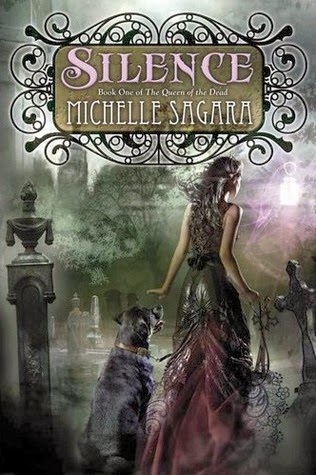 Silence by Michelle Sagara
Necromancy is more than just raising the dead, it can also involve just communicating with them. This book follows Emma, a grief-stricken teen who has taken to visiting the graveyard at nights ever since her boyfriend died in a car accident. One night, she encounters a mysterious old woman. At the crone’s touch, Emma experiences some kind of change. Ever since then, she realizes she can see, touch and speak with the dead. (See review)
 Daughter of Smoke & Bone by Laini Taylor
The process of necromancy is a bit different in this series. Known as “The Resurectionist”, Brimstone of the Chimaera resurrects the bodies of his fallen brethren by capturing their fleeting souls in a thurible before transferring them into new bodies created by teeth, horns and other creature parts. This allows the dead to rise to fight again in their ongoing war against the seraphim. After the demise of Brimstone, Karou takes up the mantle of neighborhood necromancer. (See review)
 Deadly Curiosities by Gail Z. Martin
Gail Z. Martin actually has a series called Chronicles of the Necromancer, but since I haven’t read it yet, we’re using this book instead! It also features a necromancer, who ends up being the big baddie Cassidy and her friends and hunting when they try to investigate why so many mundane objects are suddenly turning harmful and haunted. (See review)
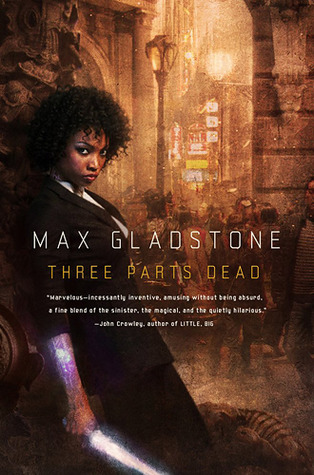 Three Parts Dead by Max Gladstone
This a story about Tara Abernathy, a young woman with a degree in necromancy who finds herself unexpected hired by the necromantic firm of Kelethres, Albrecth, and Ao. Her first assignment: to work with her mentor, the talented and experienced necromancer and senior lawyer Elayne Kevain, to resurrect a dead god before the unrest can tear the city apart.
PANELS: Nextwave Vol. 1: This Is What They Want
Posted on July 2, 2014 Leave a Comment
 Healing America by beating people up.
Nextwave Vol. 1: This Is What They Want
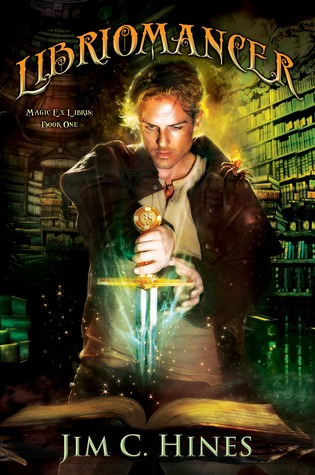
Book Review: Libriomancer by Jim C. Hines
Posted on July 2, 2014 13 Comments
Genre: Urban Fantasy, Magic
Series: Magic Ex Libris #1
Publisher: DAW (August 2012)
Author Info: www.jimchines.com
Wendy’s Rating: 3 of 5 stars
I’m not going to say this was the greatest story ever, or that I really came to care about the characters and their fate, but for the sake of the magical concepts in this book, I will recommend that every bibliophile put it on their list. Because how many book lovers have ever read a book and not imagined what it would be like to visit or even live in the worlds we read about? A libriomancer isn’t quite able to do that without going crazy, but they can pull out elements of books to use in the real world. Fighting monsters? Reach in and grab Excalibur to tip the scales in your favour! Wounded in battle? Grab a healing potion from Narnia!
Okay, I am not normally presented with such situations, but I would totally raid Cersei Lannister’s dinner table when I get a bit peckish, and Hermoine Granger’s time turner would sure come in handy now and then.
Fortunately, there are porters to make sure libriomancers don’t get carried away or take advantage of their magical abilities, lest the veil between reality and magic fall apart. That’s where Isaac Vanio comes in. A porter on suspension for overuse of his powers (in self-defense), he comes under attack, throwing him into the centre of a mystery involving vampires, a dryad, murdered mentors, and the founder of the porters.
I will go ahead and make the inevitable comparison between Isaac and Jim Butcher’s Harry Dresden, in that they are both males, both wear long jackets, and both wield magic. Isaac is much less self-deprecating than Harry, and, once you get over the initial comparison, he holds his own as a character, especially when the dryad, Lena becomes involved. In fact, I’m not sure either of Hines’ characters would be as interesting without the other, though the pairing does feel a bit forced due to Lena’s circumstances.
Lena is an unusual character in that she directly speaks to the treatment of female characters within this genre/industry and many others. Like the objects Isaac is able to pull from books, Lena herself was pulled out of a book – one written for the sole purpose of (male) fantasy, creating a creature bound to her partner. She has no identify of her own and conforms to her partners’ beliefs and desires. Basically, an unwitting sex slave.
While her sexuality plays a part in her personality within the story, Hines focuses first and foremost on her physical strength and her determination. She is not a creature without fear, but she confronts everything head on, with her only true weakness being those she loves. After the loss of her mate, Lena comes to Isaac more or less seeking a replacement, but Isaac struggles with this as he doesn’t want to take advantage of her. Hines handles the relationship well, without dragging it on or making it all unbearably sappy, and gives both Isaac and the reader a lot to chew on when it comes to Lena’s choices and free will.
As I said, this wasn’t the greatest story ever. The plot took some interesting twists and turns, but nothing overly thrilling. The best part about this book is the libriomancy, as well as the recommendations it offers as Isaac rattles off the various reads in his arsenal.

Waiting on Wednesday 07/02/14
Posted on July 2, 2014 11 Comments

“Waiting On Wednesday” is a weekly meme hosted by Breaking the Spine that lets us feature upcoming releases that we can’t wait to get our hands on!
 wab, the critically acclaimed author of Vicious, comes a new universe of daring adventure, thrilling power, and parallel Londons, beginning with A Darker Shade of Magic.
Kell is one of the last Travelers—magicians with a rare, coveted ability to travel between parallel universes—as such, he can choose where he lands.
There’s Grey London, dirty and boring, without any magic, ruled by a mad King George. Then there’s Red London, where life and magic are revered, and the Maresh Dynasty presides over a flourishing empire. White London, ruled by whoever has murdered their way to the throne—a place where people fight to control magic, and the magic fights back, draining the city to its very bones. And once upon a time, there was Black London…but no one speaks of that now.
Officially, Kell is the Red Traveler, personal ambassador and adopted Prince of Red London, carrying the monthly correspondences between the royals of each London. Unofficially, Kell is a smuggler, servicing people willing to pay for even the smallest glimpses of a world they’ll never see—a dangerous hobby, and one that has set him up for accidental treason. Fleeing into Grey London, Kell runs afoul of Delilah Bard, a cut-purse with lofty aspirations, who first robs him, then saves him from a dangerous enemy, and then forces him to spirit her to another world for a proper adventure.
But perilous magic is afoot, and treachery lurks at every turn. To save all of the worlds, Kell and Lila will first need to stay alive—and that is proving trickier than they hoped.”
Guest Post: “Writing the Revolution” by Django Wexler
Posted on July 1, 2014 16 Comments
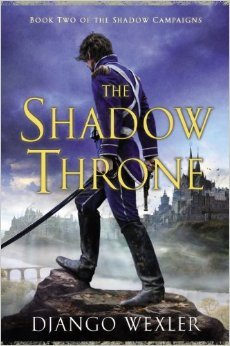
It’s an exciting day, for it is a pleasure to welcome one of my favorite authors to The BiblioSanctum. Last year, Django Wexler blew me away with The Thousand Names, his epic military flintlock fantasy. Now, in the sequel, the thunder of muskets and the clang of steel are replaced with the cries of revolution. The Shadow Throne hits the shelves in the US today! Be sure to check out our review, and join us as we go behind the scenes for this compelling look at the second novel of The Shadow Campaigns.
WRITING THE REVOLUTION
by Django Wexler
 A friend of mine, after reading the early draft of The Shadow Throne, said that the parts describing the inner politics of the revolution made him laugh. “I know some people who were in Occupy Wall Street,” he said, “and you’ve nailed it exactly. It’s so clever that you used that stuff in a fantasy book.”
As Janus comments in the book, it’s easy to look like a genius when you take credit for everything that coincidentally goes your way. Grudgingly, I had to allow that the real-life basis for the politics of the Vordanai revolutionaries was not New York in 2011, but Paris in 1789. That fact that one could be confused for the other, after more than two hundred years, is a tribute to the fact that the basic dynamics of human interaction never really change.
When The Shadow Throne opens, King Farus VIII of Vordan is on his deathbed, fighting a losing battle against a wasting illness. Princess Raesinia is young and (in the view of the court) weak, which means that on the king’s death the true power in Vordan will pass into the hands of Duke Orlanko, the Minister of Information and master of the all-powerful Concordat secret police.
But Raesinia is tougher and smarter than the Duke can understand, and she’s willing to do whatever it takes to keep his hands off the reins of power. To get there, she has to work with rebellious elements in the city, and that’s where the revolution comes in.
When it comes to writing The Shadow Campaigns, the most important thing I try to take from history is the feel of events. In The Thousand Names, for instance, I tried my best to capture the feel of eighteenth-century warfare from the point of view of the participants — the choking smoke that covered everything, the way cavalry would charge in a rush but flow away from steady bayonets like water breaking around a rock, how an attack would either press forward and drive the enemy before it or falter and break down in disorganization and terror. While the military element is still important in The Shadow Throne, there’s a big political component as well, and what I wanted to try to do was think about how that ought to feel for the characters.
Reading histo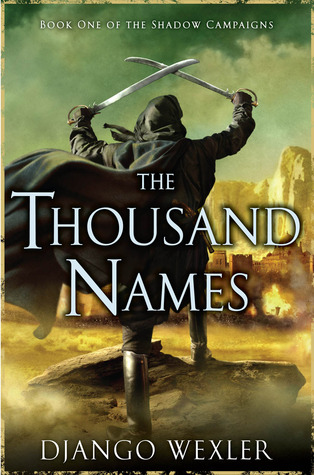 ry is essential for this, and in particular narrative history — not just listing of names and dates, but a story that treats historical personages as fleshed-out characters, preferably backed up with primary sources. Narrative histories are sometimes disdained by serious historians, which is fair, but for my purposes they’re invaluable; not only are they entertaining to read, but as a fantasy writer I don’t have to fret that some historian might choose a more dramatic interpretation over a more likely one. Bring on the drama! (For The Shadow Throne, my most useful source was Simon Schama’s Citizens, on the French Revolution, and I highly recommend you take a look at it.)
Looking throughout history, though, it’s easy to see that revolutions share some common elements, and those were always going to be part of the feel I was trying to capture. Revolutionary groups (meaning popular revolutions, rather than a coup d’etat by the elite) are almost always disorganized and heterogeneous, with hundreds of tiny splinter factions forming and dissolving alliances with bewildering speed. Sometimes this cripples them, and they fall into infighting and chaos. More successful revolutionaries find the one thing that unites them is their desire for a change; whatever their ultimate aim, every group can agree that the current situation is intolerable.
The almost inevitable result is that in the event the revolution is successful at gaining power, it almost immediately fractures into warring factions, since the only thing that provided any unity has been lost. It’s this dynamic, the coming-together of bitter ideological foes and their difficulty in staying together at points of decision, that I tried to capture in The Shadow Throne; it’s also the dynamic that sets up the similarities between Occupy and Paris in 1789, or for that matter Paris in 1830 or Moscow in 1917. The ideologies are different, the goals and motivations are different, and the trappings change, but people are always people.
I don’t want to reveal too much of the story, so I won’t talk about the ultimate fate of my revolution. But it was a lot of fun to write, and I hope it turns out to be a lot of fun to read!
* * *
 ABOUT THE AUTHOR
Django Wexler graduated from Carnegie Mellon University in Pittsburgh with degrees in creative writing and computer science, and worked for the university in artificial intelligence research. Eventually he migrated to Microsoft in Seattle, where he now lives with two cats and a teetering mountain of books. When not writing, he wrangles computers, paints tiny soldiers, and plays games of all sorts.
Mogsy’s Summer 2014 Reading List
Posted on June 30, 2014 19 Comments

I know I haven’t been doing so well with my past seasonal reading lists, but hey, a tradition is a tradition! Summer is a great time for some catching up, after all. I have a huge review pile at the moment and no doubt review books are going to keep coming in, but I’m also going to make a bigger effort towards completing my reading challenges and also to read some of my purchased books, especially after my audiobook binge last week.
The good news is, while summers are busy, I should still get plenty of time to listen to audiobooks. They are, after all, perfect for chores like yard work!
So without further ado…
Books from my spring reading list that I didn’t get to which are coming back:
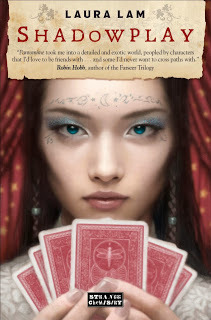

Shadowplay by Laura Lam ~ London Falling by Paul Cornell
Audiobooks:
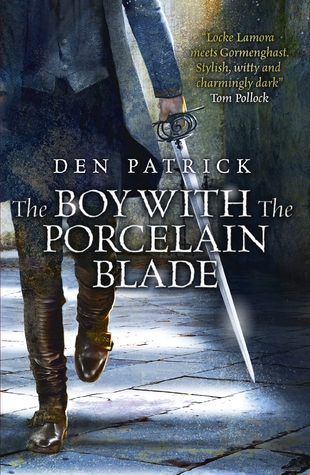
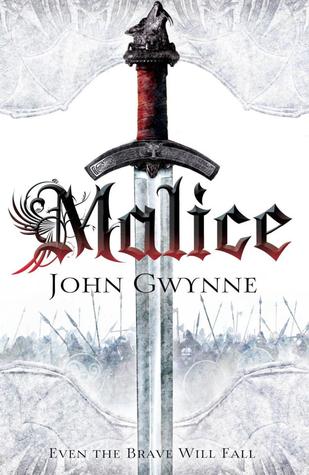
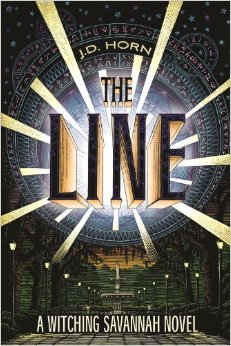
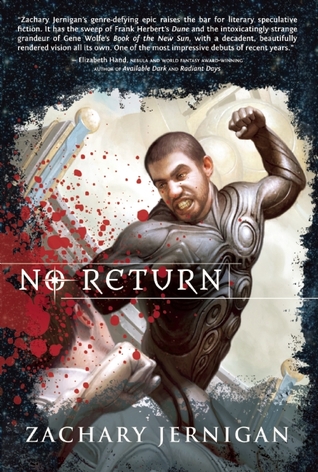


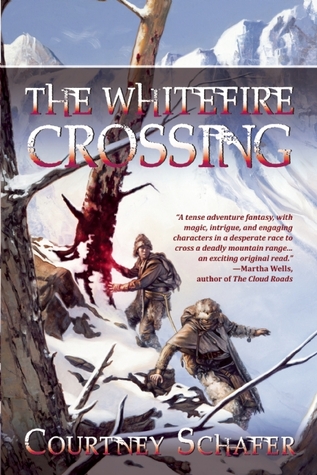

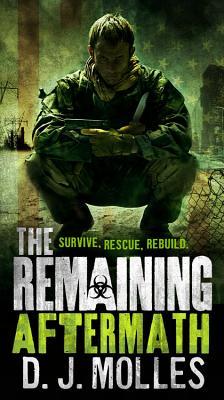

The Boy with the Porcelain Blade by Den Patrick ~ Malice by John Gwynn ~ The Line by J.D. Horn ~ No Return by Zachary Jernigan ~ Crux by Ramez Naam ~ Necessary Evil by Ian Tregellis ~ The Whitefire Crossing by Courtney Schafer ~ Koko Takes A Holiday by Kieran Shea ~ The Remaining: Aftermath by D.J. Molles ~ The Martian by Andy Weir
YA Weekend:
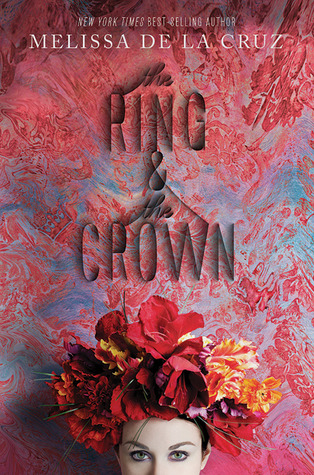
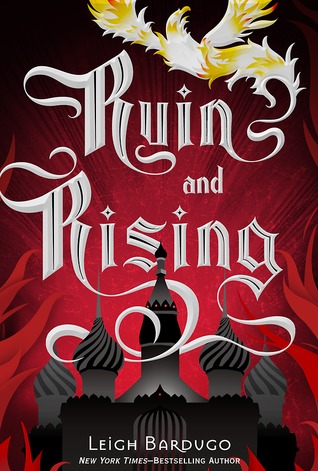

The Ring & The Crown by Melissa de la Cruz ~ Ruin and Rising by Leigh Bardugo ~ A World Without Princes by Soman Chainani
General TBR:
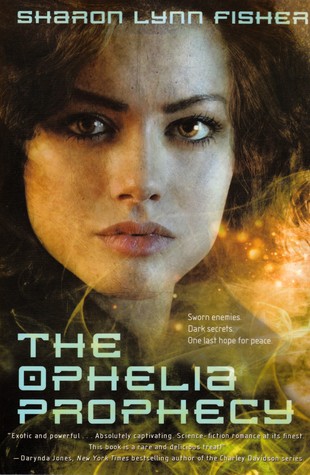
The Ophelia Prophecy by Sharon Lynn Fisher ~ Gameboard of the Gods by Richelle Mead ~ Dragon Age: The Masked Empire by Patrick Weekes ~ Archetype by M.D. Waters


 The BiblioSanctum