Sunday Musings: Sunshine and Sniffles
Posted on September 7, 2014 6 Comments
After a long, hard, but fun week at Fan Expo Canada, I am still trying to catch up and wind down, and have earned myself a nice little cold for my struggles. Hurray for back to school!
CURRENTLY READING
I’ll be rounding out my Summer Reading List with The Shadowed Sun by N.K. Jemisin. Conveniently, this will work well with the latest reading challenge I’ve signed up for, #Diversiverse, which encourages readers to read books by authors of colour.

Not only is this book by an author of colour, it predominantly features people of colour in a fantasy world that isn’t the typical European setting.
It’s the second in Jemisin’s Dreamblood series, and while I enjoyed the first, the racial aspect was a bit offputting for me. Find out why in my review here.
WRITERY THINGS
I am now on the last installment of two sekrit writing projects. One is a ghostwriting gig, so I can’t reveal details on that. But the other is something I’m pretty excited about and can’t wait to spill the beans when it’s finally published…
BOOKISH THOUGHTS
Actually, I do both, though there’s definitely a stronger lean to the latter. You can find me walking on lunch breaks, and chatting away in the pool during Aquafit lessons once a week. But if I can figure out a good way to stick a book onto the new walker exercise thingie my husband and I just bought, I will be a very happy–and healthy bibliophile.
YA Weekend: A World Without Princes by Soman Chainani
Posted on September 6, 2014 13 Comments

 A World Without Princes by Soman Chainani
Genre: Middle Grade, Fantasy
Series: Book 2 of The School for Good and Evil
Publisher: HarperCollins (April 15, 2014)
Author Information: Website | Twitter
Mogsy’s Rating: 3.5 of 5 stars
Once upon a time, two girls kidnapped from the sleepy town of Gavaldon by the mysterious Schoolmaster. One was perfect and beautiful, thought to be destined for the School of Good, while the other was an oddball and an outcast from birth, sure to have been a shoo-in for the School of Evil. But pretty Sophie with her flawless features and dreams of princes and pink dresses ended up being dumped in Evil, while strange, frumpy Agatha landed in Good! Together, the two friends discovered the truth behind this apparent mix-up, and learned more about each other and themselves along the way. They worked to escape the clutches of the sinister Schoolmaster and made it back home to Gavaldon, but the adventure is far from over.
As you can probably tell, there were a couple of really heartwarming messages in the first book of The School for Good and Evil series, as befitting a novel more suitably aimed at Middle Grade readers. “Beauty is only skin deep” and “Believe in yourself” are only a couple examples, woven into a unique and magical fairy-tale style story.
This sequel, however, is a bit more complicated and a little more twisted. Once again, Sophie and Agatha find themselves back in the land of princesses and witches, princes and henchmen. But gone are the Schools for both Good and Evil, and in their places are the School for Girls and School for Boys. Some major changes have taken place since the two girls left; new alliances have formed while old bonds have broken, and now boys and girls are locked in a bitter war. The fate of the schools and this world rest on Agatha and Sophie and whether or not they can find their Happily Ever After.
So A World Without Princes was a fun read, but I also can’t deny that this sequel has lost some of the magic that made me fall in love with the first book. Story-wise, it was a little rough around the edges, with a plot that seemed to meander needlessly in several places. Friction and misunderstandings and between the two main characters feel forced, prolonging the conflict without adding anything new. Unlike its predecessor, this second book didn’t read like it had a clear direction or a main theme it was drawing from, and the storytelling was very uneven with long stretches that felt monotonous in some places and plot developments that felt like they came out of nowhere in others.
A World Without Princes is also much darker in tone compared to The School for Good and Evil. I’d hand the first book to a Middle Grader without a second thought, since it was at once ridiculous and full of heart, cute with just the right amount of wickedness to enchant readers of all ages. On the other hand, the second book would probably give me pause. The more mature themes and violence in this would likely not bother Adult and Young Adult readers, and it’s certainly not a negative to me personally as I was reading this, but it’s still enough that I’d hesitate to give this book to a 8 to 12-year-old, which I think is the age range most publishers are traditionally using for MG guidelines these days. There’s mild torture, descriptions of images that involve a mother drowning her child, scenes of boys and girls talking about and relishing the idea of killing each other, just to name a few examples of things that that might be disturbing to younger readers. As they say, reader discretion is advised, in the end use your own judgment to decide.
In spite of it all, I love the characters, I love the premise of these books, and I still enjoyed myself a lot. Agatha and Sophie are precious, and I just can’t get enough of them, their shenanigans in this novel notwithstanding. There are still many moments of whimsy and humor that author Soman Chainani does so well, and plenty of scenes brought smiles to my face. Ultimately, I really want to find out what will happen to these two friends, and the repercussions from the climax and shocking conclusion to this book are sure to be significant. “Happily Ever After” hasn’t come yet, and I’m definitely not going to give up on this series until “The End”.

Book Review: The Mirror Empire by Kameron Hurley
Posted on September 5, 2014 19 Comments
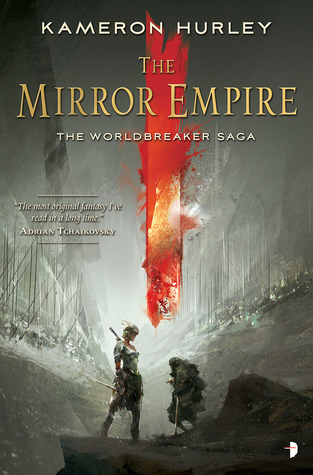 The Mirror Empire by Kameron Hurley
Genre: Fantasy
Series: Book 1 of Worldbreaker Saga
Publisher: Angry Robot (August 26, 2014)
Author Information: Website | Twitter
Mogsy’s Rating: 3 of 5 stars
Needless to say, putting this review together was quite difficult for me, on account of how very different it is from the one I thought I would be writing. I made it no secret I had high hopes for this one, not only because of the buzz the book has gotten since the ramp up to its release or all the glowing reviews it has garnered, but also I was personally very excited to finally read my first Kameron Hurley novel. Truly, I wanted to love this book and was set and prepared to add my praise to the chorus, but as a reviewer I also have to be honest with others and with myself when a book does not meet expectations.
In the end, I think The Mirror Empire is one of those cases in which I can recognize its literary merits and applaud the author’s designs to challenge the conventions of epic fantasy fiction, but the story itself failed to connect with me on any deeper level and I found myself strangely dissatisfied when I completed it.
First, a bit about the book: The world is about to be shaken up by a cataclysm, and as the dark star rises to herald this event, you have an orphan girl named Lilia who would anything to fulfill a promise to her mother, even if it means putting herself in danger and having to face down unspeakable threats. In another place, a new Kai ascends to power after the suspicious death of his sister and fights to keep his place and his land together even as legitimacy of his rule is called into question. Meanwhile, a young boy said to be destined for great things undertakes a journey to discover himself and his loyalties, for one day he ultimately must choose between sides. And on the battlefield, an able but brutal general faces a similar predicament, caught between her heritage and her oaths to the Empress.
As you can imagine, there are a lot of perspectives involved, and many more characters besides. That should have been my first warning sign. Don’t get me wrong; I don’t mind a big cast of characters (when you’re into epic fantasy, I think that sort of comes with the territory). However, that also means a greater onus on the author to strike a balance when it comes to giving every one of her players enough time to resonate with the reader, and to pace their sections accordingly. Hurley falters in this area by trying to introduce too many characters, both main and supporting, without sufficiently developing them – especially in the beginning. Not only do the odd-sounding names make it harder to remember who’s who, but ironically they also make it all the more obvious when new major to semi-major characters are still being introduced even past the halfway point of the novel. It makes it that much hard to sit back and just enjoy the story when so much effort is going towards trying to keep all the characters straight.
However, to be fair, you should know that I am a “Characters First” kind of reader. Arguably, I place an inordinate amount of emphasis on characters and how effectively I can engage with them. They absolutely don’t have to be admirable or even likeable, but I have to care. Characters are like the foundation of a story – everything else tumbles like a house of cards if I can’t care about them. Naturally, anything they do or anything that happens to them isn’t going to impact me in any meaningful way. The biggest issue I had with this book is the lack of any strong characters, in the sense that none of them were very memorable. Hurley doesn’t develop any of them nearly enough, and her pacing is haphazard and disorganized, so that many long chapters could go by before returning to a perspective character, and then I find myself asking, “Who are you again?” That shouldn’t be happening.
The only one – ONE out of a half dozen or so main characters and at least four times as many supporting characters – that I found myself interested in was Lilia, and that’s likely just because she was the first to be introduced in the prologue. Zezili, Captain General of the Empress, was a close second, and probably because Hurley went to great lengths to make her memorable but did so by taking the easy way, presenting the general as archetypically evil, the cruel mass murderer and an unfeeling lover. Everyone else faded into the background, which unfortunately made me feel very indifferent towards any events of significance, including plot twists or unexpected character deaths.
But look, I’ve gone on for long enough about the negatives, and I don’t want to make it sound like I downright disliked this book, because I didn’t; so I think it’s time to talk about the positives. There were a lot of things I enjoyed about this book, not least of all was the world building. So much praise has been heaped onto this facet of the novel and I have to agree 100% with everything that has been said about originality, spirit and vividness of the universe and cultures of The Mirror Empire.
My favorite thing about this book is that it is bold, it is epic, and it is refreshingly different. I love the idea of two realms clashing together in a catastrophic world-shattering event, and also the more minute details like the sentient flora and giant carnivorous plants. Hurley is a great writer with an incredible imagination, and she’s at her best and in her element when she’s actually not trying so hard to turn things on their head or to be over-the-top. I can’t stress how important it is for both authors and readers to examine and confront the status quo and current state of fantasy, but doing something for the sake of doing it is also rarely interesting. Admittedly, Hurley is not at all subtle when it comes to her attempt at subversion in this novel, but at the same time I still respect her immensely for her steadfast interrogation of the genre.
These days, one can probably find some degree of social commentary in many works of speculative fiction; however, my favorite ones tend to be those that arrive at their messages organically, part and parcel with compelling storytelling, starting with well-developed characters. Since it’s the characters that fell flat for me in this case, I just couldn’t immerse myself in the story. It certainly wasn’t for the lack of trying, but as I’ve explained, I’m also aware I have some rather nitpicky and particular tastes. Despite my tepid feelings for this novel, I believe the accolades are well-deserved. Sure, I didn’t love it, but then I’m glad so many others did.

A review copy of this book was provided to me by the publisher via NetGalley in exchange for an honest review. My thanks to Angry Robot Books!
Panels: Moriarty: The Dark Chamber
Posted on September 4, 2014 2 Comments
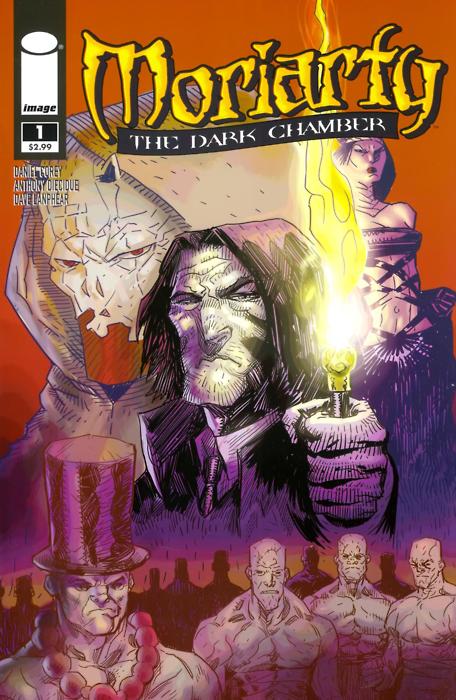
At the beginning of World War I, Sherlock has been dead 20 years. Moriarty doesn’t have much direction in his life now until he’s drafted by the MI5 to find Sherlock’s brother, Mycroft, which leads him down a path of intrigue that may even be beyond his expertise.
Tough Traveling: Turncoats
Posted on September 4, 2014 20 Comments


The Thursday feature “Tough Traveling” is the brainchild of Nathan of Review Barn, who has come up with the excellent idea of making a new list each week based on the most common tropes in fantasy, as seen in The Tough Guide to Fantasyland by Diana Wynn Jones. Nathan has invited anyone who is interested to come play along, so be sure to check out the first link for more information. Compulsive list-maker that I am, I’m very excited to take part!
This week’s tour topic is: Turncoats
TURNCOATS are people who change to the side of the DARK LORD in mid-tour.
The theme title is pretty self-explanatory this week, methinks. Sit tight now, as we explore fantasy fiction’s offerings of traitorous, double-crossing, two-timing, back-stabbing jerks, renegades, betrayers and other dastardly characters.
Mogsy’s Picks:
 A Song of Ice and Fire by George R. R. Martin
Yeesh, you can’t swing a dead cat without hitting a traitor or a turncoat in GRRM’s series. These books are full of them, from mercenaries who switch sides for a higher bidder, bitter lords who put on a welcoming face only to later slaughter all your friends and family, so-called brothers-in-arms who will turn on you the moment your back is turned, and the list goes on and on. Notable examples of turncoat characters include Littlefinger who plays the game of thrones only for himself, and Theon Greyjoy, in fact nicknamed “Theon Turncoat” after his heinous actions at Winterfell.
 Harry Potter series by J.K. Rowling
Lots of turncoats in J.K. Rowling’s Harry Potter books as well, the most notable one of course being Peter Pettigrew also known as “Wormtail” to the childhood friends he ends up ruthlessly selling out to Lord Voldemort.
 Broken Homes by Ben Aaronovitch
I just realized the massive potential for spoilerific details with this week’s theme. Unless you’ve been living under a rock for the last fifteen years or so, I think most people know what happens in Harry Potter, and I tried to be sufficiently vague when I talked about ASoIaF. But Broken Homes is a different matter. Obviously I can’t reveal the identity of the turncoat here, but the betrayal happens right at the end of this book, by a character most characters have grown to care for, which makes the violation of trust hurt all the more!
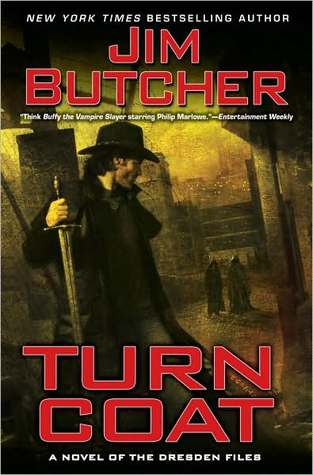 Turn Coat by Jim Butcher
With a title like that, I thought this Dresden Files book would be a shoo-in this week for sure. As it turns out, it’s a bit more complicated. The “turncoat” is a battered and bleeding Morgan who shows up on Harry’s doorstep one day, accused of killing one of their own. Morgan was found standing over the body of a Senior Council member wielding a bloody knife, but he claims to have no memory of the incident. Morgan came to Harry because it was the last place anyone would expect him to go, and also he believed Harry would empathize with being accused of a crime he wasn’t guilty of.
 Half A King by Joe Abercrombie
When his father the king and older brother are unexpectedly killed in an enemy ambush, Prince Yarvi has no choice but to inherit the throne, but he barely has the chance to warm the seat before he is betrayed and left for dead – by someone close to him whose loyalty he thought was beyond reproach.
Posted on September 3, 2014 Leave a Comment
“We read books to find out who we are. What other people, real or imaginary, do and think and feel… is an essential guide to our understanding of what we ourselves are and may become.”
― Ursula K. Le Guin
“When I look back, I am so impressed again with the life-giving power of literature. If I were a young person today, trying to gain a sense of myself in the world, I would do that again by reading, just as I did when I was young.”
― Maya Angelou
Cover Lover: Traitor’s Blade by Sebastian de Castell + Blurb For Greatcoat’s Lament
Posted on September 3, 2014 10 Comments
 Cover Lover was a meme originally created by our friend and fellow book blogger Jaedia at Once Upon A Time, and since then we’ve adopted it as a feature here to talk about the covers of books we love or that strike our fancy.
Today, in celebration of the paperback release of Sebastien de Castell’s Traitor’s Blade on September 4, 2014 from Jo Fletcher Books (UK), I would like to share the different covers I have seen for this extraordinary novel. I loved this book to bits! Definitely one of my top books of the year, be sure to check out my 5 star review.
Below you have the UK, Canadian and US covers, from top to bottom, left to right.
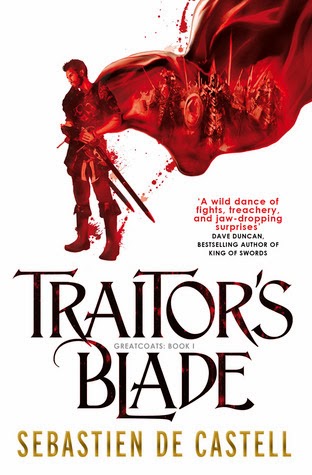
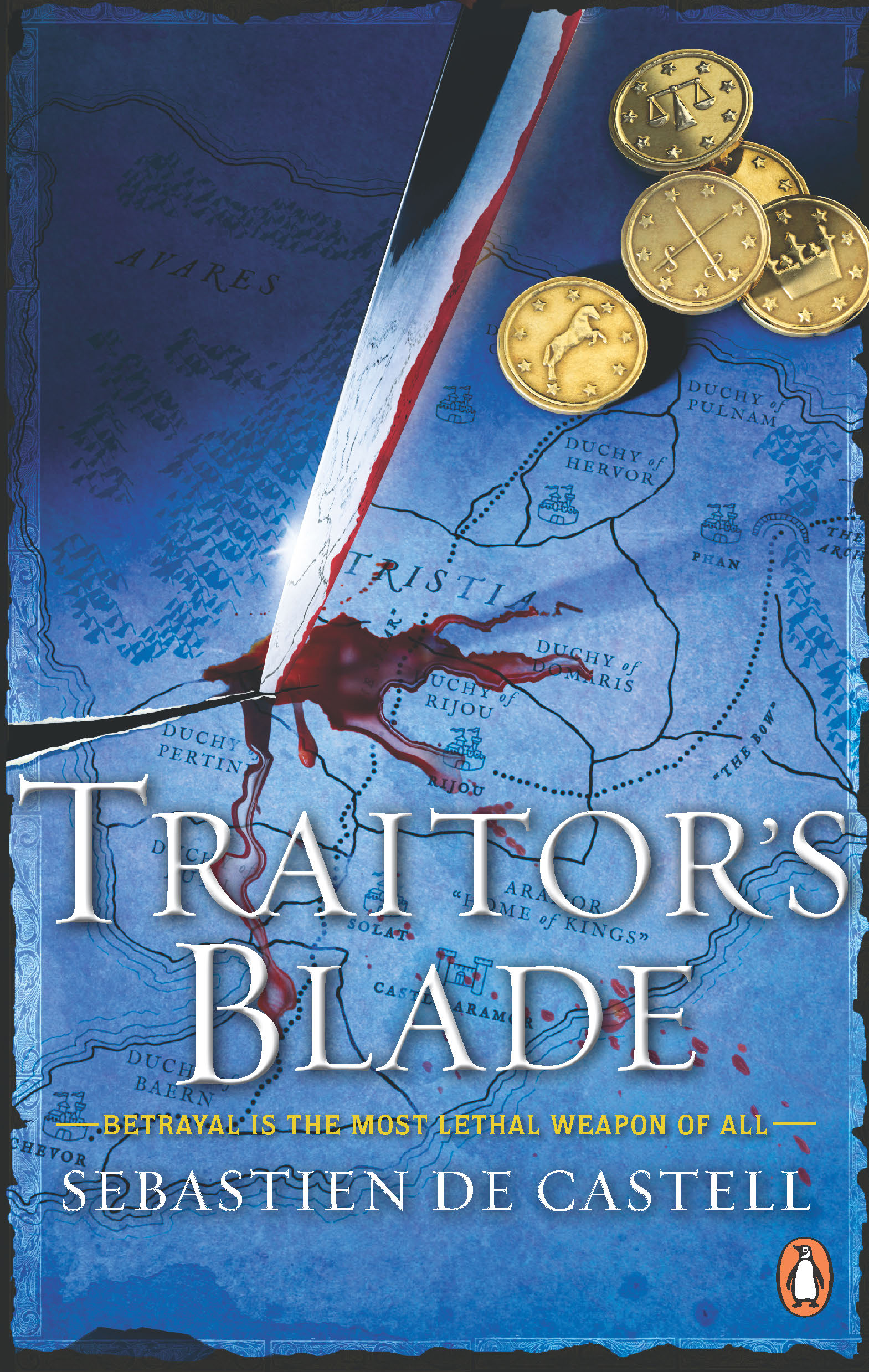
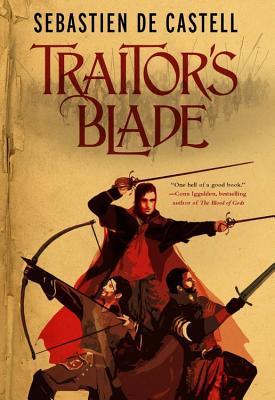
Bold, dashing, adventurous and filled to the brim with pure, swashbuckling entertainment. That’s what Traitor’s Blade is for me.
What are you thoughts? Have you read Traitor’s Blade? If so, do you have a favorite version of the cover?
And as a special treat, we have the description for book two to share with you, Greatcoat’s Lament, due out on March 5, 2015! I can’t wait. Thanks to Jo Fletcher Books!
* * *
“Tristia is a nation overcome by intrigue and corruption. The idealistic young King Paelis is dead and the Greatcoats – legendary travelling magistrates who brought justice to the Kingdom – have been branded as traitors. But just before his head was impaled on a spike, the King swore each of his hundred and forty-four Greatcoats to a different mission.
Falcio Val Mond, First Cantor, with the help of fellow Greatcoats Kest and Brasti, has completed his King’s final task: he has found his Charoites – well, one at least, and she was not quite what they expected. Now they must protect the girl from the many who would see her dead, and place her on the throne of a lawless kingdom. That would be simple enough, if it weren’t for the Daishini, an equally legendary band of assassins, getting in their way, not to forget the Dukes who are determined to hold on to their fractured Kingdoms, or the fact that the heir to the throne is only thirteen years old. Oh, and the poison that is slowly killing Falcio.
That’s not even mentioning the Greatcoat’s Lament . . .”
Waiting on Wednesday 09/03/14
Posted on September 3, 2014 9 Comments

“Waiting On Wednesday” is a weekly meme hosted by Breaking the Spine that lets us feature upcoming releases that we can’t wait to get our hands on!
Mogsy’s Pick:
The Providence of Fire by Brian Staveley: January 13, 2015 (Tor)
I’m actually quite excited about this one. The first book came out to great acclaim last year, and I enjoyed it a lot, with my only regret being the limited role of Adare, the emperor’s daughter who didn’t get anywhere near as much page-time as her royal brothers Kaden and Valyn. From the description, it sounds like Adare will get more attention this time around, and I’m really looking forward her time in the spotlight.
 “Brian Staveley’s Providence of Fire, the second novel in the Chronicle of the Unhewn Throne, a gripping new epic fantasy series in the tradition of Brandon Sanderson and George R. R. Martin.
The conspiracy to destroy the ruling family of the Annurian Empire is far from over.
Having learned the identity of her father’s assassin, Adare flees the Dawn Palace is search of allies to challenge the coup against her family. Few trust her, but when she is believed to be touched by Intarra, patron goddess of the empire, the people rally to help her retake the capital city. As armies prepare to clash, the threat of invasion from barbarian hordes compels the rival forces to unite against their common enemy.
Unknown to Adare, her brother Valyn, renegade member of the empire’s most elite fighting force, has allied with the invading nomads. The terrible choices each of them has made may make war between them inevitable.
Between Valyn and Adare is their brother Kaden, rightful heir to the Unhewn Throne, who has infiltrated the Annurian capital with the help of two strange companions. The knowledge they possess of the secret history that shapes these events could save Annur or destroy it.”
Book Review: The Bullet-Catcher’s Daughter by Rod Duncan
Posted on September 2, 2014 19 Comments
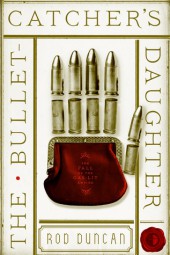 The Bullet-Catcher’s Daughter by Rod Duncan
Genre: Fantasy, Steampunk
Series: Book 1 of The Fall of the Gas-Lit Empire
Publisher: Angry Robot (August 26, 2014)
Author Information: Website | Twitter
Mogsy’s Rating: 4 of 5 stars
Angry Robot is making a comeback this fall with a couple of great titles, and The Bullet-Catcher’s Daughter is one gem that is deserving of a lot more attention. I really had no idea what I was in for going into this book, but even before the beginnings of the story was revealed to me, I found myself already captivated by the elegant writing style.
Rod Duncan brings the Gas-Lit Empire to life in this steampunkish tale of mystery and espionage, starring a female protagonist with a big secret. Elizabeth Barnabus is the single child of a “bullet-catcher”, a term used to describe stage magicians or artists known for performing large-scale or spectacular illusions, but she has used all the tricks of the trades to fool the world into thinking she has a twin brother. In the guise of her fictitious brother Edwin the private detective, Elizabeth sets out to solve the case of a missing aristocrat while dodging alchemists and shady circus folk as well as agents of the all-powerful and tyrannical International Patent Office.
Obviously, Elizabeth is a talented, capable and intelligent young woman used to solving her own problems, often in creative and ingenious ways. So forgive me for going on a mini-ramble here while I ponder on the trend of the “daughter-in-the-title” phenomenon; that is, I notice so many book titles that seem to follow this “The ________’s Daughter” formula these days, but I call it a ramble and not a rant because I think it amuses me more than it bothers me. I find it curious especially in this case, where Elizabeth is such an awesome character and being defined by her father’s profession clearly doesn’t do her enough justice! Besides being a master of disguise, she is also very adept at taking in a situation and making snappy decisions.
I’m also impressed with the way the author has created this world using very subtle means. Instead of throwing buckets of descriptive details in the readers’ faces, he instead uses the history he has crafted for the Gas-Lit Empire to great effect. By reading about the significant events that shaped the empire, such as the war that divided England or the rise of the Patent Office, I was able to piece together the culture and mood of this alternate universe. Sights and sounds can come across easily through words, but it takes a much rarer talent to convey the intangible such as the atmosphere of a setting the way Duncan does.
The mystery in this novel unfolds gradually, and though I wouldn’t call The Bullet-Catcher’s Daughter a high-octane read, it does keep up a steady level of intrigue and suspense. It also has its moments, such as when Elizabeth runs afoul of a troupe of traveling circus performers and for a few chapters I was immersed in the dark side of circus life and became acquainted with many very interesting individuals.
With its unique setting and premise, this book embodies the essence of what I’ve come to expect from Angry Robot over the years. But I would still love to know more about Elizabeth as a character. Even though the story is told through her perspective in the first person, she seems to keep the reader at arm’s length. This might be an effect of the writing style, or perhaps something Rod Duncan purposely meant to do from the start, and if that’s the case, then it’s actually pretty clever. It wouldn’t be out of the realm of possibility for someone in Elizabeth’s place to maintain a detached attitude even as she is narrating her own story, given how she must protect the secret of her double-life from the rest of the world.
In short, this was a well-written novel, the story fantastically put together with elements of alternate history and steampunk, topped off with a strong, resourceful heroine. You can’t help but be drawn to Elizabeth Barnabus. I’m definitely looking forward to continuing her adventures in the sequel.

A review copy of this book was provided to me by the publisher via NetGalley in exchange for an honest review. My thanks to Angry Robot!
Book Review: The Midnight Queen by Sylvia Izzo Hunter
Posted on September 1, 2014 26 Comments
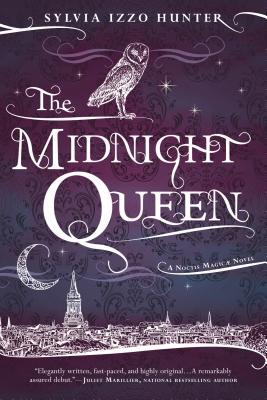 The Midnight Queen by Sylvia Izzo Hunter
Genre: Fantasy, Romance
Series: Stand Alone
Publisher: Ace (September 2, 2014)
Author Information: Website | Twitter
Mogsy’s Rating: 3.5 of 5 stars
This book would be perfect for readers looking for a well-balanced blend of fantasy with a historical fiction-type setting, overlaid with a story laced with a heavy dose of the kind of chaste, slow-burn romance one might find in a traditional Regency novel.
Graham Marshall – Gray to family and friends – finds himself out of favor at Merlin College when a midnight errand goes terribly wrong, landing himself and a couple friends in the infirmary while another boy loses his life. Disgraced, Gray is sent away to the summer home of the arrogant and unpleasant Professor Appius Callendar until such time the college can decide his fate. It’s there that Gray has the pleasure of meeting the professor’s middle daughter Sophie, who for some reason Professor Callendar seems to neglect and disdain. There’s certainly no love lost between father and daughter.
Even though he was told none of the Callendar girls were born with any magical talent, Gray senses something strange about Sophie. Because proper women studying magical theory is considered scandalous in their society, Sophie has been secretly learning it herself from the books in her father’s library. She’s delighted to meet Gray, finding him very different from the pretentious and foppish young men her father usually invites home from the college, and is grateful when he offers to fill in the gaps in her knowledge. The two of them strike up a friendship, and so when astounding revelations are revealed about Sophie’s past, Gray is wrapped up in the whirlwind of events. And here he was, thinking his life was complicated!
From page one, I was drawn in by the gorgeous writing. Admittedly, it can be somewhat difficult to get used to. Clunky and awkward in some places, it’s not exactly what I would call easy on the eyes, with a style and tone suited to the historical era. But it’s extremely effective when it comes to setting the mood, and once you adapt to it, the reading goes much faster and smoother.
The novel’s greatest strength is the characterization. Gray and Sophie take center stage, and the whole book is told through their perspectives, which alternate back and forth – a lot. Again, it can be distracting, at least initially. The author jumps between Sophie and Gray whenever it suits her, so that sometimes you can get a few paragraphs of Gray’s point of view and then abruptly we would switch to Sophie as she picks up the narrative. Regular readers of romance are probably used to this, but it was something else I had to adjust to at the beginning.
After getting the hang of things, it was easier for me to simply sit back and soak in the story. It bears emphasizing again that the characters are just great in this; because the relationship between Gray and Sophie are so integral to the story, it makes sense to establish and build upon them early, and that’s what we get here. Before Gray and Sophie can get to know each other intimately, the reader has to get to know them as individuals, which makes their eventual coming together that much more satisfying. As I mentioned before, theirs is a slow-burn romance (the kind where everyone around them can see what’s going on before the two can even admit it to themselves) so if you’re looking for instant gratification, this is not the book you’re looking for. We’re also not talking fiery passion or red hot love scenes here, keeping things clean and proper with good manners!
The heavy focus on G+S notwithstanding, that’s not to say the other characters were forgotten or underdeveloped. In fact, my favorite character was a supporting character, Joanna Callendar, who probably has more personality in her little finger than her sister Sophie had in her whole body. Sad to say, as much as I liked Sophie, she was an idealized character, a special snowflake that came across just a little too perfect in a lot of ways, and that makes her less interesting than the spunky, lippy and slightly insolent Joanna.
By the same token, plot is probably not this novel’s strong suit. A lost princess, a prophecy foretelling the return of “The One” and the pivotal role they play in the fate of a monarch and the kingdom…it’s a little clichéd, perhaps, but it’s also not a negative if you go in knowing what to expect. This book is obviously more interested in telling Gray and Sophie’s story, it makes its intention loud and clear right from the start, and so a lighter, less original plot is something I could overlook.
Bottom line: The Midnight Queen is a very beautiful, very atmospheric novel about young love, slow-going at times, making it feel like very little happens while the author develops the two characters. You can probably predict the outcome of the story with no effort at all, but the emotional payoff is worth it if you stick around and give the book a chance to let Gray and Sophie to resolve their feelings for each other. Recommended for fantasy lovers who want romance, but who also won’t mind the slower, sweet-and-tender but also more subtle approach.
A review copy of this book was provided to me by the publisher in exchange for an honest review. My thanks to Ace Books!


 The BiblioSanctum