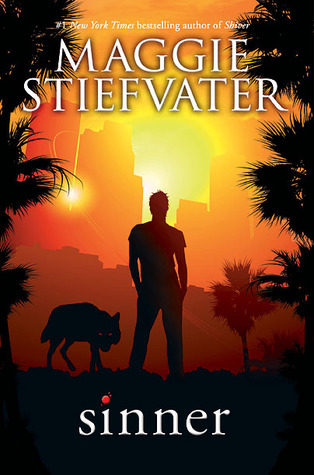
YA Weekend: Sinner by Maggie Stiefvater
Posted on October 18, 2014 10 Comments

Genre: Young Adult, Fantasy
Series: Book 4 of The Wolves of Mercy Falls
Publisher: Scholastic (July 1, 2014)
Author Information: Website | Twitter
Mogsy’s Rating: 2 of 5 stars
I’m disappointed to say the least. Stiefvater’s Wolves of Mercy Falls was a trilogy I read a few years ago, and while it might not rank up there as one of my favorite Young Adult series of all time, it had its moments. One of the highlights was the supporting character of Isabel Culpeper who was a bit of a queen bee, plus she’s angry and bitter to boot. And yet, I found her to be a lot more interesting than the very blah protagonist of Grace Brisbane, and I was rather fond of Isabel. I was also intrigued when I found out she would be starring in her own book Sinner along with Cole St. Clair, the rock star/werewolf with whom she started a budding romance towards the end of the Mercy Falls trilogy.
Sinner begins in California, where Isabel has started her new life, going to school preparing to be a doctor while working part time at a clothing designer’s store. Cole on the other hand is trying to make a comeback to the music scene after being rehabilitated from a life of booze and drugs, by — ugh! — agreeing to be the focus of a godforsaken reality TV show, of all things. When he arrives in LA, the first thing he does is look up Isabel, hoping to rekindle what they had from their days back in Mercy Falls, Minnesota.
There’s really not much else to say about the plot. The story zips along at the speed of molasses, and for the longest time I tried to figure out what the conflict was, only to resign myself to the fact that there really isn’t one. Cole does his reality TV show thing while acting like a prima donna, and Isabel goes about her daily life putting up with his crap.
To be fair, Sinner ended up being a completely different book than I expected it to be. First of all, it probably falls more into the New Adult category instead of YA, following the characters like Isabel in their post-high school life, and werewolves or not, the themes are more contemporary rather than related to speculative fiction. It has very few paranormal elements compared to the Mercy Falls trilogy, so few that I was just barely able to label this one a fantasy.
My main issue, however, wasn’t the lack of fantasy elements or the fact that there was hardly any story. My problem was the vacuous, insufferable prat that was Cole St. Clair.
For the love of God, I don’t remember him being so annoying in the original trilogy. A big pet peeve of mine is bad boys who try oh so very hard to be a bad boy. Let’s face it, if Cole hadn’t gotten lucky and become a rock star, he would have ended up living in a cardboard box in some alley, offering to take your verbal abuse for chance at a bit of change. And who knows, he still might end up that way. He’s already washed up at this young age, reduced to dancing-bear status on an insipid reality TV show.
The sad part is, I still really like Isabel’s character, which made it doubly hard to watch her fall for this joker when all I wanted to do was scream at her to run, run away! Get as far away as you can from this idiot because God forbid if you end up marrying him he’ll end up a worthless thirty-five-year-old has-been, having pissed away his royalties on cars and parties, with no aspirations other than to be a professional layabout because working for an honest living is just sooooo lame. He’d probably let his looks and physique go too, because exercise and taking good care of one’s health is something, like, everybody does! And we all know Cole’s just too cool to go along with everyone else!
I feel kind of bad for being snarky, but it just makes me so ANGRY. I think this was my problem with the Wolves of Mercy Falls series as well. The trilogy started well enough, but things went downhill in the last book Forever when the characters suddenly developed these horribly bratty and angsty attitudes. To a certain extent you have to expect a fair dose of youthful naiveté in YA, but this whole “OMG I hate everyone and everything!” and “Adults are stupid morons and I totally know better than all of them!” kind of thinking gets a bit old, especially in Sinner when we’ve supposedly left high school far behind. Frankly, Cole’s behavior towards his parents made me sick, especially considering how by all accounts they are perfectly good, sensible people. The worst thing Cole can think of to happen to him is if he became his dad, because apparently, Cole thinks being a responsible contributor to society is boring. Go figure.
As a novel, it saddens me to say this, especially since according to her foreword it sounds like a pretty important book for the author, but Sinner felt kind of pointless. For me, it was also 300-ish pages of teeth-grinding aggravation, thanks to the big, cuddly ball of phony that was Cole. Read this if you’re fan of the Mercy Falls books because you’ll probably want to see what happened to two of the more important side characters from the trilogy. That’s what I told myself I wanted to do, and I don’t regret reading this because at least I got to follow up with Isabel, but unfortunately not even her chapters could make up for her co-star.

Book Review: The Scarlet Tides by David Hair
Posted on October 17, 2014 23 Comments
 The Scarlet Tides by David Hair
Genre: Fantasy
Series: Book 2 of The Moontide Quartet
Publisher: Jo Fletcher Books (UK: October 24, 2013, US: October 7, 2014)
Author Information: Website
Mogsy’s Rating: 4.5 of 5 stars
Open up The Scarlet Tides and the first things you’ll see are several gorgeously illustrated maps depicting the world of the Moontide Quartet. Needless to say, the maps became indispensable to me while I was reading. I’ve never come across a fantasy series with such a comprehensive and detailed approach to world-building. David Hair goes well beyond simply describing the different peoples and places — what he’s created here actually feels like a living, breathing system. These books take place across two huge continents following about half a dozen characters of different creeds and cultures, with the alliances and conflicts that arise between nations forming the basis for multiple threads of the story and driving the plot forward.
Middle books of a series can also be mighty tricky; I’ve had enough disappointing experiences with sequels myself, which makes me understand why some readers would be nervous when approaching them. However, I jumped into The Scarlet Tides with no reservations whatsoever. This series has grown on me, as I stated in my review of the preceding volume, Mage’s Blood. The first book may have been slightly encumbered by a lengthy introduction and a slow build-up as Hair established the players and set the stage, but it all culminated into one explosive climax and conclusion. And I knew we were going to be heading right into the action with book two.
In this sequel, the Moontide is at hand and the mighty Leviathan Bridge now stands open, creating a corridor between the two continents Yuros and Antiopia, which are normally separated by a vast ocean. The last two Moontides have involved lofty ambitions and crusades of conquest, and this one is no different. Rondion legions and the Inquisition’s windships waste no time storming their way across Antiopia, but very few know of a troubling secret eating at the heart of their empire. A very powerful and valuable artifact called the Scytale of Corineus has slipped through Emperor Constant’s fingers, and he has tasked his inquisitors to scour the world searching for the ones who have absconded with it.
Enter Alaron Mercer, a failed mage who had the Scytale in his hands, then lost it to the girl of his dreams who stole the artifact along with his heart. Cymbellea, who believes she knows the best use for the Scytale, has taken it with the intention of delivering it to Antonin Meiros, the most powerful mage in the world. Little does she know, Meiros is dead, leaving his pregnant widow Ramita on the run from his killers. Several more story arcs run in tandem, including the one which follows Ramita’s former lover Kazim, who ends up with the mercenary Elena Anborn after a botched attack on Emperor Constant’s pureblood mages. Polar opposites in political sides and backgrounds, both nevertheless come to realize they may have a common enemy in Gurvon Gyle, the empire’s spymaster. Some comic relief is also provided by Alaron’s former classmate Ramon, whose storyline involves him running a pyramid scheme, all while his legion marches towards battle. Amusing as this is, Ramon’s point of view also gives readers a boots-on-the-ground view of looming war.
Everything and everyone is connected, the vast distances between the some of the characters and the spheres of conflict notwithstanding. And yet, despite of the sheer scale of it, David Hair manages to make his characters and their stories feel deeply intimate and personal. It’s another reason why this world feels so alive, with all its elements working in tune with one another. Nations and their diverse populations are woven into an intricate web of magic and religion, which are two sides of the same coin. Both play a huge part in nearly all the societies, and as more factions emerge from the shadows we see how much more complex the situation can get.
As things heat up, the net tightens and gradually we are starting to see events converge, bringing the various players closer together. We have betrayals, shifting loyalties, unlikely friendships, and even love. With a dramatis personae so large, it’s inevitable some characters will emerge as my favorites. In Mage’s Blood, the top spot went to Ramita, whose touching yet complicated relationship with Antonin Meiros made me enjoy reading her perspective the most. In this book, however, I came to relish the chapters that follow Kazim and Elena. It’s probably not a coincidence that my favorite storyline yet again involves two people from disparate backgrounds who begin at odds with each other, with the hostility turning to understanding, understanding turning to respect, and the respect eventually turning into love. David Hair has an incredible talent for writing these types of dynamic relationships, making them engaging to read without resorting to clichés and cloying platitudes.
He also does a good job giving each perspective character the attention they deserve. Every one of them has an important role to play, and nobody feels left behind or “parked” while something more exciting happens elsewhere. I learned more about the world from each person, whether it be through meeting Ramon’s new friends from faraway lands, or from Alaron’s encounter with a new race of sentient beings with an astounding origin. And before I could fret myself over how everything will come together, the climax converges most of these storylines, serving up a conclusion and epilogue that tie things up quite nicely.
Overall, an excellent follow up to the first novel, continuing the tradition of vivid, dynamic characters and terrific world building. The intriguing storylines kept me glued to the pages. I honestly found it hard to put down, which was how I ended up reading all 700 pages of this in a little more than three days. Readers of epic fantasy should definitely check out this series.

A review copy of this book was provided to me by the publisher in exchange for an honest review. My thanks to Jo Fletcher Books!
Tough Traveling: Desert Nomads
Posted on October 16, 2014 22 Comments

The Thursday feature “Tough Traveling” is the brainchild of Nathan ofReview Barn, who has come up with the excellent idea of making a new list each week based on the most common tropes in fantasy, as seen in The Tough Guide to Fantasyland by Diana Wynn Jones. Nathan has invited anyone who is interested to come play along, so be sure to check out the first link for more information. Compulsive list-maker that I am, I’m very excited to take part!
This week’s tour topic is: Desert Nomads
DESERT NOMADS occupy the hot parts to the south, which is either desert or rather parched grass. For some reason this is ideal terrain for breeding horses, of which nomad clans have in large numbers.
Wendy’s Picks
 The Warded Man by Peter V. Brett
The desert dwellers actually have themselves a pretty swanky place to live and don’t do much wondering anymore, but, based on the many oases our hero, Arlen, discovers in his travels, there’s a good chance there was a lot of desert nomading in the past.
 Throne of the Crescent Moon by Salahadin Ahmed
The young, angel-touched girl named Zamia Badawi saves the wizard from monstrous creatures in the desert. The same monsters that killed her band of desert dwelling people.
 The Emperor’s Knife by Mazarkis Williams
The story takes place in a fairly desert-y kingdom, where sand can often be found in some of the protagonists’ hard to reach places. One of the protagonists even hails from a tribe of horse friendly people.
 The Shadowed Sun by N.K. Jemisin
Exiled from Gujaareh, Prince Wanahomen is gathering a reasonably mighty army from among the desert tribes of the Banbarra in order to reclaim his throne.
Mogsy’s Picks:
Wendy got a jump on me this week! Hmm, let’s see what else I can come up with from my shelves that she hasn’t already…
 The Thousand Names by Django Wexler
Powerful factions in the city of Khandar are gathering to form a coalition against the encroaching Vordanai army. Calling themselves The Redeemers, one of the coalition members is a mysterious man called Maalik-Dan-Belial, also known as the Steel Ghost, leader of the desert nomadic raider tribes.
 Star Wars Episode II: Attack of the Clones by R.A. Salvatore
Tusken Raiders, also referred to as the Sand People, are a nomadic group indigenous to the deserts planet of Tatooine. They can be found all over Star Wars movies, books, comics, games, etc. but how could I possibly pass up the opportunity to feature the novelizatin of Attack of the Clones where Anakin so spectacularly slaughtered an entire Tusken camp?
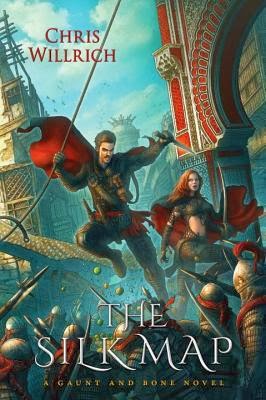 The Silk Map by Chris Willrich
This second book of the Gaunt and Bone series introduces the character Lady Steelfox, a nomad princess of the dry grassland steppes. She is most likely inspired by the Mongol queens of the thirteenth century, when Genghis Khan raised the status of his daughters and consorts to positions of prominence during his reign.
 A Song of Ice and Fire by George R.R. Martin
And of course, we shan’t forget the Dothraki, the nomadic horse-mounted tribal warriors who make their home on the plains of Essos, across the Narrow Sea from Westeros. Large number of horses? Check. Desert or parched grassland? Check. The Dothraki are said to be born and die in the saddle, and the vast central plain they inhabit is also known as the Dothraki Sea.
Waiting on Wednesday 10/15/14
Posted on October 15, 2014 19 Comments

“Waiting On Wednesday” is a weekly meme hosted by Breaking the Spine that lets us feature upcoming releases that we can’t wait to get our hands on!
Mogsy’s Pick:
Nemesis Games by James S.A. Corey: June 2, 2015 (Orbit)
The Expanse is probably my favorite science fiction series out right now, certainly the only ongoing one I’ve been keeping up with faithfully in the last few years. Book five has a release date, cover, and a description now and I’m looking forward to the next stage of the adventure for James Holden and crew. Can’t wait for the Syfy show either!
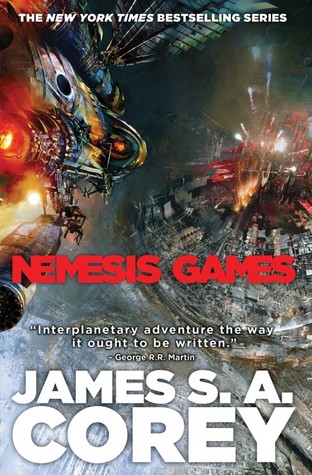 “The fifth novel in James S.A. Corey’s New York Times bestselling Expanse series–now being produced for television by the SyFy Channel!
A thousand worlds have opened, and the greatest land rush in human history has begun. As wave after wave of colonists leave, the power structures of the old solar system begin to buckle.
Ships are disappearing without a trace. Private armies are being secretly formed. The sole remaining protomolecule sample is stolen. Terrorist attacks previously considered impossible bring the inner planets to their knees. The sins of the past are returning to exact a terrible price.
And as a new human order is struggling to be born in blood and fire, James Holden and the crew of the Rocinante must struggle to survive and get back to the only home they have left.”
Book Review: The Shadowed Sun by N.K. Jemisin
Posted on October 14, 2014 16 Comments
The Shadowed Sun by N.K. Jemisin
Genre: Fantasy
Series: Dreamblood #2
Publisher: Orbit (2012)
Author Info: www.nkjemisin.com
Wendy’s Rating: 3 of 5 stars
I was hard on the first book in this series, The Killing Moon, mainly because I had read Jemisin’s The Hundred Thousand Kingdoms first and fallen in absolute complete and total love with it. The Dreamblood series lacks the depth of characters and relationships that sucked me into The Inheritance Trilogy.
The Killing Moon also troubled me because it spent so much time identifying people by the colour of their skin and insulting the lighter shades. As much as I wanted to read a book that moved far away from the typical pale science fiction and fantasy colour scheme, I did not enjoy constantly reading about how inferior my own skin was.
There is less of the latter in The Shadowed Sun. Instead, the prejudice is against women. There are three major cultures in question. One, the Kisuati, are the people who now rule the city of Gujaareh, after the mad king’s attempts at immortality in the previous book. The Kisuati women hold equal power to men and are respected, as evidenced by Sunandi’s governing position over Gujaareh. Her influence has helped install the first female Sharer within the Hetawa–but more on that later. While the Kisuati generally treat their women respectfully, whores are still whores, and even the religious Sisters lives are considered forfeit. Even when they are sexually assaulted.
Sexual assault, abuse of women, and rape are constant plot devices in the book, which is ironic since the other two cultures revere women as goddesses. In the “barbarian” Banbarra tribes, women are worth as much as they can show themselves to be worth, but only then are they respected. Rape is frowned upon, and punished, but it is also punishment for women outside the tribe. And in Gujaareh itself, women are revered, but not permitted to do much beyond look good, and their opinions are not particularly valued,.
Which makes life difficult for the young Hanani, who is the first female permitted to serve the goddess Hanaja at the Hetawa, the religious centre of Gujaareh. The problems I mention above did deter me to the point of considering not reading beyond the half way point, but I do like Jemisin’s writing, and I most certainly love the world she has created, in spite of the racism and sexism. Let’s start with the Hetawa and the magic they possess: narcomancy. Unique and well-crafted magic is always a highlight in a good fantasy book, and that certainly is the case here. Through sleep and dreams, the priests of the Hetawa can do many things, from healing, to lie detection, to granting peaceful journeys into the afterlife. They can also kill with deadly efficiency. We learned about the Gatherers previously, and now we learn about the Sharers, who use their powers to heal–but could hurt just as easily, if they make that choice. With such power, corruption is not surprisingly common, as we discovered in The Killing Moon. While the Hetawa’s corruption is no longer in question here, we learn about the many other ways those with the dreaming gift can cause harm. In this case, a Wild Dreamer is causing a plague that captures people within tormented nightmares, instantly killing even the most skilled dreamer who attempts to fight it.
Meanwhile, the repercussions of the Kisuati invasion ten years earlier are still echoing through Gujaareh, with rumours of the return of its exiled prince.
The Killing Moon fell a bit short with the political machinations, and all but fizzled out on a promised war, but here, Jemisin goes deeper and gets far more intricate with the details and various parties involved, giving us insight into all of them. I particularly like the intricacies of the different cultures and how they communicate with each other and with the other groups. This is most evident in the exiled prince, Wanahomen, who maintains his Gujaareen ways, but must adhere to the ways of the Banbara whom he will lead to war against the Kisuati to free his people, if he can band the tribes together.
There is a lot more emotional involvement with the characters here, something that was somewhat missing in The Killing Moon due to the subdued nature of the Gatherers. While Hanani shares this demeanour, she is unable to maintain it when she is forced to join the barbarians in the desert. The relationship that develops between Hanani and Wanahomen is bittersweet, and is what managed to get me over my consideration of not reading further. I’m glad I did, because I did like where things ended up, even if I didn’t enjoy some of the methods used to get there.

Guest Post: “A Three-Headed Monster: Mixing Crime Fiction, Horror, and Urban Fantasy” by Jamie Schultz
Posted on October 13, 2014 9 Comments
We’re very pleased to welcome Jamie Schultz, author of Premonitions, to The BiblioSanctum today! In case you missed it, be sure to check out the review. Premonitions is cool, deliciously dark, and definitely not your average urban fantasy, and we’re gonna find out why. Take it away, Jamie!
A THREE-HEADED MONSTER: MIXING CRIME FICTION, HORROR, AND URBAN FANTASY
By Jamie Schultz
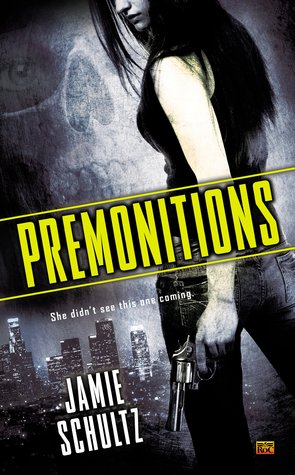 My book, Premonitions, is kind of an odd duck. It’s urban fantasy, certainly, but it’s got hardboiled crime fiction spliced into its DNA, and it was raised on a steady diet of horror until it grew up and became the strange beast it is today. I’ve written elsewhere about what urban fantasy, crime fiction, and horror have in common—in my mind, they are each aspects of what I call the literature of hidden worlds—but not so much about the unique contributions each genre has made to Premonitions (and, arguably, to my writing style and focus in general).
Premonitions is, at heart, a heist novel. It takes place in the occult flipside of Los Angeles’s criminal underworld, and there are supernatural goings-on galore, but the core of the story is a rather bizarre heist and its aftermath. I doubt it’s much of a spoiler to reveal that the heist doesn’t go quite as planned (do they ever?), so we’ll just take that as a given.
So, given all the ways to approach urban fantasy, why a heist? I like a good heist story for a couple of reasons. The first is that, traditionally, they will involve an unusual mix of characters, each with their own particular contribution to make to the team. In her review of the book, Mogsy talked about that as part of the draw of these types of stories for her, and it’s a big part of the draw for me, too. I like seeing how the people in a team fit together and complement one another, whether that’s DeNiro’s team of crooks from Heat, the ex-CIA guys from The Losers, or even the freaking A-team. There’s a lot of opportunity for chemistry there, and that can be a ton of fun.
The other reason I like the mix of characters is for the opportunity to look at a range of character motivations. Let’s face it, you gotta have some pretty good reasons to get into a dangerous life of crime, and having a crew of crooks, each with their own motivation, not only provides an interesting glimpse into that, but it offers opportunity for conflict where those motivations rub together, even on the most tightly-knit team (witness trying to get B.A. Baracus on an airplane, for a particularly silly example of that). In Premonitions, each of the crew has their own motivation—Karyn’s desperate to pay for the drug that keeps her sane, Anna is determined to stick with her friend, Nail needs the cash to keep his brother out of trouble, and Tommy is darkly fascinated with the occult and all its trappings. Part of the interest for me is watching how those motivations direct their actions.
And, of course, the last draw of the heist story is the inevitable disaster. It’s a given in virtually every heist story that the job will go pear-shaped at some point, either during the execution or in the aftermath—and, frankly, I have a morbid fascination with watching things come apart.
It’s almost scary how naturally the urban fantasy and horror elements slotted in place once I’d decided on the heist framework. Somebody who read an early draft of the book made a comment about how, instead of the crew having to sneak past a laser tripwire, they have a freaking terrifying demon to contend with, and I thought the statement particularly apt. The function is the same, but the flavor is dramatically different, which is part of the fun.
Another reason the horror elements crept in has to do with the overall mood. The characters are criminals, operating in a conjoined criminal/occult underworld, and as such, the story pulls pretty heavily from some of its hardboiled and noir influences. There are lots of uses the supernatural is put to in literature, but I like to use it as an intensifier—it helps heighten contrasts or reinforce existing themes. For example, magic is not a very nice thing in the world of Premonitions, explicitly fueled by demonic forces, and the occult underworld is a heightened reflection of the criminal underworld in the book. In the case of both criminal activity and meddling with occult forces, you may get something you want right now, but it’s risky, and there’s a very good chance you’ll pay dearly for it later. I liked the way those two elements played off each other, and I tried to reinforce that every chance I got.
At some level, though, dissecting one’s own book is more of an exercise in after-the-fact diagnosis than an accurate depiction of where the book came from. I can see how the bits fit together now, in hindsight, and there are some definite places where that was more deliberate than incidental, but overall I ended up with this unusual combination of genres more because it felt right than anything else. I read a lot of crime fiction and horror, and drawing on those influences felt as natural as breathing. I liked the way urban fantasy works with the two. The book ends up being a bit of a departure from most urban fantasy—a little darker, a little less heroic—but maybe a little more earthy because of it.
I think it works, and, maybe more importantly, I had a great time writing it.
* * *
 ABOUT THE AUTHOR
Jamie Schultz has worked as a rocket test engineer, an environmental consultant, a technical writer, and a construction worker, among other things. He lives in Dallas, Texas. His first novel, Premonitions, received a starred review from Library Journal, who called it “a sterling urban fantasy debut with a great cast of characters.”
Sunday Musings: Giving Thanks
Posted on October 12, 2014 3 Comments
This is Thanksgiving weekend in Canada. There are many things I am thankful for, including a new job. It’s tying up a lot of my time, which means I have less time for reading, writing, and gaming, but so far, the trade off has been worth it. Hopefully I can find myself a new groove to settle into that will let me balance things out again.
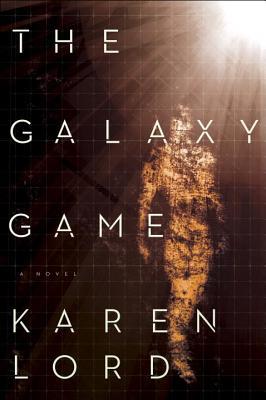 CURRENTLY READING
The Best of All Possible Worlds snuck up on me. The quiet little romance set in the distant future, on a distant planet, cuddled up beside me on the couch and got right under my skin. When I learned Karen Lord had written a sequel, I was very excited. And now, thanks to NetGalley, The Galaxy Game my current read!
WRITERY THINGS
“Structure is important,” writes Peter James. “Know your ending before you start writing.”
I agree with the former, but not with the latter. I definitely like working with a structure when I start writing, and have elaborate outlines spelled out before I settle in to the story. But more often than not, the conclusion is the last thing (no pun intended) I manage to think of. If I held myself to James’ rule of not starting before I know the ending, then I would write very little indeed.
BOOKISH THOUGHTS
Lootz: Mogsy’s Book Haul
Posted on October 11, 2014 12 Comments
Welcome to this biweekly feature where I showcase all the books I bought/won/received for review in the past fortnight. First, the physical pile:

The Seventh Sigil – Third book to the Dragon Brigade trilogy which showed up unexpectedly from Tor, and was waiting for me when I returned from my trip out of town a couple weeks ago. Unfortunately I haven’t read the first two books, but there’s a good chance I may go back to read them. My thanks to the publisher.
Poison Fruit – I’m so excited to read this; I’m a big fan of Jacqueline Carey and her urban fantasy series Agent of Hel has been a lot of fun so far. I hear this is the third and final book, and I’m looking forward to see how it ends.
Stories of the Raksura – I was pretty psyched when Night Shade Books sent this one along. I’ve wanted to read Martha Wells’ Books of the Raksura books for a long time! Not sure if jumping right into this novella collection is going to be a good idea because I’m afraid I might get lost, but I’m going to give it a shot anyway.
Elisha Barber – A purchase from the wonderful Book Outlet. I had a coupon for them from a while back, and decided to get a whole bunch of books for my daughter with it (because children’s books can be so expensive elsewhere!) and I just couldn’t help tossing in something for myself.
Unholy War – This was another precious gem that was waiting for me when I got home from my road trip. I just finished the second book of the Moontide Quartet (be sure to keep an eye out for my review of Scarlet Tides next week!) and so I was thrilled to see that Jo Fletcher Books had sent me book three. I’m definitely not going to wait as long to read this one!
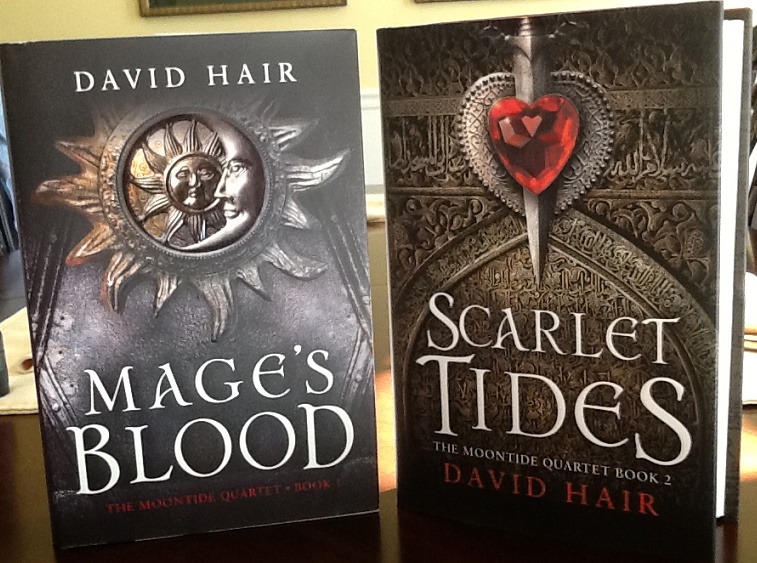
And speaking of The Moontide Quartet, book two Scarlet Tides was also just released in the US with a similar looking cover than the UK, except in beautiful hardback. And I do mean beautiful. I was sent this edition courtesy of Quercus USA and Wunderkind PR, and I just wanted to show it side by side with my US HC of the first book Mage’s Blood to marvel at that amazing detail and embossment.
 No new eARCs while I’m still on my self-imposed digital galleys ban, at least until I can chisel down my NetGalley TBR. But I do have a couple books to feature for the digital pile:
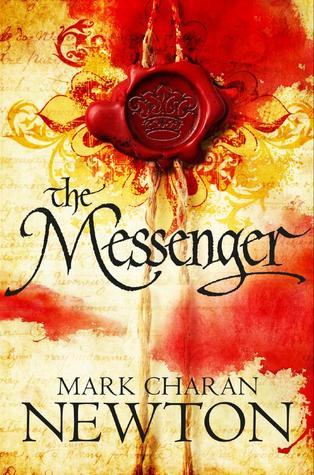
The Messenger – Last year a great book came out from Tor UK called Drakenfeld. Unfortunately, still no US release date yet, and the sequel Retribution is already on the horizon. The Messenger is a short story set in that world, and I was actually surprised to see it available for US Kindle, so of course I grabbed it.
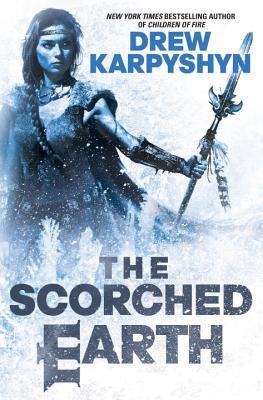
The Scorched Earth – I’ll probably never be able to finish all the ebooks I’ve ever bought, and I’ve come to accept that. But there’s a better chance I’ll get to them if I buy the audiobook. This has been sitting on my to-read list for a while, and I saw there was a good Whispersync deal, and added the audio version for ~$3.
The Assassin’s Blade – Got this audiobook as another cheap Whispersync deal. After the great time I had with Heir of Fire, I’ve decided to take the plunge on the short story anthology for this series. I don’t usually do that, but I heard The Assassin’s Blade was great, and that I should make an exception for this collection!
Novella Review: The Broken Road by Teresa Frohock
Posted on October 10, 2014 13 Comments
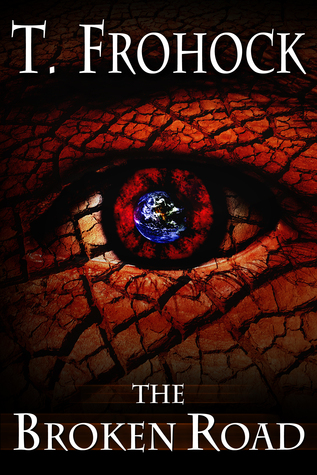 The Broken Road by Teresa Frohock
Genre: Dark Fantasy, Science Fiction
Series: Frayed Empire #1
Publisher: The Story Vault (September 2014)
Author Info: www.tfrohock.com
Wendy’s Rating ~ 5 of 5 stars.
Kill it. With fire.
One of my biggest complaints in fantasy and science fiction is the way far too many authors can’t seem to let go of the sexism that plagues our reality. What I love about Frohock’s writing is that she gives me a world I want to see: a world of diverse characters who aren’t judged by the things that I have to deal with on a day to day basis.
Not that the characters in The Broken Road don’t deal with prejudice and hate. The aristocracy have little love for the “groties,” the physically challenged lowborn that they lord over. Our protagonist, Prince Travys, suffers his own challenges, being born mute–which makes life difficult for him as a Chanteuse, the magic users who hold the threads of their world together.
Unique forms of magic always appeal to me. The Chanteuse use their voices to weave their magic, ranging from a few words, to beautiful, haunting melodies that I can almost hear as I read. The magic is unique, as is the way Travys’ overcomes his disability by drawing sound from his environment.
As the story unfolds, we learn that Travys’ mother, the Queen, intends him to marry his twin brother’s lover and rule as king. But there is more to this than politics and sibling rivalry. The lowborn have resurrected the dead god, and a strange, corrupted magic is seeping into cracks between the world of Lehbet and Heled on the other side, which Travys is forced to travel to when his brother betrays him.
This is where the story gets *really* interesting, as Frohock smoothly blends her worlds of fantasy, horror and…. flamethrowers.
Everything’s better with fire…

Tough Traveling: Dark Ladies
Posted on October 9, 2014 12 Comments
The Thursday feature “Tough Traveling” is the brainchild of Nathan ofReview Barn, who has come up with the excellent idea of making a new list each week based on the most common tropes in fantasy, as seen in The Tough Guide to Fantasyland by Diana Wynn Jones. Nathan has invited anyone who is interested to come play along, so be sure to check out the first link for more information. Compulsive list-maker that I am, I’m very excited to take part!
This week’s tour topic is: DARK LADY
DARK LADY. There is never one of these – so see DARK LORD instead:
(There is always one of these in the background of every Tour, attempting to ruin everything and take over the world He will be so sinister that he will be seen by you only once or twice, probably near the end of the Tour…)
Mogsy’s Picks:
Dang, I think I might have used up a couple of my Dark Ladies for Dark Lord week, but let me dig a little deeper into my shelves and see what I can come up with. One or two of these might be a stretch; like the description suggests, there are relatively few of these compared to their male counterparts…
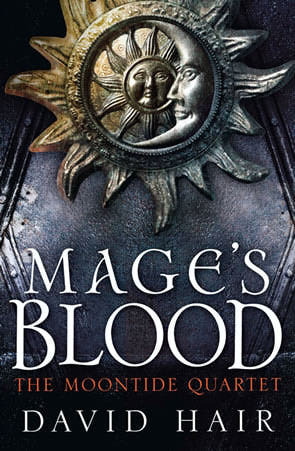 Mage’s Blood by David Hair
Sainted Mater-Empress Lucia, mother of Emperor Constant, takes the top spot for evilness in this series, pulling the strings behind the scenes and juggling her network of cronies, essentially making her own son her puppet. The extent of said evilness wasn’t made apparent until the second book which I just read recently, but now that we know more, up she goes on this list.
 Stormrage by Richard A. Knaak
A prominent character in the Warcraft video games, Sylvanas Windrunner actually styles herself as “the Dark Lady” or “the Banshee Queen” after being transformed into an undead and becoming supreme ruler of the Forsaken faction. She appears here and there in the World of Warcraft series of novels. In Stormrage, Sylvanas dreams about being a high elf once again while under the twisted effects of Emerald Nightmare.
 A World Without Princes by Soman Chainani
The main characters Sophie and Agatha return to the School for Good and Evil in this sequel to find that everything they knew about their fairy tale world has changed. A new villain is introduced in the form of Evelyn Sader, the new dean who has taken over the school and rules it with an iron fist, using her butterflies as innocuous seeming spies to keep all the professors and students in check.
 Summer Knight by Jim Butcher
Mab is the Faerie Queen of the Winter Court, also called the Queen of Air and Darkness — that’s close enough to a Dark Lady for me! She makes her first appearance in this book. Easily one of the most powerful beings in the Dresden Files series, Mab is ruthless and moments of compassion from her are very rare.
 The Lunar Chronicles by Marissa Meyer
Queen Levana of Luna is the main villain of the series, who came upon her throne by starting a fire in the palace nursery, killing her own sister and supposedly her niece. She is greatly feared by her people, due to her extremely powerful glamor abilities that can make anyone submit to her instantly, which is why no one has ever been able to oppose or overthrow her.


 The BiblioSanctum