Audiobook Review: Firefight by Brandon Sanderson
Posted on January 25, 2015 26 Comments
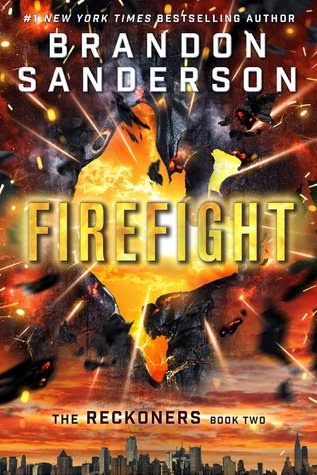 Firefight by Brandon Sanderson
Genre: Young Adult, Science Fiction
Series: Book 2 of The Reckoners
Publisher: Audible Studios (Audiobook: January 6, 2015)
Author Information: Website | Twitter
Mogsy’s Rating: 5 of 5 stars
It’s no secret that I’m a big fan of Brandon Sanderson, and I admit I usually go into his books with higher than average expectations. Still, I rarely find myself disappointed. There’s just something about his style of writing and storytelling that really appeals to me, and the truth is, the man is a font of utterly amazing and creative ideas.
In 2013 Sanderson brought us Steelheart, the first book in The Reckoners series about superheroes gone bad, and I loved every moment of it. So you can imagine my excitement when I received the Firefight audiobook for review! This book is the highly anticipated sequel, and I couldn’t wait to get back to David Charleston and his fellow freedom fighters, joining them on their continuing mission to neutralize Epics and end their oppression. After destroying Steelheart and freeing the city of Newcago from his reign of terror, the Reckoners are headed to Babylon Restored, formerly New York City, to seek out more High Epics to defeat.
Their latest target is Regalia, a High Epic with water-based abilities who rules Babylar (Babylon Restored, or Babyl-R, hence Babylar). Sanderson once again proves he is the master of world-building the instant we enter the city by way of a boat, because most of what used to be Manhattan is submerged. If I had any reservations at all about the story and characters leaving Newcago for another setting, they were dashed as soon as I encountered Babylar’s watery landscape – er, seascape. Regalia has crafted hills and valleys out of the surrounding ocean using her Epic abilities, and what’s more, there’s a mysterious power in Babylar causing strange things to happen, like graffiti to glow and luminescent fruit to grow in abundance in what’s left of the skyscrapers visible above water. The result is this mind-boggling tableau of a post-apocalyptic city with an otherworldly, almost magical quality to its appearance.
In departing Newcago for Babylar, we’re also leaving a couple of characters behind, namely Cody and Abraham. However, the story makes up for that by introducing us to several new faces as Prof, Tia and David team up with the members of the Reckoners cell in Babylar. Val, Exel and Mizzy are all fascinating additions to the book, but I have a feeling it is the latter who will steal the hearts of many readers, due to her perkiness and loveable personality. Indeed, Mizzy was one of my favorites.
Obviously, a big part of this book also involves David’s conflicted feelings about Megan AKA Firefight, the girl who infiltrated the Reckoners and stole their secrets along with David’s heart. What I really thought was great is that David’s soft spot for Megan is more than just a typical vapid “forbidden love” side plot; besides causing friction with Prof and his new Babylar teammates, David’s relationship with Firefight also serves as the catalyst for huge things to come at the end of the novel.
When it comes to our main man, David is his entertaining, goofy yet charming self. I know some readers have expressed annoyance at these books so far because of the horrible metaphors David makes or the absurdity of some of the Epics’ weaknesses, claiming that these factors weaken the series by making it seem ridiculous. It’s a fair point, though on some level I think you have to see them as the running gags they’re meant to be. David’s attempts at metaphors may be cringe-worthy and pathetic, but they add some much needed humor to this otherwise very bleak world where Epics who by all rights should be humanity’s heroes turn out instead to be our worst nightmare.
This is probably also a good time to mention how much I enjoyed Firefight in audio format. Initially, I had qualms about tackling the audiobook – after all, a bad narrator can ruin the whole experience. This was absolutely not the case here, however. I believe I actually have narrator-extraordinaire MacLeod Andrews to thank for feeling a lot more connected to David’s character in this sequel than I did in Steelheart.
I’ve heard of Andrews before this; he has narrated a number of books and I’ve listened to a few of his performances. Still, I don’t remember being as blown away as I was with his work here. You can tell with some audiobooks when the narrator is really enjoying themselves, as they add their own inflections and other nuances as they’re reading, becoming the character. This is definitely one of those situations. For me, Andrews became David. Reading the character’s silly jokes on paper might fall flat for some readers, but the lines come to life when delivered by MacLeod Andrews. David is no doubt meant to be a little awkward, and somehow Andrews is able to convey that while still managing to sound very natural and real at the same time.
All told, I would say Firefight is another winner from Brandon Sanderson. New setting also means new heroes and new villains, and I’m glad things like that are keeping the series fresh. Arguably, there are even more twists and turns here than in Steelheart, with Regalia and her Epic minions like the wily Newton and utterly psychotic Obliteration mercilessly playing cat-and-mouse with the Reckoners. I loved the unpredictability of the plot, since it’s so rare that a Young Adult novel can capture my attention and keep me in suspense from beginning to end. The YA categorization is debatable though, as these books can most certainly be enjoyed by a much wider audience. I for one would recommend this to young adult and adult readers alike. Seriously worth your time.

A review copy of this audiobook was provided to me by the publisher in exchange for an honest review. My thanks to Audible Studios!
Click below to hear a sample of the FIREFIGHT audiobook, narrated by MacLeod Andrews. With thanks to Audible Studios.
YA Weekend: Blue Lily, Lily Blue by Maggie Stiefvater
Posted on January 24, 2015 14 Comments
 Blue Lily, Lily Blue by Maggie Stiefvater
Genre: Fantasy, Young Adult, Magic
Series: The Raven Cycle #3
Publisher: Scholastic (October 2014)
Wendy’s Rating: 5 of 5 stars
“Let us be grateful to the mirror for revealing to us our appearance only.”
I really don’t care of Blue, Gansy, Adam, Noah, and Ronan ever find their Raven King. In fact, I’d rather they didn’t. Just keep giving me wonderfully painful stories about the Raven boys and their bittersweet friendship.
At the end of The Dream Thieves, Blue’s mother had ventured into the dangerous and unpredictable realm of Cabeswater alone. Her sisters and Blue want to find her, but nothing is ever easy when it comes to Cabeswater. Meanwhile, Blue continues to struggle with her curse and her attraction to Gansy, and Adam comes to terms with his reality and his connection to Cabeswater.
And then there’s Ronan. There can never be enough Ronan, though the majority of his story was told in the previous book when it was revealed that he is able to pull things from his dreams, making him the target of the cruel and ruthless man who had Ronan’s father killed.
The only thing this book was sadly lacking was more Noah. The poor undead boy had very little to do, save to provide a kind of warning signal for Cabeswater’s antics. Blue remains a bit sidelined as well, though less so than in the previous book, where I felt she existed only as a bouncing point for advancing the plot. Events and clues founds in Blue Lily, Lily Blue — and the title itself — imply that there is far more to Blue than just a conduit for amplifying psychic magic.
I don’t fault the book for not giving more face time to these characters. There are so many of them, and each book has served to magnify a group of them. While one or more may play less of a role here, Stiefveiter firmly establishes their importance to … to whatever will come. And they are all so unique and intriguing in their own ways, that they are hard to forget.
But it’s the relationship between Adam, Ronan, and Gansy that really and truly gets to me. The depth of their love for each other and their struggles to understand each other, and come to terms with who they are and what their friendship means. Gansy remains the glue that holds them together, and his stability serves as a buoy to the troubled boys, but Gansy has his own issues, that have been slowly unravelling every time he lets his Bruce Wayne-like mask dissolve. The trio, with Noah and Blue drifting along in the currents, is what truly makes this series my most favouritest YA series ever. All my feels. All of them.
Book Review: Covenant’s End by Ari Marmell + “WIDDERSHINS” SERIES GIVEAWAY!
Posted on January 23, 2015 19 Comments
*** The giveaway is now over, thanks to everyone who entered! ***
Genre: Fantasy, Young Adult
Series: Book 4 of Widdershins Adventures
Publisher: Pyr (February 3, 2015)
Author Information: Website | Twitter
Mogsy’s Rating: 4 of 5 stars
And so with Covenant’s End, the Widdershins Adventures series draws to a close. I’m not sure how I feel right now. I want to gush, I want to cry. Needless to say, these books have been a tumultuous emotional rollercoaster ride ever since the very beginning. I’m no stranger to how author Ari Marmell likes to keep his readers on their toes when it comes to this series, so I know I should have been prepared for the way it ended. Still, I can’t help it, both my mind and heart are still struggling to digest this cocktail of bittersweet melancholy.
If you can, try read these books in order starting from book one, Thief’s Covenant. I think you’ll get the most impact out of the series this way, not to mention the stories get better and better with each installment. That said my favorite is still the second book, False Covenant, because it was the one that made me wake up and realize how special this series is. There are so many things to highlight here: the fact that these books are technically classified as Young Adult, yet are unlike any YA I’ve ever read (in a good way!); the fact that there is great mix between the light and dark, with plenty of humor balanced with some grim and heavy themes; the fact that we have an extraordinary premise based around the partnership between our protagonist and her own “personal god”; and of course, the fact that Marmell is utterly fearless when it comes to doing what’s right for his story – even if it means putting the heroine and her friends through the wringer. As someone who has become so invested in these characters, some of the plot twists can be downright hard and shocking for me to read, but in the end I enjoy the unpredictability.
The previous book, Lost Covenant, saw Widdershins on her sojourn in Lourveux after she made the choice to run away from Davillon rather than stay and put her loved ones at risk. This fourth and final book of the series sees the return of the prodigal thief, once she finally realized the foolishness of her decision. Accompanying her as always is the all-but-forgotten minor deity Olgun, hitching a ride in the head of his only worshiper.
However, coming home was not at all like what Widdershins had expected. Her old faction the Finder’s Guild isn’t anything at all like it used to be, and the whole of Davillon seems on edge, bracing for something terrible to happen. The truth, Widdershins discovers, is worse than she had imagined. It seems her arch nemesis Lisette has returned as well, but she is far more than just the crazy and embittered rival thief we remember. Lisette (still crazy and embittered) now also has the dark powers of an ancient supernatural evil behind her, and Widdershins finds herself outmatched. In the face of this new threat, Widdershins will need to mend old friendships and forge new ones if she’s going to have any chance at all to save the city and defeat her enemy once and for all.
Now this – THIS — is the Widdershins I know and love. After everything she’s endured, I could understand her decision to say good bye to her home and her friends, leaving all the painful memories behind her. But at her very core, she’s a fighter. And I’m very glad she’s finally gotten control over grief, enough to make her way back to Davillon for Covenant’s End. I’m also relieved her sense of humor survived largely unscathed, probably due in no small part to Olgun, who keeps her engaged in witty banter (that we can only hear one side of, which frequently makes it even more outrageous and funny).
The highlight of this novel was definitely the relationship between the heroine and her god, which has come a long way since the first book. It’s clear now that Olgun is more than just a helpful partner-in-crime and a source of humorous dialogue, and Widdershins is realizing too that he’s a huge part of her life. I’m at a loss for words to describe a friendship that’s so unique, but somehow Ari Marmell manages it here swimmingly. The danger and tension of the new threat in this novel brought out the sheer depth of Widdershins and Olgun’s love for one another, and I felt it profoundly.
Which, I should point out, didn’t make reading the ending any easier. Still, contrary to what Mr. Marmell writes in his Author’s Afterword, no, I don’t hate him right now. I’m not going to go into details because there will be no spoilers from me, but all I’ll say is that I’m heartbroken but not unhappy with the way things ended. In fact, I’m actually quite pleased. I think long-time readers of the series have known for a while that there are important questions that need to be answered, and situations that need to be resolved. The author is probably right believing that not everyone will like the ending, but personally I’m satisfied with the direction he decided to take. That and I’d already braced myself for it, knowing from experience that this series isn’t always sunshine and unicorns.
So, I guess this is good bye, Widdershins Adventures. Marmell has said that he would be open to writing more books set in this world and hasn’t ruled out more Widdershins stories if the fancy strikes him, but it is the end for this “Covenant Cycle”. Even if there are future Widdershins books, they will be very different – and you’ll understand why if you read this.
Sigh. Endings are always tough but I agree with the need to move on. I just know I’ll miss this series for sure, and of course, those gorgeous covers too.

A review copy of this book was provided to me by the publisher in exchange for an honest review. My thanks to Pyr Books!
* * *
WIDDERSHINS ADVENTURES GIVEAWAY
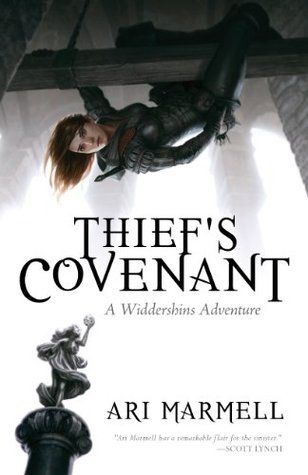
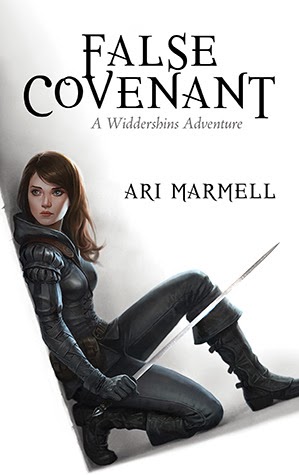

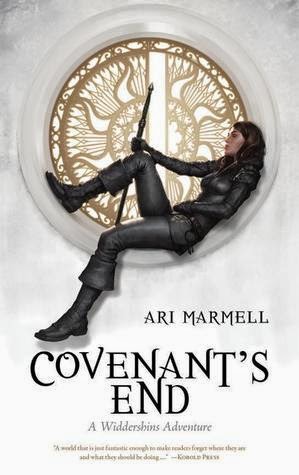
Are you ready for this? Pyr Books has very generously offered The BiblioSanctum the opportunity to host a major giveaway for the ENTIRE Widdershins Adventures series — that’s right, ALL FOUR BOOKS (Thief’s Covenant, False Covenant, Lost Covenant, and Covenant’s End), up for grabs to one lucky winner. With apologies to international readers, this giveaway is open to US/Canada only. To enter, all you have to do is send an email to bibliosanctum@gmail.com with your Name and valid Mailing Address using the subject line “WIDDERSHINS ADVENTURES” by 11:59pm Eastern time on Saturday, January 31, 2015.
Only one entry per household, please. The winner will be randomly selected when the giveaway ends and then be notified by email. All information will only be used for the purposes of contacting the winner and sending them their prize. Once the giveaway ends all entry emails will be deleted.
So what are you waiting for? Enter to win! Good luck!
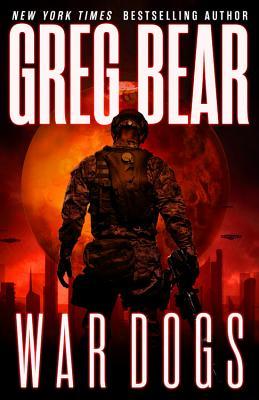
Book Review: War Dogs by Greg Bear
Posted on January 22, 2015 6 Comments
Genre: Science Fiction
Series: Book 1
Publisher: Orbit (October 14, 2014)
Author Information: Website
Mogsy’s Rating: 2.5 of 5 stars
I’ve never read Greg Bear before, and despite early reservations about his reputation as a hard science fiction author (hard sci-fi can be hit or miss with me) I was pleased that I would be able to get my feet wet with War Dogs, which from the title and cover looked to be a promising action-oriented military sci-fi novel. A futuristic tale about Space Marines on Mars! At first glance, it did sound like something right up my alley.
The book started decently enough. We are introduced to protagonist Sgt. Michael Venn, one of many Skyrine soldiers called upon to fight an ancient galactic war that humanity really should have no business in. But thirteen years ago, Earth was visited by a mysterious extraterrestrial race called the Gurus, who lavished gifts upon us in the form of technological gifts and knowledge. At the time, the visitors demanded nothing in return, and for all intents and purposes their presence seemed benevolent and mostly harmless.
Then the other shoe dropped, one that’s “completely slathered in crap” is how the official synopsis on the book’s description page so eloquently and colorfully put it. And why not? For it seems when humanity happily accepted the Gurus’ gifts so many years ago, it had inadvertently locked itself into an obligation to help them fight a war against their long-time enemies known as the antagonists, “Antags” for short. Grunts like Venn are the first to be sent off to the harsh landscape of Mars in the campaign against the Antags, for the enemy has already made their way to our solar system. When the mission gets shot to hell on his latest tour, Venn and his fellow soldiers are forced to simply try to survive on this dangerous planet where a new threat looms at every corner.
To me War Dogs came across less like an action/military novel and more like a mystery, the reason being most of what happens on Mars is related to us after the fact, when Venn is back on Earth having survived and ensconced in a safehouse. The plot is thus revealed to the reader bit by bit, and what started out sounding like a war involving humans vs. aliens actually ends up being more of a conspiracy story. Which is fine and good, though admittedly the book was perhaps not as dynamic and conflict-driven as I would have liked. The information trickled forth slowly and parts of the narrative flat-out dragged its feet, especially once we hit the halfway point, which is regrettable considering the intriguing premise and Bear’s unique vision of Mars.
And while we’re on the topic of Bear’s vision, I also believe this is a book that could have done with a bit more world-building, though in this area I realize we are limited by what our main characters knows. Which is, as it happens, very little. In many ways, this is your familiar of story about the loyal soldier whose focus is on the mission at hand rather than on questioning orders or the larger picture – it’s what makes the machinations that later emerge that much more impactful and engaging – but I still wish Bear could have somehow given us more on the novel’s premise. The background with the Gurus and their technological gifts was what drew me in in the first place, and it would have been great to know more about the aliens involved. As a reader, I felt uncomfortably distanced from the context of the novel, though a part of me also has to wonder if this was deliberately done for a reason.
It’s not that this book didn’t work for me. In fact, it’s got the type of story I really enjoy, even more so than just your straight-up average military sci-fi, to tell the truth. Ultimately, I just think I expected a plot that more substantial and executed differently. War Dogs has the distinct feel of being the first book of a series, which isn’t always bad – but this one displayed the dreaded pattern of only going so far as to give you a decent premise without exploring much more. The beginning of the novel intrigued me, but the rest of it didn’t do as well as holding my attention until close to the end when some bigger developments finally started rolling in.

A review copy of this book was provided to me by the publisher in exchange for an honest review. My thanks to Orbit Books!
Tough Traveling: Pets
Posted on January 22, 2015 28 Comments

The Thursday feature “Tough Traveling” is the brainchild of Nathan ofReview Barn, who has come up with the excellent idea of making a new list each week based on the most common tropes in fantasy, as seen in The Tough Guide to Fantasyland by Diana Wynn Jones. Nathan has invited anyone who is interested to come play along, so be sure to check out the first link for more information.
This week’s tour topic is: Pets
Everybody needs somebody to love. And the best companionship doesn’t always come from the same sentient group, does it? Be it furry or scaled, large or small, sometimes an animal companion is the best thing a person can have.
Wendy’s Picks
All of my choices are animals, of course, but I think they would all be insulted if I dared refer to them as pets. In some cases, fortunate humans are able to communicate with their animal companions, while others simply have a strong bond. In all cases, animal companions would give their lives for their humans, and their humans would do the same.
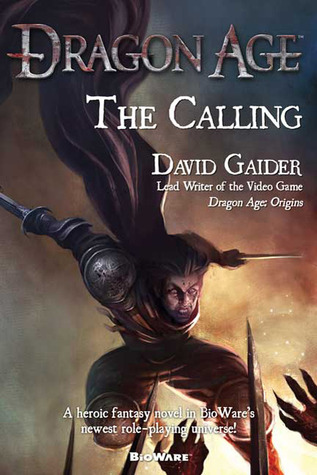 The Calling by David Gaider
The Ash Warriors are known for their deadly skill and the equally deadly mabari hounds that join them in battle. Kell ap Morgan’s hound is named Hafter, and Kell claims he, like Kell, partook of the Joining ritual to become Grey Wardens. They are inseparable, even unto death.
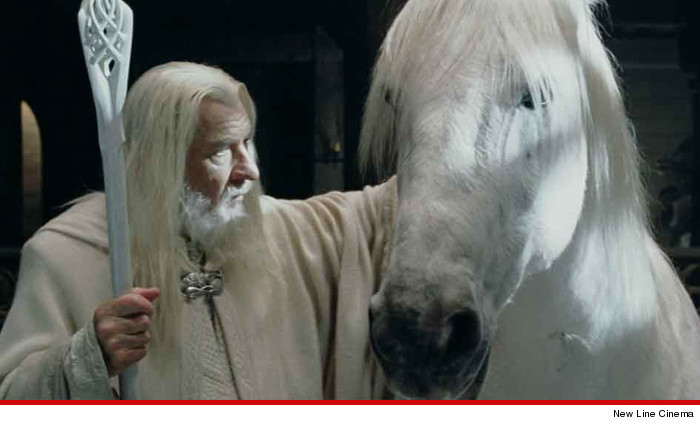 Lord of the Rings by J. R. R. Tolkien
You don’t want to call Sceadufæx, the lord of all horses, a pet. Nope. Not even the Rohirrim could tame this wild steed. But when Gandalf earned his whites, he must have proved himself worthy enough to ride the mighty Shadowfax into battle.
 A Song of Ice and Fire by George R. R. Martin
Dire wolves were thought to be extinct, but when the Stark kids stumble on the dead body of a mother wolf and her living cubs, it turns out to be a portent sign. Will Grey Wind, Lady, Nymeria,
Summer, Shaggydog, and Ghost be all that remains of the Stark legacy when GRRM finally gets around to finishing this series? Warg on, Starks. Warg on.
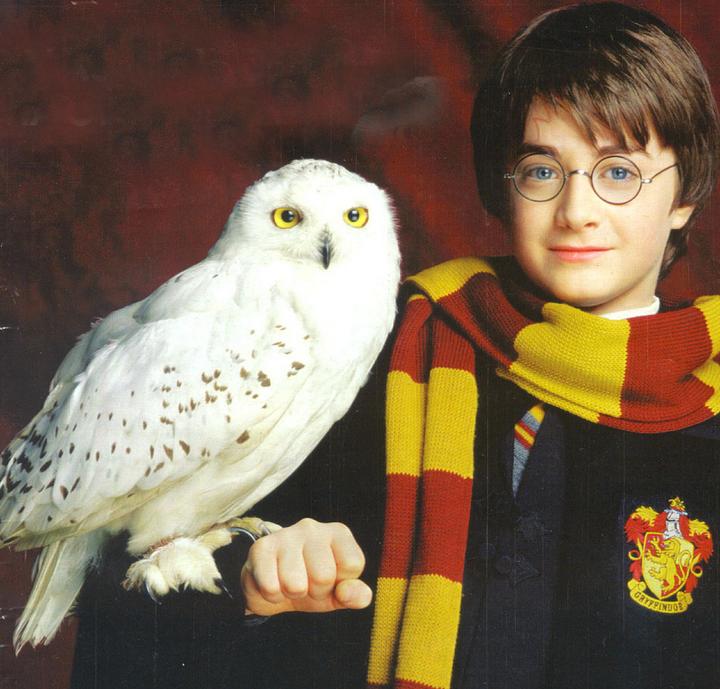
Harry Potter by J.K. Rowling
Oh Hedwig…..!!!!
*sobs into her pillow*
Mogsy’s Picks:
I’ve been focusing on epic fantasy a lot in these lists lately and since Wendy’s got some good ones covered, just for fun, this week I’m gonna go ALL URBAN FANTASY! (Not like it’s too difficult, though; UF is kinda bursting at the seams with protagonists with loyal companions — some of which possess pretty cool supernatural powers of their own).
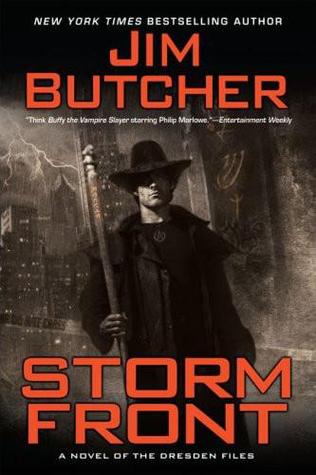 The Dresden Files by Jim Butcher
Harry Dresden probably has two of the most well known pets in urban fantasy. Mister is his huge grey cat who has been around since book one, and he likes to bulldoze into visitors’ knees, knocking them over. Harry also acquires a dog later in the series, a Foo Dog named Mouse. It is suggested many times that Mouse might have a divine origin, not least because he is highly intelligent and seems to understand his master’s mind.
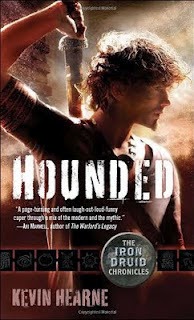 The Iron Druid Chronicles by Kevin Hearne
Oberon is protagonist Atticus O’Sullivan’s loyal Irish Wolfhound. The two communicate telepathically with each other thanks to Atticus’ druidic abilities. They are pals that love to banter and hang out with each other, and go on the occasional hunt to burn off steam. Atticus would shapeshift in order to run along side Oberon.
 Owl and the Japanese Circus by Kristi Charish
Captain is Owl’s Egyptian Mau cat, bred to protect the ancient Egyptians from creatures of the underworld. Apparently, that includes vampires. Owl brings Captain around to help her sniff out the bloodsucking undead, and he’s also helpful in a fight with one on account of the venom in his spit and claws — extremely poisonous to vampires, of course.
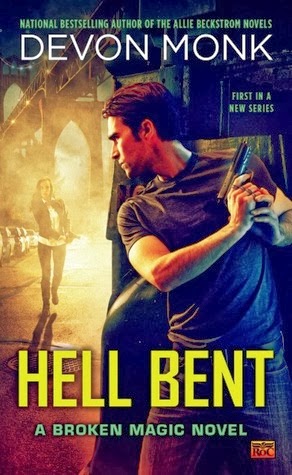
This is sort of a cheat because I haven’t actually read any of the books in ‘s Allie Beckstrom series, but I have read the spin-off Broken Magic duology. In both books Allie makes several cameos and so we also get to see her pet stone gargoyle named Stone.
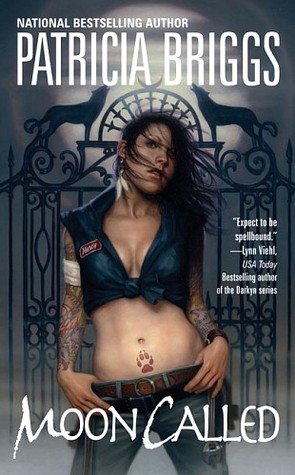 Mercy Thompson series by Patricia Briggs
Mercy’s cat Medea is a tailless calico that first came to her as a stray. Most cats don’t get along with werewolves, walkers or other shapeshifters like Mercy and her friends, but for some reason Medea seems to like everyone.
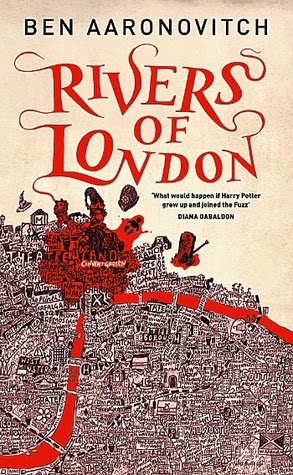 Peter Grant series by Ben Aaronovitch
Who needs a ghost detector when you have Toby, a dog who is able to sense magic and anything paranormal? Peter has even developed a system that measures the strength of magic activity based on the loudness and intensity of Toby’s yaps.
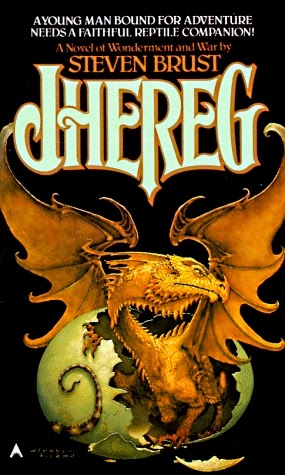
Not really urban fantasy, but I couldn’t not include this. The protagonist Vlad acquired Loiosh, his jhereg familiar, as an egg in a bargain with the creature’s wild mother. Loiosh is snarky (much like Vlad himself) but he’s also a very helpful companion due to his psychic link with his master, and has saved Vlad’s life on several occasions.
Guest Post: “The Limits of Empathy; or Macbeth Is An Asshole” by Brian Staveley
Posted on January 21, 2015 14 Comments
 We have a very special guest post for you all today. Please join us in welcoming author Brian Staveley to the BiblioSanctum to talk about a very interesting subject — writing characters that do bad things!
Brian’s new book The Providence of Fire is the second novel of the Chronicle of the Unhewn Throne; be sure to check out the BiblioSanctum review of this excellent sequel if you haven’t already. This series is not to be missed.
* * *
THE LIMITS OF EMPATHY; OR MACBETH IS AN ASSHOLE
by Brian Staveley

Providence of Fire (Chronicle of the Unhewn Throne #2)
I’ve seen, read, or taught Shakespeare’s Macbeth over twenty times, which is odd, considering I really can’t stand the play. Partly I’ve gone back to it so many times because it was deemed (for reasons I still can’t understand) a necessary part of a young person’s education in the school where I taught. Partly I keep seeing and reading it because it’s, you know, a great play. Everyone thinks so except for me, and I keep wondering if I’ve gotten any smarter. So far, no luck.
On the face of it, my antipathy to the Scottish Play is odd, even to me. After all, Macbeth has witches, curses, murders, battles, riddles, prophecy, and ghosts. It’s pretty hard to really fuck up when you’ve got witches, curses, murders, battles, riddles, prophecy, and ghosts. It’s fantasy, which means that I ought to like it.
And yet, I find the play almost unreadable, more so each time I come back to it. My problem hinges on Macbeth himself, and to a lesser extent his wife. It’s a literary staple that characters at the center of a tragedy are flawed (the word Aristotle used for this flaw was hamartia, a term translators of the New Testament often render into English as sin): Oedipus has his pride (or his stubbornness or his anger, depending on the commentator); Lear his pride; Othello his jealousy. The list is as long as tragedy itself.
The standard reading of Macbeth insists that the corrosive flaw running through both Macbeth and his wife is their ambition. Without the ambition, we are told, they would be decent people: courageous, loving, entertaining at a dinner party, the kind of couple with whom you might want to drink another bottle of wine, even after the meal is over. And yet, every time I read it, that single factor, that overwhelming ambition, so far outstrips every other aspect of their personalities, that I lose all ability to sympathize, or empathize, or perform any emotional action the root of which is pathos.
The problem with the Macbeths is not simply that they are ambitious. The problem is that they are fucking assholes.
They possess none of the virtues that redeem other evil literary characters. They are humorless, selfish, nasty to each other (despite the persistent critical claim that they are one of the happiest couples in Shakespeare, a claim based largely on the fact that Macbeth actually confides in his wife and has a pet name for her), and astoundingly willing to start murdering good people, a few overwrought soliloquys aside. I start out the play wanting to see the two of them dead, and then it’s just a long slow slog through the murder of bunch of people, themselves not particularly likeable, (the notable exceptions being Lady Macduff and her son, who are on stage just long enough to get killed).
This starts to worry me when my own characters start making decisions that are more and more… let’s call them unpleasant. One the one hand, I don’t want to write about a bunch of flawless guardians of all that’s good. On the other hand, I don’t want to shatter the reader’s empathy. I don’t want to turn the Malkeenians into the Macbeths.
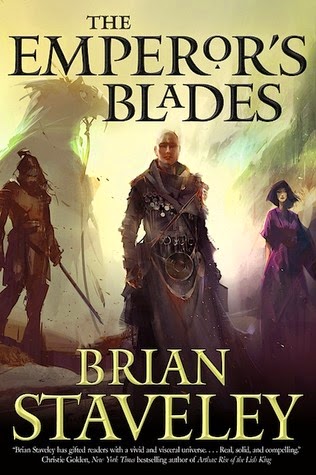
The Emperor’s Blades (Chronicle of the Unhewn Throne #1)
My main characters do some bad things in The Providence of Fire, some really bad things, and as I was writing, I kept wondering, Is this too much? Is this?
Jaime Lannister threw a kid out a window, but he’s loyal, strong, brave, hard-working. Satan in Paradise Lost is, well, Satan – but he’s resolute, bold, and extremely eloquent. It’s tempting to think of the whole affair as a simple balancing act: the good against the bad, a murdered father on one side of the scale, a thousand rescued kittens on the other. In fact, as I started writing this essay, that’s what I had in mind.
Six hundred words in, however, I’m not sure that it’s that simple. Macbeth, after all, is plenty brave. He’s even vaguely introspective. It’s not simply that his good and evil don’t cancel out, it’s that I can’t relate to his evil. He never really explains why he wants to be king, never articulates what void he’s trying to fill, what creeping fear he’s trying to keep at bay. We know why Jaime Lannister does what he does – he tells us as he chucks Bran out the window: “The things I do for love.” It’s a glib comment, but it’s not untrue. Macbeth never says anything quite like it.
After months of fretting, this is my take-away. I hope my characters are complex, nuanced people, men and women built of conviction and contradiction. I think there is good in them, but my real hope is that when they act badly, the reader will look at their decisions, wince, then nod in recognition.
Of course, I wouldn’t want to beat this drum too loudly, Macbeth is one of the most famous plays of all time, and I’m certainly not getting any smarter.
* * *
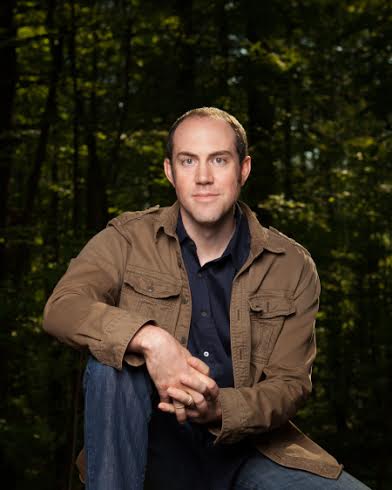 ABOUT THE AUTHOR
BRIAN STAVELEY is a teacher and writer. He has taught literature, religion, history, and philosophy, all subjects that influence his writing, and holds an MA in Creative Writing from Boston University. He works as an editor for Antilever Press, and has published poetry and essays, both in print and on-line. He lives in Vermont with his wife and young son, and divides his time between running trails, splitting wood, writing, and baby-wrangling. BStaveley.wordpress.com. @BrianStaveley. Facebook. Goodreads.

Book Review: The Masked Empire by Patrick Weekes
Posted on January 20, 2015 14 Comments
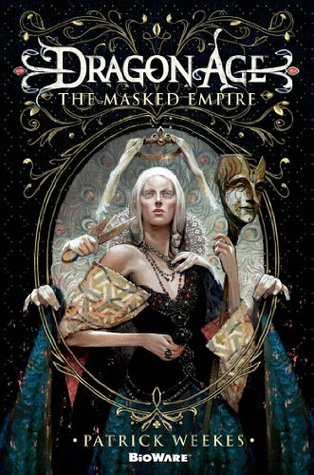 The Masked Empire by Patrick Weekes
Genre: Gaming, Fantasy
Series: Dragon Age
Publisher: Tor Books (April 8, 2014)
Author Information: Twitter
Tiara’s Rating: 3 of 5 stars
I joked that this was going to be the first review that I wrote using only emojis, but then I realized that I almost wasn’t joking. Discussion of this book with other people mostly involved me using varied emojis, from agitated to mildly amused, to get my point across. When I started writing this, I had to chew on what I wanted to say about this book. Then, when the words started coming, they wouldn’t stop!
As with The Stolen Throne, I read The Masked Empire to learn more about the lore of the Dragon Age universe. I know there are plenty of books and comics between these two books, but while connected, it is easy enough to read these books as standalones. I started The Masked Empire because it serves as a bridge between Dragon Age II and Dragon Age: Inquisition. It gives readers a history of the recent political climate in Orlais, which factors in heavily in Inquisition.
I started this book after playing the quest “Wicked Eyes and Wicked Hearts” in Dragon Age: Inquisition. After completing that, I wanted to understand the relationship these characters had with one another and how they got to the point of civil war. Inquisition didn’t do much at giving me a foundation with these characters, and the tidbits I did learn in the game weren’t enough to satisfy my questions about the situation.
This book deals directly with the characters and circumstances surrounding that quest. I picked up this book before I finished the game, nearly right after I played that quest, and in a way, I’m glad. It added some weight to certain parts of the game. When I encountered another character from the book later in the game, I knew this character and what they were seeking to achieve. If I hadn’t read the book, this character would’ve been just part of a random side quest that held no real significance for me.
The Masked Empire follows three key players—Empress Celene, her elven handmaiden, Briala, and her cousin, Grand Duke Gaspard de Chalons. Celene’s bodyguard, Michel de Chevin, also plays a considerable role, but in a different manner than Celene, Briala, and Gaspard. Celene has long ruled Orlais after ascending as a teenager when she outwitted Gaspard for the throne. During her rule, she has worked to make Orlais a beacon of education, knowledge, and art. Now, Thedas is in a state of constant flux as the templars and mages wage war against each other. She also has to contend with elven unrest in her empire. Elven dissidents whisper among themselves as discord between the elves and nobles brews toward rebellion.
Celene fears that her grasp is weakening on a empire known for being fickle, politically savage, and unforgiving. Gaspard, who feels he is the rightful ruler of Orlais, challenges Celene’s diplomacy and her right to rule while Briala implores her to be fair to the elves who serve her as loyally as any human. Celene believes she is the only one who can keep Orlais afloat in such precarious times, and she is determined to hold on to her throne by whatever means necessary.
I wanted to love this book, but I was just so annoyed through most of it. This book proved that having too much knowledge about the lore of a game can really kind of stain one’s view of the game. This has the distinction of being a deliberate path between Dragon Age II and Dragon Age: Inquisition rather than just being story featuring characters we may or may not know during that in-between period. This book serves up something that is an important factor in Inquisition.
I want to stress that these things do not break the game for the player who hasn’t read this book, and I will probably repeat this throughout the review for emphasis.
One of my main issues with this book was that some things stated in the book seemed like they should’ve had some impact on Inquisition but didn’t come up at all. Canon that was created in this book was nowhere to be found in the game. I’m one of those people who feels that books about games should enhance the lore for those who decide to read the books without punishing people who decide to only play the games.
While not knowing about the things in this book won’t hurt game play, it does make me question why these things are included in the book but not reflected in the game canon. It’s one thing to pad and expand canon more, but it’s another to add canon that should, technically, have some impact on the in-game story. There’s a very specific circumstance I’m thinking of in the book that bugged me because I encountered it in game, but the experience in game is nothing like it’s described in the book or even vaguely hinted at being like the experience in the book.
Some of the canon that did find its way into the game from the book seemed one-sided without any potential way to find out that there’s much more to the story that’s being held back from the player. Again, this wouldn’t be something that would break the game for players, but having the knowledge of these characters and what they’ve gone through in the book, it feels like a disservice to give this one-sided account of things without any way for players to optionally learn the full truth.
In my personal opinion, there’s one particular opportunity of finding out how what you’re dealing with connects experiences from the previous two games. There was a chance to show the significance of these encounters and what part this played in the turmoil in Thedas. It could’ve been more than just a random side quest, but you won’t understand the puzzle without all the pieces (or even just the important pieces).
Another issue I had was, just as in the game, I still don’t like the main players. No, maybe that isn’t the right way of phrasing it since I don’t think I’m necessarily meant to like these characters. The game and book tries to present them in a way that shows they have their merits and they have their sins. It’s like playing two truths and a lie with them, but I digress. The problem is: I just don’t care about these characters. They are paper thin, uninspiring, and dull in game, and the book didn’t do much to make feel any differently about them. Their sins, both real and perceived, are the only things that make them somewhat interesting.
There was only one character that caught my attention and that was Michel. What intrigued me about his character was the conflict, the incongruity, that impacted him where his personal story was concerned, which is a side ripple in the book that ties in with the bigger issue of race and class in the world of Thedas. His personal story can also be seen as a very convenient plot device, depending on who you ask.
Maybe I set myself up for this disappointment in really getting to know the characters and their motivations. I know it’s common advice to not expect much from books based on a game/movie/TV show, but I rebel against that idea. I don’t feel like I should hold them to a lower standard simply because they may or may not be a cash grab. This is a world I care about with lore that I care about, and I hold these books to the same quality standards as I would a series of novels set in a world I enjoy. The media it’s based on shouldn’t matter and is not an excuse to give mediocre a pass.
With that being said, I don’t think this story or the writing is mediocre. The things I did like about this book fueled my annoyance more because this could’ve been a story I really loved. Political intrigue, quiet duplicity, court scandal—yes, these are all things that I live for in books. There were scenes I thought were just brilliant in this book.
While I didn’t connect with the characters, the story was actually good with my grievances put aside. This was less generic feeling than The Stolen Throne and really sparkles at highlighting the posh deception that rules the Orlesian empire with an iron grip. Learning more about “The Game” (what the Orlesians call the intricate mostly political scheming they engage in) and how it factored in for these characters was fascinating. Seeing more of how the Dalish elves and city elves view their respective frustrating situations and how they view each other was intriguing. These are things we learn in game, too, but this touched upon it a little more in prose.
Despite it falling flat with me, I think the average Dragon Age fan—who likes to buy the books and comics, that is—will likely enjoy this story. There are gems here, and there is a certain sense of excitement it adds when you’re playing Inquisition and have this context to help shape the in-game story.

Book Review: The Lathe of Heaven by Ursula K. Le Guin
Posted on January 19, 2015 20 Comments
 The Lathe of Heaven by Ursula K. Le Guin
Genre: Science-Fiction
Publisher: Avon Books (March 1971)
Author Information: Website
Tiara’s Rating: 4 of 5 stars
The story takes place in Portland, Oregon; the year is 2002. Portland, and much of the world, is existing under very poor conditions. George Orr finds himself on a fantastic journey after being treated for a bad reaction to drugs he obtained illegally. Because his crime is seen as a relatively minor offense, since he obtained the drugs for personal use, George is referred to a type of rehabilitation program—Voluntary Therapeutic Treatment, or VTT for short—that involves him attending mandatory psychiatric evaluations. Even though Le Guin doesn’t go much into the detail of what tests and things George had to be part of, the doctors eventually send him to Dr. Haber, an expert on dreams and hypnosis—a man they send the “tough cases.”
George’s problem is this. He dreams what he calls “effective dreams” and things happen. He manifests new realities in his sleep, and in order to keep this from happening, he takes a drug cocktail to suppress dreaming. However, it’s not as simple as he dreams something and it comes into being much to the delight/horror of others. No, his dreams retroactively manipulate time, history, even science itself to build a continuum that has always been. Therefore, no one but George has ever been aware that time has changed itself.
However, after divulging this information to Dr. Haber, George becomes the doctor’s pet project once he realizes that George is not insane. Dr. Haber begins to feed George ideas while he’s hypnotized to ail the world’s current problems such as overcrowding, racism, and war. In each new reality, Haber becomes increasingly more powerful and fanatical about fixing the world to the horror of George. George knows the doctor means well, but the results are almost never as intended, and George firmly believes in the natural order of things.
To many people George encountered, even Dr. Haber and George’s love interest, Heather LaLache, there’s nothing remarkable about him. In fact, people seem to think that he’s not living more than just existing, describing him as passive, timid, and frail. He appears content to allow life to happen to him rather shaping it. However, George has profound moments that surprise people, showing them that he’s not as fragile and meandering as they believe. George doesn’t show much initiative, but his reasons for his complicity are rooted firmly in response to his ability. He lives his life as straightforward and uncomplicated as possible, but he is nuanced.
On the opposite end of the scale is Dr. Haber, a man who not only is proactive but eventually exhibits a great need to shape himself and his world. Dr. Haber isn’t an evil man, but he lacks the ability to grasp that his vision of a perfect world is hardly feasible without some sort of sacrifice, that there has to be some conflict in the world for balance. George’s dreams confirm this as there is always some point of contention that has to be in play in order to fulfill Huber’s vision.
Dr. Haber can’t fathom that one person cannot take it upon himself to right what he perceives as the world’s flaws. His blindness to this fact is exemplified by his disregard of George’s fears. He feels that George’s ability isn’t something that George should withhold from the world. George’s fears combined with feelings about his trust being abused are not as important as, what Dr. Haber considers, the needs of the many. George and Dr. Haber presented countering arguments to the question of moral obligation/negligence while Heather served as a variable for readers to observe as she changed from scenario to scenario.
Speaking of Heather, I was pleasantly surprised to find that I liked the romance in this book. When it first became obvious that Heather was going to catch George’s interest, I feared that the romance might feel shoehorned into the book and would detract from the main story. Heather served a purpose as someone who’s swept along in Dr. Haber’s game and presents another view of how George’s dream affect those around him. It helped that the romance blossomed around these changes for better or for worse, and for most of the book, it’s just a cautious dance between two people who aren’t sure about their place in the world.
Even though I loved this book, the scenarios seemed to get more and more outrageous a bit as the story progressed. I preferred the subtle shifting from the beginning to the comical and outlandish scenarios George is faced with later in the book. It’s hard to concentrate on how thoughtful the story is when you’re reading a scene that reads like it came right out of a pulpy science fiction magazine. Maybe this was very deliberate on Le Guin’s part to mirror Haber’s increasing fanaticism in being the world’s savior, but that’s only a minor nitpick.
My first experience with Le Guin was during a college literature course where we read and analyzed her short story The Ones Who Walk Away from Omelas which explored some similar ideas on a smaller scale as this book. It was always a story that haunted me throughout the years. To find out Le Guin published a novel that expanded on some of these ideas made it a must read for me.
For the most part, I enjoyed this novel. This book very much questioned moral ideas like “Is it ever okay to play God?” and “Should the needs of the many always outweigh the needs of a few?” It was a story that asked the readers to ponder these questions as we followed George on his journey. It was much more than just a science fiction novel.
Cover Reveal: Hidden Huntress by Danielle L. Jensen
Posted on January 19, 2015 8 Comments
Woohoo, today we’re revealing the cover to Hidden Huntress by Danielle L. Jensen, sequel to Stolen Songbird!
It’s…it’s just so beautiful…
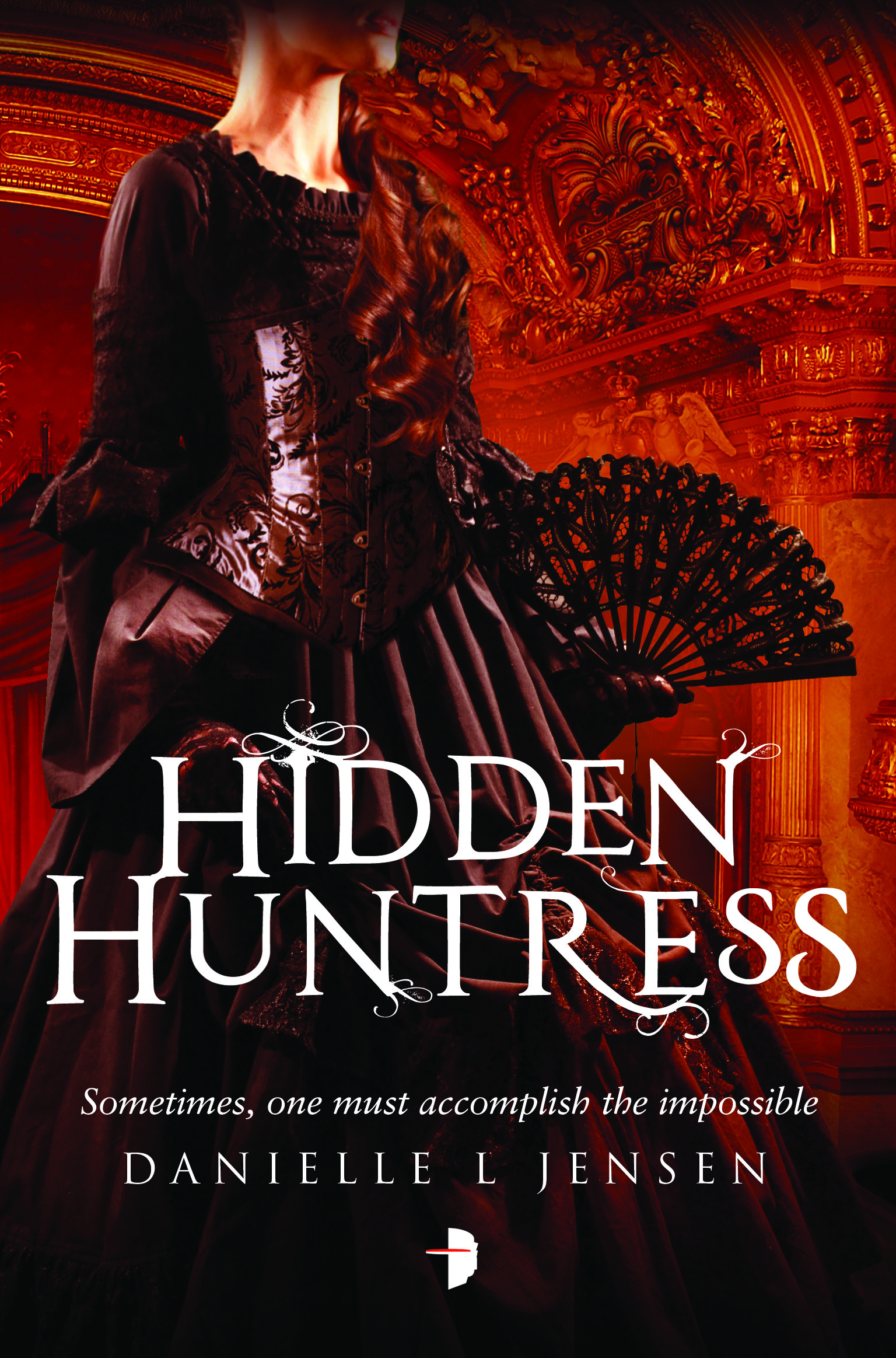
Sometimes, one must accomplish the impossible.
Beneath the mountain, the king’s reign of tyranny is absolute; the one troll with the capacity to challenge him is imprisoned for treason. Cécile has escaped the darkness of Trollus, but she learns all too quickly that she is not beyond the reach of the king’s power. Or his manipulation.
Recovered from her injuries, she now lives with her mother in Trianon and graces the opera stage every night. But by day she searches for the witch who has eluded the trolls for five hundred years. Whether she succeeds or fails, the costs to those she cares about will be high.
To find Anushka, she must delve into magic that is both dark and deadly. But the witch is a clever creature. And Cécile might not just be the hunter. She might also be the hunted…
I had a really good time with Stolen Songbird last year, so needless to say I was excited to learn that the series has been picked up by Angry Robot. Hidden Huntress is now set to come out in June of this year, which I know is quite a wait. For now, I guess I will just drool over that gorgeous cover to pass the time…
Book Review: The Name of the Wind by Patrick Rothfuss
Posted on January 18, 2015 21 Comments
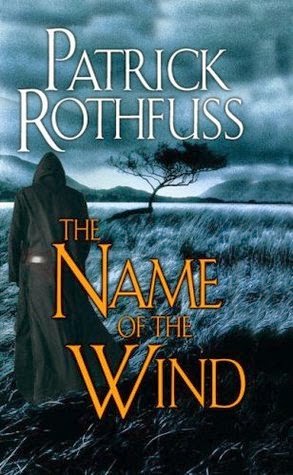 The Name of the Wind by Patrick Rothfuss
Genre: Fantasy
Series: The Kingkiller Chronicle #1
Publisher: Penguin Group (March 2007)
Wendy’s Rating: 2.5 of 5 stars
Kote is an intriguing man. To his patrons, he is merely a friendly barkeep, but some spy what lies beneath the vibrant red hair and haunted eyes. But even those who believe they know him best, do not know everything. When the Chronicler arrives, recognizing Kote as the hero of many more names and feats, he convinces the man to tell his story. A story of strange demon spiders, of the angelic woman who stole his heart, of deadly assassins, murdered kings, tragedy and loss, and the magic of the wind.
Well, those are the things I expected this 700 page book to tell me about. Instead, I got Harry Potter goes to alchemy school, but without any focus or the depth of interesting supporting characters and events that Rowlings offers along with her main protagonist.
Chronicler is skilled in shorthand, which is a good thing, since Kvothe seems to have a perfect memory and thus details every moment of his life surrounding his university life. I’m wary of the concept of first person stories that retell their life history in such perfect detail, but in this case, one of Kvothe’s many talents is his genius mind. His recall is superb, and he is a progeny in just about everything he sets his mind to. Thankfully, Rothfuss manages to balance this with tragedy that leaves Kvothe orphaned and starving on the streets, but it becomes obvious early on that Kvothe is going to make it out of anything thrown at him during this coming of age story. Oh there will be scars, both inside and out, but very little drama and suspense for the reader to enjoy. Many of the events and encounters promise of follow up, like carrots dangled before the reader, but then the carrots kind of dissolve into the wind (whose name apparently isn’t all that important).
Then there is the girl, Denna, whose beauty Kvothe takes great pains to describe to Chronicler and Kvothe’s unique companion, Bast. At one point, he likens her unto a selas flower:
“It is a deep red flower that grows on a strong vine. Its leaves are dark and delicate. They grow best in shadowy places, but the flower itself finds stray sunbeams to bloom in. There is much of you that is both shadow and light. It grows in deep forests and is rare because only skilled folk can tend one without harming it. It has a wonderous smell and is much sought and seldom found.”
Like so many things in this story, there is all this build up and promise, but very little pay off. I’m certain Denna was a perfect angel to a young boy in love, but his swooning and her eventual accompaniment on what was meant to be the climactic event of the story were rather dull.
While this book did disappoint me, I will praise Rothfuss on two things: first is the lore interjected throughout, often told by storytellers within the book, or by Kvothe himself. I found myself far more interested in these tellings than in Kvothe’s story, and would love a collection of short stories based on these alone.
I also loved Rothfuss’ obvious appreciation for music. Whether or not he himself is a musician, when he writes about music, his love for the art form fills the pages with the depth that is lacking in the rest of the story.



 The BiblioSanctum