Book Review: Splintered by Jamie Schultz
Posted on July 2, 2015 12 Comments
A review copy was provided to me by the author in exchange for an honest review. All opinions are my own.
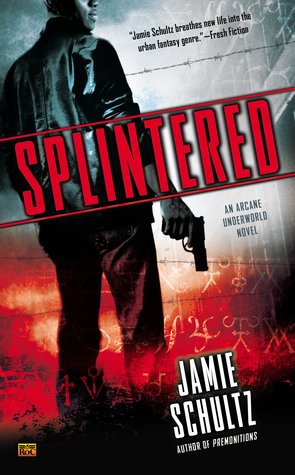
Genre: Urban Fantasy
Series: Book 2 of Arcane Underworld
Publisher: Roc (July 7, 2015)
Author Information: Website | Twitter
Mogsy’s Rating: 3.5 of 5 stars
The Arcane Underworld series has it all. Demons. Fanatical cultists. Dark magic. Now throw in a group of down-on-their-luck thieves working for one Enoch Sobell, possibly the scariest and most powerful crime lord that ever lived. So what does it tell you when even the big boss man is rattled by a new threat entering the playing field?
If you like your urban fantasy dark with a touch of horror, Splintered and its predecessor Premonitions will be perfect for you. This sequel picks up shortly after the events of the first book, following the lives of Karyn Ames’ crew in the wake of their big heist to steal an ancient occult artifact. Ever since Karyn’s affliction has taken her out of the picture though, Anna Ruiz has stepped up to lead the gang, hoping to help her friend break free of the debilitating visions that have cut her off from reality.
Enoch Sobell, however, has further plans for the crew. No longer are Anna and her friends carrying out mere thefts for the crime lord. His demands have gotten more disturbing and extreme in recent weeks, as evidenced by their latest job, which involves shadier deals like kidnapping. But what they didn’t count on is that their target has a loyal following of acolyte mages who will stop at nothing to get him back. Now Anna, Genevieve and Nail find themselves in way over their heads, tangled in a web of violence and blood magic.
Like the first book, this one also features a great mix of urban fantasy, mystery and psychological thrills, but it takes off in some new directions as well. I love heist books, which is why I enjoyed Premonitions so much, but as it turned out, there’s a lot less thieving action this time around in Splintered. Still, the story makes up for this by being much darker, which suited me just fine. Many parts of the book even bordered on horror, including a bunch of messy scenes that featured demonic possession, the summoning of nightmarish monsters, as well as the brutal consequence of black magic.
Also, now that Karyn has gotten lost in her hallucinations, Anna has taken over as the head of the crew as well as de facto main protagonist. As a result we see a lot less of Karyn, which was slight disappointment since she was my favorite character in book one, as well as the member of the crew that I found most interesting. Because of the frightening and unpredictable nature of Karyn’s visions, Premonitions was a real head-trip, and I thought Jamie Schultz did a really good job giving readers a glimpse into the scary world that is her mind. Sadly, we lose much of that in this book.
The bright side though? This development gives us the opportunity to know the other crew members better. And what fascinating characters they are. Anna is doing her best to lead the group, but is finding that hard to do with Sobell breathing down her neck. Karyn’s plight is also always on the back of Anna’s mind, quite possibly affecting her job as well as her relationship with fellow thief and girlfriend Genevieve, whose loyalties are still on the fence. As the newest member of the crew, Gen is still a big question mark for me. I’m not willing to trust her fully just yet, and after this book things should get even more interesting.
But perhaps the biggest star of the story for me is Nail, the crew’s muscle and the guy who brings the big guns. In spite of this, he clearly has a soft side. Nail is the kind of man who would do anything for family – in this case, that’s his crew as well as his older brother DeWayne, whose gambling problem has gotten him in debt with the wrong people. For such a minor character, DeWayne stole the show for the brief moments he appeared, and I loved his interactions with Nail. I really hope we’ll see more of him in future books.
Now, here’s the deal: Splintered was a great sequel. But as much as I enjoyed it, I think I still have to give the edge to the first book. I love the darker, grittier feel of this book but I just have to confess, I simply love heist stories way too much, so Premonitions will always have a special place in my heart. I also thought Splintered faltered with a plot that was difficult to follow at times, especially when I was trying to figure out how all the different plot threads – the search for Karyn’s cure, Van Horn’s kidnapping, and Sobell’s job on Mona Gorow’s house, etc. – were supposed to fit together. In the long run though, I suppose it mattered little because the conclusion tied it all up, not to mention the final show down was all kinds of awesome.
With the stakes remaining this high, you can count me in for book three – especially if it means getting to find out whether or not Karyn gets back in the game. I’m burning for more dark urban fantasy in my reading, and Jamie Schultz definitely knows how to bring it.

More of Arcane Underworld on The BiblioSanctum:
Review of Premonitions (Book 1) | Guest post by Jamie Schultz
Tough Traveling: Independence Battles
Posted on July 2, 2015 9 Comments


The Thursday feature “Tough Traveling” is the brainchild of Nathan ofReview Barn, who has come up with the excellent idea of making a new list each week based on the most common tropes in fantasy, as seen in (and inspired by) The Tough Guide to Fantasyland by Diana Wynn Jones. Nathan has invited anyone who is interested to come play along, so be sure to check out the first link for more information.
This week’s tour topic is: Independence Battles
The good fight. Casting of the chains of tyranny! No one in fantasyland refuses the call of the good fight. And what fight is more important in fantasyland than FREEDOM?
Mogsy’s Picks:
Tough topic this week, but I managed to find a few perfect fantasy picks (and one sci-fi) that feature significant battles between freedom-seekers and the powerful empires/outside forces that want to occupy, oppress and conquer them. For extra credit, all of these are in some way inspired by real-life historical events or famous figures, which I found interesting.

A warlord and a bandit join forces to overthrow an emperor. Based on the historical events of the Chu-Han Contention, the interregnum between the fall of the Qin Dynasty and the rise of the Han Dynasty, The Grace of Kings retells how a tyrant unified a land by conquering all the major states and established an empire, but his oppressive rule led to an uprising and the subsequent splitting of the territory into many free kingdoms again.
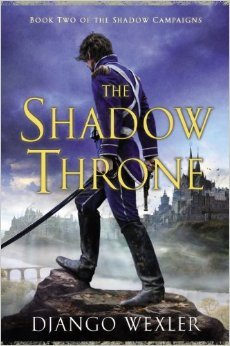 The Shadow Throne by Django Wexler
This book two of The Shadow Campaigns series is all about the fight for independence. Inspired by the events of the French Revolution, the story features a city on the edge of rebellion, as those who want to see Vordan free from the clutches of Borel and Duke Orlanko clash with the Borelgai supporters. Bloody battles are waged on the streets, though a lot of the fighting is also done verbally in places like palace chambers, university classrooms, common taprooms and other places where dissidents gather.

Clash of Iron is about war. Lots and lots of war. Lowa has just taken over as Queen of Maidun, unfortunately just in time to meet a massive invading Roman army coming from Gaul! The British tribes are thrown into disarray as Julius Caesar, the Roman’s military genius, sets his sights on the Isles. Instead of banding together to fight for their freedom and independence from Rome, the tribes end up battling against each other. How will they manage to form a united front against the conquerors?
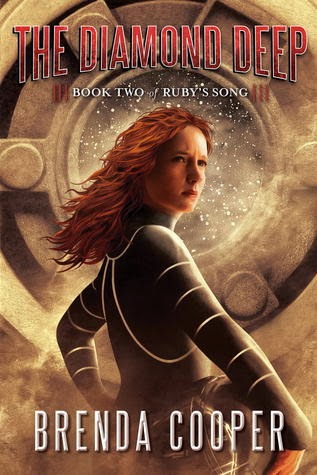 The Diamond Deep by Brenda Cooper
Ruby Martin sought freedom for herself and those she loved in The Creative Fire, and she continues fighting the good fight in The Diamond Deep. Her enemies are more numerous, better armed and possess greater resources, but her passion for freedom and equality burns hot and she will not stop until she succeeds. Brenda Cooper has stated that Evita, the musical about Eva Perón, was the main inspiration for the book’s character and story.

Loosely based on Renaissance Italy and the era of its warring city-states, Tigana takes place in an area known as the Peninsula of the Palm, a landmass made up of nine provinces led by rival noble families. They squabbled and fought so much that two conquerors from larger kingdoms were able to swoop in and subjugate them in their weakened state, splitting the peninsula down the middle. Characters in the novel fight to restore freedom to the Palm.
Tiara’s Picks:
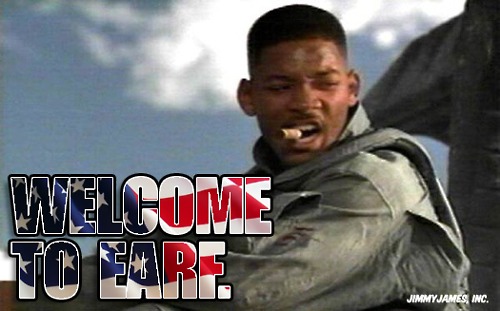
I have been waiting to use this Independence Day image for a year now. 😛 Since I’ve consumed a tremendous amount of military science fiction media, my list this week is all military science-fiction with a focus on independence battles. That means I get to use two of my favorites (listed in the first two positions) for this week’s topic.
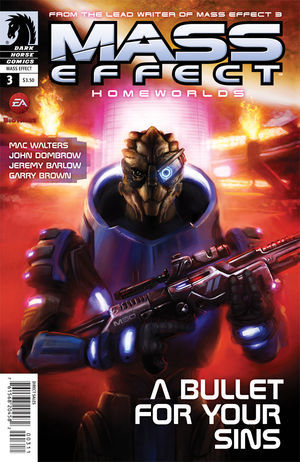
You think I was going to let this topic pass me by without using Mass Effect for it? This also gave me an excuse to use this picture of Garrus from one of the comics. When the galaxy is invaded, there’s only one person that stands between the galaxy and total annihilation, Commander Shepard. There’s destruction, chaos, mayhem… Also, dancing Turians. If I have to play a dating sim, I want my dating sim to have some military science fiction in it.

On a more serious note, I have Gears of War to fill in the part of me that wants a hard-broiled military science fiction game, and I’ve been enjoying how the novels have been filling in the blanks of the story. Humanity faces a subterranean reptilian species that decides to come out of hiding and claim their rightful place on the surface. They wipe out much of humanity, but the Gears dig in and give them hell for all their effort. Okay, there are some chuckles in it, too, but it’s a much more serious endeavor than Mass Effect. Also, have a gif of my OTP (one true pairing)… one of my any OTPs…
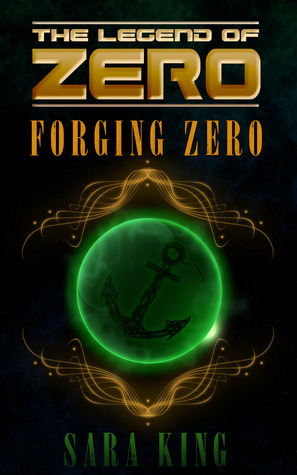 The Legend of Zero by Sara King
Earth has been invaded and is now subjugated to alien rule. The older children are sent to serve in a military force maintained by the aliens. 14-year-old Joe is drafted and receives a prophecy. He’ll be the one who will finally lead humanity back to its independence as long as he survives bootcamp.
 Legacy of the Aldenata by John Ringo
This is a large series of books with various miniseries type stories contained within it. It starts with the book A Hymn Before Battle and takes off from there. When humanity is contacted by a seemingly friendly race of aliens seeking their aid against their enemy, how can humans say no (after accepting gifts, of course)? Soon humanity finds itself in the fight of their life.
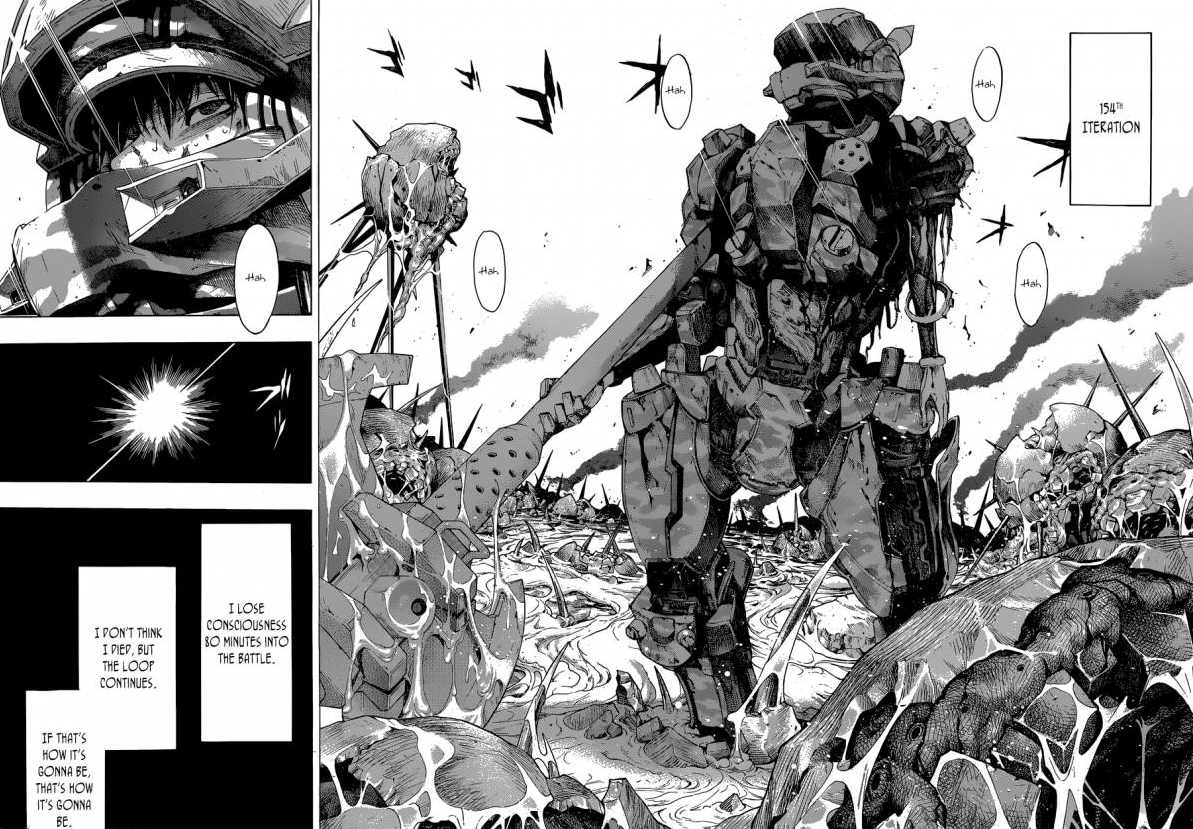
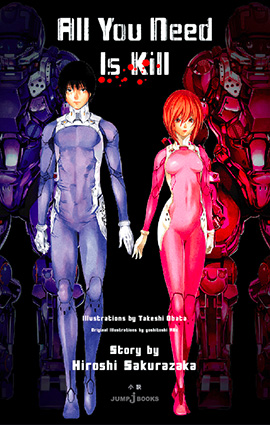 All You Need Is Kill by Hiroshi Sakurazaka
You can call this a more depressing Groundhog Day. Keiji Kiriya is a new UDF recruit sent to fight against a race of aliens called Mimics. However, he dies on the battlefield while fighting a variant species. Instead of moving on to the afterlife of choice, Keiji begins to relive that fight over and over again, dying each time. Each time, though, he comes back stronger, faster, smarter until he eventually learns what needs to be done to stop this loop and win the ultimate fight.
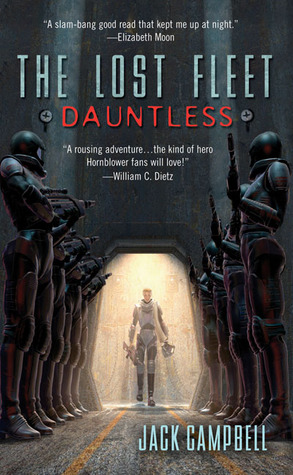 The Lost Fleet by Jack Campbell
This is another large science fiction series starting with the book Dauntless. Two factions of humans. the Alliance and the Syndics, are at war with each other and have been for the last hundred or so years. An Alliance war hero is found in stasis from one hundred years earlier where he made a last stand against their enemies. Now, it’s time for him to wake up , live up to the stories, and stop a war once and for all.
 Attack on Titan by Hajime Isayama
Humanity is attacked by large, mindless humanoid creatures called titans. They range in size from 3 to 15 meters. While they look male and female, they lack reproductive organs. Their sole tasks seem to be to graze on humans. Hunted nearly to extinction, humans built walls to keep the titans out, and that worked for nearly a century, until one day…
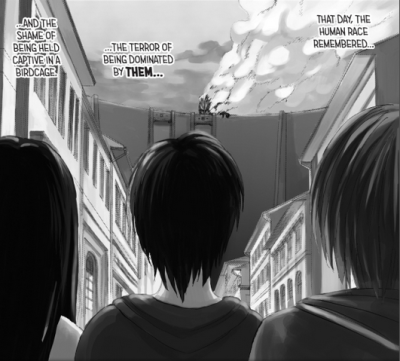
… the walls are breached by an aberrant titan. A group of young kids grow up to become soldiers tasked with fighting titans, the most dangerous job of anyone in the city. I usually don’t jump on hype trains, but this one I actually enjoy.
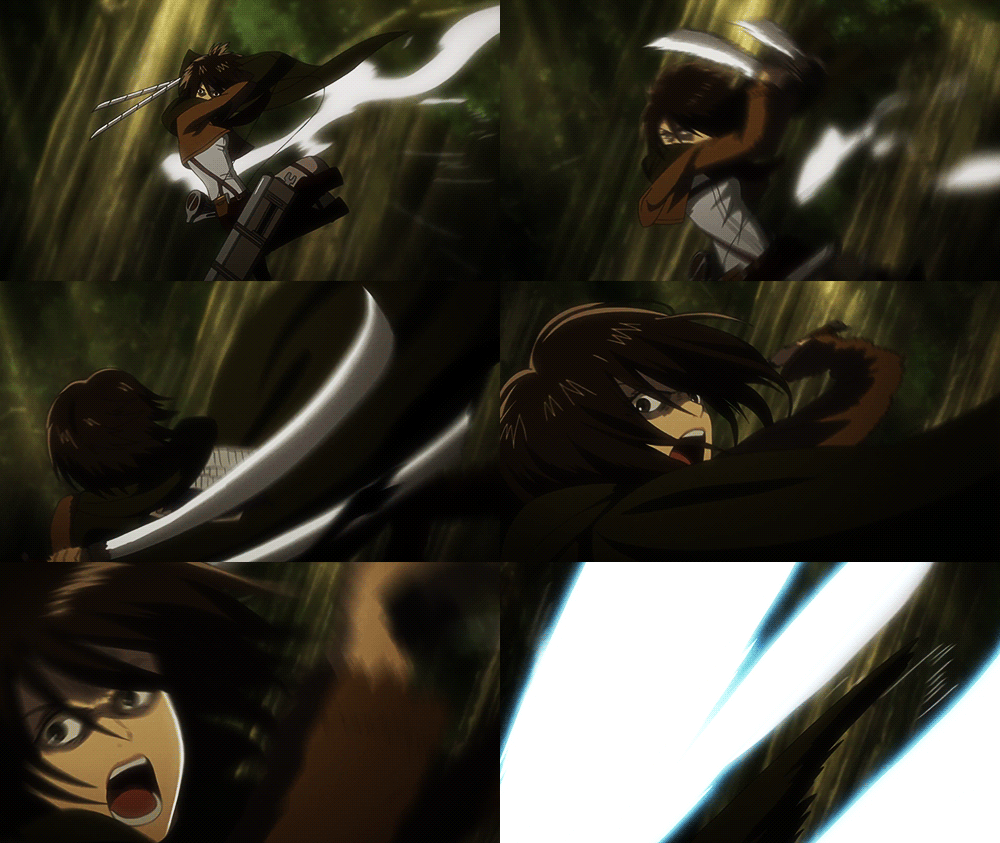
Now, here, have a gif of Mikasa, queen of everything.
Audiobook Review: Blood of Elves by Andrzej Sapkowski
Posted on July 1, 2015 18 Comments
A review copy was provided by the publisher in exchange for an honest review. All opinions are my own.
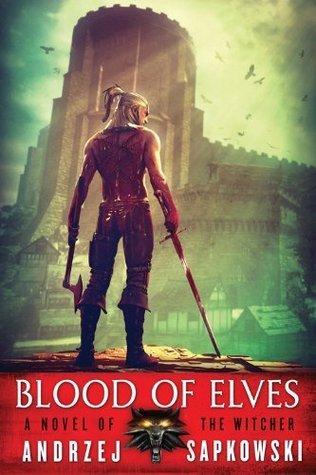 Blood of Elves by Andrzej Sapkowski
Genre: Fantasy
Series: Book 1 of The Witcher
Publisher: Hachette Audio (June 2, 2015)
Author Information: Website
Mogsy’s Rating (Overall): 4 of 5 stars
Narrator: Peter Kenny | Length: 10 hrs 55 min
I remember being thrilled when I discovered that The Witcher saga by Andrzej Sapkowski was available in audio format. As a big fan of the video games which were adapted from this series, I was of course interested in reading the books, but as waiting for the English translation from its original Polish already required a bit of patience, I never really dared hope that the audiobooks would be coming too.
As of this writing though, English versions of The Last Wish, Blood of Elves are now available in audio with The Time of Contempt coming very soon. In time it would be amazing to see the entire saga get the same treatment, and not least because I think the books stand up quite well in this format. They’ve chosen a very good narrator in Peter Kenny, whose voice lends itself perfectly to telling this type of story. His performance style can be described as almost “bard-like”, which really highlights the book’s opening scene in which the charming minstrel Dandelion holds a crowd rapt by reciting the heroic exploits of the legendary Witcher, Geralt of Rivia.
As a Witcher, Geralt is part of a society of enhanced fighters and monster-slayers. Taken as children, they are subjected to intensive training and a ruthless regimen of alchemical and mutagenic compounds intended to alter their physiology and prepare them to hunt their prey. Although Witchers are meant to remain neutral in matters of politics, Geralt has taken an orphan princess named Ciri into his protection, hiding her from spies and assassins sent to find her. He believes that she is the prophesied child meant to bring great change to the world, not only because of her royal heritage but also because of the magic that flows in her veins – the blood of elves.
The narrative follows Geralt and Ciri on various adventures. The young princess, taught sword fighting and other martial arts by Geralt and other Witchers, learns about supernatural monsters and how to kill them. She also begins training in magic with the sorceress Triss Merigold. But on the way to a school were Ciri will receive a more normal education, the party encounters all kinds of obstacles, including illness, encounters with monsters, Scoia’tael ambushes, and attacks from Nilfgaardian agents. As Ciri’s magical potential becomes more powerful, Geralt realizes he will need the aid of some friends and unexpected allies in order to continue protecting and training her.
It’s important to note that while Blood of Elves is advertised as the first of the series, it is technically preceded by two short story collections in terms of chronology: The Last Wish and Sword of Destiny. It’s not really necessary to read either before tackling Blood of Elves, though it would probably help fill in a lot of the background information. The book is very heavy on world-building elements, and while Geralt is arguably the star of the series, he doesn’t appear as much as you would expect. His character is often seen through the eyes of others, or is talked about in others’ perspectives. On top of this, the switching points-of-view and various flashbacks may make this story feel confusing and disjointed. Having read The Last Wish as well as played The Witcher video games might have familiarized me with a lot of the characters and the setting because I managed to follow without getting too lost, but it might pose a challenge for readers going in blind. It’s probably worth considering The Last Wish as a starting point instead.
In spite of this, the plot was wildly entertaining. One can never be sure how much is lost in translation, but there is some humor that managed to come through. Also, the author sometimes employs an interesting storytelling style where entire scenes are almost completely made up of dialogue, and it often amazed me how much of the atmosphere and plot came through via conversation alone. Again, this is where Peter Kenny’s narration shines, because someone less skilled with differentiating voices would probably have a lot of trouble pulling off these scenes.
Sapkowski definitely has a flare for writing adventure and action, even experienced through the lens of translation. The pacing is strong, despite various breaks in the plot to focus on character development or to explain the political situation. The highlights were of course the scenes of Geralt fighting off enemies and monsters. The book does leave us hanging a bit, but this is after all the first full-length novel in the series and does spend a lot time establishing the premise and setting things up nicely for the next one, The Time of Contempt. I’ll have to seek that out very soon.
If you’re a fan of the games and can’t get enough of Geralt of Rivia, I highly recommend these books. They could also be good for fantasy readers looking for a somewhat different kind of sword and sorcery. The translation is decent, but what I was really impressed with was the way the narrator read for this audiobook. Can’t wait to experience the rest of the series.
Story:  | Performance:
  | Overall:
Waiting on Wednesday 07/01/15
Posted on July 1, 2015 8 Comments

“Waiting On Wednesday” is a weekly meme hosted by Breaking the Spine that lets us feature upcoming releases that we can’t wait to get our hands on!
Mogsy’s Pick:
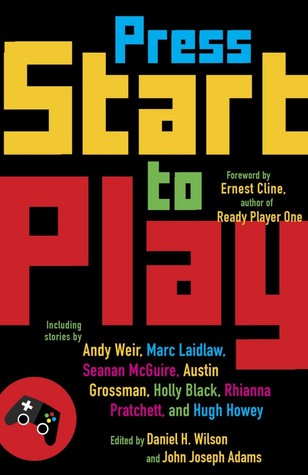
Press Start to Play edited by Daniel H. Wilson and John Joseph Adams: August 18, 2015 (Vintage)
Me, anticipate an anthology? I know, I couldn’t really believe it either. The short fiction format isn’t typically my thing but when I saw this collection of stories inspired by video games I just couldn’t resist. Not only am I a gaming addict, just take gander at that author line-up. We have talents like Andy Weir, Austin Grossman, Seanan McGuire, Holly Black and Hugh Howey featured on the cover, but inside there are even more names like Django Wexler, Ken Liu, Catherynne M. Valente, Cory Doctorow and much much more, plus a foreword by Ernest Cline. Yeah, I don’t often pick up anthologies but for this one I’d certainly make the exception.
 “Video games are a multi-billion dollar a year industry that has outpaced movies and books combined. The humble, pixelated games of the ‘70s and ‘80s have evolved into the vivid, realistic, and immersive form of entertainment that now rivals all other forms of media for dominance in the consumer marketplace. For many, video games have become the cultural icons around which pop culture revolves.
PRESS START TO PLAY is an anthology of stories inspired by video games: stories that attempt to recreate the feel of a video game in prose form; stories that play with the concepts common (or exclusive) to video games; and stories about the creation of video games and/or about the video games—or the gamers—themselves.
These stories will appeal to anyone who has interacted with games, from hardcore teenaged fanatics, to men and women who game after their children have gone to bed, to your well-meaning aunt who won’t stop inviting you to join her farm-based Facebook games.
At the helm of this project are Daniel H. Wilson—bestselling novelist and expert in artificial intelligence—and John Joseph Adams—bestselling, Hugo Award-nominated editor of more than a dozen science fiction/fantasy anthologies and series editor of Best American Science Fiction & Fantasy(volume one forthcoming from Houghton Mifflin in 2015). Together, they have drawn on their wide-ranging contacts to assemble an incredibly talented group of authors who are eager to attack the topic of video games from startling and fascinating angles.
Under the direction of an A.I. specialist and a veteran editor, the anthology will expose readers to a strategically chosen mix of stories that explore novel video game concepts in prose narratives, such as save points, kill screens, gold-farming, respawning, first-person shooters, unlocking achievements, and getting “pwned.” Likewise, each of our authors is an accomplished specialist in areas such as science fiction, fantasy, and techno-thrillers, and many have experience writing for video games professionally.
Combining unique viewpoints and exacting realism, this anthology promises to thrill generations of readers, from those who grew up with Atari 2600s to the console and PC gamers of today.”
Bookish Bingo Finale, Audiobook Month Finale, & Miscellaneous Updates
Posted on June 30, 2015 6 Comments
Bookish Bingo
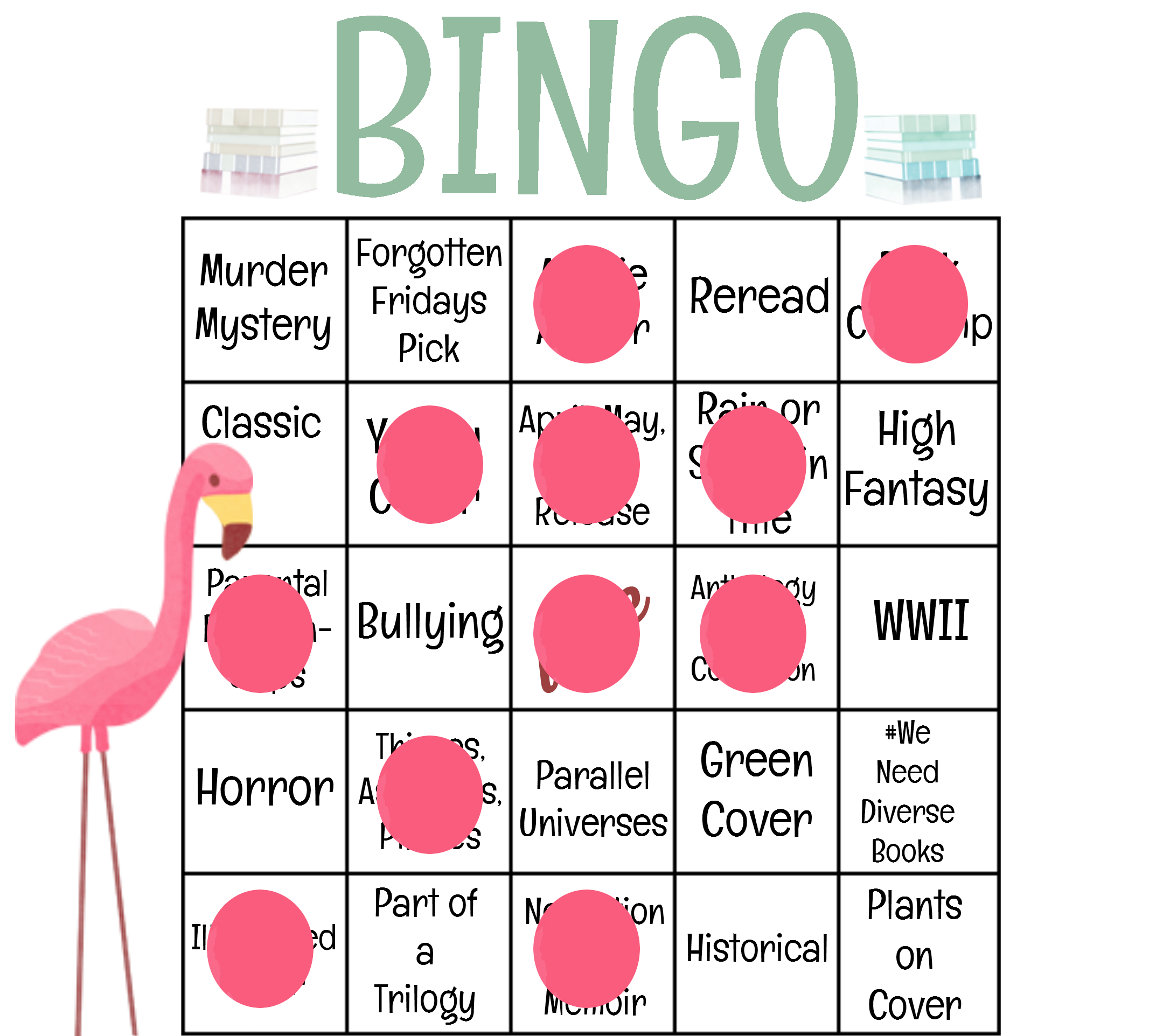
This challenge is Bookish Bingo hosted by the ladies at Great Imaginations and changes every three months. This board encompassed April, May, and June. When I participate starting next month, I’ll try to be more focused… or not… I knew I wouldn’t read all the books that I chose for the challenge, but it did a fair job with helping me clear some of these books out the way. I did mange to make BINGO diagonally with the following books.
 Dark Contemporary
Unravel by Calia Read
Tiara’s Rating: 2.5 of 5 stars – “Beautifully written for sure. Handled some very sensitive triggers in a way that didn’t make me completely rage. Still left me feeling a bit meh about it, though. HUGE TRIGGER WARNING ON THIS!”
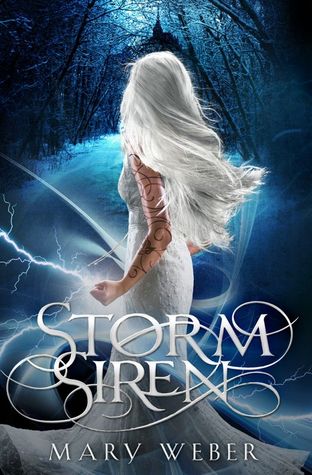 Rain or Storm in Title
Storm Siren by Mary Weber
Rating: 3 of 5 stars – “A story with a great premise and interesting story that was soured for me by the overwhelming romance portion of the story. My full review here!“
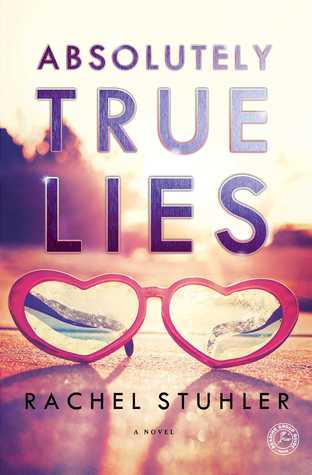 Freebie
Absolutely True Lies by Rachel Stuhler
Rating: 3.5 of 5 stars – “I found the main character very likable and the romance well enough until they introduced one element. The ending left me a little WTF about the story because it made it very convoluted and had me asking why would you go through ALL this? My full review here!”
 Thieves, Assassins, Pirates
Quicksilver by Neal Stephenson
Rating: 4 of 5 stars – “This was a very interesting science-fiction/historical fiction/alternate history read that featured characters like Isaac Newton, Benjamin Franklin, and Robert Hooke as their dabbling, and often feuding, in Natural Philosophy made way for the sciences we know today. A conflicted Puritan and Natural Philosopher is called back to England to help smooth things over with Newton and Gottfried Leibniz.”
 Illustrated Cover
The Cloud Roads by Martha Wells
Rating: 5 of 5 stars – “Excellent read! Highly recommended for people looking for something different in the fantasy genre, especially as far as the characters and societal mores are concerned. My full review here!“
June Audiobook Count
As you know (or didn’t know) June was Audiobook Month. Earlier in the month I wrote a post about it as well as my own history with audiobooks. Coinciding with Audiobook Month was our 2nd Quarter Update for the 2015 Audiobook Challenge. We also talked about some of the new narrators we discovered as a follow up to our original post about our favorite narrators. Also, Wendy interviewed one of our favorite narrators, Simon Vance. Finally, all my reads outside of the ARCs and some comics I read this month were audiobooks, and here’s my final tally. Overall tally for the challenge is 37. I might just make Marathoner for the Audiobook Challenge.



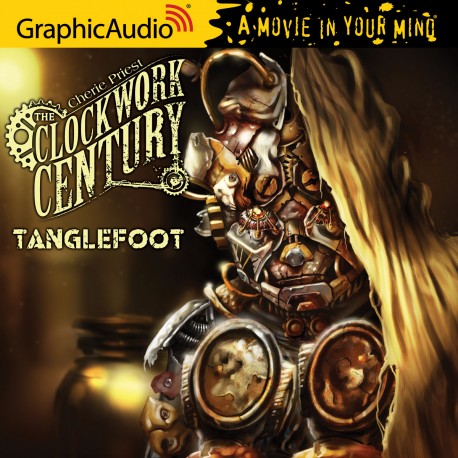
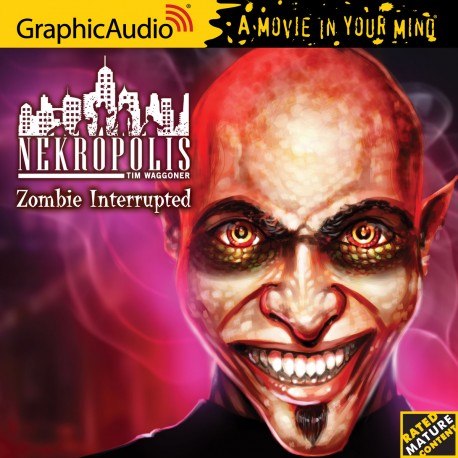
Non-Book Miscellany
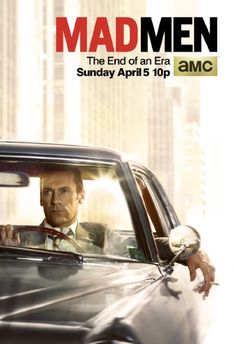
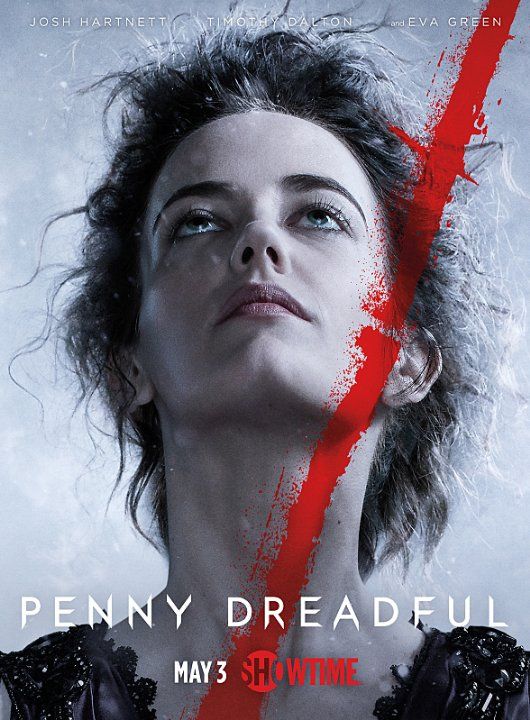
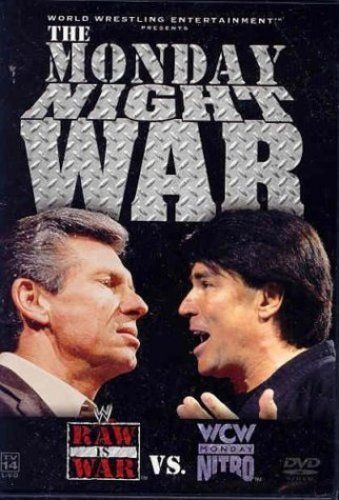
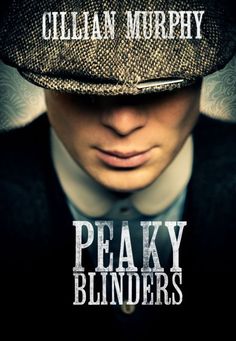
Believe it or not, after all these books (and my work-related project), I still had time to do some other things in my spare time that I enjoy. Music is a no brainer. I can pretty much listen to music any time while I’m reading, writing, whatever. I’m just starting S4 of Mad Men. My boss has been trying to get me to watch it for years. We’re super turbonerds in this house, so we like wrestling. I think The Monday Night Wars is one of the most interesting eras in wrestling, and that was the era I really started watching it (late-90’s/early-00’s). Peaky Blinders is a great underrated Netflix show centered around a crime family in 1920s Birmingham, England, starring Cillian Murphy. They’re called the Peaky Blinders because they keep razors stitched in their hats and go for the eyes when they use them. If you were a fan of Boardwalk Empire, as I was, then this will likely be satisfying as well. Coincidentally, Helen McCrory stars in both Peaky Blinders (Aunt Polly) and this season’s Penny Dreadful (Madame Kali). Lastly, I am slowly playing through The Witcher 3. It’s suffered a bit due to lack of attention because it’s sandwiched between reading, life, and my work stuff. I swear to God, I am going to learn to say “no” to ARCs. I’m almost there, Geralt. Just hold on I’m coming home.
Watching
Listening

Playing
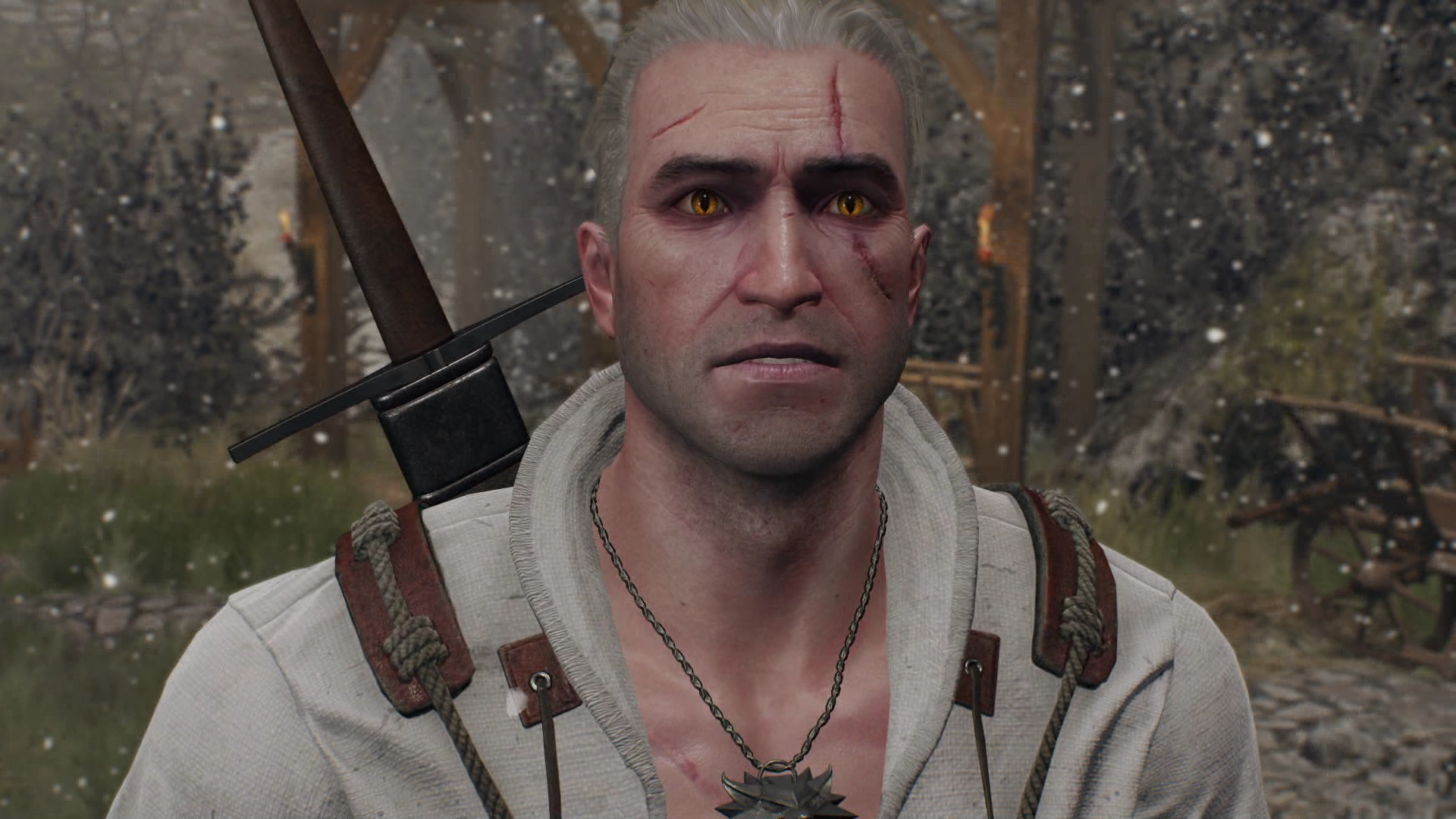
The Witcher 3 (PC)
Let’s see how the next month goes as the summer heats up and we start taking our family trips!



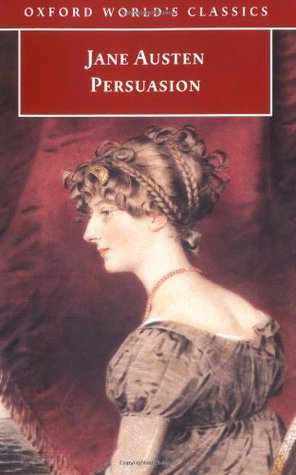
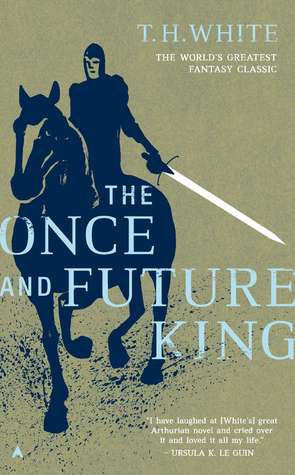
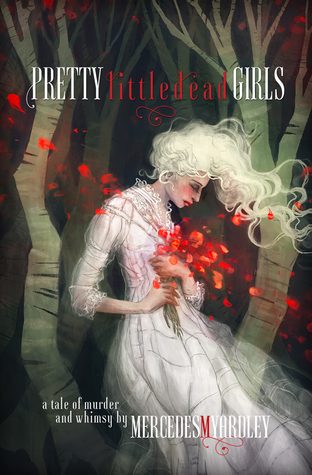
Nightlife Gets Bigger and Even More Frightening – An Interview with Author Matthew Quinn Martin
Posted on June 29, 2015 2 Comments
 For Halloween of 2013, author Matthew Quinn Martin introduced us to the little town of New Harbor and the very frightening world beneath it–read my co-review with Mogsy here, and our first interview with Matthew here!) Now, his NIGHTLIFE series is expanding to bring you NIGHTLIFE: HAZARDOUS MATERIAL, a novella that I reviewed here, and the full sequel NIGHTLIFE: AS THE WORM TURNS (all for the low, low price of $1.99!)
Matthew is back to chat with me about what’s in store for NIGHTLIFE, and what you can expect in the new book.


In the first book in your NIGHTLIFE saga, your aim was to make vampires scary again. You definitely achieved that! What was your horror-based goal with HAZARDOUS MATERIAL?
The aim with NIGHTLIFE was not just to make vampires scary, but to make them horrifying. To strip away all the post-Bram Stoker stuff and get to the root of a terror that shows up in the legends of nearly every culture on earth. I’ve talked at length about that (including on this site) and people can look that up if they like (and I hope they do).
As for HAZARDOUS MATERIAL…well, it’s a bit complicated. I’d originally written this as a short story. It featured a crude version of Agent Ross and an embryonic portrayal of The Division. Even then, I knew that Ross and The Division were too good to keep to just that story. So when I started work on NIGHTLIFE I pulled them into that universe.
My editor and I thought it might be fun to expand the original short story to novella length, bring it closer in line with the other NIGHTLIFE books and put it out there as a “sample” of my work. As for my horror-based goals…well a lot of my own fears are based in the most mundane concerns. “Will this next advance afford me time to finally write that breakout book?” “Will I be offered enough adjunct work to keep the pantry stocked?” “Will my fifteen-year-old car make it though another season?” And so on…
I think that sense of everyday dread resonates with a lot of readers in the current climate. The true horror of HAZARDOUS MATERIAL (I think) is that Jarrod’s existence is one of grinding monotony that he fears will lead to nothing, eventually, but the grave. Watching a character get killed by an ax-murderer might be thrilling, but it’s hollow. Watching the slow descent of an otherwise decent person who just made a wrong turn someplace…that’s the kind of horror that gets under my skin.
This is why Jarrod takes a gamble on the game. No one who isn’t desperate would ever haul back home an unknown video game cabinet that’s been sitting next to a wall riddled with bullet holes and graffiti scrawled by a spree killer 30 years ago. I mean that’s “just run out of the haunted house” kind of lunacy…but desperate people are driven to desperate measures––and a lot of times that comes at a serious cost.
HAZARDOUS MATERIAL features several news story pieces that are based on/hit very close to the reality of mass shootings that happen far too often these days. In fact, one of the book’s settings is a video game arcade that was the site of a mass shooting years before our protagonist, Jarrod Foster, finds it. Video games have always been strongly linked to mass shootings. What made you decide to make that link concrete in HAZARDOUS MATERIAL?
I don’t want to hop up on a soap box here…but every time a mass shooting happens, you see a lot of hair pulling and people pontificating about this and that, pointing fingers at stuff like violent video games, or rap music, or a million other things that have nothing to do with the real reasons.
Violent music, video games, movies, dystopian YA with teenagers killing each other––these are works of creativity. And I think the impetus to create these works, ultimately, is the same one that leads to mass shootings. We live in a world that seems to have take little issue solving its global (and corporate) problems with grand scale violence in the form of near endless wars, police actions, invasions, missile attacks, drone strikes, assassinations, crushing embargoes, and so on.
Is it any wonder then…especially when it comes to teens whose brains haven’t yet fully formed, or the mentally unbalanced…that if the most powerful countries on earth condone violent action to solve their problems and petty squabbles, some individuals might feel that that right extends to them on a personal level?
Now…of course the Polybius as I envisioned it in HAZARDOUS MATERIAL was an early experiment on the part of The Division to fight a greater threat to humanity that is still only being hinted at in the series. The mass shooting in the back story (as well as what happens with Jarrod) was never part of the plan.
When reading about the video game, Polybius, that appears in HAZARDOUS MATERIAL, I immediately thought about the game, I HAVE NO MOUTH AND I MUST SCREAM based on the Harlan Ellison short story collection of the same name. Any connection there?
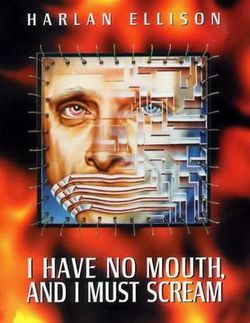 Truthfully, I hadn’t played the game until you mentioned it (then, I immediately looked it up, downloaded it and took it for a spin). Of course, I’ve read that story more than a few times over the years, first when I was about 15 (and I’m not going to tell you how long ago that was). It wasn’t my first introduction to Ellison (that would be STRANGE WINE), but it was one of those stories that really got inside me. It made me think, on more than one sleepless night, about what I would have done if I were stuck in the same situation as the characters AM is torturing.
I remember coming up with numerous scenarios about how I would have escaped AM’s clutches (even if it involved suicide…or some improbable Deus Ex Machina…but what do you want? I was 15!). What’s fantastic about the game is that it offers the player the opportunity to do just that––to play out escape scenarios no matter how futile they turn out to be.
The true horror in I HAVE NO MOUTH AND I MUST SCREAM, about the lack of control the characters have, the stripping of their autonomy. The game offers the player an illusion of this “free will,” and that is perhaps ever more hellish than what’s presented in the story. I wonder, if on some level, Ellison knew how his story would affect readers and as an added “F YOU!” decided to show them the futility of it all first hand. Or I could just be projecting. Either way, it’s genius. And like a lot of Ellison’s work…overlooked genius.
And while there is no direct link between HAZARDOUS MATERIAL and the I HAVE NO MOUTH AND I MUST SCREAM game. Ellison has always been one of the most important influences on my own work. It’s very rare to find a writer of weird fiction (…spec-fic, science fiction, speculative history, magic realism…you pick the term you think fits best), whose work doesn’t suffer with age. Ellison, like Frank Herbert, Walter M. Miller, Russell Hoban, and a handful of others, don’t have this problem. You can pick up one of their stories or novels (some of them almost half a century old now) and they read as fresh as the day the ink was pressed to page. This is a testament to the power of imaginative fiction that dares to go past the bounds of what’s expected of the genre.
The original NIGHTLIFE book was very small town, but with HAZARDOUS MATERIAL’s connection to the mysterious Division, the your supernatural world seems to have expanded into something much larger–and even more frightening than sewer dwelling vampires. Can you give us hints about just how far reaching the Division’s plans are?
I knew, even when I was writing NIGHTLIFE, that there had to be more to the story than just “guy haunted by his past teams up with plucky bartender to save city from underground bloodsuckers.” So I did my best to plant…well…landmines in that first book that may or may not explode in future episodes of the larger story.
I don’t want to give too much away…but The Division (as amoral as its aims may be), along its “on-the-ground-lieutenant” Agent Ross, might serve as the main antagonists in AS THE WORM TURNS, but ultimately there are far more sinister forces at work. Ross, as harsh as his methods might be, sees himself as someone working to save mankind (no matter the collateral damage). He’s sacrificed quite a bit of his own humanity to create the version of himself that we meet in AS THE WORM TURNS (and this is hinted at in HAZARDOUS MATERIAL), and in that respect, he and Jack share a lot in common.
How deep this all goes down the…ahem…”worm hole” is something that I hope to explore in further installments of the series.
The long awaited sequel to NIGHTLIFE, AS THE WORM TURNS, will be out on July 6th. In our previous interview, the worm was still turning in your head … can you give us a few more hints now about what to expect for monster hunter Jack and his new partner Beth?
Well…I would say prepare for something different. Like you mentioned about HAZARDOUS MATERIAL, the world is growing outside the bounds of New Harbor. The threats are bigger, the stakes are higher, the enemies more numerous. Alliances and allegiances shift. More of what’s been working “behind the curtain” is peeked at. And also expect changes for Jack and Beth…both as individuals and as partners.
DUN DUN DUN…..
Be sure to check out Matthew Quinn Martin’s NIGHTLIFE series, available as a complete set on July 6th! Thanks for taking the time to chat, Matthew!
Audiobook Review: The Galaxy Game by Karen Lord
Posted on June 28, 2015 15 Comments
A review copy was provided to me by the publisher in exchange for an honest review. All opinions are my own.
Genre: Science Fiction
Series: Book 2 of The Best of All Possible Worlds
Publisher: Audible (April 23, 2015)
Author Information: Website | Twitter
Mogsy’s Rating (Overall): 3 of 5 stars
Narrator: Robin Miles | Length: 11 hrs 12 min
For a long time I’ve wanted to read something by Karen Lord, so I was excited when I was given the opportunity to review the audiobook of The Galaxy Game. This latest novel by Lord sounded very promising, featuring a compelling blurb that teases a fascinating premise and hints at some action. Thus I admit I went into it with high expectations, but regretfully came out of the experience feeling rather underwhelmed.
I also feel that I should state that The Galaxy Game is a sequel, which I did not realize until I was about half way through the book. It probably would have eased some of the initial confusion, but I still don’t believe it’s entirely necessary to have read the first book The Best of all Possible Worlds before reading this because I was able to piece together a bit of what happened and follow the main story without too many problems. Plus, while it’s true I might have gotten more out of the story if I’d read book one, doing so still probably wouldn’t have negated some of my issues with this novel’s structure or stylistic choices.
In the book we’re introduced to Rafi Delarua, a teenager who is all but imprisoned in a place called the Lyceum which is a school for young people with psi powers. In a society that deeply mistrusts psionically gifted individuals, Rafi has to endure the education and various treatments designed to control those like him. It doesn’t help either that his father’s unethical use of his powers has left Rafi and his family a legacy of disgrace.
Rafi knows it would have been different if he had lived on the planet of Punartam, where psi abilities would be seen as the norm. So the first chance he gets, he escapes the Lyceum and makes his way there. Punartam also happens to be the home of wallrunning – his favorite sport. With the help of his friend, Rafi manages to find a way to not only play but also to train with the best players. Coming here didn’t mean the end of all his problems, however. There are new deals taking place, changes happening in the dynamics between civilizations in the galaxy. Learning how to integrate into a new society is challenging enough, but now Rafi finds out he will also have a role to play in the coming political storm.
It actually sounds more dramatic than it is. While I wouldn’t call this book dull, it did feel like a considerable amount of time was given to explanations of societal themes and classifications. Like I said, if I had read The Best of All Possible Worlds I might not have felt so lost, but regardless, I don’t typically mind putting in time to familiarize myself with a story’s setting. I didn’t even have a problem with the instances where I had to listen to a few sections of the audiobook over again to ensure I understood the significance of certain details. Lord has actually created a very unique and robust world here, which I really enjoyed. No, my struggles with this book had less to do with the deluge of information at the beginning (though it did make for a rough start) and more to do with the bizarre switches in narrative voice and points-of-view, as well as jumps in the plot.
In some ways, listening to the audiobook alleviated this problem. Narrator Robin Miles’ voice work is really impressive here, especially when it comes to her talent with accents. The result is that it didn’t matter how many times we switched POVs, Miles’ use of different voices made it immediately clear to me which character we were supposed to be following, saving me the time to figure it out. The convoluted plot, however, was another matter. This isn’t a light tale to begin with, and the exposition further weighs things down. The story also takes its time to get going, so some soldiering on is required to get to get to the part where it begins to find its stride, which is quite a bit to ask of readers (or listeners, in this case).
One final thing: I wish there had been more wallrunning. What we get in here does not make the sport sound as exciting as it should, also perhaps because it is so difficult to visualize what the players are doing. Rather than getting me pumped up, the action scenes instead made me feel bewildered and out of my depth.
All told, The Galaxy Game was not what I expected. In spite of a fascinating world, I wish there had been more substance to the characters and plot. Narrator Robin Miles did an excellent job, but even her fabulous performance could not resolve the flaws I found that were inherent to the story. However, I think I would have struggled even more with this book if I had read it in its print form. If I had known ahead of time that this was a sequel, I probably would have started with The Best of All Possible Worlds as my first Karen Lord book, and not least because it is book number one – it also appears that the consensus from those who have read both books is that The Galaxy Game was not as strong as its predecessor. When I read that one I will most likely seek out the audio version as well, especially since Robin Miles is also the narrator, and I expect the experience will be more positive.
Story:  | Performance:
  | Overall:
Further reading on The BiblioSanctum:
Wendy’s review of The Galaxy Game
Audiobook Review: The Element of Fire by Martha Wells
Posted on June 28, 2015 7 Comments
 Genre: Fantasy
Series: Book #1 of the Ile-Rien Series
Publisher: Self-Published (November 13, 2006)
Author Information: Website | Twitter
Tiara’s Rating: 3.5 of 5 stars
Goodreads | Amazon | Barnes & Noble
Narrator: Derek Perkins | Length: 14 hrs and 8 mins | Audiobook Publisher: Tantor Audio (September 16, 2013) | Whispersync Ready: Yes
The Element of Fire focuses on the royal family of Ile-Rien, which is ruled by the ineffectual King Roland who has some strange parasitic relationship with a sneaky cousin. Along with King Roland is his mother, the Dowager Queen Ravenna who is often thought ambitious and even ruthless, and the enigmatic Falaise, the king’s ignored wife. Last, we have Kade, Roland’s half-fay sister, the offspring of Roland’s father and a fayre woman known as the Queen of Air and Darkness, who reappears suddenly, leaving everyone wondering what she wants. In the middle of this family drama is Thomas Boniface, captain of the Queen’s Guard and former lover of Ravenna, tasked with finding a talented, dangerous sorcerer hiding in Ile-Rien named Urbain Grandier.
I’d probably rate this somewhere between 3 and 3.5 stars. In the beginning, this book was a ball of confusion for me. I said it started slow, but that’s not correct. How can a beginning that includes the Queen’s Guard literally being fought by a warded house be a slow start? Definitely not a slow start, but the particular moment left me feeling disoriented for a while. Things didn’t start becoming clearer until around page 50 or so. That’s when the book started to answer my question, “To what end?” While I saw a certain reveal coming, I was glad she didn’t let that drag out to the end. She introduced it about midway through the story, which gave the plot room to explore other things. Once things started to happen, this book built momentum, escalating fairly quickly by the time readers start nearing the middle of the book.
However, with the momentum came a few hiccups. There were too many instances of buildup for certain plot points and then, the denouement for these things didn’t deliver that satisfying sense of closure one expects, which can be frustrating. Some other things that were twined into the plot had a tendency to come off as “Oh my, what a coincidence!” moments, followed abruptly with, “Well, if that was the case, why didn’t they do/say/tell [insert scenario here] instead of nothing?” Some things seem to started to buildup to something interesting and then suddenly fizzle out.
I liked most of the main characters. Ravenna, Thomas, Grandier, and Kade really got to shine throughout the book. Grandier’s gray morality and “be the monster they made you” attitude was interesting. I loved Ravenna, especially the fact that, unlike other book nobility, Ravenna surrounded herself with gentlewomen and queen’s servants that she taught to be as scrupulous, resourceful, and quick-thinking as herself. Her servants were not fodder, and she was just as loyal to them as they were to her. Other characters felt a little weaker in their roles, such as the King and Queen, but they had some memorable moments as well.
I also liked that Wells’ magic system didn’t automatically make the fay overpowered. She stuck more to the mischievous, flighty, chaotic nature of them and their magic while sorcery was a more powerful tool as a learned art. Fay magic is quick and illusionary where sorcery takes years of training and dedication to master. The fay are afraid of this careful control of magic because a fay can only be so good whereas sorcery gives its users access to remarkable power. Kade toes the line of human and fay, using both fay magic and sorcery to her advantage. Kade wasn’t a magical genius, though, because she’s not a master of either magic, but both forms of magic gave her a varied arsenal of attacks, such as pulling glamour out of the air or using spellfire to light a candle.
This book was part fantasy, part mystery. I’m curious about the Seelie and Unseelie Courts and wonder if I’ll see more of them in future books. Derek Perkins was an engaging narrator and an excellent voice for this series, though I did find some of his voices a little too similar for some characters. His vocal characterization of both Ravenna and Kade were my favorites, but he did do well enough that I will continue to listen to the audiobooks. I loved the various little pieces of the puzzle coming together throughout the book, even if I felt the ultimate reveal was very dramatic against the more mellow tone of the story, especially considering how so many points had such underwhelming conclusions. I wasn’t as taken with this book as I was The Cloud Roads. The Cloud Roads feels like the type of book that I would use to introduce people to Wells’ work, but I had fun with this book all the same.
Story:  | Performance:
  | Overall:
YA Weekend: Alive by Scott Sigler
Posted on June 27, 2015 12 Comments

A review copy was provided to me by the publisher via NetGalley in exchange for an honest review. All opinions are my own.

Genre: Young Adult, Science Fiction
Series: Book 1 of The Generations Trilogy
Publisher: Del Rey (July 14, 2015)
Author Information: Website | Twitter
Mogsy’s Rating: 3.5 of 5 stars
I’ve been dreading the thought of writing this review for a while, because I know it’s going to be a doozy. For one thing, I just know I’m going to come off sounding way more negative about this book than I mean to – which just kills me because there’s actually a lot to like here. Sadly, I just can’t talk about any of it. None at all. Yes, you heard that right; most of the good stuff is spoiler territory, so you’re all just going to have to bear with me.
You know how everyone has been saying that the less you know about Alive before going in, the better? Listen to them; they’re absolutely right. The best part about reading this book was being wrapped up in the mystery, slowly gaining more answers the farther into the story you get. However, this does make for a pretty rough beginning, and a fair bit of patience and investment is required to get to the payoff.
First of all, the book starts off sounding like it was written by a twelve-year-old. However, I’m not sure if this even counts as a criticism. Yes, it was maddening, but at the same time also very appropriate. Alive is told through the eyes of a girl who wakes up on her twelfth birthday, but she has no recollection of who she is or what her life was like before she went to sleep. She finds herself in darkness, trapped in an enclosed space that feels disturbingly like a coffin. After breaking out, she realizes something feels seriously wrong. She is supposed to be twelve, but her body looks like it should belong to someone older, like a woman in her late teens or early twenties. She then finds a plaque engraved with her name at the foot of her coffin – M. Savage.
Dubbing herself “Em”, the girl looks around the room and sees it lined with dozens more coffins like hers, but only a handful of them contain other survivors. All of them look physically like young adults, but they also say the same thing as Em – today is their twelfth birthday, and none of them can remember how they ended up in their coffins. In the end, only six of them emerged; everyone else is dead and shriveled in their receptacles or lying on the ground in piles of bone and ash. Because she was the first to break out and wake the others, Em assumes the role of leader of their little group. Now she bears the responsibility of their survival, but they’ll first have to learn to trust each other and work together if they’re all going to make it out alive.
So, probably the most trying part of the book was the first hundred pages or so. It was a little like reading Lord of the Flies except we’re in a labyrinth-like setting and the characters are all pre-teens trapped in the bodies of Abercrombie & Fitch models. Em cannot seem to go five pages without remarking on how strikingly beautiful every one of her companions are, and as a leader she keeps making one terrible decision after another. Like I said, mentally Em is only twelve years old. I’m still not sure how to judge her language, thoughts and actions when they are probably consistent with what the author thinks a tween girl should sound like. Still, I think the writing style will be the biggest hurdle for some readers, since Em also strikes me as an especially petulant and somewhat naïve child with her constant obsession to be in charge.
In spite of it all, the book grew on me. After the midway point, the story gets substantially better as we find out more about the survivors’ situation. I can’t say more without giving too much away though, which is always every book reviewer’s quandary (I’m ever striving to keep my reviews spoiler-free anyway, but in this case Scott Sigler even has a whole afterword imploring readers not to spoil anything via the internet, so I’ll take extra precautions and simply avoid talking anymore about the plot). Suffice to say, in time we do get enough information to piece together some answers. And it ends up being pretty cool.
I discovered afterward that Alive is apparently part of a series called the Generations trilogy. Even so, it could work as a self-contained novel. In light of everything that happened in this book though, I don’t think I can bring myself to stop with just one. I’m very curious to find out what will happen next, so I will most definitely pick up the sequel.


 The BiblioSanctum