YA Weekend: Soundless by Richelle Mead
Posted on October 25, 2015 25 Comments

A review copy was provided by the publisher in exchange for an honest review. All opinions are my own.
Genre: Young Adult, Fantasy
Series: Stand Alone
Publisher: Razorbill (11/10/15)
Author Information: Website | Twitter
Mogsy’s Rating: 2.5 of 5 stars
I’m glad I took a couple days to sit on my thoughts before writing this review, because not gonna lie, my initial impressions upon finishing Soundless were really negative. But now that I’ve had some time to really think about it with a clear head, I realize with a bit of grudging respect that I probably enjoyed it more than I thought. Sure, the book had its issues, but in spite of it all, it was a fun, sweet, and cute story. Sometimes you just can’t ask for much more than that. However, it just didn’t feel like a lot of thought was put into it, which left me extremely disappointed. It was like Richelle Mead started off with this amazingly great idea, but instead of working out from that, she opted instead to fill in the gaps with predictable plot elements and other timeworn trends.
First, the obligatory rundown of the book’s story sans spoilers in order to provide a frame of reference for some of my comments below. Soundless is set in a fantasy world “steeped in Chinese folklore”, featuring the tale of a girl named Fei who lives in a village where everyone has been deaf for generations. Long ago, their community on top of a mountain was cut off by a rockslide, leaving the people no way to farm for food. Instead, they mine the precious metals in the caves, which they then use to trade for goods with another kingdom in the lowlands via a zipline.
Mining therefore is a very important job in Fei’s village. Fei herself came from a family of miners until she and her sister Zhang Jing were able to rise above their station and become artists, tasked to write and illustrate each day’s events since this is the only way everyone in this soundless village can receive news. However, recently more and more villagers have started going blind. As less people are able to mine, they are unable to trade as much for food, and the entire village faces the threat of starvation. Then something horrible happens. Zhang Jing beings to lose her sight, spurring Fei to desperately search for a solution. The answer may come in the form of Li Wei, her friend who has decided to solve the village’s problems by taking matters into his own hands.
I was only thirty pages into this book and things were already starting to feel like déjà vu. A poor dystopic community where the only industry is mining. A girl forced to take drastic measures to save her sister. A place where people are pigeonholed into one of only a handful of vocational categories. In this case, Fei’s village is divided into two classes of people: Miners and Artists. What is up with the Young Adult genre and some of their strange dichotomies? Who do people go to when they get sick in this village? What do they do when a building needs fixing? Apparently you’d be out of luck, because there are only miners and artists, and possibly a serving class, but if you’re in need of a skilled trade, sorry, no help for you.
Also, it’s an interesting world, I have to give it that. But I still have a hard time buying into some of its circumstances. Even with the risk of avalanches, desperate people are going to be desperate people whether they can hear or not; the idea of a starving population impotently staying put where they are for generations while relying on a mysterious faraway kingdom as their only means of survival is just a little too convenient for my tastes. Also, why the hell would the people whose work required the most energy be getting the least amount of sustenance, while artists get to sit around in their pavilions painting all day and yet still get to eat better than the miners? Plus, you already have eight-year-olds working in the mine. Clearly, if the situation is so dire that children have to be subjected to those conditions, then seriously, every able-bodied person should be in that mine, digging their asses off. Have some artistic talent, do you? Too bad, everyone’s starving! Nobody will be giving a crap about the quality of art in their daily news.
Another thing, just because you throw in a couple Chinese sounding names and make a few mentions of chrysanthemums does not a story “steeped in Chinese folklore” make. Though, I did like how the author included the pixiu and incorporated their myth into the plot. However, “steeped” is probably still too generous a word. In reality, the amount of Chinese folklore and culture in this is actually quite insubstantial.
To be fair, I’m not completely panning this book because I did say there were a few redeeming factors. For once, I actually enjoyed the romance. It’s super sweet, mostly because you know Fei and Li Wei are meant to be together. I’m not really into shipping and getting hung up on stuff like which girl is going to end up with which guy (mostly because this usually involves infuriating love triangles) so a simple and straightforward love story suited me just fine.
And like I said, in spite of some of the problems I mentioned above, this book was still fun to read. It’s a cute little story, relatively short since I was able to blow through it in about one evening. It’s not complicated. I like the idea of a soundless village, and the people all communicating using sign language. The author cleverly conveys what a world might be like through the eyes of character who was born without the ability to hear, surrounded by others who are the same. It’s a brilliant premise, actually. Just a shame that it’s paired with such a humdrum plot.
This is the first book I’ve read by Richelle Mead, and in retrospect I probably should have started out with one of her established series. I just couldn’t help but to be drawn to Soundless though, by that gorgeous cover and intriguing description. Regretfully, the book felt rushed and didn’t reach its potential, but it had a couple high points and at least it was a very quick read.

Mogsy’s Bookshelf Roundup: Stacking the Shelves and Recent Reads
Posted on October 24, 2015 30 Comments
Bookshelf Roundup is a feature I do every other weekend which fills the role of several blog memes, like Stacking the Shelves where I talk about the new books I’ve added to my library or received for review, as well as It’s Monday! What Are You Reading? where I round up what I’ve read since the last update and what I’m planning to read soon. Mostly it serves as a recap post so sometimes I’ll also throw in stuff like reading challenge progress reports, book lists, and other random bookish thoughts or announcements.
* * *
Here are the new books added to my shelves this past fortnight. Thank you to all the wonderful publishers and authors who sent me review copies! I also broke down and did some shopping. Isn’t it crazy how books just seem to, like, jump into your shopping cart of their own accord, or miraculously appear in your home? IT CAN’T BE EXPLAINED!
RECEIVED FOR REVIEW:

Barsk: The Elephants’ Graveyard by Lawrence M. Schoen – My thanks to Tor for this ARC and for inviting me to take part in the blog tour happening in December. So be sure to keep an eye out for my review and a giveaway this winter!
The Alchemy of Chaos by Marshall Ryan Maresca – A surprise ARC in the mail, but a really good surprise! I’m loving the author’s books set in the world of Maradaine, so I can’t wait to read this next one, though the cover is a bit too…magenta? Thanks, DAW!
The Geomancer by Clay Griffith and Susan Griffith – A beautiful finished copy showed up this week, courtesy of Pyr. It looks so great next to my other Vampire Empire books! My review of this book will go live soon along with an international giveaway, so stay tuned.
Linesman by S.K. Dunstall – Audiobook CDs, with thanks to Recorded Books. This was a book I really wanted to check out this summer, so I’m thrilled at this opportunity to review the audio.
Chains of the Heretic by Jeff Salyards – Grimdark and military fantasy fans, if you haven’t read the books of the Bloodsounder’s Arc yet, I urge you to check it out. This it the third book, and I’M SO PUMPED FOR IT! Thank you to Night Shade Books for the ARC!
Shadows of Self by Brandon Sanderson and Air and Darkness by David Drake – These two surprises arrived from the good folks at Tor this week, a finished copy of Sanderson’s latest as well as the fourth book of David Drake’s Books of the Elements series (though I hear it can be read as a stand alone, which is great!)
In Constant Fear by Peter Liney – Thank you Jo Fletcher Books for sending me book three of The Detainee dystopian trilogy. Apparently it’ll be a movie soon, with speculation that it’ll be like The Hunger Games for adults (by the way, most of the main characters in this book are 65+…I’ve always kinda pictured protagonist Clancy as Clint Eastwood in my head). And ha, what’s up with the covers this week and the color magenta?

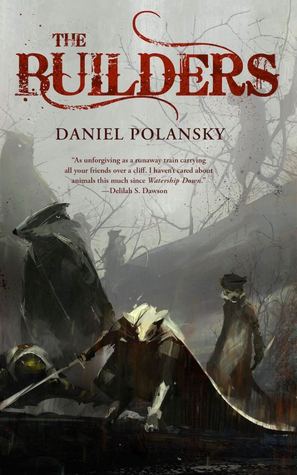
Skinner Luce by Patricia Ward – I was actually contacted earlier this month by the publicist asking if I’d received this book yet in the mail. It never made it for whatever reason, but when I told the publicist this she made sure to zip this eARC over straight away! My thanks to Talos/Skyhorse and their awesome team. This urban fantasy looks great, and I’m loving that cover.
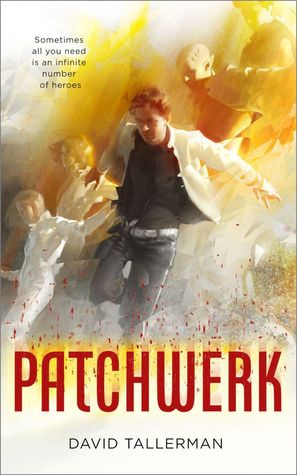
The Drowning Eyes by Emily Foster and Patchwerk by David Tallerman – Tor.com isn’t slowing down at all with their new novellas; in fact they’re just getting started. I’m grateful to them for sending e-galleys of these two highly anticipated January releases.
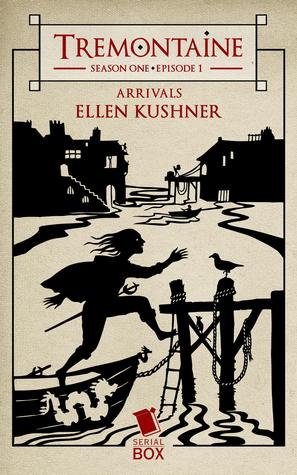
Tremontaine Episode 1: Arrivals by Ellen Kushner – If you like serials, you gotta check out Serial Box – they were kind enough to send over this digital advanced copy of the first episode of their second series, Tremontaine, which looks crazy good!
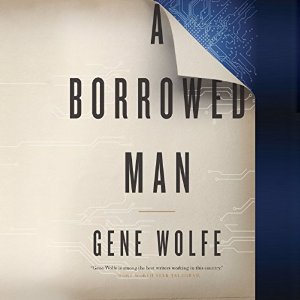
The Flux by Ferrett Steinmetz and A Borrowed Man by Gene Wolfe – Thank you to Audible Studios for these review copies. No way I’m missing out on The Flux after how much I adored the first book, and A Borrowed Man is a perfect clone story for SciFiMonth.
The Unfortunate Decisions of Dahlia Moss by Max Wirestone – Audiobook review copy courtesy of Hachette Audio. What can I say, I’m a sucker for geeky books and I just couldn’t resist the mention of MMORPGs in the description. It’s a Pavlovian reflex at this point.
GIVEAWAY WINS/PURCHASED:
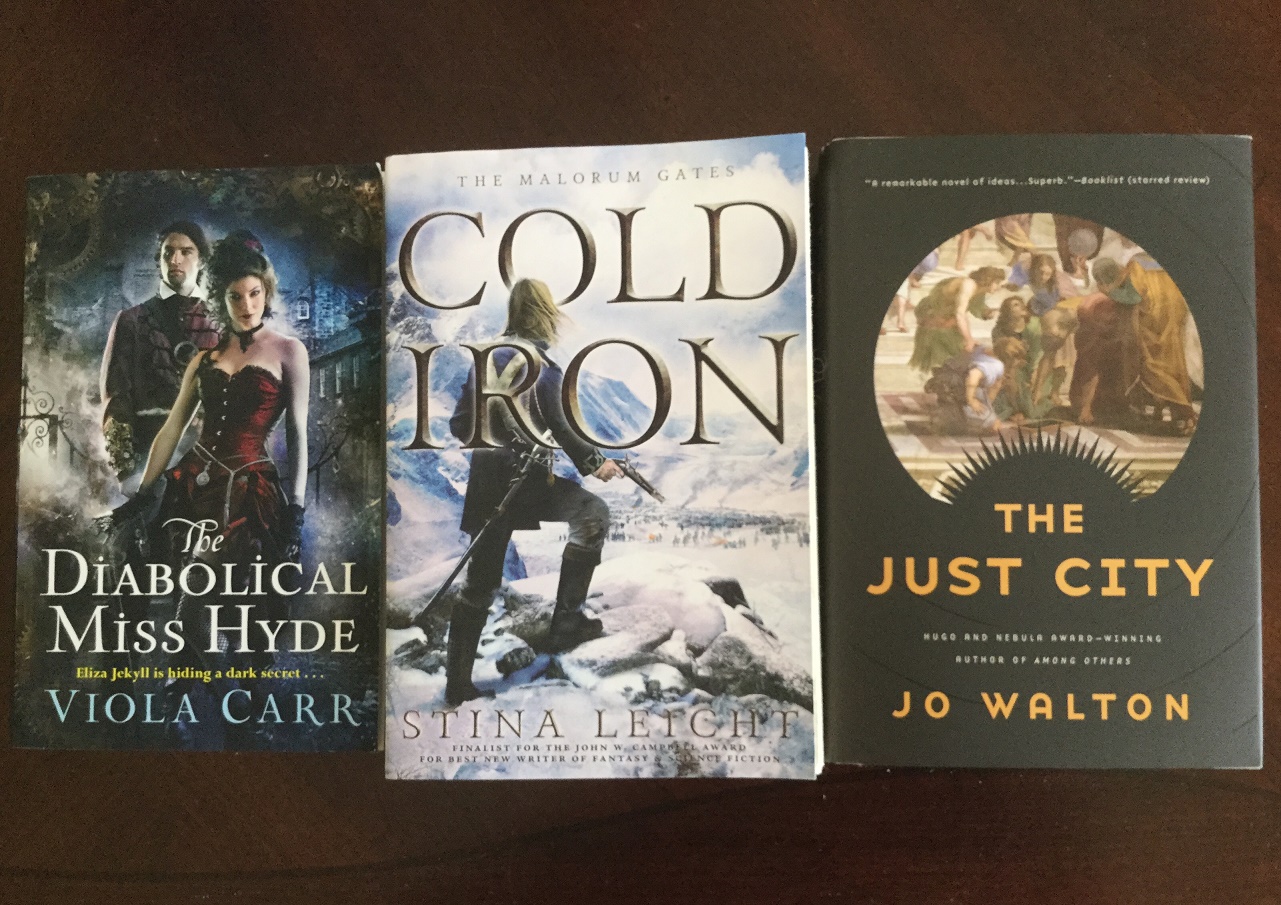



The Diabolical Miss Hyde by Viola Carr – I won this from a giveaway earlier this year hosted by Melliane from Between Dreams and Reality. So happy when it turned up this week, I’ve been wanting to check this book out for a long time!
Cold Iron by Stina Leicht and The Just City by Jo Walton – I could not resist a couple purchases from Book Outlet (I had a coupon! You can’t ever NOT use a coupon for books! Think of the children!) They only had a few copies of both left for cheaps, so I snapped them up. Cold Iron has been on my TBR for a while, but The Just City I just had to check out after all the rave reviews I saw for it this year.
A Thousand Pieces of You by Claudia Gray and City of Savages by Lee Kelly – I found a lot of great ebook deals this month too, anywhere from $1-3 a pop. I confess these weren’t the only two I picked up, but honestly it’d be too appalling to feature everything here. Saga Press has a handful of titles on sale so I picked up City of Savages, and I also grabbed the deal for A Thousand Pieces of You because I just finished Claudia Gray’s Star Wars book and OMG it was amazing. Whoever said that readers don’t tend to follow media tie-in authors to their other work, they don’t know me.
The Death of Dulgath by Michael J. Sullivan – Kickstarter reward, WAHOO! I backed at the trade paperback tier, but it’s nice to be able to get an early digital copy.
The Long Way to a Small Angry Planet by Becky Chambers – I got this book to prepare for a special SciFiMonth read-along in November, organized by Over the Effing Rainbow. If you’re interested in joining, hop on over there to find out more. I’m excited about this one, I’ve heard a lot of amazing things. Like, A LOT.
REVIEWS:
Here are the reviews I’ve written and posted since the last update, gathered together and listed here for your convenience and viewing pleasure. It was a great fortnight, all four stars and above.
Walk on Earth a Stranger by Rae Carson (5 of 5 stars)
The Traitor Baru Cormorant by Seth Dickinson (4.5 of 5 stars)
Beyond Redemption by Michael R. Fletcher (4.5 of 5 stars)
Thorn Jack by Katherine Harbour (4 of 5 stars)
The Kingmakers by Clay Griffith and Susan Griffith (4 of 5 stars)
Ancillary Mercy by Ann Leckie (4 of 5 stars)
Envy of Angels by Matt Wallace (4 of 5 stars)
Six of Crows by Leigh Bardugo (4 of 5 stars)
Our Lady of the Ice by Cassandra Rose Clarke (4 of 5 stars)
AUTHOR SPOTLIGHTS:
My thanks to the wonderful authors who stopped by these last couple of weeks and took their time to speak with me!
Guest Post: “Girls & Dragons” by Katherine Harbour
Guest Post: “Tough Traveling: The Good Thief” by Kristi Charish
WHAT I’VE READ SINCE THE LAST UPDATE:
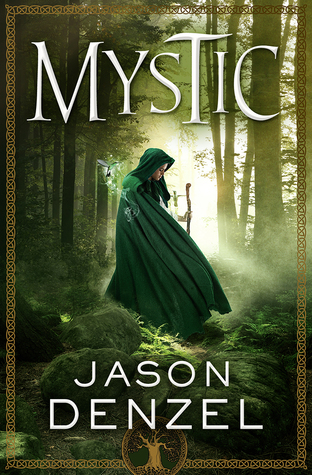
I came down with a cold earlier this week. Again. But reading-wise, these last couple of weeks have been pretty great. For the most part, I had a good time with the books you see below; four of them I even rated above 4 stars, which has got to be some sort of record for the year. Because of my illness, I was reading more but writing less, so I’m still falling behind on reviews, but they’re coming.


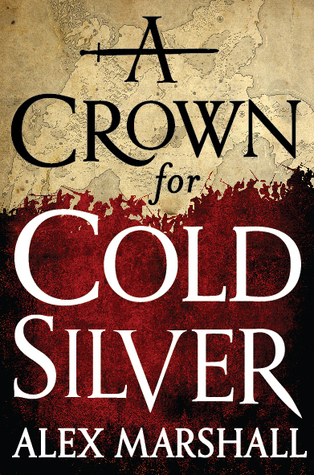
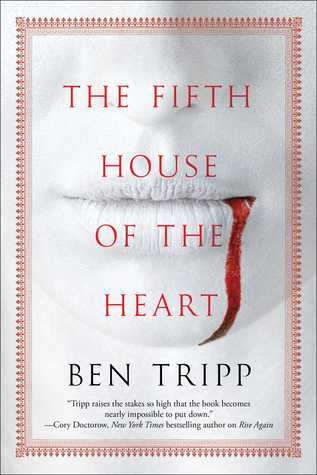
* * *
Have you heard of or read any of the books featured this week? What caught your eye? Any new discoveries? Nothing makes me happier than sharing my love for books, so let me know what you plan on checking out. I hope you found something interesting for a future read! Until next time, see you next Roundup! 🙂
~Mogsy/Steff~
Book Review: Beyond Redemption by Michael R. Fletcher
Posted on October 23, 2015 27 Comments
A review copy was provided by the publisher in exchange for an honest review. All opinions are my own.
Beyond Redemption by Michael R. Fletcher
Genre: Fantasy
Series: Book 1 of Manifest Delusions
Publisher: Harper Voyager (6/16/15)
Author Information: Website | Twitter
Mogsy’s Rating: 4.5 of 5 stars
Would it make sense to call a book “grimdarker than grimdark”? This question was the second thought that crossed my mind as I pensively closed the cover on the final page of my copy of Beyond Redemption. It followed right on the heels of my first thought, which was “Damn, that shit was a hundred different kinds of awesome.”
Grimdark, after all, is a term frequently used to describe fantasy fiction with mostly dystopic, brutal or violent themes. Very often it also features characters that are amoral or dishonorable. All of this applies to this novel, which most certainly is nihilistic and violent—viciously and disturbingly so. It’s also aptly titled, seeing as no one in this story is in possession of a single redeeming attribute. They are all terrible, disgusting people. No joke, I could strip these characters down to their infinitesimal building blocks in order to examine each and every single atom under an electron microscope, and I still wouldn’t be able to find the smallest trace of goodness in any of them. It’s quite amazing, really.
Gods help me then, why did I enjoy them so much? Perhaps one has to be a little bit crazy to revel in reading about dark, gritty and twisted characters such as these. In which case, can you please pass me some more of that sweet, sweet insanity?
Fortunately, Michael R. Fletcher is happy to oblige. The world he gives us is literally steeped in chaos, madness, and delusion. In Beyond Redemption, individuals known as Geisteskranken are the unstable and insane individuals whose psychoses manifest as reality. Furthermore, under normal circumstances their powers are also shaped by collective beliefs, so the more people who believe in your delusion, the more those ideas become the truth.
Let’s just take a moment to digest this, shall we? You’re essentially being thrown into a world where the “magic” is delusion, and all your magicians are batshit insane. Come on, doesn’t that sound positively delightful!
Not to mention, there are just so many types of Geisteskranken. Rarely do I recommend this, but in the case of this book, it might actually be helpful to check out the glossary of all the different kinds of delusions described in the back before you start reading. It’s an impressive list, each one more frightening than the last. Hassebrands, for example, like to set fire to everything as an outlet for their repressed rage and loneliness. Therianthropes, on the other hand, think they are possessed by animal spirits, and are able to shapeshift into these creatures simply because they believe they can. But perhaps the most nefarious of all are the Gefahrgeists, sociopaths who are driven by their desperate desire to be at the center of attention and to rule over others.
And heaven forfend if you happen to be one of those Geisteskranken who are comorbidic, a person who manifests multiple delusions. These men and women tend to be even more unhinged, as mental instability often goes hand in hand with comorbidity. In Beyond Redemption, High Priest Konig Furimmer is one such individual, a twisted madman who seeks to forge order from the fiery chaos around him. Konig’s plans involve creating a god – a god his church can control. An innocent and sheltered young boy named Morgen is being groomed for the honor, to be killed once it is determined that he is ready to Ascend.
But before his Ascension could come to pass, Morgen is stolen away by three wretched thieves: Bedeckt the old cantankerous warrior, Stehlen the bloodthirsty kleptomaniac woman, and Wichtig the pompous Gefahrgeist who fancies himself the Greatest Swordsman in the World. Konig has no choice but to send the most dastardly of his Geisteskranken after the trio of brazen miscreants, hoping to salvage his plans before Morgen is forever corrupted. Anything can happen in this wild, dark tale of cat and mouse, but one thing is guaranteed – there’ll be a body count numbering in the hundreds and a whole lot more blood and guts spilled before this is done.
If you think a book like this sounds too crazy and ludicrous to pull off, I don’t blame you. The thing is though, it works. It really does. Declaring the protagonists as flawed might be the understatement of the century, but I was nevertheless fascinated by their delusions and eccentricities. You might find yourself wanting to root for them, even if you hate yourself a little for it. They are all so vile and depraved, and yet I cannot deny this was one of the most fantastic and unique cast of characters I’ve ever met.
It’s impossible not to get completely sucked into this story. Not that I wanted to fight the pull, mind you. Beyond Redemption is so wildly imaginative and intensely entertaining, you just can’t help but embrace its bleak world, the tortured characters, the wicked concepts. Giving in to the madness has never felt so good.

Guest Post: “Tough Traveling: The Good Thief” by Kristi Charish + Owl Series Giveaway!
Posted on October 22, 2015 27 Comments


***The giveaway is now over, thank you to everyone who entered!***
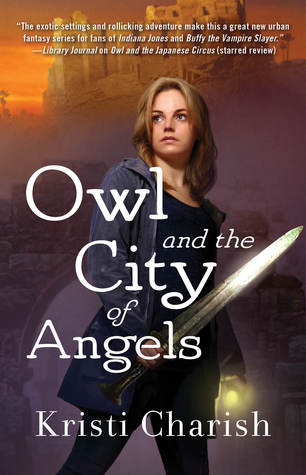
Today the BiblioSanctum is pleased to bring you all a very special edition of Tough Traveling, written by none other than Kristi Charish, author of the Adventures of Owl series about a plucky ex-archaeology grad student turned international antiquities thief. As the creator of this kick-ass modern “Indiana Jane” character, you can no doubt see why we thought Kristi would be the perfect guest to invite on our blog to offer her expertise, given today’s featured theme!
This week’s topic: The Good Thief
Sure they may pocket things that don’t belong to them. And yes, anything that can be wiggled loose isn’t really locked down and may be fair game to them. And if they put half of their intelligence into legit trades instead of long cons they would probably be pillars of fantasyland’s community. But damn it, some thieves are still good people.
* * *
TOUGH TRAVELING: THE GOOD THIEF
by Kristi Charish

The Likeable Thief
Han Solo (Star Wars), Indiana Jones, Rick O’Connell (The Mummy), and Malcolm (Mal) Reynolds (Firefly/Serenity) are some of my favorite characters of all time. And they all have one thing in common… Well, a few things in common actually but they all culminate under one umbrella. All four are thieves of some sort- and we love them for it.

Why is that? I mean, they’re thieves. In the real world there’s a good chance we’d think these guys were the bad guys – and don’t even start with Indiana Jones being an archaeologist not a thief. Just because he’s stealing for a museum doesn’t mean it isn’t stealing – but more on that in a bit. The point is they’re not the good guys – often by their own admission, but we love them anyways. And it’s not all by accident. These rogues are designed to play to our hearts so we overlook their thieving origins and focus on the person behind the heists. Call it what you will: charisma, irresistible adventure, catchy dialogue, a good heart; but regardless of why, we’re drawn to these characters. And, much like their rogue heartbreakers, the writers behind them have some tricks up their sleeves to help them steal our hearts. And here are a few of the big ones.
The Noble Rogue
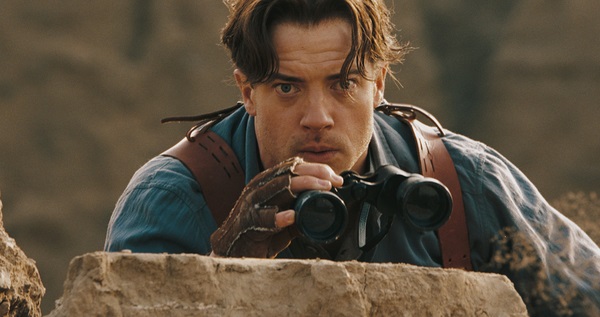
Han Solo/Rick O’Connell (The Mummy)
Han and Rick are not upstanding citizens by any stretch of the imagination. Rick is an ex-mercenary looking for treasure who happens to be stuck in an Egyptian jail for not entirely clear reasons (he was looking for a good time) when the rest of his troupe meets him, and Han is a notorious smuggler known to screw over the odd interplanetary crime lord and shoot first, ask questions later. In fact, they both tend to shoot first ask questions later. So why do we like these career criminals? Because during the course of the story they apply themselves and their questionable talents to a good cause. We’re suckers for a rogue with a good heart who tries to save the world. Both these characters put themselves at risk for altruistic reasons. And we love them for it. It’s the thief with the heart of gold who saves the world. When they set out to save all of us, we can forgive them the odd misplaced artifact or space craft…heck, you could consider it rewards well deserved…
Note we’re also more likely to make excuses for their less than stellar choices…
We Don’t Mind Who You’re Stealing From

Indiana Jones
First of, Indy is absolutely a thief. He takes artifacts from their rightful resting places (and often the cultures who sometimes still worship them) to stick in a museum. Now that that’s out of the way, Indy is also a great example of this trick. He’s not always involved in a good cause and when he does engage the bad guys (ie: The Nazis) it’s more coincidence than anything else. No, at the end of the day we don’t mind the fact that Indy is stealing artifacts because we really don’t like the people he’s stealing from. It’s a great example of giving the bad guys a low blow.
Don’t believe me? Imagine if an artifact Indy wanted for the museum happened to be held by a cloister of nuns who took care of orphans? Or what about a small family living in a village in Tibet who happened to be holding a family heirloom Indy wanted? Indy isn’t nearly as awesome when you picture him B&E a small hut while the family huddles in the corner. Taking the Ark from the Nazis is one thing, but stealing from nuns and orphans…
Keeping Good Company

Malcolm Reynolds (Firefly)
You we’re not so sure about but boy do we ever love your friends. Think back to Firefly. I’ll be honest, Malcolm had some great one-liners but he took some time for me to warm up to. I actually warmed up to Jayne first (Note to writers: If you’re going to have a real bad guy make him honest about it. Readers forgive murder easier than manipulation – seriously).
How did I warm up to Mal? River Tam. More times than I can count Mal put himself and his crew in danger to keep River, a severely psychologically damaged and dangerous teenage girl, safe. And she’s not easy to live with. The fact that Mal can care for someone who is at such a disadvantage makes me like him. Then there is Mal’s crew. With the exception of Jayne they’re all redeemable people who are loyal to Mal. We forgive the captain some of his more mercenary decisions (like stealing from small towns, etc.) in part because the government (Alliance) is shone in a very bad light, but also because we see Mal’s best characteristics through his crew. They’re the ones who shine a great light on him because they put their faith in him and show us why we should like him too.
Plus, there really are some great one-liners…
Last Point: It’s a Man’s World
So up to this point I’ve left something rather important out. The likeable, female rogue – which is an odd omission because that’s what I write (or attempt to ;-)). I’m not going to lie to you. As soon as you switch the rogue gender to female you will have a whole bunch of challenges to deal with that the boys never see. Why? Because in our society there is still the pervasive expectation that women should be ‘good’ and ‘likeable’ in a very particular way that is almost never expected of men. It’s a leftover from a time when women were meant to stay at home, be feminine and delicate, take care of children, and for the love of god, don’t give them the vote! It’s a fading sentiment but it’s barely been a hundred years since women began fighting in earnest for equality in the world and old traditions and expectations die hard. Often in readers the expectations are subconscious but that doesn’t mean they aren’t there.
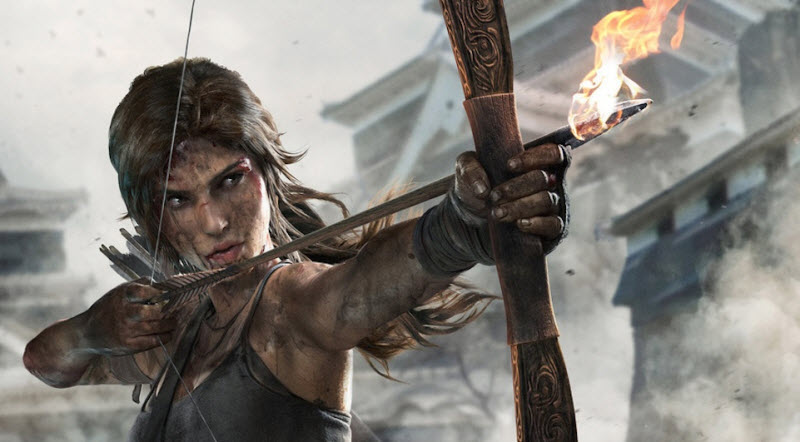
The role of the good thief has traditionally been a man’s path, and people don’t always know how to interpret it when a woman jumps into the role. Look at Tomb Raider. Lara is about as independent and self-sufficient as they get. She’s the tomb raider, and men work for her, not the other way around. Heck she saves men in the movie! But one of the things people have never been able to get their eyes over is her sexual prowess. Lara Croft is a woman who is comfortable with her sexuality and that makes people nervous. And why does her sexuality and physical attractiveness need to be such a focus? And is the audience more forgiving of Lara as a female rogue because she’s physically attractive (so therefore she’s filling one aspect of the traditional female mold – objectification) or because she’s stealing from the bad guys, has friends we like who put their trust in her, and joins a good cause – saving the world? The main crack against Lara seems to revolve around the fact that she’s a woman and isn’t fitting a stereotypical ‘good’ or ‘likeable’ female mold.
I think that really sucks. It’s also changing, but it’s still there and it still sucks. And I think that’s one of the reason it’s so important to continue writing female rogues. You can’t break a mold without challenging the hell out of it.
So there you have it. The likeable rogue and some of the tricks writers use to make you fall for them. At the end of the day remember – everyone loves a good thief.
* * *
ABOUT THE AUTHOR
 Kristi is the author of OWL AND THE JAPANESE CIRCUS, an urban fantasy about a modern-day “Indiana Jane” who reluctantly navigates the hidden supernatural world. She writes what she loves; adventure heavy stories featuring strong, savvy female protagonists, pop culture, and the occasional RPG fantasy game thrown in the mix. The second installment in the Owl series, OWL AND THE CITY OF ANGELS, is scheduled for release Oct 5th 2015, and the third and fourth installments, OWL AND THE ELECTRIC SAMURAI, and OWL AND THE TIGER THIEVES, will be released in 2016 and 2017. THE VOODOO KILLINGS, book 1 in her second urban fantasy series, KINCAID STRANGE (Random House Canada), about a voodoo practitioner living in Seattle, is out May 10th, 2016.
Kristi is also the Canadian co-hosting half of the Adventures in Sci-Fi Publishing Podcast and has a PhD in Zoology from the University of British Columbia. She is represented by Carolyn Forde at Westwood Creative Artists.
Twitter | Facebook | Website | AISFP Podcast
Waiting on Wednesday 10/21/15
Posted on October 21, 2015 18 Comments

“Waiting On Wednesday” is a weekly meme hosted by Breaking the Spine that lets us feature upcoming releases that we can’t wait to get our hands on!
Mogsy’s Pick:
Bands of Mourning by Brandon Sanderson: January 26, 2016 (Tor)
This book has actually been on my anticipated list for a long time, but as a general rule I try not to feature sequels in my Waiting on Wednesdays if I haven’t caught up with the series yet (otherwise, my TBR would be even longer!) So I’ve been meaning to feature this one for a while. With Shadows of Self read and reviewed earlier this fall, it’s so great to finally shout it to the world just how much I’m looking forward to another Wax and Wayne Mistborn adventure!
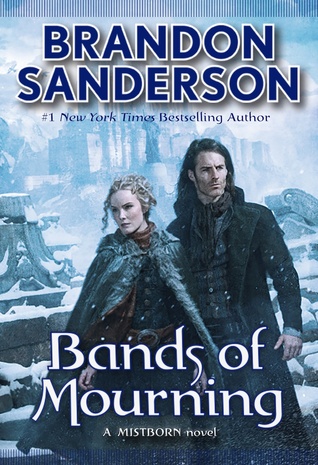 “With The Alloy of Law and Shadows of Self, Brandon Sanderson surprised readers with a New York Times bestselling spinoff of his Mistborn books, set after the action of the trilogy, in a period corresponding to late 19th-century America.
Now, with The Bands of Mourning, Sanderson continues the story. The Bands of Mourning are the mythical metalminds owned by the Lord Ruler, said to grant anyone who wears them the powers that the Lord Ruler had at his command. Hardly anyone thinks they really exist. A kandra researcher has returned to Elendel with images that seem to depict the Bands, as well as writings in a language that no one can read. Waxillium Ladrian is recruited to travel south to the city of New Seran to investigate. Along the way he discovers hints that point to the true goals of his uncle Edwarn and the shadowy organization known as The Set.”
Book Review: The Traitor Baru Cormorant by Seth Dickinson
Posted on October 20, 2015 33 Comments
A review copy was provided by the publisher in exchange for an honest review. All opinions are my own.
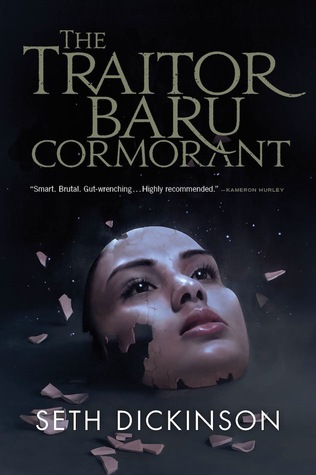 The Traitor Baru Cormorant by Seth Dickinson
Genre: Fantasy
Series: Stand Alone/Book 1
Publisher: Tor (9/15/15)
Author Information: Website | Twitter
Mogsy’s Rating: 4.5 of 5 stars
A really odd sensation is coming over me right now. I’ve just finished The Traitor Baru Cormorant and I’m sitting down to write this review, struggling to find the right words to describe my journey with this book. It all started even before I picked up the novel, since I’d been seeing so many of my fellow readers talk about it in the weeks leading up to its release, and quite frankly, a lot of the stuff I heard scared the hell out of me.
Economic machinations? An accountant as the main protagonist? And oh will you look at that, there are even financial math metaphors in the book’s official publisher description. It was really not looking good at all. I love the idea of a geopolitical epic fantasy, but I personally have no interest in a game of ledgers and numbers. Stuff like that just doesn’t appeal to me, it just makes me want to run for the hills.
But on the other hand, there are a lot of things that sounded good too. A tragic tale of revenge. Deep, multi-faceted characters. Immersive world-building and political intrigue. A thought provoking presentation of societal themes and issues like gender and sexuality. All this was enough to overcome my reservations, so in the end I just decided to take a leap of faith and simply let myself fall into this book, fully prepared to find myself broken and bloodied on the ground when I finish.
Well, I’m done now. And the only thing broken and bleeding is my heart.
(Totally worth it, by the way.)
What can I say, I was drawn to the main character Baru from the very first page. I loved the voice Seth Dickinson gave his young protagonist, who is only a little girl at the beginning of this story, watching her country of Taranoke become conquered by the Masquerade. Real world history is full of examples of empires swallowing up entire nations using commercial trade, re-education, cultural assimilation and other methods that Baru observes as her home’s identity is gradually chipped away. Possessing a sharp intelligence and an eye for hidden designs below the surface, she grows up within the enemy’s system, outwardly embracing their ways while secretly biding her time in patience until she can exact her revenge.
Her talents have not gone unnoticed. As one of the Masquerade’s most promising young graduates, Baru is posted to a distant nation which has proven to be the ruin of anyone foolish enough to attempt to tame it. Socially, politically, economically, the land of Aurdwynn is a mess, an unruly quagmire of mercurial dukes and treacherous bureaucrats, the population teetering on the brink of rebellion. With little knowledge of the local ways or customs, Baru is nonetheless tasked to bring order to the chaos as Aurdwynn’s newest imperial accountant—another test from the almighty Masquerade.
Oh Baru, Baru, Baru. How I adored Baru. Some characters just have this way of getting under your skin. I doubt Baru and I would have gotten along in real life; she is simply too formal, too distant, and too devious for my liking. She also has this tendency to see everything in terms of pros and cons, gains and losses, and to prioritize final results above all else, which is the complete opposite of my personality. But somehow, she really worked for me as this book’s protagonist. By all rights she should have frustrated me to no end or bored me to tears, and yet I found a lot to like about her past that cold, calculating mind. So much of the story is driven by Baru; she’s what made it so fascinating. I was drawn to her strange and unique persona, and found myself enthralled with experiencing everything through the eyes of someone who’s a mystery to me, someone who I also really wanted to understand.
Still, I’m not going to lie; there were definitely moments where I struggled, especially throughout the middle part of this book. I did what I feared and became bogged down by the minutiae of economics and then became frustrated when I just couldn’t keep up. Whether she was navigating the sticky politics of Aurdwynn or helping to organize a rebellion, Baru seemed to relish in tackling everything the same way: like she’s running a business. Which I suppose is how her character’s mind works, with an eye for the bottom line, but it certainly didn’t help make reading this book any easier. Who knows though, you might find yourself really taking to the financial politics, revenue discussions, and the balancing of surpluses against deficits, but if you’re like me and find your attention flagging over some of the details, all I can say is try to persevere and try not to lose sight of the big picture. The best has yet to come.
Which brings me to Tain Hu, Aurdwynn’s rebel duchess of Vultjag. From the moment she uttered the words “My Lady, command me” I was in her spell. There are so many ways I can describe the relationship between Baru and Tain Hu and how I feel about the two of them. Exhilarating, complicated, exquisite. Touching, dangerous, heart-wrenching. And yet none of these words seem quite adequate. The beauty of their connection defies all description. There is simply nothing I can compare it to. Their story is one for the ages, and I loved every moment they were on the page together.
This is a book you can really lose yourself in. As conflicted as I was about Baru’s character, I did very much want to see her succeed. I just didn’t know the costs. I didn’t realize how deep I was in, until it was too late. Sure, The Traitor Baru Cormorant might not have been the easiest read, but I have to give it credit where it counts. As I’m sitting here with this tight, clenching feeling at the pit of my stomach, trying not to scream, I can’t help but think, well, a book that makes me feel like this has to mean something, right? I didn’t love everything about the book, but no doubt about it, I loved everything it made me feel.
Book Review: Our Lady of the Ice by Cassandra Rose Clarke
Posted on October 19, 2015 27 Comments
A review copy was provided by the publisher in exchange for an honest review. All opinions are my own.
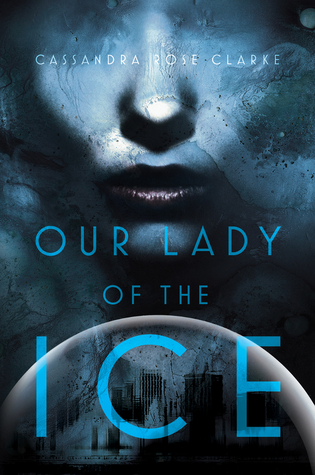 Our Lady of the Ice by Cassandra Rose Clarke
Genre: Science Fiction
Series: Book 1/Stand Alone
Publisher: Saga Press (10/27/15)
Author Information: Website | Twitter
Mogsy’s Rating: 4 of 5 stars
Last year, I became a big fan of Cassandra Rose Clarke after reading her adult novel debut The Mad Scientist’s Daughter, an emotional tale about love, loss and androids that shattered my heart to pieces and left me pining for more. So ever since I learned about her new book Our Lady of the Ice, I have been counting the days. Its premise sounded captivating too, a mystery drama unfolding inside a city encapsulated by a glass dome, the only protection against the frigid darkness of an Antarctic winter raging outside.
The novel also features an intriguing cast. Eliana Gomez is a female PI, taking on as many jobs as she can in the hopes of scraping together enough money to get out of Hope City and head for the mainland. Her boyfriend Diego Amitrano is the adopted son of and right-hand man of Ignacio Cabrera, the city’s most notorious crime boss. Lady Marianella Luna is an Argentinian aristocrat and the celebrity face of an independence movement to build agricultural domes, a project which would help free Antarctica from the control of the mainland. Last but not least is Sofia, an android fighting for a different kind of freedom, envisioning Antarctica as a safe and human-free haven for all of robotkind.
Despite being a brand new story featuring all-new characters, I was thrilled that in some ways Our Lady of the Ice felt very much like the spiritual successor to The Mad Scientist’s Daughter. It explores some similar themes, such as: What does it mean to be human? How far would you go for love? What is the price of personal freedom? Still, The Mad Scientist’s Daughter was more of a character study, looking at these questions on a more personal and intimate level. Our Lady of the Ice, on the other hand, widens the scope. Here we get to see through the eyes of four very different characters who are all connected to each other in some way, weaving a rich narrative that readers get to experience from multiple angles.
All this also takes place at the bottom of the world, in Hope City, Antarctica – a settlement that grew out of the remnants of a failed amusement park built near the turn of the century in the coldest, most forbidding place on earth. Many of its citizens are descendants of the hundreds of workers who arrived decades ago to build and maintain the park. The city is also home to a great number of robots, from repair drones to fully sentient androids or “andies” that were left over when the park closed down.
Human or non-human, everyone is out for something. Eliana only has her eyes set on a ticket out of Hope City. Diego is torn between carrying out unsavory errands for Cabrera, who is like a father to him, and his love for Eliana, who makes him want to become a better person. Marianella has a huge secret, and she’s terrified of being found out. And Sofia…well, Sofia probably has the most astonishing story of them all. She has reasons to be more motivated than most. Programmed to be a “comfort girl” during the amusement park’s heyday, music is written into her code to trigger some very unpleasant reactions, making Sofia highly averse to any old song recorded before the 1930s. It’s frightening and it’s heartbreaking. I love how this book stirred up my emotions. Time after time the characters will do things to make you hate them, but then the story will always remind you again of their respective situations and why they made those choices. I felt much the same way reading about Cat in The Mad Scientist’s Daughter. Cassandra Rose Clarke’s characters are complex and multi-faceted; even when they are being frustrating, you can’t help but connect with them.
Furthermore, everywhere you look is another reminder of what Hope City once was, a bright and shining testament to humankind’s triumph over the elements, now reduced to a faltering system run by corrupt gangsters and two-faced politicians who are out only for themselves. If you have ever played Bioshock, Hope City reminded me a lot of where that game takes place, a beautiful-utopia-turned-crumbling-dystopia under the sea. There’s a feeling of isolation from the rest of the world and a sense of helplessness that emanates from the population, really complementing the dark mystery plot as well as the fatalistic and cynical attitudes of the protagonists.
The resulting effect of this eclectic hodgepodge is something truly amazing: A sci-fi novel infused with hard-boiled noir vibes featuring wonderfully flawed characters in one of the most mind-blowingly unique settings I’ve ever seen. I found this book simply irresistible.

Novella Review: Envy of Angels by Matt Wallace
Posted on October 18, 2015 15 Comments
A review copy was provided by the publisher in exchange for an honest review. All opinions are my own.
 Envy of Angels by Matt Wallace
Genre: Urban Fantasy
Series: Book 1 of Sin du Jour
Publisher: Tor.com (10/20/15)
Author Information: Website | Twitter
Mogsy’s Rating: 4 of 5 stars
I have to say, so far I’ve been very impressed with the variety of Tor.com novellas. Just as I’ve gotten myself settled in with a couple stories that are rather sober, more serious-like endeavors, along comes Envy of Angels barging into this black tie dinner party like your favorite uncle, the one who gets loud when he’s had too many but is always ready to entertain the crowd with a funny yarn.
I had such a great time with this book. Imagine Hell’s Kitchen meets Dresden Files, marinated in a flavorful blend of action and thrills, seasoned generously with humor. When I first glimpsed the conspicuously short publisher description for this novella, I had my suspicions about what this meant and now they have been confirmed: The less you know about this story going in, the better.
Fortunately, I can give the general gist of it without spoiling anything. Envy of Angels is about Lena and Darren, two ordinary down-on-their-luck New York chefs who suddenly find themselves landing the gig of lifetime at Sin du Jour, an exclusive catering company owned by one of the city’s hottest celebrity chefs. However, it soon becomes clear that Sin du Jour is no ordinary catering company. For one thing, their clients are demons.
When asked to serve a morally questionable item on the menu at their next event (and we’re not talking about veal), Sin du Jour owner and executive chef Byron “Bronko” Luck gathers his staff and puts it to a vote. Should they do what they’re told and go through with the whole thing? Or should they take the dangerous, near-impossible option and attempt to pull the wool over their devilish clientele’s eyes by preparing a substitute main course and praying they won’t notice? By the way, these types of hellish customers, when they don’t get what they order, aren’t just going to be sending it back. But guess what our characters decide to go ahead and do anyway.
The result is an extraordinary amount of story packed into this novella. Envy of Angels features plenty of action both in the kitchen and out in the field, and even includes a thrilling heist sequence starring Ritter, Cindy, Hara and Moon, the unforgettable foursome who make up Sin du Jour’s Stocking and Receiving Department.
The plot is also very addictive, especially when it gets more and more bizarre. Between getting completely sucked into the story and the sheer morbid curiosity to see what other crazy things might be happening next, I kept turning the pages and finished this book in no time at all. It was fantastically good fun. I really don’t want to give much more away, though in truth, there are moments so absurdly hilarious, so out-of-this-world-insane that I would be hard-pressed to describe them, anyway. Seriously. There are moments in here that you simply must experience for yourself.
One thing is certain though. I’ll never look at a Chicken McNugget the same way again.

Audiobook Review: Six of Crows by Leigh Bardugo
Posted on October 17, 2015 23 Comments
A review copy was provided by the publisher in exchange for an honest review. All opinions are my own.
Genre: Young Adult, Fantasy
Series: Book 1 of Six of Crows
Publisher: Audible Studios (9/29/15)
Author Information: Website | Twitter
Mogsy’s Rating (Overall): 4 of 5 stars
Narrator: Jay Snyder, David Ledoux, Lauren Fortgang, Roger Clark, Elizabeth Evans, Tristan Morris, Brandon Rubin | Length: 15 hrs and 20 mins
Okay, I’m intrigued. Very intrigued. Leigh Bardugo’s Six of Crows may have fallen slightly short of my expectations, but it’s still great. And honestly, it was going up against a super high bar, considering the ridiculous number of good books I’ve read this year so far and the fact that I can be very finicky about my heist stories.
First though, let’s get something out of the way, since I’ve gotten asked this question a bunch of times: You don’t need to read or even be familiar with the Grisha trilogy before starting this book. It is set in the same world, but other than a few references to events and people from the other series, Six of Crows features an all new story and an all new cast of characters. Personally, that made me very happy. As much as I enjoyed the Grisha trilogy, it didn’t end as strongly as it started, and I was definitely ready for something fresh.
So here we find ourselves in the new setting of Ketterdam, a bustling trade city and home to a gang of thieves calling themselves the Dregs. Kaz “Dirty Hands” Brekker is their fearless leader and mastermind, willing to take on any job for the right price. When tasked by a powerful crime lord to rescue a scientist with a secret formula from the impenetrable walls of the Ice Court, Kaz goes forth and gathers his crew in preparation for the heist of a lifetime.
For better or worse, the heist itself actually takes a backseat to the amount of attention given to the members of the Dregs. This also means the plot is decidedly uncomplicated once you pare it all down, because the complexity is all in the characters. Probably a good thing too, when you have as many as six crew members to follow.
Kaz is the clever one, the one who makes the plans and takes care of the boys and girls in his crew. A child of the streets, Kaz’s background is one huge sob story, which lends sympathy to his thirst for revenge against the man he blames for his brother’s death. Reserved and coolheaded, Kaz also wears fancy-pants clothes and walks around with an ostentatiously well-fashioned cane due to a “childhood” injury to his leg (in quotes because right now he’s still all of what, 17?) Kaz is interesting, though whenever I think of him I picture a kid trying to play at being an adult, and unfortunately that whole persona tends to drive me crazy.
Then there’s Inej, also known as the Wraith. Her talents lie in being able to melt into the shadows. She has a pretty sad story too (okay, I’m just going to say right now, ALL of them have pretty sad stories. Seems like that’s Bardugo’s go-to approach for every single one of her characters) but out of everyone, Inej was my favorite.
Jesper is the sharpshooter, and he’s also the joker of the group. I don’t think he got near enough the attention he deserved, which is a shame because I really liked him. There was also this great dynamic between him and Wylan, the Dreg’s “outsider” who nonetheless found his way to a special place in my heart. Seriously, the two most interesting members of the crew with the best banter got shafted here, because the story decided instead to shine all the attention on…
Nina and Matthias. The Grisha and the Witch Hunter. Nina brings the magic and Matthias brings the insider knowledge of the Ice Court and its security systems. Together they bring enough YA clichés to fill an ocean. Normally, I am all for forbidden love and a romance between characters who start off hating each other’s guts, but these two were downright insufferable. Just shut up and make with the kissy-face already. Plus, Matthias was distractingly perfect. And Nina was distractingly awkward whenever she attempted her sexy act. Every time they interacted, I had to fight the urge to cringe because it all just felt so damn scripted.
Personally, I would have been happier with less drama, more action (more heist!) The story was also a little slow to take off, with a long and drawn out intro. Most heist stories typically use this time to focus on the planning and preparation, but Bardugo has opted for a different strategy, giving us background information on the characters in the form of flashbacks and memories instead. I really enjoyed some of these flashbacks (Inej and Kaz had great backstories) while others felt more like a distraction (Nina and Matthias), which makes me think your mileage may vary depending on how you feel about the various members of the Dregs. This is very much a character-focused story, which is great, but when you have such a big cast, I will invariably connect with some more than others.
And speaking of a big cast, the audiobook is also a fantastic format to enjoy Six of Crows. I simply adore huge productions that involve multiple narrators because each perspective character gets to have their own unique “voice”. Six of Crows features a whopping seven narrators, many of whom are big names in the world of YA audiobooks. Several of them I’ve had the pleasure of listening to their work in the past, like Elizabeth Evans (she’s great on the Throne of Glass series), Lauren Fortgang (from the Grisha trilogy audiobooks), David LeDoux (who narrated Sam’s chapters in Maggie Stiefvater’s Shiver) and Jay Snyder (from Peter Clines’ Ex-Heroes). Everyone delivered fantastic performances, including the narrators who were new to me.
Bottom line, this is a great start to a series with some serious potential. It wasn’t exactly the type of heist story I expected, though it just as well Leigh Bardugo made it all about her characters because characters are what makes a good book. Even though I despised the corny romance, there are some wonderfully unique and memorable personalities here, and I’d like to see more of some of them in the next installment.
Guest Post: “Girls & Dragons” by Katherine Harbour
Posted on October 16, 2015 7 Comments
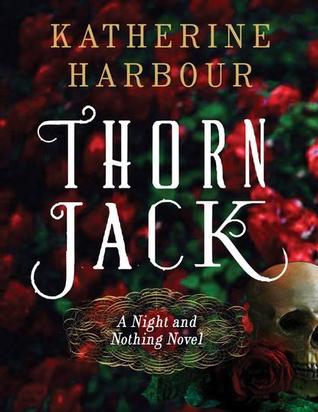
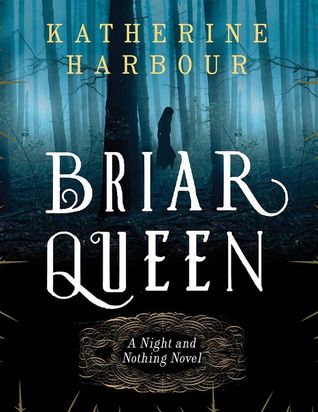
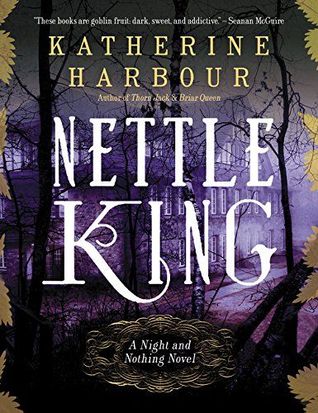
Today I’m excited to welcome Katherine Harbour to The BiblioSanctum to talk about an awesome topic! Katherine is the author of Thorn Jack, which I reviewed earlier this week. It is the first book of the Night and Nothing series which also includes the sequel Briar Queen and the upcoming Nettle King, due out next spring from Harper Voyager.
* * *
GIRLS & DRAGONS
by Katherine Harbour

Once upon a time, it was girls and unicorns. Unicorns adorned stickers, school binders, and posters on bedroom walls. The unicorn was mysterious, noble, and pure. The unicorn was the good boy.
Then along came dragons.
Dragons have evolved from monsters that devour virgins and terrorize villages, into beings with personalities and agendas. Dragons didn’t even need to change their shape to become rock star. There’s no better example than Smaug in The Hobbit films; Smaug, the result of some gorgeous CGI artistry, is imbued with the sexy, British baritone of Benedict Cumberbatch.
And girls went from being devoured by dragons, to slaying them (The Hero and the Crown by Robin McKinley), to eventually befriending them.
 The shift in attitude toward dragons perhaps began with Anne McCaffrey’s Pern novels, where the dragons are sentient beings who share a telekinetic bond with their human riders, a bond that sometimes results in tragedy. In the YA version of her Dragonrider novels, Dragonsong, a young musician, a girl named Menolly, discovers a group of little fire lizards, cousins to the great dragons, and teaches these wild creatures to sing.
Mothering dragons is Daenerys Targaryen’s thing in The Game of Thrones, a privilege that becomes more of a burden when the dragons reach adolescence and begin to do what dragons traditionally do. This proud mama soon has to choose between her savage children and the people she protects, and it’s a poignant moment.
Then there are the girls who befriend their dragons. In Patricia McKillip’s short story ‘The Harrowing of the Dragon of Hoarsbreath,’ instead of harrowing the dragon, the heroine sets it free. In Carrie Vaughn’s Voices of Dragons, a young woman’s friendship with a dragon may avert a war.
 Dragons began to shapeshift. Talon, by Julie Kagawa, features a dragon named Ember who has taken a girl’s form in order to walk among the enemy—mankind. The heroine of Sophie Jordan’s Firelight is a dragon girl who transforms into a human after she falls in love with a dragonslayer. In Vivian Vande Velde’s Dragon’s Bait, a young woman is accused of being a witch and left for the dragon terrorizing her village. The dragon, Selendrile, takes her away, but, in his lair, he shapeshifts into a golden-haired young man. As they’re both outcasts, they bond. But Alys wants revenge on her village.
A shapechanging dragon extraordinaire called Morkeleb the Black is featured in Barbara Hambly’s Dragonsbane. Jenny Waynest, a mother, and a wizard wed to a scholarly dragonslayer, learns that some of the venomous and beautiful dragons that sometimes terrorize the world might actually be sentient. Morkeleb, a wizard dragon, takes a human shape to convince Jenny to stay with him. When he transforms Jenny into a dragon, she is tempted to remain that way . . .
In Thorn Jack, I’ve hidden my dragon, who is hinted at but not revealed until the third book, sort of.
So why is it that girls and women no longer seek the pretty nobility of the unicorn, but the wild power of a dragon? (That says something, doesn’t it?) Dragons can be villains, heroes, or tricksters. The bond between a girl and her dragon involves a lot of reasoning, taming, and a fascination with danger—the perfect dark romantic formula. Spiky and predatory, wealthy and erudite, arrogant and wise, dragons are the ultimate magical creature. They were bound to become the bad boys at some point.
I hope we’ll be seeing more of them in the future.
* * *
 ABOUT THE AUTHOR
I was born in Albany, NY (upstate NY is where Thorn Jack takes place) and now live in Sarasota, FL. I briefly attended college in Minneapolis, Minnesota, before attempting life as a painter (the artsy kind). I’ve been writing since I was seventeen and juggling a few jobs while doing it. I wrote Thorn Jack when I was seventeen—as well as many, many other things over the years—and I took it out of the trunk (a literal trunk) two years ago, dusted it off, and began revising it…
Visit Katherine at www.katherineharbour.com or follower her on Twitter.


 The BiblioSanctum