Book Review: The Bookshop Below by Georgia Summers
Posted on December 15, 2025 8 Comments
I received a review copy from the publisher. This does not affect the contents of my review and all opinions are my own.
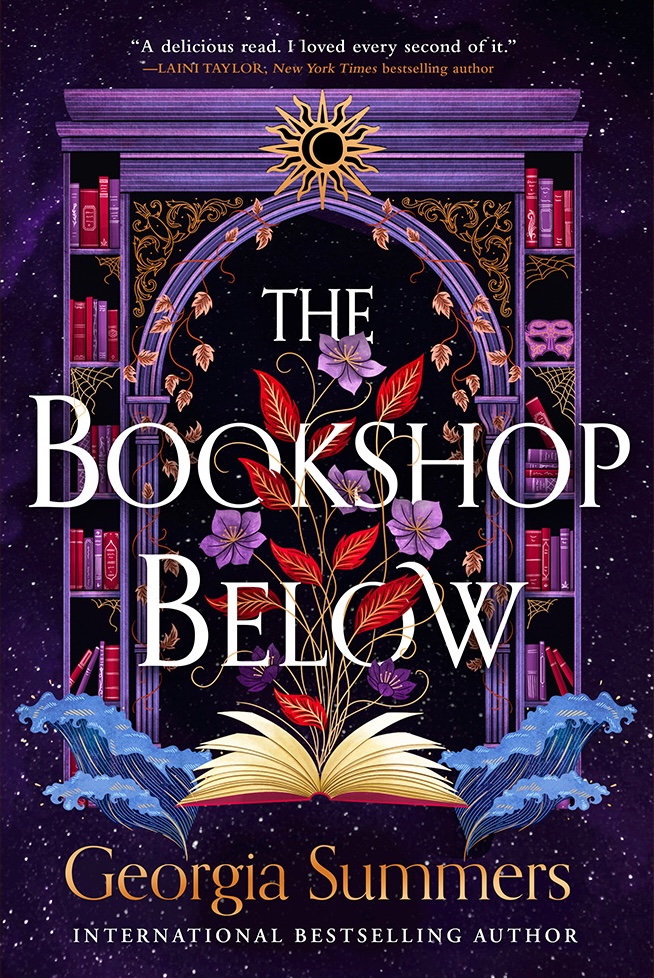 The Bookshop Below by Georgia Summers
Mogsy’s Rating: 3.5 of 5 stars
Genre: Fantasy
Series: Stand Alone
Publisher: Redhook (November 18, 2025)
Length: 374 pages
Author Information: Website | Twitter
I can never say no to a book about books, especially when its concept involves a magical bookstore complete with dangerous bargains and secret societies. The Bookshop Below by Georgia Summers boasts all the right ingredients on paper, so it was no surprise it drew me in. That said, it also moved more slowly than I would have preferred, which is probably why it failed to fully click despite its lovely atmosphere and gorgeously written prose.
The story follows Cassandra Fairfax, a former protégé of Chiron, the enigmatic owner of a magical bookshop hidden below the city. Some years ago, however, a rift formed between them, and she was cast out from the only home she ever knew. Left to fend for herself, Cass became a book thief to survive, using her intimate knowledge of powerful ink magic to earn money through less-than-legal means. But when word reaches her that Chiron has died under suspicious circumstances, leaving the bookshop in her name, she is pulled back into the world she thought she’d left behind.
At first, our protagonist is content to settle back into the honest life, selling books legitimately as the new owner of her mentor’s old shop. Soon, though, she realizes she may be in way over her head, especially when unpleasant surprises like rivals start showing up on her doorstep. One of them is Lowell Sharpe, an infuriatingly polished and arrogant (but also very handsome) fellow bookseller who seems determined to force Cass out and seize her bookshop for himself. As Cass struggles to reestablish herself, she finds support from Byron, her own protégé, even as secrets from their uneasy history threaten to surface. Still, with signs that the magical river powering the entire network of hidden bookshops is starting to fail, they may all have bigger problems on their hands.
First, the positives. For me, the writing is easily where The Bookshop Below shines the brightest. Summers tells this story with a soft, almost delicate touch that is a perfect match for the novel’s magical realism themes. From the hidden river of magic to the idea of ink having the immense (and sometimes deadly) power to change someone’s life, there’s a subtle darkness underlying the whole premise which I found appealing. Yet, there’s a caveat. Magical realism as a genre has always been a bit hit-or-miss for me, and the world-building here goes all in on the whimsical elements without really going into the details. Readers who prefer a little more explanation into the ins-and-outs will likely feel starved for more answers.
Still, another area in which the book excelled was character development and dynamics. Cass herself is a solid and interesting lead whose complex personally meshes convincingly with her morally iffy past. She’s strong and independent, and even though she has every reason to wallow in self-pity, she refuses to let her past mistreatment drag her down. By the time Lowell Sharpe enters her life, their enemies-to-lovers relationship is all but expected, but nevertheless I found their developing romance engaging. Lowell’s lovable pomposity ultimately grew on me, and watching his back-and-forth banter with Cass had to be some of my more enjoyable moments.
But now, we go into why I found myself a bit frustrated with this book, and as you can probably guess, it had a lot to do with the pacing. Granted, I get that the story unfolds at a leisurely pace by design, letting the atmosphere do all the heavy lifting, but this sometimes left me feeling disconnected with the world, scattering my focus as a result. I also really wish there had been more emphasis on the idea of the bookshop, but because we’re in Cass’s head so much, and because she commands such a dominant presence, it’s like we’re expected to just shut up and go along with it all without asking too many questions, so don’t get your hopes up about receiving more clarity or having any vagueness dispelled.
In the end, The Bookshop Below is a well-written, thoughtfully constructed fantasy novel that had a lot of great ideas but didn’t quite live up to its full potential for me. Of course, your mileage may vary, since I admittedly struggle with slower-paced and more abstract magical realism. I can see it working better for other readers who don’t have that difficulty, and especially if atmospheric vibes and strong characters are important for you, this one may be worth checking out.


Book Review: The Sound of the Dark by Daniel Church
Posted on December 11, 2025 7 Comments
I received a review copy from the publisher. This does not affect the contents of my review and all opinions are my own.
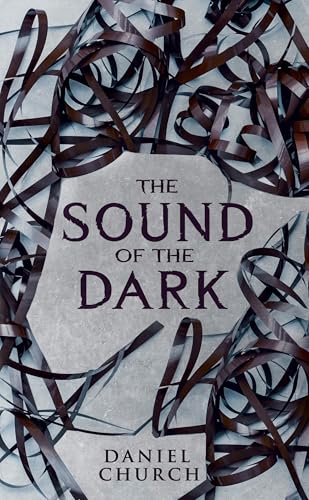 The Sound of the Dark by Daniel Church
Mogsy’s Rating: 4 of 5 stars
Genre: Horror
Series: Stand Alone
Publisher: Angry Robot (October 28, 2025)
Length: 400 pages
Author Information: Website | Twitter
The Sound of the Dark is one of those books with a setup that makes you think you know exactly where it’s going…until suddenly, you don’t! This is my third Daniel Church novel, and I’m still amazed by how he can pull the rug from under you in the best way possible. What begins as a straightforward true-crime investigation gradually warps into something far stranger and darker than it first appears, and I found myself hooked even when I wasn’t sure what kind of story I was walking into.
The book follows Cally, host of a well-received but small-time true crime podcast called You Like it Darker, but life hasn’t been too kind to her lately. Dealing with depression and a failing relationship with her boyfriend, the things that used to give her joy and purpose just aren’t cutting it anymore. So, when a listener writes in with a tip suggesting she look into a lesser known 1983 case in which a mild-mannered family man suddenly snapped and murdered his wife and children in cold blood, Cally hopes this new project will spur her to get back on her feet.
Her research leads her to Warden Fell, a creepy abandoned military installation which has long since become the subject of whispers and urban legends in the area. It was reported that the man at the center of her case had gunned down his entire family after visiting this site, pointing to a possible connection. But interviews with others familiar with the investigation, including the killer’s sister and the medical examiner who remembers autopsying the bodies reveal details that are far stranger. Eventually, Cally catches a break in the form of the killer’s audio journals, discovered after visiting the old scene of the crime. However, at this point of no return, Cally begins to understand that she isn’t simply retracing the path of a man’s decent into madness. Rather, she’s quite literally becoming a part of it.
I loved the first half of this book, which reads almost like a straight mystery, following our protagonist as she dives headfirst into the nuts and bolts of investigative work. The pacing here is measured but deliberate, giving readers enough time to pick through the clues. We also get a clearer sense of who Cally is in this section: her frustrations at not being heard, the feeling of being stuck, and her struggle to find a sense of purpose. It makes her obsession with the strange aspects of the case feel that much more believable. After all, how does a husband and father who is by all accounts a gentle and nonviolent man suddenly decide to slaughter the people he loves in such a horrific way? Walden Fell is also wonderfully eerie once Cally gets there, an early sign that things are about to shift into something much darker, and indeed, this is just the beginning.
That said, the middle part of the book gets a bit shaky as we shift into the next phase. Here, the plot turns sharply into territory bordering on conspiracy theory fiction with a generous helping of supernatural and cosmic horror. At this point, I do think the author’s control slipped a little, as he tried juggling all these moving parts while still keeping Cally’s reactions true to her character and convincing. But on the flip side, the horror elements are fantastically well done, vivid and unsettling and full of grotesque body horror imagery. I had no idea Church had this talent in his writer’s toolbox.
And once the plot reaches full throttle, the book becomes hard to put down. A huge part of this is due to character work, both with Cally and the supporting cast. Stella, the eccentric actress we meet early on in the investigation, is a true standout and impossible not to like. Her scenes and dialogue with Cally are some of the best in the novel. Ellen, the young police officer who briefly becomes romantically involved with Cally also brings a steady, down-the-earth presence even if their relationship feels a bit rushed. Still, the dynamic between the three women in the final act is what makes the events of the ending both so chaotic and exciting, watching them come together to take down the big bad.
Final thoughts? The Sound of the Dark is a moody, slow-burn supernatural thriller that isn’t afraid to take its readers down some wild and twisty roads. Even though the plot gets a little tangled in places, it’s still an absorbing read that is undoubtedly memorable. And honestly, that’s what I look for in a book—something that leaves a strong lasting impression long after I’ve turned the last page.

Book Review: Turns of Fate by Anne Bishop
Posted on December 8, 2025 9 Comments
I received a review copy from the publisher. This does not affect the contents of my review and all opinions are my own.

Mogsy’s Rating: 4.5 of 5 stars
Genre: Urban Fantasy
Series: Book 1 of Isle of Wyrd
Publisher: Ace (November 11, 2025)
Length: 528 pages
Author Information: Website
As a big fan of Anne Bishop’s The Others series, anytime I see her return to the paranormal and urban fantasy genre, I’m immediately on board. And as it so happens, even though Turns of Fate introduces a brand-new world with brand-new characters, it carries that same uncanny atmospheric vibe that made The Others so memorable, and in many ways feels like a spiritual successor.
The story follows multiple perspectives, but the linchpin character holding it all together is Detective Beth Fahey, the newest member of Precinct 13’s investigative squad. Her department is in charge of liaising with the otherworldly residents of the Isle of Wyrd, a mysterious hidden realm that humans can only reach by taking a ferry to a controlled zone called Destiny Park. Beyond that is the Arcana, a place where the rules of our reality don’t always apply, and visitors enter at their own risk. Here, the laws of the Isle reign supreme, and breaking them can have dire consequences.
Still, Beth’s first assignment seemed straightforward enough, at least initially. Clues to a horrific murder-suicide case leads her to the Isle of Wyrd to inquire about a “ghost gun,” but of course, nothing about this place is ever simple. Her investigation ends up serving as a doorway to a strange chain of events that weave together the lives of several strangers, from a desperate woman seeking refuge from her abusive boyfriend to a teenager caught up in a dangerous game.
What struck me most about Turns of Fate was how character-driven it is despite its broad scope and multiple POVs. Sure, there are times when Beth feels like one side character of many, but even as the plot bends this way and that, it’s the people who anchor us to the bigger journey. The supporting cast is huge, but each character has a memorable role to play, especially as they showcase the different parts of the Arcana and the interactions that regular humans have with their inhabitants.
However, my favorite aspect of the book was the world-building, which is Bishop’s forte, after all. Much like in The Others, the world of Turns of Fate is one where humans coexist uneasily with beings far more ancient and powerful than they are, yet some are still foolish enough to test their limits. The Isle of Wyrd maintains its own boundaries and codes with a focus on bargains and contracts but is still willing to help visitors who come in good faith, opening Destiny Park to curious tourists who want to sightsee or to have their fortunes told. That said, Isle residents are extremely unforgiving when it comes to people trying to take advantage of their hospitality, and when you end up on the wrong side of their justice, no one can save you.
The world itself also feels oddly alive with its own unique logic. Time behaves differently, for example, and the Isle is also much larger than it appears, with trains that run forever and portals that lead to elsewhere. One gets the sense that, even if you had a lifetime, there would be no way to uncover all its secrets. And that’s exactly why the pacing works, with each chapter revealing just enough to keep your interest piqued, even when links between different characters may feel tenuous, or when some of the POV switches feel more like short vignettes. The narrative never feels unfocused, thanks to the overarching influence of the Isle of Wyrd which grounds the different storylines and ties them all together.
In conclusion, Turns of Fate is an excellent start to a new series, filled with the kind of richly imagined world-building that made me fall in love with Anne Bishop’s writing all over again. While the novel may share some themes with her previous work, it still feels fresh with touches that are comfortably familiar. Easily one of my favorite reads of the year, and I can’t wait to return to the Isle of Wyrd, so here’s hoping this marks the beginning of a long, exciting series.

Audiobook Review: The Haunting of Paynes Hollow by Kelley Armstrong
Posted on November 29, 2025 7 Comments
I received a review copy from the publisher. This does not affect the contents of my review and all opinions are my own.
 The Haunting of Paynes Hollow by Kelley Armstrong
Mogsy’s Rating (Overall): 4.5 of 5 stars
Genre: Horror, Thriller
Series: Stand Alone
Publisher: Macmillan Audio (October 14, 2025)
Length: 9 hrs and 24 mins
Author Information: Website | Twitter
Narrator: EJ Lavery
Kelley Armstrong has long been a must-read author for me, even if I can never quite keep up with how much she writes. She’s also incredibly versatile, jumping comfortably between genres like fantasy, sci-fi, thrillers, and horror, but I’ve always thought her darker stories are where she shines the most. The Haunting of Paynes Hollow absolutely falls into that category, and it’s one of her best.
The story follows Samantha Payne, whose life changed forever fourteen years ago when she caught her father burying the body of a local boy on the grounds of their family vacation property. However, he killed himself before he could face justice, leaving Sam to grow up in the shadow of his heinous crime—the daughter of a child murderer. Now, deeply in debt and struggling to pay for her ailing mother’s medical bills, the last thing she needs is another obligation on her plate. But when her grandfather passes away, she has no choice but to attend the reading of his will, despite being certain the miserable old man didn’t leave her a single penny.
In that, though, she was wrong. Instead of being cut out, Sam inherits the family’s valuable lakefront property, the very site of the incident that shattered her innocence and tore her family apart, provided she satisfies a number of conditions. Mainly, she will be required to stay on the estate for a whole month, wearing an ankle monitor to ensure that rules are being followed. At first, Sam’s instinct is to walk away, knowing full well that forcing her back to the place where she’ll have to relive her worst memories is her grandfather’s way of sticking it to her one last time. And yet, the property’s value, should she sell it, would be enough to solve all her financial woes, which ultimately proved too tempting to resist.
Believe me, there’s a lot more I could go into here, but I don’t want to risk spoiling the plot for anyone, as there’s just so much in The Haunting of Paynes Hollow that’s best experienced firsthand. What I will say is that Kelley Armstrong once again does an expert job building tension and mystery, and she is a natural when it comes to working in the psychological thrills and supernatural elements. Pacing was as perfect as can be, slow-building but relentless, which kept me on edge at all times. The world created around Sam is as intriguing as it is unsettling, especially when local folklore is injected into the plot, including the story’s own take on the legend of the Headless Horseman.
The writing itself is immersive and easy to get into, and Armstrong’s ability to layer suspense while developing her characters makes every twist hit harder, and there were indeed plenty of surprises. A strong supporting cast also helped draw me in emotionally despite how risky it is to become invested, since no one is truly safe when it comes to the author’s horror and thriller novels. By the time the story reaches its climax, you’re not only invested in the mystery but in Sam and those around her. And when all the answers finally come, the conclusion nails it with a mind-blowing reveal that has stayed with me long after finishing the book.
The audiobook format only made the experience even more enjoyable, capturing Sam’s escalating anxiety and fear the longer she stays on the cursed property. Narrator EJ Lavery’s performance was excellent, capturing the emotions of the character at just the right moments. For fans of isolated settings with a touch of otherworldly folklore, I can’t recommend this one enough.
All in all, The Haunting of Paynes Hollow balances atmospheric horror with a well-paced mystery, and the result is a story that grips you tightly and refuses to let go. Kelley Armstrong’s ability to blur the lines between the psychological and the supernatural makes this novel one of her most memorable in years.
Book Review: Ship of Spells by H. Leighton Dickson
Posted on November 24, 2025 16 Comments
I received a review copy from the publisher. This does not affect the contents of my review and all opinions are my own.
 Ship of Spells by H. Leighton Dickson
Mogsy’s Rating: 3.5 of 5 stars
Genre: Fantasy, Romance
Series: Book 1 of Ship of Spells
Publisher: Red Tower Books (November 4, 2025)
Length: 512 pages
Author Information: Website | X
I’ve always found it hard to say no to a maritime fantasy, especially one that promises a magical ship, a scrappy crew, and adventures on the high seas. So, it’s really no surprise that Ship of Spells by H. Leighton Dickson completely sold me with its description. On paper, it sounded exactly like what I would enjoy: a pirate-themed voyage with a heavy dose of romance, the kind of setup that carries a nostalgic, old-school feel but with a modern twist. And for a while, it seemed like the book was going to deliver, but by the end, I confess my feelings for it became a lot more complicated.
The story follows Ensign Honor Renn, a Bluemage with the Oversea Navy until her ship was destroyed in a battle with an enemy vessel. Left stranded in the ocean clinging to a piece of wreckage, she is relieved when rescue finally comes, but not in the form she was expecting. The crew that pulls her out of the water is from none other than the mysterious and fabled Touchstone, the Ship of Spells long whispered of in seafaring lore. Its captain, Thanavar, comes from the southern region of the world known as the Nethersea, whose people wield a volatile magical substance called chimeric. He commands a diverse crew of outcasts who have found a home on the Touchstone, among them a faun, a minotaur, a harpy, and various other supernatural beings.
Renn is initially wary of Thanavar, both because she serves the Oversea Navy and because she does not trust the volatile nature of chimeric magic. But as she travels with him and his crew, she begins to uncover their larger purpose and the true stakes of the long-standing conflict between their peoples. Renn eventually realizes that she has been dropped into in the middle of a fragile political situation tied to the Dreadwall, a barrier that has kept their two sides from open war for generations. And now that peace is about to crumble. The same disaster that sunk Renn’s ship had also awakened an unpredictable magic within her, and Thanavar may be the key to helping her control it. Caught between her former loyalties and her growing connection to the Touchstone, our protagonist must adapt quickly to her abilities and her new life at sea if she hopes to prevent the tensions from erupting into full-scale war.
If a mix of high fantasy and naval grit is your thing, Ship of Spells will not disappoint. Dickson packs the novel with wall-to-wall atmosphere and classic maritime fixtures, and for me that remains the book’s true standout. The Touchstone itself is the highlight, along with its magic-touched crew whose diversity and quirks bring much of the story to life. So much so that I often wished we had more background on the cast to match how memorable they are on the page. For while the nautical aspects are excellent and clearly where most of the author’s attention went, the rest of the worldbuilding doesn’t always reach the same level. The setting is filled with magic, creatures, and intriguing ideas, but many of these elements feel dropped in rather than built from a strong foundation, as in they don’t quite feel lived-in or grown from within the context of the world.
Character work is also hit-or-miss. Some crew members feel way better developed, while others drift in and out of scenes without much to say or do, leaving only the faintest impression. Renn herself is thankfully more memorable, but she pretty much fits the mold of the young, flawed romantasy heroine, meaning impulsive and stubborn—but probably not in the endearing way the author intended. I certainly like the fact that Renn is a protagonist with real agency and not a passive one sitting around waiting for things to happen, but unfortunately, her tendency to leap headlong into situations that make her look stupid feels more like a genre cliché than a unique character trait.
As for the romance, I think this area is where I feel the most torn. It’s not often I wish for more of it. Usually, my issue with romantasy leans in the opposite direction, since too much romance often overshadows the plot and everything else. Here, though, the romantic thread is barely present for much of the book. There’s a lack of chemistry between Renn and Thanavar from the start. Their dynamic reads more like one between a hardass commander and reluctant subordinate than anything else. Definitely not sexy or alluring. Ironically, Renn shares more natural rapport with several other crew members than with the supposed love interest. By the time her relationship with Thanavar finally ramps up in the second half, it falls very flat. Don’t get me wrong, slowburn romances can be incredibly rewarding, but this one never even held a spark, and a romantasy with no payoff somehow feels even less satisfying than instalove.
In the end, Ship of Spells turned out to be a mixed bag for me. The Touchstone, the crew, and the sense of seafaring adventure were all high points. The first half especially hooked me with its swashbuckling action. However, where the book stumbles is its shaky worldbuilding and an unevenly paced romance leading to a lack of chemistry. Bottom line, if the romantasy label is what draws you in, be prepared that the romance side of the equation might be a little weak, but readers looking for a maritime-themed fantasy will find it delivers an enjoyable voyage.
Audiobook Review: The October Film Haunt by Michael Wehunt
Posted on November 21, 2025 7 Comments
I received a review copy from the publisher. This does not affect the contents of my review and all opinions are my own.
 The October Film Haunt by Michael Wehunt
Mogsy’s Rating: 2.5 of 5 stars
Genre: Horror
Series: Stand Alone
Publisher: Macmillan Audio (Septmber 30, 2025)
Length: 14 hrs and 42 mins
Author Information: Website | X
Every once in a while, I’ll read a book where the intro and the first half will excite me, only to run into a second half that falls flat on its face. Thankfully this doesn’t happen a lot, but unfortunately The October Film Haunt by Michael Wehunt ended up being one of those reads, where the beginning hooked me early on but the further I went the more uneven things became.
The story follows Jorie Stroud, who was once part of a close-knit group of horror-obsessed friends calling themselves the October Film Haunt. The three of them would travel to the filming sites of their favorite scary movies, geek out over the experience before sharing their thoughts on a blog read by a large following. But one night, the trio pushed their luck with the wrong film, a little-known cult indie called Proof of Demons which is infamous for a scene featuring a ritual to open the gates of hell. Following their coverage, several impressionable teens were inspired to get involved themselves, and as a result, one of them died.
The repercussions were immediate. In the aftermath of all the criticism and accusations, the October Film Haunt disbanded, and Jorie retreated to a quiet life in Vermont. There, she abandoned her film industry ambitions to instead focus on raising her young son. However, that peace is shattered when a mysterious VHS tape finds its way to her doorstep, its contents revealing that someone is attempting to make a sequel to Proof of Demons, the cursed film that ruined her life. The tape also pulls Jorie back into a world she thought she’d left behind, but like it or not, she’s suddenly back in the spotlight drawing the attention of the online horror community’s most dangerously obsessive fans. Out of options, Jorie is forced to dig up her past and reach out to old friends in the hopes of protecting her sanity and the life of her child.
Let’s start with the positives. Wehunt sets the stage well, including several elements that are considered staples of atmospheric horror like isolated cabins, demonic rituals, old videotapes of mysterious origin, etc. As the title suggests, the novel draws appropriately from classic horror movie tropes, evoking films like The Ring, but also it taps into contemporary cultural fears, such as unhealthy obsessions made worse by social media and online forums, as seen in the Slender Man case. All of this leads to an irresistible hook blending horror movie nostalgia, pop culture, and real-world fears.
When it comes to the characters, the book admittedly takes a few interesting directions with the friends-having-a-fallout-after-a-tragedy concept. Jorie carries a lot of guilt from what happened, and her retreat from the horror media world feels like a kind of self-imposed punishment. Other characters drift in and out of the story, but some of their choices can be frustrating, especially since they are supposed to be familiar with the horror genre and its fandom, yet they keep walking straight into obvious traps. Granted, these ironies might have been highlighted purposefully, but the writing doesn’t always make it obvious, nor do they always land in a good way.
Now for the negatives, which for me is really the entire second half of the book. The problem is that the story starts to sprawl. We lose that sense of mystery we started with, as well as the sense of urgency. The plot begins meandering so much, the main thread of the story is lost completely, and pacing slows to a crawl. When the climax finally arrived, it came and went without leaving much of an impact, and at that point it was also hard to care. If there was anything noteworthy, it was buried under a mountain of filler that made the book feel much longer than it needed to be. And honestly, had the book started out like this, it would have tossed immediately into the DNF pile, but being this far in already, I felt trapped by the obligation to finish.
In the end, The October Film Haunt is a mixed bag. The first half had a lot going for it, like atmosphere and plenty of moments that were genuinely clever and effective. For a while, I could see myself really enjoying this book…until the second half completely unraveled. Needless to say, this isn’t a book for everyone. It certainly wasn’t for me. Fans of meta horror and cult-film subjects might get more out of this novel than I did, but overall it’s an intriguing concept that never quite comes together.

Book Review: The Place Where They Buried Your Heart by Christina Henry
Posted on November 19, 2025 7 Comments
I received a review copy from the publisher. This does not affect the contents of my review and all opinions are my own.
 The Place Where They Buried Your Heart by Christina Henry
Mogsy’s Rating: 4 of 5 stars
Genre: Horror
Series: Stand Alone
Publisher: Berkley (November 4, 2025)
Length: 320 pages
Author Information: Website
Christina Henry is following up The House That Horror Built with yet another haunted house-themed story, but this one seems out to hit a different nerve. While there are surface similarities, such a focus on a mother and son, The Place Where They Buried Your Heart settles into far bleaker territory and feels far more visceral, raw, and terrifying.
The story begins in a quiet Chicago neighborhood, the kind where everyone knows each other and nothing stays secret for long. There are streets like this all over the country, the quintessential example of middle-class suburbia, except for one blemish that spoils the whole picture: the McIntyre place. Twenty years ago, an evil man murdered his entire family inside, and the house has sat untouched and rotting ever since. Now it’s just another sad landmark people either learn to live with or pretend not to see, the kind that inevitably draws the curiosity of neighborhood kids. That’s what happened to Jessie Campanelli’s little brother Paul, who went inside the McIntyre house on a dare and never came out.
According to Paul’s friends, the house ate him, but adults dismissed those claims as childish imagination or trauma. Jessie knew better, however. There was definitely something wrong with that house. In his grief, her father tried to burn down the place that had taken his son, and all that did was cost him his life. The McIntyre house itself remained untouched by the flames, a constant reminder of how it destroyed Jessie’s family. Years later, she still lives in its shadow, raising her own son in her childhood home while the old house waits down the street. And when it begins stirring again, Jessie fears it will come for her boy like it came for Paul. Only this time, she isn’t going to let it win.
The author’s work tends to blend human stories with frightening themes, and The Place Where They Buried Your Heart is no exception, though every edge feels a bit sharper this time. If you enjoy the atmosphere of small-town dread, it’s the lived-in quality of the horror that will stand out the most. That’s because the McIntyre house is more than just haunted. Based on the sections revealing its full, twisted backstory, I think it’s more accurate to say the place is possessed by something genuinely evil. It feels alive and malevolent, actively seeking its unsuspecting prey. I was completely drawn into its dark history as it was revealed in immersive, relentless detail.
At the heart of the novel is Jessie Campanelli, who is initially introduced as a listless, directionless teenager carrying the weight of her brother’s disappearance. Young Jessie’s life is messy and raw, and while her outlook can be nihilistic at times, it’s believably rooted in grief and remorse. Henry shows her protagonist struggling with that guilt, as well as the subsequent breakdown of her family. This occasionally makes the first half of the book hard to get through, since the bleakness coupled with Jessie’s brooding can be a little overwhelming, but at the same time, it’s part of what makes the story feel real and grounded.
The tone shifts as Jessie matures, first into a college student figuring out her path, and then later into a mother whose child becomes the emotional center of her world. Everything she experienced in her youth feeds into the woman she becomes, the fear and loss transforming into a fierce overprotectiveness. Henry does an incredible job showing how Jessie’s relationship with the McIntyre house ultimately shapes her, giving her strength and a sense of purpose. That journey is brutal without ever feeling gratuitous, and the plot carefully maintains a balance between revealing the supernatural threat and keeping the tension sufficiently high.
In the end, The Place Where They Buried Your Heart might be one of Christina Henry’s darkest books and not just because of the scares. It’s the emotional heaviness that will stick with you, the way she follows her protagonist through years of tragedy and the lingering consequences. Speaking as a longtime fan of the author’s work, I’m delighted to see her push deeper into this kind of character-driven horror.
Book Review: Bones of Our Stars, Blood of Our World by Cullen Bunn
Posted on November 15, 2025 9 Comments
I received a review copy from the publisher. This does not affect the contents of my review and all opinions are my own.
 Bones of Our Stars, Blood of Our World by Cullen Bunn
Mogsy’s Rating: 3.5 of 5 stars
Genre: Horror
Series: Stand Alone
Publisher: Gallery Books (November 11, 2025)
Length: 464 pages
Author Information: Website
I’ve never read Cullen Bunn before, but his name has been on my radar thanks to my occasional wanderings into the comics world. And since small town horror is like my catnip, I was instantly intrigued when I heard about his new full-length novel Bones of Our Stars, Blood of Our World. Better yet, the book’s description was giving off strong Stephen King’s It vibes.
Set off the coast of North Carolina, the story opens with a violent double murder that immediately rattles the small, peaceful community of Wilson Island. And it’s not just the loss of lie that’s unsettling, but the shocking manner in which the victims were killed—the brutality and gruesomeness of it raising questions about whether it might have been ritualistic. The situation escalates when, in his haste to get away on foot, the killer has a near miss with a teenager behind the wheel of a truck. The resulting accident leaves the vehicle totaled, the driver shaken but uninjured, and the mysterious perpetrator still at large. The only evidence left behind is a bloody pile of organs, strewn across the road after the escaping killer dropped his bag of grisly trophies.
As word spreads, the whole town is set on edge. Willa, whose boyfriend was the driver of the truck, discovers that she is pregnant, throwing both their post-graduation plans into uncertainty. The incident also has Sheriff Buck and his deputies scrambling to make sense of the killings, working around the clock to identify the murderer. Meanwhile, some residents of Wilson Island feel the official response isn’t fast enough and decide to take matters into their own hands, including a local pest-control crew that ends up getting more than they bargained for. Then there’s the Warlock, a nerdy former D&D dungeon master and island outcast whose knowledge of the obscure might have him playing a bigger part in the investigation than anyone could have expected.
What follows is a story that is surprisingly expansive in scope but still keeps itself tightly focused on the small circle of people caught up in the action. The author jumps between the perspectives as more characters are pulled into the mystery, the shifting POVs and the frequent little interludes in between all ways to show the weirdness creeping in. For me, that’s where the Stephen King influence is felt the most, but in a way that feels more like homage than imitation as the tension builds gradually. There’s that sense of a small town carrying old secrets, and something terrible lurking underneath it all, causing certain residents to experience frightening things that defy any kind of logic, such as reality warping visions and creatures that shouldn’t exist.
The first half of the book was very enjoyable. Bunn does a good job building atmosphere and creating a mystery that really pulled me in. There’s a cinematic, almost storyboard or sequential-like structure to the way he tells a story, likely due to his professional background in graphic novels. And when dealing with such a big cast, maybe that experience comes in handy too when staging what the characters do and where they need to be. When they all started encountering different variations of the island’s horror, that kind of setup could have easily felt repetitive, but things were generally well-paced and for the most part stayed engaging.
That said, momentum started flagging in the second half and the final act also ran a little too long. There are still plenty of interesting ideas and creepy moments, but the pacing isn’t as tight as it is in the beginning. By the time the climax arrived, I wasn’t feeling it as I hoped to be—not because I didn’t care about how the resolution will pan out, but because I felt we were just playing for time. The ending doesn’t quite unravel, but a quicker wrap up would have kept the suspense high and the surprises more impactful.
Despite its issues, I still genuinely enjoyed Bones of Our Stars, Blood of Our World. The premise is ambitious, and Cullen Bunn does a solid job with building a tense, immersive atmosphere. Of course, with any novel debut there’s some room for improvement, mainly with regards to pacing. However, there’s no denying the imagination on display, especially in the “weird horror” department. I just wish the middle section had maintained the same energy so that the second half landed stronger. But for fans of Stephen King and It—or that something-is-seriously-wrong-in-this-small-town vibe—this one is worth a look.
Book Review: The Things Gods Break by Abigail Owen
Posted on November 12, 2025 5 Comments
I received a review copy from the publisher. This does not affect the contents of my review and all opinions are my own.
 The Things Gods Break by Abigail Owen
Mogsy’s Rating: 3.5 of 5 stars
Genre: Romance, Fantasy
Series: Book 2 of The Crucible
Publisher: Red Tower Books (October 21, 2025)
Length: 528 pages
Author Information: Website
I really enjoyed The Games Gods Play when it came out, enough that I knew I’d be picking up the sequel The Things Gods Break. For one thing, I’m fascinated by anything inspired by Greek mythology. And since the series’ mix of modern fantasy and new adult romance hit all the right buttons for me the first time around, I was curious to see how Abigail Owen would build on that foundation.
What I found was a bigger, more ambitious story—one that I both admired and occasionally found myself frustrated with. The story picks up not long after the events of the first book, with Lyra trapped in Tartarus after survival the gods’ brutal trials. Her only way out of this abyssal dungeon designed to imprison the Titans is to find a way to break a series of seals, each one linked to an individual challenge. In other words, it’s a set up that’s very similar to what we saw in The Games Gods Play.
However, while unlocking the seals may be the key to Lyra’s freedom, beating the challenges themselves might lead to something greater as well. As she progresses through the depths, Lyra begins to uncover a larger pattern behind the gods’ infighting and manipulations, as well as her own role in this chaotic cycle. At the same time, the narrative introduces a new wrinkle: time travel. Through the use of her growing powers, our protagonist begins slipping through time, appearing at key moments in her lover Hades’ past. These encounters gradually reveal how long their destinies have actually been intertwined, long before she even knew it.
All these new ideas make The Things That Gods Break feel much grander in scope than its predecessor, but not without a few growing pains along the way. The plot is intriguing, yes, but it’s also very messy. Sure, Owen might be pulling out all the stops here, throwing in time travel in an already crowded space filled with layered myths and divine politics, but it becomes a lot to keep track of. There’s so much happening that the story sometimes loses focus, and the repetition of the challenge-and-lock structure—not to mention its similarity to the trials from the first book—also made parts of the book feel like déjà vu.
Still, there are a lot of goodies that come with the expansion of the world-building. Owen widens the scope of her universe beyond the Greek pantheon, introducing other mythological traditions like Egyptian, Norse, and possibly more. What’s especially interesting is how this continues to blend with the modern world, suggesting a multiversal framework of ancient forces that still ripple through mortal reality, shaping history and culture into the present day.
Character-wise, I had mixed feelings. Lyra remains endearing, but she also started testing my patience in this sequel. After all the progress she made in the first book, it was a little disappointing to see her wallow once more in self-doubt, particularly when it came to her strained family ties and her complicated relationship with Hades. And speaking of Hades, he takes more of a backseat this time, and although we still get glimpses of him across time, I missed their dynamic in the present. As a result, the romance overall feels more subdued.
Perhaps not surprisingly, I felt that The Things That Gods Break carried some of that “middle book” energy. The story juggles a lot, not least the complications that come with time travel. The author clearly has a grand plan in mind, but there’s a sense that much of the plot is busy laying the groundwork for what’s to come rather than delivering a satisfying payoff in this installment.
But at the end of the day, despite my critiques, I still genuinely enjoyed reading The Things Gods Break. The concept is bold, and my interest in its mythological influences kept me engaged. I just wish the execution had been a little tighter and clearer at times, though the final stretch did wrap things up in style. Abigail Owen’s writing has that cinematic flair that plays up emotion and high drama, making the experience so much fun—and keeping me hooked to see where the story goes next.

More on The BiblioSanctum:
Review of The Games Gods Play (Book 1)
Book Review: Red City by Marie Lu
Posted on November 7, 2025 10 Comments
I received a review copy from the publisher. This does not affect the contents of my review and all opinions are my own.

Mogsy’s Rating: 4 of 5 stars
Genre: Fantasy
Series: Book 1 of The New Alchemists
Publisher: Tor (October 14, 2025)
Length: 418 pages
Author Information: Website
Like many readers coming to Red City, I’ve dabbled in and enjoyed Marie Lu’s YA in the past. Naturally, I was curious to see what she’d do with her first foray into adult fiction. What I found was a definite shift into darker territory—an urban fantasy featuring rival factions warring for control in an alchemy-fueled underworld of an alternate Los Angeles.
Within this world, we follow two gifted young alchemists who become friends. Ari, a boy uprooted from his family and culture in his native home of India, is offered a golden opportunity when his natural talent for magic is discovered. Sam, on the other hand, was raised by a single, immigrant mother who worked tirelessly to provide for her daughter—and to shield them from the dangerous world of alchemy. But Sam’s fascination of the forbidden proves too strong to resist. Circumstances and a moment of desperation lead her to join the Grand Central syndicate, enemies of the Lumines, who end up recruiting Ari. For a time, their paths ran parallel, sharing classes by day. But as the years pass, their lives begin to split in opposite directions.
Still, we subsequently see Ari and Sam’s paths cross, both directly and indirectly, as each climbs the ranks within their respective crime organizations. Ari is a disciplined and hard worker, quickly rising to become the model Lumines apprentice. Meanwhile, Sam’s alchemical gifts lead her to the highest echelons of Grand Central’s network, where she rubs elbows with the leadership. By the time they meet again as adults, both have already embedded themselves deeply into their respective spheres of power and influence. But while the memories of their friendship may have faded with time, the bond they once shared endures as a secret that could destroy them both.
What stood out to me most was the world-building. Red City’s version of Los Angeles, known as Angel City, is both grim and beautiful, with shades of glamor and decay layered atop each other. Alchemists run the show behind the scenes, adhering to decades of rituals and rules established by syndicate hierarchy. At the heart of all this power is an alchemical substance known as “sand”, which heightens its users’ abilities. Control the sand, and you control the lives and even the fates of those around you. This is a world that feels alive in Lu’s hands, but at the same time isn’t too overwhelming or hyper-dense. To seasoned genre readers, the world-building might actually come across as relatively shallow, but rest assured it’s still deep enough to give the story a strong backbone.
Sam and Ari are also solid leads, each ambitious and flawed—even if it is in predictable ways. The “forbidden love” across enemy lines setup is a well-trodden road, and here, for better or worse, you can tell the author’s YA background still has a heavy influence on her style. The narrative beats, emotional drama, and romantic tensions are familiar, just with the added spice of sex scenes which were probably more explicit than they needed to be. By that, I mean they felt just a tad too self-conscious, almost like the story trying to prove it’s all grown up.
Story-wise, Red City moves fast. There’s a balanced mix of political intrigue, action, and—of course—romance that keeps things entertaining from start to finish. The first half tends to focus heavily on backstory and character setup, which does slow the momentum at times but also lays the groundwork for understanding who Sam and Ari become. The story’s predictability again becomes a disadvantage, yet never to point of derailing the whole experience. What we get is a perfectly serviceable urban romantasy which can provide readers with a bridge when moving from YA to something more adult and a bit spicier. While it’s obvious that Lu is mainly focusing on the relationship rather than on complex plotting, in this case, that choice mostly works in her favor.
All told, Red City makes for a confident adult debut from Marie Lu, even if it plays a little safe by treading familiar ground. This isn’t so much a reinvention of anything, but more a refinement of her storytelling, with its edges sharpened with darker and more mature themes. Ultimately, it’s a satisfying new direction.




 The BiblioSanctum