Week 2: Red Seas Under Red Skies Read-Along
Posted on May 12, 2016 3 Comments
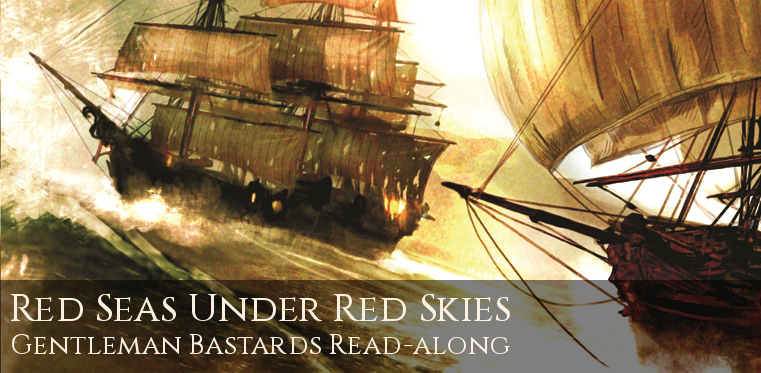
Ever wanted to be a pirate? Long hours, hard work, certain peril, possibilities of swashbuckling and seasickness. Don’t forget to bring a kitten. It’s not Locke Lamora’s idea of a career move, but after a promising start the Gentleman Bastards find themselves out of their depth in Tal Verrar. Can Locke and Jean outwit the Archon, the Bondsmagi, the master of the Sinspire and all the pirates on the Sea of Brass?
You are cordially invited to join the Red Seas Under Red Skies read-along.
- 5th May Chapters 1-3 hosted at x+1
- 12th May Chapters 4-6 hosted at x+1
- 19th May Chapters 7-10 hosted at The Illustrated Page
- 26th May Chapters 11-13 hosted at x+1
- 2nd Jun Book 3 & Epilogue hosted at x+1
1. “And if some small part of him felt sour at twisting her emotions (gods damn it, that part of him had rarely spoken up before!) – well, he reminded himself that he could do as he pleased and feel as he pleased while he was Leocanto Kosta. Leocanto Kosta wasn’t real.”
Between flirting with Selendri, confronting the horrors of Salon Corbeau and handling a certain cliff-top encounter, Locke’s conscience gets a solid work-out this week. What do you make of our little thief’s elastic ethics? Is he a good man, a good thief, or both?
Tiara: Both. Yeah, he’s a thief and obviously he frames his crimes as something that doesn’t really hurt the people he robs rather than leaving them feeling put out, but that doesn’t mean that he can’t still care for the human condition. Those two things are not mutually exclusive. Even in the first book, it was obvious that Locke doesn’t care for gratuitous violence. He may be selfish about his own needs, but not at the expense of others.
As I said during the last book, Locke is not cruel. He doesn’t like to see people suffer. If there is something that he can do to stop it, he will. Locke helped the nobility of Camorr in the last book from suffering loss as he had. Yes, maybe some of that was to be able to sink the ship, but I always felt a larger part of it was because he doesn’t care to see anyone–rich or poor–who doesn’t deserve it suffer.
That idea shaped up even more in this book during the sections about the Salon Corbeau, and if I have to go by the last book and his strong reaction to seeing such suffering at the Salon Corbeau, he’s going to make the nobles who participate in the Salon Corbeau’s Amusement Wars pay. I don’t feel like that’s something he’s going to just let go.
Also, I appreciated that Locke acknowledges that he has a conscience, but that he’s quelled it over the years thanks to his thievery. However, there are some things that even his conscience won’t be silenced about such as using Selendri’s misfortune or watching the Amusement Wars. It would’ve been astonishingly gross if he’d thought it was okay to use Selendri’s pain for his pursuits, and it’s one of those things that can really make me hate a writer’s story. So, I’m glad it eats at Locke.
Wendy: Locke has never been shown to be a cruel person. Even when he seeks to hurt someone, there is usually a sense of justice behind it–this person is deserving of the pain. I never read him as someone who went out of his way to concern himself with the welfare of others if he was not directly involved in said welfare. He saved the nobles at the end of Lies, but that and everything he does seems to be incredibly self-serving. I don’t think he could have walked away from Gentled nobles without any sense of guilt at not saving them, but I do think he would have been able to get over that easily enough, especially since he still has the lost of his friends to deal with. This book has intrigued me though because it has revealed another side to Locke that struck me first when he paid tribute to the dead man in the cage of wasps:
“Crooked Warden,” Locke muttered under his breath, speaking quickly, “a glass poured on the ground for a stranger without friends. Lord of gallants and fools, ease this man’s passage to the Lady of the Long Silence. This was a hell of a way to die. Do this for me and I’ll try not to ask for anything for a while. I really do mean that this time.”
2. “I think Selendri can be sweet-talked, at least a little bit.”
…what do you think? What do you make of Selendri so far?
Tiara: I like Selendri a lot. I do think it’s unfair of Locke to prey on her vanities, especially considering her circumstances and how vicious her own self view could be, but I’m glad there is at least some remorse for that. I know she’s a means to an end for Locke, and karma will probably punish Locke in some hilarious way for it in the end. Her story about how she became disfigured was heartbreaking, and I can definitely understand why she’d be so wary and distrustful of people while being loyal to Requin who was the only person who tried to help her. I can’t pin down too much on her just yet, but she seems capable and not someone you’d want as an enemy.
Wendy: Selendri is someone clearly not to be messed with, but the story of her disfigurement and the loyalty to each other that it revealed in both her and Requin was very moving. I did not like the idea of Locke seeking to manipulate her because I have developed a soft spot for her. Pity? Perhaps. Though I don’t imagine Selendri would appreciate my pity one bit and I suspect Locke’s attempts to manipulate her will not work out as one might expect. Lynch is pretty good and keeping me on my toes!
3. “You are thieves. I am offering you a chance to help steal history itself.”
Now that Stragos’s plan is laid bare before us, what do you make of his purported ambitions – and of his strategy for achieving them?
Tiara: I have to go with Locke on this one. Stragos is a fucking lunatic. It’s not just the fact that he wants to send them to sea. This whole plan he has for making the Navy great again is ambitious, convoluted, and ill thought out. You want Locke and Jean to become a captain and first mate when they can barely stomach the sea. I don’t care what kind of puppet you have accompanying them. You want them to commit acts of piracy, but still somehow come back to the city for their vitamins to curtail the poison. You have this grand scheme that has so many holes it can’t do anything but backfire in the end. Not to mention Stragos sounds like he is literally foaming at the mouth insane. This gif just sums up this whole idea. (He really is like Cutler Beckett from the Pirates of the Caribbean movies.)

Wendy: lol what more can I say after Tiara posts that gif?
4. “Then I may report to my masters that the plan is underway?”
How many different factions do you think are in play at this stage? Any ideas who Merrain might be working for?
Tiara: We know for sure that we have Requin, Stragos, and the Bondsmagi. I believe that the Priori are probably lurking around somewhere in the background, probably not being as stupid as Stragos thinks they are. I’m not sure I can say at this point who Merrain is working for. It might be safe to assume that she might be working for the Priori, but I don’t think so. Someone is trying to assassinate Locke and Jean in a more obvious manner than the Bondsmagi. I feel like that might be the Priori for whatever reason. Maybe they have an idea that Locke and Jean are two cogs in some scheme Stragos is cooking up since there seems to be some animosity between Stragos and the Priori. If they’re the ones trying to kill Locke and Jean, then it might not make much sense to have Merrain save them or set up such an elaborate scheme to orchestrate their deaths. Also, since Merrain is working with Stragos, she’s likely not working for the Priori since she does have some knowledge of Stragos’ plan to send them to sea.
Wendy: My first thought is the Bondsmagi, but while they seem to be all knowing and can be subtle and crafty if they want to be, that doesn’t seem prudent for them here. The Priori seems to be the likely Other Party, if only because we haven’t seen them yet and don’t know–beyond what we know from the likes of Requin and Stragos–what they stand for and how they go about their business.
Optional extra: Now let’s be frivolous. How cool are Verrari job titles? Eye of the Archon. Consulting Poisoner. Second Mistress of the Great Guild of Artificers. What would you like your Verrari job title be?
Tiara: Residing Ambassador of Ethical Racketeering, Mistress of Phalanx Inspiration and Managed Mischief, Project Evangelista (Yes, that’s all one title. LOL.)
Wendy: Executive Assistant and Technical Bridgemaster of the Office of The Most Auspicious of Being.
Graphic Novel Review Bites
Posted on May 12, 2016 11 Comments
 Hinges Vol. 2: Paper Tigers
With thanks to Netgalley for the opportunity to read an advanced copy of this graphic novel.
This is a very quiet book. As in, it doesn’t often use words to tell its story, instead relying, as it should, on the images. The main character, Orio, rarely speaks unless it is necessary, and her partner, Bauble, says nothing at all. But Bauble certainly knows how to get Orio in trouble. Such is the nature of an imp, and it is because of this that Orio is forced to leave the clockwork city she’d just settled in. Imps are considered evil and dangerous but by the end of the book, it is clear that there’s something more to Bauble and that Orio’s loyalty is not unfounded. Volume two also introduces a new character, Abernathy, who has left troubles in his own home to find other cities. Together, they find lots more trouble that leaves them in a literal cliffhanger situation after they discover a city filled with danger and secrets.
I love this series. The stark monochrome and the expressive panels are powerful and the quiet threat that looms within and without the city–and perhaps within Bauble as well–lends an ominous undertone, and Abernathy is a curious addition. He seems trustworthy, but looks are deceiving. Meredith McClaren always offers just enough in every aspect of this story to lure me in further and further…

 Star Wars: Princess Leia
Leia finds herself without a home or a role in the rebellion and the few of her people that remain don’t think too highly of her ice queen persona. Why doesn’t she grieve, they wonder? As if everyone must grieve in the same way. Leia imposes herself on an Alderaanian pilot named Evaan with whom she wants to be friends, though the woman keeps herself at a carefully caustic subservient distance. They take off to scour the galaxy for pockets of survivors to gather them together before the Emperor wipes them out completely.
The exploration of Leia’s feelings and actions following the death of her planet has the potential to be a great read, but that’s not really what we get here. In fact, I can’t really say that this is a Leia story at all since the character often doesn’t resemble Leia at all in her actions. She’s brash and bold, and quick to drop pretenses and subterfuge — which is good since every time she “disguises” herself, everyone immediately recognizes her. Probably because she wears bright white and has got that telltale hair thing going on. She impresses the wayward Alderaanians with her courage and willingness to sacrifice herself, but the storytelling just doesn’t dig deep enough to make any of this convincing. This is a complaint I’ve had with a few graphic novels recently where perhaps too many assumptions have been made about the character and their survival to tell a convincing story. I suspect that some of the problem is the medium. The limited space in a comic doesn’t give a lot of time for exposition and character introspection. Alternatively, perhaps if Leia’s mission had focused on one or two groups rather than bouncing around to three, it would have allowed for greater detail and depth. I found myself comparing this to Martha Wells’ Razor’s Edge that dealt with a similar adventure but (a) the format allowed for more depth, and (b) the plot stayed put in one place, with one group of Alderaanians.
The art was Terry Dodson standard which is to say that it is good and I like it, but in my maturity, I’ve grown tired of “same face” syndrome. Occasionally Leia looks like Carrie Fisher, but mostly she just looks like every other character in the book and every other character Dodson has ever drawn.

 Dungeons & Dragons: Legends of Baldur’s Gate
This was a quick and fun read that follows some pretty basic fantasy roleplaying game standards. It introduces several new characters, but draws in fans of the Baldur’s Gate series with the inclusion of Minsc. I’m not familiar with the character, but what’s not to love about a man who leaps into battle wielding a big ol’ sword and a hamster and yelling things like, “If there is danger, then I shall dange it!” The other characters are a formulaic heart of gold rogue duo, and an elf sorceress who is searching for her brother. She is hunted by a dragon cult who, oh I really don’t have to explain it. This is the plot of just about every basic fantasy series ever. But as I said, it’s quick and it’s fun in both art and story and sometimes, that’s all I need.

 Broken Frontier: Anthology
This anthology is the result of a Kickstarter that I supported–a worthy investment. It collects numerous short stories that cover a broad spectrum of science fiction, revealing just how diverse the genre is and should be. As with any anthology, there will be hits and misses, but this time, even with the stories that didn’t speak to me as much as the others, I was so impressed by the creativity and honesty that went into their telling and illustration. It seems that it is the mandate of the collection that each story end with a cliffhanger or a big reveal that gives the sense of vastness and wonder–a frontier yet to be explored if we dare.

 Dragon Age, Volume 1
U MAD, Gleam?
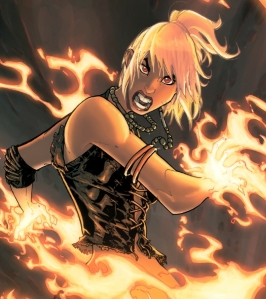
I’ve heard bad things about this but read it anyway because. Dragon Age. The bad things were true. Orson Scott Card apparently took the basic notes he received from Bioware and, well, wrote a basic story filled with two-dimensional characters doing two-dimensional things. It starts with a templar and a mage falling in love and making whoopee. This is not a good thing at the chantry. Not good for the mage, that is, who is hunted down and killed when she tries to escape with her child. She manages to get the child to safety, but in a shocking twist of events, the child grows up to be a mage that is forced into situations that cause her to use her magic and attract the attention of her templar dad who has to hunt her down. The most entertaining and unpredictable part of this book are the awkward poses and facial expressions of the main character.
 Tomb Raider Volume 1 : Season of the Witch
I had no intention of playing the new Tomb Raider game after its initial shitty marketing campaign. Gail Simone felt the same way at first and turned down Dark Horse’s request to write this series. She was later convinced to try the game and discovered that their marketing department is full of idiots who thought showing sexual assault was great advertising. On Simone’s recommendation, I tried it too and am glad I did, especially since it allowed me to better appreciate the particular scene within the intended context.
Anyway, I’m fairly certain that Simon played the game before writing this series because it might as well have been DLC. The return to Yamatai isn’t unexpected, plot-wise, since the island did have such a hold on Lara and the crew of the Endurance, but the story could have taken a more inspired direction rather than rehashing the kidnapping and resurrection process players endured in the game, complete with the re-kidnapping of Lara’s friend Sam. The game took the time to explain how Lara becomes the killer that she is, doing what she has to do to survive and protect her friends. This starts off with Lara dealing with the psychological and emotional aftermath of that. An important road to explore for the character, but it might have been more interesting if told on an adventure that wasn’t so similar to her last one.
Guest Post: “In Terra Ignota, Diaspora Becomes Nations Without Borders” by Ada Palmer
Posted on May 11, 2016 12 Comments
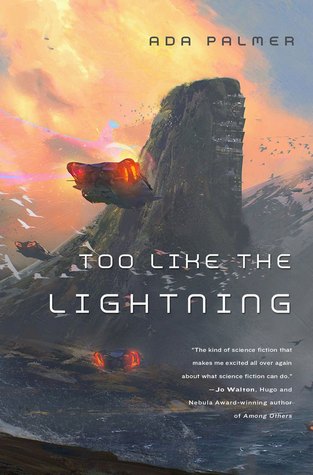 In case you missed it, yesterday I posted my review of the novel Too Like the Lightning, sharing my thoughts on this extraordinary book which takes place in a futuristic world very different from the one we live in right now. That’s why we’re absolutely thrilled and honored to welcome author Ada Palmer to The BiblioSanctum today, to tell us a bit about her inspiration for the book and how her own experiences studying in Italy have shaped the political and geographic philosophy of her Terra Ignota series. As someone who grew up with expatriate parents and holds multiple passports myself, I found Ada’s post utterly fascinating, and I hope you will enjoy it as much as I did!

IN TERRA IGNOTA, DIASPORA BECOMES NATIONS WITHOUT BORDERS
by Ada Palmer
In Terra Ignota I imagine a future Earth united by a transportation system so quick you can get from anywhere on Earth to anywhere else on Earth in two hours. As a result, the whole world is within commuting distance, like a city and its suburbs, so it’s perfectly practical to live in Honolulu, work in Tokyo and lunch in Paris while a spouse works in Buenos Aires and lunches in Mumbai. The immediate result of such a technology might be something like a world of expats, where every house on a block might contain citizens of a different nation, and no child grows up without friends from many other ethnic and linguistic groups living and playing on the same block. In such a future, geography would rapidly cease to makes sense as the political or cultural unit, since the community of people you share a culture with is inevitably diasporic, people united by language, background, hobbies, interests, work, school rather than centered in the place where you happened to be born, or buy real estate. Politics would have to adapt to draw lines between peoples in some other way than on a map.
I started thinking about this question during the years I spent living in Florence and Rome at academic research institutes. These places have scholars from a dozen countries, with families and kids, living together as a community nowhere near anyone’s home nation. Local city regulations governed our daily activities, but every day I sat down to dinner with people remotely governed by ten different governments and ten different sets of laws, all mixing effortlessly. I watched kids who spoke a dozen languages playing together, rapidly creating their own unique language as they taught each other the most useful phrases from their own. I talked with families where the father might be Spanish, the mother Australian, with kids born in France and growing up in Italy, kids for whom nationality had nothing to do with the spot where they were born, and everything to do with which of many cultures they felt connected to. Such a child’s community was partly at school, partly at the institute, partly online, friends from past homes on the far side of the world, or friends they’d only met online—a universal phenomenon for children of the internet age. I listened to parents talking about such kids growing up and having to choose which passport to get, which nation to be governed by. Sitting at those tables made me think how irrelevant it was in many ways that all our citizenships corresponded to blotches of territory on a map. In that moment citizenship wasn’t about geography, it was about identity, language, law, what power you would appeal to in a crisis, and which government your absentee ballot had a say in.
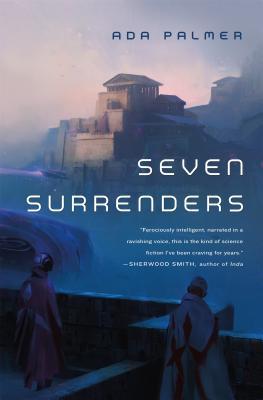
Seven Surrenders – Book 2 of Terra Ignota
This gave me my idea for non-geographic nations, a future where international travel and marriage would become more common—as they already are in the European Union—until living in the place that corresponds to your government becomes the exception instead of the rule. Why, then, have geography be part of citizenship at all? I don’t mean the end of all the nations that exist now, but what if being Italian, or South African, or Japanese meant identity, a choice, what government you love, respect, and choose to be a part of, instead of where you live? What if the diasporic global populations that consider themselves Chinese or Greek or Igbo came to be what those nations really meant, instead of places? Parents with kids born with four different potential claims to citizenship would talk about their children growing up and choosing for themselves which one(s) to keep, thinking about which identities they shared, and which laws they most wanted to be governed by. In such a world, nations might have no geography at all. City and regional ordinances could be the only geographic law, and people could choose a government when they grow up, and by governed by it no matter where they live. There is no reason you can’t have people governed by different laws living side-by-side; it happens today all the time as people travel. In fact, throughout Earth history there have been countries with multiple law overlapping in the same place, like how Europe had Church Law alongside lay laws, so two siblings one of whom was a monk and the other a carpenter would be governed by entirely different laws, courts and so on. It worked for centuries with no more hiccups than any modern legal system has.
And if citizenship were part of coming-of-age instead of being dropped on you by chance of birth, then governments would have to compete for citizens, working to represent ideals and traditions people would be proud to choose to be part of. Nationalism, language, religion, and race as well as political opinions would now affect people’s citizenship directly, so young people might grow up and have to choose which was more important to them, a government which reflected their native races/languages or their favorite political ideals. An unpopular or unsuccessful government would be chosen by fewer citizens, and have a strong incentive to redefine itself, and a very unpopular regime might see citizens leave en masse, since it’s a lot easier to change citizenship when it doesn’t mean leaving your home, city and job as well.
All this feels like a big change, but it’s just a continuation of what’s already happening as transportation gets faster, and as it becomes more common to move to a new city for work or school. More and more people now live far from where we were born, and have our most important relationships with people far from where we live. The European Union is giving us an example of how a multi-state arbiter lubricating the interactions between multiple governments can make multinational lives and families easier. Terra Ignota imagines the small step from “easier” to “normal.”
 ABOUT THE AUTHOR
Ada Palmer is a professor in the history department of the University of Chicago, specializing in Renaissance history and the history of ideas. Her first nonfiction book, Reading Lucretius in the Renaissance, was published in 2014 by Harvard University Press. She is also a composer of folk and Renaissance-tinged a capella music, most of which she performs with the group Sassafrass. Her personal site is at adapalmer.com, and she writes about history for a popular audience at exurbe.com and about SF and fantasy-related matters at Tor.com.
Waiting on Wednesday 05/11/16
Posted on May 11, 2016 13 Comments

“Waiting On Wednesday” is a weekly meme hosted by Breaking the Spine that lets us feature upcoming releases that we can’t wait to get our hands on!
Mogsy’s Pick
Conspiracy of Ravens by Lila Bowen (October 11, 2016 by Orbit)
Lila Bowen (AKA Delilah S. Dawson) follows up her western fantasy novel Wake of Vultures with this sequel that looks just as magical and monstrous!
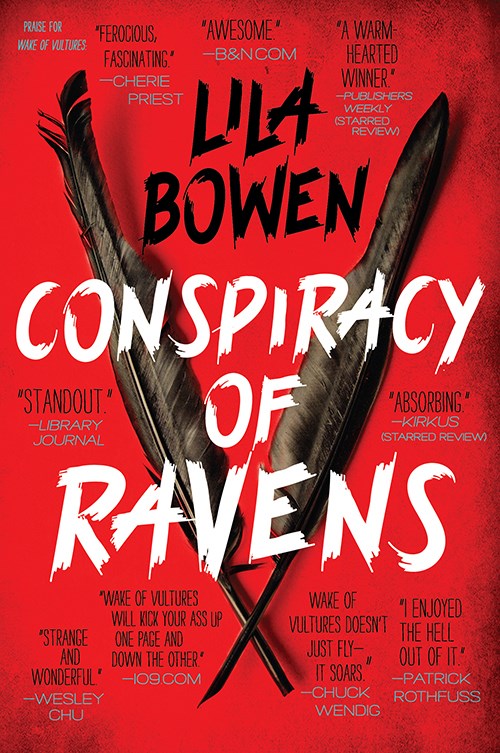 “Nettie Lonesome made a leap — not knowing what she’d become. But now the destiny of the Shadow is calling.
A powerful alchemist is leaving a trail of dead across the prairie. And the Shadow must face the ultimate challenge: side with her friends and the badge on her chest or take off alone on the dangerous mission pulling her inexorably toward the fight of her life.
When it comes to monsters and men, the world isn’t black and white. What good are two wings and a gun when your enemy can command a conspiracy of ravens?
Conspiracy of Ravens continues the exciting journey begun in Wake of Vultures as Nettie Lonesome discovers that she, and the world, are more than what they seem.”
Book Review: Too Like the Lightning by Ada Palmer
Posted on May 10, 2016 26 Comments
A review copy was provided by the publisher in exchange for an honest review. All opinions are my own.
Too Like the Lightning by Ada Palmer
Mogsy’s Rating: 3.5 of 5 stars
Genre: Science Fiction
Series: Book 1 of Terra Ignota
Publisher: Tor (May 10, 2016)
Length: 432 pages
Author Information: Website | Twitter
Has a book ever made you feel completely uncertain of how you’ll rate it? Like, what if you’re blown away by its ideas, but at the same time they make you feel utterly out of your depth? Or maybe, a book that you didn’t think would fit your tastes actually ends up surprising the hell out of you. Truth be told, it’s not often that I experience such conflict with a novel, but I’m also not surprised to find myself feeling like this about Too Like the Lightning. After all, it only makes sense that a complex book will require a complex review.
Technically, Ada Palma’s debut novel can be described as political science fiction, but that’s also a gross oversimplification, for here you will also find plenty of historical allusions, social commentary, and philosophical discourse—all coupled with more traditional elements of the genre. In addition, the “story” here isn’t really that but a whole lot more, but I’ll go further into that later. First, we’re introduced to our narrator, Mycroft Canner, writing this account in the year 2454. The world has transformed into a utopia where fast, expedient travel to and from any point in the world has effectively made ideas like borders and nation states obsolete. Instead, almost everyone belongs in one of the handful of mega-factions made up of millions or billions of people. The nuclear family unit has also been replaced by a more dynamic form called a “bash’”, which can vary in size and composition of related or unrelated individuals. And war? War is another topic that one only reads about in the history books.
Mycroft is known as a “Servicer”, a convict serving out his sentence by being as useful as he can to society. Over time, he has grown close to the Saneer-Weeksbooth bash’, whose members are the custodians of this world’s transportation system, a position which gives them considerable renown and power. However, for years the bash’ has also managed to hide a big secret from everyone, sheltering a young boy with the power to work miracles. With little to no effort at all, thirteen-year-old Bridger has the power to bring inanimate objects to life whenever he pleases. Because of his status as an honorary member of the bash’, Mycroft is included in the small group of those who are aware of Bridger’s existence, but that circle is about to be widened with the sudden arrival of an appointed spiritual advisor, or sensayer, named Carlyle Foster.
This description is also merely half of it though, because while all this is happening, all kinds of political machinations are taking place in the upper echelons of the power structure. The book is laced with a thread of mystery here, involving a much elaborate theft of something called a Seven-Ten list, which is a who’s who of the world’s movers and shakers. Naturally, the Saneer-Weeksbooth bash’ is caught in the middle of it, and in their investigations to find out more, Mycroft and others in this narrative find themselves engaging in various political and philosophical dialogues.
To be sure, Too Like the Lightning is actually quite light on plot, but heavy in its social and literary themes. As I said, it’s not so much a story but a Conversation-with-a-capital-C. Here you will find cultural and scientific debates, existentialist questions, explorations into multiple fields of art and history. The book also has lots to say about a variety of subjects, from gender roles to religion. It’s amazing, really. Phenomenal, even. Palmer’s vision is ambitious and unique, drawing from the philosophical movement and spheres of ideas that changed the face of Europe in the 18th century to create this fully-fleshed setting, a world which appears to have gone through its own Age of Enlightenment. The dramatically altered world through Mycroft’s eyes is nothing like our own. Strange, beautiful, and full of wonder, life in this book might not be perfect, but the possibilities are limitless.
That said, this is an odd novel. There’s no other word for it. And I confess, had I been more impatient while reading this, I might have been tempted to set this one aside for later—not because it is a bad book, but because it so far from what I would normally read for entertainment that it might as well be from another universe. Ultimately, I’m glad that I read it to its completion because it was an incredible experience, but I admit there were times where it felt almost too difficult or daunting to continue, especially when I first started. This was also a slow read, because there’s no rushing a book like this; it’s a work of art meant to be savored, consumed, and digested thoroughly.
If I could do it all over again, I probably wouldn’t have read Too Like the Lightning over a period of several days. Instead, I would have taken my time, whether it took weeks or months, in order to give myself plenty of time to chew on the many issues and ideas presented in this novel. A longer timeline might also serve to alleviate a lot of the confusion, breaking down the staggering amount of information you need to know to understand the story into more manageable pieces. A book like this practically screams for a glossary, as there are so many new words and terms to learn, so many new concepts and customs to familiarize yourself with, and of course, almost all the characters seem to have more than one name, and it was an exhausting mental exercise just to keep track of them all.
Still, it does get easier. The narratives surrounding Mycroft’s mission to protect Bridger, the boy who seemingly works miracles, was many times more interesting to me than the mystery involving the theft of the Seven-Ten list—at least at first. Once those two threads started coming together, I became more fascinated and invested. Then came the surprises, like the truth behind mild-mannered Mycroft’s crime and how he ended up a Servicer, or the massive revelations dropped on us at the end of the book.
Fair warning though, as this was intended to be the first half of a duology, there will be no resolutions to be found here, since all that will be planned for part two, Seven Surrenders. Having finished Too Like the Lightning, I feel that I know a lot more now to better prepare myself for the sequel. This book is guaranteed to make you think, and will no doubt be a delight for those who enjoy philosophy. It’s a very rich, thought-provoking experience, even if it is perhaps a bit impenetrable at times. If you’re feeling up for a challenging read—because impressive or not, this can be a very demanding novel—then you might want to give this one a look.


Week 1: Between Two Thorns Read-Along
Posted on May 9, 2016 7 Comments

We’re diving into The Split Worlds series this week, starting with the first book Between Two Thorns! If you’re interested in joining this Read-Along, visit the SF/F Read-Along group for more information and to join the discussion.


The new season is starting and the Master of Ceremonies is missing. Max, an Arbiter of the Split Worlds Treaty, is assigned with the task of finding him with no one to help but a dislocated soul and a mad sorcerer.
There is a witness but his memories have been bound by magical chains only the enemy can break. A rebellious woman trying to escape her family may prove to be the ally Max needs.
But can she be trusted? And why does she want to give up eternal youth and the life of privilege she’s been born into?



Part 1 – Monday 9th May: Chapters 1-9, hosted by Over The Effing Rainbow
Part 2 – Monday 16th May: Chapters 10-18, hosted by On Starships and Dragonwings
Part 3 – Monday 23rd May: Chapters 19-25, hosted by OneMore.org (Imyril)
Part 4 – Monday 30th May: Chapters 26-End, hosted by Lynn’s Books

1. Let’s tackle the setup, first of all. The world of the Nether is caught between the Fae world and ours, and is also apparently too old-fashioned for Cathy, our escaping protagonist, to want to live in. What were your first impressions given her views on her home and family?
Mogsy: Her world was too old-fashioned for her, and apparently too crazy. I felt for Cathy, I really did, especially the way she was pushed into a corner. That trick with the three wishes was not very nice, and if that was any indication of the way things worked in the Fae realm, I would have run away too, and never looked back. All joking aside though, I admire a character like Cathy, who clearly has a natrual curiosity and a passion for learning, and she was willing to go her own way despite her family’s scandalized reactions.
Tiara: The Nether seems like it’s probably a beautiful and dangerous place if I’m to go by her interactions with Lord Poppy. Hearing about how casually cruel her own family is and how that is the norm. Reading about how her father beat her when he found out that her tutor was allowing her to read books from Mundanus that filled her head with ideas such as equality and wanting to be educated about the world around her. It would be easy to conform under such hard circumstances. Cathy is afraid of he brutality that the Nether presents, but her want to know things overrules that. She truly does share a trait of the people she admires that have stood up against injustices in history.
2. There appears to be corruption and murder afoot among the Arbiters, a sort of supernatural police, and it doesn’t lead to good times for Max. What do you make of the magical soul surgery that the Arbiters undergo to do their jobs?
Mogsy: I think the Arbiters are great. Let’s face it, the “supernatural or magical police” trope is all over fantasy, but I thought there were a few things here that made the Arbiters unique and interesting. Also, Max’s sections actually intrigue me the most so far. I’m really looking forward to see how this little mystery plays out on his end.
Tiara: That is an interesting angle. I agree with Mogsy that the supernatural police isn’t a new idea, but this idea that their souls are taken from them in order for them to better do their jobs is fascinating. While it does seem to have rendered many emotions and wants void, it apparently doesn’t stop people from giving into corruption. Max’s predicament with his soul is a very curious one and I look forward to seeing what such an implication could mean for him and his new companion.
3. Even more mysterious is Sam’s accidental involvement in the mystery. Any thoughts on the hapless mortal and what might become of him?
Mogsy: Honestly, I have no idea. When this book first started, I thought Sam might be a throwaway character, simply fulfilling his purpose as a plot device to show off some of the “supernaturalness” of this world. Of course, we realized there was more to him after the first few pages. He hasn’t shown up all that much so far, so his fate remains to be seen.
Tiara: Well, we haven’t had too many sections with Sam, but I can see him being a bit of a bumbling sidekick once this all gets rolling. His wedding ring seems to act as protection for him against the Fae, and I’m curious to know whether this was intentionally done by his wife (or her family) or if he just happens to be a victim of circumstance by being the recipient of a charmed item. I have a feeling his whole world is about to change regardless.

Tiara: I had to share my favorite quote in this section because I loved that Cathy found love through geekery. As someone who met her own husband through gaming, stories of people bonding and falling in love over geeky interests always warms my heart:
“He made it his personal mission to educate her about sci-fi’s transition from paper to film. Somewhere between This Island Earth and Forbidden Planet they’d started to hold hands. They kissed halfway through Journey to the Centre of the Earth and by Fantastic Voyage they were almost inseparable. He’d lovingly introduced her to Star Wars in the original film release order, and she realised she loved him at the end of Raiders of the Lost Ark. By Back to the Future III he’d confessed he felt the same, inspired by the scene between Clara and Doc Brown stargazing together.”
Mogsy: I agree, that was such a sweet quote, Tiara! I met my husband through gaming and a shared love for all things geekery too, and that quote reminded me of the way he introduced me to Star Trek. We sat down and watched all the shows and movies together, starting at the beginning with the Original Series.
Audiobook Review: Lovecraft Country by Matt Ruff
Posted on May 9, 2016 13 Comments
A review copy was provided by the publisher in exchange for an honest review. All opinions are my own.
 Lovecraft Country by Matt Ruff
Mogsy’s Rating (Overall): 4 of 5 stars
Genre: Horror
Series: Stand Alone
Publisher: Blackstone Audio (February 16, 2016)
Length: 12 hrs and 14 mins
Author Information: Website | Twitter
Narrator: Kevin Kenerly
Lovecraft Country was not what I expected, but it was a good kind of different. I’ve never read Matt Ruff before and only know of him by his reputation of being a cult novelist, and perhaps I thought I was going to be in for a pulpy horror read, considering the title and the cover. It turned out to be all that, plus a lot more substance.
Told in a series of interconnected short stories that form an overall bigger narrative, much of this book takes place in the 1950s following the lives of several members of a black family who find themselves entangled with a cabal of sorcerers in “Lovecraft Country”—a term that has more to do with the rampant racism in that part of the US at the time, rather than the Lovecraftian horror subgenre.
The novel begins with the title story. After serving his country, Atticus Turner returns home to Florida to find that his father Montrose has gone missing, prompting a road trip to Chicago to find out what happened. Soon, his journey brings him to New England with his uncle George and a childhood friend named Letitia. Together, they discover that Montrose has been captured and held prisoner by the Order of the Ancient Dawn, a secret society led by the enigmatic sorcerer named Samuel Braithwhite. Trapped at the estate, Atticus and his family are ultimately rescued by Braithwhite’s son, Caleb.
It turns out, however, that Caleb may have his own agenda. Through the rest of the stories in book, we’re introduced to the other characters in Atticus’ extended family and circle of friends. Each section of the novel is a tale of a supernatural encounter with the Order of the Ancient Dawn or Caleb Braithwhite, who has remained in the shadows, hounding their every step.
There are definitely plenty of Lovecraftian themes in this book, which is what initially led me to pick this up. But while the hallmarks of cosmic horror and paranormal elements abound, that’s not what really disturbed me. The thing you should know about Lovecraft Country is that it takes place in an era where racial segregation and Jim Crow laws are still very much alive, and Ruff’s depictions of the terrible ways African Americans were treated back then are as stomach-churning as you would expect. If the characters react pragmatically in the face of the supernatural horrors and cosmic creatures in this book, well, maybe that’s because the dangers they have to deal with in the real world are a lot worse in many ways. Violence and abuse fueled by racism, ignorance and hate is something that hangs over them every single moment of their lives, coming from monsters that are all too human.
To be sure though, there are also strange events and unseen monsters lurking at every turn, and I thought Lovecraft Country was an intriguing, creative blend of pulp horror with social commentary. The speculative elements made this one a fun read, but the story also made me reflect upon the deeper themes the like identity and history, how both have a hand in shaping a society and the people who live in it. It’s a very “connected” novel, and I don’t simply mean the way it’s structured so that the book reads more like a collection of related short stories with multiple character arcs instead of just the one traditional plotline, because all the themes and ideas in the individual sections come together in the end to form a cohesive whole as well.
Speaking of the structure though, I wasn’t expecting the short story format when I picked this up, and I admit I was initially thrown off by the frequent transitions. Even though this book is not your typical collection, it still has a few of the same issues, mainly that some stories are better than others. Not all of them captured my attention the same way and I fell into a lull with one or two, but that’s probably the only criticism I have for this book. As with most anthologies and collection-type books, not all the stories will have the same quality or appeal to me the same way.
Audiobook comments: Finally, I want to mention that I listened to the audio edition of Lovecraft Country. It is narrated by Kevin Kenerly, who did a great job bringing the all the different characters to life. Though, it feels kind of like a missed opportunity that they didn’t get an additional reader or two on board, since multi-narrator productions are pretty common these days for anthology/short story collection audiobooks that feature stories with way more than just one central character. Nevertheless, I really enjoyed Kenerly’s excellent performance. If I had to do it all over again though, I might have opted for the print version, or even read/listened to the print/audio versions in tandem, because some of the stories in here definitely required more time to digest. Audiobooks are not exactly well suited to frequent pauses mid-chapter to reflect, but I still very much enjoyed my experience in this format.
Story:  | Performance: | Overall:
Book Review: The Summer Dragon by Todd Lockwood
Posted on May 8, 2016 19 Comments
A review copy was provided by the publisher in exchange for an honest review. All opinions are my own.
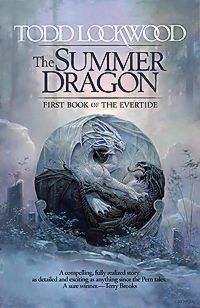 The Summer Dragon by Todd Lockwood
Mogsy’s Rating: 4 of 5 stars
Genre: Fantasy
Series: Book 1 of The Evertide
Publisher: DAW (May 3, 2016)
Length: 512 pages
Author Information: Website | Twitter
Todd Lockwood is one talented guy. Not only is he a professional illustrator and a painter of beautiful dragons, with his art gracing a number of science fiction and fantasy covers, apparently he’s one hell of an author too. For years I’ve been an admirer of his work as an artist, so when it was announced that DAW was going to be publishing his debut novel my interest was immediately piqued, especially when I found out that his book is about—what else?—dragons!
And so we have The Summer Dragon, first book of the Evertide saga. In a world where dragons are used as mounts in war, Maia and her family are breeders who supply the army with young dragonlings. For as long as she can remember though, Maia has wanted a dragon of her own to love and train and ride, but as Brood Day draws nearer it seems once again the army will be demanding their entire stock this year. A new threat is emerging, and it has already destroyed another one of the Dragonry’s most productive aeries. To fight the enemy, the army is going to need every single dragon they can get their hands on.
That is why when the mythical Summer Dragon suddenly appears to her and her brother Darian in the woods one day, Maia believes with all her heart that this is a sign that her luck is going to change. She was correct, as it turns out…though perhaps not in the way she expected. Determined to prove to everyone—herself included—that the appearance of the Summer Dragon means something greater for her future, Maia decides to risk it all and take matters into her own hands. She will get her dragon, or die trying.
At its heart, The Summer Dragon displays many characteristics of your classic girl/boy with her/his loyal companion creature story, but nevertheless I was beyond impressed. Lockwood’s writing style feels very smooth and polished, making it wonderfully easy to get into. It’s hard to believe this is his first novel, since he takes to storytelling like he’s been doing it for years. The plot is balanced with lots of action, intrigue, and even some gut-wrenching family drama, and of course we mustn’t forget all the dragon-y goodness.
No doubt dragons are extremely valuable in this world, but while the some in the army may regard them as nothing more than useful mounts during times of war, others recognize the importance of these creatures in all other areas of life. Dragons are deeply ingrained in this culture, featuring prominently in the mythology and religion. For example, the Summer Dragon is seen as a manifestation of one of the great aspects, and the sighting of any of these High Dragons is said to be a sign of great changes to come. People form deep bonds with dragons, and for breeders, they’re more than just a livelihood; they are friends and family.
Clearly, Lockwood has shown he can write dragons as well as he draws them. And speaking of which, he has also included about a dozen illustrations in this novel, each one gorgeously rendered and insanely detailed. That’s already enough for me to recommend picking up the hardcover to admire the artwork in all its glory; for me, it’s like an extra bonus to an already fantastic story. The Summer Dragon has the added benefit of feeling like the perfect coming-of-age tale that I think will appeal to adults and young adults alike. The story hooked me immediately, with a conflict that is straightforward but intriguing. Themes like friendship and family are explored in unique ways, and the action and adventure keeps the story moving at a quick and absorbing pace. Maia is a great protagonist, supported by a vibrant cast of characters who each have their own motivations and secrets, so that you can never really know for sure what might happen. Plus, who can say no to the dragons? Their personalities are absolutely enchanting, and I see them as the stars of this novel in their own right.
The Evertide is now poised to become another one of my favorite fantasy series featuring dragons, putting it up there alongside Marie Brennan’s Memoir by Lady Trent. I’m looking forward to the next installment with great excitement! If you enjoy fantasy and adventure and dragons, you definitely won’t want to miss this.

YA Audiobook Weekend: Shatter Me by Tahereh Mafi
Posted on May 7, 2016 16 Comments
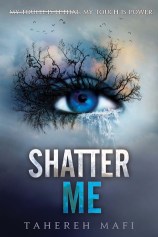 Genre: Young Adult, Romance, Science Fiction, Dystopia
Series: Shatter Me #1
Publisher: Harper Collins
Information: Website | Twitter | Goodreads
Tiara’s Rating: 3 of 5 stars
Narrator: Kate Simses | Length: 9 hrs and 12 mins | Audiobook Publisher: HarperAudio (November 15, 2011) | Whispersync Ready: Yes
To the world, 17-year-old Juliette Ferrars is a monster. Born with a rare gift/curse, Juliette can kill people with a touch. After three years of serving a sentence in an asylum for an accidental murder, the new governing body of the world, the Reestablishment, promises to give Juliette a fresh start if she’ll become their weapon. Over the years, even before her imprisonment, the world had started to crumble due to wars and humans taking nature for granted. The world fell into chaos and the Reestablishment swooped in and promised to make everything right. Except… they haven’t. They took the opportunity to implant themselves firmly into a position of power. More people are dying from gunshots than environmental reasons. Now rebellion is brewing as the Reestablishment talks of destroying books, artifacts, cultures, and even languages in favor of a more centralized Reestablishment focused government. And they want Juliette to help them establish this order.
Shatter Me strikes me as the type of book that’s meant to be listened to and not read. I think that’s the first time I have ever asserted such a claim about any book. The experimental style of writing lends itself better to being spoken than read. The prose is too purple, many of the metaphors and analogies too jarring, for this to have been an enjoyable book read for me. I found myself pausing the audiobook from time to time to decipher what some of these phrase choices could really mean. Examples:
“My eyes break open. Two shattered windows filling my mouth with glass.”

“Warner thinks Adam is a cardboard cutout of vanilla regurgitations.”

Some of them were brilliant, creative, and profound but some were just pretty words thrown together. But hearing it spoken, that was the key. The choppy sentences, the odd phrase choices, are better narrated, and can be seen as something indicative of Juliette’s mental state. Credit goes to the narrator, Kate Simses, for doing such an excellent job with the narration. She managed to pull a wealth of emotion from the words. Parts of the book that I probably would’ve skipped over in a reading I listened to with my full attention. Simses’ voice managed to make me truly feel for Juliette while her cool, cruel voicing of the antagonistic Warner left me wanting to punch him in the stomach. She did all the cast such justice. Simses’ emotional range kept me rapt and invested in a story that I would have otherwise skipped.
Mafi’s writing style reminded me of two other young adult books that play around with a similar experimental style–5 to 1 and The Girl from the Well. Mafi uses a similar technique of short, choppy sentences followed with long, sprawling prose much like 5 to 1 while incorporating the counting that was featured in The Girl from the Well. Twisting this to her own use, the protagonist, Juliette, writes down many of her thoughts which she scratches through and then either uses simpler phrasing, omits the information altogether, or repeats herself. In the audiobook, this is denoted by the sound of a writing tool marking through words on a paper. I admit that this does feel a bit gimmicky as it’s used less and less as the book carries on, but it was a bold decision to do something different with the writing. Mafi is undeniably a gifted writer who falls toward the more melodramatic side. She likes putting words together in creative ways, and I admire her adventurousness in this regards even when I was left a little befuddled by her choices.
This book isn’t without its problems. Despite the world that Juliette lives in, a world that was falling apart even before she was caged away, she can be far too naive about how things are. You wouldn’t expect a girl who talks of beatings and cruel treatment to be such a bright-eyed lamb. I know writers’ love their heroines, especially in young adults books, but this “too precious, too pure, for this world” thing has really got to stop. I can say that Mafi does allow Juliette some agency, but at turns, she falls into those moments when you really just want to ask why would anyone be so stupid in such a situation like worrying about a kiss when you’re about to, y’know, be dragged back to your sick, almost-rapey, obsessed captor. Let’s focus on the more life-threatening priority first. And while I was glad that Juliette stood up for herself even when she was afraid, it felt inconsistent because it wasn’t tempered well. One minute she’s about to have a panic attack, asking to be killed, because someone is breathing in her general direction and the next she’s screaming at the evil jerk running the place. I’m sure there are more consistent ways to show that Juliette has a spine. I guess I should be glad that she had one at all. There are various other concerns that popped up, but they didn’t bother me enough to make me stop listening.
On to the romance. You knew it was coming. This book features a bit of a love triangle. I really hate to go into too much detail because it would spoil too many parts of the story for those who will read it. I will say that one love interest is awfully damn convenient and the other love interest is the almost-rapey, asshole soldier who is over the sector where she lives. You already know how I feel about asshole love interests in YA books, but this is where I appreciate that Juliette pushes back, that she is allowed to express her extreme frustration with his treatment and what he expects from her. However, Juliette is surrounded by boys/men in this book, so there’s a fair share of “special snowflake” status attached to her just by virtue of her sex in general. I do feel this is a little bit of a disservice to the male characters in this book and relies too much on the idea that men can’t control themselves around women.
I still liked this book, though. I think it’s mainly because of the passion that the narrator put into this. I was invested in Juliette’s story. I cared about her situation and what happened to her and the other characters. I can see where some might see this as whiny, but as I said, the narrator takes passages I would’ve just rolled my eyes at and gave them new meaning with her narration. This story got an emotional response from me. Okay, I would be lying if I didn’t mention that this story also appealed to that part of me that loves a superhero story, and by the end of this book, that is the path that it is firmly starting to travel. Men, women, and children with powers fighting against the corrupt establishment (or Reestablishment, in this case) complete with team outfits. It’s the X-Men lover in me. This series could turn into my guilty pleasure read for 2016, flowery words raining the wrath of God upon the far reaching pieces of our rainbow dementia colored souls purple prose and all.
Story
Performance

Overall
Mogsy’s Bookshelf Roundup: Stacking the Shelves & Recent Reads
Posted on May 7, 2016 27 Comments
Bookshelf Roundup is a feature I do every other weekend which fills the role of several blog memes, like Stacking the Shelves where I talk about the new books I’ve added to my library or received for review, as well as It’s Monday! What Are You Reading? where I round up what I’ve read since the last update and what I’m planning to read soon. Mostly it also serves as a recap post, so sometimes I’ll throw in stuff like reading challenge progress reports, book lists, and other random bookish thoughts or announcements.

And just like that, April is over in a blink of an eye and now we’re saying hello to May. Warm weather is on its way, though you wouldn’t know it from all the rain and cold we’ve been having here for the last couple weeks. As we edge towards summer, things are going to be getting a little busier, both real life and on the book blogging front. The next few months will see the release of a lot of anticipated titles, plus as you might have heard, the BiblioSanctum is one of the blogs participating in this year’s Self-Published Fantasy Blog-Off competition, so that will require some adjustments to my reading schedule. Currently I’m working on my plan of attack, but I’m sure I’ll find a rhythm in good time. But now, let’s get on to the books…
Received for Review
Some really exciting new arrivals this week, my thanks to all the publishers for the review copies received! For more details and full descriptions of the books, be sure to click the links to their Goodreads pages!

The Summer Dragon by Todd Lockwood – My thanks to DAW who sent over this finished copy last month. And oh my goodness, the illustrations in it are sooo beautiful in all their glory, while providing extra flavor to the fun, adventurous story here about dragons. I loved this book. My review will be dropping tomorrow, so be sure to check it out.
Admiral by Sean Danker – The good folks at Roc also sent over a finished copy of this military science fiction debut. A man wakes up on a dead ship with three newly trained recruits, and the only clues that identify him are the markings on his sleeper that show he’s an admiral…but is he? I’ve had my eye on this one for a while, so I’m hoping to dive in soon.
Song of the Deep by Brian Hastings – Sterling Pub surprised me last week with this slick little ARC based on the upcoming video game of the same name. They know I love my game tie-in novels! I’ll likely give this one a read, since it sounds like a short, fun Middle Grade story. It came with some cute pins and stickers. My thanks to the publisher!
Bailey’s Story by W. Bruce Cameron – D’aww, they cuteness! My thanks to Starscape for this illustrated children’s novel adapted from Cameron’s bestseller A Dog’s Purpose, which I read a few years ago so I actually know enough about it to recommend it highly, especially if you are a dog lover. Word of warning though, that book made me BAWL LIKE A BABY. I’m sure they’ll tone down on the heartstrings tugging for this children’s version, but if it’s anything like the original, you are going to need plenty of tissues…
I Am Providence by Nick Mamatas – I did a happy dance when this arrived in the mail. It’s funny because I could never really get into the work of H.P. Lovecraft himself, and yet I would gladly leap upon anything inspired by his stuff or stories with Lovecraftian horror themes. My thanks to Night Shade Books for this ARC! There are illustrations in this too, and they are very tentacle-y indeed.
Voodoo Killings by Kristi Charish – I owe Kristi and the awesome team at the Canadian offices of Penguin Random House a big thank you for this one! I became a fan after the Adventures of Owl and I’ve been waiting for this first book of her new series ever since I heard she was working on it. I plan on starting it next week and I am beyond excited.

MEG: Nightstalkers by Steve Alten – Several amazing ARCs also arrived from Tor this week, starting with this standalone fifth installment in Alten’s series about big-ass prehistoric sharks. I’ll be first to admit a weakness for the “creature features” of the 80s and those made-for-television movies about monsters that you see on networks like SyFy, so a book version of something like seemed right up my alley. Besides, who can say no to giant shark rampages? That’s right, no one.
Red Right Hand by Levi Black – Did I mention I love Lovecraftian horror? Yeah, I love Lovecraftian horror. Coming out this summer from Tor is this twisted quest tale of urban fantasy featuring a smart, gutsy female protagonist going up against the menace of the Elder Gods. Yes, please.
Four Roads Cross by Max Gladstone – This one just appeared on my doorstep one day, though I’m not complaining because WHEEE, SO MUCH YES! to this fifth book of the Craft Sequence! If it’s anything like the previous books it’ll feature another self-contained story, and as if that weren’t enough, some old friends are coming back for this latest adventure to defend the great city of Alt Coulumb. Thank you, Tor!
Company Town by Madeline Ashby – A surprise hardcover of this also showed up from Tor. I’ve wanted to check out more by Madeline Ashby ever since I read her book vN pubbed by Angry Robot, so its arrival couldn’t have been more perfect. I’m definitely ready for some murder mystery and bio-tech.
The Transference Engine by Julia Verne St. John – In case you missed our cover reveal and excerpt for this book last week, here it is again. Gorgeous. Just…gorgeous. My thanks to DAW for sending me this ARC with the updated artwork gracing its cover!
Regeneration by Stephanie Saulter – If you haven’t read the first book Gemsigns yet, you are missing out. I too should be working on getting caught up with this series, since this third book is already out now in paperback in the UK, and I am very grateful to the kind folks at Jo Fletcher Books for posting me a copy.
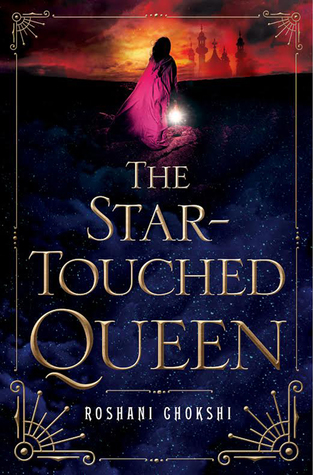
The Star-Touched Queen by Roshani Chokshi – Audiobook, with thanks to Macmillan Audio. I already listened to this one and a review is on its way. This is a truly wonderful book, kind of like a retelling of the Persephone/Hades story but inspired by the grand sweeping epics of Indian mythology. It might not be for everyone, but I loved it.
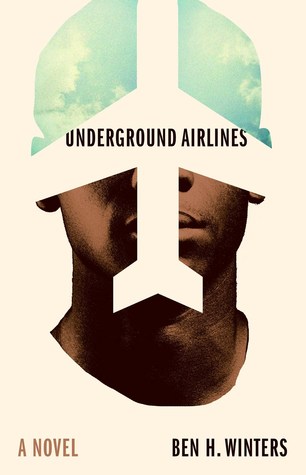
Underground Airlines by Ben H. Winters – A dystopian alternate history novel about a world where the Civil War never happened, and slavery still existed in parts of America. I am a big fan of Winters’ The Last Policeman trilogy. The man can tell a good story and his upcoming new novel sounds like it’ll be just as compelling and hard-hitting. With thanks to Mulholland Books via NetGalley.
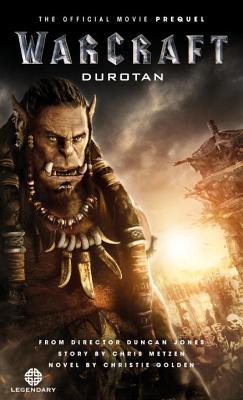
Warcraft: Durotan by Christie Golden – Audiobook, with thanks to Audible Studios. This is the official prequel novel to the Warcraft movie, which is one of my most anticipated summer blockbusters. Whether the movie will be good remains to be seen, but before I watch it I knew I wanted to get the background story. I also love Christie Golden, who is a master when it comes to tie-ins.
Purchased and Won
I’ve been somewhat negligent in talking about the books I’ve purchased lately (though in truth, I’ve been refraining from buying much these days, given my already gigantic TBR) but there are also some books I won earlier this year including Sanctuary Bay by Laura J. Burns & Melinda Metz (thanks for the giveaway, Lekeisha!) as well as a copy of Seven Black Diamonds by Melissa Marr from a blog tour. That one’s signed by the author!

This week I also made a couple purchases because of course I had to pick up Star Wars: Bloodline by Claudia Gray. I know don’t typically feature my graphic novel hauls, but I had to make an exception for this gorgeous deluxe edition of We Stand on Guard by Brian K. Vaughan which wasn’t even supposed to be out until later this month, but I guess they decided to ship early. For those who don’t know, I’m a transplanted Canadian in the US. When I was a kid, me and an American friend of mine used to joke around about what if the USA invaded Canada, which is, like, pretty much the premise of this series. Needless to say, I just had to pick it up, and I’m also a really big fan of BKV.
Finally, I was sooooo incredibly excited to score a copy of The Stormlight Archive Pocket Companion by Brandon Sanderson last week. This sweet little hardcover was an exclusive to indie bookstores for Independent Bookstore Day, and I was lucky enough to snag one while I was on an out-of-town day trip, since there are no indie bookstores near me. Not all the participating stores had them either, because I had to call around and five of the six I tried didn’t even know what the hell I was talking about. I got lucky with the last place, and they only had one left and couldn’t hold it for me. Fortune must have smiled upon me though, because after I hauled ass over there, they still had it.
Reviews
Here are all my reviews since the last update, gathered together and listed here for your convenience and viewing pleasure. The ratings are all over the board this week, with some highs and some lows. I’ve also been on a tie-in novel kick for the last couple weeks and to be honest I think I’m still in the middle of it.
Hex by Thomas Olde Heuvelt (4.5 of 5 stars)
Nightstruck by Jenna Black (4 of 5 stars)
World of Warcraft: Illidan by William King (4 of 5 stars)
Quantum Break: Zero State by Cam Rogers (4 of 5 stars)
The Chimes by Anna Smaill (3.5 of 5 stars)
Wildwood Dancing by Juliet Marillier (3.5 of 5 stars)
Sharp Ends by Joe Abercrombie (3 of 5 stars)
Tell the Wind and Fire by Sarah Rees Brennan (2.5 of 5 stars)
Roundup Highlights:

What I’ve Read Since the Last Update
This was a somewhat lighter week for me when it comes to busting down that TBR. But with a couple of longer books on my plate and the allocation of some of my reading time towards checking out our 30 SPFBO books, that was to be expected. I already have reviews up for a couple of these, and the rest are lined up for the coming weeks, so stay tuned!
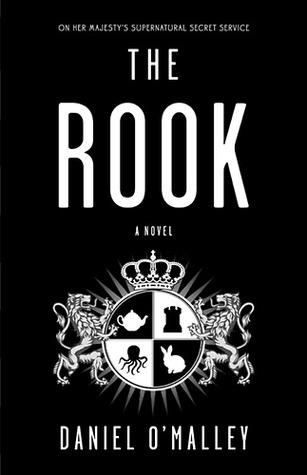
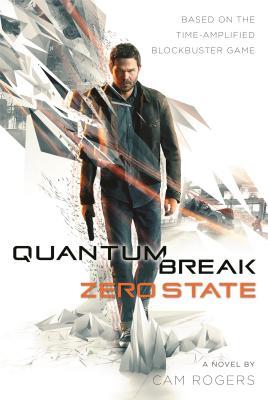
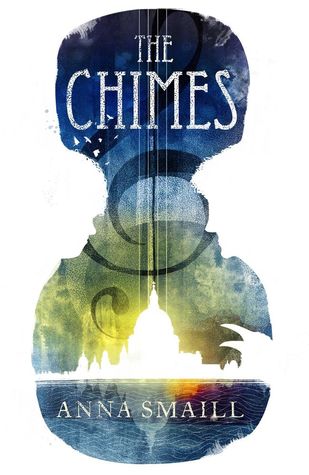

Have you heard of or read any of the books featured this week? What caught your eye? Any new discoveries? Nothing makes me happier than sharing my love for books, so let me know what you plan on checking out. I hope you found something interesting for a future read! Until next time, see you next Roundup!


 The BiblioSanctum