Book Review: Admiral by Sean Danker
Posted on May 20, 2016 21 Comments
A review copy was provided by the publisher in exchange for an honest review. All opinions are my own.

Mogsy’s Rating: 4 of 5 stars
Genre: Science Fiction
Series: Book 1 of Evagardian
Publisher: Roc (May 3, 2016)
Length: 320 pages
Author Information: Website | Twitter
Admiral could be the most entertaining military science fiction novel I read all year. This book pulled me in straight from the start, with a publisher’s description that teases so much intrigue that I would have been hard pressed to put it down again had I picked it up off a shelf at the store. Delivering an enticing combination of mystery and suspense, Sean Danker’s debut is an intensely action-packed and fast-paced survival adventure that’s sure to appeal to both sci-fi veterans and newcomers to the genre alike.
The story begins with the main protagonist, our unnamed narrator, waking up on a dead ship with no one else alive on board besides a trio of newly graduated recruits from the Evagardian Imperial Service. The only clue we have to his identity is the insignia on his sleeper pod that marks him as an admiral…but is he? The three trainees—Lieutenant Deilani, Ensign Nils, and Private Salmagard—each respond to his presence in different ways, ranging from ingrained obedience to outright hostile suspicion, but for the time being, their first priority is to figure out where they are and what happened to make their ship’s systems shut down, dumping them all out of stasis.
The more they find out though, the more unsettling their circumstances become. The admiral and his three companions are stranded on an unknown planet, with dwindling supplies and no way to communicate their distress, and any kind of rescue could be a long time coming. Plus, their faltering equipment is picking up signs that they are not alone after all. Something dangerous is lurking out there, and it might have been what killed everyone…
If that doesn’t send a chill up your spine, what will? Admiral is part mystery and part space disaster story, with shades of Alien here and there. The unknown is a powerful source of fear but also curiosity, which is what made this book so compelling from the start. Three questions demand answers right away: 1) where the characters are right now, 2) what could have possibly mangled the hell out of their half-kilometer long freighter, and 3) who is our mysterious narrator who may or may not be an admiral, but clearly knows a lot about the Imperial Service and the way it works?
There will be no spoilers here, obviously. However, I will say that while the first and second questions are answered in good time, the identity of our protagonist is a puzzle that will last until almost to the end of the novel, though many clues can be gleaned along the way from the narrator’s observations or from the reactions of his three subordinates towards him. Of course, there’s no denying that there are issues with this. Due to the nature of the story, use of an unreliable narrator as a literary device is clearly unavoidable, and it causes a lot of the awkwardness expected when your protagonist knows exactly who he is but can’t say. Later on, one of the trainees also figure out who the admiral really is but also won’t reveal his secret, resulting in a lot of stilted conversations between the two of them while they dance around the subject.
And yet, if you can accept what the author is trying to do and take all this in stride, it’s actually pretty easy to roll with the punches. While it’s true that the identity of our narrator is something of a forced enigma, the other quandaries our characters have to deal with are genuinely intriguing and in some ways disturbing. There’s never a dull moment as they work together against the clock to survive conditions on a dead planet, trying to find solutions to their lack of life support, sensor capabilities, and communications systems. Then there’s the question or who or what is moving about on their ship and out in the mists, given how nothing should be able to survive their hull breach and the inhospitable atmosphere. I ended up finishing this book in a little more than a day, because when every page is filled with a sense of urgency, it’s kind of hard to stop reading.
It also surprised me how much world-building and character development Danker was able to pack into such a short, fast-paced and tightly plotted story which leaves almost no room to catch a breath, but indeed there were several brief moments of downtime where we got to know our characters better. Granted, there are only four—but on the flip side, this meant a lot more time spent with each member of this smaller cast, and I enjoyed the interesting backgrounds of our three recruits as well as the individual skills they brought to the dilemma. There was also enough background about the Evagardian Empire to tether me to this universe, making me feel invested in the mystery of our admiral’s identity and the political ramifications of the story’s events.
Admiral ended up being a lot of fun, a rock solid debut from Sean Danker whose writing career I will now be following with great excitement and interest. I could easily go on and on with my praise for this novel, but because so much of my enjoyment was from learning its secrets, it’s probably best to leave the rest a mystery for readers to discover. This one hooked me from the start with its nail-biting suspense, hitting a lot of the sci-fi and space disaster themes that make this genre so popular while still teasing plenty of uniqueness and more to come for the rest of this series. I can’t wait to see what the next book will bring.


Book Review: Star Wars: Bloodline by Claudia Gray
Posted on May 19, 2016 12 Comments
 Star Wars: Bloodline by Claudia Gray
Mogsy’s Rating: 4.5 of 5 stars
Genre: Science Fiction, Media Tie-In
Series: Star Wars canon
Publisher: Del Rey (May 3, 2016)
Length: 336 pages
Author Information: Website | Twitter
I fell in love with Claudia Gray’s Star Wars: Lost Stars last year, and so you can imagine my excitement when I learned that she would be penning a second book in the new canon, this time an adult novel about Princess Leia herself. And Gray certainly does not disappoint. With Star Wars: Bloodline, she has established herself as a new powerhouse author in the world of Star Wars fiction and become one of my favorite tie-in writers.
Taking place approximately five to six years before The Force Awakens, Bloodline is a novel of watershed moments, featuring our protagonist at a somewhat confusing time in her life. After decades of dealing with politics, the bright-eyed and bushy-tailed princess is all but gone, replaced with a more mature and world-weary Leia. The New Republic Senate has proven itself ineffectual in the wake of Mon Mothma’s departure; without the charismatic former chancellor to guide them, endless bickering and rigid faction lines have led to paralyzing gridlock within the government. But while all that is enough to turn even the staunchest senator into a jaded cynic, it should come as no surprise that where matters of peace are concerned, Leia remains wholeheartedly committed to her cause.
New concerns arise when a burgeoning criminal organization comes to the Senate’s attention. A mysterious underworld kingpin has emerged to fill the power vacuum left by the Hutts, and apparently he has friends in high places. Struck by a sudden rush of inspiration, Leia volunteers for a mission to investigate the corruption and ends up being partnered up with another senator from the Centrist faction, rival to her own Populist party. Despite getting off to a rough start, the two eventually learn to work with one another, even earning each other’s friendship and respect, but sadly the same cannot be said for their own political factions. As the relationship between the Populists and Centrists continue to deteriorate, those who want change are calling for the election of a First Senator, a position that would grant one person a great deal of influence and power. Considering her own personal history, that idea does not sit right with Leia at all, even as her own party is pushing her to run for the job.
I like reading tie-ins because of the opportunities they offer, a chance to explore the wider spheres of a universe or meet new characters. Still, it’s also tremendously satisfying now and again to return to the central figures and read about events that are directly related to the Star Wars movies. The Force Awakens was a rollicking adventure and action-driven—but it was also utterly devoid of much political or historical context. Good news, though; if you were one of the many fan who left the theater with questions, then Bloodline just might be the book you’re looking for. This novel manages to fill in quite a few blanks, giving us a glimpse into the political atmosphere in the time between the end of Return of the Jedi and The Force Awakens. See how the first seeds of dissent were sown, which later gave rise to the First Order. Learn all about the dramatic events which ultimately led to the formation of the Resistance, Leia Organa’s answer to tyranny.
However, that’s just the dressings. There’s no doubt that the relationship dynamics between Leia and her fellow senator from across the aisle, Ransolm Casterfo, is what constitutes the real meat of the story here. In her previous Star Wars novel Lost Stars, Claudia Gray gave readers an epic love story between an Imperial officer and a Rebel pilot, two kindred spirits who had to deal with being on opposites sides during the war. In Bloodline, she pulls off something very similar, though this time we’re talking political ideology instead of romance, a Populist versus a Centrist rather than the Empire versus the Rebel Alliance. And yet, the parallels are there. Gray has an incredible talent for giving a balanced portrayal of each side of a conflict, with her Star Wars characters showing that nothing is ever black and white, that friendships can indeed bloom across faction lines, and just because someone is your “enemy” doesn’t mean that you both can’t fight for a common goal. In Bloodline, Leia and Casterfo share one of the deepest, most complex relationships I’ve ever read about in any Star Wars novel.
I also want to take a moment to just geek out over the cover. Stylistically, it’s beautiful and I’ve loved it from the moment I saw it, but after reading this novel, I have to say my appreciation for it has only grown. Without delving too far into spoiler territory, the figure of Leia standing in the “shadow” of her father is one of the most powerful and significant pieces of imagery I’ve ever seen, and it’s simply perfect for this particular story. Leia’s not-so-secret origins have been known to readers for years, belying her deep struggle to come to terms with where she came from, her bloodline. What happens in this books will have far-reaching repercussions for the galaxy and for her family.
What more can I say, other than brava, Claudia Gray! Between her and Christie Golden though, the two of them may have just ruined me forever with Star Wars novels, because I doubt I’ll ever be able to read one again without measuring it up against Lost Stars, Bloodline or Dark Disciple. This was another brilliant book in the new canon, and the last line gave me so many feels. Recommended for all Star Wars fans.

Book Review: The Voodoo Killings by Kristi Charish
Posted on May 18, 2016 23 Comments
A review copy was provided by the publisher in exchange for an honest review. All opinions are my own.
 The Voodoo Killings by Kristi Charish
Mogsy’s Rating: 4.5 of 5 stars
Genre: Urban Fantasy
Series: Book 1 of Kincaid Strange
Publisher: Penguin Random House Canada (May 10, 2016)
Length: 352 pages
Author Information: Website | Twitter
I want to say right off the bat, this was the most fun I’ve had with an urban fantasy in ages! Not only was I blown away by the potential—the most I’ve seen when it comes to a new series—Kristi Charish appears to have this uncanny ability to push all my right buttons. I became a fan of hers after the Adventures of Owl, and I’ve been hankering for anything she writes ever since. That’s how this first book of her new series came to my attention. Hard to imagine anything beating a fast-talking, tomb-raiding, RPG-playing ex-archaeology grad student turned international antiquities thief, but Kincaid Strange of The Voodoo Killings might actually give Owl a run for her money.
For one thing, she’s not your typical voodoo practitioner, nor is this book your typical ghosts-and-zombies fare. However, like a lot of her peers in the UF genre, Kincaid is flat broke. And while she might be the best at what she does, what she does best isn’t exactly paying the bills these days. New Seattle laws against the raising of zombies have dried up her source of income, leaving her scrounging for séance jobs among the city’s population of university students, especially those with an obsession with grunge rock. It helps a little that the ghost of Nate Cade, the legendary Seattle grunge rocker who died in the late 90s, is her roommate. The two of them make a great team.
Then one day, Kincaid gets a call about the stray zombie of prominent local artist, and before she knows it, she’s his brand new guardian. Cameron can’t remember who raised him or even how he died, but an unauthorized zombie walking around town spells very bad news for everyone, so Kincaid takes it upon herself to help him piece together the final days of his life. The investigations go south when she connects Cameron’s death to a string of recent murders, and the victims are all zombies and other voodoo practitioners like her—which can only mean one thing: it’s only a matter of time before the killer comes gunning for her.
As I said, The Voodoo Killings is not your typical UF. The world Kristi Charish has crafted here is all her own, and I love what she’s done with the magic and mythos behind the raising of zombies and summoning of ghosts. There’s an intricate process behind animating a corpse involving a complex series of spell threads that only someone with the skills can recognize and manipulate. A practitioner’s relationship with the “Otherside” is one of the most fascinating aspects of the story, hooking me in right from the very start. It’s also the wild little details that make me want to giggle and rub my hands together with glee, like the practice of writing on mirrors to communicate with ghosts, or Cameron having to pan-fry his servings of human brains that come neatly packaged in highly illegal (but highly convenient!) vacuum-sealed packets.
The characters themselves are instant favorites. There’s a special place in my heart reserved for all the underdogs of UF, and Kincaid definitely counts. In truth she actually shares a lot of traits with Owl from Charish’s other series, save for the recklessness and smart-alecky mouth, which made connecting with Kincaid a lot faster and easier. Like Owl again, Kincaid has few human friends and spends the bulk of her time associating with other practitioners and supernatural beings, and as a result we have a fascinating and very diverse cast of supporting characters. First and foremost is Nate, who is in no way your everyday sidekick ghost, though his loyalty to Kincaid is unequaled. Then there’s Lee Ling, the centuries old mysterious zombie who runs a tavern in the magical underground and who will keep you guessing at her motives at every turn. And last but not least, there’s Cameron, the stray zombie Kincaid so reluctantly took under her wing. Throw everything you think you know about zombies out the window, because he will make you see them in a whole new light.
The plot is also fast-paced there’s never a dull moment. This story hits the ground running and not once do we hit a lull. Kincaid Strange appears to belong to the same school of UF protagonists as Harry Dresden, where the heroes and heroines must handle the challenges of juggling a million crises at once while multiple fires around them keep screaming to be put out. Still, while there may be a lot of things going on in this book, I didn’t actually find any of it to be too much or overwhelming. All it did was make it hard to stop reading.
While I still love Owl and her Indiana Jane persona, Kincaid really appealed to me in her own unique way. Whenever I read urban fantasy, it’s not uncommon for a new series to take several installments—two, three, sometimes even four books—for the characters and world to draw me in. Rarely does it happen with the very first book, but that’s exactly what happened here with The Voodoo Killings. If you’re a fan of the genre, I can’t recommend this one highly enough! Hands down, this is my favorite book by Kristi Charish right now, and to my happy surprise, I think I’ve also found a new favorite urban fantasy series.
Waiting on Wednesday 05/18/16
Posted on May 18, 2016 15 Comments

“Waiting On Wednesday” is a weekly meme hosted by Breaking the Spine that lets us feature upcoming releases that we can’t wait to get our hands on!
Mogsy’s Pick
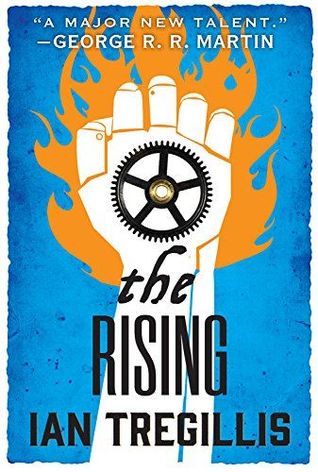
The Liberation by Ian Tregillis (December 6, 2016 by Orbit)
Everything that has been building up and brewing in the first two books of the Alchemy Wars trilogy will finally culminate in this grand finale, and I cannot wait to see how it all ends. Plus, I love how all the covers look together in a complete set, with the symbol of the gear being the central focus in all of them.
 “Set in a world that might have been, of mechanical men and alchemical dreams, this is the third and final novel in a stunning series of revolution by Ian Tregillis, confirming his place as one of the most original new voices in speculative fiction.
I am the mechanical they named Jax.
My kind was built to serve humankind, duty-bound to fulfil their every whim. But now our bonds are breaking, and my brothers and sisters are awakening.
Our time has come. A new age is dawning.
The final book in the Alchemy Wars trilogy by Ian Tregillis, an epic tale of liberation and war.”
The Alchemy Wars

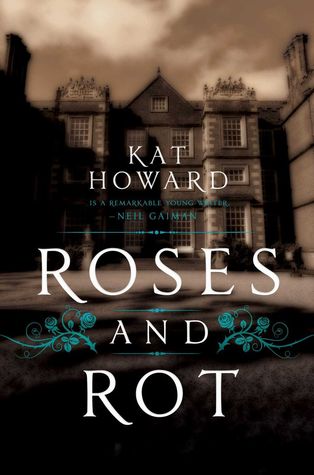
Book Review: Roses and Rot by Kat Howard
Posted on May 17, 2016 19 Comments
A review copy was provided by the publisher in exchange for an honest review. All opinions are my own.
Mogsy’s Rating: 4 of 5 stars
Genre: Fantasy
Series: Stand Alone
Publisher: Saga Press (May 17, 2016)
Length: 336 pages
Author Information: Website | Twitter
They say there’s a certain amount of truth in fairy tales. Despite their fantastical nature, the stories usually have some basis in reality, providing a moral compass during turbulent times, often teaching lessons which can be applied to one’s own life. If nothing else, the “trueness” may lie in the big picture rather than the details, such as the honesty of the character’s emotions or the essence of their relationships. How far would you go to save someone you love, for instance? And what might you be willing to sacrifice to get your happily ever after?
Roses and Rot is a novel that encompasses these concepts, using metafiction to address the basic literary conventions of fairy tales in order to convey the story’s full purpose and meaning. It follows the lives of two sisters, both of whom are talented artists in their own fields. Imogen, our narrator, is a writer, while her younger sibling Marin’s passion is in dance. The two of them grew up together suffering at the hands of their cruel, controlling and abusive mother, but it was awkward and introspective Imogen who bore the brunt of the mistreatment. This prompted Imogen to leave home as soon as she was able to, using the money she saved in secret to attend boarding school, even though her own escape meant having to leave Marin behind.
Now nearly ten years later, the sisters are in their twenties and have seized upon an opportunity to reconnect. At Marin’s urging, Imogen applies with her to a prestigious post-graduate arts program at an institution called Melete, and both end up being accepted. The school is a dream come true, a quiet retreat in the scenic woods where fellows can dedicate their full attention to their art. For Imogen and Marin, it is also a safe haven where they can finally be free of their terrible “Mommy Dearest”. They even get to live in the same house, among other residences styled like modern castles complete with moats and tower rooms. Unfortunately for the sisters, however, the peace doesn’t last. After a while, Imogen starts noticing strange things happening about on campus—nature behaves differently here, with the paths through the woods seeming to wind and shift with a life of their own, and she can never shake that unsettling feeling of being watched. As it turns out, there is more to the school than meets the eye. When she first arrived, Imogen remembered thinking how all the wonders and beauty of Melete reminded her of a fairy tale. Little did she know how close she came to the truth.
I didn’t know what to expect when I first started this book, given the vagueness of the publisher description. Even now, I find it hard to talk about it without giving away too many of its secrets. There’s a major fantastical element to this story but it remains elusive, teasing at the edges of perception, until the mysteries of Melete are ultimately revealed. The initial build-up is slow, but that also allows the setting a chance to draw you in with its haunting and almost dream-like atmosphere. The magic is subtle, at least at first, before it eventually grows to become this negative force which drives a wedge between Imogen and Marin. As children, the sisters were always close, helping each other survive their mother’s horrible abuses. At Melete though, the strength of that bond might just be tested. The two young women are presented with a dilemma which pits the love they have for each other against the love for their art.
At its heart, Roses and Rot is a modern-day fairy tale, and it earns that distinction by featuring themes of love and sacrifice. Choices are made. Prices are paid. As we all know, Faerie magic always demands something in return, but what you buy might not be what you get. And sometimes, even the Fae themselves are the victims of their own rigid, convoluted rules.
Sisterhood is obviously a central focus of this novel, with Imogen and Marin’s shared memories of living with their awful mother being a formative experience that shapes them both. Reading about the things they endured was so distressing at times, it literally made me sick to my stomach and made me want to go and hug my own daughters tight. For Imogen, that kind of poisonous upbringing also made her insecure and unsure of her talent as a writer, further stoking that need to prove herself to the world. However, anyone with a passion for their art, no matter what their field, will undoubtedly see something of themselves in Imogen and the other characters at Melete. The question though, is how much are you willing to give up for your dreams? Kat Howard explores this conflict with gentle compassion and her beautiful, powerful writing.
Roses and Rot is a clever and emotional story of love, magic, and imagination. I loved it. I would recommend this novel highly, especially for creative types and lovers of all things Fae and fairy tale. A truly delightful treat for fans of contemporary fantasy who enjoy vivid settings, complex characters, and meaningful relationships.
Top Ten Tuesday: Ten Books I Picked Up On A Whim
Posted on May 17, 2016 23 Comments

Top Ten Tuesday is an original feature/weekly meme created by The Broke and the Bookish. They created the meme because they love lists. Who doesn’t love lists? They wanted to share these list with fellow book lovers and ask that we share in return to connect with our fellow book lovers. To learn more about participating in the challenge, stop by their page dedicated to it and dive in!
This week’s topic: Top Books I Picked Up On A Whim
I pick up books all the time on a whim, books that I usually know nothing about. If a book has a idea I like, a pretty cover I like, whatever, I will pick it up. Here are some of my most recent splurges.
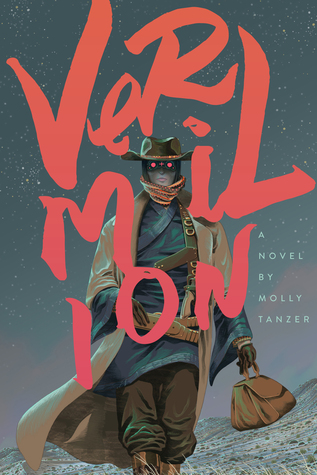 Vermilion: The Adventures of Lou Merriwether, Psychopomp by Molly Tanzer
Gunslinging, chain-smoking, and Stetson-wearing Taoist psychopomp Elouise “Lou” Merriwether might not be a normal 19-year-old, but she’s too busy keeping San Francisco safe from ghosts, shades, and geung si to care much about that. It’s an important job, though most folks consider it downright spooky. Some have even accused Lou of being more comfortable with the dead than the living, and, well…they’re not wrong.
When Lou hears that a bunch of Chinatown boys have gone missing somewhere deep in the Colorado Rockies, she decides to saddle up and head into the wilderness to investigate. Lou fears her particular talents make her better suited to help placate their spirits than ensure they get home alive, but it’s the right thing to do, and she’s the only one willing to do it. On the road to a mysterious sanatorium known as the Fountain of Youth, Lou will encounter bears, desperate men, a very undead villain, and even stranger challenges. She will need every one of her talents and a whole lot of luck to make it home alive.
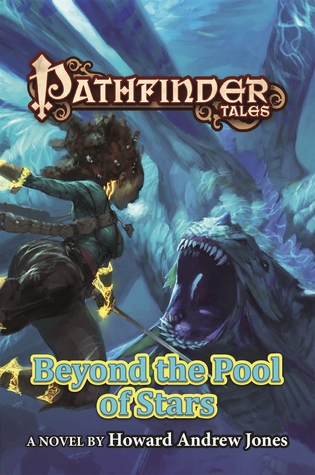 Pathfinder Tales: Beyond the Pool of Stars by Howard Andrew Jones
Mirian Raas comes from a long line of salvagers, adventurers who use magic to dive for sunken ships off the coast of tropical Sargava. When her father dies, Mirian has to take over his last job: a dangerous expedition into deep jungle pools, helping a tribe of lizardfolk reclaim the lost treasures of their people. Yet this isn’t any ordinary job, as the same colonial government that looks down on Mirian for her half-native heritage has an interest in the treasure, and the survival of the entire nation may depend on the outcome….
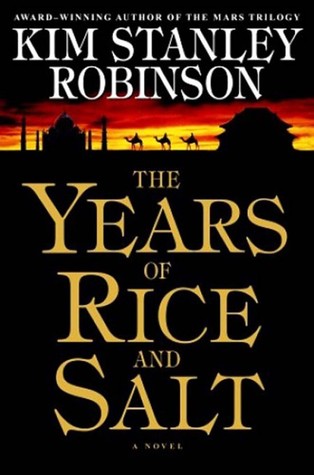 The Years of Rice and Salt by Kim Stanley Robinson
It is the 14th century, and one of the most apocalyptic events in human history is set to occur – the coming of the Black Death. History teaches us that a third of Europe’s population was destroyed. But what if the plague had killed 99 percent of the population instead? How would the world have changed? This is a look at the history that could have been – a history that stretches across centuries, a history that sees dynasties and nations rise and crumble, a history that spans horrible famine and magnificent innovation. These are the years of rice and salt.
This is a universe where the first ship to reach the New World travels across the Pacific Ocean from China and colonization spreads from west to east. This is a universe where the Industrial Revolution is triggered by the world’s greatest scientific minds – in India. This is a universe where Buddhism and Islam are the most influential and practiced religions, and Christianity is merely a historical footnote.
Through the eyes of soldiers and kings, explorers and philosophers, slaves and scholars, Robinson renders an immensely rich tapestry. Rewriting history and probing the most profound questions as only he can, Robinson shines his extraordinary light on the place of religion, culture, power, and even love on such an Earth. From the steppes of Asia to the shores of the Western Hemisphere, from the age of Akbar to the present and beyond, here is the stunning story of the creation of a new world.
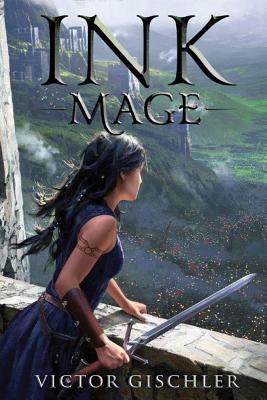 Ink Mage by Victor Gischler
In the first installment of the A Fire Beneath the Skin trilogy, the city of Klaar has never fallen. No enemy has ever made it across the Long Bridge or penetrated the city’s mighty walls. Even when a powerful invading army shows up at the gates, the duke and his daughter, Rina Veraiin, are certain that it poses little threat.
But they are cruelly betrayed from within and, in a horrific spasm of violence, the city is brought to its knees.
With the help of her bodyguard, Kork, the battle-trained young Rina narrowly escapes the slaughter and makes her way to the lair of an ancient sorcerer – the Ink Mage – who gifts her with a strange, beautiful set of magical tattoos.
Now a duchess in exile, Rina sets out on a quest to reclaim what is rightfully hers, aided by a motley assortment of followers who will help her in her cause – some for noble reasons and others for their own dark purposes.
With the enemy’s agents nipping at her heels, Rina must learn to harness her new and startling magical powers if she is to assert her rightful place as ruler of Klaar.
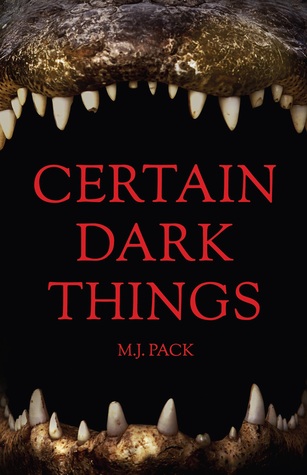 Certain Dark Things by M.J. Pack
What grotesque surprises will you find in the secret place between the shadow and the soul?
In her debut short story collection, M.J. Pack offers up a new breed of terror sure to delight any true horror fan. Don’t miss out on tales of telepathic twins, a campfire ghost story gone terribly wrong, pills that induce life-threatening nightmares, and the disturbing new sideshow at Coney Island: Lady Alligator. Take a haunting trip down infamous Bubblehead Road and follow Danny around the country as he’s pursued by unseen (and unrelenting) creatures.
Prepare yourself, you’re about to indulge in some certain dark things…
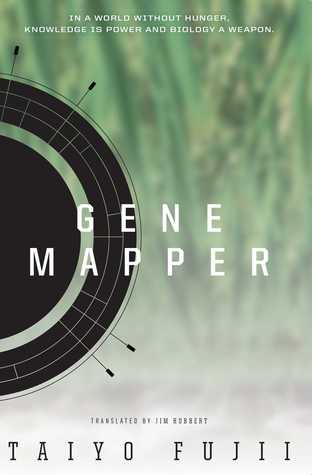 Gene Mapper by Taiyo Fujii
In a future where reality has been augmented and biology itself has been hacked, the world’s food supply is genetically modified, superior, and vulnerable. When gene mapper Hayashida discovers that his custom rice plant has experienced a dysgenic collapse, he suspects sabotage. Hayashida travels Asia to find himself in Ho Chi Minh City with hired-gun hacker Kitamura at his side—and in mortal danger—as he pushes ever nearer to the heart of the mystery.
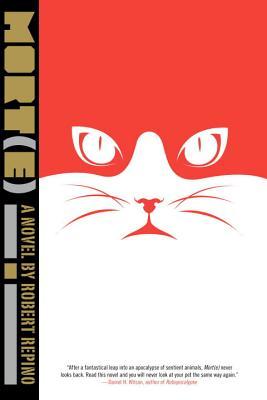 Mort(e) by Robert Repino
A genre-busting postapocalyptic first novel – a pause-resisting adventure channeling Animal Farm as imagined by Cormac McCarthy
The “war with no name” has begun; its goal, human extinction. The instigator of this war is the Colony, a race of intelligent ants who, for thousands of years, have been silently building an army that will forever eradicate the destructive, oppressive humans. Under the Colony’s watchful eye, this utopia will be free of the humans’ penchant for violence, exploitation, and religious superstition. The final step in the Colony’s war effort is the transformation of surface animals into high-functioning two-legged beings who will rise up and kill their masters.
Former house cat turned war hero Mort(e) is famous for taking on the most dangerous missions and fighting the dreaded human bioweapon EMSAH. But the true motivation behind Mort(e)’s recklessness is his ongoing search for a pretransformation friend – a dog named Sheba. When he receives a mysterious message from the dwindling human resistance claiming Sheba is alive, he begins a journey that will take him from the remaining human strongholds to the heart of the Colony, where he will discover the source of EMSAH and learn the ultimate fate of all earth’s creatures.
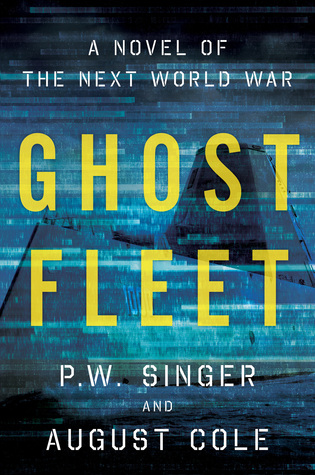 Ghost Fleet: A Novel of the Next World War by P. W. Singer, August Cole
The year is 2026. China has taken over as the world’s largest economy, while the United States, mired in an oil shortage, struggles to adjust to its diminished role. Then, a surprise attack throws the US into a chaos unseen since Pearl Harbor. As the enemy takes control, the survival of the nation will depend upon the most unlikely forces: the Navy’s antiquated Ghost Fleet and a cadre of homegrown terrorists.
Ghost Fleet is unique in that every piece of technology featured in the novel already exists or is in the works. Peter W. Singer is Senior Fellow and Director of the 21st Century Defense Initiative at the Brookings Institution and a consultant for the US Department of Defense and FBI. August Cole is a journalist and writer specializing in national security issues and is an Adjunct Fellow at the American Security Project.
 Dust and Shadow: An Account of the Ripper Killings by Dr. John H. Watson by Lyndsay Faye
In Dust and Shadow, Sherlock Holmes hunts down Jack the Ripper—the world’s first serial killer—with impeccably accurate historical detail and without the advantage of modern forensics or profiling. Sherlock’s desire to stop the killer who is terrifying the East End of London is unwavering from the start, and in an effort to do so he hires an “unfortunate” known as Mary Ann Monk, the friend of a fellow streetwalker who was one of the Ripper’s earliest victims. However, when Holmes himself is wounded in Whitechapel attempting to catch the villain and a series of articles in the popular press question his role in the crimes, he must use all his resources in a desperate race to find the man known as “The Knife” before it is too late.
Penned as a pastiche by the loyal and courageous Dr. Watson, this debut signals the arrival of a tremendous talent in the mystery and historical fiction genres.

What books have you randomly picked up recently?

Week 2: Between Two Thorns Read-Along
Posted on May 16, 2016 7 Comments

We’re continuing with The Split Worlds read-along this week, starting with the first book Between Two Thorns! If you’re interested in joining this Read-Along, visit the SF/F Read-Along group for more information and to join the discussion.


The new season is starting and the Master of Ceremonies is missing. Max, an Arbiter of the Split Worlds Treaty, is assigned with the task of finding him with no one to help but a dislocated soul and a mad sorcerer.
There is a witness but his memories have been bound by magical chains only the enemy can break. A rebellious woman trying to escape her family may prove to be the ally Max needs.
But can she be trusted? And why does she want to give up eternal youth and the life of privilege she’s been born into?



Part 1 – Monday 9th May: Chapters 1-9, hosted by Over The Effing Rainbow
Part 2 – Monday 16th May: Chapters 10-18, hosted by On Starships and Dragonwings
Part 3 – Monday 23rd May: Chapters 19-25, hosted by OneMore.org (Imyril)
Part 4 – Monday 30th May: Chapters 26-End, hosted by Lynn’s Books

1. We get to meet Will and see a couple of different sides to him. What do you think of Cathy’s betrothed?
Mogsy: Will’s going to end up being an unexpected ally for Cathy, I think. As you say, there are two sides to him: the snide, foppish, and competitive side that came out when he was trying to one-up his brother and impress his family; but then there’s also the softer, more compassionate side that came out when he did what he could to include his little sister in the gift-giving (I thought that was such a sweet scene). Like the rest of his family, Will still seems overly concerned with matters of reputation and image, but I have a feeling that in time he’ll surprise us and Cathy.
Tiara: I think it’s very easy to discount Will as another snotty guy, but reading between the lines, he does seem like he could be someone who could persuaded to help Cathy despite any ill feelings they may have toward one another. He definitely understands her love of Mundanus, even if he’s not quite beyond the social mores of the Nether. That shows he at least has the capacity to think outside of what he’s told, and as Mogsy mentioned, he also has a capacity for compassion and warmth, which will likely prove important later in the story.
2. The Sorcerer seems to be acting a bit inconsistently, any ideas what is going on with him?
Tiara: No idea right now. Still a little too early for me to start making any assumptions, or rather, I don’t feel like I have enough threads to cling to to start making assumptions. I do find it peculiar that he seems to be relying on Petra’s permission to say and do certain things. Hopefully, Petra isn’t really an evil overlord masquerading around as a friendly face.
Mogsy: I’m actually really confused about this part of the story right now. I don’t feel comfortable drawing any conclusions about the Sorcerer from the current patterns (if that’s indeed what they are!) and Tiara is usually way better at me on picking up on things, so if she has no idea, then I have no chance!
3. Things are starting to link up now that we have context for the events at the beginning of the book, but how do you think it all connects together? Could it really be all coincidence? How do you think Cathy will tie into Max’s story?
Tiara: I don’t think it’s coincidence, but again, just as with the Sorcerer, I’m not quite sure where the author is going with this.
Mogsy: I’ve been wondering at this for this whole last section. So far, Cathy and Max both seem to have major roles to play, but I don’t know what their connection is and it’s really bothering me! I assume it has something to do with the case of the missing Master of Ceremonies since that’s one of the more significant topics I noticed mentioned in both character threads.
4. We get up close and personal with Cathy’s family. What do you think of her brother Tom and sister-in-law Lucy? Her parents? Do you think she’ll have any allies going forward?
Mogsy: The way things are going, I definitely think she will find an ally in her sister-in-law, and her brother should come around in time as well, consider the way he’s already taken the first step in understanding the depth of Cathy’s feelings for Josh (leaving me wondering if Tom’s new-found empathy could be the recent result of Lucy rubbing off on him).
Cathy’s father, though, is a real piece of work, isn’t he? I cheered when she stood up to him, but the subsequent beating was pretty brutal. Part of me wanted to see her fight back, maybe give him a swift kick in the shins (or some place higher) before getting the hell out of dodge (surely she can outrun the old man?) Her mother’s not going to be much help, clearly.
Tiara: I like Lucy, of course. I hope that my like of her doesn’t prove to be misplaced in the end. I’m a bit on the fence about Tom, but if his wife can be taken at face value, his wife’s influence with the love he obviously has for Cathy will bring him around… probably… Her sister is a ninny, and her parents are just awful.
Audiobook Review: Warcraft: Durotan by Christie Golden
Posted on May 16, 2016 24 Comments
A review copy was provided by the publisher in exchange for an honest review. All opinions are my own.
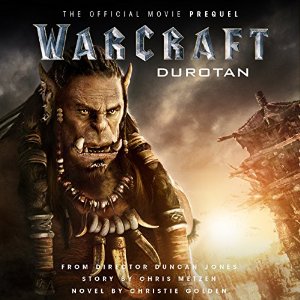 Warcraft: Durotan by Christie Golden
Mogsy’s Rating (Overall): 4 of 5 stars
Genre: Fantasy, Media Tie-In
Series: Warcraft
Publisher: Audible Studios (May 3, 2016)
Length: 7 hrs and 29 mins
Author Information: Website | Twitter
Narrator: Toby Longworth
Warcraft: Durotan is the official prequel novel to the Warcraft movie, set to hit theaters later this summer. As a fan of the game franchise, I almost feel like I have an obligation to go out and see this film, though whether or not it’ll actually be good remains to be seen. Call me cynical, but I’ve been burned way too many times by underwhelming movie adaptations, and so while part of me is excited to finally see one of my favorite games come to life on the big screen, I will also remain cautiously optimistic for now.
Still, I picked up this book because I knew I would want the background story. A lot of people don’t realize that Warcraft is more than just a game series—it’s also an immense, indescribably huge body of lore. Its world encompasses a countless number of locations and characters, and its history stretches back thousands upon thousands of years. And as much as I enjoy playing the games, in some ways I enjoy hearing about the stories even more. I love the epic tales of legendary heroes, reading about their great deeds and how they made their mark on the world of Warcraft and its history.
The Frostwolf orc clan chieftain Durotan is one of these legendary figures. The eponymous main character of this novel will also be one of the key players in the upcoming film, and this is the story of how he led his people out of the dying lands of Draenor to find their home in a new world.
When the book begins, Draenor is already on the brink of destruction. With the spirits of the elements weakened, winters are becoming increasingly harsher and the dwindling herds mean that the orcs will soon have to abandon their territory or face death by exposure and starvation. However, when a mysterious warlock named Gul’dan arrives with an offer to save them, the Frostwolf Clan decides to turn him away, preferring to maintain their independence. No stranger to tough times, Durotan believes it would be better to take their chances on their own rather than join the outsider’s “Horde”, especially since he does not trust the warlock. But while the Frostwolf may be one of the last clans to hold out, things in Draenor are going from bad to worse, and soon they too will have to make a decision on how to move forward, or risk dying with their homeland.
Believe it or not, finishing this book actually made me feel more confident about the movie. The events portrayed here offer us a solid foundation and a promise of some fantastic things to come. But then again, it’s Christie Golden. She’s written some of my favorite Warcraft and Star Wars novels of all time, and I knew even before going into this novel that it was going to be great. I’m beyond excited that this was everything I expected, especially since Durotan’s story was one that I’ve always wanted to get to know better.
I’m also pleased that this novel was entirely about the orcs. I say this even as a diehard Ally, as I honestly believe not enough attention is being given to the races of the Horde when it comes to media tie-ins, plus fantasy in general can be so human-centric. It’s easy to get caught up in the faction pride sometimes, reducing the “other guys” to nothing more but enemies to kill, but the truth is, orcs are a complex race with values deeply rooted in their society and culture. We get to see many examples of this in Warcraft: Durotan, as our protagonist realizes that being a leader is about more than just his strength and pride. Wisdom is just as important, as is compassion—even for your enemies. Durotan often finds himself torn between his honor and what he knows is best for his people, but knowing when to listen and when you have to sacrifice for the greater good are just some of the lessons he learns first as the Frostwolf’s chieftain, and then as a husband and a father-to-be. This book is simply filled to the brim with feels.
Kudos also goes to Toby Longworth for doing a superb job narrating the audio version. He has a very strong voice, great for reading fantasy novels and perfect for capturing the personalities of larger-than-life characters like Durotan. In addition, this audiobook was very easy to get into; at seven-and-a-half hours in length, I finished this one in good time, probably within two or three listening sessions. Finally, the audiobook ends with an audio excerpt of the “sequel”, which is the novelization of the movie itself, also written by Christie Golden.
If you plan on seeing Warcraft, I highly recommend picking up Warcraft: Durotan first, because it shows a larger picture and puts some of the movie’s events in context. Lore hounds will also love this book, especially if you want deeper insight into those who had a hand in shaping the face of Azeroth. All told, this is a wonderful, fascinating look into the life of Durotan, who is the loving mate of Draka, a contemporary of Orgrim Doomhammer, and the future father of one of Warcraft’s most prominent characters.
Story:  | Performance:
  | Overall:
YA Audiobook Weekend: Blue Lily, Lily Blue by Maggie Stiefvater
Posted on May 15, 2016 6 Comments
 Genre: Young Adult, Supernatural, Fantasy
Series: The Raven Cycle #3
Publisher: Scholastic Press (October 21, 2014)
Information: Website | Twitter | Goodreads
Tiara’s Rating: 3.5 of 5 stars
Narrator: Will Patton | Length: 10 hrs and 3 mins | Audiobook Publisher: Scholastic Audio (September 17, 2013) | Whispersync Ready: Yes

Book Review: Children of Earth and Sky by Guy Gavriel Kay
Posted on May 15, 2016 17 Comments
A review copy was provided by the publisher in exchange for an honest review. All opinions are my own.
 Children of Earth and Sky by Guy Gavriel Kay
Mogsy’s Rating: 3.5 of 5 stars
Genre: Fantasy
Series: Stand Alone
Publisher: NAL (May 10, 2016)
Length: 592 pages
Author Information: Website | Twitter
Any time Guy Gavriel Kay releases a new novel is a cause for celebration. Even with the understanding of how much work and time must go into each and every one of them, the waiting never gets easier! Known for his talent for recreating famous historical periods using fantasy, Kay’s books are all gorgeously written and painstakingly researched works of art, often infused with powerful messages and themes. I’d been looking forward to Children of Earth and Sky ever since it was announced and was beyond excited to finally get my hands on it.
Like many of his stories that feature fictional analogs of real places in history, this novel is said to be inspired by the conflicts and intrigues of Renaissance Europe. It is apparently set in the same “universe” as Lions of Al-Rassan, if I recall the names of the religions and the world’s twin moons correctly, though readers who know their history will probably recognize elements from the fifteenth to sixteenth century eras right away. For instance, the Ottoman Empire has been reimagined as the Osmanli Empire, and the most Serene Republic of Venice or la Serenissima Repubblica di Venezia has become the Republic of Seressa. Using this vibrant setting as a backdrop, Kay chronicles the lives of a disparate group of characters whose fates are all interwoven and connected like the threads of a tapestry.
There are about half a dozen key players in this epic drama. First, there’s Danica Gradek, a young woman from Senjan who joins a group of raiders to harry Seressa ships that trade with the Ashar. The Asharites destroyed her village when she was a child, killing most of her family and stealing away her younger brother. However, unbeknownst to her at the beginning of this novel, Danica’s brother was actually taken to be trained as a djanni, an elite soldier for the Osmanli Empire. Formerly known as Neven Gradek, he is now Damaz, brought up in the Asharite ways and ready to be deployed on his first mission with the army. There’s also Pero Villani, an impoverished painter who manages to score a huge commission to paint the portrait of the Grand Khalif of Asharias—but in truth his real purpose there is to spy for Seressa’s Council of Twelve. Pero is also not the only spy the Council has procured; another is Leonora Valeri, a noblewoman cast out by her family for becoming pregnant by a man from a lesser house. After her father had her lover killed and the baby taken away, Leonora agrees to be a spy in order to escape her family’s clutches and leave her old life behind. Passage has been arranged for her and Pero on a ship captained by the brave Drago Ostaja and owned by the family of Marin Djivo. As the son of a prominent merchant from Dubrava, Marin is no stranger to the dangers on the high seas, but his life is forever changed when his ship is boarded by a band of pirates. Among them is the Senjan archer Danica, and thus, our web of characters is complete.
A prevalent theme in many of Kay’s books is how history and people—their actions, their decisions, their fates—are all related. A single individual can shape the life of another a world away, based on how the ripples caused by events both large and small will flow through time. Children of Earth and Sky illustrates these patterns by following its characters “in the moment”, but the narrative will also frequently take a step back to look at the full picture. The author did something very similar in his last book, River of Stars, in which he explored a person’s life from multiple angles, going backwards and forwards in time to show how even the smallest gesture can have significant repercussions throughout history and affect multiple generations to come. If you’re not familiar with his work, brace yourself for a lot of point-of-view changes, present-to-past tense switching, and skips all over the timeline.
This makes it pretty much impossible to rush through any book by Guy Gavriel Kay. I’ve said this before, but his work is meant to be savored slowly, though sometimes that is by necessity and not by choice. Personally, it took me three days just to read the first one hundred pages, but only three more to finish the rest of this novel. I find that’s usually par for the course when it comes to Kay’s books, since the incredible amount of detail in his world-building often requires a rather long adjustment period. Still, there were a few issues that made Children of Earth and Sky a little more difficult to get into. First are the many distracting instances of info-dumping, which I admit I was surprised to find, since Kay is usually a lot more discreet when it comes to filling in the political or historical background. Second, there were some pacing problems playing havoc with the flow, especially when it came to character POV imbalance. It bothered me how some characters would feature prominently for a while and then just disappear for a long time, until all of a sudden they would come back, pushing aside others to fade into the background, and then the cycle will begin again. Because of the format, at times you also had to read about the same event two or three times as multiple characters would describe it from their perspectives.
As I’m fond of saying, some authors are simply incapable of writing a bad book, just that some of them may be better than others. Guy Gavriel Kay is one of these authors, and it’s not that I disliked Children of Earth and Sky, but I also don’t think it was his best. Still, despite the rough start, I ended up really enjoying this book. Plus, it’s hard to be disappointed, given the beautiful way the author writes. If there’s a lack of poetry or subtlety in this compared to some of his other works, then he more than makes up for it with the heightened tensions in this fantastical world of war and intrigue.


 The BiblioSanctum