Audiobook Review: Angel’s Blood by Nalini Singh, Narrated by Justine Eyre
Posted on June 6, 2016 15 Comments
“The bastard kissed her. She was so mad, she bit him hard enough to draw blood.
Raphael pulled back, lip already beginning to swell.
“We are no longer even, Elena. You’re now in debt.”
“You can deduct it from my slow and painful death.”
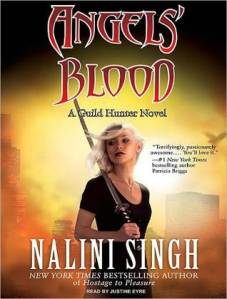 Angels’ Blood by Nalini Singh
Narrator: Justine Eyre
Genre: Urban Fantasy, Romance, Supernatural
Series: Guild Hunter #1
Publisher: Tantor Media (May 2010)
Author Info: nalinisingh.com
Wendy’s Rating: 4 of 5 stars

Much like Laurel K. Hamilton’s Anita Blake, Elena Deveraux hunts vampires and is, of course, the best at what she does thanks to her preternatural skill and her own confidence and training. Now she’s up against her greatest challenge yet, and at the request of the super sexy and deadly Archangel of New York, who doesn’t take no for an answer (unless Elena wants to find herself tossed off of a roof).
Cocky, wise-cracking leading lady with dark past [CHECK] who gets caught involved in a deadly mission [CHECK] that has more going on beneath the surface [CHECK] and who must wrestle with her desires [CHECK] for a man who just might kill her [CHECK].
Ah yes. There’s a reason why I tend to avoid urban fantasy. But that probably has more to do with binging Anita Blake one summer and watching stories that I initially enjoyed devolve into mad sex romps. Look. If I want porn, I’ll watch or read porn. But if you promised me interesting characters and story, then at least make the attempt. I’ve tried a few other urban fantasy series since LKH soured me to the genre, but at long last, I’ve found one I actually want to sink my teeth into again.
Angel’s Blood still has the typical troublesome sexy relationship, but at the very least, I appreciate that Elena does not accept it until it’s on her terms. She has no qualms about calling out Raphael’s mental manipulation for what it is: rape. And, in turn, he actually takes the time to consider this and seeks to do better. I also appreciate that the hot sex relationship isn’t the only relationship upon which Elena’s life circles. She doesn’t function in a loner bubble, only calling upon others who exist to provide advice and gadget support. Her friends and guild mates do serve that purpose, but there is actual depth to their friendships and working relationships that I want to see more of.
We mostly get Elena’s perspective throughout the adventure, but there are frequent interludes through Raphael’s eyes that not only deal with his inevitable interest with Elena, but also provide insight into archangel politics and sow seeds for future stories. Where Elena and Raphael end up at the end seems overly dramatic, but I suspect that Singh is shaping a story that extends beyond the monster of the week to something more intriguing. Or it could just be an excuse for lots more hot angel/vampire sex. Which is okay, as long as we don’t go overboard okay?
Oh and did I mention that Elena is a woman of colour? Though other book covers will try to dissuade you from realizing that, Singh has created a world where PoCs aren’t just exotic background material.
Urban fantasy isn’t my usual stomping ground, but I’m happy to find a series that I will make room for on my shelves. Added bonus: the audiobook is narrated by Justine Eyre, whom I have loved to pieces since first hearing her storm through Patrick Weekes’ The Paladin Caper.

YA Audiobook Weekend: The Selection by Kiera Cass
Posted on June 5, 2016 11 Comments
 Genre: Young Adult, Science Fiction, Dystopia, Romance
Series: The Selection #1
Publisher: HarperTeen (April 24, 2012)
Information: Website | Twitter | Goodreads
Tiara’s Rating: 3 of 5 stars
Narrator: Amy Rubinate | Length: 8 hrs and 7 mins | Audiobook Publisher: HarpterAudio (April 24, 2012) | Whispersync Ready: Yes
America Singer (I know, I know… I could never get over the name either…) is one of thirty-four girls part of a group known as the Selection. When a prince comes of age in the country, one girl from each of the thirty-four territories are picked to compete for the crown. The Selection is encouraged to provide morale to the people living in the former United States of America. After losing a war to the Chinese, the states have regressed to a monarchy and caste system (1 being the highest and reserved for the monarchy and 8 being the lowest). America is part of the artist caste, which is a 5, and they live just above being destitute. She doesn’t want to join the Selection, especially since she’s already in love with a boy. However, she can’t deny the monetary benefit it would bring to her somewhat large family. After some debate with her family and her boyfriend (who is a caste below her), she puts her name in the hat and is surprised when she’s chosen to be one of the girls who will compete for Prince Maxon’s affections.
This book turned me into such a liar. Prior to reading this book, I’d pretty much written this off as something I would never read. I’m not a fan of dating reality shows, so even with the science fiction angle, I wasn’t too interested in reading a book that is basically The Bachelor. However, I have a friend who is on a YA kick right now, and when she needs someone to flail with over a book, a group of us team up and read together. This book along with Shatter Me were two of her picks. Despite the premise, this book was actually okay. I don’t know why I didn’t end up hating this. Perhaps it’s because of how vanilla and tepid this story is. The writing was engaging enough. The conflicts didn’t feel too threatening, even the more violent encounters weren’t that urgent and are taken care of rather neatly. I guess my brain just settled on this being a romance book, a fairy tale romance with some added elements to be specific, and romance books don’t usually do much to add dramatic tension to the other elements that aren’t the romance. I think I was just able to enjoy it for what it was, and since I wasn’t expecting much I couldn’t really be disappointed. America spends most of her time telling herself that she doesn’t want Maxon, that she’s only there for her family, but still this book finds itself forced into being a love triangle after America’s boyfriend is introduced into the castle while she’s competing. I usually have a hard time with girls behaving badly toward one another over boys, and I was sure that this was going to get on my nerves quickly. I was surprised when the girls weren’t written as badly as I’d expected. There was cattiness from time to time and, of course, there is one girl who is an absolute monster. This book managed to make the girls far less combative than I’ve seen in other books that have just two girls vying for a boy’s affection, though.
The world-building isn’t that great in this story. We get a weak story about two more world wars until America is finally conquered by China because it couldn’t pay its debts. That smacked a little much of yellow peril and made me side eye this book hard. There are some rebels in the story that attack the castle every now and again, but no one knows what they want. That’s kind of left hanging there (to my frustration), but I’m sure Cass addresses them in later books. This book tries a little too hard with wanting to be a story that takes social responsibility by railing on social issues (as presented by the caste system) and setting America up as the poor girl who makes the rich boy suddenly see the light. Also, I feel like I should mention here that this is nothing like The Hunger Games. I find that when books are described as being like The Hunger Games what they mean is that it features a caste system. I didn’t care much for America’s boyfriend, Aspen, or her mother. I didn’t like his reasoning that she should compete “if she really loved him,” so he wouldn’t feel like he’d made her miss an opportunity. That was manipulative and gross, not sweet as I’m sure Cass wants me to believe it be. He didn’t prove to be much better later in the story either. Also, America’s mother is equally as manipulative. While I understand the hardships the family are facing, her mother is much too obsessed with the idea of her daughters marrying up into a better caste. I wasn’t sure if I was supposed feel sorry that her mother was so desperate or dislike her for being so desperate. Most of the interaction between America and her mother felt equally as gross as Aspen’s interactions with America. Surprisingly, I did like Prince Maxon. Sure, it was expected that he’d be the rich boy with the heart of gold, but his interactions with America felt the most earnest. Early in the book, America places herself in the position of being Maxon’s friend rather than trying to be chosen by him, and they have an interesting dynamic for most of the book until she decides she has feelings for him. When she decides she had feelings is when the love triangle started, and it became a bit annoying.
Amy Rubinate does an admirable job with the narration. Some of the voices could sound a little too alike, though. Some of the emotion seemed to be missing from her narration, as well, which might be why I feel it’s such a tepid story. However, I don’t know whether to blame the writing or her narration for that. I suspect it’s the writing. Prince Maxon was my favorite voice she did. She did an excellent job with making him sound formal and a bit uncertain about this position he’s thrust into with the Selection.
This book would’ve worked so much better as a straight up romance book set in the style of The Bachelor. The dystopian angle, while interesting, wasn’t done much justice, and most people who read this book will really only be here for the romance anyway. I’m not sure if this is the type of story that couldn’t have been told in one book, but I’ll make that assessment again once I’ve read the others. I liked this, but I couldn’t tell you one thing that I just loved about this book other than I enjoy a romantic fairy tale at times. This certainly delivers on that angle and will appeal to romance lovers much more than SFF lovers. There’s nothing really new or bold here. I’m certain I’ll be continuing this because I’m a gross sap.
Story

Performance

Overall
YA Audiobook Weekend: The House of the Scorpion by Nancy Farmer
Posted on June 4, 2016 8 Comments
 Genre: Science Fiction, Young Adult
Series: Matteo Alacrán #1
Publisher: Atheneum Books for Young Readers (2002)
Information: Website | Goodreads
Tiara’s Rating: 4 of 5 stars
Narrator: Raúl Esparza | Length: 10 hrs and 43 mins | Audiobook Publisher: Simon & Schuster Audio (January 23, 2009) | Whispersync Ready: Yes
My children have turned out to be avid readers as I am, especially my oldest. My son reads in a wide variety of genres, but he seems to be settling into a routine of reading mostly SFF like me. This book was a recommendation from my son. I’d spied him reading this about a month back, and I was tempted then to steal his book for myself. After doing some reshuffling of my books for the Women of Genre Fiction Challenge on Worlds Without End, he suggested that I add this book to my list since it was written by a woman. Since my interest was already piqued, it didn’t much convincing for me to do just that.
Matteo “Matt” Alacrán is the clone of a drug lord who owns a small country called Opium located between the United States and Aztlán (formerly Mexico). In this near future setting, the United States is no longer the premier country of the world, and in fact, the southern parts of the United States seem to be a hard and unattractive place to live as many Americans try to cross into Aztlán. People illegally crossing the borders from either side are dealt with harshly by El Patrón (the man Matt is cloned from) who forces most of them into a type of slavery using a computer chip that renders them unable and unwilling to do anything other than what they’re told.
At the beginning of this story, six-year-old Matt is living isolated in a small house in the opium fields with a worker named Celia. He longs desperately to talk to someone, to be around more than just Celia, even though he loves her very much. He has no idea about the world beyond the poppy fields until he meets the Mendoza sisters and the great-great-grandson of El Patrón. Once he’s spied by the children, the secret of his existence can no longer be ignored. The family knows of his existence, but largely forgot about him because he was out of sight. Finally, Matt meets the man whose DNA he shares. El Patrón is 140-years-old when Matt meets him, and Matt loves him from the moment they meet.
Existence for Matt is not an easy thing. He’s despised by the Alacrán family, excluding the patriarch, and most people who interact with the family. Clones as seen as beasts, nothing more than chattel. Most clones’ brains are chemically tampered with at birth to make them nothing more than drooling, living specimens, as required by law, but El Patrón stops Matt from undergoing that treatment as a baby. Matt is given respect because to do anything other than that would mean facing the wrath of El Patrón, but he has little meaningful contact with people in Opium aside from a few. Over the years that Matt grows up in the Alacrán family, he learns that that El Patrón might not be worth the admiration and love that Matt feels for him.
This book skews on the younger end of the Young Adult spectrum, and I was impressed with how complex this book is, especially since books that skew younger tend to deal with things in a more simplistic manner for easy understanding. This book explores the complexity of relationships and social standing. There’s the issue of personhood and acceptance that runs strong in this book due to the various questions that come up because of Matt’s status as a clone. I’m not saying that this book explores those issues as deeply as a book geared toward adults or older young adults would, but it certainly opens a path to dialogue about various moral and ethic issues while having themes that are more familiar such as bullying, standing up for what’s right, and friendship. My son and I had a very lively discussion about this book after I finished. This book also has the added bonus of having a wide appeal. It isn’t so futuristic that people who don’t enjoy science fiction would feel alienated, but it’s also not so sterile that fans of SFF can’t enjoy it. There were some plot points that I felt dangled and some that didn’t reach a satisfying conclusion, but overall, I enjoyed this story.
Raúl Esparza did such a wonderful job narrating this, and I appreciate that someone who actually speaks Spanish fluently was chosen for this book to make it sound authentic since there were many instances where things were spoken in Spanish (but often translated to English in a way that’s not attention breaking). Too often narrators are chosen who do such a spectacular job at butchering accents and languages, and I end up cringing. Now, he did have to do a few English and Irish accents, and I can’t really comment on how great those were or weren’t. They sounded passable to me, but I’ll leave that assessment to someone who has a better ear for those accents.
Part of my higher rating probably comes from the fact that I’m viewing this from a parental angle and seeing it as a valuable learning tool for children, but I think, even if this had been a book that I picked up on my own, I still would’ve rated this as an excellent read.
Story
Performance

Overall
Mogsy’s Bookshelf Roundup: Stacking the Shelves, Balticon & Recent Reads
Posted on June 4, 2016 48 Comments
Bookshelf Roundup is a feature I do every other weekend which fills the role of several blog memes, like Stacking the Shelves where I talk about the new books I’ve added to my library or received for review, as well as It’s Monday! What Are You Reading? where I round up what I’ve read since the last update and what I’m planning to read soon. Mostly it also serves as a recap post, so sometimes I’ll throw in stuff like reading challenge progress reports, book lists, and other random bookish thoughts or announcements.

Received for Review
I can’t believe it’s June already! 2016 is flying by, and it feels like we never even got to have a real spring this year. Until a couple weeks ago, it was still rainy and cold as hell and we were still in sweaters and coats–not usual for our area. Anyway, I’m so glad that things are finally warming around here, and with that, activity in my mailbox has been heating up as well. While I’m not requesting books as much or as often as I used to, unsolicited arrivals will always keep me plenty busy, and this last fortnight some more incredible looking titles have shown up. My thanks to all the publishers for the review copies received! For more details and full descriptions of the books, be sure to click the links to their Goodreads pages!

Any Other Name and All Is Fair by Emma Newman – What beats new books in the mail? When they also come with chocolate mint tea! My thanks to the awesome publicist at Diversion Books for offering these gorgeous review copies when she found out that our SFF Read-Along group was currently doing a group read of The Split Worlds series. We’ve just wrapped up our final week of the first book, so I’ve already started on Any Other Name (and drank the tea, which was as yummy as I expected!)
Poisoned Blade by Kate Elliott – The sequel to Court of Fives, Kate Elliott’s first YA novel. It’s true I had some mixed feelings about book one, and I wasn’t sure that I was going to continue this series. But with the arrival of book two, I’m definitely open to giving it another shot. My thanks to Little Brown Books for Young Readers.
The Guns of Empire by Django Wexler – The Shadow Campaigns is easily one of favorite fantasy series right now, so you can imagine my excitement when a package arrived last week and it turned out to be one of my most anticipated titles for the summer. This is already book number four, so if you haven’t caught up yet, well, what are you waiting for? Thank you, Penguin/Roc!
The Suicide Motor Club by Christopher Buehlman – From the kind folks at Penguin/Berkley, I also received a finished copy of Buehlman’s upcoming horror novel about killer vampires who hunt by causing deliberate crashes on roads and highways. Really looking forward to starting this one soon.
Stiletto by Daniel O’Malley – And speaking of finished copies, this gorgeous book also arrived last week courtesy of Little, Brown and Company. Now that I’ve actually read The Rook, I can finally start this sequel! I plan on doing that later this month, and I’m hoping it’ll be just as fun and entertaining as book one.

Tor was like the book fairy this week, showering me with amazing review copies in the mail and only a couple were titles I requested. The Kind Folk by Ramsey Campbell, Faller by Will McIntosh, and Cloudbound by Fran Wilde were all surprise arrivals, but they’re also drool-worthy books I’ve had my eye on for a while so you can definitely expect reviews of all three closer to their release dates. I’m a huge fan of Will McIntosh so I’m especially looking forward to Faller, and Cloudbound is of course high on my list too because I really enjoyed book one. The Kind Folk also sounds creepy as hell. Looks like it’s a horror novel featuring fairies–the scary kind.
After my excellent first taste of Pathfinder Tales, I also accepted a review copy of Liars’s Bargain by Tim Pratt. Most if not all of the PT novels are standalones, so I’m looking forward to diving right in. As well, I’m hosting an author feature for The Empty Ones by Robert Brockway later this summer; this is actually the follow-up to The Unnoticeables which has been on my TBR for a while, and nothing like a sequel on the horizon to get me moving! Finally, The Geek Feminist Revolution by Kameron Hurley was another surprise arrival this week, but seeing as I’m not really a big reader of essays or nonfiction in general, I’m not sure I’ll be able to get to this. If you’re in the US and would be interested in my copy, give me a holler and I’ll be happy to pass it on. Huge thanks to Tor Books!



City of the Lost by Kelley Armstrong – Audiobook, with thanks to Macmillan Audio. After Danya’s amazing review of this one at the Fine Print blog, I just knew I had to check it out. Plus, it was high time I finally tried something by Kelley Armstrong. Anyway, I was so eager to get started so I actually started listening to it right away and OMG I LOVED IT I LOVED IT I LOVED IT! I suppose I should save my raving for the review…
Dark Run by Mike Brooks – Audiobook, with thanks to Audible Studios. To my surprise, the audio version of this book was out already (and its sequel too), well ahead of its print release from Saga Press. Something tells me this will be a really good one to listen to, so I decided to give it a shot.
Impersonations by Walter Jon Williams, The Warren by Brian Evenson and Cold-Forged Flame by Marie Brennan – Tor.com is back to filling my inbox with their amazing novellas again, with some great looking fall titles. Really excited to read them all, especially Cold-Forged Flame because MARIE BRENNAN!
Balticon 50
The other exciting thing that happened last week was Balticon, the sci-fi convention in Baltimore which is the closest one to us. To celebrate their 50th anniversary, the Baltimore Science Fiction Society changed venues to a huge place downtown and invited George R. R. Martin as Guest of Honor. It was insanity, of course. I knew that autographing with GRRM was going to be a ticketed event, so the first thing I wanted to do when I got there was quickly register, grab my badge, and hopefully be in time to be one of the few hundred to nab a ticket. I was thinking over my plans as my husband dropped me off in front of the hotel so he could go find parking, and was still busy worrying away in my head as I hauled ass to the convention floor, got off the elevator, turned the corner, took one step into the hall…and literally ran right into the man himself.
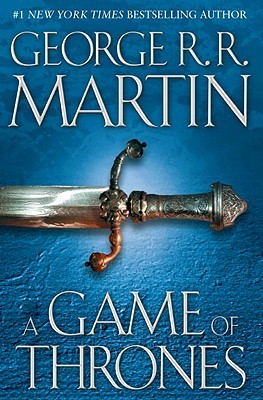
He wasn’t mobbed or surrounded by his people or anything, just strolling around the place, shaking hands, chatting with fans and taking pictures. I was so shocked I probably came off as a bumbling idiot, but Mr. Martin was so cool about it, agreeing to hug and a photo after asking my name and telling me to enjoy the con. Really nice guy. Anyway, I did end up getting an autograph ticket for the next day, so naturally I had to pick up a nice hardcover copy of A Game of Thrones for him to sign:

The other guests included a lot of big names in SFF, since the Balticon folks also endeavored to bring back as many GoHs from past years to celebrate their big five-oh, authors like Jo Walton, Connie Willis, Harry Turtledove, Kim Stanley Robinson, Allen Steele, Larry Niven, Joe Haldeman, and tons more. I also wanted to attend autograph sessions of authors whose books I recently enjoyed, like Ada Palmer, Gail Z. Martin, David Walton and others, but unfortunately conflicting schedules and time spent in lines got in the way, so I didn’t manage to go to all their signings. However, I did get a chance to meet the awesome Fran Wilde, whose book Updraft won this year’s Compton Crook Award, presented by the BSFS. I got my copy autographed, so that made my day!
Reviews
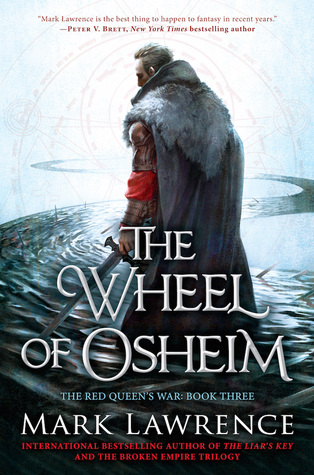
Here are my reviews since the last update, gathered together and listed here for your convenience and viewing pleasure. I only put up two reviews last week since that was all I had time for, but of course one of those was The Wheel of Osheim, which was an incredible book. If you haven’t started The Red Queen’s War trilogy, you need to do it now!
The Wheel of Osheim by Mark Lawrence (5 of 5 stars)
The Rook by Daniel O’Malley (4.5 of 5 stars)
Company Town by Madeline Ashby (4 of 5 stars)
The Fireman by Joe Hill (4 of 5 stars)
The Tower of Swallows by Andrzej Sapkowski (3.5 of 5 stars)
Just One Damned Thing After Another by Jodi Taylor (3 of 5 stars)
Last Call at the Nightshade Lounge by Paul Krueger (2 of 5 stars)
Roundup Highlights:
What I’ve Read Since the Last Update
Our family took a little road trip out of town for the long weekend, and being busy with Balticon and everything on my plate, I probably didn’t read as much as normally would. Still, because I was winding down from a couple of longer reads like The Wheel of Osheim and The Fireman, I decided to take it a little easier with mostly audiobooks and lighter fare and managed to knock a bunch more books off Mount TBR. Mixing in shorter, beach read-type books has always helped me keep things rolling, which also suited my mood at the time for something fun. As you can imagine, MEG: Nightstalkers, The Invisible Library, and the thrilling City of of the Lost were all pretty ideal for that, and as a bonus I also got to complete the final quarter of Between Two Thorns which has been on my to-read list for years. Reviews are on the way!
(Looks like this week’s covers are more blue!)


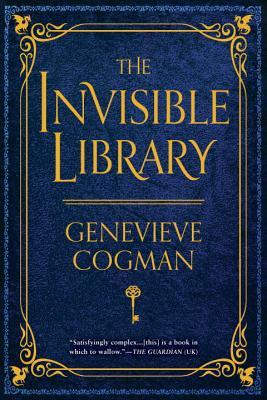


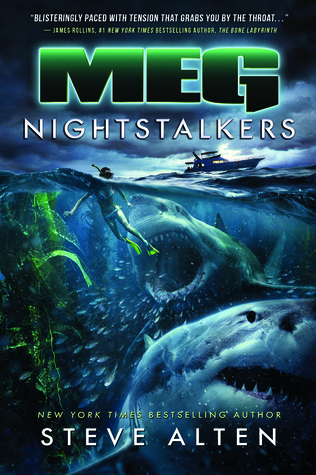

Have you heard of or read any of the books featured this week? What caught your eye? Any new discoveries? Nothing makes me happier than sharing my love for books, so let me know what you plan on checking out. I hope you found something interesting for a future read! Until next time, see you next Roundup!
#FavFiveFriday: Audiobook Edition
Posted on June 3, 2016 9 Comments

#FavFiveFriday is a personal challenge that I’ll be doing just for the month of June in celebration of Audiobook Month. I’ll be using it as a way to highlight my favorite audiobook listens so far in 2016, and I’ve listened to quite a few of them this year. To find out a little more about Audiobook Month and to see some past posts we’ve made during the month in the past, please refer to this post: It’s Audiobook Month!
 The Fifth Season by N.K. Jemisin, narrated by Robin Miles
I know this is an early call, but I think this book will probably be one of my top ten reads for 2016. There were so many things that I loved about this book. I enjoyed Jemisin’s Hundred Thousand Kingdom trilogy, but she’s outdone herself with this latest series. Coupled with a great story is narrator Robin Miles. This was my introduction to her narration, and she was simply amazing. She brought this already lush story to life with a breathtaking narration.
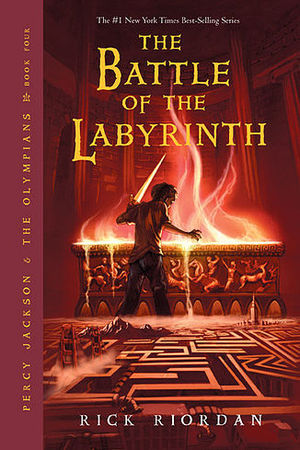 The Battle of the Labyrinth by Rick Riordan, narrated by Jesse Bernstein
This is the series that my children and I devoured together. My son has been in love with mythology for years, and this series really plays up to his fascination. It’s spawned many great discussions between us. This book is one of my personal favorites in the series. Jesse Bernstein’s narration is phenomenal. He manages to give every character a personality all their own. Listening to Jesse Bernstein’s narration is like a creature comfort, which includes freshly brewed tea and music.
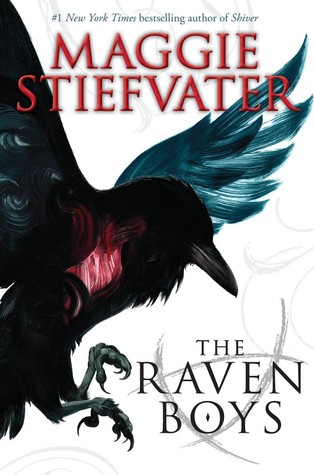 The Raven Boys by Maggie Stiefvater, narrated by Will Patton
I was a little late to the game reading this series, but I did manage to get caught up with it in time for the release of the latest book, The Raven King. This is a fascinating series about the search for the mythical Glendower, but it excels with its characters. Will Patton’s narration had to grow on me a bit for this series. He’s not a bad narrator, but he seemed an odd choice to voice this YA series. Now, I can’t imagine the series without his narration. I love his quiet narration and his authentic sounding southern accents.
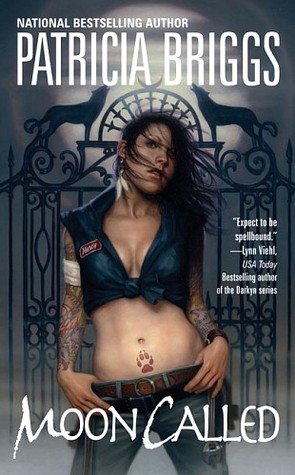 Moon Called by Patricia Briggs, narrated by Lorelei King
This was a reread for me, but this my first time listening to it. I love Moon Called. Yes, I realize that many Urban Fantasy stories are the same. Usually, it’s the characters and their interactions in this sense that gets me invested in a series. It was a treat to reread this after reading Alpha and Omega and Cry Wolf because these stories added so much context to one another. Lorelei wowed me. Her narration made this story so much more thrilling. Also, I’m rarely impressed with narrator’s voicing of the opposite sex, but I was beyond impressed with her male voices in this story.
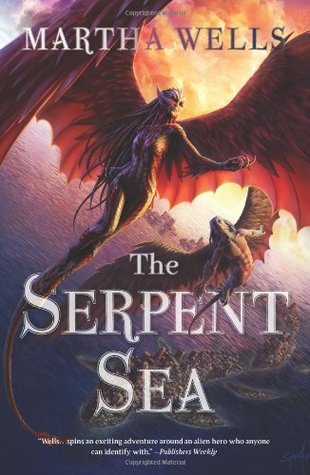 The Serpent Sea by Martha Wells, narrated by Christopher Kipiniak
Last year, The Cloud Roads was one of my favorite reads, and Wells continues to impress me in this sequel. Wells has introduced a unique universe in a sea of sameness with her Raksura. I loved the narration for this from the moment I heard. Chris Kipiniak brings such a wealth of emotion to this series. I’ve laughed, cheered, and cried along with the Raksura thanks in part to the amazing job he does with the narration.
Book Review: The Wheel of Osheim by Mark Lawrence
Posted on June 3, 2016 17 Comments
A review copy was provided by the publisher in exchange for an honest review. All opinions are my own.
The Wheel of Osheim by Mark Lawrence
Mogsy’s Rating: 5 of 5 stars
Genre: Fantasy
Series: Book 3 of The Red Queen’s War
Publisher: Ace (June 7, 2016)
Length: 432 pages
Author Information: Website | Twitter
There’s so much to say about The Red Queen’s War series, even more so now that I’ve finished this third and final installment and realized to my joy and horror that yes, my time with the remarkable Prince Jalan and his crew has indeed come to an end. Taken as a whole, this trilogy may be Mark Lawrence’s finest work ever, and this stunning conclusion that is The Wheel of Osheim has left me with my mind completely blown.
After we were left with that cruel cliffhanger at the end of The Liar’s Key, I just couldn’t wait to see what would happen next. And indeed, The Wheel of Osheim is a book that will ultimately reveal all—though admittedly in its own time and in its own way. It’s a story that guards its secrets jealously, opening with a bizarre sequence that sets the beginning of this novel in stark contrast to the terrors experienced by the characters on the journey to get where they are. In fact, if there was ever an award given for “Most Hilarious Escape from Hell”, I have a feeling Jalan will remain the undisputed champion for years to come.
His goals to ditch Loki’s key and return to his old life of drinking, gambling, and womanizing don’t go as planned either, as he returns home to Vermillion to find everything changed. The end of the world is said to be coming, caused by a large construct in the north called the Wheel of Osheim. All of reality will unravel as the Wheel turns faster, unless someone is willing to go into the heart of it to shut it down. In the middle of this looming threat, an old enemy also makes its move, taking advantage of the confusion to make a bold strike at Jalan in the capital of Red March. Our poor, luckless protagonist has never wanted to be a hero, but unfortunately even a coward has to step up sometime.
Yep, this one’s all on Jalan, and don’t you doubt it for a second. Though his friends Snorri, Kara, and Hennan are also along for this crazy ride, most of this book is driven by our main character, who has all but shed his former persona by replacing the insouciance with actual initiative and responsibility. The impending destruction of the world isn’t the only reason why he can’t go back to his old life; it’s because he’s also not the old Jalan. That said, this change is not something that occurs overnight. We’ve actually been seeing this shift in Jalan’s personality since the last book, and only now are we seeing the results of that transformation. Thankfully though, Jalan still retains a lot of what made him the “Prince of Fools” we fell in love with when this series first started. While his experiences in the past year have hardened his soft edges and impressed upon him a sense of honor, he’s still far from the picture of gallantry—and I’m perfectly fine with that.
With Jalan coming into his own though, it did mean seeing a bit less of the supporting characters. Not even Snorri presents himself in the flesh until later in the book, but we do get to witness snippets of his and Jal’s time in Hell together, woven into the early parts of the story. Compared to the books that came before, The Wheel of Osheim has a more distinct “ethereal” vibe, due in part to the structure of the narrative as well as the strange, otherworldly nature of the main conflict.
I also found the story to be darker, a lot twistier. The tensions between the Red Queen and the Blue Lady have been building up for a while now, and their war finally comes to a head in this book. More puzzle pieces also fall into place as Jalan encounters Jorg once more, further linking the events of The Red Queen’s War to those of The Broken Empire. How surreal it was to watch these two very different young men get drunk together and give each other life advice. And finally, we get a lot more background into the mysterious Builders. The revelations here confirm that Lawrence is still the undefeated master at turning this genre on its head; with six novels by him under my belt, you’d think I would be used to the surprises by now, but somehow he still manages to amaze me every single time.
Still, when it comes down to what makes this novel truly special—and why I loved this entire trilogy, really—my reasons are actually quite straightforward. Very simply, this book made me laugh. There’s horror and darkness in this series, but also genuine humor. Few books in this genre can claim to be funny in the traditional sense, but then, most books in this genre don’t have a protagonist like Prince Jalan. He was a coward, a cheat, and a liar (and still a bit of all those things, I admit) but it didn’t matter; because of the fantastic way he was written, I loved him from the start. Jalan is, I’m convinced, an honest-to-goodness once in a lifetime character, the likes of which we’ll never see again. Now that the trilogy is over, I’m going to miss him very much.
What else is there left to say, really? The Wheel of Osheim is a masterpiece. You need to read The Red Queen’s War trilogy. The end. Full stop.


Audiobook Review Bites: Star Wars Canon
Posted on June 2, 2016 7 Comments
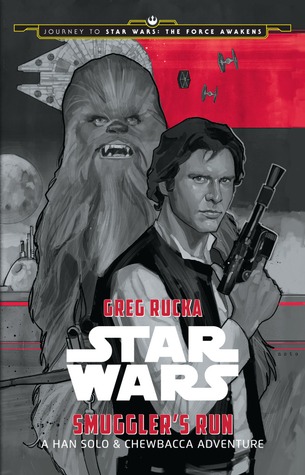 Star Wars: Smuggler’s Run by Greg Rucka
Series: Star Wars Canon
Genre: Science Fiction, Young Adult, Tie-In
Publisher: Disney Lucasfilm Press (September 4, 2015)
Tiara’s Rating: 3.5 of 5 stars
An aged Han Solo tells a group of young mercenary types a story about the famed Millennium Falcon, a story set between A New Hope and The Empire Strikes Back. After helping Luke during the Battle of Yavin, Han Solo looks forward to going back to his smuggling ways. However, Leia isn’t quite through with Han and Chewie just yet as she requests their help to locate an important figure in the rebellion who has fled after an Imperial ambush. Reluctantly (on Han’s part), Han and Chewie finds themselves back in imminent danger for the good of the people, as they try to outrun a ruthless Imperial captain in search of this contact.
This is a young adult book recommended for the middle school age group. While it certainly has a tone that will appeal to younger teens and tweens, I was surprised at how mature the story felt. Not so much that I would be concerned, but it doesn’t treat them like they’re too young to understand the nuances of life in this universe. There are a few dramatic action scenes. The antagonist was interesting, but she falls a little flat since she isn’t explored much. Above all else, I loved Han and Chewie’s friendship in this book. Chewie serves as the voice of morality for Han who believes he’s beyond such things as caring about the good of the universe. It’s often difficult for Star Wars books to convey the different language, but Rucka did an admirable job creating banter between the two and inferring Chewie’s dialogue through Han’s responses, actions, and thoughts.
Marc Thompson is a well known voice in the Star Wars universe, and as usual he gives an amazing performance. I had a copy of the book on hand as well, and Phil Noto’s clean, stark illustrations fit the book well. This is a straightforward romp in the Star Wars universe with two of its most lovable characters, and an excellent way for fans to spend a bite-sized amount of time visiting characters they love and a great introduction book for youngsters and older readers alike.
Narrator: Marc Thompson | Length: 3 hrs and 22 mins | Audiobook Publisher: Listening Library (September 4, 2015) | Whispersync Ready: No (As of this posting)


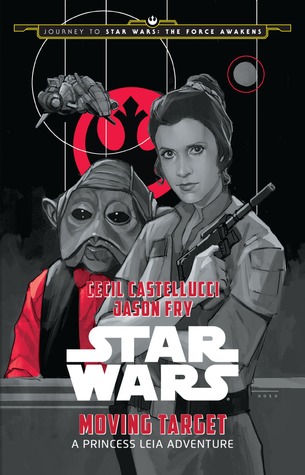 Star Wars: Moving Target by Cecil Castellucci, Jason Fry
Series: Star Wars Canon
Genre: Science Fiction, Young Adult, Tie-In
Publisher: Disney Lucasfilm Press (September 4, 2015)
Tiara’s Rating: 3.5 of 5 stars
Much like Smuggler’s Run, this story features an older Leia relating a story back to another party prior to the events in Star Wars: The Force Awakens. In this case, it’s a droid attempting to work on a memoir about one of the most important members of the rebellion. Set between The Empire Strikes Back and Return of the Jedi, Princess Leia is the last surviving member of House Organa, and finds herself learning to embrace a new role as a rebellion leader with her diplomat status. Leia comes up with an ambitious plan to help the Rebel Alliance gain some time to bolster their forces and regroup, a plan that requires her to make tough choices as her role expands.
Love, duty, and loyalty play a big role in Leia’s adventure. She finds herself conflicted between putting the needs of the people over the needs of the galaxy. She clings to her feelings for Han who has been captured by Jabba the Hutt while trying to reassure herself that she must think of the galaxy first. She comes to term with the fact that duty and loyalty don’t always mean being loyal to a cause over the people who support you–no matter if it is for the greater good. This is a fast story that any fan can enjoy. It balances the action with the story quite well, and I continue to be impressed that these books don’t treat their target age group as if they can’t understand the complexity of the morals and ideas these books are presenting. Also, this book includes a more direct Easter egg for Star Wars: The Force Awakens.
This is the second book I’ve listened to with Jennifer LaVoy as the narrator. The first was also a Star Wars story set in the same canon (The Perfect Weapon). Even though I wasn’t bowled over by that story, I praised LaVoy’s excellent narration, and I have to do the same here. I can be particular about listening to books with characters from movies or games because it can be difficult for me to associate someone else’s voice with a character from a visual media. However, LaVoy’s narration has been my favorite so far of these books.
Narrator: January LaVoy | Length: 3 hrs and 53 mins | Audiobook Publisher: Listening Library (September 4, 2015) | Whispersync Ready: No (As of this posting)

 Star Wars: The Weapon of a Jedi by Jason Fry
Series: Star Wars Canon
Genre: Science Fiction, Young Adult, Tie-In
Publisher: Disney Lucasfilm Press (September 4, 2015)
Tiara’s Rating: 3 of 5 stars
Luke’s story starts a little differently than Leia and Han’s. He’s the only person who isn’t actually “telling” his story for reasons that are obvious if you’ve watched or read Star Wars: The Force Awakens. Instead Luke’s story is told by C-3PO. Luke’s story takes place between A New Hope and The Empire Strikes Back. Luke is trying to reconcile his roles as a pilot and as a Jedi. Following the death of Ben Kenobi, he’s left floundering with no master, but the Force is on his side gently pushing him in the direction that he needs to take to better himself as a Jedi.
Out of these three books, this one is probably the one that is more in line with what I would expect of a book for younger teens and kids. It has a very straightforward story with a basic good versus evil concept. While Han and Leia’s stories, especially Leia’s, dealt more heavily with morality and the sometimes ambiguous nature of it throughout their books, Luke’s story only has one moment where that comes into play and it’s more of a personal choice than something that involves thinking about something bigger than himself like Han and Leia’s dilemmas.
You’d think that a story centered around Luke learning to harness the Force would have a bit more action, but nothing truly happens until the book is nearing the end. Most of the book is spent with Luke lamenting about the Force. Still, I listened to these books with my children in mind (because they’ll be listening to them soon), and it’s really hard to go wrong with showing the “hero” learning to control his powers.
Jonathan Davis is one of my favorite narrators, but I have a bit of a mixed feeling here. He certainly didn’t do a terrible job. His narration was beautiful as always. I was just a little underwhelmed with some of the character voices that didn’t seem to show much nuance from one another, even the female voice. Other than that, he did quite well.
Narrator: Jonathan Davis | Length: 3 hrs and 18 mins | Audiobook Publisher: Listening Library (September 4, 2015) | Whispersync Ready: No (As of this posting)
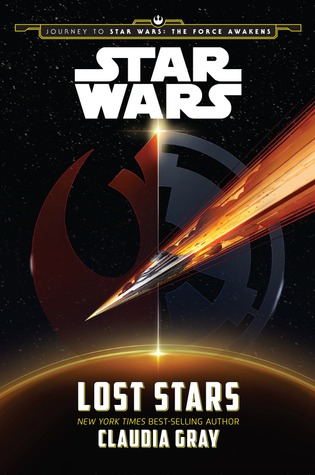 Star Wars: Lost Stars by Claudia Gray
Series: Star Wars Canon
Genre: Science Fiction, Young Adult, Tie-In
Publisher: Disney Lucasfilm Press (September 4, 2015)
Tiara’s Rating: 4 of 5 stars
I won this Kindle book in a giveaway from RhiReading (thanks!) and I was able to get the Audible book at a discount to read through Whispersync.
Two kids from the “backwater” world Jelucan set their aspirations toward being top pilots for the Imperial Army. Ciena Ree is the daughter of impoverished people who live in the Jelucani valley. They descend from loyalists who chose exile rather than turn on what they believed, and they’re a very proud and familial group of people. Thane Kyrell is a second-waver, people descended from another group that settled on Jelucan some years after the valley kindred. They’re privileged, but Thane’s life is anything but happy as he deals with an abusive father and an indifferent mother. Ciena and Thane form an unlikely friendship and work together to become candidates for the Imperial’s military school and eventually move on to become Imperial officers. Romance is a core part of this story between the two leads. Ciena and Thane’s relationship often pits them on opposite sides of conflict even when they’re working for the same side. It does not overwhelm the story and many other things happen, but it is the driving force for this book, which spans almost twenty years of Ciena and Thane’s lives.
This book gives a glimpse of the Imperial rule from the viewpoint of people who aren’t mired in the conflict between the Rebels and the Empire, and I enjoyed this view of seeing just what normal people think is going on around them. The people don’t see the malevolence behind the Imperial rule. They see a governing body that promises opportunity for everyone. It was surprisingly refreshing to get this genuine view of the people on the “wrong” side. You get to see their hopes, dreams, and fears instead of thinking of them as the faceless, cruel officers whose only goal is to rule the galaxy. It has the added effect of making readers feel for some of the people whose destruction we might’ve cheered otherwise. You also get to view some of the events from the first trilogy through the eyes of the general population.
Being part of the military is a goal many kids have, and it’s seen as an honorable, honest profession by both rich and poor. When the kids learn that things aren’t as noble with the Empire as it seems, Thane is hardly taken by surprise because he is naturally distrustful of authority figures, but Ciena finds herself conflicted and continuing to pledge her allegiance to an order because giving her word is more important than anything else. Ciena’s honor can be a bit frustrating at points because, while understandable, there seems there should come a point when she should realize that the honorable thing to do is the right thing, which does not include trying to talk yourself into believing the Empire is not corrupt. However, she is young and often unable to grasp the complexities of rebellion and war, and her position is one that isn’t different from many soldiers who believe they’re fighting for the right cause, even when they have some doubts.

I haven’t encountered a Star Wars audiobook yet that didn’t have an excellent narrator–in this case, Pierce Cravens. As usual, it’s full production with music and sound effects. I didn’t have trouble hearing the narrator over the sound effects in the story. There’s nothing that makes the various fight scenes really resonate than hearing PEW PEW noises in the background. While there were a few things that annoyed me aside from Ciena’s infuriating honor, they were such insignificant things that I won’t rant about them. Overall, this was an excellent read.
Narrator: Pierce Cravens | Length: 11 hrs and 41 mins | Audiobook Publisher: Listening Library (September 4, 2015) | Whispersync Ready: Yes

While it is certainly unfortunate that much of the Star Wars Extended Universe has been chucked, after reading four of these canon books, I can say that I appreciate the cohesive story that these books tell together and how they complement the movies. They’re really focusing in on the politics and the people in this war rather than casting about. I’m not knocking the Extended Universe or the books that are part of it, especially since I still plan to read more from the Extended Universe. It’s just nice that they’re trying to give a clearer timeline that can work for new and old fans interested in the books.
Be sure to check out our Star Wars tag where you can find reviews and more!
It’s Audiobook Month!
Posted on June 1, 2016 10 Comments

June is Audiobook Month as designated by the Audiobook Publishers Association. The APA’s website mentions a few ways for audiobook fans to get involved and spread audiobook awareness. The APA’s mission is as follows, quoted directly from their site:
Formed in 1987, the Audio Publishers Association (APA) is a not-for-profit trade association that advocates the common, collective business interests of audio publishers. The APA consists of audio publishing companies and allied suppliers, distributors, and retailers of spoken word products and allied fields related to the production, distribution and sale of audiobooks.
APA:
Advocacy: Promote policies and activities to create greater awareness and accelerate audiobook industry growth.
Events: Deliver programs and services that serve the common business interests for all members.
Networking: Serve as a networking, educational, and informational forum for members.
Standards: Advocate and guide for high quality production value.
Some ways of promoting and connecting with other listeners include diving into the following hashtags.
#loveaudiobooks
#audiobooks
#JIAM
Below is a quick guide to some of our audiobook related posts.
Our Favorite Narrators Pt. I
Our Favorite Narrators Pt. II
This year marks the second year that we’re participating in the Audiobook Challenge as a team. This challenge is hosted by The Book Nympho and Hot Listens. Check out our goals for this year, and see how we fared in last year’s challenge. And it’s never too late to join this challenge if you’re interested.
2016 Audiobook Challenge: Intro Post | 1st Quarter
2015 Audiobook Challenge: 1st Quarter | 2nd Quarter | 3rd Quarter | 4th Quarter
Last year, I took the opportunity to make some of June’s Top Ten Tuesday challenges fit in with Audiobook month, as well as sharing ten speculative podcasts that readers might enjoy.
Top Ten Audiobooks I’ve Listened to in 2015
Top Ten Audiobooks on My TBR Pile for Summer 2015
Top Ten Most Anticipated (Audiobook) Releases For the Rest of 2015
Ten Podcasts for Fans of Speculative Literature
We were very fortunate to feature an interview with one our favorite audiobook narrators, Simon Vance, during June last year.
Voice of Gold: An Interview with Award-winning Narrator Simon Vance
Finally, be sure to check out our audiobook tag for more reviews and audiobook related posts.
Audiobook Resources: Audible | Ambling Books | Downpour | Tantor | Barnes & Noble | Audio Jukebox | ListenUp Audiobooks | Graphic Audio | Audiobooks.com | Books On Tape
Happy Listening!

Waiting on Wednesday 06/01/16
Posted on June 1, 2016 15 Comments

“Waiting On Wednesday” is a weekly meme hosted by Breaking the Spine that lets us feature upcoming releases that we can’t wait to get our hands on!
Mogsy’s Pick
No Good Dragon goes Unpunished by Rachel Aaron (August 5th 2016 by Aaron/Bach, LLC)
Last Friday Rachel Aaron shared details on her blog about the third book in her Heartstrikers series, along with the final cover and release date. Chelsie is her usual bad-ass self! I can’t wait to read it.
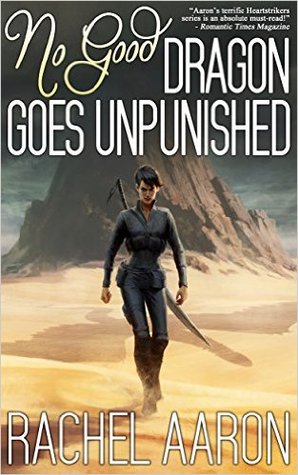 “When Julius overthrew his mother and took control of his clan, he thought he was doing right by everyone. But sharing power isn’t part of any proper dragon’s vocabulary, and with one seat still open on the new ruling Council, all of Heartstriker is ready to do whatever it takes to get their claws on it, including killing the Nice Dragon who got them into this mess in the first place.
To keep his clan together and his skin intact, Julius is going to have to find a way to make his bloodthirsty siblings play fair. But there’s more going on in Heartstriker Mountain than politics. Every family has its secrets, but the skeletons in Bethesda’s closet are dragon sized, and with Algonquin’s war looming over them all, breaking his clan wide open might just be the only hope Julius has of saving it.”
Audiobook Review: Lightless by C.A. Higgins
Posted on May 31, 2016 8 Comments

Genre: Science Fiction, Space Opera
Series: Lightless #1
Publisher: Del Ray (September 29, 2015)
Information: Website | Twitter
Tiara’s Rating: 3.5 of 5 stars
Narrator: Fiona Hardingham | Length: 11 hrs and 32 mins | Audiobook Publisher: Random House Audio (September 29, 2015) | Whispersync Ready: No (as of this posting)
Lightless blipped on my radar for two reasons. First, there is a Worlds Without End challenge dedicated to the books that made io9’s list for 2015’s best science fiction and fantasy novels, which features this book. Second, I received a review copy of the upcoming second book, Supernova, and since I can’t dive into a second book without reading the first, I decided to purchase this book and give it a listen.
First a warning for those who enjoy reading the Amazon and/or Goodreads summaries of books. There are some spoilers in the summaries for both books. I don’t mind spoilers, but while listening, I realized that the author was trying to buildup to these reveals (at least one of them, anyway). Part of the appeal of the story is trying to sift through what’s truth and what’s fiction. It’s one thing to have the readers assume these things might be true in their reading, but putting it right there in the summary takes away from the mystique of allowing readers to make their own conclusions until the fog clears. With that brief rant out of the way, let’s get on with the review.
In this distant future, humanity has spread across the galaxy, reaching as far as the outer edge of the galaxy. The System Intelligence Agency polices the galaxy, handing down harsh punishments to people for slight offenses. Dissent has festered among some groups, and the System finds itself faced with pocket rebellions throughout the galaxy. However, the galaxy’s struggles, while present and important, are secondary in this novel. This story centers around the ship Annake, an experimental military vessel built around a black hole, and Althea Bastet, a engineer who has become emotionally attached to the ship. Side note: Althea reminded me of another character from my favorite game series (Joker from Mass Effect, duh) who also was emotionally attached to a spaceship.
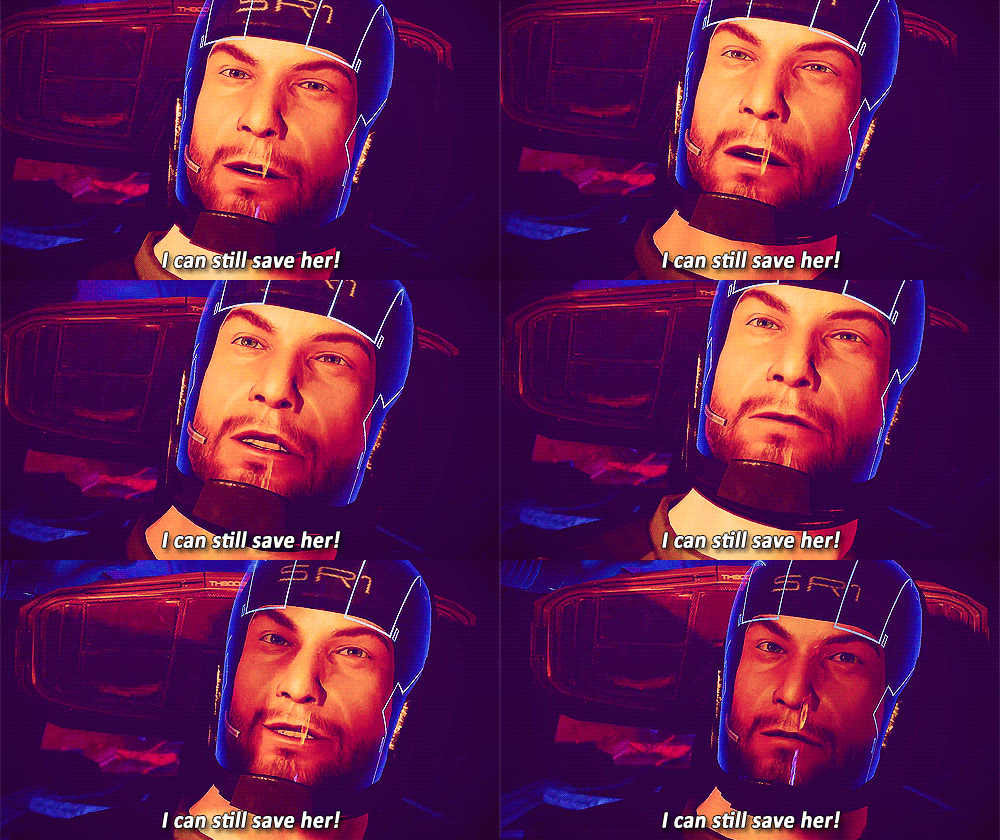
Actual male Althea.
Despite it’s massive size, the Annake is manned by a three-man crew including Althea, but they find their numbers increased when thieves breach the vessel and tamper with the ship. Althea works tirelessly to undo the disruptive virus introduced by the breach while her colleagues work to find out why the thieves targeted the Annake.
Lightless is a psychologically driven novel that focuses on its characters more than anything else, so if you prefer your space operas fast and furious, this book may prove to be too slow for your speed. The story unfolds layers at a time as readers try to piece together what’s real and what’s not as the characters wage psychological warfare against one another. As the story soldiers on, you begin to see frayed edges of the main characters–their weaknesses, their prejudices, their fatal flaws. Despite their beliefs that they’re good at what they do, they fall apart. The ship’s continuing problems further aggravates this by playing into the familiar theme of man versus machine, which creates a tense backdrop that culminates to a chaotic, explosive end. Higgins employs the laws of thermodynamics to frame this narrative, using it to allude to the environment on the ship and the interactions of the characters with one another, their interactions with the galaxy/power structure at large, and their interactions with the ship itself.
The amount of work done in one direction is the same as the amount of heat transferred in the other, or, the internal energy of an isolated system is constant.
Because of this, a perpetual motion machine cannot exist, and all systems come to an end.
As interesting as this deconstruction of her characters was, and while I certainly understand why she went the direction she did with some characters, it didn’t stop me from feeling as if certain characters were a joke, a really bad joke. There were moments when I just felt these characters were completely incompetent and stupid, but that could go hand-in-hand with the overestimation of their abilities. However, I enjoyed this story, so I can forgive that.
Now, this book does suffer from being a bit too “talk-y.” I would expect a story like this to be more action oriented, to really capitalize on the claustrophobic, isolated feel of the setting, but a large portion of this book revolves around two characters conversing around the sections of the novel that focus on Althea and the ship. There’s nothing wrong with that, but in this case, it made the story feel tedious at times. There had to be better ways to convey the information they exchanged than to have two characters literally sitting in a room together going back and forward for a huge chunk of the novel. While I love a good psychological story, I expected much more to happen in this story than what actually happened. In fact, I feel like the last third of the book is where the pace really picked up and showcased the best of this story.
Fiona Hardingham narrated the story with the kind of straightforwardness you’d expect from a novel in this vein. While most of her men sounded largely the same, she did an excellent job with the female characters’ voices, especially a cold, calculated character named Ida Stays.
If you don’t enjoy “hard” science fiction, don’t fret. Aside from these brief passages about the laws of thermodynamics, the science in this novel is easy to grasp. The science is almost secondary to the conflict. Higgins has created an absorbing and thoughtful read with Lightless. Sabotage, intrigue, and terrorism meets loyalty, freedom, and even a hint of humor in this story. I’m definitely looking forward to visiting this universe again in Supernova, especially to see if we’ll be diving into the larger conflict now that we’ve established the characters.
Story

Performance
Overall




 The BiblioSanctum