Book Review: We Eat Our Own by Kea Wilson
Posted on October 13, 2016 16 Comments
A review copy was provided by the publisher in exchange for an honest review. All opinions are my own.
Mogsy’s Rating: 3 of 5 stars
Genre: Horror, Literary
Series: Stand Alone
Publisher: Scribner (September 6, 2016)
Length: 320 pages
Author Information: Website | Twitter
So, I’ve never seen Cannibal Holocaust. Its huge cult following and legacy as a definitive film in the exploitation horror genre notwithstanding, I already know that kind of movie is not my bag, and my queasiness from viewing its Wikipedia page alone is confirmation enough of that. And yet, when I saw the description of this book I was immediately intrigued, especially by the part about the story being inspired by the true events surrounding the making of the film. If you aren’t familiar with the controversy there, when Cannibal Holocaust came out in the early 80s it achieved massive notoriety for its gruesome and violent content, but also when it came to light that there were unsavory practices on set that proved quite disturbing.
We Eat Our Own is essentially the novelized incarnation of that story. It tells of an unnamed struggling actor, only referred to as his on-screen name “Richard”, getting a call from his agent out of the blue about a once in a lifetime opportunity—an Italian art film director is in need of a new lead because his original actor quit right on the tarmac after seeing the script. This could be the big break “Richard” needs, but the catch is, he’ll need to pack up and leave right this instant. The rest of the crew are already shooting in the Amazon rainforest, and production is already behind schedule and over-budget. The plane to Bogotá leaves from the airport in six hours; just be on it.
Not long after “Richard” arrives on set though, he wonders if he’s made a mistake. The director is a nutcase, who seems to be making things up as he goes along. Many of his methods are unorthodox and unethical, especially when it comes to the treatment of animals on set as well as his attitudes towards the native extras. There is no script, not enough set materials, and hardly any safety. They’re in the middle of nowhere far from civilization, in an area made unstable by the activity of the drug cartels and M-19 guerilla fighters. The jungle itself is oppressive, the air hot and wet, the river brown and soupy and full of parasites. Despite the hours of acting classes and theater school, nothing could have prepared our main character for any of this.
For me, this book was a total surprise, but I’m still trying to decide whether it was a positive or negative one. To be perfectly honest, I’m not even sure what I expected beyond having glimpsed a description of the style as being “literary horror”, but it’s probably safe to say the book turned out even more artsy than I’d anticipated. The prose is innovative and ambitious, bordering almost on experimental. For instance, the author uses a number of unconventional literary devices including the second person narrative for “Richard’s” chapters, often emphasizing just how far out of his depth he is by starting the character’s sections with “Here’s what you don’t know…”, while of course empowering the reader because we are afforded the luxury of seeing the whole picture. As well, we bounce between points-of-view, making the narrative as a whole feel somewhat disjointed and choppy. Dialogue is also presented without the traditional quotation marks, and tends to run together.
The real kicker though, is that while I could grasp the overall gist of what the author was attempting to do, the unusual style sadly had the effect of alienating the reader, taking a lot away from the impact she was hoping to convey. The philosophy and social commentary also gets lost in all the muddled narratives and side plots, and the problem is compounded when none of the characters are all that likeable (though in all fairness, this is by design) or sympathetic enough for me to care about them. Wilson has created an incredible thing here, and it’s especially impressive for a debut novel…but still, something felt missing.
I’ve been pondering how to put my feelings into words, and in the end I think it amounts to this: We Eat Are Own is a book that will be more appreciated for its bold structure and its artistry, rather than for its story or ideas. While the original inspiration behind it is fascinating—and I think Cannibal Holocaust enthusiasts will get a kick out of it—I just never felt connected to the narrative on a level beyond, “Hey, this is a pretty neat premise for a book.” Fans of literary fiction will probably enjoy the thematic parallels to classics like Heart of Darkness and other works that explore the savagery and moral confusion deep within the human condition. Readers of more traditional horror on the other hand, though, are likely better off looking elsewhere.


Waiting on Wednesday 10/12/16
Posted on October 12, 2016 15 Comments

“Waiting On Wednesday” is a weekly meme hosted by Breaking the Spine that lets us feature upcoming releases that we can’t wait to get our hands on!
Mogsy’s Pick
The White Road by Sarah Lotz (May 30, 2017 by Mulholland Books)
I’ve been in full Dark Fantasy/Horror-reading mode lately, which probably has a lot to do with my pick this week. But when it comes to fave author Sarah Lotz, the fact that she has an upcoming book is reason enough to get excited.
 “A cutting-edge thriller about one man’s quest to discover horror lurking at the top of the world.
Desperate to attract subscribers to his fledgling website, ‘Journey to the Dark Side’, ex-adrenalin junkie and slacker Simon Newman hires someone to guide him through the notorious Cwm Pot caves, so that he can film the journey and put it on the internet. With a tragic history, Cwm Pot has been off-limits for decades, and unfortunately for Simon, the guide he’s hired is as unpredictable and dangerous as the watery caverns that lurk beneath the earth. After a brutal struggle for survival, Simon barely escapes with his life, but predictably, the gruesome footage he managed to collect down in the earth’s bowels goes viral. Ignoring the warning signs of mental trauma, and eager to capitalize on his new internet fame, Simon latches onto another escapade that has that magic click-bait mix of danger and death – a trip to Everest. But up above 8000 feet, in the infamous Death Zone, he’ll need more than his dubious morals and wits to guide him, especially when he uncovers the truth behind a decade-old tragedy – a truth that means he might not be coming back alive. A truth that will change him – and anyone who views the footage he captures – forever.”
Book Review: The Librarians and the Lost Lamp by Greg Cox
Posted on October 11, 2016 21 Comments

 The Librarians and The Lost Lamp by Greg Cox
Genre: Action/Adventure, Fantasy
Series: The Librarians
Publisher: Tor Books (October 11, 2016)
Author Info: www.gregcox-author.com
With thanks to the publisher for the opportunity to read an advanced copy of this book in exchange for an honest review.
Disclaimer! I am not a librarian and had not seen the television series prior to reading this book, but now that I have read it, I’m going to remedy at least one of these things!
Flynn Carsen used to be the one and only Librarian in a long line of those tasked with protecting the world from the magic hidden within the pages of our favourite books. Ten years ago, he went up against the villainous Forty Thieves to stop them from accessing the powers of Aladdin’s Lamp. A decade later, Carsen is no longer alone in his duties, as he is joined by a new generation of Librarians, and their Guardian, who must once again save the world from the Forty and a djinn who’d really like to bust out of his cage…

I had not even heard of this series before (thanks a lot, Canadian television) prior to receiving this book, so I wasn’t entirely sure what to expect, but Cox quickly sets the tone with the introduction of Carsen, the quirky and charming Librarian who gallivants around the world in a tweed suit. He doesn’t exactly sound formidable, especially considering what he’s up against, and as the story progresses, we see that his skills are mostly limited to his vast knowledge of books. But we’ve all known how surprisingly cool librarians can really be and what they bring to the adventure table, after Evie made her proclamation and proved her worth in The Mummy.
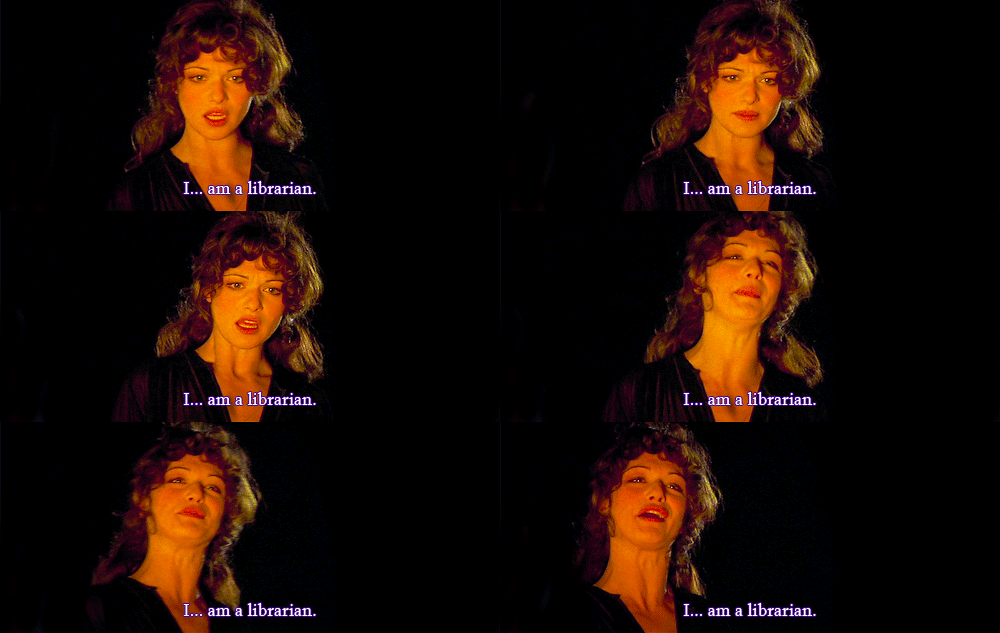 Flip to the future, where the new group of Librarians bring some other interesting skills to their role, with characters that don’t fit the typical mould of either the librarian, or art historian, mathematician, or world class thief, as well as the former military officer who protects them. But of course they work together well enough to save the day and offer a lot of fun for the reader while doing so.
 While I was expecting magic and fantasy to feature prominently in the story, what with Exaclibur showing up early on, I was extremely pleased with the inclusion of historical events and geographical details, many of which are very much relevant now. In particular, when Carsen’s adventure takes him to Baghdad, there is ample time spent on the city’s rich cultural history in juxtaposition with the destruction that has been wrought by war.
Like I said, I’m no librarian myself, but I’d like to think that actual librarians would appreciate the fun–which is why I’ve now suggested the series to my librarian friends and will definitely be checking it out myself.


Audiobook Review: Forsaken Skies by D. Nolan Clark
Posted on October 10, 2016 15 Comments
A review copy was provided by the publisher in exchange for an honest review. All opinions are my own.
 Forsaken Skies by D. Nolan Clark
Mogsy’s Rating (Overall): 3.5 of 5 stars
Genre: Science Fiction
Series: Book 1 of The Silence
Publisher: Hachette Audio (September 6, 2016)
Length: 20 hrs and 5 mins
Author Information: Website | Twitter
Narrator: Jack Hawkins
It’s Seven Samurai set to a backdrop of a rollicking space opera in D. Nolan Clark’s (pseudonym of horror writer David Wellington) Forsaken Skies, the first book of The Silence series. This is the kind of science fiction story I love listening to in audio, so I was grateful to be offered the audiobook version to review.
From the depths of space comes a new enemy, and their first victim is a remote planet called Niraya, home to colony of peaceful farmers and religious exiles. In a desperate gambit, Elder McRae and Aspirant Roan stowaway on a freighter bound for the Hexus space hub in the hopes of finding help. When the two women arrive though, it’s to apathy and apologetic shrugs. Worse, they are even swindled by an unscrupulous officer named Lieutenant Maggs, who would have gotten away with his scam too had it not for the intervention of two good Samaritans, legendary pilot Aleister Lanoe and orbital traffic controller Tannis Valk.
Lanoe had happened to be on the Hexus after pursuing a suspected murderer to the space hub. The fugitive, a young man named Thom, had indeed killed his own father, but purportedly in self-defense. Feeling for the kid, Lanoe decides to take him under his wing. No one had any clue though, that the boy’s actions would precipitate a chain of events culminating into an adventure of such epic proportions, because struck by Elder McRae and Roan’s plight, Lanoe also decides to come to the aid of the Nirayans. He immediately recruits the help of a couple more buddies from back in the war, including his old flame Bettina Zhang as well as a Marine named Ehta. With Maggs, Valk, and Thom also on board, their group makes for a pretty ragtag crew, but with years of battle experience and piloting skills between them, Niraya may yet have a chance against their cold, ruthless foes.
For the first book of a new series, Forsaken Skies sure knows how to kick things off with style. It is an action-filled space adventure, and yet the story is notable for its extremely detailed look at its group of characters. This is one of the main reasons why the book runs so long. While the author presents a scenario where a helpless planet is under an imminent threat, he also wants the readers to really get to know his heroes, so the story takes its time shining a light on each of our key players.
For character-oriented readers who are looking for more than just a wham-bam adventure, this may be the best thing about this book. Hands down, my favorite part was the intro, watching the tangled lives of all the characters gradually converge. The introduction to each person may seem rather slapdash at first—everyone was so different, and events felt randomly thrown out and disjointed—but rest assured, everything will ultimately come together like pieces of a puzzle. Once the connections started to form, and the relationships began to make sense, I was hooked.
If you want things to move quickly though, then this might not be a book for you. While it has its fair share of space battles and disaster sequences, this isn’t exactly a story where heart-thumping action sequences will come flying at you around every corner either. Instead, much of it is given to developing the characters and their relationships, examining their backstories and how their pasts have shaped who they are now. Like I said, this is very much a novel that focuses on characters. It likes to slow down every now and then to build on them, and I won’t lie, as much as I love character development, there were times I just wanted things to move along. I concede, maybe this book could have been edited down a little. It made me glad I was reviewing the audio edition though, since any parts that dragged were probably offset by the fact I was listening and not reading the physical print.
And speaking of the audio format, the narration for the audiobook of Forsaken Skies is excellent. For a book with this many characters, my main concern for the audio was whether or not I could distinguish who was speaking, but narrator Jack Hawkins laid my worries to rest almost immediately with his deft handling of dialogue. He had a distinct voice for everyone—Lanoe had a certain accent, for example, and Maggs had a cocky inflection that was perfect for his character—and there was never any confusion who was talking, even in scenes where multiple people were gathered and having a conversation. Hawkins may have been another new-to-me narrator, but going forward, I’ll definitely be on the lookout for his future performances.
Final verdict? When I first saw the runtime of Forsaken Skies, it did strike me as a bit long compared to similar offerings in the same genre. I later came to realize it was because so much of the book was about giving a thoroughly detailed picture of all the characters—and there are quite a few of them. This does draw things out and slows down the pace, robbing the situation of its urgency somewhat, but if you like space operas that are more than just plain action though, featuring characters you get to know and care about, this might be worth a read. The audiobook and Jack Hawkin’s talented narration also adds an extra layer of humanity to the characters, so if you are considering the audio edition, I wouldn’t hesitate to recommend it.

YA Weekend: Like A River Glorious by Rae Carson
Posted on October 9, 2016 15 Comments

A review copy was provided by the publisher in exchange for an honest review. All opinions are my own.
 Like A River Glorious by Rae Carson
Mogsy’s Rating: 4 of 5 stars
Genre: Fantasy, Historical Fiction, Young Adult
Series: Book 2 of The Gold Seer Trilogy
Publisher: Greenwillow Books (September 27, 2016)
Length: 432 pages
Author Information: Website | Twitter
I was super excited to read this sequel to Walk on Earth a Stranger, and not least because the first book was one of my favorite Young Adult reads of last year. Knowing how rare it is for a series to strike gold twice though (pun intended) I wasn’t surprised to find that I didn’t find Like A River Glorious quite as earth-shattering as its predecessor, but it was still an excellent sequel and a fun YA fantasy western.
At the end of Walk on Earth a Stranger, a novel which takes place in the midst of the great California Gold Rush, protagonist Leah “Lee” Westfall and the survivors of her party had managed to reach their destination at last. They’d wasted no time in settling in and staking their claims, and thanks to Lee’s remarkable secret, she and her friends have done pretty well for themselves.
After careful consideration though, Lee decides to let her trusted circle in on how she’s been helping them find the best plots. The truth is that she has a mysterious magical ability to sense gold in the environment around her, and being in gold-rich California, her powers have been practically humming within her. However, Lee also wanted to come clean to her friends to warn them that being close to her may have its own dangers. Her uncle Hiram, who knows about her secret, is still hunting her and wants to use her gold sense to his advantage. He had already killed Lee’s parents, and now she’s afraid that she’s put everyone associated with her at risk too.
Lee had good reason to be worried. Despite their best efforts to remain discreet, news of Lee and her group’s success begins to spread, and it’s just a matter of time before Hiram tracks them down. Unwilling to put her friends through more pain and grief, Lee ultimately decides to take matters into her own hands and begins to plot a plan to confront her uncle.
First, the good stuff: Readers who felt that the first book did not have enough “fantasy” in it will be a lot happier with this sequel. Lee’s gold sense plays a bigger role this time around, and has a much greater impact on the outcome of the story. Her power is also evolving, growing stronger somehow. And as to why this is happening, that’s a mystery Lee is also trying to figure out for herself.
Then there’s the romance. While it wasn’t a big part of the first book, Rae Carson did plant a seed of something between Lee and her best friend Jefferson, and those feelings finally come to fruition. The pacing of the romance remains slow-burn though, which for me is a breath of fresh air especially after having read a string of YA novels featuring instalove, or female protagonists who immediately hurl themselves at a guy the moment he shows a hint of interest. I liked how Lee kept a level head despite her growing feelings for Jeff, keeping in mind what she would be gaining and sacrificing for marriage in an era where women have little power. It may seem like a rather cold, unromantic way to think about love, but it does show that Lee is mature, independent and insightful—traits that I admire in a protagonist.
Despite the book’s strengths though, I did have some issues with the depiction of Lee and her friends, especially given the historical setting and social climate of the times. I understand that, especially in a YA novel, we need our protagonists to be the good guys to cheer for and look up to, and true to form, Lee is heroine who wants to buck the system and fight against injustices. The problem is that it’s not subtle at all, and it’s immersion-breaking when looking at this book through a historical fiction lens. When it comes to historical novels I think it’s important to look at how context shapes character motivations and attitudes, and while I can understand why a lot of Lee’s experiences would shape her opinions on land ownership, slavery, religion, women’s rights, etc., a lot of the actions of her and her settler friends do come across a bit revisionist. At some point in this novel, Lee also started to feel too much to me like a present-day teenage character transported to the 1850s, but this probably didn’t bother me as much as it would have if this had been an adult novel.
Other than that minor issue, I honestly have no complaints. Overall I really enjoyed Like A River Glorious, and like the first book this one was also blessedly free of pesky cliffhangers. I like how both installments have so far ended with all its major story conflicts resolved, while still being a part of a greater narrative. This is another chapter in Lee and Jefferson’s lives, and I loved the happy conclusion. Looking forward to where the next book will take them.

Mogsy’s Bookshelf Roundup: Stacking the Shelves & Recent Reads
Posted on October 8, 2016 42 Comments
Bookshelf Roundup is a feature I do every other weekend which fills the role of several blog memes, like Stacking the Shelves where I talk about the new books I’ve added to my library or received for review, as well as It’s Monday! What Are You Reading? where I round up what I’ve read since the last update and what I’m planning to read soon. Mostly it also serves as a recap post, so sometimes I’ll throw in stuff like reading challenge progress reports, book lists, and other random bookish thoughts or announcements.

I’m back from my trip to Cape Cod, where we got to sneak in some time at the beach on probably what were the last few warm days of the year.

Bass River Beach, South Yarmouth, MA
The kids loved it. They had a fun time with their grandmother and I got some nice downtime to relax, catching up with plenty of reading and also getting lots of audiobook listening done during the long stretches of driving. And when I got home, the post office delivered all my held mail and sure enough there were some exciting books waiting upon my return…
Received for Review
Huge thanks to the publishers and authors for the following review copies received, and for more details and full descriptions of the books, be sure to click the links to their Goodreads pages!

The Facefaker’s Game by Chandler J. Birch – Pitched as perfect for fans of Patrick Rothfuss and Scott Lynch, there are certainly some high expectations for this fantasy novel, but I’m looking forward to digging in, probably sometime later this month. My thanks to Simon & Schuster/Simon451 for the finished copy!
Dreadnought by April Daniels – This was an awesome arrival from Diversion Books (and the fact that they send me surprise mystery teas certainly doesn’t hurt!) Not only was I thrilled to learn all about this upcoming novel, it’s also going to be an excellent #WeNeedDiverseBooks title for readers looking for YA titles with LGBTQIA themes. Dreadnought is a superhero story starring a transgender teen facing the confusion of coming out while also struggling to master her powers in order to save the world. Thank you so much to the wonderful team at DB for introducing me to this amazing looking book and I can’t wait to check it out.
The Apothecary’s Curse by Barbara Barnett – Thank you to Pyr Books for this finished copy! They’re really hitting it out of the park this year with interesting and very unique books, and this Victorian era inspired steampunk is definitely calling out to me. I’m hoping to read it soon.
The Queen of Blood by Sarah Beth Durst – I just love, love, love the sound of this one, and the tantalizing draw of the mythical forest setting is especially irresistible. Thank you Harper Voyager for the finished copy!
The Dreaming Hunt by Cindy Dees and Bill Flippin – The arrival of this one reminded me that I still need to get caught up with the first book. This is a series I’ve been interested in for a long time. With thanks to Tor for the finished copy.

The Rains by Gregg Hurwitz – Also courtesy of Tor comes this apocalyptic YA horror novel featuring what looks to be zombies. I didn’t even realize until I saw the finished copy that there are actually a pair of icky, rotten undead hands reaching for the characters at the bottom of the cover! Yikes! I’m going to try very hard to fit this one in for October, because it sounds like a lot of fun.
Pathfinder Tales: Shy Knives by Sam Sykes – I’ve been really enjoying these Pathfinder books, but even if I hadn’t been getting into the series I’d like to think this one would have jumped out at me. A Pathfinder novel by the wickedly funny Sam Sykes? Yes, a million times yes, please. Thank you, Tor Books!
Unhonored by Tracy Hickman and Laura Hickman – One final finished copy from the good folks at Tor, and it is the second book in the Hickmans’ Nightbird series. I am still deciding whether or not to tackle it since I had mixed feelings about book one, but if I have time I’ll probably go for it! My thanks to the publisher.
Black Feathers edited by Ellen Datlow – This was an unsolicited arrival, but color me intrigued! Being a huge bird nerd, naturally I’m drawn to anything feathery, including the darker side of the avian world. Some of the creepiest, most horrifying stories and movies revolve around birds, which, if you think about it, is actually kind of weird and cool–much like this book. Edited by renowned anthologist Ellen Datlow, this collection features writers of horror and dark fantasy like Paul Tremblay, Seanan McGuire, Alison Littlewood, Stephen Graham Jones, and that’s only a sample of the few names I could remember from my quick gander (heh!) at the author line-up. Huge thanks to Pegasus Books for the ARC.
At the Sign of Triumph by David Weber – This was a surprise arrival, and though I’ve always wanted to read Weber, gah, not sure I could start with book nine of a series! The Safehold saga is one I’ve heard a lot about though, and it’s actually on my list of series I hope to start one day. My thanks to Tor Books for the ARC.


Crooked Kingdom by Leigh Bardugo – Audiobook, with thanks to Audible Studios. One of the main reasons I decided to go with the audio version over the print is because of the multiple cast production. They’ve brought on eight narrators for this book, and I just adore audiobooks where each POV character has his or her own voice for the chapters. I’m really excited to start listening, and hopefully by the time this post goes live, I will already be well into this.
Red Sister by Mark Lawrence – This book isn’t out until next spring and it’ll probably be some time before I start reading, but I just could not resist requesting when I saw it pop up on NetGalley. A new Mark Lawrence book always has that effect on me! My thanks to Ace Books!
Etched in Bone by Anne Bishop – Another book I could not resist requesting, but I could hardly be blamed for my impulsiveness, right? So what if I’ve essentially destroyed my NetGalley stats this week? This is the final book of The Others series and I am like GIMME NOW. Thank you to Roc Books!
The Mirror’s Truth by Michael R. Fletcher – Well, this is certainly a Bookshelf Roundup full of exciting eARCs, because this week I also received this second novel in the Manifest Delusions series. Beyond Redemption is one of the best grimdark books I have ever read so I was bummed when I heard the publisher wasn’t picking up the sequel. Thankfully the author has decided to self-published, and I was thrilled to be offered a review copy. If you haven’t checked out the first book yet, I highly highly highly recommend it! Do yourself a favor, and go read it now. You can be sure I’ll also be preordering this bad boy as soon as it becomes available.
Passing Strange by Ellen Klages and Cold Counsel by Chris Sharp – More novellas, courtesy of Tor.com! Both of these covers are gorgeous, especially the one for Passing Strange which really captures that nostalgic vibe of the 1940s, which is when this book takes place. Cold Counsel also looks great, because who doesn’t love trolls?
Reviews
Review roundup time! The Last Days of Jack Sparks is featured as a top read, and if you’re still looking for spine-chilling read this Halloween, I simply cannot think of a more perfect book. The Bloodsworn was also a stunning conclusion to a fantastic trilogy. I highly recommend the series if you enjoy fantasy and adventure mixed with a healthy dose of romance.
The Last Days of Jack Sparks by Jason Arnopp (5 of 5 stars)
The Bloodsworn by Erin Lindsey (4.5 of 5 stars)
Penric’s Demon by Lois McMaster Bujold (4 of 5 stars)
Penric and the Shaman by Lois McMaster Bujold (4 of 5 stars)
The Wolf Road by Beth Lewis (4 of 5 stars)
Of Sand and Malice Made by Bradley P. Beaulieu (3.5 of 5 stars)
Poisoned Blade by Kate Elliott (3.5 of 5 stars)
The Rift Uprising by Amy S. Foster (3 of 5 stars)
Roundup Highlights:


What I’ve Read Since the Last Update

An old rock pier at Falmouth, Cape Cod
I managed to fit in a lot of reading on my trip, and as you can see I’m also well into my “Read all the horror books” phase to get into the spirit of the season. Some of these books have already been reviewed; stay tuned because the rest will be up soon.


Have you heard of or read any of the books featured this week? What caught your eye? Any new discoveries? I hope you found something interesting for a future read! Let me know what you plan on checking out. Until next time, see you next Roundup!
Novella Review: A Gentleman and a Scholar by Rebecca Diem
Posted on October 7, 2016 4 Comments
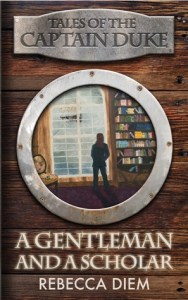 A Gentleman and a Scholar by Rebecca Diem
Genre: Steampunk, Pirates
Series: Tales of the Captain Duke #3
Publisher: Woolf Like Me Publishing (September 1, 2016)
Author Info: www.rebeccadiem.com

The Captain Duke and his crew are slowly trying to piece together their lives, their livelihood, and the mystery surrounding the gunpowder and the mutiny that cost them their home of Haven in the previous book. Our hero, the Captain Duke, struggles to keep it together as he watches his best friend and mentor, Trick, wallow in the depression brought on by a lost limb, while our heroine, Clara, tries to balance her duties to the crew with her feelings for the enigmatic captain. But they both must adapt and focus on the future in order to unravel the threat against them and their life.
When I reviewed the first two books in this series, I spoke about family. The kind that goes beyond blood. That is the heart of Diem’s story. In spite of those that betrayed them and the shaken trust that has left behind, Diem’s endearing cast of characters remain loyal to each other and to their way of life. This sense family and belonging is further solidified through Trick’s tragedy and the way the story and characters desperately circle around his hope for recovery. The hunt for the perpetrators of the mutiny and the Tradist conspiracy are a tantalizing mystery that keeps the book moving forward in the background, but even the gently teased romance between Clara and the Captain takes a back seat to Trick’s well-being and the effect his recovery has on the entire crew — as well as to me, the reader, since I’ve come to care as much about this crew as Clara since she first stowed away with them. Trick’s recovery is in the hands of Clara’s actual family — as in, her brother, who works with a famous professor who has never let her disability stop her from living her life to its fullest.
Despite the short length, Diem skillfully balances the major elements of the story — the conspiracy and Trick’s recovery — without ever losing the rhythm of the tale, or its charm as we get to see some of the characters in a different. Most notably, the mysterious Captain Duke himself.
And just when things seem to start coming together, Diem drops one of the most shocking cliffhangers I’ve had to deal with in a while. And now I am impatiently awaiting the next book….
Graphic Novel Review Bites: Kabuki, Lady Killer, The Beauty
Posted on October 6, 2016 6 Comments
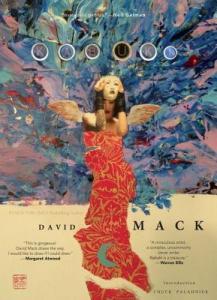 Kabuki Library Volume 3
I’ve been a fan of David Mack since a very intuitive comic book pusher (I say this with love, but frankly, this guy had me figured out and knew exactly what he could get me to buy) suggested I read Circle of Blood, the story of a government assassin in a future noir-Japan, escaping the bonds and corruption of her masters. Kabuki’s story is one of constant transformation and self exploration that is now being collected into four gorgeous hardcover volumes by Dark Horse comics. As much as I love the stories themselves, these volumes are a literal treasure trove that allows the reader into Mack’s mind. I’ve always been curious about his artistic process, so poring over the letters, notes, sketches, and other additional tidbits is such an amazing opportunity–as was the opportunity to chat with Mack himself to pick his brain.
Volume 3 of this series collects The Alchemy. Kabuki has escaped the asylum with the help of a not-so-imaginary friend, Akemi. As she seeks to reinvent herself, following the path laid out by Akemi, Kabuki discovers that she is not alone. Akemi has helped many people on their journeys of self-discovery and the result is a network that connects across the world. Akemi seems to have some sort of revolution in mind, and Kabuki is meant to play a major part in it.
The intrigue of Akemi’s plans hover over the story, but the focus remains on Kabuki’s exploration of self. When Mack appears within the pages of his own book, it becomes evident that Kabuki’s story of becoming is also the very personal story of Mack himself.
I love comic artists that take the medium far outside the panel. David Mack is at the top of my list. Every single page in this library is a work of art. Sadly, I do not have room on my walls for every single page…

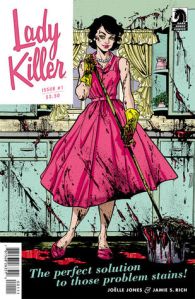 Lady Killer
Dark Horse comics describes Lady Killer as “Betty Draper meets Hannibal!” but that description is a bit off. The book definitely has that Mad Men appeal of early ’60s domestic bliss, but Josie Schuller is a bit more into the blood spatter of a serial killer like Dexter, than she is the neat and ordered psychosis of Hannibal. In fact, she isn’t a serial killer at all. She’s a hired assassin who’s very good at getting the job done (albeit it in a very messy and impractical manner, partially because she prefers a more hands on approach), all while maintaining a neat and tidy household and happy children for her husband to come home to at the end of the day. All in a days work for a mother.
While the idea of a housewife who hides her career as an hitperson from everyone but her employer makes perfect sense, sometimes the comic takes liberties with the execution, demanding that you fill in the blanks that take her from brutally messy kills to home in time to cook dinner. While a more detail-oriented person might get hung up on the transitions, I can appreciate the juxtaposition of dichotomy of Josie’s life. Every time I might have stopped to demand how she got herself out of a particular mess, the next panel pulled my attention away from such pesky ruminations. The fast pace, charming art and sharp dialogue make up for the details that are skipped over in order to keep the plot moving.
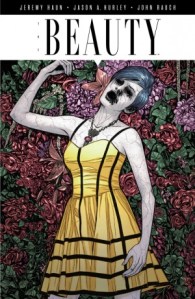 The Beauty, Vol. 1
The Beauty is the STD that everyone wants–until they don’t, because a beautiful face and youthful body are all fun and games until someone loses their head. As in, their head explodes. This is what is happening to people who have been infected with The Beauty virus. Anti-beauty terrorists are trying to get the truth out there, but the corrupt government official and the pharmaceutical company that stand to make millions from treatments rather than the cure aren’t too fond of that idea.
A very interesting concept, but from there, the story doesn’t really go where it could and should. The main characters are infected detectives notScully and notMulder, who realize that they are fighting for their lives as more and more The Beauty victims blow up. Every time they get close to the truth, something inconvenient gets in their way, starting with terrorists and moving on to an over the top pyscho murderer whose purpose is to add horrific scenes of violence when nothing else interesting is happening, I guess. The dialogue is not particularly inspired and the characters are forgettable, which is unfortunate since, again, the concept seems so good. Oh well.

Waiting on Wednesday 10/05/16
Posted on October 5, 2016 17 Comments
“Waiting On Wednesday” is a weekly meme hosted by Breaking the Spine that lets us feature upcoming releases that we can’t wait to get our hands on!
Mogsy’s Pick
Soleri by Michael Johnston (June 13, 2017 by Tor Books)
It might still be a tad too early to get excited about a book coming out next summer, but I can’t help it; historical epic fantasy sounds right up my alley, especially when it features a story and world inspired by Ancient Egypt.
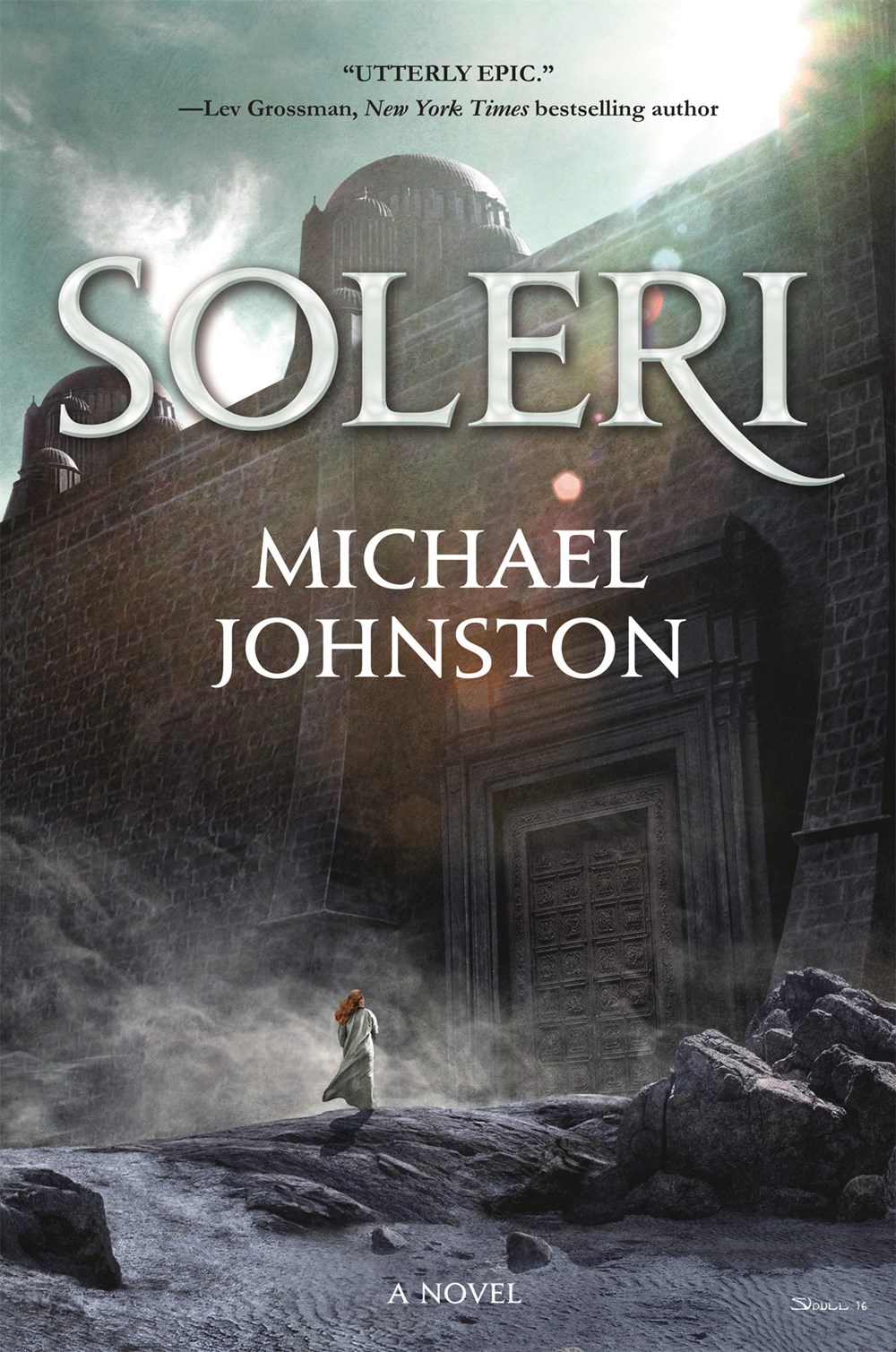 “The first in a new epic fantasy series inspired by ancient Egyptian history and King Lear
The ruling family of the Soleri Empire has been in power longer than even the calendars that stretch back 2,826 years. Those records tell a history of conquest and domination by a people descended from gods, older than anything in the known world. No living person has seen them for centuries, yet their grip on their four subjugate kingdoms remains tighter than ever.
On the day of the annual eclipse, the Harkan king, Arko-Hark Wadi, sets off on a hunt and shirks his duty rather than bow to the emperor. Ren, his son and heir, is a prisoner in the capital, while his daughters struggle against their own chains. Merit, the eldest, has found a way to stand against imperial law and marry the man she desires, but needs her sister’s help, and Kepi has her own ideas.
Meanwhile, Sarra Amunet, Mother Priestess of the sun god’s cult, holds the keys to the end of an empire and a past betrayal that could shatter her family.
Detailed and historical, vast in scope and intricate in conception, Soleri bristles with primal magic and unexpected violence. It is a world of ancient and elaborate rites, of unseen power and kingdoms ravaged by war, where victory comes with a price, and every truth conceals a deeper secret.”
Book Review: The Rift Uprising by Amy S. Foster
Posted on October 4, 2016 11 Comments
A review copy was provided by the publisher in exchange for an honest review. All opinions are my own.
The Rift Uprising by Amy S. Foster
Mogsy’s Rating: 3 of 5 stars
Genre: Science Fiction, Young Adult
Series: Book 1 of The Rift Uprising Trilogy
Publisher: Harper Voyager (October 4, 2016)
Length: 400 pages
Author Information: Website | Twitter
The first thing you should know about The Rift Uprising is that while it may be published under adult sci-fi and fantasy imprint Harper Voyager, it is patently, most assuredly, a Young Adult novel. Thinking there would be at least some crossover appeal, I did have to go through a brief adjustment period to alter my expectations, because I believe target audience matters. Indeed, once I donned my “YA reader” hat, I found this one easier to enjoy, and I think it has quite a lot of potential for fans of YA.
The story takes place in 2020, following the life of a seventeen-year-old girl named Ryn Whittaker, who is a Citadel—an elite super-soldier created by a secret military program in response to more than a dozen mysterious rifts opening around the world back in the mid-2000s. These rifts turned out to be portals to alternate Earths, and when it became clear that scientists were unable to close or control what came out of them, governments around the world decided to cover the whole thing up in a massive, coordinated global conspiracy.
An important development that came out of this though, was the arrival of a more advanced humanoid race from a parallel world who gave humanity the technology to protect themselves and guard the rifts. This technology involved implanting individuals with a cybernetic chip that would enhance their physical and mental abilities, turning them into powerful fighting machines. Problem was, adults didn’t do well on the implants; every single one who was a part of the initial experiment died. So instead, the government decided to put this technology in seven-year-olds (because somehow, the scientists were able to determine that young, still-developing brains were more resistant to the chip’s fatal effects) without the children’s OR their parents’ knowledge and consent. These kids would eventually become the Citadels, once their implants get activated when they turn fourteen.
This is what happened to Ryn, who has been living a double life for the last three years, ever since she found out what was done to her. At home she has to pretend to be a normal teenager in front of her family, who are blissfully unaware of the truth behind rifts and Citadels, and think that their daughter is part of a gifted government school program. In reality, Ryn patrols a nearby rift, either putting down enemies that come through or helping relocate non-hostile otherworld entities called “Immigrants” to one of the many sprawling internment camps around the world (which are also covered up by their respective governments, of course).
I’ve gone into the specifics of the premise because I feel so much of the Rift conspiracy doesn’t hold up to scrutiny. A large, widespread plot involving thousands upon thousands of people in more than a dozen countries, hiding the fact that they’ve been experimenting on hundreds of children (and praying that their parents are all idiots and won’t notice) while stashing countless hordes of interdimensional aliens in gigantic compounds located in thickly settled areas around the globe? I find it a little too farfetched and hard to believe that the world has been kept in the dark for so long, especially in this age of satellites and air travel, hungry media outlets and wary whistleblowers, class-action lawsuits and social media. In some ways, reading this book reminded me of how I felt while reading Divergent—that is, the setup is really cool, but a lot of the explanations are either iffy or require lots of logical leaps. If you don’t mind rolling with the punches though, or if you are reading this for the story and not the world-building, then this won’t be an issue.
Also to keep in mind is the fact that, as with most YA novels, there are certain tropes to watch for. There’s a romance, which I’m tempted to label instalove, because from the moment a boy named Ezra walks through the rift into Ryn’s world, she becomes utterly smitten with him. However, because all Citadels are conditioned to fly into a berserker rage the moment they make skin-on-skin contact with the object of their affection or anyone they feel even remotely attracted to (which is weird, because if you could condition any kind response into the Citadels, wouldn’t it make more sense to make them, say, violently ill at the thought of sex, instead of just plain violent? Less chance of putting your own soldiers or any number of innocent bystanders in the hospital and creating a media incident, if you’re inclined to keep the lid on a massive conspiracy, right?) Ryn and Ezra find themselves in the unenviable position of not being able to physically express their love for each other.
I wish I could say that Ryn’s motivation to blow the conspiracy wide open was driven by more noble reasons, like a desire to free herself and her fellow Citadels from the government’s yoke, or to save the Immigrants by helping them return to their home worlds. But the truth is, Ryn was mostly thinking about sex when she started on her mission to find out the truth about her implant, and the reason why she kept on fighting was because she was desperate to get laid. It’s admittedly a selfish and somewhat flimsy rationale, and therein lies another big reason why I saw this book as more YA than adult—mainly because I think an adult audience might be less patient with Ryn, who for the bulk of the book was a walking ball of angsty hormones with only one thing on her mind.
What I really loved though, was the mystery behind the rifts. Whatever may drive them, Ryn and Ezra make a great team uncovering the truth together, with him using his brains and her using her muscle. I enjoyed the suspense as it was gradually revealed how the portals work, and why the government might be going to such lengths to hide them from the world. I also liked the idea that anything at all can come out of the rifts, and I got the feeling the author had a bit of fun with that. Descriptions of the Village, where Immigrants from alternate worlds are relocated, were also amazing to behold. Imagine a neighborhood made up of a hodgepodge of different habitats and buildings to accommodate all manner of interdimensional beings. There’s even a menagerie to house all the otherworldly animals and creatures that come through.
All told, if you’re looking for a fun and entertaining sci-fi YA novel to spend a rainy afternoon with, The Rift Uprising might be exactly what you’re looking for, especially if you have a fondness for romance-driven stories. The world-building isn’t too deep and the adolescent characters might be motivated by their very adolescent yearnings, but nevertheless this book is a superfast read and its quick pacing also means never a dull moment.


 The BiblioSanctum